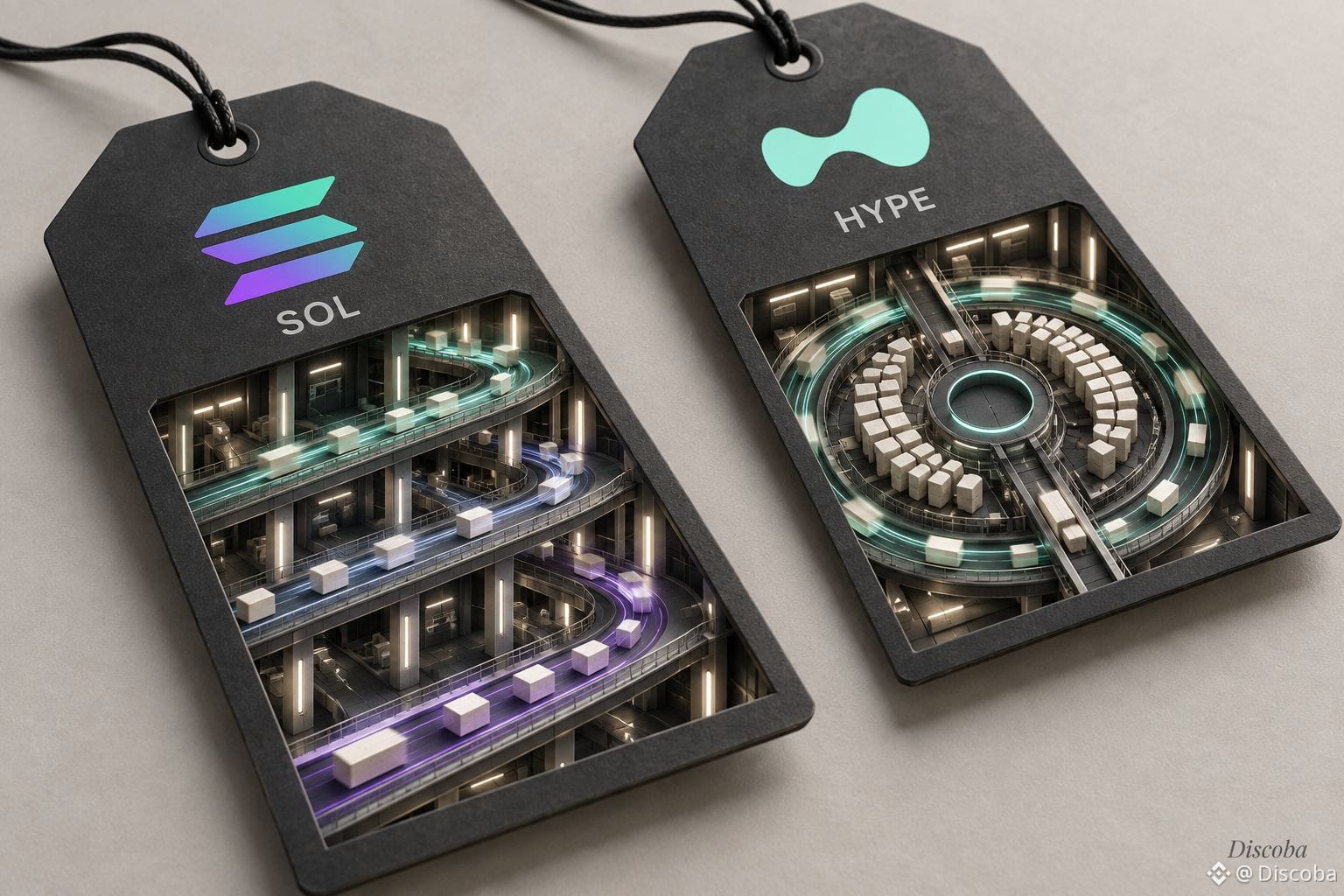
$SOL and $HYPE Are Busy. That Doesn’t Automatically Make Them Cheap Before calling this a valuation gap, follow the fees. SOL traded around $100+ and HYPE near $78 - below HYPE’s September 6 record of $89.57. Solana’s applications are generating meaningful fees. DefiLlama showed approximately $22.84M for Raydium and $7.88M for Orca over the preceding 30 days when checked. But application fees aren’t automatically SOL-holder revenue. Raydium distributes trading fees between liquidity providers, RAY buybacks and, depending on the pool, treasury allocations. Its 12% buyback share purchases RAY. Solana network fees are a separate payment. The infrastructure upgrade also needs precise timing. Solana’s official schedule places the increase from 1,232 to 4,096 bytes per transaction at epoch 1035, expected September 15. That creates room for more complex transactions; it doesn’t promise proportionally higher token demand. Hyperliquid has a different connection. Its open interest reached $14.3B on September 6. The frequently cited 56% collapse last October was also a decline in open interest, rather than a measure of HYPE’s price decline. The Assistance Fund automatically converts trading fees into HYPE, and those tokens are burned. The market mix matters because deployers can retain a share of fees. Tokenomist lists the next contributor unlock for October 6. Becoming transferable doesn’t establish that those tokens will be sold. For the week ending September 4, reported inflows were $986.9M for Bitcoin, $6.2M for Solana and $12.3M for Hyperliquid. SOL and HYPE buying slowed, but both remained positive. The investment case needs a credible connection between durable usage, token demand and future supply. For SOL and HYPE, what would convince you that growing activity is becoming lasting value for holders? #Altcoin Season# #BTC Price Analysis# #Macro Insights#

投稿

--