


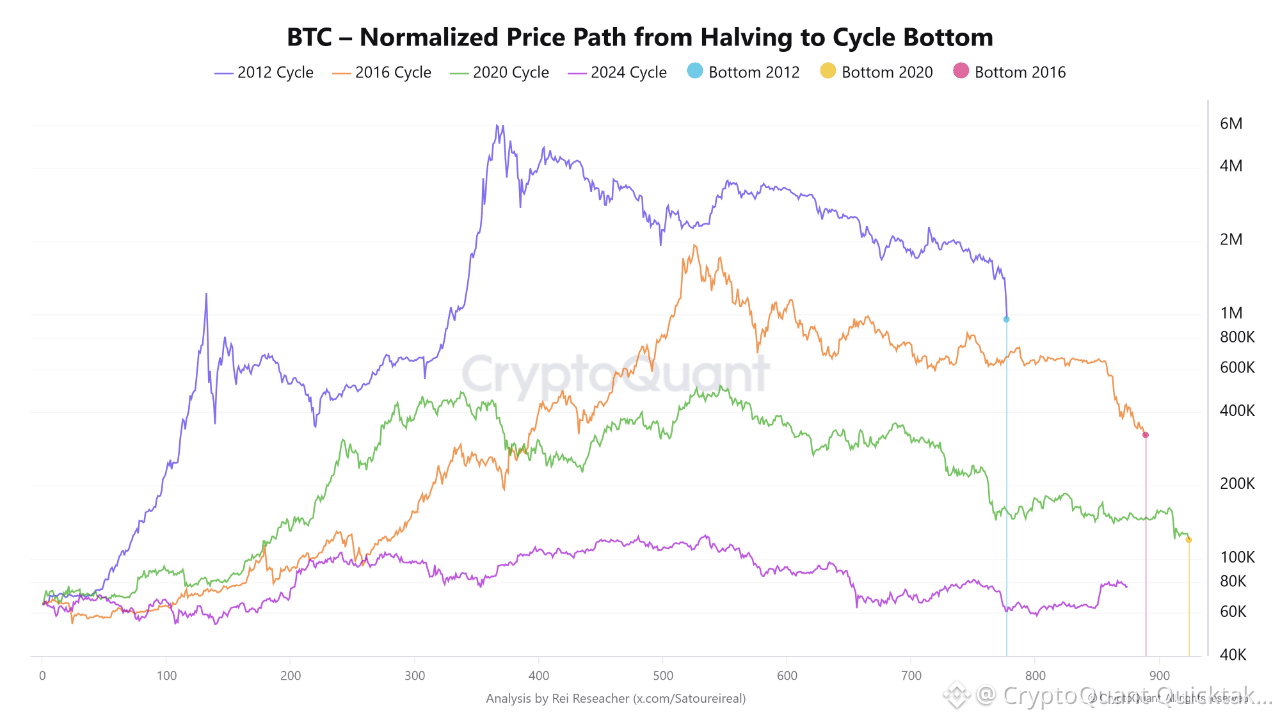
Looking at CryptoQuant data, previous cycle bottoms in 2012, 2016, and 2020 usually landed around day 770 to nearly 900 after the halving. A lot of people are still looking at history, expecting another parabolic run to play out the same way. But to me, a few things make this cycle completely different:
First is capital structure. Spot ETF approvals pushed a new all-time high before the halving—something we've never seen before. When institutional money takes over, they allocate based on monetary policy, interest rates, and macro liquidity. They don't trade based on counting days after the halving.
The supply shock from the halving just doesn't carry the same weight anymore either. Daily newly minted coins are tiny compared to the sheer volume moving through derivatives and major funds.
Then there's market cap. Moving a trillion-dollar asset takes massive liquidity, and the macro backdrop simply hasn't seen that kind of aggressive easing lately.
The 4-year model might not be completely dead, but its rhythm is clearly broken. Instead of waiting for a bottom based on historical momentum, accepting that BTC is behaving like a mature macro asset feels a lot more realistic.
Written by Rei Researcher