
LNG Tankers Avoid Strait of Hormuz as Mine Threat Raises Global Energy Concerns
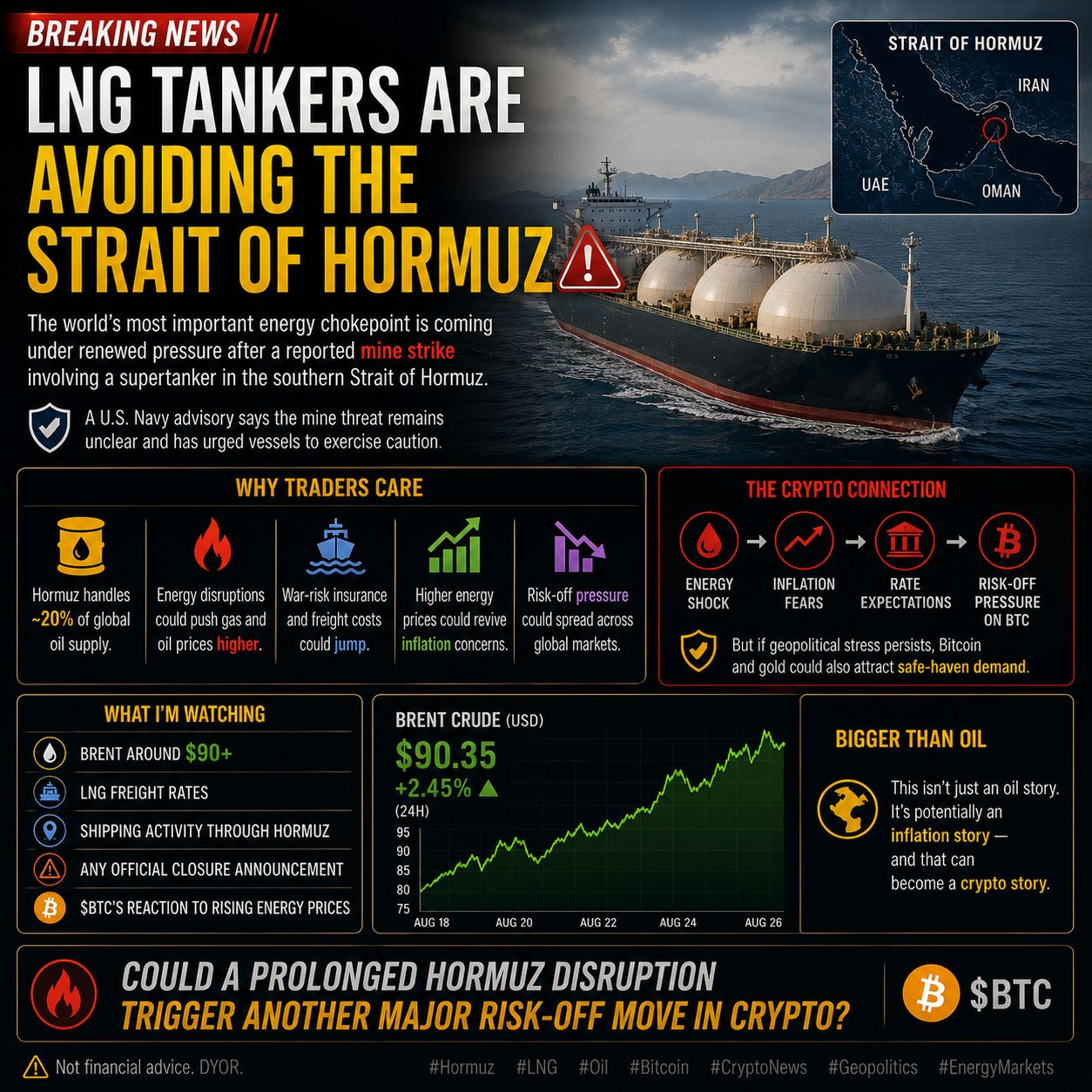
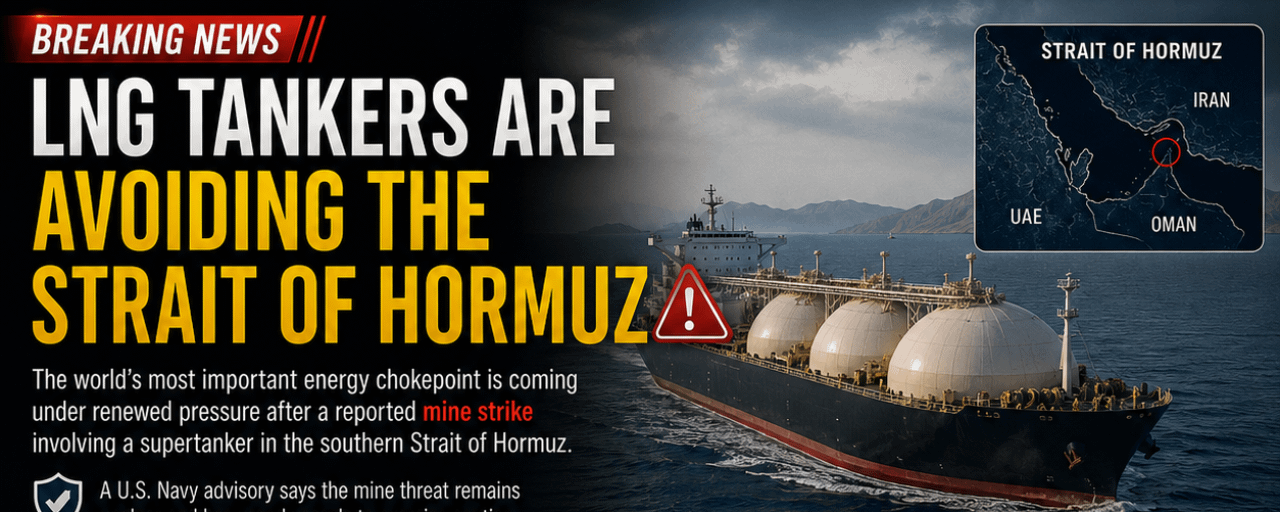
The Strait of Hormuz is once again becoming a major focus for global energy markets after a reported mine strike involving a supertanker in the southern part of the waterway.
Iran's Revolutionary Guards reportedly said the tanker struck two naval mines and caught fire, while a U.S. Navy advisory warned that the mine threat was not fully understood and advised vessels to exercise caution.
The developments are now raising concerns about potential disruptions to oil, LNG and shipping flows.
🚢 Why the Strait of Hormuz Matters
Hormuz is one of the world's most important energy-shipping chokepoints.
A prolonged disruption could affect energy markets far beyond the region by increasing:
🛢️ Oil supply concerns
🔥 Natural-gas prices
🚢 Tanker and LNG freight costs
🛡️ War-risk insurance premiums
📈 Global inflation expectations
Even without a complete closure, vessels avoiding the route could increase transportation times and costs.
🛢️ Oil and LNG Markets Under Pressure
If LNG tankers continue avoiding Hormuz, Asian and European energy markets could face tighter supply expectations.
At the same time, crude oil could receive an additional geopolitical risk premium if traders believe the disruption will last.
A sustained move in Brent above $90 would therefore be an important level to watch for signs that the market is pricing in a larger energy shock.
📉 Why Crypto Traders Should Care
The connection to Bitcoin comes through inflation and monetary policy.
A simplified market chain could look like:
Hormuz disruption → Energy prices ↑ → Inflation expectations ↑ → Rate-cut expectations change → Risk assets face pressure
That could initially create a risk-off environment for Bitcoin and altcoins.
However, if geopolitical tensions remain elevated for an extended period, investors could also turn toward scarce or alternative assets such as Bitcoin and gold.
The crypto reaction therefore isn't guaranteed to be one-directional.
👀 What Traders Should Watch
The most important signals now are:
🛢️ Brent crude: A sustained move above $90 could indicate increasing energy-market stress.
🚢 Shipping flows: Continued avoidance of Hormuz would suggest that the disruption is affecting real-world transportation.
🔥 LNG freight rates: Rising costs could signal tighter energy capacity.
🇮🇷 Official statements: Any announcement involving restrictions or closure of the Strait would be a major market catalyst.
₿ Bitcoin: Watch how BTC responds to rising oil prices and changing rate expectations.
🔥 The Bigger Picture
This is no longer simply an oil-market story.
If disruptions persist, the effects could move through energy prices → inflation → interest rates → global risk assets.
For crypto traders, that makes the Strait of Hormuz a macro indicator worth watching closely.
The key question is:
Will this remain a temporary shipping disruption, or could it develop into a broader global energy shock?
⚠️ Reports about the incident remain subject to verification. Not financial advice. DYOR.

#StraitOfHormuz #LNG #Oil #Bitcoin #CryptoNews #Geopolitics #EnergyMarkets #Inflation