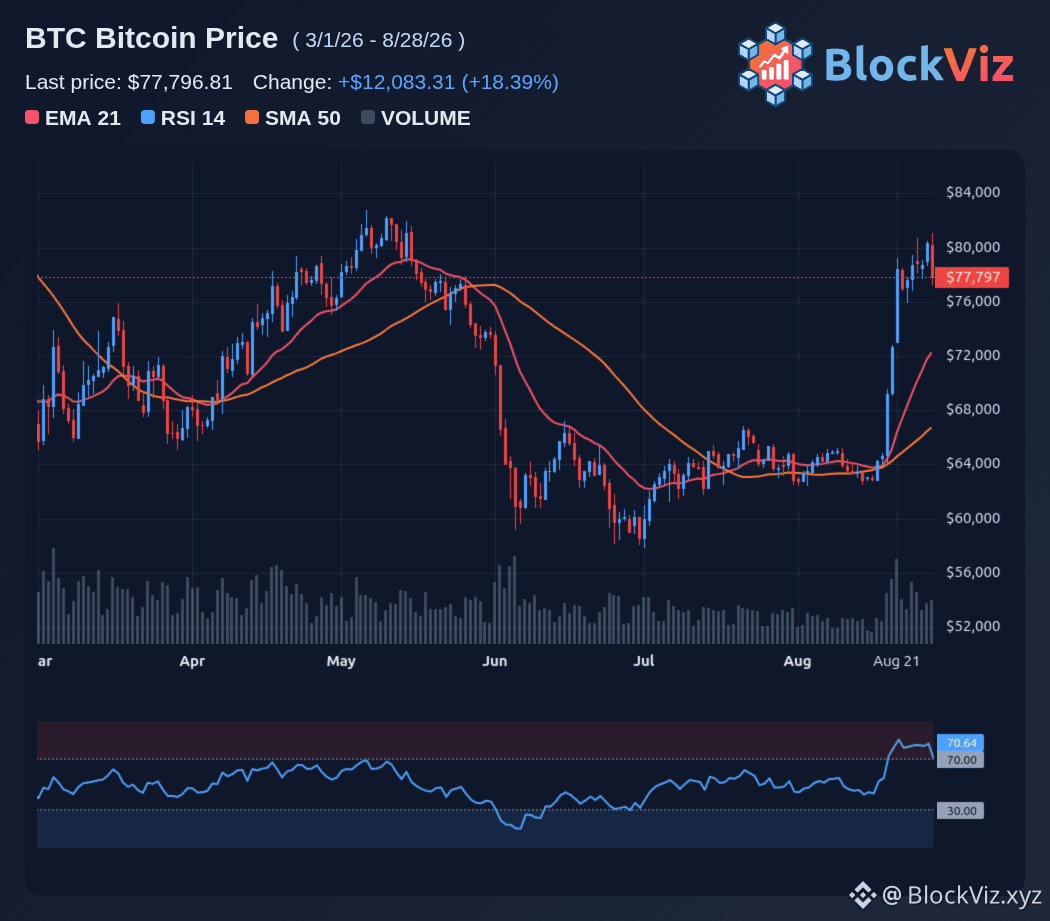
Bitcoin’s 80,000 breakout just ran into a macro reality check. In his first Jackson Hole keynote, Kevin Warsh stressed that inflation is still too high and that the Fed may still have more work to do. That shift pushed the market’s implied odds of a September rate hike above 50%, and BTC quickly slipped from above 80,000 to roughly 78,400 before steadying near 79,000 to 79,500. That reaction matters because August’s rally was not driven by one factor alone. Treasury buybacks, a weaker dollar, and strong ETF inflows all helped lift risk assets, which means the move now looks more fragile if rate expectations keep turning hawkish. The near-term question is simple: was this a reset inside an uptrend, or the start of a deeper pullback? For now, 80,000 and 82,800 remain the key upside levels, while 78,000 to 75,000 is the zone that matters if selling pressure builds. What matters next is whether spot ETF demand keeps absorbing supply, or whether leverage is doing most of the work. Funding, open interest, and price behavior around these levels should give the clearest signal on whether the breakout still has real support. $BTC