

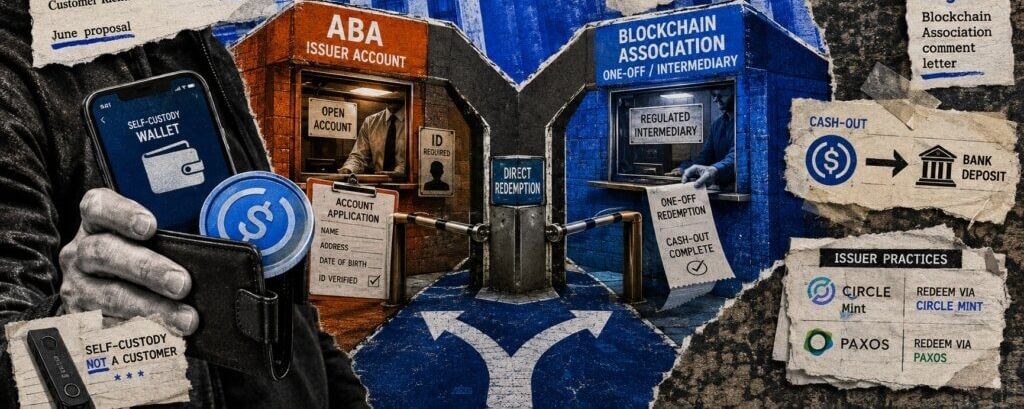

ABAは、発行体がドルを返還する前に、ダイレクトなステーブルコインの償還が口座開設と本人確認を引き起こすことを求めている。
全米銀行協会(ABA)は、支払い用ステーブルコインをその発行体と直接やり取りして購入または償還する者には、口座を開設し、顧客の本人確認を完了することを求めるよう米国の規制当局に働きかけている。
ブロックチェーン・アソシエーションは、ダイレクトのプライマリー市場口座顧客に対して本人確認を受け入れる一方、任意の単発の償還、または別の規制対象の仲介者を通じた償還が行われたとしても、それが基礎となる保有者を自動的に発行体の顧客にするとみなすべきではないと述べている。
米連邦準備制度(FRB)の公開インデックスには、その日掲載されたABAのコメントと、8月24日に掲載されたブロックチェーン協会のコメントが、その他のR-1885の返信と並んで掲載されています。
当局が最終的に選択する方針によって、発行者に対してドルを求めることが常に口座を開くのか、それとも一部の保有者はその関係を確立せずに償還できるのかが決まります。
支払型ステーブルコインの直接発行または直接償還は、提案が口座を確立し得る活動として挙げているものの一つです。トークンの保有だけでは不十分であり、発行者のスマートコントラクトと相互作用するだけの第三者による取引があっても、すべてのユーザーが発行者の顧客(issuer customer)になるわけではありません。
自己管理(self-custody)の保有者は、発行者に直接関わらずに、取引所、決済、またはピアツーピアの譲渡を通じてステーブルコインを取得できます。次のステップには2通りあります。保有者が発行者から直接ドルを求めるか、または取引所やその他の仲介者がトークンを集約して、顧客の代わりに償還します。
当局は、発行者との事前の関係がない保有者による直接償還が口座を作成するのかどうかを明確に求めています。しかし、提案の中ではその質問に答えておらず、コメンテーターが誰が発行者のCIPをいつ完了すべきかについて議論する余地を残しています。
これらの管理は、すべてのトークン保有者を発行者口座の顧客として定義することなく、取引やウォレットの活動に対して適用され得ます。逆に、償還時にCIPを完了すれば、口座顧客の本人確認(identity)が確立されます。
6月の提案は、CIPの義務を二次市場活動のさらに先まで拡張すべきかどうかについてコメントを求めていますので、今後の拡大が除外されたわけではありません。
現時点では、規制当局は「償還の境界(redemption boundary)」に注目しています。ABAは、保有者がそれを直接的に取り扱うたびに、身元(identity)の負担を発行者に置くべきだと考えます。一方、ブロックチェーン協会は、発行者のCIPを一次市場の口座に結び付けたままにし、1回限りの、または仲介者を経由した現金化であっても、それによってすべての基礎となる保有者を自動的にオンボーディング(取引開始手続)することは認めない立場です。