


Crypto policy and payments developments across Asia are moving in multiple directions at once: some regulators are tightening rules for digital asset firms, while banks and institutions pursue faster rails for cross-border settlement. Meanwhile, exchange licensing and tokenized finance continue to expand in jurisdictions that are still calibrating how to oversee crypto.
Below is a consolidated look at the week’s key developments—from South Korea and Japan to Pakistan, the UAE, and beyond—focusing on what changed, why it matters, and what to watch next.
Key takeaways
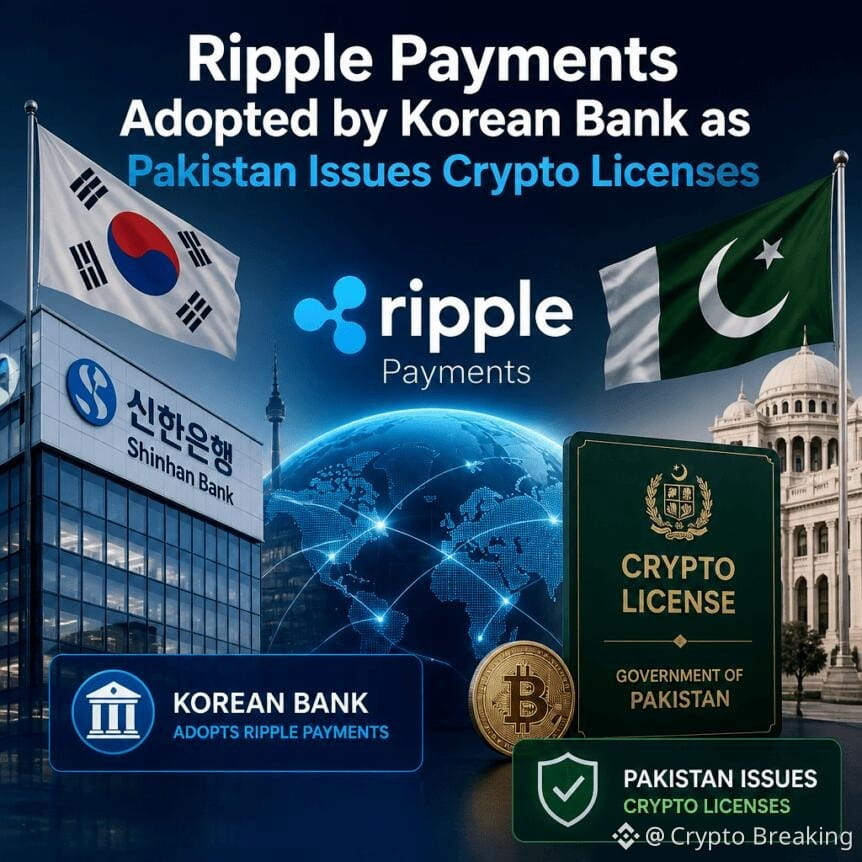
South Korea’s Jeonbuk Bank partnered with Ripple to use a blockchain-based cross-border payments system for business customers.
South Korean lawmakers proposed expanding FIU powers so the Financial Intelligence Unit can investigate suspected violations by unregistered crypto firms.
Japan granted Laser Digital authorization as a crypto asset exchange service provider under the Payment Services Act, marking the first such approval in four years.
Pakistan opened its crypto licensing portal for exchanges and other VASPs, with an NOC submission deadline tied to continued operations.
Singapore and Hong Kong are competing via tax policy changes aimed at attracting fund managers and related investment professionals.
South Korea: payments partnerships and a push to expand FIU oversight
In payments, South Korea’s Jeonbuk Bank said it has partnered with blockchain payments company Ripple to deploy its cross-border payment system for business customers. The service is intended for companies such as import-export firms, technology startups, and online content creators.
Ripple framed the change around remittance speed and cost, arguing that conventional transfers—often routed through intermediary banks using SWIFT messaging—can take several days. By contrast, Ripple said its system would enable faster and less expensive cross-border capabilities for the bank’s commercial clients, positioning blockchain settlement as an operational upgrade rather than a consumer-facing novelty.
Regulatory momentum is also building in South Korea, but in a more enforcement-oriented direction. A group of lawmakers introduced a bill aimed at amending the Act on Reporting and Using Specified Financial Transaction Information to expand the Financial Intelligence Unit’s (FIU) authority over unregistered crypto businesses.
According to the filing reported by Cointelegraph, People Power Party lawmaker Eom Tae-young and nine other lawmakers submitted the proposal. Under the bill, anyone could report suspected violations to the FIU, and the FIU would be able to investigate and analyze alleged breaches, file complaints with relevant authorities, request criminal investigations, or provide information to investigators.
For market participants, the practical takeaway is that oversight capacity could broaden beyond traditional reporting frameworks. If passed, the FIU’s role in gathering and escalating cases involving unregistered entities may increase compliance pressure across the domestic crypto ecosystem—especially for smaller businesses operating without formal registration.
South Korea also moves on market conduct, custody licensing, and virtual asset crime
Separately, South Korean regulators were reported to be scrutinizing Polymarket. The Korea Media and Communications Commission stated Polymarket’s structure and operations amount to illegal gambling, even though it is designed as noncustodial and uses smart contracts.
On the custody side, BitGo Korea reportedly secured VASP registration for institutional crypto custody. The registration was accepted on Tuesday, two days before stricter VASP entry requirements took effect—an important sequencing detail that could affect other firms assessing their compliance timelines.
South Korea also planned new investigative capacity. The Serious Crimes Investigation Agency is set to be formally established in October and will include 2,567 investigators across seven categories, with a dedicated unit aimed at combating phishing and virtual asset crimes. For businesses and users, a targeted unit indicates regulators may treat digital-asset-related fraud and impersonation as a specialized enforcement priority rather than a general cybercrime category.
Finally, the Korea Exchange is expected to open a new fractional investment market—Novel Securities Market—in November. Cointelegraph reported that it will support fractional investments and non-traditional securities such as artworks, real estate, and music copyright, expanding the range of asset types accessible through the exchange infrastructure.
Japan: fresh exchange authorization and more institutional token adoption
Japan remains one of the clearest examples in Asia of how regulated crypto can develop through licensing under the Payment Services Act (PSA). Nomura Group’s digital asset subsidiary Laser Digital received authorization to operate as a crypto asset exchange service provider under the PSA, which Cointelegraph described as the country’s first crypto exchange approval in four years.
According to the Financial Services Agency (FSA) list published on Friday, Laser Digital received the authorization as reported by Cointelegraph. The article noted the last platform to receive FSA authorization was Binance Japan in October 2022, underscoring the long gap between approvals.
For investors and traders, the significance is less about headlines and more about access and compliance: each newly authorized venue can increase choice for Japan-based market participants that prefer regulated counterparties. It also signals that, even after a period of slower licensing, Japan’s framework can still produce new approvals for qualified operators.
Beyond exchange licensing, the Japan coverage also highlighted broader treasury and retail-access experiments. Metaplanet reportedly expanded its Bitcoin treasury strategy to the US through a proposed arrangement with Nasdaq-listed Super League Enterprise, using existing Bitcoin rather than additional purchases. Separately, Cointelegraph reported that Toyota Finance opened tokenized bonds to retail investors via a mobile payment app, allowing applications for a 1 billion yen bond without a securities account and with perks delivered through Toyota’s app. While these are not identical to exchange approvals, they reflect continued movement toward regulated digital finance products and distribution channels.
Pakistan and the UAE: regulated market access expands while token distribution grows
Pakistan’s Virtual Assets Regulatory Authority (PVARA) opened its crypto licensing portal for crypto exchanges and other virtual asset service providers (VASPs) operating in the country. Cointelegraph reported that companies providing virtual asset services on or before March 5 must submit an application for a no-objection certificate (NOC) by Sept. 5 or cease operations.
On its licensing site, PVARA frames the portal as a pathway into a regulated market with standards covering consumer protection, governance, compliance, and market integrity—an approach that aims to make compliance expectations concrete rather than abstract.
In the UAE, Capital.com reportedly plans to offer spot crypto services after its affiliate, Capital Vault, secured a virtual-asset license from the country’s Capital Market Authority (CMA). Cointelegraph reported that once live, UAE clients would be able to buy and hold actual crypto through the Capital.com app, with Capital Vault responsible for execution, custody, and settlement.
In parallel, Bitcoin.com integrated the UAE-registered US dollar stablecoin USDU into a self-custodial wallet. Cointelegraph said the integration expands access to USDU beyond institutional distribution channels, suggesting more routing options for stablecoin users who want direct wallet-based custody rather than relying solely on exchange accounts.
Singapore vs Hong Kong: tax policy as a competition lever for fund managers
Singapore’s Monetary Authority unveiled tax exemptions for fund managers and family offices and expanded a scheme aimed at attracting investment professionals. The government also plans to launch a co-investment scheme for funds that base operations in Singapore, Cointelegraph reported.
The announcement comes as Hong Kong cuts its own taxes for fund managers, reinforcing a regional pattern: crypto-related finance and traditional asset management are now competing through fiscal policy as well as regulatory posture. For industry participants, these changes can affect where teams locate and where investment entities choose to incorporate or operate.
While these measures are not exclusively tied to crypto, they matter because many digital asset strategies sit within broader investment platforms—meaning tax advantages can influence staffing, fund structure decisions, and where compliance infrastructure is built.
With more licensing portals, more targeted FIU authority, and fresh exchange authorizations in play, the next questions are straightforward: which proposed South Korean rules make it through the legislative process, how quickly Japan’s newly authorized operator pipeline expands, and whether Pakistan’s licensing window results in continued market consolidation or a shift toward regulated-only services.
This article was originally published as Ripple Payments Adopted by Korean Bank as Pakistan Issues Crypto Licenses on Crypto Breaking News – your trusted source for crypto news, Bitcoin news, and blockchain updates.