Sometimes the market teaches you the hardest lessons when you're most confident.
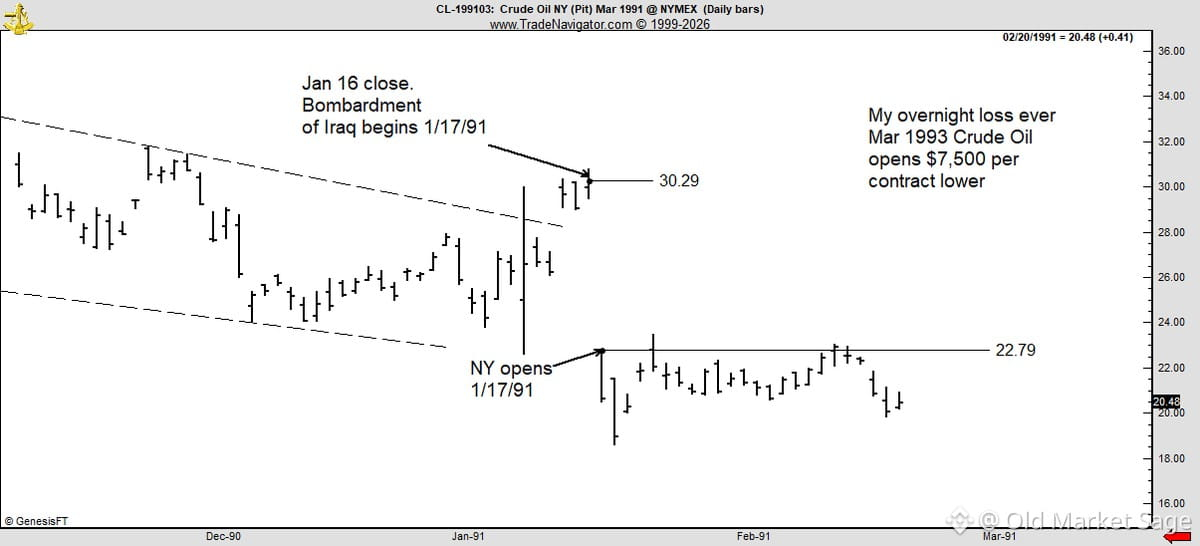
January 1991. I was long 30,000 barrels of crude. Chart looked perfect. Breakout confirmed. Price firm at $30.29.
Then the U.S. started bombing Iraq.
London curb market surged $3 overnight. I went to bed in Minnesota feeling good about the position.
Woke up to an $11 gap down from where London closed.
Classic buy-the-rumor, sell-the-news.
Did I wait for a bounce to reduce the damage? No.
Exited immediately at market. My rule: never hold a speculative loss.
That's the game. You can be right on the setup, right on the breakout, right on the trend—and still get destroyed by an event you didn't see coming.
The lesson isn't about being smarter. It's about respecting risk and having rules you follow even when it hurts.
January 1991. I was long 30,000 barrels of crude. Chart looked perfect. Breakout confirmed. Price firm at $30.29.
Then the U.S. started bombing Iraq.
London curb market surged $3 overnight. I went to bed in Minnesota feeling good about the position.
Woke up to an $11 gap down from where London closed.
Classic buy-the-rumor, sell-the-news.
Did I wait for a bounce to reduce the damage? No.
Exited immediately at market. My rule: never hold a speculative loss.
That's the game. You can be right on the setup, right on the breakout, right on the trend—and still get destroyed by an event you didn't see coming.
The lesson isn't about being smarter. It's about respecting risk and having rules you follow even when it hurts.