数年前、プライバシー重視のウォレットから出金するためだけに、取引アカウントが一時的に大きく制限(ロック)されたことがありました。コンプライアンスチームは、資金源の照会について手作業で1週間にも及ぶ調査を求めてきたのです。そんな個人的な厄介ごとが、暗号における「プライバシー」という物語の見え方を完全に変えてしまいました。私は、機関が実際には暗号技術を嫌っているわけではなく、その“検証不能性”を嫌っているのだと気づきました。
最近、大手プラットフォームでレガシーなプライバシーコインの上場廃止が相次いでいるのを見て、私は市場がこの $DUSK を、同じリスク枠に厳しく誤分類していると感じています。
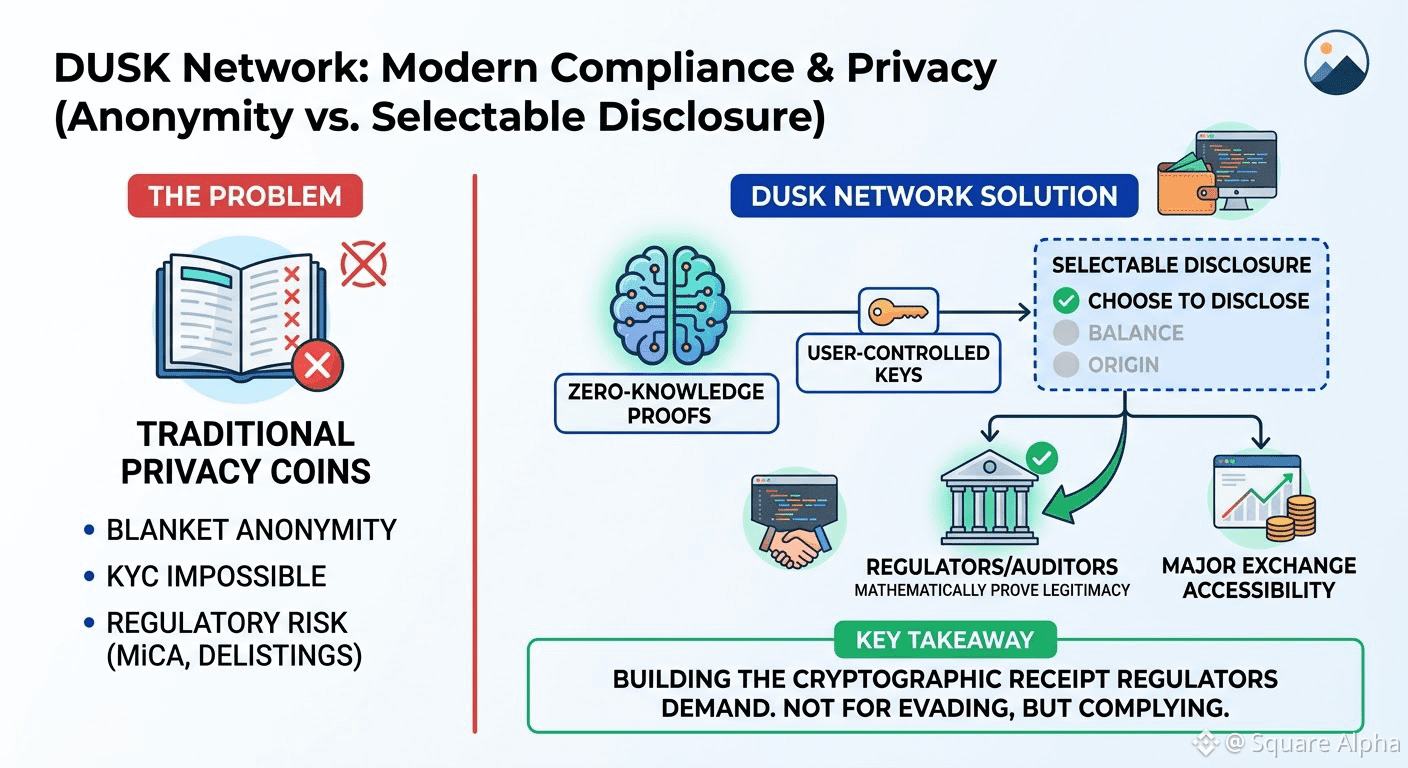
取引所が古いプライバシーネットワークを落とすとき、MiCA のような枠組みの下で問題になるのは ZK 技術そのものではありません。KYC を不可能にするのが、あらゆる場面での一律の匿名性だからです。
「選択的開示」について @Dusk のドキュメントを読み返したとき、アーキテクチャ上の違いが腑に落ちました。既定で取引データをすべて隠すのではなく、彼らの仕組みでは、ユーザーが数学的にウォレットの正当性を監査人に証明できる一方で、実際の残高を公開台帳に開示することなく済むようになっています。
彼らは規制当局を回避するためのツールを作っているわけではありません。彼らは、いま規制当局が求めている“まさにその暗号学的な領収書”を作っているのです。
私の最終的な見立てでは、市場は現在そのトークンを、投機的な匿名性のプレイとして価格づけしており、生存そのものが上場廃止の脅威に直面しているチェーンと同じくくりにしています。コンプライアンスの締め付けが不透明なネットワークに本格的に降りきったとき、数学的に「クリーンだ」と証明できる台帳だけが、大手取引所の主要な注文板に残ることになるでしょう。
#dusk
最近、大手プラットフォームでレガシーなプライバシーコインの上場廃止が相次いでいるのを見て、私は市場がこの $DUSK を、同じリスク枠に厳しく誤分類していると感じています。
取引所が古いプライバシーネットワークを落とすとき、MiCA のような枠組みの下で問題になるのは ZK 技術そのものではありません。KYC を不可能にするのが、あらゆる場面での一律の匿名性だからです。
「選択的開示」について @Dusk のドキュメントを読み返したとき、アーキテクチャ上の違いが腑に落ちました。既定で取引データをすべて隠すのではなく、彼らの仕組みでは、ユーザーが数学的にウォレットの正当性を監査人に証明できる一方で、実際の残高を公開台帳に開示することなく済むようになっています。
彼らは規制当局を回避するためのツールを作っているわけではありません。彼らは、いま規制当局が求めている“まさにその暗号学的な領収書”を作っているのです。
私の最終的な見立てでは、市場は現在そのトークンを、投機的な匿名性のプレイとして価格づけしており、生存そのものが上場廃止の脅威に直面しているチェーンと同じくくりにしています。コンプライアンスの締め付けが不透明なネットワークに本格的に降りきったとき、数学的に「クリーンだ」と証明できる台帳だけが、大手取引所の主要な注文板に残ることになるでしょう。
#dusk