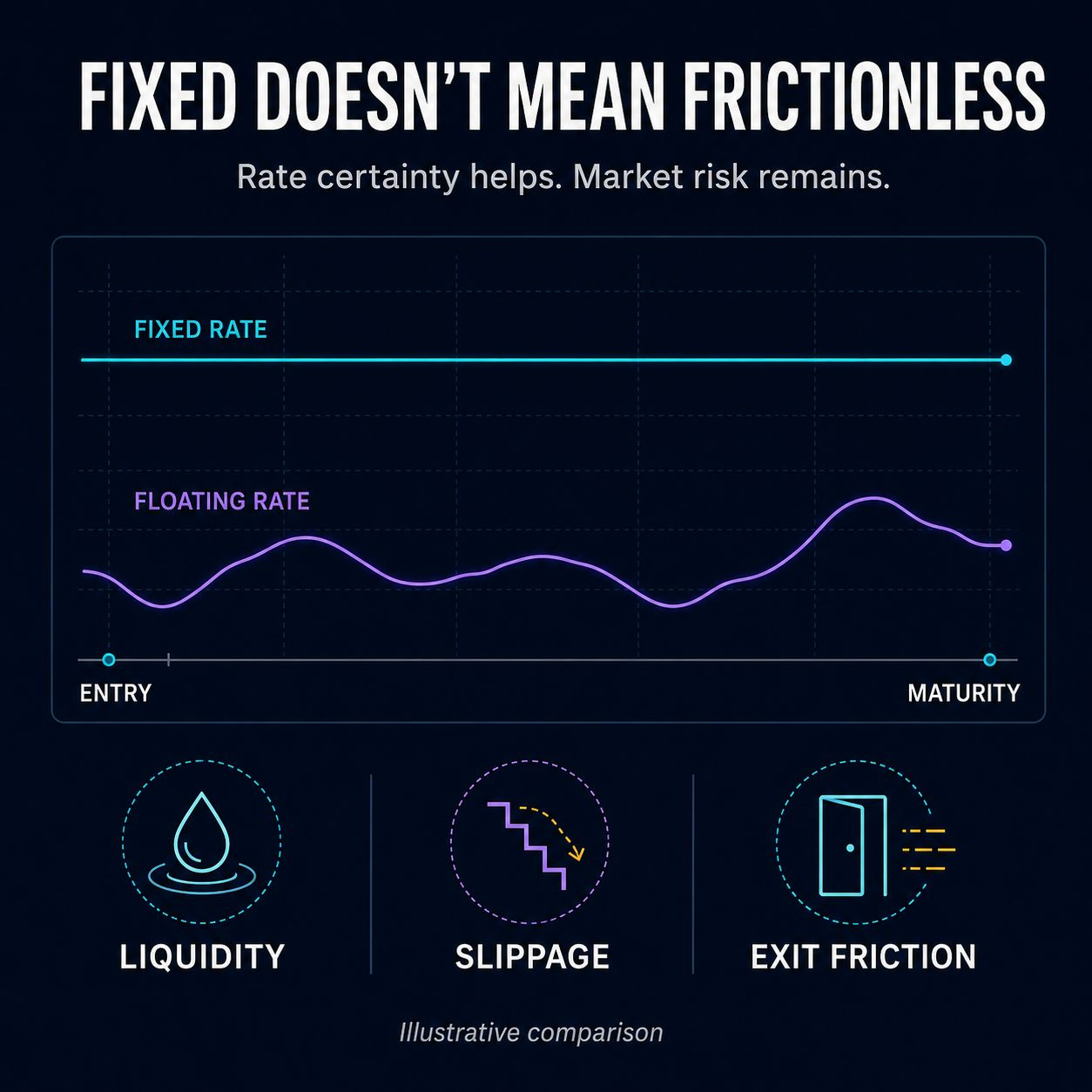

#termmax @TermMax 予想していなかった理由で、TermMaxに気づきがありました。借り入れが、故障したスピードメーターを見ているように感じることが少なくなるんです。DeFiでは「安全」とされる変動金利の変数でも、流動性が消える瞬間に跳ね上がることがあり、私は実際に、追いかけていた利回りよりも速く“お金のコスト”が変わってしまって、戦略全体が崩れていくのを見てきました。満期まで金利を固定するのは有用ですが、魔法ではありません。
その下では、見積もりは結局、市場メイカー、流動性カーブ、そして取引サイズから出てきます。薄い市場はスリッページを意味しますし、悪い出口は摩擦を意味します。満期は時間が効いてくることを意味します。担保の価格変動、オラクル、清算、そしてスマートコントラクトのリスクを加えると、画面に出る固定の数値が、実際のポジションが持つ以上の自信を生むことがあります。ワンクリックでレバレッジをかけるのも同じ理由で気になります。クリックが少ないからといって、間違える可能性が少なくなるわけではありません。
それからオプション側です。固定期間の債務もオプションも、どちらもトレーダーに「時間」を価格づけさせるので、自然に噛み合う感じがするんです。ただし、組み合わせると複雑性が積み上がります。市場が落ち着いているときは、洗練されたものに見えるかもしれません。でも急激な動きの場面では、私が見たいのはインターフェースではなく、流動性と実際の決済です。
まだ完全には信用していません。監査やライブのバグバウンティは役に立ちますが、仮想通貨は「レビューされたコード」は「パニック下での検証された挙動」と同じではない、ということを教えてくれました。それでも、何かが違う気がします。TermMaxはリスクを取り除くと約束しているわけではありません。面白いのは、リスクのコストを事前に“把握できるもの”にしようとしている点です。十分かどうかはまだ分かりませんが、変動金利のサプライズに何年も悩まされてきた私は、人々が注目している理由が分かります。
その下では、見積もりは結局、市場メイカー、流動性カーブ、そして取引サイズから出てきます。薄い市場はスリッページを意味しますし、悪い出口は摩擦を意味します。満期は時間が効いてくることを意味します。担保の価格変動、オラクル、清算、そしてスマートコントラクトのリスクを加えると、画面に出る固定の数値が、実際のポジションが持つ以上の自信を生むことがあります。ワンクリックでレバレッジをかけるのも同じ理由で気になります。クリックが少ないからといって、間違える可能性が少なくなるわけではありません。
それからオプション側です。固定期間の債務もオプションも、どちらもトレーダーに「時間」を価格づけさせるので、自然に噛み合う感じがするんです。ただし、組み合わせると複雑性が積み上がります。市場が落ち着いているときは、洗練されたものに見えるかもしれません。でも急激な動きの場面では、私が見たいのはインターフェースではなく、流動性と実際の決済です。
まだ完全には信用していません。監査やライブのバグバウンティは役に立ちますが、仮想通貨は「レビューされたコード」は「パニック下での検証された挙動」と同じではない、ということを教えてくれました。それでも、何かが違う気がします。TermMaxはリスクを取り除くと約束しているわけではありません。面白いのは、リスクのコストを事前に“把握できるもの”にしようとしている点です。十分かどうかはまだ分かりませんが、変動金利のサプライズに何年も悩まされてきた私は、人々が注目している理由が分かります。