
そしてそれにより満期日は、最初に見えるよりも複雑になります。
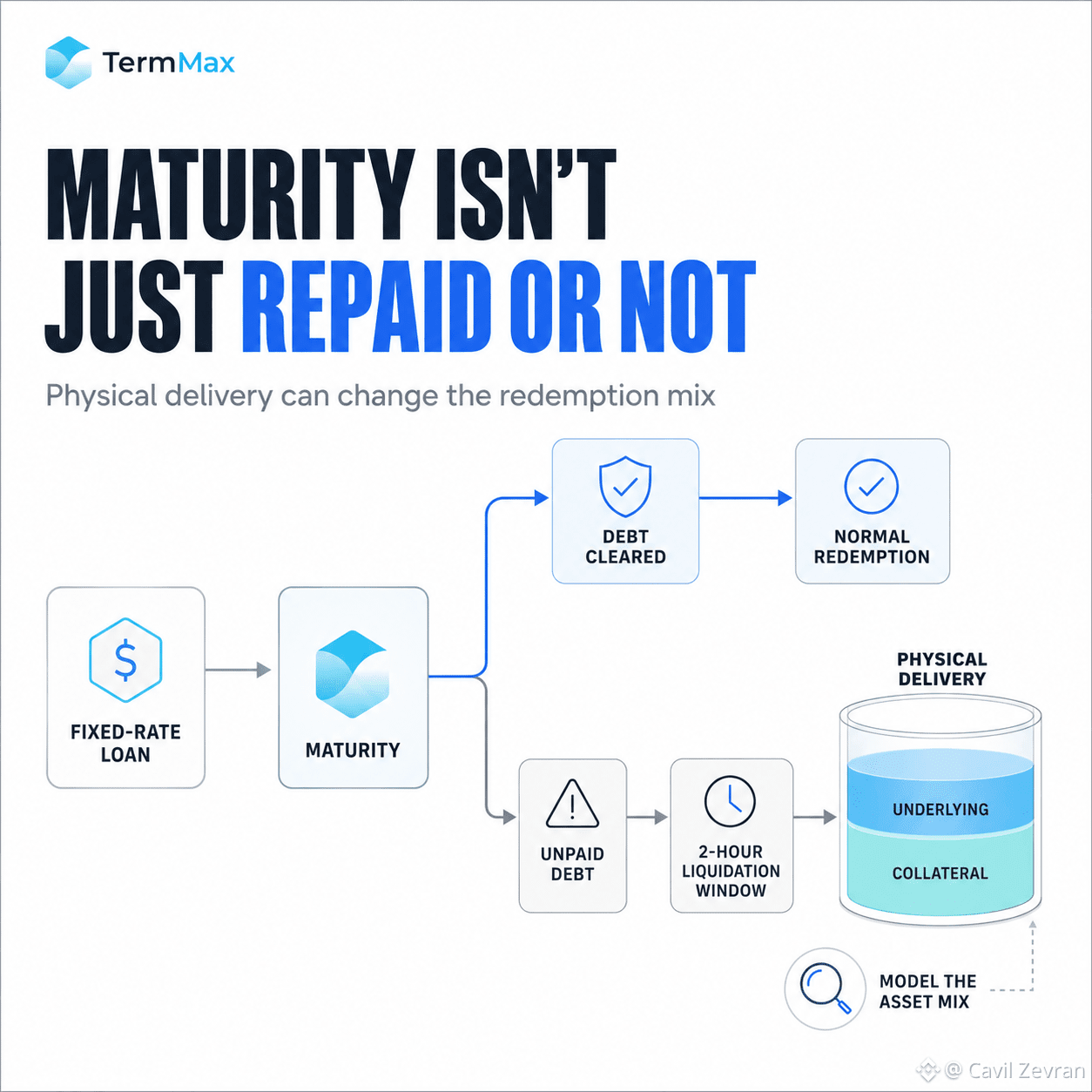
私は当初、TermMaxの清算フローをかなり馴染みのあるものとして読みました。つまり、債務が満期を迎え、未払いのポジションが清算され、担保が返済しなかった分をカバーする、というものです。ですが、その仕組みは必ずしもそこで終わりません。借り手が返済を逃すと、TermMaxは2時間の清算ウィンドウを開きます。そのウィンドウの後でも債務が未払いのままであったり、あるいは部分的にしか清算されていなかったりする場合、現物引渡しが開始され、償還プールには基礎となる資産と担保の両方が含まれ得ます。FTの保有者は、その混合プールから比例配分で償還を受けます。
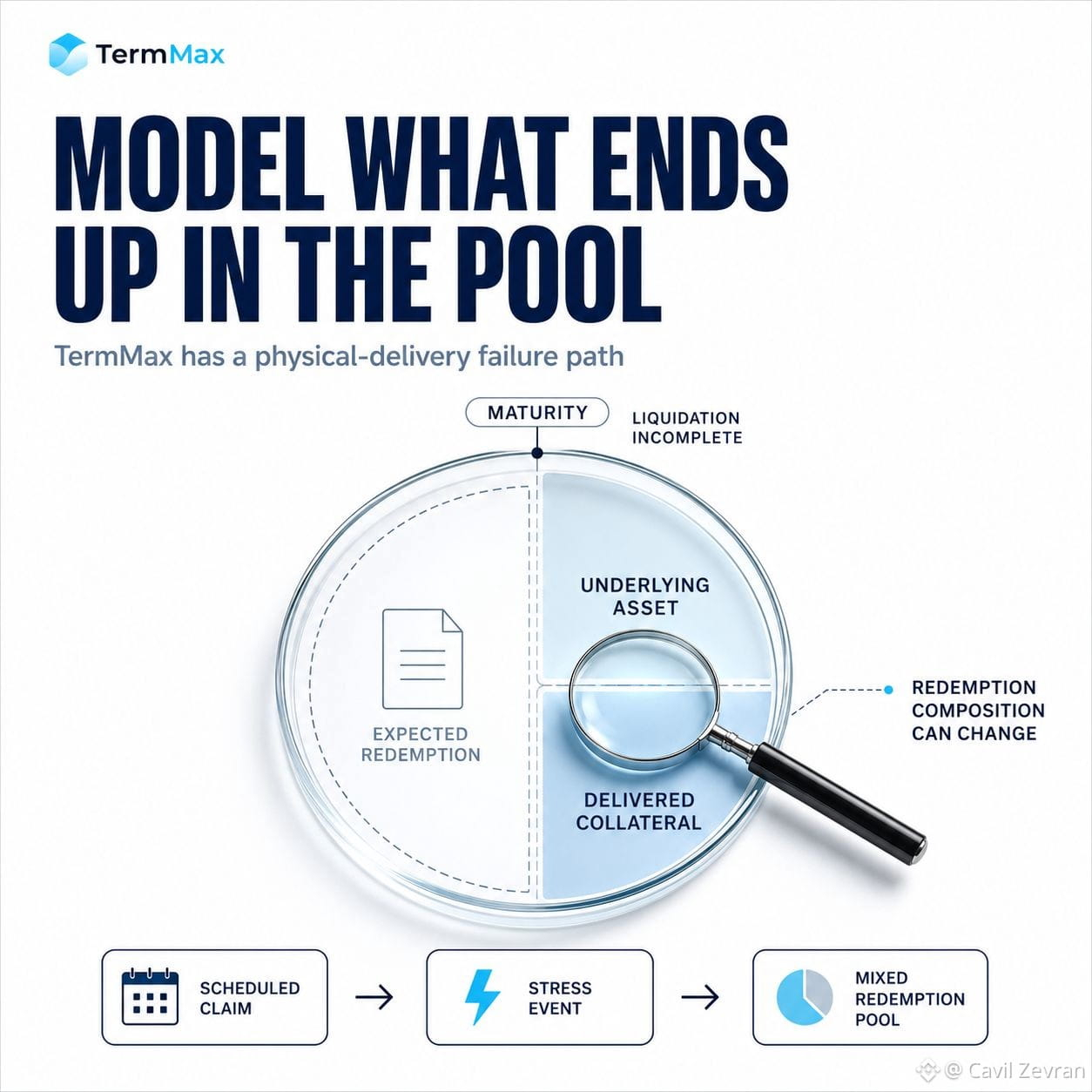
研究者の観点では、これにより、固定金利市場を比較するときに何に注目すべきかが変わると思います。約束された満期価値だけを見ても、清算が債務を完全に相殺できない場合にシステムが取り得る状態は見落としてしまいます。最終的な帰結は、もはや「返済された」か「デフォルトした」かだけではありません。償還を裏付けるものの構成が変わり得ます。
これは特に、ストレス下で担保が債務資産と非常に異なる振る舞いをする可能性がある市場を調べるときに重要です。
そこで、TermMaxの満期には、もう一つモデル化する価値のある変数があります。通常の清算経路がキャパシティ切れになった場合、実際に償還プールに何が入っている可能性があるのか、という点です。
固定金利は、予定された経済条件を教えてくれます。
現物引渡しは、失敗経路がそれ自身のモデルに値する理由を教えてくれます。
@TermMax #TermMax
私は当初、TermMaxの清算フローをかなり馴染みのあるものとして読みました。つまり、債務が満期を迎え、未払いのポジションが清算され、担保が返済しなかった分をカバーする、というものです。ですが、その仕組みは必ずしもそこで終わりません。借り手が返済を逃すと、TermMaxは2時間の清算ウィンドウを開きます。そのウィンドウの後でも債務が未払いのままであったり、あるいは部分的にしか清算されていなかったりする場合、現物引渡しが開始され、償還プールには基礎となる資産と担保の両方が含まれ得ます。FTの保有者は、その混合プールから比例配分で償還を受けます。
研究者の観点では、これにより、固定金利市場を比較するときに何に注目すべきかが変わると思います。約束された満期価値だけを見ても、清算が債務を完全に相殺できない場合にシステムが取り得る状態は見落としてしまいます。最終的な帰結は、もはや「返済された」か「デフォルトした」かだけではありません。償還を裏付けるものの構成が変わり得ます。
これは特に、ストレス下で担保が債務資産と非常に異なる振る舞いをする可能性がある市場を調べるときに重要です。
そこで、TermMaxの満期には、もう一つモデル化する価値のある変数があります。通常の清算経路がキャパシティ切れになった場合、実際に償還プールに何が入っている可能性があるのか、という点です。
固定金利は、予定された経済条件を教えてくれます。
現物引渡しは、失敗経路がそれ自身のモデルに値する理由を教えてくれます。
@TermMax #TermMax