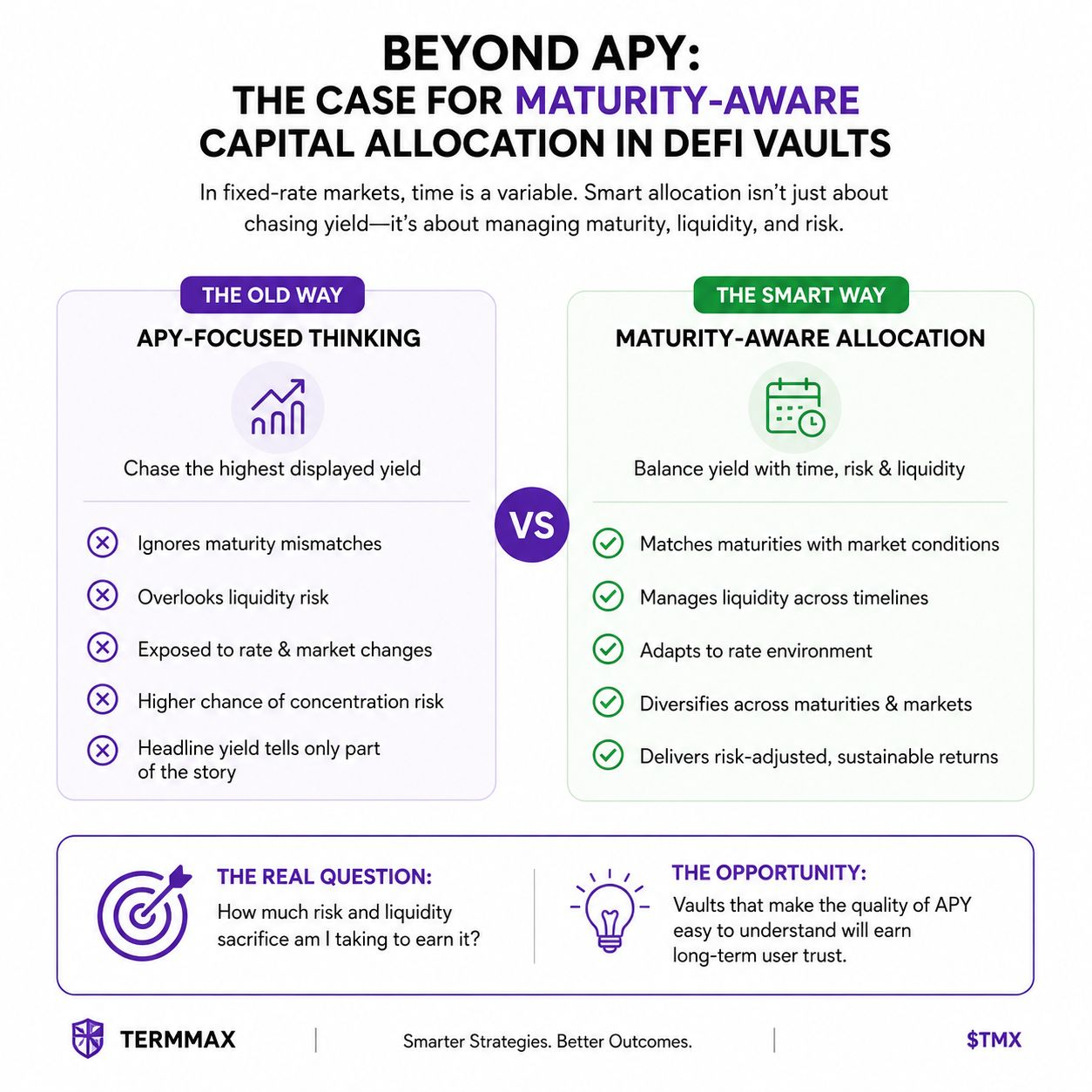
I think I’ve started looking at DeFi vaults differently after digging into @TermMax .
At first, “deposit and let a strategy manage the capital” sounds simple. But the deeper I looked, the more I noticed that the real work happens behind that simple user experience.
With TermMax’s Vault and Curator model, capital allocation isn’t just about chasing the highest displayed yield. Fixed-rate markets introduce another variable: time. Choosing a market also means thinking about maturity, liquidity, expected returns, and the risks that come with each position.
That creates an interesting trade-off. A strategy can show an attractive return, but if its maturity profile doesn’t match market conditions or liquidity needs, the headline yield alone tells only part of the story.
What I find interesting about TermMax is that it makes this allocation layer more visible. The user gets a more passive experience, but the underlying strategy still has to make active decisions about where capital goes and why.
I’m especially curious about what happens when market conditions become stressed. Will the Curator model prove its value when liquidity gets thinner and different maturities start behaving very differently?
Do you think maturity-aware capital allocation will become an important advantage for DeFi vaults, or will APY remain the main metric users care about? #TermMax $TMX