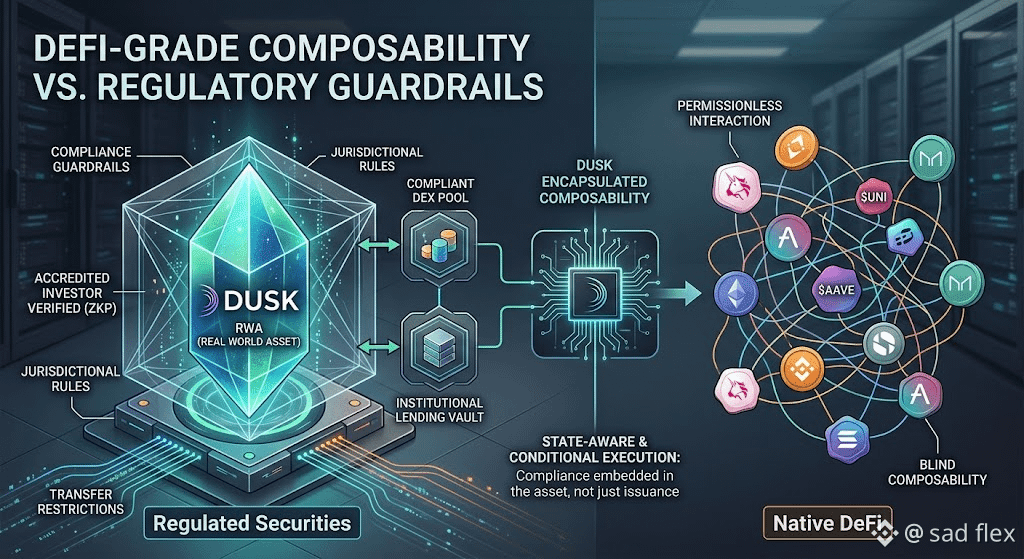
「DeFi-grade composability(DeFiレベルの相互運用性)」について考えれば考えるほど、褒め言葉のように聞こえるものの、実は複雑な問いを指している何かに行き着く
DeFiにおける相互運用性(composability)とは、だいたい何でもありを意味します。あるプロトコルのトークンが許可を求めることなく別のプロトコルに組み込まれ、別の場所で担保として使われ、1回の取引の中で複数のコントラクトをまたいで移動する。そこが魅力、つまり許可不要の組み合わせです
Dusk Tradeは、MMFs、ETF、債券、RWA、そして実際の規制された有価証券に対して、DeFiレベルの相互運用性を約束します
だから問いは、「ここで相互運用性が価値を生むのかどうか」ではありません
価値は明らかにあります。即時決済とプログラマビリティは、TradFiの遅いレールに対する確かな改善です
問題は、規制された有価証券がDeFiトークンのように実際に相互運用可能なのか、それとも「DeFi-grade」がマーケティング色を強めていて技術的な裏付け以上のものを意味しているのか、という点です
規制された有価証券は、発行後に誰でも持てるベアラー(無記名の持参人)型の金融商品ではありません。適格性要件、譲渡制限、管轄の制約などは、発行時だけでなく、しばしばその資産そのものに紐づいて移動します。保有者が適格投資家であることを求める債券が、相互運用可能になった途端にその要件を止めるわけではありません。本当に機能する相互運用性には、あらゆる下流利用にコンプライアンスのロジックを運び込む必要があり、利便性のためにそれを剥ぎ取ることはできません
それは、DeFiにおける通常の相互運用性よりも実際にはずっと作るのが難しい。そしてDuskがそれをやり遂げるなら、そのフレーズが示唆する以上の大きな達成になります
ただしそれは、ここでの相互運用性が設計上、より狭いものになることも意味します。DeFiトークンは何にでも組み込めます。Dusk上の規制された有価証券は、おそらくその制限も同様に尊重するコントラクトとしか相互運用できないでしょう。つまり「相互運用性」という言葉が通常想起させる範囲よりも、小さく、より統制された領域に留まる可能性が高い
私がまだ決めきれていないのは、これをDeFiレベルの相互運用性と呼ぶことが、コンプライアンス上どれだけ制約が厳しくなる必要があるのかを過小評価しているのか、それともDuskが、ルール自体を伴っている相互運用性を本当に解決したのか、という点です
#dusk @Dusk $DUSK $MAGMA $STAR
DeFiにおける相互運用性(composability)とは、だいたい何でもありを意味します。あるプロトコルのトークンが許可を求めることなく別のプロトコルに組み込まれ、別の場所で担保として使われ、1回の取引の中で複数のコントラクトをまたいで移動する。そこが魅力、つまり許可不要の組み合わせです
Dusk Tradeは、MMFs、ETF、債券、RWA、そして実際の規制された有価証券に対して、DeFiレベルの相互運用性を約束します
だから問いは、「ここで相互運用性が価値を生むのかどうか」ではありません
価値は明らかにあります。即時決済とプログラマビリティは、TradFiの遅いレールに対する確かな改善です
問題は、規制された有価証券がDeFiトークンのように実際に相互運用可能なのか、それとも「DeFi-grade」がマーケティング色を強めていて技術的な裏付け以上のものを意味しているのか、という点です
規制された有価証券は、発行後に誰でも持てるベアラー(無記名の持参人)型の金融商品ではありません。適格性要件、譲渡制限、管轄の制約などは、発行時だけでなく、しばしばその資産そのものに紐づいて移動します。保有者が適格投資家であることを求める債券が、相互運用可能になった途端にその要件を止めるわけではありません。本当に機能する相互運用性には、あらゆる下流利用にコンプライアンスのロジックを運び込む必要があり、利便性のためにそれを剥ぎ取ることはできません
それは、DeFiにおける通常の相互運用性よりも実際にはずっと作るのが難しい。そしてDuskがそれをやり遂げるなら、そのフレーズが示唆する以上の大きな達成になります
ただしそれは、ここでの相互運用性が設計上、より狭いものになることも意味します。DeFiトークンは何にでも組み込めます。Dusk上の規制された有価証券は、おそらくその制限も同様に尊重するコントラクトとしか相互運用できないでしょう。つまり「相互運用性」という言葉が通常想起させる範囲よりも、小さく、より統制された領域に留まる可能性が高い
私がまだ決めきれていないのは、これをDeFiレベルの相互運用性と呼ぶことが、コンプライアンス上どれだけ制約が厳しくなる必要があるのかを過小評価しているのか、それともDuskが、ルール自体を伴っている相互運用性を本当に解決したのか、という点です
#dusk @Dusk $DUSK $MAGMA $STAR