#termmax @TermMax
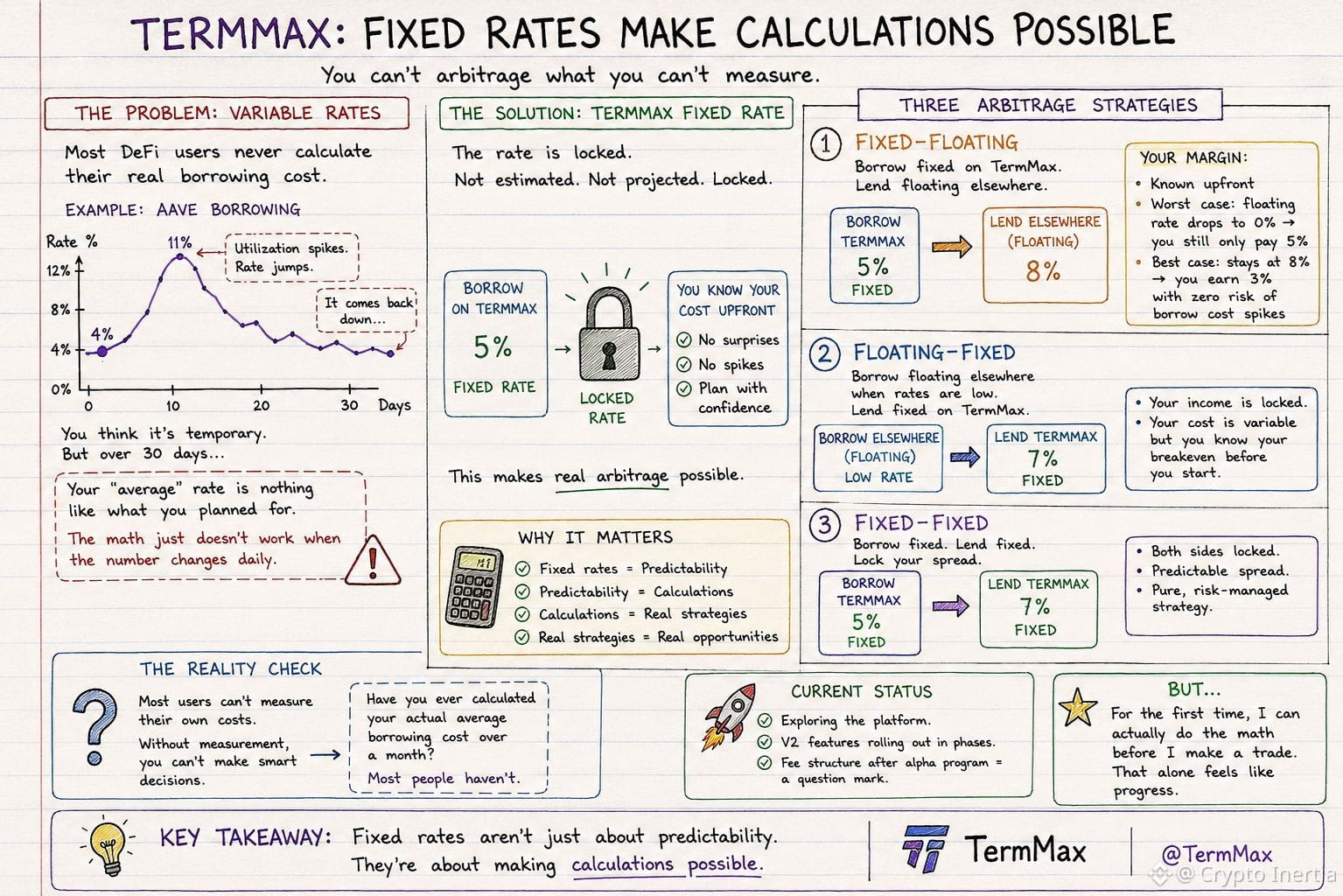
多くのDeFiユーザーは、実際の借入コストをちゃんと計算したことがありません。私も数カ月間はそうでした。Aaveで4%で借りる。特に問題ない感じです。ところが利用率が跳ね上がると、突然11%になります。「一時的だ」と自分に言い聞かせて、また下がってきます。でも30日間ずっと追跡してみると、「平均」レートが、予定していたものとはまったく違う。数値が毎日変わると、数学が成り立たないのです。
termMaxはそれを、つまらなそうに聞こえる形で解決します。ですが考えれば分かる。レートはロックされます。推定ではない。予測でもない。ロックされるのです。
つまり、ようやく適切なレートアービトラージができます。TermMaxで5%の固定で借りて、他で8%の変動で貸す。利益(マージン)は事前に分かります。最悪の場合、変動レートがゼロまで下がっても、損失は結局5%だけ。最高の場合は8%のまま推移すれば、借入コストが爆発して破綻するリスクなしで3%をポケットできます。あるいは逆に。レートが低いときに他で変動で借りる。TermMaxで7%の固定で貸す。収入はロックされます。コストは変動しますが、開始する前に損益分岐点(ブレークイーブン)を把握できているのです。
ドキュメントには実際に明確に書かれています。3つの戦略。固定-変動。変動-固定。固定-固定。まるでDeFiホワイトペーパーではなく、債券トレーダーの手順書みたいに読めます。そして、それがまさに面白いところです。
固定金利は、予測可能性だけのためではありません。計算を可能にするためです。測れないものにはアービトラージはできない。そしてDeFiでは現状、多くのユーザーが自分のコストを測れないのです。
私はまだプラットフォームを探索中です。すべてがまだ明確というわけではありません。V2の機能は段階的に展開されていますし、アルファプログラム後の手数料体系はまだ不明です。とはいえ、初めて「トレードする前に」実際に計算できています。それだけでも前進だと感じます。
あなたはどうですか? 1カ月の間の実際の平均借入コストを計算したことはありますか? ほとんどの人はありません。そして、もしかすると本当の問題はそこにあって、TermMaxが解決しようとしているのはまさにそれです。
多くのDeFiユーザーは、実際の借入コストをちゃんと計算したことがありません。私も数カ月間はそうでした。Aaveで4%で借りる。特に問題ない感じです。ところが利用率が跳ね上がると、突然11%になります。「一時的だ」と自分に言い聞かせて、また下がってきます。でも30日間ずっと追跡してみると、「平均」レートが、予定していたものとはまったく違う。数値が毎日変わると、数学が成り立たないのです。
termMaxはそれを、つまらなそうに聞こえる形で解決します。ですが考えれば分かる。レートはロックされます。推定ではない。予測でもない。ロックされるのです。
つまり、ようやく適切なレートアービトラージができます。TermMaxで5%の固定で借りて、他で8%の変動で貸す。利益(マージン)は事前に分かります。最悪の場合、変動レートがゼロまで下がっても、損失は結局5%だけ。最高の場合は8%のまま推移すれば、借入コストが爆発して破綻するリスクなしで3%をポケットできます。あるいは逆に。レートが低いときに他で変動で借りる。TermMaxで7%の固定で貸す。収入はロックされます。コストは変動しますが、開始する前に損益分岐点(ブレークイーブン)を把握できているのです。
ドキュメントには実際に明確に書かれています。3つの戦略。固定-変動。変動-固定。固定-固定。まるでDeFiホワイトペーパーではなく、債券トレーダーの手順書みたいに読めます。そして、それがまさに面白いところです。
固定金利は、予測可能性だけのためではありません。計算を可能にするためです。測れないものにはアービトラージはできない。そしてDeFiでは現状、多くのユーザーが自分のコストを測れないのです。
私はまだプラットフォームを探索中です。すべてがまだ明確というわけではありません。V2の機能は段階的に展開されていますし、アルファプログラム後の手数料体系はまだ不明です。とはいえ、初めて「トレードする前に」実際に計算できています。それだけでも前進だと感じます。
あなたはどうですか? 1カ月の間の実際の平均借入コストを計算したことはありますか? ほとんどの人はありません。そして、もしかすると本当の問題はそこにあって、TermMaxが解決しようとしているのはまさにそれです。