
#dusk $DUSK @Dusk
Duskのプライバシー設計で私が興味深いのは、メモが隠されていることだけではありません。隠される「場所」と、同時に成立しなければならない「前提」の多さです。
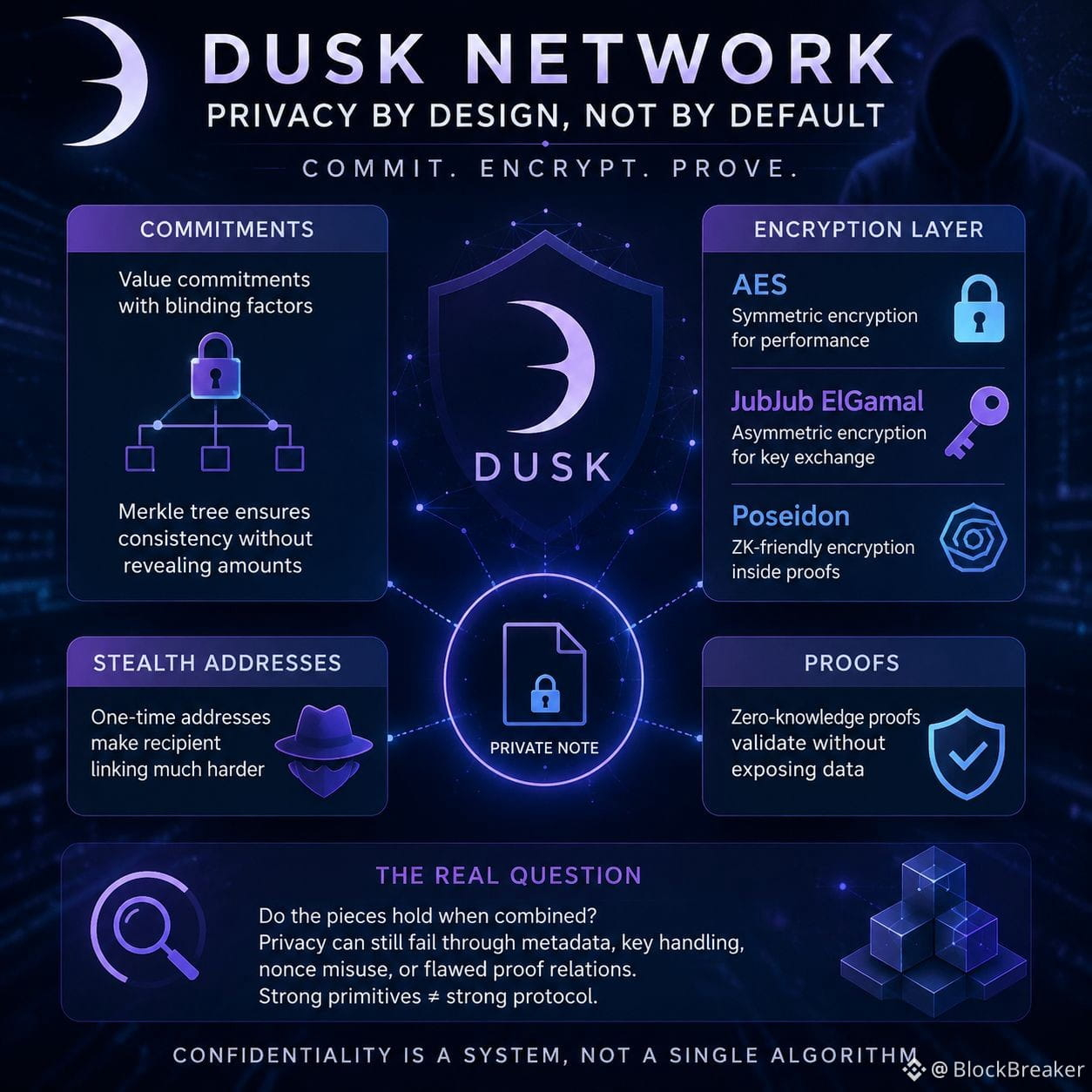
PhoenixはコミットメントとMerkleツリーを使い、さらにバリュー・コミットメントではブラインディング因子を加えます。バリデータは金額を学習することなく整合性を検証できます。ステルス・アドレスもまた、受取人のリンクを難しくします。
暗号化レイヤは、私がより深く見ている部分です。現行のPhoenixでは対称暗号としてAESが公開されていますが、スタックにはJubJub ElGamalやPoseidonも含まれています。DuskのPoseidonライブラリには暗号化機能がありますが、「Poseidonは秘匿性を提供する」と言うのは単純化しすぎです。実装は進化してきており、意味論的安全性を判断する際にそれが重要になります。
本当の疑問は、この構成が1つのシステムとして証明されているかどうかです。コミットメントは値を隠せ、暗号化は平文を隠せるとしても、それでもプライバシーはメタデータ、鍵の取り扱い、ノンスの誤用、アドレスの相関、あるいは欠陥のある証明関係を通じて失敗する可能性があります。私はこれを何度も見てきました。強力なプリミティブがあれば、それだけで強いプロトコルになるとは限りません。
PoseidonはZKに適した計算のために作られており、AESは一般的な暗号化のために成熟しています。これは性能に役立つかもしれませんが、暗号化・コミット・証明の境界が重要になります。
私は、材料がそれぞれ尊重されているからといって、その構成を信頼する準備はできていません。メモの暗号化が値や身元を隠すことを示す形式的な議論が欲しいのです。そこにこそ、Duskのプライバシー主張が、私が評価できるものになるポイントがあります。
Duskのプライバシー設計で私が興味深いのは、メモが隠されていることだけではありません。隠される「場所」と、同時に成立しなければならない「前提」の多さです。
PhoenixはコミットメントとMerkleツリーを使い、さらにバリュー・コミットメントではブラインディング因子を加えます。バリデータは金額を学習することなく整合性を検証できます。ステルス・アドレスもまた、受取人のリンクを難しくします。
暗号化レイヤは、私がより深く見ている部分です。現行のPhoenixでは対称暗号としてAESが公開されていますが、スタックにはJubJub ElGamalやPoseidonも含まれています。DuskのPoseidonライブラリには暗号化機能がありますが、「Poseidonは秘匿性を提供する」と言うのは単純化しすぎです。実装は進化してきており、意味論的安全性を判断する際にそれが重要になります。
本当の疑問は、この構成が1つのシステムとして証明されているかどうかです。コミットメントは値を隠せ、暗号化は平文を隠せるとしても、それでもプライバシーはメタデータ、鍵の取り扱い、ノンスの誤用、アドレスの相関、あるいは欠陥のある証明関係を通じて失敗する可能性があります。私はこれを何度も見てきました。強力なプリミティブがあれば、それだけで強いプロトコルになるとは限りません。
PoseidonはZKに適した計算のために作られており、AESは一般的な暗号化のために成熟しています。これは性能に役立つかもしれませんが、暗号化・コミット・証明の境界が重要になります。
私は、材料がそれぞれ尊重されているからといって、その構成を信頼する準備はできていません。メモの暗号化が値や身元を隠すことを示す形式的な議論が欲しいのです。そこにこそ、Duskのプライバシー主張が、私が評価できるものになるポイントがあります。