実際に貸付プロトコルへ資金を入れる前に、私はいつも最初に1つ確認します:
「何か問題が起きたらどうなるの??🤔」という点です。なので、彼らの機能を見るだけでなく、まず#TermMax 件ものセキュリティ体制を確認しました。
いくつか重要な点が目立ちました。
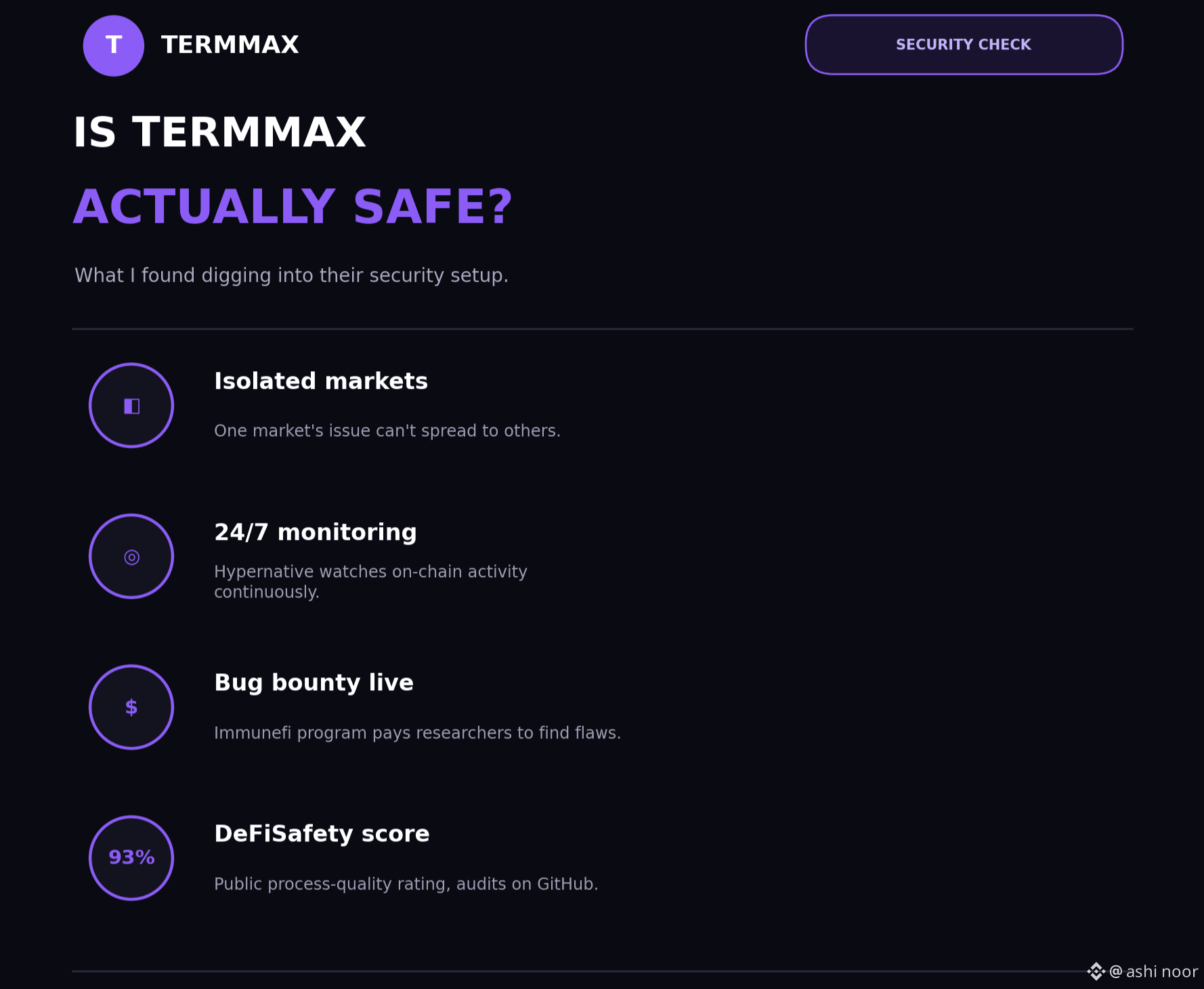
@TermMax の各マーケットはそれぞれ独立して稼働しています。つまり、1つのマーケットが悪用されたり、価格操作の問題に見舞われたりしても、他のマーケットへ連鎖しません。
これは大きな設計上の選択です。というのも、多くの#DEFİ 件のハックは、すべてが1つの共通のリスクプールにつながっているせいで、より大きな災害へと拡大してしまうからです。
それに加えて、24時間365日のオンチェーン監視にHypernativeを導入しており、Immunefiのバグバウンティプログラムも運用しています。さらに、SpearbitのCantina監査コンペにも参加していて、複数の独立したセキュリティ研究者が、1つの会社が1回だけチェックして終わりではなく、欠陥を見つけるために実際に競い合っているんです。
#DeFiSafety のプロセス品質スコアは93%で、監査レポートもピッチデックで「主張しているだけ」ではなく、GitHub上で公開されています。
これらは、ゼロリスクを保証するものではありません。DeFiには何であれリスクゼロはありません。
しかし「一度監査を受けた」場合と、「継続的な監視+独立したマーケット+公開される監査トレイル」を運用している場合の違いは、資金をどこに預けるかを決めるときには大きいです。
ここにいる人のうち、プロトコルを使う前に実際に監査レポートをチェックしている人はどれくらいいるのでしょう?それとも、TVLとAPYのような数字だけが、あなたにとって通常は重要な指標ですか?
#TermMaxFi $TMX @TermMax
#TermMax
「何か問題が起きたらどうなるの??🤔」という点です。なので、彼らの機能を見るだけでなく、まず#TermMax 件ものセキュリティ体制を確認しました。
いくつか重要な点が目立ちました。
@TermMax の各マーケットはそれぞれ独立して稼働しています。つまり、1つのマーケットが悪用されたり、価格操作の問題に見舞われたりしても、他のマーケットへ連鎖しません。
これは大きな設計上の選択です。というのも、多くの#DEFİ 件のハックは、すべてが1つの共通のリスクプールにつながっているせいで、より大きな災害へと拡大してしまうからです。
それに加えて、24時間365日のオンチェーン監視にHypernativeを導入しており、Immunefiのバグバウンティプログラムも運用しています。さらに、SpearbitのCantina監査コンペにも参加していて、複数の独立したセキュリティ研究者が、1つの会社が1回だけチェックして終わりではなく、欠陥を見つけるために実際に競い合っているんです。
#DeFiSafety のプロセス品質スコアは93%で、監査レポートもピッチデックで「主張しているだけ」ではなく、GitHub上で公開されています。
これらは、ゼロリスクを保証するものではありません。DeFiには何であれリスクゼロはありません。
しかし「一度監査を受けた」場合と、「継続的な監視+独立したマーケット+公開される監査トレイル」を運用している場合の違いは、資金をどこに預けるかを決めるときには大きいです。
ここにいる人のうち、プロトコルを使う前に実際に監査レポートをチェックしている人はどれくらいいるのでしょう?それとも、TVLとAPYのような数字だけが、あなたにとって通常は重要な指標ですか?
#TermMaxFi $TMX @TermMax
#TermMax