Duskについて考えれば考えるほど、褒め言葉のように聞こえるのに実は複雑な問いになっている何かに行き着いてしまう
暗号資産の定番の売り文句は「信頼不要」。取引相手や機関を信じる必要はなく、コードが結果を強制する
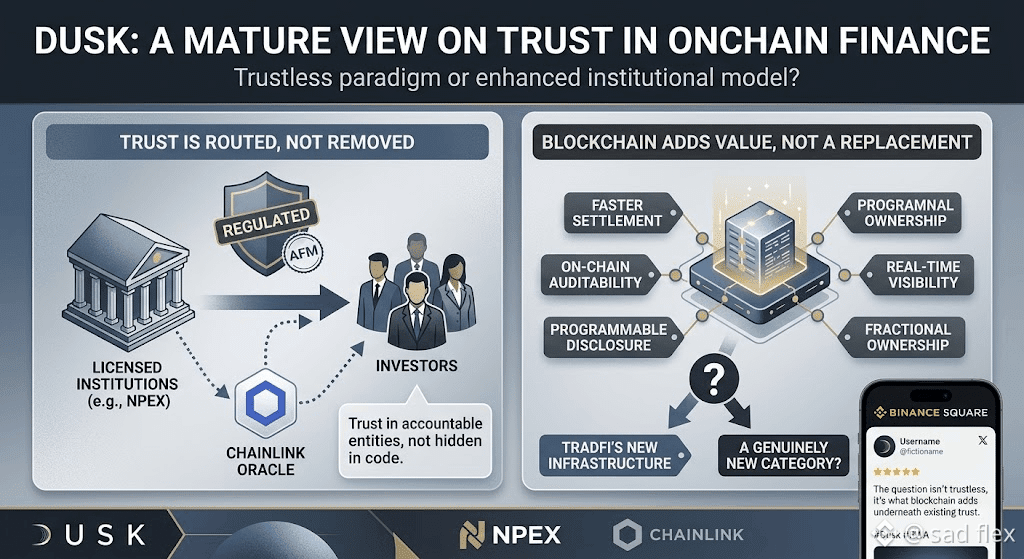
でもDuskは、その売り文句をあまり本気では押し出していない。NPEXやChainlinkは、信頼を取り除くためにあるのではなく、免許を持ち、説明責任のある機関を経由して信頼を“振り分ける”ためにある
つまり、問題はDuskがこれについて誠実かどうかではない
誠実であることは明らかだ。AFMの規制下にある取引所やライセンスが、パートナーシップの説明の中にそのまま書かれている
問うべきは、その誠実さがDuskをTradFiと本当に違う存在にするのか、それともブロックチェーンによる決済を伴うだけで、結局はTradFiの信頼モデルの延長なのか
これは、ほとんどの暗号資産よりも誠実だ。「信頼不要」という言葉が実際に信頼不要だったことは、めったにない。誰かは結局、ブリッジ運用者やオラクル、そしてコントラクトをアップグレードできるチームを信じる必要があった。暗号資産はその信頼を移し替えて、それを“取り除いた”と言った。Duskはその一歩を飛ばす
NPEXのライセンスやChainlinkのオラクルとしての評判は、名指しして保持し、説明責任を問える“信頼”だ。コードの内側に隠れて見えない信頼ではない
それは、誠実さとしての本当の前進だ
ただし、その信頼が依然として制度的で、これまで通りライセンスを受け、規制当局に説明責任があり、という形であるなら、本当の問いは「Duskは信頼不要なのか」ではない。既に存在していた信頼モデルの“下に”ブロックチェーンが何を追加するのかが問題になる。より速い決済、監査可能性、プログラム可能な開示といった改善は、TradFiの信頼モデルの置き換えではなく、拡張として現実に存在する
私がまだ決着をつけられていないのは、「規制されたオンチェーン・ファイナンス」が本当に新しいカテゴリーなのか、それともTradFiの信頼モデルがインフラとしてのブロックチェーンをまとっているだけなのか、という点だ。役に立つかもしれないが、業界が主張するようなパラダイムシフトではない可能性もある
Duskは、信頼がどこにあるのかについての誠実さがある。そして、その上にチェーンが何を追加するのかについての本物の根拠がある
私が繰り返し戻ってしまう問いは、それがDuskが暗号資産より成熟しているということなのか、それとも「信頼不要はここでは実現不可能だった」ということを黙って認めているだけなのか
#dusk $DUSK @Dusk
暗号資産の定番の売り文句は「信頼不要」。取引相手や機関を信じる必要はなく、コードが結果を強制する
でもDuskは、その売り文句をあまり本気では押し出していない。NPEXやChainlinkは、信頼を取り除くためにあるのではなく、免許を持ち、説明責任のある機関を経由して信頼を“振り分ける”ためにある
つまり、問題はDuskがこれについて誠実かどうかではない
誠実であることは明らかだ。AFMの規制下にある取引所やライセンスが、パートナーシップの説明の中にそのまま書かれている
問うべきは、その誠実さがDuskをTradFiと本当に違う存在にするのか、それともブロックチェーンによる決済を伴うだけで、結局はTradFiの信頼モデルの延長なのか
これは、ほとんどの暗号資産よりも誠実だ。「信頼不要」という言葉が実際に信頼不要だったことは、めったにない。誰かは結局、ブリッジ運用者やオラクル、そしてコントラクトをアップグレードできるチームを信じる必要があった。暗号資産はその信頼を移し替えて、それを“取り除いた”と言った。Duskはその一歩を飛ばす
NPEXのライセンスやChainlinkのオラクルとしての評判は、名指しして保持し、説明責任を問える“信頼”だ。コードの内側に隠れて見えない信頼ではない
それは、誠実さとしての本当の前進だ
ただし、その信頼が依然として制度的で、これまで通りライセンスを受け、規制当局に説明責任があり、という形であるなら、本当の問いは「Duskは信頼不要なのか」ではない。既に存在していた信頼モデルの“下に”ブロックチェーンが何を追加するのかが問題になる。より速い決済、監査可能性、プログラム可能な開示といった改善は、TradFiの信頼モデルの置き換えではなく、拡張として現実に存在する
私がまだ決着をつけられていないのは、「規制されたオンチェーン・ファイナンス」が本当に新しいカテゴリーなのか、それともTradFiの信頼モデルがインフラとしてのブロックチェーンをまとっているだけなのか、という点だ。役に立つかもしれないが、業界が主張するようなパラダイムシフトではない可能性もある
Duskは、信頼がどこにあるのかについての誠実さがある。そして、その上にチェーンが何を追加するのかについての本物の根拠がある
私が繰り返し戻ってしまう問いは、それがDuskが暗号資産より成熟しているということなのか、それとも「信頼不要はここでは実現不可能だった」ということを黙って認めているだけなのか
#dusk $DUSK @Dusk