I used to think "fixed-rate" on TermMax basically meant the risk was gone — lock a rate, know your return, move on. Digging into how the protocol actually structures its markets, that assumption didn't quite survive.
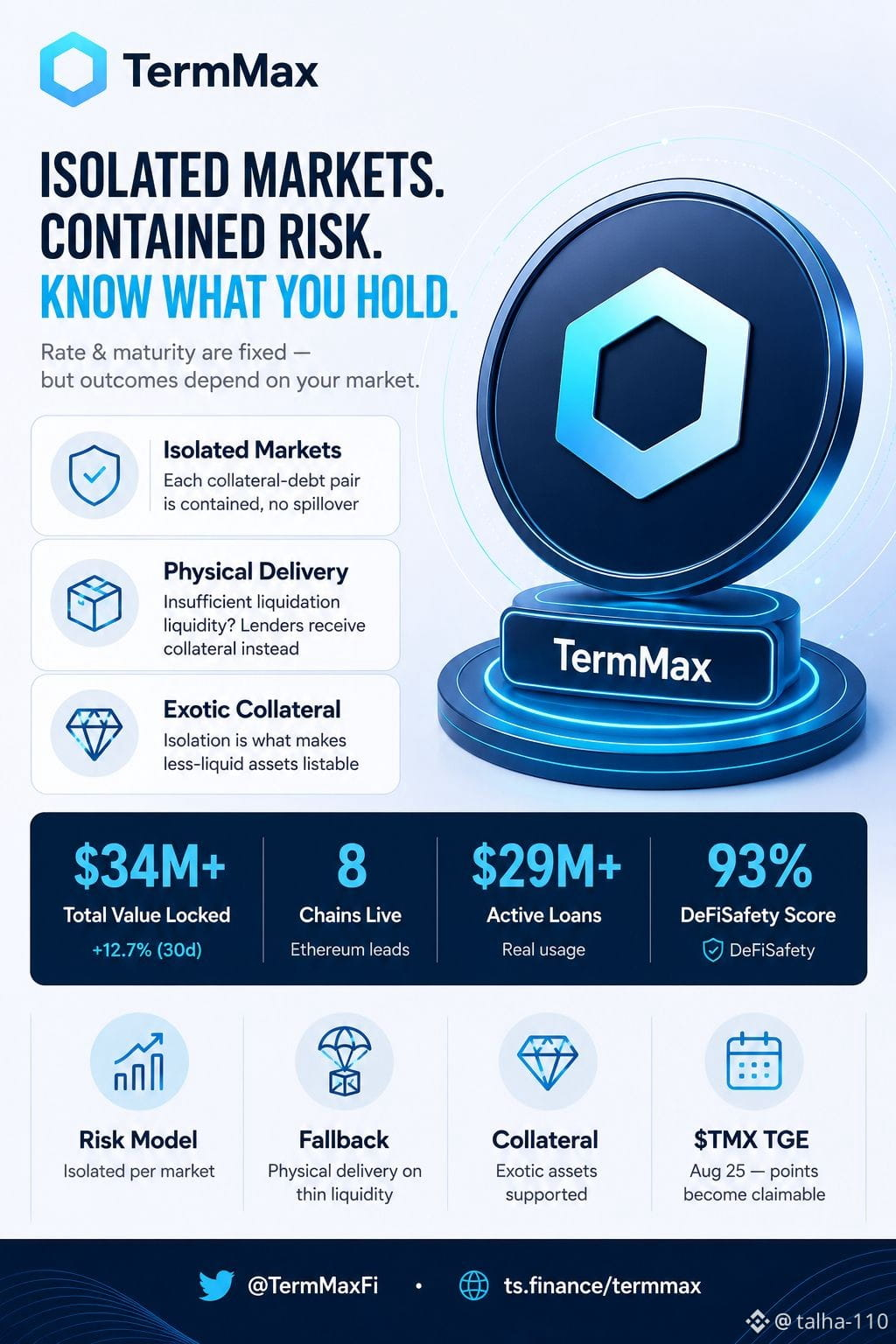
TermMax runs on isolated markets. Each one is a specific collateral-debt pair, and your exposure stays contained inside that pair. That's actually the point — it's what lets the protocol support exotic or less-liquid collateral without one bad asset draining a shared pool, the way it can on some other lending platforms.
But isolation cuts both ways. If a market's collateral crashes hard and there isn't enough liquidity to liquidate it cleanly, TermMax has a fallback that doesn't get much airtime: physical delivery. Instead of getting your debt token back, lenders can end up holding the borrower's actual collateral instead.
So yes — the rate is fixed, the maturity is fixed. But what you actually walk away with in a worst-case scenario depends on which isolated market you picked and how thin its liquidity was. That's a detail easy to miss when "fixed-rate" is doing most of the talking.
None of this makes the design bad — isolation is exactly what makes exotic-collateral markets possible in the first place. It just means the risk didn't vanish. It moved from "will my rate change" to "which market did I choose."
#termmax @TermMax
$GPS
$PIEVERSE
$ACE
TermMax runs on isolated markets. Each one is a specific collateral-debt pair, and your exposure stays contained inside that pair. That's actually the point — it's what lets the protocol support exotic or less-liquid collateral without one bad asset draining a shared pool, the way it can on some other lending platforms.
But isolation cuts both ways. If a market's collateral crashes hard and there isn't enough liquidity to liquidate it cleanly, TermMax has a fallback that doesn't get much airtime: physical delivery. Instead of getting your debt token back, lenders can end up holding the borrower's actual collateral instead.
So yes — the rate is fixed, the maturity is fixed. But what you actually walk away with in a worst-case scenario depends on which isolated market you picked and how thin its liquidity was. That's a detail easy to miss when "fixed-rate" is doing most of the talking.
None of this makes the design bad — isolation is exactly what makes exotic-collateral markets possible in the first place. It just means the risk didn't vanish. It moved from "will my rate change" to "which market did I choose."
#termmax @TermMax
$GPS
$PIEVERSE
$ACE