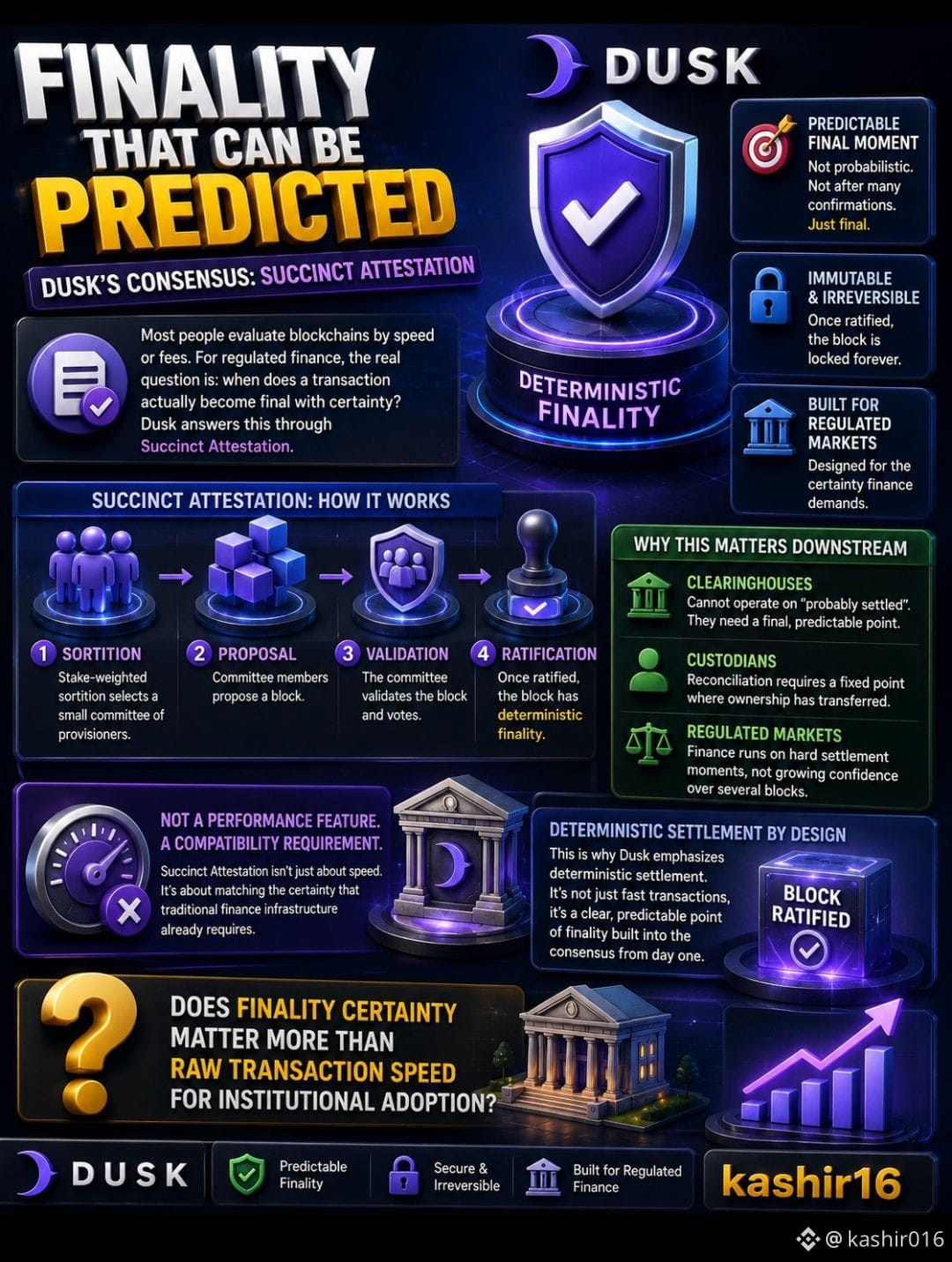
#dusk $DUSK ほとんどの人は、ブロックチェーンを評価するときまずスループットや手数料を見ます。しかし規制された金融においては、より重要な問いはもっとシンプルかもしれません。つまり、取引が実際に最終確定(ファイナリティ)するのはいつなのか、そしてその瞬間を確実に予測できるのか、ということです。
Duskは、そのコンセンサス層であるSuccinct Attestationによってこの問題に取り組んでいます。
オープンエンドな承認(確認)プロセスに依存するのではなく、Duskはソーティションによって選出されたステークベースの委員会を用いて、ブロックを提案し、検証し、そしてラティファイ(確定)します。
ブロックがラティファイされると、そこには決定論的なファイナリティが生じます。
この違いは、私が最初に考えていた以上に重要です。
金融上の決済は「おそらく決済済み」で運用できません。取引を精算するカストディアンは、所有権が移転したことを明確に示すポイントが必要です。市場インフラの提供者は、追加のブロックにわたって信頼が積み上がるのを待つのではなく、取引が最終確定したタイミングを把握する必要があります。
従来の金融は、すでに定義された決済のタイミングを前提に機能しています。ブロックチェーン・インフラが規制された市場を支えるのであれば、プロトコル・レベルで予測可能なファイナリティを持つことが非常に重要になります。
この点が、私がSuccinct Attestationで面白いと感じているところです。
単なる性能機能ではありません。
それは、金融インフラが必要とする種類の確実性との互換性要件です。
また、Duskが決定論的な決済を強調し続けている理由ともつながります。取引が素早く行われるだけの話ではなく、ネットワークが「最終確定の明確で予測可能なポイント」を提供できる、ということです。
そしてそこで、$DUSK becomes私にとって興味深くなります。
ほとんどの個人トレーダーは、コンセンサス設計についておそらく考えません。決済インフラを評価する機関は、おそらく常にそれを考えているでしょう。
ブロックチェーンが本格的な金融資産を扱うのであれば、最終確定の確実性は、究極的には生の取引スピードよりも重要なのでしょうか?
@Dusk $DUSK #dusk
Duskは、そのコンセンサス層であるSuccinct Attestationによってこの問題に取り組んでいます。
オープンエンドな承認(確認)プロセスに依存するのではなく、Duskはソーティションによって選出されたステークベースの委員会を用いて、ブロックを提案し、検証し、そしてラティファイ(確定)します。
ブロックがラティファイされると、そこには決定論的なファイナリティが生じます。
この違いは、私が最初に考えていた以上に重要です。
金融上の決済は「おそらく決済済み」で運用できません。取引を精算するカストディアンは、所有権が移転したことを明確に示すポイントが必要です。市場インフラの提供者は、追加のブロックにわたって信頼が積み上がるのを待つのではなく、取引が最終確定したタイミングを把握する必要があります。
従来の金融は、すでに定義された決済のタイミングを前提に機能しています。ブロックチェーン・インフラが規制された市場を支えるのであれば、プロトコル・レベルで予測可能なファイナリティを持つことが非常に重要になります。
この点が、私がSuccinct Attestationで面白いと感じているところです。
単なる性能機能ではありません。
それは、金融インフラが必要とする種類の確実性との互換性要件です。
また、Duskが決定論的な決済を強調し続けている理由ともつながります。取引が素早く行われるだけの話ではなく、ネットワークが「最終確定の明確で予測可能なポイント」を提供できる、ということです。
そしてそこで、$DUSK becomes私にとって興味深くなります。
ほとんどの個人トレーダーは、コンセンサス設計についておそらく考えません。決済インフラを評価する機関は、おそらく常にそれを考えているでしょう。
ブロックチェーンが本格的な金融資産を扱うのであれば、最終確定の確実性は、究極的には生の取引スピードよりも重要なのでしょうか?
@Dusk $DUSK #dusk