
「制度としてのDeFi」は矛盾だと思っていました。
私たちは何年も前から、スループット、スマートコントラクト、そしてプライバシー関連のツールをすでに備えていました。けれども、ボトルネックは速度ではありません。本当の課題は法的な確定性(リーガル・ファイナリティ)でした。規制当局が相手方を監査できる状態を保ちながら、どうやって5,000万ユーロ(€50M)規模の担保を秒単位で決済するのでしょうか?長い間、答えはただ一つでした。「できない」と。
Duskのアプローチは、この問題に対処しています。ゼロ知識証明により、匿名性ではなく検証可能な開示を可能にする、コンプライアンスを意識したL1を構築しました。規制当局には可視性を、取引相手には機密性を提供します。インフラは必要ですが、本当のシグナルは、それに接続する認可済みパートナーにあります。
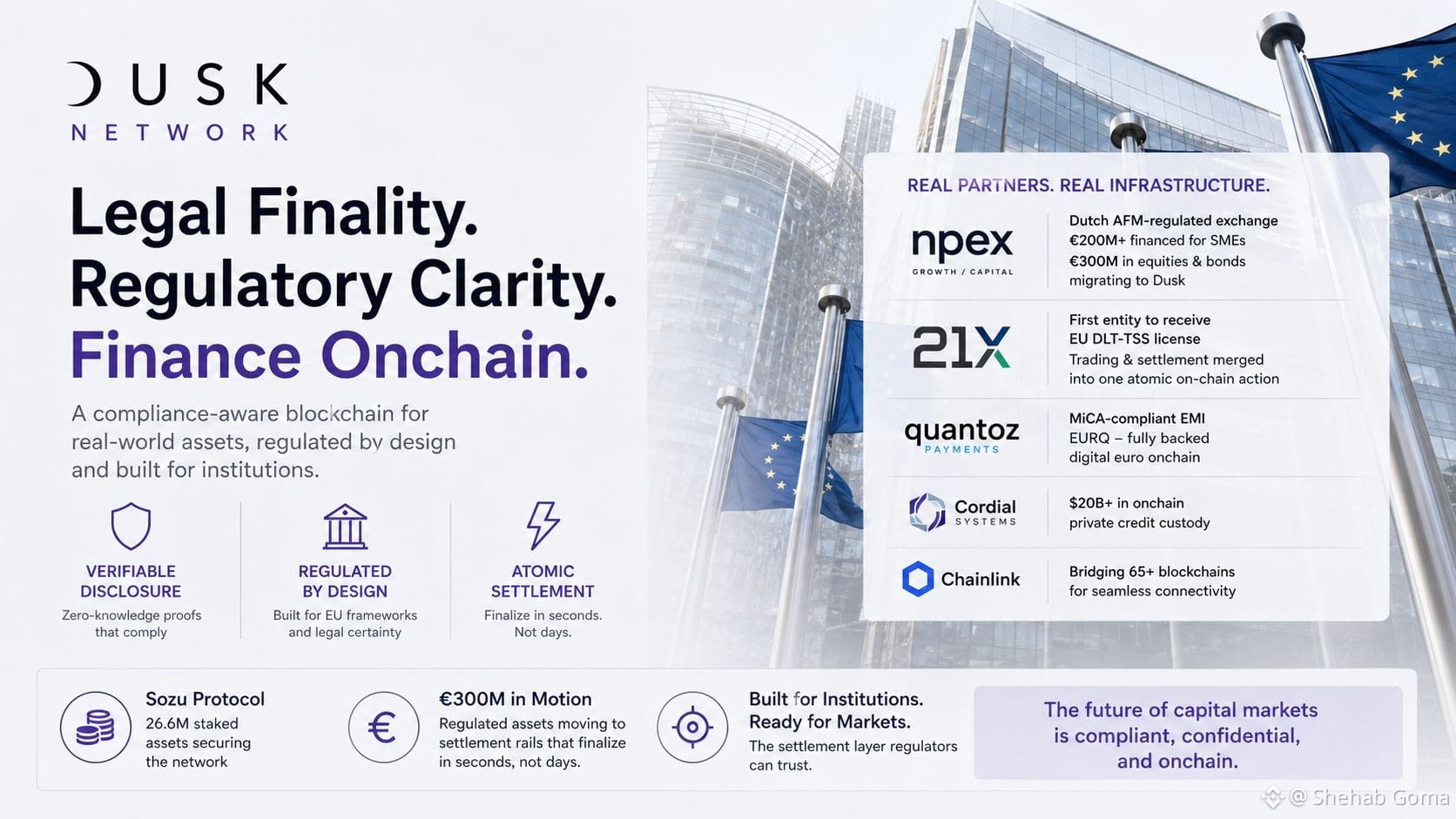
オランダのAFM規制を受ける取引所NPEXは、中小企業(SME)向けの資金調達で累計2億ユーロ(€200M)超を支えてきました。NPEXは上場株式と債券をDuskへ移行しており、規制対象資産として3億ユーロ(€300M)規模が、数日ではなく秒で確定する決済レールへ移ることを意味します。さらに、EUのDLT-TSSライセンスを最初に受けた21Xは、取引と決済を法的に統合し、単一のアトミックなオンチェーン・アクションへまとめ上げます。清算機関の仲介はありません。EU法により認められる、プロトコル・レベルでの確定性のみです。
MiCAに準拠したEMIであるQuantoz Paymentsは、決済資産としてEURQを提供します。完全に裏付けられたデジタル・ユーロで、規制され、かつオンチェーン上でプログラム可能なフィアットです。さらにCordial Systems(オンチェーン上のプライベートクレジットのカストディで200億ドル超)と、Chainlinkによる65以上のチェーンのブリッジを加えます。土台はすでに整っています。規制されたフィアットの流入、準拠した発行、アトミックな実行。
信頼と普及は段階的に築かれていきます。DuskのSozuプロトコルはすでに、ステークされた資産で2,660万(26.6 million)を保有しています。これは、ネットワークが意味のある参加を確保していることを示す、具体的なシグナルです。そしてNPEXから移ってくる3億ユーロ(€300M)という規模を考えると、これがテストというより、構造的な変化の始まりであることが見えてきます。問いはもはや「資本市場がオンチェーンへ移るのか」ではなく、「最終的に規制当局が信頼する決済レイヤーはどれか」です。Duskと、そのEU認可パートナーたちは、答えをますます明確にしつつあります。
@Dusk #dusk $DUSK
私たちは何年も前から、スループット、スマートコントラクト、そしてプライバシー関連のツールをすでに備えていました。けれども、ボトルネックは速度ではありません。本当の課題は法的な確定性(リーガル・ファイナリティ)でした。規制当局が相手方を監査できる状態を保ちながら、どうやって5,000万ユーロ(€50M)規模の担保を秒単位で決済するのでしょうか?長い間、答えはただ一つでした。「できない」と。
Duskのアプローチは、この問題に対処しています。ゼロ知識証明により、匿名性ではなく検証可能な開示を可能にする、コンプライアンスを意識したL1を構築しました。規制当局には可視性を、取引相手には機密性を提供します。インフラは必要ですが、本当のシグナルは、それに接続する認可済みパートナーにあります。
オランダのAFM規制を受ける取引所NPEXは、中小企業(SME)向けの資金調達で累計2億ユーロ(€200M)超を支えてきました。NPEXは上場株式と債券をDuskへ移行しており、規制対象資産として3億ユーロ(€300M)規模が、数日ではなく秒で確定する決済レールへ移ることを意味します。さらに、EUのDLT-TSSライセンスを最初に受けた21Xは、取引と決済を法的に統合し、単一のアトミックなオンチェーン・アクションへまとめ上げます。清算機関の仲介はありません。EU法により認められる、プロトコル・レベルでの確定性のみです。
MiCAに準拠したEMIであるQuantoz Paymentsは、決済資産としてEURQを提供します。完全に裏付けられたデジタル・ユーロで、規制され、かつオンチェーン上でプログラム可能なフィアットです。さらにCordial Systems(オンチェーン上のプライベートクレジットのカストディで200億ドル超)と、Chainlinkによる65以上のチェーンのブリッジを加えます。土台はすでに整っています。規制されたフィアットの流入、準拠した発行、アトミックな実行。
信頼と普及は段階的に築かれていきます。DuskのSozuプロトコルはすでに、ステークされた資産で2,660万(26.6 million)を保有しています。これは、ネットワークが意味のある参加を確保していることを示す、具体的なシグナルです。そしてNPEXから移ってくる3億ユーロ(€300M)という規模を考えると、これがテストというより、構造的な変化の始まりであることが見えてきます。問いはもはや「資本市場がオンチェーンへ移るのか」ではなく、「最終的に規制当局が信頼する決済レイヤーはどれか」です。Duskと、そのEU認可パートナーたちは、答えをますます明確にしつつあります。
@Dusk #dusk $DUSK