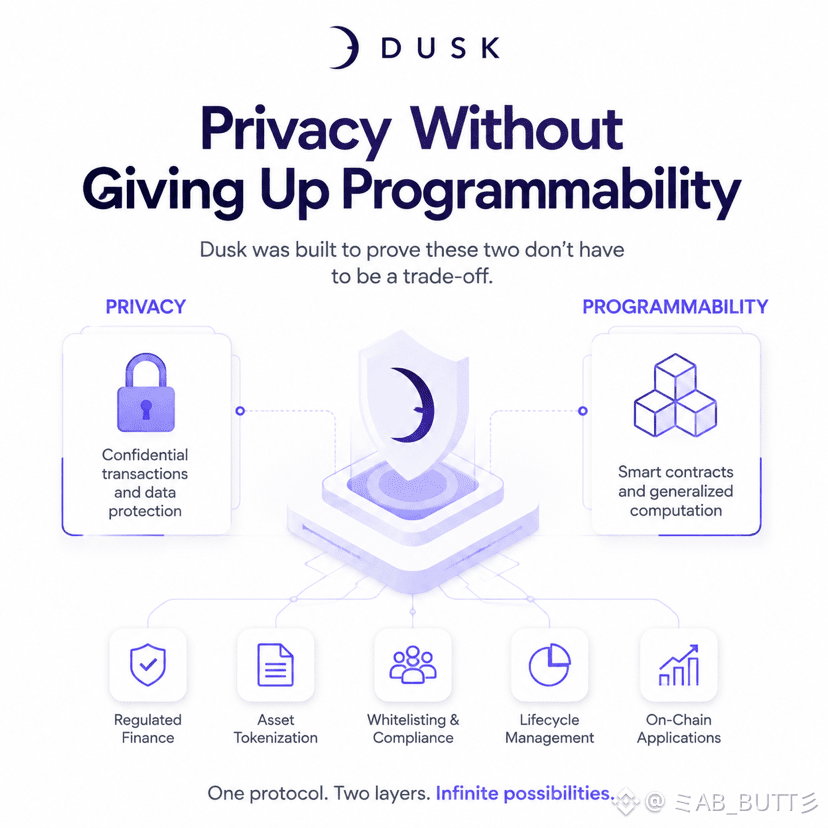
ブロックチェーン上のプライバシーは、ネットワークが意味のある計算をまだ支えられる場合にのみ有用です。この緊張関係こそが、DUSKを特に興味深いものにしています。Duskは、2つの接続されたレイヤーを備えた、プライバシー保護型の分散台帳として設計されました。ネイティブのDUSKアセットレイヤーと、汎用的なコンピュートレイヤーです。目的は、単に取引情報を保護することではありませんでした。機密性のある取引を支えつつ、プログラム可能な状態変更やスマートコントラクトの実行も可能にすることでした。これは重要です。規制のある金融は、単なるプライベートな支払い以上のものを必要とします。ルールの検証ライフサイクル管理や、公開される形であらゆる機微な詳細を見せることなく、オンチェーンで動作できるアプリケーションが必要なのです。Duskは、この課題に対して、プライバシーに重点を置いた取引モデルと、コンピュート環境におけるネイティブのゼロ知識証明サポートを組み合わせることで取り組みます。中核となる考え方は単純です。プライバシーのために、ブロックチェーンがプログラマビリティを犠牲にする必要はない、ということです。Duskは、同一のプロトコル内で両方の機能が共存できるように設計されました。#dusk $DUSK @Dusk