「プライベートかパブリックか」という問いは、金融ブロックチェーンにとって誤りではないか
@Dusk を読み進める中で、些細に思えるものの、プライバシー議論全体を変えてしまうことに気づきました。
Dusk は、視認性を固定の 1 つの設定として扱いません。
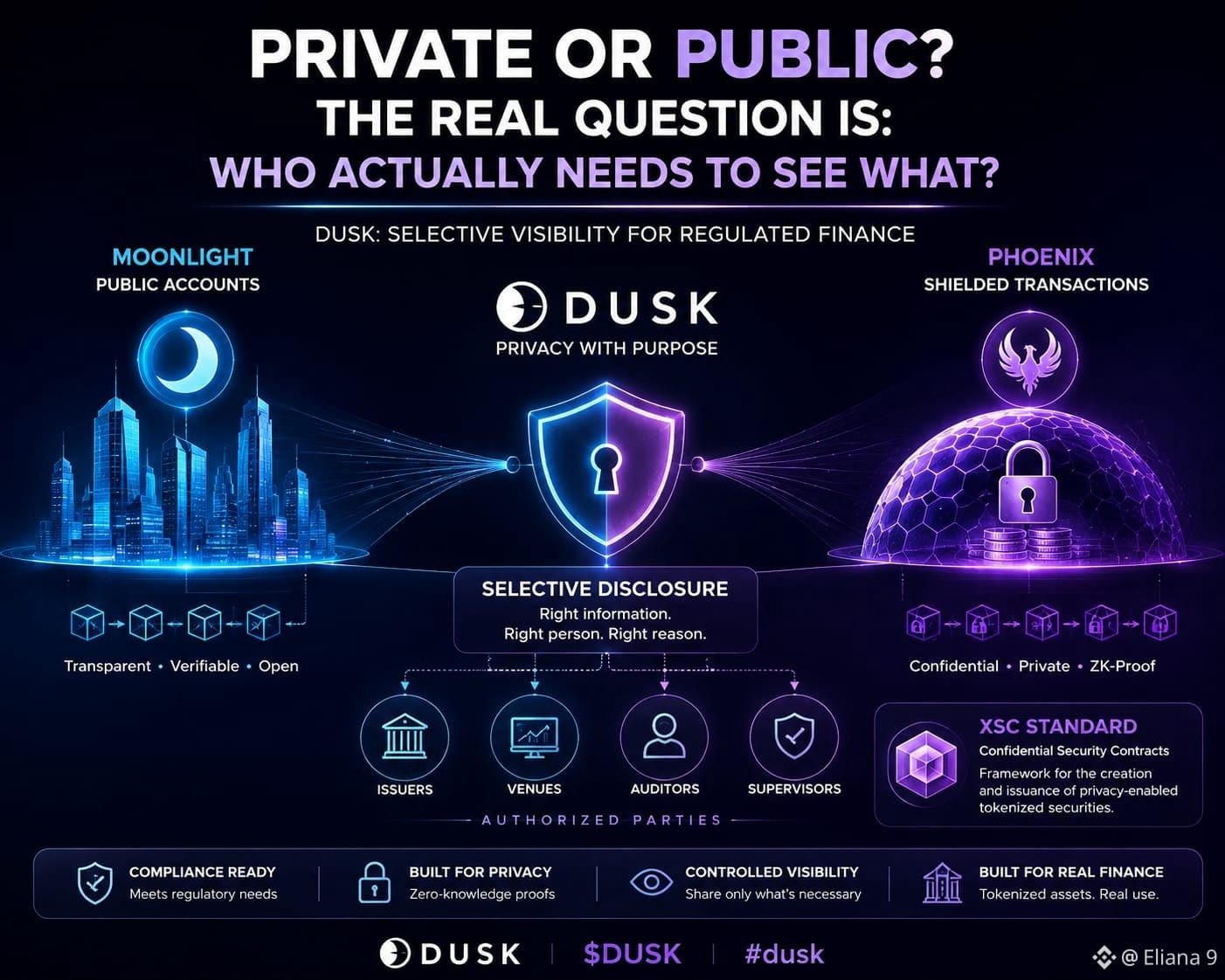
Moonlight は透明なパブリック・アカウントのフローを扱い、Phoenix はゼロ知識証明を用いた秘匿転送をサポートします。さらに Dusk では、認可された当事者が不要な情報を公開することなく、特定の証拠を必要とする状況に向けたセレクティブ・ディスクロージャーも文書化しています。
それは、実際に規制対象の金融が抱えている課題にずっと近いように感じます。
投資家は、残高や送金を誰にでも見せたくないかもしれません。一方で、発行者、取引の場、監査人、監督当局は、特定の情報へのアクセスを管理された形で要求する場合があります。Dusk の市場インフラのドキュメントは、その文脈でのセレクティブ・ディスクロージャーを明確に説明しています。
そして XSC が、さらにもう 1 つの層を追加します。Dusk は、その Confidential Security Contract(機密セキュリティ契約)標準を、プライバシー対応のトークン化有価証券の作成と発行のための枠組みとして説明しています。
私が考え続けてしまうのは、ここでのプライバシーが「隠すための機能」というより、「情報管理の問題」のように感じられるからです。
もしかすると、有用な問いは次ではないでしょうか:
「金融活動は公開か非公開か?」
もしかすると、こうです:
「実際に誰が、何を見なければならないのか?」
@Dusk $DUSK #dusk
@Dusk を読み進める中で、些細に思えるものの、プライバシー議論全体を変えてしまうことに気づきました。
Dusk は、視認性を固定の 1 つの設定として扱いません。
Moonlight は透明なパブリック・アカウントのフローを扱い、Phoenix はゼロ知識証明を用いた秘匿転送をサポートします。さらに Dusk では、認可された当事者が不要な情報を公開することなく、特定の証拠を必要とする状況に向けたセレクティブ・ディスクロージャーも文書化しています。
それは、実際に規制対象の金融が抱えている課題にずっと近いように感じます。
投資家は、残高や送金を誰にでも見せたくないかもしれません。一方で、発行者、取引の場、監査人、監督当局は、特定の情報へのアクセスを管理された形で要求する場合があります。Dusk の市場インフラのドキュメントは、その文脈でのセレクティブ・ディスクロージャーを明確に説明しています。
そして XSC が、さらにもう 1 つの層を追加します。Dusk は、その Confidential Security Contract(機密セキュリティ契約)標準を、プライバシー対応のトークン化有価証券の作成と発行のための枠組みとして説明しています。
私が考え続けてしまうのは、ここでのプライバシーが「隠すための機能」というより、「情報管理の問題」のように感じられるからです。
もしかすると、有用な問いは次ではないでしょうか:
「金融活動は公開か非公開か?」
もしかすると、こうです:
「実際に誰が、何を見なければならないのか?」
@Dusk $DUSK #dusk