


私は最近、TONのDeFiデータを調べていて、ある数字がずっと目につきました。
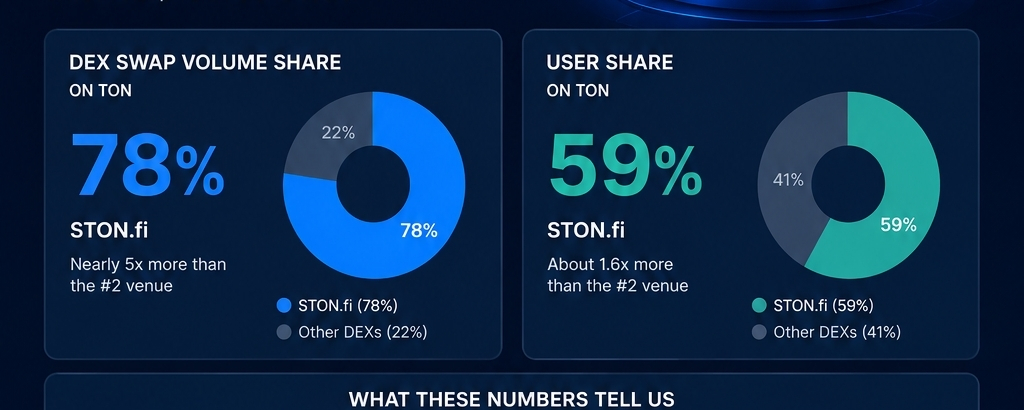
@STONfi DEX は、TON DEXのスワップ出来高の約78%を扱っています。
それは、2番目に大きい取引の場(会場/プラットフォーム)よりも約5倍です。
また、比較可能なTON DEXプロトコルのユーザーのうち約59%を占めています。
一見すると、その数字は立派に見えます。
でも、もっと重要なことを理解したかったんです。
これらの数字は実際に何を教えてくれるのでしょうか?
そして、それらが教えてくれないのは何でしょう?
DEXの出来高(ボリューム)が意味するもの
DEXとは、ユーザーが中央集権的な取引所の「真ん中に座っている」ことなく、トークンをスワップできる分散型取引所にすぎません。
出来高は、それらのスワップの合計価値です。
例えば:
100人がそれぞれ1,000ドルを1回のスワップで取引します。
それは取引高(トレーディングボリューム)10万ドルです。
つまり、あるプロトコルがTON DEXの出来高の約78%を処理しているということは、実際のスワップ活動の非常に大きな割合が、そのプロトコル経由で行われていることを意味します。
それには意味があります。
しかし、ここが重要なポイントです:
出来高(ボリューム)だけでは全ての物語はわかりません。
出来高とユーザー
ここからが、さらに面白くなってきます。
出来高は、どれだけが取引されているかを示します。
ユーザーシェアは、そのプロトコルを使っている人数がどれくらいかを示します。
比較可能なTON DEXプロトコルの中での STON.fi の報告ベースの約59%のユーザーシェアは、その活動が少数の大口取引だけから生まれているわけではないことを示唆しています。
TON DEXユーザーのかなりの部分が、同時に STON.fi も使っています。
高い出来高と大きなユーザーベースの両方が見えてくると、実際の利用状況がよりイメージしやすくなります。
しかし、同じくらい重要な別の要素もあります。
流動性は、多くの人が見落としがちな部分です。
あらゆるスワップには流動性が必要です。
例えば、あるトークンを大量に別のトークンに売りたいとします。
利用可能な流動性が低い場合、取引ではスリッページが発生し、結果として予想より悪い価格で受け取ることがあります。
そして問題はここです:
流動性は分断されています。
それは次のように分散できます:
異なる流動性プール
異なるDEX
異なるプロトコル
異なるブロックチェーン
ユーザーにとっては、複数のプラットフォームを確認するか、効率の低い執行を受け入れることを意味する場合があります。
これがDeFiにおける最大級の実務上の課題の1つです。
Omnistonはどこに入るのか
ここが STON.fi の Omniston が面白くなるポイントです。
Omniston は、流動性集約とクロスチェーン・スワップのためのレイヤーとして設計されています。
基本的な考え方はシンプルです:
1つの流動性ソースに頼るのではなく、インフラが複数のソースに接続して、スワップのための効率的なルートを見つけるのに役立てられます。
何かを買う前に、複数の店を探すイメージです。
最初に見つけた店から買う必要は必ずしもありません。
利用可能な選択肢が何かを知りたい。
DeFiでは、それは単一の流動性プールやDEXを超えて見ることを意味します。
つまり、STON.fiの話は単に:
「DEXが大きいです。」
さらに、より広いインフラ層もあります:
DEX → 流動性 → 集約 → クロスチェーンでの実行
それは重要な違いです。
なぜクロスチェーンが重要なのか
暗号資産は、もう1つのブロックチェーンだけのものではありません。
Ethereum上にUSDTがあって、使いたいアプリケーションがTON上にあることもあります。
一方で、TON上に資産があるとしても、必要な流動性は別の場所にあることがあります。
今日、エコシステム間の移動にはまだ次のような要素が絡みます:
ブリッジ → 待機 → 受け取り → スワップ → そしてまた移動。
それはかなりの摩擦(手間・コスト)です。
クロスチェーンのインフラは、異なるエコシステム間で流動性と執行をつなぐことで、このプロセスをより簡単にしようとしています。
長期的な考え方はシンプルです:
ユーザーは、いつも流動性がどこにあるかを把握している必要はありません。
それにアクセスできるはずです。
では、78%は実際に何を教えてくれるのでしょう?
数字は力強いです。
でも私にとっての大きな学びは、DeFiデータを正しく読み解く方法です。
私は、出来高だけでDEXを評価したくありません。
私はいくつかの点を一緒に見るでしょう:
出来高:どれだけの取引が行われているか?
ユーザー:実際にどれだけの人が使っているのか?
流動性:スワップのために利用可能な資本はいくらあるか
執行:取引はどれくらい効率よく完了しているのか?
集約:複数のソースからの流動性を利用できるのか?
クロスチェーン機能:ユーザーはエコシステムをまたいで流動性にアクセスできますか?
これらの要素を組み合わせると、よりはっきりした全体像が見えてきます。
より大きな全体像
STON.fi は、TON DEXの報告ベースで約78%の出来高、約59%のユーザーシェアを示しており、これにより現在の TON DeFi の重要な一部になっていることがわかります。
ただ、私がより興味を持つのは次の点ではありません:
「今日いちばん出来高が多いのは誰だ?」
それは:
「DeFiがチェーンごとに分断されていく中で、流動性を扱えるインフラを誰が作っているのか?」
より多くのエコシステムが成長するにつれて、流動性集約とクロスチェーンでの執行はますます重要になっていくかもしれません。
だからこそ、私はこれらの数字を注視する価値があると思っています。
単なるランキングとしてではありません。
しかし、それは DeFi インフラがどう進化しているかというシグナルとして見た場合です。
78%が見出しです。
その背景に何があるのかを理解することが、真の洞察です。
DEXを評価する際に、まず何を見ますか?
出来高、ユーザー数、流動性、あるいは執行の品質?