
#dusk $DUSK @Dusk
私は、Dusk Tradeについて次の1つの疑問を何度も思い返しました。
そもそも、誰かがある資産を見てから、その資産が合法的に保有者を切り替える(権利が移転する)までに、実際には何が必要なのでしょうか?
最初は、Dusk Tradeをトークン化された資産の「通常のネオブローカー」だと思っていました。プラットフォームを開いて、欲しいものを見つけて、購入を押せば、それで取引は完了する——そんなイメージです。
しかし、規制のある市場はそこまで単純には動きません。
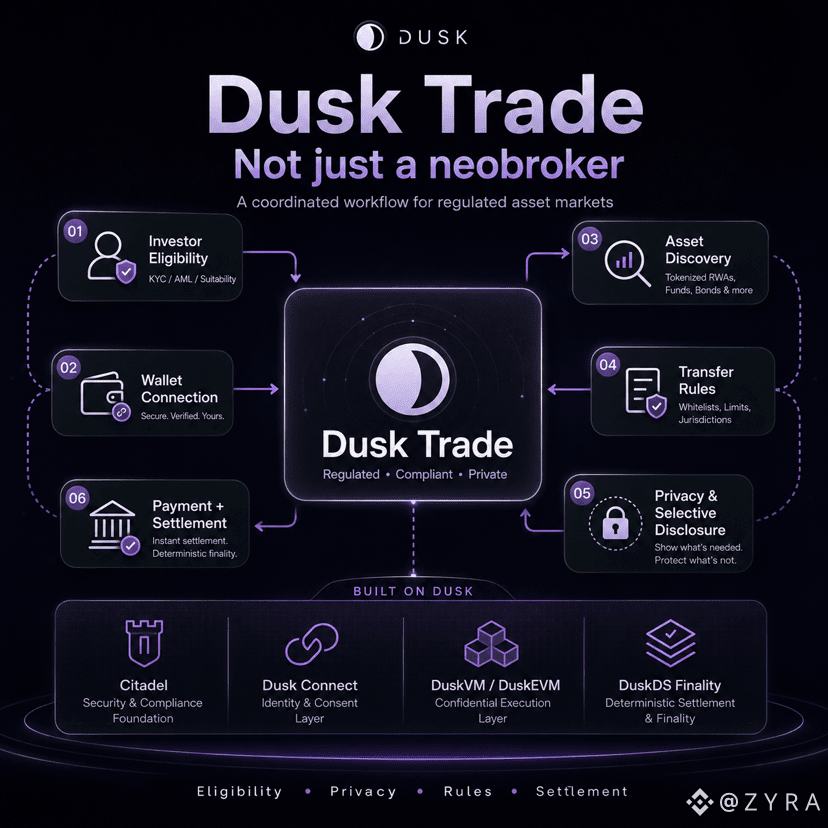
その取引が成立する前に、システムが、投資家がその資産を保有する資格を持っているかどうかを確認する必要があるかもしれません。ウォレットは、そのアイデンティティと紐づいていなければなりません。さらに、資産そのものに譲渡制限がある可能性もあります。そのうえで、支払いと所有権の移転は同時に進められなければならない一方、一定の情報は非公開のまま維持され、正しい当事者が自分たちに必要な内容を検証できる状態であることが求められます。
そこで @Dusk は、私にとって一気に以前よりずっと面白く見えてきました。
Dusk Trade は、ユーザーが目にする部分にすぎません。
その背後で Dusk は、取引を可能にする部品を組み上げています。資格情報を囲い込み、選択的開示を実現する Citadel、ウォレットとの関係づけを行う Dusk Connect、実行のための DuskVM と DuskEVM、そして決済と最終性のための DuskDS です。
それによって、プロダクトの捉え方が変わりました。
難しいのは、「誰かが“購入”をクリックできるだけの、きれいな画面を作ること」ではありません。
難しいのは、アイデンティティ、権限、プライバシー、資産ルール、支払い、決済が、別々の6つのシステムが互いに通信しているのではなく、1つの業務フローとして振る舞うようにすることです。
Dusk Trade はまだ開発中なので、いま最も重要なのは“アイデア”よりも実行です。
ですが、@Dusk がその複雑さをすべて、ひとつのシンプルな体験の裏側に消し去れるのなら、Dusk Trade を「ネオブローカー」と呼ぶのはおそらく、このプロジェクトが実際に目指していることを言い足りないことになるでしょう。
私は、Dusk Tradeについて次の1つの疑問を何度も思い返しました。
そもそも、誰かがある資産を見てから、その資産が合法的に保有者を切り替える(権利が移転する)までに、実際には何が必要なのでしょうか?
最初は、Dusk Tradeをトークン化された資産の「通常のネオブローカー」だと思っていました。プラットフォームを開いて、欲しいものを見つけて、購入を押せば、それで取引は完了する——そんなイメージです。
しかし、規制のある市場はそこまで単純には動きません。
その取引が成立する前に、システムが、投資家がその資産を保有する資格を持っているかどうかを確認する必要があるかもしれません。ウォレットは、そのアイデンティティと紐づいていなければなりません。さらに、資産そのものに譲渡制限がある可能性もあります。そのうえで、支払いと所有権の移転は同時に進められなければならない一方、一定の情報は非公開のまま維持され、正しい当事者が自分たちに必要な内容を検証できる状態であることが求められます。
そこで @Dusk は、私にとって一気に以前よりずっと面白く見えてきました。
Dusk Trade は、ユーザーが目にする部分にすぎません。
その背後で Dusk は、取引を可能にする部品を組み上げています。資格情報を囲い込み、選択的開示を実現する Citadel、ウォレットとの関係づけを行う Dusk Connect、実行のための DuskVM と DuskEVM、そして決済と最終性のための DuskDS です。
それによって、プロダクトの捉え方が変わりました。
難しいのは、「誰かが“購入”をクリックできるだけの、きれいな画面を作ること」ではありません。
難しいのは、アイデンティティ、権限、プライバシー、資産ルール、支払い、決済が、別々の6つのシステムが互いに通信しているのではなく、1つの業務フローとして振る舞うようにすることです。
Dusk Trade はまだ開発中なので、いま最も重要なのは“アイデア”よりも実行です。
ですが、@Dusk がその複雑さをすべて、ひとつのシンプルな体験の裏側に消し去れるのなら、Dusk Trade を「ネオブローカー」と呼ぶのはおそらく、このプロジェクトが実際に目指していることを言い足りないことになるでしょう。