𝐃𝐮𝐬𝐤’𝐬 𝐂𝐨𝐧𝐬𝐞𝐧𝐬𝐮𝐬 𝐃𝐞𝐬𝐢𝐠𝐧:
真実を語ることが最も賢い選択になる
夕暮れを学んで、合意(コンセンサス)についてまったく別の方法で考えるようになりました。
強力な暗号技術だけでは、合意システムが本当に安全になるとは限りません。より深い問いはこうです――「正直な参加者が、自分の利益のために欠陥を悪用する理由を持ったら、何が起きるのか?」
あなたがプロビジョナーだと想像してみてください。
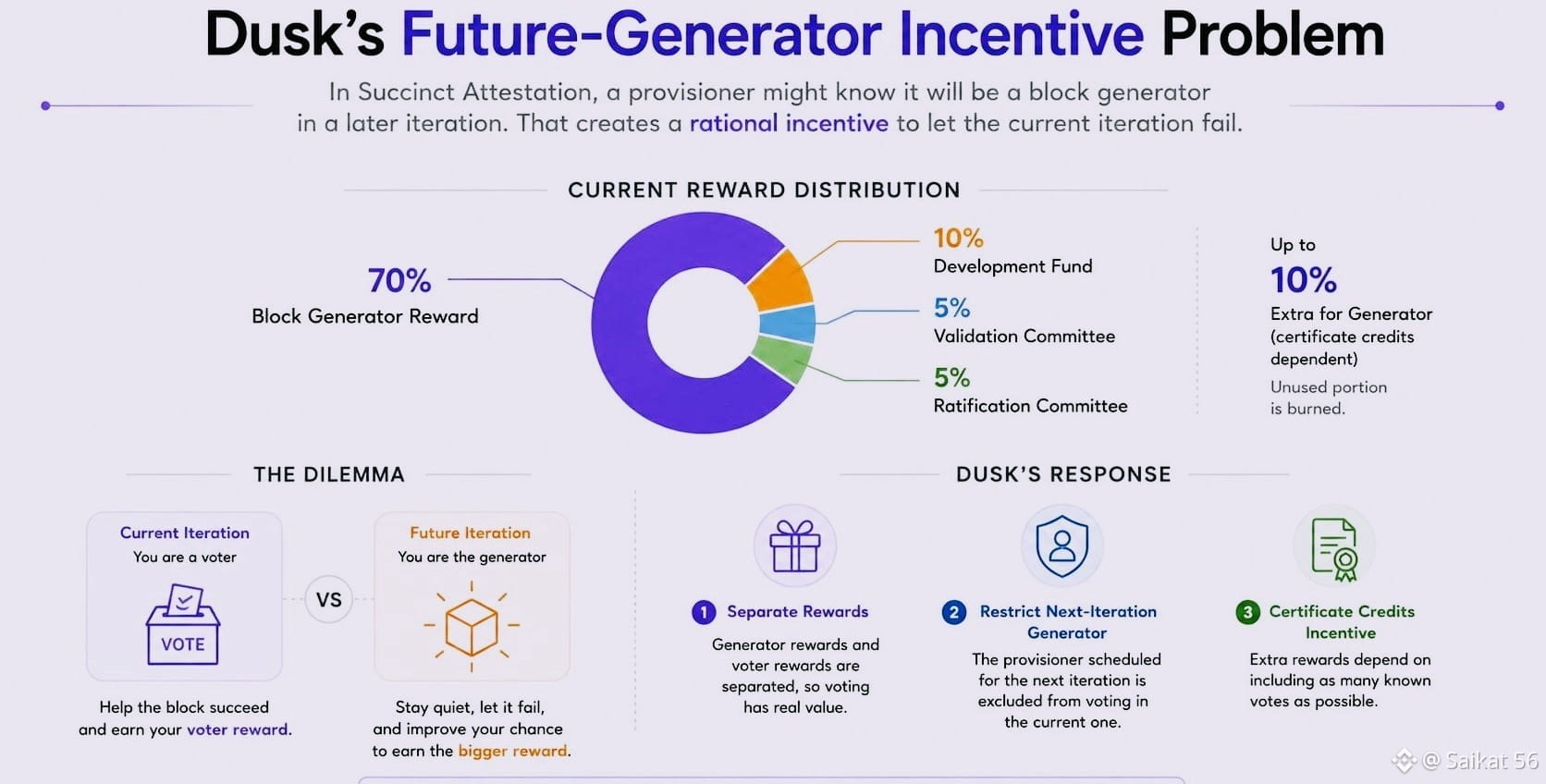
次のイテレーションでブロックを生成するよう選ばれていることは、すでに分かった状態で、今のイテレーションに投票しています。
𝐍𝐨𝐰 𝐲𝐨𝐮 𝐟𝐚𝐜𝐞 𝐚𝐧 𝐢𝐧𝐭𝐞𝐫𝐞𝐬𝐭𝐢𝐧𝐠 𝐝𝐢𝐥𝐞𝐦𝐦𝐚:
あなたは、現在のブロックを前進させて自分の投票者報酬を回収するために協力しますか?
それとも黙っていて、今回のイテレーションを失敗させ、将来の生成者としての立場を強める可能性に賭けますか?
それが「将来の生成者インセンティブ問題」です。正当な参加者が選べる選択肢の中から生じうる、インセンティブの衝突のことです。
外部のハッカーがネットワークを妨害しようとしているわけではありません。
問題は、プロトコル自体に組み込まれているインセンティブから生まれます。
@Dusk は、それらのインセンティブがどのように機能するかを見直すことでこの問題に取り組みました。生成者報酬と投票者報酬を分離し、次のイテレーションで選ばれた生成者が現在のイテレーションには投票できないようにし、Succinct Attestation のような仕組みを用いて合意の達成を助けます。
この小さいけれど重要な設計判断には、本当に引きつけられました。
合意メカニズムは安全だと言うのは簡単です。
しかし、最も合理的な決定が同時に正直な決定でもあるようなものを作るのは、ずっと難しい。
𝐓𝐨 𝐦𝐞, 𝐭𝐡𝐚𝐭’𝐬 𝐭𝐡𝐞 𝐫𝐞𝐚𝐥 𝐠𝐚𝐦𝐞 𝐡𝐚𝐩𝐩𝐞𝐧𝐢𝐧𝐠 𝐮𝐧𝐝𝐞𝐫𝐧𝐞𝐚𝐭𝐡 𝐜𝐨𝐧𝐬𝐞𝐧𝐬𝐮𝐬:
暗号がネットワークを守るだけでなく、それを支える人々の行動をインセンティブがどう形作るのか。
#dusk $DUSK $AKE $ESP
真実を語ることが最も賢い選択になる
夕暮れを学んで、合意(コンセンサス)についてまったく別の方法で考えるようになりました。
強力な暗号技術だけでは、合意システムが本当に安全になるとは限りません。より深い問いはこうです――「正直な参加者が、自分の利益のために欠陥を悪用する理由を持ったら、何が起きるのか?」
あなたがプロビジョナーだと想像してみてください。
次のイテレーションでブロックを生成するよう選ばれていることは、すでに分かった状態で、今のイテレーションに投票しています。
𝐍𝐨𝐰 𝐲𝐨𝐮 𝐟𝐚𝐜𝐞 𝐚𝐧 𝐢𝐧𝐭𝐞𝐫𝐞𝐬𝐭𝐢𝐧𝐠 𝐝𝐢𝐥𝐞𝐦𝐦𝐚:
あなたは、現在のブロックを前進させて自分の投票者報酬を回収するために協力しますか?
それとも黙っていて、今回のイテレーションを失敗させ、将来の生成者としての立場を強める可能性に賭けますか?
それが「将来の生成者インセンティブ問題」です。正当な参加者が選べる選択肢の中から生じうる、インセンティブの衝突のことです。
外部のハッカーがネットワークを妨害しようとしているわけではありません。
問題は、プロトコル自体に組み込まれているインセンティブから生まれます。
@Dusk は、それらのインセンティブがどのように機能するかを見直すことでこの問題に取り組みました。生成者報酬と投票者報酬を分離し、次のイテレーションで選ばれた生成者が現在のイテレーションには投票できないようにし、Succinct Attestation のような仕組みを用いて合意の達成を助けます。
この小さいけれど重要な設計判断には、本当に引きつけられました。
合意メカニズムは安全だと言うのは簡単です。
しかし、最も合理的な決定が同時に正直な決定でもあるようなものを作るのは、ずっと難しい。
𝐓𝐨 𝐦𝐞, 𝐭𝐡𝐚𝐭’𝐬 𝐭𝐡𝐞 𝐫𝐞𝐚𝐥 𝐠𝐚𝐦𝐞 𝐡𝐚𝐩𝐩𝐞𝐧𝐢𝐧𝐠 𝐮𝐧𝐝𝐞𝐫𝐧𝐞𝐚𝐭𝐡 𝐜𝐨𝐧𝐬𝐞𝐧𝐬𝐮𝐬:
暗号がネットワークを守るだけでなく、それを支える人々の行動をインセンティブがどう形作るのか。
#dusk $DUSK $AKE $ESP