



取引所のエクスチェンジ促進イベントに関する見出しは、通常、見出しの報酬数に焦点が当てられます。2026年8月12日、Binance Walletは、Binance Alpha上で、Binance Keyless WalletおよびAlpha参加者を対象とした$200,000 DOSトークンのトレーディング・コンペティションを導入しました(欧州経済領域〈EEA〉の居住者は除外)。短期的な流動性イベントは直ちに取引量を押し上げますが、より注目すべき点は、クロスチェーンにおけるユーザーフリクションに対処するために、取引所ネイティブのウォレットが意図(インテント)中心のアーキテクチャを打ち出している理由です。
ユーザー体験における基盤的なシフト
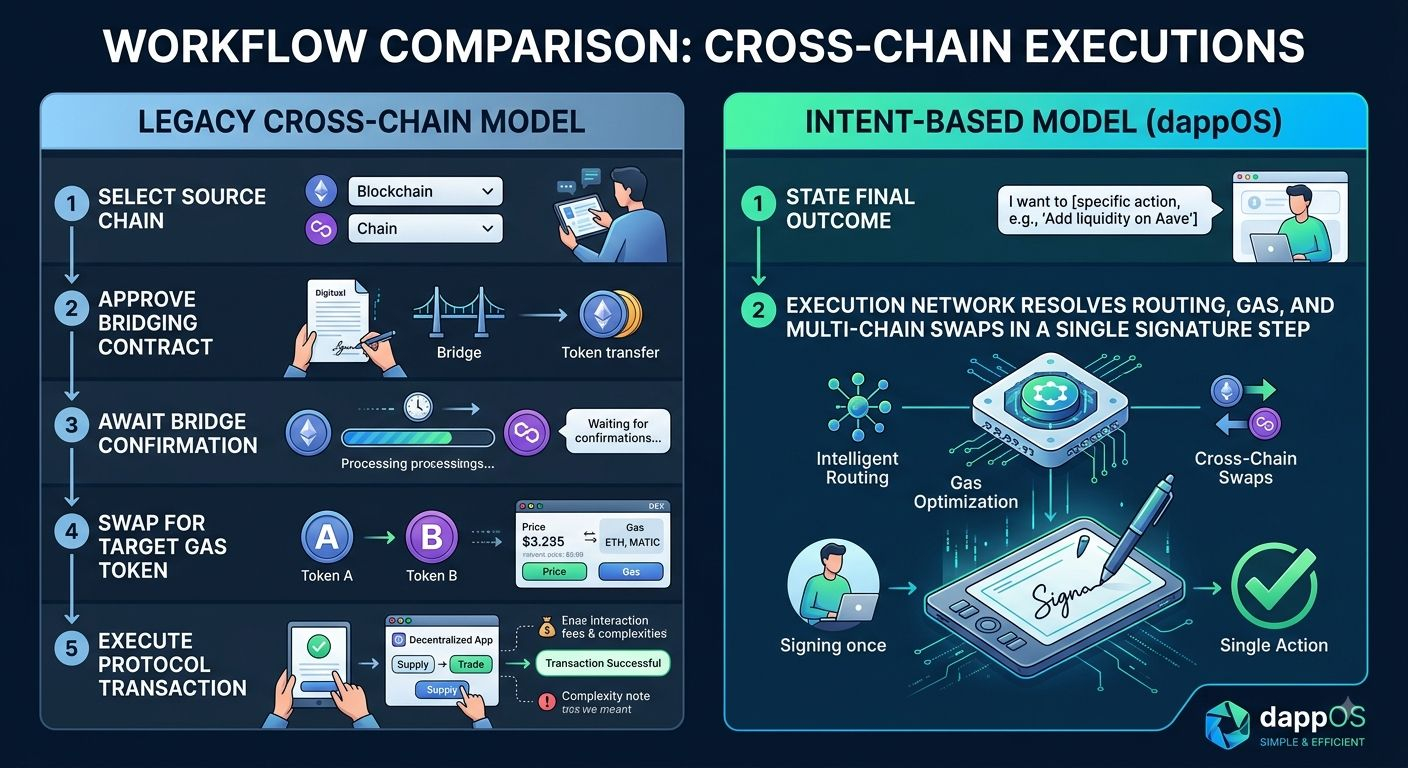
分離されたブロックチェーン間で分散型アプリケーション(dApp)を利用することは、日常の利用者にとって依然として大きな摩擦ポイントです。従来のワークフローでは、次のような手作業が必要になります。ネットワークの切り替え、各チェーンのネイティブガストークンの確保、ブリッジコントラクトの承認、確認待ち、そして個別のトランザクション手順の実行。
インテント中心のインフラを推進することは、ユーザーが生のインフラを手作業でナビゲートすることを求めるのではなく、自動実行レイヤーへと移行することを示しています。
dappOS はインテント実行をどう扱うのか
ユーザーに、マルチチェーン取引のあらゆる基盤手順を構築して実行させる代わりに、インテント中心のフレームワークなら、ユーザーはターゲットとなるアウトカムにサインオフするだけで済む。
* 宣言的なアウトカム:ユーザーは、たとえばあるチェーンでトークンAを別のチェーンのトークンBと交換する、のように最終目標を述べるだけで、経路を定義しない。
* 実行ノードのルーティング:サードパーティのサービス提供者のネットワークが、チェーン間ブリッジ、ルーティング、ガストークン交換をオフチェーンで担う。
* 楽観的な最低ステーキング(OMS):実行の信頼性を確保するため、サービスノードは担保をステークします。ノードが、ユーザーの要求したインテントを実行できなかった場合、そのステークはスラッシュされます。
ユーザー層に与えるエコシステムへの影響
* ユーザー向け:マルチチェーンのタスクを単一の署名承認に削減し、誤ったネットワークへの送金や予期しないガス価格の急騰に関連するリスクを低減します。
* 開発者向け:インテントネットワークに統合されたDAppsは、あらゆる対象ブロックチェーン向けにブリッジのためのカスタムロジックを作り込まなくても、複数チェーンにまたがってユーザーを獲得できます。
* アナリスト向け:評価者は、Binance Alpha における一時的なキャンペーン主導の取引ボリュームと、報酬配布が終わった後に維持される継続的・オーガニックなプロトコルトランザクションを区別する必要がある。
主要な制約とリスク
* ノードの健全性と競争:実行速度と取引コストは、有効で競争力のある実行ノードのネットワークを維持していることに直接依存します。
* ポストキャンペーン維持:取引コンペで生成されたボリュームは、インセンティブプールが配分し終えると減衰することが多い。
* 地域の除外:EEA制限のようなコンプライアンス上の理由による地域的な除外は、重要な地域におけるユーザー獲得を制約します。
分散型ネットワークがWeb2アプリに匹敵する運用の容易さを提供するには、ブロックチェーンの複雑さを抽象化することが必要です。インテント技術が成熟するにつれて、長期的な採用は、実行効率を維持し、プロモーションキャンペーンが終了した後にオーガニックなプロトコル連携を構築できるかにかかっています。
インテント抽象化によって、マルチチェーンのウォレット操作はどう変わると思いますか?
DYOR
#dappOS #BinanceAlpha $DOS $BNB
