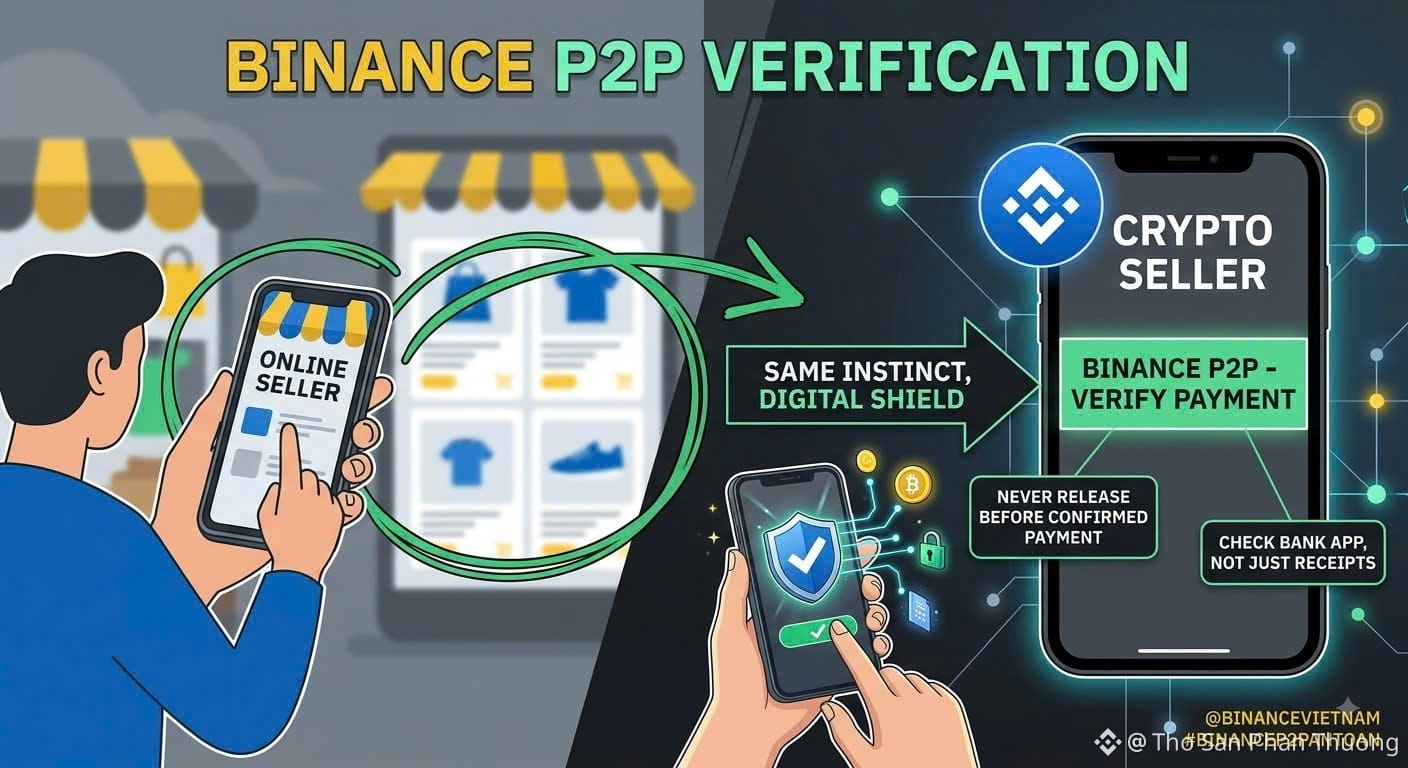
マーケットプレイスの売り手から暗号資産の売り手へ:すでに知っているはずの「本人確認」の教訓
オンラインで何かを売ったことがあるなら、安全を守るための本能をすでに1つ持っています。それは、実際にお金が着金する前に商品を渡さないことです。ビットバンクのBinance P2Pでも、まさにその本能が少し研ぎ澄まされた形で、あなたを守ります。
この共通点は、最初に見える以上に深いところにあります。従来のマーケットプレイスで売る場合、売り手は購入者のプロフィール、取引履歴、支払い方法と名前が一致しているかを確認してから、取引を確定します。P2Pではそれが「相手方の本人確認」になります。完了率、注文量、口座の開設時期を見て、入金されてくる名義が、購入者アカウントで検証された名義とまったく同一であることを求めます。名義の不一致は単なる形式の違いではありません。盗まれたアカウントや、台本のように進む詐欺の最初の兆候であることがよくあります。
2つ目の本能は、従来の売り手が持っている「支払いを確認してから商品を渡す」という姿勢です。スクリーンショットや「送金した」というテキストを信じることはありません。暗号資産でも同じく、支払いの確認が直結します。送金通知、改ざんされた領収書、銀行が遅いから急いでいるという慌ただしいメッセージは、あなたが自分の銀行アプリを開いて資金がクリアされ、決済(着金)が完了しているのを確認するまで、何の意味もありません。詐欺師はここに付け込みます。焦らせることで、売り手がチェックする前に暗号資産を手放させようと圧力をかけます。これは、約束された支払いが実際には入金されないのに、商品を渡す(手渡しする)デジタル版です。
P2Pが街のマーケットと本質的に違う点は、構造的なセーフガードが存在することです。エスクローは注文が開かれた瞬間に売り手の暗号資産をロックするため、オフプラットフォームで何が起きても消えてしまうことはありません。これは、信頼できる配送の仲介者が双方の責任を問うているのと同じようなものです。もし購入者が、アプリ外のチャットや、アプリ内ではない支払いへあなたを誘導してきた場合、それは「便利だから」ではなく、あなたの保護レイヤーを外すことにほかなりません。そして、P2P取引における最も分かりやすい危険信号の1つです。
@Binance Vietnam #BinanceP2PAnToan
$TUT $ONE $BICO
オンラインで何かを売ったことがあるなら、安全を守るための本能をすでに1つ持っています。それは、実際にお金が着金する前に商品を渡さないことです。ビットバンクのBinance P2Pでも、まさにその本能が少し研ぎ澄まされた形で、あなたを守ります。
この共通点は、最初に見える以上に深いところにあります。従来のマーケットプレイスで売る場合、売り手は購入者のプロフィール、取引履歴、支払い方法と名前が一致しているかを確認してから、取引を確定します。P2Pではそれが「相手方の本人確認」になります。完了率、注文量、口座の開設時期を見て、入金されてくる名義が、購入者アカウントで検証された名義とまったく同一であることを求めます。名義の不一致は単なる形式の違いではありません。盗まれたアカウントや、台本のように進む詐欺の最初の兆候であることがよくあります。
2つ目の本能は、従来の売り手が持っている「支払いを確認してから商品を渡す」という姿勢です。スクリーンショットや「送金した」というテキストを信じることはありません。暗号資産でも同じく、支払いの確認が直結します。送金通知、改ざんされた領収書、銀行が遅いから急いでいるという慌ただしいメッセージは、あなたが自分の銀行アプリを開いて資金がクリアされ、決済(着金)が完了しているのを確認するまで、何の意味もありません。詐欺師はここに付け込みます。焦らせることで、売り手がチェックする前に暗号資産を手放させようと圧力をかけます。これは、約束された支払いが実際には入金されないのに、商品を渡す(手渡しする)デジタル版です。
P2Pが街のマーケットと本質的に違う点は、構造的なセーフガードが存在することです。エスクローは注文が開かれた瞬間に売り手の暗号資産をロックするため、オフプラットフォームで何が起きても消えてしまうことはありません。これは、信頼できる配送の仲介者が双方の責任を問うているのと同じようなものです。もし購入者が、アプリ外のチャットや、アプリ内ではない支払いへあなたを誘導してきた場合、それは「便利だから」ではなく、あなたの保護レイヤーを外すことにほかなりません。そして、P2P取引における最も分かりやすい危険信号の1つです。
@Binance Vietnam #BinanceP2PAnToan
$TUT $ONE $BICO