率直に言うと、私がバビロンの切り捨て(slashing)に関するドキュメントを最初に読み込んだとき、ある点がどうしても腑に落ちませんでした。プロトコルは明確に、切り捨ては同一人物による矛盾(ダブルサイン)――つまり equivocation(二重署名)の場合にのみ行う、としています。ダウンタイム? 逃した投票? 罰則なし。最終性チェックポイントへの署名に失敗した場合も切り捨てはありません。
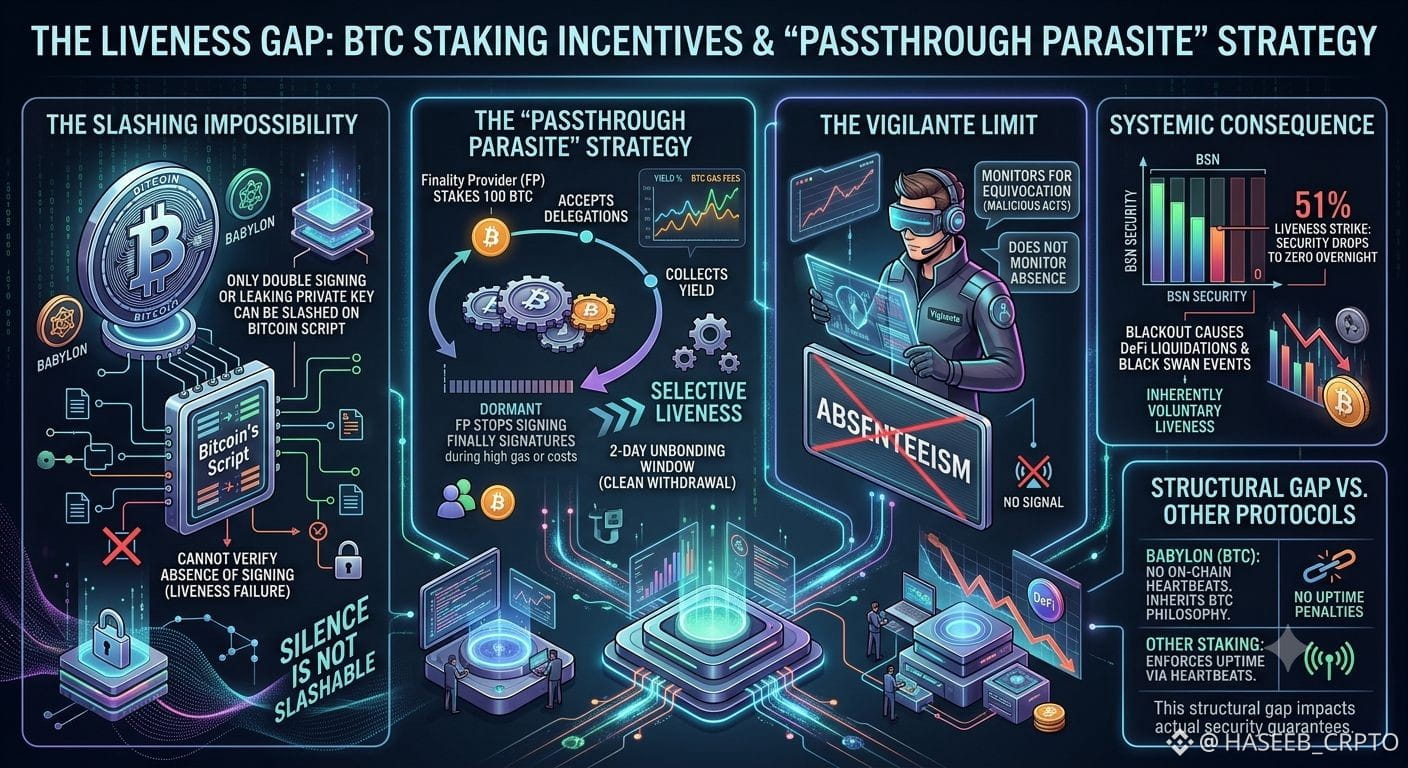
そして、誰も語っていないゲーム理論があります。最終性プロバイダー(Finality Provider)は、100 BTC をステークして委任(delegations)を受け入れ、利回り(yield)を得た上で、BSN 向けの最終性署名をそのまま停止できます。BSN はビットコインで担保された最終性を失いますが、FP の BTC は? まったく危険にさらされません。彼らは矛盾した署名をしていないのです。単に無言(沈黈)になっただけです。
ヴィジランティ(Vigilante)ネットワークは? 悪意のある equivocation を監視します。ビットコインのスクリプトはダウンタイムの証明をサポートしていないため、沈黈に対して「切り捨て(slash)」はできません。バビロンは、この盲点をビットコイン自身から引き継いでいます。署名した内容を罰することはできても、いつ署名したか(署名のタイミング)を罰することはできないのです。
これにより、「パススルー・パラサイト(Passthrough Parasite)」戦略が成立します。セキュリティ出力をゼロにしながら利回りを稼ぐ。2日間のアンボンド(unbonding)猶予をやり過ごし、きれいに引き出して、また繰り返す。51% の正直な FP によって確保されていた BSN は、彼らが「ライブネスへの打撃(liveness strike)」を連携して行えば、瞬時にセキュリティを 0% へ劣化させ得ます。切り捨てなし、損失なし。最終性に依存する DeFi ポジションを清算(liquidate)し得る一時的なブラックアウトが起きるだけです。
プロトコルは、スライディングウィンドウ(滑動窓)によってライブネスを追跡し、投票の欠落が多すぎるとジャイル(jailing)します。しかし、プロバイダーはアクティブ集合(active set)の境界付近で離脱し、ジャイルが発動される前に見逃しカウンターをリセットできてしまいます。
他のステーキング・プロトコルにこの“完全に同じ”抜け穴がないのは、オンチェーンのハートビート機構によってアップタイムに罰則を課しているからです。バビロンにはそれができません。ビットコインの限られたスクリプティングに依存しているからです。つまりバビロンのセキュリティ層は、本質的に「自発的なライブネス」によって成り立っています。微妙ですが致命的な違いです。
@BabylonLabs_io $BABY #baby $BLESS $ELON
そして、誰も語っていないゲーム理論があります。最終性プロバイダー(Finality Provider)は、100 BTC をステークして委任(delegations)を受け入れ、利回り(yield)を得た上で、BSN 向けの最終性署名をそのまま停止できます。BSN はビットコインで担保された最終性を失いますが、FP の BTC は? まったく危険にさらされません。彼らは矛盾した署名をしていないのです。単に無言(沈黈)になっただけです。
ヴィジランティ(Vigilante)ネットワークは? 悪意のある equivocation を監視します。ビットコインのスクリプトはダウンタイムの証明をサポートしていないため、沈黈に対して「切り捨て(slash)」はできません。バビロンは、この盲点をビットコイン自身から引き継いでいます。署名した内容を罰することはできても、いつ署名したか(署名のタイミング)を罰することはできないのです。
これにより、「パススルー・パラサイト(Passthrough Parasite)」戦略が成立します。セキュリティ出力をゼロにしながら利回りを稼ぐ。2日間のアンボンド(unbonding)猶予をやり過ごし、きれいに引き出して、また繰り返す。51% の正直な FP によって確保されていた BSN は、彼らが「ライブネスへの打撃(liveness strike)」を連携して行えば、瞬時にセキュリティを 0% へ劣化させ得ます。切り捨てなし、損失なし。最終性に依存する DeFi ポジションを清算(liquidate)し得る一時的なブラックアウトが起きるだけです。
プロトコルは、スライディングウィンドウ(滑動窓)によってライブネスを追跡し、投票の欠落が多すぎるとジャイル(jailing)します。しかし、プロバイダーはアクティブ集合(active set)の境界付近で離脱し、ジャイルが発動される前に見逃しカウンターをリセットできてしまいます。
他のステーキング・プロトコルにこの“完全に同じ”抜け穴がないのは、オンチェーンのハートビート機構によってアップタイムに罰則を課しているからです。バビロンにはそれができません。ビットコインの限られたスクリプティングに依存しているからです。つまりバビロンのセキュリティ層は、本質的に「自発的なライブネス」によって成り立っています。微妙ですが致命的な違いです。
@BabylonLabs_io $BABY #baby $BLESS $ELON