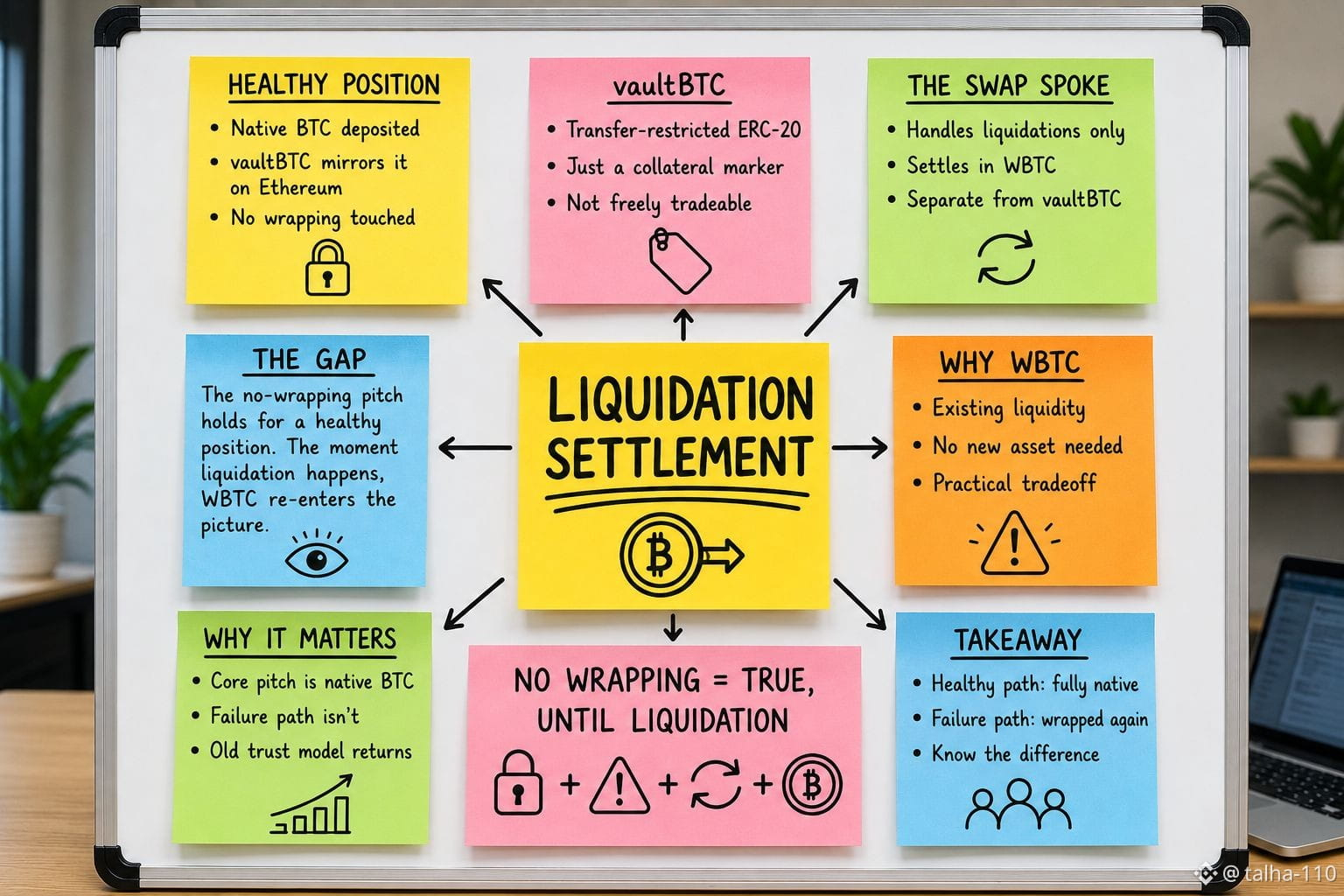
At first I assumed the entire pitch of Trustless Bitcoin Vaults was that wrapping never enters the picture, native BTC stays native the whole way through, borrowing, collateral, everything. Reading the actual Aave v4 integration proposal, that holds true right up until something goes wrong. When BTC gets locked into a vault, Ethereum sees it represented as vaultBTC, a transfer-restricted token mirroring the locked position, not freely tradeable, just a verifiable marker of collateral state. That part still respects the no-wrapping promise. But liquidations don't settle in vaultBTC. They settle through a separate Swap Spoke, denominated in WBTC, the same wrapped Bitcoin token the whole system was supposedly designed to avoid depending on. So the pitch holds for a healthy position. Deposit native BTC, borrow against it, repay, unlock, no wrapper touched any of it. The moment a position gets liquidated, the exit path runs through the exact wrapped-asset model TBV exists to route around. That's not a flaw exactly, WBTC has liquidity that a brand new settlement asset wouldn't have on day one. But it does mean the "no wrapping" claim is really "no wrapping, as long as nothing goes wrong." The failure path is where the old trust model quietly comes back in.
@BabylonLabs_io #baby
$BABY
$GRVT
$BTC
@BabylonLabs_io #baby
$BABY
$GRVT
$BTC