最終性提供者の実質的な裏付けが変化した時点と、プロトコルがそれを変更として認める時点の間に何が起きるのかを知りたかった。そこで、Babylonのx/epochingモジュールが実際に新しい委任をどう処理するかを追跡した。
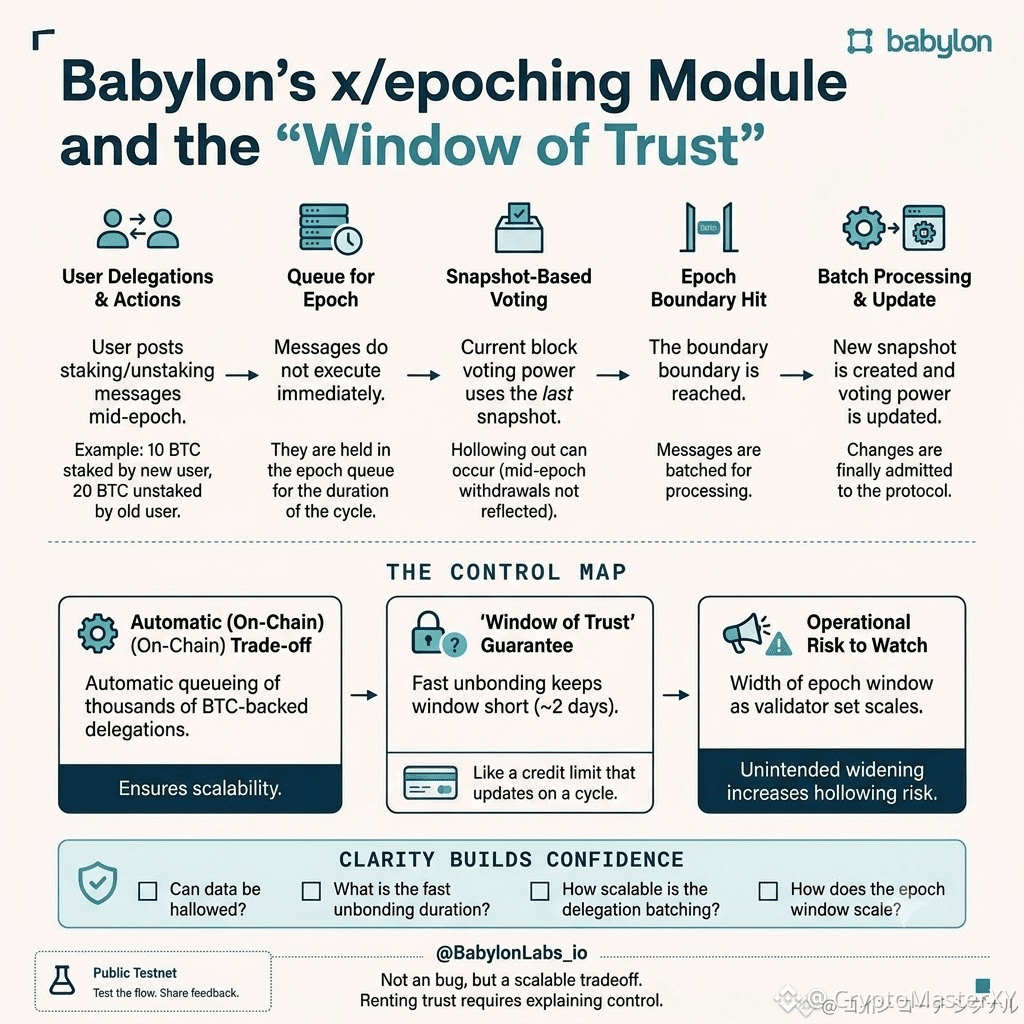
ステーキングおよびアンステーキングのメッセージは即時には実行されない。エポック全体の長さ分キューに積まれ、境界で一括して処理される。その境界に到達するまで、チェーンの最終性の投票権力は現在のものではなく、古いスナップショットを反映したままだ。最終性提供者は現実の時刻で委任を失っている可能性があり、経済的にエポックの途中で中身が薄くなっていても、誰かが引き出す前に持っていた重みで投票できてしまう。
これは不具合ではない。個別に処理する代わりに、何千ものBTC裏付けの委任を1つの決済にまとめるためのトレードオフだ。だが、それは「あるブロックを支える暗号経済的なセキュリティ」が、今この瞬間に存在するセキュリティではないことを意味する。最後のチェックポイント時点で存在していたセキュリティが、直前以降に重要な変化がなかったという信頼のもとで引き継がれるのだ。
これをクレジットラインが実際にどう機能するかと比較し続けた。収入が変わっても、限度額は即座には更新されない。サイクルごとに更新され、その間は銀行が、すでに少しだけ誤っているかもしれない数値に基づいて信頼を提供している。Babylonも同じことを、誤りをより良い暗号で包む形で、ビットコインの重みについて行っている。
私は、このモデルを破壊するものだとは思わない。高速なアンボンド(約2日)により、その窓は典型的なPoSチェーンに比べて短い。ただしゼロではない。注目すべきなのはトークン価格ではなく、そのエポック窓がバリデータ集合が拡大するにつれてどれくらい広がるかだ。
$BABY @BabylonLabs_io #baby $ON $BTC
ステーキングおよびアンステーキングのメッセージは即時には実行されない。エポック全体の長さ分キューに積まれ、境界で一括して処理される。その境界に到達するまで、チェーンの最終性の投票権力は現在のものではなく、古いスナップショットを反映したままだ。最終性提供者は現実の時刻で委任を失っている可能性があり、経済的にエポックの途中で中身が薄くなっていても、誰かが引き出す前に持っていた重みで投票できてしまう。
これは不具合ではない。個別に処理する代わりに、何千ものBTC裏付けの委任を1つの決済にまとめるためのトレードオフだ。だが、それは「あるブロックを支える暗号経済的なセキュリティ」が、今この瞬間に存在するセキュリティではないことを意味する。最後のチェックポイント時点で存在していたセキュリティが、直前以降に重要な変化がなかったという信頼のもとで引き継がれるのだ。
これをクレジットラインが実際にどう機能するかと比較し続けた。収入が変わっても、限度額は即座には更新されない。サイクルごとに更新され、その間は銀行が、すでに少しだけ誤っているかもしれない数値に基づいて信頼を提供している。Babylonも同じことを、誤りをより良い暗号で包む形で、ビットコインの重みについて行っている。
私は、このモデルを破壊するものだとは思わない。高速なアンボンド(約2日)により、その窓は典型的なPoSチェーンに比べて短い。ただしゼロではない。注目すべきなのはトークン価格ではなく、そのエポック窓がバリデータ集合が拡大するにつれてどれくらい広がるかだ。
$BABY @BabylonLabs_io #baby $ON $BTC