

Fairness and engagement are not synonyms. In most contexts we assume they move together: a fair game is an engaging game, and vice versa. But in a game with real money attached to the reward structure, the relationship between fairness and engagement gets complicated, and Pixels is living inside that complication right now.
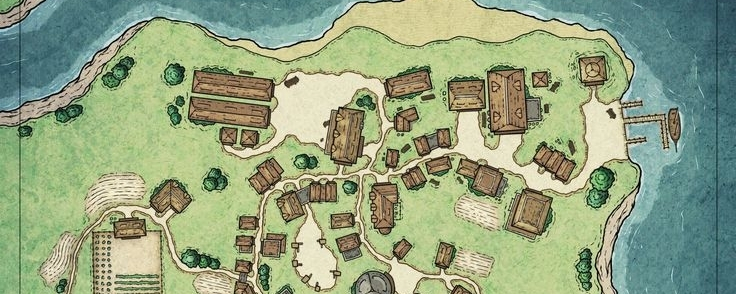
Start with the clearest version of the tension. The land NFT system creates a two-tier economy from the moment a player joins. Land owners access higher-tier resources, earn more per unit of time, and have compounding advantages that widen over time. A player who bought a top-tier land plot in 2023 for $10,000 is in a fundamentally different economic position than a free-to-play player farming on a Speck. Both are "playing Pixels." They are not playing the same game. The land owner's expected return per session is categorically higher. That's unfair in the strict sense: identical labor time produces different economic outcomes based on starting capital.
But here's the problem. The land NFT system is also the reason Pixels had a player base at all in its early growth phase. The promise of land ownership as a yield-producing asset was what motivated the original investment community. The NFT market generated early revenue and community formation. Destroy the land advantage and you destroy the investment thesis that funded the game's growth. Fairness, applied retroactively to the land system, is not free. It costs the exact constituency that built the ecosystem.
Pixels has threaded this needle through a design philosophy that doesn't flatten the advantage but creates pathways for non-land players. Free-to-play players can access Specks, join guilds to access higher-tier resources, participate in events, complete the task board. The gap is real but not absolute. You can play Pixels without land. You will not earn at the same rate as a landowner. The design accepts the unfairness as a structural feature and builds access routes around it.
The engagement side of this tradeoff is where it gets interesting. Variable reward structures, where high-investment players can earn meaningfully more than low-investment players, are more engaging than flat structures. This is the same reason competitive ladders in games produce more sustained engagement than egalitarian participation rewards. The delta between your current state and a better state creates motivation. If land owners and Speck farmers earned identically, the motivation to acquire land would disappear, and with it the investment community that funds development. The unfairness is load-bearing.
Stacked, Pixels' AI economy platform, personalizes incentives rather than standardizing them. A veteran land owner who hasn't spent in 30 days receives a different offer than a free-to-play newcomer at the same engagement point. This is technically less fair, because two players with similar behavioral signals receive different economic treatment. But it's more engaging for each cohort, because the offer is calibrated to the specific value proposition relevant to that player's position in the economy. Personalization is structured unfairness that produces better engagement outcomes than universal fairness.
The VIP system is another explicit fairness-engagement tradeoff. VIP costs $10/month in PIXEL and provides meaningful advantages: extra energy, reduced marketplace fees, exclusive area access, 400 instant energy every 8 hours. Players who can afford VIP have compounding advantages over players who cannot. This is unfair. It is also what drives $PIXEL demand and sustains the token economy. The team cannot drop VIP without losing a major deflationary mechanism and a major revenue line.
The April 2025 strategic update made this tradeoff explicit. Pixels is deliberately shifting toward serving players who "are more active, spend more, or hold PIXEL long-term." That is a conscious choice to optimize for the players whose participation is economically valuable to the studio, not for the players who are most disadvantaged by the existing structure. It's a rational business decision. It is not a fairness-maximizing decision. And the players who needed a fairness-first approach, the free-to-play base who could have become a sustainable long-term community, are the cohort most likely to have churned in the 2024-2025 user base decline.
I don't think there's a clean resolution here. Engagement-first design produces unfair outcomes. Fairness-first design produces lower engagement. Pixels chose engagement. The question is whether the unfairness was calibrated carefully enough to retain the players who could tolerate it, and shed the players who couldn't without losing structural health. The jury is still out.
The honest admission Pixels could make, but hasn't, is that the fairness-engagement tradeoff was consciously made in favor of engagement from the beginning. Land NFTs as yield-producing assets were the original design. $PIXEL as a premium currency that amplifies advantage for spenders was the original design. The two-tier economy wasn't a mistake. It was a business model. What changed in 2024-2025 was the public framing: Pixels started talking more explicitly about sustainability and player retention without acknowledging that the existing design systematically advantages high-capital players.
The strategic shift toward "daily active users with higher lifetime value" in April 2025 is internally consistent with this design philosophy. You're just being more explicit about it. High-lifetime-value players are, almost by definition, the players who can afford to engage with the premium layer of the economy. The shift isn't changing the fairness-engagement tradeoff. It's accepting it more explicitly and designing for it more deliberately. Whether that's a maturation of the business model or an abandonment of the broader player base that made Pixels famous is a genuinely contested question among the people who've been watching Pixels the longest. 😭