
#tradingperformance
tradingperformance
閲覧回数 10,865
36人が討論中
注目
最新

·
--
ブリッシュ
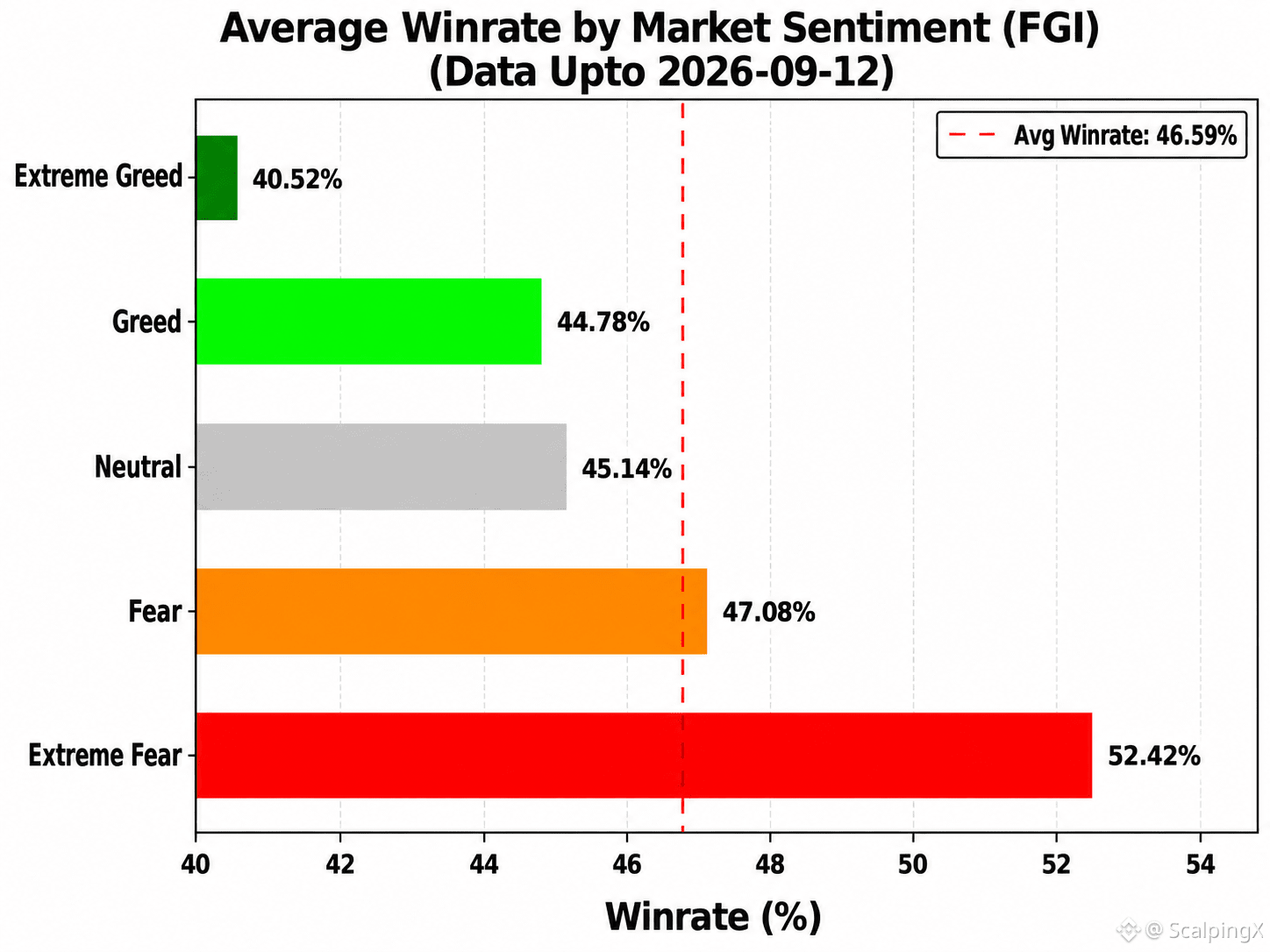
📊 取引パフォーマンス&マーケット・センチメント・インデックス(FGI)レポート – 更新日 12/09/2026
最新の統計データによると、FGIと勝率(Win Rate)の相関は依然として弱く、約 r ≈ -0.293 のように負の方向に傾いたままです。これは、FGIが単独で注文エントリーを判断するためのツールとしては適していないことを示唆しますが、それでもリスク評価には価値があります。取引パフォーマンスは一般に、市場のセンチメントが過度な楽観に傾くほど弱まりやすく、FGIは利益目標を拡大するためのシグナルというより、早期のリスク警告指標としてより有用です。
以下は、参照用として、センチメントゾーンごとの勝率(WR)、最低ブレークイーブンR:R、記録された日数(n)の要約です:
🤑 極度の強欲(≥80):WR 40.5% • R:R=1:1.47 • n=25
🤤 強欲(60–80):WR 44.8% • R:R=1:1.23 • n=238
😐 中立(40–60):WR 45.1% • R:R=1:1.22 • n=153
😰 恐怖(20–40):WR 47.1% • R:R=1:1.12 • n=271
😱 極度の恐怖(<20):WR 52.4% • R:R=1:0.91 • n=115
センチメントゾーン別:全体平均46.59%を上回るパフォーマンスが出た日の割合:
🤑 極度の強欲:8.0%
🤤 強欲:35.7%
😐 中立:38.6%
😰 恐怖:55.0%
😱 極度の恐怖:67.8%
➤ スキャルパーは、エントリー時の期待利益目標を調整するための指標としてFGIを活用できます:
📈 FGIが高い場合は、勝率の低下を補い、十分に大きなR:Rを維持するために、より高い利益目標が必要になり得ます。
📉 FGIが低い場合は、資金の回転率を高め、利益確定を容易にするために、より低い利益目標が適している可能性があります。
#TradingPerformance $ONE
📊 取引パフォーマンス&マーケット・センチメント・インデックス(FGI)レポート – 更新日 12/09/2026
最新の統計データによると、FGIと勝率(Win Rate)の相関は依然として弱く、約 r ≈ -0.293 のように負の方向に傾いたままです。これは、FGIが単独で注文エントリーを判断するためのツールとしては適していないことを示唆しますが、それでもリスク評価には価値があります。取引パフォーマンスは一般に、市場のセンチメントが過度な楽観に傾くほど弱まりやすく、FGIは利益目標を拡大するためのシグナルというより、早期のリスク警告指標としてより有用です。
以下は、参照用として、センチメントゾーンごとの勝率(WR)、最低ブレークイーブンR:R、記録された日数(n)の要約です:
🤑 極度の強欲(≥80):WR 40.5% • R:R=1:1.47 • n=25
🤤 強欲(60–80):WR 44.8% • R:R=1:1.23 • n=238
😐 中立(40–60):WR 45.1% • R:R=1:1.22 • n=153
😰 恐怖(20–40):WR 47.1% • R:R=1:1.12 • n=271
😱 極度の恐怖(<20):WR 52.4% • R:R=1:0.91 • n=115
センチメントゾーン別:全体平均46.59%を上回るパフォーマンスが出た日の割合:
🤑 極度の強欲:8.0%
🤤 強欲:35.7%
😐 中立:38.6%
😰 恐怖:55.0%
😱 極度の恐怖:67.8%
➤ スキャルパーは、エントリー時の期待利益目標を調整するための指標としてFGIを活用できます:
📈 FGIが高い場合は、勝率の低下を補い、十分に大きなR:Rを維持するために、より高い利益目標が必要になり得ます。
📉 FGIが低い場合は、資金の回転率を高め、利益確定を容易にするために、より低い利益目標が適している可能性があります。
#TradingPerformance $ONE
最新の統計データによると、FGIと勝率(Win Rate)の相関は依然として弱く、約 r ≈ -0.293 のように負の方向に傾いたままです。これは、FGIが単独で注文エントリーを判断するためのツールとしては適していないことを示唆しますが、それでもリスク評価には価値があります。取引パフォーマンスは一般に、市場のセンチメントが過度な楽観に傾くほど弱まりやすく、FGIは利益目標を拡大するためのシグナルというより、早期のリスク警告指標としてより有用です。
以下は、参照用として、センチメントゾーンごとの勝率(WR)、最低ブレークイーブンR:R、記録された日数(n)の要約です:
🤑 極度の強欲(≥80):WR 40.5% • R:R=1:1.47 • n=25
🤤 強欲(60–80):WR 44.8% • R:R=1:1.23 • n=238
😐 中立(40–60):WR 45.1% • R:R=1:1.22 • n=153
😰 恐怖(20–40):WR 47.1% • R:R=1:1.12 • n=271
😱 極度の恐怖(<20):WR 52.4% • R:R=1:0.91 • n=115
センチメントゾーン別:全体平均46.59%を上回るパフォーマンスが出た日の割合:
🤑 極度の強欲:8.0%
🤤 強欲:35.7%
😐 中立:38.6%
😰 恐怖:55.0%
😱 極度の恐怖:67.8%
➤ スキャルパーは、エントリー時の期待利益目標を調整するための指標としてFGIを活用できます:
📈 FGIが高い場合は、勝率の低下を補い、十分に大きなR:Rを維持するために、より高い利益目標が必要になり得ます。
📉 FGIが低い場合は、資金の回転率を高め、利益確定を容易にするために、より低い利益目標が適している可能性があります。
#TradingPerformance $ONE
197
·
--
ブリッシュ
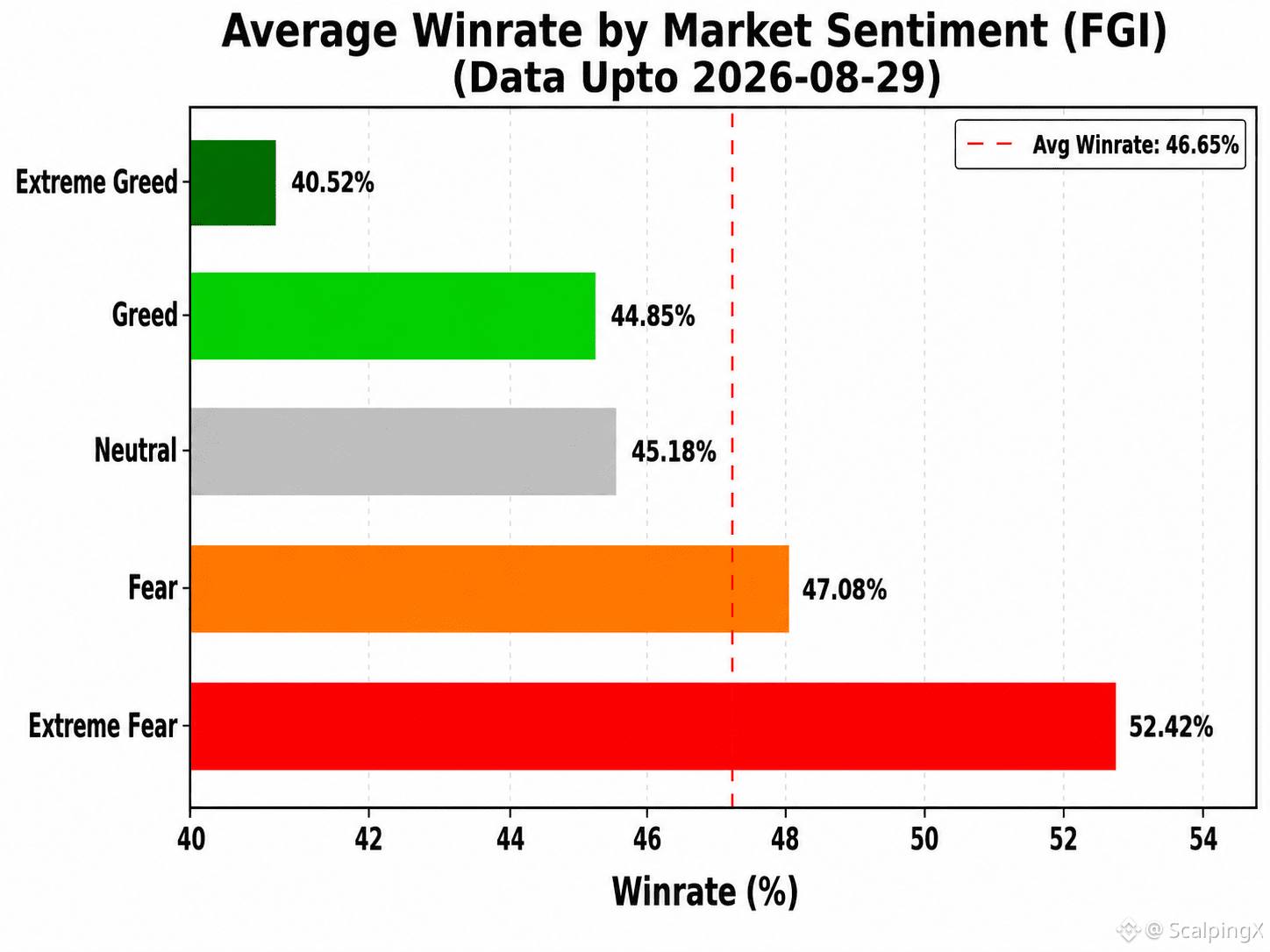
📊 取引パフォーマンス&市場センチメント指数(FGI)レポート – 更新日 2026-08-29
最新統計によると、FGIと勝率(Win Rate)の相関は依然として弱く、傾向はマイナス側に続いており、概ね r ≈ -0.290 です。これは、FGIが単独でエントリー(注文の出入り)を判断するツールとしては適していないことを示唆しますが、それでもリスク評価には価値があります。取引パフォーマンスは、市場のセンチメントが過度な陶酔(エクスタシー)へ傾くにつれて概して弱まる傾向があるため、FGIは「利益目標を拡大するためのシグナル」よりも「早期のリスク警告指標」としてのほうが有用です。
以下は、センチメントゾーン別に、勝率(WR)、最小ブレークイーブンのR:R、記録された日数(n)をまとめたものです:
🤑 強欲(≥80):WR 40.5% • R:R=1:1.47 • n=25
🤤 強欲(60–80):WR 44.9% • R:R=1:1.23 • n=225
😐 中立(40–60):WR 45.2% • R:R=1:1.21 • n=152
😰 恐怖(20–40):WR 47.1% • R:R=1:1.12 • n=271
😱 強い恐怖(<20):WR 52.4% • R:R=1:0.91 • n=115
センチメントゾーン別:全体平均 46.65% を上回るパフォーマンスの日数の割合:
🤑 強欲:8.0%
🤤 強欲:35.6%
😐 中立:38.8%
😰 恐怖:55.0%
😱 強い恐怖:67.8%
➤ スキャルパーは、トレードに入る際の期待利益目標を調整するためにFGIを指標として利用できます:
📈 FGIが高い場合、勝率が低くなるリスクを相殺するために、十分に大きいR:R比率を維持できるよう、利益見通しを引き上げる必要があるかもしれません。
📉 FGIが低い場合、資金の回転率を高めて利益確定を容易にするために、利益見通しを引き下げることができます。
#TradingPerformance $BTC $ETH $SOL
📊 取引パフォーマンス&市場センチメント指数(FGI)レポート – 更新日 2026-08-29
最新統計によると、FGIと勝率(Win Rate)の相関は依然として弱く、傾向はマイナス側に続いており、概ね r ≈ -0.290 です。これは、FGIが単独でエントリー(注文の出入り)を判断するツールとしては適していないことを示唆しますが、それでもリスク評価には価値があります。取引パフォーマンスは、市場のセンチメントが過度な陶酔(エクスタシー)へ傾くにつれて概して弱まる傾向があるため、FGIは「利益目標を拡大するためのシグナル」よりも「早期のリスク警告指標」としてのほうが有用です。
以下は、センチメントゾーン別に、勝率(WR)、最小ブレークイーブンのR:R、記録された日数(n)をまとめたものです:
🤑 強欲(≥80):WR 40.5% • R:R=1:1.47 • n=25
🤤 強欲(60–80):WR 44.9% • R:R=1:1.23 • n=225
😐 中立(40–60):WR 45.2% • R:R=1:1.21 • n=152
😰 恐怖(20–40):WR 47.1% • R:R=1:1.12 • n=271
😱 強い恐怖(<20):WR 52.4% • R:R=1:0.91 • n=115
センチメントゾーン別:全体平均 46.65% を上回るパフォーマンスの日数の割合:
🤑 強欲:8.0%
🤤 強欲:35.6%
😐 中立:38.8%
😰 恐怖:55.0%
😱 強い恐怖:67.8%
➤ スキャルパーは、トレードに入る際の期待利益目標を調整するためにFGIを指標として利用できます:
📈 FGIが高い場合、勝率が低くなるリスクを相殺するために、十分に大きいR:R比率を維持できるよう、利益見通しを引き上げる必要があるかもしれません。
📉 FGIが低い場合、資金の回転率を高めて利益確定を容易にするために、利益見通しを引き下げることができます。
#TradingPerformance $BTC $ETH $SOL
最新統計によると、FGIと勝率(Win Rate)の相関は依然として弱く、傾向はマイナス側に続いており、概ね r ≈ -0.290 です。これは、FGIが単独でエントリー(注文の出入り)を判断するツールとしては適していないことを示唆しますが、それでもリスク評価には価値があります。取引パフォーマンスは、市場のセンチメントが過度な陶酔(エクスタシー)へ傾くにつれて概して弱まる傾向があるため、FGIは「利益目標を拡大するためのシグナル」よりも「早期のリスク警告指標」としてのほうが有用です。
以下は、センチメントゾーン別に、勝率(WR)、最小ブレークイーブンのR:R、記録された日数(n)をまとめたものです:
🤑 強欲(≥80):WR 40.5% • R:R=1:1.47 • n=25
🤤 強欲(60–80):WR 44.9% • R:R=1:1.23 • n=225
😐 中立(40–60):WR 45.2% • R:R=1:1.21 • n=152
😰 恐怖(20–40):WR 47.1% • R:R=1:1.12 • n=271
😱 強い恐怖(<20):WR 52.4% • R:R=1:0.91 • n=115
センチメントゾーン別:全体平均 46.65% を上回るパフォーマンスの日数の割合:
🤑 強欲:8.0%
🤤 強欲:35.6%
😐 中立:38.8%
😰 恐怖:55.0%
😱 強い恐怖:67.8%
➤ スキャルパーは、トレードに入る際の期待利益目標を調整するためにFGIを指標として利用できます:
📈 FGIが高い場合、勝率が低くなるリスクを相殺するために、十分に大きいR:R比率を維持できるよう、利益見通しを引き上げる必要があるかもしれません。
📉 FGIが低い場合、資金の回転率を高めて利益確定を容易にするために、利益見通しを引き下げることができます。
#TradingPerformance $BTC $ETH $SOL
57
·
--
ブリッシュ
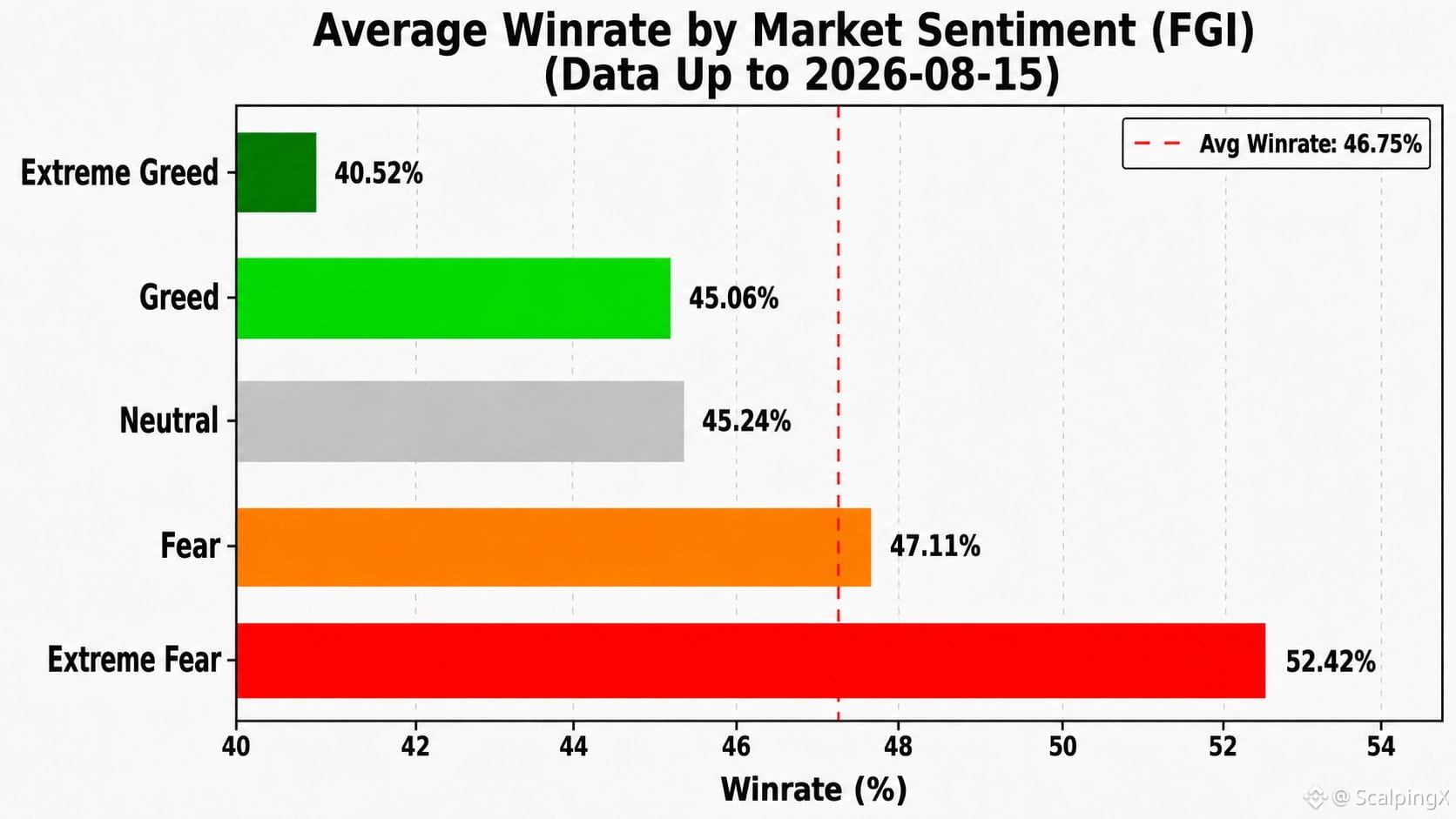
📊 取引パフォーマンス & 恐怖と強欲指数(FGI)レポート(更新日:2026/08/15)
最新の統計データでは、FGIと勝率の相関は弱く、r ≈ -0.285のように負の傾向が続いていることが示されています。これは、FGIが単独でエントリー判断のツールとしては適していない一方で、リスクを定量化する目的には役立つ可能性があることを意味します。取引パフォーマンスは概して、市場のセンチメントが極端な楽観に傾くほど悪化しやすいため、FGIは利益期待を拡大するためのシグナルというより、早期のリスク警告指標として用いるのがより適しています。
以下は、センチメントゾーン別の勝率(WR)、最低ブレイクイーブンR:R、記録された日数(n)の要約です:
🤑 強欲(≧80):WR 40.5% • R:R=1:1.47 • n=25
🤤 強欲(60–80):WR 45.1% • R:R=1:1.22 • n=215
😐 中立(40–60):WR 45.2% • R:R=1:1.21 • n=150
😰 恐怖(20–40):WR 47.1% • R:R=1:1.12 • n=269
😱 極度の恐怖(<20):WR 52.4% • R:R=1:0.91 • n=115
センチメントゾーン別に、全体の平均勝率46.75%を上回るパフォーマンスが出た日の割合:
🤑 強欲:8.0%
🤤 強欲:36.3%
😐 中立:38.0%
😰 恐怖:53.9%
😱 極度の恐怖:67.8%
➤ 短期トレーダーは、取引のエントリー時に期待利益目標を調整するためのガイドとしてFGIを活用できます:
📈 FGIが高い場合:勝率が低下している分を補い、十分に有利なR:R比を維持するために、より高い利益期待が必要になる可能性があります。
📉 FGIが低い場合:資本の回転率を高め、利益の実現をより容易にするために、利益期待を下げられます。
#TradingPerformance $GRAM $NVDAB $AAPLB
📊 取引パフォーマンス & 恐怖と強欲指数(FGI)レポート(更新日:2026/08/15)
最新の統計データでは、FGIと勝率の相関は弱く、r ≈ -0.285のように負の傾向が続いていることが示されています。これは、FGIが単独でエントリー判断のツールとしては適していない一方で、リスクを定量化する目的には役立つ可能性があることを意味します。取引パフォーマンスは概して、市場のセンチメントが極端な楽観に傾くほど悪化しやすいため、FGIは利益期待を拡大するためのシグナルというより、早期のリスク警告指標として用いるのがより適しています。
以下は、センチメントゾーン別の勝率(WR)、最低ブレイクイーブンR:R、記録された日数(n)の要約です:
🤑 強欲(≧80):WR 40.5% • R:R=1:1.47 • n=25
🤤 強欲(60–80):WR 45.1% • R:R=1:1.22 • n=215
😐 中立(40–60):WR 45.2% • R:R=1:1.21 • n=150
😰 恐怖(20–40):WR 47.1% • R:R=1:1.12 • n=269
😱 極度の恐怖(<20):WR 52.4% • R:R=1:0.91 • n=115
センチメントゾーン別に、全体の平均勝率46.75%を上回るパフォーマンスが出た日の割合:
🤑 強欲:8.0%
🤤 強欲:36.3%
😐 中立:38.0%
😰 恐怖:53.9%
😱 極度の恐怖:67.8%
➤ 短期トレーダーは、取引のエントリー時に期待利益目標を調整するためのガイドとしてFGIを活用できます:
📈 FGIが高い場合:勝率が低下している分を補い、十分に有利なR:R比を維持するために、より高い利益期待が必要になる可能性があります。
📉 FGIが低い場合:資本の回転率を高め、利益の実現をより容易にするために、利益期待を下げられます。
#TradingPerformance $GRAM $NVDAB $AAPLB
最新の統計データでは、FGIと勝率の相関は弱く、r ≈ -0.285のように負の傾向が続いていることが示されています。これは、FGIが単独でエントリー判断のツールとしては適していない一方で、リスクを定量化する目的には役立つ可能性があることを意味します。取引パフォーマンスは概して、市場のセンチメントが極端な楽観に傾くほど悪化しやすいため、FGIは利益期待を拡大するためのシグナルというより、早期のリスク警告指標として用いるのがより適しています。
以下は、センチメントゾーン別の勝率(WR)、最低ブレイクイーブンR:R、記録された日数(n)の要約です:
🤑 強欲(≧80):WR 40.5% • R:R=1:1.47 • n=25
🤤 強欲(60–80):WR 45.1% • R:R=1:1.22 • n=215
😐 中立(40–60):WR 45.2% • R:R=1:1.21 • n=150
😰 恐怖(20–40):WR 47.1% • R:R=1:1.12 • n=269
😱 極度の恐怖(<20):WR 52.4% • R:R=1:0.91 • n=115
センチメントゾーン別に、全体の平均勝率46.75%を上回るパフォーマンスが出た日の割合:
🤑 強欲:8.0%
🤤 強欲:36.3%
😐 中立:38.0%
😰 恐怖:53.9%
😱 極度の恐怖:67.8%
➤ 短期トレーダーは、取引のエントリー時に期待利益目標を調整するためのガイドとしてFGIを活用できます:
📈 FGIが高い場合:勝率が低下している分を補い、十分に有利なR:R比を維持するために、より高い利益期待が必要になる可能性があります。
📉 FGIが低い場合:資本の回転率を高め、利益の実現をより容易にするために、利益期待を下げられます。
#TradingPerformance $GRAM $NVDAB $AAPLB
99
·
--
ブリッシュ
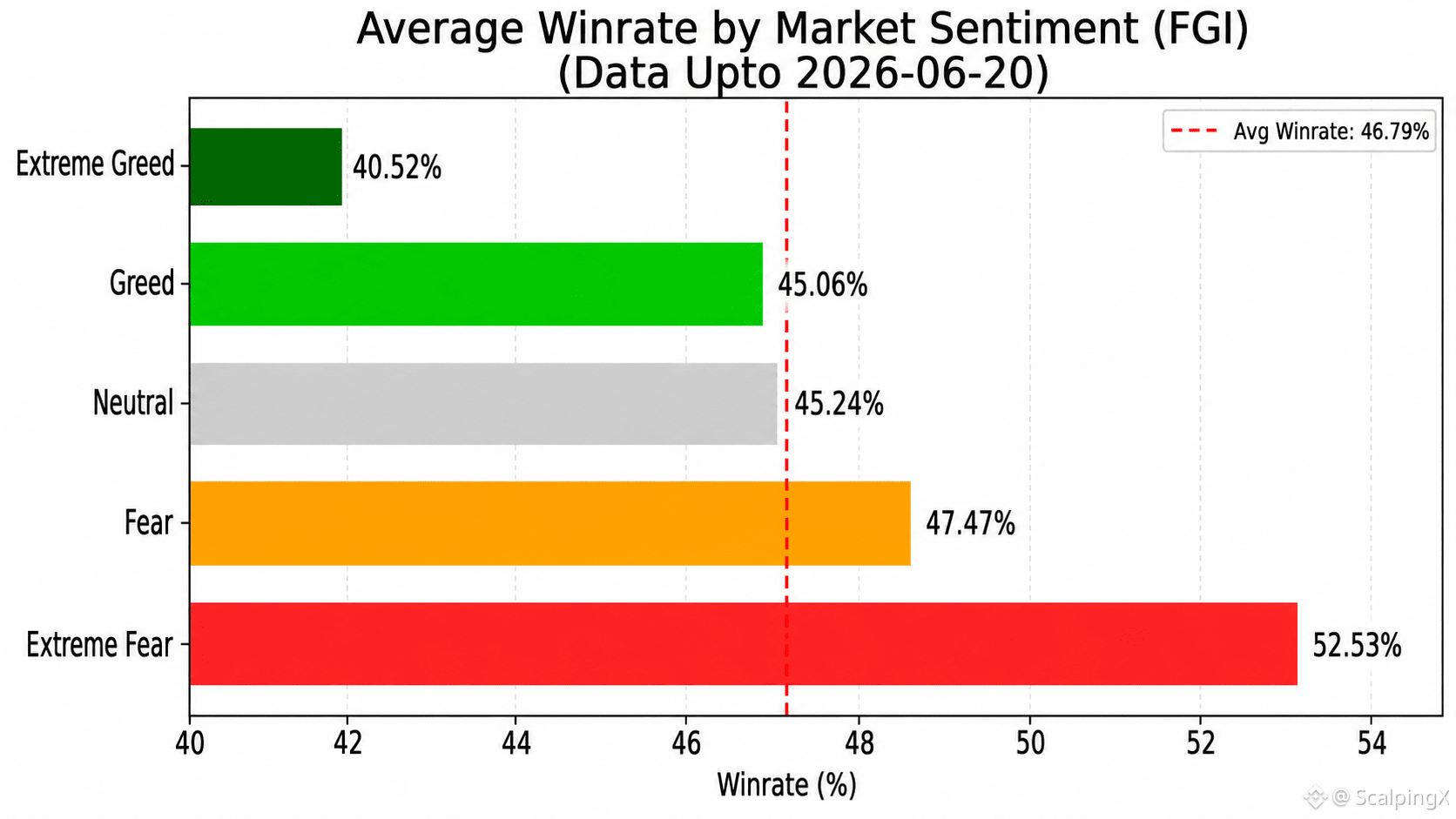
📊 トレーディングパフォーマンス & マーケットセンチメントインデックス (FGI) レポート – 更新日 20/06/2026
最新の統計データによると、FGIと勝率の相関は低く、ネガティブに傾いています (r ~ -0.309)。これは、FGIが価格トレンドを予測したり、トレードエントリーを特定するツールとしては適していないことをさらに強調していますが、ポジションリスクを定量化する上で実用的な価値があります。一般的に、マーケットセンチメントが極度のユーフォリアに移行するとトレーディングパフォーマンスが弱まる傾向があり、FGIは利益期待を広げるためのシグナルではなく、早期のリスク警告シグナルとしてより有用です。
以下は、センチメントゾーンにおける勝率 (WR)、最小ブレイクイーブン R:R、記録された日数 (n) の概要です:
🤑 極度の貪欲 (≥80): WR 40.5% • R:R=1:1.47 • n=25
🤤 貪欲 (60–80): WR 45.1% • R:R=1:1.22 • n=215
😐 中立 (40–60): WR 45.2% • R:R=1:1.21 • n=150
😨 恐怖 (20–40): WR 47.5% • R:R=1:1.11 • n=222
😱 極度の恐怖 (<20): WR 52.5% • R:R=1:0.90 • n=106
センチメントゾーンごとの平均レベル 46.79% を上回るパフォーマンスの日数の割合:
🤑 極度の貪欲: 8.0%
🤤 貪欲: 36.3%
😐 中立: 38.0%
😨 恐怖: 54.1%
😱 極度の恐怖: 69.8%
➤ スキャルパーは、トレードに入る際に期待利益目標を調整するためのガイドとしてFGIを使用できます:
📈 FGIが高いときは、期待利益目標を引き上げて、勝率の低下を補うためにR:Rが十分に大きくなるようにします。
📉 FGIが低いときは、期待利益目標を引き下げて、資本回転速度を改善し、利益確定を容易にします。
#TradingPerformance $NVDAB $MUB $TSLAB
📊 トレーディングパフォーマンス & マーケットセンチメントインデックス (FGI) レポート – 更新日 20/06/2026
最新の統計データによると、FGIと勝率の相関は低く、ネガティブに傾いています (r ~ -0.309)。これは、FGIが価格トレンドを予測したり、トレードエントリーを特定するツールとしては適していないことをさらに強調していますが、ポジションリスクを定量化する上で実用的な価値があります。一般的に、マーケットセンチメントが極度のユーフォリアに移行するとトレーディングパフォーマンスが弱まる傾向があり、FGIは利益期待を広げるためのシグナルではなく、早期のリスク警告シグナルとしてより有用です。
以下は、センチメントゾーンにおける勝率 (WR)、最小ブレイクイーブン R:R、記録された日数 (n) の概要です:
🤑 極度の貪欲 (≥80): WR 40.5% • R:R=1:1.47 • n=25
🤤 貪欲 (60–80): WR 45.1% • R:R=1:1.22 • n=215
😐 中立 (40–60): WR 45.2% • R:R=1:1.21 • n=150
😨 恐怖 (20–40): WR 47.5% • R:R=1:1.11 • n=222
😱 極度の恐怖 (<20): WR 52.5% • R:R=1:0.90 • n=106
センチメントゾーンごとの平均レベル 46.79% を上回るパフォーマンスの日数の割合:
🤑 極度の貪欲: 8.0%
🤤 貪欲: 36.3%
😐 中立: 38.0%
😨 恐怖: 54.1%
😱 極度の恐怖: 69.8%
➤ スキャルパーは、トレードに入る際に期待利益目標を調整するためのガイドとしてFGIを使用できます:
📈 FGIが高いときは、期待利益目標を引き上げて、勝率の低下を補うためにR:Rが十分に大きくなるようにします。
📉 FGIが低いときは、期待利益目標を引き下げて、資本回転速度を改善し、利益確定を容易にします。
#TradingPerformance $NVDAB $MUB $TSLAB
最新の統計データによると、FGIと勝率の相関は低く、ネガティブに傾いています (r ~ -0.309)。これは、FGIが価格トレンドを予測したり、トレードエントリーを特定するツールとしては適していないことをさらに強調していますが、ポジションリスクを定量化する上で実用的な価値があります。一般的に、マーケットセンチメントが極度のユーフォリアに移行するとトレーディングパフォーマンスが弱まる傾向があり、FGIは利益期待を広げるためのシグナルではなく、早期のリスク警告シグナルとしてより有用です。
以下は、センチメントゾーンにおける勝率 (WR)、最小ブレイクイーブン R:R、記録された日数 (n) の概要です:
🤑 極度の貪欲 (≥80): WR 40.5% • R:R=1:1.47 • n=25
🤤 貪欲 (60–80): WR 45.1% • R:R=1:1.22 • n=215
😐 中立 (40–60): WR 45.2% • R:R=1:1.21 • n=150
😨 恐怖 (20–40): WR 47.5% • R:R=1:1.11 • n=222
😱 極度の恐怖 (<20): WR 52.5% • R:R=1:0.90 • n=106
センチメントゾーンごとの平均レベル 46.79% を上回るパフォーマンスの日数の割合:
🤑 極度の貪欲: 8.0%
🤤 貪欲: 36.3%
😐 中立: 38.0%
😨 恐怖: 54.1%
😱 極度の恐怖: 69.8%
➤ スキャルパーは、トレードに入る際に期待利益目標を調整するためのガイドとしてFGIを使用できます:
📈 FGIが高いときは、期待利益目標を引き上げて、勝率の低下を補うためにR:Rが十分に大きくなるようにします。
📉 FGIが低いときは、期待利益目標を引き下げて、資本回転速度を改善し、利益確定を容易にします。
#TradingPerformance $NVDAB $MUB $TSLAB
2
5.5k
·
--
ブリッシュ
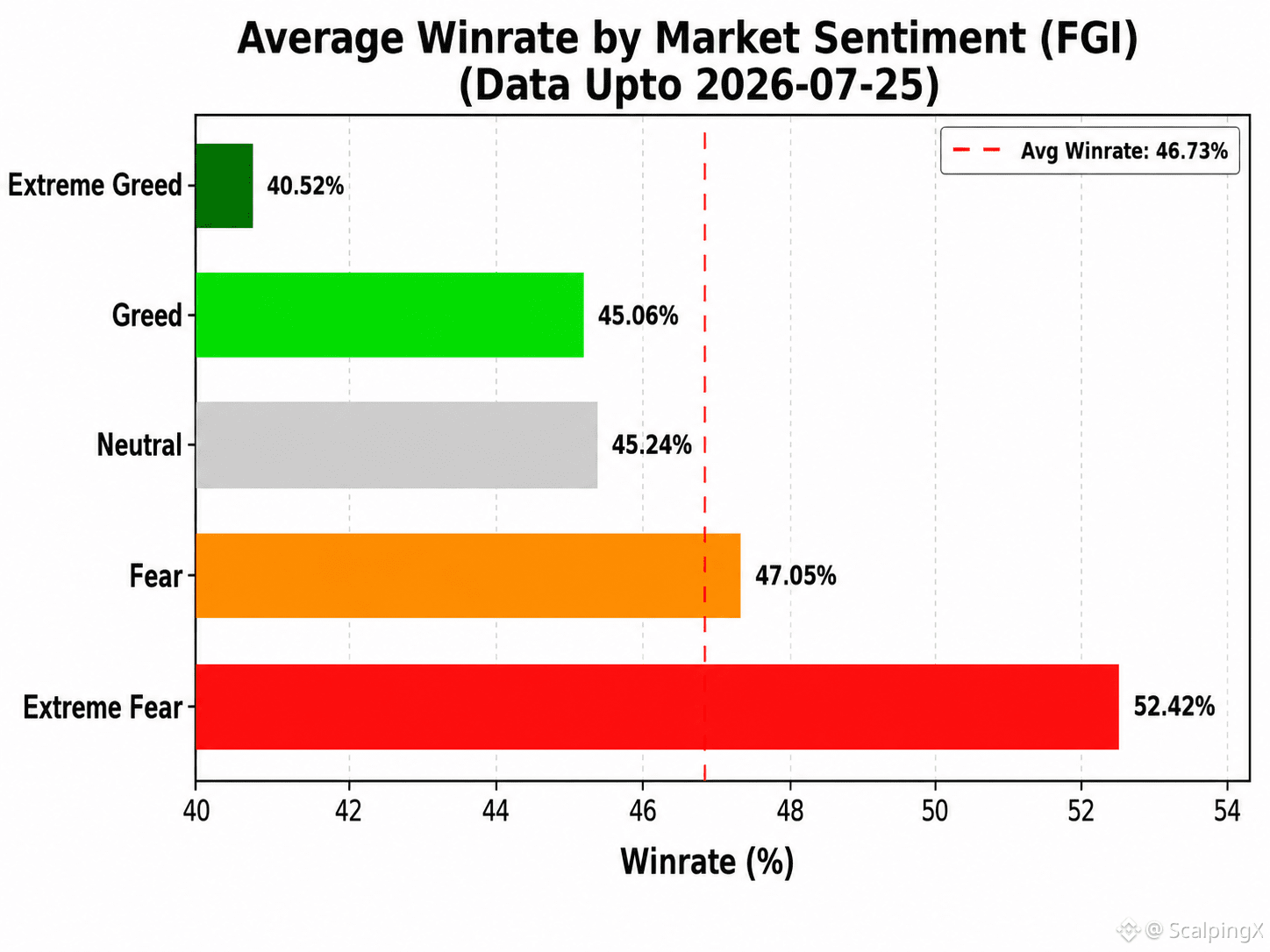
📊 取引パフォーマンス&市場センチメント指数(FGI)レポート – 2026/07/25更新
最新統計によると、FGIと勝率の相関は依然として弱く、さらに負の値のままです(r ≈ -0.289)。これは、FGIが価格の方向性を予測したり、エントリーのタイミングを判断したりするのには適していないことを裏付けています。とはいえ、注文リスクを定量化するという実務的な価値は依然としてあります。
全体として、取引パフォーマンスは市場センチメントが極端な楽観へ傾くほど低下しやすくなります。したがって、FGIは利益期待を高めるためのシグナルというより、早期のリスク警告指標として使うのが適しています。
以下は、各センチメントゾーンにおける勝率(WR)、最小ブレークイーブンR:R、記録日数(n)の要約です:
🤑 極端な強欲(≥80):WR 40.5% • R:R = 1:1.47 • n = 25
🤤 強欲(60–80):WR 45.1% • R:R = 1:1.22 • n = 215
😐 中立(40–60):WR 45.2% • R:R = 1:1.21 • n = 150
😨 恐怖(20–40):WR 47.0% • R:R = 1:1.13 • n = 248
😱 極端な恐怖(<20):WR 52.4% • R:R = 1:0.91 • n = 115
各センチメントゾーンにおける、全体平均46.73%を上回るパフォーマンス日の割合:
🤑 極端な強欲:8.0%
🤤 強欲:36.3%
😐 中立:38.0%
😨 恐怖:53.2%
😱 極端な恐怖:67.8%
➤ 短期トレーダーは、取引に入る際の期待利益目標を調整するための参考としてFGIを利用できます:
📈 FGIが高い場合、R:Rを十分に大きく保ち、勝率が低いことを補うために、期待利益目標を引き上げるべきです。
📉 FGIが低い場合、資金の回転を速め、より容易に利益を実現するために、期待利益目標を引き下げることができます。
#TradingPerformance $BNB $SOL $ROBO
📊 取引パフォーマンス&市場センチメント指数(FGI)レポート – 2026/07/25更新
最新統計によると、FGIと勝率の相関は依然として弱く、さらに負の値のままです(r ≈ -0.289)。これは、FGIが価格の方向性を予測したり、エントリーのタイミングを判断したりするのには適していないことを裏付けています。とはいえ、注文リスクを定量化するという実務的な価値は依然としてあります。
全体として、取引パフォーマンスは市場センチメントが極端な楽観へ傾くほど低下しやすくなります。したがって、FGIは利益期待を高めるためのシグナルというより、早期のリスク警告指標として使うのが適しています。
以下は、各センチメントゾーンにおける勝率(WR)、最小ブレークイーブンR:R、記録日数(n)の要約です:
🤑 極端な強欲(≥80):WR 40.5% • R:R = 1:1.47 • n = 25
🤤 強欲(60–80):WR 45.1% • R:R = 1:1.22 • n = 215
😐 中立(40–60):WR 45.2% • R:R = 1:1.21 • n = 150
😨 恐怖(20–40):WR 47.0% • R:R = 1:1.13 • n = 248
😱 極端な恐怖(<20):WR 52.4% • R:R = 1:0.91 • n = 115
各センチメントゾーンにおける、全体平均46.73%を上回るパフォーマンス日の割合:
🤑 極端な強欲:8.0%
🤤 強欲:36.3%
😐 中立:38.0%
😨 恐怖:53.2%
😱 極端な恐怖:67.8%
➤ 短期トレーダーは、取引に入る際の期待利益目標を調整するための参考としてFGIを利用できます:
📈 FGIが高い場合、R:Rを十分に大きく保ち、勝率が低いことを補うために、期待利益目標を引き上げるべきです。
📉 FGIが低い場合、資金の回転を速め、より容易に利益を実現するために、期待利益目標を引き下げることができます。
#TradingPerformance $BNB $SOL $ROBO
最新統計によると、FGIと勝率の相関は依然として弱く、さらに負の値のままです(r ≈ -0.289)。これは、FGIが価格の方向性を予測したり、エントリーのタイミングを判断したりするのには適していないことを裏付けています。とはいえ、注文リスクを定量化するという実務的な価値は依然としてあります。
全体として、取引パフォーマンスは市場センチメントが極端な楽観へ傾くほど低下しやすくなります。したがって、FGIは利益期待を高めるためのシグナルというより、早期のリスク警告指標として使うのが適しています。
以下は、各センチメントゾーンにおける勝率(WR)、最小ブレークイーブンR:R、記録日数(n)の要約です:
🤑 極端な強欲(≥80):WR 40.5% • R:R = 1:1.47 • n = 25
🤤 強欲(60–80):WR 45.1% • R:R = 1:1.22 • n = 215
😐 中立(40–60):WR 45.2% • R:R = 1:1.21 • n = 150
😨 恐怖(20–40):WR 47.0% • R:R = 1:1.13 • n = 248
😱 極端な恐怖(<20):WR 52.4% • R:R = 1:0.91 • n = 115
各センチメントゾーンにおける、全体平均46.73%を上回るパフォーマンス日の割合:
🤑 極端な強欲:8.0%
🤤 強欲:36.3%
😐 中立:38.0%
😨 恐怖:53.2%
😱 極端な恐怖:67.8%
➤ 短期トレーダーは、取引に入る際の期待利益目標を調整するための参考としてFGIを利用できます:
📈 FGIが高い場合、R:Rを十分に大きく保ち、勝率が低いことを補うために、期待利益目標を引き上げるべきです。
📉 FGIが低い場合、資金の回転を速め、より容易に利益を実現するために、期待利益目標を引き下げることができます。
#TradingPerformance $BNB $SOL $ROBO
235
·
--
ブリッシュ
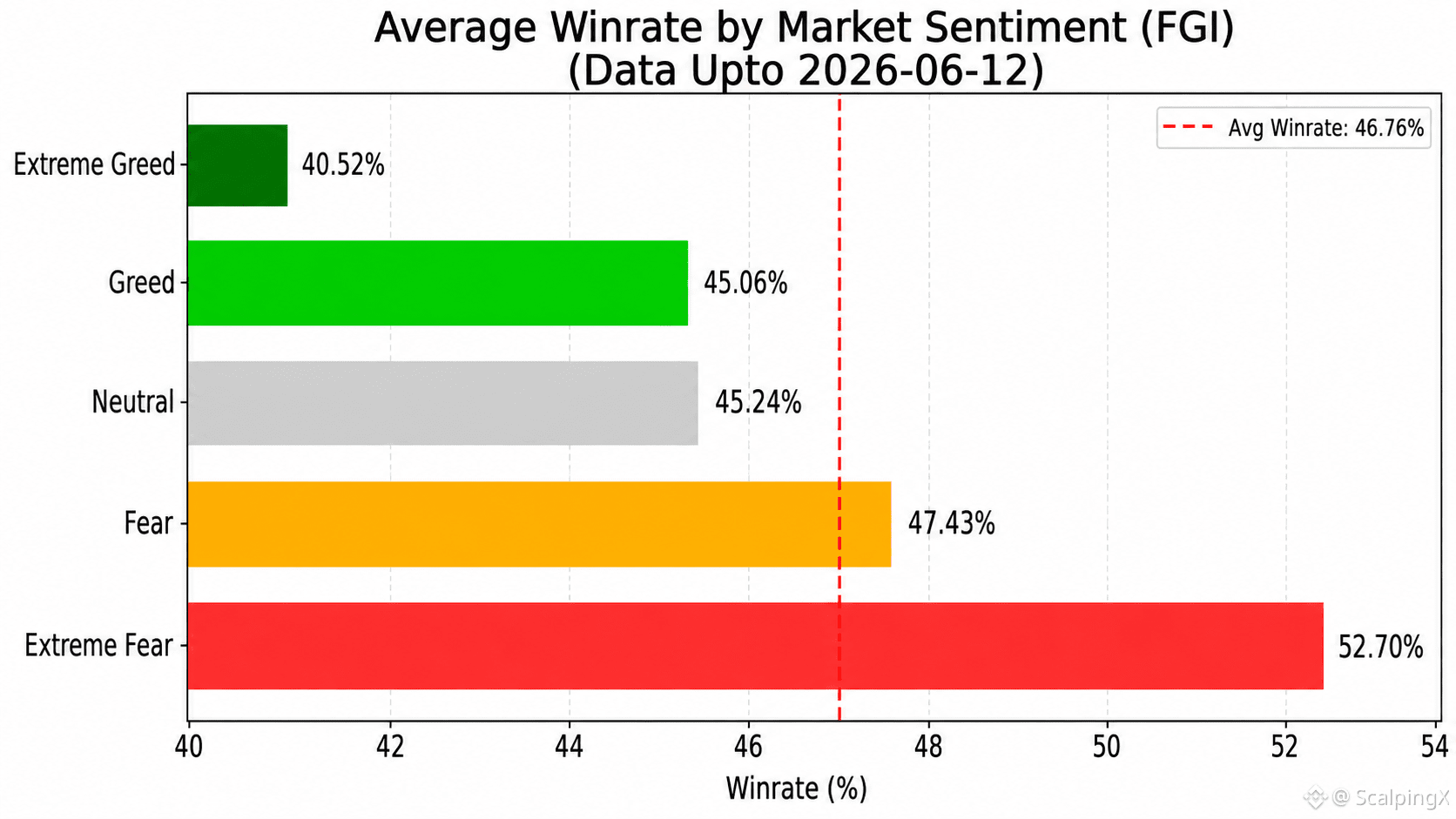
📊 トレーディングパフォーマンス & マーケットセンチメントインデックス (FGI) レポート – 更新日 2026-06-12
最新の統計によると、FGIと勝率の相関関係は低く、依然としてネガティブに傾いています (r ~ -0.312)。これは、FGIが価格トレンドを予測したり、トレードエントリーを特定するためのツールとして適していないという見解をさらに支持していますが、それでもポジションリスクを定量化する上で実用的な価値があります。特に、マーケットセンチメントが極度の興奮に移行すると、トレーディングパフォーマンスは一般的に弱くなる傾向があるため、FGIは利益期待を拡大するためのシグナルよりも、早期のリスク警告シグナルとして使用する方が良いです。
以下は、センチメントゾーンにおける勝率 (WR)、最小ブレークイーブンR:R、および記録された日数 (n) の概要です:
🤑 極度の欲 (≥80): WR 40.5% • R:R=1:1.47 • n=25
🤤 欲 (60–80): WR 45.1% • R:R=1:1.22 • n=215
😐 中立 (40–60): WR 45.2% • R:R=1:1.21 • n=150
😨 恐怖 (20–40): WR 47.4% • R:R=1:1.11 • n=218
😱 極度の恐怖 (<20): WR 52.7% • R:R=1:0.90 • n=102
センチメントゾーンごとの平均レベル46.76%を上回るパフォーマンスの日数の割合:
🤑 極度の欲: 8.0%
🤤 欲: 36.3%
😐 中立: 38.0%
😨 恐怖: 53.7%
😱 極度の恐怖: 70.6%
➤ スキャルパーは、トレードに入る際に期待される利益目標を調整するためにFGIをガイドとして使用できます:
📈 FGIが高いときは、十分なR:R比を維持するために利益期待を引き上げる必要があり、低い勝率のリスクを相殺するのに役立ちます。
📉 FGIが低いときは、資本回転速度を改善し、利益実現を容易にするために利益期待を減少させることができます。
#TradingPerformance #MarketSentiment $BTC $NVDAB $SPCXB
📊 トレーディングパフォーマンス & マーケットセンチメントインデックス (FGI) レポート – 更新日 2026-06-12
最新の統計によると、FGIと勝率の相関関係は低く、依然としてネガティブに傾いています (r ~ -0.312)。これは、FGIが価格トレンドを予測したり、トレードエントリーを特定するためのツールとして適していないという見解をさらに支持していますが、それでもポジションリスクを定量化する上で実用的な価値があります。特に、マーケットセンチメントが極度の興奮に移行すると、トレーディングパフォーマンスは一般的に弱くなる傾向があるため、FGIは利益期待を拡大するためのシグナルよりも、早期のリスク警告シグナルとして使用する方が良いです。
以下は、センチメントゾーンにおける勝率 (WR)、最小ブレークイーブンR:R、および記録された日数 (n) の概要です:
🤑 極度の欲 (≥80): WR 40.5% • R:R=1:1.47 • n=25
🤤 欲 (60–80): WR 45.1% • R:R=1:1.22 • n=215
😐 中立 (40–60): WR 45.2% • R:R=1:1.21 • n=150
😨 恐怖 (20–40): WR 47.4% • R:R=1:1.11 • n=218
😱 極度の恐怖 (<20): WR 52.7% • R:R=1:0.90 • n=102
センチメントゾーンごとの平均レベル46.76%を上回るパフォーマンスの日数の割合:
🤑 極度の欲: 8.0%
🤤 欲: 36.3%
😐 中立: 38.0%
😨 恐怖: 53.7%
😱 極度の恐怖: 70.6%
➤ スキャルパーは、トレードに入る際に期待される利益目標を調整するためにFGIをガイドとして使用できます:
📈 FGIが高いときは、十分なR:R比を維持するために利益期待を引き上げる必要があり、低い勝率のリスクを相殺するのに役立ちます。
📉 FGIが低いときは、資本回転速度を改善し、利益実現を容易にするために利益期待を減少させることができます。
#TradingPerformance #MarketSentiment $BTC $NVDAB $SPCXB
最新の統計によると、FGIと勝率の相関関係は低く、依然としてネガティブに傾いています (r ~ -0.312)。これは、FGIが価格トレンドを予測したり、トレードエントリーを特定するためのツールとして適していないという見解をさらに支持していますが、それでもポジションリスクを定量化する上で実用的な価値があります。特に、マーケットセンチメントが極度の興奮に移行すると、トレーディングパフォーマンスは一般的に弱くなる傾向があるため、FGIは利益期待を拡大するためのシグナルよりも、早期のリスク警告シグナルとして使用する方が良いです。
以下は、センチメントゾーンにおける勝率 (WR)、最小ブレークイーブンR:R、および記録された日数 (n) の概要です:
🤑 極度の欲 (≥80): WR 40.5% • R:R=1:1.47 • n=25
🤤 欲 (60–80): WR 45.1% • R:R=1:1.22 • n=215
😐 中立 (40–60): WR 45.2% • R:R=1:1.21 • n=150
😨 恐怖 (20–40): WR 47.4% • R:R=1:1.11 • n=218
😱 極度の恐怖 (<20): WR 52.7% • R:R=1:0.90 • n=102
センチメントゾーンごとの平均レベル46.76%を上回るパフォーマンスの日数の割合:
🤑 極度の欲: 8.0%
🤤 欲: 36.3%
😐 中立: 38.0%
😨 恐怖: 53.7%
😱 極度の恐怖: 70.6%
➤ スキャルパーは、トレードに入る際に期待される利益目標を調整するためにFGIをガイドとして使用できます:
📈 FGIが高いときは、十分なR:R比を維持するために利益期待を引き上げる必要があり、低い勝率のリスクを相殺するのに役立ちます。
📉 FGIが低いときは、資本回転速度を改善し、利益実現を容易にするために利益期待を減少させることができます。
#TradingPerformance #MarketSentiment $BTC $NVDAB $SPCXB
71
·
--
ブリッシュ
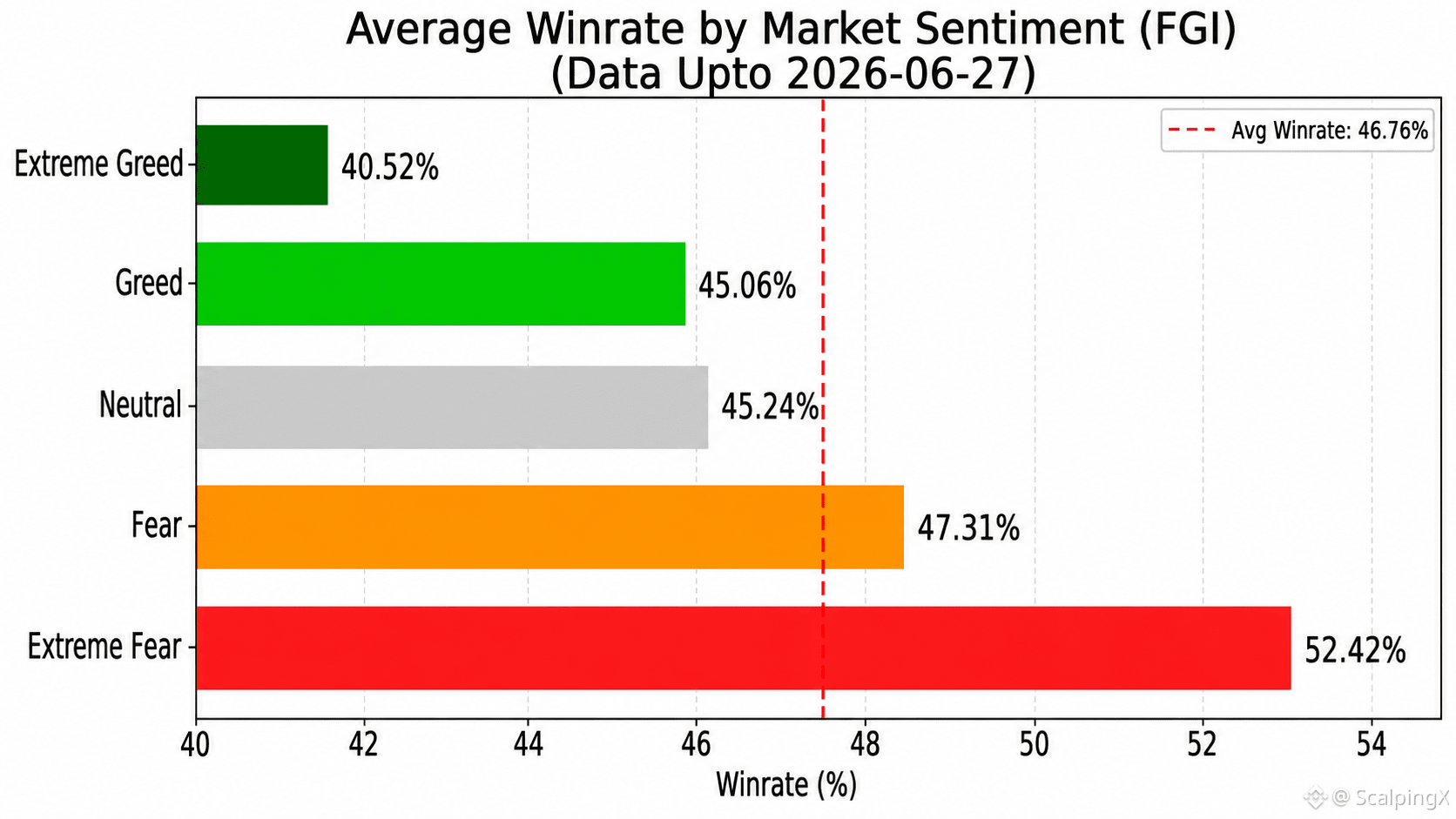
📊 取引パフォーマンス&恐怖と貪欲指数(FGI)レポート—更新 27/06/2026
最新の統計データによると、FGIと勝率(Winrate)の相関は低いままで、ネガティブに傾向しています(r ≈ -0.299)。これは、FGIが価格の方向性を予測したり、エントリーポイントを特定したりするためのツールとしては適していないことを裏付けています。一方で、ポジションのリスクを測るという点では実用的な価値があります。一般に、市場心理が極端な陶酔状態に入ると取引パフォーマンスは低下しやすいため、FGIは利益拡大のシグナルというより、早期のリスク警告サインとしてより有用です。
以下は、センチメントゾーン別の勝率(WR)、最小ブレイクイーブンR:R、および記録された日数(n)の要約です:
🤑 極端な強欲(≥80):WR 40.5% • R:R=1:1.47 • n=25
🤤 強欲(60–80):WR 45.1% • R:R=1:1.22 • n=215
😐 ニュートラル(40–60):WR 45.2% • R:R=1:1.21 • n=150
😨 恐怖(20–40):WR 47.3% • R:R=1:1.11 • n=225
😱 極端な恐怖(<20):WR 52.4% • R:R=1:0.91 • n=110
センチメントゾーン別の、平均水準(46.76%)を上回るパフォーマンスの日の割合:
🤑 極端な強欲:8.0%
🤤 強欲:36.3%
😐 ニュートラル:38.0%
😨 恐怖:53.8%
😱 極端な恐怖:68.2%
➤ スキャルパーはFGIを指標として、取引に入る際の想定利益目標を調整できます:
📈 FGIが高いときは、十分なR:Rを維持し、勝率が低いことによるリスクを相殺するため、より高い利益目標を要求すべきです。
📉 FGIが低いときは、利益実現を容易にし、資本の回転スピードを上げるために、利益期待値を下げることができます。
#TradingPerformance $BTC $ETH $SOL
📊 取引パフォーマンス&恐怖と貪欲指数(FGI)レポート—更新 27/06/2026
最新の統計データによると、FGIと勝率(Winrate)の相関は低いままで、ネガティブに傾向しています(r ≈ -0.299)。これは、FGIが価格の方向性を予測したり、エントリーポイントを特定したりするためのツールとしては適していないことを裏付けています。一方で、ポジションのリスクを測るという点では実用的な価値があります。一般に、市場心理が極端な陶酔状態に入ると取引パフォーマンスは低下しやすいため、FGIは利益拡大のシグナルというより、早期のリスク警告サインとしてより有用です。
以下は、センチメントゾーン別の勝率(WR)、最小ブレイクイーブンR:R、および記録された日数(n)の要約です:
🤑 極端な強欲(≥80):WR 40.5% • R:R=1:1.47 • n=25
🤤 強欲(60–80):WR 45.1% • R:R=1:1.22 • n=215
😐 ニュートラル(40–60):WR 45.2% • R:R=1:1.21 • n=150
😨 恐怖(20–40):WR 47.3% • R:R=1:1.11 • n=225
😱 極端な恐怖(<20):WR 52.4% • R:R=1:0.91 • n=110
センチメントゾーン別の、平均水準(46.76%)を上回るパフォーマンスの日の割合:
🤑 極端な強欲:8.0%
🤤 強欲:36.3%
😐 ニュートラル:38.0%
😨 恐怖:53.8%
😱 極端な恐怖:68.2%
➤ スキャルパーはFGIを指標として、取引に入る際の想定利益目標を調整できます:
📈 FGIが高いときは、十分なR:Rを維持し、勝率が低いことによるリスクを相殺するため、より高い利益目標を要求すべきです。
📉 FGIが低いときは、利益実現を容易にし、資本の回転スピードを上げるために、利益期待値を下げることができます。
#TradingPerformance $BTC $ETH $SOL
最新の統計データによると、FGIと勝率(Winrate)の相関は低いままで、ネガティブに傾向しています(r ≈ -0.299)。これは、FGIが価格の方向性を予測したり、エントリーポイントを特定したりするためのツールとしては適していないことを裏付けています。一方で、ポジションのリスクを測るという点では実用的な価値があります。一般に、市場心理が極端な陶酔状態に入ると取引パフォーマンスは低下しやすいため、FGIは利益拡大のシグナルというより、早期のリスク警告サインとしてより有用です。
以下は、センチメントゾーン別の勝率(WR)、最小ブレイクイーブンR:R、および記録された日数(n)の要約です:
🤑 極端な強欲(≥80):WR 40.5% • R:R=1:1.47 • n=25
🤤 強欲(60–80):WR 45.1% • R:R=1:1.22 • n=215
😐 ニュートラル(40–60):WR 45.2% • R:R=1:1.21 • n=150
😨 恐怖(20–40):WR 47.3% • R:R=1:1.11 • n=225
😱 極端な恐怖(<20):WR 52.4% • R:R=1:0.91 • n=110
センチメントゾーン別の、平均水準(46.76%)を上回るパフォーマンスの日の割合:
🤑 極端な強欲:8.0%
🤤 強欲:36.3%
😐 ニュートラル:38.0%
😨 恐怖:53.8%
😱 極端な恐怖:68.2%
➤ スキャルパーはFGIを指標として、取引に入る際の想定利益目標を調整できます:
📈 FGIが高いときは、十分なR:Rを維持し、勝率が低いことによるリスクを相殺するため、より高い利益目標を要求すべきです。
📉 FGIが低いときは、利益実現を容易にし、資本の回転スピードを上げるために、利益期待値を下げることができます。
#TradingPerformance $BTC $ETH $SOL
126
·
--
ブリッシュ
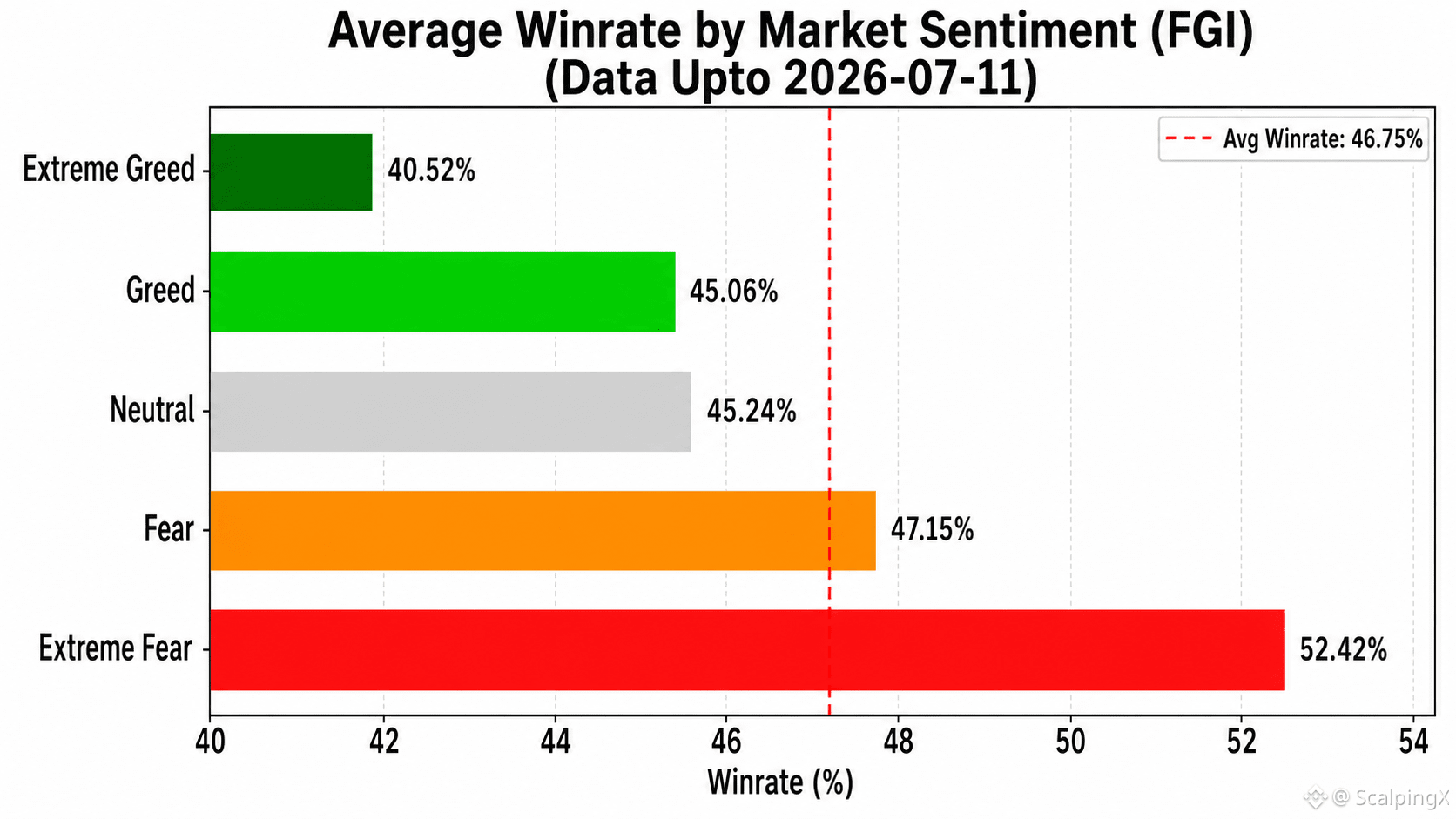
📊 取引パフォーマンス&市場心理指数(FGI)レポート – 2026/11/07更新
最新データでは、FGIと勝率の相関が依然として弱く、マイナス方向に傾いていることが示されています(r ≈ -0.295)。これは、FGIが価格の方向性を予測したり、エントリーの好機を特定するためのツールとしては適していないことをさらに裏付けます。ただし、取引リスクの評価においては実用的な価値を提供し得ます。全体として、市場心理が極端な陶酔に近づくほどパフォーマンスは低下しやすくなるため、FGIは利益目標を拡大する「シグナル」よりも、早期のリスク警告指標としてのほうが有用です。
以下は、各センチメントゾーンごとの勝率(WR)、最小ブレークイーブンR:R、記録された日数(n)の要約です:
🤑 極端な強欲(≥80):WR 40.5% • R:R=1:1.47 • n=25
🤤 強欲(60–80):WR 45.1% • R:R=1:1.22 • n=215
😐 中立(40–60):WR 45.2% • R:R=1:1.21 • n=150
😨 恐怖(20–40):WR 47.1% • R:R=1:1.12 • n=234
😱 極端な恐怖(<20):WR 52.4% • R:R=1:0.91 • n=115
各センチメントゾーンにおける、全体平均46.75%を上回る日の割合:
🤑 極端な強欲:8.0%
🤤 強欲:36.3%
😐 中立:38.0%
😨 恐怖:52.6%
😱 極端な恐怖:67.8%
➤ スキャルパーは、取引を行う際の期待利益目標を調整するためにFGIを参考にできます:
📈 FGIが高いときは、十分に大きいR:R比を維持し、低い勝率を補うため、期待利益目標を引き上げるべきです。
📉 FGIが低いときは、資金の回転率を高め、利益を得やすくするため、期待利益目標を引き下げることができます。
#TradingPerformance $BNB $GRAM $HYPE
📊 取引パフォーマンス&市場心理指数(FGI)レポート – 2026/11/07更新
最新データでは、FGIと勝率の相関が依然として弱く、マイナス方向に傾いていることが示されています(r ≈ -0.295)。これは、FGIが価格の方向性を予測したり、エントリーの好機を特定するためのツールとしては適していないことをさらに裏付けます。ただし、取引リスクの評価においては実用的な価値を提供し得ます。全体として、市場心理が極端な陶酔に近づくほどパフォーマンスは低下しやすくなるため、FGIは利益目標を拡大する「シグナル」よりも、早期のリスク警告指標としてのほうが有用です。
以下は、各センチメントゾーンごとの勝率(WR)、最小ブレークイーブンR:R、記録された日数(n)の要約です:
🤑 極端な強欲(≥80):WR 40.5% • R:R=1:1.47 • n=25
🤤 強欲(60–80):WR 45.1% • R:R=1:1.22 • n=215
😐 中立(40–60):WR 45.2% • R:R=1:1.21 • n=150
😨 恐怖(20–40):WR 47.1% • R:R=1:1.12 • n=234
😱 極端な恐怖(<20):WR 52.4% • R:R=1:0.91 • n=115
各センチメントゾーンにおける、全体平均46.75%を上回る日の割合:
🤑 極端な強欲:8.0%
🤤 強欲:36.3%
😐 中立:38.0%
😨 恐怖:52.6%
😱 極端な恐怖:67.8%
➤ スキャルパーは、取引を行う際の期待利益目標を調整するためにFGIを参考にできます:
📈 FGIが高いときは、十分に大きいR:R比を維持し、低い勝率を補うため、期待利益目標を引き上げるべきです。
📉 FGIが低いときは、資金の回転率を高め、利益を得やすくするため、期待利益目標を引き下げることができます。
#TradingPerformance $BNB $GRAM $HYPE
最新データでは、FGIと勝率の相関が依然として弱く、マイナス方向に傾いていることが示されています(r ≈ -0.295)。これは、FGIが価格の方向性を予測したり、エントリーの好機を特定するためのツールとしては適していないことをさらに裏付けます。ただし、取引リスクの評価においては実用的な価値を提供し得ます。全体として、市場心理が極端な陶酔に近づくほどパフォーマンスは低下しやすくなるため、FGIは利益目標を拡大する「シグナル」よりも、早期のリスク警告指標としてのほうが有用です。
以下は、各センチメントゾーンごとの勝率(WR)、最小ブレークイーブンR:R、記録された日数(n)の要約です:
🤑 極端な強欲(≥80):WR 40.5% • R:R=1:1.47 • n=25
🤤 強欲(60–80):WR 45.1% • R:R=1:1.22 • n=215
😐 中立(40–60):WR 45.2% • R:R=1:1.21 • n=150
😨 恐怖(20–40):WR 47.1% • R:R=1:1.12 • n=234
😱 極端な恐怖(<20):WR 52.4% • R:R=1:0.91 • n=115
各センチメントゾーンにおける、全体平均46.75%を上回る日の割合:
🤑 極端な強欲:8.0%
🤤 強欲:36.3%
😐 中立:38.0%
😨 恐怖:52.6%
😱 極端な恐怖:67.8%
➤ スキャルパーは、取引を行う際の期待利益目標を調整するためにFGIを参考にできます:
📈 FGIが高いときは、十分に大きいR:R比を維持し、低い勝率を補うため、期待利益目標を引き上げるべきです。
📉 FGIが低いときは、資金の回転率を高め、利益を得やすくするため、期待利益目標を引き下げることができます。
#TradingPerformance $BNB $GRAM $HYPE
109
·
--
ブリッシュ
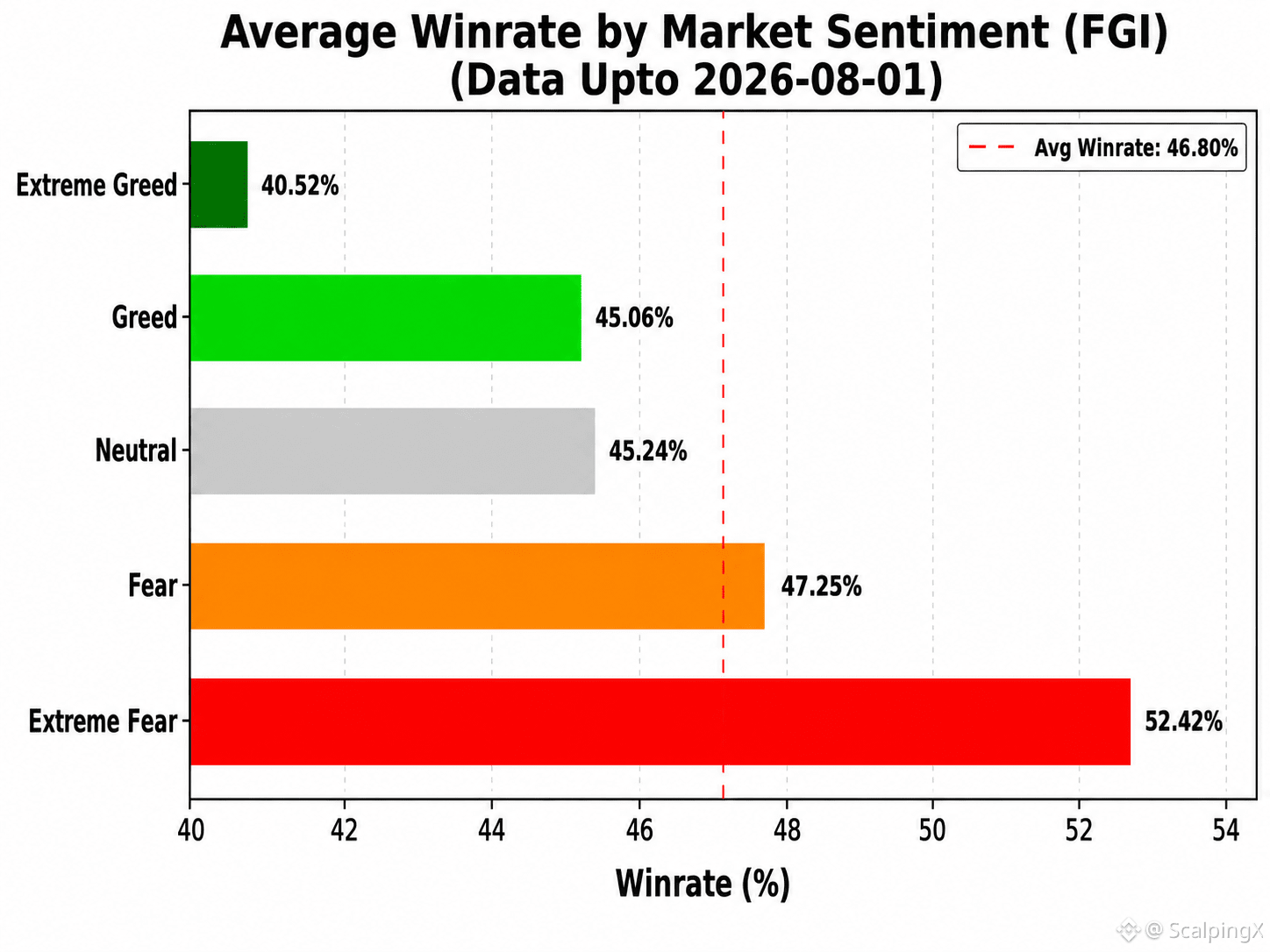
📊 取引パフォーマンス&マーケット・センチメント指数(FGI)レポート – 更新日 01/08/2026
最新データでは、「恐怖と強欲指数(Fear & Greed Index)」と「勝率(Win Rate)」の相関は弱く、かつ負の関係が続いており、概ね r = -0.291 です。これは、FGIが単独で価格の方向性を予測したり、エントリー(注文を出すタイミング)を特定したりするのに適していないことを示唆します。ただし、リスク評価において実用的な価値を提供し続ける可能性があります。取引パフォーマンスは、マーケットのセンチメントが過度に楽観へ近づくにつれて一般に弱くなりやすいため、FGIは利益目標を拡大するためのシグナルというより、早期のリスク警告指標としてより有用です。
以下は、各センチメントゾーンにおける「勝率(WR)」「最小ブレークイーブン R:R」「記録された日数(n)」の要約です:
🤑 強欲の極み(≥80):WR 40.5% • R:R=1:1.47 • n=25
🤤 強欲(60–80):WR 45.1% • R:R=1:1.22 • n=215
😐 中立(40–60):WR 45.2% • R:R=1:1.21 • n=150
😨 恐怖(20–40):WR 47.3% • R:R=1:1.12 • n=255
😱 恐怖の極み(<20):WR 52.4% • R:R=1:0.91 • n=115
各ゾーンにおける、全体平均 46.80% を上回った日の割合:
🤑 強欲の極み:8.0%
🤤 強欲:36.3%
😐 中立:38.0%
😨 恐怖:53.7%
😱 恐怖の極み:67.8%
➤ スキャルパーは、取引時にFGIを参考にして期待利益目標を調整できます:
📈 FGIが高いときは、十分に大きいR:Rを維持し、勝率の低下を補うために、期待利益目標を引き上げるべきです。
📉 FGIが低いときは、資本回転を速め、より簡単に利益を得るために、期待利益目標を引き下げるとよいでしょう。
#TradingPerformance $BNB $ETH $VANRY
📊 取引パフォーマンス&マーケット・センチメント指数(FGI)レポート – 更新日 01/08/2026
最新データでは、「恐怖と強欲指数(Fear & Greed Index)」と「勝率(Win Rate)」の相関は弱く、かつ負の関係が続いており、概ね r = -0.291 です。これは、FGIが単独で価格の方向性を予測したり、エントリー(注文を出すタイミング)を特定したりするのに適していないことを示唆します。ただし、リスク評価において実用的な価値を提供し続ける可能性があります。取引パフォーマンスは、マーケットのセンチメントが過度に楽観へ近づくにつれて一般に弱くなりやすいため、FGIは利益目標を拡大するためのシグナルというより、早期のリスク警告指標としてより有用です。
以下は、各センチメントゾーンにおける「勝率(WR)」「最小ブレークイーブン R:R」「記録された日数(n)」の要約です:
🤑 強欲の極み(≥80):WR 40.5% • R:R=1:1.47 • n=25
🤤 強欲(60–80):WR 45.1% • R:R=1:1.22 • n=215
😐 中立(40–60):WR 45.2% • R:R=1:1.21 • n=150
😨 恐怖(20–40):WR 47.3% • R:R=1:1.12 • n=255
😱 恐怖の極み(<20):WR 52.4% • R:R=1:0.91 • n=115
各ゾーンにおける、全体平均 46.80% を上回った日の割合:
🤑 強欲の極み:8.0%
🤤 強欲:36.3%
😐 中立:38.0%
😨 恐怖:53.7%
😱 恐怖の極み:67.8%
➤ スキャルパーは、取引時にFGIを参考にして期待利益目標を調整できます:
📈 FGIが高いときは、十分に大きいR:Rを維持し、勝率の低下を補うために、期待利益目標を引き上げるべきです。
📉 FGIが低いときは、資本回転を速め、より簡単に利益を得るために、期待利益目標を引き下げるとよいでしょう。
#TradingPerformance $BNB $ETH $VANRY
最新データでは、「恐怖と強欲指数(Fear & Greed Index)」と「勝率(Win Rate)」の相関は弱く、かつ負の関係が続いており、概ね r = -0.291 です。これは、FGIが単独で価格の方向性を予測したり、エントリー(注文を出すタイミング)を特定したりするのに適していないことを示唆します。ただし、リスク評価において実用的な価値を提供し続ける可能性があります。取引パフォーマンスは、マーケットのセンチメントが過度に楽観へ近づくにつれて一般に弱くなりやすいため、FGIは利益目標を拡大するためのシグナルというより、早期のリスク警告指標としてより有用です。
以下は、各センチメントゾーンにおける「勝率(WR)」「最小ブレークイーブン R:R」「記録された日数(n)」の要約です:
🤑 強欲の極み(≥80):WR 40.5% • R:R=1:1.47 • n=25
🤤 強欲(60–80):WR 45.1% • R:R=1:1.22 • n=215
😐 中立(40–60):WR 45.2% • R:R=1:1.21 • n=150
😨 恐怖(20–40):WR 47.3% • R:R=1:1.12 • n=255
😱 恐怖の極み(<20):WR 52.4% • R:R=1:0.91 • n=115
各ゾーンにおける、全体平均 46.80% を上回った日の割合:
🤑 強欲の極み:8.0%
🤤 強欲:36.3%
😐 中立:38.0%
😨 恐怖:53.7%
😱 恐怖の極み:67.8%
➤ スキャルパーは、取引時にFGIを参考にして期待利益目標を調整できます:
📈 FGIが高いときは、十分に大きいR:Rを維持し、勝率の低下を補うために、期待利益目標を引き上げるべきです。
📉 FGIが低いときは、資本回転を速め、より簡単に利益を得るために、期待利益目標を引き下げるとよいでしょう。
#TradingPerformance $BNB $ETH $VANRY
113
·
--
ブリッシュ
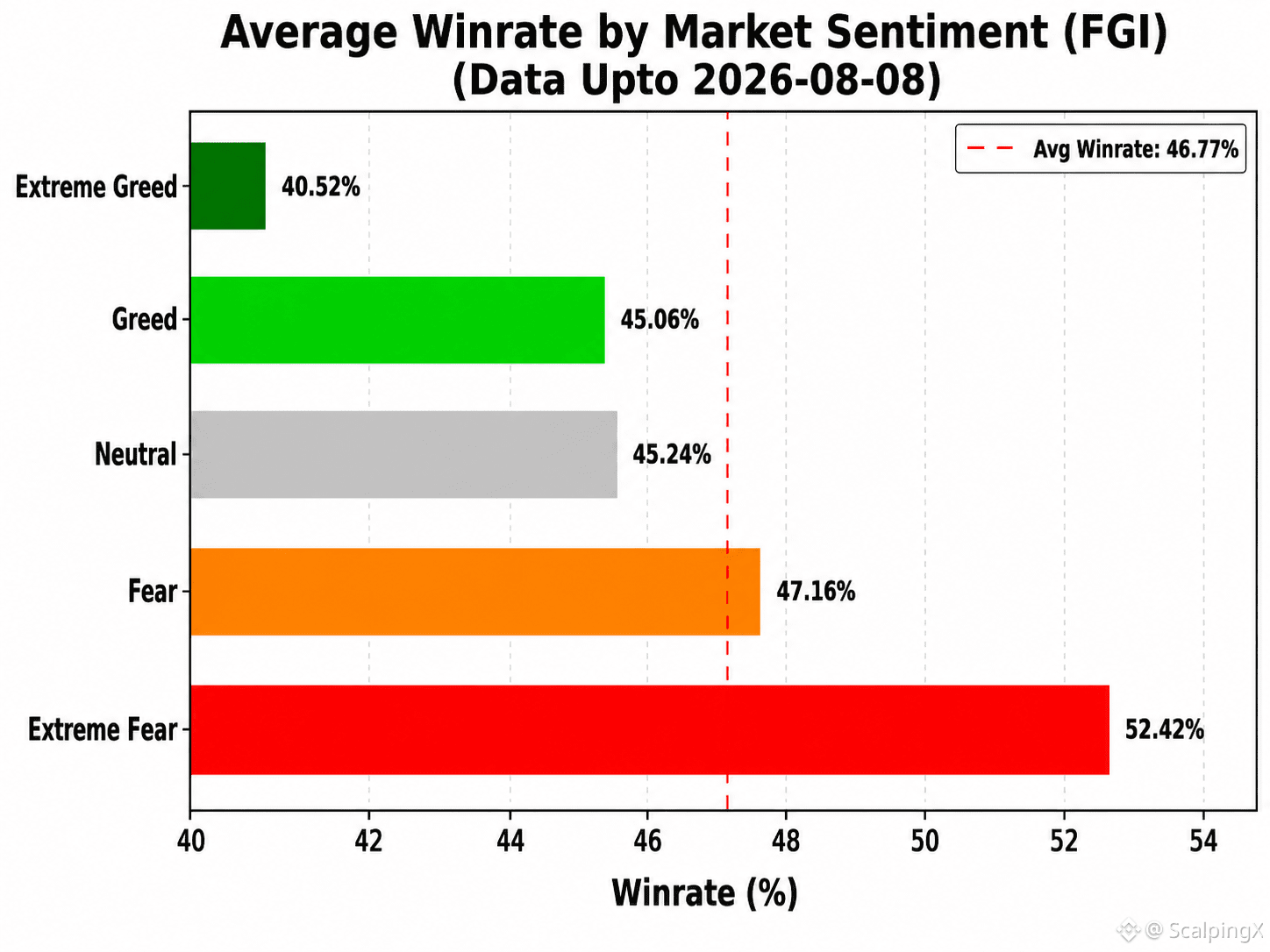
📊 トレーディング成績 & 市場センチメント指数(FGI)レポート – 2026/08/08 更新
最新の統計では、FGIと勝率の相関は弱いままで、引き続きマイナス方向に傾いており、r ≈ -0.288です。これは、FGIが単独でエントリーの判断に適していないことを示唆していますが、リスクを定量化するための価値は依然としてあります。トレーディング成績は一般に、市場のセンチメントが極端な陶酔へ向かうほど弱まりやすく、FGIは利益拡大目標のシグナルというよりも、初期のリスク警告指標として適している可能性が高いです。
以下は、センチメントゾーン別の勝率(WR)、最低ブレークイーブンのR:R、および記録された日数(n)の要約です:
🤑 強欲(≥80):WR 40.5% • R:R=1:1.47 • n=25
🤤 強欲(60–80):WR 45.1% • R:R=1:1.22 • n=215
😐 中立(40–60):WR 45.2% • R:R=1:1.21 • n=150
😰 恐怖(20–40):WR 47.2% • R:R=1:1.12 • n=262
😱 極端な恐怖(<20):WR 52.4% • R:R=1:0.91 • n=115
各センチメントゾーンにおける、全体平均46.77%を上回る成績の日の割合:
🤑 強欲:8.0%
🤤 強欲:36.3%
😐 中立:38.0%
😰 恐怖:53.4%
😱 極端な恐怖:67.8%
➤ 短期トレーダーは、エントリー時に想定利益目標を調整する際の参考としてFGIを利用できます:
📈 FGIが高いときは、勝率が低いことに伴う高リスクを補うため、十分に大きいR:R比を維持するには、想定する利益目標を引き上げる必要があるかもしれません。
📉 FGIが低いときは、資本の回転率を高めて利益の実現を容易にするため、想定利益目標を引き下げることができます。
#TradingPerformance $SOL $ETH $BTC
📊 トレーディング成績 & 市場センチメント指数(FGI)レポート – 2026/08/08 更新
最新の統計では、FGIと勝率の相関は弱いままで、引き続きマイナス方向に傾いており、r ≈ -0.288です。これは、FGIが単独でエントリーの判断に適していないことを示唆していますが、リスクを定量化するための価値は依然としてあります。トレーディング成績は一般に、市場のセンチメントが極端な陶酔へ向かうほど弱まりやすく、FGIは利益拡大目標のシグナルというよりも、初期のリスク警告指標として適している可能性が高いです。
以下は、センチメントゾーン別の勝率(WR)、最低ブレークイーブンのR:R、および記録された日数(n)の要約です:
🤑 強欲(≥80):WR 40.5% • R:R=1:1.47 • n=25
🤤 強欲(60–80):WR 45.1% • R:R=1:1.22 • n=215
😐 中立(40–60):WR 45.2% • R:R=1:1.21 • n=150
😰 恐怖(20–40):WR 47.2% • R:R=1:1.12 • n=262
😱 極端な恐怖(<20):WR 52.4% • R:R=1:0.91 • n=115
各センチメントゾーンにおける、全体平均46.77%を上回る成績の日の割合:
🤑 強欲:8.0%
🤤 強欲:36.3%
😐 中立:38.0%
😰 恐怖:53.4%
😱 極端な恐怖:67.8%
➤ 短期トレーダーは、エントリー時に想定利益目標を調整する際の参考としてFGIを利用できます:
📈 FGIが高いときは、勝率が低いことに伴う高リスクを補うため、十分に大きいR:R比を維持するには、想定する利益目標を引き上げる必要があるかもしれません。
📉 FGIが低いときは、資本の回転率を高めて利益の実現を容易にするため、想定利益目標を引き下げることができます。
#TradingPerformance $SOL $ETH $BTC
最新の統計では、FGIと勝率の相関は弱いままで、引き続きマイナス方向に傾いており、r ≈ -0.288です。これは、FGIが単独でエントリーの判断に適していないことを示唆していますが、リスクを定量化するための価値は依然としてあります。トレーディング成績は一般に、市場のセンチメントが極端な陶酔へ向かうほど弱まりやすく、FGIは利益拡大目標のシグナルというよりも、初期のリスク警告指標として適している可能性が高いです。
以下は、センチメントゾーン別の勝率(WR)、最低ブレークイーブンのR:R、および記録された日数(n)の要約です:
🤑 強欲(≥80):WR 40.5% • R:R=1:1.47 • n=25
🤤 強欲(60–80):WR 45.1% • R:R=1:1.22 • n=215
😐 中立(40–60):WR 45.2% • R:R=1:1.21 • n=150
😰 恐怖(20–40):WR 47.2% • R:R=1:1.12 • n=262
😱 極端な恐怖(<20):WR 52.4% • R:R=1:0.91 • n=115
各センチメントゾーンにおける、全体平均46.77%を上回る成績の日の割合:
🤑 強欲:8.0%
🤤 強欲:36.3%
😐 中立:38.0%
😰 恐怖:53.4%
😱 極端な恐怖:67.8%
➤ 短期トレーダーは、エントリー時に想定利益目標を調整する際の参考としてFGIを利用できます:
📈 FGIが高いときは、勝率が低いことに伴う高リスクを補うため、十分に大きいR:R比を維持するには、想定する利益目標を引き上げる必要があるかもしれません。
📉 FGIが低いときは、資本の回転率を高めて利益の実現を容易にするため、想定利益目標を引き下げることができます。
#TradingPerformance $SOL $ETH $BTC
42
·
--
ブリッシュ
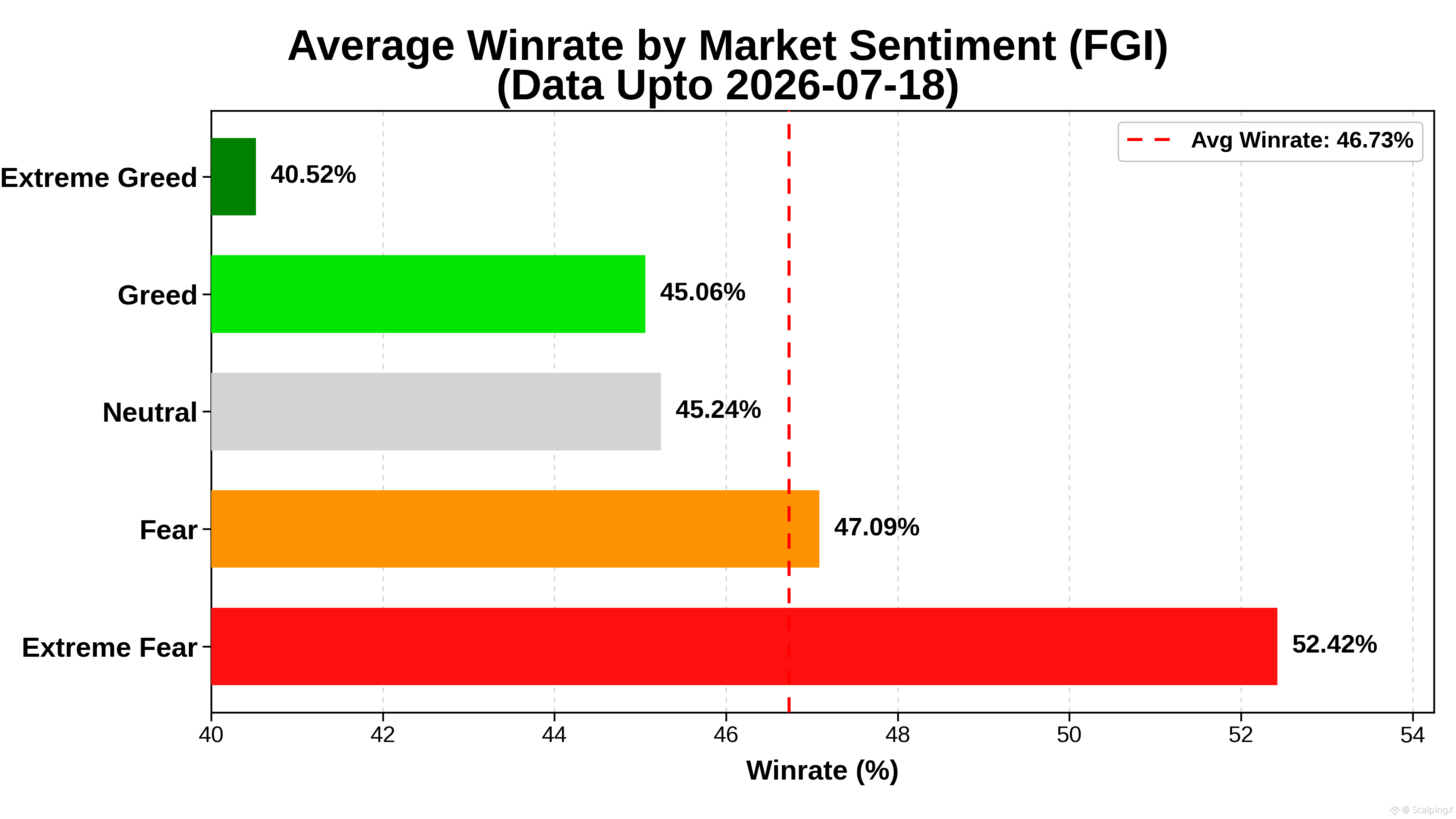
📊 取引パフォーマンス&市場センチメント指数(FGI)レポート—2026/07/18更新
最新データでは、FGIと勝率(Win Rate)の相関は依然として弱く、r = -0.291付近で負の方向に傾いていることが示されています。これは、FGIが価格の方向性を予測したり、エントリーポイントを特定したりするのに適していないことをさらに裏付けています。一方で、注文リスクを定量化するうえでは実用的な価値があります。取引パフォーマンスは、 市場心理が極度に陶酔的な領域に入るほど一般的に弱まりやすいため、FGIは利益目標を拡大するためのシグナルというより、早期のリスク警告指標としての有用性が高いと言えます。
以下に、各センチメント帯ごとの勝率(WR)、最低ブレークイーブンR:R、記録された日数(n)の要約を示します:
🤑 極端な強欲(≥80):WR 40.5% • R:R = 1:1.47 • n = 25
🤤 強欲(60–80):WR 45.1% • R:R = 1:1.22 • n = 215
😐 ニュートラル(40–60):WR 45.2% • R:R = 1:1.21 • n = 150
😨 恐怖(20–40):WR 47.1% • R:R = 1:1.12 • n = 241
😱 極端な恐怖(<20):WR 52.4% • R:R = 1:0.91 • n = 115
各センチメント帯における、全体平均46.73%を上回った日の割合:
🤑 極端な強欲:8.0%
🤤 強欲:36.3%
😐 ニュートラル:38.0%
😨 恐怖:52.7%
😱 極端な恐怖:67.8%
➤ スキャルパーは、取引に入る際に期待利益目標を調整するための参照としてFGIを活用できます:
📈 FGIが高い場合、十分に大きいR:Rを維持し、勝率低下を補うために、期待する利益目標を引き上げるべきです。
📉 FGIが低い場合、資本回転を加速させ、より容易に利益を実現するために、期待する利益目標を引き下げることができます。
#TradingPerformance $BTC $ETH $BNB
📊 取引パフォーマンス&市場センチメント指数(FGI)レポート—2026/07/18更新
最新データでは、FGIと勝率(Win Rate)の相関は依然として弱く、r = -0.291付近で負の方向に傾いていることが示されています。これは、FGIが価格の方向性を予測したり、エントリーポイントを特定したりするのに適していないことをさらに裏付けています。一方で、注文リスクを定量化するうえでは実用的な価値があります。取引パフォーマンスは、 市場心理が極度に陶酔的な領域に入るほど一般的に弱まりやすいため、FGIは利益目標を拡大するためのシグナルというより、早期のリスク警告指標としての有用性が高いと言えます。
以下に、各センチメント帯ごとの勝率(WR)、最低ブレークイーブンR:R、記録された日数(n)の要約を示します:
🤑 極端な強欲(≥80):WR 40.5% • R:R = 1:1.47 • n = 25
🤤 強欲(60–80):WR 45.1% • R:R = 1:1.22 • n = 215
😐 ニュートラル(40–60):WR 45.2% • R:R = 1:1.21 • n = 150
😨 恐怖(20–40):WR 47.1% • R:R = 1:1.12 • n = 241
😱 極端な恐怖(<20):WR 52.4% • R:R = 1:0.91 • n = 115
各センチメント帯における、全体平均46.73%を上回った日の割合:
🤑 極端な強欲:8.0%
🤤 強欲:36.3%
😐 ニュートラル:38.0%
😨 恐怖:52.7%
😱 極端な恐怖:67.8%
➤ スキャルパーは、取引に入る際に期待利益目標を調整するための参照としてFGIを活用できます:
📈 FGIが高い場合、十分に大きいR:Rを維持し、勝率低下を補うために、期待する利益目標を引き上げるべきです。
📉 FGIが低い場合、資本回転を加速させ、より容易に利益を実現するために、期待する利益目標を引き下げることができます。
#TradingPerformance $BTC $ETH $BNB
最新データでは、FGIと勝率(Win Rate)の相関は依然として弱く、r = -0.291付近で負の方向に傾いていることが示されています。これは、FGIが価格の方向性を予測したり、エントリーポイントを特定したりするのに適していないことをさらに裏付けています。一方で、注文リスクを定量化するうえでは実用的な価値があります。取引パフォーマンスは、 市場心理が極度に陶酔的な領域に入るほど一般的に弱まりやすいため、FGIは利益目標を拡大するためのシグナルというより、早期のリスク警告指標としての有用性が高いと言えます。
以下に、各センチメント帯ごとの勝率(WR)、最低ブレークイーブンR:R、記録された日数(n)の要約を示します:
🤑 極端な強欲(≥80):WR 40.5% • R:R = 1:1.47 • n = 25
🤤 強欲(60–80):WR 45.1% • R:R = 1:1.22 • n = 215
😐 ニュートラル(40–60):WR 45.2% • R:R = 1:1.21 • n = 150
😨 恐怖(20–40):WR 47.1% • R:R = 1:1.12 • n = 241
😱 極端な恐怖(<20):WR 52.4% • R:R = 1:0.91 • n = 115
各センチメント帯における、全体平均46.73%を上回った日の割合:
🤑 極端な強欲:8.0%
🤤 強欲:36.3%
😐 ニュートラル:38.0%
😨 恐怖:52.7%
😱 極端な恐怖:67.8%
➤ スキャルパーは、取引に入る際に期待利益目標を調整するための参照としてFGIを活用できます:
📈 FGIが高い場合、十分に大きいR:Rを維持し、勝率低下を補うために、期待する利益目標を引き上げるべきです。
📉 FGIが低い場合、資本回転を加速させ、より容易に利益を実現するために、期待する利益目標を引き下げることができます。
#TradingPerformance $BTC $ETH $BNB
25
·
--
ブリッシュ
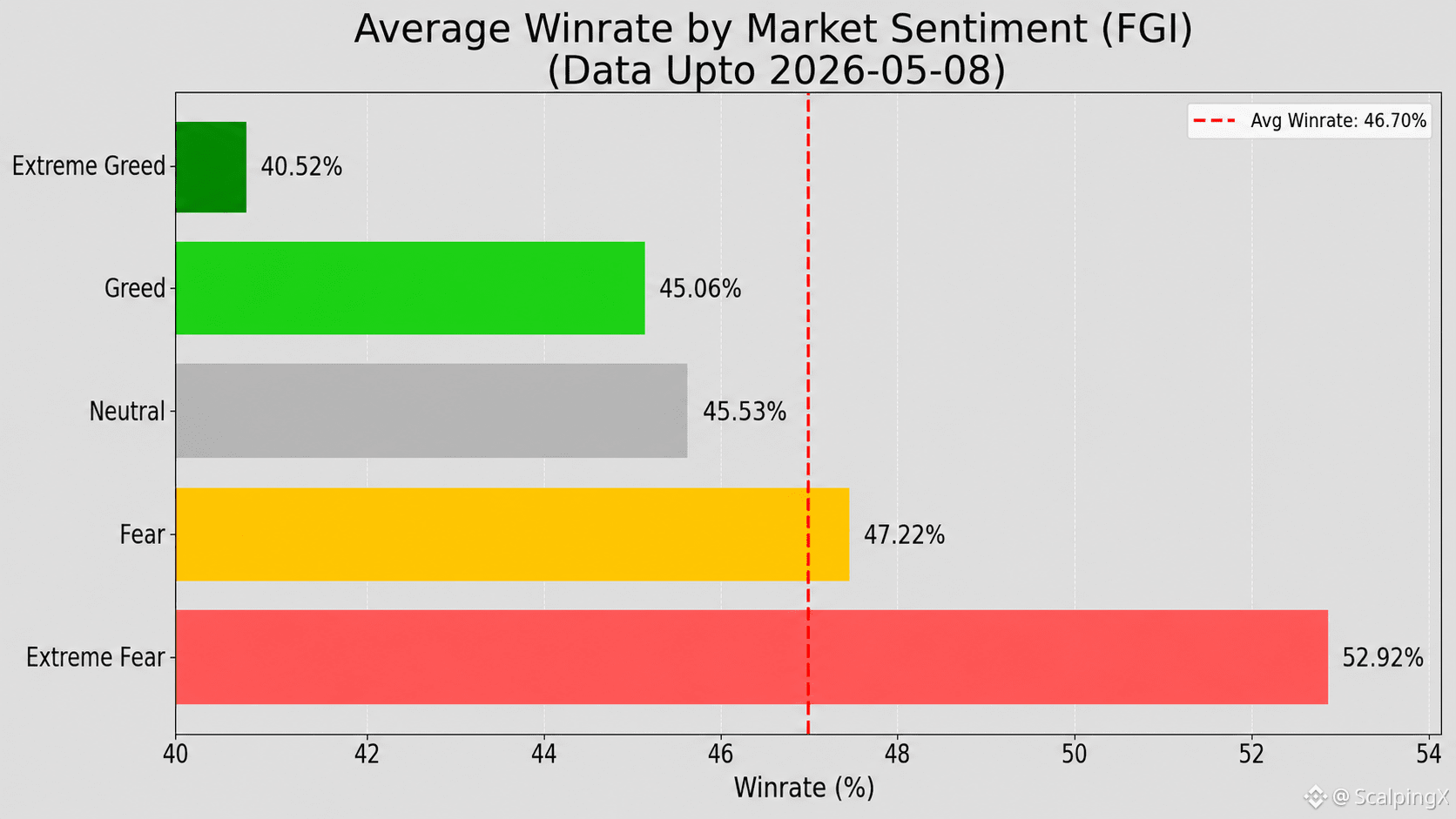
📊 トレーディングパフォーマンス & フィア・アンド・グリードインデックス (FGI) レポート – 更新日 08/05/2026
最新の統計データは、FGIと勝率の相関関係が低く、依然としてネガティブに傾いていることを示しています (r ~ -0.325)。これは、FGIが価格の方向性を予測したり、トレードエントリーを特定するツールとしては適していないという見解を支持していますが、ポジションリスクを定量化する上では実用的な価値があります。具体的には、市場センチメントが極度のユーフォリアに移行すると、トレーディングパフォーマンスが一般的に弱まるため、FGIは利益期待を拡大するシグナルよりも早期のリスク警告信号としてより有用です。
以下は、センチメントゾーンにおける勝率 (WR)、最小ブレークイーブンR:R、および記録された日数 (n) の要約です:
🤑 極度のグリード (≥80): WR 40.5% • R:R=1:1.47 • n=25
🤤 グリード (60–80): WR 45.1% • R:R=1:1.22 • n=215
😐 ニュートラル (40–60): WR 45.5% • R:R=1:1.20 • n=145
😨 フィア (20–40): WR 47.2% • R:R=1:1.12 • n=198
😱 極度のフィア (<20): WR 52.9% • R:R=1:0.89 • n=92
センチメントゾーン別の平均レベル (46.70%) を上回るパフォーマンスの日の割合:
🤑 極度のグリード: 8.0%
🤤 グリード: 36.3%
😐 ニュートラル: 40.0%
😨 フィア: 55.1%
😱 極度のフィア: 70.7%
➤ スキャルピングトレーダーは、トレードに入る際に利益期待を調整するためにFGIをガイドとして使用できます:
📈 FGIが高い場合、利益期待は十分に強いR:Rを維持するために引き上げるべきであり、低い勝率のリスクを相殺するのに役立ちます。
📉 FGIが低い場合、利益期待を引き下げて資本回転速度を向上させ、利益確定を容易にすることができます。
#TradingPerformance $BTC $BNB $TON
📊 トレーディングパフォーマンス & フィア・アンド・グリードインデックス (FGI) レポート – 更新日 08/05/2026
最新の統計データは、FGIと勝率の相関関係が低く、依然としてネガティブに傾いていることを示しています (r ~ -0.325)。これは、FGIが価格の方向性を予測したり、トレードエントリーを特定するツールとしては適していないという見解を支持していますが、ポジションリスクを定量化する上では実用的な価値があります。具体的には、市場センチメントが極度のユーフォリアに移行すると、トレーディングパフォーマンスが一般的に弱まるため、FGIは利益期待を拡大するシグナルよりも早期のリスク警告信号としてより有用です。
以下は、センチメントゾーンにおける勝率 (WR)、最小ブレークイーブンR:R、および記録された日数 (n) の要約です:
🤑 極度のグリード (≥80): WR 40.5% • R:R=1:1.47 • n=25
🤤 グリード (60–80): WR 45.1% • R:R=1:1.22 • n=215
😐 ニュートラル (40–60): WR 45.5% • R:R=1:1.20 • n=145
😨 フィア (20–40): WR 47.2% • R:R=1:1.12 • n=198
😱 極度のフィア (<20): WR 52.9% • R:R=1:0.89 • n=92
センチメントゾーン別の平均レベル (46.70%) を上回るパフォーマンスの日の割合:
🤑 極度のグリード: 8.0%
🤤 グリード: 36.3%
😐 ニュートラル: 40.0%
😨 フィア: 55.1%
😱 極度のフィア: 70.7%
➤ スキャルピングトレーダーは、トレードに入る際に利益期待を調整するためにFGIをガイドとして使用できます:
📈 FGIが高い場合、利益期待は十分に強いR:Rを維持するために引き上げるべきであり、低い勝率のリスクを相殺するのに役立ちます。
📉 FGIが低い場合、利益期待を引き下げて資本回転速度を向上させ、利益確定を容易にすることができます。
#TradingPerformance $BTC $BNB $TON
最新の統計データは、FGIと勝率の相関関係が低く、依然としてネガティブに傾いていることを示しています (r ~ -0.325)。これは、FGIが価格の方向性を予測したり、トレードエントリーを特定するツールとしては適していないという見解を支持していますが、ポジションリスクを定量化する上では実用的な価値があります。具体的には、市場センチメントが極度のユーフォリアに移行すると、トレーディングパフォーマンスが一般的に弱まるため、FGIは利益期待を拡大するシグナルよりも早期のリスク警告信号としてより有用です。
以下は、センチメントゾーンにおける勝率 (WR)、最小ブレークイーブンR:R、および記録された日数 (n) の要約です:
🤑 極度のグリード (≥80): WR 40.5% • R:R=1:1.47 • n=25
🤤 グリード (60–80): WR 45.1% • R:R=1:1.22 • n=215
😐 ニュートラル (40–60): WR 45.5% • R:R=1:1.20 • n=145
😨 フィア (20–40): WR 47.2% • R:R=1:1.12 • n=198
😱 極度のフィア (<20): WR 52.9% • R:R=1:0.89 • n=92
センチメントゾーン別の平均レベル (46.70%) を上回るパフォーマンスの日の割合:
🤑 極度のグリード: 8.0%
🤤 グリード: 36.3%
😐 ニュートラル: 40.0%
😨 フィア: 55.1%
😱 極度のフィア: 70.7%
➤ スキャルピングトレーダーは、トレードに入る際に利益期待を調整するためにFGIをガイドとして使用できます:
📈 FGIが高い場合、利益期待は十分に強いR:Rを維持するために引き上げるべきであり、低い勝率のリスクを相殺するのに役立ちます。
📉 FGIが低い場合、利益期待を引き下げて資本回転速度を向上させ、利益確定を容易にすることができます。
#TradingPerformance $BTC $BNB $TON
100

·
--
弱気相場
📊 マクロパルス パフォーマンスアップデート 🚀
グローバルマクロパルスに乗って — 結果が物語っています!
✅ 総ROI: +16.08%
💰 総利益 (PnL): $382,886.59
💼 総マージン残高: $201,880
📅 アクティブ日数: 107
🎯 勝率: 35.47%
📉 MDD: 98.16%
👥 登録者: 2,252人増加中!
最近のSOL/USDT (40倍レバレッジ)の動きは🔥、スマートなクロスマージン戦略で強いモメンタムを示しています。
📈 マクロパルスは引き続き提供します — リスク、精度、市場タイミングのバランスを取り、トレンドを先取りします。
👉 バイナンスでフォローし、登録して私たちと一緒にマクロパルスに乗りましょう!
#バイナンス #クリプトトレーディング #MacroPulse #FuturesTrading #SOLUSDT #TradingPerformance #CryptoProfits
$BTC
{spot}(BTCUSDT)
📊 マクロパルス パフォーマンスアップデート 🚀
グローバルマクロパルスに乗って — 結果が物語っています!
✅ 総ROI: +16.08%
💰 総利益 (PnL): $382,886.59
💼 総マージン残高: $201,880
📅 アクティブ日数: 107
🎯 勝率: 35.47%
📉 MDD: 98.16%
👥 登録者: 2,252人増加中!
最近のSOL/USDT (40倍レバレッジ)の動きは🔥、スマートなクロスマージン戦略で強いモメンタムを示しています。
📈 マクロパルスは引き続き提供します — リスク、精度、市場タイミングのバランスを取り、トレンドを先取りします。
👉 バイナンスでフォローし、登録して私たちと一緒にマクロパルスに乗りましょう!
#バイナンス #クリプトトレーディング #MacroPulse #FuturesTrading #SOLUSDT #TradingPerformance #CryptoProfits
$BTC
グローバルマクロパルスに乗って — 結果が物語っています!
✅ 総ROI: +16.08%
💰 総利益 (PnL): $382,886.59
💼 総マージン残高: $201,880
📅 アクティブ日数: 107
🎯 勝率: 35.47%
📉 MDD: 98.16%
👥 登録者: 2,252人増加中!
最近のSOL/USDT (40倍レバレッジ)の動きは🔥、スマートなクロスマージン戦略で強いモメンタムを示しています。
📈 マクロパルスは引き続き提供します — リスク、精度、市場タイミングのバランスを取り、トレンドを先取りします。
👉 バイナンスでフォローし、登録して私たちと一緒にマクロパルスに乗りましょう!
#バイナンス #クリプトトレーディング #MacroPulse #FuturesTrading #SOLUSDT #TradingPerformance #CryptoProfits
$BTC
6
25
·
--
ブリッシュ
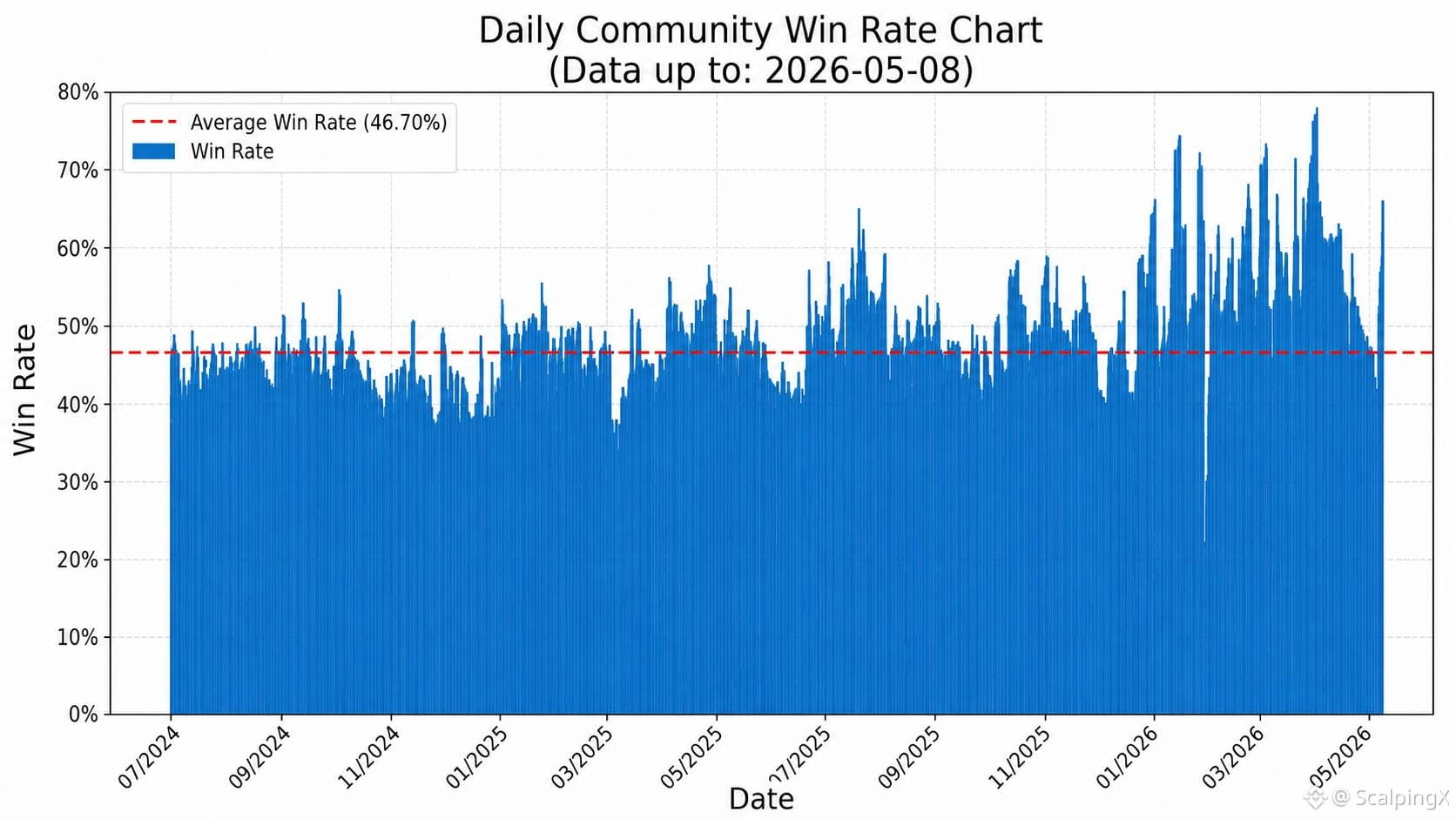
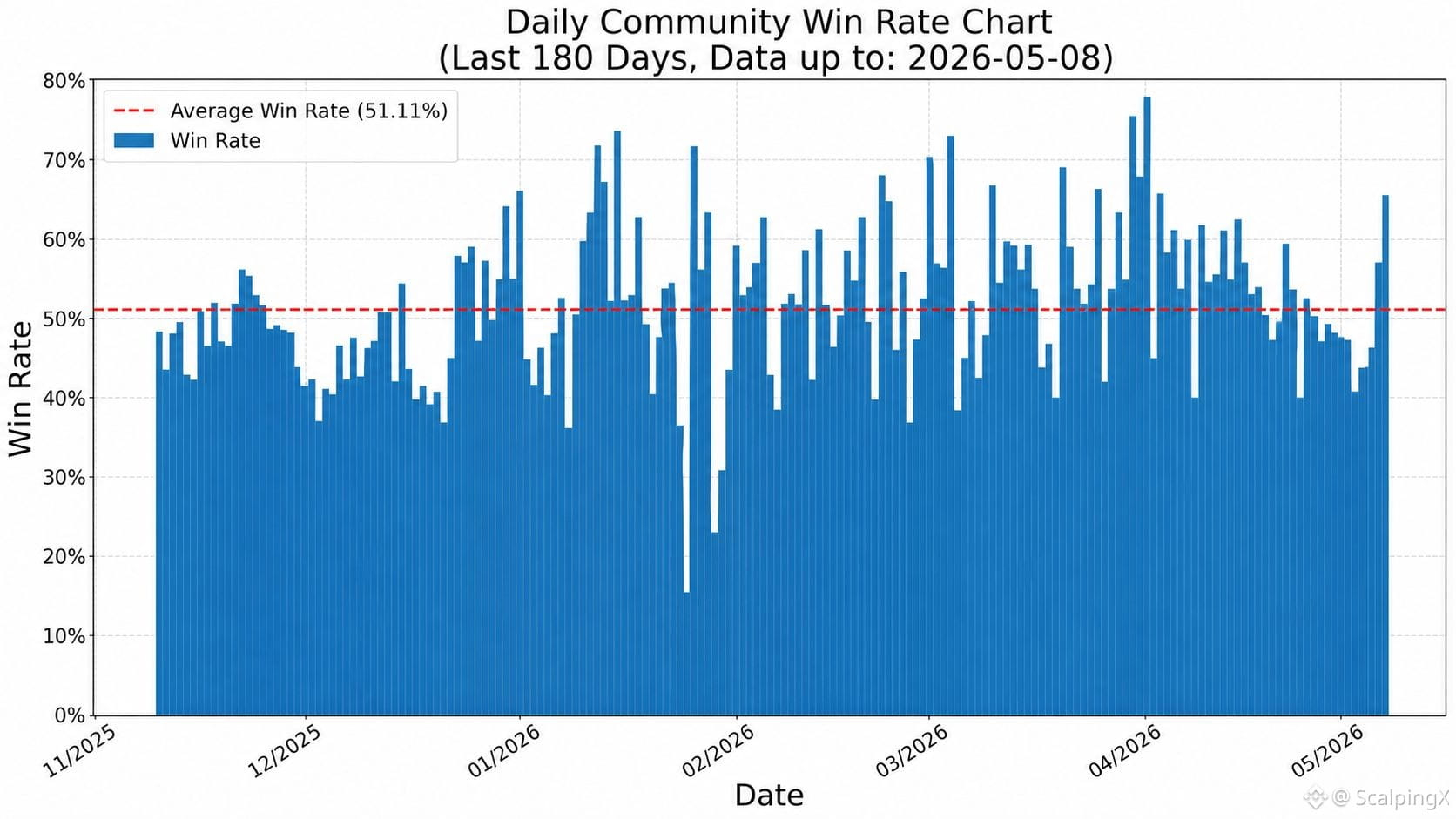
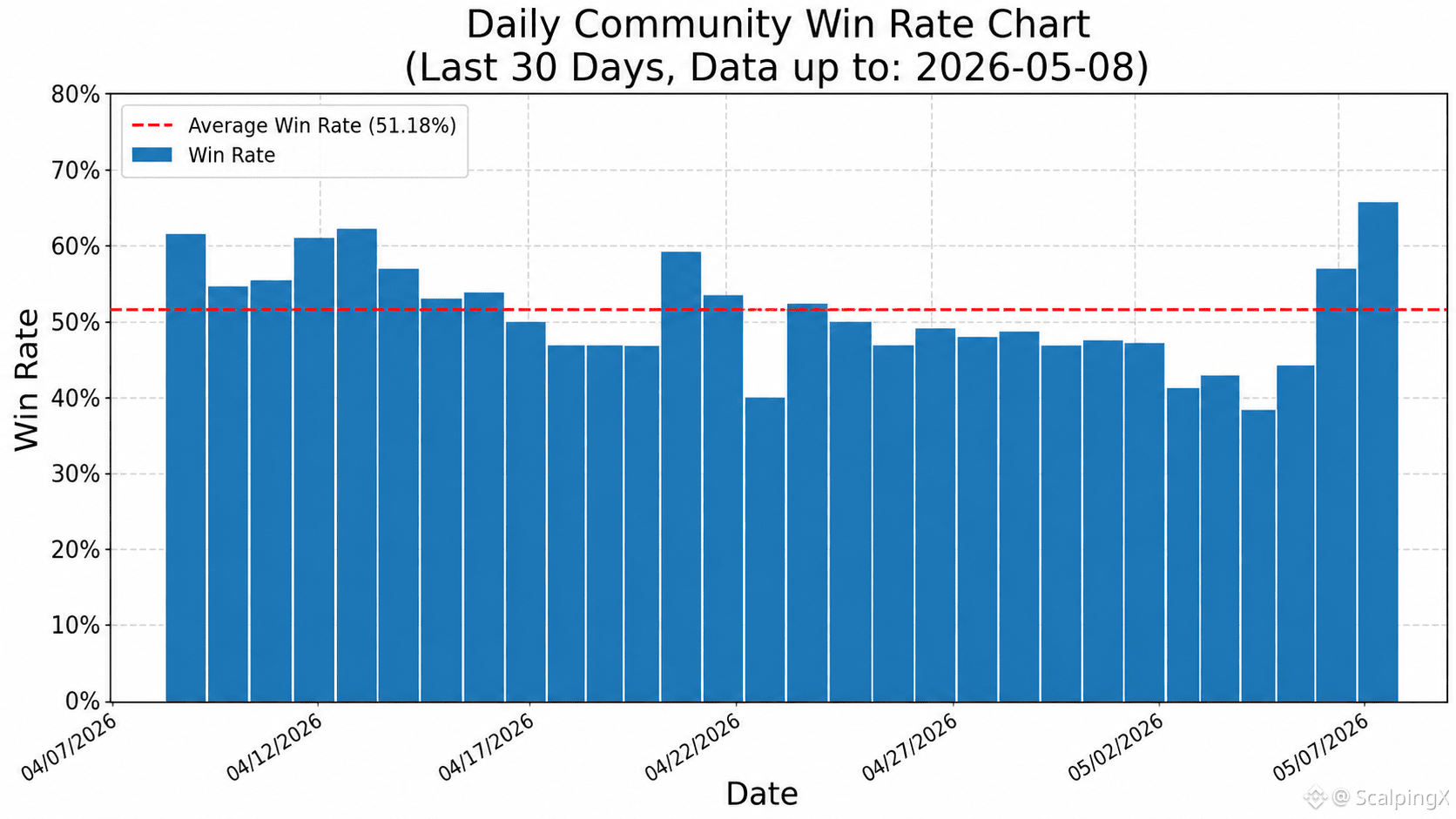
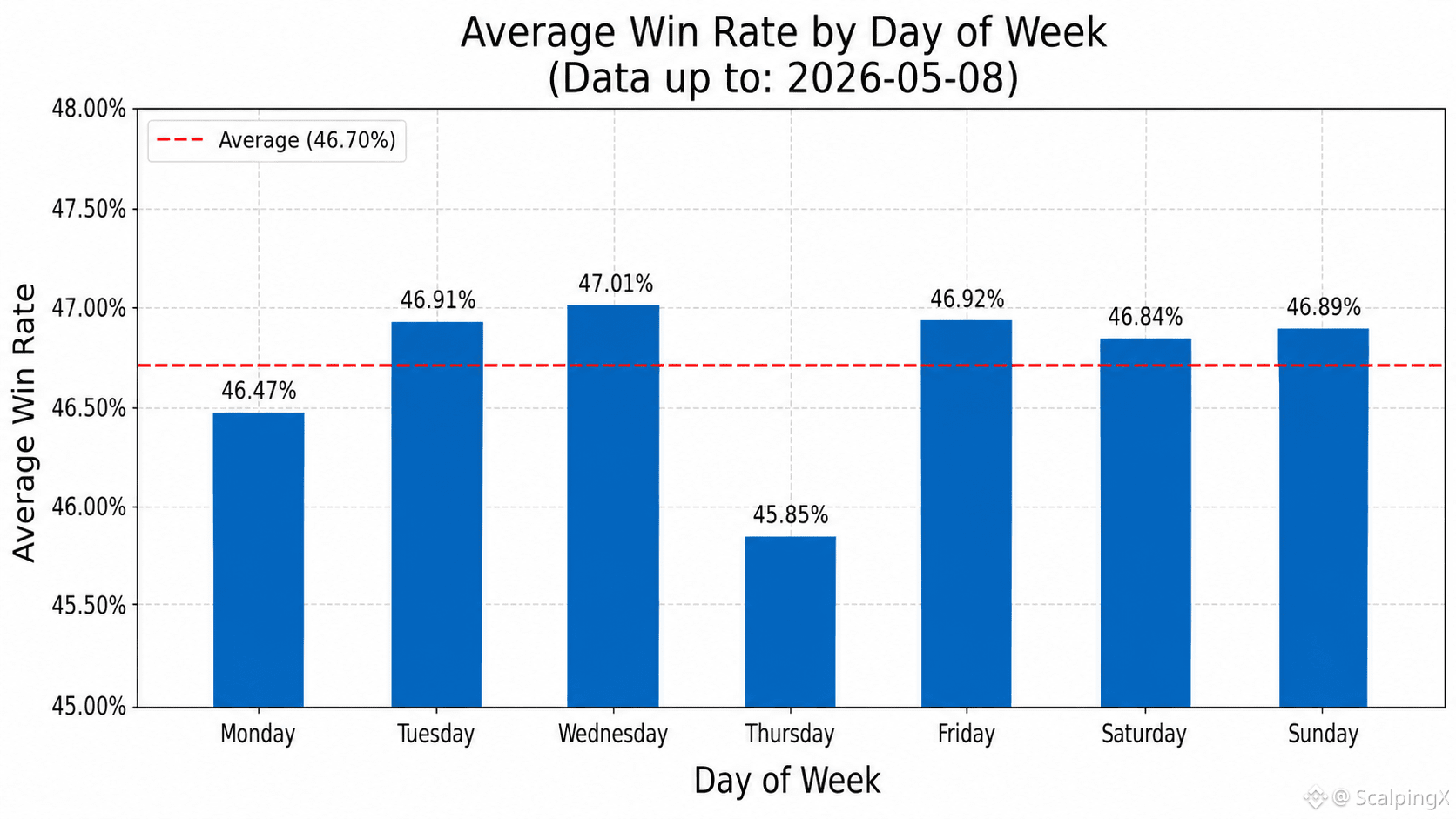
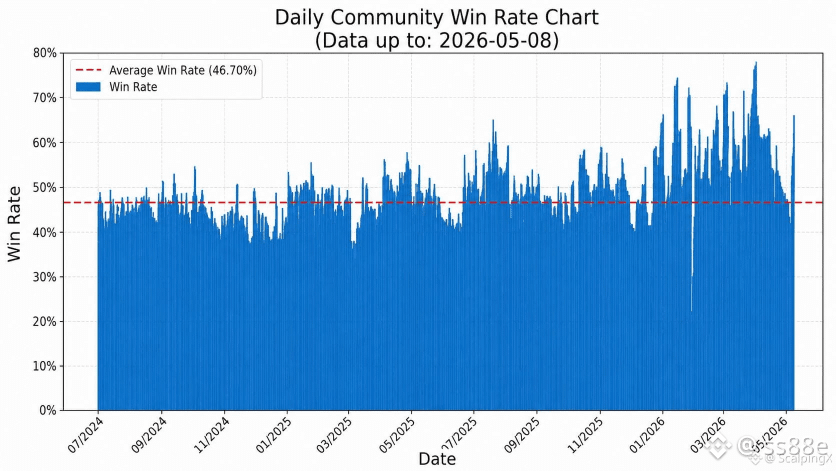
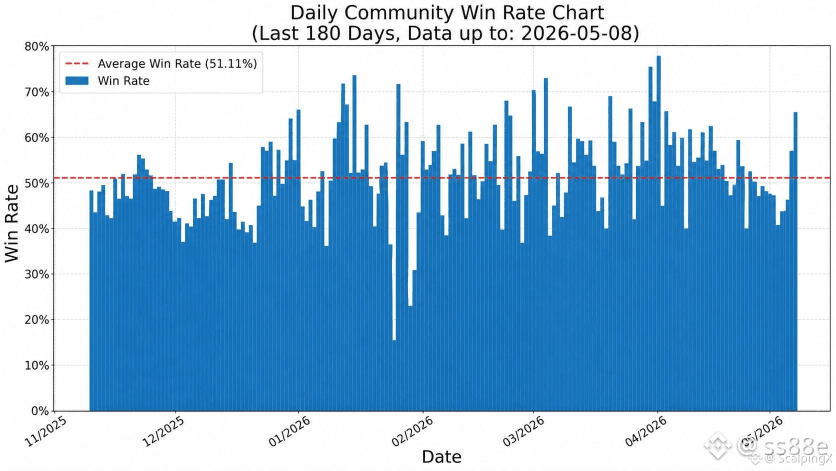
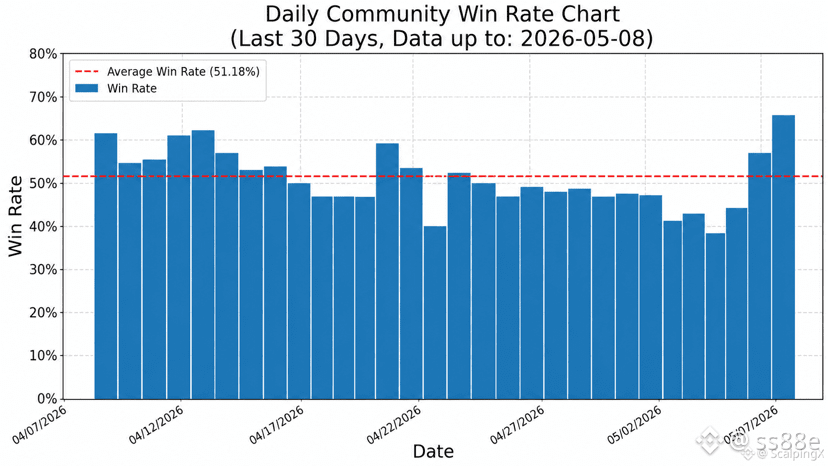
2026-05-08時点で更新、コミュニティ全体の取引データ:
📊 平均勝率は46.70%です
🏆 勝率が最も高い日は2026-04-01で78.08%でした。勝率が最も低い日は2026-01-25で15.69%でした
📅 平均勝率が最も高い曜日は水曜日で47.01%です。平均勝率が最も低い曜日は木曜日で45.85%です
⏱️ 最も強い7日間は2026-04-05で終了し、平均勝率は63.27%でした。最も弱い7日間は2025-03-12で終了し、平均勝率は36.64%でした
⚖️ 平均勝率を上回る日数は312日です。平均勝率以下の日数は363日です
📈 勝率が50%以上の日数は186日です。勝率が40%〜50%の範囲の日数は376日です。勝率が40%未満の日数は113日です
#TradingPerformance $BTC $TON $BNB
2026-05-08時点で更新、コミュニティ全体の取引データ:
📊 平均勝率は46.70%です
🏆 勝率が最も高い日は2026-04-01で78.08%でした。勝率が最も低い日は2026-01-25で15.69%でした
📅 平均勝率が最も高い曜日は水曜日で47.01%です。平均勝率が最も低い曜日は木曜日で45.85%です
⏱️ 最も強い7日間は2026-04-05で終了し、平均勝率は63.27%でした。最も弱い7日間は2025-03-12で終了し、平均勝率は36.64%でした
⚖️ 平均勝率を上回る日数は312日です。平均勝率以下の日数は363日です
📈 勝率が50%以上の日数は186日です。勝率が40%〜50%の範囲の日数は376日です。勝率が40%未満の日数は113日です
#TradingPerformance $BTC $TON $BNB
📊 平均勝率は46.70%です
🏆 勝率が最も高い日は2026-04-01で78.08%でした。勝率が最も低い日は2026-01-25で15.69%でした
📅 平均勝率が最も高い曜日は水曜日で47.01%です。平均勝率が最も低い曜日は木曜日で45.85%です
⏱️ 最も強い7日間は2026-04-05で終了し、平均勝率は63.27%でした。最も弱い7日間は2025-03-12で終了し、平均勝率は36.64%でした
⚖️ 平均勝率を上回る日数は312日です。平均勝率以下の日数は363日です
📈 勝率が50%以上の日数は186日です。勝率が40%〜50%の範囲の日数は376日です。勝率が40%未満の日数は113日です
#TradingPerformance $BTC $TON $BNB
66

·
--
ブリッシュ
2026-05-08に更新されました。コミュニティ全体の取引データ:
📊 平均勝率は46.70%
🏆 勝率が最も高い日は2026-04-01で、勝率は78.08%でした。最も低い日は2026-01-25で、勝率は15.69%でした
📅 勝率の平均が最も高い曜日は水曜日で、勝率は47.01%です。勝率の平均が最も低い曜日は木曜日で、勝率は45.85%です
⏱️ 最も強い直近7日間は2026-04-05に終了しており、平均勝率は63.27%です。最も弱い直近7日間は2025-03-12に終了しており、平均勝率は36.64%です
⚖️ 勝率が平均を上回っていた日数は312日です。勝率が平均以下(同じ含む)の日数は363日です
📈 勝率が50%を超えていた日数は186日です。勝率が40%〜50%の範囲だった日数は376日です。勝率が40%未満だった日数は113日です
#TradingPerformance $BTC $TON
2026-05-08に更新されました。コミュニティ全体の取引データ:
📊 平均勝率は46.70%
🏆 勝率が最も高い日は2026-04-01で、勝率は78.08%でした。最も低い日は2026-01-25で、勝率は15.69%でした
📅 勝率の平均が最も高い曜日は水曜日で、勝率は47.01%です。勝率の平均が最も低い曜日は木曜日で、勝率は45.85%です
⏱️ 最も強い直近7日間は2026-04-05に終了しており、平均勝率は63.27%です。最も弱い直近7日間は2025-03-12に終了しており、平均勝率は36.64%です
⚖️ 勝率が平均を上回っていた日数は312日です。勝率が平均以下(同じ含む)の日数は363日です
📈 勝率が50%を超えていた日数は186日です。勝率が40%〜50%の範囲だった日数は376日です。勝率が40%未満だった日数は113日です
#TradingPerformance $BTC $TON
📊 平均勝率は46.70%
🏆 勝率が最も高い日は2026-04-01で、勝率は78.08%でした。最も低い日は2026-01-25で、勝率は15.69%でした
📅 勝率の平均が最も高い曜日は水曜日で、勝率は47.01%です。勝率の平均が最も低い曜日は木曜日で、勝率は45.85%です
⏱️ 最も強い直近7日間は2026-04-05に終了しており、平均勝率は63.27%です。最も弱い直近7日間は2025-03-12に終了しており、平均勝率は36.64%です
⚖️ 勝率が平均を上回っていた日数は312日です。勝率が平均以下(同じ含む)の日数は363日です
📈 勝率が50%を超えていた日数は186日です。勝率が40%〜50%の範囲だった日数は376日です。勝率が40%未満だった日数は113日です
#TradingPerformance $BTC $TON
3
144
ログインして、さらにコンテンツを読む
厳選トピックで世界の暗号資産トレーダーの仲間入り
⚡️ 暗号資産に関する最新かつ有益な情報が見つかります。
💬 世界最大の暗号資産取引所から信頼されています。
👍 認証を受けたクリエイターから、有益なインサイトを得られます。
メール / 電話番号
トレンドトピック
1
#FedRateWatch
閲覧回数 523,154
2,572人が討論中
2
#BitcoinSlidesTo$76000
閲覧回数 17,744
110人が討論中
3
#BitcoinReboundsTo$79K
閲覧回数 60,542
398人が討論中
4
#StrategyMarketCapPassesFord
閲覧回数 33,062
600人が討論中
5
#ClarityActOddsHalveOnPolymarket
閲覧回数 46,313
497人が討論中
6
#US30YTreasuryYieldTops5.40%
閲覧回数 28,786
339人が討論中
7
#BessentEndorsesFinalClarityActDraft
閲覧回数 51,701
714人が討論中
8
#ZamaOpens16ConfidentialMorphoVaults
閲覧回数 17,372
339人が討論中
9
#USDCOnChainVolumeTops$100Trillion
閲覧回数 2,705
48人が討論中
10
#BitcoinSpotETFsNetInflow$160M
閲覧回数 4,237
102人が討論中