Binance Square
#nssl

nssl

閲覧回数 25
2人が討論中
Mr Hussain
·
--
記事
翻訳参照
Technical Analysis: SpaceX ,Falcon 9 vs. Competitors in the NSSL FleetTo understand why Falcon 9 remains a core asset for the U.S. Space Force, it is helpful to evaluate its technical profile against alternative platforms serving the National Security Space Launch (NSSL) framework, such as United Launch Alliance's (ULA) Vulcan Centaur and Blue Origin's New Glenn. 1. Propellant Architecture and High-Energy Orbits RP-1 vs. Cryogenic Hydrogen: Falcon 9 utilizes RP-1 (refined kerosene) and Liquid Oxygen (LOX) across both stages. While RP-1 offers high density and ease of handling, it has a lower specific impulse (I_{sp}) compared to Liquid Hydrogen (LH2) or Liquefied Natural Gas (LNG). Upper Stage Efficiency: For high-energy direct insertion missions (such as Direct-to-GEO or deep-space orbits), upper stages utilizing cryogenic hydrogen (like ULA's Centaur V with RL10 engines) offer superior vacuum performance. To compensate for high-energy missions exceeding Falcon 9's performance envelope, the Space Force leverages the Falcon Heavy configuration (three tied Falcon 9 cores). 2. Reusability and Cadence vs. Payload Fraction Turnaround Speed: Falcon 9’s grid-fin control system, cold-gas thrusters, and landing legs enable rapid booster turnaround, allowing SpaceX to execute frequent launch manifests. Payload Penalty: Propulsive landing requires reserving ~20–30% of total propellant for reentry burns and touchdown, lowering maximum payload performance compared to full expendability. However, for standard LEO and MEO navigation constellations, Falcon 9's reusable performance margin comfortably exceeds mission mass requirements. 3. Dual-Coast Pad Availability SpaceX operates two operational East Coast pads (SLC-40 at Cape Canaveral and LC-39A at Kennedy Space Center) alongside West Coast infrastructure (SLC-4E at Vandenberg). This multi-pad redundancy gives the Space Force scheduling flexibility and guarantees launch capability even during pad maintenance or surge deployments. Industry Outlook While ULA's Vulcan Centaur and Blue Origin's New Glenn are architected to handle high-mass, high-energy payloads in NSSL Phase 3 allocations, Falcon 9 remains the workhorse for low-to-medium orbit satellite deployment. The $1.6 billion award reflects a balanced defense procurement strategy: leveraging high-energy launch systems where required, while capitalizing on Falcon 9's unmatched flight rate and proven reliability for core operational constellations. #NSSL #FalconInsights #NasdaqRebounds2.8%EndingSixDaySlide #Write2Earn $SPACE {future}(SPACEUSDT) $AAPLB {spot}(AAPLBUSDT) $GOOG.US {stock_us}(GOOG.US)

Technical Analysis: SpaceX ,Falcon 9 vs. Competitors in the NSSL Fleet

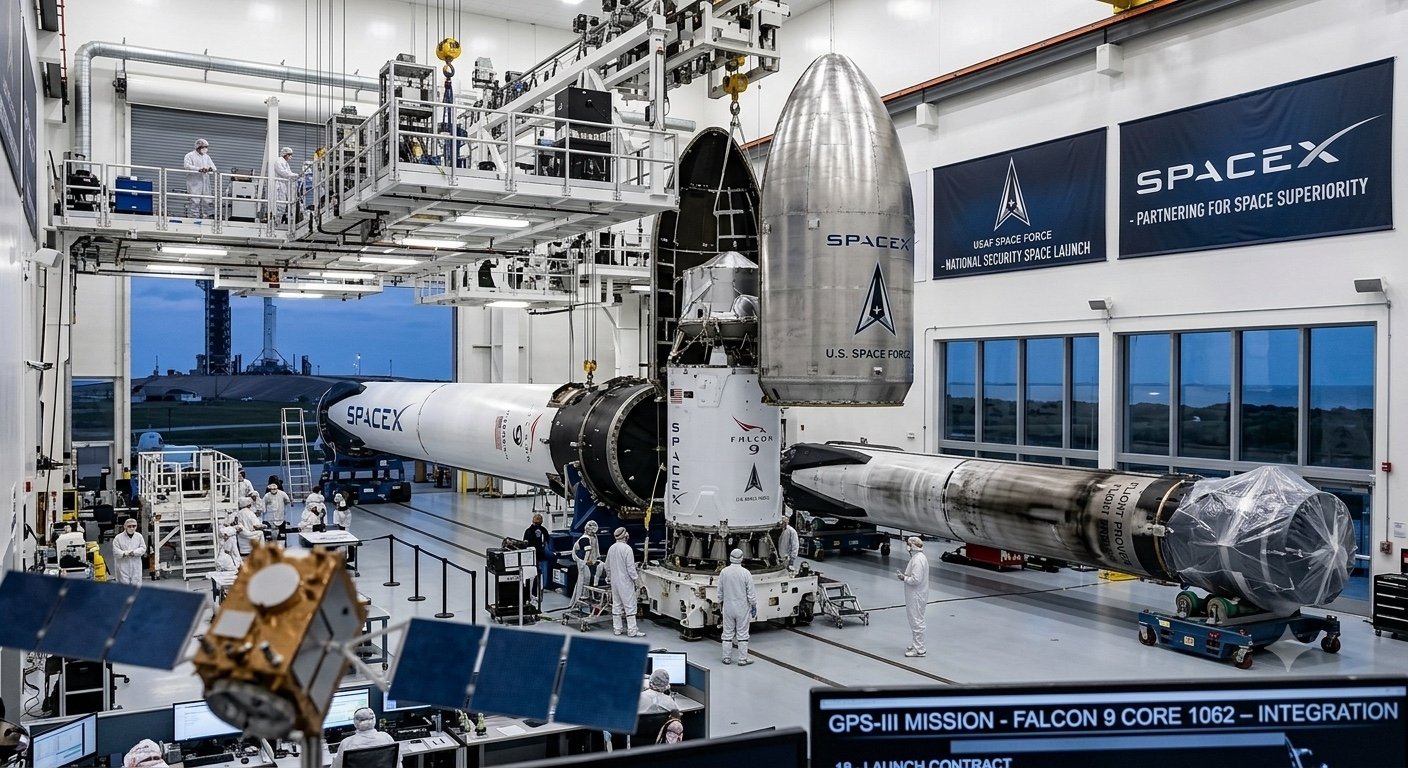
To understand why Falcon 9 remains a core asset for the U.S. Space Force, it is helpful to evaluate its technical profile against alternative platforms serving the National Security Space Launch (NSSL) framework, such as United Launch Alliance's (ULA) Vulcan Centaur and Blue Origin's New Glenn.
1. Propellant Architecture and High-Energy Orbits
RP-1 vs. Cryogenic Hydrogen: Falcon 9 utilizes RP-1 (refined kerosene) and Liquid Oxygen (LOX) across both stages. While RP-1 offers high density and ease of handling, it has a lower specific impulse (I_{sp}) compared to Liquid Hydrogen (LH2) or Liquefied Natural Gas (LNG).
Upper Stage Efficiency: For high-energy direct insertion missions (such as Direct-to-GEO or deep-space orbits), upper stages utilizing cryogenic hydrogen (like ULA's Centaur V with RL10 engines) offer superior vacuum performance. To compensate for high-energy missions exceeding Falcon 9's performance envelope, the Space Force leverages the Falcon Heavy configuration (three tied Falcon 9 cores).
2. Reusability and Cadence vs. Payload Fraction
Turnaround Speed: Falcon 9’s grid-fin control system, cold-gas thrusters, and landing legs enable rapid booster turnaround, allowing SpaceX to execute frequent launch manifests.
Payload Penalty: Propulsive landing requires reserving ~20–30% of total propellant for reentry burns and touchdown, lowering maximum payload performance compared to full expendability. However, for standard LEO and MEO navigation constellations, Falcon 9's reusable performance margin comfortably exceeds mission mass requirements.
3. Dual-Coast Pad Availability
SpaceX operates two operational East Coast pads (SLC-40 at Cape Canaveral and LC-39A at Kennedy Space Center) alongside West Coast infrastructure (SLC-4E at Vandenberg). This multi-pad redundancy gives the Space Force scheduling flexibility and guarantees launch capability even during pad maintenance or surge deployments.
Industry Outlook
While ULA's Vulcan Centaur and Blue Origin's New Glenn are architected to handle high-mass, high-energy payloads in NSSL Phase 3 allocations, Falcon 9 remains the workhorse for low-to-medium orbit satellite deployment. The $1.6 billion award reflects a balanced defense procurement strategy: leveraging high-energy launch systems where required, while capitalizing on Falcon 9's unmatched flight rate and proven reliability for core operational constellations.
#NSSL #FalconInsights #NasdaqRebounds2.8%EndingSixDaySlide #Write2Earn
$SPACE
$AAPLB
$GOOG.US
ログインして、さらにコンテンツを読む
厳選トピックで世界の暗号資産トレーダーの仲間入り
⚡️ 暗号資産に関する最新かつ有益な情報が見つかります。
💬 世界最大の暗号資産取引所から信頼されています。
👍 認証を受けたクリエイターから、有益なインサイトを得られます。
メール / 電話番号