
#analysis
analysis
閲覧回数 7.8M
14,386人が討論中
注目
最新

·
--
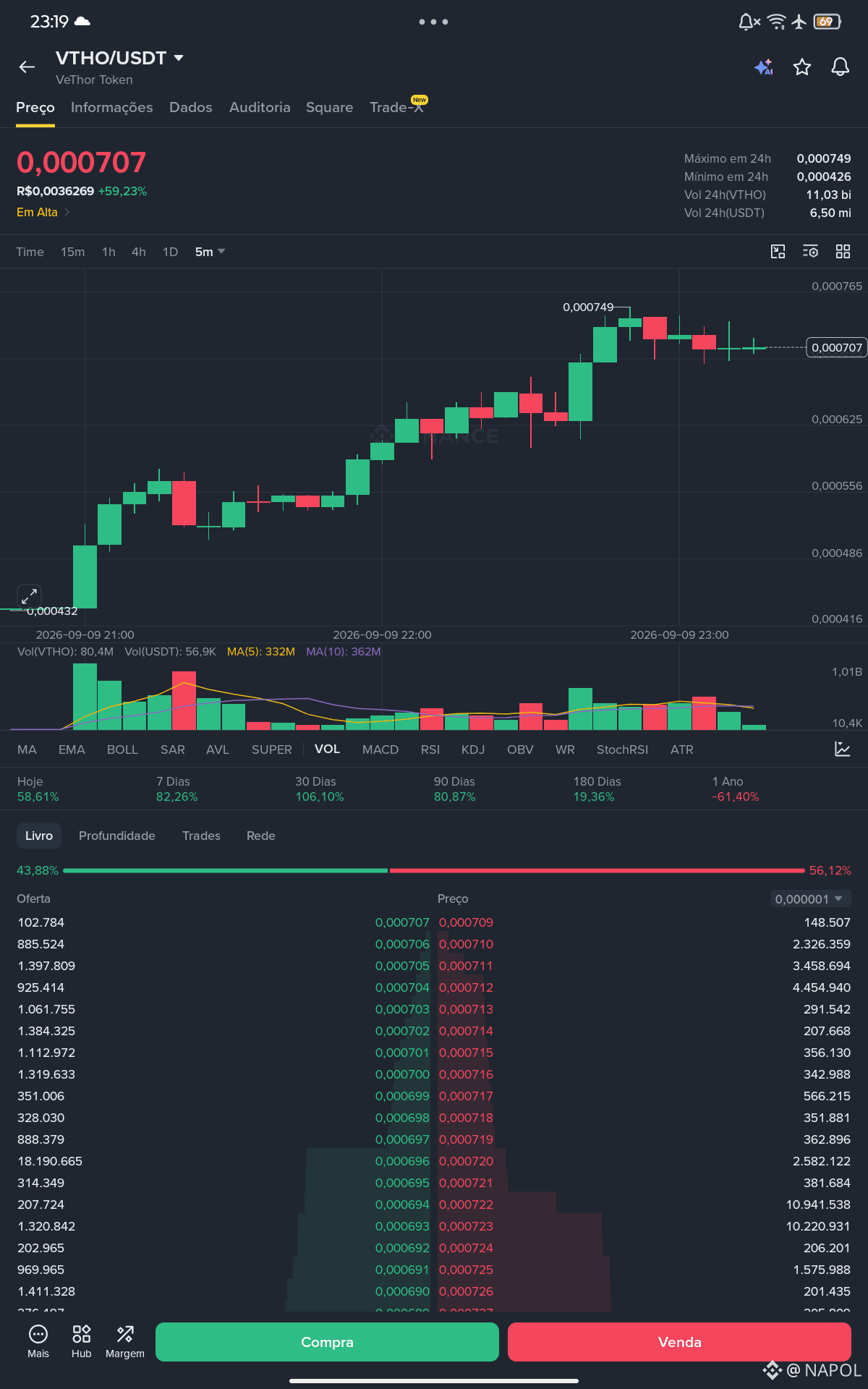
VTHO/USDTの分析 📈
VTHOは強さを見せており、すでに大きな上昇を蓄積しています。5分足チャートでは、0,000749のあたりにレジスタンスがあり、サポートは0,000700〜0,000690付近にあります。
私の戦略としては、勢いの中には入らず、サポートへの押し目を待つか、出来高を伴って0,000749を確実にブレイクするのを待ちます。
🎯 目標:0,000780 → 0,000820
🛑 ストップ:0,000690を下回ったら
現時点では、私は辛抱強く待ち、値動きの高値圏で買うことは避けます。
#dyor #TradingSignals #analysis #CryptoInsights #VTHO
$VTHO
{spot}(VTHOUSDT)
VTHO/USDTの分析 📈
VTHOは強さを見せており、すでに大きな上昇を蓄積しています。5分足チャートでは、0,000749のあたりにレジスタンスがあり、サポートは0,000700〜0,000690付近にあります。
私の戦略としては、勢いの中には入らず、サポートへの押し目を待つか、出来高を伴って0,000749を確実にブレイクするのを待ちます。
🎯 目標:0,000780 → 0,000820
🛑 ストップ:0,000690を下回ったら
現時点では、私は辛抱強く待ち、値動きの高値圏で買うことは避けます。
#dyor #TradingSignals #analysis #CryptoInsights #VTHO
$VTHO
VTHOは強さを見せており、すでに大きな上昇を蓄積しています。5分足チャートでは、0,000749のあたりにレジスタンスがあり、サポートは0,000700〜0,000690付近にあります。
私の戦略としては、勢いの中には入らず、サポートへの押し目を待つか、出来高を伴って0,000749を確実にブレイクするのを待ちます。
🎯 目標:0,000780 → 0,000820
🛑 ストップ:0,000690を下回ったら
現時点では、私は辛抱強く待ち、値動きの高値圏で買うことは避けます。
#dyor #TradingSignals #analysis #CryptoInsights #VTHO
$VTHO
1
607

·
--
$ テクニカル分析 | BABYUSDT
ペアは、0.01027の直近安値からの反発以降、明確な上昇チャネル内で推移しています。価格は連続する複数のレジスタンス水準を突破し、調整波が始まる前に0.01197でローカル天井に到達しました。
🔹 主要テクニカル・レベル
• 第1のレジスタンス:0.01197 — ローカル天井、強い売りゾーン
• 第1のサポート:0.01120 — 上昇トレンドライン、価格は現在ここを上回って取引
• 重要なサポート:0.01027 — 記録された最安値、この水準を割ると上昇トレンドは無効化
🔹 相対力指数(RSI 14)
現在値:61.74
プラスのモメンタムが依然として優勢ですが、弱いながらも見られる下方向のダイバージェンスは、買いの勢いが失速する可能性を警告しています。RSIの移動平均(51.25)は上向きで、サポートが崩れていない限りトレンド継続を後押ししています。
🔹 テクニカル・リーディング
価格は現在、0.01120の重要なサポート・ゾーンをテストしています。最も可能性が高いシナリオ:
ポジティブ・シナリオ:0.01120からの反発。十分な取引量を伴い、0.01197の再テストを目指す。
ネガティブ・シナリオ:0.01120を時間足で終値ベースで割り込み。そうなると0.01080、次に0.01027のテスト余地が開く。
⚠️ リスク管理:
このような局面では、サポートからの反発が確認されるか、あるいは明確にブレイクされるまで待ってから判断するのが望まれます。天井付近での未計画のリスクは常に高くつきます。
本分析は教育目的のみであり、投資推奨ではありません。 📊$BABY #analysis #BTC
{future}(BABYUSDT)
$ テクニカル分析 | BABYUSDT
ペアは、0.01027の直近安値からの反発以降、明確な上昇チャネル内で推移しています。価格は連続する複数のレジスタンス水準を突破し、調整波が始まる前に0.01197でローカル天井に到達しました。
🔹 主要テクニカル・レベル
• 第1のレジスタンス:0.01197 — ローカル天井、強い売りゾーン
• 第1のサポート:0.01120 — 上昇トレンドライン、価格は現在ここを上回って取引
• 重要なサポート:0.01027 — 記録された最安値、この水準を割ると上昇トレンドは無効化
🔹 相対力指数(RSI 14)
現在値:61.74
プラスのモメンタムが依然として優勢ですが、弱いながらも見られる下方向のダイバージェンスは、買いの勢いが失速する可能性を警告しています。RSIの移動平均(51.25)は上向きで、サポートが崩れていない限りトレンド継続を後押ししています。
🔹 テクニカル・リーディング
価格は現在、0.01120の重要なサポート・ゾーンをテストしています。最も可能性が高いシナリオ:
ポジティブ・シナリオ:0.01120からの反発。十分な取引量を伴い、0.01197の再テストを目指す。
ネガティブ・シナリオ:0.01120を時間足で終値ベースで割り込み。そうなると0.01080、次に0.01027のテスト余地が開く。
⚠️ リスク管理:
このような局面では、サポートからの反発が確認されるか、あるいは明確にブレイクされるまで待ってから判断するのが望まれます。天井付近での未計画のリスクは常に高くつきます。
本分析は教育目的のみであり、投資推奨ではありません。 📊$BABY #analysis #BTC
ペアは、0.01027の直近安値からの反発以降、明確な上昇チャネル内で推移しています。価格は連続する複数のレジスタンス水準を突破し、調整波が始まる前に0.01197でローカル天井に到達しました。
🔹 主要テクニカル・レベル
• 第1のレジスタンス:0.01197 — ローカル天井、強い売りゾーン
• 第1のサポート:0.01120 — 上昇トレンドライン、価格は現在ここを上回って取引
• 重要なサポート:0.01027 — 記録された最安値、この水準を割ると上昇トレンドは無効化
🔹 相対力指数(RSI 14)
現在値:61.74
プラスのモメンタムが依然として優勢ですが、弱いながらも見られる下方向のダイバージェンスは、買いの勢いが失速する可能性を警告しています。RSIの移動平均(51.25)は上向きで、サポートが崩れていない限りトレンド継続を後押ししています。
🔹 テクニカル・リーディング
価格は現在、0.01120の重要なサポート・ゾーンをテストしています。最も可能性が高いシナリオ:
ポジティブ・シナリオ:0.01120からの反発。十分な取引量を伴い、0.01197の再テストを目指す。
ネガティブ・シナリオ:0.01120を時間足で終値ベースで割り込み。そうなると0.01080、次に0.01027のテスト余地が開く。
⚠️ リスク管理:
このような局面では、サポートからの反発が確認されるか、あるいは明確にブレイクされるまで待ってから判断するのが望まれます。天井付近での未計画のリスクは常に高くつきます。
本分析は教育目的のみであり、投資推奨ではありません。 📊$BABY #analysis #BTC
125

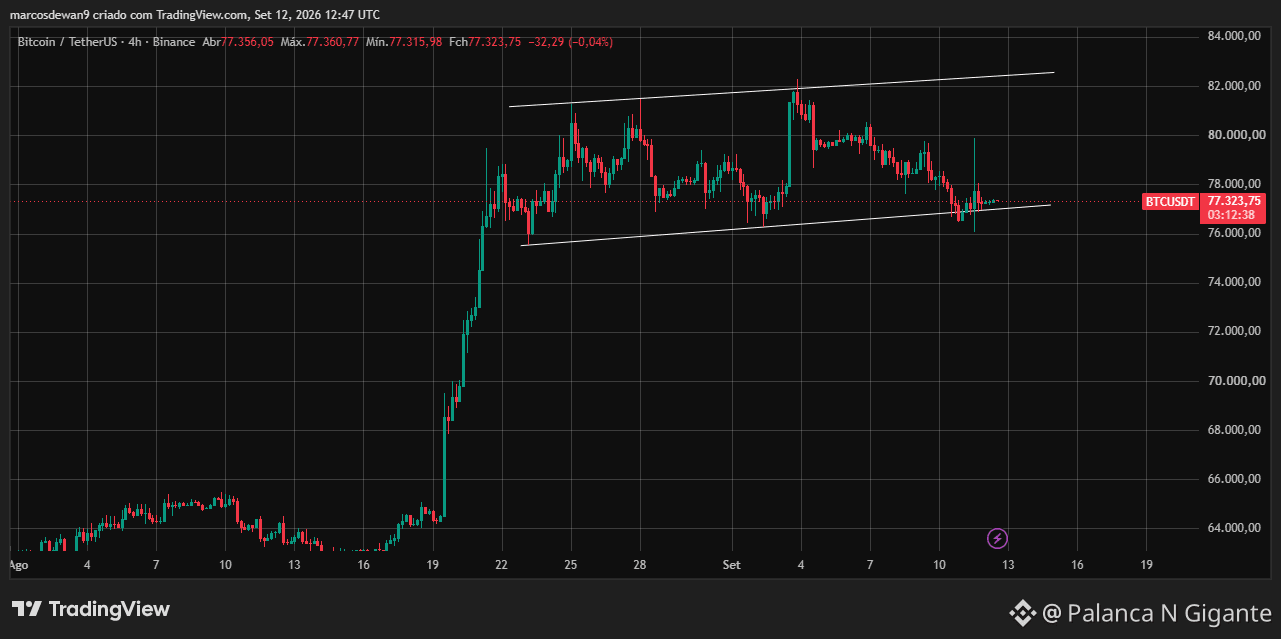
O $BTC この価格帯はほぼ3週間続いています。
US$80,000を提示している売り手が諦めるか、US$76,000を提示している買い手が資金不足になります。
今後の展開を分析すると、後者のほうが可能性が高いようです。
$龙虾 $LSK 👀👀👀👀👀👀
{spot}(LSKUSDT)
{future}(龙虾USDT)
{spot}(BTCUSDT)
#analysis #bitcoin #TokenizedStockHoldersUp619.1% #RevolutConfirmsFakeGovEmailDataBreach #EthereumHits$2600FirstTimeInSevenMonths
O $BTC この価格帯はほぼ3週間続いています。
US$80,000を提示している売り手が諦めるか、US$76,000を提示している買い手が資金不足になります。
今後の展開を分析すると、後者のほうが可能性が高いようです。
$龙虾 $LSK 👀👀👀👀👀👀
#analysis #bitcoin #TokenizedStockHoldersUp619.1% #RevolutConfirmsFakeGovEmailDataBreach #EthereumHits$2600FirstTimeInSevenMonths
US$80,000を提示している売り手が諦めるか、US$76,000を提示している買い手が資金不足になります。
今後の展開を分析すると、後者のほうが可能性が高いようです。
$龙虾 $LSK 👀👀👀👀👀👀
#analysis #bitcoin #TokenizedStockHoldersUp619.1% #RevolutConfirmsFakeGovEmailDataBreach #EthereumHits$2600FirstTimeInSevenMonths
812
翻訳参照
$PEPE
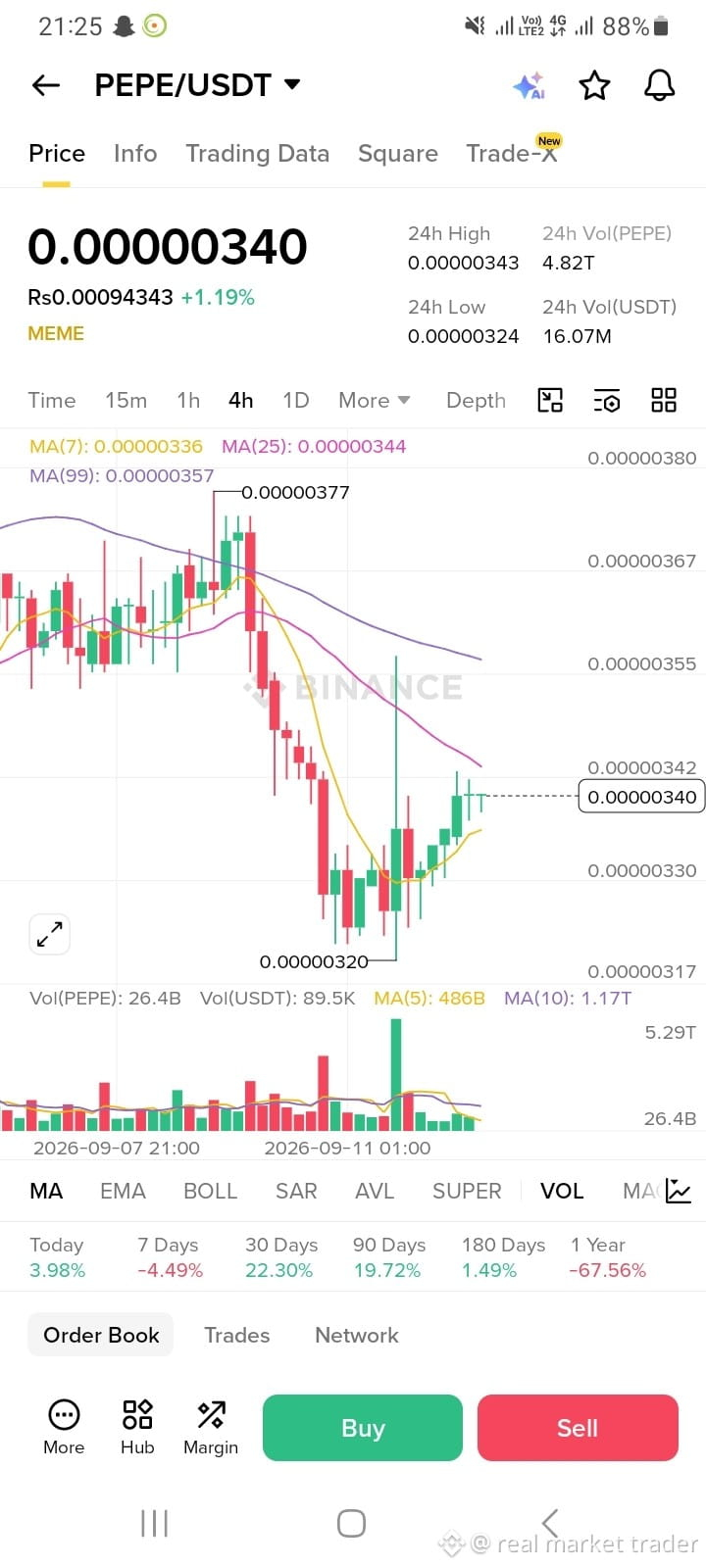
🔴 PEPE/USDT — SELL SETUP
Current Price: 0.00000340
Entry Zone: 0.00000342 – 0.00000345
Stop Loss: 0.00000352
TP1: 0.00000333
TP2: 0.00000326
TP3: 0.00000320
Confirmation: Look for a clear 4H rejection around 0.00000342–0.00000345 before entering the short.
Why SELL?
Price remains below MA25 (0.00000344) and MA99 (0.00000357).
The recent rise looks like a recovery toward resistance rather than a confirmed trend reversal.
0.00000320 is the key recent support.
#PEPE #analysis
$PEPE
🔴 PEPE/USDT — SELL SETUP
Current Price: 0.00000340
Entry Zone: 0.00000342 – 0.00000345
Stop Loss: 0.00000352
TP1: 0.00000333
TP2: 0.00000326
TP3: 0.00000320
Confirmation: Look for a clear 4H rejection around 0.00000342–0.00000345 before entering the short.
Why SELL?
Price remains below MA25 (0.00000344) and MA99 (0.00000357).
The recent rise looks like a recovery toward resistance rather than a confirmed trend reversal.
0.00000320 is the key recent support.
#PEPE #analysis
🔴 PEPE/USDT — SELL SETUP
Current Price: 0.00000340
Entry Zone: 0.00000342 – 0.00000345
Stop Loss: 0.00000352
TP1: 0.00000333
TP2: 0.00000326
TP3: 0.00000320
Confirmation: Look for a clear 4H rejection around 0.00000342–0.00000345 before entering the short.
Why SELL?
Price remains below MA25 (0.00000344) and MA99 (0.00000357).
The recent rise looks like a recovery toward resistance rather than a confirmed trend reversal.
0.00000320 is the key recent support.
#PEPE #analysis
43

翻訳参照
Why is $NEAR stuck exactly at the midpoint of its 24-hour range? The price is currently at the midpoint between its 24-hour high and low, a level where traders often start paying attention. This suggests a period of consolidation or hesitation, with equal buying and selling pressure. The 24-hour change of +0.5% indicates a slight upward bias, but the price action remains range-bound. What traders should watch next is whether this consolidation breaks out or consolidates further. If the price moves above the midpoint, it could signal a continuation of the upward trend. If it falls below, it might indicate a reversal.
What are you watching on $NEAR right now?
Watching $NEAR vs this range.
I'm marking levels on NEAR/USDT and waiting for a clean trigger.
#near #cryptocurrency #trading #analysis
Why is $NEAR stuck exactly at the midpoint of its 24-hour range? The price is currently at the midpoint between its 24-hour high and low, a level where traders often start paying attention. This suggests a period of consolidation or hesitation, with equal buying and selling pressure. The 24-hour change of +0.5% indicates a slight upward bias, but the price action remains range-bound. What traders should watch next is whether this consolidation breaks out or consolidates further. If the price moves above the midpoint, it could signal a continuation of the upward trend. If it falls below, it might indicate a reversal.
What are you watching on $NEAR right now?
Watching $NEAR vs this range.
I'm marking levels on NEAR/USDT and waiting for a clean trigger.
#near #cryptocurrency #trading #analysis
What are you watching on $NEAR right now?
Watching $NEAR vs this range.
I'm marking levels on NEAR/USDT and waiting for a clean trigger.
#near #cryptocurrency #trading #analysis
2

翻訳参照
Market mood check for the past 24 hours.
• Fear & Greed sits at 63/100. That is officially Greed territory.
• BTC Dominance holds at 58.2%. Capital is still concentrated in Bitcoin.
• BTC moved +0.4% while ETH pushed +2.9%.
• LSK is the outlier today, spiking +55.9%.
So sentiment is technically greedy, but the price action feels more like a tug of war. Bitcoin dominance at 58.2% tells you the market is not in full altseason mode yet. Money is rotating into ETH, which is a good sign for the broader market. But the fact that BTC dominance remains this high while ETH outperforms suggests we are in a selective environment. It is not a broad rally where everything pumps. The LSK move shows there are still pockets of extreme volatility if you know where to look.
The Fear & Greed index at 63 is interesting. It is not euphoric, but it is not fearful either. This often happens when the market is climbing a wall of worry. The data suggests traders are optimistic but cautious. They are favoring ETH over BTC right now, but they are not abandoning Bitcoin.
So here is the real question. If ETH continues to gain ground while BTC dominance stays above 58%, does that signal a healthy rotation or just a temporary blip before Bitcoin takes back control?
What's your take?
#Analysis #Forecast #CryptoNews #Trading #Bitcoin
📱 Follow @PoorCryptoMan
Market mood check for the past 24 hours.
• Fear & Greed sits at 63/100. That is officially Greed territory.
• BTC Dominance holds at 58.2%. Capital is still concentrated in Bitcoin.
• BTC moved +0.4% while ETH pushed +2.9%.
• LSK is the outlier today, spiking +55.9%.
So sentiment is technically greedy, but the price action feels more like a tug of war. Bitcoin dominance at 58.2% tells you the market is not in full altseason mode yet. Money is rotating into ETH, which is a good sign for the broader market. But the fact that BTC dominance remains this high while ETH outperforms suggests we are in a selective environment. It is not a broad rally where everything pumps. The LSK move shows there are still pockets of extreme volatility if you know where to look.
The Fear & Greed index at 63 is interesting. It is not euphoric, but it is not fearful either. This often happens when the market is climbing a wall of worry. The data suggests traders are optimistic but cautious. They are favoring ETH over BTC right now, but they are not abandoning Bitcoin.
So here is the real question. If ETH continues to gain ground while BTC dominance stays above 58%, does that signal a healthy rotation or just a temporary blip before Bitcoin takes back control?
What's your take?
#Analysis #Forecast #CryptoNews #Trading #Bitcoin
📱 Follow @PoorCryptoMan
• Fear & Greed sits at 63/100. That is officially Greed territory.
• BTC Dominance holds at 58.2%. Capital is still concentrated in Bitcoin.
• BTC moved +0.4% while ETH pushed +2.9%.
• LSK is the outlier today, spiking +55.9%.
So sentiment is technically greedy, but the price action feels more like a tug of war. Bitcoin dominance at 58.2% tells you the market is not in full altseason mode yet. Money is rotating into ETH, which is a good sign for the broader market. But the fact that BTC dominance remains this high while ETH outperforms suggests we are in a selective environment. It is not a broad rally where everything pumps. The LSK move shows there are still pockets of extreme volatility if you know where to look.
The Fear & Greed index at 63 is interesting. It is not euphoric, but it is not fearful either. This often happens when the market is climbing a wall of worry. The data suggests traders are optimistic but cautious. They are favoring ETH over BTC right now, but they are not abandoning Bitcoin.
So here is the real question. If ETH continues to gain ground while BTC dominance stays above 58%, does that signal a healthy rotation or just a temporary blip before Bitcoin takes back control?
What's your take?
#Analysis #Forecast #CryptoNews #Trading #Bitcoin
📱 Follow @PoorCryptoMan
48

·
--
ブリッシュ
Zcash $ZEC は、過去数年にわたる歴史的なブレイクアウトを経験しており、$1,144 前後で取引されています。強力な機関投資家の追い風がある一方で、深刻な地域ごとの規制上の逆風にも直面しています。
#CPIWatch #analysis #MarketMoves #CryptoResearch #coin
Zcash $ZEC は、過去数年にわたる歴史的なブレイクアウトを経験しており、$1,144 前後で取引されています。強力な機関投資家の追い風がある一方で、深刻な地域ごとの規制上の逆風にも直面しています。
#CPIWatch #analysis #MarketMoves #CryptoResearch #coin
#CPIWatch #analysis #MarketMoves #CryptoResearch #coin

1
53


翻訳参照
📊 Market Median / September 12, 2026
📌 30m slice: RegDev −1.85%, above SMA200 29.81%, Median RSI 52.76.
Yesterday breadth was just 15.56%. Today it recovered to 29.81%, RSI rose from 50.55 to 52.76, and RegDev improved from −3.47% to −1.85%. The bounce continues, but there is still no broad reversal.
📊 RSI is back above 50, but roughly 70% of coins remain below SMA200. RegDev is still negative as well. No broad setup right now.
Trade plan: longs get more interesting if breadth recovers above 40–50% and RegDev keeps improving. Shorts return if RSI loses 50 and breadth starts weakening again.
⚠️ Common mistake: treating RSI above 50 as a full-market reversal while breadth is still below 30%.
#MarketSentimentToday #analysis $STORJ $LAB $LSK
📊 Market Median / September 12, 2026
📌 30m slice: RegDev −1.85%, above SMA200 29.81%, Median RSI 52.76.
Yesterday breadth was just 15.56%. Today it recovered to 29.81%, RSI rose from 50.55 to 52.76, and RegDev improved from −3.47% to −1.85%. The bounce continues, but there is still no broad reversal.
📊 RSI is back above 50, but roughly 70% of coins remain below SMA200. RegDev is still negative as well. No broad setup right now.
Trade plan: longs get more interesting if breadth recovers above 40–50% and RegDev keeps improving. Shorts return if RSI loses 50 and breadth starts weakening again.
⚠️ Common mistake: treating RSI above 50 as a full-market reversal while breadth is still below 30%.
#MarketSentimentToday #analysis $STORJ $LAB $LSK
📌 30m slice: RegDev −1.85%, above SMA200 29.81%, Median RSI 52.76.
Yesterday breadth was just 15.56%. Today it recovered to 29.81%, RSI rose from 50.55 to 52.76, and RegDev improved from −3.47% to −1.85%. The bounce continues, but there is still no broad reversal.
📊 RSI is back above 50, but roughly 70% of coins remain below SMA200. RegDev is still negative as well. No broad setup right now.
Trade plan: longs get more interesting if breadth recovers above 40–50% and RegDev keeps improving. Shorts return if RSI loses 50 and breadth starts weakening again.
⚠️ Common mistake: treating RSI above 50 as a full-market reversal while breadth is still below 30%.
#MarketSentimentToday #analysis $STORJ $LAB $LSK

2
88

·
--
ブリッシュ
🐋 スマートマネー分析とクジラ 📊
大口投資家のポジションフローに基づく現在の市場状況:
🧠 スマートマネー(概要)
ポジション総数: 2.23\text{M USDT}(524\text{ トレーダー})
ロング/ショート比率: 61.44\%
📈 ロング(買い手): 217\text{ トレーダー} | ポジション: 852.24\text{K USDT} | 未実現損益: -360,693.06\text{ USDT}(24.42\% 利益)
📉 ショート(売り手): 307\text{ トレーダー} | ポジション: 1.38\text{M USDT} | 未実現損益: +233,084.78\text{ USDT}(75.57\% 利益)
フロー(直近30分): 買い(12.34\text{K USDT})に比べ、売りの純出来高が大きい(19.38\text{K USDT})。
🐋 クジラ(まとめ)
ポジション総数: 1.75\text{M USDT}(210\text{ クジラ})
ロング/ショート比率: 49.19\%
📈 ロング(買い手): 91\text{ クジラ} | ポジション: 579.97\text{K USDT} | 未実現損益: -294,398.29\text{ USDT}(37.36\% 利益)
📉 ショート(売り手): 119\text{ クジラ} | ポジション: 1.17\text{M USDT} | 未実現損益: +194,034.10\text{ USDT}(73.10\% 利益)
フロー(直近30分): 純売り(15.62\text{K USDT})によるわずかな売り圧力。
💡 重要な結論:
一時的な弱気優勢: クジラもスマートマネーも、より高い利益率と、ショートポジションに集中した出来高が見られます。一方、ロングは大きな損失(マイナスPnL)を抱えています。
注意: ショートは、ポジション規模と現在の的中率の両面で主導しています。
あなたは今、ロングで運用していますか?それともショートですか?コメントで教えてください!👇
#SmartMoney #Whales #CryptoTrading #BinanceSquare #Analysis
🐋 スマートマネー分析とクジラ 📊
大口投資家のポジションフローに基づく現在の市場状況:
🧠 スマートマネー(概要)
ポジション総数: 2.23\text{M USDT}(524\text{ トレーダー})
ロング/ショート比率: 61.44\%
📈 ロング(買い手): 217\text{ トレーダー} | ポジション: 852.24\text{K USDT} | 未実現損益: -360,693.06\text{ USDT}(24.42\% 利益)
📉 ショート(売り手): 307\text{ トレーダー} | ポジション: 1.38\text{M USDT} | 未実現損益: +233,084.78\text{ USDT}(75.57\% 利益)
フロー(直近30分): 買い(12.34\text{K USDT})に比べ、売りの純出来高が大きい(19.38\text{K USDT})。
🐋 クジラ(まとめ)
ポジション総数: 1.75\text{M USDT}(210\text{ クジラ})
ロング/ショート比率: 49.19\%
📈 ロング(買い手): 91\text{ クジラ} | ポジション: 579.97\text{K USDT} | 未実現損益: -294,398.29\text{ USDT}(37.36\% 利益)
📉 ショート(売り手): 119\text{ クジラ} | ポジション: 1.17\text{M USDT} | 未実現損益: +194,034.10\text{ USDT}(73.10\% 利益)
フロー(直近30分): 純売り(15.62\text{K USDT})によるわずかな売り圧力。
💡 重要な結論:
一時的な弱気優勢: クジラもスマートマネーも、より高い利益率と、ショートポジションに集中した出来高が見られます。一方、ロングは大きな損失(マイナスPnL)を抱えています。
注意: ショートは、ポジション規模と現在の的中率の両面で主導しています。
あなたは今、ロングで運用していますか?それともショートですか?コメントで教えてください!👇
#SmartMoney #Whales #CryptoTrading #BinanceSquare #Analysis
大口投資家のポジションフローに基づく現在の市場状況:
🧠 スマートマネー(概要)
ポジション総数: 2.23\text{M USDT}(524\text{ トレーダー})
ロング/ショート比率: 61.44\%
📈 ロング(買い手): 217\text{ トレーダー} | ポジション: 852.24\text{K USDT} | 未実現損益: -360,693.06\text{ USDT}(24.42\% 利益)
📉 ショート(売り手): 307\text{ トレーダー} | ポジション: 1.38\text{M USDT} | 未実現損益: +233,084.78\text{ USDT}(75.57\% 利益)
フロー(直近30分): 買い(12.34\text{K USDT})に比べ、売りの純出来高が大きい(19.38\text{K USDT})。
🐋 クジラ(まとめ)
ポジション総数: 1.75\text{M USDT}(210\text{ クジラ})
ロング/ショート比率: 49.19\%
📈 ロング(買い手): 91\text{ クジラ} | ポジション: 579.97\text{K USDT} | 未実現損益: -294,398.29\text{ USDT}(37.36\% 利益)
📉 ショート(売り手): 119\text{ クジラ} | ポジション: 1.17\text{M USDT} | 未実現損益: +194,034.10\text{ USDT}(73.10\% 利益)
フロー(直近30分): 純売り(15.62\text{K USDT})によるわずかな売り圧力。
💡 重要な結論:
一時的な弱気優勢: クジラもスマートマネーも、より高い利益率と、ショートポジションに集中した出来高が見られます。一方、ロングは大きな損失(マイナスPnL)を抱えています。
注意: ショートは、ポジション規模と現在の的中率の両面で主導しています。
あなたは今、ロングで運用していますか?それともショートですか?コメントで教えてください!👇
#SmartMoney #Whales #CryptoTrading #BinanceSquare #Analysis


31

·
--
翻訳参照
"Is $NEAR hiding more strength than its 24h change suggests?"
$NEAR is consolidating within a tight range today, but the 24h change tells a different story. The price has been trading within a 0.5% range for the past 24 hours, but the 24h change is only 1.2%. This suggests that while the price is moving within a tight range, there is still some underlying strength driving the market.
What traders should watch next is the next level of resistance or support. If the price can break out of this range, it could signal a stronger trend in the market.
What are you watching on $NEAR right now?
$NEAR — on my screen today.
If you're active: tap $NEAR, pull up NEAR/USDT, set alerts.
#near #crypto #trading #analysis
"Is $NEAR hiding more strength than its 24h change suggests?"
$NEAR is consolidating within a tight range today, but the 24h change tells a different story. The price has been trading within a 0.5% range for the past 24 hours, but the 24h change is only 1.2%. This suggests that while the price is moving within a tight range, there is still some underlying strength driving the market.
What traders should watch next is the next level of resistance or support. If the price can break out of this range, it could signal a stronger trend in the market.
What are you watching on $NEAR right now?
$NEAR — on my screen today.
If you're active: tap $NEAR , pull up NEAR/USDT, set alerts.
#near #crypto #trading #analysis
$NEAR is consolidating within a tight range today, but the 24h change tells a different story. The price has been trading within a 0.5% range for the past 24 hours, but the 24h change is only 1.2%. This suggests that while the price is moving within a tight range, there is still some underlying strength driving the market.
What traders should watch next is the next level of resistance or support. If the price can break out of this range, it could signal a stronger trend in the market.
What are you watching on $NEAR right now?
$NEAR — on my screen today.
If you're active: tap $NEAR , pull up NEAR/USDT, set alerts.
#near #crypto #trading #analysis
38

NEAR Protocol($NEAR )市場アップデート:シャーディングのアップグレードが燃料となり週次で22%上昇、ただし買われ過ぎの警告が点滅
$NEAR は約1.99ドル付近で取引されており、今週はおよそ22%上昇しています。これは、ネットワークの大規模アップグレードによりシャードが6つから8つへ拡張され、スループットが33%向上したことが背景です。プロトコルバージョン77では、グローバルコントラクト対応や楽観的なブロック処理も追加され、$NEAR のレイヤー1のポジションがSolanaやEthereumに対して強化されました。
主要水準:トークンは$2.00〜$2.05でレジスタンスに直面しています。RSIは買われ過ぎ領域に接近しており、MACDは強気ですがモメンタムが鈍化しています。サポートはおよそ$1.90です。50日平均と200日平均の間でゴールデンクロスが形成されつつあり、確認されれば中期的な強気構造を後押しする可能性があります。
Binance取引のセットアップ:NEARが$1.90**を維持し、**出来高を伴って$2.05を上抜ける場合に限り、慎重にロングのみを検討してください。目標は$2.20〜$2.30、損切りは **$1.85** 未満。価格が$2.00を拒否して$1.90を下回るなら、ポジションを持たず様子見にしましょう。今回の上昇は、純粋なオーガニック需要というよりショートカバーが一部関与している可能性があるため、追いかけないでください。DYOR — レバレッジは両方向に増幅します。
#NEAR #analysis #Binance
{spot}(NEARUSDT)
NEAR Protocol($NEAR )市場アップデート:シャーディングのアップグレードが燃料となり週次で22%上昇、ただし買われ過ぎの警告が点滅
$NEAR は約1.99ドル付近で取引されており、今週はおよそ22%上昇しています。これは、ネットワークの大規模アップグレードによりシャードが6つから8つへ拡張され、スループットが33%向上したことが背景です。プロトコルバージョン77では、グローバルコントラクト対応や楽観的なブロック処理も追加され、$NEAR のレイヤー1のポジションがSolanaやEthereumに対して強化されました。
主要水準:トークンは$2.00〜$2.05でレジスタンスに直面しています。RSIは買われ過ぎ領域に接近しており、MACDは強気ですがモメンタムが鈍化しています。サポートはおよそ$1.90です。50日平均と200日平均の間でゴールデンクロスが形成されつつあり、確認されれば中期的な強気構造を後押しする可能性があります。
Binance取引のセットアップ:NEARが$1.90**を維持し、**出来高を伴って$2.05を上抜ける場合に限り、慎重にロングのみを検討してください。目標は$2.20〜$2.30、損切りは **$1.85** 未満。価格が$2.00を拒否して$1.90を下回るなら、ポジションを持たず様子見にしましょう。今回の上昇は、純粋なオーガニック需要というよりショートカバーが一部関与している可能性があるため、追いかけないでください。DYOR — レバレッジは両方向に増幅します。
#NEAR #analysis #Binance
$NEAR は約1.99ドル付近で取引されており、今週はおよそ22%上昇しています。これは、ネットワークの大規模アップグレードによりシャードが6つから8つへ拡張され、スループットが33%向上したことが背景です。プロトコルバージョン77では、グローバルコントラクト対応や楽観的なブロック処理も追加され、$NEAR のレイヤー1のポジションがSolanaやEthereumに対して強化されました。
主要水準:トークンは$2.00〜$2.05でレジスタンスに直面しています。RSIは買われ過ぎ領域に接近しており、MACDは強気ですがモメンタムが鈍化しています。サポートはおよそ$1.90です。50日平均と200日平均の間でゴールデンクロスが形成されつつあり、確認されれば中期的な強気構造を後押しする可能性があります。
Binance取引のセットアップ:NEARが$1.90**を維持し、**出来高を伴って$2.05を上抜ける場合に限り、慎重にロングのみを検討してください。目標は$2.20〜$2.30、損切りは **$1.85** 未満。価格が$2.00を拒否して$1.90を下回るなら、ポジションを持たず様子見にしましょう。今回の上昇は、純粋なオーガニック需要というよりショートカバーが一部関与している可能性があるため、追いかけないでください。DYOR — レバレッジは両方向に増幅します。
#NEAR #analysis #Binance
55
·
--
弱気相場
📊 市場中央値 / 2026年9月11日
📌 30mスライス:RegDev −3.47%、SMA200上回り 15.56%、中央値RSI 50.55。
昨日の短期バイアスが引き続き機能:RegDevは−1.75%から−3.47%へ下落し、一方でサーレンス(ブレッドス)も22.01%から15.56%へ低下した。RSIはただし、フラッシュ後に市場が跳ね返ったことで、41.57から50.55へ回復している。
📉 構造はまだ弱いが、跳ね(リバウンド)に盲目的に売りを入れるのは遅い。SMA200上回りはわずか15.56%。また、売られ過ぎ(オーバーソールド)はすでに0.63%まで冷えている。
取引プラン:弱いリバウンド後のショート、さらにRSIが45〜50を下回るもう一段の下落を待つ。ロングは、ブレッドスが40〜50%まで戻り、RegDevが上向きに転じる必要がある。
⚠️ よくある間違い:RSIが50を上回って戻ったことを、全面のリバーサル(反転)だとみなすこと。ただしブレッドスは15.56%にとどまっている。
#MarketSentimentToday #analysis $PUFFER $LSK $FF
📊 市場中央値 / 2026年9月11日
📌 30mスライス:RegDev −3.47%、SMA200上回り 15.56%、中央値RSI 50.55。
昨日の短期バイアスが引き続き機能:RegDevは−1.75%から−3.47%へ下落し、一方でサーレンス(ブレッドス)も22.01%から15.56%へ低下した。RSIはただし、フラッシュ後に市場が跳ね返ったことで、41.57から50.55へ回復している。
📉 構造はまだ弱いが、跳ね(リバウンド)に盲目的に売りを入れるのは遅い。SMA200上回りはわずか15.56%。また、売られ過ぎ(オーバーソールド)はすでに0.63%まで冷えている。
取引プラン:弱いリバウンド後のショート、さらにRSIが45〜50を下回るもう一段の下落を待つ。ロングは、ブレッドスが40〜50%まで戻り、RegDevが上向きに転じる必要がある。
⚠️ よくある間違い:RSIが50を上回って戻ったことを、全面のリバーサル(反転)だとみなすこと。ただしブレッドスは15.56%にとどまっている。
#MarketSentimentToday #analysis $PUFFER $LSK $FF
📌 30mスライス:RegDev −3.47%、SMA200上回り 15.56%、中央値RSI 50.55。
昨日の短期バイアスが引き続き機能:RegDevは−1.75%から−3.47%へ下落し、一方でサーレンス(ブレッドス)も22.01%から15.56%へ低下した。RSIはただし、フラッシュ後に市場が跳ね返ったことで、41.57から50.55へ回復している。
📉 構造はまだ弱いが、跳ね(リバウンド)に盲目的に売りを入れるのは遅い。SMA200上回りはわずか15.56%。また、売られ過ぎ(オーバーソールド)はすでに0.63%まで冷えている。
取引プラン:弱いリバウンド後のショート、さらにRSIが45〜50を下回るもう一段の下落を待つ。ロングは、ブレッドスが40〜50%まで戻り、RegDevが上向きに転じる必要がある。
⚠️ よくある間違い:RSIが50を上回って戻ったことを、全面のリバーサル(反転)だとみなすこと。ただしブレッドスは15.56%にとどまっている。
#MarketSentimentToday #analysis $PUFFER $LSK $FF

2
80

·
--
ブリッシュ
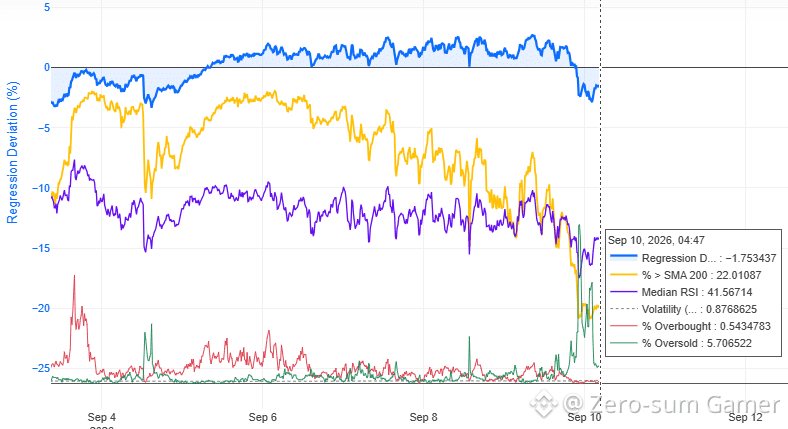
📊 市場の中央値 / 2026年9月10日
📌 30分足スライス:RegDev −1.75%、SMA200上抜け 22.01%、中央値RSI 41.57。
昨日はロングバイアスを切り替え、ショートを探し始めました。今夜(overnight)はロングスクイーズが発生し、ピーク時には約45%のコインがオーバーソールドに到達しました。ショートのセットアップは機能しました:RegDevは+0.80%から−1.75%へ下落し、レンジの広がり(breadth)は42.72%から22.01%へ急落しました。
📉 売り手がしっかり支配していますが、今夜の極端な動きはすでに解消済みです。RSIは41.57、オーバーソールドは5.71%まで戻り、買われ過ぎ(オーバーボート)は0.54%にとどまっています。
取引プラン:弱いコインでのリバウンド後に選別してショート。赤い足のまま(下落中に)突っ込んで入らないこと。ロングはRSIが50を上回り、breadthが50を上回り、RegDevが上向きに転じる必要があります。
⚠️ よくあるミス:オーバーソールドが一時的に45%に達しただけで買ってしまうこと。より大きな構造(全体像)はまだ弱気(ベア)です。
#MarketSentimentToday #analysis $ARIA $TOWN $BICO
📊 市場の中央値 / 2026年9月10日
📌 30分足スライス:RegDev −1.75%、SMA200上抜け 22.01%、中央値RSI 41.57。
昨日はロングバイアスを切り替え、ショートを探し始めました。今夜(overnight)はロングスクイーズが発生し、ピーク時には約45%のコインがオーバーソールドに到達しました。ショートのセットアップは機能しました:RegDevは+0.80%から−1.75%へ下落し、レンジの広がり(breadth)は42.72%から22.01%へ急落しました。
📉 売り手がしっかり支配していますが、今夜の極端な動きはすでに解消済みです。RSIは41.57、オーバーソールドは5.71%まで戻り、買われ過ぎ(オーバーボート)は0.54%にとどまっています。
取引プラン:弱いコインでのリバウンド後に選別してショート。赤い足のまま(下落中に)突っ込んで入らないこと。ロングはRSIが50を上回り、breadthが50を上回り、RegDevが上向きに転じる必要があります。
⚠️ よくあるミス:オーバーソールドが一時的に45%に達しただけで買ってしまうこと。より大きな構造(全体像)はまだ弱気(ベア)です。
#MarketSentimentToday #analysis $ARIA $TOWN $BICO
📌 30分足スライス:RegDev −1.75%、SMA200上抜け 22.01%、中央値RSI 41.57。
昨日はロングバイアスを切り替え、ショートを探し始めました。今夜(overnight)はロングスクイーズが発生し、ピーク時には約45%のコインがオーバーソールドに到達しました。ショートのセットアップは機能しました:RegDevは+0.80%から−1.75%へ下落し、レンジの広がり(breadth)は42.72%から22.01%へ急落しました。
📉 売り手がしっかり支配していますが、今夜の極端な動きはすでに解消済みです。RSIは41.57、オーバーソールドは5.71%まで戻り、買われ過ぎ(オーバーボート)は0.54%にとどまっています。
取引プラン:弱いコインでのリバウンド後に選別してショート。赤い足のまま(下落中に)突っ込んで入らないこと。ロングはRSIが50を上回り、breadthが50を上回り、RegDevが上向きに転じる必要があります。
⚠️ よくあるミス:オーバーソールドが一時的に45%に達しただけで買ってしまうこと。より大きな構造(全体像)はまだ弱気(ベア)です。
#MarketSentimentToday #analysis $ARIA $TOWN $BICO
2
440
·
--
$NEAR は狭い24時間のレンジに張り付いており、始値の上をわずかに動くだけです。出来高が低いことは、強さではなくためらいを示唆しています。このレンジは、トレーダーが通常注目し始める局面そのものです。
現在の状況は見た目以上に面白いものがあります。$NEAR は始値をサポートとして試しており、上では最小限の値動きにとどまっています。24時間の変化率が1%未満であることは、確信の欠如を示し、強いトレンドとは言えません。タイトなレンジは、トレーダーが明確なブレイクアウトのサインを待っていることを示します。
次にトレーダーが注目すべきは、$NEAR が始値の上を突破できるか、それとも反転して戻るかです。維持できれば、より上方向への勢いが見られるかもしれません。失敗すれば、始値は注目すべき重要なサポート水準になり得ます。
あなたは今、$NEAR のどこを見ていますか?
このレンジにおける$NEAR を見ています。
今日のウォッチリストにはNEAR/USDTを入れておく価値があります。
#near #cryptocurrency #trading #analysis
$NEAR は狭い24時間のレンジに張り付いており、始値の上をわずかに動くだけです。出来高が低いことは、強さではなくためらいを示唆しています。このレンジは、トレーダーが通常注目し始める局面そのものです。
現在の状況は見た目以上に面白いものがあります。$NEAR は始値をサポートとして試しており、上では最小限の値動きにとどまっています。24時間の変化率が1%未満であることは、確信の欠如を示し、強いトレンドとは言えません。タイトなレンジは、トレーダーが明確なブレイクアウトのサインを待っていることを示します。
次にトレーダーが注目すべきは、$NEAR が始値の上を突破できるか、それとも反転して戻るかです。維持できれば、より上方向への勢いが見られるかもしれません。失敗すれば、始値は注目すべき重要なサポート水準になり得ます。
あなたは今、$NEAR のどこを見ていますか?
このレンジにおける$NEAR を見ています。
今日のウォッチリストにはNEAR/USDTを入れておく価値があります。
#near #cryptocurrency #trading #analysis
現在の状況は見た目以上に面白いものがあります。$NEAR は始値をサポートとして試しており、上では最小限の値動きにとどまっています。24時間の変化率が1%未満であることは、確信の欠如を示し、強いトレンドとは言えません。タイトなレンジは、トレーダーが明確なブレイクアウトのサインを待っていることを示します。
次にトレーダーが注目すべきは、$NEAR が始値の上を突破できるか、それとも反転して戻るかです。維持できれば、より上方向への勢いが見られるかもしれません。失敗すれば、始値は注目すべき重要なサポート水準になり得ます。
あなたは今、$NEAR のどこを見ていますか?
このレンジにおける$NEAR を見ています。
今日のウォッチリストにはNEAR/USDTを入れておく価値があります。
#near #cryptocurrency #trading #analysis
ログインして、さらにコンテンツを読む
厳選トピックで世界の暗号資産トレーダーの仲間入り
⚡️ 暗号資産に関する最新かつ有益な情報が見つかります。
💬 世界最大の暗号資産取引所から信頼されています。
👍 認証を受けたクリエイターから、有益なインサイトを得られます。
メール / 電話番号
トレンドトピック
1
#ClarityActFacesProceduralVoteSept15
閲覧回数 67,594
882人が討論中
2
#US2YearYieldRisesTo4.61%
閲覧回数 42,137
746人が討論中
3
#US10YearTreasuryYieldNears5%
閲覧回数 26,055
451人が討論中
4
#CryptoLiquidations$674MIn24H
閲覧回数 8,173
92人が討論中
5
#TokenizedStockHoldersUp619.1%
閲覧回数 28,554
444人が討論中
6
#RevolutConfirmsFakeGovEmailDataBreach
閲覧回数 51,531
723人が討論中
7
#CanadaOSFISaysTokenizedDepositsEqualTraditionalDeposits
閲覧回数 2,252
64人が討論中
8
#USBankCompletesCrossBorderPaymentPilotOnStellar
閲覧回数 49,617
879人が討論中
9
#NvidiaInTalksToInvestUpTo$10BInAnthropicIPO
閲覧回数 3,828
69人が討論中
10
#EtherRalliesAsBearishBetsLiquidate
閲覧回数 71,007
1,106人が討論中