
Crypto Creator1
16.5k Posts

Crypto Creator1
Open Trade
Occasional Trader
2.2 Years
1.8K+ Following
24.0K+ Followers
20.8K+ Liked
Posts
Portfolio
All
Quotes
Live
PINNED
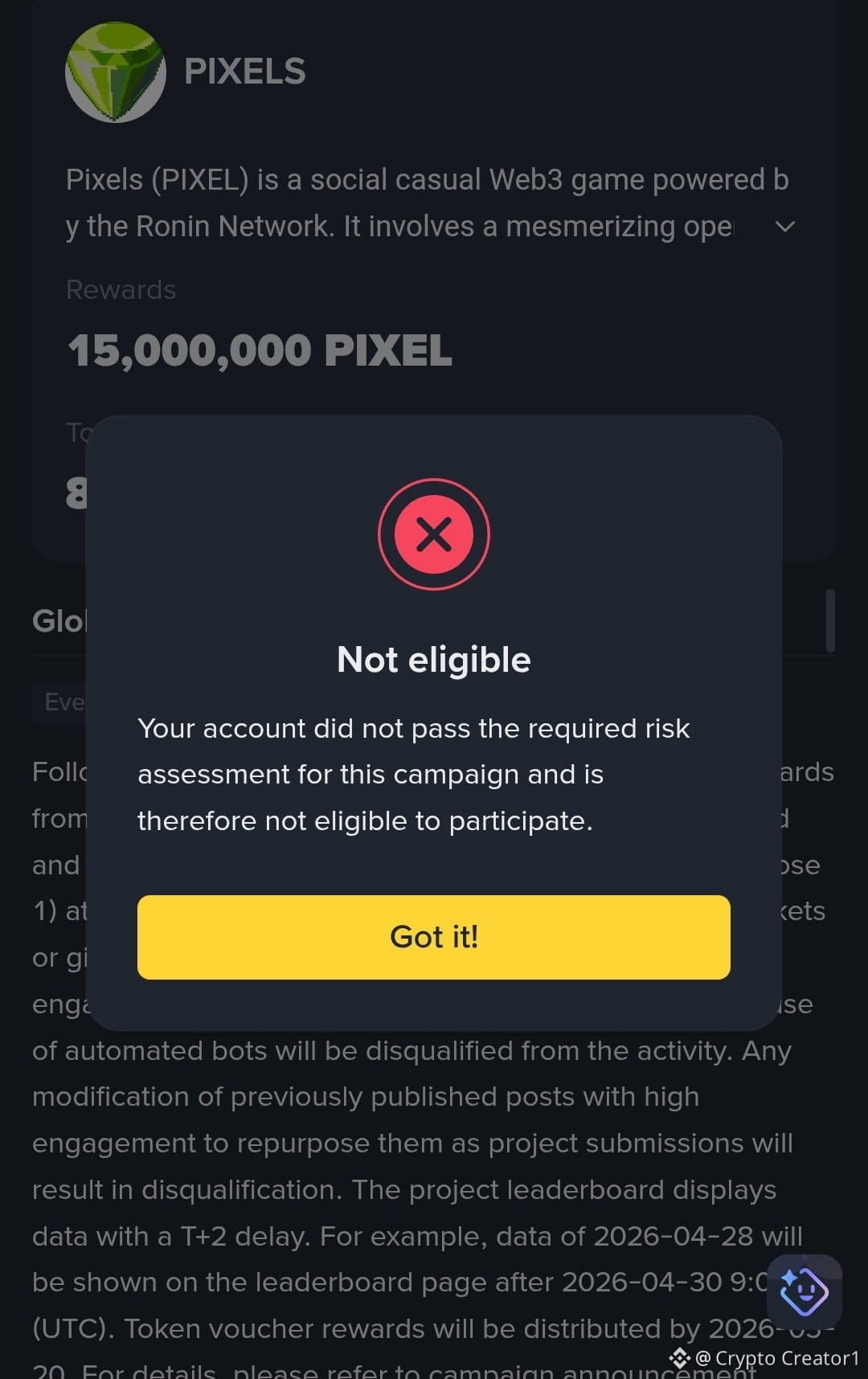
I’m a genuine and active Binance user who has always tried to follow the platform rules fairly.
Just hoping for a proper review of my account eligibility so I can participate normally in upcoming campaigns again. 🤝
Consistency trust and fair participation matter. ✨
#Binance #Crypto #Web3
@Binance South Africa Official @BinanceOracle @Binance BiBi @CZ @Binance Academy Indonesian @Binance Mongolian @Binance Global Türkçe @Binance Burmese @Binance Customer Support @Binance Labs $BTC $ETH $BNB
Just hoping for a proper review of my account eligibility so I can participate normally in upcoming campaigns again. 🤝
Consistency trust and fair participation matter. ✨
#Binance #Crypto #Web3
@Binance South Africa Official @BinanceOracle @Binance BiBi @CZ @Binance Academy Indonesian @Binance Mongolian @Binance Global Türkçe @Binance Burmese @Binance Customer Support @Binance Labs $BTC $ETH $BNB
Compromises required to ship carry more weight for me. A roadmap's elegance is cheap to write; a committee holding 6-of-9 keys during real market stress is where the design actually gets tested.

Crypto Perp Analyzer
·
--
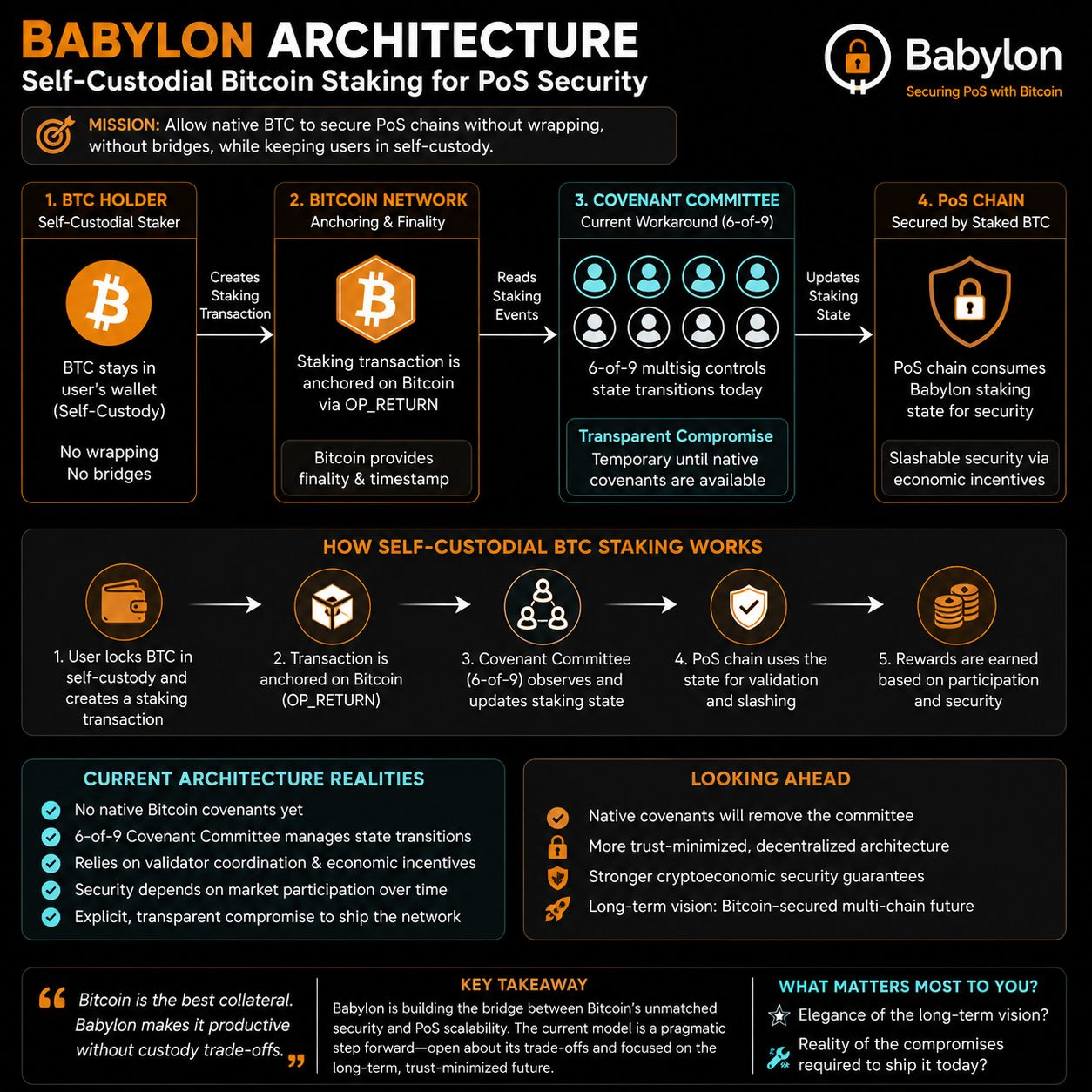
I spent this afternoon digging into Babylon's architecture papers after checking the market specifically looking at how they handle self custodial Bitcoin staking. The big draw here is pretty clear letting native BTC secure PoS chains without needing to wrap it or send it across a bridge is huge.۔
But the deeper you get into the spec the more you see how much the current setup relies on pragmatic workarounds. Because Bitcoin still lacks native covenant functionality Babylon uses a temporary 6 of 9 Covenant Committee to manage state transitions. They’re transparent about this it’s a temporary compromise to get the network off the ground not the end state. On top of that the real world security doesn’t just sit on math it heavily depends on validator coordination economic slashing incentives and market participation holding up over time.
Honestly one of Babylon’s strengths right now might just be that they aren't hiding these trade offs. They put the compromises right on the roadmap.
It makes you think about how we evaluate infrastructure in this space when you're looking at projects like this what carries more weight for you the elegance of the long term vision or the reality of the compromises required to ship it today?
@BabylonLabs_io
#baby
$BABY
But the deeper you get into the spec the more you see how much the current setup relies on pragmatic workarounds. Because Bitcoin still lacks native covenant functionality Babylon uses a temporary 6 of 9 Covenant Committee to manage state transitions. They’re transparent about this it’s a temporary compromise to get the network off the ground not the end state. On top of that the real world security doesn’t just sit on math it heavily depends on validator coordination economic slashing incentives and market participation holding up over time.
Honestly one of Babylon’s strengths right now might just be that they aren't hiding these trade offs. They put the compromises right on the roadmap.
It makes you think about how we evaluate infrastructure in this space when you're looking at projects like this what carries more weight for you the elegance of the long term vision or the reality of the compromises required to ship it today?
@BabylonLabs_io
#baby
$BABY
Also worth tracking: finality-provider count and delegation concentration. If TVL is real but concentrated across a handful of providers, that's a coordination-risk problem hiding behind a healthy-looking adoption number — the exact failure mode you're worried about, just one layer deeper than token unlocks.

加密货币 作者
·
--
today guys 2026-07-26
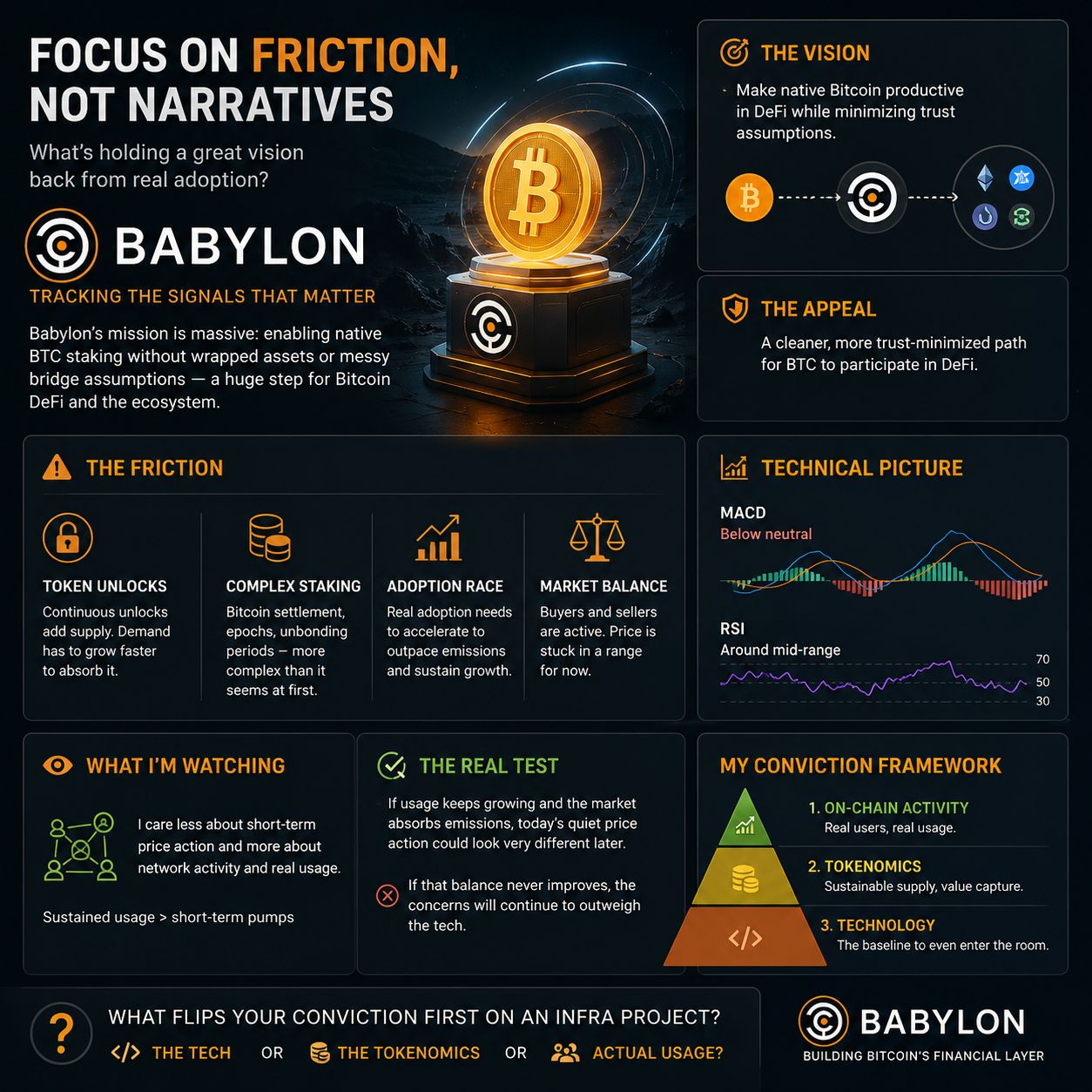
I stopped paying attention to token narratives a while back and started looking at friction instead. Every protocol sells a great vision. The real question is what actually stands between that vision and long term usage.
That’s why I’ve been tracking Babylon. Solving native BTC staking without wrapped assets or messy bridge assumptions is massive especially for users who prefer minimizing trust assumptions instead of relying on traditional bridge models. But impressive architecture doesn’t shield a project from basic token mechanics.
The unlocks are coming staking mechanics are more complex than the marketing makes them out to be and real adoption has to catch up fast enough to absorb that supply. Great tech alone doesn't fix bad unit economics.
At this point I don't care much about green candles or short term hype. I care whether real users are still interacting with the protocol six months from now. Infrastructure gets proved by sustained usage not price pumps.
For me on chain activity is usually the first thing that moves the needle on conviction followed by tokenomics that actually capture value. The tech is just the baseline to even enter the room.
What flips your conviction on an infrastructure project first the tech the tokenomics or actual usage?
@BabylonLabs_io #baby #baby $BABY
I stopped paying attention to token narratives a while back and started looking at friction instead. Every protocol sells a great vision. The real question is what actually stands between that vision and long term usage.
That’s why I’ve been tracking Babylon. Solving native BTC staking without wrapped assets or messy bridge assumptions is massive especially for users who prefer minimizing trust assumptions instead of relying on traditional bridge models. But impressive architecture doesn’t shield a project from basic token mechanics.
The unlocks are coming staking mechanics are more complex than the marketing makes them out to be and real adoption has to catch up fast enough to absorb that supply. Great tech alone doesn't fix bad unit economics.
At this point I don't care much about green candles or short term hype. I care whether real users are still interacting with the protocol six months from now. Infrastructure gets proved by sustained usage not price pumps.
For me on chain activity is usually the first thing that moves the needle on conviction followed by tokenomics that actually capture value. The tech is just the baseline to even enter the room.
What flips your conviction on an infrastructure project first the tech the tokenomics or actual usage?
@BabylonLabs_io #baby #baby $BABY
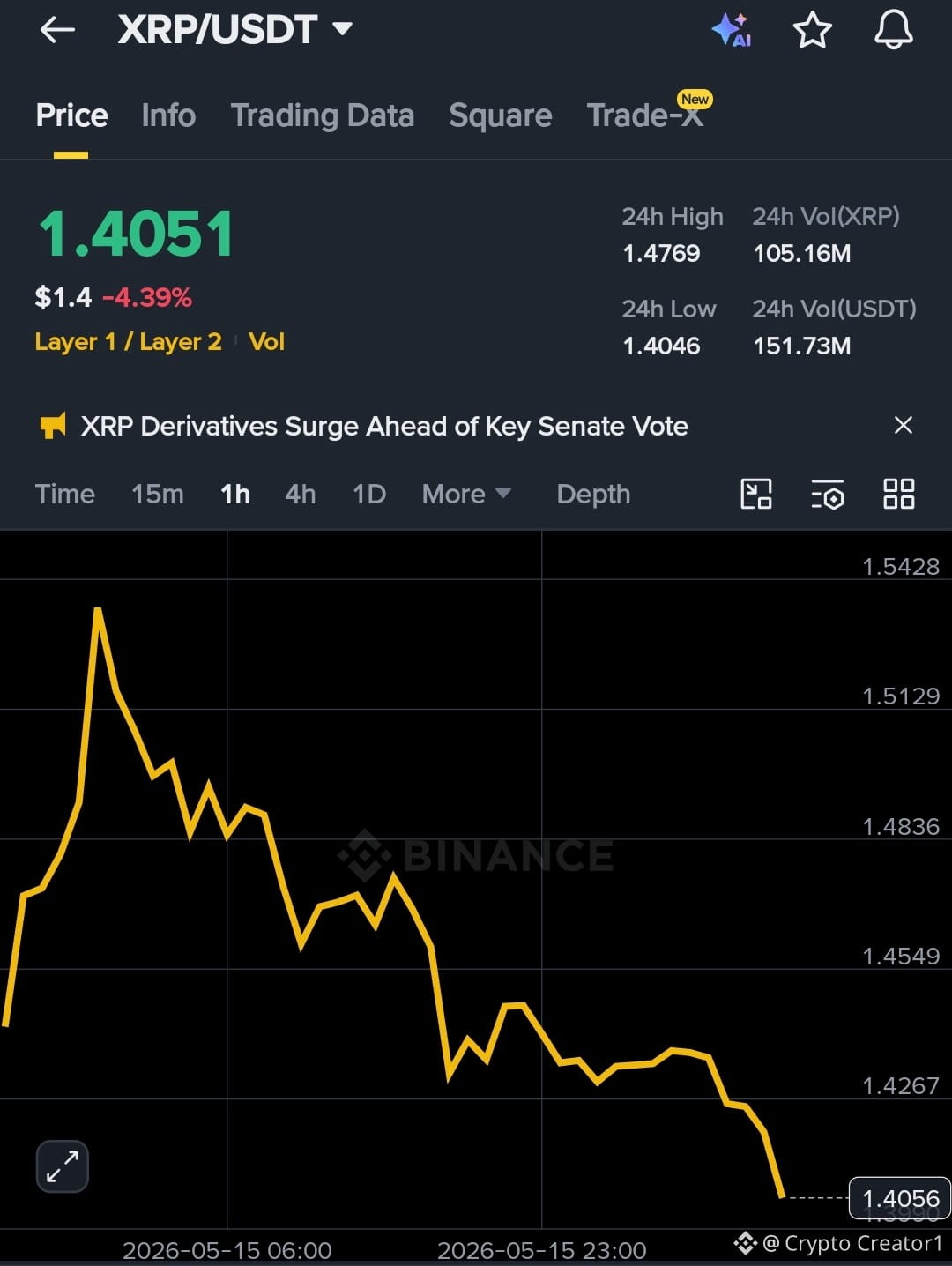
$XRP USDT Crypto Signal
Entry Zone: 1.395 1.425
(Waiting for confirmation near support before any directional move)
Key Levels:
Support: 1.404 / 1.380
Resistance: 1.454 / 1.477
Above 1.490 (bearish idea weakens and momentum shifts upward)
Below 1.380 (breakdown continuation risk increases)
$XRP is sitting near a critical support area where price often behaves unpredictably. In these zones, patience matters more than prediction. Many traders lose edge by entering early without confirmation—waiting for a clear reaction (rejection or breakdown) keeps risk controlled and decisions objective.
#XRP #CryptoSignal #USDT
Entry Zone: 1.395 1.425
(Waiting for confirmation near support before any directional move)
Key Levels:
Support: 1.404 / 1.380
Resistance: 1.454 / 1.477
Above 1.490 (bearish idea weakens and momentum shifts upward)
Below 1.380 (breakdown continuation risk increases)
$XRP is sitting near a critical support area where price often behaves unpredictably. In these zones, patience matters more than prediction. Many traders lose edge by entering early without confirmation—waiting for a clear reaction (rejection or breakdown) keeps risk controlled and decisions objective.
#XRP #CryptoSignal #USDT
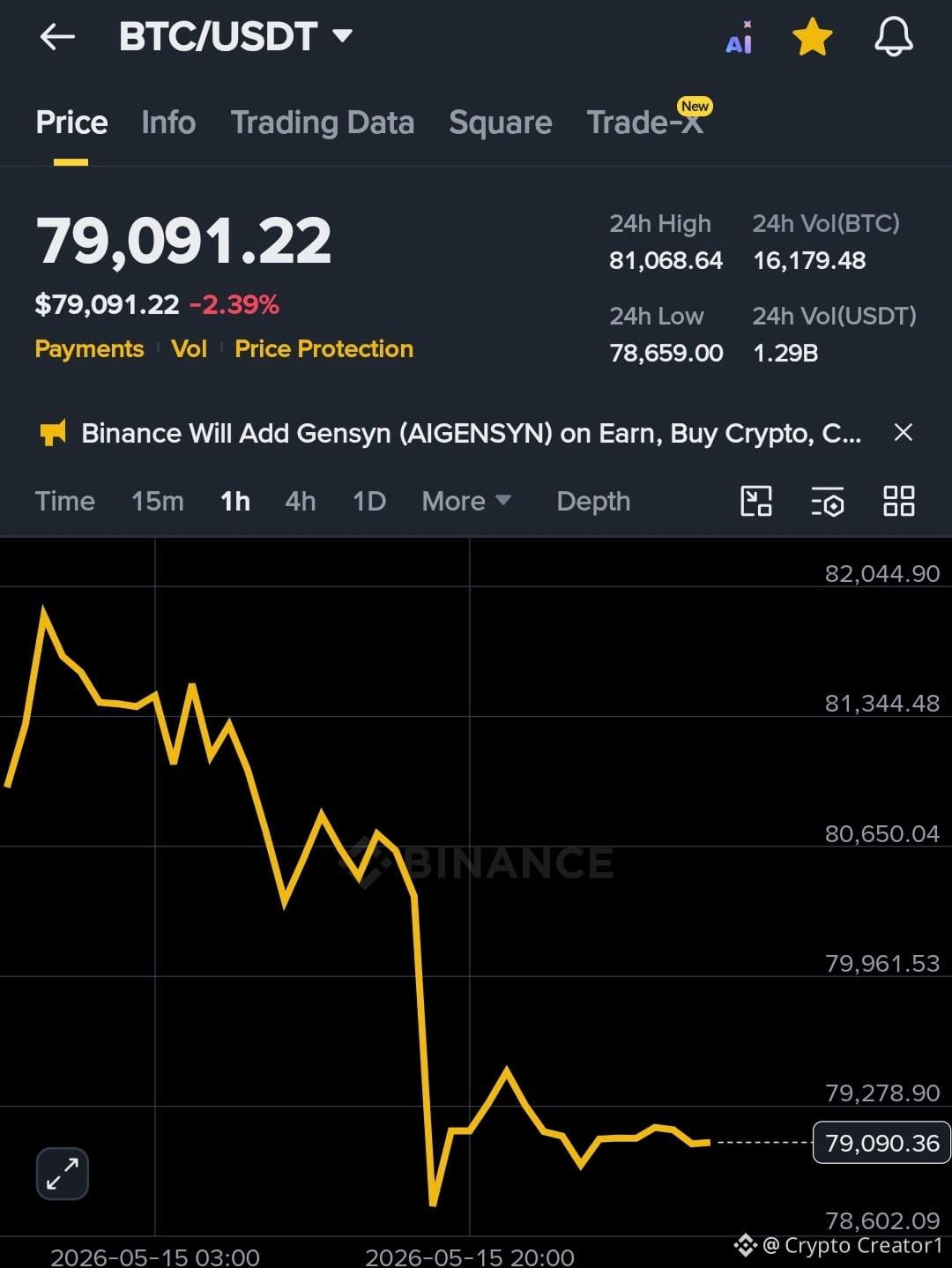
$BTC USDT Market Update
Market Direction: Bearish ↘️
$BTC is trading near $79,091 after facing rejection from the $81K resistance zone. Short-term momentum remains weak while price stays below key intraday resistance.
📍 Entry Zone:
$79,400 – $80,000
🛡 Support Levels:
• $78,650
• $78,000
🚧 Resistance Levels:
• $80,650
• $81,350
❌ Invalidation:
A strong breakout and hold above $81,400 could weaken the bearish setup.
Trader Insight:
Patience matters in this market. Chasing candles during volatility usually creates bad entries. Waiting for confirmation near support/resistance gives cleaner risk management and better trade control.
#BTC #CryptoTrading #Binance
Market Direction: Bearish ↘️
$BTC is trading near $79,091 after facing rejection from the $81K resistance zone. Short-term momentum remains weak while price stays below key intraday resistance.
📍 Entry Zone:
$79,400 – $80,000
🛡 Support Levels:
• $78,650
• $78,000
🚧 Resistance Levels:
• $80,650
• $81,350
❌ Invalidation:
A strong breakout and hold above $81,400 could weaken the bearish setup.
Trader Insight:
Patience matters in this market. Chasing candles during volatility usually creates bad entries. Waiting for confirmation near support/resistance gives cleaner risk management and better trade control.
#BTC #CryptoTrading #Binance
🎙️ Let's chat about Web3 and crypto topics, especially futures trading.
End
03 h 16 m 54 s
5.2k
105
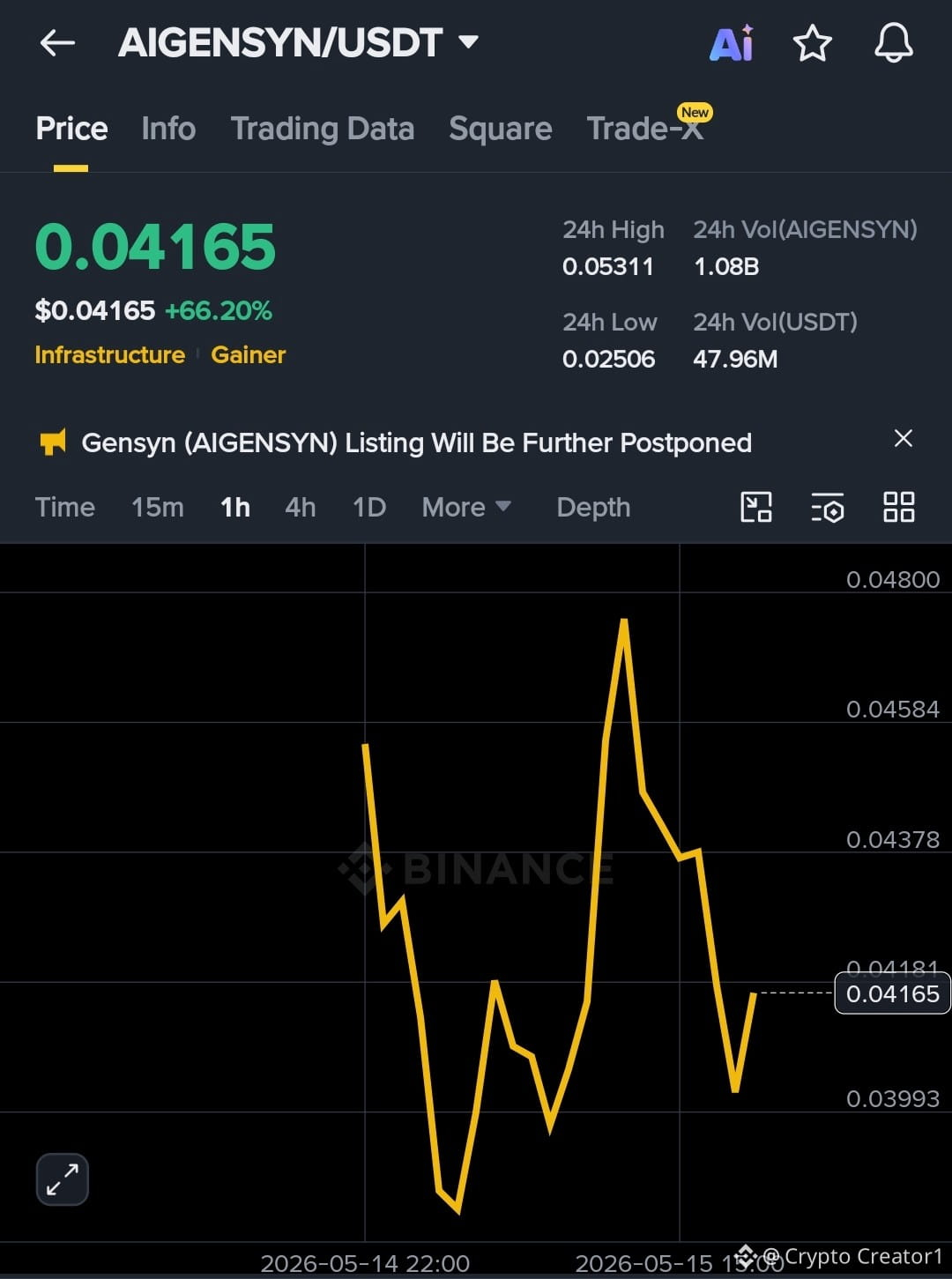
📈 $AIGENSYN USDT Market Outlook — Bullish but Volatile
$AIGENSYN is showing aggressive momentum after a strong +66% move, with buyers still active above the key support zone. Volume remains extremely high, but after sharp expansions like this patience becomes more important than speed.
🔹 Entry Zone: $0.04180 $0.04380
🔹 Support Levels: $0.03993 $0.04165
🔹 Resistance Levels: $0.04584 $0.04800
🔹 Invalidation: Breakdown below $0.03950
Current structure favors bulls, but entering after large green candles without confirmation can easily lead to emotional trades. Waiting for healthy pullbacks or stable consolidation usually gives better risk control.
#AIGENSYN #cryptosignals #Binance
$AIGENSYN is showing aggressive momentum after a strong +66% move, with buyers still active above the key support zone. Volume remains extremely high, but after sharp expansions like this patience becomes more important than speed.
🔹 Entry Zone: $0.04180 $0.04380
🔹 Support Levels: $0.03993 $0.04165
🔹 Resistance Levels: $0.04584 $0.04800
🔹 Invalidation: Breakdown below $0.03950
Current structure favors bulls, but entering after large green candles without confirmation can easily lead to emotional trades. Waiting for healthy pullbacks or stable consolidation usually gives better risk control.
#AIGENSYN #cryptosignals #Binance
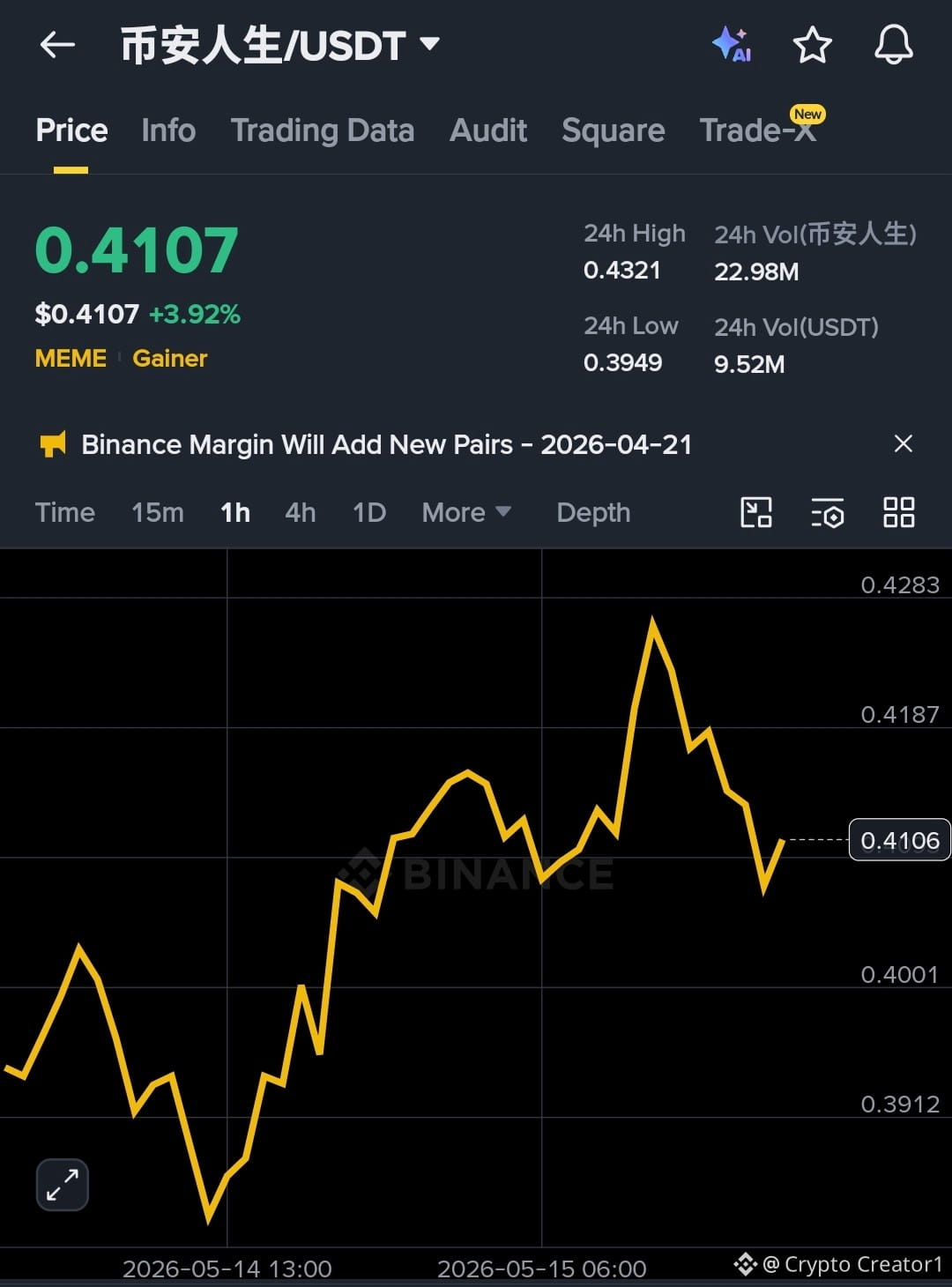
$币安人生 USDT Market update .
Price is holding around $0.4107 after a steady recovery from the $0.3940 support zone. Buyers are showing strength, but momentum still needs confirmation above nearby resistance before any strong continuation.
🔹 Entry Zone: $0.4040 – $0.4120
🔹 Support Levels: $0.4001 / $0.3912
🔹 Resistance Levels: $0.4187 / $0.4283
🔹 Invalidation: Clean breakdown below $0.3910
Patience matters here. Chasing fast candles near resistance can trap late entries, so waiting for confirmation is usually safer than reacting emotionally to short-term volatility.
#CryptoSignals #Binance #MEME
Price is holding around $0.4107 after a steady recovery from the $0.3940 support zone. Buyers are showing strength, but momentum still needs confirmation above nearby resistance before any strong continuation.
🔹 Entry Zone: $0.4040 – $0.4120
🔹 Support Levels: $0.4001 / $0.3912
🔹 Resistance Levels: $0.4187 / $0.4283
🔹 Invalidation: Clean breakdown below $0.3910
Patience matters here. Chasing fast candles near resistance can trap late entries, so waiting for confirmation is usually safer than reacting emotionally to short-term volatility.
#CryptoSignals #Binance #MEME
🎙️ US stocks took a dive, dragging BTC down with it. Don’t be afraid to join Coin Profit Sister's live stream and trade together; we’ll provide precise entry points.
End
02 h 19 m 05 s
2.9k
22
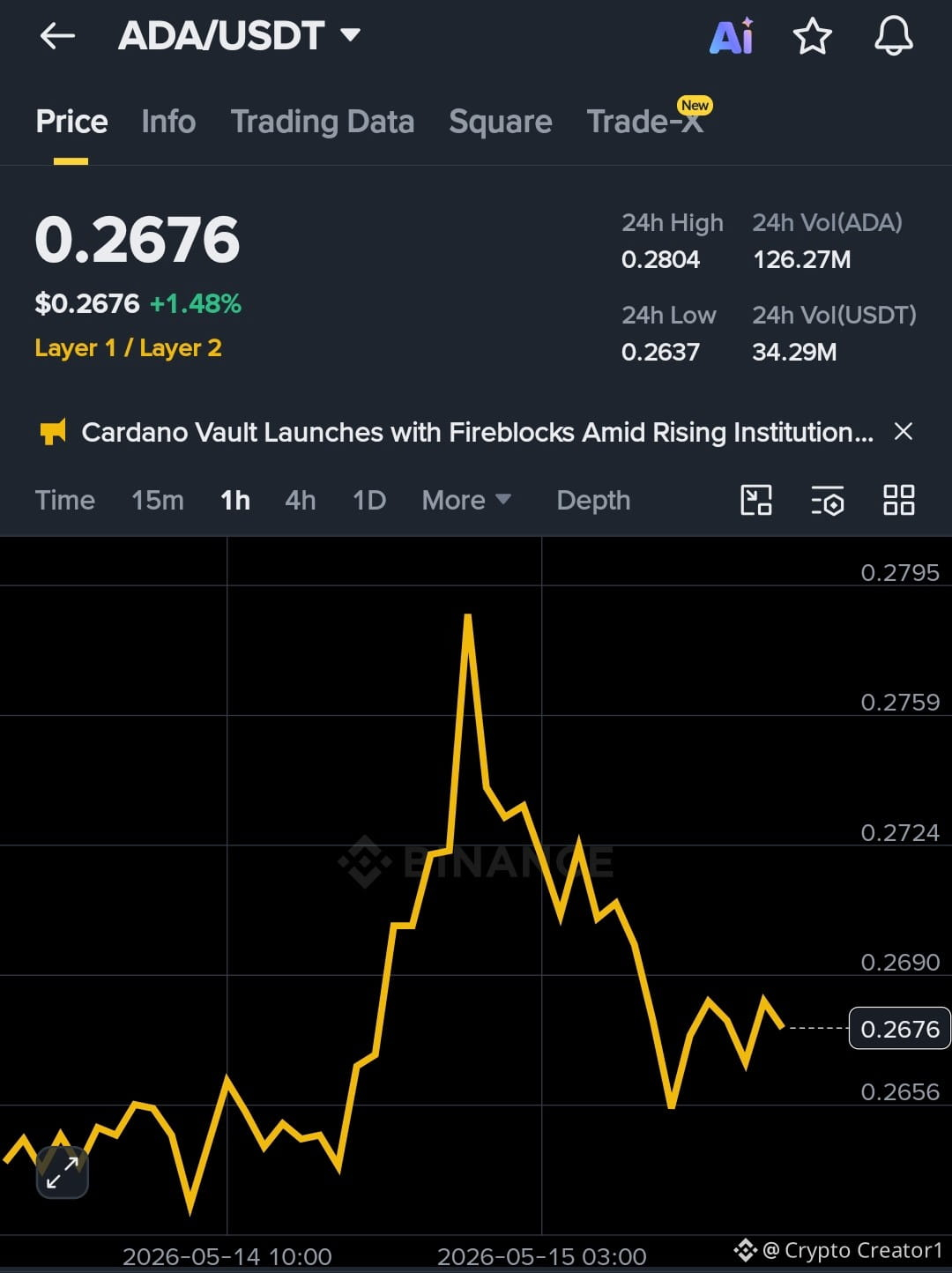
🟢 $ADA USDT Outlook: Bullish Bias
$ADA is holding above the key support zone after a steady recovery from recent lows. Buyers are slowly regaining control, but confirmation near resistance is still important before chasing momentum.
📍 Entry Zone: $0.2660 – $0.2700
📉 Support: $0.2635
📈 Resistance: $0.2755 – $0.2800
❌ Invalidation: Below $0.2610
Market sentiment is improving, but patience matters here. Smart traders usually wait for clean candle confirmation instead of reacting emotionally to short-term spikes. A stable hold above support keeps bullish structure active.
#ADA #Cardano #CryptoSignals
$ADA is holding above the key support zone after a steady recovery from recent lows. Buyers are slowly regaining control, but confirmation near resistance is still important before chasing momentum.
📍 Entry Zone: $0.2660 – $0.2700
📉 Support: $0.2635
📈 Resistance: $0.2755 – $0.2800
❌ Invalidation: Below $0.2610
Market sentiment is improving, but patience matters here. Smart traders usually wait for clean candle confirmation instead of reacting emotionally to short-term spikes. A stable hold above support keeps bullish structure active.
#ADA #Cardano #CryptoSignals
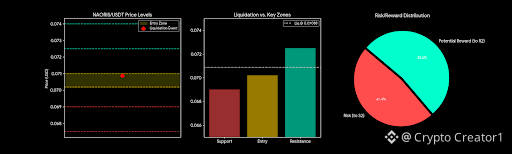
🔴 $NAORIS Market Alert
A $13.681K liquidation hit $NAORIS near $0.07088 on Binance, showing short-term pressure and rising volatility in the current range.
Market Direction: Bearish Intraday 📉
🔹 Entry Zone: $0.0702 – $0.0710
🔹 Support Levels: $0.0690 / $0.0675
🔹 Resistance Levels: $0.0725 / $0.0740
🔹 Invalidation: Strong recovery above $0.0740
Fast liquidations often create emotional trades. Smart traders usually wait for candle confirmation instead of reacting instantly to volatility spikes. Patience around support zones can reduce unnecessary risk.
#NAORIS #CryptoSignals #Binance
A $13.681K liquidation hit $NAORIS near $0.07088 on Binance, showing short-term pressure and rising volatility in the current range.
Market Direction: Bearish Intraday 📉
🔹 Entry Zone: $0.0702 – $0.0710
🔹 Support Levels: $0.0690 / $0.0675
🔹 Resistance Levels: $0.0725 / $0.0740
🔹 Invalidation: Strong recovery above $0.0740
Fast liquidations often create emotional trades. Smart traders usually wait for candle confirmation instead of reacting instantly to volatility spikes. Patience around support zones can reduce unnecessary risk.
#NAORIS #CryptoSignals #Binance
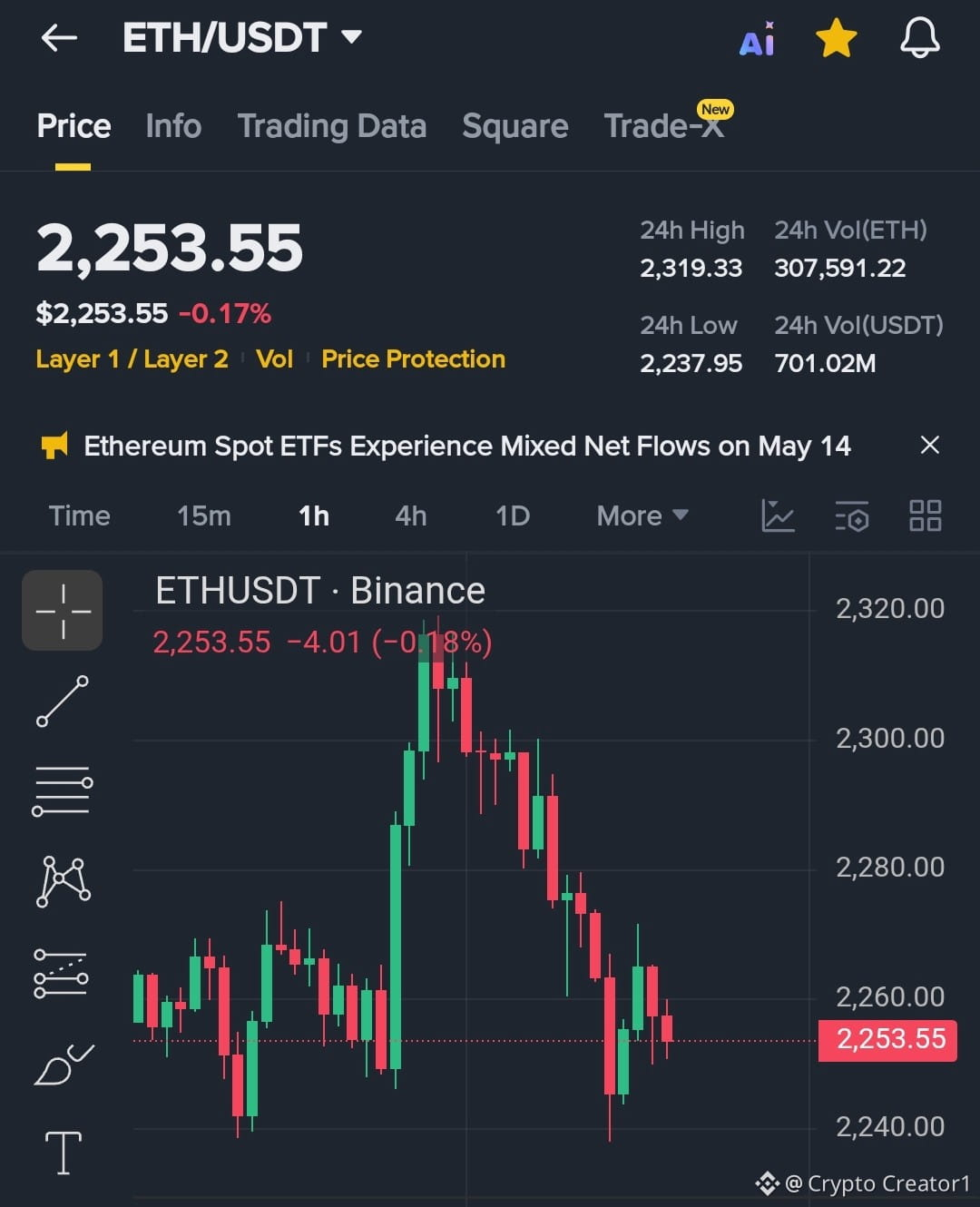
$ETH USDT Signal Update
Market Direction: Neutral to Slightly Bullish 📈
$ETH is holding above the key $2,240 support zone while price continues ranging near $2,253. Buyers are still active, but momentum needs confirmation before aggressive entries.
🔹 Entry Zone: $2,245 – $2,258
🔹 Support Levels: $2,238 / $2,220
🔹 Resistance Levels: $2,280 / $2,320
🔹 Invalidation: Below $2,220 on strong volume
Patience matters here. Chasing candles inside a tight range usually traps late traders. Waiting for confirmation near support or a clean breakout above resistance gives better risk control and clearer direction.
#Ethereum #ETH #CryptoTrading
Market Direction: Neutral to Slightly Bullish 📈
$ETH is holding above the key $2,240 support zone while price continues ranging near $2,253. Buyers are still active, but momentum needs confirmation before aggressive entries.
🔹 Entry Zone: $2,245 – $2,258
🔹 Support Levels: $2,238 / $2,220
🔹 Resistance Levels: $2,280 / $2,320
🔹 Invalidation: Below $2,220 on strong volume
Patience matters here. Chasing candles inside a tight range usually traps late traders. Waiting for confirmation near support or a clean breakout above resistance gives better risk control and clearer direction.
#Ethereum #ETH #CryptoTrading
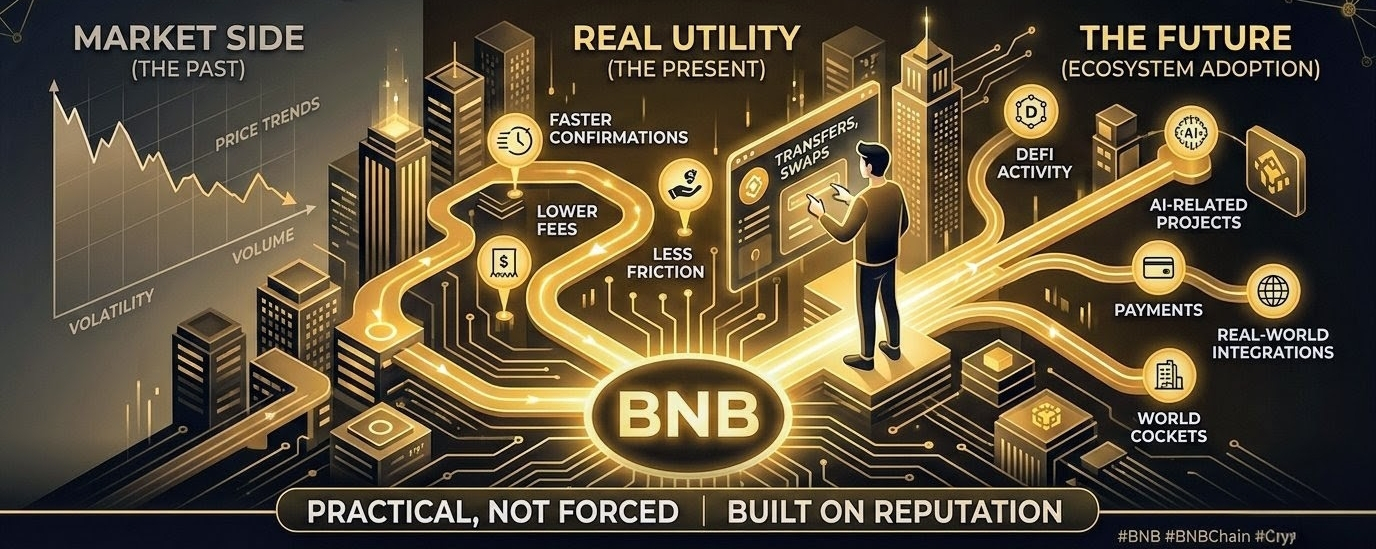
🎙️ The BNB ecosystem has limitless potential, let's dive into it!
End
05 h 59 m 59 s
42.7k
78
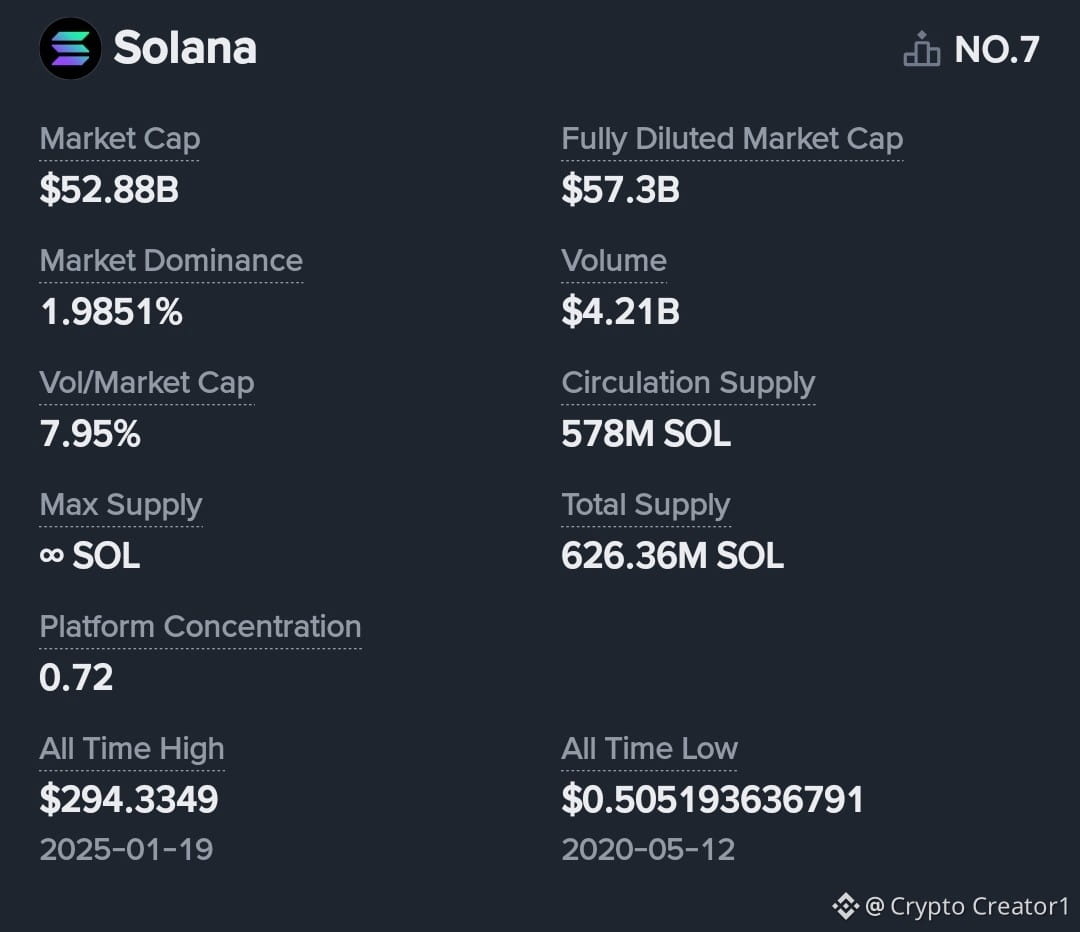
🟢 $SOL USDT Outlook: Bullish Bias
$SOL is holding strong above key support while overall momentum remains constructive. Buyers are still defending dips, but clean confirmation near resistance matters before chasing entries.
📍 Entry Zone: $168 – $174
🛡 Support Levels: $162 / $155
🚧 Resistance Levels: $180 / $188
❌ Invalidation: Daily close below $155
Trader Insight:
Patience matters here. Strong moves often come after fake breakouts, so waiting for confirmation around resistance can help avoid emotional entries. Smart traders react to structure — not hype.
#Solana #SOL #CryptoTrading
$SOL is holding strong above key support while overall momentum remains constructive. Buyers are still defending dips, but clean confirmation near resistance matters before chasing entries.
📍 Entry Zone: $168 – $174
🛡 Support Levels: $162 / $155
🚧 Resistance Levels: $180 / $188
❌ Invalidation: Daily close below $155
Trader Insight:
Patience matters here. Strong moves often come after fake breakouts, so waiting for confirmation around resistance can help avoid emotional entries. Smart traders react to structure — not hype.
#Solana #SOL #CryptoTrading
🎙️ 3 million ETH withdrawn from Binance! Is the whale accumulating or taking profits? Join the live chat to discuss!
End
03 h 12 m 36 s
8.5k
93
$LINK
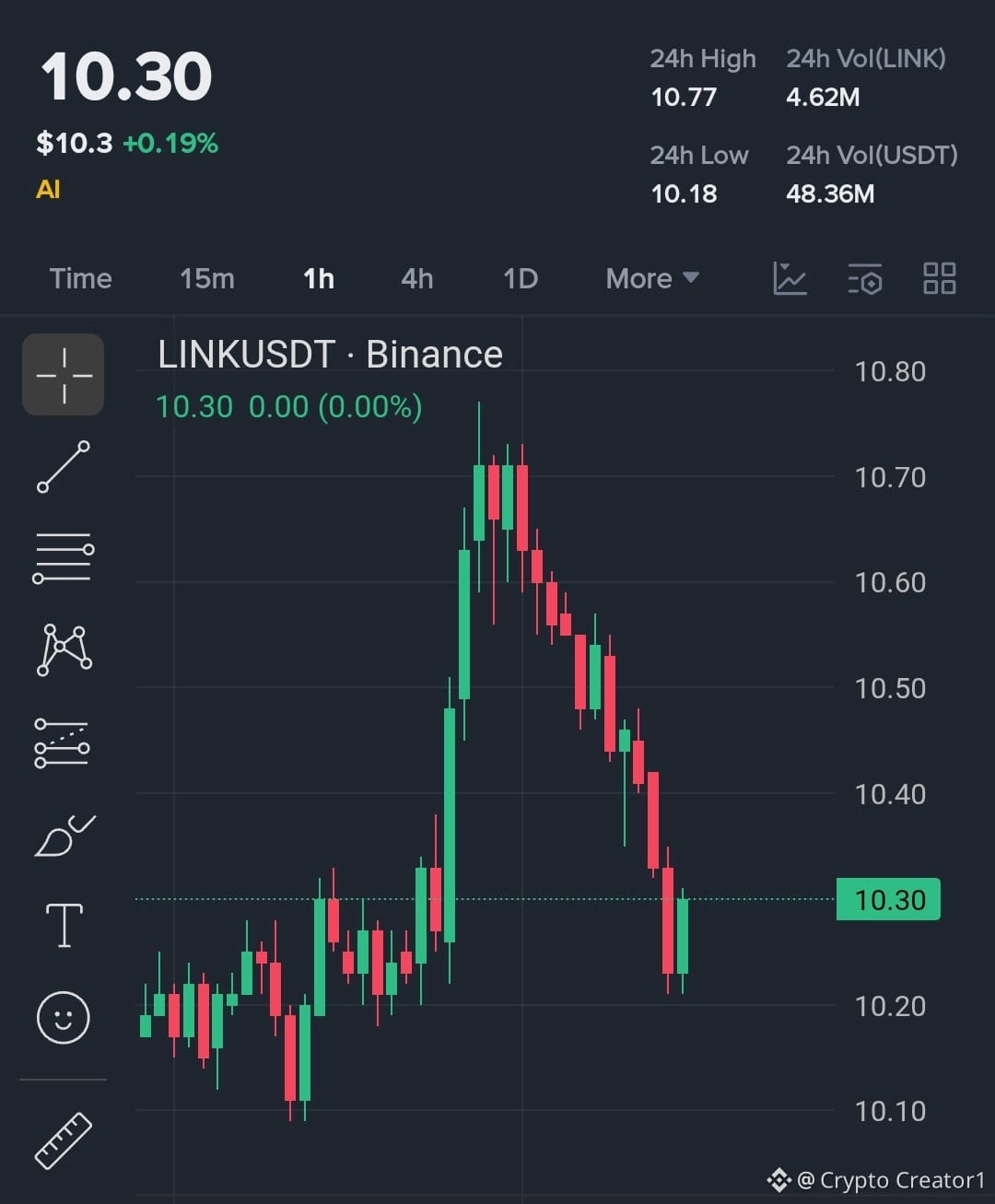
Chainlink is currently trading around 10.30 showing a tight consolidation range with no clear breakout yet. Momentum is still neutral, with slight pressure building for a potential move once a key level breaks.
Market Direction: Neutral → Slightly bullish bias, but confirmation is still required before any strong continuation.
Entry Zone: 10.20 – 10.40 (only consider entries inside this range after confirmation, not early impulsive entries)
Key Levels:
Support: 10.18 / 10.10
Resistance: 10.70 / 10.80
Invalidation: A clean breakdown below 10.05 would cancel the bullish bias and may shift momentum toward further downside continuation.
From a trading psychology view, this type of sideways movement usually tests patience more than skill. Most losses happen when traders enter early without confirmation, expecting immediate expansion. Waiting for structure break or rejection gives a clearer edge.
#LINKUSDT #CryptoSignal #Chainlink
Chainlink is currently trading around 10.30 showing a tight consolidation range with no clear breakout yet. Momentum is still neutral, with slight pressure building for a potential move once a key level breaks.
Market Direction: Neutral → Slightly bullish bias, but confirmation is still required before any strong continuation.
Entry Zone: 10.20 – 10.40 (only consider entries inside this range after confirmation, not early impulsive entries)
Key Levels:
Support: 10.18 / 10.10
Resistance: 10.70 / 10.80
Invalidation: A clean breakdown below 10.05 would cancel the bullish bias and may shift momentum toward further downside continuation.
From a trading psychology view, this type of sideways movement usually tests patience more than skill. Most losses happen when traders enter early without confirmation, expecting immediate expansion. Waiting for structure break or rejection gives a clearer edge.
#LINKUSDT #CryptoSignal #Chainlink
Dear Binance Support Team.
I hope you are doing well.
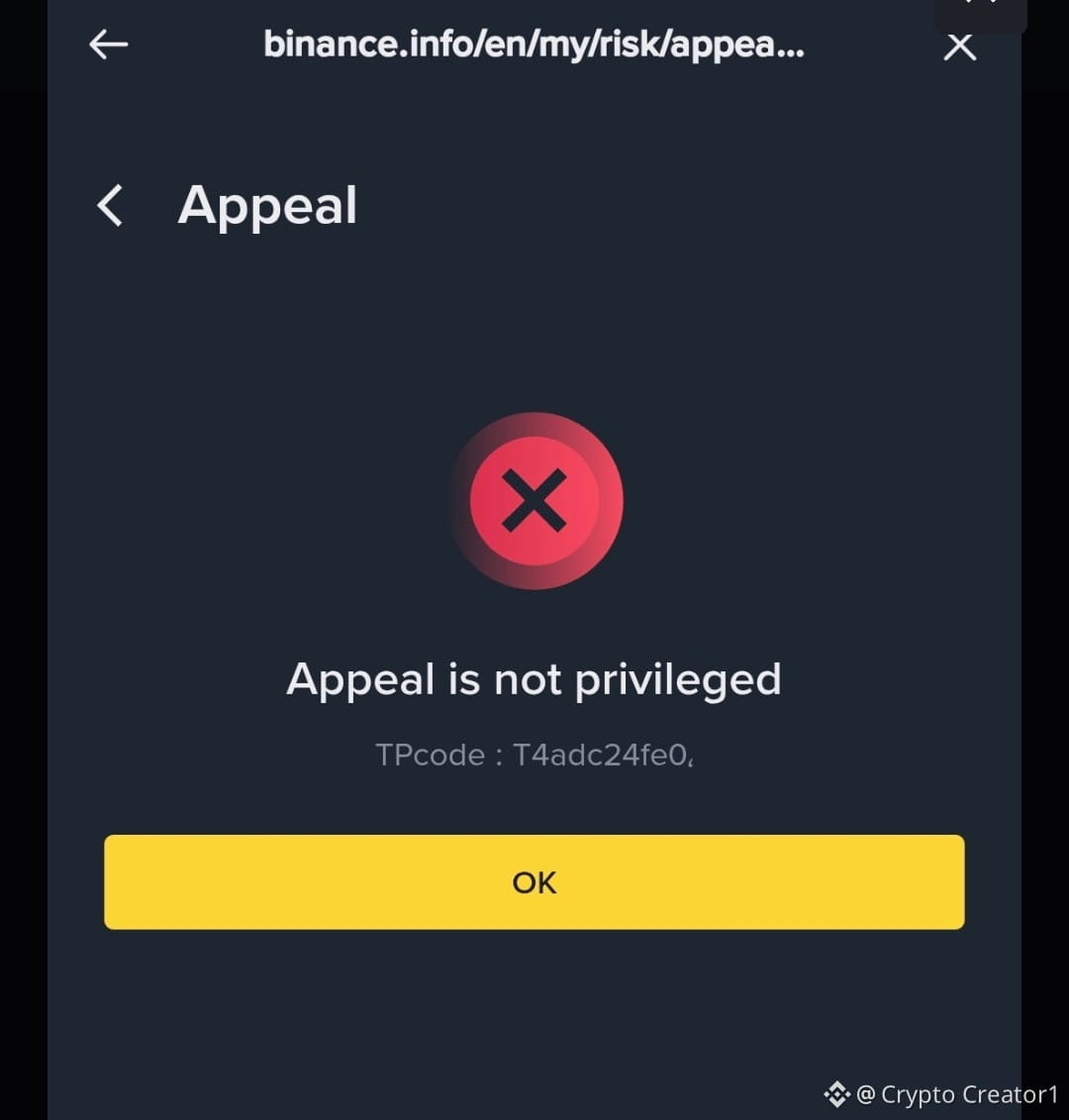
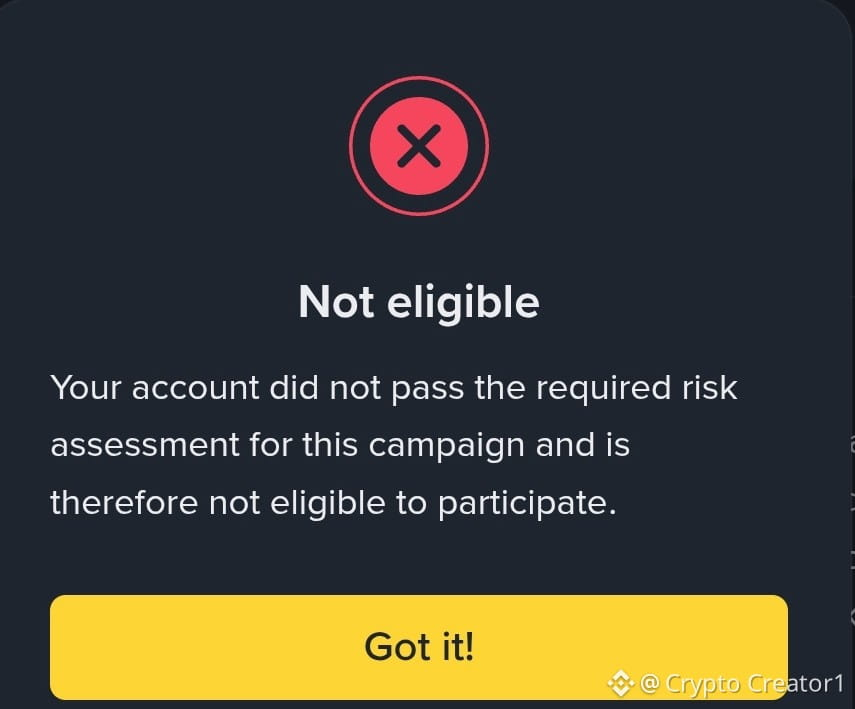
I am writing to respectfully request a review of my account status. My account has been flagged under risk control and I am currently unable to access the appeal option.
I would like to confirm that I am a genuine user and have always tried to follow Binance’s terms and conditions. If there has been any misunderstanding or automated flag, I kindly request a manual review of my account activity.
I am fully willing to provide any required verification or additional documents to help resolve this issue.
Please re-evaluate my account status and kindly restore my eligibility if possible.
Thank you for your time and support.
@CZ @Binance Academy Indonesian @Binance Burmese @BinanceOracle @Binance Margin @Binance Italy @Binance South Africa Official @Binance Global Türkçe @Binance News @Binance Afrique @Binance Academy Indonesian $BNB $BTC $ETH #Binance
I hope you are doing well.
I am writing to respectfully request a review of my account status. My account has been flagged under risk control and I am currently unable to access the appeal option.
I would like to confirm that I am a genuine user and have always tried to follow Binance’s terms and conditions. If there has been any misunderstanding or automated flag, I kindly request a manual review of my account activity.
I am fully willing to provide any required verification or additional documents to help resolve this issue.
Please re-evaluate my account status and kindly restore my eligibility if possible.
Thank you for your time and support.
@CZ @Binance Academy Indonesian @Binance Burmese @BinanceOracle @Binance Margin @Binance Italy @Binance South Africa Official @Binance Global Türkçe @Binance News @Binance Afrique @Binance Academy Indonesian $BNB $BTC $ETH #Binance
🔴 $MLN Market Signal Binance Update.
A noticeable $9.287K liquidation at $3.37909 has added short-term volatility around MLN showing that leverage positions are getting cleared before direction settles.
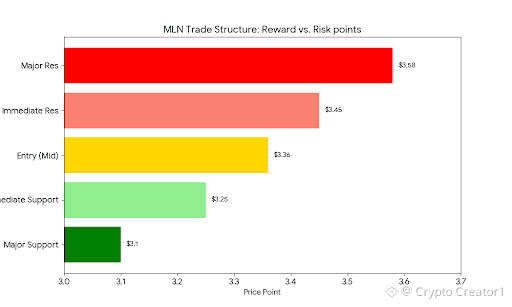
Entry Zone: $3.32 – $3.40
Market Direction: Slight bearish bias unless price reclaims $3.45 with strength
Key Levels to Watch:
Resistance: $3.45 / $3.58
Support: $3.25 / $3.10
Logic Behind Setup: Price is currently reacting to liquidation-driven movement rather than clean trend structure. Until the market stabilizes above resistance, upside moves may face rejection.
Trader Psychology: This is a zone where many traders get trapped chasing quick reversals. Patience matters more than prediction here—waiting for confirmation reduces emotional entries and protects capital during choppy liquidity phases.
No guarantees—just structure and reaction.
#MLN #CryptoSignal #BinanceTrade
A noticeable $9.287K liquidation at $3.37909 has added short-term volatility around MLN showing that leverage positions are getting cleared before direction settles.
Entry Zone: $3.32 – $3.40
Market Direction: Slight bearish bias unless price reclaims $3.45 with strength
Key Levels to Watch:
Resistance: $3.45 / $3.58
Support: $3.25 / $3.10
Logic Behind Setup: Price is currently reacting to liquidation-driven movement rather than clean trend structure. Until the market stabilizes above resistance, upside moves may face rejection.
Trader Psychology: This is a zone where many traders get trapped chasing quick reversals. Patience matters more than prediction here—waiting for confirmation reduces emotional entries and protects capital during choppy liquidity phases.
No guarantees—just structure and reaction.
#MLN #CryptoSignal #BinanceTrade
Log in to explore more content