
OroCryptoTrends
8.8k Posts

OroCryptoTrends
 Square Verified+
Report
Block User
OroCryptoTrends | Crypto Insights: Real-time crypto news, market analysis, Web3, DeFi & emerging trends. Research-driven, actionable insights. No hype.
Open Trade
Frequent Trader
3.2 Years
3.2K+ Following
50.6K Followers
49.0K+ Liked
Posts
Portfolio
All
Quotes
Videos
Live
Verified
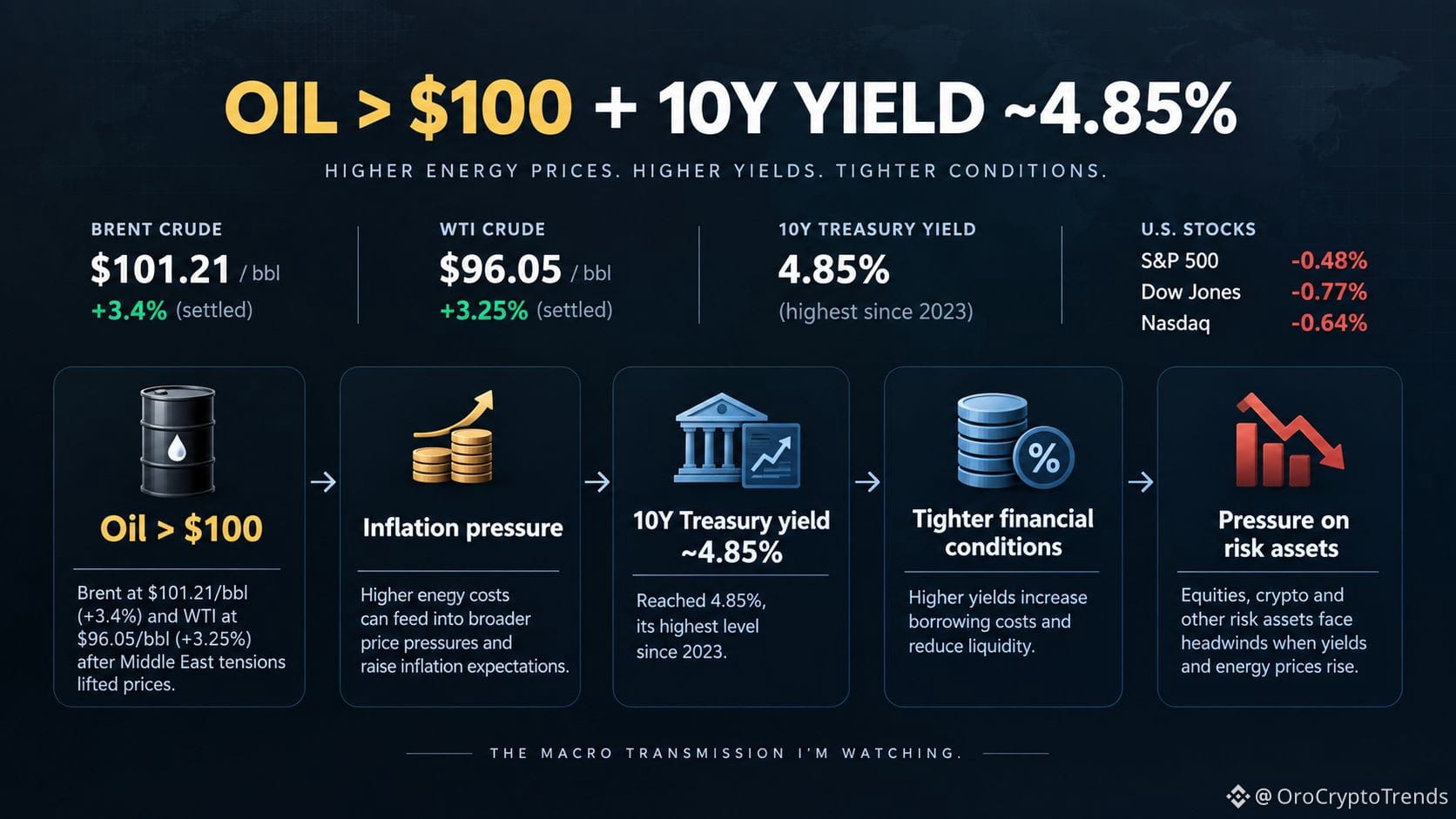
Oil above $100 + a 4.85% Treasury yield is a tougher combination than the stock-market drop itself.
U.S. stocks fell for a third straight session Wednesday, with the S&P 500 down about 0.5% and the Nasdaq down about 0.6%.
But the bigger story, in my view, is happening underneath equities.
Brent crude moved above $100 as Middle East tensions raised concerns about energy supply. At the same time, the 10-year Treasury yield climbed to around 4.85%, its highest level since 2023.
That creates a difficult macro chain:
Oil ↑ → inflation pressure ↑ → yields ↑ → financial conditions tighten → risk assets face pressure.
What caught my attention is that Treasury announced a buyback operation of up to $6 billion for longer-dated government bonds, yet the 10-year yield still moved higher. The market clearly wasn't treating the announcement as enough to remove the pressure on long-duration bonds.
There’s an important counterpoint: one day of higher oil and yields doesn't establish a lasting inflation regime. Oil could retreat, geopolitical risk could ease, and yields could stabilize.
So I’m not watching the S&P 500 alone.
I’m watching whether oil stays elevated while long-term Treasury yields remain high.
If that combination persists, it could become a broader headwind for liquidity-sensitive assets, including crypto.
The market isn't just pricing today's oil price. It's pricing what sustained $100+ oil could mean for inflation, rates and liquidity next.
Oil above $100 + a 4.85% Treasury yield is a tougher combination than the stock-market drop itself.
U.S. stocks fell for a third straight session Wednesday, with the S&P 500 down about 0.5% and the Nasdaq down about 0.6%.
But the bigger story, in my view, is happening underneath equities.
Brent crude moved above $100 as Middle East tensions raised concerns about energy supply. At the same time, the 10-year Treasury yield climbed to around 4.85%, its highest level since 2023.
That creates a difficult macro chain:
Oil ↑ → inflation pressure ↑ → yields ↑ → financial conditions tighten → risk assets face pressure.
What caught my attention is that Treasury announced a buyback operation of up to $6 billion for longer-dated government bonds, yet the 10-year yield still moved higher. The market clearly wasn't treating the announcement as enough to remove the pressure on long-duration bonds.
There’s an important counterpoint: one day of higher oil and yields doesn't establish a lasting inflation regime. Oil could retreat, geopolitical risk could ease, and yields could stabilize.
So I’m not watching the S&P 500 alone.
I’m watching whether oil stays elevated while long-term Treasury yields remain high.
If that combination persists, it could become a broader headwind for liquidity-sensitive assets, including crypto.
The market isn't just pricing today's oil price. It's pricing what sustained $100+ oil could mean for inflation, rates and liquidity next.
U.S. stocks fell for a third straight session Wednesday, with the S&P 500 down about 0.5% and the Nasdaq down about 0.6%.
But the bigger story, in my view, is happening underneath equities.
Brent crude moved above $100 as Middle East tensions raised concerns about energy supply. At the same time, the 10-year Treasury yield climbed to around 4.85%, its highest level since 2023.
That creates a difficult macro chain:
Oil ↑ → inflation pressure ↑ → yields ↑ → financial conditions tighten → risk assets face pressure.
What caught my attention is that Treasury announced a buyback operation of up to $6 billion for longer-dated government bonds, yet the 10-year yield still moved higher. The market clearly wasn't treating the announcement as enough to remove the pressure on long-duration bonds.
There’s an important counterpoint: one day of higher oil and yields doesn't establish a lasting inflation regime. Oil could retreat, geopolitical risk could ease, and yields could stabilize.
So I’m not watching the S&P 500 alone.
I’m watching whether oil stays elevated while long-term Treasury yields remain high.
If that combination persists, it could become a broader headwind for liquidity-sensitive assets, including crypto.
The market isn't just pricing today's oil price. It's pricing what sustained $100+ oil could mean for inflation, rates and liquidity next.
837
Verified
$META.US
Meta’s AI story is becoming less about models — and more about what the models can actually do.
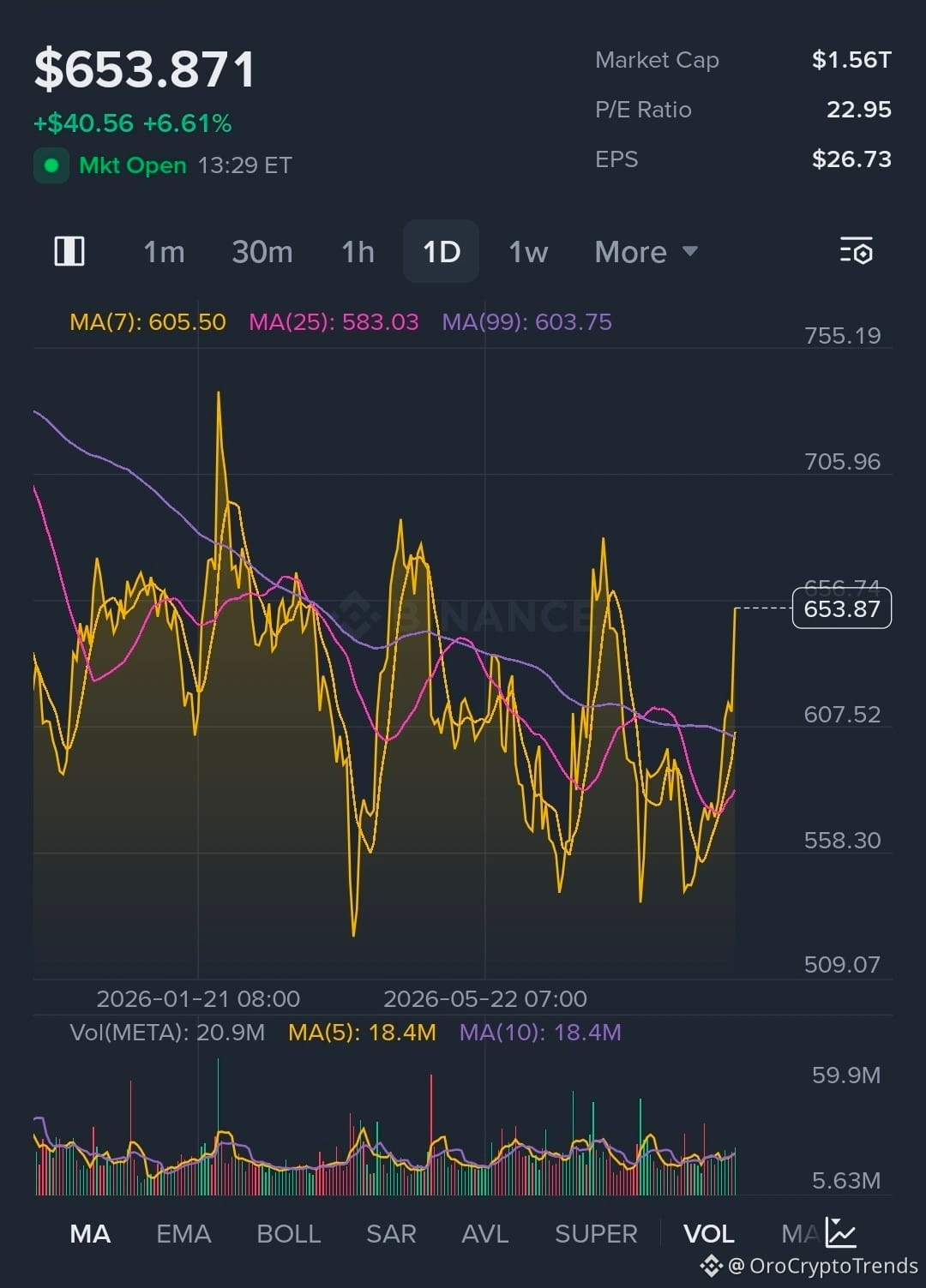
Meta shares jumped nearly 6% on Wednesday after the company launched Muse, its new personal AI agent. The move stood out because the broader market was under pressure, with the S&P 500 falling as oil moved above $100 and Treasury yields climbed.
What caught my attention is not simply the stock reaction.
Muse is designed to act on a user’s behalf — including handling tasks such as email, travel bookings and purchases — rather than functioning only as a conversational assistant. Meta says it runs inside a dedicated Muse Secure VM, with controls around app permissions, sensitive actions and user data.
That changes the investment question.
For years, investors have had to evaluate whether enormous AI infrastructure spending will eventually translate into useful products. Muse gives Meta a more concrete bridge between AI capex → consumer product → potential monetization.
But I think the market is getting ahead of itself if it treats the launch as proof of success.
The harder test is adoption, reliability and revenue. Reuters also reported internal testing concerns around security and reliability, which shows exactly where the real risk sits.
I’m watching whether Muse becomes a genuinely useful daily layer across Meta’s ecosystem — not just another impressive AI demo.
The launch is interesting. The usage data will be more important. #Write2Earn
$META.US
Meta’s AI story is becoming less about models — and more about what the models can actually do.
Meta shares jumped nearly 6% on Wednesday after the company launched Muse, its new personal AI agent. The move stood out because the broader market was under pressure, with the S&P 500 falling as oil moved above $100 and Treasury yields climbed.
What caught my attention is not simply the stock reaction.
Muse is designed to act on a user’s behalf — including handling tasks such as email, travel bookings and purchases — rather than functioning only as a conversational assistant. Meta says it runs inside a dedicated Muse Secure VM, with controls around app permissions, sensitive actions and user data.
That changes the investment question.
For years, investors have had to evaluate whether enormous AI infrastructure spending will eventually translate into useful products. Muse gives Meta a more concrete bridge between AI capex → consumer product → potential monetization.
But I think the market is getting ahead of itself if it treats the launch as proof of success.
The harder test is adoption, reliability and revenue. Reuters also reported internal testing concerns around security and reliability, which shows exactly where the real risk sits.
I’m watching whether Muse becomes a genuinely useful daily layer across Meta’s ecosystem — not just another impressive AI demo.
The launch is interesting. The usage data will be more important. #Write2Earn
Meta’s AI story is becoming less about models — and more about what the models can actually do.
Meta shares jumped nearly 6% on Wednesday after the company launched Muse, its new personal AI agent. The move stood out because the broader market was under pressure, with the S&P 500 falling as oil moved above $100 and Treasury yields climbed.
What caught my attention is not simply the stock reaction.
Muse is designed to act on a user’s behalf — including handling tasks such as email, travel bookings and purchases — rather than functioning only as a conversational assistant. Meta says it runs inside a dedicated Muse Secure VM, with controls around app permissions, sensitive actions and user data.
That changes the investment question.
For years, investors have had to evaluate whether enormous AI infrastructure spending will eventually translate into useful products. Muse gives Meta a more concrete bridge between AI capex → consumer product → potential monetization.
But I think the market is getting ahead of itself if it treats the launch as proof of success.
The harder test is adoption, reliability and revenue. Reuters also reported internal testing concerns around security and reliability, which shows exactly where the real risk sits.
I’m watching whether Muse becomes a genuinely useful daily layer across Meta’s ecosystem — not just another impressive AI demo.
The launch is interesting. The usage data will be more important. #Write2Earn
METAUS-0.32%
1
423
#AEROSurges17%In24Hours
AERO Didn’t Fail — But It Hasn’t Proven the Breakout Yet
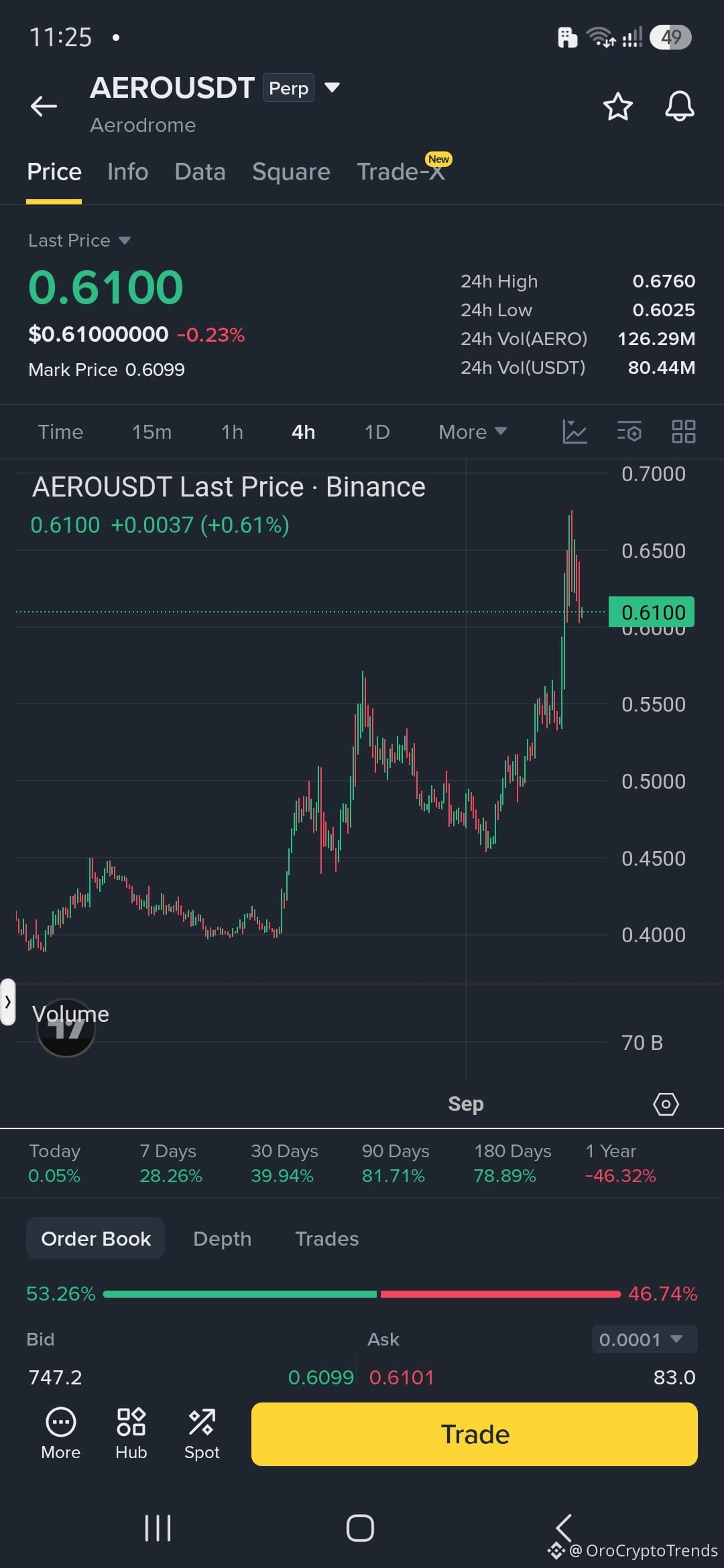
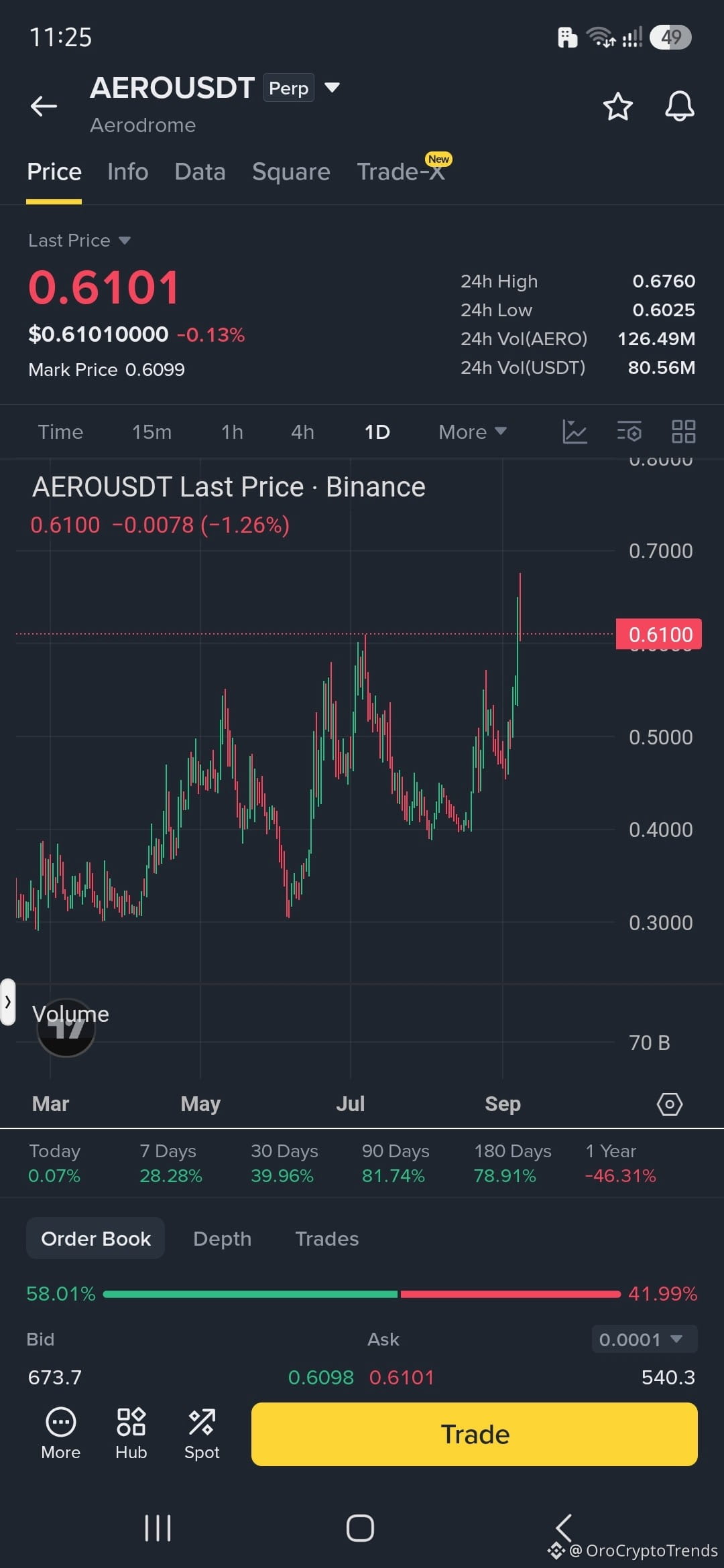
AERO reached $0.676, then pulled back toward $0.61.
Honestly, the pullback is more interesting to me than the spike.
The Binance screenshots show AERO up 28.3% over 7 days, 39.9% over 30 days, and 81.7% over 90 days. That is a significant repricing already. The 1h and 15m charts also show rejection around the $0.65–$0.676 area, followed by lower highs.
So I’m not ready to call this a confirmed continuation.
I see a breakout under examination.
The area I’m watching most closely is $0.60–$0.61. If that zone holds and the market starts forming higher lows, the previous breakout could become more structurally convincing. A move back above $0.65 would then put the $0.676 high back in focus.
But there’s an important counterpoint: after such a strong three-month move, a deeper retracement would not automatically invalidate the broader thesis. It could simply mean the market is cooling after an aggressive repricing.
That’s why I think “AERO pumped” is the wrong conclusion.
The real question is whether AERO can hold the area it broke above.
For now, my framework is simple:
• $0.60–$0.61 → key test
• $0.65 → recovery level
• $0.676 → recent high
• Below $0.60 → breakout structure becomes less convincing
I’d rather watch the post-breakout behavior than let one green candle tell the whole story.
Not financial advice. Crypto assets remain highly volatile.
#Write2Earn
#AEROSurges17%In24Hours
AERO Didn’t Fail — But It Hasn’t Proven the Breakout Yet
AERO reached $0.676, then pulled back toward $0.61.
Honestly, the pullback is more interesting to me than the spike.
The Binance screenshots show AERO up 28.3% over 7 days, 39.9% over 30 days, and 81.7% over 90 days. That is a significant repricing already. The 1h and 15m charts also show rejection around the $0.65–$0.676 area, followed by lower highs.
So I’m not ready to call this a confirmed continuation.
I see a breakout under examination.
The area I’m watching most closely is $0.60–$0.61. If that zone holds and the market starts forming higher lows, the previous breakout could become more structurally convincing. A move back above $0.65 would then put the $0.676 high back in focus.
But there’s an important counterpoint: after such a strong three-month move, a deeper retracement would not automatically invalidate the broader thesis. It could simply mean the market is cooling after an aggressive repricing.
That’s why I think “AERO pumped” is the wrong conclusion.
The real question is whether AERO can hold the area it broke above.
For now, my framework is simple:
• $0.60–$0.61 → key test
• $0.65 → recovery level
• $0.676 → recent high
• Below $0.60 → breakout structure becomes less convincing
I’d rather watch the post-breakout behavior than let one green candle tell the whole story.
Not financial advice. Crypto assets remain highly volatile.
#Write2Earn
AERO Didn’t Fail — But It Hasn’t Proven the Breakout Yet
AERO reached $0.676, then pulled back toward $0.61.
Honestly, the pullback is more interesting to me than the spike.
The Binance screenshots show AERO up 28.3% over 7 days, 39.9% over 30 days, and 81.7% over 90 days. That is a significant repricing already. The 1h and 15m charts also show rejection around the $0.65–$0.676 area, followed by lower highs.
So I’m not ready to call this a confirmed continuation.
I see a breakout under examination.
The area I’m watching most closely is $0.60–$0.61. If that zone holds and the market starts forming higher lows, the previous breakout could become more structurally convincing. A move back above $0.65 would then put the $0.676 high back in focus.
But there’s an important counterpoint: after such a strong three-month move, a deeper retracement would not automatically invalidate the broader thesis. It could simply mean the market is cooling after an aggressive repricing.
That’s why I think “AERO pumped” is the wrong conclusion.
The real question is whether AERO can hold the area it broke above.
For now, my framework is simple:
• $0.60–$0.61 → key test
• $0.65 → recovery level
• $0.676 → recent high
• Below $0.60 → breakout structure becomes less convincing
I’d rather watch the post-breakout behavior than let one green candle tell the whole story.
Not financial advice. Crypto assets remain highly volatile.
#Write2Earn
1
342
Verified
Micron’s 256% rally is raising a bigger question than AI demand.
Micron closed Friday at $1,016.59, up roughly 256% year-to-date. That is an extraordinary repricing, especially when the broader S&P 500 is up only about 13% over the same period.
What interests me is what the market is actually paying for.
Micron is no longer being valued purely through the lens of a traditional memory cycle. Its exposure to AI infrastructure—especially HBM—has become central to the story. Micron says HBM4 is already shipping in high volume to a lead customer, while its Q4 outlook calls for roughly $50 billion in revenue and 86% gross margin.
That changes the debate.
The bullish case is not simply “AI needs more memory.” It is that constrained advanced-memory capacity could give suppliers more pricing power than previous memory cycles allowed.
But that thesis has a weak point: memory remains cyclical.
If capacity expands faster than AI-driven demand, pricing can eventually compress. And after a 256% move, expectations themselves become part of the risk.
That makes Micron’s September 30 earnings report particularly important.
The question I’m watching is simple:
Has AI structurally changed the economics of memory—or is the market pricing the next cycle far ahead of the fundamentals?
#Write2Earn #micron
Micron’s 256% rally is raising a bigger question than AI demand.
Micron closed Friday at $1,016.59, up roughly 256% year-to-date. That is an extraordinary repricing, especially when the broader S&P 500 is up only about 13% over the same period.
What interests me is what the market is actually paying for.
Micron is no longer being valued purely through the lens of a traditional memory cycle. Its exposure to AI infrastructure—especially HBM—has become central to the story. Micron says HBM4 is already shipping in high volume to a lead customer, while its Q4 outlook calls for roughly $50 billion in revenue and 86% gross margin.
That changes the debate.
The bullish case is not simply “AI needs more memory.” It is that constrained advanced-memory capacity could give suppliers more pricing power than previous memory cycles allowed.
But that thesis has a weak point: memory remains cyclical.
If capacity expands faster than AI-driven demand, pricing can eventually compress. And after a 256% move, expectations themselves become part of the risk.
That makes Micron’s September 30 earnings report particularly important.
The question I’m watching is simple:
Has AI structurally changed the economics of memory—or is the market pricing the next cycle far ahead of the fundamentals?
#Write2Earn #micron
Micron closed Friday at $1,016.59, up roughly 256% year-to-date. That is an extraordinary repricing, especially when the broader S&P 500 is up only about 13% over the same period.
What interests me is what the market is actually paying for.
Micron is no longer being valued purely through the lens of a traditional memory cycle. Its exposure to AI infrastructure—especially HBM—has become central to the story. Micron says HBM4 is already shipping in high volume to a lead customer, while its Q4 outlook calls for roughly $50 billion in revenue and 86% gross margin.
That changes the debate.
The bullish case is not simply “AI needs more memory.” It is that constrained advanced-memory capacity could give suppliers more pricing power than previous memory cycles allowed.
But that thesis has a weak point: memory remains cyclical.
If capacity expands faster than AI-driven demand, pricing can eventually compress. And after a 256% move, expectations themselves become part of the risk.
That makes Micron’s September 30 earnings report particularly important.
The question I’m watching is simple:
Has AI structurally changed the economics of memory—or is the market pricing the next cycle far ahead of the fundamentals?
#Write2Earn #micron
2
612
When election rules change this late, the clock becomes part of the legal dispute.
The U.S. Postal Service and other federal parties asked the Supreme Court on September 3 to intervene in the fight over new requirements affecting federal mail ballots.
The Supreme Court docket confirms that Justice Ketanji Brown Jackson requested a response from California and other respondents by 10 a.m. EDT on September 8.
Meanwhile, the underlying litigation is moving through the federal courts. Judge Indira Talwani’s court has blocked implementation of specified parts of the USPS final rule for the November 3, 2026 election, while the government argues that the Postal Service has authority to regulate the mail rather than conduct elections.
My concern is less about predicting who wins the legal argument and more about what happens when the answer arrives late.
Election administrators operate on fixed schedules. Ballot designs, voter data, mailing procedures and public instructions cannot always be changed instantly just because a court issues a new order.
That creates a genuine institutional problem: legal uncertainty can become operational uncertainty.
There is also a deeper federalism question here. How far can a federal agency’s authority over the mail extend when its rules directly affect how states administer elections?
The Supreme Court may eventually settle the legal question. But the immediate challenge is managing election procedures while that question is still unresolved.
#Write2Earn
When election rules change this late, the clock becomes part of the legal dispute.
The U.S. Postal Service and other federal parties asked the Supreme Court on September 3 to intervene in the fight over new requirements affecting federal mail ballots.
The Supreme Court docket confirms that Justice Ketanji Brown Jackson requested a response from California and other respondents by 10 a.m. EDT on September 8.
Meanwhile, the underlying litigation is moving through the federal courts. Judge Indira Talwani’s court has blocked implementation of specified parts of the USPS final rule for the November 3, 2026 election, while the government argues that the Postal Service has authority to regulate the mail rather than conduct elections.
My concern is less about predicting who wins the legal argument and more about what happens when the answer arrives late.
Election administrators operate on fixed schedules. Ballot designs, voter data, mailing procedures and public instructions cannot always be changed instantly just because a court issues a new order.
That creates a genuine institutional problem: legal uncertainty can become operational uncertainty.
There is also a deeper federalism question here. How far can a federal agency’s authority over the mail extend when its rules directly affect how states administer elections?
The Supreme Court may eventually settle the legal question. But the immediate challenge is managing election procedures while that question is still unresolved.
#Write2Earn
The U.S. Postal Service and other federal parties asked the Supreme Court on September 3 to intervene in the fight over new requirements affecting federal mail ballots.
The Supreme Court docket confirms that Justice Ketanji Brown Jackson requested a response from California and other respondents by 10 a.m. EDT on September 8.
Meanwhile, the underlying litigation is moving through the federal courts. Judge Indira Talwani’s court has blocked implementation of specified parts of the USPS final rule for the November 3, 2026 election, while the government argues that the Postal Service has authority to regulate the mail rather than conduct elections.
My concern is less about predicting who wins the legal argument and more about what happens when the answer arrives late.
Election administrators operate on fixed schedules. Ballot designs, voter data, mailing procedures and public instructions cannot always be changed instantly just because a court issues a new order.
That creates a genuine institutional problem: legal uncertainty can become operational uncertainty.
There is also a deeper federalism question here. How far can a federal agency’s authority over the mail extend when its rules directly affect how states administer elections?
The Supreme Court may eventually settle the legal question. But the immediate challenge is managing election procedures while that question is still unresolved.
#Write2Earn
491
$ORCL.US Oracle’s next earnings report isn’t really an AI demand test. It’s a test of AI economics.
Oracle reports Q1 FY2027 results on September 10, and the setup is unusually interesting.
The demand side is already difficult to ignore.
In Q4 FY2026, Oracle’s cloud revenue reached $9.9B, up 47% year over year, while cloud infrastructure revenue jumped 93%. RPO reached $638B, up $85B sequentially.
But there’s another number I’m watching: FY2026 free cash flow was negative $23.7B.
Oracle expects about $40B of debt and equity financing in FY2027, while continuing a major AI infrastructure investment program. Importantly, Oracle also says $75B of its large AI contracts involve prepaid or customer-supplied hardware, which can reduce its funding burden.
That creates the real question.
It’s no longer simply:
“Is AI demand real?”
The harder question is:
“Can Oracle convert that demand into attractive returns on the infrastructure being built?”
That matters even more after the August jobs report showed 162,000 payroll gains and 4.1% unemployment, pushing rate-hike expectations higher while September CPI remains ahead of the Fed meeting.
ORCL closed September 4 at $158.78, up 3.08% heading into earnings.
So I’ll be watching cloud infrastructure growth, RPO conversion, capex, financing needs, and evidence of improving returns—not just the EPS headline.
AI demand can be enormous. The economics still have to work.
#Write2Earn
$ORCL.US Oracle’s next earnings report isn’t really an AI demand test. It’s a test of AI economics.
Oracle reports Q1 FY2027 results on September 10, and the setup is unusually interesting.
The demand side is already difficult to ignore.
In Q4 FY2026, Oracle’s cloud revenue reached $9.9B, up 47% year over year, while cloud infrastructure revenue jumped 93%. RPO reached $638B, up $85B sequentially.
But there’s another number I’m watching: FY2026 free cash flow was negative $23.7B.
Oracle expects about $40B of debt and equity financing in FY2027, while continuing a major AI infrastructure investment program. Importantly, Oracle also says $75B of its large AI contracts involve prepaid or customer-supplied hardware, which can reduce its funding burden.
That creates the real question.
It’s no longer simply:
“Is AI demand real?”
The harder question is:
“Can Oracle convert that demand into attractive returns on the infrastructure being built?”
That matters even more after the August jobs report showed 162,000 payroll gains and 4.1% unemployment, pushing rate-hike expectations higher while September CPI remains ahead of the Fed meeting.
ORCL closed September 4 at $158.78, up 3.08% heading into earnings.
So I’ll be watching cloud infrastructure growth, RPO conversion, capex, financing needs, and evidence of improving returns—not just the EPS headline.
AI demand can be enormous. The economics still have to work.
#Write2Earn
Oracle reports Q1 FY2027 results on September 10, and the setup is unusually interesting.
The demand side is already difficult to ignore.
In Q4 FY2026, Oracle’s cloud revenue reached $9.9B, up 47% year over year, while cloud infrastructure revenue jumped 93%. RPO reached $638B, up $85B sequentially.
But there’s another number I’m watching: FY2026 free cash flow was negative $23.7B.
Oracle expects about $40B of debt and equity financing in FY2027, while continuing a major AI infrastructure investment program. Importantly, Oracle also says $75B of its large AI contracts involve prepaid or customer-supplied hardware, which can reduce its funding burden.
That creates the real question.
It’s no longer simply:
“Is AI demand real?”
The harder question is:
“Can Oracle convert that demand into attractive returns on the infrastructure being built?”
That matters even more after the August jobs report showed 162,000 payroll gains and 4.1% unemployment, pushing rate-hike expectations higher while September CPI remains ahead of the Fed meeting.
ORCL closed September 4 at $158.78, up 3.08% heading into earnings.
So I’ll be watching cloud infrastructure growth, RPO conversion, capex, financing needs, and evidence of improving returns—not just the EPS headline.
AI demand can be enormous. The economics still have to work.
#Write2Earn
ORCLUS+0.29%
1
495
Verified
SNDK’s 11.9% jump may be less interesting than what moved with it.
Sandisk gained 11.9% on September 4 while the S&P 500 fell 0.4%. The Nasdaq also declined 0.3%.
The move also wasn't isolated.
Micron gained 6.1%, while SK Hynix ADRs rose 8.1%. Memory and semiconductor names broadly outperformed during the session.
Then there's the macro backdrop.
The August U.S. jobs report showed 162,000 jobs added and unemployment at 4.1%. Treasury yields moved higher following the report.
That's the part I find interesting.
Broader equities faced rate pressure, yet memory-related stocks strengthened.
My interpretation: this looks more like selective capital rotation within the AI trade than simply “technology was strong.”
The AI narrative is usually dominated by GPUs, models and software. But memory and storage sit further down the infrastructure stack, and the market may be starting to pay more attention to that layer.
Still, I wouldn't call one session a structural repricing.
Memory remains cyclical. The thesis needs confirmation through NAND economics, company results, sector breadth and whether this relative strength persists.
So I'm less interested in SNDK's 11.9% headline than in what happens next.
Was September 4 the beginning of a broader memory rotation—or simply one unusually strong trading session?
#Write2Earn
SNDK’s 11.9% jump may be less interesting than what moved with it.
Sandisk gained 11.9% on September 4 while the S&P 500 fell 0.4%. The Nasdaq also declined 0.3%.
The move also wasn't isolated.
Micron gained 6.1%, while SK Hynix ADRs rose 8.1%. Memory and semiconductor names broadly outperformed during the session.
Then there's the macro backdrop.
The August U.S. jobs report showed 162,000 jobs added and unemployment at 4.1%. Treasury yields moved higher following the report.
That's the part I find interesting.
Broader equities faced rate pressure, yet memory-related stocks strengthened.
My interpretation: this looks more like selective capital rotation within the AI trade than simply “technology was strong.”
The AI narrative is usually dominated by GPUs, models and software. But memory and storage sit further down the infrastructure stack, and the market may be starting to pay more attention to that layer.
Still, I wouldn't call one session a structural repricing.
Memory remains cyclical. The thesis needs confirmation through NAND economics, company results, sector breadth and whether this relative strength persists.
So I'm less interested in SNDK's 11.9% headline than in what happens next.
Was September 4 the beginning of a broader memory rotation—or simply one unusually strong trading session?
#Write2Earn
Sandisk gained 11.9% on September 4 while the S&P 500 fell 0.4%. The Nasdaq also declined 0.3%.
The move also wasn't isolated.
Micron gained 6.1%, while SK Hynix ADRs rose 8.1%. Memory and semiconductor names broadly outperformed during the session.
Then there's the macro backdrop.
The August U.S. jobs report showed 162,000 jobs added and unemployment at 4.1%. Treasury yields moved higher following the report.
That's the part I find interesting.
Broader equities faced rate pressure, yet memory-related stocks strengthened.
My interpretation: this looks more like selective capital rotation within the AI trade than simply “technology was strong.”
The AI narrative is usually dominated by GPUs, models and software. But memory and storage sit further down the infrastructure stack, and the market may be starting to pay more attention to that layer.
Still, I wouldn't call one session a structural repricing.
Memory remains cyclical. The thesis needs confirmation through NAND economics, company results, sector breadth and whether this relative strength persists.
So I'm less interested in SNDK's 11.9% headline than in what happens next.
Was September 4 the beginning of a broader memory rotation—or simply one unusually strong trading session?
#Write2Earn
1
658
#ZECHitsANewAllTimeHigh ZEC Above $1,000 Is Not the Most Interesting Part of This Move
Zcash moving above $1,000 is significant, but I think the more useful question is what is happening underneath the price.
First, an important clarification: $1,000 is not ZEC’s historical all-time high. Its launch-era price spike in 2016 was substantially higher. So this is better understood as a major long-term price milestone, not a new absolute record.
What caught my attention is the combination of renewed privacy-asset interest, institutional access through a Zcash ETF, and increasingly large derivatives positioning.
More than $34 million in ZEC short positions were reportedly liquidated during the move, while open interest reached roughly $2.3 billion.
That matters because liquidations can amplify price movements.
The mechanism is fairly simple:
Breakout → short positions come under pressure → forced closures → additional buying pressure → stronger price movement.
But there is another side to this.
High leverage can amplify declines just as easily. If positioning becomes crowded and price reverses, long liquidations can add selling pressure and accelerate the downside.
So I don't think the key question is simply whether ZEC can move beyond $1,000.
The better question is whether the market can hold that area while leverage normalizes and genuine spot demand remains present.
That distinction could tell us much more about the quality of this breakout than the headline price itself.
#Write2Earn
#ZECHitsANewAllTimeHigh ZEC Above $1,000 Is Not the Most Interesting Part of This Move
Zcash moving above $1,000 is significant, but I think the more useful question is what is happening underneath the price.
First, an important clarification: $1,000 is not ZEC’s historical all-time high. Its launch-era price spike in 2016 was substantially higher. So this is better understood as a major long-term price milestone, not a new absolute record.
What caught my attention is the combination of renewed privacy-asset interest, institutional access through a Zcash ETF, and increasingly large derivatives positioning.
More than $34 million in ZEC short positions were reportedly liquidated during the move, while open interest reached roughly $2.3 billion.
That matters because liquidations can amplify price movements.
The mechanism is fairly simple:
Breakout → short positions come under pressure → forced closures → additional buying pressure → stronger price movement.
But there is another side to this.
High leverage can amplify declines just as easily. If positioning becomes crowded and price reverses, long liquidations can add selling pressure and accelerate the downside.
So I don't think the key question is simply whether ZEC can move beyond $1,000.
The better question is whether the market can hold that area while leverage normalizes and genuine spot demand remains present.
That distinction could tell us much more about the quality of this breakout than the headline price itself.
#Write2Earn
Zcash moving above $1,000 is significant, but I think the more useful question is what is happening underneath the price.
First, an important clarification: $1,000 is not ZEC’s historical all-time high. Its launch-era price spike in 2016 was substantially higher. So this is better understood as a major long-term price milestone, not a new absolute record.
What caught my attention is the combination of renewed privacy-asset interest, institutional access through a Zcash ETF, and increasingly large derivatives positioning.
More than $34 million in ZEC short positions were reportedly liquidated during the move, while open interest reached roughly $2.3 billion.
That matters because liquidations can amplify price movements.
The mechanism is fairly simple:
Breakout → short positions come under pressure → forced closures → additional buying pressure → stronger price movement.
But there is another side to this.
High leverage can amplify declines just as easily. If positioning becomes crowded and price reverses, long liquidations can add selling pressure and accelerate the downside.
So I don't think the key question is simply whether ZEC can move beyond $1,000.
The better question is whether the market can hold that area while leverage normalizes and genuine spot demand remains present.
That distinction could tell us much more about the quality of this breakout than the headline price itself.
#Write2Earn
3
1
1.1k
Technical analysis is not really about indicators. It starts with understanding price.At its simplest, technical analysis studies how price and volume behave on a chart. Unlike fundamental analysis, which focuses on things such as earnings, financial performance, and business conditions, technical analysis concentrates primarily on market behavior.
A useful starting framework has three parts.
1. Support and resistance
Support is better viewed as an area where buying interest has historically appeared. Resistance is an area where selling pressure has emerged.
They are not guaranteed reversal points. Price can break through either one.
2. Market trends
An uptrend is generally characterized by higher highs and higher lows.
A downtrend is characterized by lower highs and lower lows.
The important part is the sequence—not a single candle. Once that structure changes, the original trend thesis deserves to be reconsidered.
3. Timeframes
The same market can look completely different depending on the timeframe.
A daily chart can provide broader structural context, while 4-hour and 1-hour charts can reveal more granular price behavior. Lower timeframes may provide greater detail, but they can also contain more noise.
This is where technical analysis becomes more useful: not by predicting every move, but by organizing what the market is actually doing.
The deeper skill is learning to connect price, structure, support/resistance, volume, and timeframe into one coherent framework.
Indicators can add information later. They should not replace understanding the chart itself.
Technical analysis is not really about indicators. It starts with understanding price.
At its simplest, technical analysis studies how price and volume behave on a chart. Unlike fundamental analysis, which focuses on things such as earnings, financial performance, and business conditions, technical analysis concentrates primarily on market behavior.
A useful starting framework has three parts.
1. Support and resistance
Support is better viewed as an area where buying interest has historically appeared. Resistance is an area where selling pressure has emerged.
They are not guaranteed reversal points. Price can break through either one.
2. Market trends
An uptrend is generally characterized by higher highs and higher lows.
A downtrend is characterized by lower highs and lower lows.
The important part is the sequence—not a single candle. Once that structure changes, the original trend thesis deserves to be reconsidered.
3. Timeframes
The same market can look completely different depending on the timeframe.
A daily chart can provide broader structural context, while 4-hour and 1-hour charts can reveal more granular price behavior. Lower timeframes may provide greater detail, but they can also contain more noise.
This is where technical analysis becomes more useful: not by predicting every move, but by organizing what the market is actually doing.
The deeper skill is learning to connect price, structure, support/resistance, volume, and timeframe into one coherent framework.
Indicators can add information later. They should not replace understanding the chart itself.
A useful starting framework has three parts.
1. Support and resistance
Support is better viewed as an area where buying interest has historically appeared. Resistance is an area where selling pressure has emerged.
They are not guaranteed reversal points. Price can break through either one.
2. Market trends
An uptrend is generally characterized by higher highs and higher lows.
A downtrend is characterized by lower highs and lower lows.
The important part is the sequence—not a single candle. Once that structure changes, the original trend thesis deserves to be reconsidered.
3. Timeframes
The same market can look completely different depending on the timeframe.
A daily chart can provide broader structural context, while 4-hour and 1-hour charts can reveal more granular price behavior. Lower timeframes may provide greater detail, but they can also contain more noise.
This is where technical analysis becomes more useful: not by predicting every move, but by organizing what the market is actually doing.
The deeper skill is learning to connect price, structure, support/resistance, volume, and timeframe into one coherent framework.
Indicators can add information later. They should not replace understanding the chart itself.
279
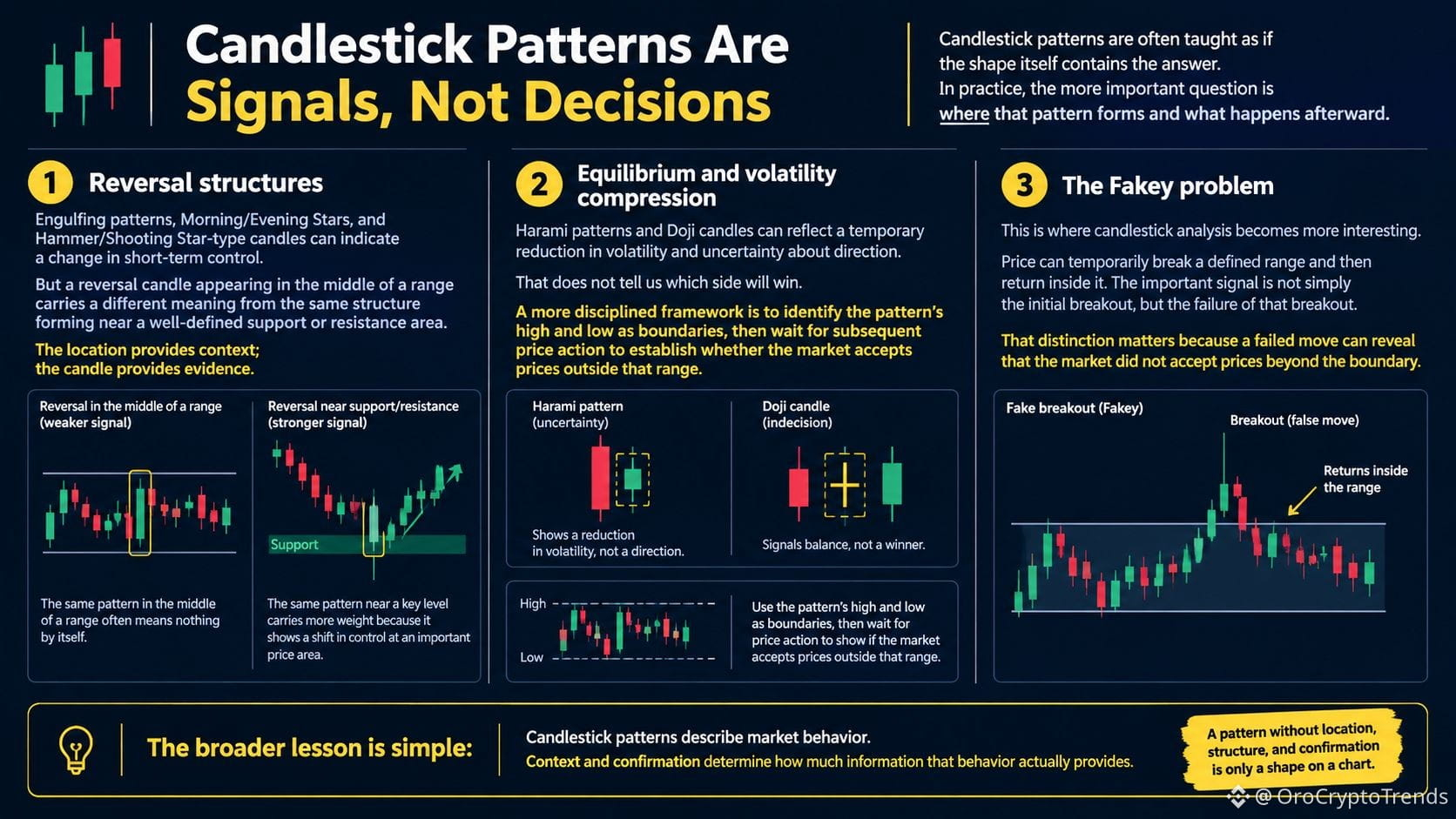
Candlestick Patterns Are Signals, Not Decisions
Candlestick patterns are often taught as if the shape itself contains the answer. In practice, the more important question is where that pattern forms and what happens afterward.
1. Reversal structures
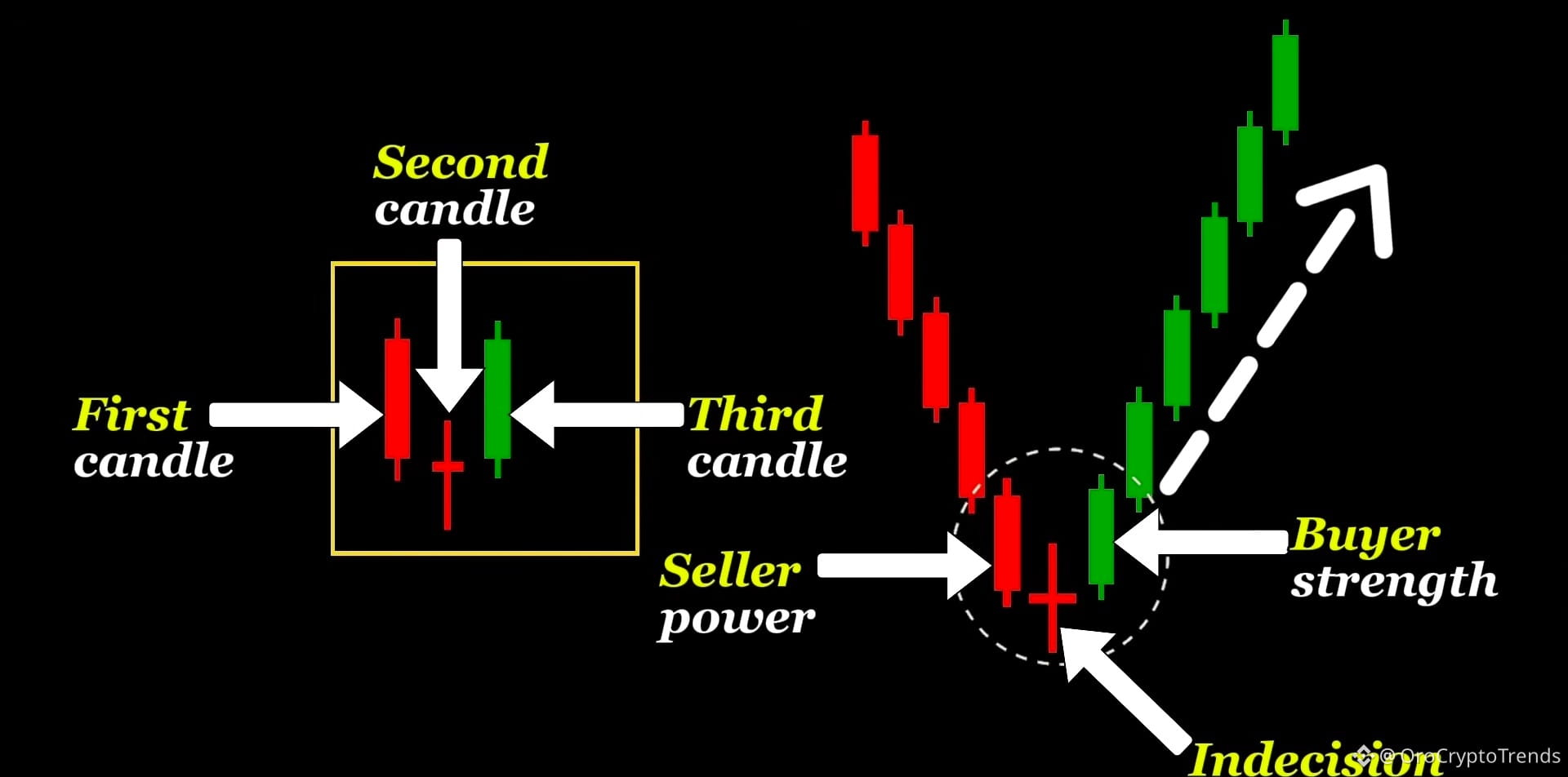
Engulfing patterns, Morning/Evening Stars, and Hammer/Shooting Star-type candles can indicate a change in short-term control.
But a reversal candle appearing in the middle of a range carries a different meaning from the same structure forming near a well-defined support or resistance area.
The location provides context; the candle provides evidence.
2. Equilibrium and volatility compression
Harami patterns and Doji candles can reflect a temporary reduction in volatility and uncertainty about direction.
That does not tell us which side will win.
A more disciplined framework is to identify the pattern’s high and low as boundaries, then wait for subsequent price action to establish whether the market accepts prices outside that range.
3. The Fakey problem
This is where candlestick analysis becomes more interesting.
Price can temporarily break a defined range and then return inside it. The important signal is not simply the initial breakout, but the failure of that breakout.
That distinction matters because a failed move can reveal that the market did not accept prices beyond the boundary.
The broader lesson is simple:
Candlestick patterns describe market behavior. Context and confirmation determine how much information that behavior actually provides.
A pattern without location, structure, and confirmation is only a shape on a chart.
#Write2Earn
Candlestick Patterns Are Signals, Not Decisions
Candlestick patterns are often taught as if the shape itself contains the answer. In practice, the more important question is where that pattern forms and what happens afterward.
1. Reversal structures
Engulfing patterns, Morning/Evening Stars, and Hammer/Shooting Star-type candles can indicate a change in short-term control.
But a reversal candle appearing in the middle of a range carries a different meaning from the same structure forming near a well-defined support or resistance area.
The location provides context; the candle provides evidence.
2. Equilibrium and volatility compression
Harami patterns and Doji candles can reflect a temporary reduction in volatility and uncertainty about direction.
That does not tell us which side will win.
A more disciplined framework is to identify the pattern’s high and low as boundaries, then wait for subsequent price action to establish whether the market accepts prices outside that range.
3. The Fakey problem
This is where candlestick analysis becomes more interesting.
Price can temporarily break a defined range and then return inside it. The important signal is not simply the initial breakout, but the failure of that breakout.
That distinction matters because a failed move can reveal that the market did not accept prices beyond the boundary.
The broader lesson is simple:
Candlestick patterns describe market behavior. Context and confirmation determine how much information that behavior actually provides.
A pattern without location, structure, and confirmation is only a shape on a chart.
#Write2Earn
Candlestick patterns are often taught as if the shape itself contains the answer. In practice, the more important question is where that pattern forms and what happens afterward.
1. Reversal structures
Engulfing patterns, Morning/Evening Stars, and Hammer/Shooting Star-type candles can indicate a change in short-term control.
But a reversal candle appearing in the middle of a range carries a different meaning from the same structure forming near a well-defined support or resistance area.
The location provides context; the candle provides evidence.
2. Equilibrium and volatility compression
Harami patterns and Doji candles can reflect a temporary reduction in volatility and uncertainty about direction.
That does not tell us which side will win.
A more disciplined framework is to identify the pattern’s high and low as boundaries, then wait for subsequent price action to establish whether the market accepts prices outside that range.
3. The Fakey problem
This is where candlestick analysis becomes more interesting.
Price can temporarily break a defined range and then return inside it. The important signal is not simply the initial breakout, but the failure of that breakout.
That distinction matters because a failed move can reveal that the market did not accept prices beyond the boundary.
The broader lesson is simple:
Candlestick patterns describe market behavior. Context and confirmation determine how much information that behavior actually provides.
A pattern without location, structure, and confirmation is only a shape on a chart.
#Write2Earn
1
448
#SolanaFallsOver3%
Oil → Yields → Crypto: The Macro Chain Behind Today’s Market Reaction
Crypto can sometimes look like it is moving on its own.
Today is a useful reminder that it often isn’t.
Recent reporting directly connects renewed Middle East tensions, concerns around energy supply, higher oil prices, inflation concerns, and higher bond yields.
The Federal Reserve itself notes that energy-price increases can contribute to inflationary pressure.
Then comes the second link: Treasury yields.
If investors expect inflation to remain elevated, markets may expect interest rates to stay higher for longer. although yields have multiple drivers. Current Reuters reporting specifically identifies inflation concerns, rate expectations, fiscal factors and Treasury supply/demand as contributors to the rise in yields.
Reuters
And this is where crypto becomes interesting.
Higher Treasury yields can increase the attractiveness of dollar assets and raise borrowing costs. Reuters also describes the global financial-tightening effect of higher U.S. yields.
But the effect doesn't have to be identical across every digital asset.
Bitcoin, Solana and TRON can all respond to the same macro shock while experiencing different levels of volatility. That difference may reflect factors such as market positioning, liquidity and each asset's sensitivity to broader risk appetite.
The important point is that this is a transmission mechanism, not a simple one-to-one rule:
Geopolitical risk
→ Oil prices
→ Inflation expectations
→ Treasury yields
→ Fed expectations
→ Risk appetite
→ Crypto
That is why I’m watching macro data alongside crypto prices.
The next useful checkpoints are U.S. labor-market data, Treasury yields, oil prices and expectations surrounding the Federal Reserve.
Sometimes the crypto chart is only the final link in a much larger chain.
#SolanaFallsOver3%
Oil → Yields → Crypto: The Macro Chain Behind Today’s Market Reaction
Crypto can sometimes look like it is moving on its own.
Today is a useful reminder that it often isn’t.
Recent reporting directly connects renewed Middle East tensions, concerns around energy supply, higher oil prices, inflation concerns, and higher bond yields.
The Federal Reserve itself notes that energy-price increases can contribute to inflationary pressure.
Then comes the second link: Treasury yields.
If investors expect inflation to remain elevated, markets may expect interest rates to stay higher for longer. although yields have multiple drivers. Current Reuters reporting specifically identifies inflation concerns, rate expectations, fiscal factors and Treasury supply/demand as contributors to the rise in yields.
Reuters
And this is where crypto becomes interesting.
Higher Treasury yields can increase the attractiveness of dollar assets and raise borrowing costs. Reuters also describes the global financial-tightening effect of higher U.S. yields.
But the effect doesn't have to be identical across every digital asset.
Bitcoin, Solana and TRON can all respond to the same macro shock while experiencing different levels of volatility. That difference may reflect factors such as market positioning, liquidity and each asset's sensitivity to broader risk appetite.
The important point is that this is a transmission mechanism, not a simple one-to-one rule:
Geopolitical risk
→ Oil prices
→ Inflation expectations
→ Treasury yields
→ Fed expectations
→ Risk appetite
→ Crypto
That is why I’m watching macro data alongside crypto prices.
The next useful checkpoints are U.S. labor-market data, Treasury yields, oil prices and expectations surrounding the Federal Reserve.
Sometimes the crypto chart is only the final link in a much larger chain.
Oil → Yields → Crypto: The Macro Chain Behind Today’s Market Reaction
Crypto can sometimes look like it is moving on its own.
Today is a useful reminder that it often isn’t.
Recent reporting directly connects renewed Middle East tensions, concerns around energy supply, higher oil prices, inflation concerns, and higher bond yields.
The Federal Reserve itself notes that energy-price increases can contribute to inflationary pressure.
Then comes the second link: Treasury yields.
If investors expect inflation to remain elevated, markets may expect interest rates to stay higher for longer. although yields have multiple drivers. Current Reuters reporting specifically identifies inflation concerns, rate expectations, fiscal factors and Treasury supply/demand as contributors to the rise in yields.
Reuters
And this is where crypto becomes interesting.
Higher Treasury yields can increase the attractiveness of dollar assets and raise borrowing costs. Reuters also describes the global financial-tightening effect of higher U.S. yields.
But the effect doesn't have to be identical across every digital asset.
Bitcoin, Solana and TRON can all respond to the same macro shock while experiencing different levels of volatility. That difference may reflect factors such as market positioning, liquidity and each asset's sensitivity to broader risk appetite.
The important point is that this is a transmission mechanism, not a simple one-to-one rule:
Geopolitical risk
→ Oil prices
→ Inflation expectations
→ Treasury yields
→ Fed expectations
→ Risk appetite
→ Crypto
That is why I’m watching macro data alongside crypto prices.
The next useful checkpoints are U.S. labor-market data, Treasury yields, oil prices and expectations surrounding the Federal Reserve.
Sometimes the crypto chart is only the final link in a much larger chain.
428
Verified
#ARBRises30%OnRobinhoodChainRevenue
Strategy’s Bitcoin Stack Is No Longer the Whole Story
Strategy’s latest capital allocation is a useful reminder that a Bitcoin treasury company cannot be evaluated by its BTC balance alone.
Between August 24 and 30, Strategy sold roughly $602.8 million of MSTR shares through its ATM program. It allocated $369.7 million to acquire 4,603 BTC, while another $151.8 million went toward repurchasing STRC preferred shares and $50.7 million toward STRC dividends. Its Bitcoin holdings reached 845,050 BTC.
The more interesting part is the interaction between these securities.
STRC carries a 12% annualized dividend rate, paid semi-monthly, and has a $100 stated amount. Strategy has authorized repurchases of STRC when the preferred stock trades below its stated amount.
That creates a different capital-allocation problem.
The company is simultaneously trying to grow its Bitcoin exposure, support preferred securities, maintain liquidity and preserve access to capital markets. Capital raised through common equity is therefore competing across several balance-sheet priorities rather than flowing exclusively into BTC.
Strive provides an interesting comparison. Its SATA preferred stock carries a 13% annualized dividend rate and moved to daily payments from June 2026.
The broader implication is important: corporate Bitcoin vehicles are becoming increasingly complex financial structures.
The key question is no longer simply how much Bitcoin a company owns.
how its capital structure affects the economic exposure and potential value attributable to common shareholders after accounting for preferred claims, dividends, liquidity requirements and dilution.
#ARBRises30%OnRobinhoodChainRevenue
Strategy’s Bitcoin Stack Is No Longer the Whole Story
Strategy’s latest capital allocation is a useful reminder that a Bitcoin treasury company cannot be evaluated by its BTC balance alone.
Between August 24 and 30, Strategy sold roughly $602.8 million of MSTR shares through its ATM program. It allocated $369.7 million to acquire 4,603 BTC, while another $151.8 million went toward repurchasing STRC preferred shares and $50.7 million toward STRC dividends. Its Bitcoin holdings reached 845,050 BTC.
The more interesting part is the interaction between these securities.
STRC carries a 12% annualized dividend rate, paid semi-monthly, and has a $100 stated amount. Strategy has authorized repurchases of STRC when the preferred stock trades below its stated amount.
That creates a different capital-allocation problem.
The company is simultaneously trying to grow its Bitcoin exposure, support preferred securities, maintain liquidity and preserve access to capital markets. Capital raised through common equity is therefore competing across several balance-sheet priorities rather than flowing exclusively into BTC.
Strive provides an interesting comparison. Its SATA preferred stock carries a 13% annualized dividend rate and moved to daily payments from June 2026.
The broader implication is important: corporate Bitcoin vehicles are becoming increasingly complex financial structures.
The key question is no longer simply how much Bitcoin a company owns.
how its capital structure affects the economic exposure and potential value attributable to common shareholders after accounting for preferred claims, dividends, liquidity requirements and dilution.
Strategy’s Bitcoin Stack Is No Longer the Whole Story
Strategy’s latest capital allocation is a useful reminder that a Bitcoin treasury company cannot be evaluated by its BTC balance alone.
Between August 24 and 30, Strategy sold roughly $602.8 million of MSTR shares through its ATM program. It allocated $369.7 million to acquire 4,603 BTC, while another $151.8 million went toward repurchasing STRC preferred shares and $50.7 million toward STRC dividends. Its Bitcoin holdings reached 845,050 BTC.
The more interesting part is the interaction between these securities.
STRC carries a 12% annualized dividend rate, paid semi-monthly, and has a $100 stated amount. Strategy has authorized repurchases of STRC when the preferred stock trades below its stated amount.
That creates a different capital-allocation problem.
The company is simultaneously trying to grow its Bitcoin exposure, support preferred securities, maintain liquidity and preserve access to capital markets. Capital raised through common equity is therefore competing across several balance-sheet priorities rather than flowing exclusively into BTC.
Strive provides an interesting comparison. Its SATA preferred stock carries a 13% annualized dividend rate and moved to daily payments from June 2026.
The broader implication is important: corporate Bitcoin vehicles are becoming increasingly complex financial structures.
The key question is no longer simply how much Bitcoin a company owns.
how its capital structure affects the economic exposure and potential value attributable to common shareholders after accounting for preferred claims, dividends, liquidity requirements and dilution.
2
1.5k
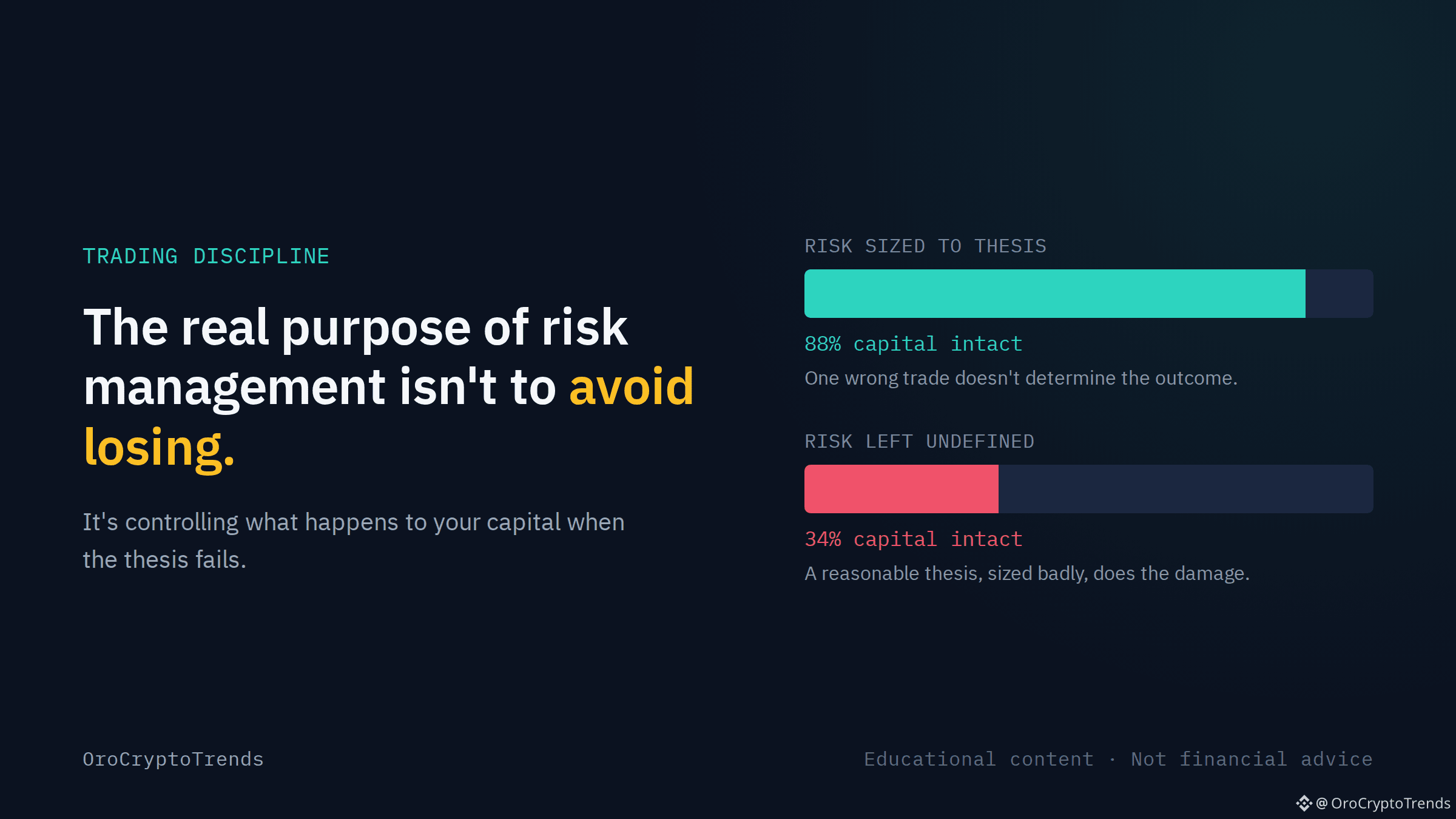
The Real Purpose of Risk Management Isn’t to Avoid Losing
In crypto, being wrong is unavoidable.
The part traders can control is what happens when they are wrong.
That distinction is easy to overlook. A trader can have a reasonable market thesis and still take a large loss because the position was too big, leverage was excessive, or there was no predefined point where the trade idea would be considered invalid.
So before entering a position, I think the important question is not simply:
“How much can I make?”
It is:
“What happens to my capital if my thesis fails?”
That changes how I look at position sizing, leverage, and stop-losses.
A stop-loss can help define an exit point, but it doesn’t eliminate execution risk. Leverage can increase capital efficiency, but it also makes smaller adverse price movements more consequential. And diversification can reduce concentration risk, but it doesn’t make a portfolio immune to broad market drawdowns.
The deeper principle is that risk management separates the quality of an idea from the size of its consequences.
You can be right about the market and still manage the trade badly.
You can also be wrong about the market without suffering a major setback if the downside was controlled from the beginning.
For me, that is the more useful definition of trading discipline: not trying to eliminate losses, but making sure one mistake doesn’t determine the outcome of the entire trading process.
Educational content only. Not financial advice.
The Real Purpose of Risk Management Isn’t to Avoid Losing
In crypto, being wrong is unavoidable.
The part traders can control is what happens when they are wrong.
That distinction is easy to overlook. A trader can have a reasonable market thesis and still take a large loss because the position was too big, leverage was excessive, or there was no predefined point where the trade idea would be considered invalid.
So before entering a position, I think the important question is not simply:
“How much can I make?”
It is:
“What happens to my capital if my thesis fails?”
That changes how I look at position sizing, leverage, and stop-losses.
A stop-loss can help define an exit point, but it doesn’t eliminate execution risk. Leverage can increase capital efficiency, but it also makes smaller adverse price movements more consequential. And diversification can reduce concentration risk, but it doesn’t make a portfolio immune to broad market drawdowns.
The deeper principle is that risk management separates the quality of an idea from the size of its consequences.
You can be right about the market and still manage the trade badly.
You can also be wrong about the market without suffering a major setback if the downside was controlled from the beginning.
For me, that is the more useful definition of trading discipline: not trying to eliminate losses, but making sure one mistake doesn’t determine the outcome of the entire trading process.
Educational content only. Not financial advice.
In crypto, being wrong is unavoidable.
The part traders can control is what happens when they are wrong.
That distinction is easy to overlook. A trader can have a reasonable market thesis and still take a large loss because the position was too big, leverage was excessive, or there was no predefined point where the trade idea would be considered invalid.
So before entering a position, I think the important question is not simply:
“How much can I make?”
It is:
“What happens to my capital if my thesis fails?”
That changes how I look at position sizing, leverage, and stop-losses.
A stop-loss can help define an exit point, but it doesn’t eliminate execution risk. Leverage can increase capital efficiency, but it also makes smaller adverse price movements more consequential. And diversification can reduce concentration risk, but it doesn’t make a portfolio immune to broad market drawdowns.
The deeper principle is that risk management separates the quality of an idea from the size of its consequences.
You can be right about the market and still manage the trade badly.
You can also be wrong about the market without suffering a major setback if the downside was controlled from the beginning.
For me, that is the more useful definition of trading discipline: not trying to eliminate losses, but making sure one mistake doesn’t determine the outcome of the entire trading process.
Educational content only. Not financial advice.
1
807
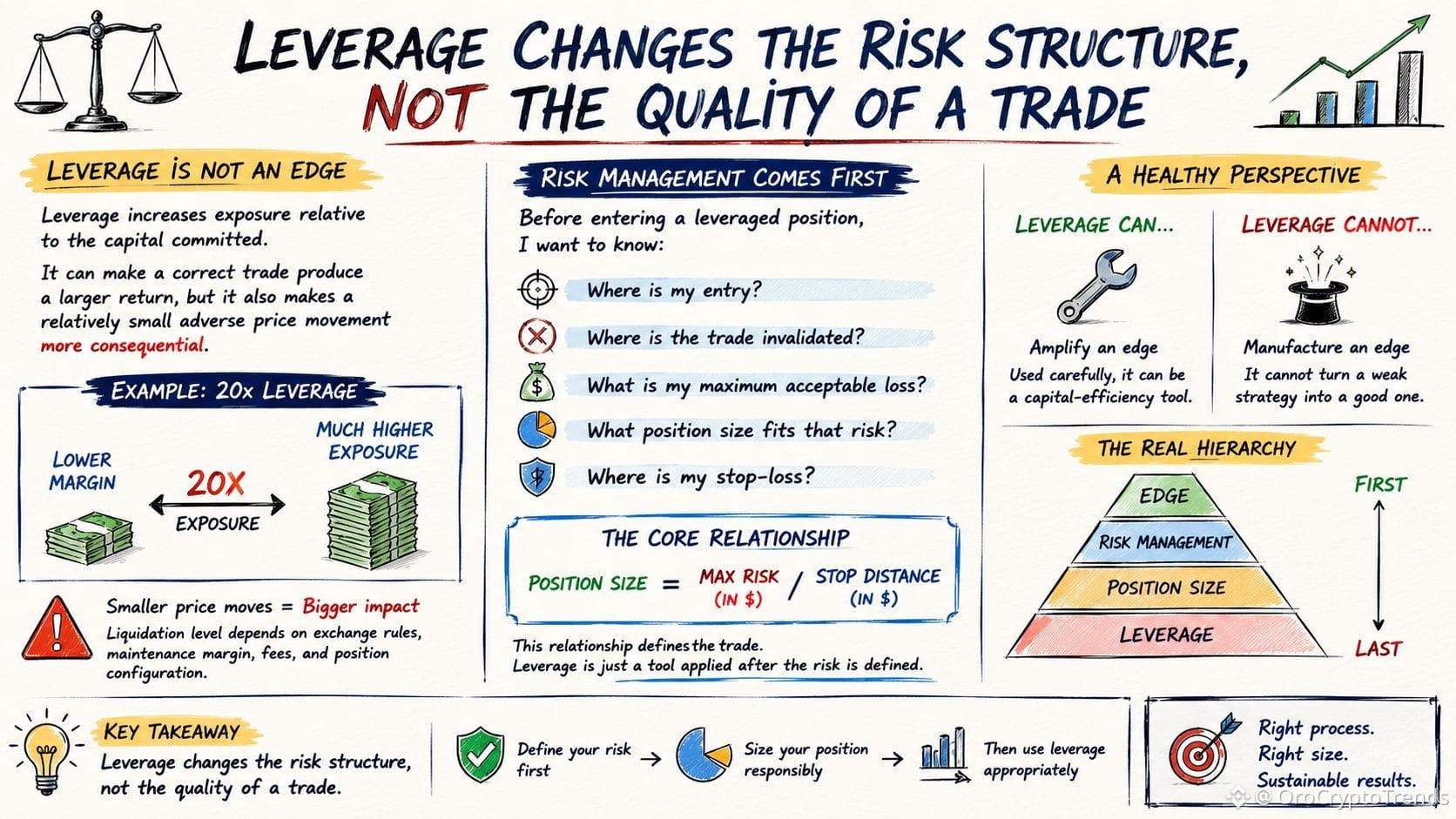
Leverage Changes the Risk Structure, Not the Quality of a Trade
One thing I’ve noticed in crypto trading discussions is that leverage is often treated as an edge.
I see it differently.
Leverage increases exposure relative to the capital committed. It can make a correct trade produce a larger return, but it also makes a relatively small adverse price movement more consequential.
That distinction matters.
Consider a trader using 20x leverage. The position has much greater exposure than the margin supporting it, so the distance between the entry and a potentially damaging move becomes much more important. The exact liquidation level will depend on the exchange, maintenance margin, fees, and position configuration.
That’s why I think risk management should come before leverage selection.
Before entering a leveraged position, I want to know:
• Where is my entry?
• Where is the trade invalidated?
• What is my maximum acceptable loss?
• What position size fits that risk?
• Where is my stop-loss?
The important relationship is between position size, stop distance, and maximum loss. Leverage should be considered within that framework—not used to determine how much risk to take.
There is also a counterpoint: leverage itself isn’t inherently bad. Used carefully, it can be a capital-efficiency tool. The problem begins when higher leverage is mistaken for higher conviction or a better strategy.
Leverage can amplify an edge.
It cannot manufacture one.
Educational content only. Not financial advice.
#RiskManagement #cryptoeducation #BTC
Leverage Changes the Risk Structure, Not the Quality of a Trade
One thing I’ve noticed in crypto trading discussions is that leverage is often treated as an edge.
I see it differently.
Leverage increases exposure relative to the capital committed. It can make a correct trade produce a larger return, but it also makes a relatively small adverse price movement more consequential.
That distinction matters.
Consider a trader using 20x leverage. The position has much greater exposure than the margin supporting it, so the distance between the entry and a potentially damaging move becomes much more important. The exact liquidation level will depend on the exchange, maintenance margin, fees, and position configuration.
That’s why I think risk management should come before leverage selection.
Before entering a leveraged position, I want to know:
• Where is my entry?
• Where is the trade invalidated?
• What is my maximum acceptable loss?
• What position size fits that risk?
• Where is my stop-loss?
The important relationship is between position size, stop distance, and maximum loss. Leverage should be considered within that framework—not used to determine how much risk to take.
There is also a counterpoint: leverage itself isn’t inherently bad. Used carefully, it can be a capital-efficiency tool. The problem begins when higher leverage is mistaken for higher conviction or a better strategy.
Leverage can amplify an edge.
It cannot manufacture one.
Educational content only. Not financial advice.
#RiskManagement #cryptoeducation #BTC
One thing I’ve noticed in crypto trading discussions is that leverage is often treated as an edge.
I see it differently.
Leverage increases exposure relative to the capital committed. It can make a correct trade produce a larger return, but it also makes a relatively small adverse price movement more consequential.
That distinction matters.
Consider a trader using 20x leverage. The position has much greater exposure than the margin supporting it, so the distance between the entry and a potentially damaging move becomes much more important. The exact liquidation level will depend on the exchange, maintenance margin, fees, and position configuration.
That’s why I think risk management should come before leverage selection.
Before entering a leveraged position, I want to know:
• Where is my entry?
• Where is the trade invalidated?
• What is my maximum acceptable loss?
• What position size fits that risk?
• Where is my stop-loss?
The important relationship is between position size, stop distance, and maximum loss. Leverage should be considered within that framework—not used to determine how much risk to take.
There is also a counterpoint: leverage itself isn’t inherently bad. Used carefully, it can be a capital-efficiency tool. The problem begins when higher leverage is mistaken for higher conviction or a better strategy.
Leverage can amplify an edge.
It cannot manufacture one.
Educational content only. Not financial advice.
#RiskManagement #cryptoeducation #BTC
287
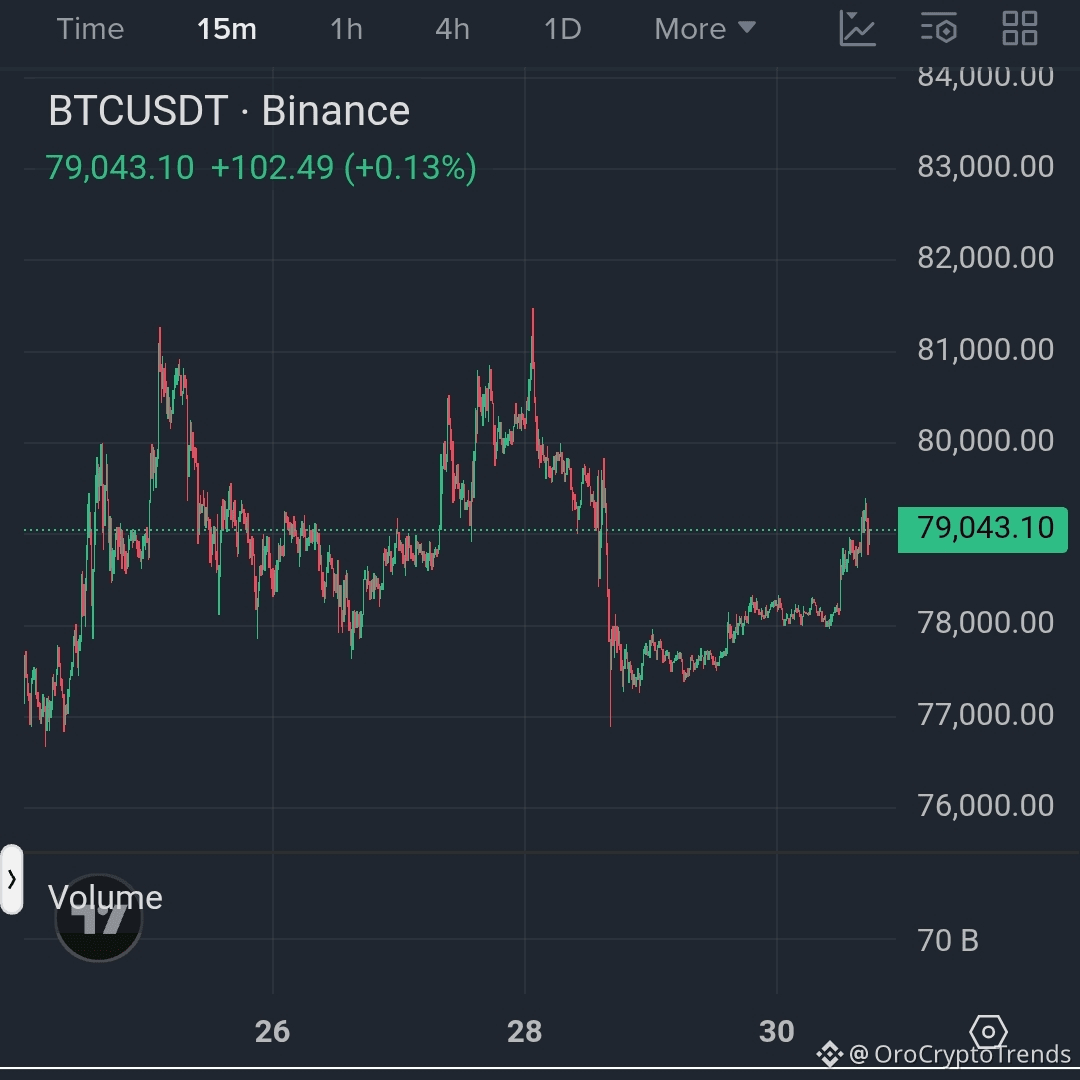
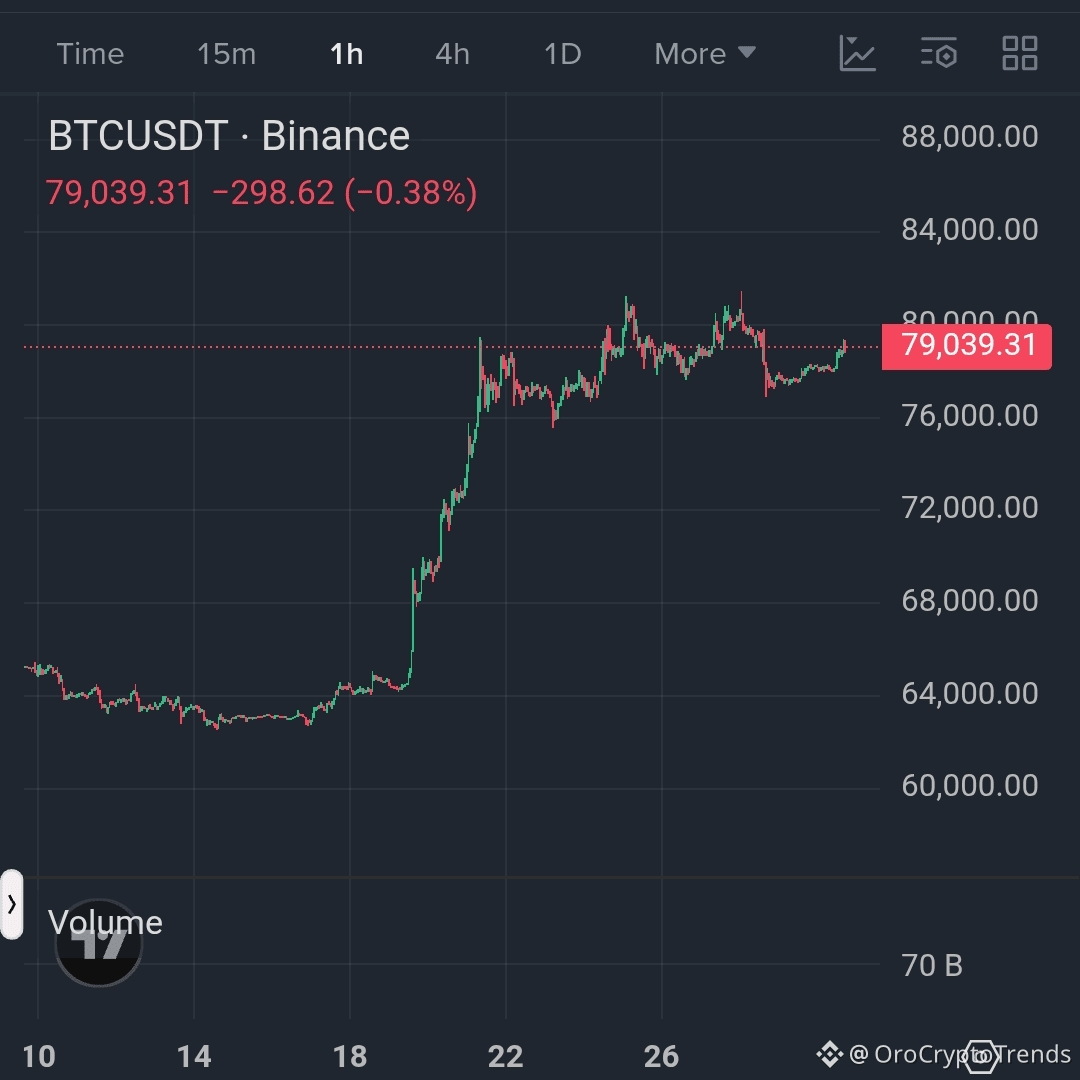
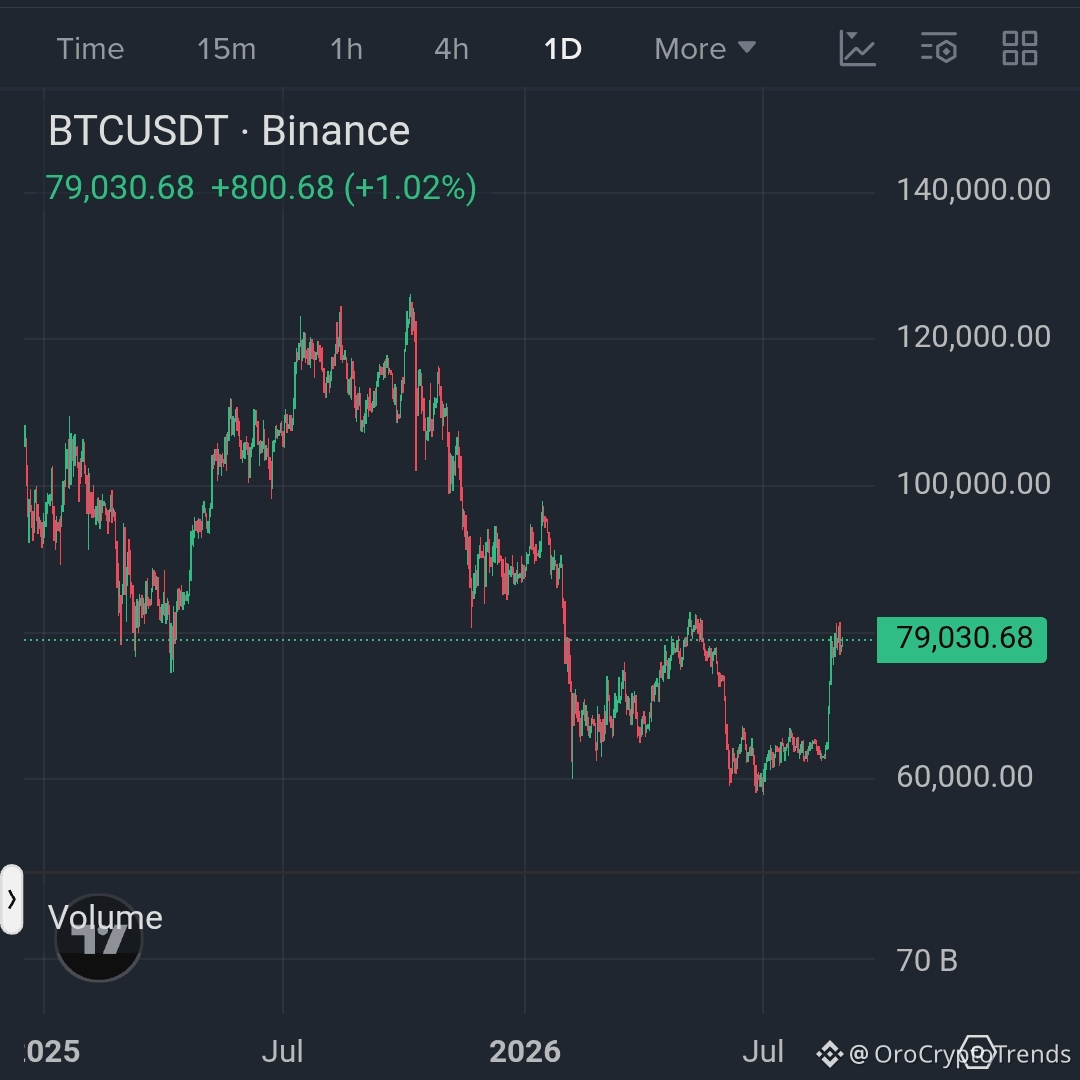
$BTC Bitcoin Is Near $79K — But Holding the Level Matters More Than Touching It
BTC is around $79,030 on the charts I’m looking at, with a 24-hour range of roughly $77,962 to $79,400.
At first glance, the picture looks fairly strong.
Bitcoin is up about 2.2% over the past 7 days and 22% over 30 days. But what caught my attention is where price is sitting inside the current range.
BTC is close to the upper end.
That makes me less interested in whether price simply pushes through the recent high and more interested in what happens after that move.
A brief move above a level doesn't tell me much on its own. If price remains above the area and continues to trade there, that would provide stronger evidence of acceptance.
The order-book snapshots also show a strong buy-side imbalance, ranging from roughly 79% to 98% across the three timeframes. But I wouldn't treat that as confirmation by itself. Order-book conditions can change quickly.
There's another detail worth keeping in mind: despite the recent strength, the supplied data still shows BTC down about 26.7% over one year.
So my takeaway isn't “Bitcoin is breaking out.”
It's simpler:
The next useful signal may be whether the market can hold the ground it has already gained.
That's what I'm watching now.
#BTC
$BTC Bitcoin Is Near $79K — But Holding the Level Matters More Than Touching It
BTC is around $79,030 on the charts I’m looking at, with a 24-hour range of roughly $77,962 to $79,400.
At first glance, the picture looks fairly strong.
Bitcoin is up about 2.2% over the past 7 days and 22% over 30 days. But what caught my attention is where price is sitting inside the current range.
BTC is close to the upper end.
That makes me less interested in whether price simply pushes through the recent high and more interested in what happens after that move.
A brief move above a level doesn't tell me much on its own. If price remains above the area and continues to trade there, that would provide stronger evidence of acceptance.
The order-book snapshots also show a strong buy-side imbalance, ranging from roughly 79% to 98% across the three timeframes. But I wouldn't treat that as confirmation by itself. Order-book conditions can change quickly.
There's another detail worth keeping in mind: despite the recent strength, the supplied data still shows BTC down about 26.7% over one year.
So my takeaway isn't “Bitcoin is breaking out.”
It's simpler:
The next useful signal may be whether the market can hold the ground it has already gained.
That's what I'm watching now.
#BTC
BTC is around $79,030 on the charts I’m looking at, with a 24-hour range of roughly $77,962 to $79,400.
At first glance, the picture looks fairly strong.
Bitcoin is up about 2.2% over the past 7 days and 22% over 30 days. But what caught my attention is where price is sitting inside the current range.
BTC is close to the upper end.
That makes me less interested in whether price simply pushes through the recent high and more interested in what happens after that move.
A brief move above a level doesn't tell me much on its own. If price remains above the area and continues to trade there, that would provide stronger evidence of acceptance.
The order-book snapshots also show a strong buy-side imbalance, ranging from roughly 79% to 98% across the three timeframes. But I wouldn't treat that as confirmation by itself. Order-book conditions can change quickly.
There's another detail worth keeping in mind: despite the recent strength, the supplied data still shows BTC down about 26.7% over one year.
So my takeaway isn't “Bitcoin is breaking out.”
It's simpler:
The next useful signal may be whether the market can hold the ground it has already gained.
That's what I'm watching now.
#BTC
1
889
Verified
Bitcoin’s Rally Is Raising a Different Question: Who Is Actually Buying?
One thing caught my attention in the recent Bitcoin move: the rally doesn’t fit neatly into the usual “one big buyer is absorbing supply” story.
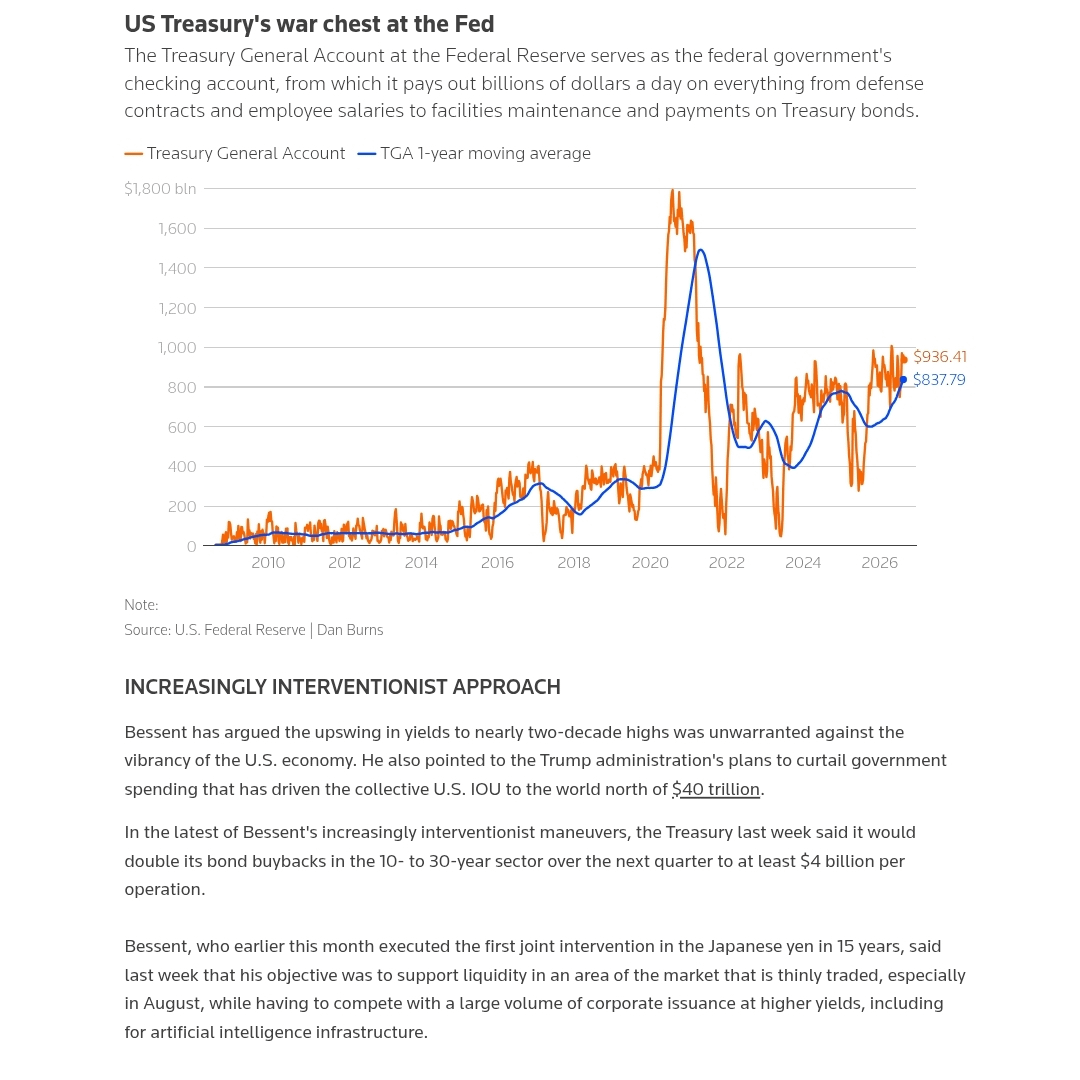
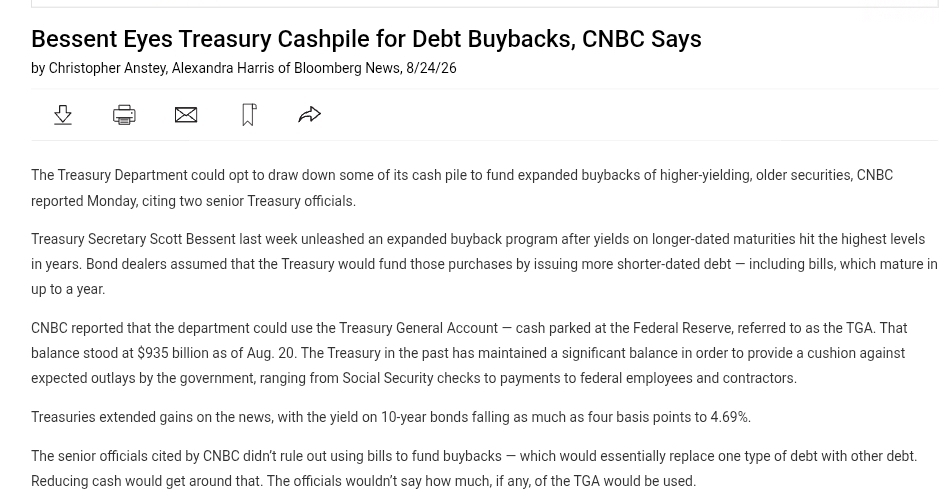
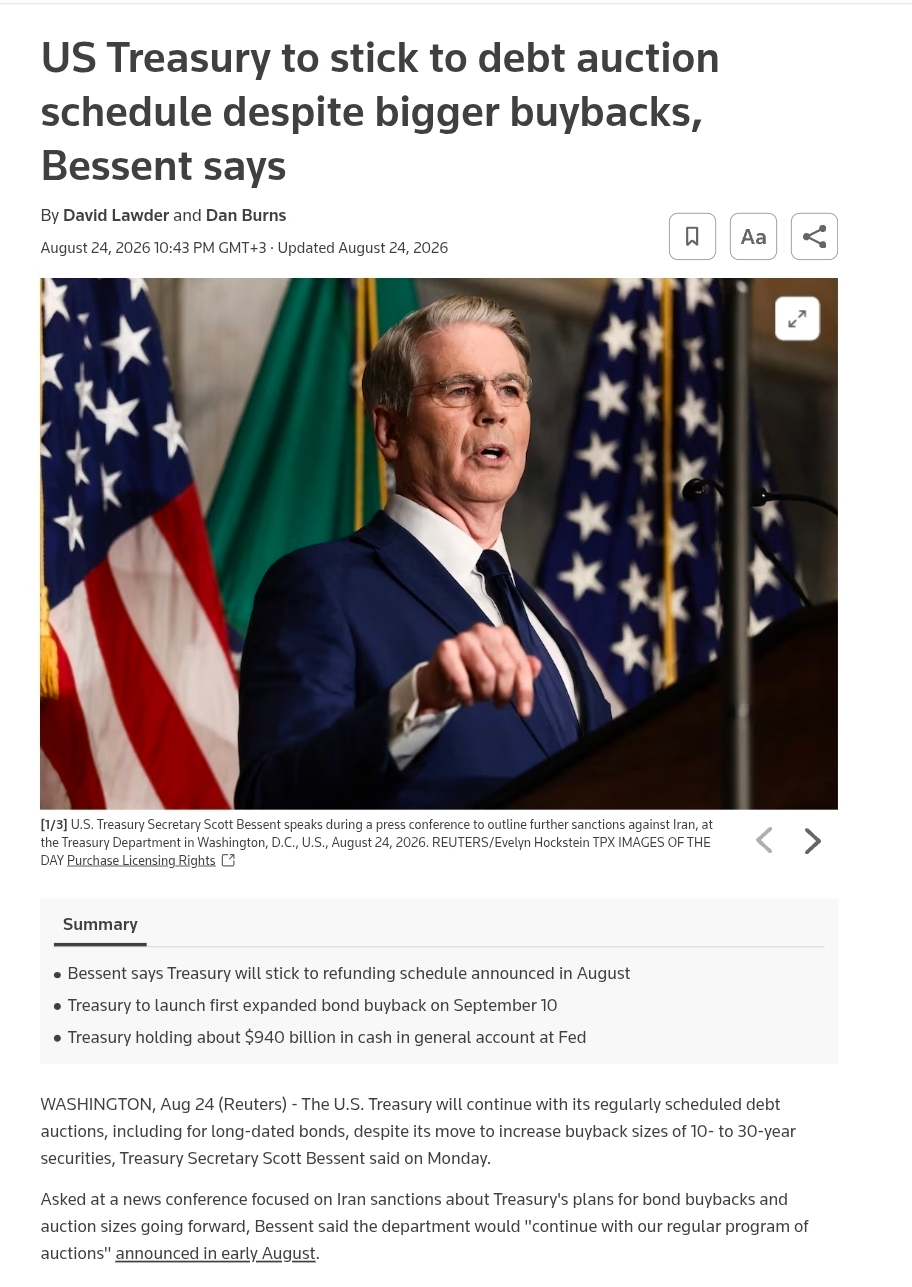
The material I’m looking at highlights several separate developments. The Treasury General Account was around $935B on August 20, Treasury officials reportedly discussed the possibility of using cash balances to support Treasury buybacks, and spot Bitcoin ETF flows had recently strengthened.
At the same time, Strategy reportedly did not purchase Bitcoin during the referenced week, even as Bitcoin moved higher.
That doesn’t prove the rally is sustainable. But I think it raises a better question:
The question I’m more interested in is whether demand is broadening beyond the usual headline buyers.
If Bitcoin can advance while a highly visible corporate buyer is inactive, then the market may be relying on a wider combination of participants and liquidity conditions than the headlines suggest.
The bigger framework I’m watching is:
Treasury liquidity → bond-market conditions → risk appetite → ETF flows → Bitcoin
I wouldn’t jump from that chain to “Treasury policy means Bitcoin goes higher.” There are too many steps, and each one has its own uncertainty.
For me, the more useful signal is whether demand continues to broaden.
That’s a much more interesting question than simply asking who bought Bitcoin this week.
#BTC $BTC
Bitcoin’s Rally Is Raising a Different Question: Who Is Actually Buying?
One thing caught my attention in the recent Bitcoin move: the rally doesn’t fit neatly into the usual “one big buyer is absorbing supply” story.
The material I’m looking at highlights several separate developments. The Treasury General Account was around $935B on August 20, Treasury officials reportedly discussed the possibility of using cash balances to support Treasury buybacks, and spot Bitcoin ETF flows had recently strengthened.
At the same time, Strategy reportedly did not purchase Bitcoin during the referenced week, even as Bitcoin moved higher.
That doesn’t prove the rally is sustainable. But I think it raises a better question:
The question I’m more interested in is whether demand is broadening beyond the usual headline buyers.
If Bitcoin can advance while a highly visible corporate buyer is inactive, then the market may be relying on a wider combination of participants and liquidity conditions than the headlines suggest.
The bigger framework I’m watching is:
Treasury liquidity → bond-market conditions → risk appetite → ETF flows → Bitcoin
I wouldn’t jump from that chain to “Treasury policy means Bitcoin goes higher.” There are too many steps, and each one has its own uncertainty.
For me, the more useful signal is whether demand continues to broaden.
That’s a much more interesting question than simply asking who bought Bitcoin this week.
#BTC $BTC
One thing caught my attention in the recent Bitcoin move: the rally doesn’t fit neatly into the usual “one big buyer is absorbing supply” story.
The material I’m looking at highlights several separate developments. The Treasury General Account was around $935B on August 20, Treasury officials reportedly discussed the possibility of using cash balances to support Treasury buybacks, and spot Bitcoin ETF flows had recently strengthened.
At the same time, Strategy reportedly did not purchase Bitcoin during the referenced week, even as Bitcoin moved higher.
That doesn’t prove the rally is sustainable. But I think it raises a better question:
The question I’m more interested in is whether demand is broadening beyond the usual headline buyers.
If Bitcoin can advance while a highly visible corporate buyer is inactive, then the market may be relying on a wider combination of participants and liquidity conditions than the headlines suggest.
The bigger framework I’m watching is:
Treasury liquidity → bond-market conditions → risk appetite → ETF flows → Bitcoin
I wouldn’t jump from that chain to “Treasury policy means Bitcoin goes higher.” There are too many steps, and each one has its own uncertainty.
For me, the more useful signal is whether demand continues to broaden.
That’s a much more interesting question than simply asking who bought Bitcoin this week.
#BTC $BTC
1
2
969
#ShareYourTrades $BNB
BNB Looks Strong on the 4H Chart — But I’m Watching Confirmation
The BNB chart I’m looking at has a few signals pointing in the same direction.
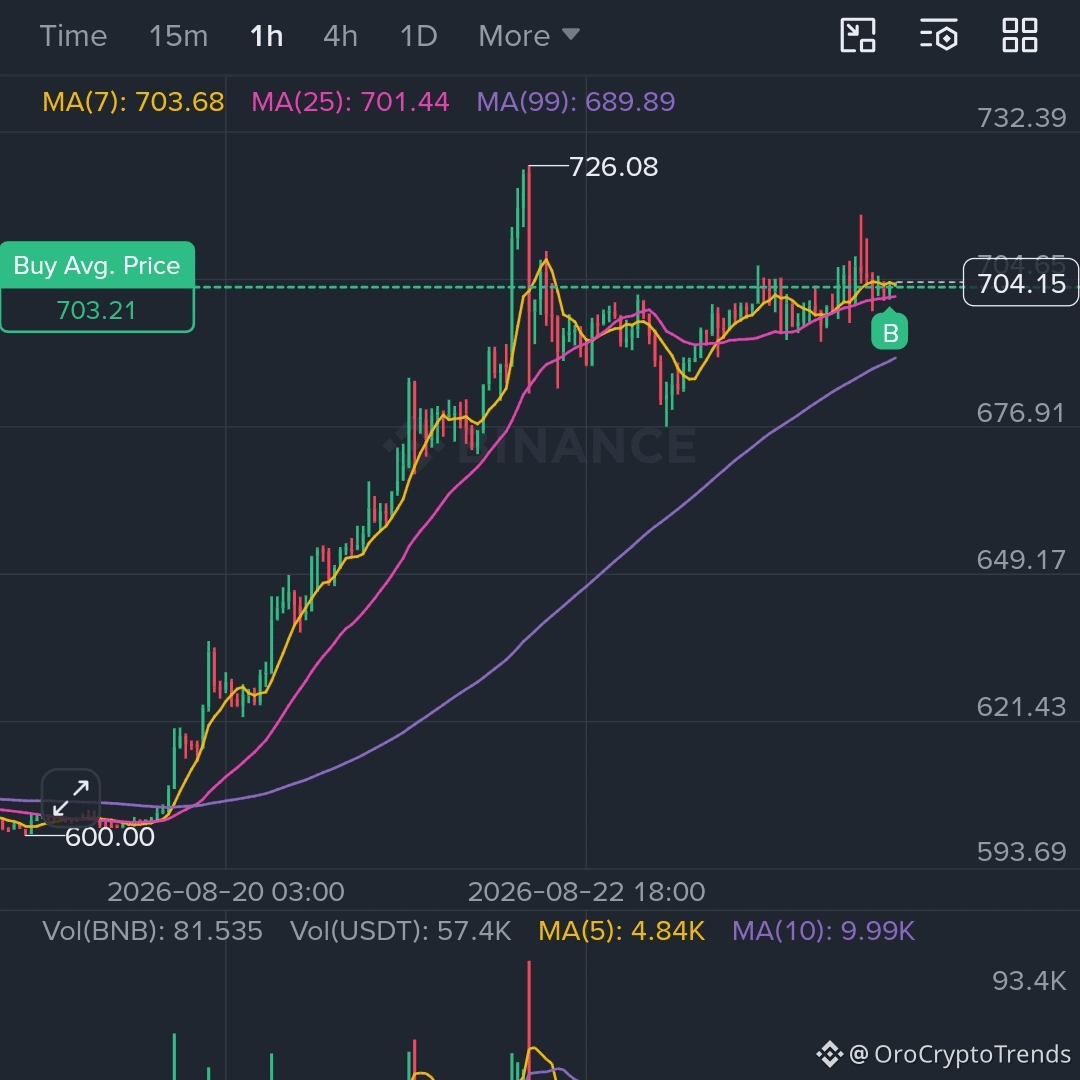
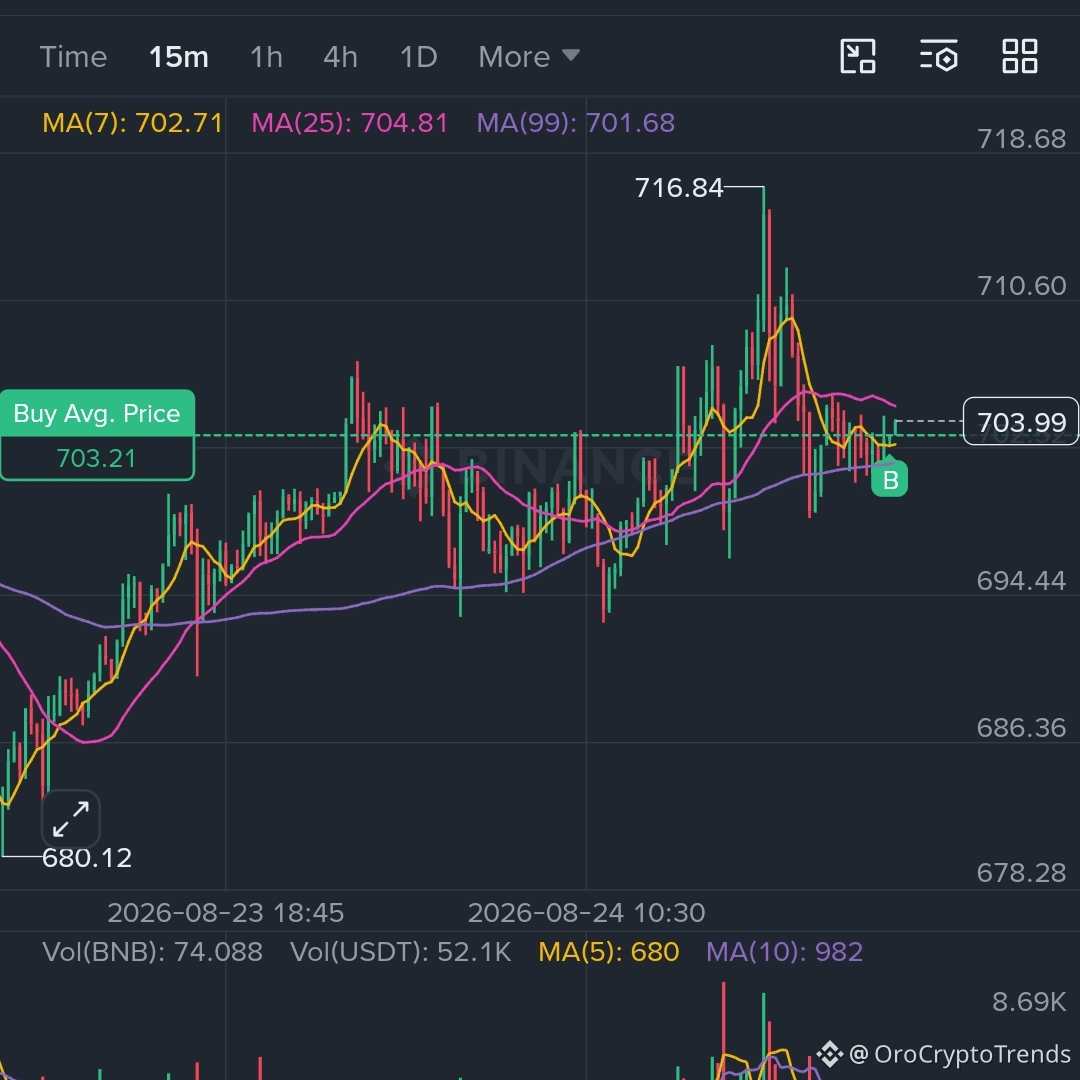
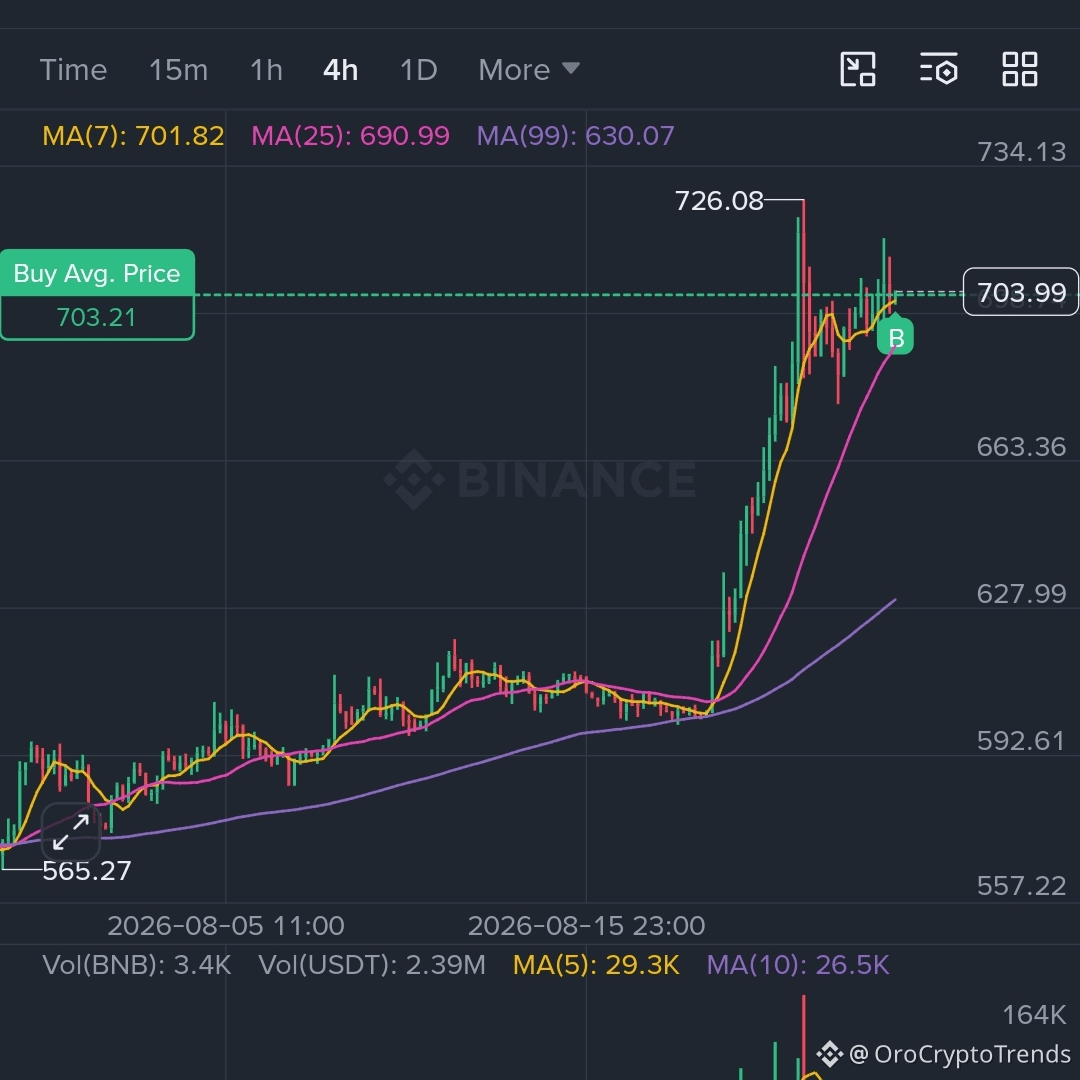
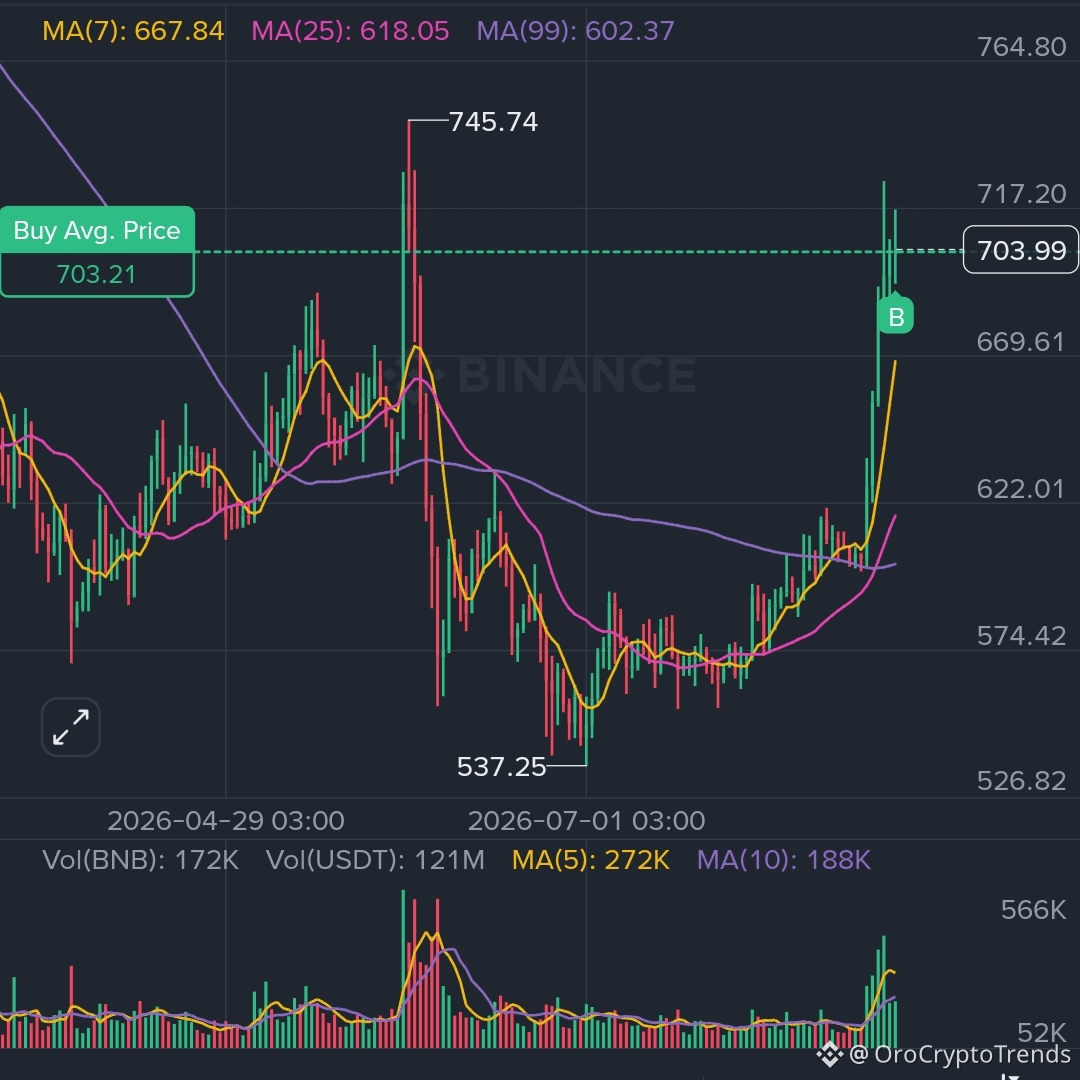
On the supplied 4H screen, BNB is trading above the MA(7), MA(25), and MA(99). The visible order-book data also shows a stronger bid-side ratio, while volume and the recent price structure provide additional context.
That’s the factual part.
My interpretation is a little more cautious: the alignment of the moving averages makes the short-to-medium-term structure look constructive, but moving-average positioning alone doesn’t prove that momentum will continue.
What interests me more is whether price can hold the areas that have already acted as important levels on the chart while maintaining meaningful trading activity. If price moves higher without convincing volume, I’d be less comfortable treating the move as strong confirmation.
There’s also an important counterpoint: order-book ratios can change quickly, and a visible imbalance is not the same thing as sustained demand.
So for me, the interesting part of this BNB setup isn’t simply that the chart looks positive. It’s whether the different signals continue confirming one another instead of diverging.
That distinction matters more than any single indicator.
#ShareYourTrades $BNB
BNB Looks Strong on the 4H Chart — But I’m Watching Confirmation
The BNB chart I’m looking at has a few signals pointing in the same direction.
On the supplied 4H screen, BNB is trading above the MA(7), MA(25), and MA(99). The visible order-book data also shows a stronger bid-side ratio, while volume and the recent price structure provide additional context.
That’s the factual part.
My interpretation is a little more cautious: the alignment of the moving averages makes the short-to-medium-term structure look constructive, but moving-average positioning alone doesn’t prove that momentum will continue.
What interests me more is whether price can hold the areas that have already acted as important levels on the chart while maintaining meaningful trading activity. If price moves higher without convincing volume, I’d be less comfortable treating the move as strong confirmation.
There’s also an important counterpoint: order-book ratios can change quickly, and a visible imbalance is not the same thing as sustained demand.
So for me, the interesting part of this BNB setup isn’t simply that the chart looks positive. It’s whether the different signals continue confirming one another instead of diverging.
That distinction matters more than any single indicator.
BNB Looks Strong on the 4H Chart — But I’m Watching Confirmation
The BNB chart I’m looking at has a few signals pointing in the same direction.
On the supplied 4H screen, BNB is trading above the MA(7), MA(25), and MA(99). The visible order-book data also shows a stronger bid-side ratio, while volume and the recent price structure provide additional context.
That’s the factual part.
My interpretation is a little more cautious: the alignment of the moving averages makes the short-to-medium-term structure look constructive, but moving-average positioning alone doesn’t prove that momentum will continue.
What interests me more is whether price can hold the areas that have already acted as important levels on the chart while maintaining meaningful trading activity. If price moves higher without convincing volume, I’d be less comfortable treating the move as strong confirmation.
There’s also an important counterpoint: order-book ratios can change quickly, and a visible imbalance is not the same thing as sustained demand.
So for me, the interesting part of this BNB setup isn’t simply that the chart looks positive. It’s whether the different signals continue confirming one another instead of diverging.
That distinction matters more than any single indicator.
3
647
$BTC BTC Is Moving Up — But It Still Has Something to Prove
BTC/USDT is trading around 78,660, up 1.42% over the past 24 hours based on the supplied data.
At first glance, that looks constructive. But the more interesting question is what happens next.
Price is above the 5-minute MA(7) and MA(99), while sitting almost directly around the MA(25). That tells me the short-term structure has improved, but momentum hasn't created much separation yet.
The bigger reference point is 79,450 — today’s high. BTC is still roughly $790 below it.
That makes this less about whether BTC is “bullish” and more about whether price can sustain the recovery.
There’s another detail I’d treat carefully: the reported order-book buy/sell sentiment is 95.3%/4.7%. That looks extremely one-sided, but it shouldn't be treated as proof that price must continue higher. Order-book conditions can change quickly.
My read: BTC's short-term structure isn't obviously bearish right now. It's fighting the need to prove that this recovery has enough strength to challenge the recent high without losing its short-term structure.
That distinction matters more to me than the 1.42% headline.
#BTC
$BTC BTC Is Moving Up — But It Still Has Something to Prove
BTC/USDT is trading around 78,660, up 1.42% over the past 24 hours based on the supplied data.
At first glance, that looks constructive. But the more interesting question is what happens next.
Price is above the 5-minute MA(7) and MA(99), while sitting almost directly around the MA(25). That tells me the short-term structure has improved, but momentum hasn't created much separation yet.
The bigger reference point is 79,450 — today’s high. BTC is still roughly $790 below it.
That makes this less about whether BTC is “bullish” and more about whether price can sustain the recovery.
There’s another detail I’d treat carefully: the reported order-book buy/sell sentiment is 95.3%/4.7%. That looks extremely one-sided, but it shouldn't be treated as proof that price must continue higher. Order-book conditions can change quickly.
My read: BTC's short-term structure isn't obviously bearish right now. It's fighting the need to prove that this recovery has enough strength to challenge the recent high without losing its short-term structure.
That distinction matters more to me than the 1.42% headline.
#BTC
BTC/USDT is trading around 78,660, up 1.42% over the past 24 hours based on the supplied data.
At first glance, that looks constructive. But the more interesting question is what happens next.
Price is above the 5-minute MA(7) and MA(99), while sitting almost directly around the MA(25). That tells me the short-term structure has improved, but momentum hasn't created much separation yet.
The bigger reference point is 79,450 — today’s high. BTC is still roughly $790 below it.
That makes this less about whether BTC is “bullish” and more about whether price can sustain the recovery.
There’s another detail I’d treat carefully: the reported order-book buy/sell sentiment is 95.3%/4.7%. That looks extremely one-sided, but it shouldn't be treated as proof that price must continue higher. Order-book conditions can change quickly.
My read: BTC's short-term structure isn't obviously bearish right now. It's fighting the need to prove that this recovery has enough strength to challenge the recent high without losing its short-term structure.
That distinction matters more to me than the 1.42% headline.
#BTC
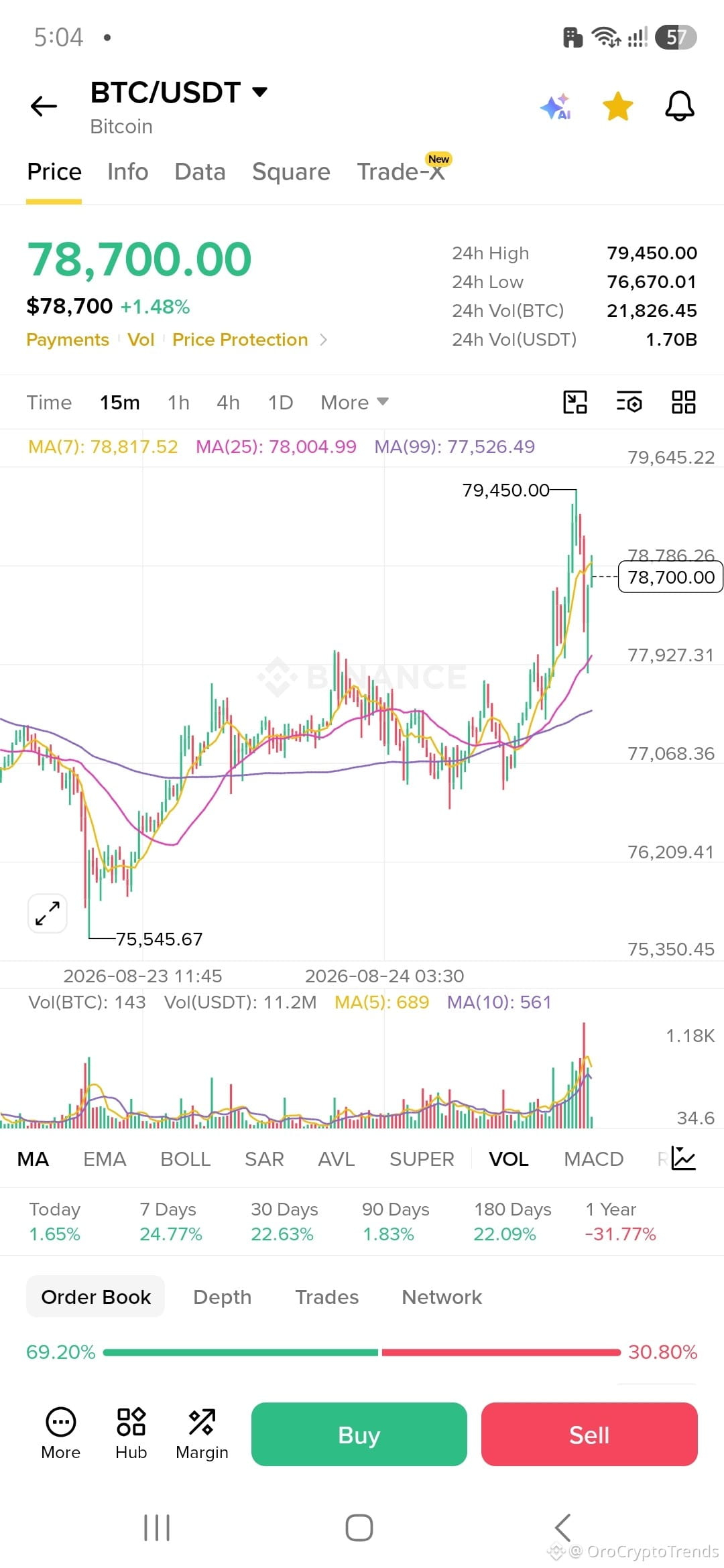
1
1
638
$ONDO ONDO Is Up 17% — But the Bigger Signal Is Elsewhere
ONDO is showing an interesting contradiction.
Based on the market data I’m using, the token is up roughly 17% over the past 7 days, while the broader performance picture remains negative: about -6% over 30 days, -13% over 90 days, and -62% over the past year.
So I don't think the most useful question is, “Why is ONDO rising in the short term?”
It’s: Is this momentum actually changing the trend?
A short-term rally can improve sentiment without repairing the higher-timeframe structure. That distinction matters.
Right now, the data suggests short-term demand is improving, but a broader recovery is still unproven.
For me, the next thing worth watching isn't simply whether ONDO keeps posting green days. It’s whether the market can turn that demand into a sustained pattern of stronger market structure.
That’s the part a 7-day percentage cannot tell us.
There’s also a counterpoint: if the recent demand persists and recent highs are progressively reclaimed, the current move could become more structurally meaningful.
But if the rally repeatedly stalls and retreats, the weekly strength may have been little more than a relief move inside a larger downtrend.
Momentum tells us what is happening now. Structure tells us whether it is changing anything.
The interesting question is whether that momentum develops into a sustained change in market structure.
$ONDO ONDO Is Up 17% — But the Bigger Signal Is Elsewhere
ONDO is showing an interesting contradiction.
Based on the market data I’m using, the token is up roughly 17% over the past 7 days, while the broader performance picture remains negative: about -6% over 30 days, -13% over 90 days, and -62% over the past year.
So I don't think the most useful question is, “Why is ONDO rising in the short term?”
It’s: Is this momentum actually changing the trend?
A short-term rally can improve sentiment without repairing the higher-timeframe structure. That distinction matters.
Right now, the data suggests short-term demand is improving, but a broader recovery is still unproven.
For me, the next thing worth watching isn't simply whether ONDO keeps posting green days. It’s whether the market can turn that demand into a sustained pattern of stronger market structure.
That’s the part a 7-day percentage cannot tell us.
There’s also a counterpoint: if the recent demand persists and recent highs are progressively reclaimed, the current move could become more structurally meaningful.
But if the rally repeatedly stalls and retreats, the weekly strength may have been little more than a relief move inside a larger downtrend.
Momentum tells us what is happening now. Structure tells us whether it is changing anything.
The interesting question is whether that momentum develops into a sustained change in market structure.
ONDO is showing an interesting contradiction.
Based on the market data I’m using, the token is up roughly 17% over the past 7 days, while the broader performance picture remains negative: about -6% over 30 days, -13% over 90 days, and -62% over the past year.
So I don't think the most useful question is, “Why is ONDO rising in the short term?”
It’s: Is this momentum actually changing the trend?
A short-term rally can improve sentiment without repairing the higher-timeframe structure. That distinction matters.
Right now, the data suggests short-term demand is improving, but a broader recovery is still unproven.
For me, the next thing worth watching isn't simply whether ONDO keeps posting green days. It’s whether the market can turn that demand into a sustained pattern of stronger market structure.
That’s the part a 7-day percentage cannot tell us.
There’s also a counterpoint: if the recent demand persists and recent highs are progressively reclaimed, the current move could become more structurally meaningful.
But if the rally repeatedly stalls and retreats, the weekly strength may have been little more than a relief move inside a larger downtrend.
Momentum tells us what is happening now. Structure tells us whether it is changing anything.
The interesting question is whether that momentum develops into a sustained change in market structure.
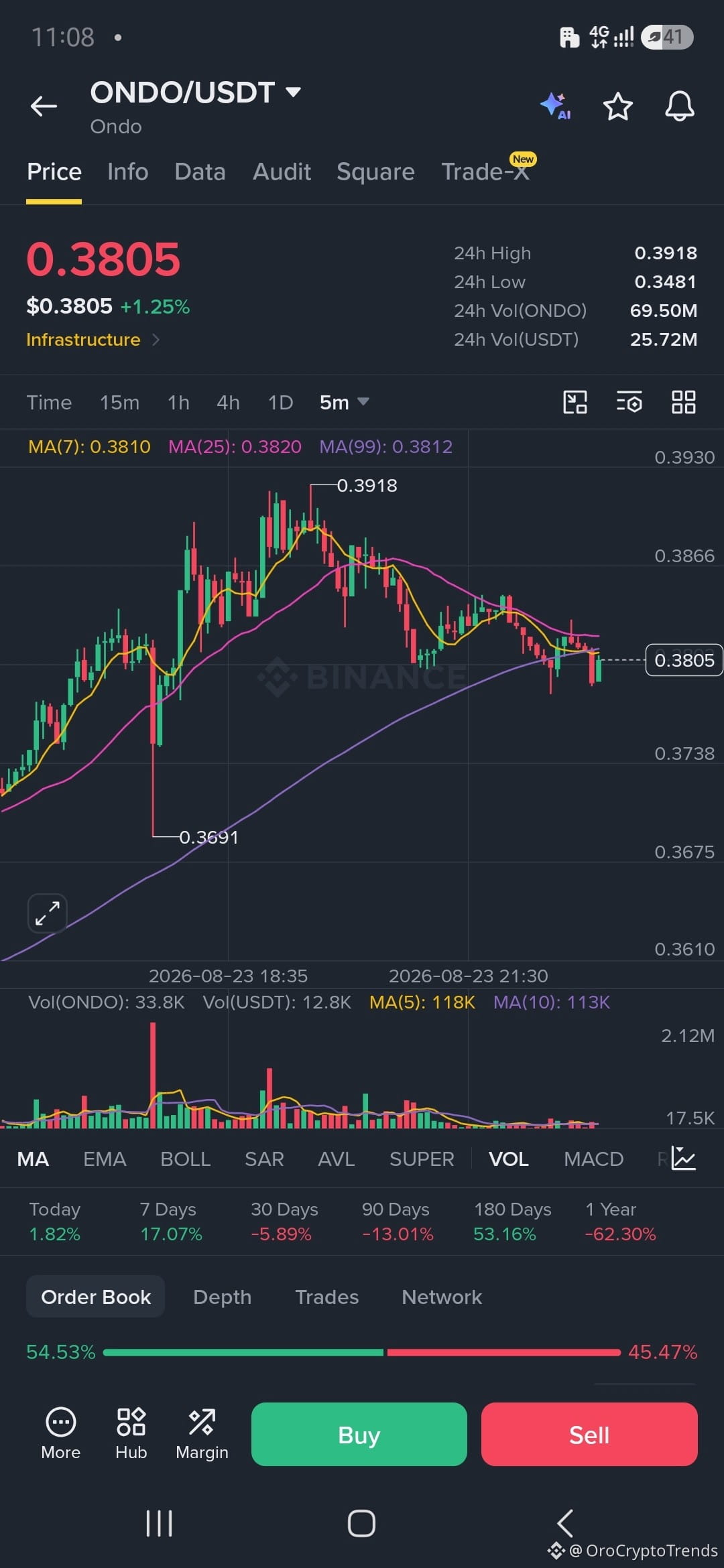
5
879
Bitcoin’s recent performance has been strong. What’s less clear is whether that strength is spreading across timeframes.
BTC is trading around $77.1K, after gaining roughly 22.2% over the past 7 days and 18.35% over 30 days. On the 4H and 1D charts, price remains above the 7, 25, and 99 moving averages.
But the 1H picture is less decisive. BTC is above the 99 MA while sitting slightly below the 7 and 25 MAs. That doesn’t invalidate the higher-timeframe structure, but it does show that short-term momentum isn’t moving in complete alignment with it.
There’s another detail I find important: the recent move looks much stronger over 7 and 30 days than over 90 days, where performance is only around +0.57%. At the same time, BTC is still roughly 34% below its 1-year level.
So I wouldn’t reduce the current setup to simply “Bitcoin is bullish.”
The more useful question is whether the market can turn this recent advance into broader, multi-timeframe strength.
The ~$79.5K area also matters because it appears as a recent high on the supplied 4H/1H charts. For now, the ~$79.5K area remains a useful reference point when assessing whether the recent consolidation is resolving into a new directional move.
For now, the higher-timeframe trend looks stronger than the immediate momentum.
$BTC #BTC
{future}(BTCUSDT)
Bitcoin’s recent performance has been strong. What’s less clear is whether that strength is spreading across timeframes.
BTC is trading around $77.1K, after gaining roughly 22.2% over the past 7 days and 18.35% over 30 days. On the 4H and 1D charts, price remains above the 7, 25, and 99 moving averages.
But the 1H picture is less decisive. BTC is above the 99 MA while sitting slightly below the 7 and 25 MAs. That doesn’t invalidate the higher-timeframe structure, but it does show that short-term momentum isn’t moving in complete alignment with it.
There’s another detail I find important: the recent move looks much stronger over 7 and 30 days than over 90 days, where performance is only around +0.57%. At the same time, BTC is still roughly 34% below its 1-year level.
So I wouldn’t reduce the current setup to simply “Bitcoin is bullish.”
The more useful question is whether the market can turn this recent advance into broader, multi-timeframe strength.
The ~$79.5K area also matters because it appears as a recent high on the supplied 4H/1H charts. For now, the ~$79.5K area remains a useful reference point when assessing whether the recent consolidation is resolving into a new directional move.
For now, the higher-timeframe trend looks stronger than the immediate momentum.
$BTC #BTC
BTC is trading around $77.1K, after gaining roughly 22.2% over the past 7 days and 18.35% over 30 days. On the 4H and 1D charts, price remains above the 7, 25, and 99 moving averages.
But the 1H picture is less decisive. BTC is above the 99 MA while sitting slightly below the 7 and 25 MAs. That doesn’t invalidate the higher-timeframe structure, but it does show that short-term momentum isn’t moving in complete alignment with it.
There’s another detail I find important: the recent move looks much stronger over 7 and 30 days than over 90 days, where performance is only around +0.57%. At the same time, BTC is still roughly 34% below its 1-year level.
So I wouldn’t reduce the current setup to simply “Bitcoin is bullish.”
The more useful question is whether the market can turn this recent advance into broader, multi-timeframe strength.
The ~$79.5K area also matters because it appears as a recent high on the supplied 4H/1H charts. For now, the ~$79.5K area remains a useful reference point when assessing whether the recent consolidation is resolving into a new directional move.
For now, the higher-timeframe trend looks stronger than the immediate momentum.
$BTC #BTC
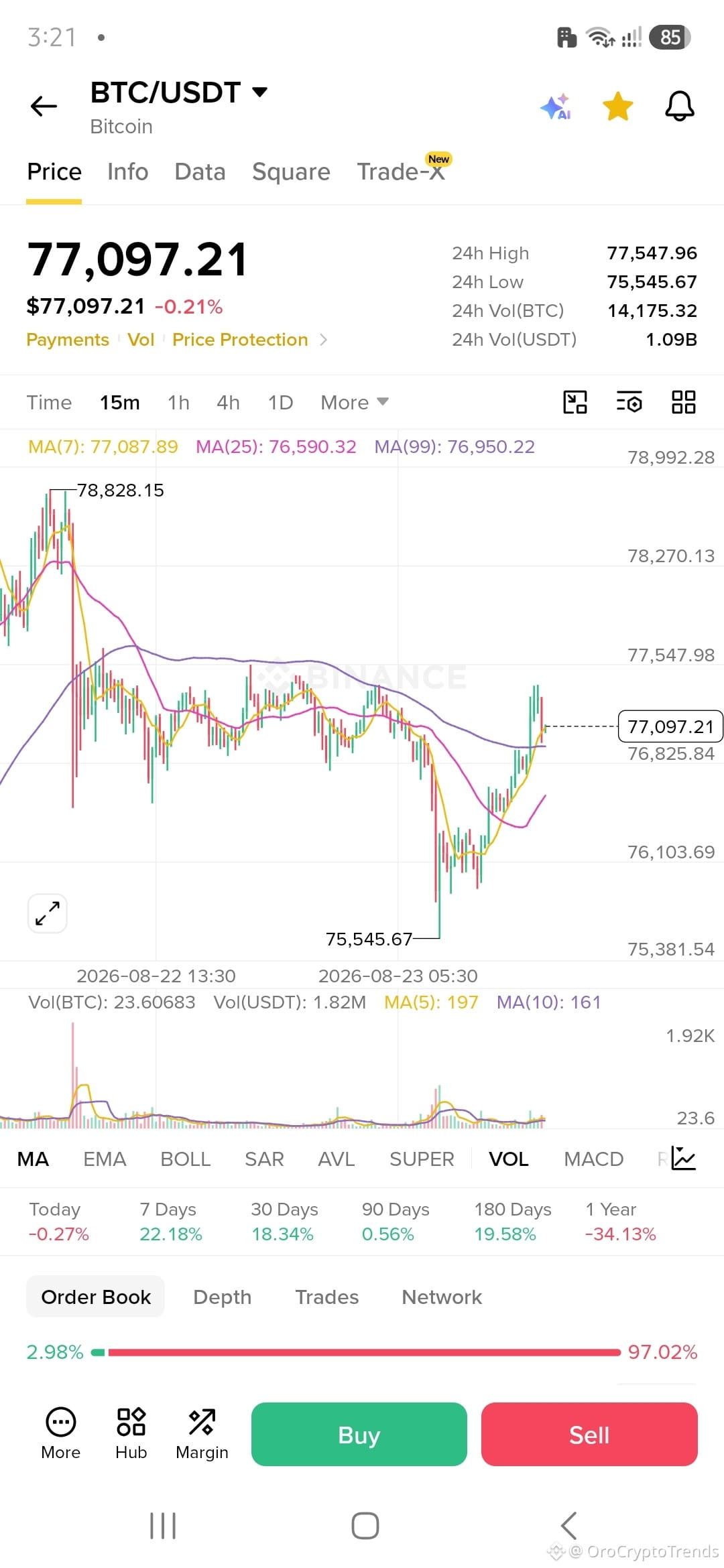
4
576
Log in to explore more content
Join global crypto users on Binance Square
⚡️ Get latest and useful information about crypto.
💬 Trusted by the world’s largest crypto exchange.
👍 Discover real insights from verified creators.
Email / Phone number
Trending Topics
AppleDebutsFoldablePhone
13,634 views
313 Discussing
#appledebutsfoldablephone I Got My Hands on the iPhone Duo, Apple’s First Foldable Phone. Here’s What Stands Out
The palm-size phone is Apple's boldest handset in years, with a 5.4-inch cover screen and a 7.6-inch main display. I spent some time with the Duo before its October launch.It’s finally here: Apple on Wednesday unveiled its first foldable iPhone, called the iPhone Duo.
iPhone Duo design and build
The iPhone Duo is compact, with a passport-size design. It has a 7.6-inch display on the inside and a 5.4-inch outer display. It fits squarely in my palm, with dimensions similar to Samsung’s Galaxy Z Fold 8, which has a 7.6-inch inner display and a 5.5-inch cover display.
Apple says the Duo is the thinnest iPhone ever when open, measuring 5.2mm. It’s 11.3mm thick when closed. A titanium frame keeps it lightweight at 254 grams.
One of the key differences in feel between Apple’s and Samsung’s phones is that the iPhone Duo has a matte, nano-textured finish on the inner display, which reduces the phone’s crease while also curbing reflections. It has a satisfying feel and really makes the crease virtually disappear when the screen is on. I find it even harder to notice than the Z Fold 8’s, which also has an anti-reflective display.$ONG $IMX $TAC
Isabella-I
·4 Likes
·1k views
EUExtendsCentralContactPointToCASPs
1,281 views
75 Discussing
US10YTreasuryYieldHitsHighestSinceNov2023
16,365 views
299 Discussing