
OmaCQ
1.8k Posts

OmaCQ
Crypto explorer | Daily market vibes, BTC/ETH/SOL updates, and altcoin gems | Sharing insights, not financial advice | Football📈🚀
Frequent Trader
5.7 Years
78 Following
1.2K+ Followers
4.9K+ Liked
Posts
All
Quotes
Videos
Live
PINNED
🚨 $ZEC about to EXPLODE while some of us are still sleeping on it 😤
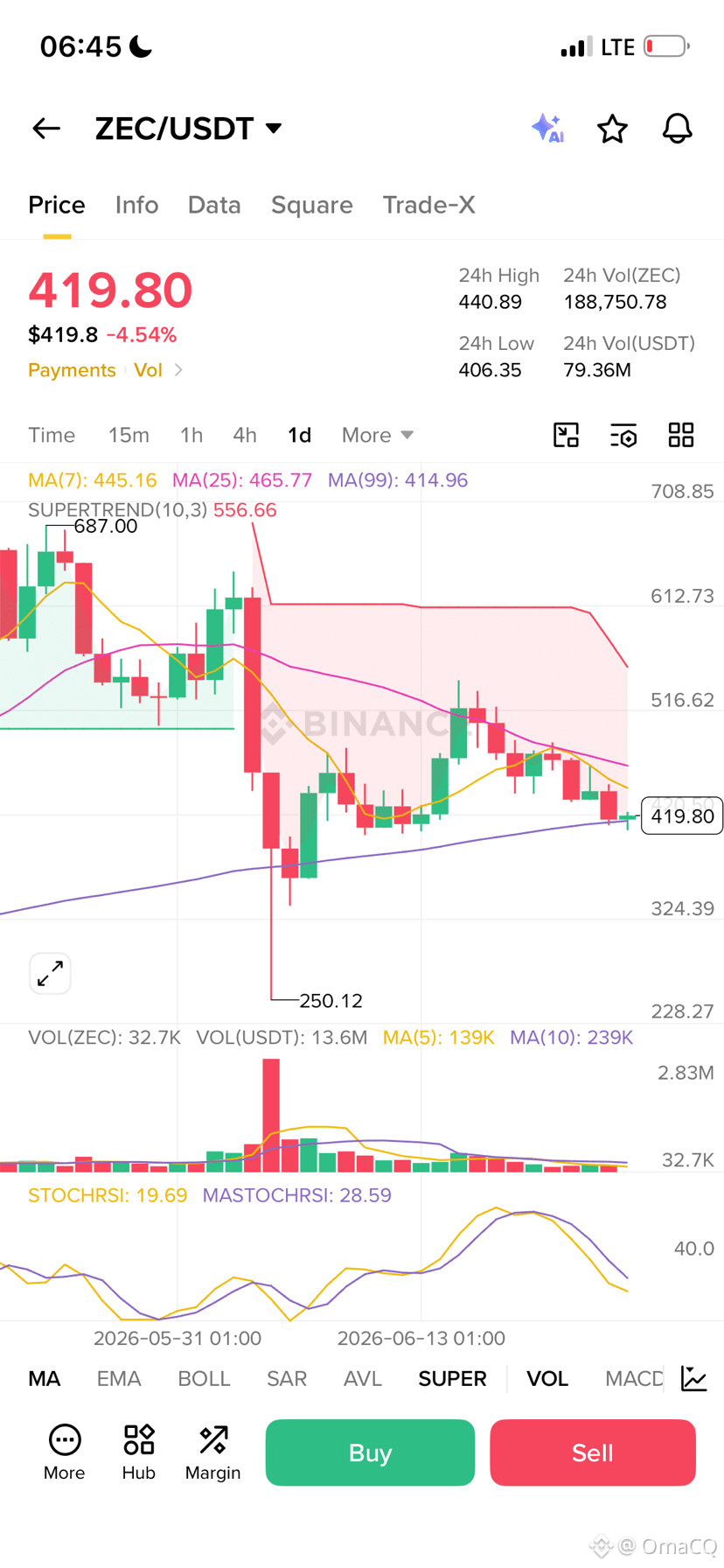
Look at this chart: Price slammed to 406 support, Stoch RSI screaming OVERSOLD at 19.69 on daily. MA99 holding like a champ at ~415. This is textbook capitulation before the next leg up.
Bears been celebrating the -4.5% dip today? Cute. Privacy coins like $ZEC always get hated on until they 3-5x in silence. While you’re chasing memecoins and “AI” narratives, real utility is building.
My Long Setup:
• Entry: 415-422
• SL: sub 400 (tight)
• Targets: 445 → 480 → 520+
If we reclaim 440-445, next stop is 500+. $ZEC to $1000 EOY narrative is NOT dead.
Who’s loading the dip with me? Or are you still scared of “regulatory risk” like , you know what i mean? 🔥
#ZEC
#ShareYourThoughtOnBTC
Look at this chart: Price slammed to 406 support, Stoch RSI screaming OVERSOLD at 19.69 on daily. MA99 holding like a champ at ~415. This is textbook capitulation before the next leg up.
Bears been celebrating the -4.5% dip today? Cute. Privacy coins like $ZEC always get hated on until they 3-5x in silence. While you’re chasing memecoins and “AI” narratives, real utility is building.
My Long Setup:
• Entry: 415-422
• SL: sub 400 (tight)
• Targets: 445 → 480 → 520+
If we reclaim 440-445, next stop is 500+. $ZEC to $1000 EOY narrative is NOT dead.
Who’s loading the dip with me? Or are you still scared of “regulatory risk” like , you know what i mean? 🔥
#ZEC
#ShareYourThoughtOnBTC
PINNED
🚨 $TRADOOR
Just took a look at the chart and damn… what a wild ride 😮💨
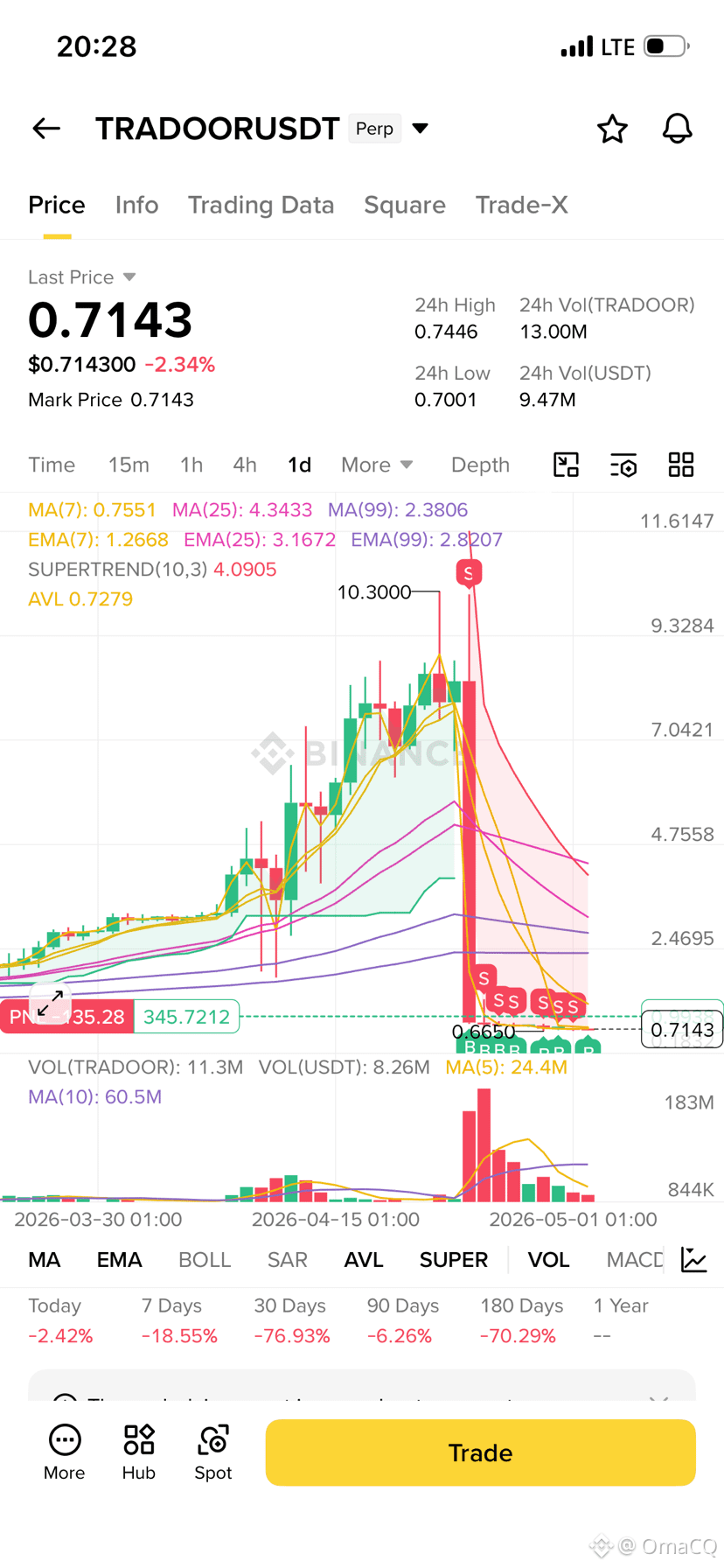
Price is currently sitting at 0.7143 (-2.34%) after that massive pump to 10.30 and the brutal crash. Classic blow-off top behavior.
🔥Key Levels to Watch:
Support Zones:
• 0.6650 ← Strongest right now (heavy volume shelf + multiple S labels)
• 0.7001 ← 24h low
• Below that: 0.50 – 0.55
Resistance Zones:
• 0.7446 ← Immediate 24h high
• Next: 0.85 – 0.90
• Then 1.50 – 2.00 (major overhead)
The Supertrend is still chilling way up at 4.09, so the trend remains bearish for now. Price is struggling right above the 0.6650 demand zone.
If we hold 0.6650, we might see a relief bounce toward 0.85–0.90.
But a clean break below it could send this thing fast toward 0.50s.
High risk, high reward setup. Scalpers are eating right now.
What do you guys think?
Will it hold or are we going lower? Drop your thoughts 👇
#TRADOOR
Just took a look at the chart and damn… what a wild ride 😮💨
Price is currently sitting at 0.7143 (-2.34%) after that massive pump to 10.30 and the brutal crash. Classic blow-off top behavior.
🔥Key Levels to Watch:
Support Zones:
• 0.6650 ← Strongest right now (heavy volume shelf + multiple S labels)
• 0.7001 ← 24h low
• Below that: 0.50 – 0.55
Resistance Zones:
• 0.7446 ← Immediate 24h high
• Next: 0.85 – 0.90
• Then 1.50 – 2.00 (major overhead)
The Supertrend is still chilling way up at 4.09, so the trend remains bearish for now. Price is struggling right above the 0.6650 demand zone.
If we hold 0.6650, we might see a relief bounce toward 0.85–0.90.
But a clean break below it could send this thing fast toward 0.50s.
High risk, high reward setup. Scalpers are eating right now.
What do you guys think?
Will it hold or are we going lower? Drop your thoughts 👇
#TRADOOR
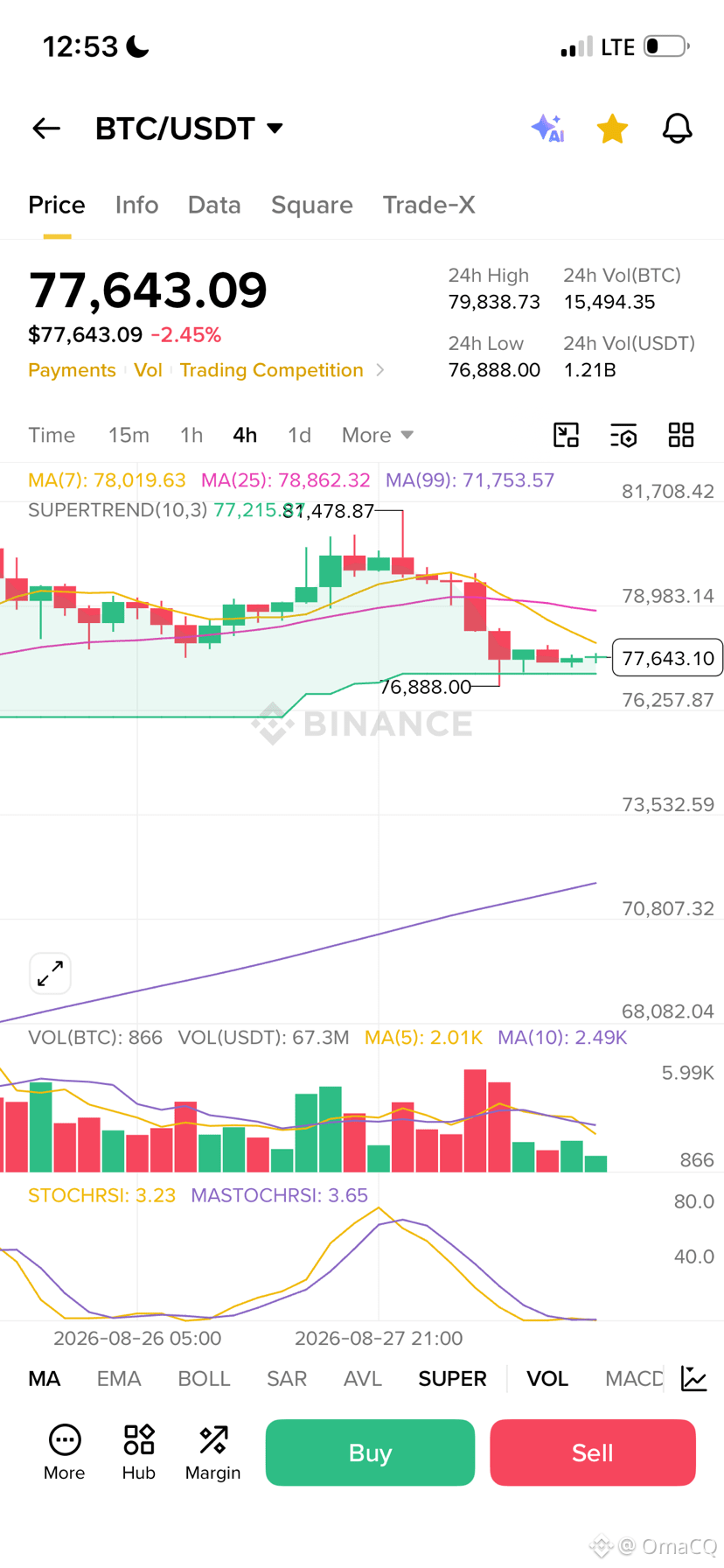
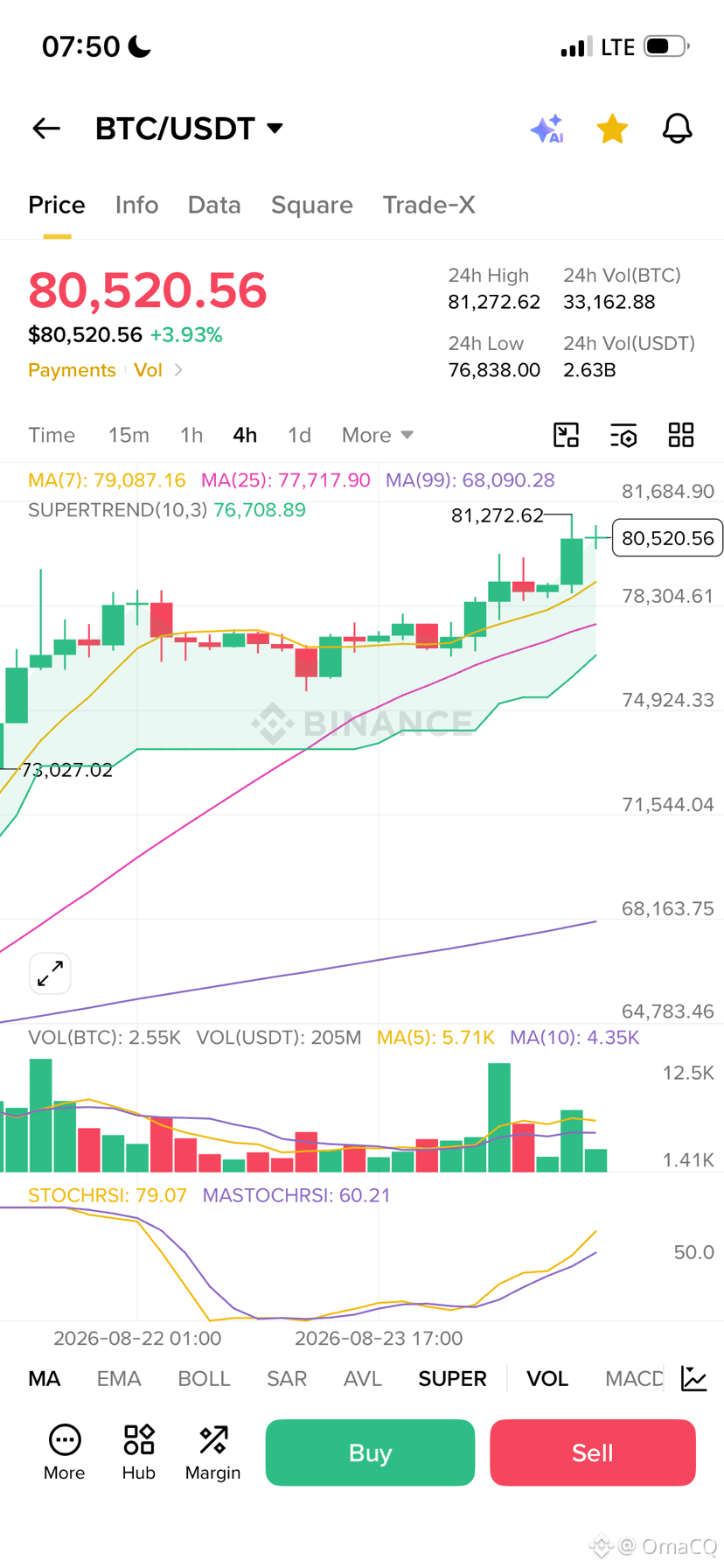
$BTC grinding lower under 78k while half the timeline is still screaming “this is the dip before 100k.”
Support at 76.8k is doing the heavy lifting for now. Break that with any real volume and the next stop isn’t “buy the dip” territory, it’s a proper flush. Supertrend flipped, short MAs are sloping down, and the bounce attempts keep getting sold.
Not bearish for the sake of it. Just reading the chart instead of the hopium. Respect the levels or the levels will respect your stop loss.
#ShareYourThoughtOnBTC
Support at 76.8k is doing the heavy lifting for now. Break that with any real volume and the next stop isn’t “buy the dip” territory, it’s a proper flush. Supertrend flipped, short MAs are sloping down, and the bounce attempts keep getting sold.
Not bearish for the sake of it. Just reading the chart instead of the hopium. Respect the levels or the levels will respect your stop loss.
#ShareYourThoughtOnBTC
$BTC Support & Resistance Update | Bullish Bias Intact 🚀
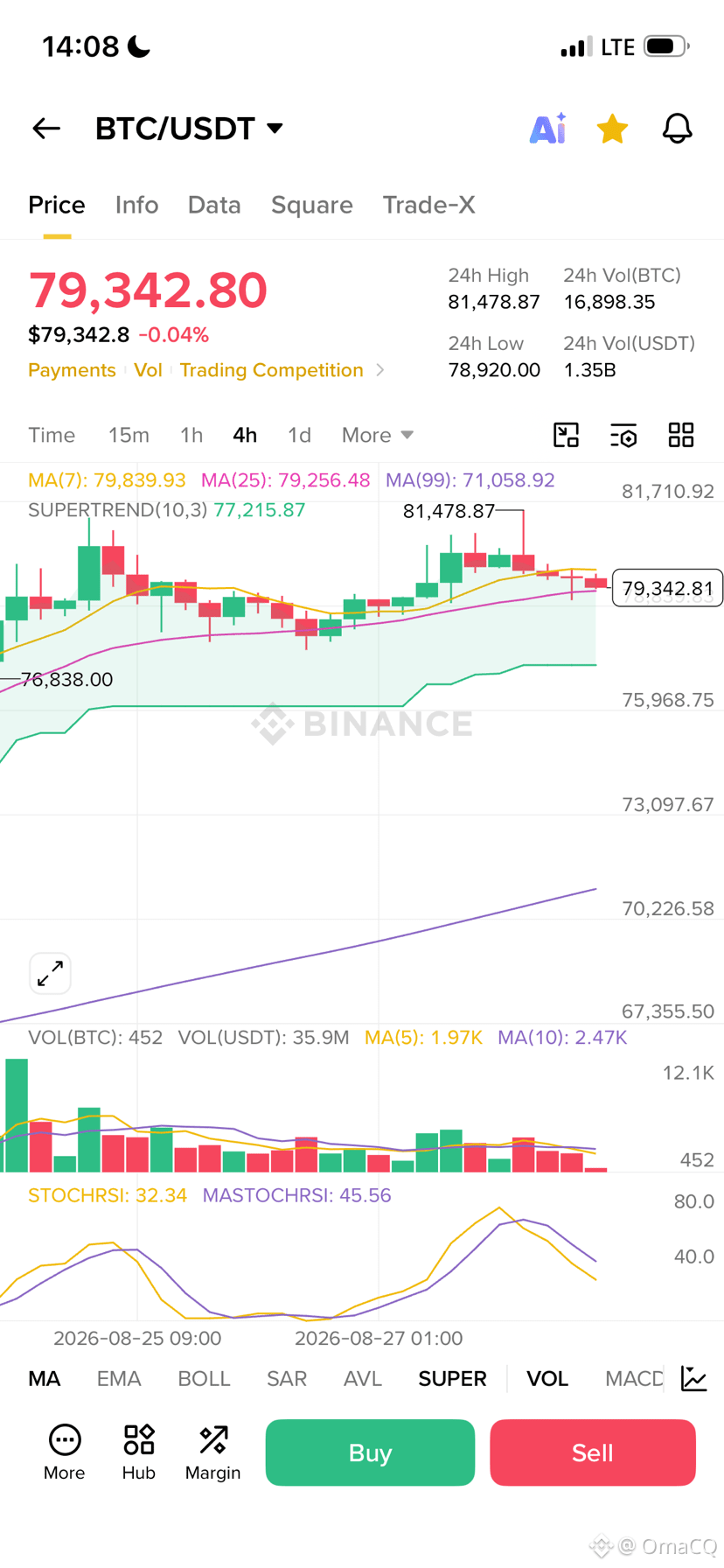
Bitcoin is currently trading in the $79,000–$80,000 zone after a strong recovery from the mid-$60k area. Price recently tested highs near $81,000–$81,500 before pulling back slightly.
Key Levels to Watch:
Resistance:
• Immediate: $80,000 – $81,300 (psychological + recent high zone)
• Strong: $82,500 – $83,000 (key confirmation level / 365-day MA area)
Support:
• Immediate: $78,000 – $78,500
• Strong: $76,500 – $77,000
• Major: $73,000 – $74,000
Bias: Bullish (with caution)
Structure remains constructive after the sharp breakout. Higher lows are holding and momentum is still with the bulls as long as $78,000 stays intact.
A clean daily close above $83,000 would confirm the early bull market phase many analysts are calling for and open the door toward $85k–$90k.
Failure to hold $78k could trigger a deeper retracement toward $76k–$74k before the next leg up.
Watch for:
• Volume confirmation on breakouts
• RSI cooling from overbought territory
• Reaction at the $80k–$83k supply zone
What’s your plan? Holding for the breakout or waiting for a better entry on support?
#ShareYourThoughtOnBTC
Bitcoin is currently trading in the $79,000–$80,000 zone after a strong recovery from the mid-$60k area. Price recently tested highs near $81,000–$81,500 before pulling back slightly.
Key Levels to Watch:
Resistance:
• Immediate: $80,000 – $81,300 (psychological + recent high zone)
• Strong: $82,500 – $83,000 (key confirmation level / 365-day MA area)
Support:
• Immediate: $78,000 – $78,500
• Strong: $76,500 – $77,000
• Major: $73,000 – $74,000
Bias: Bullish (with caution)
Structure remains constructive after the sharp breakout. Higher lows are holding and momentum is still with the bulls as long as $78,000 stays intact.
A clean daily close above $83,000 would confirm the early bull market phase many analysts are calling for and open the door toward $85k–$90k.
Failure to hold $78k could trigger a deeper retracement toward $76k–$74k before the next leg up.
Watch for:
• Volume confirmation on breakouts
• RSI cooling from overbought territory
• Reaction at the $80k–$83k supply zone
What’s your plan? Holding for the breakout or waiting for a better entry on support?
#ShareYourThoughtOnBTC
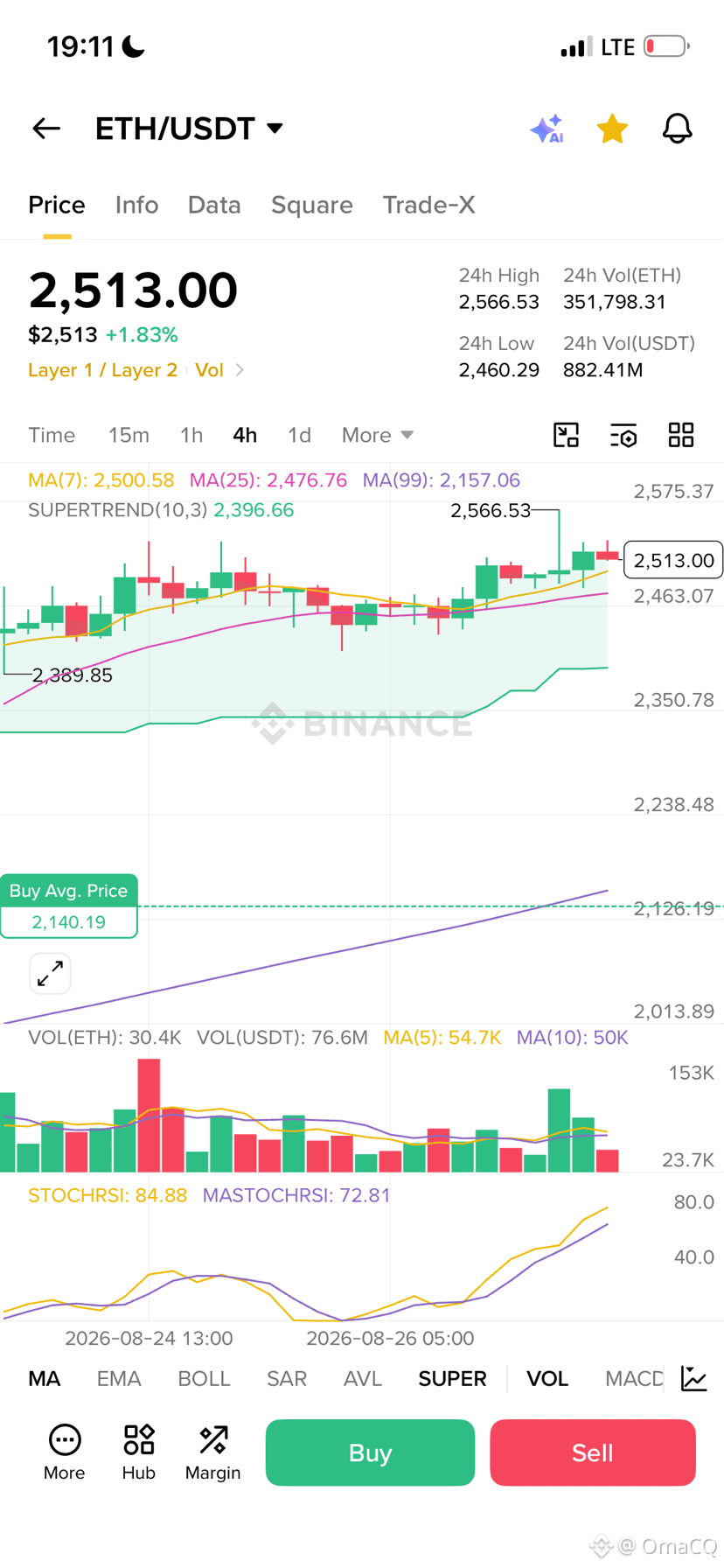
$ETH
Price: $2,513 (+1.83%)
24h High: $2,566.53 | 24h Low: $2,460.29
Key levels:
• Resistance: $2,566 – $2,575
• Support: $2,460 – $2,463
• Supertrend (10,3): $2,396.66 (still bullish)
• MA(7): $2,500.58 | MA(25): $2,476.76
STOCHRSI: 84.88 (overbought zone)
Buy avg: $2,140.19 → solid unrealized profit
Short idea (if rejection comes):
Entry: $2,540 – $2,560
SL: $2,580
TP1: $2,460
TP2: $2,400
RR ≈ 1:2+
Looking for rejection at previous high + overbought STOCHRSI.
Bulls still in control above Supertrend – wait for confirmation.
#ShareYourThoughtOnBTC
Price: $2,513 (+1.83%)
24h High: $2,566.53 | 24h Low: $2,460.29
Key levels:
• Resistance: $2,566 – $2,575
• Support: $2,460 – $2,463
• Supertrend (10,3): $2,396.66 (still bullish)
• MA(7): $2,500.58 | MA(25): $2,476.76
STOCHRSI: 84.88 (overbought zone)
Buy avg: $2,140.19 → solid unrealized profit
Short idea (if rejection comes):
Entry: $2,540 – $2,560
SL: $2,580
TP1: $2,460
TP2: $2,400
RR ≈ 1:2+
Looking for rejection at previous high + overbought STOCHRSI.
Bulls still in control above Supertrend – wait for confirmation.
#ShareYourThoughtOnBTC
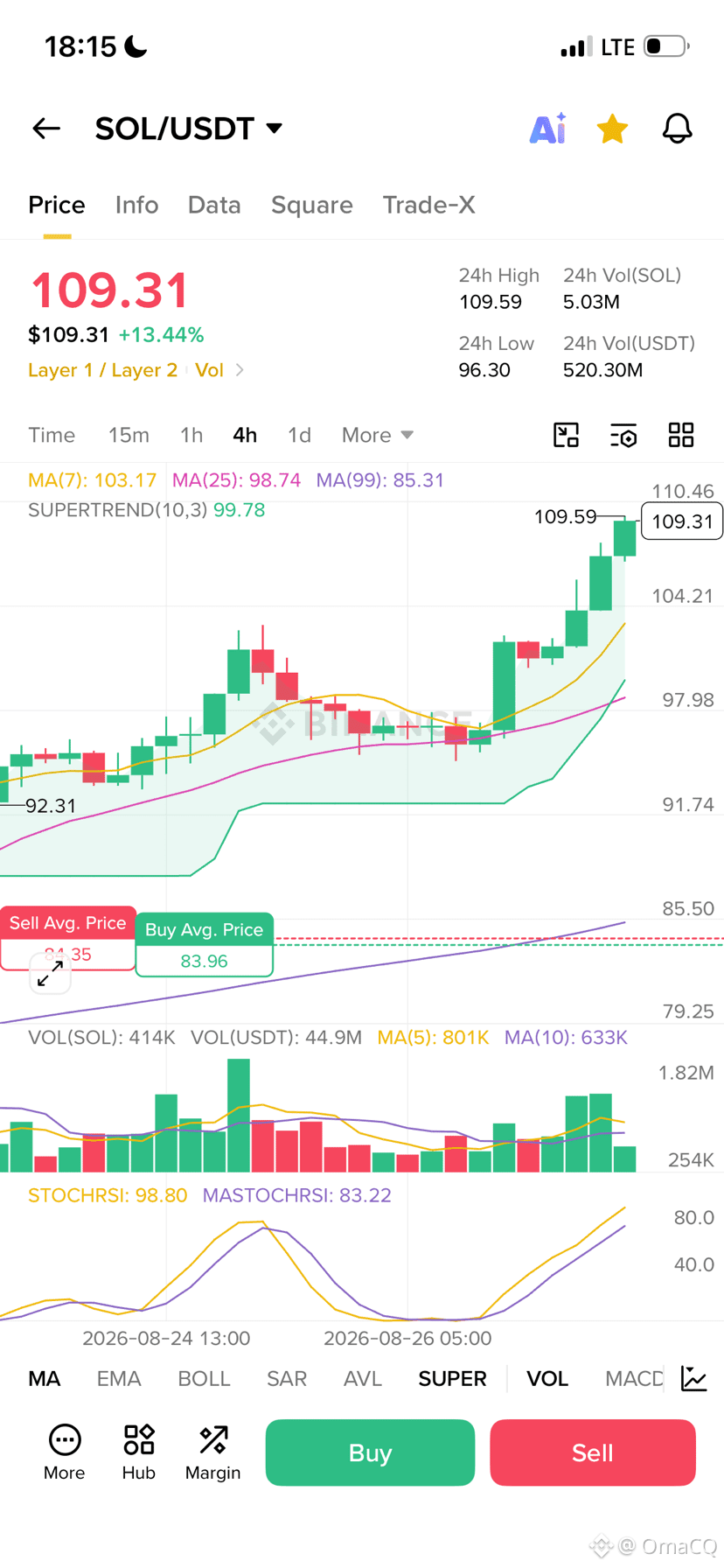
$SOL still bullish, but if you are looking for a trade to scalp, short between $109 to $112. Decide your stop loss 😏Take progit between $95 and below. Don’t exceed 5% of your portfolio and not more than 10x leverage
Dyor and goodluck
#ShareYourThoughtOnBTC
Dyor and goodluck
#ShareYourThoughtOnBTC
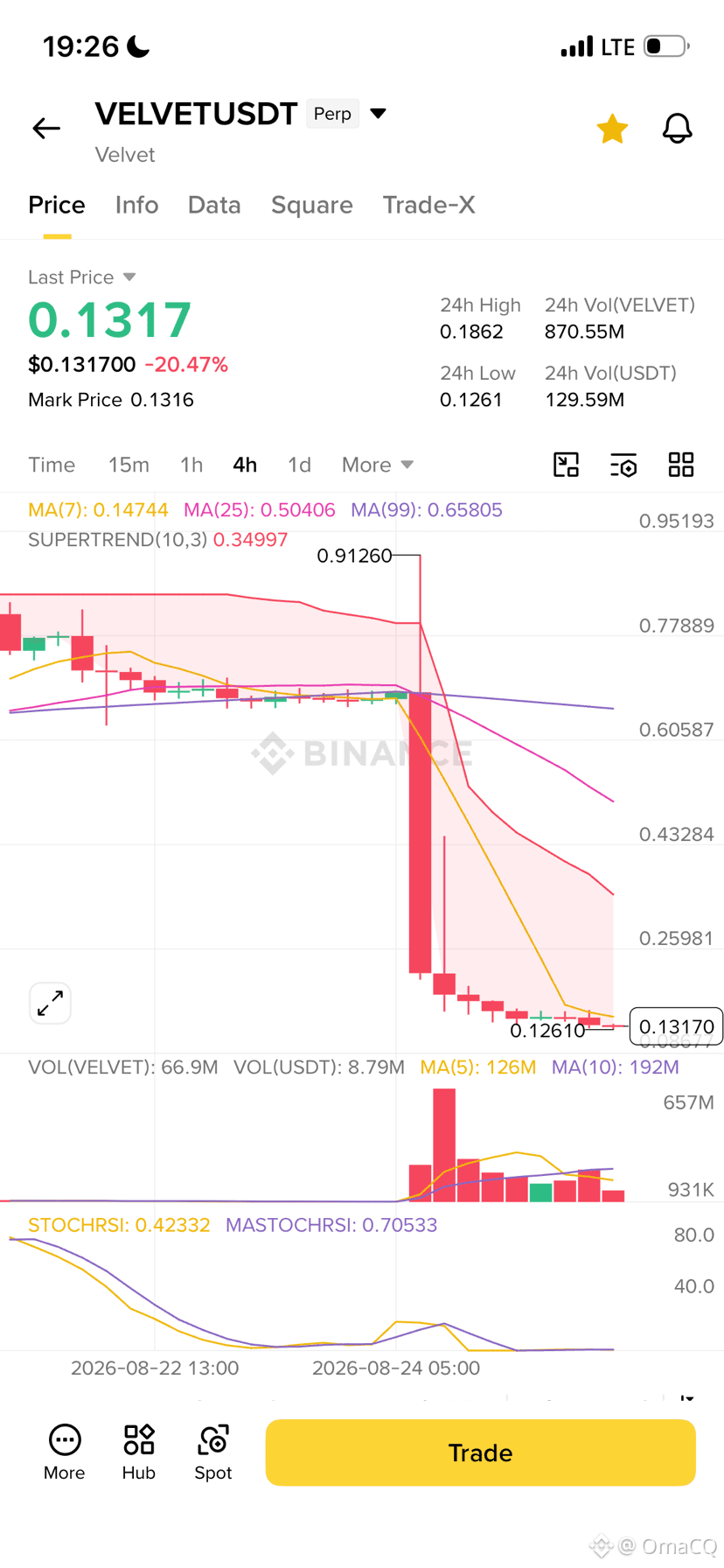
$VELVET just got absolutely wrecked.
From 0.90+ to 0.13 in one session.
-20% on the day and still bleeding.
Everyone was screaming “DeFAI narrative”, “SpaceX perps”, “YZi Labs backed” when it was pumping.
Now the same people are quiet while liquidations print millions.
Reality check:
High beta tokens with thin order books + retail leverage = free money for the other side.
Support is holding by a thread at 0.126.
Lose that and we’re looking at 0.10 real quick.
This is why you never marry the narrative.
You marry the risk management.
Who’s still long here?
Be honest in the comments.
#VELVET #Crypto #Binance
From 0.90+ to 0.13 in one session.
-20% on the day and still bleeding.
Everyone was screaming “DeFAI narrative”, “SpaceX perps”, “YZi Labs backed” when it was pumping.
Now the same people are quiet while liquidations print millions.
Reality check:
High beta tokens with thin order books + retail leverage = free money for the other side.
Support is holding by a thread at 0.126.
Lose that and we’re looking at 0.10 real quick.
This is why you never marry the narrative.
You marry the risk management.
Who’s still long here?
Be honest in the comments.
#VELVET #Crypto #Binance
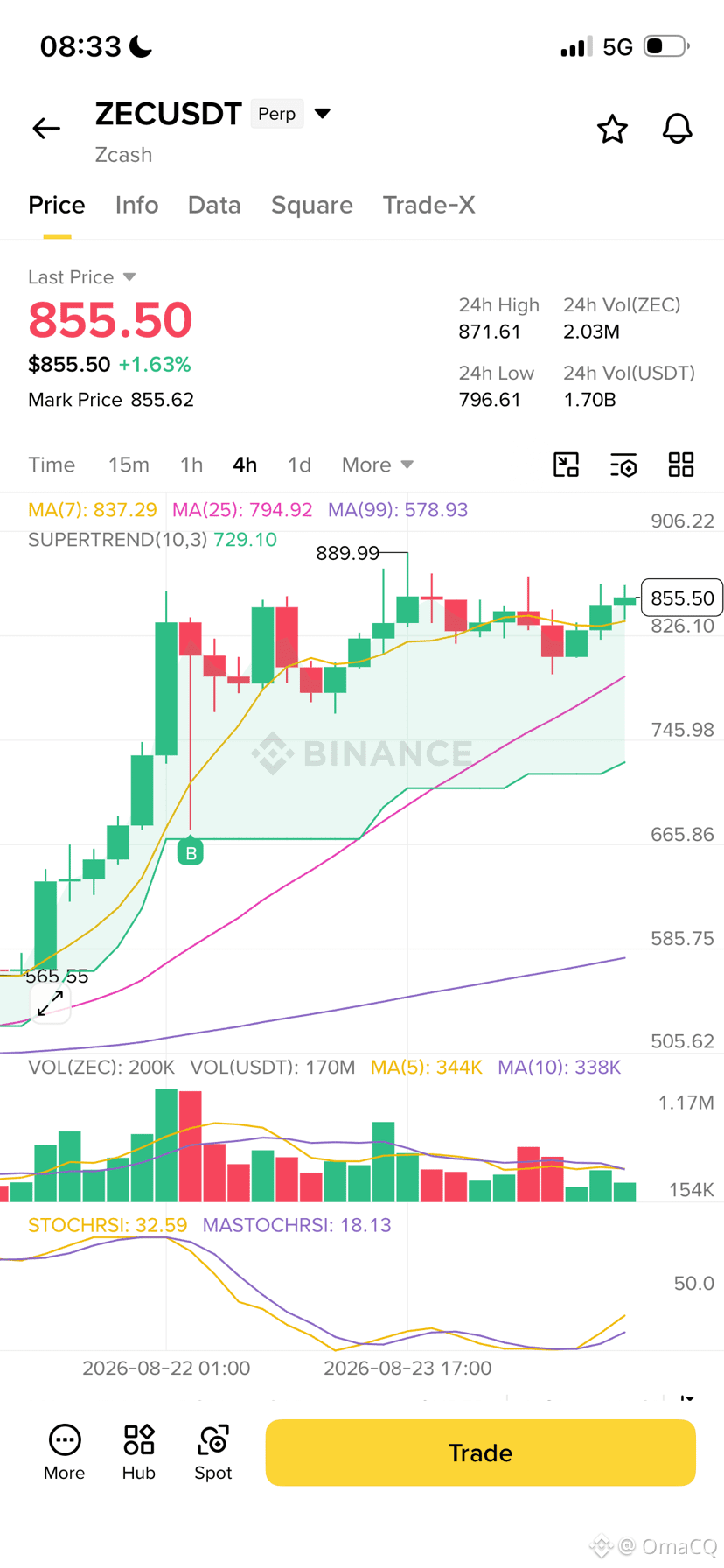
$ZEC just printed an 8-year high and is consolidating near $855.
Here’s the clean picture (4H):
🔴 Resistance
• 871–890 → recent high + rejection zone
• 900 → psychological magnet
• Above 900 opens 920–950
🟢 Support
• 826–837 → MA7 + structure
• 794–800 → MA25 + 24h low
• 729 → SuperTrend (key level to hold)
What’s actually driving this pump (not just “number go up”):
1. Grayscale advancing the Zcash Trust → spot ETF conversion (ZCSH)
2. Futures OI nearly doubled to ~$1.8B with heavy volume
3. Cypherpunk (Winklevoss-backed) mining ~18% of hashrate + accumulating $ZEC
4. Shielded supply now ~28% of circulating ZEC → liquid float is tightening
5. Privacy narrative + post-Ironwood recovery
Structure is still higher highs / higher lows above SuperTrend.
The real test is whether 871–890 gets accepted or rejected.
Levels first. Narrative second.
Trade what you see, not what you hope.
#ZECBreaksKeyResistanceUp75.5%
Here’s the clean picture (4H):
🔴 Resistance
• 871–890 → recent high + rejection zone
• 900 → psychological magnet
• Above 900 opens 920–950
🟢 Support
• 826–837 → MA7 + structure
• 794–800 → MA25 + 24h low
• 729 → SuperTrend (key level to hold)
What’s actually driving this pump (not just “number go up”):
1. Grayscale advancing the Zcash Trust → spot ETF conversion (ZCSH)
2. Futures OI nearly doubled to ~$1.8B with heavy volume
3. Cypherpunk (Winklevoss-backed) mining ~18% of hashrate + accumulating $ZEC
4. Shielded supply now ~28% of circulating ZEC → liquid float is tightening
5. Privacy narrative + post-Ironwood recovery
Structure is still higher highs / higher lows above SuperTrend.
The real test is whether 871–890 gets accepted or rejected.
Levels first. Narrative second.
Trade what you see, not what you hope.
#ZECBreaksKeyResistanceUp75.5%
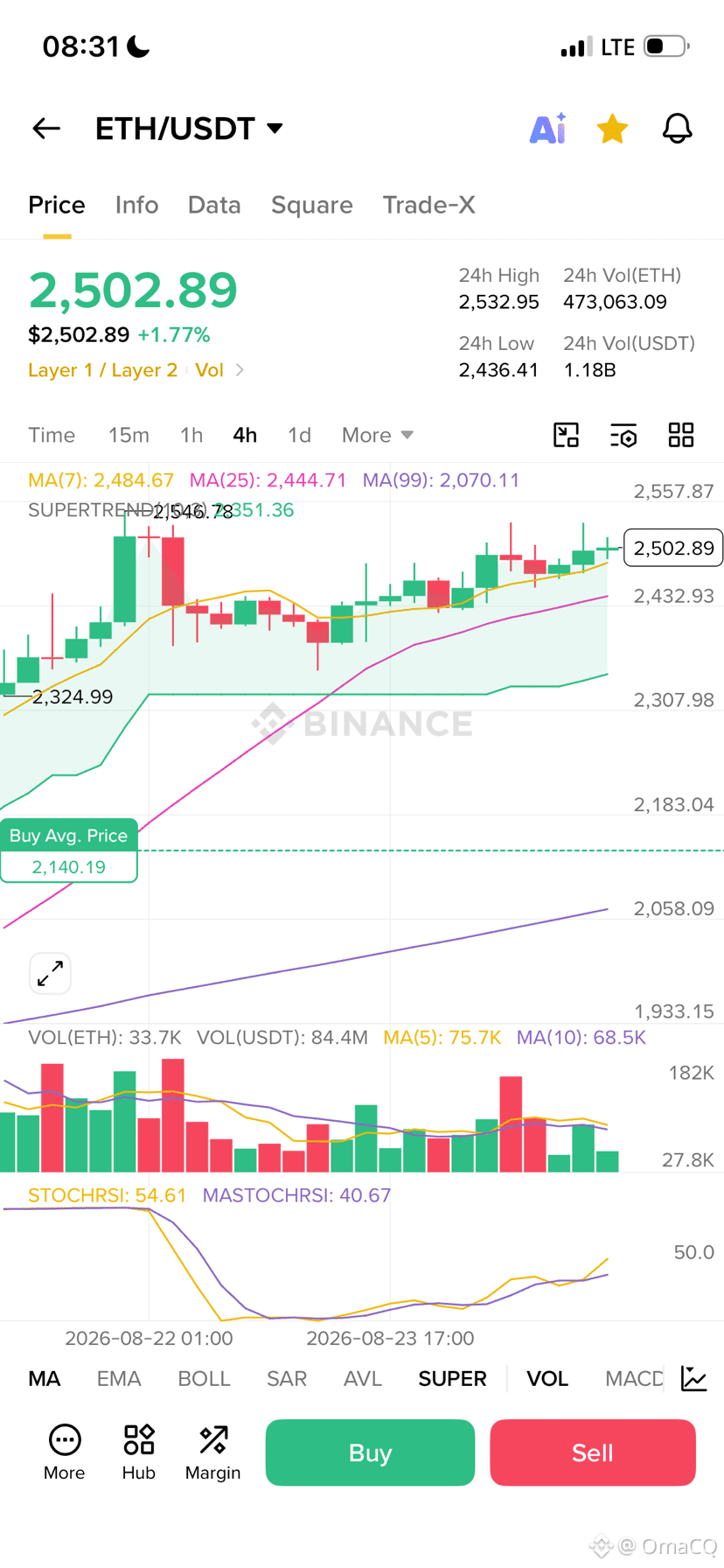
$ETH Support & Resistance Explained (4H Chart)
A lot of people look at price and just see “green” or “red.”
Smart traders look for levels where buyers and sellers historically fight.
Here’s how to read ETH right now:
🔴 Resistance (where sellers usually appear)
• 2,532 – 2,535 → recent high, first place price is getting rejected
• 2,550 – 2,560 → next clean target if we break the high
• 2,600 → big psychological level
🟢 Support (where buyers usually step in)
• 2,484 – 2,490 → MA(7) + recent structure
• 2,444 – 2,450 → MA(25)
• 2,350 – 2,355 → SuperTrend (this is the key dynamic support)
• 2,300 zone → deeper demand
Simple rule:
Price above support + making higher highs = bullish structure.
Price breaking support with volume = structure is weakening.
Right now $ETH is holding above all major moving averages and SuperTrend.
That’s constructive,
but the real test is whether it can clear and hold above 2,532–2,535.
Levels > emotions.
Trade the chart, not the noise.
#BTCReaches$80000
A lot of people look at price and just see “green” or “red.”
Smart traders look for levels where buyers and sellers historically fight.
Here’s how to read ETH right now:
🔴 Resistance (where sellers usually appear)
• 2,532 – 2,535 → recent high, first place price is getting rejected
• 2,550 – 2,560 → next clean target if we break the high
• 2,600 → big psychological level
🟢 Support (where buyers usually step in)
• 2,484 – 2,490 → MA(7) + recent structure
• 2,444 – 2,450 → MA(25)
• 2,350 – 2,355 → SuperTrend (this is the key dynamic support)
• 2,300 zone → deeper demand
Simple rule:
Price above support + making higher highs = bullish structure.
Price breaking support with volume = structure is weakening.
Right now $ETH is holding above all major moving averages and SuperTrend.
That’s constructive,
but the real test is whether it can clear and hold above 2,532–2,535.
Levels > emotions.
Trade the chart, not the noise.
#BTCReaches$80000
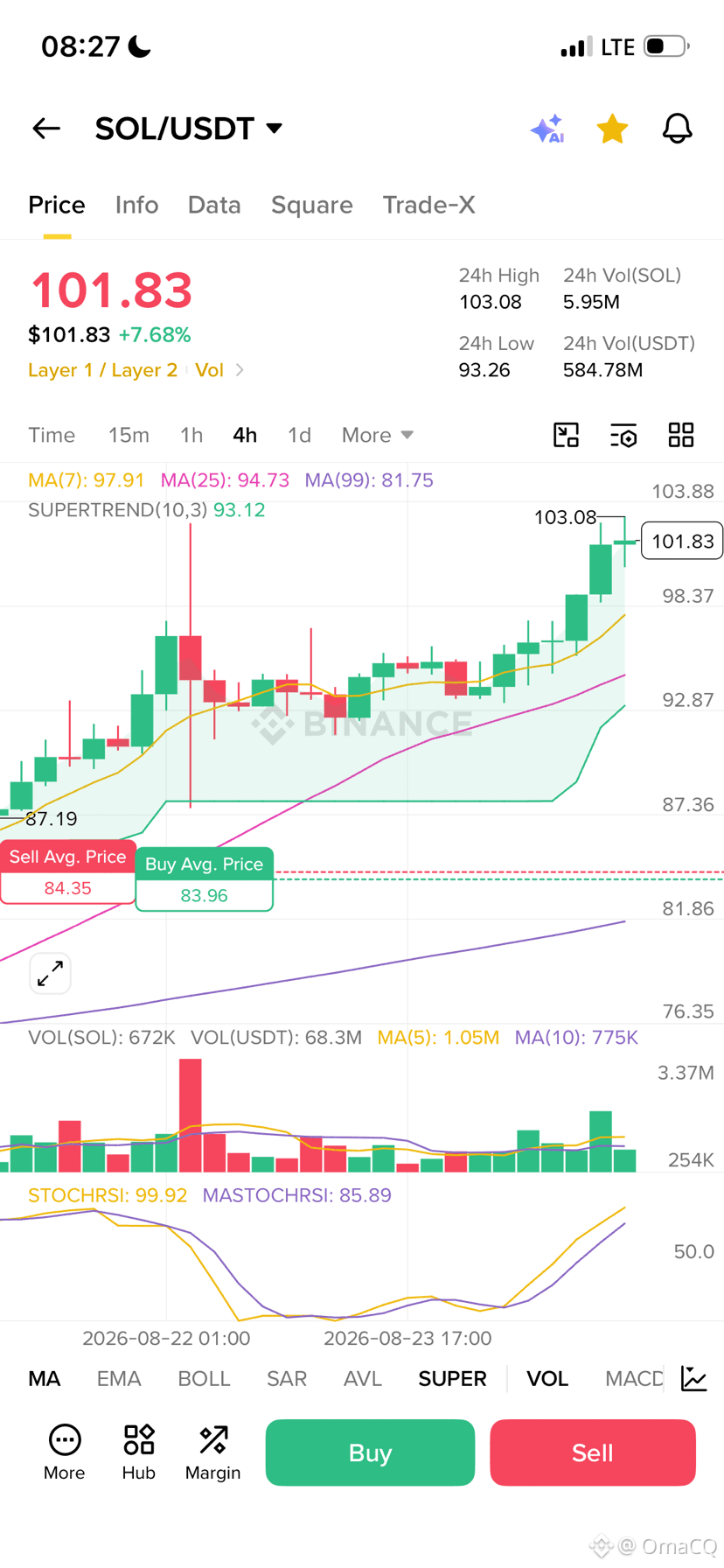
$SOL bulls are celebrating 101 like it’s a victory lap.
Meanwhile the chart is screaming distribution.
- SuperTrend still at 93
- Volume fading on the green candles
- Every pump above 100 gets sold into
This isn’t “the next leg up.”
This is the last bagholder trap before the real retest of 93–94.
If you’re still adding here you’re not early, you’re exit liquidity.
Right or wrong? What’s your take?
#BTCReaches$80000
Meanwhile the chart is screaming distribution.
- SuperTrend still at 93
- Volume fading on the green candles
- Every pump above 100 gets sold into
This isn’t “the next leg up.”
This is the last bagholder trap before the real retest of 93–94.
If you’re still adding here you’re not early, you’re exit liquidity.
Right or wrong? What’s your take?
#BTCReaches$80000
$TRUMP and $MELANIA have both surged by more than 100% since the White House Crypto Summit on August 19.
With the US midterm elections drawing closer in November, market watchers are increasingly looking toward both tokens for potential further gains.
Meanwhile, Samsung’s 8.97% decline has weighed heavily on South Korea’s KOSPI, sending the index down 3.24%.
#SamsungFalls8.97%DraggingKospiDown3.24%
With the US midterm elections drawing closer in November, market watchers are increasingly looking toward both tokens for potential further gains.
Meanwhile, Samsung’s 8.97% decline has weighed heavily on South Korea’s KOSPI, sending the index down 3.24%.
#SamsungFalls8.97%DraggingKospiDown3.24%
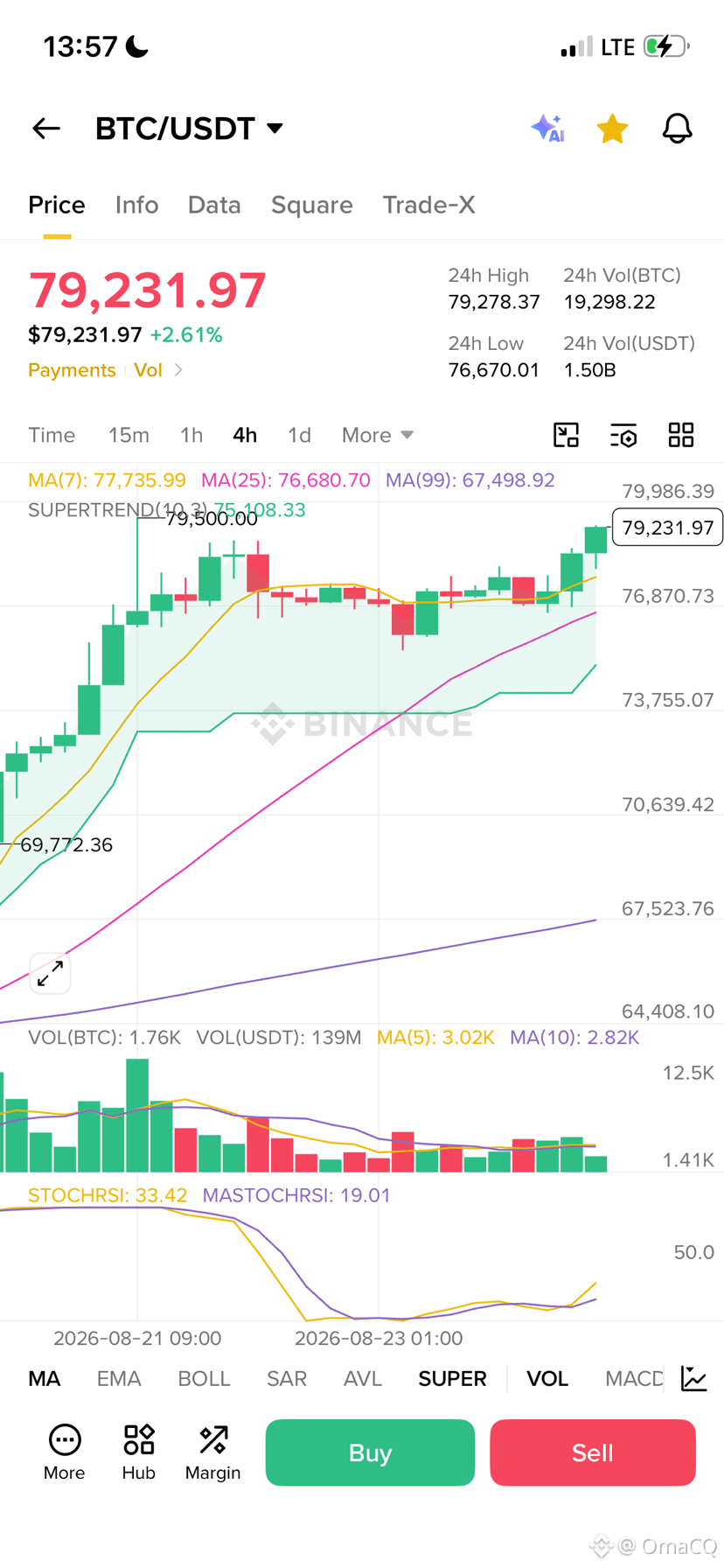
$BTC pumping to $79k and everyone’s suddenly a genius again.
Funny how the same people who were calling for $40k two weeks ago are now screaming “to the moon” like they didn’t just get rekt last cycle.
Is this a bull market or
It’s just another liquidity trap dressed up as a pump so the smart money can exit into your FOMO?
Retail never learns.
Institutions never stop laughing.
Who’s still buying this with both hands?
#BitcoinOpenInterestFallsToTwoMonthLow
Funny how the same people who were calling for $40k two weeks ago are now screaming “to the moon” like they didn’t just get rekt last cycle.
Is this a bull market or
It’s just another liquidity trap dressed up as a pump so the smart money can exit into your FOMO?
Retail never learns.
Institutions never stop laughing.
Who’s still buying this with both hands?
#BitcoinOpenInterestFallsToTwoMonthLow
Gold just hit a three-month high, pushing past $4,630. Weaker dollar + US Treasury buyback plans are the main drivers. Technicals look clean after reclaiming the 200-day MA. Some are already eyeing $4,700 next. Classic safe-haven move.
$XAU
#GoldNearsThreeMonthHigh
$XAU
#GoldNearsThreeMonthHigh
Solana’s first real on-chain governance vote is live. Validators are deciding whether to double the disinflation rate from 15% to 30%. That would cut ~18.9M SOL from future supply and reach the 1.5% terminal inflation much faster (around 2029 instead of 2032). Big for long-term holders if it passes.
$SOL
#SolanaGovernanceVoteToDoubleDeflationRate
$SOL
#SolanaGovernanceVoteToDoubleDeflationRate
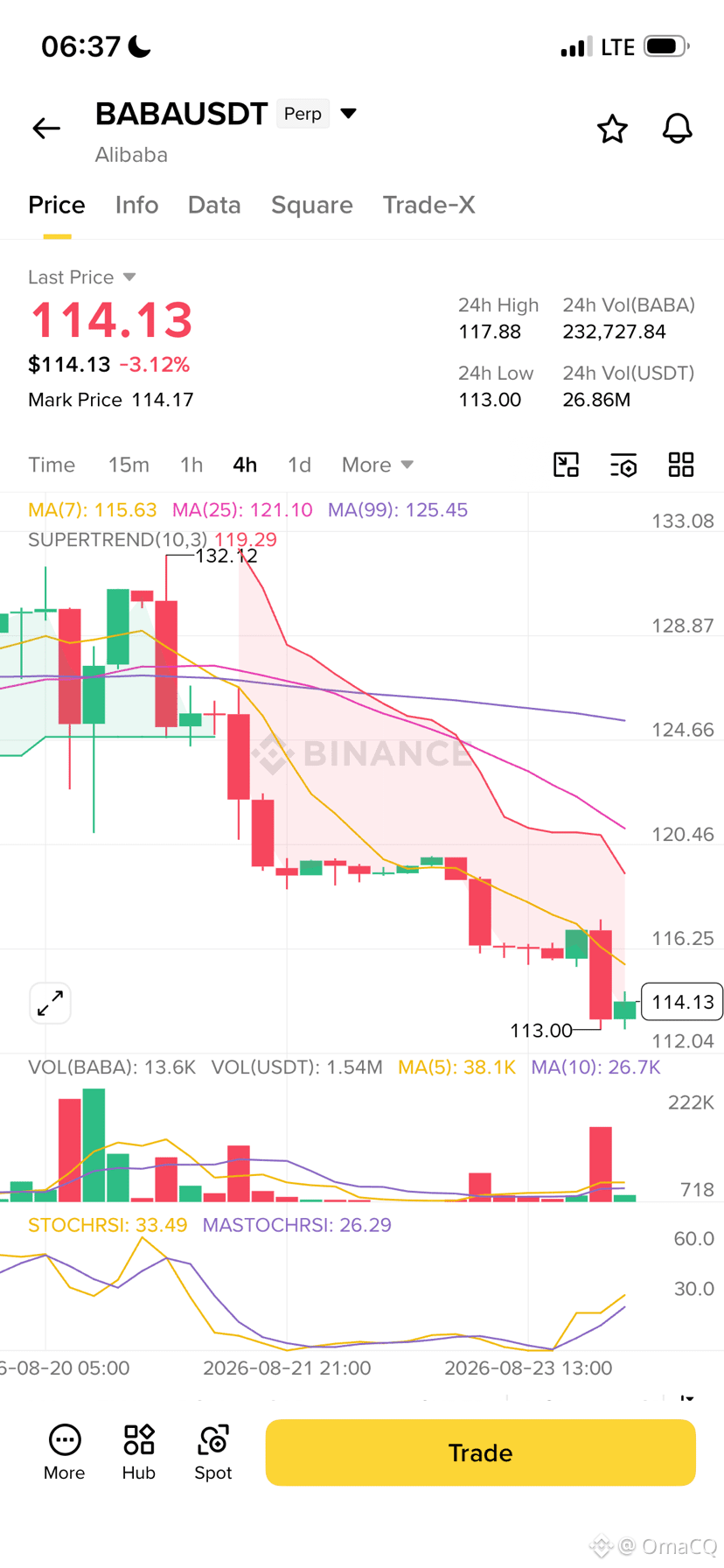
Alibaba just raised a massive $10.2B in a Hong Kong share sale, all of it going straight into AI (chips, infra, models). Deal was heavily oversubscribed, but the stock still dropped ~8-10% on dilution fears. Biggest HK primary follow-on ever. They’re all-in on the AI race.
$BABA
#AlibabaRaises$10.2BInHKShareSale
$BABA
#AlibabaRaises$10.2BInHKShareSale
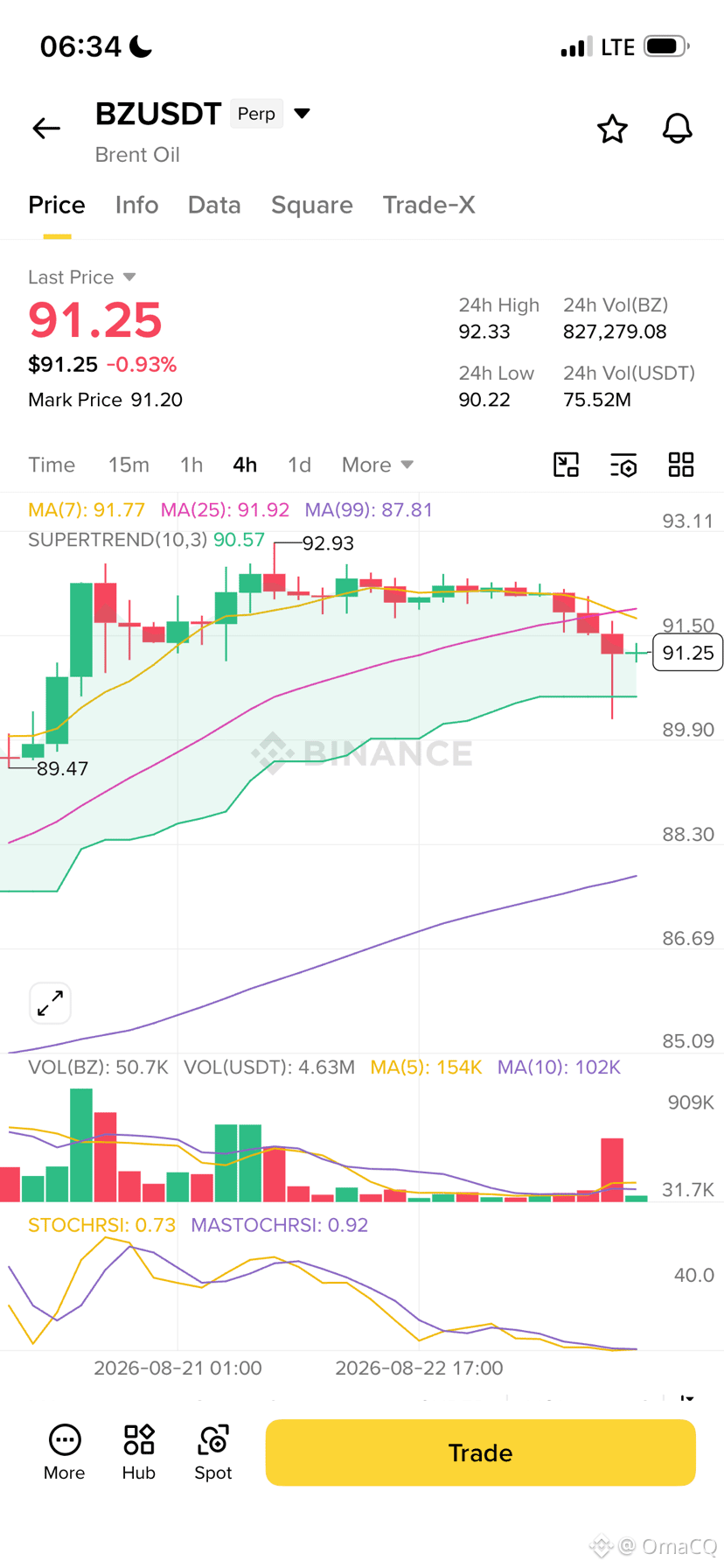
$BZ just slipped 1.87% and is hovering near $93. Markets are waiting on the US Treasury’s next move against Iran. After months of elevated prices from the conflict, traders are taking some profits ahead of fresh sanctions talk. Still high by recent standards, but the pullback is real. Watching closely.
$CL
#BrentDrops1.87%
$CL
#BrentDrops1.87%
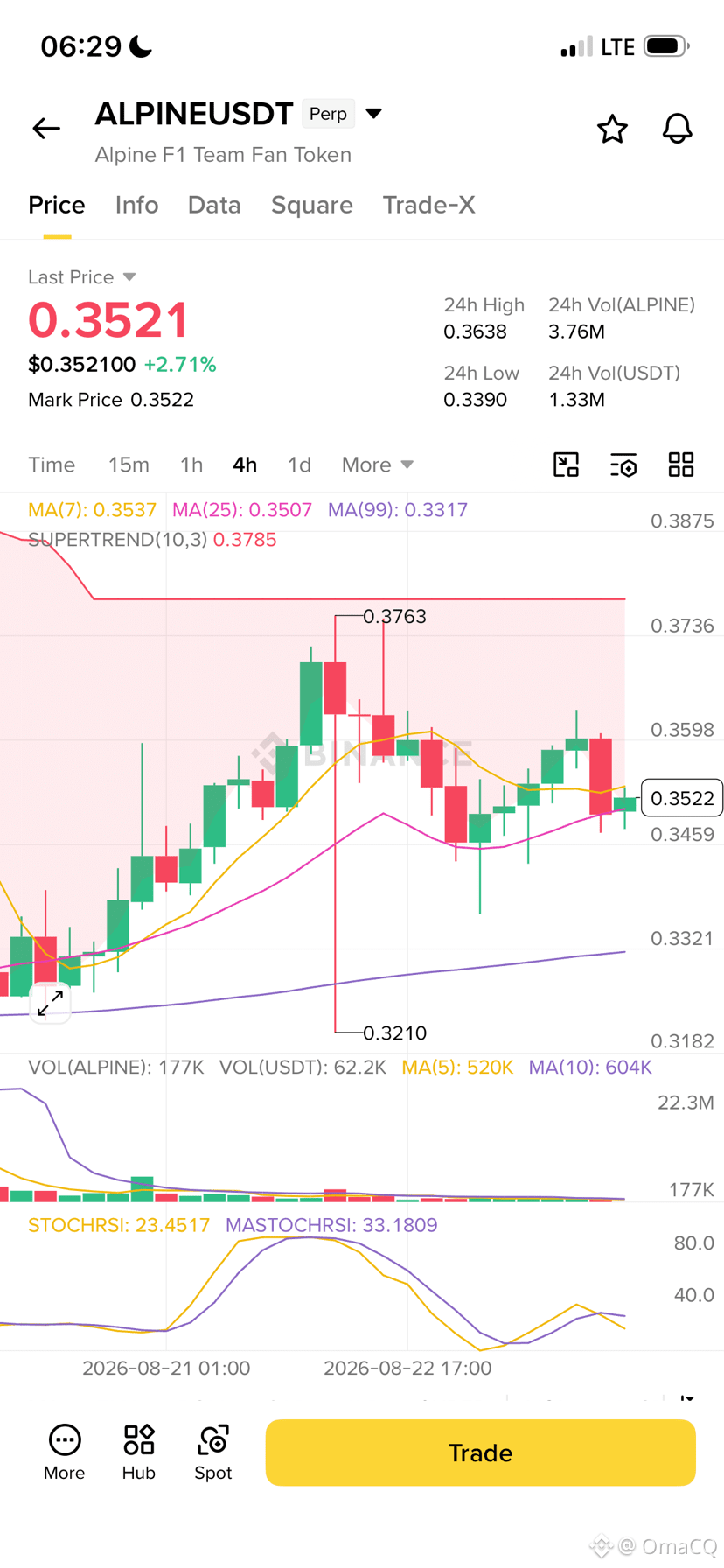
$ALPINE
Entry zone: 0.28 – 0.3
Stop: 0.24
Targets: 0.50 first, then 0.70 – 0.90
Fan token, small market cap, decent community activity, and it’s been accumulating without much noise.
NFA
#ShareYourThoughtOnBTC
Entry zone: 0.28 – 0.3
Stop: 0.24
Targets: 0.50 first, then 0.70 – 0.90
Fan token, small market cap, decent community activity, and it’s been accumulating without much noise.
NFA
#ShareYourThoughtOnBTC
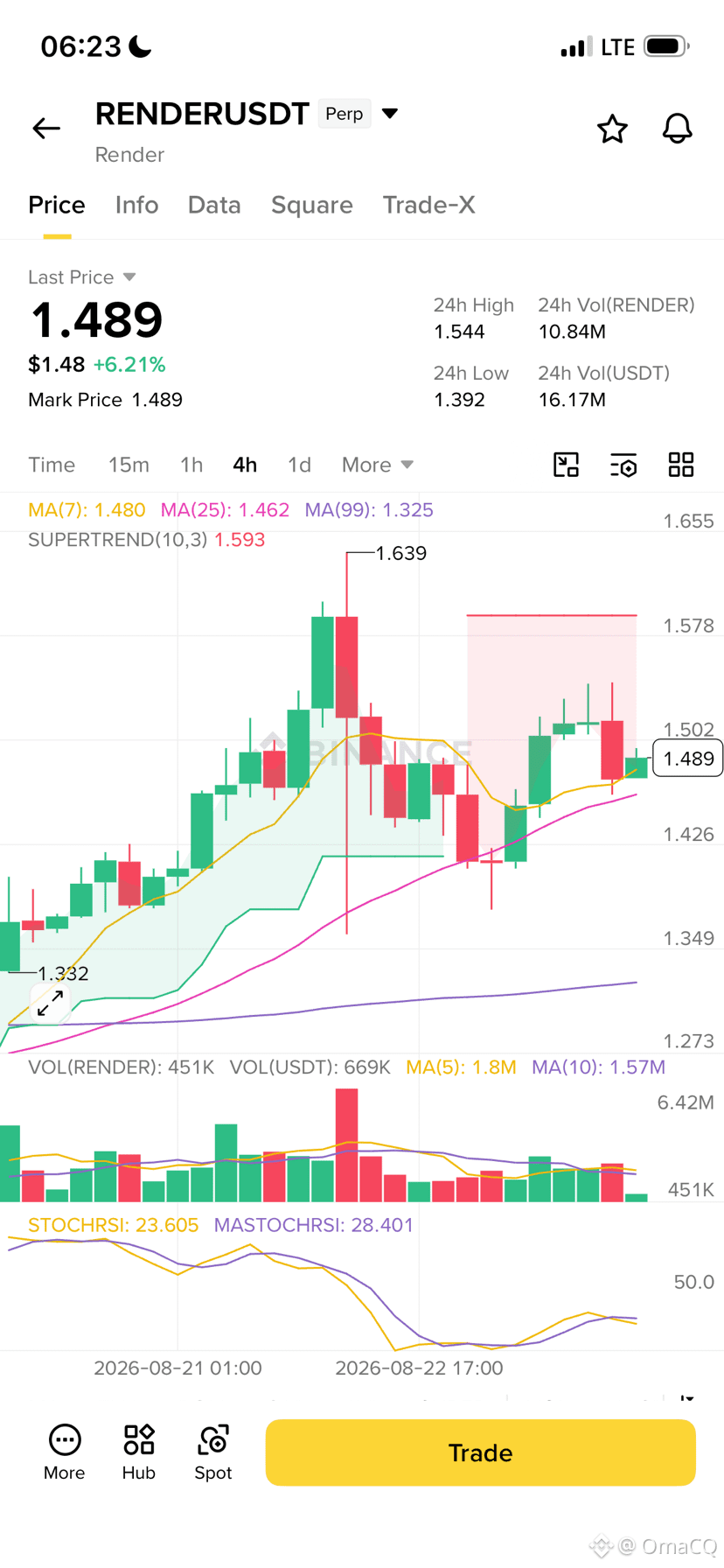
$RENDER Long
Entry: 1.35 – 1.4
SL: 1.20
TP1: 2.00 | TP2: 3.00 – 4.00
(AI narrative, significantly below prior highs, accumulation zone)
NFA DYOR
#ShareYourThoughtOnBTC
Entry: 1.35 – 1.4
SL: 1.20
TP1: 2.00 | TP2: 3.00 – 4.00
(AI narrative, significantly below prior highs, accumulation zone)
NFA DYOR
#ShareYourThoughtOnBTC
Log in to explore more content