
Eddie Walker
7.9k Posts

Eddie Walker
 Square Verified+
No excuses,Just progress X: @Eddie_Walker_
Open Trade
High-Frequency Trader
2.4 Years
30 Following
33.8K+ Followers
58.6K+ Liked
Posts
Portfolio
All
Quotes
Live
PINNED
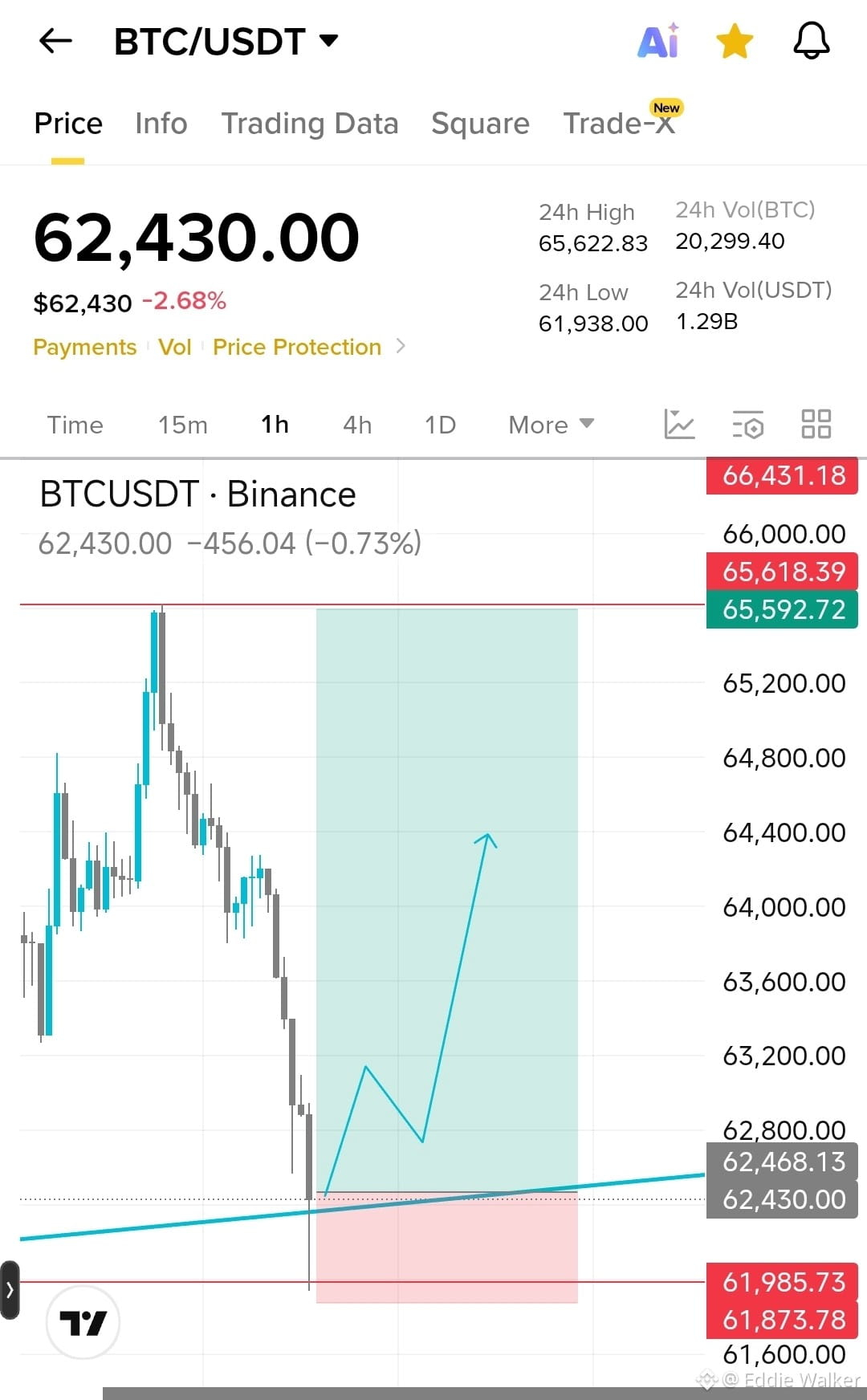
$BTC / USDT Long Setup
Entry: $62,300 – $62,600
Stop Loss: $61,850
TP1: $63,200
TP2: $64,300
TP3: $65,500 – $65,600
BTC is sitting near trendline/support. If buyers defend this zone, a bounce toward $64K–$65.5K is possible. But if $61.8K breaks, setup is invalid.
Entry: $62,300 – $62,600
Stop Loss: $61,850
TP1: $63,200
TP2: $64,300
TP3: $65,500 – $65,600
BTC is sitting near trendline/support. If buyers defend this zone, a bounce toward $64K–$65.5K is possible. But if $61.8K breaks, setup is invalid.
PINNED
Disputed
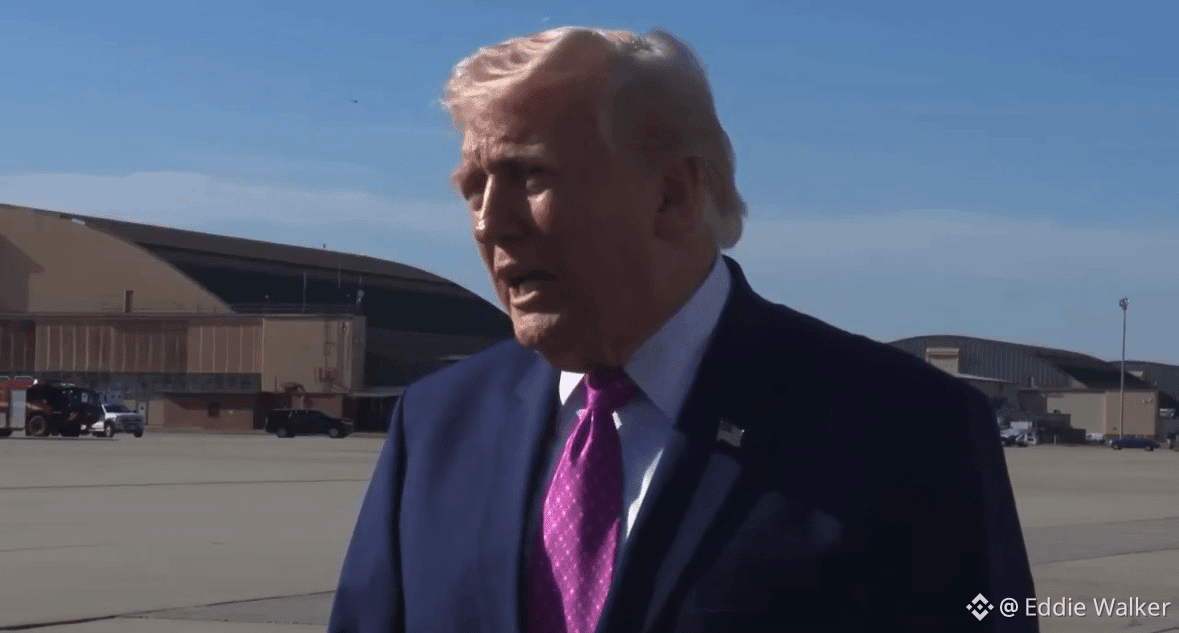
BREAKING: 🇺🇸 President Trump is set to make a “huge” announcement today at 5:00 PM ET.
Sources are speculating it could involve plans to reopen the Strait of Hormuz and a possible new peace deal with Iran.
Markets could see major volatility if confirmed.
Sources are speculating it could involve plans to reopen the Strait of Hormuz and a possible new peace deal with Iran.
Markets could see major volatility if confirmed.
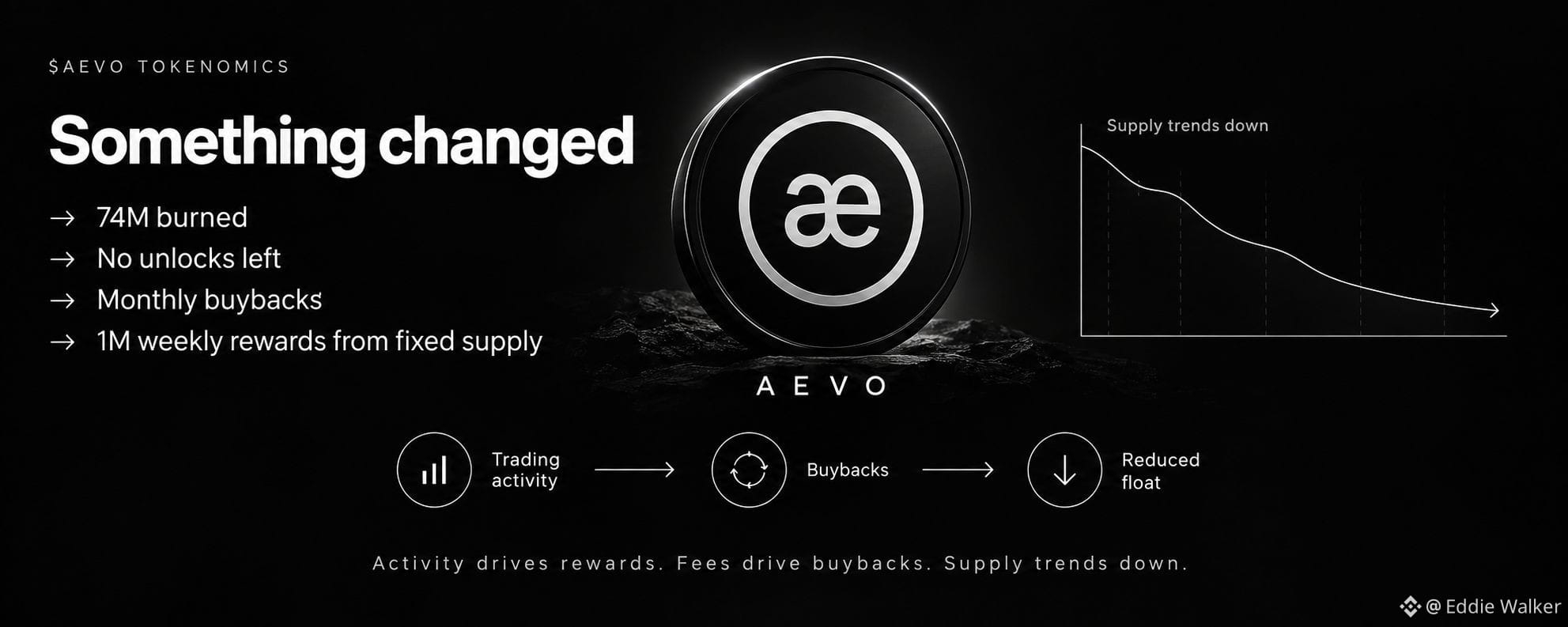
Something changed with @Aevo that most traders probably missed.
The old crypto token model was simple:
→ Big unlock schedule
→ VC allocations waiting
→ Inflation through rewards
→ Holders constantly watching the next supply event
@Aevo took a different route.
AGP-3 changed the structure completely.
→ 74M AEVO burned so far
→ No scheduled unlocks remaining
→ Monthly buybacks funded by actual exchange trading fees
→ Bought-back tokens are permanently removed
And here’s the part worth understanding.
Aevo still distributes 1M AEVO weekly to active traders.
But those tokens come from the existing fixed 1B supply.
They are not newly issued tokens.
Meanwhile, trading activity generates fees.
Those fees fund the monthly buyback.
More platform activity → more fees
More fees → more buybacks
More buybacks → more AEVO removed from circulation
That creates a pretty interesting mechanical loop.
The same trading activity rewarding users is also feeding the mechanism that reduces the token float.
No new inflation story.
No future unlock cliff hanging over the token.
Just a token model increasingly tied to what actually happens on the exchange.
That’s a very different Aevo from the one many traders still remember.I can also make the PERPS+ angle much more aggressive and trader-style, with $BTC / $ETH setups, wick protection, and arrows.
#Aevo
The old crypto token model was simple:
→ Big unlock schedule
→ VC allocations waiting
→ Inflation through rewards
→ Holders constantly watching the next supply event
@Aevo took a different route.
AGP-3 changed the structure completely.
→ 74M AEVO burned so far
→ No scheduled unlocks remaining
→ Monthly buybacks funded by actual exchange trading fees
→ Bought-back tokens are permanently removed
And here’s the part worth understanding.
Aevo still distributes 1M AEVO weekly to active traders.
But those tokens come from the existing fixed 1B supply.
They are not newly issued tokens.
Meanwhile, trading activity generates fees.
Those fees fund the monthly buyback.
More platform activity → more fees
More fees → more buybacks
More buybacks → more AEVO removed from circulation
That creates a pretty interesting mechanical loop.
The same trading activity rewarding users is also feeding the mechanism that reduces the token float.
No new inflation story.
No future unlock cliff hanging over the token.
Just a token model increasingly tied to what actually happens on the exchange.
That’s a very different Aevo from the one many traders still remember.I can also make the PERPS+ angle much more aggressive and trader-style, with $BTC / $ETH setups, wick protection, and arrows.
#Aevo
Partly True
What if classic tank battles meets Web3?
This is the idea BattleTown is trying out.
The project draws inspiration from the familiar tank-battle games many players grew up with and combines that idea with a modern Web3 ecosystem.
Think:
Tank combat
🎮 Retro-inspired gameplay
Tank progression
Digital collectibles
🌐 Blockchain mechanics
And one more detail is calling attention:
BattleTown announces increase in presale prices across later rounds
That means the project has also created a tiered pricing structure alongside its gaming roadmap.
But the bigger story is whether BattleTown can successfully marry its gaming experience with its Web3 economy.
Because at the end of the day, a GameFi project needs more than a token.
It needs a game that people actually want to play. Watch BattleTown.
DYOR.
This is the idea BattleTown is trying out.
The project draws inspiration from the familiar tank-battle games many players grew up with and combines that idea with a modern Web3 ecosystem.
Think:
Tank combat
🎮 Retro-inspired gameplay
Tank progression
Digital collectibles
🌐 Blockchain mechanics
And one more detail is calling attention:
BattleTown announces increase in presale prices across later rounds
That means the project has also created a tiered pricing structure alongside its gaming roadmap.
But the bigger story is whether BattleTown can successfully marry its gaming experience with its Web3 economy.
Because at the end of the day, a GameFi project needs more than a token.
It needs a game that people actually want to play. Watch BattleTown.
DYOR.

Prediction markets aren’t just about guessing what happens next anymore.
@Polymarket is turning real world events into actual market opportunities.
And the numbers explain why it’s getting harder to ignore:
→ 250K–500K monthly active traders
→ 17M+ monthly website visits
→ Thousands of markets across politics, crypto, sports and global events
The biggest benefit?
You can see where real conviction is flowing instead of relying only on headlines or social media opinions.
Probabilities move as new information hits.
Sentiment changes in real time.
And traders can position around the outcome they believe is most likely.
That’s what makes Polymarket interesting to me.
Real events.
Real probabilities.
Real opportunity.
#Polymarket
@Polymarket is turning real world events into actual market opportunities.
And the numbers explain why it’s getting harder to ignore:
→ 250K–500K monthly active traders
→ 17M+ monthly website visits
→ Thousands of markets across politics, crypto, sports and global events
The biggest benefit?
You can see where real conviction is flowing instead of relying only on headlines or social media opinions.
Probabilities move as new information hits.
Sentiment changes in real time.
And traders can position around the outcome they believe is most likely.
That’s what makes Polymarket interesting to me.
Real events.
Real probabilities.
Real opportunity.
#Polymarket

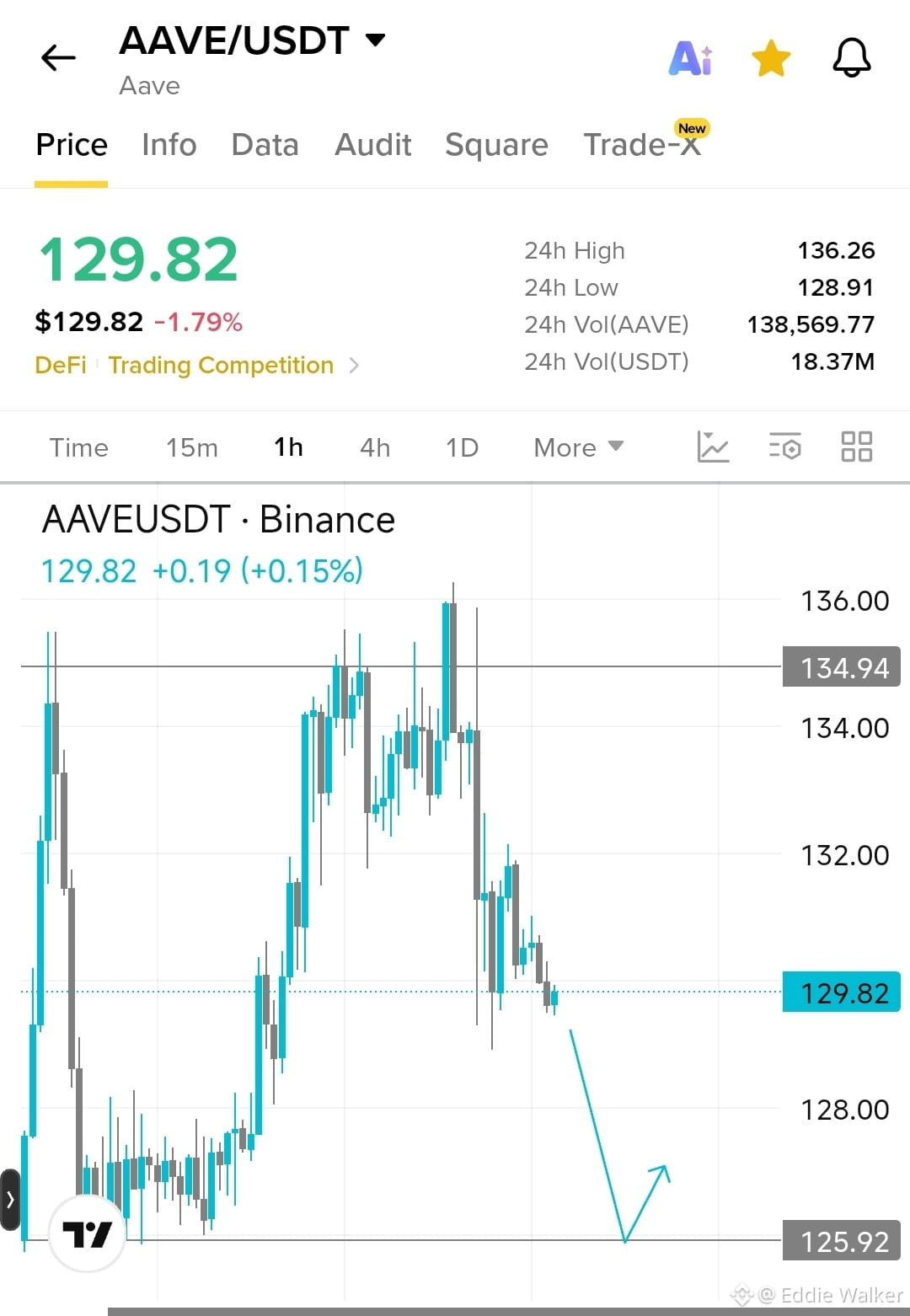
I’m watching $AAVE for a short here.
AAVE got rejected hard from the $136 area, and the 1H chart is now printing lower highs while price keeps slipping below $131. Sellers still look in control unless that level gets reclaimed.
Entry: $129.70–$130.30
Targets:
TP1: $128.60
TP2: $127.90
TP3: $126.20
Stop: $131.30
For me, $131 is the key level. As long as AAVE stays below it, I’m looking for continuation lower. A clean reclaim above $131.3 would invalidate the short idea.
AAVE got rejected hard from the $136 area, and the 1H chart is now printing lower highs while price keeps slipping below $131. Sellers still look in control unless that level gets reclaimed.
Entry: $129.70–$130.30
Targets:
TP1: $128.60
TP2: $127.90
TP3: $126.20
Stop: $131.30
For me, $131 is the key level. As long as AAVE stays below it, I’m looking for continuation lower. A clean reclaim above $131.3 would invalidate the short idea.
Prediction markets are becoming one of the most interesting ways to trade real world events.
That’s why I keep watching @Polymarket
→ Politics
→ Crypto
→ Sports
→ Macro events
→ Global headlines
Instead of just reading the news, you can actually take a position on what you think happens next.
The best part? Market prices show what people collectively believe the probability is in real time.
For me, that makes Polymarket more than a betting platform.
It’s a live information market where opinions, probabilities and capital meet.
#Polymarket
That’s why I keep watching @Polymarket
→ Politics
→ Crypto
→ Sports
→ Macro events
→ Global headlines
Instead of just reading the news, you can actually take a position on what you think happens next.
The best part? Market prices show what people collectively believe the probability is in real time.
For me, that makes Polymarket more than a betting platform.
It’s a live information market where opinions, probabilities and capital meet.
#Polymarket

Verified
@Midnight Network is one of those projects that makes privacy actually useful.
It’s a standalone Layer 1 built for programmable privacy, where users can prove something is true without exposing all their personal data.
That means:
→ Better privacy without hiding everything
→ Selective disclosure for KYC and compliance
→ Useful for banks, payments, identity and RWAs
→ Public transaction coordination with private execution
→ $NIGHT and DUST working together in a dual-token model
What makes Midnight stand out for me is that it isn’t just talking about privacy.
Google Cloud, MoneyGram, eToro, Worldpay and other major names are already part of its validator ecosystem, while Monument Bank is working to tokenize up to £250M in customer deposits.
Privacy, but built for the real world.
That’s what makes #Midnight worth learning about.
Informational content only. Not financial advice.
It’s a standalone Layer 1 built for programmable privacy, where users can prove something is true without exposing all their personal data.
That means:
→ Better privacy without hiding everything
→ Selective disclosure for KYC and compliance
→ Useful for banks, payments, identity and RWAs
→ Public transaction coordination with private execution
→ $NIGHT and DUST working together in a dual-token model
What makes Midnight stand out for me is that it isn’t just talking about privacy.
Google Cloud, MoneyGram, eToro, Worldpay and other major names are already part of its validator ecosystem, while Monument Bank is working to tokenize up to £250M in customer deposits.
Privacy, but built for the real world.
That’s what makes #Midnight worth learning about.
Informational content only. Not financial advice.
One thing I like about @Polymarket is that it turns opinions into actual markets.
Instead of just debating what might happen next, people can actually explore different events, compare the odds and take a position based on their own view.
Here’s what makes prediction markets interesting to me:
→ Explore opportunities across politics, crypto, macro, sports and global events
→ See what the crowd currently expects to happen
→ Watch probabilities change as new information comes in
→ Compare your own view with real market sentiment
→ Trade around events before the final outcome is known
That’s what makes Polymarket more interesting than simply following headlines.
Every update can change the odds, shift sentiment and create a new opportunity.
You’re not just watching what happens next.
You’re watching the market price it in real time.
#polymarket
Instead of just debating what might happen next, people can actually explore different events, compare the odds and take a position based on their own view.
Here’s what makes prediction markets interesting to me:
→ Explore opportunities across politics, crypto, macro, sports and global events
→ See what the crowd currently expects to happen
→ Watch probabilities change as new information comes in
→ Compare your own view with real market sentiment
→ Trade around events before the final outcome is known
That’s what makes Polymarket more interesting than simply following headlines.
Every update can change the odds, shift sentiment and create a new opportunity.
You’re not just watching what happens next.
You’re watching the market price it in real time.
#polymarket
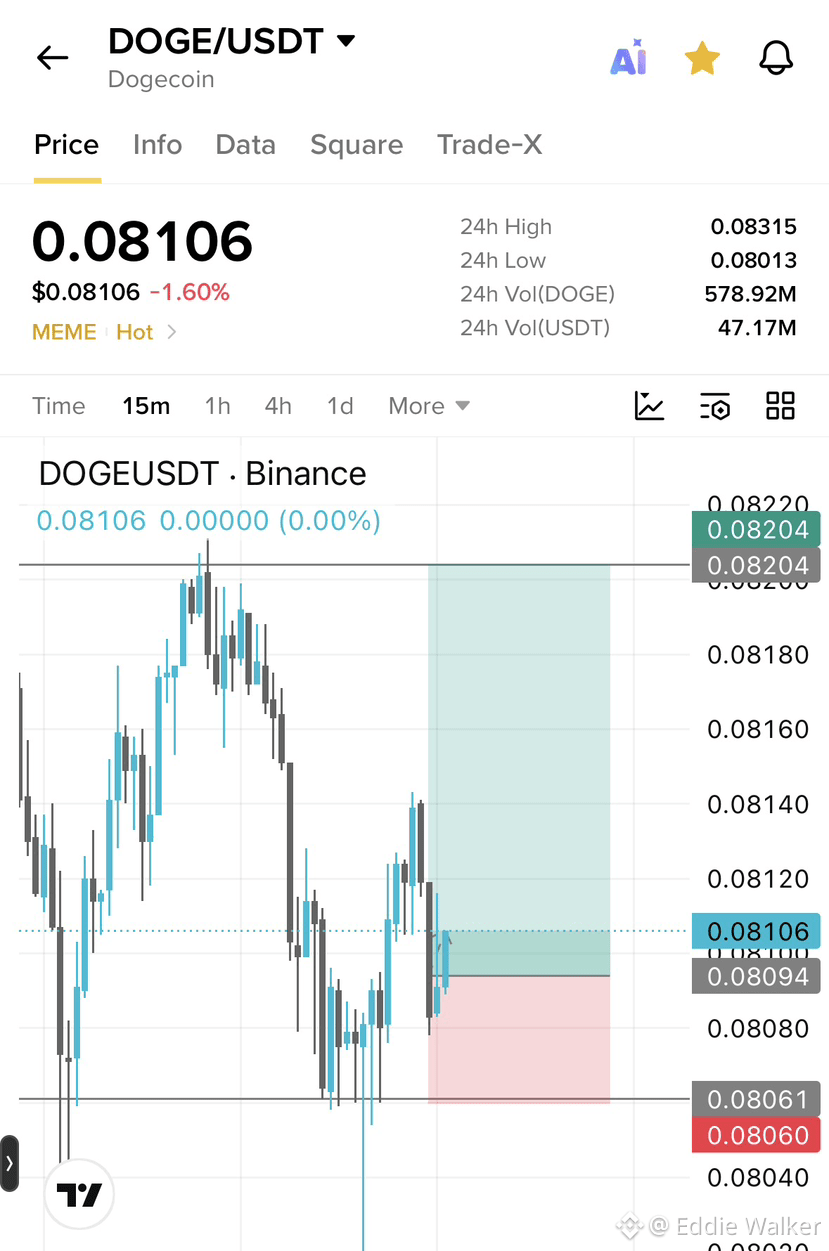
I’m watching $DOGE for a long setup here.
Price bounced from the $0.0806 support area and is now trying to hold back above $0.0810. Buyers are showing some reaction here, and if this level keeps holding, I’d watch for another push toward the recent highs.
Entry: $0.08095–$0.08105
Targets:
TP1: $0.08140
TP2: $0.08180
TP3: $0.08204
SL: Below $0.08060
For me, $0.0806 is the key invalidation level. As long as DOGE stays above it, the bounce setup still looks valid. A clean move above $0.0814 would make the continuation toward $0.082 look much cleaner.
Price bounced from the $0.0806 support area and is now trying to hold back above $0.0810. Buyers are showing some reaction here, and if this level keeps holding, I’d watch for another push toward the recent highs.
Entry: $0.08095–$0.08105
Targets:
TP1: $0.08140
TP2: $0.08180
TP3: $0.08204
SL: Below $0.08060
For me, $0.0806 is the key invalidation level. As long as DOGE stays above it, the bounce setup still looks valid. A clean move above $0.0814 would make the continuation toward $0.082 look much cleaner.
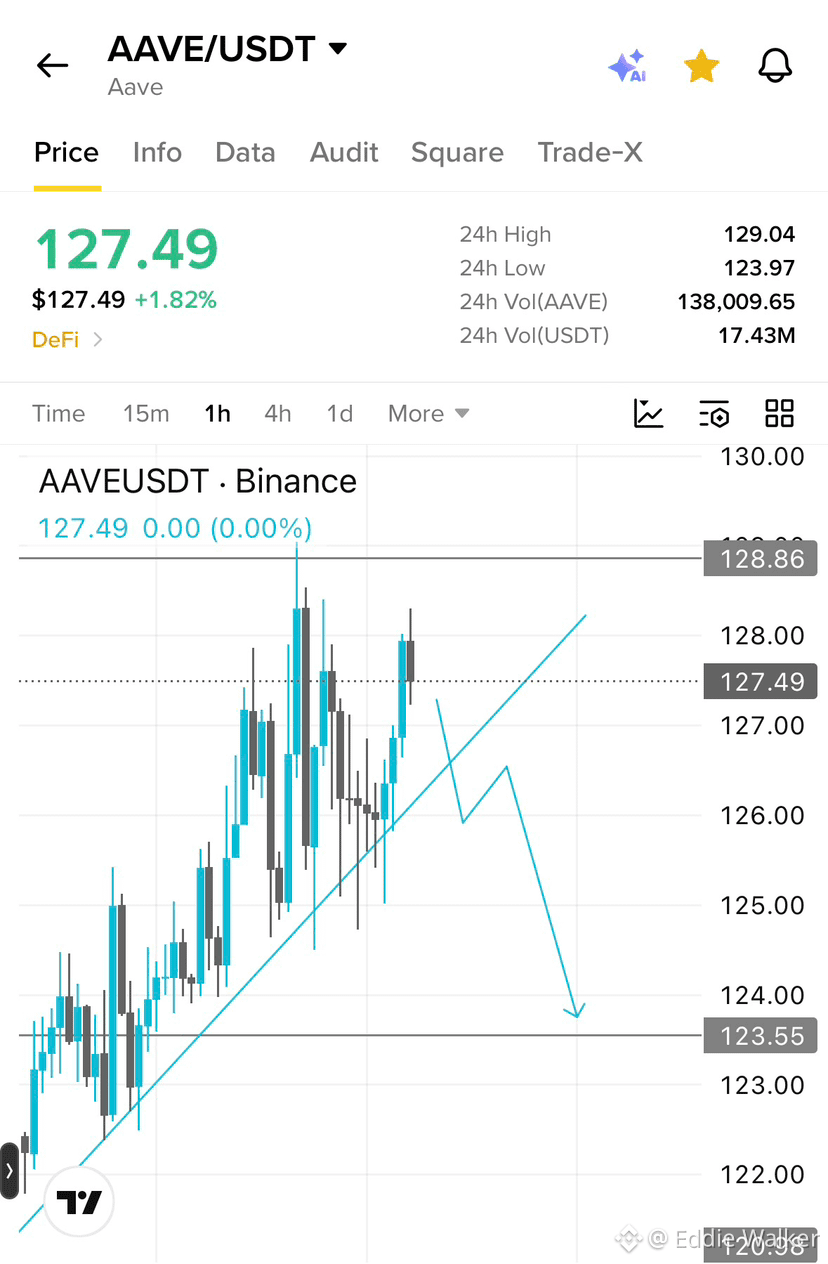
I’m also watching $AAVE for a short.
Price is pushing back toward the $128–$128.8 resistance zone, but this is exactly where I’d expect sellers to show up again. The structure is still vulnerable if that rising support starts breaking.
Entry: $127.50–$128.30
Targets:
TP1: $126.00
TP2: $125.00
TP3: $123.55
SL: Above $128.90
For me, $128.86 is the invalidation level. If AAVE keeps failing below that area, a pullback toward $126 and eventually $123.5 still looks possible.
Price is pushing back toward the $128–$128.8 resistance zone, but this is exactly where I’d expect sellers to show up again. The structure is still vulnerable if that rising support starts breaking.
Entry: $127.50–$128.30
Targets:
TP1: $126.00
TP2: $125.00
TP3: $123.55
SL: Above $128.90
For me, $128.86 is the invalidation level. If AAVE keeps failing below that area, a pullback toward $126 and eventually $123.5 still looks possible.
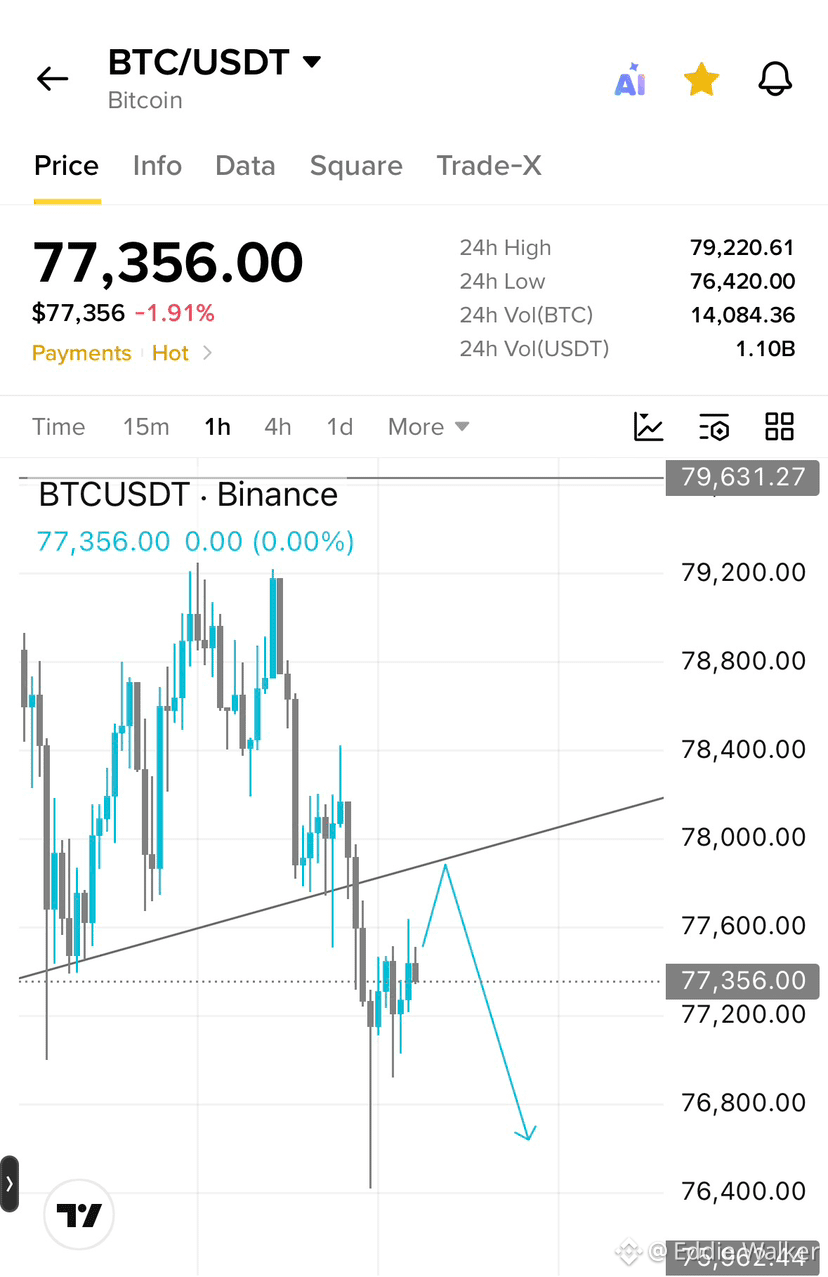
I’m watching $BTC for a short here.
BTC has already slipped below the rising trendline, and the bounce around $77.3K still looks weak. If price pushes back toward the broken structure and gets rejected again, that’s the area I’d rather sell than chase it lower.
Entry: $77,500–$77,850
Targets:
TP1: $77,000
TP2: $76,600
TP3: $76,400
SL: Above $78,100
For me, the broken trendline is the main clue. As long as BTC stays below it, sellers still have the edge. A clean reclaim above $78.1K would make me drop the short idea.
BTC has already slipped below the rising trendline, and the bounce around $77.3K still looks weak. If price pushes back toward the broken structure and gets rejected again, that’s the area I’d rather sell than chase it lower.
Entry: $77,500–$77,850
Targets:
TP1: $77,000
TP2: $76,600
TP3: $76,400
SL: Above $78,100
For me, the broken trendline is the main clue. As long as BTC stays below it, sellers still have the edge. A clean reclaim above $78.1K would make me drop the short idea.
I’m also watching $AAVE long setup here.
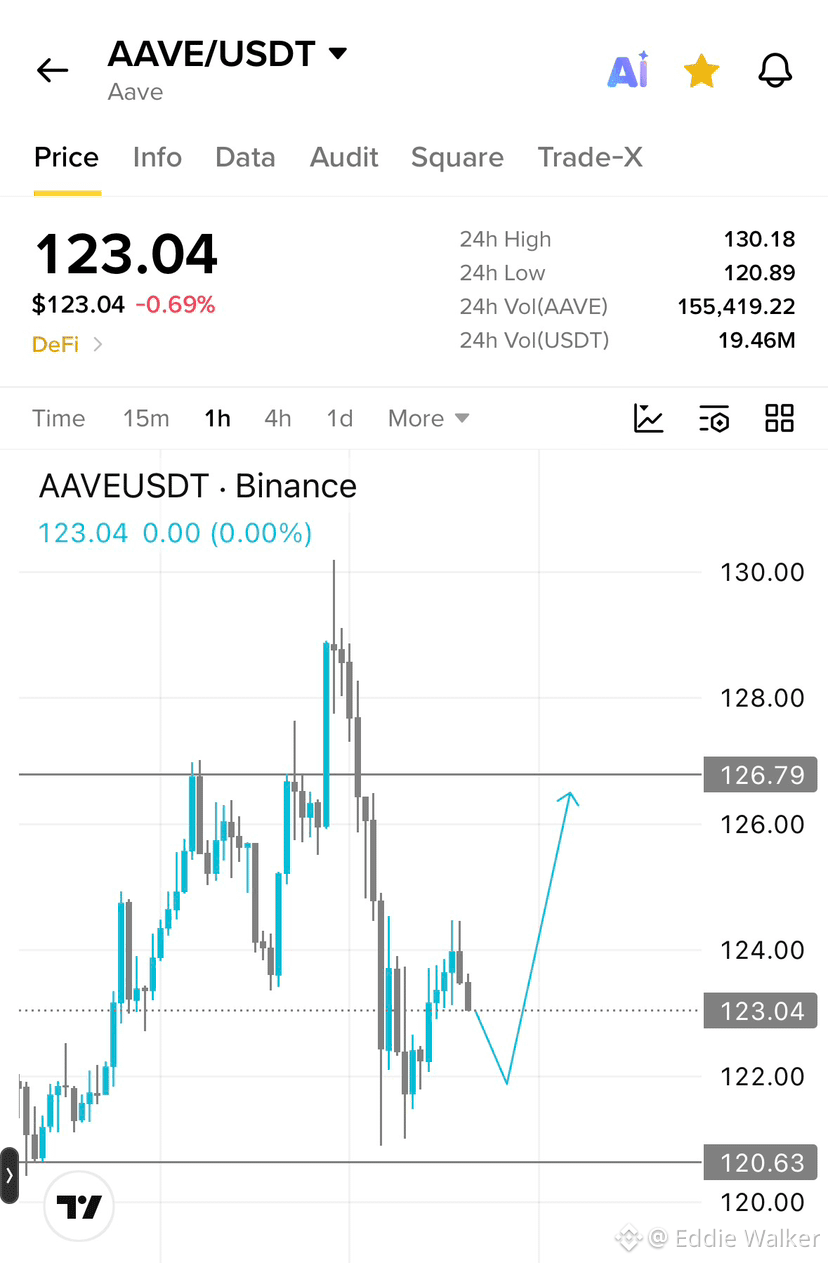
Price is sitting around $123 after bouncing from the $121–$122 area. What catches my eye is that buyers are still defending the lower part of the range, while $126.79 remains the main resistance above.
Long setup:
Entry: $122.50–$123.20
Targets:
TP1: $124.00
TP2: $125.00
TP3: $126.79
SL: Below $120.60
For me, $120.6 is the line that keeps this setup alive. If AAVE holds above that area and starts reclaiming $124, I’d watch for a move back toward $126–$127.
#Aave
Price is sitting around $123 after bouncing from the $121–$122 area. What catches my eye is that buyers are still defending the lower part of the range, while $126.79 remains the main resistance above.
Long setup:
Entry: $122.50–$123.20
Targets:
TP1: $124.00
TP2: $125.00
TP3: $126.79
SL: Below $120.60
For me, $120.6 is the line that keeps this setup alive. If AAVE holds above that area and starts reclaiming $124, I’d watch for a move back toward $126–$127.
#Aave
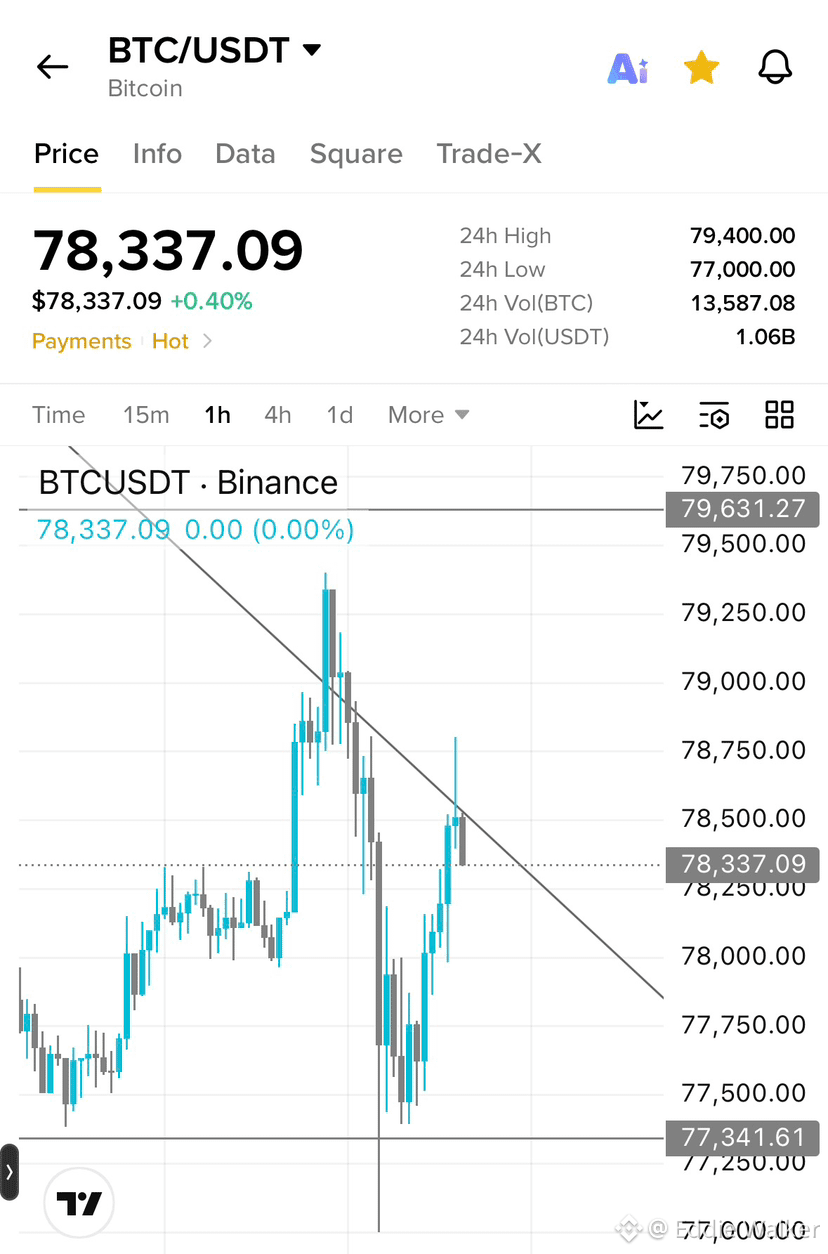
I’m watching $BTC short setup here.
Price bounced from the $77.3K support, but it’s now running straight into that descending trendline around $78.4K–$78.5K. This is the area where I want to see whether sellers step back in.
Selling setup:
Entry: $78,300–$78,500
Targets:
TP1: $78,000
TP2: $77,600
TP3: $77,340
SL: Above $78,800
For me, the trendline is the key. As long as BTC keeps getting rejected below it, another move toward $77.3K stays on the table. A clean breakout above the trendline would make me drop the short idea.
#btc
Price bounced from the $77.3K support, but it’s now running straight into that descending trendline around $78.4K–$78.5K. This is the area where I want to see whether sellers step back in.
Selling setup:
Entry: $78,300–$78,500
Targets:
TP1: $78,000
TP2: $77,600
TP3: $77,340
SL: Above $78,800
For me, the trendline is the key. As long as BTC keeps getting rejected below it, another move toward $77.3K stays on the table. A clean breakout above the trendline would make me drop the short idea.
#btc
Verified
Privacy in crypto has always felt like two extremes
Show everything, Or hide everything.
@Midnight Network is building the middle.
As a standalone Layer 1, it uses selective disclosure to prove something is true without exposing the underlying data.
That’s why the adoption side is interesting:
→ Monument Bank plans to tokenize up to £250M in customer deposits
→ Google Cloud, MoneyGram, eToro, Worldpay and others are in the validator ecosystem
→ $NIGHT generates $DUSK , the regenerating resource used for private transactions
This feels bigger than another privacy narrative.
It’s about making privacy usable for real institutions without giving up compliance.
And in 2026, that could matter a lot.
Informational content only. Not financial advice.
#Midnight
Show everything, Or hide everything.
@Midnight Network is building the middle.
As a standalone Layer 1, it uses selective disclosure to prove something is true without exposing the underlying data.
That’s why the adoption side is interesting:
→ Monument Bank plans to tokenize up to £250M in customer deposits
→ Google Cloud, MoneyGram, eToro, Worldpay and others are in the validator ecosystem
→ $NIGHT generates $DUSK , the regenerating resource used for private transactions
This feels bigger than another privacy narrative.
It’s about making privacy usable for real institutions without giving up compliance.
And in 2026, that could matter a lot.
Informational content only. Not financial advice.
#Midnight
Verified
The most painful perp trades are not always the bad ones.
Sometimes your thesis is right.
You just get wicked out first.
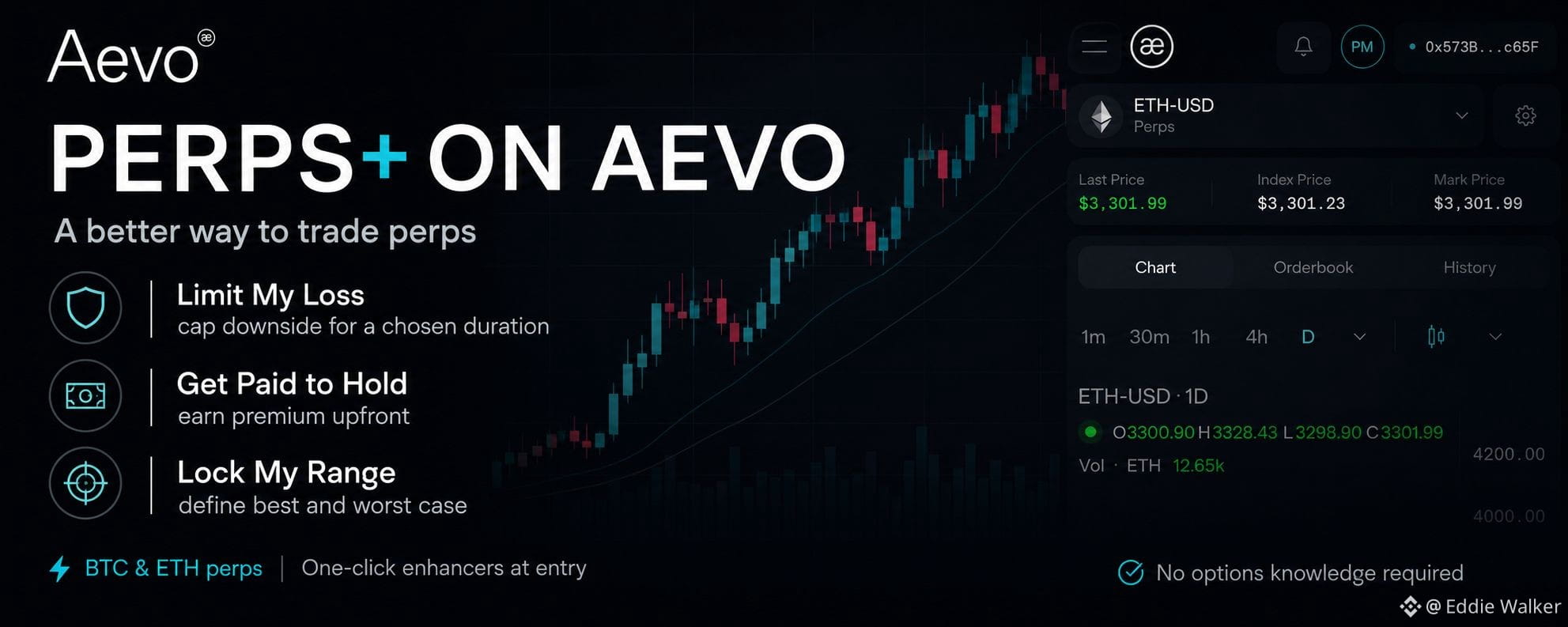
That is exactly the problem @Aevo PERPS+ is built around.
Instead of relying only on a stop, $BTC and $ETH traders can attach structured protection directly when entering the position.
Limit My Loss sets a maximum downside for a chosen duration while keeping the upside open.
So if price violently wicks through your protection level, the trade does not automatically die with the wick.
Then there are two other setups:
Get Paid to Hold gives you premium upfront in exchange for capping the upside.
Lock My Range defines your best and worst case outcome for approximately zero net cost.
The part that caught my attention?
You do not need to know options to use any of it.
Aevo basically took options-style risk management and hid the complexity behind one click.
Same perp trade.
Very different risk profile.
#Aevo
Sometimes your thesis is right.
You just get wicked out first.
That is exactly the problem @Aevo PERPS+ is built around.
Instead of relying only on a stop, $BTC and $ETH traders can attach structured protection directly when entering the position.
Limit My Loss sets a maximum downside for a chosen duration while keeping the upside open.
So if price violently wicks through your protection level, the trade does not automatically die with the wick.
Then there are two other setups:
Get Paid to Hold gives you premium upfront in exchange for capping the upside.
Lock My Range defines your best and worst case outcome for approximately zero net cost.
The part that caught my attention?
You do not need to know options to use any of it.
Aevo basically took options-style risk management and hid the complexity behind one click.
Same perp trade.
Very different risk profile.
#Aevo
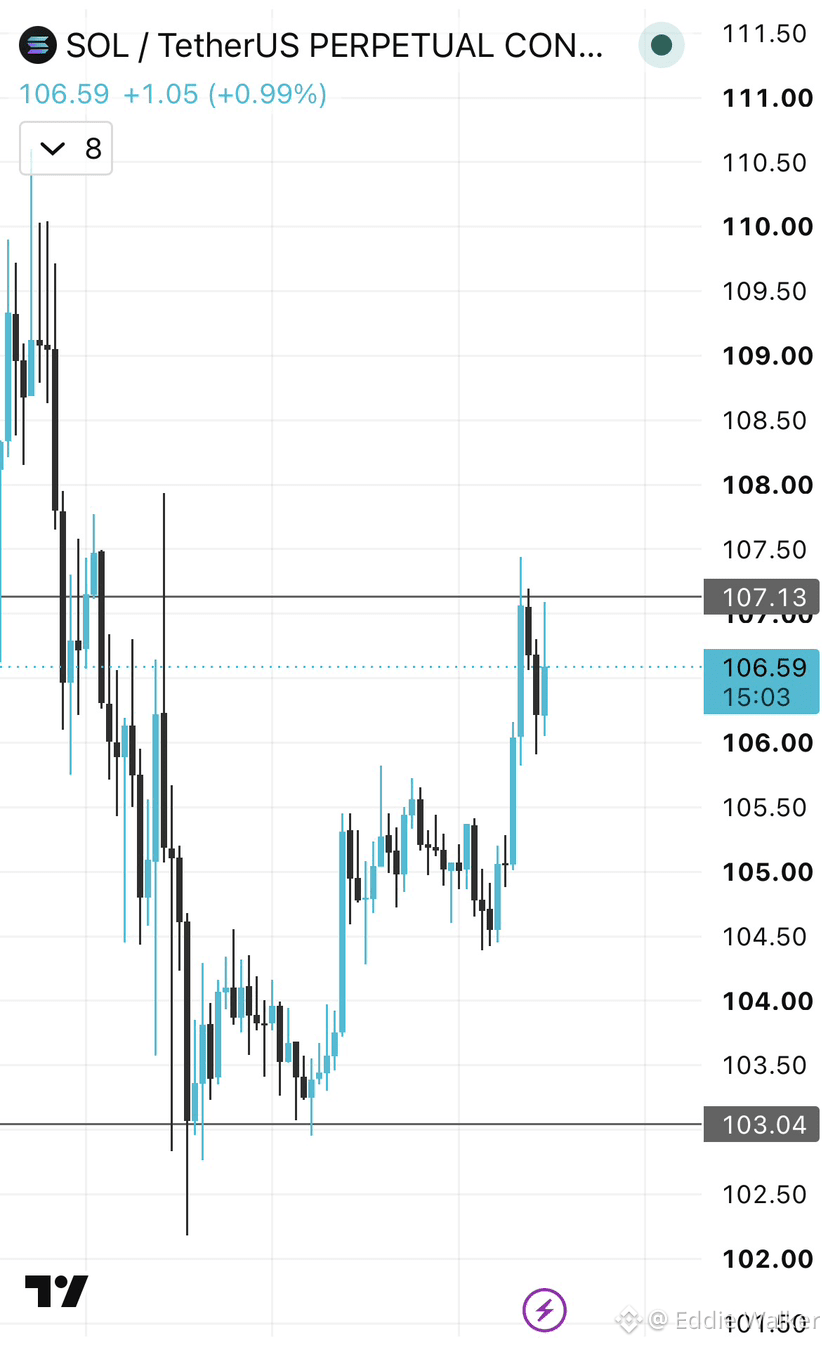
I’m watching $SOL for a selling setup here.
SOL bounced strongly from the $103 area, but price is now running into resistance around $107.13. The first reaction from that level already showed some selling pressure, so I’m watching to see if buyers fail there again.
Entry: $106.50–$107.10
Targets:
TP1: $105.80
TP2: $105.00
TP3: $103.05
SL: Above $107.50
For me, $107.13 is the key level. As long as SOL stays below it, a pullback still makes sense. If buyers reclaim $107.5 cleanly, I’d drop the short idea and wait for a better setup.
SOL bounced strongly from the $103 area, but price is now running into resistance around $107.13. The first reaction from that level already showed some selling pressure, so I’m watching to see if buyers fail there again.
Entry: $106.50–$107.10
Targets:
TP1: $105.80
TP2: $105.00
TP3: $103.05
SL: Above $107.50
For me, $107.13 is the key level. As long as SOL stays below it, a pullback still makes sense. If buyers reclaim $107.5 cleanly, I’d drop the short idea and wait for a better setup.
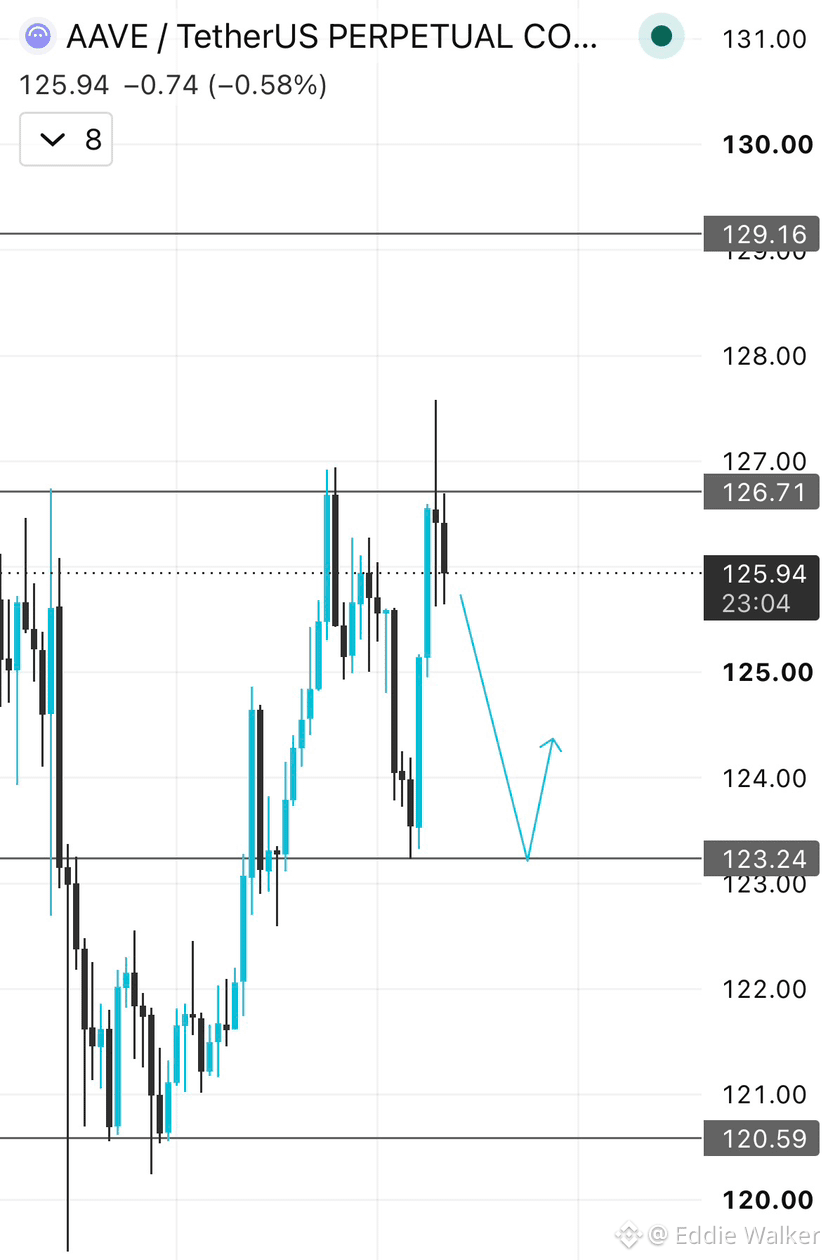
I’m watching $AAVE for a selling setup here.
Price pushed back into the $126.7 resistance area but failed to break through cleanly. Now AAVE is sitting around $125.9, and the rejection makes me think sellers could get another chance if buyers keep struggling below that level.
Entry: $125.80–$126.40
Targets:
TP1: $124.80
TP2: $124.00
TP3: $123.24
SL: Above $126.80
For me, $126.7 is the key level. As long as AAVE stays below it, I’m watching for a pullback toward the $123.2 support zone.
I wouldn’t chase a red candle though. A weak bounce back toward resistance followed by another rejection would make the setup look much cleaner.
Price pushed back into the $126.7 resistance area but failed to break through cleanly. Now AAVE is sitting around $125.9, and the rejection makes me think sellers could get another chance if buyers keep struggling below that level.
Entry: $125.80–$126.40
Targets:
TP1: $124.80
TP2: $124.00
TP3: $123.24
SL: Above $126.80
For me, $126.7 is the key level. As long as AAVE stays below it, I’m watching for a pullback toward the $123.2 support zone.
I wouldn’t chase a red candle though. A weak bounce back toward resistance followed by another rejection would make the setup look much cleaner.
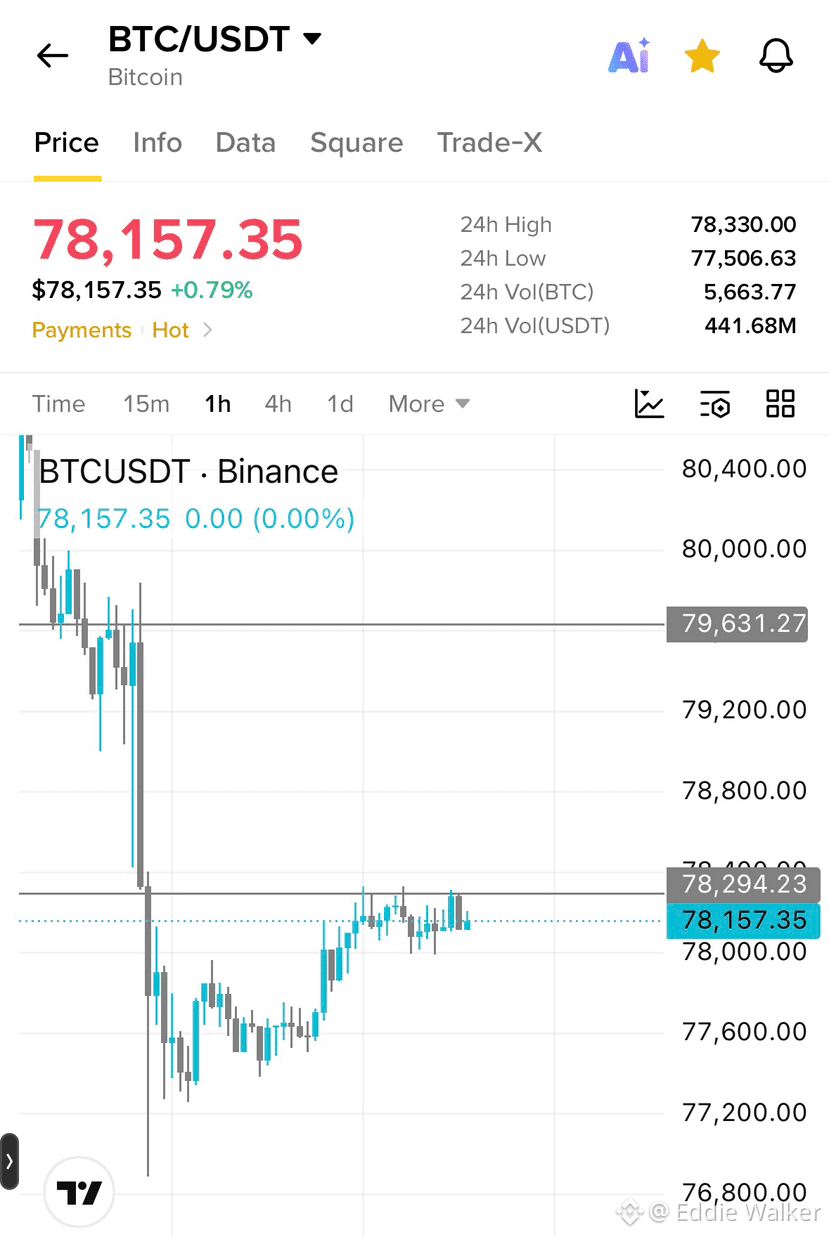
I’m watching $BTC around $78,157 here.
After that sharp drop, price managed to bounce and is now moving in a tight range just under $78,294 resistance. That tells me buyers are trying to stabilize it, but it still hasn’t fully broken out. Right now this looks more like a retest zone than a clean trend move.
Possible long setup:
Entry: $78,050 – $78,180
Targets: $78,300 → $78,800 → $79,630
SL: Below $77,500
What I’m seeing:
If BTC reclaims and holds $78,294, then the next push can extend toward $78.8K and possibly $79.6K.
But if it keeps failing below that level, then this recovery may just be a pause before another move down.
For me, $78,294 is the key level.
Above it, momentum improves.
Below it, I’d stay cautious because price could revisit the $77.5K area again.
After that sharp drop, price managed to bounce and is now moving in a tight range just under $78,294 resistance. That tells me buyers are trying to stabilize it, but it still hasn’t fully broken out. Right now this looks more like a retest zone than a clean trend move.
Possible long setup:
Entry: $78,050 – $78,180
Targets: $78,300 → $78,800 → $79,630
SL: Below $77,500
What I’m seeing:
If BTC reclaims and holds $78,294, then the next push can extend toward $78.8K and possibly $79.6K.
But if it keeps failing below that level, then this recovery may just be a pause before another move down.
For me, $78,294 is the key level.
Above it, momentum improves.
Below it, I’d stay cautious because price could revisit the $77.5K area again.
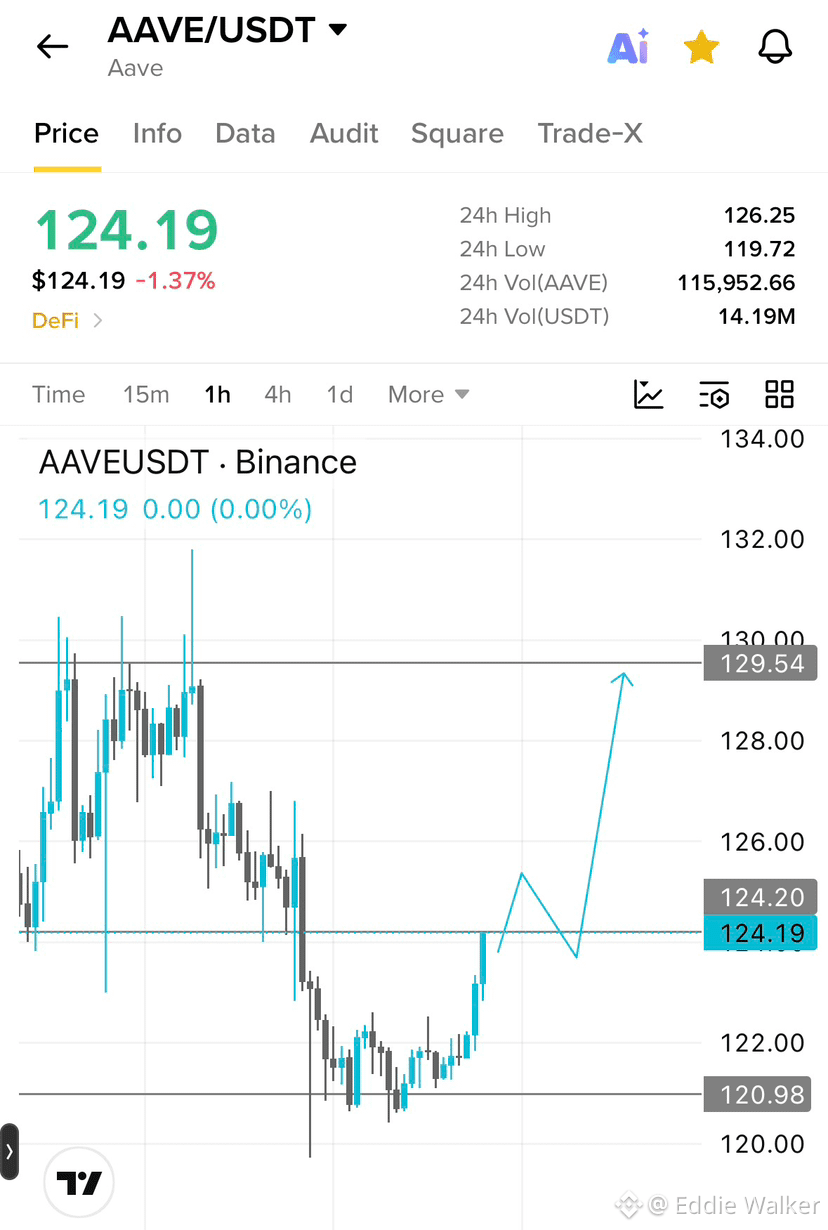
I’m watching $AAVE here
Price bounced cleanly from the $121 support area and is now trying to reclaim $124.20. The recovery looks decent so far, but I’d still want to see buyers hold this level before getting too aggressive.
Entry: $123.50–$124.20
Targets:
TP1: $125.50
TP2: $127.00
TP3: $129.50
SL: Below $120.90
For me, $124.20 is the key level now. If AAVE can flip it back into support, the move toward $127–$129.5 starts looking much cleaner. If it loses $121 again, I’d rather step aside.
Price bounced cleanly from the $121 support area and is now trying to reclaim $124.20. The recovery looks decent so far, but I’d still want to see buyers hold this level before getting too aggressive.
Entry: $123.50–$124.20
Targets:
TP1: $125.50
TP2: $127.00
TP3: $129.50
SL: Below $120.90
For me, $124.20 is the key level now. If AAVE can flip it back into support, the move toward $127–$129.5 starts looking much cleaner. If it loses $121 again, I’d rather step aside.
Log in to explore more content