
BTCMaster88
3.9k Posts

BTCMaster88
Report
Block User
Learning, losing, winning — all part of my Binance story @BTCMaster88_Connect On X
Open Trade
Frequent Trader
4.8 Years
295 Following
25.4K+ Followers
10.9K+ Liked
Posts
Portfolio
All
Quotes
Live
PINNED
·
--
Bullish
Hi everyone,
I’m an EU user and have been following the MiCA changes closely. I currently keep my crypto on Binance, but I’m wondering if it’s still the best place to hold my funds.
Has Binance confirmed that users will always be able to withdraw their assets if certain services are discontinued under MiCA? Or would it be smarter to move funds to another exchange or a self-custody wallet before the changes take effect?
Would appreciate any clarification.
$INJ @CRYPTO_BOSS_2025 #Poland
{spot}(INJUSDT)
Hi everyone,
I’m an EU user and have been following the MiCA changes closely. I currently keep my crypto on Binance, but I’m wondering if it’s still the best place to hold my funds.
Has Binance confirmed that users will always be able to withdraw their assets if certain services are discontinued under MiCA? Or would it be smarter to move funds to another exchange or a self-custody wallet before the changes take effect?
Would appreciate any clarification.
$INJ @FINANCЕ #Poland
I’m an EU user and have been following the MiCA changes closely. I currently keep my crypto on Binance, but I’m wondering if it’s still the best place to hold my funds.
Has Binance confirmed that users will always be able to withdraw their assets if certain services are discontinued under MiCA? Or would it be smarter to move funds to another exchange or a self-custody wallet before the changes take effect?
Would appreciate any clarification.
$INJ @FINANCЕ #Poland
1
2.2k
·
--
Bullish
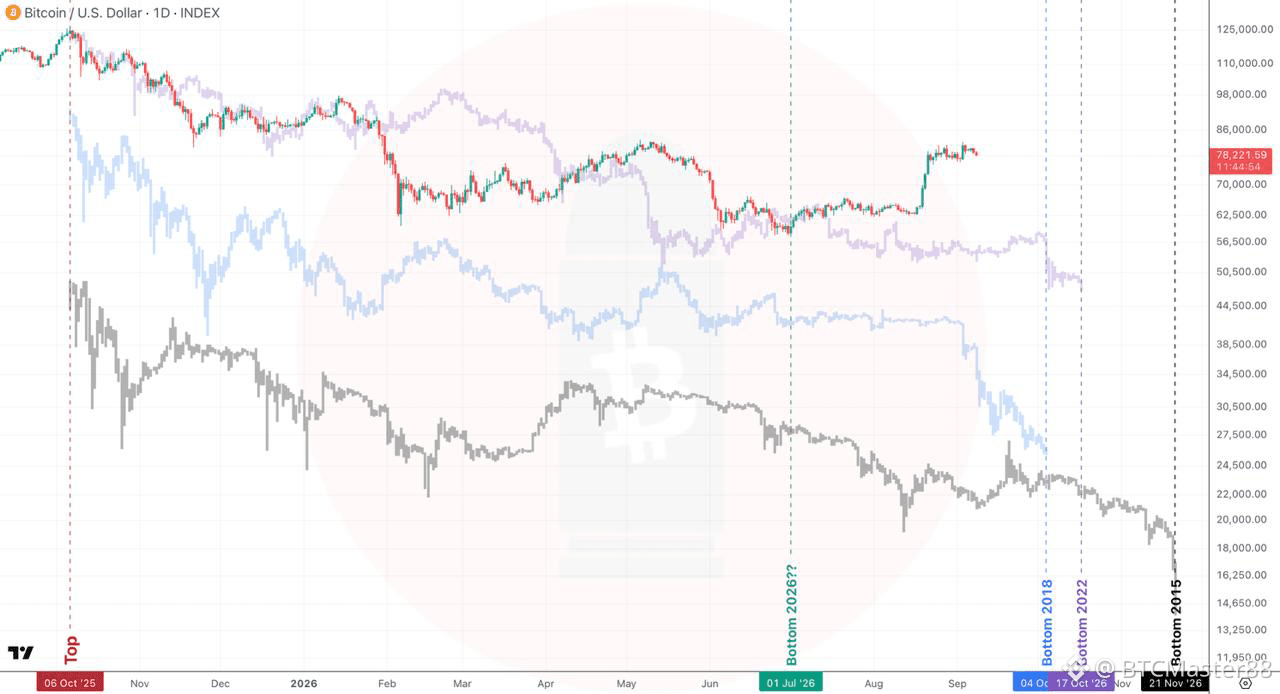
If July 1st ($57,750) was the bear market bottom, then it was the shortest $BTC bear market 🤷♂️
But don't write off the bears just yet, they still have enough time to fight back:
👉 October 4th would match the 2018 bear market bottom
👉 October 17th would match the 2022 bear market bottom
👉 November 21st would match the 2014/15 bear market bottom
That's why I set December 1st as the deadline to flip 100% bullish
{spot}(BTCUSDT)
If July 1st ($57,750) was the bear market bottom, then it was the shortest $BTC bear market 🤷♂️
But don't write off the bears just yet, they still have enough time to fight back:
👉 October 4th would match the 2018 bear market bottom
👉 October 17th would match the 2022 bear market bottom
👉 November 21st would match the 2014/15 bear market bottom
That's why I set December 1st as the deadline to flip 100% bullish
But don't write off the bears just yet, they still have enough time to fight back:
👉 October 4th would match the 2018 bear market bottom
👉 October 17th would match the 2022 bear market bottom
👉 November 21st would match the 2014/15 bear market bottom
That's why I set December 1st as the deadline to flip 100% bullish
1
127
·
--
Bullish
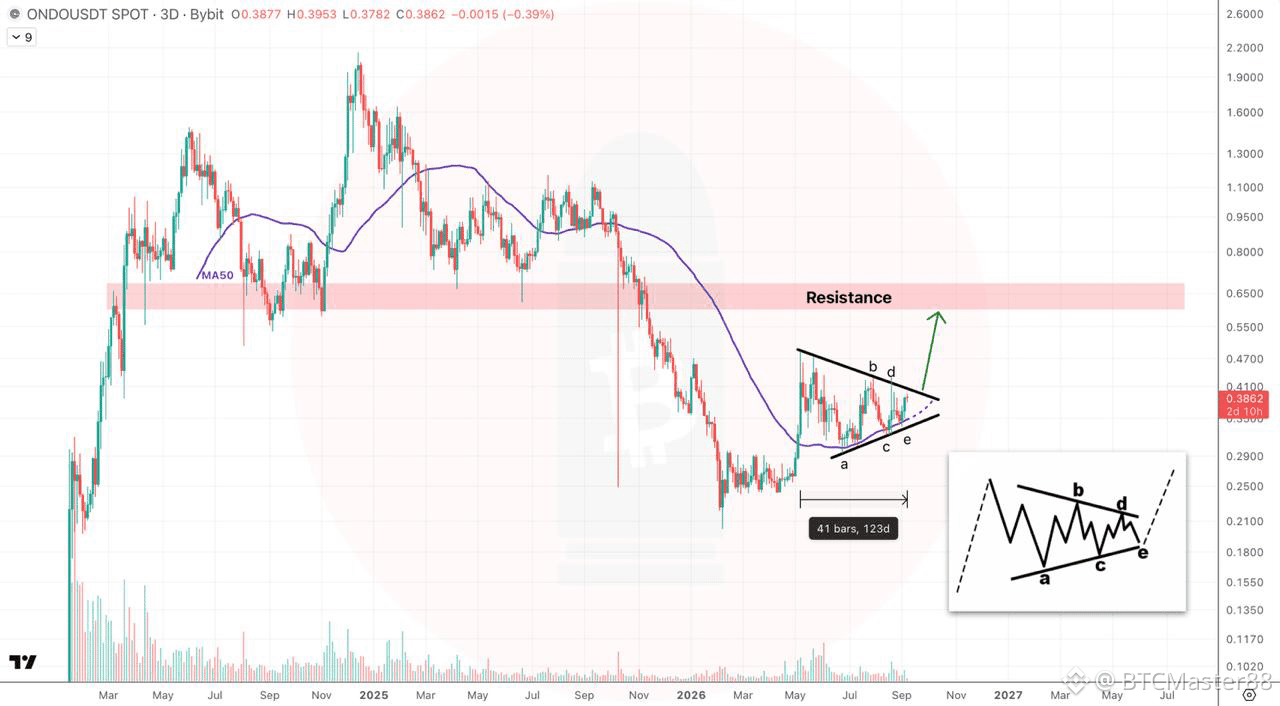
$ONDO is printing a big Symmetrical Triangle on the 3D chart 🧐
If $BTC behaves $ONDO could break out very soon 📈
Use the MA50 to manage the risk
{spot}(ONDOUSDT)
$ONDO is printing a big Symmetrical Triangle on the 3D chart 🧐
If $BTC behaves $ONDO could break out very soon 📈
Use the MA50 to manage the risk
If $BTC behaves $ONDO could break out very soon 📈
Use the MA50 to manage the risk
157
·
--
Bullish
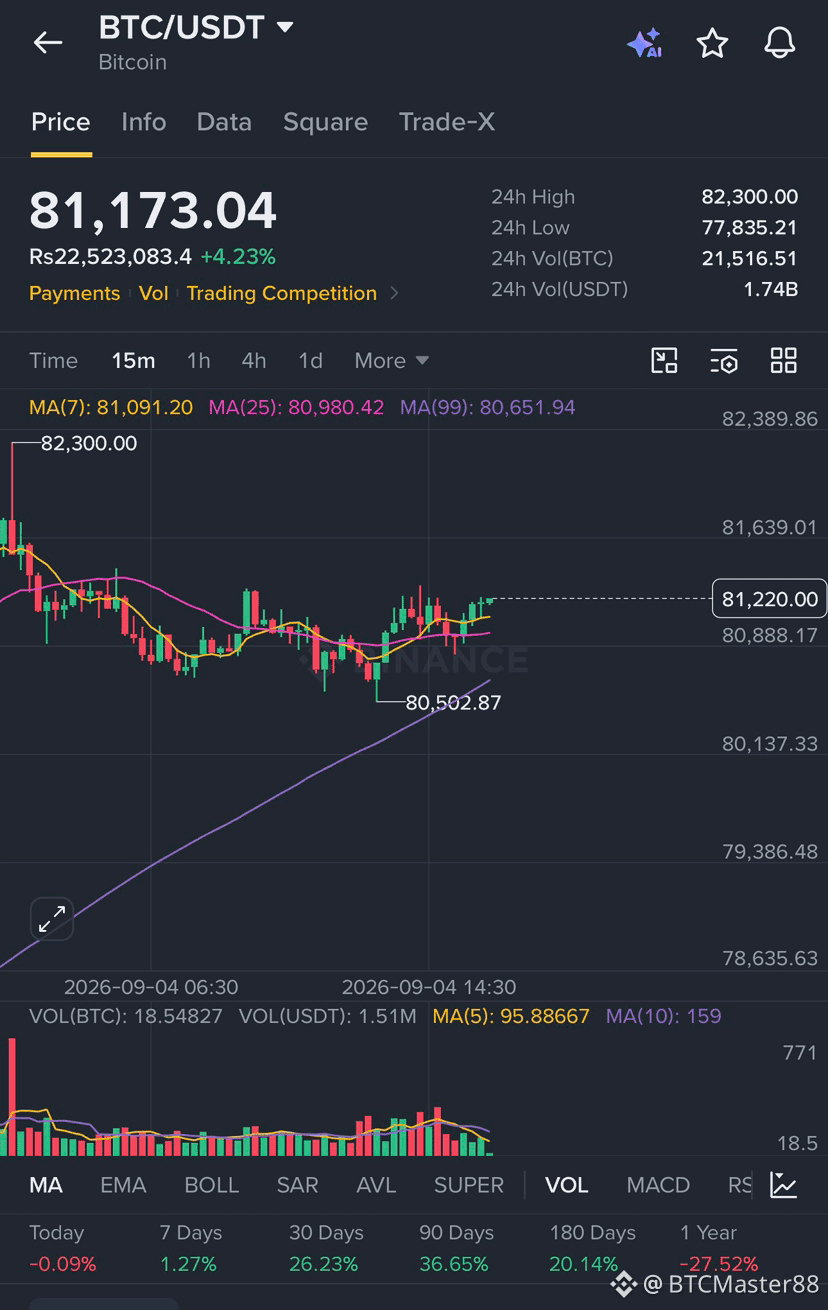
$BTC Buying Opportunity
BTC is holding above its short-term moving averages, while the $80,500 area remains key support.
Entry: $80,900–$81,100
TP1: $81,650
TP2: $82,300
SL: $80,450
A clean hold above $81K could open the way toward the previous high. Setup becomes invalid below the stop-loss.
Manage risk carefully. Not financial advice.
{spot}(BTCUSDT)
$BTC Buying Opportunity
BTC is holding above its short-term moving averages, while the $80,500 area remains key support.
Entry: $80,900–$81,100
TP1: $81,650
TP2: $82,300
SL: $80,450
A clean hold above $81K could open the way toward the previous high. Setup becomes invalid below the stop-loss.
Manage risk carefully. Not financial advice.
BTC is holding above its short-term moving averages, while the $80,500 area remains key support.
Entry: $80,900–$81,100
TP1: $81,650
TP2: $82,300
SL: $80,450
A clean hold above $81K could open the way toward the previous high. Setup becomes invalid below the stop-loss.
Manage risk carefully. Not financial advice.
185
·
--
Bullish
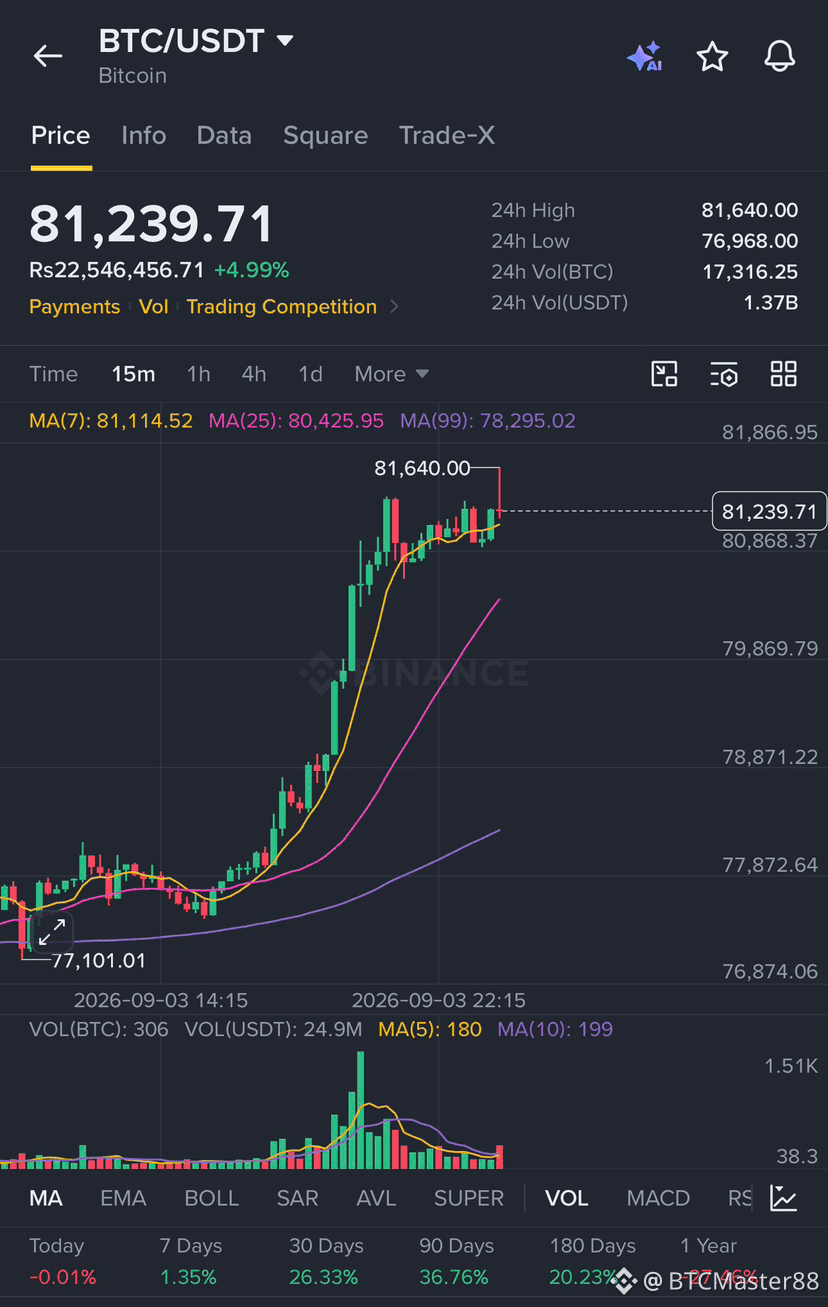
$BTC is showing serious strength here.
Bitcoin pushed from around $77K to $81K and is now consolidating near the highs instead of giving back the move.
For me, the key area is $80K–$80.5K. If BTC pulls back and holds this zone, I’d see it as a potential buying opportunity rather than chasing at $81K+.
🎯 First target: $81.6K
🎯 Breakout target: $82.5K+
⚠️ Lose $80K and I’d wait for a cleaner setup.
Strong trend, but patience on the entry matters.
{spot}(BTCUSDT)
$BTC is showing serious strength here.
Bitcoin pushed from around $77K to $81K and is now consolidating near the highs instead of giving back the move.
For me, the key area is $80K–$80.5K. If BTC pulls back and holds this zone, I’d see it as a potential buying opportunity rather than chasing at $81K+.
🎯 First target: $81.6K
🎯 Breakout target: $82.5K+
⚠️ Lose $80K and I’d wait for a cleaner setup.
Strong trend, but patience on the entry matters.
Bitcoin pushed from around $77K to $81K and is now consolidating near the highs instead of giving back the move.
For me, the key area is $80K–$80.5K. If BTC pulls back and holds this zone, I’d see it as a potential buying opportunity rather than chasing at $81K+.
🎯 First target: $81.6K
🎯 Breakout target: $82.5K+
⚠️ Lose $80K and I’d wait for a cleaner setup.
Strong trend, but patience on the entry matters.
257
·
--
Bullish
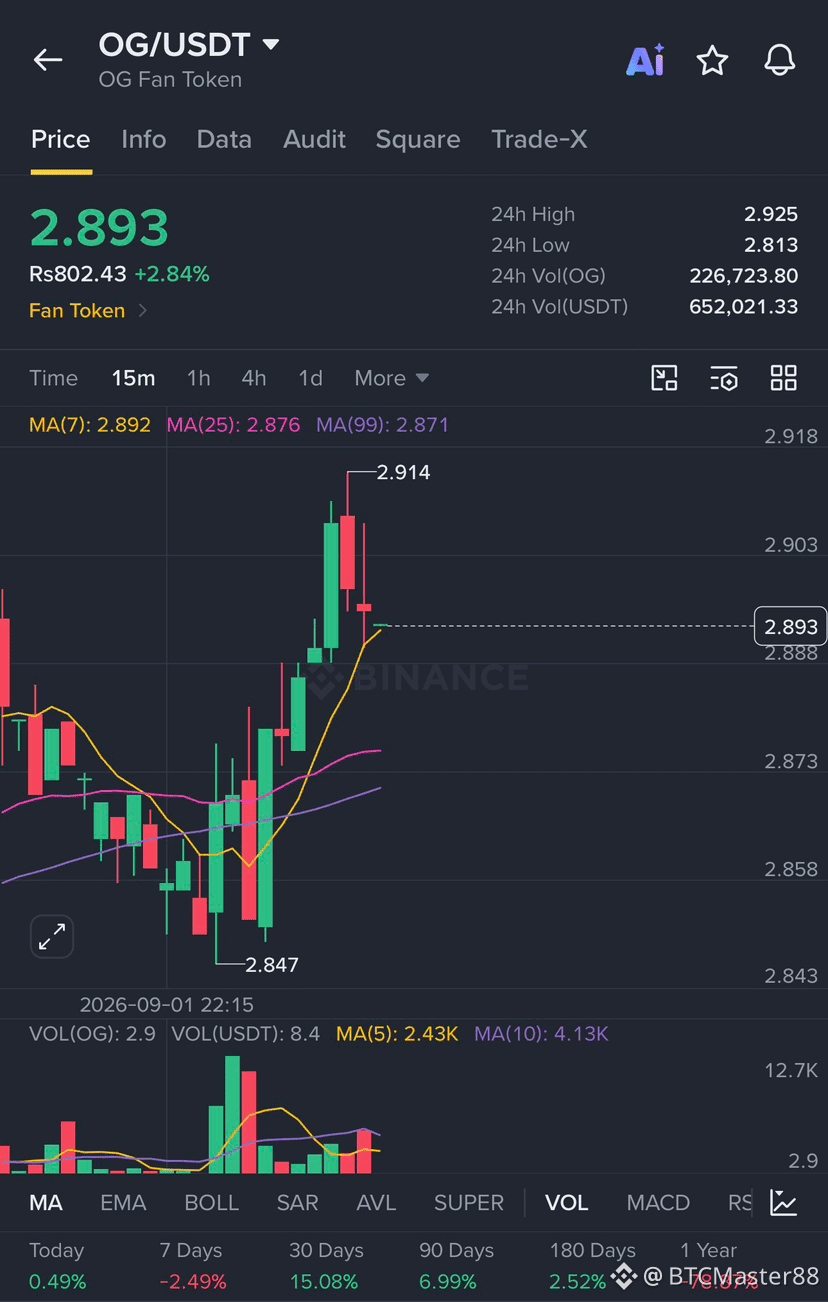
$OG is pulling back after a strong run to $0.2595, and the $0.19 area is now the key zone to watch.
Potential buying setup:
Entry: $0.190–$0.196
TP1: $0.210
TP2: $0.225
TP3: $0.240
SL: $0.181
Holding above $0.19 could give bulls a chance to regain momentum. A reclaim of $0.21 would make the setup much stronger.#ARBRises30%OnRobinhoodChainRevenue
{spot}(OGUSDT)
$OG is pulling back after a strong run to $0.2595, and the $0.19 area is now the key zone to watch.
Potential buying setup:
Entry: $0.190–$0.196
TP1: $0.210
TP2: $0.225
TP3: $0.240
SL: $0.181
Holding above $0.19 could give bulls a chance to regain momentum. A reclaim of $0.21 would make the setup much stronger.#ARBRises30%OnRobinhoodChainRevenue
Potential buying setup:
Entry: $0.190–$0.196
TP1: $0.210
TP2: $0.225
TP3: $0.240
SL: $0.181
Holding above $0.19 could give bulls a chance to regain momentum. A reclaim of $0.21 would make the setup much stronger.#ARBRises30%OnRobinhoodChainRevenue

241
·
--
Bullish
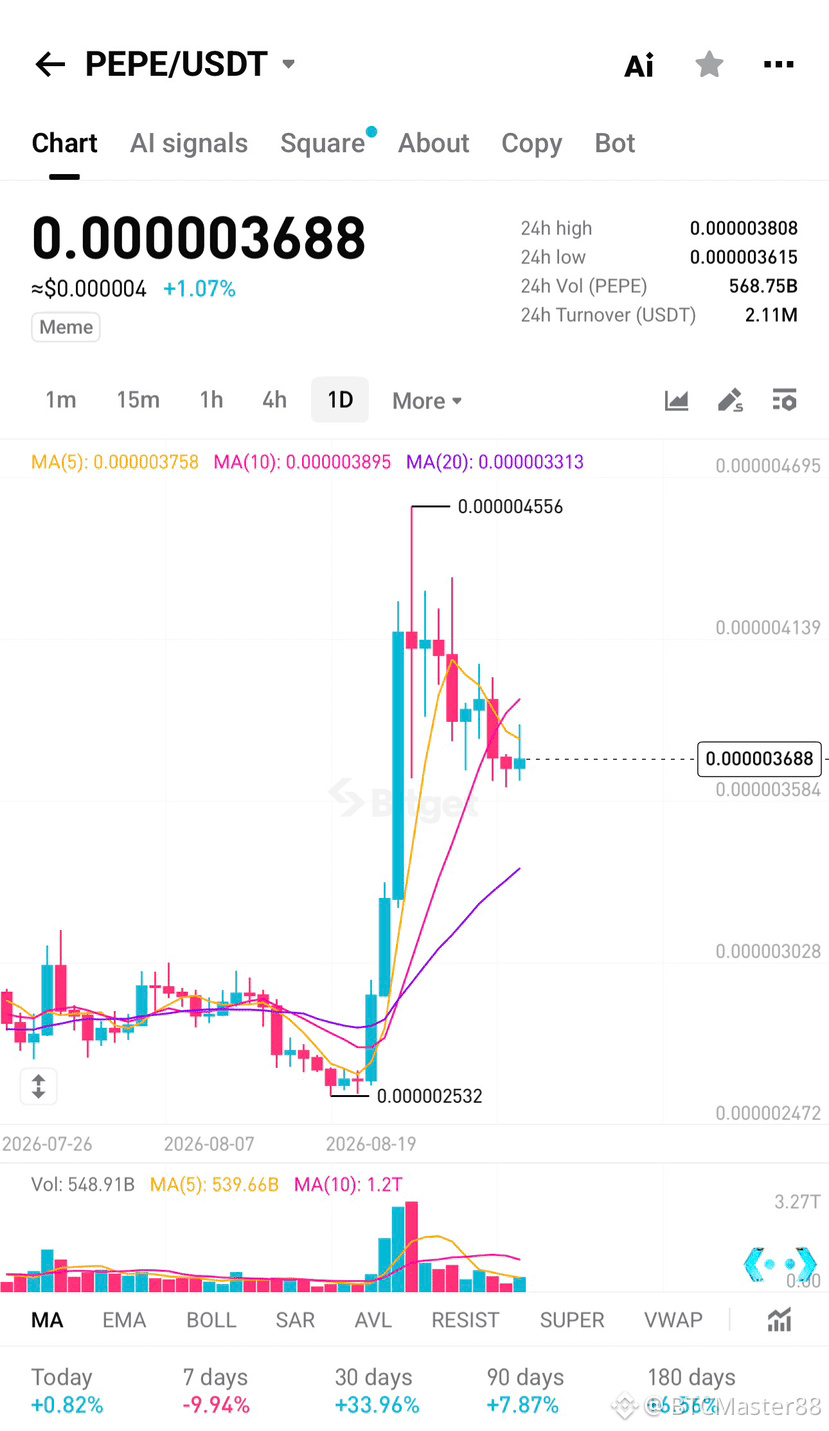
$PEPE is cooling off after a strong breakout, and this pullback could offer a fresh buying opportunity. 👀
Price is still holding well above the 20-day MA, keeping the broader structure constructive.
🟢 Buy Zone: $0.00000358–$0.00000370
🎯 TP1: $0.00000395
🎯 TP2: $0.00000415
🎯 TP3: $0.00000450
🛑 SL: $0.00000338
Holding the $0.00000358 area keeps the bullish setup alive. A reclaim of $0.00000390 could bring momentum back quickly.
#pepe
{spot}(PEPEUSDT)
$PEPE is cooling off after a strong breakout, and this pullback could offer a fresh buying opportunity. 👀
Price is still holding well above the 20-day MA, keeping the broader structure constructive.
🟢 Buy Zone: $0.00000358–$0.00000370
🎯 TP1: $0.00000395
🎯 TP2: $0.00000415
🎯 TP3: $0.00000450
🛑 SL: $0.00000338
Holding the $0.00000358 area keeps the bullish setup alive. A reclaim of $0.00000390 could bring momentum back quickly.
#pepe
Price is still holding well above the 20-day MA, keeping the broader structure constructive.
🟢 Buy Zone: $0.00000358–$0.00000370
🎯 TP1: $0.00000395
🎯 TP2: $0.00000415
🎯 TP3: $0.00000450
🛑 SL: $0.00000338
Holding the $0.00000358 area keeps the bullish setup alive. A reclaim of $0.00000390 could bring momentum back quickly.
#pepe

274
·
--
Bullish
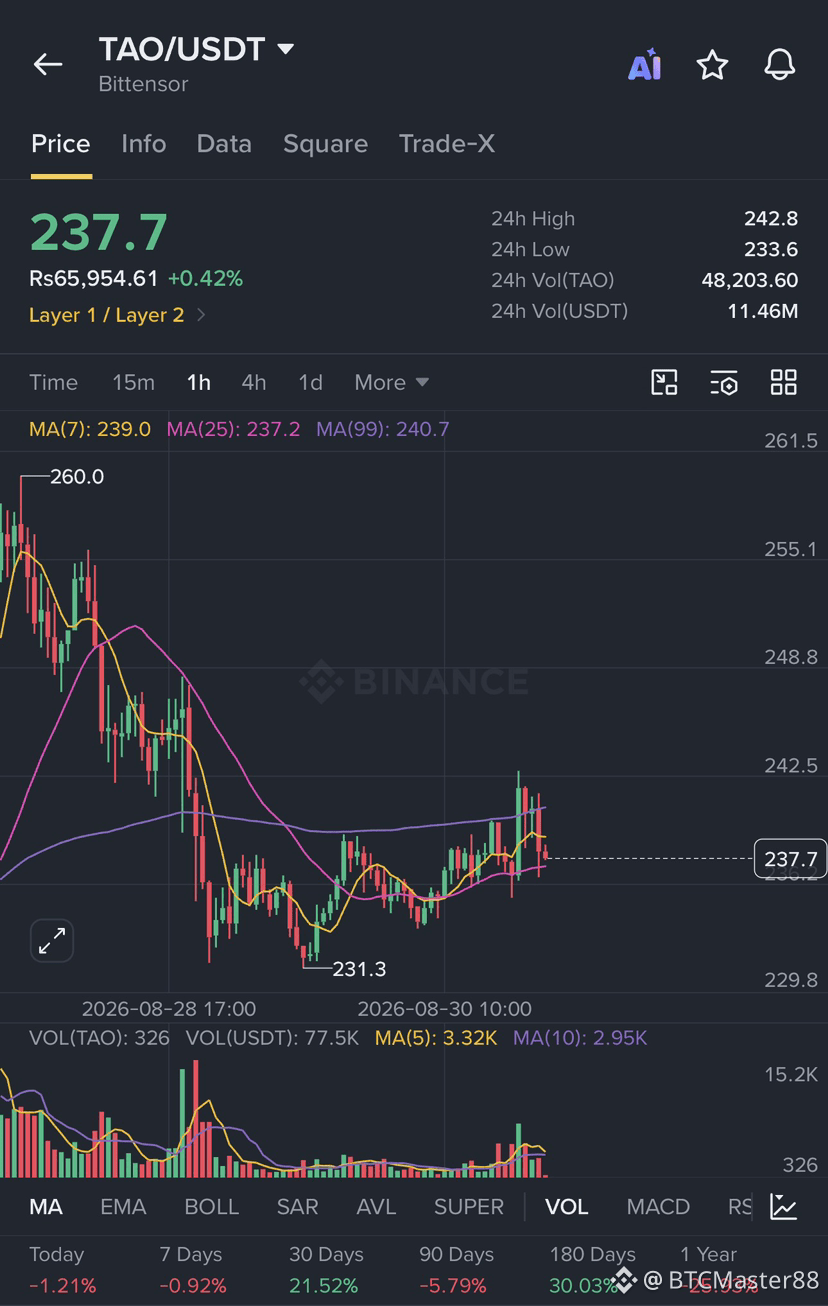
$TAO is starting to look interesting around the $235–$237 zone.
After bouncing from $231.3, price is building a base while the 1H structure attempts to recover.
My setup:
🟢 Buy zone: $235–$237
🎯 TP1: $242.5
🎯 TP2: $248
🎯 TP3: $255
🛑 SL: $230.5
Holding $235 keeps the recovery setup alive. A clean break above $242.5 could bring stronger momentum back into $TAO.
I’d rather accumulate near support than chase the breakout.
DYOR. Not financial advice.
#KoreaSingleStockLeveragedETFTradingFalls #VietnamPilotsCryptoAssetMarket #GoldFalls3.24%ThisWeek
{spot}(TAOUSDT)
$TAO is starting to look interesting around the $235–$237 zone.
After bouncing from $231.3, price is building a base while the 1H structure attempts to recover.
My setup:
🟢 Buy zone: $235–$237
🎯 TP1: $242.5
🎯 TP2: $248
🎯 TP3: $255
🛑 SL: $230.5
Holding $235 keeps the recovery setup alive. A clean break above $242.5 could bring stronger momentum back into $TAO .
I’d rather accumulate near support than chase the breakout.
DYOR. Not financial advice.
#KoreaSingleStockLeveragedETFTradingFalls #VietnamPilotsCryptoAssetMarket #GoldFalls3.24%ThisWeek
After bouncing from $231.3, price is building a base while the 1H structure attempts to recover.
My setup:
🟢 Buy zone: $235–$237
🎯 TP1: $242.5
🎯 TP2: $248
🎯 TP3: $255
🛑 SL: $230.5
Holding $235 keeps the recovery setup alive. A clean break above $242.5 could bring stronger momentum back into $TAO .
I’d rather accumulate near support than chase the breakout.
DYOR. Not financial advice.
#KoreaSingleStockLeveragedETFTradingFalls #VietnamPilotsCryptoAssetMarket #GoldFalls3.24%ThisWeek
444
·
--
Bullish
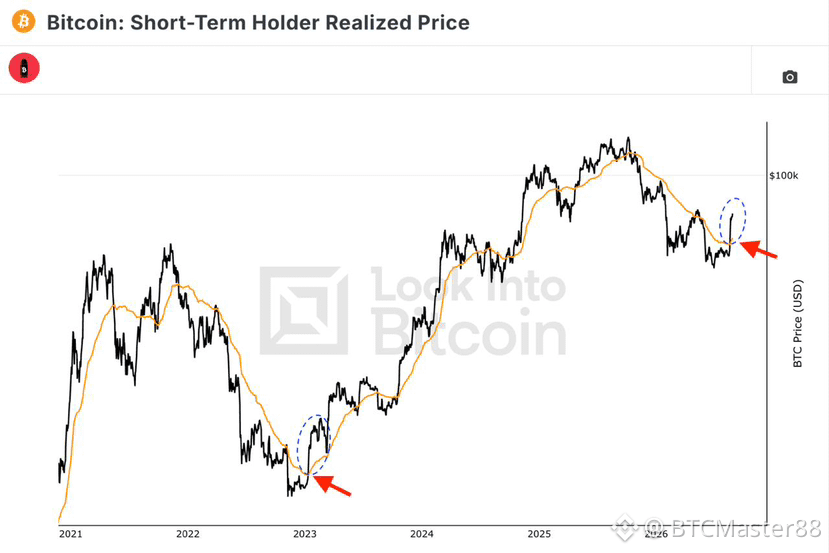
$BTC just reclaimed the Short-Term Holder Realized Price, and this breakout looks different.
Unlike May’s fakeout, Bitcoin has pushed above this key level with much stronger conviction.
The structure looks more similar to January 2023, when reclaiming the STH Realized Price marked a major shift in market momentum.
If $BTC holds above it, the bullish case gets even stronger. #USShortTermTreasuryYieldsJump #TrumpSaysUSReachedVenezuelaOilDeal
{spot}(BTCUSDT)
$BTC just reclaimed the Short-Term Holder Realized Price, and this breakout looks different.
Unlike May’s fakeout, Bitcoin has pushed above this key level with much stronger conviction.
The structure looks more similar to January 2023, when reclaiming the STH Realized Price marked a major shift in market momentum.
If $BTC holds above it, the bullish case gets even stronger. #USShortTermTreasuryYieldsJump #TrumpSaysUSReachedVenezuelaOilDeal
Unlike May’s fakeout, Bitcoin has pushed above this key level with much stronger conviction.
The structure looks more similar to January 2023, when reclaiming the STH Realized Price marked a major shift in market momentum.
If $BTC holds above it, the bullish case gets even stronger. #USShortTermTreasuryYieldsJump #TrumpSaysUSReachedVenezuelaOilDeal
1
1
190
·
--
Bullish
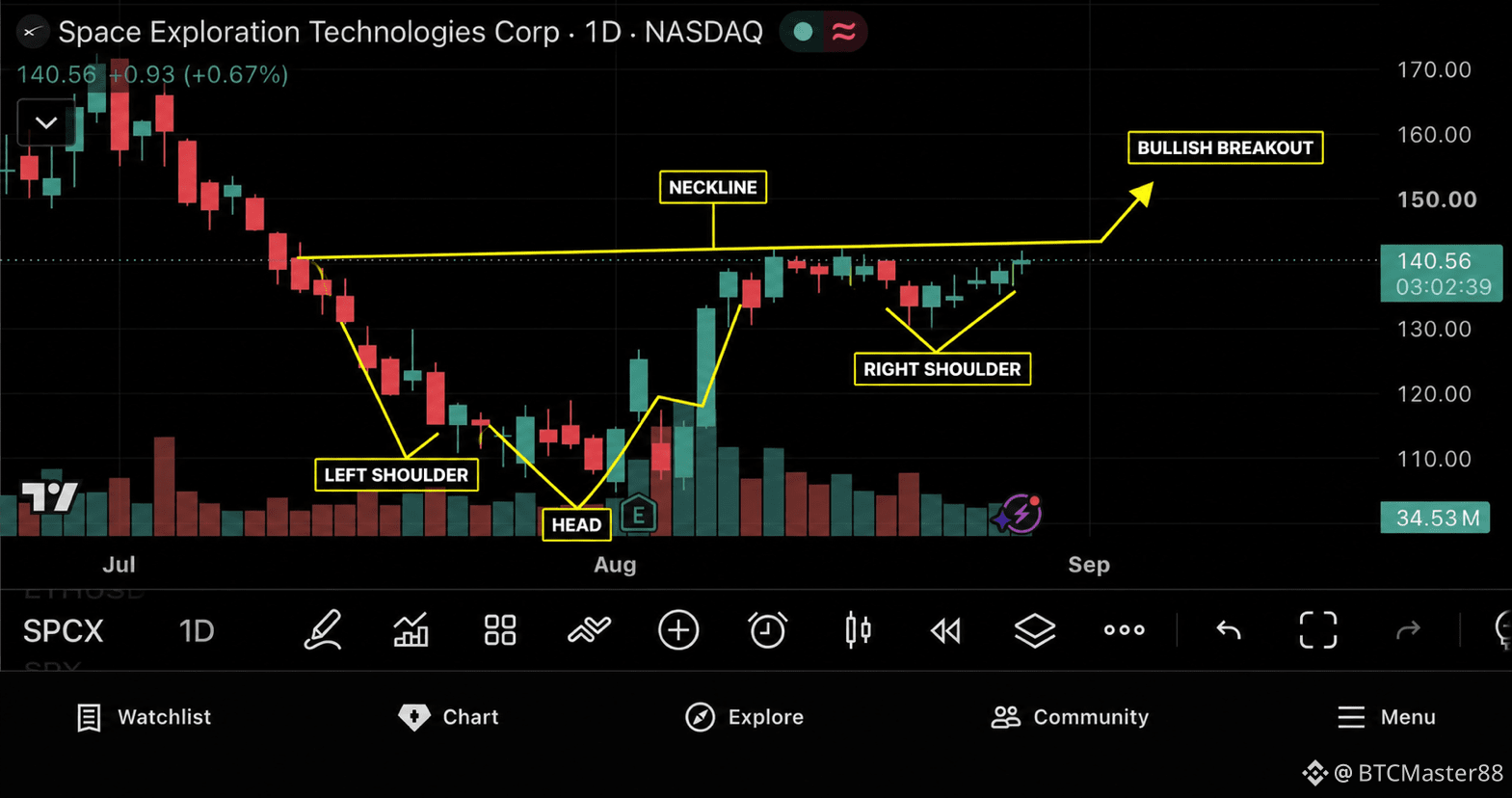
$SPCXB
A potential inverse head-and-shoulders pattern is forming on the daily chart.
Buying Zone: $138–$141
TP1: $145
TP2: $150
TP3: $160
SL: $132
A daily close above the $142 neckline could confirm the bullish breakout. Manage risk and wait for confirmation.
{spot}(SPCXBUSDT)
$SPCXB
A potential inverse head-and-shoulders pattern is forming on the daily chart.
Buying Zone: $138–$141
TP1: $145
TP2: $150
TP3: $160
SL: $132
A daily close above the $142 neckline could confirm the bullish breakout. Manage risk and wait for confirmation.
A potential inverse head-and-shoulders pattern is forming on the daily chart.
Buying Zone: $138–$141
TP1: $145
TP2: $150
TP3: $160
SL: $132
A daily close above the $142 neckline could confirm the bullish breakout. Manage risk and wait for confirmation.
1
243
·
--
Bullish
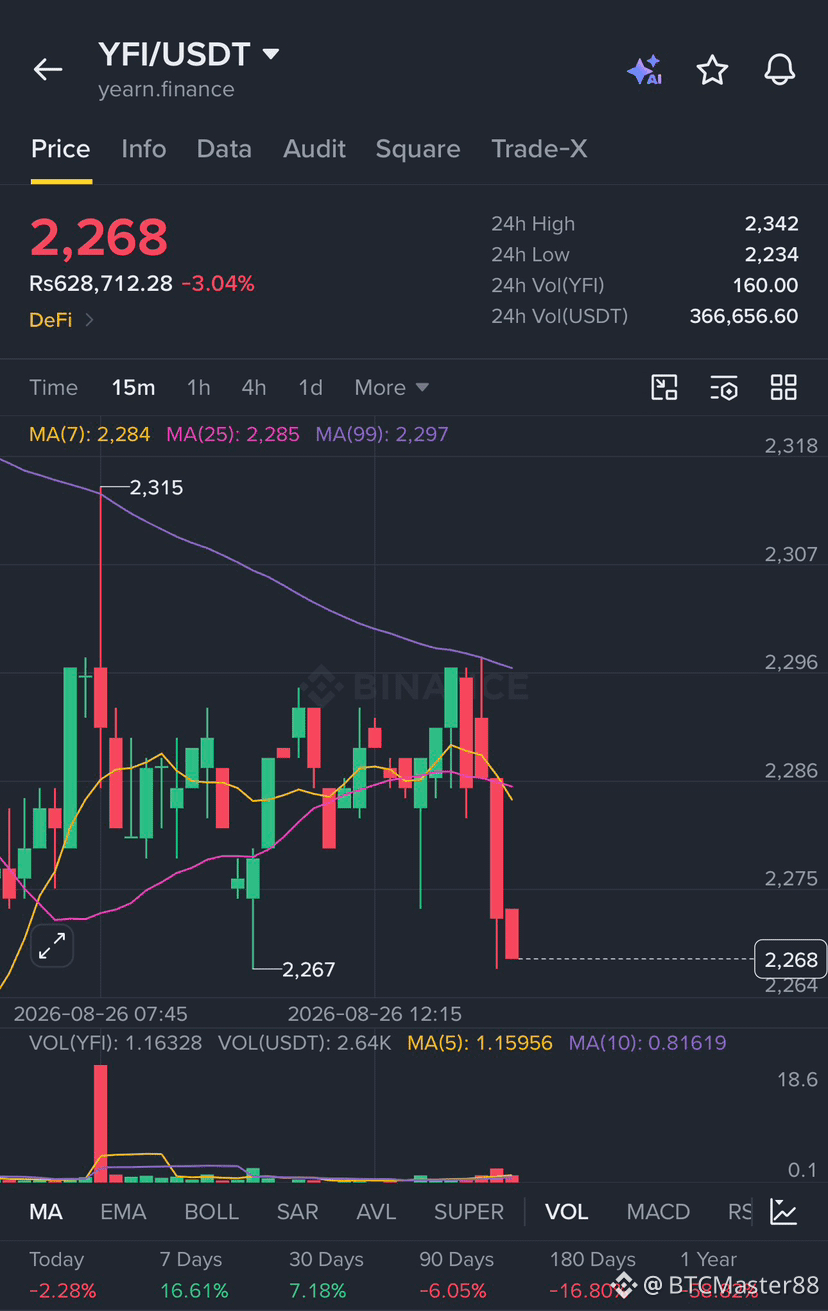
$YFI Buying Opportunity 👀
Entry Zone: $2,264–$2,270
TP1: $2,285
TP2: $2,297
TP3: $2,315
Stop Loss: $2,245
Price is testing short-term support after a sharp pullback. A strong hold and reversal from this zone could open the way toward the moving averages.
Wait for confirmation and manage risk carefully. NFA, DYOR.
{spot}(YFIUSDT)
$YFI Buying Opportunity 👀
Entry Zone: $2,264–$2,270
TP1: $2,285
TP2: $2,297
TP3: $2,315
Stop Loss: $2,245
Price is testing short-term support after a sharp pullback. A strong hold and reversal from this zone could open the way toward the moving averages.
Wait for confirmation and manage risk carefully. NFA, DYOR.
Entry Zone: $2,264–$2,270
TP1: $2,285
TP2: $2,297
TP3: $2,315
Stop Loss: $2,245
Price is testing short-term support after a sharp pullback. A strong hold and reversal from this zone could open the way toward the moving averages.
Wait for confirmation and manage risk carefully. NFA, DYOR.
225
·
--
Bullish
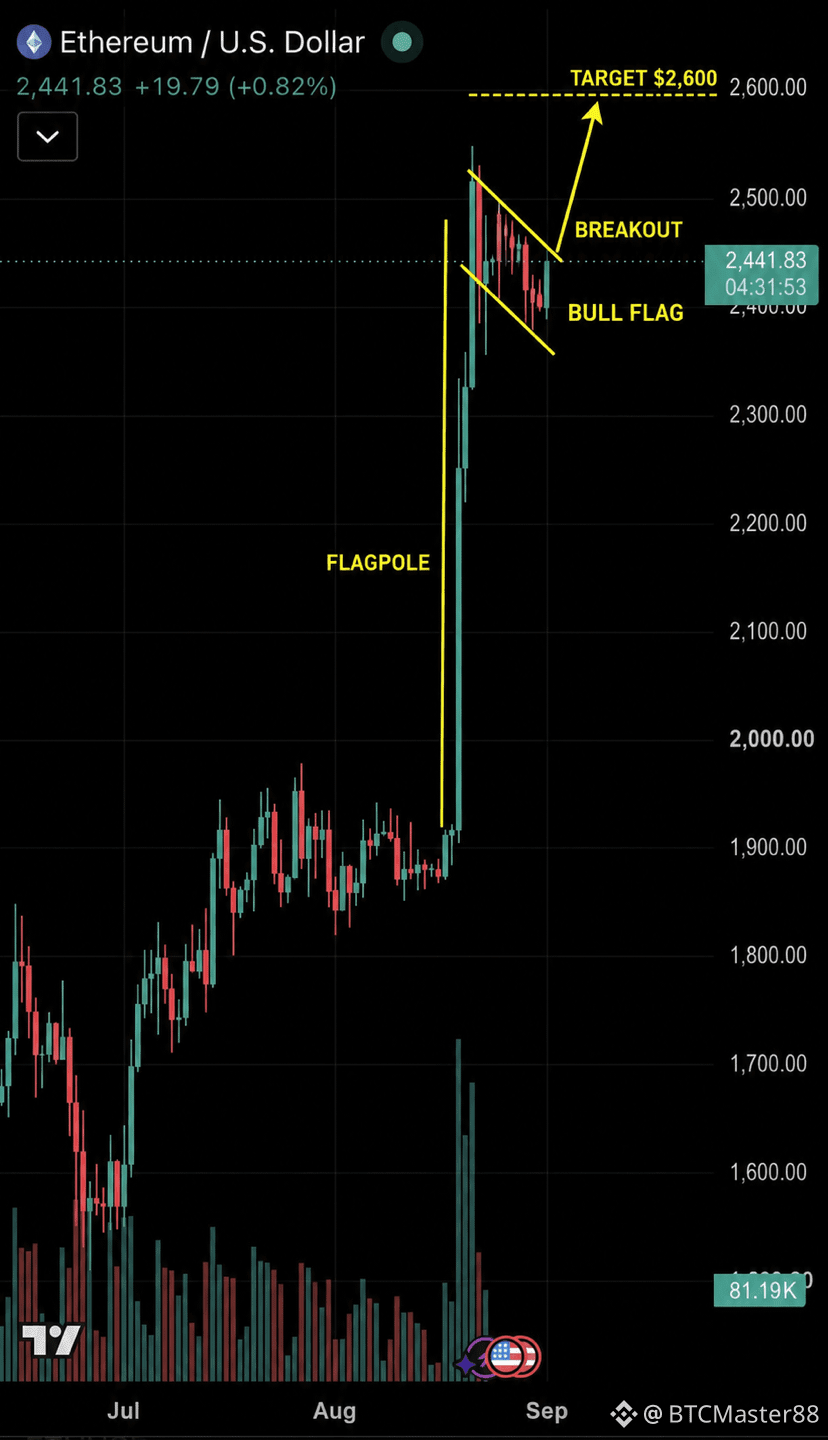
$ETH is forming a potential bull flag after a strong breakout. 👀
The current consolidation could offer a buying opportunity if support holds.
Entry: $2,400–$2,440
TP1: $2,500
TP2: $2,600
SL: $2,360
A clean breakout above the flag could confirm the next bullish move.
Not financial advice. DYOR.
#ETH #Ethereum #Crypto
{spot}(ETHUSDT)
$ETH is forming a potential bull flag after a strong breakout. 👀
The current consolidation could offer a buying opportunity if support holds.
Entry: $2,400–$2,440
TP1: $2,500
TP2: $2,600
SL: $2,360
A clean breakout above the flag could confirm the next bullish move.
Not financial advice. DYOR.
#ETH #Ethereum #Crypto
The current consolidation could offer a buying opportunity if support holds.
Entry: $2,400–$2,440
TP1: $2,500
TP2: $2,600
SL: $2,360
A clean breakout above the flag could confirm the next bullish move.
Not financial advice. DYOR.
#ETH #Ethereum #Crypto
229
·
--
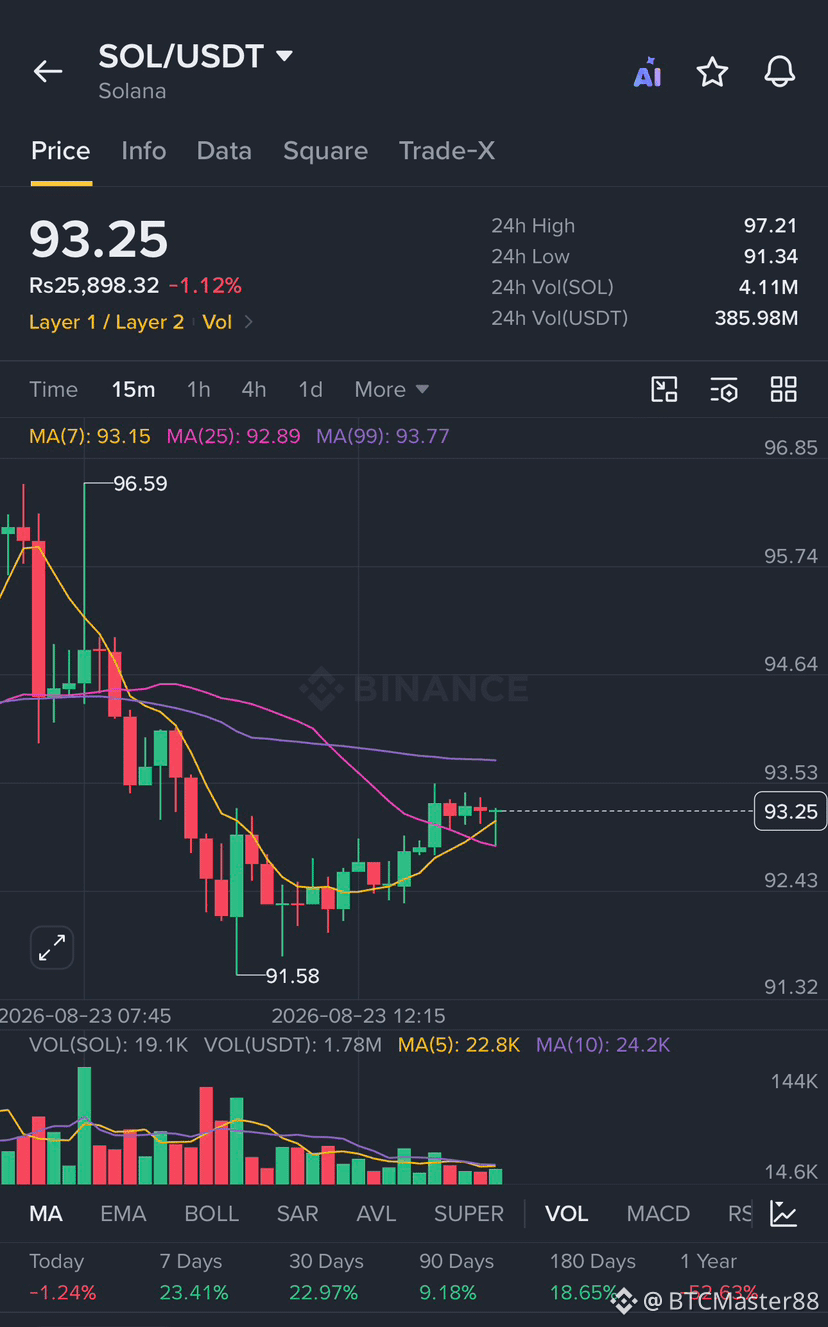
$SOL Buying Opportunity 🚨
SOL is recovering from the $91.58 low and building momentum on the 15-minute chart.
🟢 Entry Zone: $93.00–$93.30
🎯 TP1: $93.80
🎯 TP2: $94.60
🎯 TP3: $96.50
🛑 Stop Loss: $92.35
A breakout above the MA(99) near $93.77 could confirm further upside.
Manage risk. DYOR.
{spot}(SOLUSDT)
$SOL Buying Opportunity 🚨
SOL is recovering from the $91.58 low and building momentum on the 15-minute chart.
🟢 Entry Zone: $93.00–$93.30
🎯 TP1: $93.80
🎯 TP2: $94.60
🎯 TP3: $96.50
🛑 Stop Loss: $92.35
A breakout above the MA(99) near $93.77 could confirm further upside.
Manage risk. DYOR.
SOL is recovering from the $91.58 low and building momentum on the 15-minute chart.
🟢 Entry Zone: $93.00–$93.30
🎯 TP1: $93.80
🎯 TP2: $94.60
🎯 TP3: $96.50
🛑 Stop Loss: $92.35
A breakout above the MA(99) near $93.77 could confirm further upside.
Manage risk. DYOR.
2
143
·
--
$ETH Buying Opportunity 🚨
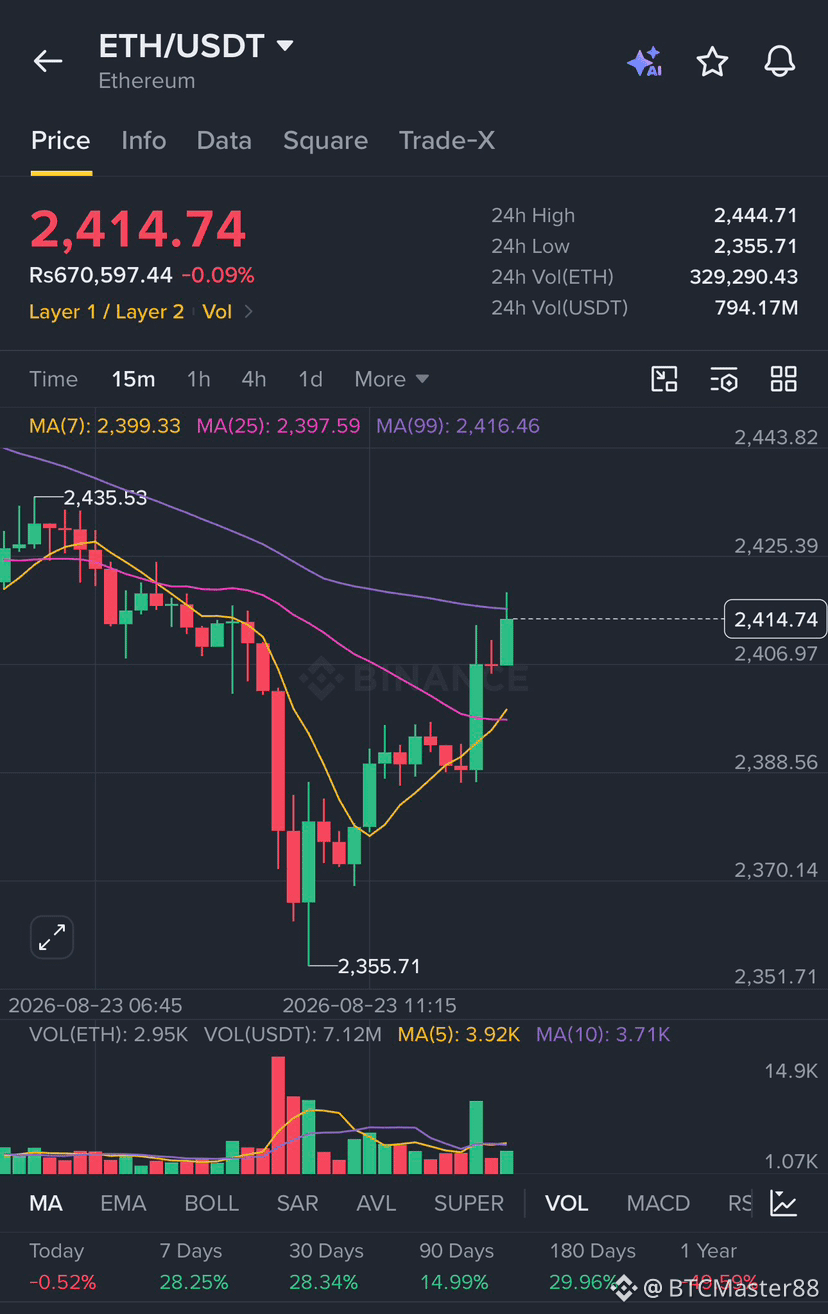
Ethereum is recovering strongly from $2,355 and testing the MA(99) resistance on the 15-minute chart.
🟢 Entry Zone: $2,400–$2,408
🎯 TP1: $2,425
🎯 TP2: $2,435
🎯 TP3: $2,445
🛑 Stop Loss: $2,385
A confirmed breakout above $2,417 would strengthen the bullish setup. Avoid chasing and manage your risk carefully.
Not financial advice. DYOR.
#ETH #Ethereum✅ #Crypto
{spot}(ETHUSDT)
$ETH Buying Opportunity 🚨
Ethereum is recovering strongly from $2,355 and testing the MA(99) resistance on the 15-minute chart.
🟢 Entry Zone: $2,400–$2,408
🎯 TP1: $2,425
🎯 TP2: $2,435
🎯 TP3: $2,445
🛑 Stop Loss: $2,385
A confirmed breakout above $2,417 would strengthen the bullish setup. Avoid chasing and manage your risk carefully.
Not financial advice. DYOR.
#ETH #Ethereum✅ #Crypto
Ethereum is recovering strongly from $2,355 and testing the MA(99) resistance on the 15-minute chart.
🟢 Entry Zone: $2,400–$2,408
🎯 TP1: $2,425
🎯 TP2: $2,435
🎯 TP3: $2,445
🛑 Stop Loss: $2,385
A confirmed breakout above $2,417 would strengthen the bullish setup. Avoid chasing and manage your risk carefully.
Not financial advice. DYOR.
#ETH #Ethereum✅ #Crypto
125
·
--
$BTC Buying Opportunity
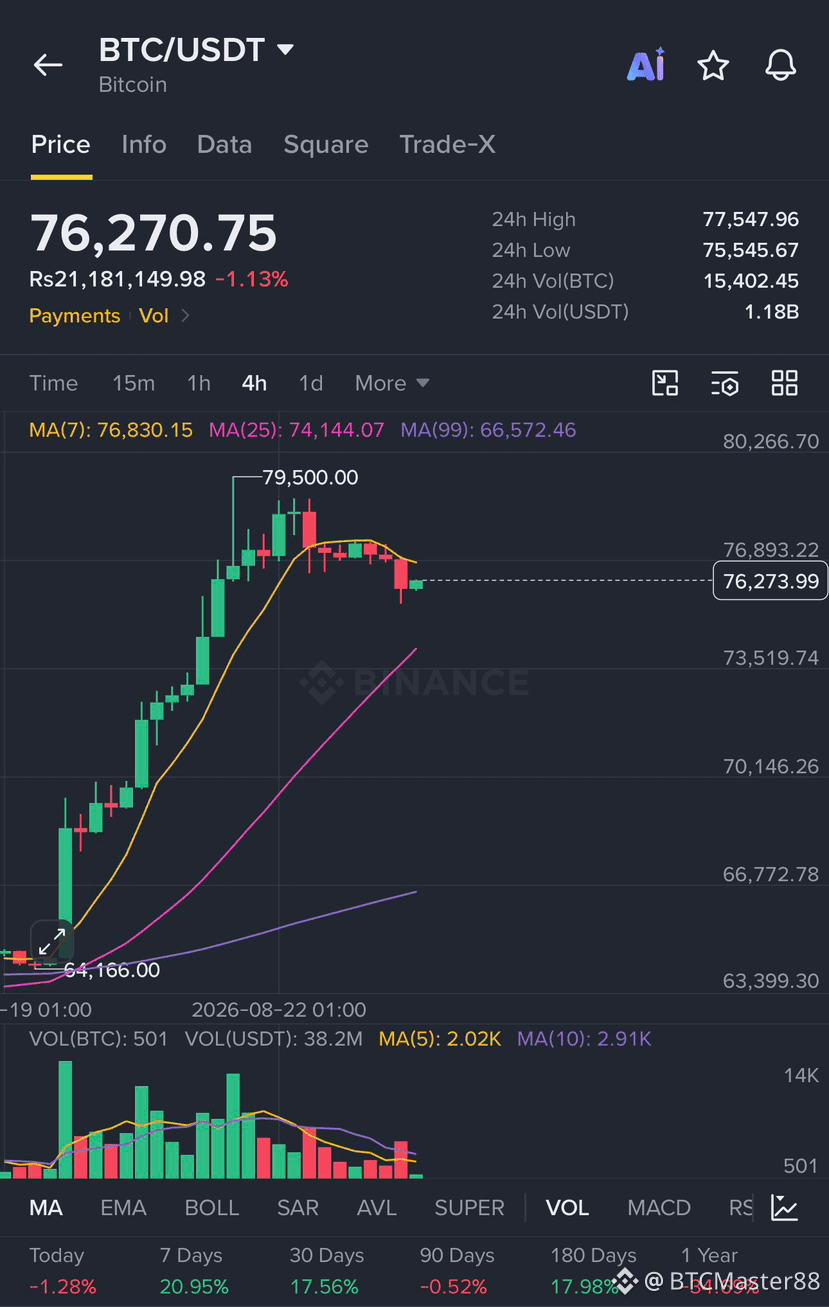
Bitcoin is consolidating on the 4H chart after a strong move from $64K to $79.5K.
🟢 Entry Zone: $75,500–$76,200
🎯 TP1: $77,500
🎯 TP2: $79,500
🎯 TP3: $82,000
🛑 Stop Loss: $74,000
As long as BTC holds the $75.5K support, another move toward the recent high remains possible.
Manage risk and avoid high leverage. This is my personal setup, not financial advice.
#BTC #bitcoin #Crypto
{spot}(BTCUSDT)
$BTC Buying Opportunity
Bitcoin is consolidating on the 4H chart after a strong move from $64K to $79.5K.
🟢 Entry Zone: $75,500–$76,200
🎯 TP1: $77,500
🎯 TP2: $79,500
🎯 TP3: $82,000
🛑 Stop Loss: $74,000
As long as BTC holds the $75.5K support, another move toward the recent high remains possible.
Manage risk and avoid high leverage. This is my personal setup, not financial advice.
#BTC #bitcoin #Crypto
Bitcoin is consolidating on the 4H chart after a strong move from $64K to $79.5K.
🟢 Entry Zone: $75,500–$76,200
🎯 TP1: $77,500
🎯 TP2: $79,500
🎯 TP3: $82,000
🛑 Stop Loss: $74,000
As long as BTC holds the $75.5K support, another move toward the recent high remains possible.
Manage risk and avoid high leverage. This is my personal setup, not financial advice.
#BTC #bitcoin #Crypto
135
·
--
Bullish
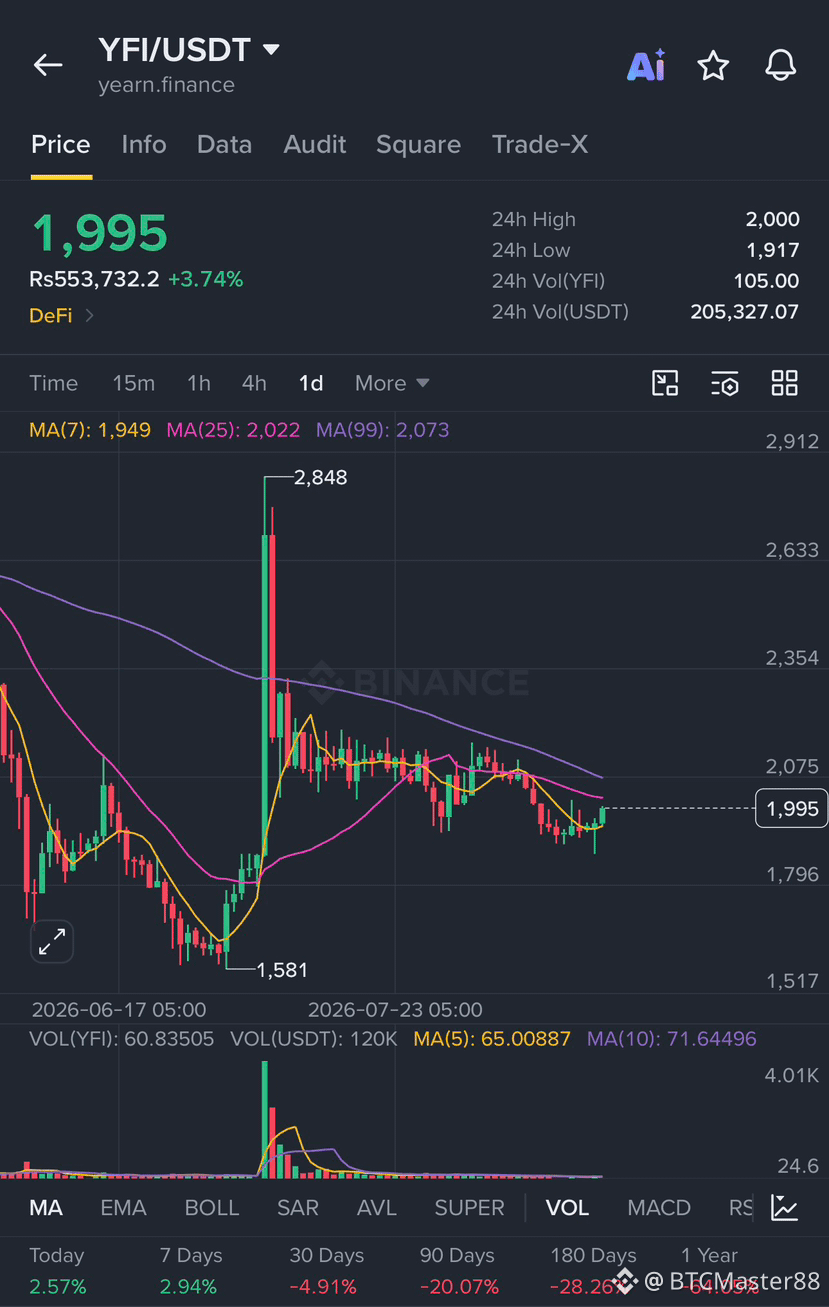
$YFI is showing early signs of recovery around $1,995 after defending the $1,900 support zone.
For me, the buying opportunity is between $1,900–$1,960, but confirmation matters. A daily close above $2,075 could open the way toward $2,200 and $2,350.
Invalidation below $1,800. No chasing, buy the zone and manage risk carefully.
NFA. Always DYOR.
#USStorageStocksExtendLosses #USDieselMarginsTopRecord$100ABarrel
$YFI is showing early signs of recovery around $1,995 after defending the $1,900 support zone.
For me, the buying opportunity is between $1,900–$1,960, but confirmation matters. A daily close above $2,075 could open the way toward $2,200 and $2,350.
Invalidation below $1,800. No chasing, buy the zone and manage risk carefully.
NFA. Always DYOR.
#USStorageStocksExtendLosses #USDieselMarginsTopRecord$100ABarrel
For me, the buying opportunity is between $1,900–$1,960, but confirmation matters. A daily close above $2,075 could open the way toward $2,200 and $2,350.
Invalidation below $1,800. No chasing, buy the zone and manage risk carefully.
NFA. Always DYOR.
#USStorageStocksExtendLosses #USDieselMarginsTopRecord$100ABarrel
1
222
·
--
Bullish
Paid Partnership with @Dusk_Foundation
Private markets do not become more accessible simply because an asset is turned into a token.
The real opportunity is connecting the entire ownership lifecycle: investor verification, issuance, allocation, transfers, dividends, voting, settlement and secondary trading through one controlled process.
For SMEs, this could create another route to raise capital beyond relying heavily on bank loans or internal funds. For eligible investors, it could provide access to regulated private-market opportunities that have traditionally been difficult to reach.
What makes Dusk’s approach interesting is its focus on the infrastructure surrounding the token. Dusk combines confidential transactions, selective disclosure, programmable transfer rules and deterministic settlement. Sensitive investor information can remain private while authorized parties verify what they need for regulatory and servicing purposes.
Its partnership with NPEX also connects the technology with an authorized European trading venue experienced in SME bonds, share certificates, direct listings and secondary trading.
Tokenization cannot create demand or replace regulation, custody and accountable institutions. But when these pieces work together, it can reduce fragmented recordkeeping and make private-market financing more efficient.
That is the bigger $DUSK vision: not just putting assets onchain, but bringing regulated market workflows onchain.
#dusk
{spot}(DUSKUSDT)
Paid Partnership with @Dusk
Private markets do not become more accessible simply because an asset is turned into a token.
The real opportunity is connecting the entire ownership lifecycle: investor verification, issuance, allocation, transfers, dividends, voting, settlement and secondary trading through one controlled process.
For SMEs, this could create another route to raise capital beyond relying heavily on bank loans or internal funds. For eligible investors, it could provide access to regulated private-market opportunities that have traditionally been difficult to reach.
What makes Dusk’s approach interesting is its focus on the infrastructure surrounding the token. Dusk combines confidential transactions, selective disclosure, programmable transfer rules and deterministic settlement. Sensitive investor information can remain private while authorized parties verify what they need for regulatory and servicing purposes.
Its partnership with NPEX also connects the technology with an authorized European trading venue experienced in SME bonds, share certificates, direct listings and secondary trading.
Tokenization cannot create demand or replace regulation, custody and accountable institutions. But when these pieces work together, it can reduce fragmented recordkeeping and make private-market financing more efficient.
That is the bigger $DUSK vision: not just putting assets onchain, but bringing regulated market workflows onchain.
#dusk
Private markets do not become more accessible simply because an asset is turned into a token.
The real opportunity is connecting the entire ownership lifecycle: investor verification, issuance, allocation, transfers, dividends, voting, settlement and secondary trading through one controlled process.
For SMEs, this could create another route to raise capital beyond relying heavily on bank loans or internal funds. For eligible investors, it could provide access to regulated private-market opportunities that have traditionally been difficult to reach.
What makes Dusk’s approach interesting is its focus on the infrastructure surrounding the token. Dusk combines confidential transactions, selective disclosure, programmable transfer rules and deterministic settlement. Sensitive investor information can remain private while authorized parties verify what they need for regulatory and servicing purposes.
Its partnership with NPEX also connects the technology with an authorized European trading venue experienced in SME bonds, share certificates, direct listings and secondary trading.
Tokenization cannot create demand or replace regulation, custody and accountable institutions. But when these pieces work together, it can reduce fragmented recordkeeping and make private-market financing more efficient.
That is the bigger $DUSK vision: not just putting assets onchain, but bringing regulated market workflows onchain.
#dusk

11
9
292
·
--
Bullish
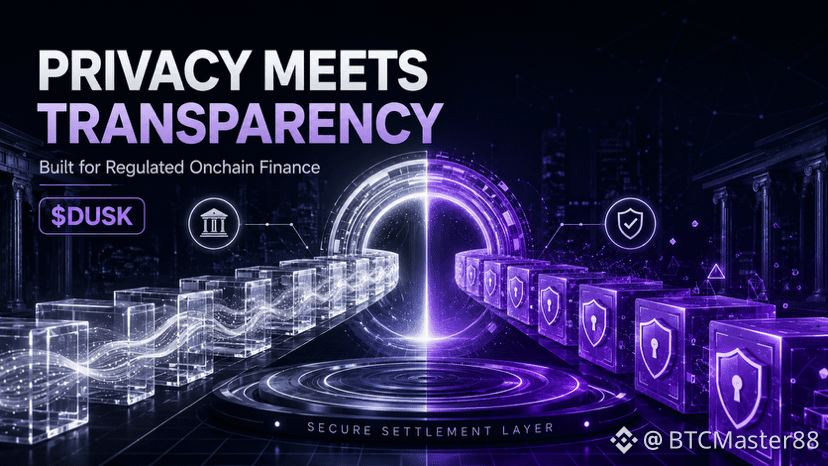
Privacy in finance should not mean hiding everything. @Dusk_Foundation is building a Layer 1 for regulated onchain markets where Moonlight enables transparent transfers, while Phoenix uses zero-knowledge proofs for shielded transactions and selective disclosure. This dual model gives institutions a practical way to protect sensitive data while meeting audit and compliance needs. $DUSK #dusk
{spot}(DUSKUSDT)
Privacy in finance should not mean hiding everything. @Dusk is building a Layer 1 for regulated onchain markets where Moonlight enables transparent transfers, while Phoenix uses zero-knowledge proofs for shielded transactions and selective disclosure. This dual model gives institutions a practical way to protect sensitive data while meeting audit and compliance needs. $DUSK #dusk
9
9
204
·
--
Bullish
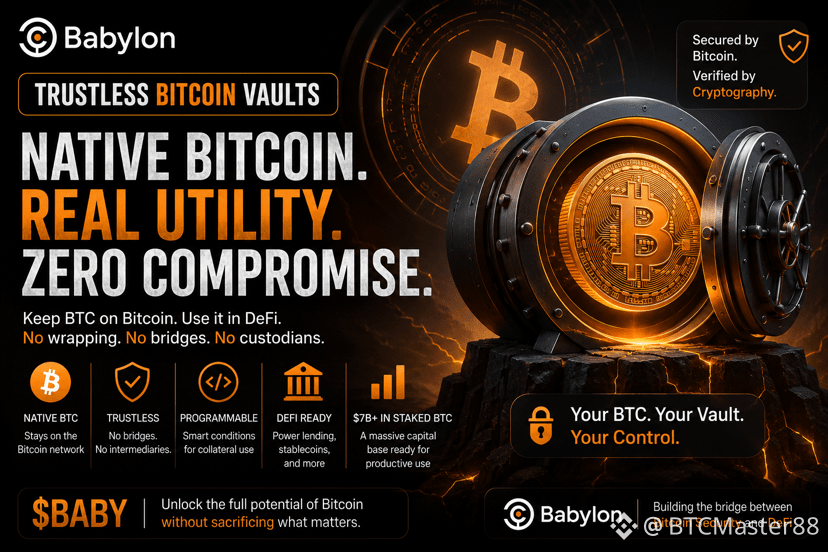
For years, Bitcoin in DeFi came with a compromise. You had to wrap BTC, trust a bridge, or give up custody. That added risk before you even started.
@babylonlabs_io Trustless Bitcoin Vaults take a different approach. Native BTC stays on the Bitcoin network while cryptographic verification enables it to be used as collateral. No wrapped BTC. No bridge custody.
If this model scales, Bitcoin could support lending and other DeFi use cases without sacrificing self custody. That’s a meaningful step toward making BTC productive while preserving its core principles.
#baby $BABY
{spot}(BABYUSDT)
For years, Bitcoin in DeFi came with a compromise. You had to wrap BTC, trust a bridge, or give up custody. That added risk before you even started.
@BabylonLabs_io Trustless Bitcoin Vaults take a different approach. Native BTC stays on the Bitcoin network while cryptographic verification enables it to be used as collateral. No wrapped BTC. No bridge custody.
If this model scales, Bitcoin could support lending and other DeFi use cases without sacrificing self custody. That’s a meaningful step toward making BTC productive while preserving its core principles.
#baby $BABY
@BabylonLabs_io Trustless Bitcoin Vaults take a different approach. Native BTC stays on the Bitcoin network while cryptographic verification enables it to be used as collateral. No wrapped BTC. No bridge custody.
If this model scales, Bitcoin could support lending and other DeFi use cases without sacrificing self custody. That’s a meaningful step toward making BTC productive while preserving its core principles.
#baby $BABY
3
172
·
--
Bullish
Verified
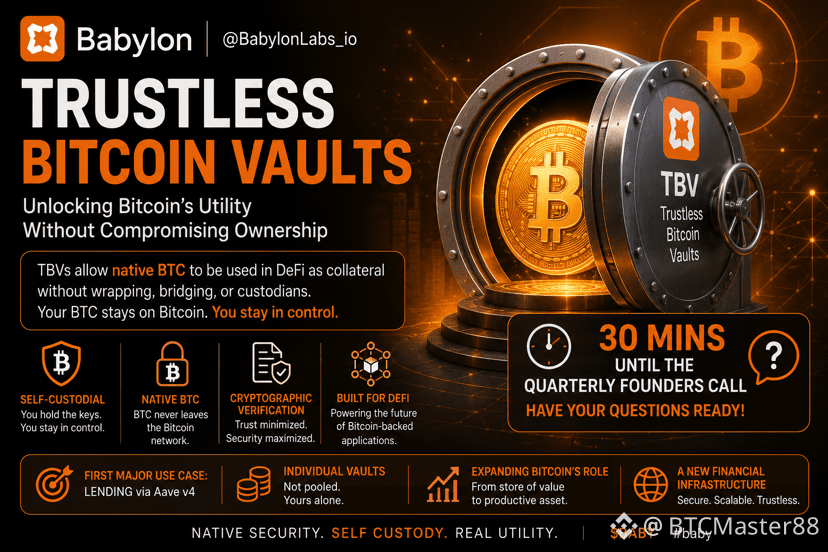
Bitcoin has always been the strongest form of on-chain collateral, but using it in DeFi has usually required a compromise: wrap it, bridge it, or trust a custodian. That’s why I’m paying close attention to what @babylonlabs_io is building with Trustless Bitcoin Vaults (TBVs).
Instead of moving BTC away from the Bitcoin network, TBVs keep native BTC locked in a user-controlled Taproot vault while cryptographic proofs coordinate its use as collateral for DeFi applications. Each vault belongs to a single depositor, is never pooled with other users’ funds, and the first integration is focused on Aave v4 borrowing. If this architecture proves itself over time, it could unlock lending and many other Bitcoin-backed financial use cases without giving up self-custody or relying on wrapped assets. I’m looking forward to hearing more during the Quarterly Founders Call and seeing how this infrastructure evolves.
@babylonlabs_io $BABY #baby
{spot}(BABYUSDT)
Bitcoin has always been the strongest form of on-chain collateral, but using it in DeFi has usually required a compromise: wrap it, bridge it, or trust a custodian. That’s why I’m paying close attention to what @BabylonLabs_io is building with Trustless Bitcoin Vaults (TBVs).
Instead of moving BTC away from the Bitcoin network, TBVs keep native BTC locked in a user-controlled Taproot vault while cryptographic proofs coordinate its use as collateral for DeFi applications. Each vault belongs to a single depositor, is never pooled with other users’ funds, and the first integration is focused on Aave v4 borrowing. If this architecture proves itself over time, it could unlock lending and many other Bitcoin-backed financial use cases without giving up self-custody or relying on wrapped assets. I’m looking forward to hearing more during the Quarterly Founders Call and seeing how this infrastructure evolves.
@BabylonLabs_io $BABY #baby
Instead of moving BTC away from the Bitcoin network, TBVs keep native BTC locked in a user-controlled Taproot vault while cryptographic proofs coordinate its use as collateral for DeFi applications. Each vault belongs to a single depositor, is never pooled with other users’ funds, and the first integration is focused on Aave v4 borrowing. If this architecture proves itself over time, it could unlock lending and many other Bitcoin-backed financial use cases without giving up self-custody or relying on wrapped assets. I’m looking forward to hearing more during the Quarterly Founders Call and seeing how this infrastructure evolves.
@BabylonLabs_io $BABY #baby
9
7
173
Log in to explore more content
Join global crypto users on Binance Square
⚡️ Get latest and useful information about crypto.
💬 Trusted by the world’s largest crypto exchange.
👍 Discover real insights from verified creators.
Email / Phone number
Trending Topics
AppleDebutsFoldablePhone
1,511 views
82 Discussing
#appledebutsfoldablephone I Got My Hands on the iPhone Duo, Apple’s First Foldable Phone. Here’s What Stands Out
The palm-size phone is Apple's boldest handset in years, with a 5.4-inch cover screen and a 7.6-inch main display. I spent some time with the Duo before its October launch.It’s finally here: Apple on Wednesday unveiled its first foldable iPhone, called the iPhone Duo.
iPhone Duo design and build
The iPhone Duo is compact, with a passport-size design. It has a 7.6-inch display on the inside and a 5.4-inch outer display. It fits squarely in my palm, with dimensions similar to Samsung’s Galaxy Z Fold 8, which has a 7.6-inch inner display and a 5.5-inch cover display.
Apple says the Duo is the thinnest iPhone ever when open, measuring 5.2mm. It’s 11.3mm thick when closed. A titanium frame keeps it lightweight at 254 grams.
One of the key differences in feel between Apple’s and Samsung’s phones is that the iPhone Duo has a matte, nano-textured finish on the inner display, which reduces the phone’s crease while also curbing reflections. It has a satisfying feel and really makes the crease virtually disappear when the screen is on. I find it even harder to notice than the Z Fold 8’s, which also has an anti-reflective display.$ONG $IMX $TAC
Isabella-I
·1 Likes
·182 views
US10YTreasuryYieldHitsHighestSinceNov2023
5,738 views
141 Discussing
USTreasuryToBuyBackUpTo$6BLongDatedDebt
9,016 views
128 Discussing