
BitcoinKE
3.1k Posts

BitcoinKE
 Square Verified+
Report
Block User
BitKE is a leading crypto and Web3 focussed media outlet in Africa publishing daily informative and investment news and content.
1 Following
28.3K+ Followers
5.0K+ Liked
Posts
All
Quotes
·
--
Article
CASE STUDY | This Protocol Activity Provides Strong Indication of Where the Market Sees the Oppor...Robinhood Chain is starting to look more like a memecoin casino than the tokenized-stock market it was built to host.
The two-month-old blockchain processed a record 5.52 million transactions on August 30 2026 while decentralized exchanges recorded about $875 million in trading volume.
But the clearest sign of what is driving activity:
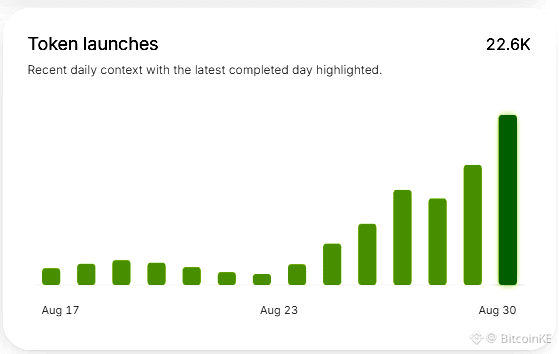
Users launched roughly 22,600 tokens in a single day through the Pons launchpad.
Memecoin trading tools, GMGN and Pons, alongside Uniswap, generated about 88% of the chain’s $2.66 million in app revenue over 24 hours, according to DefiLlama data. That was roughly twice Ethereum’s app revenue and six times that of Base.
That is a striking departure from Robinhood’s original pitch.
Robinhood launched the Ethereum-compatible chain on July 1 2026 specifically to bring tokenized stocks and other real-world assets onchain.
Instead, speculative tokens have become the network’s dominant source of activity.
FINTECH | Robinhood Chain Sees Over $170 Million in Stablecoin Issuance, ~200K Users in First Week of Launch
The contrast was already visible in July:
Tokenized RWAs on the chain were worth about $12.8 million, including $10.7 million of stocks, while memecoins and stablecoins dominated activity and value.
The question for Robinhood is whether this is simply a bootstrapping phase, with memecoin traders providing liquidity, users, and transaction volume, or whether the chain is developing an entirely different identity from the regulated tokenized-equity marketplace it was designed to become.
For now, 22,600 tokens launched in one day is a pretty strong indication of where the market sees the opportunity.
This framing makes the 22,600-token figure the proof point, rather than just another activity statistic, while keeping the tokenized-stock thesis as the central tension.
CASE STUDY | Why This Trillion-Dollar Institutional Asset Manager Added MemeCoins into its Crypto ETF
Want to keep up with insights into crypto markets developments?
Join our WhatsApp channel here.
Follow us on X for the latest posts and updates
Join and interact with our Telegram community
______________
CASE STUDY | This Protocol Activity Provides Strong Indication of Where the Market Sees the Oppor...
Robinhood Chain is starting to look more like a memecoin casino than the tokenized-stock market it was built to host.
The two-month-old blockchain processed a record 5.52 million transactions on August 30 2026 while decentralized exchanges recorded about $875 million in trading volume.
But the clearest sign of what is driving activity:
Users launched roughly 22,600 tokens in a single day through the Pons launchpad.
Memecoin trading tools, GMGN and Pons, alongside Uniswap, generated about 88% of the chain’s $2.66 million in app revenue over 24 hours, according to DefiLlama data. That was roughly twice Ethereum’s app revenue and six times that of Base.
That is a striking departure from Robinhood’s original pitch.
Robinhood launched the Ethereum-compatible chain on July 1 2026 specifically to bring tokenized stocks and other real-world assets onchain.
Instead, speculative tokens have become the network’s dominant source of activity.
FINTECH | Robinhood Chain Sees Over $170 Million in Stablecoin Issuance, ~200K Users in First Week of Launch
The contrast was already visible in July:
Tokenized RWAs on the chain were worth about $12.8 million, including $10.7 million of stocks, while memecoins and stablecoins dominated activity and value.
The question for Robinhood is whether this is simply a bootstrapping phase, with memecoin traders providing liquidity, users, and transaction volume, or whether the chain is developing an entirely different identity from the regulated tokenized-equity marketplace it was designed to become.
For now, 22,600 tokens launched in one day is a pretty strong indication of where the market sees the opportunity.
This framing makes the 22,600-token figure the proof point, rather than just another activity statistic, while keeping the tokenized-stock thesis as the central tension.
CASE STUDY | Why This Trillion-Dollar Institutional Asset Manager Added MemeCoins into its Crypto ETF
Want to keep up with insights into crypto markets developments?
Join our WhatsApp channel here.
Follow us on X for the latest posts and updates
Join and interact with our Telegram community
______________
The two-month-old blockchain processed a record 5.52 million transactions on August 30 2026 while decentralized exchanges recorded about $875 million in trading volume.
But the clearest sign of what is driving activity:
Users launched roughly 22,600 tokens in a single day through the Pons launchpad.
Memecoin trading tools, GMGN and Pons, alongside Uniswap, generated about 88% of the chain’s $2.66 million in app revenue over 24 hours, according to DefiLlama data. That was roughly twice Ethereum’s app revenue and six times that of Base.
That is a striking departure from Robinhood’s original pitch.
Robinhood launched the Ethereum-compatible chain on July 1 2026 specifically to bring tokenized stocks and other real-world assets onchain.
Instead, speculative tokens have become the network’s dominant source of activity.
FINTECH | Robinhood Chain Sees Over $170 Million in Stablecoin Issuance, ~200K Users in First Week of Launch
The contrast was already visible in July:
Tokenized RWAs on the chain were worth about $12.8 million, including $10.7 million of stocks, while memecoins and stablecoins dominated activity and value.
The question for Robinhood is whether this is simply a bootstrapping phase, with memecoin traders providing liquidity, users, and transaction volume, or whether the chain is developing an entirely different identity from the regulated tokenized-equity marketplace it was designed to become.
For now, 22,600 tokens launched in one day is a pretty strong indication of where the market sees the opportunity.
This framing makes the 22,600-token figure the proof point, rather than just another activity statistic, while keeping the tokenized-stock thesis as the central tension.
CASE STUDY | Why This Trillion-Dollar Institutional Asset Manager Added MemeCoins into its Crypto ETF
Want to keep up with insights into crypto markets developments?
Join our WhatsApp channel here.
Follow us on X for the latest posts and updates
Join and interact with our Telegram community
______________
34
·
--
Article
STATISTICS | Tokenized Stock Transfer Volume Jumps By Over 400% in August 2026Tokenized stock transfer volume jumped 415% in 30 days to $29.5 billion underscoring a sharp acceleration in on-chain activity, data from RWA.xyz showed.
The surge was accompanied by a 209% increase in monthly active addresses to about 1.3 million while the number of tokenized-stock holders rose 167% to 2.36 million.
MILESTONE | Tokenized Stock Holders More Than Double in July 2026 as Monthly Volume Surges
But the underlying value of tokenized equities grew far more slowly.
The total value of tokenized stocks distributed on-chain rose just 1.45% over the past month to $2.54 billion although that figure is up roughly 637% from $344 million a year ago.
The divergence suggests that the boom in activity is not necessarily equivalent to a similar increase in capital entering the market.
Transfer volume can include wallet movements, settlements, custody transfers, and other on-chain activity, meaning the $29.5 billion figure should not be interpreted as $29.5 billion of stock trading.
Market concentration also remains high.
Ondo,
xStocks, and
bStocks
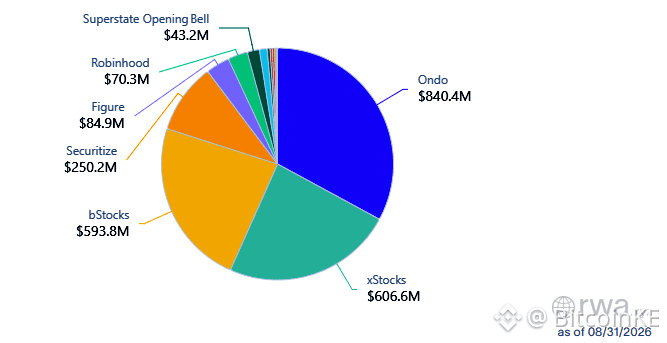
account for roughly 81% of distributed tokenized-stock value indicating that a relatively small group of platforms still dominates the market.
Direct stocks on Binance Reached $1 Billion in Assets Under Management (AUM) Within 30 Days of Launch#bStocks, tokenized 1:1 U.S. securities on Binance that trade 24/7, crossed $100 million in AUM within 2 weeks of launch.
47% of bStocks trading volume takes place outside U.S.… pic.twitter.com/gogmLni1QI
— BitKE (@BitcoinKE) August 25, 2026
The bigger test for tokenized equities will therefore be whether rising transaction activity translates into sustained growth in capital, repeat users, and genuine secondary-market trading.
TOKENIZATION | Coinbase Launches Tokenized U.S. Stocks on Base
Stay tuned to BitKE updates on tokenization developments.
Join our WhatsApp channel here.
Follow us on X for the latest posts and updates
Join and interact with our Telegram community
___________
STATISTICS | Tokenized Stock Transfer Volume Jumps By Over 400% in August 2026
Tokenized stock transfer volume jumped 415% in 30 days to $29.5 billion underscoring a sharp acceleration in on-chain activity, data from RWA.xyz showed.
The surge was accompanied by a 209% increase in monthly active addresses to about 1.3 million while the number of tokenized-stock holders rose 167% to 2.36 million.
MILESTONE | Tokenized Stock Holders More Than Double in July 2026 as Monthly Volume Surges
But the underlying value of tokenized equities grew far more slowly.
The total value of tokenized stocks distributed on-chain rose just 1.45% over the past month to $2.54 billion although that figure is up roughly 637% from $344 million a year ago.
The divergence suggests that the boom in activity is not necessarily equivalent to a similar increase in capital entering the market.
Transfer volume can include wallet movements, settlements, custody transfers, and other on-chain activity, meaning the $29.5 billion figure should not be interpreted as $29.5 billion of stock trading.
Market concentration also remains high.
Ondo,
xStocks, and
bStocks
account for roughly 81% of distributed tokenized-stock value indicating that a relatively small group of platforms still dominates the market.
Direct stocks on Binance Reached $1 Billion in Assets Under Management (AUM) Within 30 Days of Launch#bStocks, tokenized 1:1 U.S. securities on Binance that trade 24/7, crossed $100 million in AUM within 2 weeks of launch.
47% of bStocks trading volume takes place outside U.S.… pic.twitter.com/gogmLni1QI
— BitKE (@BitcoinKE) August 25, 2026
The bigger test for tokenized equities will therefore be whether rising transaction activity translates into sustained growth in capital, repeat users, and genuine secondary-market trading.
TOKENIZATION | Coinbase Launches Tokenized U.S. Stocks on Base
Stay tuned to BitKE updates on tokenization developments.
Join our WhatsApp channel here.
Follow us on X for the latest posts and updates
Join and interact with our Telegram community
___________
The surge was accompanied by a 209% increase in monthly active addresses to about 1.3 million while the number of tokenized-stock holders rose 167% to 2.36 million.
MILESTONE | Tokenized Stock Holders More Than Double in July 2026 as Monthly Volume Surges
But the underlying value of tokenized equities grew far more slowly.
The total value of tokenized stocks distributed on-chain rose just 1.45% over the past month to $2.54 billion although that figure is up roughly 637% from $344 million a year ago.
The divergence suggests that the boom in activity is not necessarily equivalent to a similar increase in capital entering the market.
Transfer volume can include wallet movements, settlements, custody transfers, and other on-chain activity, meaning the $29.5 billion figure should not be interpreted as $29.5 billion of stock trading.
Market concentration also remains high.
Ondo,
xStocks, and
bStocks
account for roughly 81% of distributed tokenized-stock value indicating that a relatively small group of platforms still dominates the market.
Direct stocks on Binance Reached $1 Billion in Assets Under Management (AUM) Within 30 Days of Launch#bStocks, tokenized 1:1 U.S. securities on Binance that trade 24/7, crossed $100 million in AUM within 2 weeks of launch.
47% of bStocks trading volume takes place outside U.S.… pic.twitter.com/gogmLni1QI
— BitKE (@BitcoinKE) August 25, 2026
The bigger test for tokenized equities will therefore be whether rising transaction activity translates into sustained growth in capital, repeat users, and genuine secondary-market trading.
TOKENIZATION | Coinbase Launches Tokenized U.S. Stocks on Base
Stay tuned to BitKE updates on tokenization developments.
Join our WhatsApp channel here.
Follow us on X for the latest posts and updates
Join and interact with our Telegram community
___________
1
71
·
--
STATISTICS | Stellar Real-World Assets Grow Over 300% in 2026 So FarStellar’s tokenized real-world asset market has grown roughly 360% this year to nearly $4 billion, highlighting the rapid expansion of blockchain-based traditional assets even as the broader crypto market remains volatile.
The network’s RWA value reached $3.996 billion at the end of August 2026, up from $868.8 million at the end of 2025, according to a Stellar-maintained Dune Analytics dashboard.
Growth is concentrated among a handful of issuers.
Spiko leads with $1.55 billion, followed by
Realiz at $559 million,
Tradable at $548 million,
Franklin Templeton at $546 million and
Ondo at $535 million.
Together, those 5 account for about 93% of Stellar’s tokenized RWA market.
The assets are not limited to U.S. Treasurys. Stellar has attracted private and public credit, non-U.S. government debt and other tokenized assets, with about $490 million in Mexican CETES and Brazilian government bonds alone as of August 20 2026.
LIST | Here Are 5 Verticals Driving Real-World Assets Tokenization in 2026
That puts Stellar in a stronger position among RWA networks, although Ethereum remains the dominant market, with about $17.3 billion in distributed RWA value, while BNB Chain has $5.7 billion and Solana about $4.1 billion, according to RWA.xyz data. Stellar ranks fourth at roughly $3.3 billion on the same measure.
The expansion is also increasingly institutional.
DTCC plans to connect its tokenization service to Stellar, while
Tradable has announced plans to bring up to $1 billion in private credit onto the network.
INSTITUTIONAL | World’s Largest Clearing, Settlement Organization by Transaction Value to Connect Tokenized Securities to Stellar
Stay tuned to BitKE for deeper insights into crypto developments globally.
Join our WhatsApp channel here.
Follow us on X for the latest posts and updates
Join and interact with our Telegram community
_______________
STATISTICS | Stellar Real-World Assets Grow Over 300% in 2026 So Far
Stellar’s tokenized real-world asset market has grown roughly 360% this year to nearly $4 billion, highlighting the rapid expansion of blockchain-based traditional assets even as the broader crypto market remains volatile.
The network’s RWA value reached $3.996 billion at the end of August 2026, up from $868.8 million at the end of 2025, according to a Stellar-maintained Dune Analytics dashboard.
Growth is concentrated among a handful of issuers.
Spiko leads with $1.55 billion, followed by
Realiz at $559 million,
Tradable at $548 million,
Franklin Templeton at $546 million and
Ondo at $535 million.
Together, those 5 account for about 93% of Stellar’s tokenized RWA market.
The assets are not limited to U.S. Treasurys. Stellar has attracted private and public credit, non-U.S. government debt and other tokenized assets, with about $490 million in Mexican CETES and Brazilian government bonds alone as of August 20 2026.
LIST | Here Are 5 Verticals Driving Real-World Assets Tokenization in 2026
That puts Stellar in a stronger position among RWA networks, although Ethereum remains the dominant market, with about $17.3 billion in distributed RWA value, while BNB Chain has $5.7 billion and Solana about $4.1 billion, according to RWA.xyz data. Stellar ranks fourth at roughly $3.3 billion on the same measure.
The expansion is also increasingly institutional.
DTCC plans to connect its tokenization service to Stellar, while
Tradable has announced plans to bring up to $1 billion in private credit onto the network.
INSTITUTIONAL | World’s Largest Clearing, Settlement Organization by Transaction Value to Connect Tokenized Securities to Stellar
Stay tuned to BitKE for deeper insights into crypto developments globally.
Join our WhatsApp channel here.
Follow us on X for the latest posts and updates
Join and interact with our Telegram community
_______________
The network’s RWA value reached $3.996 billion at the end of August 2026, up from $868.8 million at the end of 2025, according to a Stellar-maintained Dune Analytics dashboard.
Growth is concentrated among a handful of issuers.
Spiko leads with $1.55 billion, followed by
Realiz at $559 million,
Tradable at $548 million,
Franklin Templeton at $546 million and
Ondo at $535 million.
Together, those 5 account for about 93% of Stellar’s tokenized RWA market.
The assets are not limited to U.S. Treasurys. Stellar has attracted private and public credit, non-U.S. government debt and other tokenized assets, with about $490 million in Mexican CETES and Brazilian government bonds alone as of August 20 2026.
LIST | Here Are 5 Verticals Driving Real-World Assets Tokenization in 2026
That puts Stellar in a stronger position among RWA networks, although Ethereum remains the dominant market, with about $17.3 billion in distributed RWA value, while BNB Chain has $5.7 billion and Solana about $4.1 billion, according to RWA.xyz data. Stellar ranks fourth at roughly $3.3 billion on the same measure.
The expansion is also increasingly institutional.
DTCC plans to connect its tokenization service to Stellar, while
Tradable has announced plans to bring up to $1 billion in private credit onto the network.
INSTITUTIONAL | World’s Largest Clearing, Settlement Organization by Transaction Value to Connect Tokenized Securities to Stellar
Stay tuned to BitKE for deeper insights into crypto developments globally.
Join our WhatsApp channel here.
Follow us on X for the latest posts and updates
Join and interact with our Telegram community
_______________
284
·
--
INSTITUTIONAL | the Largest Bank in Russia Plans Crypto-Backed Loans Ahead of RegulationRussia’s largest lender, Sberbank, plans to expand lending secured by cryptocurrencies, adding Ethereum and Tether’s USDT alongside Bitcoin once the assets are approved for public trading, senior executive Anatoly Popov told local media.
“We plan to accept not only Bitcoin but also Ethereum and the Tether stablecoin as collateral – of course, after the central bank allows them for public circulation.”
The move comes as Russia prepares to launch a regulated crypto market on September 1 2026 under legislation signed by President Vladimir Putin in August 2026. The Bank of Russia will determine which cryptocurrencies can be traded on regulated platforms.
REGULATION | Russian President Signs Russia’s First Comprehensive Crypto Law
The central bank has already identified
Bitcoin,
Ether and
USDT
as candidates, citing their market capitalization, trading volumes and long trading histories overseas.
Sberbank has already tested crypto-backed lending giving the bank practical experience before the new rules take effect.
In contrast, the bank is simultaneously taking a more cautious view of Russia’s digital ruble. Sber CFO, Taras Skvortsov, said the bank sees little evidence of demand from retail customers, companies or financial institutions.
“I don’t see any clear interest in this instrument, apart from the central bank’s,” Skvortsov said.
The contrast is significant:
While Russia is pushing its central-bank digital currency, its largest lender is preparing products around privately-issued cryptocurrencies and stablecoins.
The latest move comes just 2 months after the bank said it will be launching a crypto wallet and digital asset custody service by December 1, 2026. Domestic crypto payments would remain prohibited even as trading and custody become legal through licensed intermediaries.
REGULATION | Russia’s Largest State-Owned Lender Plans Crypto Wallet Rollout and Custody Services
Sign up to BitKE for all the latest developments on crypto globally.
Join our WhatsApp channel here.
Follow us on X for the latest posts and updates
Join and interact with our Telegram community
_______________
INSTITUTIONAL | the Largest Bank in Russia Plans Crypto-Backed Loans Ahead of Regulation
Russia’s largest lender, Sberbank, plans to expand lending secured by cryptocurrencies, adding Ethereum and Tether’s USDT alongside Bitcoin once the assets are approved for public trading, senior executive Anatoly Popov told local media.
“We plan to accept not only Bitcoin but also Ethereum and the Tether stablecoin as collateral – of course, after the central bank allows them for public circulation.”
The move comes as Russia prepares to launch a regulated crypto market on September 1 2026 under legislation signed by President Vladimir Putin in August 2026. The Bank of Russia will determine which cryptocurrencies can be traded on regulated platforms.
REGULATION | Russian President Signs Russia’s First Comprehensive Crypto Law
The central bank has already identified
Bitcoin,
Ether and
USDT
as candidates, citing their market capitalization, trading volumes and long trading histories overseas.
Sberbank has already tested crypto-backed lending giving the bank practical experience before the new rules take effect.
In contrast, the bank is simultaneously taking a more cautious view of Russia’s digital ruble. Sber CFO, Taras Skvortsov, said the bank sees little evidence of demand from retail customers, companies or financial institutions.
“I don’t see any clear interest in this instrument, apart from the central bank’s,” Skvortsov said.
The contrast is significant:
While Russia is pushing its central-bank digital currency, its largest lender is preparing products around privately-issued cryptocurrencies and stablecoins.
The latest move comes just 2 months after the bank said it will be launching a crypto wallet and digital asset custody service by December 1, 2026. Domestic crypto payments would remain prohibited even as trading and custody become legal through licensed intermediaries.
REGULATION | Russia’s Largest State-Owned Lender Plans Crypto Wallet Rollout and Custody Services
Sign up to BitKE for all the latest developments on crypto globally.
Join our WhatsApp channel here.
Follow us on X for the latest posts and updates
Join and interact with our Telegram community
_______________
“We plan to accept not only Bitcoin but also Ethereum and the Tether stablecoin as collateral – of course, after the central bank allows them for public circulation.”
The move comes as Russia prepares to launch a regulated crypto market on September 1 2026 under legislation signed by President Vladimir Putin in August 2026. The Bank of Russia will determine which cryptocurrencies can be traded on regulated platforms.
REGULATION | Russian President Signs Russia’s First Comprehensive Crypto Law
The central bank has already identified
Bitcoin,
Ether and
USDT
as candidates, citing their market capitalization, trading volumes and long trading histories overseas.
Sberbank has already tested crypto-backed lending giving the bank practical experience before the new rules take effect.
In contrast, the bank is simultaneously taking a more cautious view of Russia’s digital ruble. Sber CFO, Taras Skvortsov, said the bank sees little evidence of demand from retail customers, companies or financial institutions.
“I don’t see any clear interest in this instrument, apart from the central bank’s,” Skvortsov said.
The contrast is significant:
While Russia is pushing its central-bank digital currency, its largest lender is preparing products around privately-issued cryptocurrencies and stablecoins.
The latest move comes just 2 months after the bank said it will be launching a crypto wallet and digital asset custody service by December 1, 2026. Domestic crypto payments would remain prohibited even as trading and custody become legal through licensed intermediaries.
REGULATION | Russia’s Largest State-Owned Lender Plans Crypto Wallet Rollout and Custody Services
Sign up to BitKE for all the latest developments on crypto globally.
Join our WhatsApp channel here.
Follow us on X for the latest posts and updates
Join and interact with our Telegram community
_______________
92
·
--

Article
CASE STUDY | This Marketing Example Shows How Stablecoin Companies Are Shifting Toward Mainstream...Circle has signed a partnership with Chelsea Football Club that will put its USDC stablecoin brand on the front of the English Premier League club’s men’s, women’s and academy shirts from the 2026/27 season.
The deal makes Circle Chelsea’s principal partner and official front-of-shirt sponsor, giving USDC visibility across one of the world’s biggest sports audiences.
The partnership marks a significant shift in how stablecoin companies are marketing themselves:
From crypto-native audiences toward mainstream consumers.
Circle says USDC is designed to enable dollar-denominated payments and transfers globally with the company positioning stablecoins as internet-based financial infrastructure rather than simply cryptocurrency trading assets.
USDC branding will debut on Chelsea’s men’s shirt in the club’s first Premier League home game of the season against Brighton.
Financial terms were not disclosed.
The move comes as stablecoins increasingly compete for a role in payments, remittances and cross-border transfers, making consumer recognition and trust a bigger part of the competition between issuers.
Chelsea Football Club is one of the biggest, most successful football clubs globally.
Founded in 1905, Chelsea is London’s most central football club, based at the iconic 40,000-capacity Stamford Bridge stadium. Nicknamed the Blues, the club lifted the Champions League for the first time in 2012 and domestically has won the Premier League five times, the FA Cup eight times, the Football League Cup five times and the Football League Championship once, in 1955.
Crypto Meets High Profile Sports – Inside the FTX and Crypto.com Million-Dollar PlayBook
Stay tuned to BitKE for deeper insights into the crypto markets space.
Join our WhatsApp channel here.
Follow us on X for the latest posts and updates
Join and interact with our Telegram community
________________
CASE STUDY | This Marketing Example Shows How Stablecoin Companies Are Shifting Toward Mainstream...
Circle has signed a partnership with Chelsea Football Club that will put its USDC stablecoin brand on the front of the English Premier League club’s men’s, women’s and academy shirts from the 2026/27 season.
The deal makes Circle Chelsea’s principal partner and official front-of-shirt sponsor, giving USDC visibility across one of the world’s biggest sports audiences.
The partnership marks a significant shift in how stablecoin companies are marketing themselves:
From crypto-native audiences toward mainstream consumers.
Circle says USDC is designed to enable dollar-denominated payments and transfers globally with the company positioning stablecoins as internet-based financial infrastructure rather than simply cryptocurrency trading assets.
USDC branding will debut on Chelsea’s men’s shirt in the club’s first Premier League home game of the season against Brighton.
Financial terms were not disclosed.
The move comes as stablecoins increasingly compete for a role in payments, remittances and cross-border transfers, making consumer recognition and trust a bigger part of the competition between issuers.
Chelsea Football Club is one of the biggest, most successful football clubs globally.
Founded in 1905, Chelsea is London’s most central football club, based at the iconic 40,000-capacity Stamford Bridge stadium. Nicknamed the Blues, the club lifted the Champions League for the first time in 2012 and domestically has won the Premier League five times, the FA Cup eight times, the Football League Cup five times and the Football League Championship once, in 1955.
Crypto Meets High Profile Sports – Inside the FTX and Crypto.com Million-Dollar PlayBook
Stay tuned to BitKE for deeper insights into the crypto markets space.
Join our WhatsApp channel here.
Follow us on X for the latest posts and updates
Join and interact with our Telegram community
________________
The deal makes Circle Chelsea’s principal partner and official front-of-shirt sponsor, giving USDC visibility across one of the world’s biggest sports audiences.
The partnership marks a significant shift in how stablecoin companies are marketing themselves:
From crypto-native audiences toward mainstream consumers.
Circle says USDC is designed to enable dollar-denominated payments and transfers globally with the company positioning stablecoins as internet-based financial infrastructure rather than simply cryptocurrency trading assets.
USDC branding will debut on Chelsea’s men’s shirt in the club’s first Premier League home game of the season against Brighton.
Financial terms were not disclosed.
The move comes as stablecoins increasingly compete for a role in payments, remittances and cross-border transfers, making consumer recognition and trust a bigger part of the competition between issuers.
Chelsea Football Club is one of the biggest, most successful football clubs globally.
Founded in 1905, Chelsea is London’s most central football club, based at the iconic 40,000-capacity Stamford Bridge stadium. Nicknamed the Blues, the club lifted the Champions League for the first time in 2012 and domestically has won the Premier League five times, the FA Cup eight times, the Football League Cup five times and the Football League Championship once, in 1955.
Crypto Meets High Profile Sports – Inside the FTX and Crypto.com Million-Dollar PlayBook
Stay tuned to BitKE for deeper insights into the crypto markets space.
Join our WhatsApp channel here.
Follow us on X for the latest posts and updates
Join and interact with our Telegram community
________________
173
·
--
CASE STUDY | Cronos Blockchain Halts After an Exploit on Its Largest Lending ProtocolCronos halted its blockchain after an attacker exploited Tectonic, its largest lending protocol, in an incident estimated to have affected about $75 million in assets.
The attack reportedly involved manipulating the price of Tectonic’s thinly traded TONIC token nearly 100-fold in about 20 minutes, allowing the attacker to use the inflated tokens as collateral to borrow more liquid assets.
Tectonic held about $121.7 million in total value locked before the attack, with roughly $82.7 million in active loans. Its TVL subsequently plunged to about $3 million.
Cronos validators moved quickly to halt block production leaving most of the exploit-linked funds stranded on the network. Only about $6 million was reportedly moved to Ethereum before the shutdown.
The incident highlights a recurring DeFi vulnerability:
Thinly traded tokens can become dangerous collateral when lending protocols rely on market prices that can be manipulated.
INSIGHTS | Why Smaller Coins Are Seeing Much Larger Gains
Tectonic has not confirmed the final losses or cause of the exploit while Cronos has not announced when the network will resume operations. Crypto.com said its centralized exchange and app were unaffected.
CASE STUDY | Bitcoin Payment Infrastructure Hit by Exploit Targeting Lightning Nodes
Stay tuned to BitKE for updates on crypto markets developments.
Join our WhatsApp channel here.
Follow us on X for the latest posts and updates
Join and interact with our Telegram community
______________
CASE STUDY | Cronos Blockchain Halts After an Exploit on Its Largest Lending Protocol
Cronos halted its blockchain after an attacker exploited Tectonic, its largest lending protocol, in an incident estimated to have affected about $75 million in assets.
The attack reportedly involved manipulating the price of Tectonic’s thinly traded TONIC token nearly 100-fold in about 20 minutes, allowing the attacker to use the inflated tokens as collateral to borrow more liquid assets.
Tectonic held about $121.7 million in total value locked before the attack, with roughly $82.7 million in active loans. Its TVL subsequently plunged to about $3 million.
Cronos validators moved quickly to halt block production leaving most of the exploit-linked funds stranded on the network. Only about $6 million was reportedly moved to Ethereum before the shutdown.
The incident highlights a recurring DeFi vulnerability:
Thinly traded tokens can become dangerous collateral when lending protocols rely on market prices that can be manipulated.
INSIGHTS | Why Smaller Coins Are Seeing Much Larger Gains
Tectonic has not confirmed the final losses or cause of the exploit while Cronos has not announced when the network will resume operations. Crypto.com said its centralized exchange and app were unaffected.
CASE STUDY | Bitcoin Payment Infrastructure Hit by Exploit Targeting Lightning Nodes
Stay tuned to BitKE for updates on crypto markets developments.
Join our WhatsApp channel here.
Follow us on X for the latest posts and updates
Join and interact with our Telegram community
______________
The attack reportedly involved manipulating the price of Tectonic’s thinly traded TONIC token nearly 100-fold in about 20 minutes, allowing the attacker to use the inflated tokens as collateral to borrow more liquid assets.
Tectonic held about $121.7 million in total value locked before the attack, with roughly $82.7 million in active loans. Its TVL subsequently plunged to about $3 million.
Cronos validators moved quickly to halt block production leaving most of the exploit-linked funds stranded on the network. Only about $6 million was reportedly moved to Ethereum before the shutdown.
The incident highlights a recurring DeFi vulnerability:
Thinly traded tokens can become dangerous collateral when lending protocols rely on market prices that can be manipulated.
INSIGHTS | Why Smaller Coins Are Seeing Much Larger Gains
Tectonic has not confirmed the final losses or cause of the exploit while Cronos has not announced when the network will resume operations. Crypto.com said its centralized exchange and app were unaffected.
CASE STUDY | Bitcoin Payment Infrastructure Hit by Exploit Targeting Lightning Nodes
Stay tuned to BitKE for updates on crypto markets developments.
Join our WhatsApp channel here.
Follow us on X for the latest posts and updates
Join and interact with our Telegram community
______________
181
·
--
MILESTONE | TRON Surpasses 400 Million Accounts With Low Transaction Fees, Deep USDT Liquidity As...TRON has surpassed 400 million accounts, up from 300 million in April 2025, while cumulative transactions have topped 15.2 billion and total transfer volume is nearing $30 trillion.
The key driver is USDT.
TRON now holds more than $94 billion of USDT, representing about 51.4% of circulating supply, making it one of the main settlement rails for dollar-based crypto payments.
MILESTONE | TRON Dominates Issuance, Settlement of World’s Largest Stablecoin in H1 2026
The growth is accelerating: TRON added its latest 100 million accounts in roughly 16 months after taking 4 years to reach its first 100 million.
Why?
Low transaction costs,
fast settlement, and
deep USDT liquidity
make TRON particularly useful for payments, remittances, and moving dollars across emerging markets.
TRON’s Usage is Rapidly Growing in Africa, Especially Nigeria, Says TRON CEO, Justin Sun
In other words, TRON is growing because people are increasingly using it as financial infrastructure for stablecoins rather than simply as a platform for trading TRX.
REPORT | B2B Transfers Dominate Stablecoin Transactions, TRON is the Preferred Blockchain
Stay tuned to BitKE on crypto developments globally.
Join our WhatsApp channel here.
Follow us on X for the latest posts and updates
Join and interact with our Telegram community
_____________
MILESTONE | TRON Surpasses 400 Million Accounts With Low Transaction Fees, Deep USDT Liquidity As...
TRON has surpassed 400 million accounts, up from 300 million in April 2025, while cumulative transactions have topped 15.2 billion and total transfer volume is nearing $30 trillion.
The key driver is USDT.
TRON now holds more than $94 billion of USDT, representing about 51.4% of circulating supply, making it one of the main settlement rails for dollar-based crypto payments.
MILESTONE | TRON Dominates Issuance, Settlement of World’s Largest Stablecoin in H1 2026
The growth is accelerating: TRON added its latest 100 million accounts in roughly 16 months after taking 4 years to reach its first 100 million.
Why?
Low transaction costs,
fast settlement, and
deep USDT liquidity
make TRON particularly useful for payments, remittances, and moving dollars across emerging markets.
TRON’s Usage is Rapidly Growing in Africa, Especially Nigeria, Says TRON CEO, Justin Sun
In other words, TRON is growing because people are increasingly using it as financial infrastructure for stablecoins rather than simply as a platform for trading TRX.
REPORT | B2B Transfers Dominate Stablecoin Transactions, TRON is the Preferred Blockchain
Stay tuned to BitKE on crypto developments globally.
Join our WhatsApp channel here.
Follow us on X for the latest posts and updates
Join and interact with our Telegram community
_____________
The key driver is USDT.
TRON now holds more than $94 billion of USDT, representing about 51.4% of circulating supply, making it one of the main settlement rails for dollar-based crypto payments.
MILESTONE | TRON Dominates Issuance, Settlement of World’s Largest Stablecoin in H1 2026
The growth is accelerating: TRON added its latest 100 million accounts in roughly 16 months after taking 4 years to reach its first 100 million.
Why?
Low transaction costs,
fast settlement, and
deep USDT liquidity
make TRON particularly useful for payments, remittances, and moving dollars across emerging markets.
TRON’s Usage is Rapidly Growing in Africa, Especially Nigeria, Says TRON CEO, Justin Sun
In other words, TRON is growing because people are increasingly using it as financial infrastructure for stablecoins rather than simply as a platform for trading TRX.
REPORT | B2B Transfers Dominate Stablecoin Transactions, TRON is the Preferred Blockchain
Stay tuned to BitKE on crypto developments globally.
Join our WhatsApp channel here.
Follow us on X for the latest posts and updates
Join and interact with our Telegram community
_____________
222
·
--
ASIA | Why South Korea’s Regional Banking Giant Deployment of Ripple Payments Is NoteworthyRipple has partnered with South Korea’s Jeonbuk Bank to deploy its Ripple Payments platform for cross-border transfers, marking the first time a Korean regional bank has adopted the service.
The deal is notable because Jeonbuk Bank is far more than a small local lender. The bank had 26.8 trillion won ($19 billion) in assets at the end of Q1 2026 and holds a dominant position in its home market with 21.3% of deposits and 17.3% of loans in North Jeolla Province. It operates 82 branches and is part of JB Financial Group, one of South Korea’s major regional financial groups.
Jeonbuk Bank will use Ripple’s blockchain-based payments infrastructure to offer 24/7 international transfers to business customers, including import-export companies, technology startups, and online content creators. Ripple says transactions can settle in seconds to minutes compared with traditional correspondent banking transfers that can take days.
The partnership is Ripple’s third major institutional deal in South Korea in 2026 so far following agreements with Kyobo Life Insurance and internet-only lender, Kbank, underscoring its push to embed its blockchain infrastructure deeper into the country’s mainstream financial sector.
BANKING | South Korea’s Largest Bank to Launch On-Chain Payment Service After a Successful Pilot
“With this partnership with Ripple, JB Jeonbuk Bank is ready to move beyond its role as a regional bank and emerge as a digital finance leader that meets global standards,” Jeonbuk Bank President Park Choon-won said.
The move matters for Ripple because winning a bank with meaningful dominance in a regional market provides a stronger institutional validation of its payments technology than a pilot with a small fintech while giving the company another foothold in one of Asia’s most active digital-asset markets.
STABLECOINS | Hyundai Becomes First Major South Korean Company to Adopt Stablecoins for Cross-Border Treasury Transfers
Stay tuned to BitKE on crypto developments globally.
Join our WhatsApp channel here.
Follow us on X for the latest posts and updates
Join and interact with our Telegram community
_____________
ASIA | Why South Korea’s Regional Banking Giant Deployment of Ripple Payments Is Noteworthy
Ripple has partnered with South Korea’s Jeonbuk Bank to deploy its Ripple Payments platform for cross-border transfers, marking the first time a Korean regional bank has adopted the service.
The deal is notable because Jeonbuk Bank is far more than a small local lender. The bank had 26.8 trillion won ($19 billion) in assets at the end of Q1 2026 and holds a dominant position in its home market with 21.3% of deposits and 17.3% of loans in North Jeolla Province. It operates 82 branches and is part of JB Financial Group, one of South Korea’s major regional financial groups.
Jeonbuk Bank will use Ripple’s blockchain-based payments infrastructure to offer 24/7 international transfers to business customers, including import-export companies, technology startups, and online content creators. Ripple says transactions can settle in seconds to minutes compared with traditional correspondent banking transfers that can take days.
The partnership is Ripple’s third major institutional deal in South Korea in 2026 so far following agreements with Kyobo Life Insurance and internet-only lender, Kbank, underscoring its push to embed its blockchain infrastructure deeper into the country’s mainstream financial sector.
BANKING | South Korea’s Largest Bank to Launch On-Chain Payment Service After a Successful Pilot
“With this partnership with Ripple, JB Jeonbuk Bank is ready to move beyond its role as a regional bank and emerge as a digital finance leader that meets global standards,” Jeonbuk Bank President Park Choon-won said.
The move matters for Ripple because winning a bank with meaningful dominance in a regional market provides a stronger institutional validation of its payments technology than a pilot with a small fintech while giving the company another foothold in one of Asia’s most active digital-asset markets.
STABLECOINS | Hyundai Becomes First Major South Korean Company to Adopt Stablecoins for Cross-Border Treasury Transfers
Stay tuned to BitKE on crypto developments globally.
Join our WhatsApp channel here.
Follow us on X for the latest posts and updates
Join and interact with our Telegram community
_____________
The deal is notable because Jeonbuk Bank is far more than a small local lender. The bank had 26.8 trillion won ($19 billion) in assets at the end of Q1 2026 and holds a dominant position in its home market with 21.3% of deposits and 17.3% of loans in North Jeolla Province. It operates 82 branches and is part of JB Financial Group, one of South Korea’s major regional financial groups.
Jeonbuk Bank will use Ripple’s blockchain-based payments infrastructure to offer 24/7 international transfers to business customers, including import-export companies, technology startups, and online content creators. Ripple says transactions can settle in seconds to minutes compared with traditional correspondent banking transfers that can take days.
The partnership is Ripple’s third major institutional deal in South Korea in 2026 so far following agreements with Kyobo Life Insurance and internet-only lender, Kbank, underscoring its push to embed its blockchain infrastructure deeper into the country’s mainstream financial sector.
BANKING | South Korea’s Largest Bank to Launch On-Chain Payment Service After a Successful Pilot
“With this partnership with Ripple, JB Jeonbuk Bank is ready to move beyond its role as a regional bank and emerge as a digital finance leader that meets global standards,” Jeonbuk Bank President Park Choon-won said.
The move matters for Ripple because winning a bank with meaningful dominance in a regional market provides a stronger institutional validation of its payments technology than a pilot with a small fintech while giving the company another foothold in one of Asia’s most active digital-asset markets.
STABLECOINS | Hyundai Becomes First Major South Korean Company to Adopt Stablecoins for Cross-Border Treasury Transfers
Stay tuned to BitKE on crypto developments globally.
Join our WhatsApp channel here.
Follow us on X for the latest posts and updates
Join and interact with our Telegram community
_____________
1
209
·
--
Article
REPORT | CARF Leaves Over 80% Taxable Crypto On-Chain Activity Outside Reporting Framework, Says ...International efforts to bring crypto into the global tax-reporting system may be leaving a large part of the market outside regulators’ view, highlighting a growing gap between traditional reporting rules and how crypto transactions actually take place.
Blockchain analytics firm, Chainalysis, estimates that at least $457 billion in potentially taxable crypto activity occurred on-chain globally in 2025. The figure covers
realised gains,
income from mining, staking, lending, and gambling, as well as
crypto-denominated payments across Bitcoin, Ethereum, Solana, Tron, BNB Smart Chain and Base.
But Chainalysis estimates that transactions within the practical reach of the OECD’s Crypto-Asset Reporting Framework (CARF) accounted for only about 14% of that activity.
That would leave roughly 86% outside the framework’s reporting reach, including activity involving decentralised exchanges, peer-to-peer transfers, private wallets, on-chain income and crypto payments.
The gap matters because CARF was designed around a financial system in which an identifiable intermediary sits between the taxpayer and the transaction.
Under the framework, crypto exchanges, brokers, dealers and other qualifying service providers collect information about customers and report relevant transactions to tax authorities, which can then exchange that information with the taxpayer’s country of residence.
CARF covers
crypto-to-fiat exchanges,
crypto-to-crypto exchanges, and
certain transfers.
The problem is that much of crypto does not require such an intermediary.
A user can move assets from one self-custodied wallet to another, trade through a decentralised exchange, earn staking or lending income through on-chain protocols, or receive crypto payments without a traditional financial institution having custody of the assets or maintaining a conventional customer record.
This creates a structural weakness in a reporting system that relies heavily on intermediaries to identify taxpayers.
REGULATION | Nigeria Starts Implementing CARF Requirements by Tying Crypto Transactions to Tax and National IDs
The scale of the potential tax base is also significant.
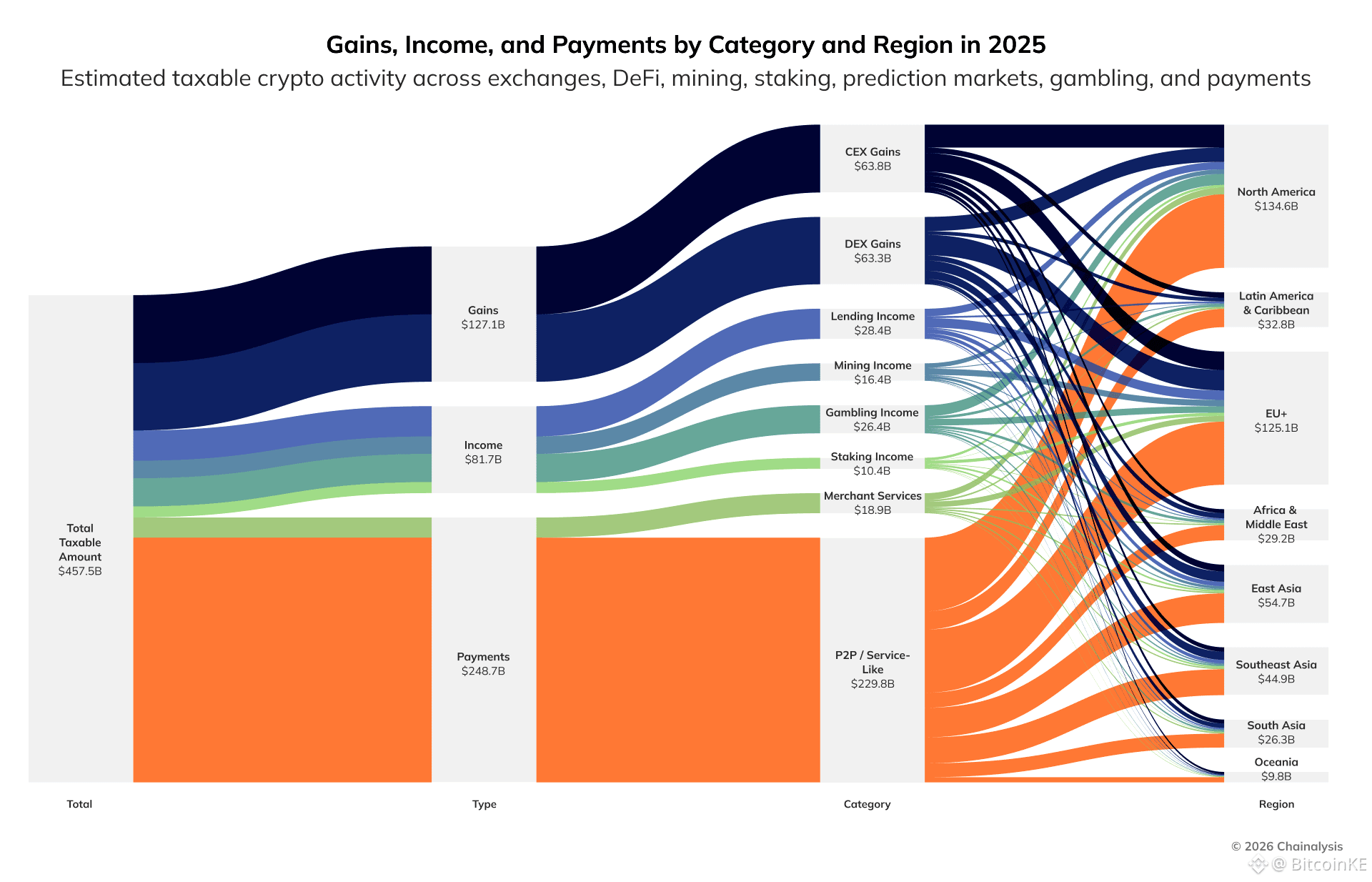
The United States accounted for an estimated $112.6 billion of the $457 billion in potentially taxable activity in 2025.
North America accounted for $134.6 billion, followed by
The European Union at $125.1 billion, and
East Asia at $54.7 billion.
Importantly, Chainalysis describes the $457 billion figure as a lower boundary rather than a complete measure of crypto’s taxable economy. Its analysis excludes activity taking place entirely inside centralised exchanges as well as activity on other blockchains and transaction types not covered by its methodology.
That means the issue may be larger than the headline figure suggests.
The answer is unlikely to be simply expanding CARF to require every wallet or blockchain address to identify its owner. That would be technically difficult and could create serious privacy and compliance problems.
A more workable approach would combine CARF with blockchain intelligence and targeted enforcement.
REGULATION | The Kenya Capital Markets Regulator Floats Tender Notice to Procure a Blockchain Analytics System
The Bigger Problem
CARF is not necessarily failing because it was poorly designed. Its core assumption is that intermediaries are the best place to collect tax information. That remains true for centralised crypto businesses.
The problem is that crypto has evolved beyond that model.
The market increasingly combines regulated exchanges with self-custody, decentralised exchanges, smart contracts, stablecoins and peer-to-peer transfers. A tax system built primarily around identifiable intermediaries will inevitably struggle when economic activity moves outside them.
TAXATION | The African Tax Administration Forum (ATAF) Urges for Practical, Implementable Approaches to Crypto Taxation at OECD Global Forum
The OECD itself recognises that crypto markets are evolving rapidly and says further work may be required to ensure sufficient coverage, including developments in decentralised finance.
The likely solution, therefore, is not to abandon CARF but to add an on-chain intelligence layer around it.
CARF can tell tax authorities what regulated intermediaries know about a taxpayer. Blockchain analytics can help show what happened beyond those intermediaries.
For governments, the real challenge is turning those two sources of information into a single picture of a taxpayer’s crypto activity.
Until that happens, the growing use of self-custody and decentralised finance could leave tax authorities with a paradox: blockchains make transactions more transparent than traditional finance, but tax authorities may still struggle to determine who owes the tax.
TAXATION | What You Need to Know About the European Union (EU) New Crypto Tax Reporting Requirements
Stay tuned to BitKE for the latest crypto regulatory updates globally.
Join our WhatsApp channel here.
Follow us on X for the latest posts and updates
Join and interact with our Telegram community
________________
REPORT | CARF Leaves Over 80% Taxable Crypto On-Chain Activity Outside Reporting Framework, Says ...
International efforts to bring crypto into the global tax-reporting system may be leaving a large part of the market outside regulators’ view, highlighting a growing gap between traditional reporting rules and how crypto transactions actually take place.
Blockchain analytics firm, Chainalysis, estimates that at least $457 billion in potentially taxable crypto activity occurred on-chain globally in 2025. The figure covers
realised gains,
income from mining, staking, lending, and gambling, as well as
crypto-denominated payments across Bitcoin, Ethereum, Solana, Tron, BNB Smart Chain and Base.
But Chainalysis estimates that transactions within the practical reach of the OECD’s Crypto-Asset Reporting Framework (CARF) accounted for only about 14% of that activity.
That would leave roughly 86% outside the framework’s reporting reach, including activity involving decentralised exchanges, peer-to-peer transfers, private wallets, on-chain income and crypto payments.
The gap matters because CARF was designed around a financial system in which an identifiable intermediary sits between the taxpayer and the transaction.
Under the framework, crypto exchanges, brokers, dealers and other qualifying service providers collect information about customers and report relevant transactions to tax authorities, which can then exchange that information with the taxpayer’s country of residence.
CARF covers
crypto-to-fiat exchanges,
crypto-to-crypto exchanges, and
certain transfers.
The problem is that much of crypto does not require such an intermediary.
A user can move assets from one self-custodied wallet to another, trade through a decentralised exchange, earn staking or lending income through on-chain protocols, or receive crypto payments without a traditional financial institution having custody of the assets or maintaining a conventional customer record.
This creates a structural weakness in a reporting system that relies heavily on intermediaries to identify taxpayers.
REGULATION | Nigeria Starts Implementing CARF Requirements by Tying Crypto Transactions to Tax and National IDs
The scale of the potential tax base is also significant.
The United States accounted for an estimated $112.6 billion of the $457 billion in potentially taxable activity in 2025.
North America accounted for $134.6 billion, followed by
The European Union at $125.1 billion, and
East Asia at $54.7 billion.
Importantly, Chainalysis describes the $457 billion figure as a lower boundary rather than a complete measure of crypto’s taxable economy. Its analysis excludes activity taking place entirely inside centralised exchanges as well as activity on other blockchains and transaction types not covered by its methodology.
That means the issue may be larger than the headline figure suggests.
The answer is unlikely to be simply expanding CARF to require every wallet or blockchain address to identify its owner. That would be technically difficult and could create serious privacy and compliance problems.
A more workable approach would combine CARF with blockchain intelligence and targeted enforcement.
REGULATION | The Kenya Capital Markets Regulator Floats Tender Notice to Procure a Blockchain Analytics System
The Bigger Problem
CARF is not necessarily failing because it was poorly designed. Its core assumption is that intermediaries are the best place to collect tax information. That remains true for centralised crypto businesses.
The problem is that crypto has evolved beyond that model.
The market increasingly combines regulated exchanges with self-custody, decentralised exchanges, smart contracts, stablecoins and peer-to-peer transfers. A tax system built primarily around identifiable intermediaries will inevitably struggle when economic activity moves outside them.
TAXATION | The African Tax Administration Forum (ATAF) Urges for Practical, Implementable Approaches to Crypto Taxation at OECD Global Forum
The OECD itself recognises that crypto markets are evolving rapidly and says further work may be required to ensure sufficient coverage, including developments in decentralised finance.
The likely solution, therefore, is not to abandon CARF but to add an on-chain intelligence layer around it.
CARF can tell tax authorities what regulated intermediaries know about a taxpayer. Blockchain analytics can help show what happened beyond those intermediaries.
For governments, the real challenge is turning those two sources of information into a single picture of a taxpayer’s crypto activity.
Until that happens, the growing use of self-custody and decentralised finance could leave tax authorities with a paradox: blockchains make transactions more transparent than traditional finance, but tax authorities may still struggle to determine who owes the tax.
TAXATION | What You Need to Know About the European Union (EU) New Crypto Tax Reporting Requirements
Stay tuned to BitKE for the latest crypto regulatory updates globally.
Join our WhatsApp channel here.
Follow us on X for the latest posts and updates
Join and interact with our Telegram community
________________
Blockchain analytics firm, Chainalysis, estimates that at least $457 billion in potentially taxable crypto activity occurred on-chain globally in 2025. The figure covers
realised gains,
income from mining, staking, lending, and gambling, as well as
crypto-denominated payments across Bitcoin, Ethereum, Solana, Tron, BNB Smart Chain and Base.
But Chainalysis estimates that transactions within the practical reach of the OECD’s Crypto-Asset Reporting Framework (CARF) accounted for only about 14% of that activity.
That would leave roughly 86% outside the framework’s reporting reach, including activity involving decentralised exchanges, peer-to-peer transfers, private wallets, on-chain income and crypto payments.
The gap matters because CARF was designed around a financial system in which an identifiable intermediary sits between the taxpayer and the transaction.
Under the framework, crypto exchanges, brokers, dealers and other qualifying service providers collect information about customers and report relevant transactions to tax authorities, which can then exchange that information with the taxpayer’s country of residence.
CARF covers
crypto-to-fiat exchanges,
crypto-to-crypto exchanges, and
certain transfers.
The problem is that much of crypto does not require such an intermediary.
A user can move assets from one self-custodied wallet to another, trade through a decentralised exchange, earn staking or lending income through on-chain protocols, or receive crypto payments without a traditional financial institution having custody of the assets or maintaining a conventional customer record.
This creates a structural weakness in a reporting system that relies heavily on intermediaries to identify taxpayers.
REGULATION | Nigeria Starts Implementing CARF Requirements by Tying Crypto Transactions to Tax and National IDs
The scale of the potential tax base is also significant.
The United States accounted for an estimated $112.6 billion of the $457 billion in potentially taxable activity in 2025.
North America accounted for $134.6 billion, followed by
The European Union at $125.1 billion, and
East Asia at $54.7 billion.
Importantly, Chainalysis describes the $457 billion figure as a lower boundary rather than a complete measure of crypto’s taxable economy. Its analysis excludes activity taking place entirely inside centralised exchanges as well as activity on other blockchains and transaction types not covered by its methodology.
That means the issue may be larger than the headline figure suggests.
The answer is unlikely to be simply expanding CARF to require every wallet or blockchain address to identify its owner. That would be technically difficult and could create serious privacy and compliance problems.
A more workable approach would combine CARF with blockchain intelligence and targeted enforcement.
REGULATION | The Kenya Capital Markets Regulator Floats Tender Notice to Procure a Blockchain Analytics System
The Bigger Problem
CARF is not necessarily failing because it was poorly designed. Its core assumption is that intermediaries are the best place to collect tax information. That remains true for centralised crypto businesses.
The problem is that crypto has evolved beyond that model.
The market increasingly combines regulated exchanges with self-custody, decentralised exchanges, smart contracts, stablecoins and peer-to-peer transfers. A tax system built primarily around identifiable intermediaries will inevitably struggle when economic activity moves outside them.
TAXATION | The African Tax Administration Forum (ATAF) Urges for Practical, Implementable Approaches to Crypto Taxation at OECD Global Forum
The OECD itself recognises that crypto markets are evolving rapidly and says further work may be required to ensure sufficient coverage, including developments in decentralised finance.
The likely solution, therefore, is not to abandon CARF but to add an on-chain intelligence layer around it.
CARF can tell tax authorities what regulated intermediaries know about a taxpayer. Blockchain analytics can help show what happened beyond those intermediaries.
For governments, the real challenge is turning those two sources of information into a single picture of a taxpayer’s crypto activity.
Until that happens, the growing use of self-custody and decentralised finance could leave tax authorities with a paradox: blockchains make transactions more transparent than traditional finance, but tax authorities may still struggle to determine who owes the tax.
TAXATION | What You Need to Know About the European Union (EU) New Crypto Tax Reporting Requirements
Stay tuned to BitKE for the latest crypto regulatory updates globally.
Join our WhatsApp channel here.
Follow us on X for the latest posts and updates
Join and interact with our Telegram community
________________
250
·
--

Article
PRESS RELEASE | Ventures Platform Closes Pan-African Fund II At Over $80 MillionVentures Platform, Africa’s leading seed-stage fund, has announced the final close of its second institutional fund – VP Pan-African Fund II (VP PAF II) – at $84 million, exceeding its original target of $75 million.
Achieved just three years after the close of Fund I and against a markedly more cautious global venture backdrop, the oversubscribed Fund II reflects growing global institutional confidence in Africa’s innovation economy, and confidence in Ventures Platform’s approach to identifying and backing exceptional founders from the earliest stages of company building.
The final close brings new institutional investors into the fund’s LP base, including
the European Bank for Reconstruction and Development (EBRD),
Norfund (Norway’s Development Finance Institution),
Alphatron, and
Ashesi University Foundation
a strong, reflection of the fund’s appeal to institutions committed to developing Africa’s innovation ecosystem.
The close also welcomed a consortium of new family offices.
These new investors join a group of existing LPs from the first close, including
Nigeria Investment in Digital and Creative Enterprises (iDICE) program,
The International Finance Corporation (IFC), a member of the World Bank Group,
Standard Bank (South Africa),
British International Investment (BII),
Proparco (through the EU-backed Choose Africa VC programme),
Micro, Small & Medium Enterprises Development Agency (MSMEDA),
AfricaGrow, and
Alder Tree Investment.
With the now-closed fund, Ventures Platform will double down on leading and catalysing pre-seed to series A investments with capacity to support exceptional portfolio companies through subsequent rounds, backing category-defining founders building solutions to some of Africa’s most pressing challenges and transformative opportunities. As the firm moves into this next phase of deployment, its focus remains on supporting mission-driven entrepreneurs who are using technology to drive economic prosperity, inclusion, and access across key sectors.
Speaking on the final close, Kola Aina, Founding and Managing Partner at Ventures Platform, said:
“This fund is ultimately not about the capital we’ve raised, but about the entrepreneurs we’re privileged to be able to back. Across Africa, we’re seeing a new generation of founders building enduring companies with greater technical depth, stronger governance, bigger ambition and a clear understanding of the markets they serve. These businesses are being built for resilience as much as growth, and we believe that positions them to create lasting value.
We’re deeply grateful for the confidence of our investors and excited to partner with ambitious founders solving meaningful problems across the continent”
Globally, growing recognition that some of the most compelling innovation opportunities will emerge from under-capitalised yet highly resilient markets continues to generate meaningful interest in Africa’s technology ecosystem. The fund positions Ventures Platform at the centre of enabling that opportunity.
Dirk Werner, Managing Director of Equity, EBRD, said:
“Innovation is increasingly shaping Africa’s economic future, yet venture capital remains underdeveloped relative to the scale of entrepreneurial activity across the continent. By investing in Ventures Platform Pan-African Fund II, we are helping to strengthen the market infrastructure that enables innovative businesses to access growth capital and scale their impact.”
FUNDING | LoftyInc Capital Closes $43 Million to Invest in Late-Seed Stage Startups Across Egypt, Kenya, Nigeria, and Francophone Africa
Jerry Jansen, Investment Manager, Alphatron, added:
“We are excited to be part of the Ventures Platform journey and to support its continued commitment to backing Africa’s most ambitious founders. We see tremendous potential in Africa’s technology ecosystem and look forward to working alongside the firm to help build enduring businesses, unlock new opportunities, and create lasting positive impact across the continent.”
With over a decade of operation, Ventures Platform has consistently backed category-leading companies, including
_able,
OmniRetail,
PiggyVest,
Raenest,
Seamless Technologies (formerly SeamlessHR), and
Moniepoint.
The raise reflects the increasing depth of the African venture ecosystem and reinforces Venture Platform’s long-standing thesis of investing in market-creating innovations, and backing founders with capital alongside strategic guidance, networks and ecosystem development, from the early stages of company building.
2025 RECAP | Africa Tech Funding Grew 25% in 2025 Driven by Record Debt Activity, Says 2025 Partech VC Report
_________
About Ventures Platform
Ventures Platform is a leading seed-stage venture capital firm in Africa that discovers and invests in category-leading, market-creating innovations and supports them to scale.
The firm targets companies that bridge infrastructural gaps and promote prosperity by eliminating access barriers and reducing delivery costs across the continent by identifying companies that address non-consumption through market-creating innovations. Portfolio companies include
Raenest,
Fez Delivery,
LemFi,
Moniepoint,
OmniRetail,
Paystack,
PiggyVest,
Remedial Health,
SunFi,
ThriveAgric, and
Verto.
FUNDING | Egypt Attracted the Most Start-Up Funding in H1 2026 Across Africa
Stay tuned to BitKE for the latest funding developments across Africa.
Join our WhatsApp channel here.
Follow us on X for the latest posts and updates
Join and interact with our Telegram community
________________
PRESS RELEASE | Ventures Platform Closes Pan-African Fund II At Over $80 Million
Ventures Platform, Africa’s leading seed-stage fund, has announced the final close of its second institutional fund – VP Pan-African Fund II (VP PAF II) – at $84 million, exceeding its original target of $75 million.
Achieved just three years after the close of Fund I and against a markedly more cautious global venture backdrop, the oversubscribed Fund II reflects growing global institutional confidence in Africa’s innovation economy, and confidence in Ventures Platform’s approach to identifying and backing exceptional founders from the earliest stages of company building.
The final close brings new institutional investors into the fund’s LP base, including
the European Bank for Reconstruction and Development (EBRD),
Norfund (Norway’s Development Finance Institution),
Alphatron, and
Ashesi University Foundation
a strong, reflection of the fund’s appeal to institutions committed to developing Africa’s innovation ecosystem.
The close also welcomed a consortium of new family offices.
These new investors join a group of existing LPs from the first close, including
Nigeria Investment in Digital and Creative Enterprises (iDICE) program,
The International Finance Corporation (IFC), a member of the World Bank Group,
Standard Bank (South Africa),
British International Investment (BII),
Proparco (through the EU-backed Choose Africa VC programme),
Micro, Small & Medium Enterprises Development Agency (MSMEDA),
AfricaGrow, and
Alder Tree Investment.
With the now-closed fund, Ventures Platform will double down on leading and catalysing pre-seed to series A investments with capacity to support exceptional portfolio companies through subsequent rounds, backing category-defining founders building solutions to some of Africa’s most pressing challenges and transformative opportunities. As the firm moves into this next phase of deployment, its focus remains on supporting mission-driven entrepreneurs who are using technology to drive economic prosperity, inclusion, and access across key sectors.
Speaking on the final close, Kola Aina, Founding and Managing Partner at Ventures Platform, said:
“This fund is ultimately not about the capital we’ve raised, but about the entrepreneurs we’re privileged to be able to back. Across Africa, we’re seeing a new generation of founders building enduring companies with greater technical depth, stronger governance, bigger ambition and a clear understanding of the markets they serve. These businesses are being built for resilience as much as growth, and we believe that positions them to create lasting value.
We’re deeply grateful for the confidence of our investors and excited to partner with ambitious founders solving meaningful problems across the continent”
Globally, growing recognition that some of the most compelling innovation opportunities will emerge from under-capitalised yet highly resilient markets continues to generate meaningful interest in Africa’s technology ecosystem. The fund positions Ventures Platform at the centre of enabling that opportunity.
Dirk Werner, Managing Director of Equity, EBRD, said:
“Innovation is increasingly shaping Africa’s economic future, yet venture capital remains underdeveloped relative to the scale of entrepreneurial activity across the continent. By investing in Ventures Platform Pan-African Fund II, we are helping to strengthen the market infrastructure that enables innovative businesses to access growth capital and scale their impact.”
FUNDING | LoftyInc Capital Closes $43 Million to Invest in Late-Seed Stage Startups Across Egypt, Kenya, Nigeria, and Francophone Africa
Jerry Jansen, Investment Manager, Alphatron, added:
“We are excited to be part of the Ventures Platform journey and to support its continued commitment to backing Africa’s most ambitious founders. We see tremendous potential in Africa’s technology ecosystem and look forward to working alongside the firm to help build enduring businesses, unlock new opportunities, and create lasting positive impact across the continent.”
With over a decade of operation, Ventures Platform has consistently backed category-leading companies, including
_able,
OmniRetail,
PiggyVest,
Raenest,
Seamless Technologies (formerly SeamlessHR), and
Moniepoint.
The raise reflects the increasing depth of the African venture ecosystem and reinforces Venture Platform’s long-standing thesis of investing in market-creating innovations, and backing founders with capital alongside strategic guidance, networks and ecosystem development, from the early stages of company building.
2025 RECAP | Africa Tech Funding Grew 25% in 2025 Driven by Record Debt Activity, Says 2025 Partech VC Report
_________
About Ventures Platform
Ventures Platform is a leading seed-stage venture capital firm in Africa that discovers and invests in category-leading, market-creating innovations and supports them to scale.
The firm targets companies that bridge infrastructural gaps and promote prosperity by eliminating access barriers and reducing delivery costs across the continent by identifying companies that address non-consumption through market-creating innovations. Portfolio companies include
Raenest,
Fez Delivery,
LemFi,
Moniepoint,
OmniRetail,
Paystack,
PiggyVest,
Remedial Health,
SunFi,
ThriveAgric, and
Verto.
FUNDING | Egypt Attracted the Most Start-Up Funding in H1 2026 Across Africa
Stay tuned to BitKE for the latest funding developments across Africa.
Join our WhatsApp channel here.
Follow us on X for the latest posts and updates
Join and interact with our Telegram community
________________
Achieved just three years after the close of Fund I and against a markedly more cautious global venture backdrop, the oversubscribed Fund II reflects growing global institutional confidence in Africa’s innovation economy, and confidence in Ventures Platform’s approach to identifying and backing exceptional founders from the earliest stages of company building.
The final close brings new institutional investors into the fund’s LP base, including
the European Bank for Reconstruction and Development (EBRD),
Norfund (Norway’s Development Finance Institution),
Alphatron, and
Ashesi University Foundation
a strong, reflection of the fund’s appeal to institutions committed to developing Africa’s innovation ecosystem.
The close also welcomed a consortium of new family offices.
These new investors join a group of existing LPs from the first close, including
Nigeria Investment in Digital and Creative Enterprises (iDICE) program,
The International Finance Corporation (IFC), a member of the World Bank Group,
Standard Bank (South Africa),
British International Investment (BII),
Proparco (through the EU-backed Choose Africa VC programme),
Micro, Small & Medium Enterprises Development Agency (MSMEDA),
AfricaGrow, and
Alder Tree Investment.
With the now-closed fund, Ventures Platform will double down on leading and catalysing pre-seed to series A investments with capacity to support exceptional portfolio companies through subsequent rounds, backing category-defining founders building solutions to some of Africa’s most pressing challenges and transformative opportunities. As the firm moves into this next phase of deployment, its focus remains on supporting mission-driven entrepreneurs who are using technology to drive economic prosperity, inclusion, and access across key sectors.
Speaking on the final close, Kola Aina, Founding and Managing Partner at Ventures Platform, said:
“This fund is ultimately not about the capital we’ve raised, but about the entrepreneurs we’re privileged to be able to back. Across Africa, we’re seeing a new generation of founders building enduring companies with greater technical depth, stronger governance, bigger ambition and a clear understanding of the markets they serve. These businesses are being built for resilience as much as growth, and we believe that positions them to create lasting value.
We’re deeply grateful for the confidence of our investors and excited to partner with ambitious founders solving meaningful problems across the continent”
Globally, growing recognition that some of the most compelling innovation opportunities will emerge from under-capitalised yet highly resilient markets continues to generate meaningful interest in Africa’s technology ecosystem. The fund positions Ventures Platform at the centre of enabling that opportunity.
Dirk Werner, Managing Director of Equity, EBRD, said:
“Innovation is increasingly shaping Africa’s economic future, yet venture capital remains underdeveloped relative to the scale of entrepreneurial activity across the continent. By investing in Ventures Platform Pan-African Fund II, we are helping to strengthen the market infrastructure that enables innovative businesses to access growth capital and scale their impact.”
FUNDING | LoftyInc Capital Closes $43 Million to Invest in Late-Seed Stage Startups Across Egypt, Kenya, Nigeria, and Francophone Africa
Jerry Jansen, Investment Manager, Alphatron, added:
“We are excited to be part of the Ventures Platform journey and to support its continued commitment to backing Africa’s most ambitious founders. We see tremendous potential in Africa’s technology ecosystem and look forward to working alongside the firm to help build enduring businesses, unlock new opportunities, and create lasting positive impact across the continent.”
With over a decade of operation, Ventures Platform has consistently backed category-leading companies, including
_able,
OmniRetail,
PiggyVest,
Raenest,
Seamless Technologies (formerly SeamlessHR), and
Moniepoint.
The raise reflects the increasing depth of the African venture ecosystem and reinforces Venture Platform’s long-standing thesis of investing in market-creating innovations, and backing founders with capital alongside strategic guidance, networks and ecosystem development, from the early stages of company building.
2025 RECAP | Africa Tech Funding Grew 25% in 2025 Driven by Record Debt Activity, Says 2025 Partech VC Report
_________
About Ventures Platform
Ventures Platform is a leading seed-stage venture capital firm in Africa that discovers and invests in category-leading, market-creating innovations and supports them to scale.
The firm targets companies that bridge infrastructural gaps and promote prosperity by eliminating access barriers and reducing delivery costs across the continent by identifying companies that address non-consumption through market-creating innovations. Portfolio companies include
Raenest,
Fez Delivery,
LemFi,
Moniepoint,
OmniRetail,
Paystack,
PiggyVest,
Remedial Health,
SunFi,
ThriveAgric, and
Verto.
FUNDING | Egypt Attracted the Most Start-Up Funding in H1 2026 Across Africa
Stay tuned to BitKE for the latest funding developments across Africa.
Join our WhatsApp channel here.
Follow us on X for the latest posts and updates
Join and interact with our Telegram community
________________
1
91
·
--
Verified
REALITY CHECK | Lisk’s Africa Bet Ends As Blockchain Shuts DownLisk is shutting down its blockchain on October 31 2026 bringing an abrupt end to a strategy that had increasingly positioned Africa and other emerging markets at the centre of its growth plans.
The Swiss blockchain project had made a significant push into emerging markets, including launching a $15 million fund in 2025 to back Web3 startups across Africa, Latin America, and Southeast Asia. Lisk said the fund was aimed at finding companies solving real-world problems rather than funding speculative projects, targeting what it described as a largely overlooked emerging-market opportunity.
Africa became one of the most visible parts of that strategy.
FUNDING | Out of 4 Early Recipients of the $15 Million Lisk EMpower Fund, 2 Are African Startups
Lisk sought to build an ecosystem around startups using blockchain for payments, financial services, and other applications, while partnerships in markets such as Nigeria positioned the network as infrastructure for stablecoins and local-currency access. In February 2026, Nigerian crypto exchange, Quidax, partnered with Lisk to give developers access to stablecoins and local currencies through its infrastructure.
PRESS RELEASE | Quidax and Lisk Partnership Expected to Power a Regulated Digital Assets Infrastructure
That investment is now effectively being wound down.
Lisk says its Ethereum Layer-2 network has failed to generate enough revenue after about two and a half years while ecosystem incentives and the cost of maintaining the network contributed to an unsustainable model. The company is therefore abandoning the blockchain business and moving toward a financial-operations platform for businesses focused on bank accounts, stablecoins, payments, and money management.
LATEST |
THE LISK CHAIN IS WINDING DOWN
The #Ethereum L2 layer has also proposed the cessation of the #LISKDAO.@Lisk says the ‘Lisk Chain has been struggling with generating enough revenue that can flow back to the LSK token, and ecosystem incentives paid in LSK tokens have… pic.twitter.com/kPGCx8pfcg
— BitKE (@BitcoinKE) August 26, 2026
The reversal is particularly notable because Lisk had only recently doubled down on emerging markets. Its $15 million fund was launched less than a year ago with a mandate covering Africa, Latin America and Southeast Asia. The project had presented the strategy as a way to capture opportunities that traditional venture capital was missing in these markets.
LIST | 23 African Startups Successfully Complete the Inaugural Lisk Blockchain Incubation Hub, Receiving $196K in Grants
The shutdown also comes after Lisk had already abandoned its original Layer-1 blockchain and rebuilt as an Ethereum Layer-2 in late 2023. The network being closed is therefore itself a relatively young iteration of the project.
For Africa’s crypto industry, the episode highlights a broader problem:
Capital entering emerging markets does not necessarily translate into durable blockchain infrastructure. Lisk invested heavily in building an ecosystem around African and other emerging-market startups, but ultimately concluded that running its own blockchain could not produce an economically sustainable business.
EXPERT OPINION | Why the African Leapfrogging Narrative Has Failed Over a Decade Later
The company will now move in the opposite direction – away from operating a blockchain and toward using existing financial and blockchain infrastructure to provide business finance tools.
The Lisk DAO is also considering burning 100 million LSK, reducing the token’s total supply from 400 million to 300 million, while LSK holders on the Lisk Chain will need to migrate their tokens before the network closes.
For African Web3 founders, the significance goes beyond Lisk itself. One of the projects that had made some of the clearest financial commitments to building an emerging-market blockchain ecosystem is now retreating from the infrastructure it had spent years promoting.
REALITY CHECK | ‘We Made the Wrong Bet on Social,’ Base Blockchain Creator Admits
Stay tuned to BitKE updates on the latest blockchain developments globally.
Join our WhatsApp channel here.
Follow us on X for the latest posts and updates
Join and interact with our Telegram community
____________
REALITY CHECK | Lisk’s Africa Bet Ends As Blockchain Shuts Down
Lisk is shutting down its blockchain on October 31 2026 bringing an abrupt end to a strategy that had increasingly positioned Africa and other emerging markets at the centre of its growth plans.
The Swiss blockchain project had made a significant push into emerging markets, including launching a $15 million fund in 2025 to back Web3 startups across Africa, Latin America, and Southeast Asia. Lisk said the fund was aimed at finding companies solving real-world problems rather than funding speculative projects, targeting what it described as a largely overlooked emerging-market opportunity.
Africa became one of the most visible parts of that strategy.
FUNDING | Out of 4 Early Recipients of the $15 Million Lisk EMpower Fund, 2 Are African Startups
Lisk sought to build an ecosystem around startups using blockchain for payments, financial services, and other applications, while partnerships in markets such as Nigeria positioned the network as infrastructure for stablecoins and local-currency access. In February 2026, Nigerian crypto exchange, Quidax, partnered with Lisk to give developers access to stablecoins and local currencies through its infrastructure.
PRESS RELEASE | Quidax and Lisk Partnership Expected to Power a Regulated Digital Assets Infrastructure
That investment is now effectively being wound down.
Lisk says its Ethereum Layer-2 network has failed to generate enough revenue after about two and a half years while ecosystem incentives and the cost of maintaining the network contributed to an unsustainable model. The company is therefore abandoning the blockchain business and moving toward a financial-operations platform for businesses focused on bank accounts, stablecoins, payments, and money management.
LATEST |
THE LISK CHAIN IS WINDING DOWN
The #Ethereum L2 layer has also proposed the cessation of the #LISKDAO.@Lisk says the ‘Lisk Chain has been struggling with generating enough revenue that can flow back to the LSK token, and ecosystem incentives paid in LSK tokens have… pic.twitter.com/kPGCx8pfcg
— BitKE (@BitcoinKE) August 26, 2026
The reversal is particularly notable because Lisk had only recently doubled down on emerging markets. Its $15 million fund was launched less than a year ago with a mandate covering Africa, Latin America and Southeast Asia. The project had presented the strategy as a way to capture opportunities that traditional venture capital was missing in these markets.
LIST | 23 African Startups Successfully Complete the Inaugural Lisk Blockchain Incubation Hub, Receiving $196K in Grants
The shutdown also comes after Lisk had already abandoned its original Layer-1 blockchain and rebuilt as an Ethereum Layer-2 in late 2023. The network being closed is therefore itself a relatively young iteration of the project.
For Africa’s crypto industry, the episode highlights a broader problem:
Capital entering emerging markets does not necessarily translate into durable blockchain infrastructure. Lisk invested heavily in building an ecosystem around African and other emerging-market startups, but ultimately concluded that running its own blockchain could not produce an economically sustainable business.
EXPERT OPINION | Why the African Leapfrogging Narrative Has Failed Over a Decade Later
The company will now move in the opposite direction – away from operating a blockchain and toward using existing financial and blockchain infrastructure to provide business finance tools.
The Lisk DAO is also considering burning 100 million LSK, reducing the token’s total supply from 400 million to 300 million, while LSK holders on the Lisk Chain will need to migrate their tokens before the network closes.
For African Web3 founders, the significance goes beyond Lisk itself. One of the projects that had made some of the clearest financial commitments to building an emerging-market blockchain ecosystem is now retreating from the infrastructure it had spent years promoting.
REALITY CHECK | ‘We Made the Wrong Bet on Social,’ Base Blockchain Creator Admits
Stay tuned to BitKE updates on the latest blockchain developments globally.
Join our WhatsApp channel here.
Follow us on X for the latest posts and updates
Join and interact with our Telegram community
____________
The Swiss blockchain project had made a significant push into emerging markets, including launching a $15 million fund in 2025 to back Web3 startups across Africa, Latin America, and Southeast Asia. Lisk said the fund was aimed at finding companies solving real-world problems rather than funding speculative projects, targeting what it described as a largely overlooked emerging-market opportunity.
Africa became one of the most visible parts of that strategy.
FUNDING | Out of 4 Early Recipients of the $15 Million Lisk EMpower Fund, 2 Are African Startups
Lisk sought to build an ecosystem around startups using blockchain for payments, financial services, and other applications, while partnerships in markets such as Nigeria positioned the network as infrastructure for stablecoins and local-currency access. In February 2026, Nigerian crypto exchange, Quidax, partnered with Lisk to give developers access to stablecoins and local currencies through its infrastructure.
PRESS RELEASE | Quidax and Lisk Partnership Expected to Power a Regulated Digital Assets Infrastructure
That investment is now effectively being wound down.
Lisk says its Ethereum Layer-2 network has failed to generate enough revenue after about two and a half years while ecosystem incentives and the cost of maintaining the network contributed to an unsustainable model. The company is therefore abandoning the blockchain business and moving toward a financial-operations platform for businesses focused on bank accounts, stablecoins, payments, and money management.
LATEST |
THE LISK CHAIN IS WINDING DOWN
The #Ethereum L2 layer has also proposed the cessation of the #LISKDAO.@Lisk says the ‘Lisk Chain has been struggling with generating enough revenue that can flow back to the LSK token, and ecosystem incentives paid in LSK tokens have… pic.twitter.com/kPGCx8pfcg
— BitKE (@BitcoinKE) August 26, 2026
The reversal is particularly notable because Lisk had only recently doubled down on emerging markets. Its $15 million fund was launched less than a year ago with a mandate covering Africa, Latin America and Southeast Asia. The project had presented the strategy as a way to capture opportunities that traditional venture capital was missing in these markets.
LIST | 23 African Startups Successfully Complete the Inaugural Lisk Blockchain Incubation Hub, Receiving $196K in Grants
The shutdown also comes after Lisk had already abandoned its original Layer-1 blockchain and rebuilt as an Ethereum Layer-2 in late 2023. The network being closed is therefore itself a relatively young iteration of the project.
For Africa’s crypto industry, the episode highlights a broader problem:
Capital entering emerging markets does not necessarily translate into durable blockchain infrastructure. Lisk invested heavily in building an ecosystem around African and other emerging-market startups, but ultimately concluded that running its own blockchain could not produce an economically sustainable business.
EXPERT OPINION | Why the African Leapfrogging Narrative Has Failed Over a Decade Later
The company will now move in the opposite direction – away from operating a blockchain and toward using existing financial and blockchain infrastructure to provide business finance tools.
The Lisk DAO is also considering burning 100 million LSK, reducing the token’s total supply from 400 million to 300 million, while LSK holders on the Lisk Chain will need to migrate their tokens before the network closes.
For African Web3 founders, the significance goes beyond Lisk itself. One of the projects that had made some of the clearest financial commitments to building an emerging-market blockchain ecosystem is now retreating from the infrastructure it had spent years promoting.
REALITY CHECK | ‘We Made the Wrong Bet on Social,’ Base Blockchain Creator Admits
Stay tuned to BitKE updates on the latest blockchain developments globally.
Join our WhatsApp channel here.
Follow us on X for the latest posts and updates
Join and interact with our Telegram community
____________
323
·
--
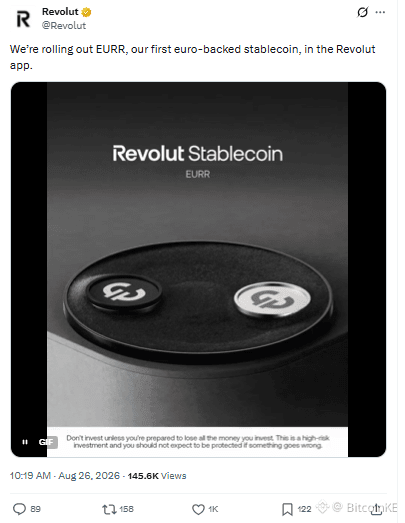
Article
INTRODUCING | UK Leading Fintech, Revolut, Launches EURR, a Euro-Backed StablecoinRevolut has joined banks and payments firms developing stablecoins by launching EURR, a stablecoin pegged to the Euro.
EURR will initially be available to eligible customers in
Denmark,
Poland and
Portugal,
with Revolut planning to expand it to other European Economic Area markets later in 2026.
The token will be integrated into Revolut’s app allowing users to move between Euros and crypto on-chain. The company said EURR is the first step in a broader stablecoin strategy that will include tokens linked to other currencies.
Revolut said:
EURR is Revolut’s first stablecoin: designed to maintain a value of €1.00, and backed by reserves held and managed by our EU-licensed issuer, Bridge, in accordance with MiCA regulations.
EURR will give eligible customers an on-chain rail to move more easily between euros, crypto, external wallets, and supported blockchain networks.
The moves barely 2 months after the company delisted USDT and disabled deposits and transactions of the stablecoin on the platform over regulatory and risk concerns.
REGULATION | Leading European Fintech, Revolut, to Delist USDT from August 2026 Over Regulatory and Risk Concerns
The launch comes as stablecoins continue to gain traction among traditional financial institutions with their potential use in cross-border payments, business transactions, and tokenized markets driving growing interest.
EURR is issued by Bridge, a Stripe-owned stablecoin infrastructure company, and is designed to comply with Europe’s MiCA framework.
Visa, Stripe Card Program to Enable ‘Custom Stablecoins for Businesses’ in 100+ Countries
Revolut’s move also highlights the growing competition for Euro-denominated stablecoins, a market still dominated by dollar-linked tokens. Circle’s EURC remains an established competitor, while other European banks and financial groups are also developing euro stablecoins.
STABLECOINS | Spain Leads European Retail Market for This Euro Stablecoin in Q1 2026
For Revolut, the key advantage is distribution:
Its existing consumer app gives the token immediate access to a large customer base, potentially making stablecoins part of everyday financial activity rather than a product confined to crypto exchanges.
STABLECOINS | Europe Should Develop More Euro-Backed Stablecoins to Counter Dollar-Pegged Assets, Says French Finance Minister
Stay tuned to BitKE for all the stablecoin updates globally.
Join our WhatsApp channel here.
Follow us on X for the latest posts and updates
Join and interact with our Telegram community
_______________
INTRODUCING | UK Leading Fintech, Revolut, Launches EURR, a Euro-Backed Stablecoin
Revolut has joined banks and payments firms developing stablecoins by launching EURR, a stablecoin pegged to the Euro.
EURR will initially be available to eligible customers in
Denmark,
Poland and
Portugal,
with Revolut planning to expand it to other European Economic Area markets later in 2026.
The token will be integrated into Revolut’s app allowing users to move between Euros and crypto on-chain. The company said EURR is the first step in a broader stablecoin strategy that will include tokens linked to other currencies.
Revolut said:
EURR is Revolut’s first stablecoin: designed to maintain a value of €1.00, and backed by reserves held and managed by our EU-licensed issuer, Bridge, in accordance with MiCA regulations.
EURR will give eligible customers an on-chain rail to move more easily between euros, crypto, external wallets, and supported blockchain networks.
The moves barely 2 months after the company delisted USDT and disabled deposits and transactions of the stablecoin on the platform over regulatory and risk concerns.
REGULATION | Leading European Fintech, Revolut, to Delist USDT from August 2026 Over Regulatory and Risk Concerns
The launch comes as stablecoins continue to gain traction among traditional financial institutions with their potential use in cross-border payments, business transactions, and tokenized markets driving growing interest.
EURR is issued by Bridge, a Stripe-owned stablecoin infrastructure company, and is designed to comply with Europe’s MiCA framework.
Visa, Stripe Card Program to Enable ‘Custom Stablecoins for Businesses’ in 100+ Countries
Revolut’s move also highlights the growing competition for Euro-denominated stablecoins, a market still dominated by dollar-linked tokens. Circle’s EURC remains an established competitor, while other European banks and financial groups are also developing euro stablecoins.
STABLECOINS | Spain Leads European Retail Market for This Euro Stablecoin in Q1 2026
For Revolut, the key advantage is distribution:
Its existing consumer app gives the token immediate access to a large customer base, potentially making stablecoins part of everyday financial activity rather than a product confined to crypto exchanges.
STABLECOINS | Europe Should Develop More Euro-Backed Stablecoins to Counter Dollar-Pegged Assets, Says French Finance Minister
Stay tuned to BitKE for all the stablecoin updates globally.
Join our WhatsApp channel here.
Follow us on X for the latest posts and updates
Join and interact with our Telegram community
_______________
EURR will initially be available to eligible customers in
Denmark,
Poland and
Portugal,
with Revolut planning to expand it to other European Economic Area markets later in 2026.
The token will be integrated into Revolut’s app allowing users to move between Euros and crypto on-chain. The company said EURR is the first step in a broader stablecoin strategy that will include tokens linked to other currencies.
Revolut said:
EURR is Revolut’s first stablecoin: designed to maintain a value of €1.00, and backed by reserves held and managed by our EU-licensed issuer, Bridge, in accordance with MiCA regulations.
EURR will give eligible customers an on-chain rail to move more easily between euros, crypto, external wallets, and supported blockchain networks.
The moves barely 2 months after the company delisted USDT and disabled deposits and transactions of the stablecoin on the platform over regulatory and risk concerns.
REGULATION | Leading European Fintech, Revolut, to Delist USDT from August 2026 Over Regulatory and Risk Concerns
The launch comes as stablecoins continue to gain traction among traditional financial institutions with their potential use in cross-border payments, business transactions, and tokenized markets driving growing interest.
EURR is issued by Bridge, a Stripe-owned stablecoin infrastructure company, and is designed to comply with Europe’s MiCA framework.
Visa, Stripe Card Program to Enable ‘Custom Stablecoins for Businesses’ in 100+ Countries
Revolut’s move also highlights the growing competition for Euro-denominated stablecoins, a market still dominated by dollar-linked tokens. Circle’s EURC remains an established competitor, while other European banks and financial groups are also developing euro stablecoins.
STABLECOINS | Spain Leads European Retail Market for This Euro Stablecoin in Q1 2026
For Revolut, the key advantage is distribution:
Its existing consumer app gives the token immediate access to a large customer base, potentially making stablecoins part of everyday financial activity rather than a product confined to crypto exchanges.
STABLECOINS | Europe Should Develop More Euro-Backed Stablecoins to Counter Dollar-Pegged Assets, Says French Finance Minister
Stay tuned to BitKE for all the stablecoin updates globally.
Join our WhatsApp channel here.
Follow us on X for the latest posts and updates
Join and interact with our Telegram community
_______________
33
·
--
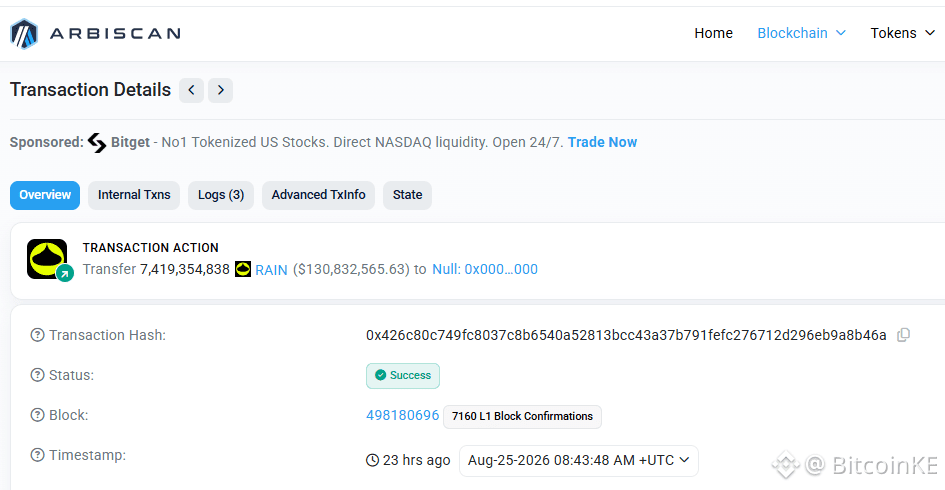
Article
CASE STUDY | How This DAO Settlement Sets a Precedent on Future DAO Dispute ResolutionsRain Protocol has used decentralized governance to resolve a dispute over its Credit Refund program, with token holders approving a settlement that has now resulted in the permanent destruction of 7.4 billion RAIN tokens.
The dispute emerged after the Rain Foundation identified coordinated activity involving multiple wallets that it said was designed to bypass the program’s $5,000-per-user allocation cap. Rather than decide the response internally, Rain put a proposed settlement to a vote by RAIN token holders, while Foundation and team-controlled wallets abstained.
CASE STUDY | This Major Blockchain Ecosystem is Facing Unintended Consequences of Decentralized Governance
The community approved a plan under which the Foundation committed $23 million in USDT to buy remaining locked refund allocations at $0.0031 per RAIN, with the purchased tokens earmarked for permanent removal from circulation.
Following the close of the claims period, Rain burned 7,419,354,838 RAIN, representing about 1.035% of circulating supply. The tokens were worth about $108 million at the time of the burn, according to the protocol.
The episode highlights a practical use of DAO governance:
Allowing token holders to determine how a contentious protocol-level dispute is resolved, while the final decision is executed transparently on-chain.
“Governance matters most when a decision has real consequences for the people participating in a protocol,” said Rain CEO, Roy Shaham.
“The community made the decision, the Foundation committed the capital, and this burn completes that decision transparently on-chain for anyone to verify. That is the standard decentralized governance should be held to as Rain moves into V2.”
CASE STUDY | This Leading DAO Exploit Shows the Biggest Risk to On-Chain Governance is Governance Itself
Stay tuned to BitKE on DeFi updates.
Join our WhatsApp channel here.
Follow us on X for the latest posts and updates
Join and interact with our Telegram community
_____________
CASE STUDY | How This DAO Settlement Sets a Precedent on Future DAO Dispute Resolutions
Rain Protocol has used decentralized governance to resolve a dispute over its Credit Refund program, with token holders approving a settlement that has now resulted in the permanent destruction of 7.4 billion RAIN tokens.
The dispute emerged after the Rain Foundation identified coordinated activity involving multiple wallets that it said was designed to bypass the program’s $5,000-per-user allocation cap. Rather than decide the response internally, Rain put a proposed settlement to a vote by RAIN token holders, while Foundation and team-controlled wallets abstained.
CASE STUDY | This Major Blockchain Ecosystem is Facing Unintended Consequences of Decentralized Governance
The community approved a plan under which the Foundation committed $23 million in USDT to buy remaining locked refund allocations at $0.0031 per RAIN, with the purchased tokens earmarked for permanent removal from circulation.
Following the close of the claims period, Rain burned 7,419,354,838 RAIN, representing about 1.035% of circulating supply. The tokens were worth about $108 million at the time of the burn, according to the protocol.
The episode highlights a practical use of DAO governance:
Allowing token holders to determine how a contentious protocol-level dispute is resolved, while the final decision is executed transparently on-chain.
“Governance matters most when a decision has real consequences for the people participating in a protocol,” said Rain CEO, Roy Shaham.
“The community made the decision, the Foundation committed the capital, and this burn completes that decision transparently on-chain for anyone to verify. That is the standard decentralized governance should be held to as Rain moves into V2.”
CASE STUDY | This Leading DAO Exploit Shows the Biggest Risk to On-Chain Governance is Governance Itself
Stay tuned to BitKE on DeFi updates.
Join our WhatsApp channel here.
Follow us on X for the latest posts and updates
Join and interact with our Telegram community
_____________
The dispute emerged after the Rain Foundation identified coordinated activity involving multiple wallets that it said was designed to bypass the program’s $5,000-per-user allocation cap. Rather than decide the response internally, Rain put a proposed settlement to a vote by RAIN token holders, while Foundation and team-controlled wallets abstained.
CASE STUDY | This Major Blockchain Ecosystem is Facing Unintended Consequences of Decentralized Governance
The community approved a plan under which the Foundation committed $23 million in USDT to buy remaining locked refund allocations at $0.0031 per RAIN, with the purchased tokens earmarked for permanent removal from circulation.
Following the close of the claims period, Rain burned 7,419,354,838 RAIN, representing about 1.035% of circulating supply. The tokens were worth about $108 million at the time of the burn, according to the protocol.
The episode highlights a practical use of DAO governance:
Allowing token holders to determine how a contentious protocol-level dispute is resolved, while the final decision is executed transparently on-chain.
“Governance matters most when a decision has real consequences for the people participating in a protocol,” said Rain CEO, Roy Shaham.
“The community made the decision, the Foundation committed the capital, and this burn completes that decision transparently on-chain for anyone to verify. That is the standard decentralized governance should be held to as Rain moves into V2.”
CASE STUDY | This Leading DAO Exploit Shows the Biggest Risk to On-Chain Governance is Governance Itself
Stay tuned to BitKE on DeFi updates.
Join our WhatsApp channel here.
Follow us on X for the latest posts and updates
Join and interact with our Telegram community
_____________
80
·
--
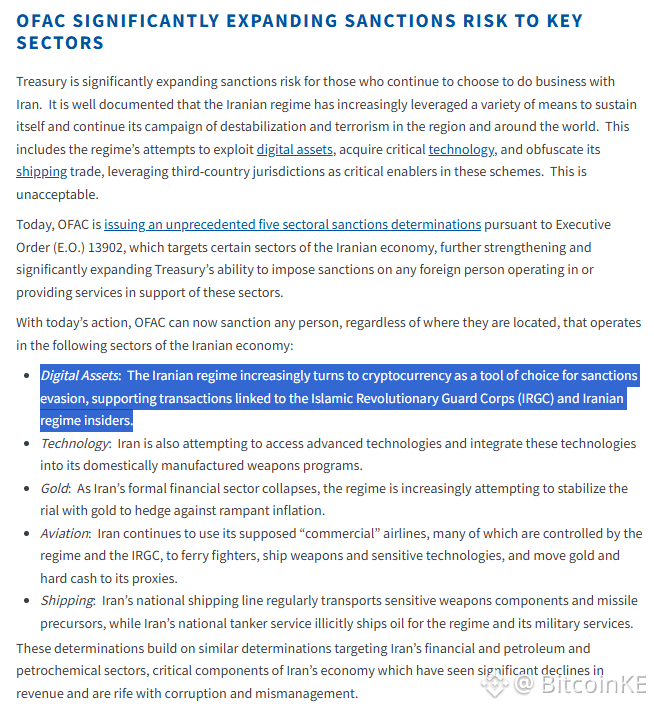
Article
REALITY CHECK | Crypto Is a ‘Tool of Choice for Sanctions Evasion’ for Iran, Says U.S TreasuryThe U.S. Treasury has expanded its Iran sanctions campaign to the country’s digital-asset sector saying cryptocurrency has increasingly become a tool of choice for Tehran and its networks to evade sanctions and move oil revenues.
Dubbed ‘Operation Economic Outcast,’ the goal is to ‘sever the economic lifelines that sustain the Iranian regime and the Islamic Revolutionary Guard Corps (IRGC)’ through ‘a sustained and systematic campaign to close every financial resource that supports the leading state sponsor of terror.’
Treasury says it has mapped the networks, facilitators, and financial channels that Iran uses to smuggle oil, evade sanctions, and fund terror.
The Treasury warned:
Any entity that facilitates money laundering or sanctions evasion on behalf of Iran risks being cut off from the U.S. financial system. Today’s announcement also expands secondary sanctions exposure for those who continue doing business with the Iranian regime and will accelerate the pace of U.S. enforcement.
Treasury said UAE-based broker, Ivan Obukhov, processed more than $100 million in cryptocurrency payments since 2023 to facilitate oil sales on behalf of Iran’s Islamic Revolutionary Guard Corps-Qods Force.
REGULATION | U.S. Targets Iran’s Largest Crypto Exchange in Escalation of Financial Pressure Campaign
The move marks the first time Washington has applied a sectoral sanctions determination specifically to Iran’s digital-asset sector potentially exposing foreign crypto firms that support Iran’s crypto economy to secondary sanctions.
Treasury Secretary, Scott Bessent, said Iran had ‘chosen to co-opt digital asset technologies’ to evade sanctions and transfer wealth out of the country, adding that Treasury would ‘follow the money’ through both traditional banking channels and digital assets.
MILESTONE | Iran’s Move to Charge Strait of Hormuz Crypto Tolls a ‘Significant Milestone’ for State Level Adoption, Says Chainalysis
The action builds on Treasury’s earlier targeting of Iranian exchanges, including Nobitex, which it said processed more than 50% of Iranian digital-asset inflows in 2025 and facilitated transactions linked to sanctions evasion and the IRGC.
GEOPOLITICS | Iran’s Largest Crypto Exchange Has Processed Over $100 Million During the Wartime Period
The broader message from Washington is increasingly clear:
Crypto is no longer being treated simply as an alternative financial rail, but as a significant channel through which sanctioned states can move money outside traditional banking networks.
For global exchanges, OTC desks, brokers, and crypto infrastructure providers, the Iran case could therefore raise the cost of doing business with jurisdictions and counterparties exposed to sanctioned flows.
REGULATION | U.S. Sanctions 2 Crypto Exchanges for Facilitating Iran Transactions
Stay tuned to BitKE on crypto developments in the Middle East.
Join our WhatsApp channel here.
Follow us on X for the latest posts and updates
Join and interact with our Telegram community
_______________
REALITY CHECK | Crypto Is a ‘Tool of Choice for Sanctions Evasion’ for Iran, Says U.S Treasury
The U.S. Treasury has expanded its Iran sanctions campaign to the country’s digital-asset sector saying cryptocurrency has increasingly become a tool of choice for Tehran and its networks to evade sanctions and move oil revenues.
Dubbed ‘Operation Economic Outcast,’ the goal is to ‘sever the economic lifelines that sustain the Iranian regime and the Islamic Revolutionary Guard Corps (IRGC)’ through ‘a sustained and systematic campaign to close every financial resource that supports the leading state sponsor of terror.’
Treasury says it has mapped the networks, facilitators, and financial channels that Iran uses to smuggle oil, evade sanctions, and fund terror.
The Treasury warned:
Any entity that facilitates money laundering or sanctions evasion on behalf of Iran risks being cut off from the U.S. financial system. Today’s announcement also expands secondary sanctions exposure for those who continue doing business with the Iranian regime and will accelerate the pace of U.S. enforcement.
Treasury said UAE-based broker, Ivan Obukhov, processed more than $100 million in cryptocurrency payments since 2023 to facilitate oil sales on behalf of Iran’s Islamic Revolutionary Guard Corps-Qods Force.
REGULATION | U.S. Targets Iran’s Largest Crypto Exchange in Escalation of Financial Pressure Campaign
The move marks the first time Washington has applied a sectoral sanctions determination specifically to Iran’s digital-asset sector potentially exposing foreign crypto firms that support Iran’s crypto economy to secondary sanctions.
Treasury Secretary, Scott Bessent, said Iran had ‘chosen to co-opt digital asset technologies’ to evade sanctions and transfer wealth out of the country, adding that Treasury would ‘follow the money’ through both traditional banking channels and digital assets.
MILESTONE | Iran’s Move to Charge Strait of Hormuz Crypto Tolls a ‘Significant Milestone’ for State Level Adoption, Says Chainalysis
The action builds on Treasury’s earlier targeting of Iranian exchanges, including Nobitex, which it said processed more than 50% of Iranian digital-asset inflows in 2025 and facilitated transactions linked to sanctions evasion and the IRGC.
GEOPOLITICS | Iran’s Largest Crypto Exchange Has Processed Over $100 Million During the Wartime Period
The broader message from Washington is increasingly clear:
Crypto is no longer being treated simply as an alternative financial rail, but as a significant channel through which sanctioned states can move money outside traditional banking networks.
For global exchanges, OTC desks, brokers, and crypto infrastructure providers, the Iran case could therefore raise the cost of doing business with jurisdictions and counterparties exposed to sanctioned flows.
REGULATION | U.S. Sanctions 2 Crypto Exchanges for Facilitating Iran Transactions
Stay tuned to BitKE on crypto developments in the Middle East.
Join our WhatsApp channel here.
Follow us on X for the latest posts and updates
Join and interact with our Telegram community
_______________
Dubbed ‘Operation Economic Outcast,’ the goal is to ‘sever the economic lifelines that sustain the Iranian regime and the Islamic Revolutionary Guard Corps (IRGC)’ through ‘a sustained and systematic campaign to close every financial resource that supports the leading state sponsor of terror.’
Treasury says it has mapped the networks, facilitators, and financial channels that Iran uses to smuggle oil, evade sanctions, and fund terror.
The Treasury warned:
Any entity that facilitates money laundering or sanctions evasion on behalf of Iran risks being cut off from the U.S. financial system. Today’s announcement also expands secondary sanctions exposure for those who continue doing business with the Iranian regime and will accelerate the pace of U.S. enforcement.
Treasury said UAE-based broker, Ivan Obukhov, processed more than $100 million in cryptocurrency payments since 2023 to facilitate oil sales on behalf of Iran’s Islamic Revolutionary Guard Corps-Qods Force.
REGULATION | U.S. Targets Iran’s Largest Crypto Exchange in Escalation of Financial Pressure Campaign
The move marks the first time Washington has applied a sectoral sanctions determination specifically to Iran’s digital-asset sector potentially exposing foreign crypto firms that support Iran’s crypto economy to secondary sanctions.
Treasury Secretary, Scott Bessent, said Iran had ‘chosen to co-opt digital asset technologies’ to evade sanctions and transfer wealth out of the country, adding that Treasury would ‘follow the money’ through both traditional banking channels and digital assets.
MILESTONE | Iran’s Move to Charge Strait of Hormuz Crypto Tolls a ‘Significant Milestone’ for State Level Adoption, Says Chainalysis
The action builds on Treasury’s earlier targeting of Iranian exchanges, including Nobitex, which it said processed more than 50% of Iranian digital-asset inflows in 2025 and facilitated transactions linked to sanctions evasion and the IRGC.
GEOPOLITICS | Iran’s Largest Crypto Exchange Has Processed Over $100 Million During the Wartime Period
The broader message from Washington is increasingly clear:
Crypto is no longer being treated simply as an alternative financial rail, but as a significant channel through which sanctioned states can move money outside traditional banking networks.
For global exchanges, OTC desks, brokers, and crypto infrastructure providers, the Iran case could therefore raise the cost of doing business with jurisdictions and counterparties exposed to sanctioned flows.
REGULATION | U.S. Sanctions 2 Crypto Exchanges for Facilitating Iran Transactions
Stay tuned to BitKE on crypto developments in the Middle East.
Join our WhatsApp channel here.
Follow us on X for the latest posts and updates
Join and interact with our Telegram community
_______________
122
·
--
CASE STUDY | This Latest Sting Reveals the Extent of Crypto Use to Facilitate CrimesCrypto is increasingly becoming part of the financial infrastructure used by criminals to facilitate serious crimes but its transparency is also making those networks easier to trace.
A Chainalysis-led investigation, dubbed Operation Lighthouse, examined 29,120 cryptocurrency addresses and digital identifiers linked to more than 100 child sexual abuse material networks.
Working with Binance, Coinbase, law enforcement agencies, and other partners, the operation
generated 14,300 investigative leads
across 11 crypto exchanges and payment services,
identified more than 7,700 suspect accounts, and
linked suspects to 125 countries.
REGULATION | Binance to Block Transactions With 14 Crypto Platforms Following Regulatory Review
The development highlights a broader trend in crypto crime.
Chainalysis says cryptocurrency-related flows to suspected human-trafficking services rose 85% in 2025, reaching hundreds of millions of dollars. Stablecoins have become particularly important in some trafficking and illicit-service networks because of their price stability and ease of conversion.
2025 RECAP | Illicit Stablecoin Activity Surged to 5-Year High in 2025 with Over 80% Used for Sanctions Evasion
Crypto is therefore playing an increasingly visible role in the financing of criminal activity – from exploitation and trafficking to fraud and ransomware.
But there is an important paradox: the same blockchain transparency that attracts criminals can also expose them.
CRYPTO CRIME | Binance Processed Over 70,000 Law-Enforcement Requests Worldwide in 2025 Alone
Unlike cash, crypto transactions leave a permanent, traceable record. When blockchain analytics are combined with exchange data and law-enforcement intelligence, those records can turn anonymous-looking wallet activity into actionable leads.
The challenge is increasingly less about whether criminals use crypto and more about how quickly the industry and authorities can
identify,
freeze, and
disrupt
those financial networks.
CRYPTO CRIME | Illicit Crypto Volumes Hit ~$160 Billion in 2025, Says TRM Labs
Stay tuned to BitKE on illicit crypto developments globally.
Join our WhatsApp channel here.
Follow us on X for the latest posts and updates
Join and interact with our Telegram community
_______________
CASE STUDY | This Latest Sting Reveals the Extent of Crypto Use to Facilitate Crimes
Crypto is increasingly becoming part of the financial infrastructure used by criminals to facilitate serious crimes but its transparency is also making those networks easier to trace.
A Chainalysis-led investigation, dubbed Operation Lighthouse, examined 29,120 cryptocurrency addresses and digital identifiers linked to more than 100 child sexual abuse material networks.
Working with Binance, Coinbase, law enforcement agencies, and other partners, the operation
generated 14,300 investigative leads
across 11 crypto exchanges and payment services,
identified more than 7,700 suspect accounts, and
linked suspects to 125 countries.
REGULATION | Binance to Block Transactions With 14 Crypto Platforms Following Regulatory Review
The development highlights a broader trend in crypto crime.
Chainalysis says cryptocurrency-related flows to suspected human-trafficking services rose 85% in 2025, reaching hundreds of millions of dollars. Stablecoins have become particularly important in some trafficking and illicit-service networks because of their price stability and ease of conversion.
2025 RECAP | Illicit Stablecoin Activity Surged to 5-Year High in 2025 with Over 80% Used for Sanctions Evasion
Crypto is therefore playing an increasingly visible role in the financing of criminal activity – from exploitation and trafficking to fraud and ransomware.
But there is an important paradox: the same blockchain transparency that attracts criminals can also expose them.
CRYPTO CRIME | Binance Processed Over 70,000 Law-Enforcement Requests Worldwide in 2025 Alone
Unlike cash, crypto transactions leave a permanent, traceable record. When blockchain analytics are combined with exchange data and law-enforcement intelligence, those records can turn anonymous-looking wallet activity into actionable leads.
The challenge is increasingly less about whether criminals use crypto and more about how quickly the industry and authorities can
identify,
freeze, and
disrupt
those financial networks.
CRYPTO CRIME | Illicit Crypto Volumes Hit ~$160 Billion in 2025, Says TRM Labs
Stay tuned to BitKE on illicit crypto developments globally.
Join our WhatsApp channel here.
Follow us on X for the latest posts and updates
Join and interact with our Telegram community
_______________
A Chainalysis-led investigation, dubbed Operation Lighthouse, examined 29,120 cryptocurrency addresses and digital identifiers linked to more than 100 child sexual abuse material networks.
Working with Binance, Coinbase, law enforcement agencies, and other partners, the operation
generated 14,300 investigative leads
across 11 crypto exchanges and payment services,
identified more than 7,700 suspect accounts, and
linked suspects to 125 countries.
REGULATION | Binance to Block Transactions With 14 Crypto Platforms Following Regulatory Review
The development highlights a broader trend in crypto crime.
Chainalysis says cryptocurrency-related flows to suspected human-trafficking services rose 85% in 2025, reaching hundreds of millions of dollars. Stablecoins have become particularly important in some trafficking and illicit-service networks because of their price stability and ease of conversion.
2025 RECAP | Illicit Stablecoin Activity Surged to 5-Year High in 2025 with Over 80% Used for Sanctions Evasion
Crypto is therefore playing an increasingly visible role in the financing of criminal activity – from exploitation and trafficking to fraud and ransomware.
But there is an important paradox: the same blockchain transparency that attracts criminals can also expose them.
CRYPTO CRIME | Binance Processed Over 70,000 Law-Enforcement Requests Worldwide in 2025 Alone
Unlike cash, crypto transactions leave a permanent, traceable record. When blockchain analytics are combined with exchange data and law-enforcement intelligence, those records can turn anonymous-looking wallet activity into actionable leads.
The challenge is increasingly less about whether criminals use crypto and more about how quickly the industry and authorities can
identify,
freeze, and
disrupt
those financial networks.
CRYPTO CRIME | Illicit Crypto Volumes Hit ~$160 Billion in 2025, Says TRM Labs
Stay tuned to BitKE on illicit crypto developments globally.
Join our WhatsApp channel here.
Follow us on X for the latest posts and updates
Join and interact with our Telegram community
_______________
107
·
--
CASE STUDY | South Korea’s Largest Trading Company Completes a Tokenized Trade Transaction on Ava...South Korean trading giant, POSCO International, has completed a transaction tokenizing trade receivables on an Avalanche-based blockchain, in its latest test of blockchain technology for corporate finance.
Its U.S. subsidiary worked with
Trade-finance platform, Olea, and
Asset-backed finance firm, Intain.
Intain used AI to reconcile invoices, purchase orders, credit notes, and shipping documents before recording the verified receivables on its blockchain network.
The transaction follows a similar pilot by POSCO International with LG CNS on Injective in July 2026 to:
issue,
transfer, and
settle
receivables on-chain showing the company is testing multiple blockchain networks for receivables financing.
POSCO International generated $22.2 billion in revenue and operates more than 80 overseas branches with businesses spanning steel, energy, and battery materials.
TOKENIZATION | Robinhood Chain’s Tokenized Assets Surge 5x as OnChain Stock Trading Accelerates
The broader significance is that tokenization is moving beyond bonds and investment funds into trade finance where on-chain records could reduce paperwork, improve transparency, and potentially give companies faster access to working capital.
POSCO, Olea, and Intain also plan to explore stablecoin-based cross-border settlement and digital treasury applications.
The experiments point to a wider shift in institutional blockchain adoption:
Rather than replacing traditional financial assets, blockchain is increasingly being tested as infrastructure for moving, financing, and settling assets that already exist in the real economy.
EXPERT OPINION | Tokenization Alone Will Not Fix Illiquid Assets, Say Industry Experts
Stay tuned to BitKE for deeper insights into tokenization globally.
Join our WhatsApp channel here.
Follow us on X for the latest posts and updates
Join and interact with our Telegram community
______________
CASE STUDY | South Korea’s Largest Trading Company Completes a Tokenized Trade Transaction on Ava...
South Korean trading giant, POSCO International, has completed a transaction tokenizing trade receivables on an Avalanche-based blockchain, in its latest test of blockchain technology for corporate finance.
Its U.S. subsidiary worked with
Trade-finance platform, Olea, and
Asset-backed finance firm, Intain.
Intain used AI to reconcile invoices, purchase orders, credit notes, and shipping documents before recording the verified receivables on its blockchain network.
The transaction follows a similar pilot by POSCO International with LG CNS on Injective in July 2026 to:
issue,
transfer, and
settle
receivables on-chain showing the company is testing multiple blockchain networks for receivables financing.
POSCO International generated $22.2 billion in revenue and operates more than 80 overseas branches with businesses spanning steel, energy, and battery materials.
TOKENIZATION | Robinhood Chain’s Tokenized Assets Surge 5x as OnChain Stock Trading Accelerates
The broader significance is that tokenization is moving beyond bonds and investment funds into trade finance where on-chain records could reduce paperwork, improve transparency, and potentially give companies faster access to working capital.
POSCO, Olea, and Intain also plan to explore stablecoin-based cross-border settlement and digital treasury applications.
The experiments point to a wider shift in institutional blockchain adoption:
Rather than replacing traditional financial assets, blockchain is increasingly being tested as infrastructure for moving, financing, and settling assets that already exist in the real economy.
EXPERT OPINION | Tokenization Alone Will Not Fix Illiquid Assets, Say Industry Experts
Stay tuned to BitKE for deeper insights into tokenization globally.
Join our WhatsApp channel here.
Follow us on X for the latest posts and updates
Join and interact with our Telegram community
______________
Its U.S. subsidiary worked with
Trade-finance platform, Olea, and
Asset-backed finance firm, Intain.
Intain used AI to reconcile invoices, purchase orders, credit notes, and shipping documents before recording the verified receivables on its blockchain network.
The transaction follows a similar pilot by POSCO International with LG CNS on Injective in July 2026 to:
issue,
transfer, and
settle
receivables on-chain showing the company is testing multiple blockchain networks for receivables financing.
POSCO International generated $22.2 billion in revenue and operates more than 80 overseas branches with businesses spanning steel, energy, and battery materials.
TOKENIZATION | Robinhood Chain’s Tokenized Assets Surge 5x as OnChain Stock Trading Accelerates
The broader significance is that tokenization is moving beyond bonds and investment funds into trade finance where on-chain records could reduce paperwork, improve transparency, and potentially give companies faster access to working capital.
POSCO, Olea, and Intain also plan to explore stablecoin-based cross-border settlement and digital treasury applications.
The experiments point to a wider shift in institutional blockchain adoption:
Rather than replacing traditional financial assets, blockchain is increasingly being tested as infrastructure for moving, financing, and settling assets that already exist in the real economy.
EXPERT OPINION | Tokenization Alone Will Not Fix Illiquid Assets, Say Industry Experts
Stay tuned to BitKE for deeper insights into tokenization globally.
Join our WhatsApp channel here.
Follow us on X for the latest posts and updates
Join and interact with our Telegram community
______________
118
·
--
STABLECOINS | Standard Chartered Becomes First Bank to Distribute a Regulated Hong Kong StablecoinStandard Chartered Bank Hong Kong has become the first bank authorised to distribute HKDAP, a regulated Hong Kong dollar-backed stablecoin issued by Anchorpoint Financial, expanding the token’s rollout into conventional banking.
The bank is initially working with eligible institutional clients on use cases including:
tokenised fund settlement,
treasury management, and
cross-border payments.
Standard Chartered plans to introduce HKDAP-based subscriptions and settlements for tokenised money-market funds with local and international asset managers in the fourth quarter, while also exploring intragroup settlements across its banking network.
HKDAP’s distribution had previously been limited to crypto-sector channels, with HashKey Exchange and OSL among its authorised distributors following the stablecoin’s institutional beta launch earlier this month.
The development marks a further step in Hong Kong’s effort to move regulated stablecoins from controlled pilots into financial-market infrastructure.
Anchorpoint, a joint venture between Standard Chartered, HKT and Animoca Brands, received one of Hong Kong’s first two stablecoin issuer licences from the Hong Kong Monetary Authority in April 2026.
PRESS RELEASE | The Hong Kong Monetary Authority Grants First Stablecoin Licenses to HSBC and AnchorPoint
The significance extends beyond another stablecoin launch:
A major international bank is now using its own institutional distribution network to bring regulated tokenised money into fund settlement, treasury and payments – areas where stablecoins could increasingly compete with traditional banking rails.
INTRODUCING | Hong Kong Becomes the First Global Financial Hub to Authorize Bitcoin and Ether Spot ETFs
Stay tuned to BitKE forupdates into the evolving stablecoin space globally.
Join our WhatsApp channel here.
Follow us on X for the latest posts and updates
Join and interact with our Telegram community
________________
STABLECOINS | Standard Chartered Becomes First Bank to Distribute a Regulated Hong Kong Stablecoin
Standard Chartered Bank Hong Kong has become the first bank authorised to distribute HKDAP, a regulated Hong Kong dollar-backed stablecoin issued by Anchorpoint Financial, expanding the token’s rollout into conventional banking.
The bank is initially working with eligible institutional clients on use cases including:
tokenised fund settlement,
treasury management, and
cross-border payments.
Standard Chartered plans to introduce HKDAP-based subscriptions and settlements for tokenised money-market funds with local and international asset managers in the fourth quarter, while also exploring intragroup settlements across its banking network.
HKDAP’s distribution had previously been limited to crypto-sector channels, with HashKey Exchange and OSL among its authorised distributors following the stablecoin’s institutional beta launch earlier this month.
The development marks a further step in Hong Kong’s effort to move regulated stablecoins from controlled pilots into financial-market infrastructure.
Anchorpoint, a joint venture between Standard Chartered, HKT and Animoca Brands, received one of Hong Kong’s first two stablecoin issuer licences from the Hong Kong Monetary Authority in April 2026.
PRESS RELEASE | The Hong Kong Monetary Authority Grants First Stablecoin Licenses to HSBC and AnchorPoint
The significance extends beyond another stablecoin launch:
A major international bank is now using its own institutional distribution network to bring regulated tokenised money into fund settlement, treasury and payments – areas where stablecoins could increasingly compete with traditional banking rails.
INTRODUCING | Hong Kong Becomes the First Global Financial Hub to Authorize Bitcoin and Ether Spot ETFs
Stay tuned to BitKE forupdates into the evolving stablecoin space globally.
Join our WhatsApp channel here.
Follow us on X for the latest posts and updates
Join and interact with our Telegram community
________________
The bank is initially working with eligible institutional clients on use cases including:
tokenised fund settlement,
treasury management, and
cross-border payments.
Standard Chartered plans to introduce HKDAP-based subscriptions and settlements for tokenised money-market funds with local and international asset managers in the fourth quarter, while also exploring intragroup settlements across its banking network.
HKDAP’s distribution had previously been limited to crypto-sector channels, with HashKey Exchange and OSL among its authorised distributors following the stablecoin’s institutional beta launch earlier this month.
The development marks a further step in Hong Kong’s effort to move regulated stablecoins from controlled pilots into financial-market infrastructure.
Anchorpoint, a joint venture between Standard Chartered, HKT and Animoca Brands, received one of Hong Kong’s first two stablecoin issuer licences from the Hong Kong Monetary Authority in April 2026.
PRESS RELEASE | The Hong Kong Monetary Authority Grants First Stablecoin Licenses to HSBC and AnchorPoint
The significance extends beyond another stablecoin launch:
A major international bank is now using its own institutional distribution network to bring regulated tokenised money into fund settlement, treasury and payments – areas where stablecoins could increasingly compete with traditional banking rails.
INTRODUCING | Hong Kong Becomes the First Global Financial Hub to Authorize Bitcoin and Ether Spot ETFs
Stay tuned to BitKE forupdates into the evolving stablecoin space globally.
Join our WhatsApp channel here.
Follow us on X for the latest posts and updates
Join and interact with our Telegram community
________________
51
·
--
CASE STUDY | This Bitcoin Mining Bet Shows Why Renewable Power Alone Is Not a Viable Business ModelTether’s failed Bitcoin mining project in Uruguay offers a useful lesson for an industry built around one simple equation: turn cheap, reliable electricity into Bitcoin.
In 2023, Tether chose Uruguay as its first major South American mining venture, describing the country as a ‘perfect platform’ because of its abundant renewable energy, reliable grid, and political stability. It established two sites in the rural Florida department with a former contractor estimating that the company spent about $120 million, or roughly $60 million per site.
The project was intended to serve as a launchpad for expansion into Brazil, Paraguay and Argentina.
But the project ran into a problem that having renewable energy could not solve: what electricity could Tether actually count on getting?
BITCOIN | How One Kenyan Company is Harnessing Geothermal Power for Bitcoin Mining in Africa
At the centre of the dispute was Tether’s contract with Uruguay’s state-owned utility, UTE. Tether understood the agreed power allocation as a minimum that could be increased as the mining sites expanded. UTE interpreted it as a maximum. As electricity demand grew, the facilities were sometimes left without enough power for days at a time.
By late 2024, the disagreement was already developing into a serious operational problem.
Attempts to renegotiate the arrangement failed. In 2025, Tether’s local entity, Microfin, stopped paying its electricity bills and notified UTE that it intended to terminate the contracts. UTE eventually cut power to the sites on July 25 2025. Tether later told labour authorities it would cease operations and lay off most of its local staff.
That matters because Bitcoin mining does not simply need renewable electricity. It needs predictable electricity at a price that allows machines to run continuously.
Uruguay has one of the world’s strongest renewable-energy profiles, but that does not automatically make it a low-cost Bitcoin mining destination. Analysts cited by Reuters said the country’s relatively high electricity costs make it less attractive for an activity whose economics are heavily dependent on cheap power. The country’s reliable grid and connectivity may instead be more valuable for data centres and AI computing where the economics can support higher power costs.
BITCOIN | Another Bitcoin Mining Firm Sees Positive Economics as it Diversifies into AI Infrastructure
The timing also made the problem worse. Bitcoin mining economics have become tougher since the April 2024 halving reduced the block reward while changes in Bitcoin’s price and rising operating costs have increased pressure on miners to secure cheaper and more efficient power.
The Uruguay case therefore highlights a distinction that is easy to miss in discussions about sustainable Bitcoin mining:
Renewable energy is a source of power. It is not, by itself, a viable mining business model.
WATCH | ‘We’re Using Bitcoin Mining as a Transition – Its Not Permanent,’ Says CEO, Ethiopia Electric Power
Miners need
clear contractual rights to power,
dependable capacity,
competitive tariffs,
predictable scaling, and
economics that remain viable when Bitcoin prices or mining rewards change.
Tether’s experience shows that a country can have abundant clean energy and still be a difficult place to mine Bitcoin.
For miners, the real question isn’t “Is the electricity renewable?” It is “Can I secure enough of it, at a predictable price, under terms that allow me to stay profitable?”
BITCOIN | Ethiopia Seeks Investment Partners for Government-Led Bitcoin Mining Push
Stay tuned to BitKE for deeper insights into the Bitcoin mining space.
Join our WhatsApp channel here.
Follow us on X for the latest posts and updates
Join and interact with our Telegram community
______________
CASE STUDY | This Bitcoin Mining Bet Shows Why Renewable Power Alone Is Not a Viable Business Model
Tether’s failed Bitcoin mining project in Uruguay offers a useful lesson for an industry built around one simple equation: turn cheap, reliable electricity into Bitcoin.
In 2023, Tether chose Uruguay as its first major South American mining venture, describing the country as a ‘perfect platform’ because of its abundant renewable energy, reliable grid, and political stability. It established two sites in the rural Florida department with a former contractor estimating that the company spent about $120 million, or roughly $60 million per site.
The project was intended to serve as a launchpad for expansion into Brazil, Paraguay and Argentina.
But the project ran into a problem that having renewable energy could not solve: what electricity could Tether actually count on getting?
BITCOIN | How One Kenyan Company is Harnessing Geothermal Power for Bitcoin Mining in Africa
At the centre of the dispute was Tether’s contract with Uruguay’s state-owned utility, UTE. Tether understood the agreed power allocation as a minimum that could be increased as the mining sites expanded. UTE interpreted it as a maximum. As electricity demand grew, the facilities were sometimes left without enough power for days at a time.
By late 2024, the disagreement was already developing into a serious operational problem.
Attempts to renegotiate the arrangement failed. In 2025, Tether’s local entity, Microfin, stopped paying its electricity bills and notified UTE that it intended to terminate the contracts. UTE eventually cut power to the sites on July 25 2025. Tether later told labour authorities it would cease operations and lay off most of its local staff.
That matters because Bitcoin mining does not simply need renewable electricity. It needs predictable electricity at a price that allows machines to run continuously.
Uruguay has one of the world’s strongest renewable-energy profiles, but that does not automatically make it a low-cost Bitcoin mining destination. Analysts cited by Reuters said the country’s relatively high electricity costs make it less attractive for an activity whose economics are heavily dependent on cheap power. The country’s reliable grid and connectivity may instead be more valuable for data centres and AI computing where the economics can support higher power costs.
BITCOIN | Another Bitcoin Mining Firm Sees Positive Economics as it Diversifies into AI Infrastructure
The timing also made the problem worse. Bitcoin mining economics have become tougher since the April 2024 halving reduced the block reward while changes in Bitcoin’s price and rising operating costs have increased pressure on miners to secure cheaper and more efficient power.
The Uruguay case therefore highlights a distinction that is easy to miss in discussions about sustainable Bitcoin mining:
Renewable energy is a source of power. It is not, by itself, a viable mining business model.
WATCH | ‘We’re Using Bitcoin Mining as a Transition – Its Not Permanent,’ Says CEO, Ethiopia Electric Power
Miners need
clear contractual rights to power,
dependable capacity,
competitive tariffs,
predictable scaling, and
economics that remain viable when Bitcoin prices or mining rewards change.
Tether’s experience shows that a country can have abundant clean energy and still be a difficult place to mine Bitcoin.
For miners, the real question isn’t “Is the electricity renewable?” It is “Can I secure enough of it, at a predictable price, under terms that allow me to stay profitable?”
BITCOIN | Ethiopia Seeks Investment Partners for Government-Led Bitcoin Mining Push
Stay tuned to BitKE for deeper insights into the Bitcoin mining space.
Join our WhatsApp channel here.
Follow us on X for the latest posts and updates
Join and interact with our Telegram community
______________
In 2023, Tether chose Uruguay as its first major South American mining venture, describing the country as a ‘perfect platform’ because of its abundant renewable energy, reliable grid, and political stability. It established two sites in the rural Florida department with a former contractor estimating that the company spent about $120 million, or roughly $60 million per site.
The project was intended to serve as a launchpad for expansion into Brazil, Paraguay and Argentina.
But the project ran into a problem that having renewable energy could not solve: what electricity could Tether actually count on getting?
BITCOIN | How One Kenyan Company is Harnessing Geothermal Power for Bitcoin Mining in Africa
At the centre of the dispute was Tether’s contract with Uruguay’s state-owned utility, UTE. Tether understood the agreed power allocation as a minimum that could be increased as the mining sites expanded. UTE interpreted it as a maximum. As electricity demand grew, the facilities were sometimes left without enough power for days at a time.
By late 2024, the disagreement was already developing into a serious operational problem.
Attempts to renegotiate the arrangement failed. In 2025, Tether’s local entity, Microfin, stopped paying its electricity bills and notified UTE that it intended to terminate the contracts. UTE eventually cut power to the sites on July 25 2025. Tether later told labour authorities it would cease operations and lay off most of its local staff.
That matters because Bitcoin mining does not simply need renewable electricity. It needs predictable electricity at a price that allows machines to run continuously.
Uruguay has one of the world’s strongest renewable-energy profiles, but that does not automatically make it a low-cost Bitcoin mining destination. Analysts cited by Reuters said the country’s relatively high electricity costs make it less attractive for an activity whose economics are heavily dependent on cheap power. The country’s reliable grid and connectivity may instead be more valuable for data centres and AI computing where the economics can support higher power costs.
BITCOIN | Another Bitcoin Mining Firm Sees Positive Economics as it Diversifies into AI Infrastructure
The timing also made the problem worse. Bitcoin mining economics have become tougher since the April 2024 halving reduced the block reward while changes in Bitcoin’s price and rising operating costs have increased pressure on miners to secure cheaper and more efficient power.
The Uruguay case therefore highlights a distinction that is easy to miss in discussions about sustainable Bitcoin mining:
Renewable energy is a source of power. It is not, by itself, a viable mining business model.
WATCH | ‘We’re Using Bitcoin Mining as a Transition – Its Not Permanent,’ Says CEO, Ethiopia Electric Power
Miners need
clear contractual rights to power,
dependable capacity,
competitive tariffs,
predictable scaling, and
economics that remain viable when Bitcoin prices or mining rewards change.
Tether’s experience shows that a country can have abundant clean energy and still be a difficult place to mine Bitcoin.
For miners, the real question isn’t “Is the electricity renewable?” It is “Can I secure enough of it, at a predictable price, under terms that allow me to stay profitable?”
BITCOIN | Ethiopia Seeks Investment Partners for Government-Led Bitcoin Mining Push
Stay tuned to BitKE for deeper insights into the Bitcoin mining space.
Join our WhatsApp channel here.
Follow us on X for the latest posts and updates
Join and interact with our Telegram community
______________
117
·
--
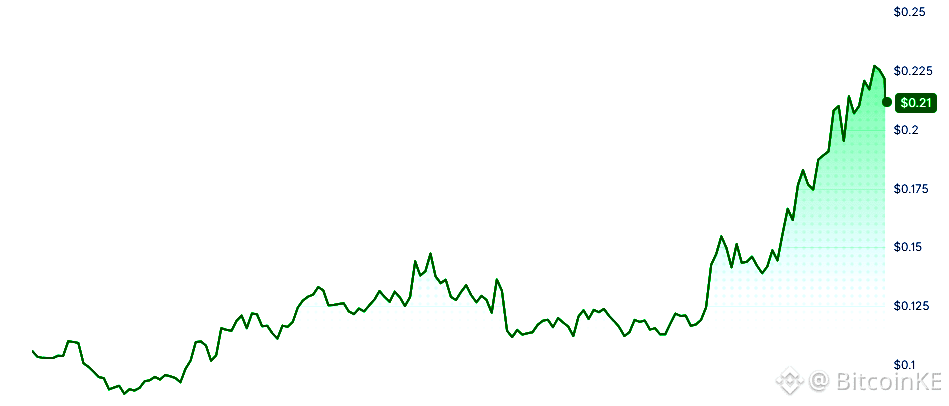
Article
INSIGHTS | Why Smaller Coins Are Seeing Much Larger GainsThe cryptocurrency market’s latest rally is moving beyond Bitcoin and the largest altcoins, with gains increasingly spilling into smaller tokens and speculative memecoins as traders rotate further down the market-cap curve.
Bitcoin’s advance above $80,000 and a sharp move in Ethereum have helped establish a broader risk-on environment. Ether at one point gained nearly 19% in 24 hours, while XRP and Solana also posted double-digit gains.
$BTC crosses $80K pic.twitter.com/65YtLCc36e
— BitKE (@BitcoinKE) August 25, 2026
The latest phase, however, is being led by much smaller and less liquid tokens with the rally moving further down the market-cap curve as smaller tokens deliver much larger percentage gains than Bitcoin and other major cryptocurrencies.
Several smaller animal-themed memecoins have gained 50% to 130% in a week while Robinhood Chain-based Cash Cat jumped more than 50% in a day.
The dynamic is straightforward:
The smaller the coin, the less buying pressure is needed to move its price.
Bitcoin and major cryptocurrencies have deep order books so even large amounts of new capital are absorbed without dramatically moving prices. Smaller tokens have far less liquidity. When traders rotate profits from larger coins into them, relatively small inflows can push prices sharply higher.
That creates a multiplier effect:
The same dollar of buying can produce a much larger percentage gain in a small token than in Bitcoin.
CRYPTO MARKETS | Bitcoin Climbs Above $80K as Crypto Recovery Gathers Pace
It also works in reverse. Thin liquidity means the smaller coins that rise fastest can also fall fastest when traders take profits.
The current move therefore suggests more than a broad crypto recovery. It shows risk appetite is cascading from Bitcoin and large-cap assets into increasingly speculative, less liquid tokens where returns can be much bigger, but so can the reversals.
CRYPTO MARKETS | Here is Why Crypto Markets Saw Bitcoin Rise 8%, Ether Gain 18%
Stay tuned to BitKE for updates on crypto markets developments.
Join our WhatsApp channel here.
Follow us on X for the latest posts and updates
Join and interact with our Telegram community
______________
INSIGHTS | Why Smaller Coins Are Seeing Much Larger Gains
The cryptocurrency market’s latest rally is moving beyond Bitcoin and the largest altcoins, with gains increasingly spilling into smaller tokens and speculative memecoins as traders rotate further down the market-cap curve.
Bitcoin’s advance above $80,000 and a sharp move in Ethereum have helped establish a broader risk-on environment. Ether at one point gained nearly 19% in 24 hours, while XRP and Solana also posted double-digit gains.
$BTC crosses $80K pic.twitter.com/65YtLCc36e
— BitKE (@BitcoinKE) August 25, 2026
The latest phase, however, is being led by much smaller and less liquid tokens with the rally moving further down the market-cap curve as smaller tokens deliver much larger percentage gains than Bitcoin and other major cryptocurrencies.
Several smaller animal-themed memecoins have gained 50% to 130% in a week while Robinhood Chain-based Cash Cat jumped more than 50% in a day.
The dynamic is straightforward:
The smaller the coin, the less buying pressure is needed to move its price.
Bitcoin and major cryptocurrencies have deep order books so even large amounts of new capital are absorbed without dramatically moving prices. Smaller tokens have far less liquidity. When traders rotate profits from larger coins into them, relatively small inflows can push prices sharply higher.
That creates a multiplier effect:
The same dollar of buying can produce a much larger percentage gain in a small token than in Bitcoin.
CRYPTO MARKETS | Bitcoin Climbs Above $80K as Crypto Recovery Gathers Pace
It also works in reverse. Thin liquidity means the smaller coins that rise fastest can also fall fastest when traders take profits.
The current move therefore suggests more than a broad crypto recovery. It shows risk appetite is cascading from Bitcoin and large-cap assets into increasingly speculative, less liquid tokens where returns can be much bigger, but so can the reversals.
CRYPTO MARKETS | Here is Why Crypto Markets Saw Bitcoin Rise 8%, Ether Gain 18%
Stay tuned to BitKE for updates on crypto markets developments.
Join our WhatsApp channel here.
Follow us on X for the latest posts and updates
Join and interact with our Telegram community
______________
Bitcoin’s advance above $80,000 and a sharp move in Ethereum have helped establish a broader risk-on environment. Ether at one point gained nearly 19% in 24 hours, while XRP and Solana also posted double-digit gains.
$BTC crosses $80K pic.twitter.com/65YtLCc36e
— BitKE (@BitcoinKE) August 25, 2026
The latest phase, however, is being led by much smaller and less liquid tokens with the rally moving further down the market-cap curve as smaller tokens deliver much larger percentage gains than Bitcoin and other major cryptocurrencies.
Several smaller animal-themed memecoins have gained 50% to 130% in a week while Robinhood Chain-based Cash Cat jumped more than 50% in a day.
The dynamic is straightforward:
The smaller the coin, the less buying pressure is needed to move its price.
Bitcoin and major cryptocurrencies have deep order books so even large amounts of new capital are absorbed without dramatically moving prices. Smaller tokens have far less liquidity. When traders rotate profits from larger coins into them, relatively small inflows can push prices sharply higher.
That creates a multiplier effect:
The same dollar of buying can produce a much larger percentage gain in a small token than in Bitcoin.
CRYPTO MARKETS | Bitcoin Climbs Above $80K as Crypto Recovery Gathers Pace
It also works in reverse. Thin liquidity means the smaller coins that rise fastest can also fall fastest when traders take profits.
The current move therefore suggests more than a broad crypto recovery. It shows risk appetite is cascading from Bitcoin and large-cap assets into increasingly speculative, less liquid tokens where returns can be much bigger, but so can the reversals.
CRYPTO MARKETS | Here is Why Crypto Markets Saw Bitcoin Rise 8%, Ether Gain 18%
Stay tuned to BitKE for updates on crypto markets developments.
Join our WhatsApp channel here.
Follow us on X for the latest posts and updates
Join and interact with our Telegram community
______________
253
·
--
CRYPTO MARKETS | Bitcoin Climbs Above $80K As Crypto Recovery Gathers PaceBitcoin climbed above $80,000 for the first time since May 15 2026 extending a recovery that has lifted the cryptocurrency about 38% from its late-June and early-July 2026 lows when it briefly fell below $58,000.
$BTC crosses $80K pic.twitter.com/65YtLCc36e
— BitKE (@BitcoinKE) August 25, 2026
The rally has been supported by renewed institutional demand and shifting expectations around U.S. monetary and fiscal policy.
U.S.-listed spot bitcoin ETFs attracted about $1.9 billion last week, their strongest weekly inflow since October 2025, providing fresh buying pressure as the broader crypto market recovered.
The U.S. Treasury has also doubled its planned purchases of longer-dated government bonds through early November 2026 funding the buybacks with additional short-term debt issuance. Expectations that the policy could help contain longer-term borrowing costs have contributed to a decline in Treasury yields and supported risk assets.
CRYPTO MARKETS | Here is Why Crypto Markets Saw Bitcoin Rise 8%, Ether Gain 18%
The latest move above $80,000 came after the Treasury indicated it could use its nearly $1 trillion General Account to fund the buybacks adding to expectations of improved liquidity conditions.
Investors will now turn to the U.S. inflation outlook with the Federal Reserve’s preferred PCE price index due this week.
“A firmer-than-expected reading could support Treasury yields and the dollar, while softer inflation could reduce expectations of further monetary tightening,” said Thadeu Dos Santos, regional director of FX broker Infinox.
The move marks a sharp turnaround from Bitcoin’s summer sell-off and puts the cryptocurrency back in focus as investors reassess liquidity, interest rates, and institutional demand for digital assets.
CRYPTO MARKETS | Bitcoin Reclaims 200-day Moving Average as Rally Gathers Pace
Stay tuned to BitKE for updates on crypto markets developments.
Join our WhatsApp channel here.
Follow us on X for the latest posts and updates
Join and interact with our Telegram community
______________
CRYPTO MARKETS | Bitcoin Climbs Above $80K As Crypto Recovery Gathers Pace
Bitcoin climbed above $80,000 for the first time since May 15 2026 extending a recovery that has lifted the cryptocurrency about 38% from its late-June and early-July 2026 lows when it briefly fell below $58,000.
$BTC crosses $80K pic.twitter.com/65YtLCc36e
— BitKE (@BitcoinKE) August 25, 2026
The rally has been supported by renewed institutional demand and shifting expectations around U.S. monetary and fiscal policy.
U.S.-listed spot bitcoin ETFs attracted about $1.9 billion last week, their strongest weekly inflow since October 2025, providing fresh buying pressure as the broader crypto market recovered.
The U.S. Treasury has also doubled its planned purchases of longer-dated government bonds through early November 2026 funding the buybacks with additional short-term debt issuance. Expectations that the policy could help contain longer-term borrowing costs have contributed to a decline in Treasury yields and supported risk assets.
CRYPTO MARKETS | Here is Why Crypto Markets Saw Bitcoin Rise 8%, Ether Gain 18%
The latest move above $80,000 came after the Treasury indicated it could use its nearly $1 trillion General Account to fund the buybacks adding to expectations of improved liquidity conditions.
Investors will now turn to the U.S. inflation outlook with the Federal Reserve’s preferred PCE price index due this week.
“A firmer-than-expected reading could support Treasury yields and the dollar, while softer inflation could reduce expectations of further monetary tightening,” said Thadeu Dos Santos, regional director of FX broker Infinox.
The move marks a sharp turnaround from Bitcoin’s summer sell-off and puts the cryptocurrency back in focus as investors reassess liquidity, interest rates, and institutional demand for digital assets.
CRYPTO MARKETS | Bitcoin Reclaims 200-day Moving Average as Rally Gathers Pace
Stay tuned to BitKE for updates on crypto markets developments.
Join our WhatsApp channel here.
Follow us on X for the latest posts and updates
Join and interact with our Telegram community
______________
$BTC crosses $80K pic.twitter.com/65YtLCc36e
— BitKE (@BitcoinKE) August 25, 2026
The rally has been supported by renewed institutional demand and shifting expectations around U.S. monetary and fiscal policy.
U.S.-listed spot bitcoin ETFs attracted about $1.9 billion last week, their strongest weekly inflow since October 2025, providing fresh buying pressure as the broader crypto market recovered.
The U.S. Treasury has also doubled its planned purchases of longer-dated government bonds through early November 2026 funding the buybacks with additional short-term debt issuance. Expectations that the policy could help contain longer-term borrowing costs have contributed to a decline in Treasury yields and supported risk assets.
CRYPTO MARKETS | Here is Why Crypto Markets Saw Bitcoin Rise 8%, Ether Gain 18%
The latest move above $80,000 came after the Treasury indicated it could use its nearly $1 trillion General Account to fund the buybacks adding to expectations of improved liquidity conditions.
Investors will now turn to the U.S. inflation outlook with the Federal Reserve’s preferred PCE price index due this week.
“A firmer-than-expected reading could support Treasury yields and the dollar, while softer inflation could reduce expectations of further monetary tightening,” said Thadeu Dos Santos, regional director of FX broker Infinox.
The move marks a sharp turnaround from Bitcoin’s summer sell-off and puts the cryptocurrency back in focus as investors reassess liquidity, interest rates, and institutional demand for digital assets.
CRYPTO MARKETS | Bitcoin Reclaims 200-day Moving Average as Rally Gathers Pace
Stay tuned to BitKE for updates on crypto markets developments.
Join our WhatsApp channel here.
Follow us on X for the latest posts and updates
Join and interact with our Telegram community
______________
1
200
Log in to explore more content
Join global crypto users on Binance Square
⚡️ Get latest and useful information about crypto.
💬 Trusted by the world’s largest crypto exchange.
👍 Discover real insights from verified creators.
Email / Phone number
Trending Topics
USStocksCloseLowerAmazonSuedByFTC
2,008 views
119 Discussing
#usstockscloseloweramazonsuedbyftc — Amazon's ad machine is now a courtroom target 📉
US stocks closed lower Monday — and the FTC just went after the biggest cash cow Amazon has left.
The market: Dow -0.7% (53,185.90), S&P 500 -0.33% , Nasdaq -0.12% . The driver wasn't earnings — it was the Strait of Hormuz: US–Iran clashes resumed, Brent ($BZ ) blew past $90 , and energy was the only sector that worked (+0.9%).
The lawsuit: The FTC + 22 state AGs sued Amazon in the Western District of Washington over a "secret ad surcharge scheme" — alleging it overcharged 1.2M+ advertisers by $20B+ since 2019 through undisclosed surcharges and artificially inflated auction rates. Sponsored Products advertisers paid their own bid price ~30–40% of the time in 2021 — but ~80% by 2024 . Over 500K small businesses allegedly hit.
Amazon's reply: "Misguided" — its auctions prioritize product relevance over bids, and it claims the system actually saved advertisers $8B over five years.
The hit: $AMZN slid ~ 2.5% in after-hours trade (~$259.77). This is the second federal antitrust front against the company — ads were a $68.6B revenue line in 2025, the fastest-growing part of the business. The FTC wants an injunction + restitution, not just a fine.
Same war, same Tuesday, two different scoreboards: oil up, Big Tech on the defensive.
For reference only — not investment advice.
#NvidiaToInvest$3.5BInMediaTek #USFundsAlcoaGalliumPlantInAustralia #USCryptoLinkedEquityIndexRises8.81%InAugust #USIranMilitaryClashesResume
KimHotbae
·0 Likes
·442 views
NvidiaToInvest$3.5BInMediaTek
716 views
30 Discussing
USFundsAlcoaGalliumPlantInAustralia
4,025 views
147 Discussing