
Jamie Smith
14.2k Posts

Jamie Smith
 Square Verified
Binance Verified Creater | Living the crypto journey tracking trends, and delivering insights from the fast-moving world of digital assets.X:@BitBuddy77

Traders League Badge Beginner
Open Trade
Frequent Trader
1.4 Years
616 Following
31.5K+ Followers
27.6K+ Liked
1 Badges
Posts
Portfolio
All
Quotes
Live
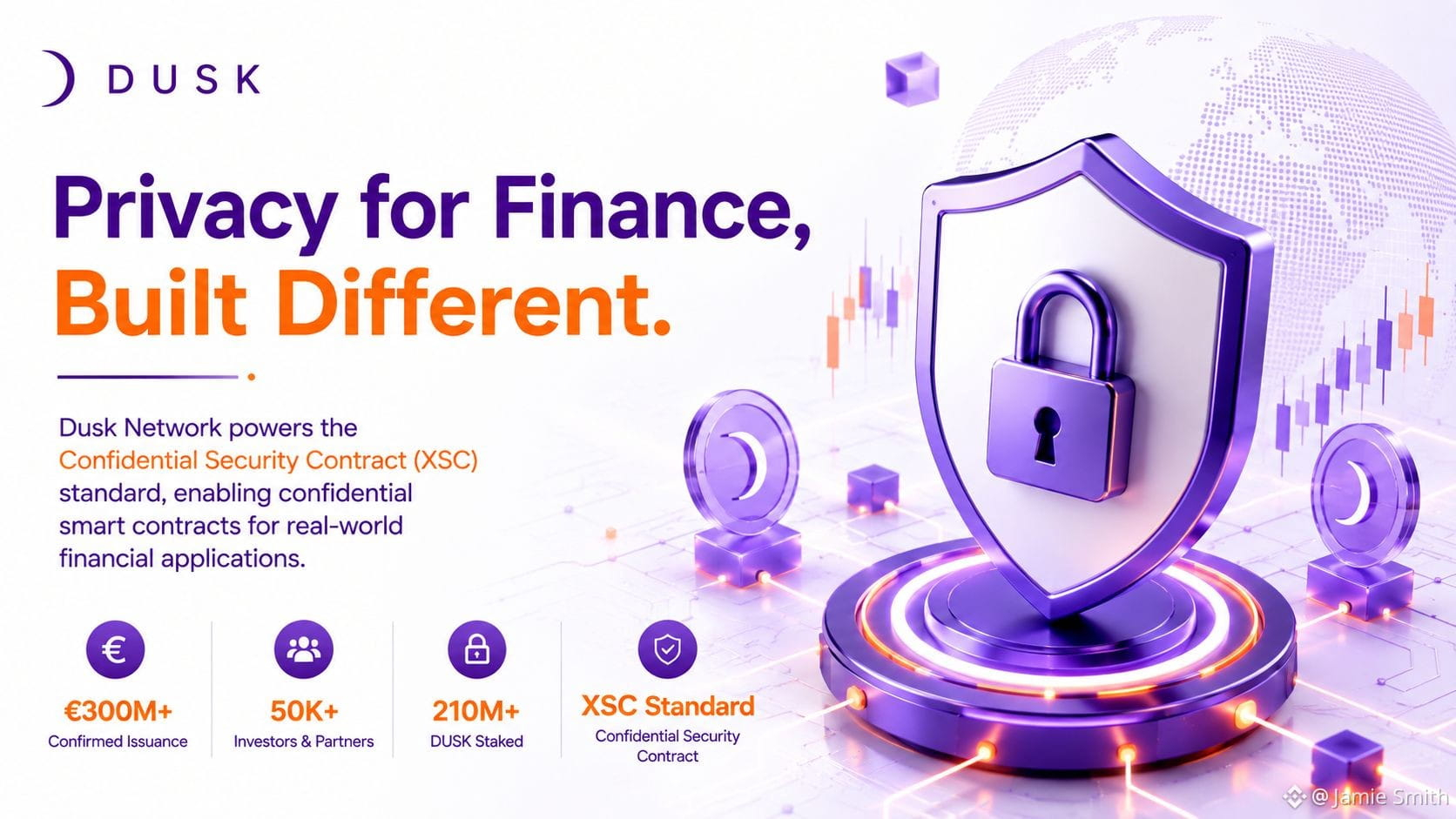
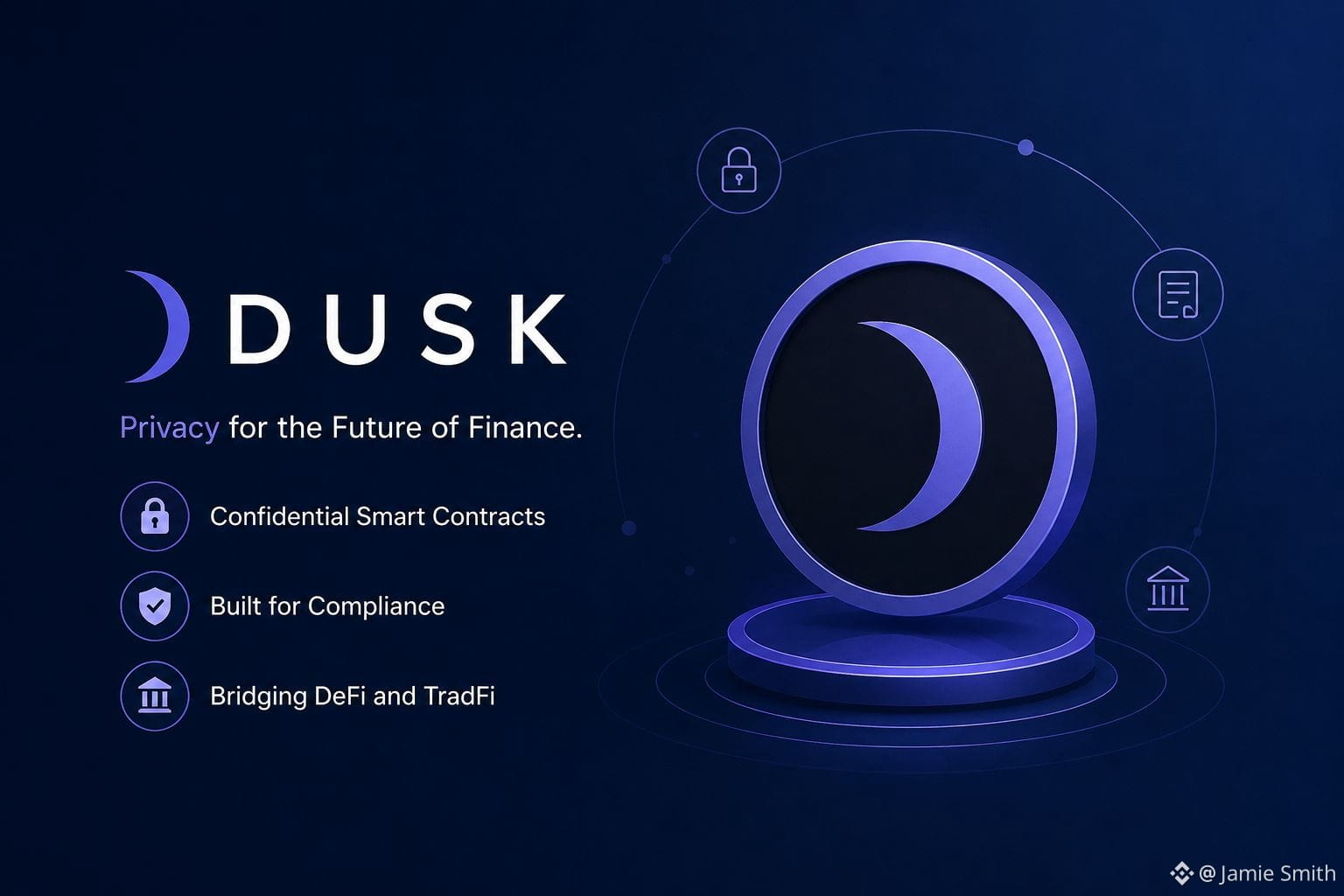
I’ll be honest, when I first looked at @Dusk the “privacy blockchain for finance” part didn’t really grab me.
It sounded like another protocol saying the same thing.
But the more I looked at how Dusk handles confidential transactions, the more one thing started bothering me—in a good way.
Finance has this weird problem where you want your transaction data protected, but you can’t just make everything invisible. Someone still needs to verify what happened.
That’s where Dusk feels a bit different to me.
With its XSC standard, the idea is basically: keep sensitive financial information private while still allowing the right rules and checks to happen. I like that concept because it’s closer to how real financial systems actually work.
And this is the part I keep coming back to.
Privacy isn’t really useful if using it creates another giant compliance headache.
Dusk says it has already reached €300M+ in confirmed issuance, 50K+ investors and partners, and more than 210M DUSK staked. Those numbers are interesting, sure, but I’m less interested in the headline and more interested in whether people actually find the system easier to use as adoption grows.
Because that’s the real test.
Not whether Dusk can make transactions private.
Whether it can make private finance feel normal… without everyone having to fight the plumbing underneath it.
$DUSK
#dusk
#BitcoinRises23.6%Weekly #BitcoinOpenInterestFallsToTwoMonthLow #BrentDrops1.87% $GRVT $BTC
It sounded like another protocol saying the same thing.
But the more I looked at how Dusk handles confidential transactions, the more one thing started bothering me—in a good way.
Finance has this weird problem where you want your transaction data protected, but you can’t just make everything invisible. Someone still needs to verify what happened.
That’s where Dusk feels a bit different to me.
With its XSC standard, the idea is basically: keep sensitive financial information private while still allowing the right rules and checks to happen. I like that concept because it’s closer to how real financial systems actually work.
And this is the part I keep coming back to.
Privacy isn’t really useful if using it creates another giant compliance headache.
Dusk says it has already reached €300M+ in confirmed issuance, 50K+ investors and partners, and more than 210M DUSK staked. Those numbers are interesting, sure, but I’m less interested in the headline and more interested in whether people actually find the system easier to use as adoption grows.
Because that’s the real test.
Not whether Dusk can make transactions private.
Whether it can make private finance feel normal… without everyone having to fight the plumbing underneath it.
$DUSK
#dusk
#BitcoinRises23.6%Weekly #BitcoinOpenInterestFallsToTwoMonthLow #BrentDrops1.87% $GRVT $BTC
#BTCReaches80000
$BTC
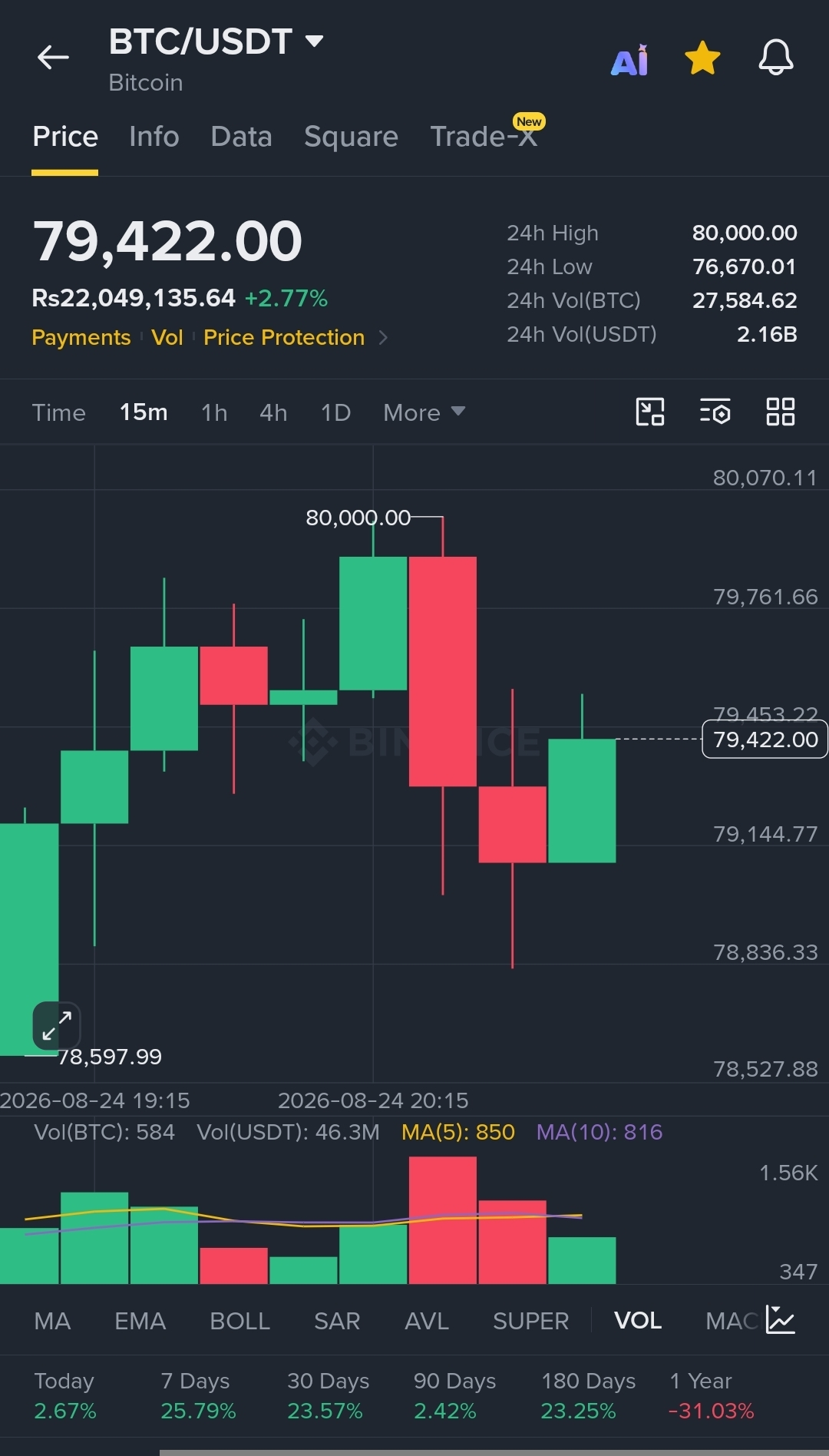
is BACK at $80K! 🟢🔥
After some time, Bitcoin finally touched that psychological level again. The energy is back, the chart is heating up, and the bulls are making noise. 🚀
#BTC80K #SP500FuturesFall #BitcoinOpenInterestFallsToTwoMonthLow #SamsungFalls8.97%DraggingKospiDown3.24%
$BTC
is BACK at $80K! 🟢🔥
After some time, Bitcoin finally touched that psychological level again. The energy is back, the chart is heating up, and the bulls are making noise. 🚀
#BTC80K #SP500FuturesFall #BitcoinOpenInterestFallsToTwoMonthLow #SamsungFalls8.97%DraggingKospiDown3.24%
$BNB
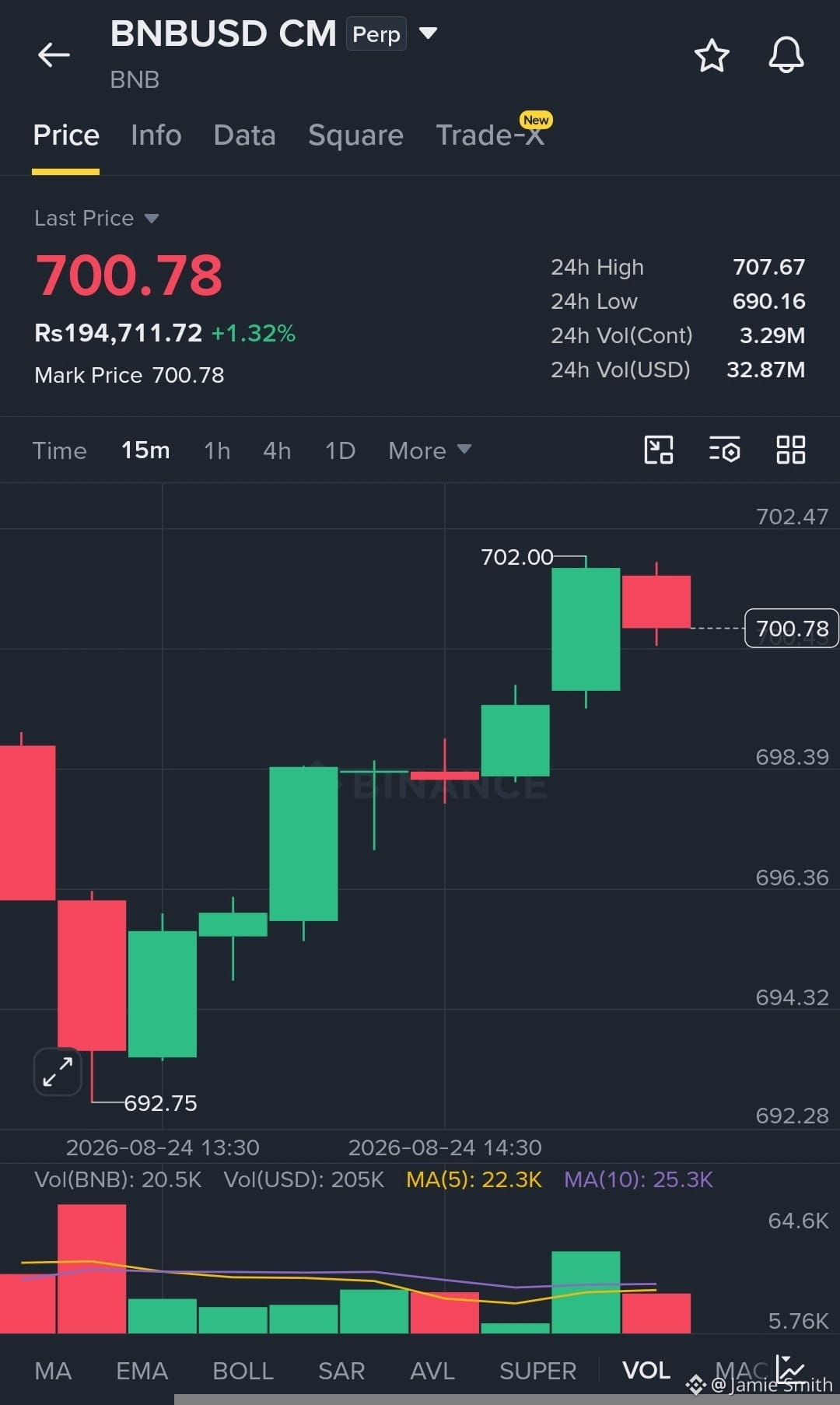
is getting interesting 👀
Price just pushed from the $692.75 low toward $702, but now it’s rejecting around $702.
🔥 Bullish trigger: clean break & hold above $702 → $705–707
⚠️ Bearish trigger: lose $700 → $698.4, then $696.3
15m chart is heating up. One candle could decide the next move. 🚀📉
is getting interesting 👀
Price just pushed from the $692.75 low toward $702, but now it’s rejecting around $702.
🔥 Bullish trigger: clean break & hold above $702 → $705–707
⚠️ Bearish trigger: lose $700 → $698.4, then $696.3
15m chart is heating up. One candle could decide the next move. 🚀📉
$DOGE
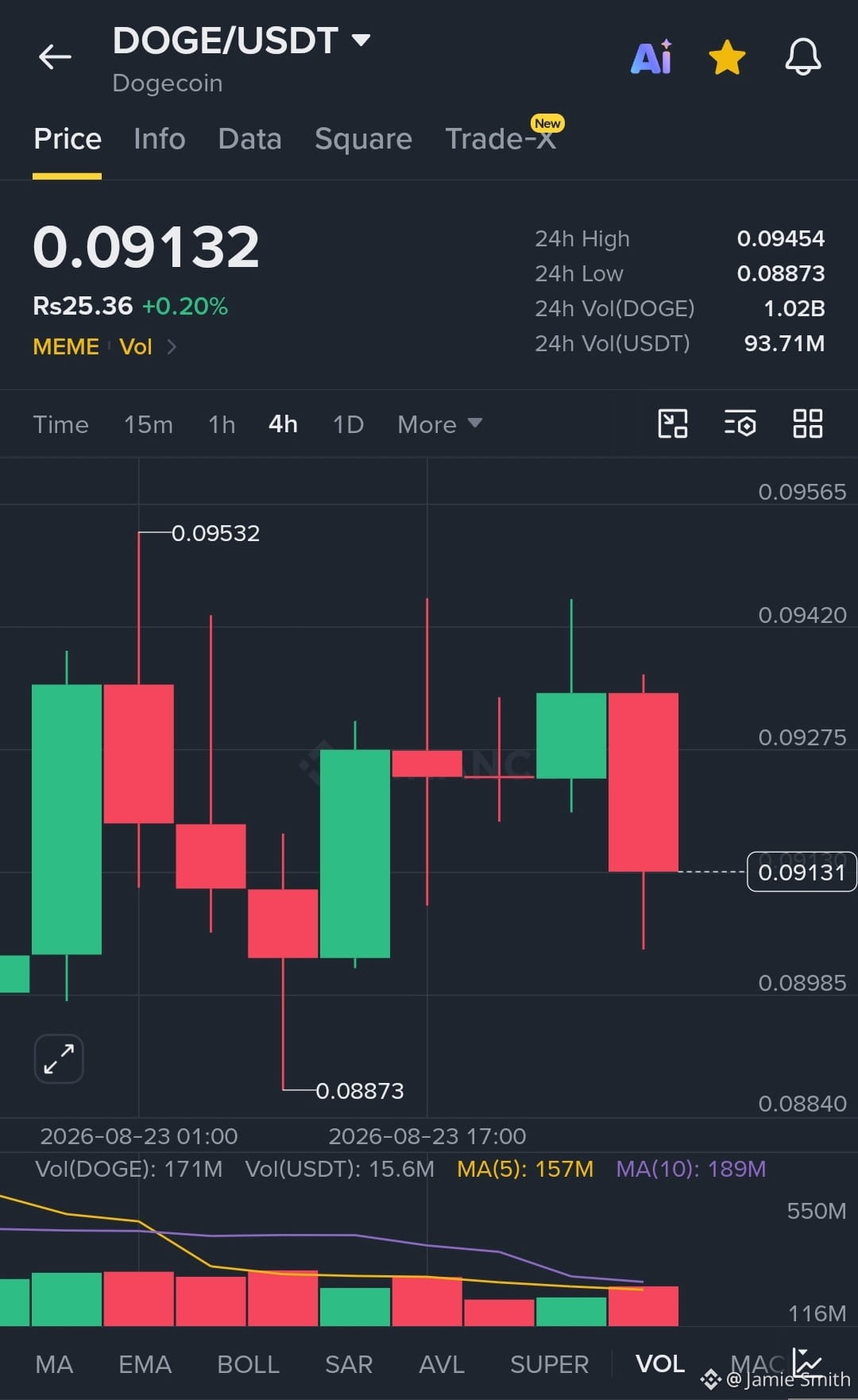
setup is getting interesting 👀
4H chart is sitting near $0.0913 after a sharp rejection.
🔥 LONG trigger: $0.0943+ breakout & hold
🎯 TP1: $0.0965
🎯 TP2: $0.0990
🛑 SL: $0.0927
If $0.0942 keeps rejecting, I’d stay patient — losing $0.0898 could open the door toward $0.0887.
One clean breakout could make this move spicy.
#AnthropicIPOCouldTopSpaceXRecordReportsSay #TetherEndsUruguayBitcoinMining #CanadaUSTradeTalksCollapse #GoldNearsThreeMonthHigh #SolanaGovernanceVoteToDoubleDeflationRate
setup is getting interesting 👀
4H chart is sitting near $0.0913 after a sharp rejection.
🔥 LONG trigger: $0.0943+ breakout & hold
🎯 TP1: $0.0965
🎯 TP2: $0.0990
🛑 SL: $0.0927
If $0.0942 keeps rejecting, I’d stay patient — losing $0.0898 could open the door toward $0.0887.
One clean breakout could make this move spicy.
#AnthropicIPOCouldTopSpaceXRecordReportsSay #TetherEndsUruguayBitcoinMining #CanadaUSTradeTalksCollapse #GoldNearsThreeMonthHigh #SolanaGovernanceVoteToDoubleDeflationRate
I’ll be honest, Dusk Network wasn’t a project I understood in one look. The more I dug into it, though, the more one thing clicked for me: finance can’t fully move on-chain if every sensitive detail has to sit in public.
@Dusk is a Layer-1 built around confidential financial applications. And I like that it’s not just another chain shouting about speed or hype. It’s going after a pretty real problem — bringing financial assets on-chain while keeping private information private.
The architecture is probably the part I found most interesting. DuskDS handles the core network, consensus, settlement, and data availability. DuskEVM brings Ethereum compatibility, while DuskVM focuses on native execution. On top of that, privacy tech and the XSC standard make confidential smart contracts possible.
What I’m really watching now is where Dusk takes this next — tokenized real-world assets, private DeFi, and institutional finance.
I’m still keeping my expectations realistic, but honestly, if Dusk can turn all this tech into something people actually use, privacy might stop being a feature and become the reason financial apps choose the chain. 👀
$DUSK
#dusk
#AnthropicIPOCouldTopSpaceXRecordReportsSay #BitcoinStrongestWeekSinceMarch2023 $GRVT $ARX
@Dusk is a Layer-1 built around confidential financial applications. And I like that it’s not just another chain shouting about speed or hype. It’s going after a pretty real problem — bringing financial assets on-chain while keeping private information private.
The architecture is probably the part I found most interesting. DuskDS handles the core network, consensus, settlement, and data availability. DuskEVM brings Ethereum compatibility, while DuskVM focuses on native execution. On top of that, privacy tech and the XSC standard make confidential smart contracts possible.
What I’m really watching now is where Dusk takes this next — tokenized real-world assets, private DeFi, and institutional finance.
I’m still keeping my expectations realistic, but honestly, if Dusk can turn all this tech into something people actually use, privacy might stop being a feature and become the reason financial apps choose the chain. 👀
$DUSK
#dusk
#AnthropicIPOCouldTopSpaceXRecordReportsSay #BitcoinStrongestWeekSinceMarch2023 $GRVT $ARX
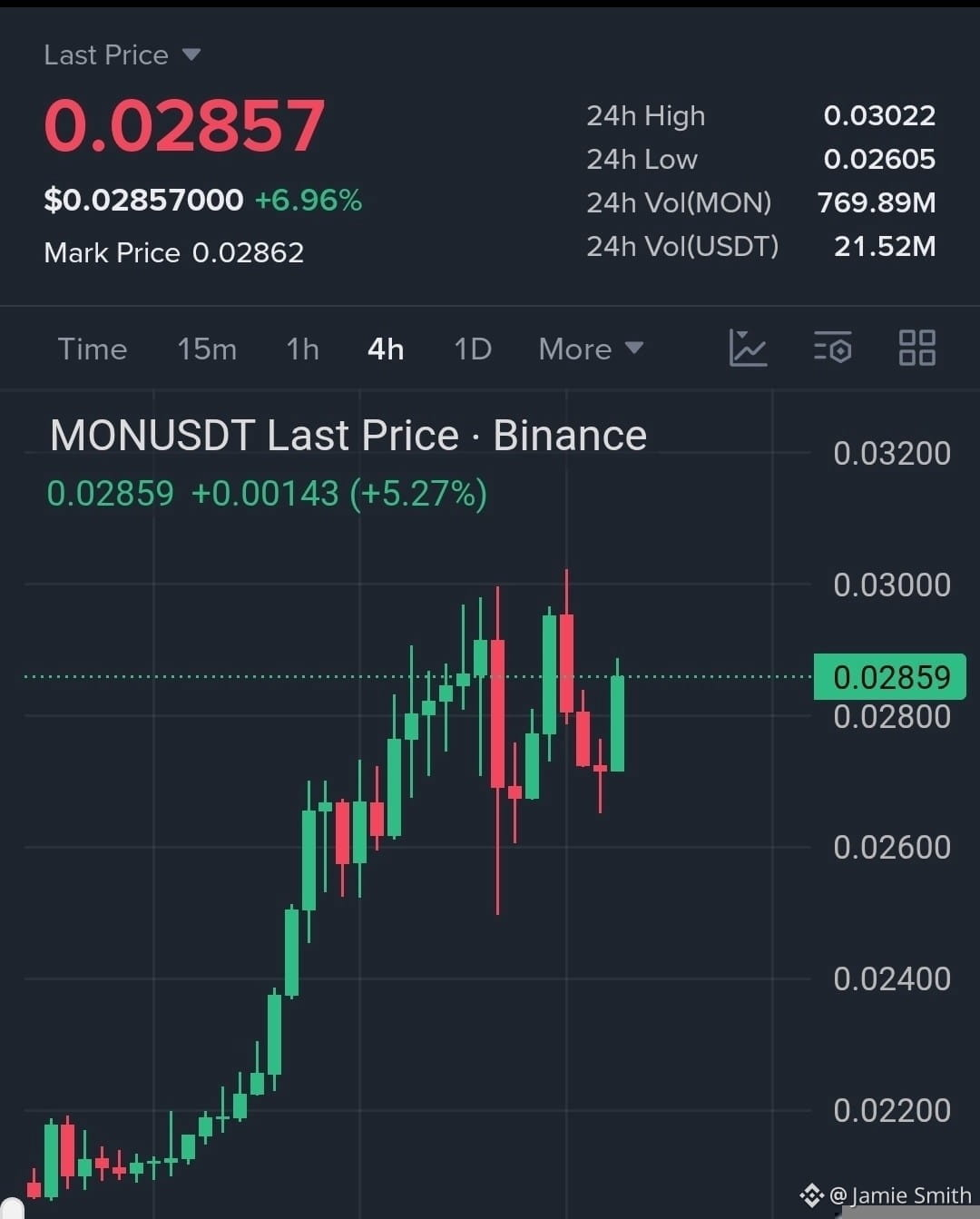
🚨 $MON
BULLS ARE BACK IN THE GAME! 🐂🔥
I JUST OPENED A LONG on $MON with 20x ISOLATED 👀
🎯 Entry: $0.0282–$0.0288
🚀 TP1: $0.0298
🚀 TP2: $0.0310
🚀 TP3: $0.0325
🚀 TP4: $0.0350
🛑 SL: $0.0245
$0.0280 is the battlefield. If bulls keep defending it, the next attack is $0.0300 and a clean breakout could send $MON flying toward $0.0310 → $0.0325. ⚡️
4H structure is still bullish with higher highs + higher lows. But lose $0.0268 and this setup starts looking ugly fast. 👀
I’m in. Let’s see if the bulls can deliver. 🐂🔥
Trade smart. 20x is HIGH RISK protect your capital and don’t revenge trade.
👇 CLICK BELOW & TAKE THE TRADE WITH ME 👇
#MON #SandboxSANDSuspectedInfiniteMintFlawOnBase #USCanadaTradeTalksCollapseCanadaVowsRetaliation #BSTREndsCantorSPACGoPublicPlan #NvidiaAIServerPricesRiseOver15%
BULLS ARE BACK IN THE GAME! 🐂🔥
I JUST OPENED A LONG on $MON with 20x ISOLATED 👀
🎯 Entry: $0.0282–$0.0288
🚀 TP1: $0.0298
🚀 TP2: $0.0310
🚀 TP3: $0.0325
🚀 TP4: $0.0350
🛑 SL: $0.0245
$0.0280 is the battlefield. If bulls keep defending it, the next attack is $0.0300 and a clean breakout could send $MON flying toward $0.0310 → $0.0325. ⚡️
4H structure is still bullish with higher highs + higher lows. But lose $0.0268 and this setup starts looking ugly fast. 👀
I’m in. Let’s see if the bulls can deliver. 🐂🔥
Trade smart. 20x is HIGH RISK protect your capital and don’t revenge trade.
👇 CLICK BELOW & TAKE THE TRADE WITH ME 👇
#MON #SandboxSANDSuspectedInfiniteMintFlawOnBase #USCanadaTradeTalksCollapseCanadaVowsRetaliation #BSTREndsCantorSPACGoPublicPlan #NvidiaAIServerPricesRiseOver15%
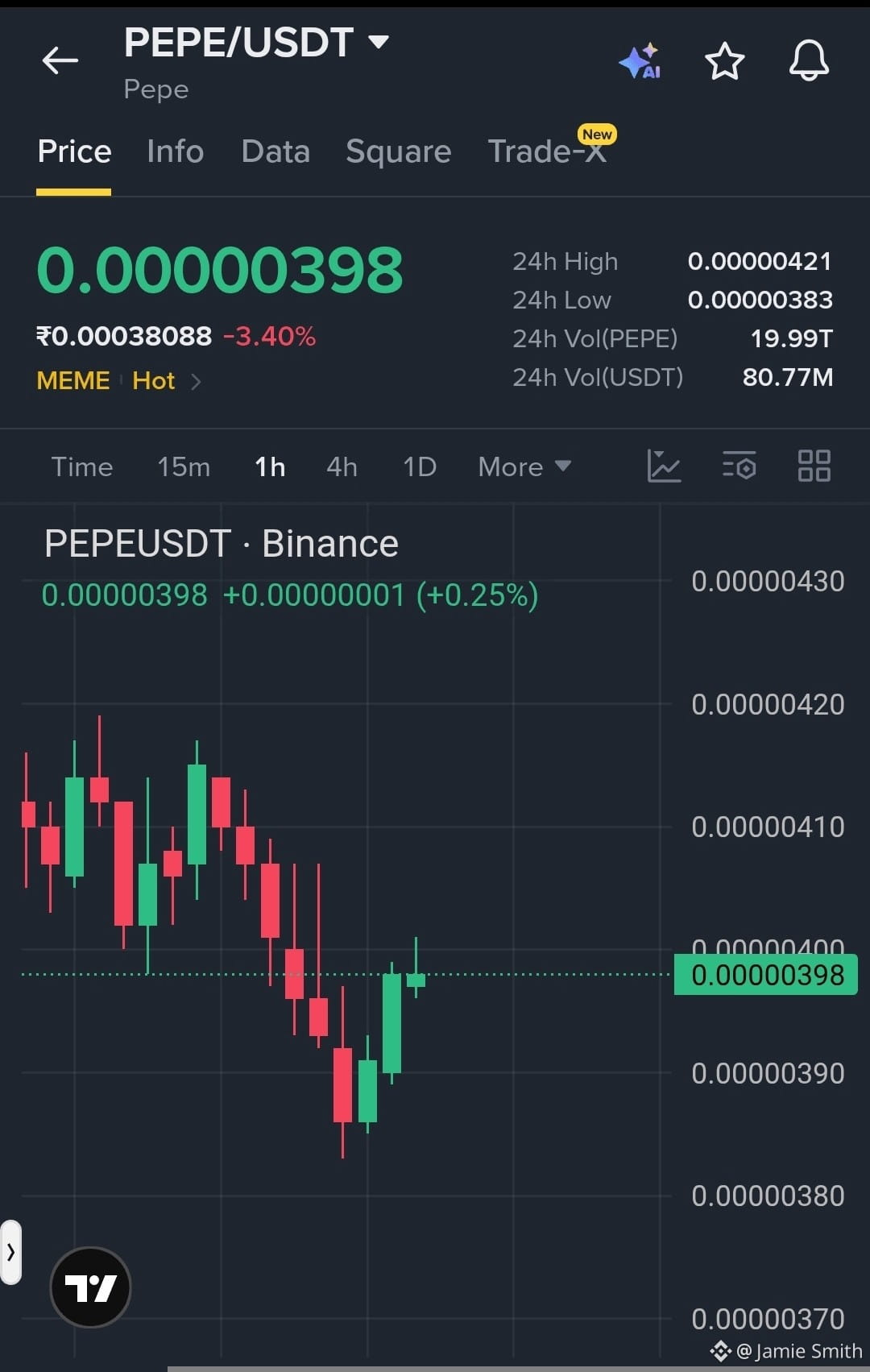
🐸🔥 $PEPE
BULLS ARE BACK IN THE FIGHT!
Support is holding, and I’m taking the LONG setup 👀🐂
🎯 Entry: 0.00000398–0.00000399
🛑 SL: 0.00000385
🚀 TP1: 0.00000405
🚀 TP2: 0.00000412
🚀 TP3: 0.00000419
If bulls keep defending this zone, PEPE could make a spicy move higher. 🌶️📈
I’m in — who’s riding this one with me? 🐸🐂
$PEPE #SandboxSANDSuspectedInfiniteMintFlawOnBase #USCanadaTradeTalksCollapseCanadaVowsRetaliation #NvidiaAIServerPricesRiseOver15% #
BULLS ARE BACK IN THE FIGHT!
Support is holding, and I’m taking the LONG setup 👀🐂
🎯 Entry: 0.00000398–0.00000399
🛑 SL: 0.00000385
🚀 TP1: 0.00000405
🚀 TP2: 0.00000412
🚀 TP3: 0.00000419
If bulls keep defending this zone, PEPE could make a spicy move higher. 🌶️📈
I’m in — who’s riding this one with me? 🐸🐂
$PEPE #SandboxSANDSuspectedInfiniteMintFlawOnBase #USCanadaTradeTalksCollapseCanadaVowsRetaliation #NvidiaAIServerPricesRiseOver15% #
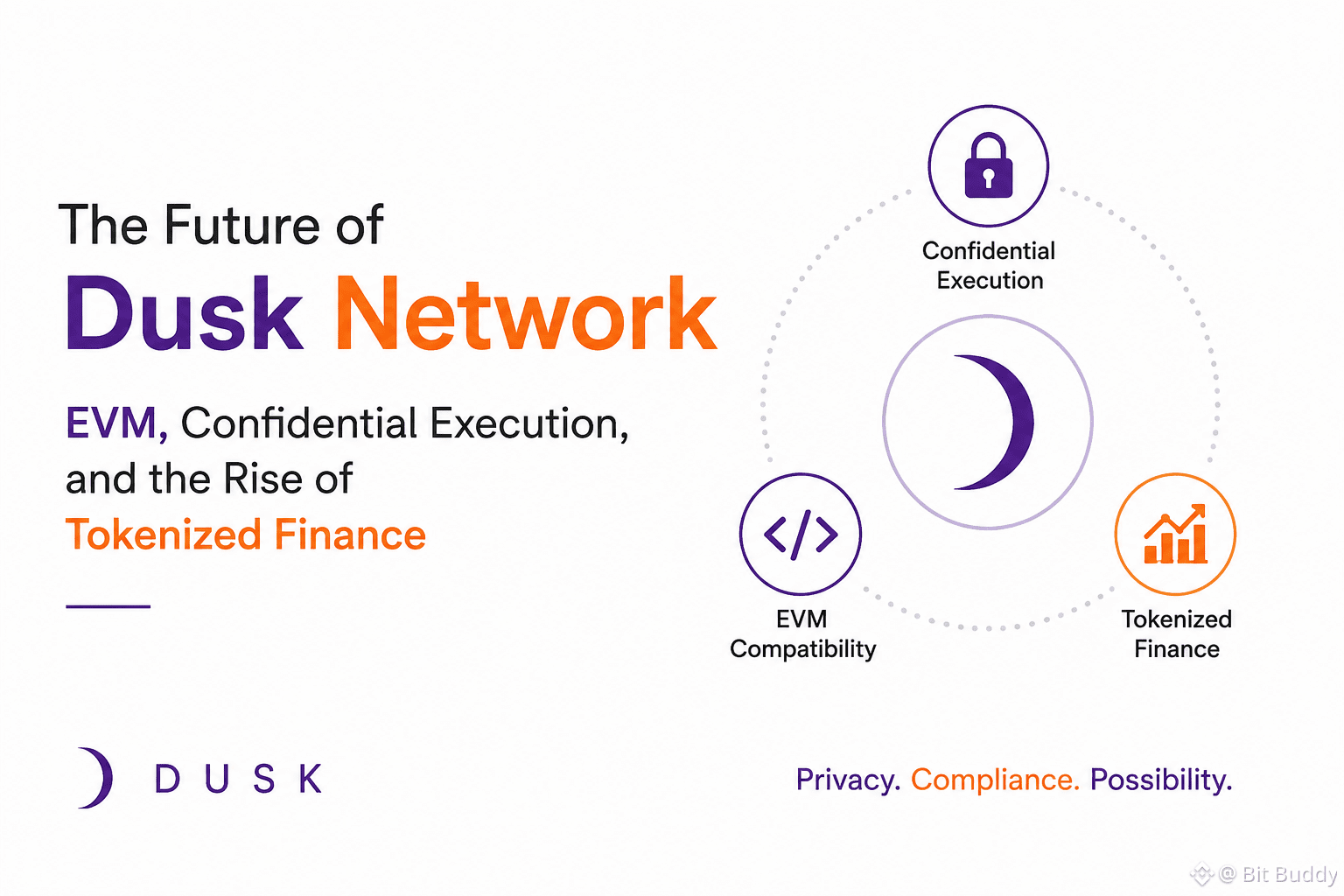
What’s been interesting to me with @Dusk lately isn’t the EVM angle by itself. It’s the friction between familiar Solidity UX and the kind of privacy financial apps actually need.
I’ve been following the DuskEVM testnet, and the basic flow already feels much less alien if you’re coming from Ethereum: MetaMask, Solidity tooling, DUSK for gas. The bridge currently uses Dusk’s testnet environment, so it’s obviously not production yet, but that familiarity matters more than people think.
What I keep coming back to is Hedger. Dusk is trying to make confidential transactions possible inside an EVM flow using homomorphic encryption + ZK proofs, rather than asking developers to abandon the ecosystem they already know.
That’s probably the harder part of tokenized finance: not putting another asset on-chain, but letting institutions trade without broadcasting every balance, position, or order to everyone watching.
I’m still skeptical about how smoothly that works at real market scale. Testnets can make everything look clean. The real test starts when privacy, compliance and actual liquidity all collide...
$DUSK
#dusk
#SP500EndsWeeklyWinStreak #USDollarFallsToThreeMonthLow
$GRVT
$BEAT
I’ve been following the DuskEVM testnet, and the basic flow already feels much less alien if you’re coming from Ethereum: MetaMask, Solidity tooling, DUSK for gas. The bridge currently uses Dusk’s testnet environment, so it’s obviously not production yet, but that familiarity matters more than people think.
What I keep coming back to is Hedger. Dusk is trying to make confidential transactions possible inside an EVM flow using homomorphic encryption + ZK proofs, rather than asking developers to abandon the ecosystem they already know.
That’s probably the harder part of tokenized finance: not putting another asset on-chain, but letting institutions trade without broadcasting every balance, position, or order to everyone watching.
I’m still skeptical about how smoothly that works at real market scale. Testnets can make everything look clean. The real test starts when privacy, compliance and actual liquidity all collide...
$DUSK
#dusk
#SP500EndsWeeklyWinStreak #USDollarFallsToThreeMonthLow
$GRVT
$BEAT
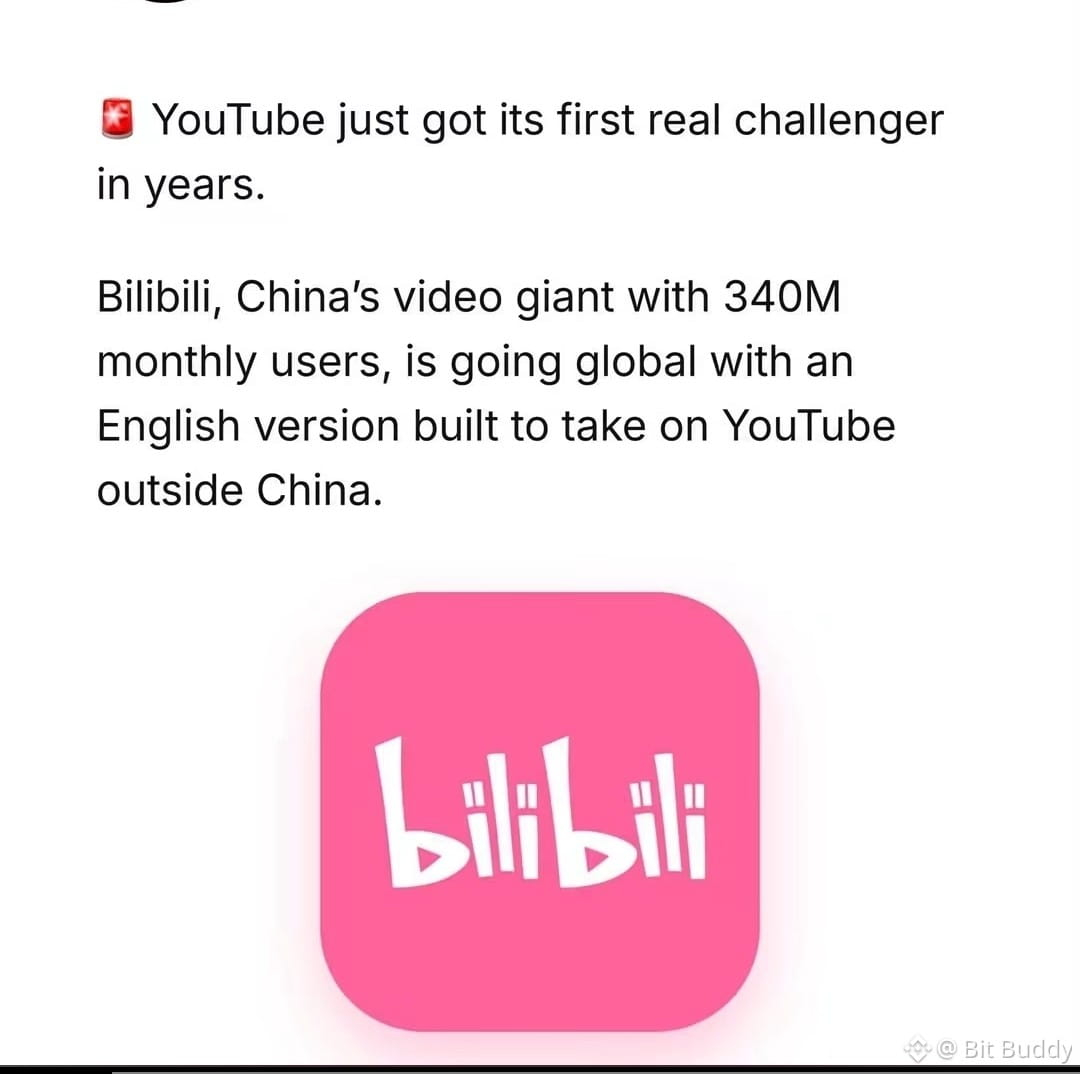
Bilibili’s Global Challenge to YouTube
YouTube may be getting a new competitor.
Bilibili, one of #China’s largest video platforms, is reportedly pushing further into international markets with an English-focused version designed for audiences outside China.
That’s a move worth watching.
Bilibili already has a massive user base and a strong community around anime, gaming, technology, entertainment, and creator-driven content. Now, the company appears ready to take that model beyond China.
YouTube has dominated online video for years, but the creator economy is evolving. New platforms are competing for the same creators, viewers, attention, and advertising dollars.
The big question isn’t whether Bilibili can grow internationally.
It’s whether it can build enough creator loyalty and audience engagement to become a genuine alternative to YouTube.
If Bilibili gets that right, the global video landscape could become much more competitive.
Would you use Bilibili if it becomes a serious YouTube alternative?
$BTC
$BNB
$SOL
#Bilibili #YouTube #USTariffsOnCanadianGoodsTakeEffect #USThreeMajorIndexesPostWeeklyLosses
YouTube may be getting a new competitor.
Bilibili, one of #China’s largest video platforms, is reportedly pushing further into international markets with an English-focused version designed for audiences outside China.
That’s a move worth watching.
Bilibili already has a massive user base and a strong community around anime, gaming, technology, entertainment, and creator-driven content. Now, the company appears ready to take that model beyond China.
YouTube has dominated online video for years, but the creator economy is evolving. New platforms are competing for the same creators, viewers, attention, and advertising dollars.
The big question isn’t whether Bilibili can grow internationally.
It’s whether it can build enough creator loyalty and audience engagement to become a genuine alternative to YouTube.
If Bilibili gets that right, the global video landscape could become much more competitive.
Would you use Bilibili if it becomes a serious YouTube alternative?
$BTC
$BNB
$SOL
#Bilibili #YouTube #USTariffsOnCanadianGoodsTakeEffect #USThreeMajorIndexesPostWeeklyLosses
$ACE
IS BACK AND THE BULLS ARE WAKING UP
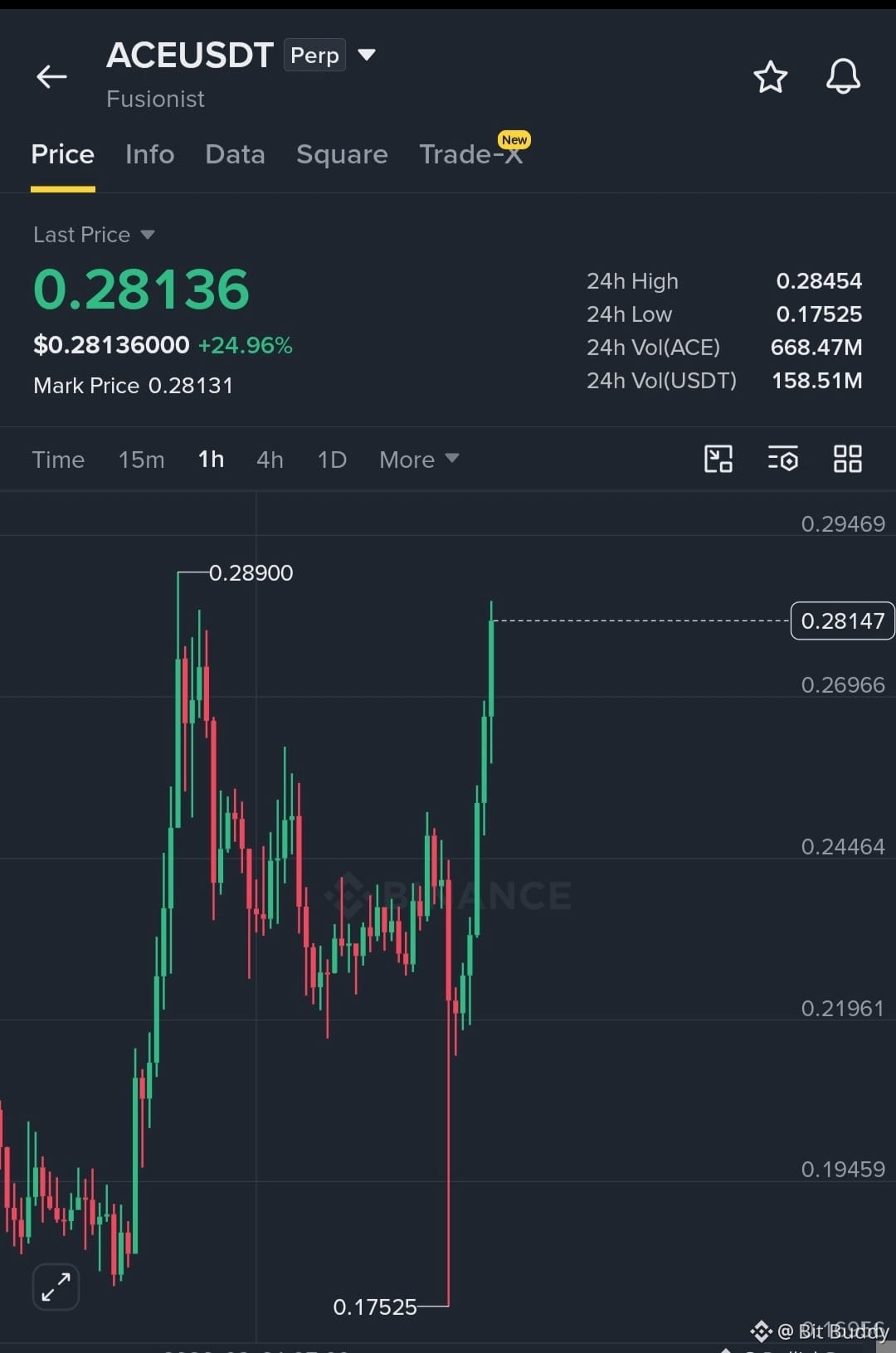
Honestly, ACE is looking strong again.
After that healthy correction, buyers stepped back in hard and pushed price right back toward the $0.289 previous high. We’re sitting around $0.281 now, and the momentum is starting to feel bullish again. 👀
The level I’m watching is simple: $0.289.
If ACE breaks and holds above it, things could get interesting very quickly. 🚀
Correction done.
Buyers are back.
Now let’s see if ACE can break the ceiling. 🔥
$ACE back in the game.
#TeslaHitsMonthlyHigh #USThreeMajorIndexesPostWeeklyLosses #USTariffsOnCanadianGoodsTakeEffect #GrayscaleFilesFifthZECETFAmendment #SandboxSANDSuspectedInfiniteMintFlawOnBase
IS BACK AND THE BULLS ARE WAKING UP
Honestly, ACE is looking strong again.
After that healthy correction, buyers stepped back in hard and pushed price right back toward the $0.289 previous high. We’re sitting around $0.281 now, and the momentum is starting to feel bullish again. 👀
The level I’m watching is simple: $0.289.
If ACE breaks and holds above it, things could get interesting very quickly. 🚀
Correction done.
Buyers are back.
Now let’s see if ACE can break the ceiling. 🔥
$ACE back in the game.
#TeslaHitsMonthlyHigh #USThreeMajorIndexesPostWeeklyLosses #USTariffsOnCanadianGoodsTakeEffect #GrayscaleFilesFifthZECETFAmendment #SandboxSANDSuspectedInfiniteMintFlawOnBase
I’ll be honest, Dusk Network is one of those projects that made me look twice. The more I looked into it, the more I understood why privacy could become a big deal for the future of finance.
@Dusk is a Layer-1 built around confidential financial applications. What I like is that it isn’t simply chasing speed or hype. It’s trying to solve a real problem: how do we bring financial assets on-chain while keeping sensitive information private?
Its architecture is also pretty interesting. DuskDS handles the core network, consensus, settlement, and data availability, while DuskEVM brings Ethereum compatibility. DuskVM is designed for native execution, with privacy-focused technology supporting confidential transactions and smart contracts through the XSC standard.
I’m especially watching Dusk’s future around tokenized real-world assets, private DeFi, and institutional finance.
And honestly, if Dusk can turn all this infrastructure into something people actually use, I think the story could get very interesting from here.
$DUSK
#dusk
@Dusk is a Layer-1 built around confidential financial applications. What I like is that it isn’t simply chasing speed or hype. It’s trying to solve a real problem: how do we bring financial assets on-chain while keeping sensitive information private?
Its architecture is also pretty interesting. DuskDS handles the core network, consensus, settlement, and data availability, while DuskEVM brings Ethereum compatibility. DuskVM is designed for native execution, with privacy-focused technology supporting confidential transactions and smart contracts through the XSC standard.
I’m especially watching Dusk’s future around tokenized real-world assets, private DeFi, and institutional finance.
And honestly, if Dusk can turn all this infrastructure into something people actually use, I think the story could get very interesting from here.
$DUSK
#dusk
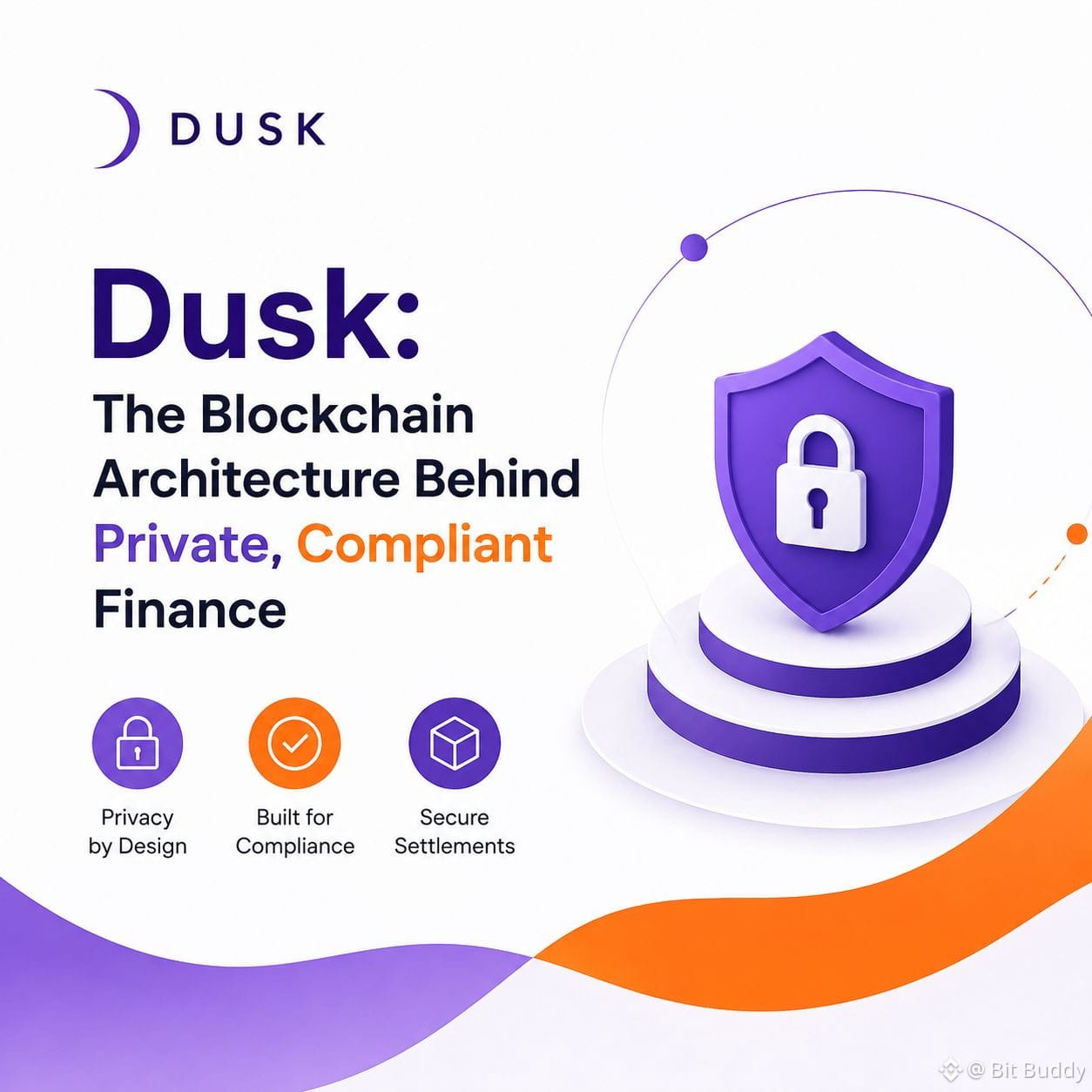
I kept coming back to one thing while looking through @Dusk : why does a financial blockchain need to show everyone what everyone is doing?
That’s where Dusk gets interesting.
Its Phoenix model lets transactions stay shielded, so the sender, receiver, and amount aren’t sitting openly on the explorer. But it doesn’t turn privacy into a black box either. Viewing keys can be used when someone actually needs to verify the details.
That feels much closer to how finance works in real life.
You don’t want your portfolio, counterparties, or transfer amounts broadcast to the entire market. But an auditor, regulator, or authorized party still needs a way to check what happened.
The part I find more interesting is that Dusk doesn’t force everything through Phoenix. Moonlight remains the public account model, while Phoenix handles shielded transfers, both settling through DuskDS.
So privacy becomes something you can actually use selectively, rather than just turning the lights off completely.
And honestly, that distinction is probably more important than another chain claiming it can “do privacy”...
$DUSK
#dusk
#WalmartFalls7% #USJoblessClaimsFallTo206000 #GrayscaleFilesToListZcashTrustOnNYSEArca
That’s where Dusk gets interesting.
Its Phoenix model lets transactions stay shielded, so the sender, receiver, and amount aren’t sitting openly on the explorer. But it doesn’t turn privacy into a black box either. Viewing keys can be used when someone actually needs to verify the details.
That feels much closer to how finance works in real life.
You don’t want your portfolio, counterparties, or transfer amounts broadcast to the entire market. But an auditor, regulator, or authorized party still needs a way to check what happened.
The part I find more interesting is that Dusk doesn’t force everything through Phoenix. Moonlight remains the public account model, while Phoenix handles shielded transfers, both settling through DuskDS.
So privacy becomes something you can actually use selectively, rather than just turning the lights off completely.
And honestly, that distinction is probably more important than another chain claiming it can “do privacy”...
$DUSK
#dusk
#WalmartFalls7% #USJoblessClaimsFallTo206000 #GrayscaleFilesToListZcashTrustOnNYSEArca
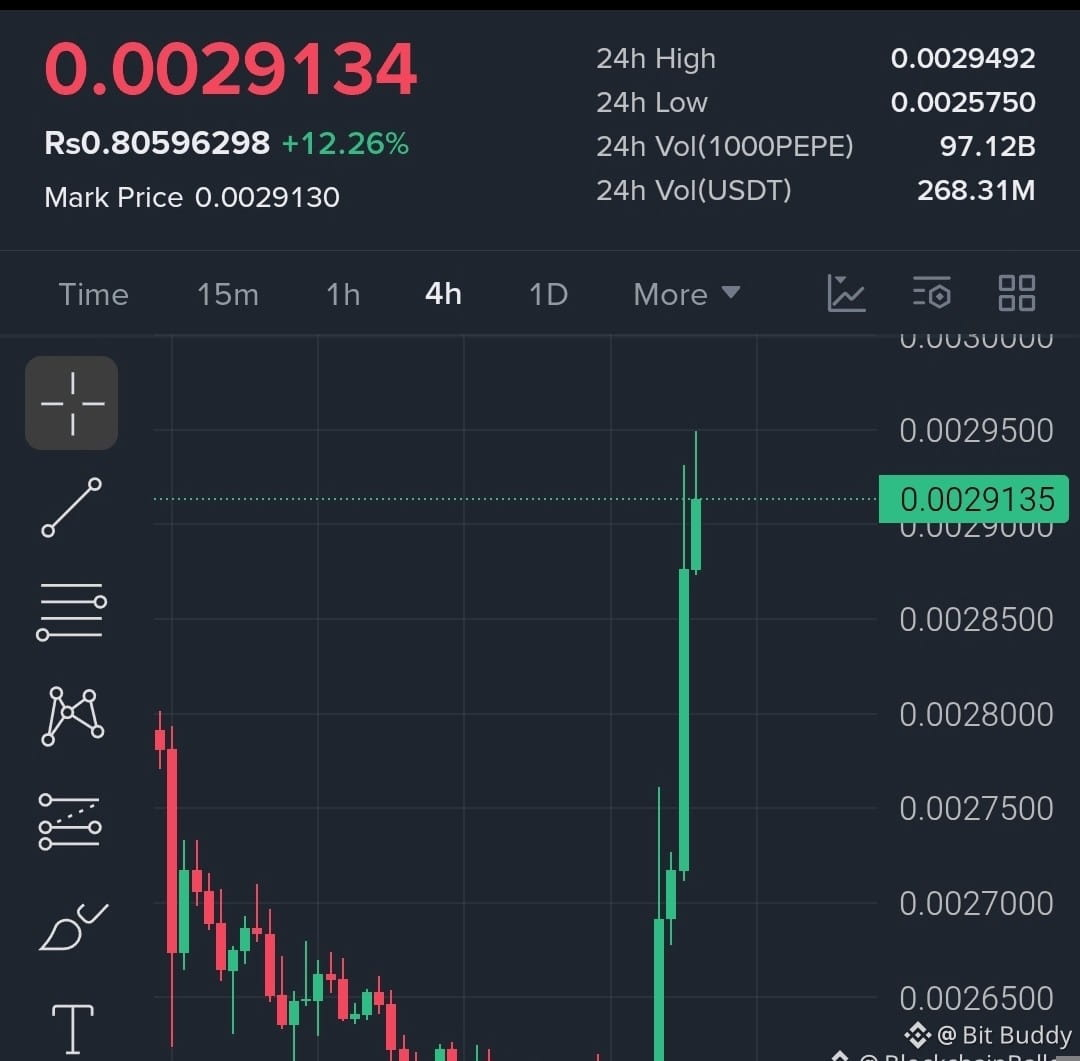
$1000PEPE
looking interesting here 👀
The breakout feels strong, and buyers are starting to push with some serious momentum.
I’m watching this zone for a LONG:
Entry: $0.00288–$0.00292
TP1: $0.00300
TP2: $0.00310
TP3: $0.00325
SL: $0.00278
If momentum keeps building, $0.00325 could come into play pretty quickly. 🔥
Not chasing candles though — entry matters.
Let’s see if buyers can actually hold the breakout.
#SKHynixToUse50%FreeCashFlowForShareholderReturns #UAEEndsEconomicTiesWithIran #KOSPIRises6.5%OnMemoryStockRebound #FOMCWatch #FOMCWatch
looking interesting here 👀
The breakout feels strong, and buyers are starting to push with some serious momentum.
I’m watching this zone for a LONG:
Entry: $0.00288–$0.00292
TP1: $0.00300
TP2: $0.00310
TP3: $0.00325
SL: $0.00278
If momentum keeps building, $0.00325 could come into play pretty quickly. 🔥
Not chasing candles though — entry matters.
Let’s see if buyers can actually hold the breakout.
#SKHynixToUse50%FreeCashFlowForShareholderReturns #UAEEndsEconomicTiesWithIran #KOSPIRises6.5%OnMemoryStockRebound #FOMCWatch #FOMCWatch
@Dusk $DUSK #dusk
I usually think about settlement speed as a very simple question: how quickly does a transaction become final?
Looking closer at Dusk Network made that feel a bit too simplistic.
Kadcast caught my attention first. It’s the network layer, using a structured P2P overlay rather than relying on random gossip, which is meant to make message propagation more predictable. Then there’s Succinct Attestation handling consensus and deterministic finality.
What I find interesting is how those pieces seem to point toward the same problem from different directions.
It’s not just about producing blocks faster. For financial workflows, there’s a bigger question: how quickly can everyone reach a state where the transaction can actually be treated as settled?
That distinction matters.
I’m still trying to understand where the real bottleneck moves when networking becomes more predictable but consensus still has to validate and ratify the state.
Maybe the interesting part of Dusk isn’t simply “fast settlement.”
It’s how the network is being structured so speed doesn’t have to come at the cost of deterministic finality.
That’s the part I want to dig into next.
#UAESaysItDetectedTwoIranianBallisticMissiles #FOMCWatch #HyperliquidTradeXYZAskSECForIPOPRules $ESPORTS $ARX
I usually think about settlement speed as a very simple question: how quickly does a transaction become final?
Looking closer at Dusk Network made that feel a bit too simplistic.
Kadcast caught my attention first. It’s the network layer, using a structured P2P overlay rather than relying on random gossip, which is meant to make message propagation more predictable. Then there’s Succinct Attestation handling consensus and deterministic finality.
What I find interesting is how those pieces seem to point toward the same problem from different directions.
It’s not just about producing blocks faster. For financial workflows, there’s a bigger question: how quickly can everyone reach a state where the transaction can actually be treated as settled?
That distinction matters.
I’m still trying to understand where the real bottleneck moves when networking becomes more predictable but consensus still has to validate and ratify the state.
Maybe the interesting part of Dusk isn’t simply “fast settlement.”
It’s how the network is being structured so speed doesn’t have to come at the cost of deterministic finality.
That’s the part I want to dig into next.
#UAESaysItDetectedTwoIranianBallisticMissiles #FOMCWatch #HyperliquidTradeXYZAskSECForIPOPRules $ESPORTS $ARX
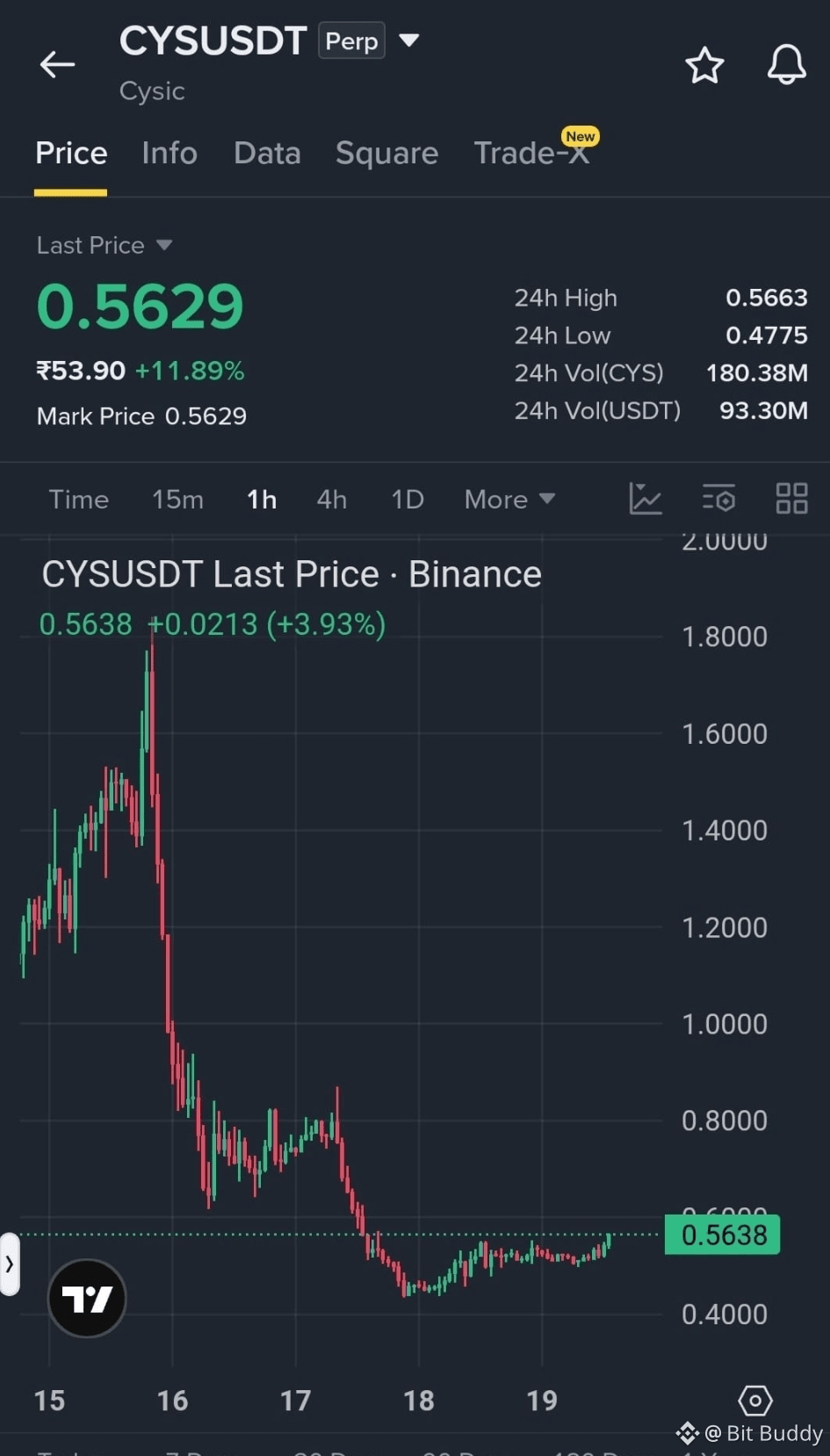
Watching $CYS
closely here 👀
The bounce is coming with some solid volume, and I’m mainly watching $0.5663.
If buyers can push through and hold above it, this could get interesting pretty fast. 🔥
Entry: $0.5550–$0.5600
SL: $0.5400
🎯 $0.5750
🎯 $0.5900
🎯 $0.6100
🎯 $0.6300
🎯 $0.6500
Not chasing the candle — just waiting for confirmation.
Let’s see what $CYS does. ⚡
#ChinaToDropOlderWindowsFromStateAgencies #HyperliquidTradeXYZAskSECForIPOPRules #CitiPlansBitcoinCustodyForInstitutionsThisYear #US30YearYieldHitsHighestSince2002 #USStorageStocksExtendLosses
closely here 👀
The bounce is coming with some solid volume, and I’m mainly watching $0.5663.
If buyers can push through and hold above it, this could get interesting pretty fast. 🔥
Entry: $0.5550–$0.5600
SL: $0.5400
🎯 $0.5750
🎯 $0.5900
🎯 $0.6100
🎯 $0.6300
🎯 $0.6500
Not chasing the candle — just waiting for confirmation.
Let’s see what $CYS does. ⚡
#ChinaToDropOlderWindowsFromStateAgencies #HyperliquidTradeXYZAskSECForIPOPRules #CitiPlansBitcoinCustodyForInstitutionsThisYear #US30YearYieldHitsHighestSince2002 #USStorageStocksExtendLosses
I’ll be honest, the first thing I noticed with @Dusk wasn’t some fancy privacy feature. It was how weirdly quiet everything feels when you’re used to watching public blockchains.
I kept doing the same thing I normally do checking activity, looking for wallet behavior, trying to connect the dots and then catching myself like, wait, that’s kind of the point here.
Dusk is built around confidential financial activity, so the usual “let me see everything and figure it out myself” habit doesn’t work the same way. And as someone who likes being able to poke around on-chain, that took a little getting used to.
What I find interesting is the trade-off. Privacy makes sense for financial applications, but crypto users are also spoiled by transparency. We’re used to seeing wallets move, transactions pile up, and flows tell their own little story.
With Dusk, I’m forced to rely less on that visual trail and more on whether the underlying system actually gives me enough confidence.
Maybe that’s the part I underestimated. Privacy isn’t just about hiding information it changes how you personally interact with a blockchain.
And yeah, I still catch myself looking for transactions that I already know I’m not supposed to see. Old crypto habits die hard...
$DUSK
#dusk
#USPressesSouthKoreaToPrioritizeMemoryChips #USMemoryStocksExtendGainsSanDiskUp10.5% #DollarHits3MonthLow
$BTW
$GRVT
I kept doing the same thing I normally do checking activity, looking for wallet behavior, trying to connect the dots and then catching myself like, wait, that’s kind of the point here.
Dusk is built around confidential financial activity, so the usual “let me see everything and figure it out myself” habit doesn’t work the same way. And as someone who likes being able to poke around on-chain, that took a little getting used to.
What I find interesting is the trade-off. Privacy makes sense for financial applications, but crypto users are also spoiled by transparency. We’re used to seeing wallets move, transactions pile up, and flows tell their own little story.
With Dusk, I’m forced to rely less on that visual trail and more on whether the underlying system actually gives me enough confidence.
Maybe that’s the part I underestimated. Privacy isn’t just about hiding information it changes how you personally interact with a blockchain.
And yeah, I still catch myself looking for transactions that I already know I’m not supposed to see. Old crypto habits die hard...
$DUSK
#dusk
#USPressesSouthKoreaToPrioritizeMemoryChips #USMemoryStocksExtendGainsSanDiskUp10.5% #DollarHits3MonthLow
$BTW
$GRVT
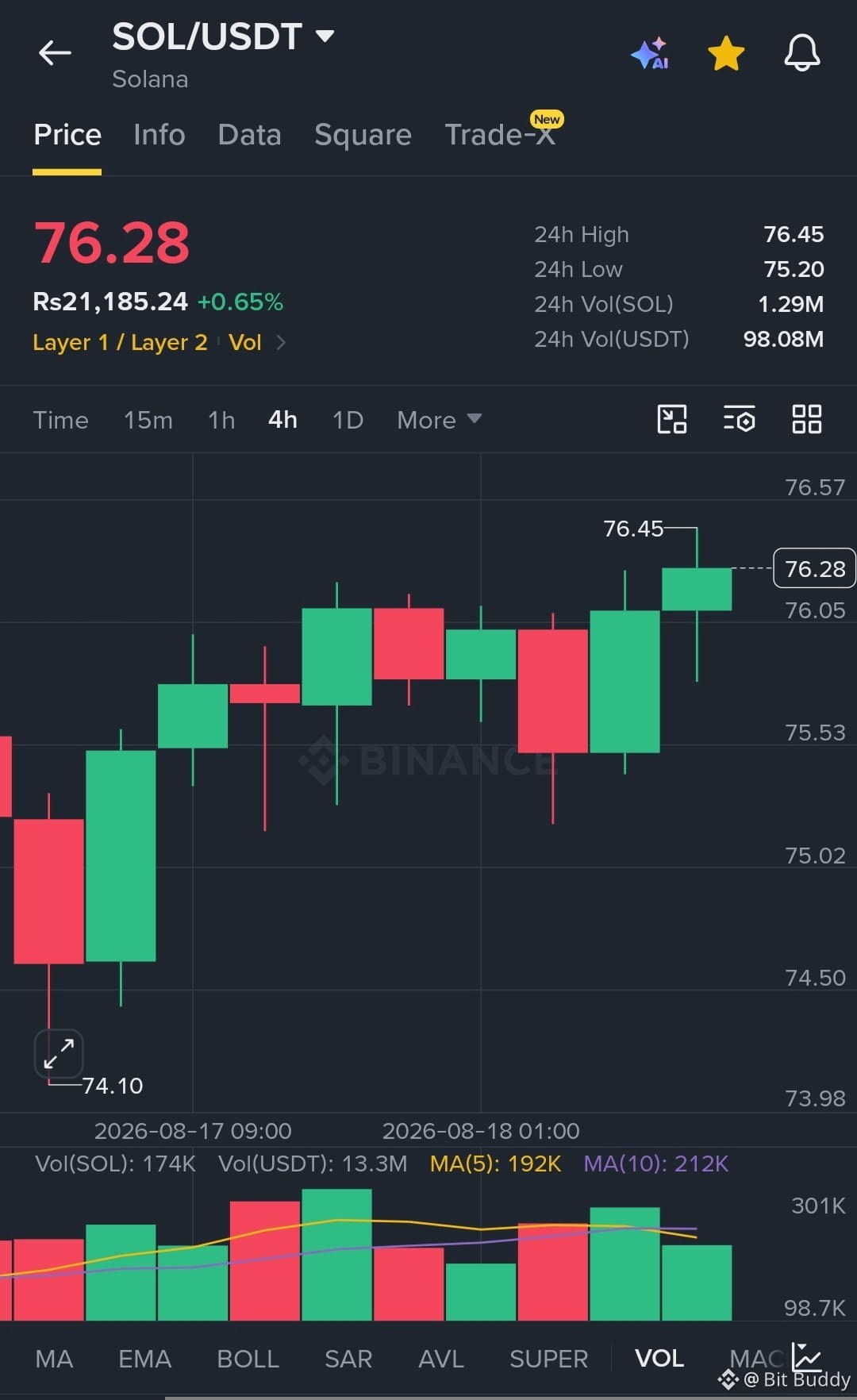
$SOL
is heating up. 🔥
Trading around $76.28, Solana just pushed to a $76.45 high on the 4H chart. Buyers are clearly fighting for control, but the next move could get interesting. 👀
A clean breakout above $76.45 could open the door for another leg higher. Lose the nearby support, and the momentum could flip fast.
SOL is at the edge — breakout or rejection? ⚡️
#SOL #EthereumFoundationLaunchesGlamsterdamTestnet #VIXFallsTo2026Low #DOJProbesA16zOverRivalAIBoardSeats #US30YearYieldHitsHighestSince2007
is heating up. 🔥
Trading around $76.28, Solana just pushed to a $76.45 high on the 4H chart. Buyers are clearly fighting for control, but the next move could get interesting. 👀
A clean breakout above $76.45 could open the door for another leg higher. Lose the nearby support, and the momentum could flip fast.
SOL is at the edge — breakout or rejection? ⚡️
#SOL #EthereumFoundationLaunchesGlamsterdamTestnet #VIXFallsTo2026Low #DOJProbesA16zOverRivalAIBoardSeats #US30YearYieldHitsHighestSince2007
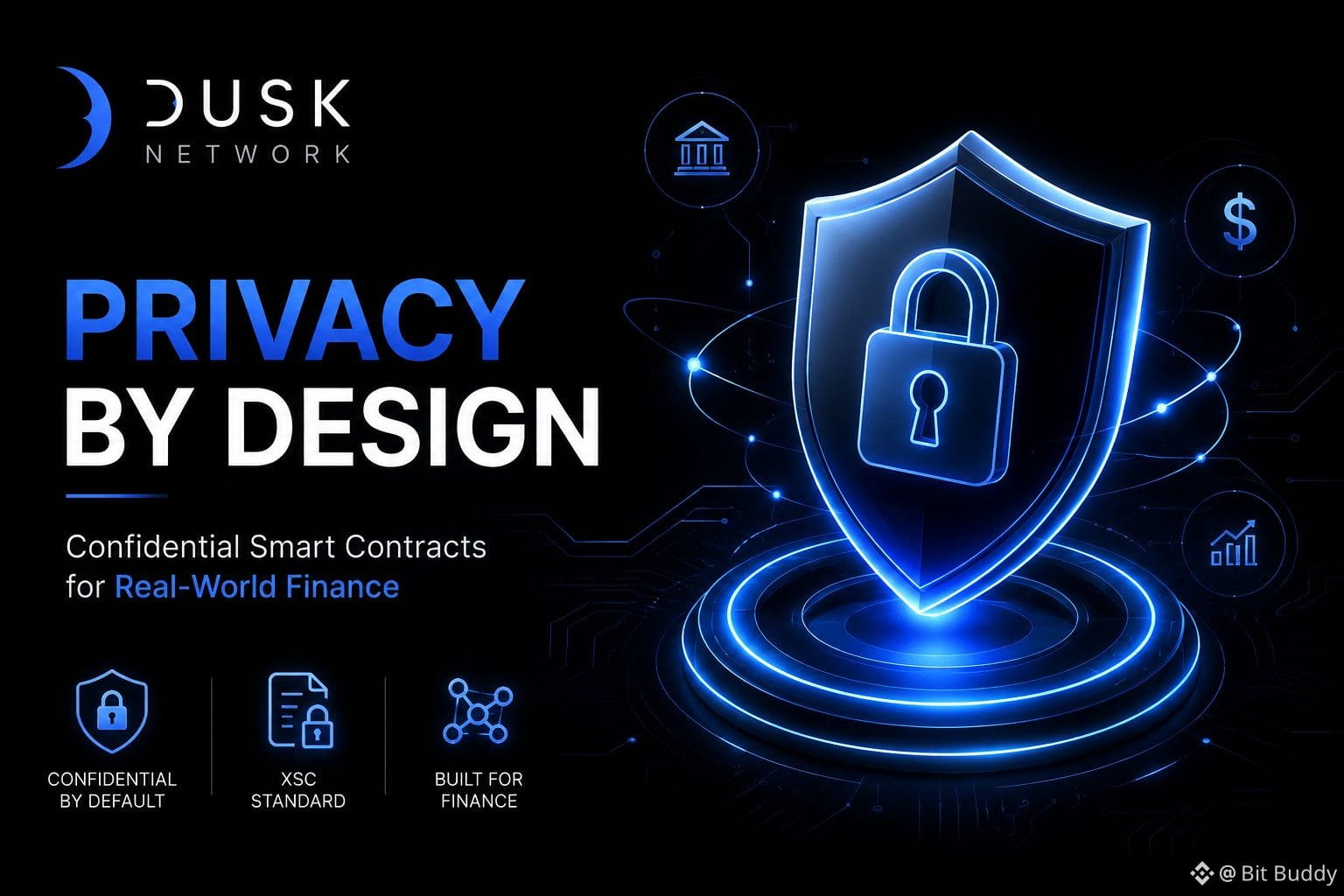
I’ll be honest, I didn’t expect Dusk Network to make me think this much about something as simple as “who can see my transaction?”
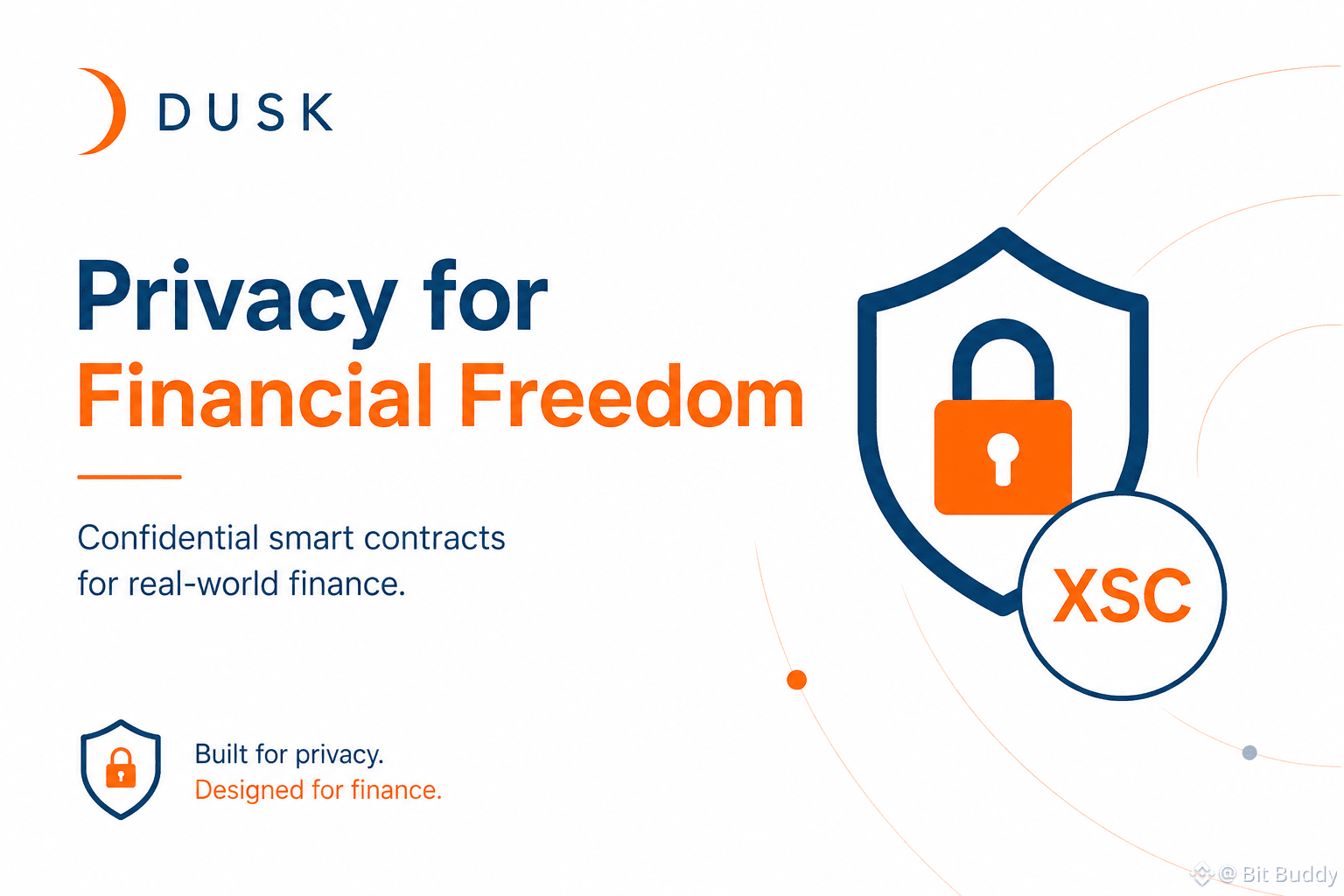
The more I looked into @Dusk the more that question kept coming back. It’s a Layer-1 focused on financial applications, with its Confidential Security Contract (XSC) standard built for confidential smart contracts.
What caught my attention wasn’t the privacy claim itself. It was the way privacy and verification have to work together. I can keep certain information private while still proving that I’m allowed to do something, instead of just putting everything on-chain for anyone to inspect.
That sounds convenient, but it also makes the experience feel more deliberate. I’m not just sending something and moving on. I’m thinking about what needs to be visible, what shouldn’t be visible, and what still has to be proven.
That’s the small thing I keep coming back to with Dusk. The interesting part of privacy isn’t hiding everything. It’s having enough control over what I reveal that I don’t have to expose my whole financial life just to prove one thing...
$DUSK
#dusk
$BTW $ARX #ChinaJulyOutputRetailInvestmentAllMiss #IsraelStrikesLebanonKillsHezbollahCommander
The more I looked into @Dusk the more that question kept coming back. It’s a Layer-1 focused on financial applications, with its Confidential Security Contract (XSC) standard built for confidential smart contracts.
What caught my attention wasn’t the privacy claim itself. It was the way privacy and verification have to work together. I can keep certain information private while still proving that I’m allowed to do something, instead of just putting everything on-chain for anyone to inspect.
That sounds convenient, but it also makes the experience feel more deliberate. I’m not just sending something and moving on. I’m thinking about what needs to be visible, what shouldn’t be visible, and what still has to be proven.
That’s the small thing I keep coming back to with Dusk. The interesting part of privacy isn’t hiding everything. It’s having enough control over what I reveal that I don’t have to expose my whole financial life just to prove one thing...
$DUSK
#dusk
$BTW $ARX #ChinaJulyOutputRetailInvestmentAllMiss #IsraelStrikesLebanonKillsHezbollahCommander
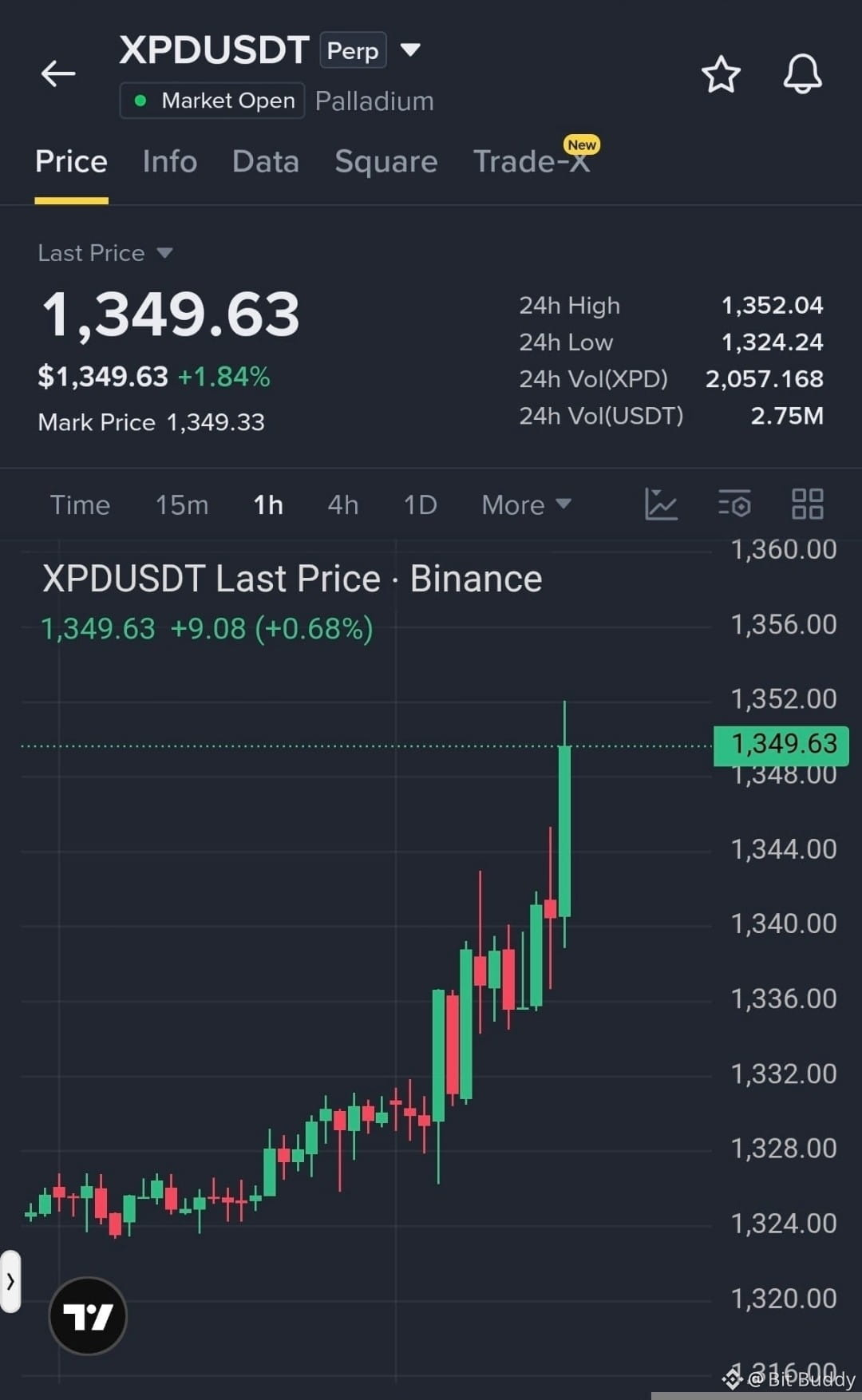
🚀 $XPD
LONG TRADE — BULLS ARE BREAKING OUT! 🔥
$XPD is showing serious bullish momentum on the 1H chart! 📈💥
The consolidation has been broken with a strong bullish candle, and 1,340 is now the key support zone.
🎯 Entry: 1,346 – 1,350
🔥 TP1: 1,352
🚀 TP2: 1,356
💥 TP3: 1,360
🛑 SL: 1,339
⚡ If sustains above 1,352, the next resistance levels could come into play quickly.
Bulls have the momentum. Will fly toward 1,360? 🚀🔥
Trade smart. Manage risk.
BUY & TRADE $XPD 💎📈
#XPD #SP500TopsRecord7800 #SECCancelsCryptoRulemakingMeeting #IsraelStrikesLebanonKillsHezbollahCommander #CardanoSplitsDijkstraUpgradeIntoTwoPhases
LONG TRADE — BULLS ARE BREAKING OUT! 🔥
$XPD is showing serious bullish momentum on the 1H chart! 📈💥
The consolidation has been broken with a strong bullish candle, and 1,340 is now the key support zone.
🎯 Entry: 1,346 – 1,350
🔥 TP1: 1,352
🚀 TP2: 1,356
💥 TP3: 1,360
🛑 SL: 1,339
⚡ If sustains above 1,352, the next resistance levels could come into play quickly.
Bulls have the momentum. Will fly toward 1,360? 🚀🔥
Trade smart. Manage risk.
BUY & TRADE $XPD 💎📈
#XPD #SP500TopsRecord7800 #SECCancelsCryptoRulemakingMeeting #IsraelStrikesLebanonKillsHezbollahCommander #CardanoSplitsDijkstraUpgradeIntoTwoPhases


Binance Academy
·
--
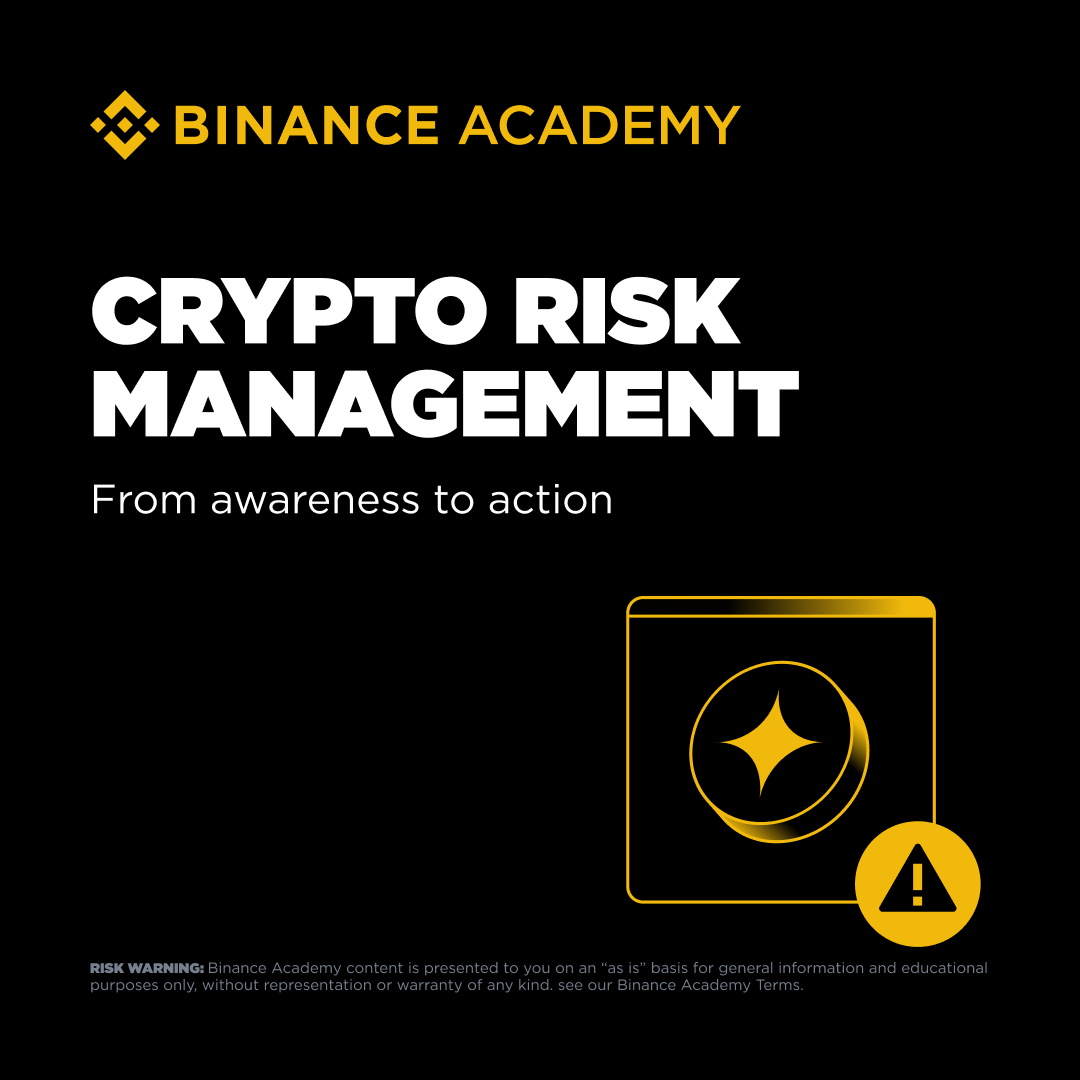
The best time to learn risk management is before you need it.
👉 Crypto Risk Management course is now live on Binance Academy.
Start learning, earn your certificate, and proudly add it to your LinkedIn profile!
👉 Crypto Risk Management course is now live on Binance Academy.
Start learning, earn your certificate, and proudly add it to your LinkedIn profile!
Log in to explore more content