
Astik_Mondal_
5k Posts

Astik_Mondal_
Let's democratizing investing for everyone🌍 | Beginner to advanced breakdowns | crypto & macro | Let's grow together
Open Trade
Frequent Trader
4.8 Years
0 Following
449 Followers
5.2K+ Liked
Posts
Portfolio
All
Quotes
Videos
🚨 FOX Business just called Bitcoin a potential hedge to dollar weakness.
“Just wait for it to start running. Once it starts running and it gets back in that mainstream conversation, you get the appetite for it.”
“It’s up 20%.”
Traditional media is starting to lean in.
#Bitcoin #BTC #Crypto #Dollar #Hedge
“Just wait for it to start running. Once it starts running and it gets back in that mainstream conversation, you get the appetite for it.”
“It’s up 20%.”
Traditional media is starting to lean in.
#Bitcoin #BTC #Crypto #Dollar #Hedge
👀 BITCOIN MAY BE FRONT-RUNNING AMERICA’S NEXT LIQUIDITY WAVE.
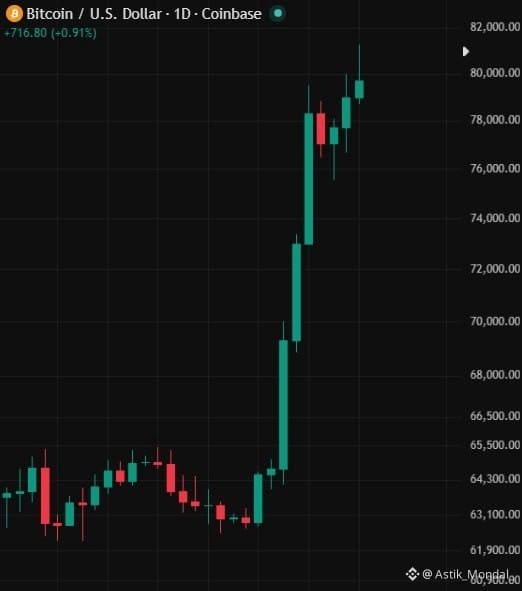
BTC just ripped from $62K to above $81K in less than a week.
That’s roughly a 30% move.
And the timing is impossible to ignore.
The rally accelerated after Treasury doubled long-term bond buybacks to at least $4B per operation.
Then came reports of potential $950B of TGA firepower.
Since those reports surfaced, Bitcoin has gained another 4.7%.
Here’s why traders are watching this closely:
If Treasury deploys cash sitting in its Fed account, that money moves into the financial system.
More liquidity can support bond prices.
Lower yields can make risk assets more attractive.
And some of that liquidity can eventually find its way into stocks, Bitcoin and crypto.
This isn’t traditional QE.
But markets don’t always care what you call it.
If financial conditions loosen, risk assets can react as if the Fed just turned the liquidity tap slightly higher.
There’s one catch:
Treasury eventually has to rebuild the TGA.
So the liquidity boost could later reverse.
That makes one thing critical:
WATCH WHERE THE CASH RUNS.
Because Bitcoin may already be betting that the next wave of liquidity is coming.
#Bitcoin #Crypto #Liquidity #BTC #Finance
BTC just ripped from $62K to above $81K in less than a week.
That’s roughly a 30% move.
And the timing is impossible to ignore.
The rally accelerated after Treasury doubled long-term bond buybacks to at least $4B per operation.
Then came reports of potential $950B of TGA firepower.
Since those reports surfaced, Bitcoin has gained another 4.7%.
Here’s why traders are watching this closely:
If Treasury deploys cash sitting in its Fed account, that money moves into the financial system.
More liquidity can support bond prices.
Lower yields can make risk assets more attractive.
And some of that liquidity can eventually find its way into stocks, Bitcoin and crypto.
This isn’t traditional QE.
But markets don’t always care what you call it.
If financial conditions loosen, risk assets can react as if the Fed just turned the liquidity tap slightly higher.
There’s one catch:
Treasury eventually has to rebuild the TGA.
So the liquidity boost could later reverse.
That makes one thing critical:
WATCH WHERE THE CASH RUNS.
Because Bitcoin may already be betting that the next wave of liquidity is coming.
#Bitcoin #Crypto #Liquidity #BTC #Finance

🚨 BREAKING: THE SEC IS NOW DIGGING INTO A $30B AI FUND COLLAPSE.
The SEC has reportedly subpoenaed major Wall Street banks over their dealings with Leopold Aschenbrenner’s Situational Awareness fund, according to the NYT.
And the questions go straight to the heart of the blow-up:
When were the trades made?
How much leverage was involved?
What did the fund tell its lenders?
Situational Awareness reportedly grew to more than $30 BILLION in assets.
Then July happened.
A brutal AI-stock selloff wiped out roughly 67% of the portfolio’s value.
The fund was forced to unload most of its public holdings to Citadel.
Now regulators are reportedly examining the trading activity, financing arrangements and communications surrounding the leverage.
This is bigger than one fund.
If regulators uncover problems in how leverage was structured or disclosed, it could raise serious questions about risk management across the AI trade and the banks financing it.
The AI boom is no longer just about valuations.
It’s about leverage.
And when leverage starts breaking, the damage can spread FAST.
Wall Street may be entering the part of the cycle where we find out who was actually swimming naked.
#AI #Stocks #WallStreet #Crypto #Finance
The SEC has reportedly subpoenaed major Wall Street banks over their dealings with Leopold Aschenbrenner’s Situational Awareness fund, according to the NYT.
And the questions go straight to the heart of the blow-up:
When were the trades made?
How much leverage was involved?
What did the fund tell its lenders?
Situational Awareness reportedly grew to more than $30 BILLION in assets.
Then July happened.
A brutal AI-stock selloff wiped out roughly 67% of the portfolio’s value.
The fund was forced to unload most of its public holdings to Citadel.
Now regulators are reportedly examining the trading activity, financing arrangements and communications surrounding the leverage.
This is bigger than one fund.
If regulators uncover problems in how leverage was structured or disclosed, it could raise serious questions about risk management across the AI trade and the banks financing it.
The AI boom is no longer just about valuations.
It’s about leverage.
And when leverage starts breaking, the damage can spread FAST.
Wall Street may be entering the part of the cycle where we find out who was actually swimming naked.
#AI #Stocks #WallStreet #Crypto #Finance


🚨 STANLEY DRUCKENMILLER JUST SENT A WARNING TO WASHINGTON.
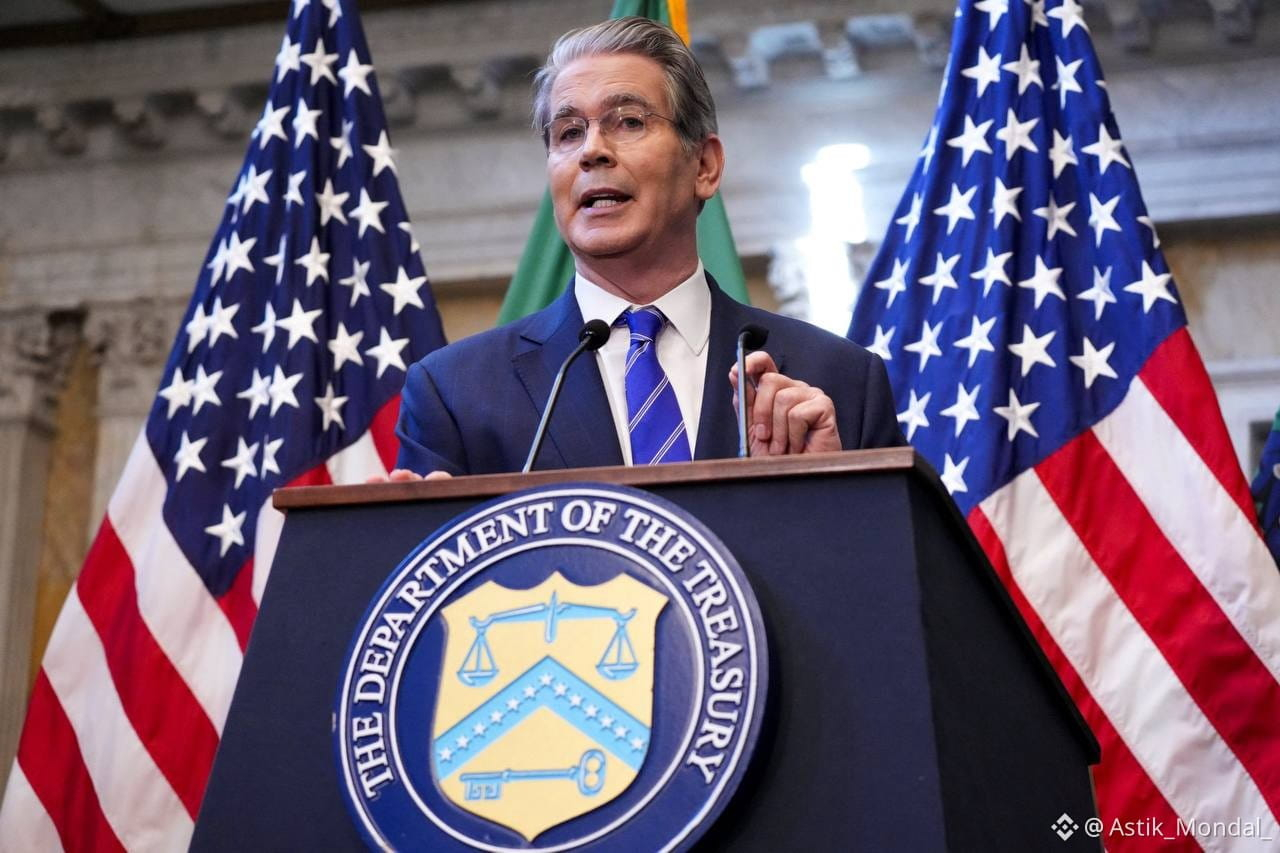
And it directly challenges Treasury Secretary Scott Bessent’s bond-buyback strategy.
Druckenmiller says the U.S. should STOP trying to suppress long-term Treasury yields.
His argument is brutal:
The 30-year Treasury yield is arguably the most important price in the global financial system.
And it may be the LAST thing forcing Washington to confront its fiscal problems.
If Treasury artificially pushes yields lower, politicians get cheaper financing.
That creates a dangerous incentive:
More borrowing. More spending. More deficits. Less urgency to fix the problem.
Druckenmiller’s message is essentially:
Every basis point of artificially lower yields is another subsidy for delaying fiscal reform.
And if the 30-year Treasury needs to reach 5.5% to attract buyers?
That isn’t a market crisis.
It’s the market sending Washington an invoice.
His preferred solution?
Keep Treasury buybacks small and predictable liquidity operations not a weapon used to fight rising yields.
The bigger message is what matters for markets:
You cannot permanently suppress the price of debt without eventually paying the price somewhere else.
Bond yields are warning signals.
Ignore them long enough, and the bill gets bigger.
#Bitcoin #Crypto #Treasury #FederalReserve #Finance
And it directly challenges Treasury Secretary Scott Bessent’s bond-buyback strategy.
Druckenmiller says the U.S. should STOP trying to suppress long-term Treasury yields.
His argument is brutal:
The 30-year Treasury yield is arguably the most important price in the global financial system.
And it may be the LAST thing forcing Washington to confront its fiscal problems.
If Treasury artificially pushes yields lower, politicians get cheaper financing.
That creates a dangerous incentive:
More borrowing. More spending. More deficits. Less urgency to fix the problem.
Druckenmiller’s message is essentially:
Every basis point of artificially lower yields is another subsidy for delaying fiscal reform.
And if the 30-year Treasury needs to reach 5.5% to attract buyers?
That isn’t a market crisis.
It’s the market sending Washington an invoice.
His preferred solution?
Keep Treasury buybacks small and predictable liquidity operations not a weapon used to fight rising yields.
The bigger message is what matters for markets:
You cannot permanently suppress the price of debt without eventually paying the price somewhere else.
Bond yields are warning signals.
Ignore them long enough, and the bill gets bigger.
#Bitcoin #Crypto #Treasury #FederalReserve #Finance

CRYPTO JUST HAD ITS BIGGEST WEEK IN HISTORY.
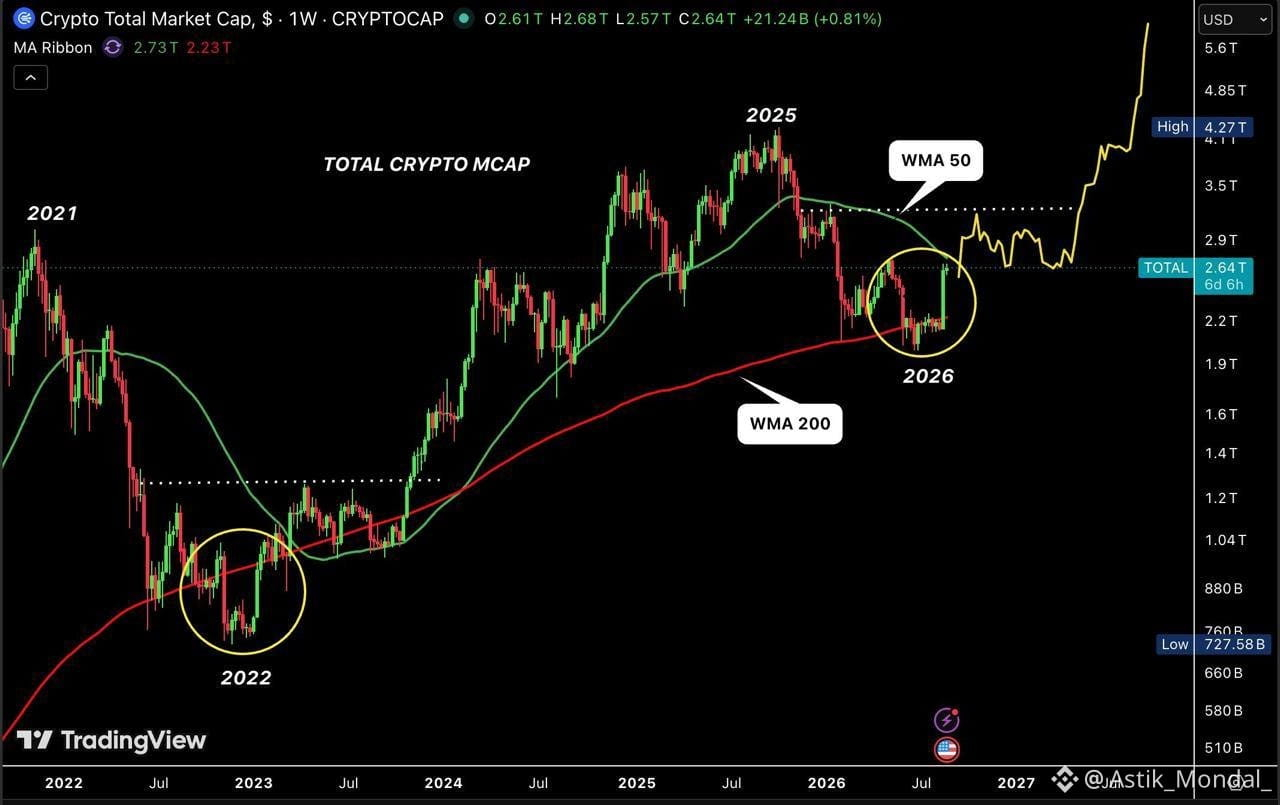
The total crypto market cap added roughly $474 BILLION in a single week.
A 22% surge.
The largest weekly candle since February 2021.
And the timing is what makes this interesting.
Crypto spent nearly 3 months moving sideways.
Then suddenly:
$474B of market value appeared in ONE week.
This is exactly the kind of expansion that can signal a major regime shift.
The chart is also starting to resemble the 2022 bottom.
A long consolidation.
A period of disbelief.
Then a powerful breakout.
The next major battle is around the 50-week moving average.
Approximately $2.73 TRILLION.
A clean weekly breakout above that level could open the door toward $3.25 TRILLION.
But here's the key:
The 2022 comparison doesn't mean history must repeat.
It means the market structure deserves attention.
If crypto can convert $2.73T from resistance into support, the entire narrative changes.
From recovery rally...
To potential new expansion phase.
The biggest rallies usually don't begin when everyone is bullish.
They begin when the market finally realizes the trend has already changed.
Crypto may be approaching that moment again.
#Crypto #Bitcoin #Ethereum #Altcoins #CryptoMarket
The total crypto market cap added roughly $474 BILLION in a single week.
A 22% surge.
The largest weekly candle since February 2021.
And the timing is what makes this interesting.
Crypto spent nearly 3 months moving sideways.
Then suddenly:
$474B of market value appeared in ONE week.
This is exactly the kind of expansion that can signal a major regime shift.
The chart is also starting to resemble the 2022 bottom.
A long consolidation.
A period of disbelief.
Then a powerful breakout.
The next major battle is around the 50-week moving average.
Approximately $2.73 TRILLION.
A clean weekly breakout above that level could open the door toward $3.25 TRILLION.
But here's the key:
The 2022 comparison doesn't mean history must repeat.
It means the market structure deserves attention.
If crypto can convert $2.73T from resistance into support, the entire narrative changes.
From recovery rally...
To potential new expansion phase.
The biggest rallies usually don't begin when everyone is bullish.
They begin when the market finally realizes the trend has already changed.
Crypto may be approaching that moment again.
#Crypto #Bitcoin #Ethereum #Altcoins #CryptoMarket


CRYPTO JUST HAD ITS BIGGEST WEEK IN HISTORY.
The total crypto market cap added roughly $474 BILLION in a single week.
A 22% surge.
The largest weekly candle since February 2021.
And the timing is what makes this interesting.
Crypto spent nearly 3 months moving sideways.
Then suddenly:
$474B of market value appeared in ONE week.
This is exactly the kind of expansion that can signal a major regime shift.
The chart is also starting to resemble the 2022 bottom.
A long consolidation.
A period of disbelief.
Then a powerful breakout.
The next major battle is around the 50-week moving average.
Approximately $2.73 TRILLION.
A clean weekly breakout above that level could open the door toward $3.25 TRILLION.
But here's the key:
The 2022 comparison doesn't mean history must repeat.
It means the market structure deserves attention.
If crypto can convert $2.73T from resistance into support, the entire narrative changes.
From recovery rally To potential new expansion phase.
The biggest rallies usually don't begin when everyone is bullish.
They begin when the market finally realizes the trend has already changed.
Crypto may be approaching that moment again.
#Crypto #Bitcoin #Ethereum #Altcoins #CryptoMarket
The total crypto market cap added roughly $474 BILLION in a single week.
A 22% surge.
The largest weekly candle since February 2021.
And the timing is what makes this interesting.
Crypto spent nearly 3 months moving sideways.
Then suddenly:
$474B of market value appeared in ONE week.
This is exactly the kind of expansion that can signal a major regime shift.
The chart is also starting to resemble the 2022 bottom.
A long consolidation.
A period of disbelief.
Then a powerful breakout.
The next major battle is around the 50-week moving average.
Approximately $2.73 TRILLION.
A clean weekly breakout above that level could open the door toward $3.25 TRILLION.
But here's the key:
The 2022 comparison doesn't mean history must repeat.
It means the market structure deserves attention.
If crypto can convert $2.73T from resistance into support, the entire narrative changes.
From recovery rally To potential new expansion phase.
The biggest rallies usually don't begin when everyone is bullish.
They begin when the market finally realizes the trend has already changed.
Crypto may be approaching that moment again.
#Crypto #Bitcoin #Ethereum #Altcoins #CryptoMarket
THE U.S. JUST TURNED CRYPTO INTO A GEOPOLITICAL BATTLEFIELD.
Nearly $1 BILLION in crypto has reportedly been seized from Iran since May.
Treasury Secretary Bessent described the broader pressure campaign as an “economic D-Day.”
And crypto is now explicitly on the target list.
Five Iranian lifelines are being targeted:
i) Digital assets.
ii) Gold.
iii) Aviation.
iv) Shipping.
v) Technology.
Monday's sanctions specifically targeted Iranian Bitcoin wallets linked to sanctioned individuals.
The bigger story isn't just the amount.
It's the message.
Washington is treating digital assets as strategic financial infrastructure.
That cuts both ways.
Crypto can provide access to global liquidity outside traditional banking rails.
But once wallets, addresses and counterparties are connected to sanctioned entities, blockchain transparency can also become a powerful enforcement tool.
This is the uncomfortable reality of crypto becoming mainstream:
The industry is no longer operating outside geopolitics.
It is becoming part of geopolitics.
Bitcoin was built to operate without permission.
But the infrastructure around it still exists inside a world of governments, sanctions and financial warfare.
The next phase of crypto adoption won't just be about ETFs and institutions.
It will also be about who controls the rails.
#Bitcoin #Crypto #Iran #USA #DigitalAssets $XAUT $BTC $SOL
Nearly $1 BILLION in crypto has reportedly been seized from Iran since May.
Treasury Secretary Bessent described the broader pressure campaign as an “economic D-Day.”
And crypto is now explicitly on the target list.
Five Iranian lifelines are being targeted:
i) Digital assets.
ii) Gold.
iii) Aviation.
iv) Shipping.
v) Technology.
Monday's sanctions specifically targeted Iranian Bitcoin wallets linked to sanctioned individuals.
The bigger story isn't just the amount.
It's the message.
Washington is treating digital assets as strategic financial infrastructure.
That cuts both ways.
Crypto can provide access to global liquidity outside traditional banking rails.
But once wallets, addresses and counterparties are connected to sanctioned entities, blockchain transparency can also become a powerful enforcement tool.
This is the uncomfortable reality of crypto becoming mainstream:
The industry is no longer operating outside geopolitics.
It is becoming part of geopolitics.
Bitcoin was built to operate without permission.
But the infrastructure around it still exists inside a world of governments, sanctions and financial warfare.
The next phase of crypto adoption won't just be about ETFs and institutions.
It will also be about who controls the rails.
#Bitcoin #Crypto #Iran #USA #DigitalAssets $XAUT $BTC $SOL


BITMINE JUST CROSSED A MASSIVE ETHEREUM MILESTONE.
The world's largest $ETH treasury now controls 4.8% of ALL Ethereum in existence.
And Bitmine isn't slowing down.
The company just bought another 32,447 ETH worth roughly $81.5 MILLION.
Its biggest weekly purchase since early July.
Total holdings?
5.85 MILLION ETH.
Approximately $14.7 BILLION worth of Ethereum.
That's no longer a corporate treasury experiment.
That's a massive institutional bet on Ethereum.
And here's where it gets interesting.
Bitmine Chairman Tom Lee says ETH's 30% weekly gain has happened only twice before.
Both times, Ethereum went on to make a much larger move.
History doesn't guarantee a repeat.
But the signal is impossible to ignore:
One of the world's largest corporate crypto treasuries is aggressively accumulating ETH while momentum is accelerating.
The market is watching price.
Bitmine is accumulating supply.
And if institutional treasuries continue removing ETH from the liquid market, the supply dynamics could become increasingly important.
The biggest question isn't whether Bitmine believes in Ethereum.
They've already answered that with billions of dollars.
The question is how much ETH they intend to own next.
#Ethereum #ETH #Crypto #Bitmine #DigitalAssets
The world's largest $ETH treasury now controls 4.8% of ALL Ethereum in existence.
And Bitmine isn't slowing down.
The company just bought another 32,447 ETH worth roughly $81.5 MILLION.
Its biggest weekly purchase since early July.
Total holdings?
5.85 MILLION ETH.
Approximately $14.7 BILLION worth of Ethereum.
That's no longer a corporate treasury experiment.
That's a massive institutional bet on Ethereum.
And here's where it gets interesting.
Bitmine Chairman Tom Lee says ETH's 30% weekly gain has happened only twice before.
Both times, Ethereum went on to make a much larger move.
History doesn't guarantee a repeat.
But the signal is impossible to ignore:
One of the world's largest corporate crypto treasuries is aggressively accumulating ETH while momentum is accelerating.
The market is watching price.
Bitmine is accumulating supply.
And if institutional treasuries continue removing ETH from the liquid market, the supply dynamics could become increasingly important.
The biggest question isn't whether Bitmine believes in Ethereum.
They've already answered that with billions of dollars.
The question is how much ETH they intend to own next.
#Ethereum #ETH #Crypto #Bitmine #DigitalAssets


NVIDIA IS BLEEDING BEFORE THE EARNINGS EVEN DROP.
$NVDA has fallen for 7 STRAIGHT DAYS.
The longest losing streak since 2022.
And the market has already erased roughly $400 BILLION in NVIDIA market cap since August 13.
That is happening BEFORE tomorrow's earnings.
The history is even more brutal.
NVIDIA has fallen after earnings for FOUR consecutive quarters.
Average two-day decline?
5.3%.
And here's the crazy part:
NVIDIA beat expectations EVERY SINGLE TIME.
So this isn't simply about beating estimates anymore.
The market is demanding an extraordinary beat.
Tomorrow, NVIDIA reports after the close with roughly $91 BILLION in guided revenue.
Options are pricing a move of about 6% in either direction.
At $208, that's roughly $300 BILLION of market value potentially changing hands.
The setup is becoming asymmetric.
If NVIDIA delivers a monster quarter and raises expectations again, the beaten-down AI trade could explode higher.
But if the numbers are merely “good”?
The market may treat good as bad.
That's the danger of extreme expectations.
NVIDIA doesn't just need to beat earnings.
It needs to prove that the AI spending supercycle is still accelerating.
Tomorrow, the world's most important AI stock gets its verdict.
And $300 BILLION could be on the line.
#NVDA #NVIDIA #AI #Stocks #Nasdaq
$NVDA has fallen for 7 STRAIGHT DAYS.
The longest losing streak since 2022.
And the market has already erased roughly $400 BILLION in NVIDIA market cap since August 13.
That is happening BEFORE tomorrow's earnings.
The history is even more brutal.
NVIDIA has fallen after earnings for FOUR consecutive quarters.
Average two-day decline?
5.3%.
And here's the crazy part:
NVIDIA beat expectations EVERY SINGLE TIME.
So this isn't simply about beating estimates anymore.
The market is demanding an extraordinary beat.
Tomorrow, NVIDIA reports after the close with roughly $91 BILLION in guided revenue.
Options are pricing a move of about 6% in either direction.
At $208, that's roughly $300 BILLION of market value potentially changing hands.
The setup is becoming asymmetric.
If NVIDIA delivers a monster quarter and raises expectations again, the beaten-down AI trade could explode higher.
But if the numbers are merely “good”?
The market may treat good as bad.
That's the danger of extreme expectations.
NVIDIA doesn't just need to beat earnings.
It needs to prove that the AI spending supercycle is still accelerating.
Tomorrow, the world's most important AI stock gets its verdict.
And $300 BILLION could be on the line.
#NVDA #NVIDIA #AI #Stocks #Nasdaq
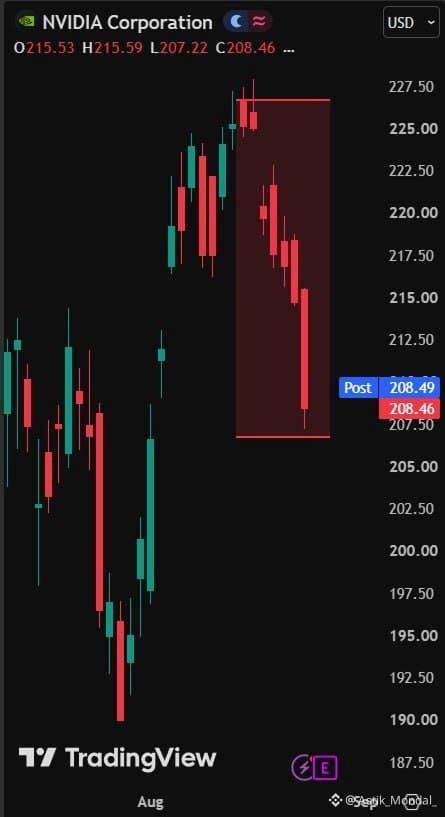
TECH STOCKS ARE DRAGGING WALL STREET LOWER.
The market is already getting nervous ahead of the biggest AI earnings week yet.
S&P 500: -0.2%
Nasdaq: -0.5%
Dow: +0.1%
Semiconductors are taking the biggest hit.
$MU is down 6%.
$AMD is down 3%.
Broadcom is down 2%.
The semiconductor ETF $SOXX is down nearly 3%.
And $SNDK is getting crushed, down 9%.
But the real test comes next.
NVIDIA and CrowdStrike report Wednesday.
Marvell follows Thursday.
This is not just another earnings week.
The market is demanding proof that AI spending can continue at an extraordinary pace.
NVIDIA has become the center of gravity for the entire AI trade.
If $NVDA delivers, the sector could stabilize fast.
If it disappoints, even slightly, the damage could spread across semiconductors and the broader Nasdaq.
The market is no longer asking whether AI is growing.
It is asking whether growth is strong enough to justify the massive valuations already priced in.
That distinction could decide the next major move in tech.
This week, earnings are not just numbers.
They are the market's verdict on the AI boom.
#NVDA #NVIDIA #AI #Stocks #Nasdaq
The market is already getting nervous ahead of the biggest AI earnings week yet.
S&P 500: -0.2%
Nasdaq: -0.5%
Dow: +0.1%
Semiconductors are taking the biggest hit.
$MU is down 6%.
$AMD is down 3%.
Broadcom is down 2%.
The semiconductor ETF $SOXX is down nearly 3%.
And $SNDK is getting crushed, down 9%.
But the real test comes next.
NVIDIA and CrowdStrike report Wednesday.
Marvell follows Thursday.
This is not just another earnings week.
The market is demanding proof that AI spending can continue at an extraordinary pace.
NVIDIA has become the center of gravity for the entire AI trade.
If $NVDA delivers, the sector could stabilize fast.
If it disappoints, even slightly, the damage could spread across semiconductors and the broader Nasdaq.
The market is no longer asking whether AI is growing.
It is asking whether growth is strong enough to justify the massive valuations already priced in.
That distinction could decide the next major move in tech.
This week, earnings are not just numbers.
They are the market's verdict on the AI boom.
#NVDA #NVIDIA #AI #Stocks #Nasdaq
TRUMP JUST RAISED THE STAKES IN THE U.S. CANADA TRADE WAR.
A potential 50% U.S. tariff on Canadian cars, trucks, auto parts and steel could take effect January 1, 2027.
That would DOUBLE the current 25% auto tariff.
And Canada is preparing retaliatory levies on U.S. products.
This is no longer a routine tariff dispute.
It is becoming a full-scale trade confrontation between two of America’s biggest economic partners.
The real risk is what happens next.
Higher tariffs mean higher costs for manufacturers.
Higher costs can mean higher vehicle prices.
Supply chains could be disrupted.
Margins could get squeezed.
And retaliation could hit U.S. exporters at the same time.
Canada is deeply integrated into the North American auto industry.
A tariff on Canadian components does not simply hurt Canada.
It can raise costs for American factories using those same parts.
That is the paradox of trade wars:
You can target another country’s exports while simultaneously increasing costs for your own companies.
Markets should watch this closely.
Because if the escalation continues, the impact could spread from autos and steel into inflation, corporate earnings, currencies and interest-rate expectations.
The trade war is no longer a headline.
It is becoming a macroeconomic variable.
#Trump #Canada #Tariffs #TradeWar #Markets
A potential 50% U.S. tariff on Canadian cars, trucks, auto parts and steel could take effect January 1, 2027.
That would DOUBLE the current 25% auto tariff.
And Canada is preparing retaliatory levies on U.S. products.
This is no longer a routine tariff dispute.
It is becoming a full-scale trade confrontation between two of America’s biggest economic partners.
The real risk is what happens next.
Higher tariffs mean higher costs for manufacturers.
Higher costs can mean higher vehicle prices.
Supply chains could be disrupted.
Margins could get squeezed.
And retaliation could hit U.S. exporters at the same time.
Canada is deeply integrated into the North American auto industry.
A tariff on Canadian components does not simply hurt Canada.
It can raise costs for American factories using those same parts.
That is the paradox of trade wars:
You can target another country’s exports while simultaneously increasing costs for your own companies.
Markets should watch this closely.
Because if the escalation continues, the impact could spread from autos and steel into inflation, corporate earnings, currencies and interest-rate expectations.
The trade war is no longer a headline.
It is becoming a macroeconomic variable.
#Trump #Canada #Tariffs #TradeWar #Markets

NVIDIA JUST GOT HIT BY A SERIOUS CHINA EXPORT CONTROVERSY.
Taiwan has indicted 9 people, including employees linked to NVIDIA and Super Micro Computer, over alleged illegal exports of restricted AI servers to China.
The servers reportedly contained NVIDIA chips covered by U.S. export controls.
This is bigger than one legal case.
The AI chip war is becoming an enforcement war.
Washington has spent years tightening restrictions on advanced AI hardware reaching China.
Now authorities are investigating whether those restrictions were bypassed through third-party channels.
That creates a major risk for the AI industry:
Even if a company follows U.S. export rules, its supply chain can still become a geopolitical liability.
For NVIDIA, the stakes are enormous.
China remains a strategically important AI market, while U.S. restrictions are increasingly determining what hardware can legally reach it.
For Super Micro, the scrutiny adds another layer of risk around its role in the global AI server supply chain.
The bigger picture is clear:
AI hardware is no longer just a technology business.
It is strategic infrastructure.
Every chip shipment is becoming a geopolitical event.
And as the U.S. China technology battle intensifies, expect more investigations, tighter controls and increasingly aggressive enforcement.
The AI boom is massive.
So is the regulatory battlefield underneath it.
#NVIDIA #NVDA #AI #China #Semiconductors
Taiwan has indicted 9 people, including employees linked to NVIDIA and Super Micro Computer, over alleged illegal exports of restricted AI servers to China.
The servers reportedly contained NVIDIA chips covered by U.S. export controls.
This is bigger than one legal case.
The AI chip war is becoming an enforcement war.
Washington has spent years tightening restrictions on advanced AI hardware reaching China.
Now authorities are investigating whether those restrictions were bypassed through third-party channels.
That creates a major risk for the AI industry:
Even if a company follows U.S. export rules, its supply chain can still become a geopolitical liability.
For NVIDIA, the stakes are enormous.
China remains a strategically important AI market, while U.S. restrictions are increasingly determining what hardware can legally reach it.
For Super Micro, the scrutiny adds another layer of risk around its role in the global AI server supply chain.
The bigger picture is clear:
AI hardware is no longer just a technology business.
It is strategic infrastructure.
Every chip shipment is becoming a geopolitical event.
And as the U.S. China technology battle intensifies, expect more investigations, tighter controls and increasingly aggressive enforcement.
The AI boom is massive.
So is the regulatory battlefield underneath it.
#NVIDIA #NVDA #AI #China #Semiconductors


THE US TREASURY MAY HAVE A $1 TRILLION BAZOOKA.
And if Bessent actually deploys it, the impact could reach far beyond bonds.
The Treasury could potentially tap its nearly $1T Treasury General Account to expand long-term bond buybacks.
The objective?
Push bond prices higher.
Drive long-term yields lower.
Support the Treasury market.
And do it without requiring the Federal Reserve to step in directly.
The scale is what makes this extraordinary.
The Treasury just doubled its buyback size from $2B to at least $4B per operation.
But the relief faded quickly.
The 30Y Treasury yield returned toward 5.25%.
That tells you something important:
$4B may be nowhere near enough.
A much larger program could change the liquidity picture dramatically.
And there is another angle the market may be underestimating.
If Treasury cash is drawn down and liquidity flows back into the financial system, the effects may not stop at bonds.
Stocks could benefit.
Crypto could benefit.
Risk assets could benefit.
But there is a critical distinction:
The full $1T has NOT been committed.
This is potential firepower, not a $1T stimulus check.
Still, the message is powerful.
The US Treasury may have a tool capable of supporting the bond market without waiting for the Fed.
If the bond market breaks, the response may be far bigger than $4B.
The bazooka exists.
Now the market is watching to see whether Bessent pulls the trigger.
#Bitcoin #Crypto #Treasury #Bonds #FederalReserve
And if Bessent actually deploys it, the impact could reach far beyond bonds.
The Treasury could potentially tap its nearly $1T Treasury General Account to expand long-term bond buybacks.
The objective?
Push bond prices higher.
Drive long-term yields lower.
Support the Treasury market.
And do it without requiring the Federal Reserve to step in directly.
The scale is what makes this extraordinary.
The Treasury just doubled its buyback size from $2B to at least $4B per operation.
But the relief faded quickly.
The 30Y Treasury yield returned toward 5.25%.
That tells you something important:
$4B may be nowhere near enough.
A much larger program could change the liquidity picture dramatically.
And there is another angle the market may be underestimating.
If Treasury cash is drawn down and liquidity flows back into the financial system, the effects may not stop at bonds.
Stocks could benefit.
Crypto could benefit.
Risk assets could benefit.
But there is a critical distinction:
The full $1T has NOT been committed.
This is potential firepower, not a $1T stimulus check.
Still, the message is powerful.
The US Treasury may have a tool capable of supporting the bond market without waiting for the Fed.
If the bond market breaks, the response may be far bigger than $4B.
The bazooka exists.
Now the market is watching to see whether Bessent pulls the trigger.
#Bitcoin #Crypto #Treasury #Bonds #FederalReserve
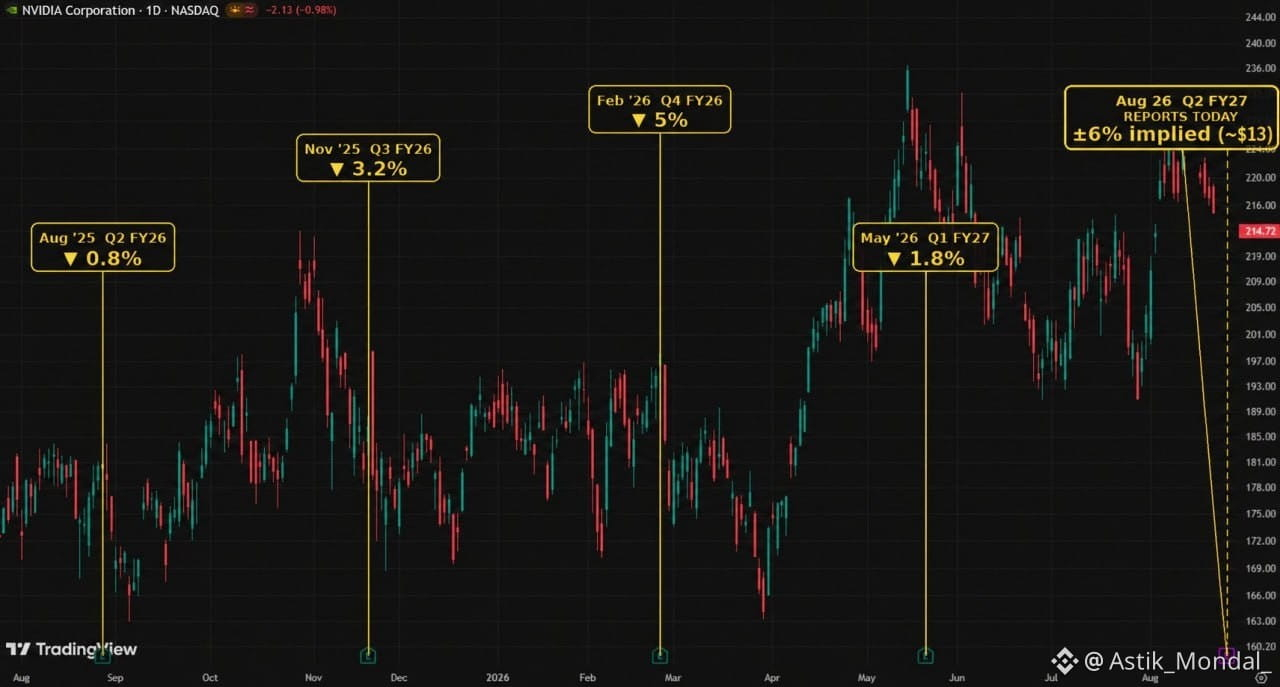
NVIDIA HAS A PROBLEM WALL STREET IS IGNORING.
$NVDA reports Q2 earnings Wednesday after the market closes.
And history is sending a brutal warning:
Beating expectations has NOT been enough.
NVIDIA has beaten Wall Street revenue estimates in each of the last 4 quarters.
Yet the stock fell the next day EVERY SINGLE TIME.
Aug 2025: $46.7B revenue vs $45.7B expected → -0.8%
Nov 2025: $57.0B vs $55.2B → -3.2%
Feb 2026: $68.1B vs $66.2B → -5.0%
May 2026: $81.6B vs $78.9B → -1.8%
The pattern is clear:
NVIDIA is no longer being judged by whether it beats expectations.
It is being judged by whether it DESTROYS them.
And the bar is getting ridiculous.
Wall Street expects nearly $92 BILLION in quarterly revenue.
Almost double last year.
Options are pricing roughly a ±6% move.
At $215, that is about $13 in either direction.
That means one earnings report could erase or create hundreds of billions of dollars in market value.
Potentially $300B+.
That is larger than the entire market caps of many major S&P 500 companies.
Here is the scary part:
A record quarter could still trigger a selloff.
Because when expectations become extreme, “great” results can become disappointing.
NVIDIA does not just need to beat the numbers.
It needs to convince the market that AI demand can keep accelerating.
The stock is no longer trading on earnings.
It is trading on expectations for the NEXT earnings.
That is a much more dangerous game.
#NVDA #NVIDIA #AI #Stocks #StockMarket
$NVDA reports Q2 earnings Wednesday after the market closes.
And history is sending a brutal warning:
Beating expectations has NOT been enough.
NVIDIA has beaten Wall Street revenue estimates in each of the last 4 quarters.
Yet the stock fell the next day EVERY SINGLE TIME.
Aug 2025: $46.7B revenue vs $45.7B expected → -0.8%
Nov 2025: $57.0B vs $55.2B → -3.2%
Feb 2026: $68.1B vs $66.2B → -5.0%
May 2026: $81.6B vs $78.9B → -1.8%
The pattern is clear:
NVIDIA is no longer being judged by whether it beats expectations.
It is being judged by whether it DESTROYS them.
And the bar is getting ridiculous.
Wall Street expects nearly $92 BILLION in quarterly revenue.
Almost double last year.
Options are pricing roughly a ±6% move.
At $215, that is about $13 in either direction.
That means one earnings report could erase or create hundreds of billions of dollars in market value.
Potentially $300B+.
That is larger than the entire market caps of many major S&P 500 companies.
Here is the scary part:
A record quarter could still trigger a selloff.
Because when expectations become extreme, “great” results can become disappointing.
NVIDIA does not just need to beat the numbers.
It needs to convince the market that AI demand can keep accelerating.
The stock is no longer trading on earnings.
It is trading on expectations for the NEXT earnings.
That is a much more dangerous game.
#NVDA #NVIDIA #AI #Stocks #StockMarket
STRATEGY JUST SENT A LOUD SIGNAL TO THE BITCOIN MARKET.
Strategy bought ZERO Bitcoin last week.
Instead, it piled roughly $1.9 BILLION into its dollar reserve.
That is a major shift in positioning.
Strategy has built its identity around aggressively accumulating BTC whenever capital is available.
So when the company chooses liquidity over Bitcoin exposure, the market should pay attention.
The contrarian angle:
This does not automatically mean Strategy is bearish on Bitcoin.
It could mean the company is preparing for something bigger.
A massive liquidity buffer gives Strategy flexibility to survive volatility, meet obligations, raise capital strategically, or deploy aggressively if Bitcoin sees a deeper correction.
In other words, they may not be abandoning the Bitcoin strategy.
They may be building ammunition.
The most important question is not why Strategy skipped one week of BTC buying.
It is what they plan to do with that $1.9 billion.
Cash sitting on the sidelines can look bearish.
Until the moment it becomes buying power.
Watch the reserve.
That may be the real story.
#Bitcoin #BTC #Strategy #Crypto #DigitalAssets
Strategy bought ZERO Bitcoin last week.
Instead, it piled roughly $1.9 BILLION into its dollar reserve.
That is a major shift in positioning.
Strategy has built its identity around aggressively accumulating BTC whenever capital is available.
So when the company chooses liquidity over Bitcoin exposure, the market should pay attention.
The contrarian angle:
This does not automatically mean Strategy is bearish on Bitcoin.
It could mean the company is preparing for something bigger.
A massive liquidity buffer gives Strategy flexibility to survive volatility, meet obligations, raise capital strategically, or deploy aggressively if Bitcoin sees a deeper correction.
In other words, they may not be abandoning the Bitcoin strategy.
They may be building ammunition.
The most important question is not why Strategy skipped one week of BTC buying.
It is what they plan to do with that $1.9 billion.
Cash sitting on the sidelines can look bearish.
Until the moment it becomes buying power.
Watch the reserve.
That may be the real story.
#Bitcoin #BTC #Strategy #Crypto #DigitalAssets


JAPAN JUST FLIPPED THE SWITCH ON CRYPTO.
After 4 years of regulatory freeze, Japan has finally approved its first new crypto exchange license.
Nomura-backed Laser Digital is the first major beneficiary.
But the license is only the beginning.
Laser Digital will initially provide liquidity to licensed Japanese crypto firms before expanding into institutional trading.
That matters because Japan is not reopening crypto for retail speculation.
It is positioning crypto as a legitimate financial market.
Japan has already moved toward treating crypto as a financial product.
The next potential dominoes are much bigger:
ETFs.
Institutional capital.
More favorable tax treatment.
Deeper regulated markets.
And potentially, a massive wave of Japanese capital entering digital assets.
The most overlooked number?
79% of Japanese institutions surveyed say they plan to buy crypto within the next 3 years.
That is not a niche adoption story.
That is institutional positioning before the infrastructure is fully built.
The contrarian take:
The biggest crypto opportunity in Japan may not be retail adoption.
It may be the financial system quietly integrating crypto into traditional portfolios.
When regulation moves first, capital usually follows later.
Japan may have spent four years building the walls.
Now it is starting to open the gates.
The question is no longer whether Japan will participate in crypto.
It is how much institutional capital enters once the rules are fully clear.
#Bitcoin #Crypto #Japan #Ethereum #DigitalAssets
After 4 years of regulatory freeze, Japan has finally approved its first new crypto exchange license.
Nomura-backed Laser Digital is the first major beneficiary.
But the license is only the beginning.
Laser Digital will initially provide liquidity to licensed Japanese crypto firms before expanding into institutional trading.
That matters because Japan is not reopening crypto for retail speculation.
It is positioning crypto as a legitimate financial market.
Japan has already moved toward treating crypto as a financial product.
The next potential dominoes are much bigger:
ETFs.
Institutional capital.
More favorable tax treatment.
Deeper regulated markets.
And potentially, a massive wave of Japanese capital entering digital assets.
The most overlooked number?
79% of Japanese institutions surveyed say they plan to buy crypto within the next 3 years.
That is not a niche adoption story.
That is institutional positioning before the infrastructure is fully built.
The contrarian take:
The biggest crypto opportunity in Japan may not be retail adoption.
It may be the financial system quietly integrating crypto into traditional portfolios.
When regulation moves first, capital usually follows later.
Japan may have spent four years building the walls.
Now it is starting to open the gates.
The question is no longer whether Japan will participate in crypto.
It is how much institutional capital enters once the rules are fully clear.
#Bitcoin #Crypto #Japan #Ethereum #DigitalAssets


THE RIAL IS ENTERING DANGEROUS TERRITORY.
Iran’s currency has surged toward 2 MILLION rials per dollar as its economic lifelines face increasing pressure.
Oil exports are reportedly near a standstill. Financial channels through the UAE are tightening. And Tehran is being pushed even deeper toward China and BRICS.
This is bigger than a currency collapse.
When a country loses access to dollars, oil revenue, banking channels and trusted financial intermediaries, the currency becomes the first place where the pressure becomes visible.
Iran’s response is clear: accelerate the pivot away from the US-led financial system.
China, BRICS and alternative payment channels are no longer just geopolitical talking points.
For Iran, they are becoming economic survival tools.
But here is the contrarian angle:
The more Iran is cut off from the dollar system, the stronger its incentive becomes to build alternatives.
Sanctions can weaken a currency today while simultaneously accelerating the creation of parallel financial networks for tomorrow.
The real battle may not be Iran versus the dollar.
It may be the dollar system versus an emerging network of alternatives.
And that battle is only getting started.
#Iran #BRICS #Dollar #Crypto #Geopolitics
Iran’s currency has surged toward 2 MILLION rials per dollar as its economic lifelines face increasing pressure.
Oil exports are reportedly near a standstill. Financial channels through the UAE are tightening. And Tehran is being pushed even deeper toward China and BRICS.
This is bigger than a currency collapse.
When a country loses access to dollars, oil revenue, banking channels and trusted financial intermediaries, the currency becomes the first place where the pressure becomes visible.
Iran’s response is clear: accelerate the pivot away from the US-led financial system.
China, BRICS and alternative payment channels are no longer just geopolitical talking points.
For Iran, they are becoming economic survival tools.
But here is the contrarian angle:
The more Iran is cut off from the dollar system, the stronger its incentive becomes to build alternatives.
Sanctions can weaken a currency today while simultaneously accelerating the creation of parallel financial networks for tomorrow.
The real battle may not be Iran versus the dollar.
It may be the dollar system versus an emerging network of alternatives.
And that battle is only getting started.
#Iran #BRICS #Dollar #Crypto #Geopolitics


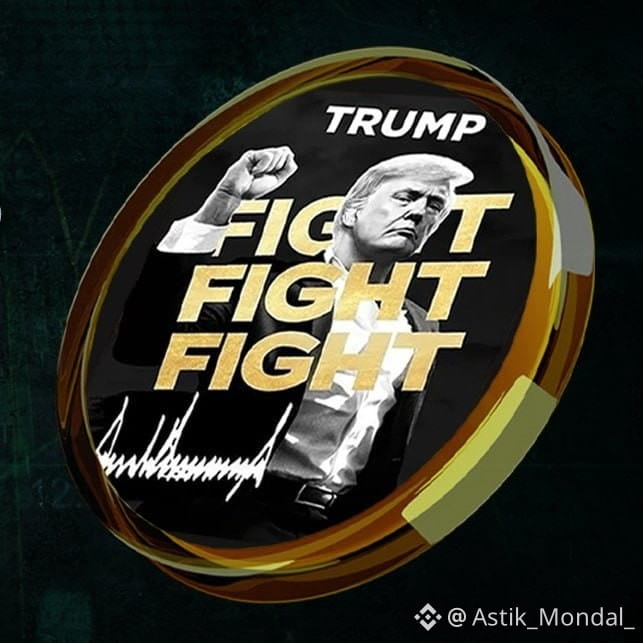
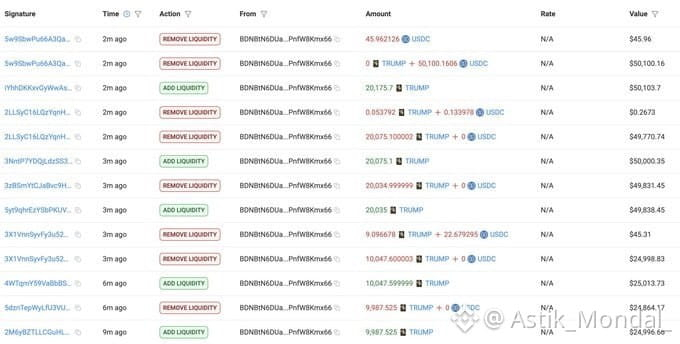
⚡️ THE TRUMP TEAM JUST SOLD $TRUMP .
The Trump team reportedly sold $TRUMP tokens and received a massive 3.39 MILLION $USDC.
That instantly raises one question:
WHO IS SELLING INTO THE MARKET?
The timing matters.
A large wallet connected to the Trump ecosystem moving millions into stablecoins can put serious pressure on $TRUMP , especially if the tokens are being sold into market liquidity.
For $TRUMP holders, this is a warning.
For traders, it's a signal to watch wallet movements, exchange inflows and selling pressure closely.
One transaction doesn't automatically mean a collapse is coming.
But when millions of dollars are involved, ignoring the flow can be expensive.
The market watches the chart.
Smart money watches the wallets.
#TRUMP #Crypto #MAGA #Altcoins #Bitcoin $TRUMP
The Trump team reportedly sold $TRUMP tokens and received a massive 3.39 MILLION $USDC.
That instantly raises one question:
WHO IS SELLING INTO THE MARKET?
The timing matters.
A large wallet connected to the Trump ecosystem moving millions into stablecoins can put serious pressure on $TRUMP , especially if the tokens are being sold into market liquidity.
For $TRUMP holders, this is a warning.
For traders, it's a signal to watch wallet movements, exchange inflows and selling pressure closely.
One transaction doesn't automatically mean a collapse is coming.
But when millions of dollars are involved, ignoring the flow can be expensive.
The market watches the chart.
Smart money watches the wallets.
#TRUMP #Crypto #MAGA #Altcoins #Bitcoin $TRUMP
🚨 Ray Dalio just explained how the U.S. will handle its debt crisis:
“We’re going to do it the way that we always do it.”
When countries go broke:
• Devalue the currency
• Print money
• Create artificially low interest rates so bondholders get paid less than they should
“That’s the way Japan has done itand that’s the way we will do it.”
The playbook is already written.
#RayDalio #USDebt #DebtCrisis #Inflation #Macro
“We’re going to do it the way that we always do it.”
When countries go broke:
• Devalue the currency
• Print money
• Create artificially low interest rates so bondholders get paid less than they should
“That’s the way Japan has done itand that’s the way we will do it.”
The playbook is already written.
#RayDalio #USDebt #DebtCrisis #Inflation #Macro
🚨 SOMETHING BIG IS HAPPENING BEHIND THE SCENES.
Wintermute, one of the biggest liquidity providers in crypto, is reportedly sitting on roughly $190.8M in short positions across Hyperliquid.
And the positioning is massive.
$53M short on ETH.
$30.7M short on BTC.
$22.6M short on SOL.
$11.4M short on HYPE.
$10.2M short on XRP.
Those positions are currently sitting at roughly $5.85M in unrealized losses.
Yet here's the part most people are missing:
Wintermute is reportedly still up more than $203M in lifetime PnL.
So is this bearish conviction?
Or is something much more sophisticated happening?
Market makers don't necessarily trade like directional retail traders.
Their positions can be part of hedging, liquidity provision, basis trades and complex risk management.
But when one of the largest players in the market is carrying nearly $200M in shorts while prices are pushing higher, the setup becomes extremely interesting.
Because if the market keeps squeezing upward, those shorts can become fuel.
And if BTC, ETH, SOL and XRP continue climbing, the question changes from:
"Why is Wintermute short?"
to:
"How much pain can these shorts absorb before positioning has to change?"
The most dangerous market for bears isn't a crashing market.
It's a market that refuses to go down.
Shorts start losing.
Leverage builds.
Liquidations accelerate.
And momentum feeds on itself.
Wintermute may be right.
But if they're wrong, $190M of positioning could become a very interesting source of volatility.
The market doesn't need everyone to be bullish.
It just needs the bears to be trapped.
#Bitcoin #Ethereum #Crypto #Altcoins #Hyperliquid
Wintermute, one of the biggest liquidity providers in crypto, is reportedly sitting on roughly $190.8M in short positions across Hyperliquid.
And the positioning is massive.
$53M short on ETH.
$30.7M short on BTC.
$22.6M short on SOL.
$11.4M short on HYPE.
$10.2M short on XRP.
Those positions are currently sitting at roughly $5.85M in unrealized losses.
Yet here's the part most people are missing:
Wintermute is reportedly still up more than $203M in lifetime PnL.
So is this bearish conviction?
Or is something much more sophisticated happening?
Market makers don't necessarily trade like directional retail traders.
Their positions can be part of hedging, liquidity provision, basis trades and complex risk management.
But when one of the largest players in the market is carrying nearly $200M in shorts while prices are pushing higher, the setup becomes extremely interesting.
Because if the market keeps squeezing upward, those shorts can become fuel.
And if BTC, ETH, SOL and XRP continue climbing, the question changes from:
"Why is Wintermute short?"
to:
"How much pain can these shorts absorb before positioning has to change?"
The most dangerous market for bears isn't a crashing market.
It's a market that refuses to go down.
Shorts start losing.
Leverage builds.
Liquidations accelerate.
And momentum feeds on itself.
Wintermute may be right.
But if they're wrong, $190M of positioning could become a very interesting source of volatility.
The market doesn't need everyone to be bullish.
It just needs the bears to be trapped.
#Bitcoin #Ethereum #Crypto #Altcoins #Hyperliquid


Log in to explore more content