
The Alpha Wolf
369 Posts

The Alpha Wolf
Report
Block User
Most people chase hype. Alpha Wolves follow strategy 🐺 Join the pack.
312 Following
3.2K+ Followers
165 Liked
Posts
All
Quotes
Live
·
--
Bullish
The Dollar Is Making Its Move. Are You Ready?
The U.S. dollar is once again at the center of global attention. Every major move in the dollar has the power to reshape the direction of crypto, stocks, gold, and global markets.
When the dollar strengthens, risk assets often face pressure. When it weakens, liquidity tends to flow back into higher-risk investments. That's why experienced traders watch the dollar just as closely as they watch Bitcoin.
The next move in the U.S. Dollar Index could become the catalyst for the market's next big trend. Staying ahead of macro shifts can make the difference between reacting late and positioning early.
The biggest opportunities often begin before the crowd notices.
Do you think the U.S. dollar is preparing for another major rally, or is weakness ahead that could ignite crypto and risk assets?
The Dollar Is Making Its Move. Are You Ready?
The U.S. dollar is once again at the center of global attention. Every major move in the dollar has the power to reshape the direction of crypto, stocks, gold, and global markets.
When the dollar strengthens, risk assets often face pressure. When it weakens, liquidity tends to flow back into higher-risk investments. That's why experienced traders watch the dollar just as closely as they watch Bitcoin.
The next move in the U.S. Dollar Index could become the catalyst for the market's next big trend. Staying ahead of macro shifts can make the difference between reacting late and positioning early.
The biggest opportunities often begin before the crowd notices.
Do you think the U.S. dollar is preparing for another major rally, or is weakness ahead that could ignite crypto and risk assets?
The U.S. dollar is once again at the center of global attention. Every major move in the dollar has the power to reshape the direction of crypto, stocks, gold, and global markets.
When the dollar strengthens, risk assets often face pressure. When it weakens, liquidity tends to flow back into higher-risk investments. That's why experienced traders watch the dollar just as closely as they watch Bitcoin.
The next move in the U.S. Dollar Index could become the catalyst for the market's next big trend. Staying ahead of macro shifts can make the difference between reacting late and positioning early.
The biggest opportunities often begin before the crowd notices.
Do you think the U.S. dollar is preparing for another major rally, or is weakness ahead that could ignite crypto and risk assets?

45
·
--
Bullish
$CBRSB Is Heating Up. Is Another Breakout About to Begin?
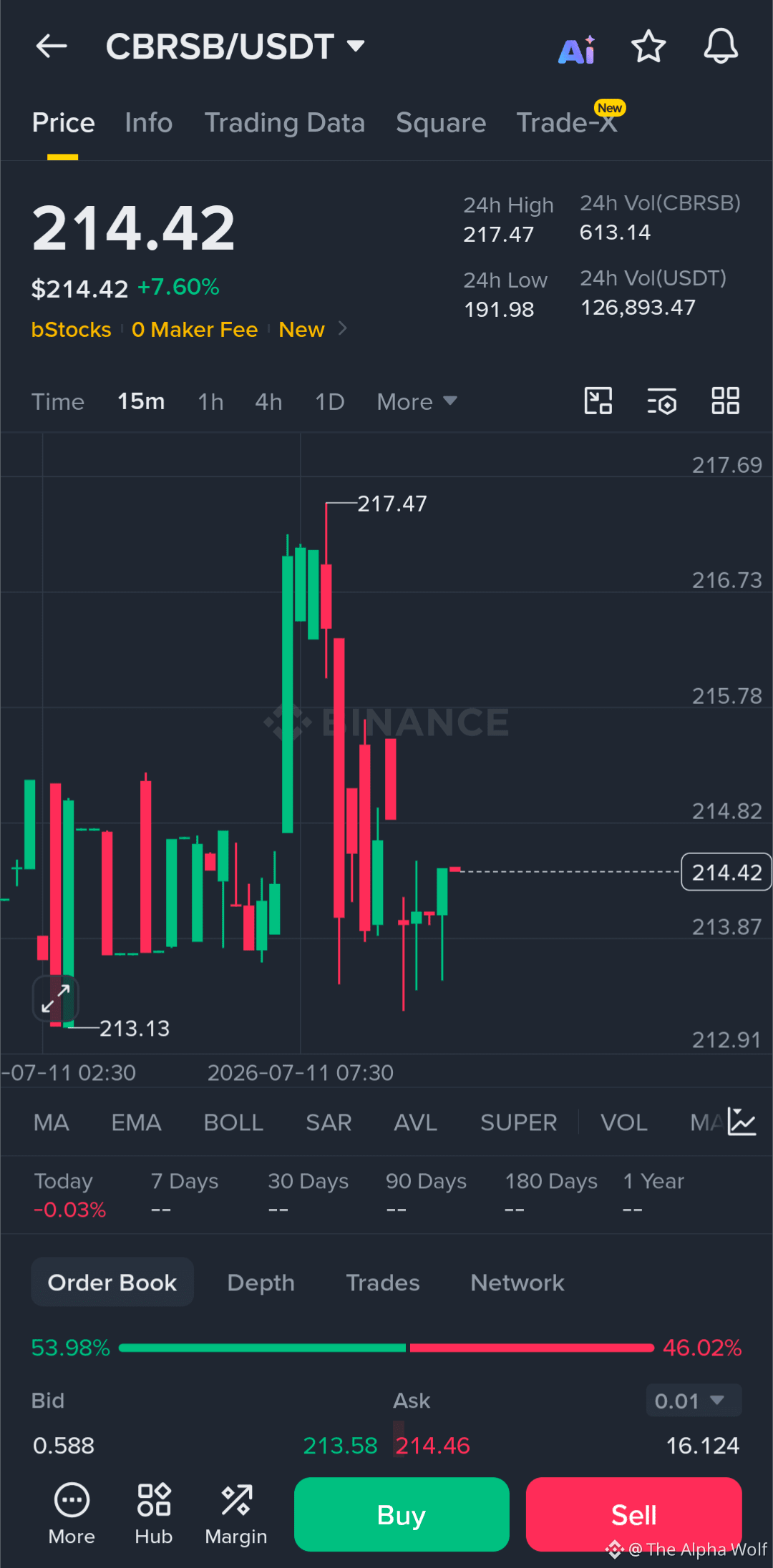
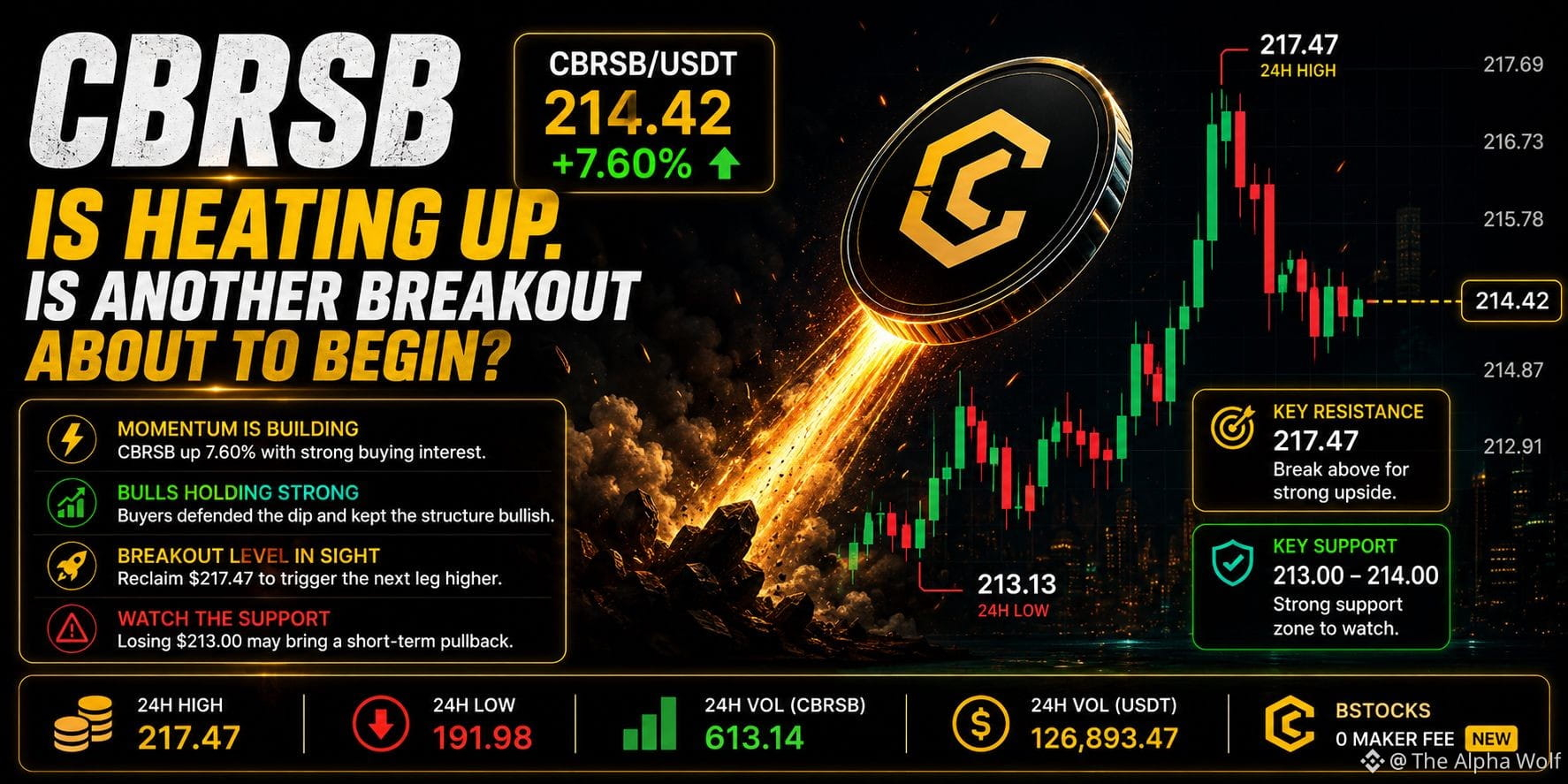
CBRSB has climbed 7.6%, attracting fresh attention after surging to an intraday high of $217.47. Although the price faced rejection at the top, buyers quickly stepped back in, keeping the market firmly in bullish territory.
Now trading around $214.42, CBRSB is consolidating just below resistance. This kind of price action often precedes a decisive move, making the next few candles especially important.
If bulls reclaim $217.47, the rally could accelerate and unlock another leg higher. On the other hand, if sellers regain control, a healthy pullback toward the $213–214 zone may provide the foundation for the next advance.
Momentum is building, buyers still have the edge, and the market is watching closely.
Will CBRSB smash through $217.47, or is one more pullback coming before the next breakout?
{spot}(CBRSBUSDT)
$CBRSB Is Heating Up. Is Another Breakout About to Begin?
CBRSB has climbed 7.6%, attracting fresh attention after surging to an intraday high of $217.47. Although the price faced rejection at the top, buyers quickly stepped back in, keeping the market firmly in bullish territory.
Now trading around $214.42, CBRSB is consolidating just below resistance. This kind of price action often precedes a decisive move, making the next few candles especially important.
If bulls reclaim $217.47, the rally could accelerate and unlock another leg higher. On the other hand, if sellers regain control, a healthy pullback toward the $213–214 zone may provide the foundation for the next advance.
Momentum is building, buyers still have the edge, and the market is watching closely.
Will CBRSB smash through $217.47, or is one more pullback coming before the next breakout?
CBRSB has climbed 7.6%, attracting fresh attention after surging to an intraday high of $217.47. Although the price faced rejection at the top, buyers quickly stepped back in, keeping the market firmly in bullish territory.
Now trading around $214.42, CBRSB is consolidating just below resistance. This kind of price action often precedes a decisive move, making the next few candles especially important.
If bulls reclaim $217.47, the rally could accelerate and unlock another leg higher. On the other hand, if sellers regain control, a healthy pullback toward the $213–214 zone may provide the foundation for the next advance.
Momentum is building, buyers still have the edge, and the market is watching closely.
Will CBRSB smash through $217.47, or is one more pullback coming before the next breakout?
1
85
HMSTR Surges 15% — Bulls Are Taking Control$HMSTR is showing renewed strength after gaining nearly 15%, with buyers stepping in following a brief pullback from the session high of $0.0002260. The quick recovery suggests bullish momentum is still alive as the market looks for its next move.
If HMSTR breaks above $0.0002260, another leg higher could follow. However, losing support around $0.0002100–$0.0002145 may lead to a short-term correction before the uptrend resumes.
Will #HMSTR break to a new high, or is a cooldown coming first?
HMSTR Surges 15% — Bulls Are Taking Control
$HMSTR is showing renewed strength after gaining nearly 15%, with buyers stepping in following a brief pullback from the session high of $0.0002260. The quick recovery suggests bullish momentum is still alive as the market looks for its next move.
If HMSTR breaks above $0.0002260, another leg higher could follow. However, losing support around $0.0002100–$0.0002145 may lead to a short-term correction before the uptrend resumes.
Will #HMSTR break to a new high, or is a cooldown coming first?
If HMSTR breaks above $0.0002260, another leg higher could follow. However, losing support around $0.0002100–$0.0002145 may lead to a short-term correction before the uptrend resumes.
Will #HMSTR break to a new high, or is a cooldown coming first?
96
·
--
Bullish
$MMT Is Under Pressure. Will Buyers Defend This Level?
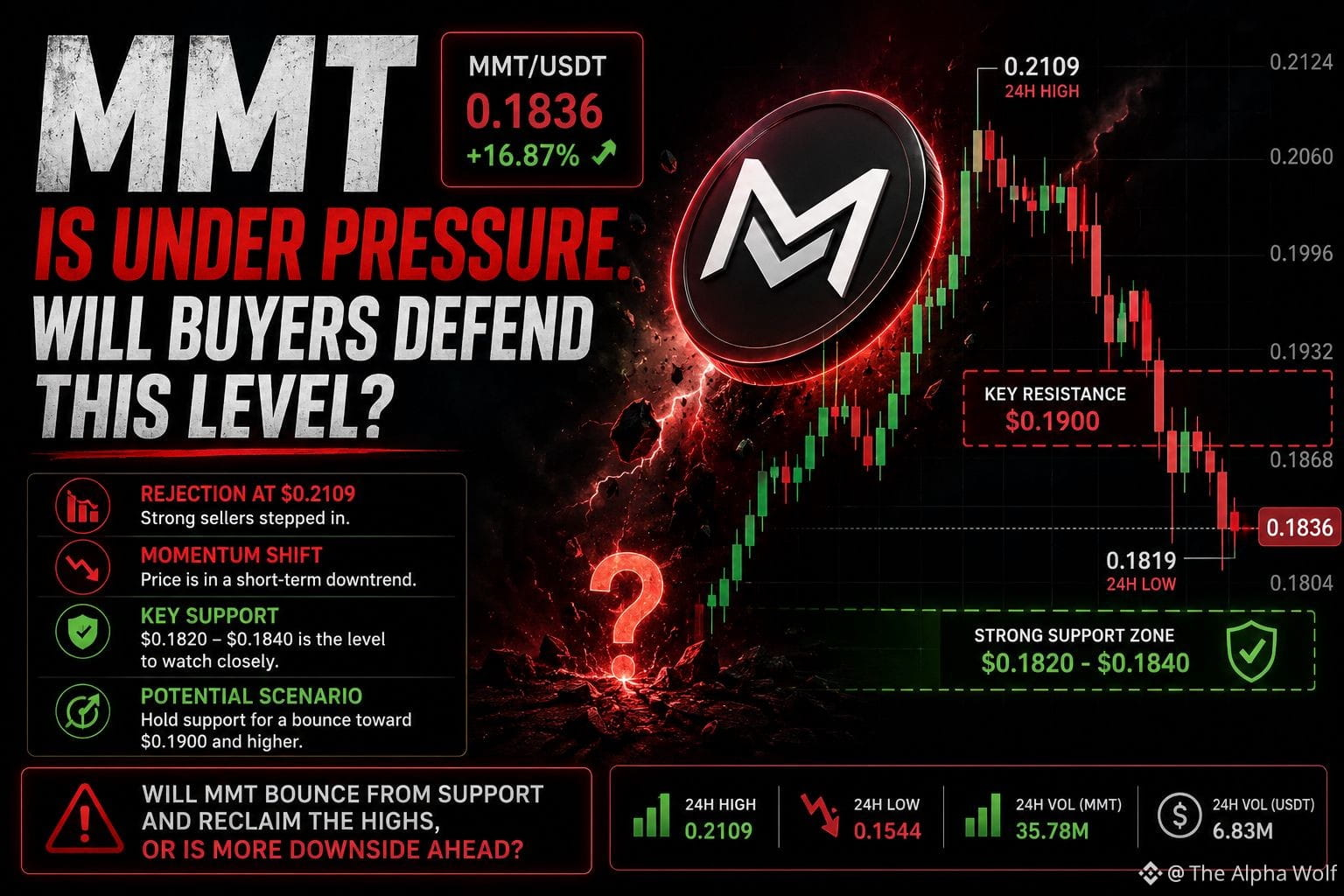
MMT is still holding a 16.87% daily gain, but the momentum has shifted after facing strong rejection near $0.2109. The price has steadily pulled back to around $0.1836, where the market is searching for support.
This zone could become a key turning point. If buyers defend the $0.1820–$0.1840 range, MMT may attempt another push toward $0.1900 and eventually retest $0.2109. However, if selling pressure continues, a deeper correction could follow before the next bullish move begins.
The market is entering a decision phase, and the next few candles could define MMT's short-term direction.
Will MMT bounce from support and reclaim the highs, or is more downside ahead?
{spot}(MMTUSDT)
$MMT Is Under Pressure. Will Buyers Defend This Level?
MMT is still holding a 16.87% daily gain, but the momentum has shifted after facing strong rejection near $0.2109. The price has steadily pulled back to around $0.1836, where the market is searching for support.
This zone could become a key turning point. If buyers defend the $0.1820–$0.1840 range, MMT may attempt another push toward $0.1900 and eventually retest $0.2109. However, if selling pressure continues, a deeper correction could follow before the next bullish move begins.
The market is entering a decision phase, and the next few candles could define MMT's short-term direction.
Will MMT bounce from support and reclaim the highs, or is more downside ahead?
MMT is still holding a 16.87% daily gain, but the momentum has shifted after facing strong rejection near $0.2109. The price has steadily pulled back to around $0.1836, where the market is searching for support.
This zone could become a key turning point. If buyers defend the $0.1820–$0.1840 range, MMT may attempt another push toward $0.1900 and eventually retest $0.2109. However, if selling pressure continues, a deeper correction could follow before the next bullish move begins.
The market is entering a decision phase, and the next few candles could define MMT's short-term direction.
Will MMT bounce from support and reclaim the highs, or is more downside ahead?
88
·
--
Bullish
SKL Is Building Momentum. Is a Bigger Breakout Around the Corner?
$SKL
{spot}(SKLUSDT)
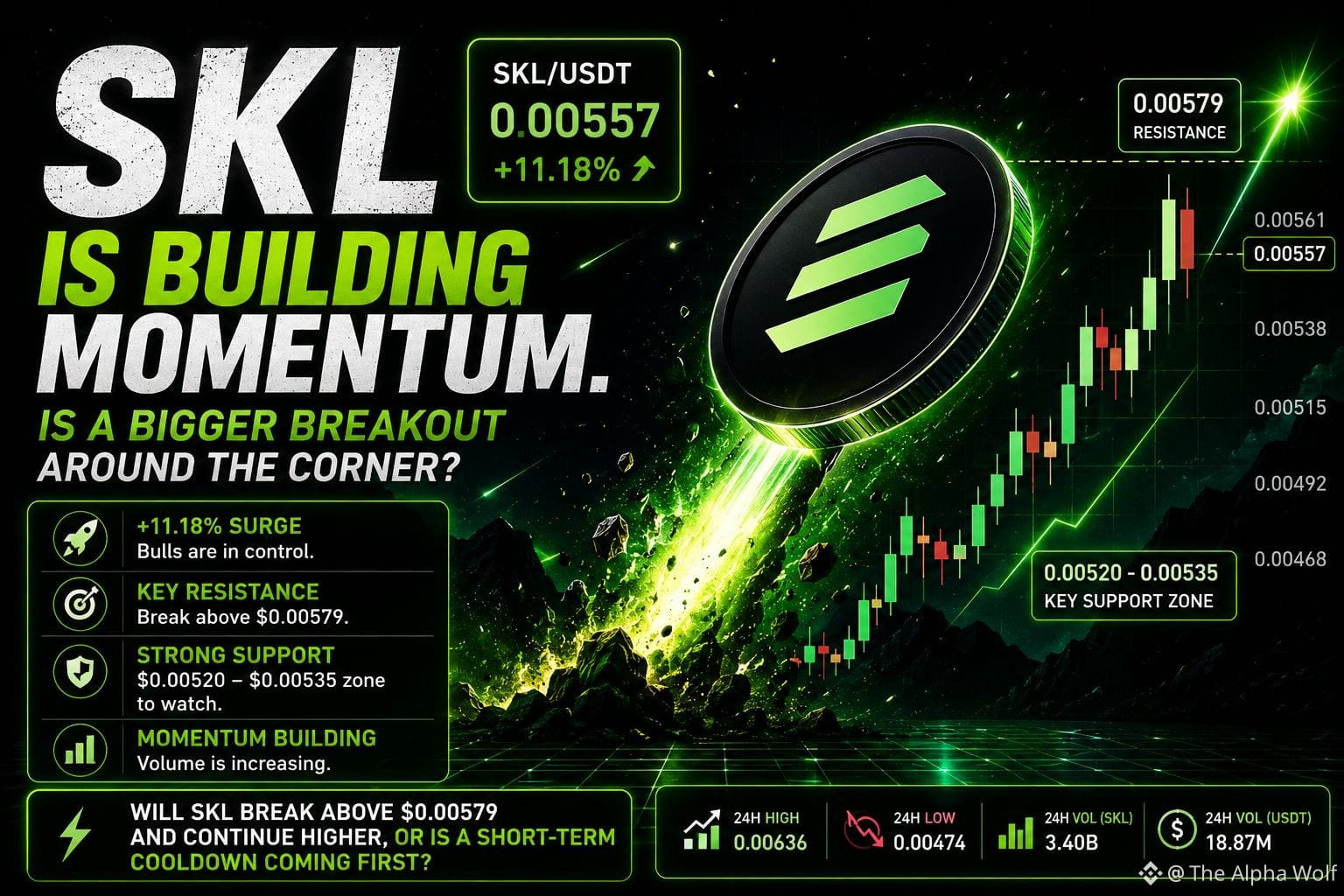
has surged more than 11%, attracting fresh buying pressure after a strong rebound from $0.00474. Bulls have stepped in aggressively, pushing the price toward $0.00579, where the market is now testing a key resistance zone.
What makes this move interesting is the increasing momentum and strong buying activity. If SKL manages to reclaim and hold above $0.00579, it could trigger another wave of bullish momentum. However, if buyers lose strength, a healthy pullback toward the $0.00520–$0.00535 region wouldn't be surprising before the next move.
Momentum is building, volume is flowing in, and traders are watching closely.
Will SKL break above $0.00579 and continue higher, or is a short-term cooldown coming first?
SKL Is Building Momentum. Is a Bigger Breakout Around the Corner?
$SKL
has surged more than 11%, attracting fresh buying pressure after a strong rebound from $0.00474. Bulls have stepped in aggressively, pushing the price toward $0.00579, where the market is now testing a key resistance zone.
What makes this move interesting is the increasing momentum and strong buying activity. If SKL manages to reclaim and hold above $0.00579, it could trigger another wave of bullish momentum. However, if buyers lose strength, a healthy pullback toward the $0.00520–$0.00535 region wouldn't be surprising before the next move.
Momentum is building, volume is flowing in, and traders are watching closely.
Will SKL break above $0.00579 and continue higher, or is a short-term cooldown coming first?
$SKL
has surged more than 11%, attracting fresh buying pressure after a strong rebound from $0.00474. Bulls have stepped in aggressively, pushing the price toward $0.00579, where the market is now testing a key resistance zone.
What makes this move interesting is the increasing momentum and strong buying activity. If SKL manages to reclaim and hold above $0.00579, it could trigger another wave of bullish momentum. However, if buyers lose strength, a healthy pullback toward the $0.00520–$0.00535 region wouldn't be surprising before the next move.
Momentum is building, volume is flowing in, and traders are watching closely.
Will SKL break above $0.00579 and continue higher, or is a short-term cooldown coming first?
151
·
--
Bullish
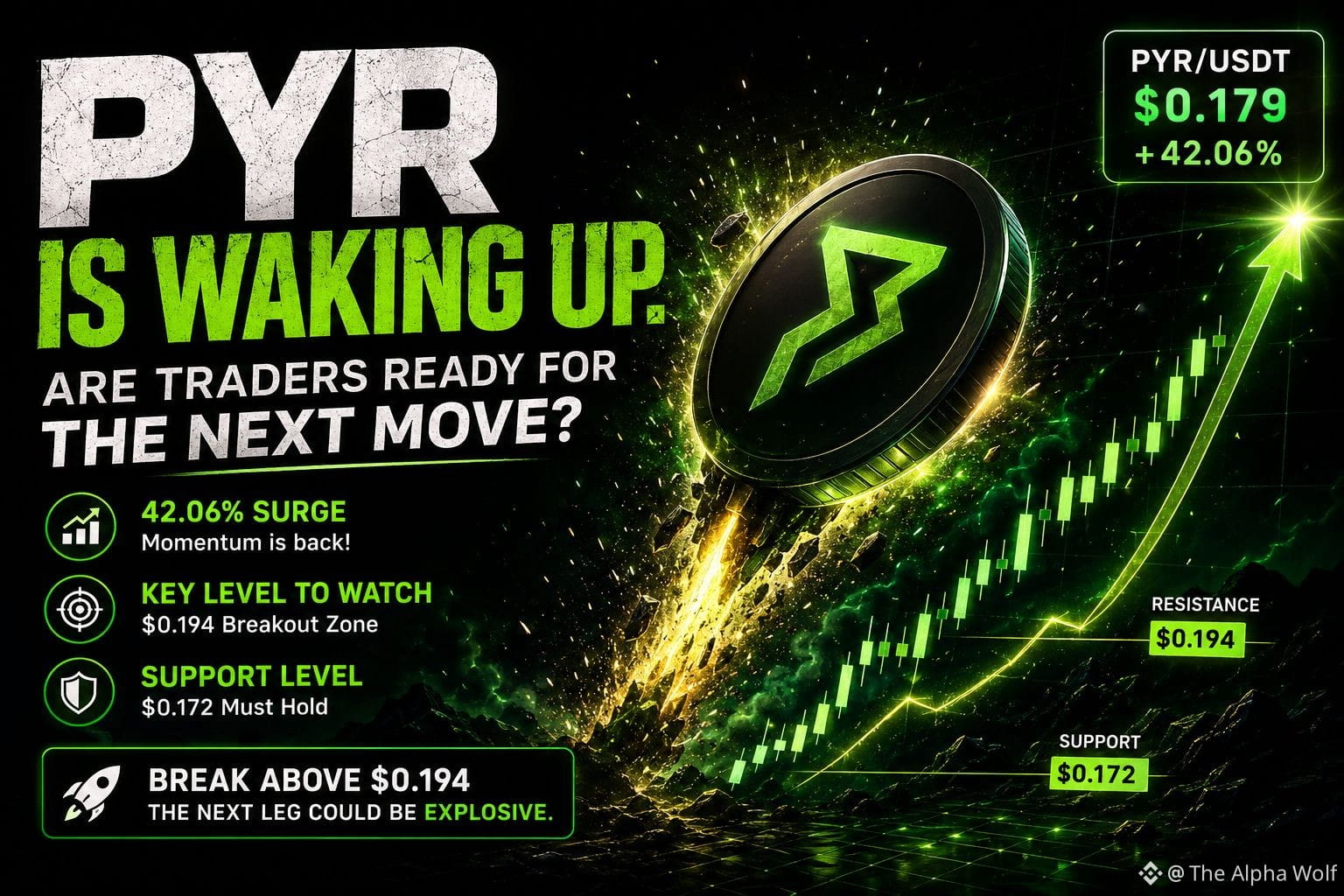
PYR is Waking Up. Are Traders Ready for the Next Move?
$PYR just exploded over 42%, grabbing everyone's attention after a powerful breakout. Momentum is clearly back, but the real question is whether this rally is just getting started or setting up for another explosive leg.
Right now, price is holding around $0.179 after touching $0.194, showing healthy consolidation instead of an instant collapse. That's often where the biggest opportunities begin if buyers defend the current range.
Volume has surged, volatility is rising, and traders are closely watching whether PYR can reclaim $0.194. A decisive breakout above that level could open the door for a fresh wave of momentum, while losing $0.172 may trigger a deeper pullback before the next attempt.
The market is finally paying attention to PYR again.
Are you expecting a breakout above $0.194, or is a cooldown coming first?
{spot}(PYRUSDT)
PYR is Waking Up. Are Traders Ready for the Next Move?
$PYR just exploded over 42%, grabbing everyone's attention after a powerful breakout. Momentum is clearly back, but the real question is whether this rally is just getting started or setting up for another explosive leg.
Right now, price is holding around $0.179 after touching $0.194, showing healthy consolidation instead of an instant collapse. That's often where the biggest opportunities begin if buyers defend the current range.
Volume has surged, volatility is rising, and traders are closely watching whether PYR can reclaim $0.194. A decisive breakout above that level could open the door for a fresh wave of momentum, while losing $0.172 may trigger a deeper pullback before the next attempt.
The market is finally paying attention to PYR again.
Are you expecting a breakout above $0.194, or is a cooldown coming first?
$PYR just exploded over 42%, grabbing everyone's attention after a powerful breakout. Momentum is clearly back, but the real question is whether this rally is just getting started or setting up for another explosive leg.
Right now, price is holding around $0.179 after touching $0.194, showing healthy consolidation instead of an instant collapse. That's often where the biggest opportunities begin if buyers defend the current range.
Volume has surged, volatility is rising, and traders are closely watching whether PYR can reclaim $0.194. A decisive breakout above that level could open the door for a fresh wave of momentum, while losing $0.172 may trigger a deeper pullback before the next attempt.
The market is finally paying attention to PYR again.
Are you expecting a breakout above $0.194, or is a cooldown coming first?
119
·
--
Bullish
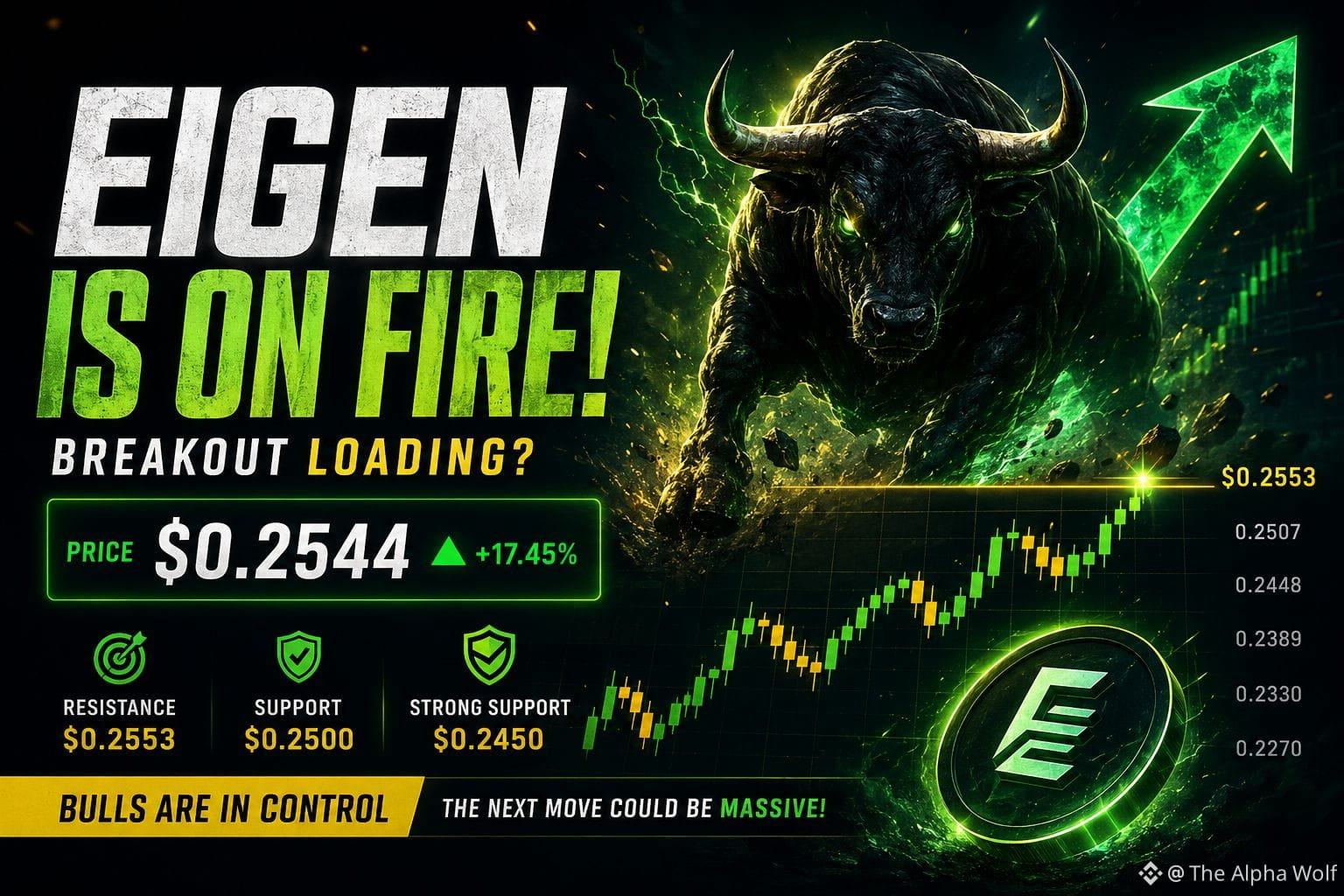
🚨 $EIGEN Is Knocking on Resistance... Will the Breakout Explode?
$EIGEN has caught the market's attention with a 17%+ rally, climbing from around $0.228 to $0.255 in a strong bullish move. Buyers continue defending every dip, showing that momentum is still on the bulls' side.
The key level now is $0.2553. A clean breakout above this resistance could trigger another wave of buying as traders chase the next leg higher.
Here's what I'm watching: • Resistance: $0.2553 • Immediate Support: $0.2500 • Strong Support: $0.2450
As long as price holds above support, the bullish structure remains intact. However, if sellers reject the breakout again, a healthy pullback before the next move wouldn't be surprising.
Momentum is building, volume is improving, and all eyes are now on whether EIGEN can flip resistance into support.
The next few candles could decide whether this becomes a breakout... or a bull trap. 👀
Always manage your risk and never chase green candles without a plan.
{spot}(EIGENUSDT)
🚨 $EIGEN Is Knocking on Resistance... Will the Breakout Explode?
$EIGEN has caught the market's attention with a 17%+ rally, climbing from around $0.228 to $0.255 in a strong bullish move. Buyers continue defending every dip, showing that momentum is still on the bulls' side.
The key level now is $0.2553. A clean breakout above this resistance could trigger another wave of buying as traders chase the next leg higher.
Here's what I'm watching: • Resistance: $0.2553 • Immediate Support: $0.2500 • Strong Support: $0.2450
As long as price holds above support, the bullish structure remains intact. However, if sellers reject the breakout again, a healthy pullback before the next move wouldn't be surprising.
Momentum is building, volume is improving, and all eyes are now on whether EIGEN can flip resistance into support.
The next few candles could decide whether this becomes a breakout... or a bull trap. 👀
Always manage your risk and never chase green candles without a plan.
$EIGEN has caught the market's attention with a 17%+ rally, climbing from around $0.228 to $0.255 in a strong bullish move. Buyers continue defending every dip, showing that momentum is still on the bulls' side.
The key level now is $0.2553. A clean breakout above this resistance could trigger another wave of buying as traders chase the next leg higher.
Here's what I'm watching: • Resistance: $0.2553 • Immediate Support: $0.2500 • Strong Support: $0.2450
As long as price holds above support, the bullish structure remains intact. However, if sellers reject the breakout again, a healthy pullback before the next move wouldn't be surprising.
Momentum is building, volume is improving, and all eyes are now on whether EIGEN can flip resistance into support.
The next few candles could decide whether this becomes a breakout... or a bull trap. 👀
Always manage your risk and never chase green candles without a plan.
133

Article
Why OPG Could Benefit From the Next Wave of Blockchain Infrastructure GrowthCrypto markets often focus on the projects that attract the most attention, but history shows that some of the biggest opportunities emerge from infrastructure plays that quietly solve critical problems behind the scenes. $OPG OPG is one of the projects positioning itself within this category.
As blockchain ecosystems continue to expand, scalability, efficiency, and interoperability have become increasingly important. New users are entering the market, decentralized applications are becoming more sophisticated, and networks are processing larger amounts of activity than ever before. This creates demand for infrastructure capable of supporting long-term growth.
The value of infrastructure projects is often overlooked during periods dominated by speculation. However, every successful blockchain ecosystem relies on underlying technology that enables transactions, liquidity movement, security, and user interaction. Without strong infrastructure, growth eventually encounters limitations.
What makes OPG interesting is its exposure to this broader trend. Rather than focusing solely on short-term narratives, the project aligns itself with the continued development of blockchain technology and ecosystem expansion. As adoption increases, the need for reliable and efficient infrastructure is likely to grow alongside it.
Investors are beginning to recognize that the future of crypto may not be defined by a single application or trend. Instead, it could be shaped by the networks, protocols, and infrastructure layers that support thousands of applications simultaneously. These foundational layers often become more valuable as activity across the ecosystem increases.
From a market perspective, infrastructure-focused projects frequently gain momentum when investors begin searching for assets with long-term utility rather than purely speculative appeal. As the industry matures, capital tends to flow toward projects that contribute to the functionality and sustainability of the broader ecosystem.
The larger narrative is simple. Blockchain adoption continues to advance, and every new participant, application, and ecosystem creates additional demand for robust infrastructure. Projects operating within this space are positioned to benefit if the industry continues moving toward greater scale and complexity.
While market conditions will always influence short-term price action, OPG represents a reminder that some of the strongest opportunities can emerge from the technologies working behind the scenes. As crypto evolves, infrastructure may remain one of the most important sectors to watch, and OPG is a project that deserves attention within that conversation.
{spot}(OPGUSDT)
Why OPG Could Benefit From the Next Wave of Blockchain Infrastructure Growth
Crypto markets often focus on the projects that attract the most attention, but history shows that some of the biggest opportunities emerge from infrastructure plays that quietly solve critical problems behind the scenes. $OPG OPG is one of the projects positioning itself within this category.
As blockchain ecosystems continue to expand, scalability, efficiency, and interoperability have become increasingly important. New users are entering the market, decentralized applications are becoming more sophisticated, and networks are processing larger amounts of activity than ever before. This creates demand for infrastructure capable of supporting long-term growth.
The value of infrastructure projects is often overlooked during periods dominated by speculation. However, every successful blockchain ecosystem relies on underlying technology that enables transactions, liquidity movement, security, and user interaction. Without strong infrastructure, growth eventually encounters limitations.
What makes OPG interesting is its exposure to this broader trend. Rather than focusing solely on short-term narratives, the project aligns itself with the continued development of blockchain technology and ecosystem expansion. As adoption increases, the need for reliable and efficient infrastructure is likely to grow alongside it.
Investors are beginning to recognize that the future of crypto may not be defined by a single application or trend. Instead, it could be shaped by the networks, protocols, and infrastructure layers that support thousands of applications simultaneously. These foundational layers often become more valuable as activity across the ecosystem increases.
From a market perspective, infrastructure-focused projects frequently gain momentum when investors begin searching for assets with long-term utility rather than purely speculative appeal. As the industry matures, capital tends to flow toward projects that contribute to the functionality and sustainability of the broader ecosystem.
The larger narrative is simple. Blockchain adoption continues to advance, and every new participant, application, and ecosystem creates additional demand for robust infrastructure. Projects operating within this space are positioned to benefit if the industry continues moving toward greater scale and complexity.
While market conditions will always influence short-term price action, OPG represents a reminder that some of the strongest opportunities can emerge from the technologies working behind the scenes. As crypto evolves, infrastructure may remain one of the most important sectors to watch, and OPG is a project that deserves attention within that conversation.
As blockchain ecosystems continue to expand, scalability, efficiency, and interoperability have become increasingly important. New users are entering the market, decentralized applications are becoming more sophisticated, and networks are processing larger amounts of activity than ever before. This creates demand for infrastructure capable of supporting long-term growth.
The value of infrastructure projects is often overlooked during periods dominated by speculation. However, every successful blockchain ecosystem relies on underlying technology that enables transactions, liquidity movement, security, and user interaction. Without strong infrastructure, growth eventually encounters limitations.
What makes OPG interesting is its exposure to this broader trend. Rather than focusing solely on short-term narratives, the project aligns itself with the continued development of blockchain technology and ecosystem expansion. As adoption increases, the need for reliable and efficient infrastructure is likely to grow alongside it.
Investors are beginning to recognize that the future of crypto may not be defined by a single application or trend. Instead, it could be shaped by the networks, protocols, and infrastructure layers that support thousands of applications simultaneously. These foundational layers often become more valuable as activity across the ecosystem increases.
From a market perspective, infrastructure-focused projects frequently gain momentum when investors begin searching for assets with long-term utility rather than purely speculative appeal. As the industry matures, capital tends to flow toward projects that contribute to the functionality and sustainability of the broader ecosystem.
The larger narrative is simple. Blockchain adoption continues to advance, and every new participant, application, and ecosystem creates additional demand for robust infrastructure. Projects operating within this space are positioned to benefit if the industry continues moving toward greater scale and complexity.
While market conditions will always influence short-term price action, OPG represents a reminder that some of the strongest opportunities can emerge from the technologies working behind the scenes. As crypto evolves, infrastructure may remain one of the most important sectors to watch, and OPG is a project that deserves attention within that conversation.
69

Article
Here's a Binance Square article for SYN with an analytical and engaging tone:Why $SYN Is Becoming One of the Most Important Infrastructure Plays in Crypto
One of the biggest challenges in crypto today is fragmentation. Assets, liquidity, and users are spread across dozens of blockchains, creating friction that limits the efficiency of the broader ecosystem. While many projects focus on building new chains, a smaller group is focused on connecting them. This is where SYN enters the conversation.
SYN is built around a simple but powerful idea: enabling seamless movement of assets and liquidity across different blockchain networks. As the industry continues to expand beyond a single-chain environment, interoperability is becoming less of a luxury and more of a necessity.
The growth of decentralized finance has created demand for capital efficiency. Users no longer want their assets trapped within one ecosystem. They want the flexibility to move funds where opportunities exist without facing complicated processes or excessive costs. Infrastructure that makes this possible stands to benefit as blockchain adoption grows.
What makes SYN particularly interesting is that its value proposition is directly linked to the future of a multi-chain world. Every new blockchain ecosystem introduces additional liquidity silos. Every new decentralized application increases the need for reliable cross-chain communication. As the number of networks grows, the importance of interoperability grows alongside it.
From an investment perspective, infrastructure projects often receive less attention than consumer-facing applications during the early stages of market cycles. However, many of the strongest long-term performers in crypto have been projects that quietly powered ecosystem growth behind the scenes. Bridges, interoperability protocols, and liquidity networks are becoming foundational components of the industry's future.
Market participants are increasingly recognizing that the next phase of blockchain adoption may not be about one chain dominating all others. Instead, it could be about creating a connected environment where users interact across multiple ecosystems without even thinking about the underlying infrastructure. If that vision becomes reality, projects focused on interoperability could become some of the biggest beneficiaries.
SYN is positioning itself within that narrative. Rather than competing for attention through hype alone, it is addressing a fundamental challenge that the industry must solve as it scales. Whether the broader market is bullish or bearish, the need for efficient cross-chain connectivity continues to grow.
As crypto moves toward a more interconnected future, SYN remains one of the projects worth watching closely. The strongest opportunities are often found not in the loudest narratives, but in the infrastructure quietly making the entire ecosystem possible.
{spot}(SYNUSDT)
Here's a Binance Square article for SYN with an analytical and engaging tone:
Why $SYN Is Becoming One of the Most Important Infrastructure Plays in Crypto
One of the biggest challenges in crypto today is fragmentation. Assets, liquidity, and users are spread across dozens of blockchains, creating friction that limits the efficiency of the broader ecosystem. While many projects focus on building new chains, a smaller group is focused on connecting them. This is where SYN enters the conversation.
SYN is built around a simple but powerful idea: enabling seamless movement of assets and liquidity across different blockchain networks. As the industry continues to expand beyond a single-chain environment, interoperability is becoming less of a luxury and more of a necessity.
The growth of decentralized finance has created demand for capital efficiency. Users no longer want their assets trapped within one ecosystem. They want the flexibility to move funds where opportunities exist without facing complicated processes or excessive costs. Infrastructure that makes this possible stands to benefit as blockchain adoption grows.
What makes SYN particularly interesting is that its value proposition is directly linked to the future of a multi-chain world. Every new blockchain ecosystem introduces additional liquidity silos. Every new decentralized application increases the need for reliable cross-chain communication. As the number of networks grows, the importance of interoperability grows alongside it.
From an investment perspective, infrastructure projects often receive less attention than consumer-facing applications during the early stages of market cycles. However, many of the strongest long-term performers in crypto have been projects that quietly powered ecosystem growth behind the scenes. Bridges, interoperability protocols, and liquidity networks are becoming foundational components of the industry's future.
Market participants are increasingly recognizing that the next phase of blockchain adoption may not be about one chain dominating all others. Instead, it could be about creating a connected environment where users interact across multiple ecosystems without even thinking about the underlying infrastructure. If that vision becomes reality, projects focused on interoperability could become some of the biggest beneficiaries.
SYN is positioning itself within that narrative. Rather than competing for attention through hype alone, it is addressing a fundamental challenge that the industry must solve as it scales. Whether the broader market is bullish or bearish, the need for efficient cross-chain connectivity continues to grow.
As crypto moves toward a more interconnected future, SYN remains one of the projects worth watching closely. The strongest opportunities are often found not in the loudest narratives, but in the infrastructure quietly making the entire ecosystem possible.
One of the biggest challenges in crypto today is fragmentation. Assets, liquidity, and users are spread across dozens of blockchains, creating friction that limits the efficiency of the broader ecosystem. While many projects focus on building new chains, a smaller group is focused on connecting them. This is where SYN enters the conversation.
SYN is built around a simple but powerful idea: enabling seamless movement of assets and liquidity across different blockchain networks. As the industry continues to expand beyond a single-chain environment, interoperability is becoming less of a luxury and more of a necessity.
The growth of decentralized finance has created demand for capital efficiency. Users no longer want their assets trapped within one ecosystem. They want the flexibility to move funds where opportunities exist without facing complicated processes or excessive costs. Infrastructure that makes this possible stands to benefit as blockchain adoption grows.
What makes SYN particularly interesting is that its value proposition is directly linked to the future of a multi-chain world. Every new blockchain ecosystem introduces additional liquidity silos. Every new decentralized application increases the need for reliable cross-chain communication. As the number of networks grows, the importance of interoperability grows alongside it.
From an investment perspective, infrastructure projects often receive less attention than consumer-facing applications during the early stages of market cycles. However, many of the strongest long-term performers in crypto have been projects that quietly powered ecosystem growth behind the scenes. Bridges, interoperability protocols, and liquidity networks are becoming foundational components of the industry's future.
Market participants are increasingly recognizing that the next phase of blockchain adoption may not be about one chain dominating all others. Instead, it could be about creating a connected environment where users interact across multiple ecosystems without even thinking about the underlying infrastructure. If that vision becomes reality, projects focused on interoperability could become some of the biggest beneficiaries.
SYN is positioning itself within that narrative. Rather than competing for attention through hype alone, it is addressing a fundamental challenge that the industry must solve as it scales. Whether the broader market is bullish or bearish, the need for efficient cross-chain connectivity continues to grow.
As crypto moves toward a more interconnected future, SYN remains one of the projects worth watching closely. The strongest opportunities are often found not in the loudest narratives, but in the infrastructure quietly making the entire ecosystem possible.
111
Article
Here's a Binance Square article on BNB in the analytical style you prefer:Why $BNB Continues to Be One of the Strongest Assets in Crypto
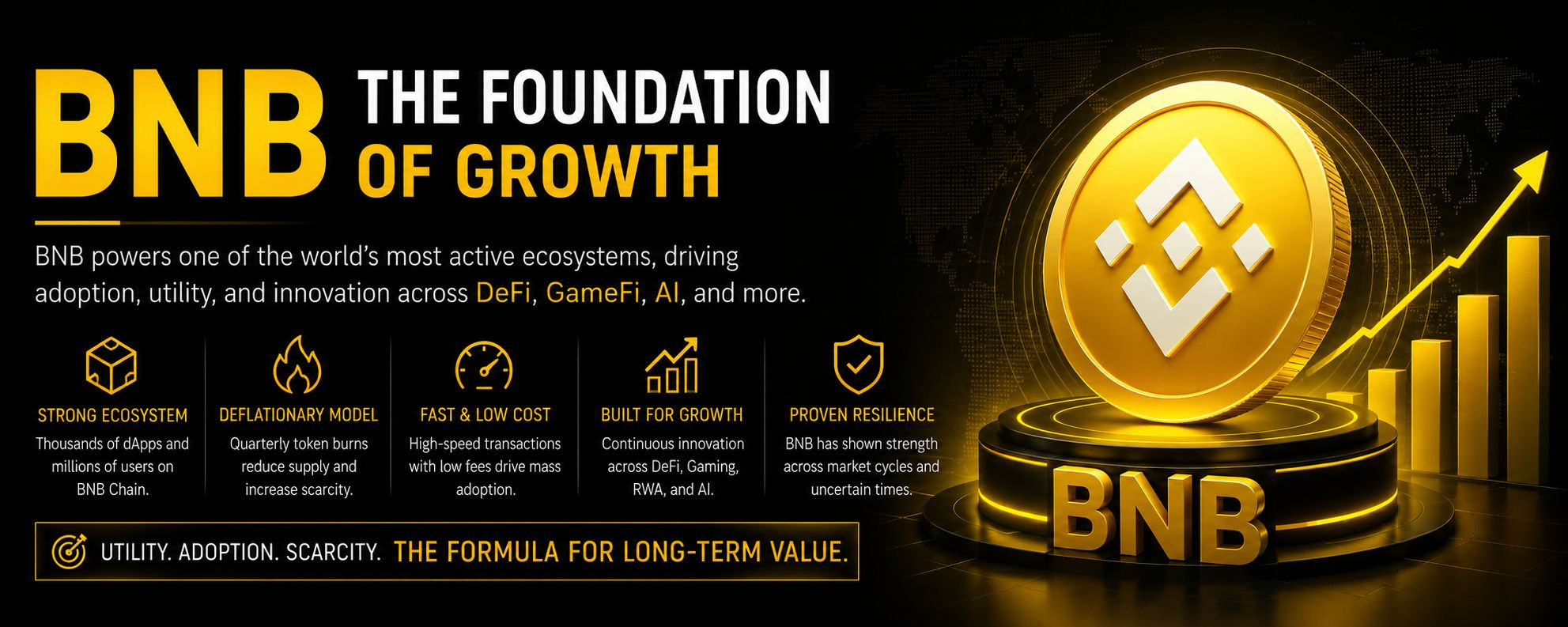
While many crypto assets rely heavily on narratives and speculation, BNB has built its position through consistent utility, ecosystem growth, and real-world demand. This is one of the main reasons why it continues to remain among the most resilient assets during both bullish and bearish market conditions.
What makes BNB different is that its value is closely connected to activity across the broader BNB ecosystem. Every new user, decentralized application, trading activity, or on-chain transaction contributes to the network's overall growth. Unlike many tokens that depend solely on market sentiment, BNB benefits from actual ecosystem usage.
Another important factor is the continuous token burn mechanism. Over time, a portion of the supply is permanently removed from circulation, creating a deflationary effect. As adoption grows while supply gradually decreases, many investors view this as a powerful long-term dynamic.
The expansion of decentralized finance, gaming, AI-related projects, and real-world asset initiatives on BNB Chain has also strengthened the network's position. Developers continue to choose the ecosystem because of its speed, relatively low transaction costs, and large user base.
From a market perspective, BNB often demonstrates relative strength during periods of uncertainty. When liquidity returns to the crypto market, capital frequently flows toward established ecosystems before moving into higher-risk assets. This behavior has historically helped BNB maintain its relevance across multiple market cycles.
The bigger picture is that BNB is no longer just an exchange-related token. It has evolved into the foundation of a large blockchain ecosystem that supports thousands of projects and millions of users worldwide. As crypto adoption continues to expand, the ability of BNB to combine utility, ecosystem growth, and supply reduction remains one of its most compelling strengths.
Whether the next major market move arrives next month or next year, BNB remains one of the assets that many investors continue to watch closely as a potential leader in the next phase of crypto growth.
{spot}(BNBUSDT)
Here's a Binance Square article on BNB in the analytical style you prefer:
Why $BNB Continues to Be One of the Strongest Assets in Crypto
While many crypto assets rely heavily on narratives and speculation, BNB has built its position through consistent utility, ecosystem growth, and real-world demand. This is one of the main reasons why it continues to remain among the most resilient assets during both bullish and bearish market conditions.
What makes BNB different is that its value is closely connected to activity across the broader BNB ecosystem. Every new user, decentralized application, trading activity, or on-chain transaction contributes to the network's overall growth. Unlike many tokens that depend solely on market sentiment, BNB benefits from actual ecosystem usage.
Another important factor is the continuous token burn mechanism. Over time, a portion of the supply is permanently removed from circulation, creating a deflationary effect. As adoption grows while supply gradually decreases, many investors view this as a powerful long-term dynamic.
The expansion of decentralized finance, gaming, AI-related projects, and real-world asset initiatives on BNB Chain has also strengthened the network's position. Developers continue to choose the ecosystem because of its speed, relatively low transaction costs, and large user base.
From a market perspective, BNB often demonstrates relative strength during periods of uncertainty. When liquidity returns to the crypto market, capital frequently flows toward established ecosystems before moving into higher-risk assets. This behavior has historically helped BNB maintain its relevance across multiple market cycles.
The bigger picture is that BNB is no longer just an exchange-related token. It has evolved into the foundation of a large blockchain ecosystem that supports thousands of projects and millions of users worldwide. As crypto adoption continues to expand, the ability of BNB to combine utility, ecosystem growth, and supply reduction remains one of its most compelling strengths.
Whether the next major market move arrives next month or next year, BNB remains one of the assets that many investors continue to watch closely as a potential leader in the next phase of crypto growth.
While many crypto assets rely heavily on narratives and speculation, BNB has built its position through consistent utility, ecosystem growth, and real-world demand. This is one of the main reasons why it continues to remain among the most resilient assets during both bullish and bearish market conditions.
What makes BNB different is that its value is closely connected to activity across the broader BNB ecosystem. Every new user, decentralized application, trading activity, or on-chain transaction contributes to the network's overall growth. Unlike many tokens that depend solely on market sentiment, BNB benefits from actual ecosystem usage.
Another important factor is the continuous token burn mechanism. Over time, a portion of the supply is permanently removed from circulation, creating a deflationary effect. As adoption grows while supply gradually decreases, many investors view this as a powerful long-term dynamic.
The expansion of decentralized finance, gaming, AI-related projects, and real-world asset initiatives on BNB Chain has also strengthened the network's position. Developers continue to choose the ecosystem because of its speed, relatively low transaction costs, and large user base.
From a market perspective, BNB often demonstrates relative strength during periods of uncertainty. When liquidity returns to the crypto market, capital frequently flows toward established ecosystems before moving into higher-risk assets. This behavior has historically helped BNB maintain its relevance across multiple market cycles.
The bigger picture is that BNB is no longer just an exchange-related token. It has evolved into the foundation of a large blockchain ecosystem that supports thousands of projects and millions of users worldwide. As crypto adoption continues to expand, the ability of BNB to combine utility, ecosystem growth, and supply reduction remains one of its most compelling strengths.
Whether the next major market move arrives next month or next year, BNB remains one of the assets that many investors continue to watch closely as a potential leader in the next phase of crypto growth.
69
·
--
Bullish
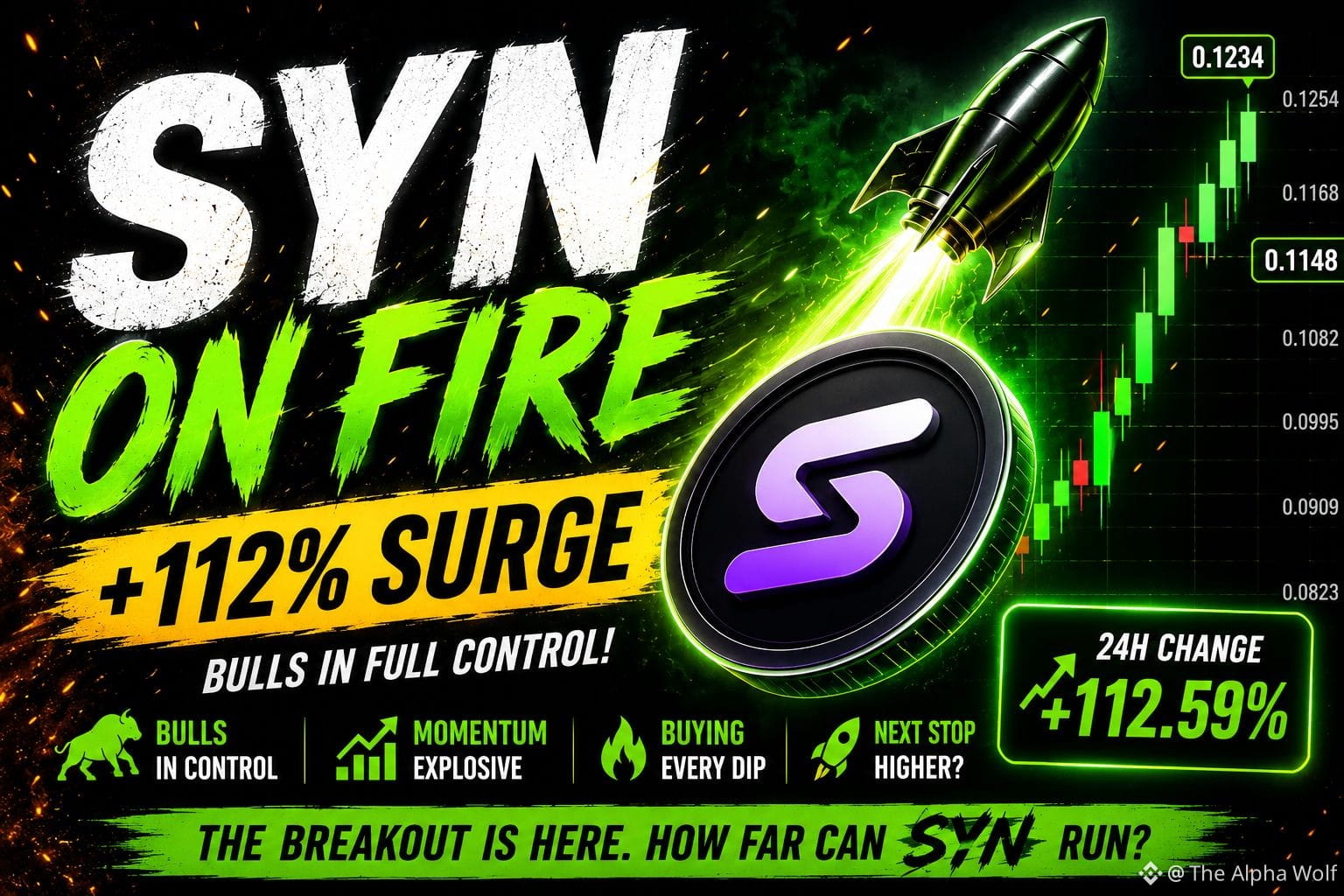
$SYN just turned the market into a battlefield.
After exploding more than 110% in a single day, buyers continue to defend every dip while volume floods into the market. The breakout above the recent consolidation zone triggered a wave of momentum, pushing SYN to fresh highs near $0.1234.
What makes this move even more impressive is the aggressive buying pressure visible in the order book. Bulls remain in control, and traders are now watching closely to see whether SYN can establish a new support base before the next leg higher.
When a token delivers triple-digit gains in hours, it captures attention. When buyers keep stepping in after the breakout, it captures conviction.
SYN is no longer flying under the radar.
The question now is simple:
Is this just the beginning of a larger trend, or the final stage of an explosive rally?
The next few candles could decide everything.
{spot}(SYNUSDT)
$SYN just turned the market into a battlefield.
After exploding more than 110% in a single day, buyers continue to defend every dip while volume floods into the market. The breakout above the recent consolidation zone triggered a wave of momentum, pushing SYN to fresh highs near $0.1234.
What makes this move even more impressive is the aggressive buying pressure visible in the order book. Bulls remain in control, and traders are now watching closely to see whether SYN can establish a new support base before the next leg higher.
When a token delivers triple-digit gains in hours, it captures attention. When buyers keep stepping in after the breakout, it captures conviction.
SYN is no longer flying under the radar.
The question now is simple:
Is this just the beginning of a larger trend, or the final stage of an explosive rally?
The next few candles could decide everything.
After exploding more than 110% in a single day, buyers continue to defend every dip while volume floods into the market. The breakout above the recent consolidation zone triggered a wave of momentum, pushing SYN to fresh highs near $0.1234.
What makes this move even more impressive is the aggressive buying pressure visible in the order book. Bulls remain in control, and traders are now watching closely to see whether SYN can establish a new support base before the next leg higher.
When a token delivers triple-digit gains in hours, it captures attention. When buyers keep stepping in after the breakout, it captures conviction.
SYN is no longer flying under the radar.
The question now is simple:
Is this just the beginning of a larger trend, or the final stage of an explosive rally?
The next few candles could decide everything.
194
Article
RIF Ignites a Powerful Rally — Bulls Seize Full Control🚀!
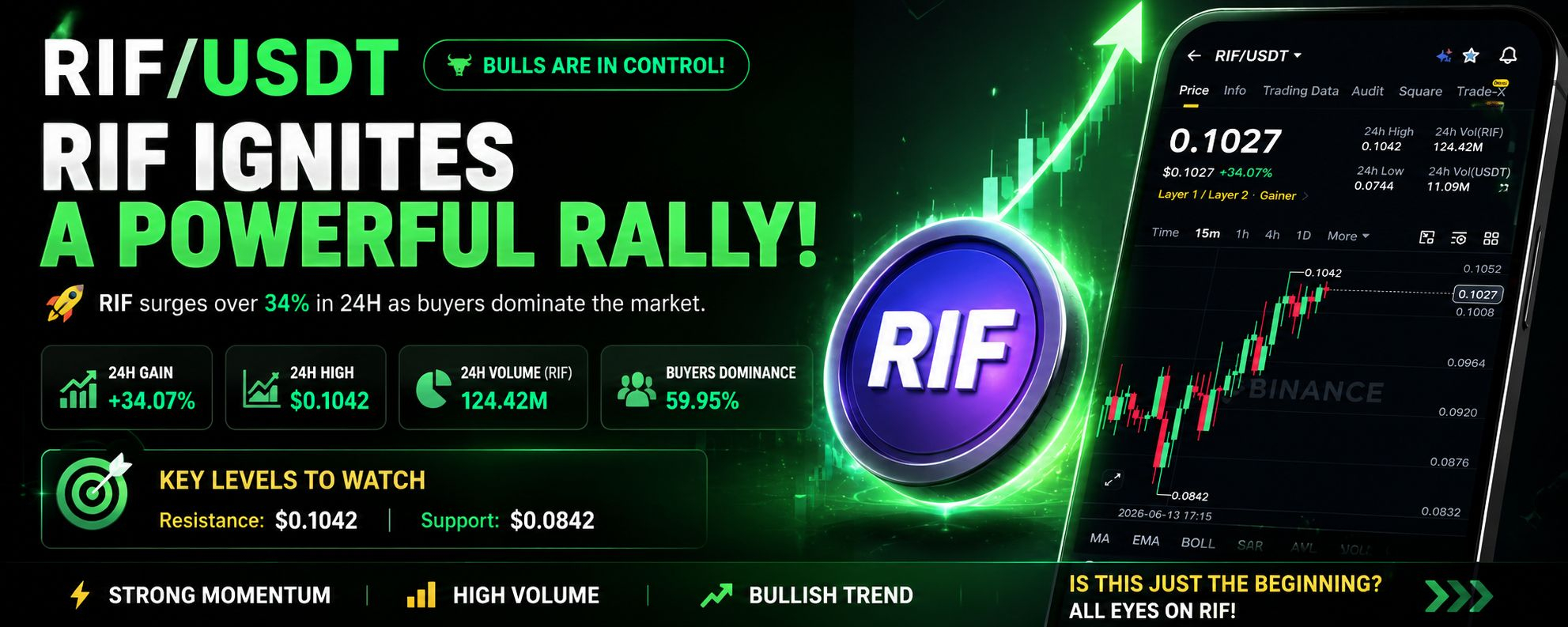
The crypto market is witnessing an explosive move as RIF/USDT surges over 34% in just 24 hours, capturing traders' attention across Binance. After bouncing strongly from the $0.0842 low, RIF climbed relentlessly to a fresh intraday high of $0.1042, showcasing exceptional bullish momentum.
📈 Key Highlights:
Price surged from $0.0842 → $0.1042
Daily gain exceeds 34%
Massive trading activity with over 124M RIF traded
Buyers dominate the order book with nearly 60% bid strength
Strong sequence of higher highs and higher lows confirms bullish structure
The current price action suggests that market participants are aggressively accumulating, pushing RIF into a strong uptrend. Despite minor pullbacks, bulls continue defending higher levels, indicating confidence in further upside potential.
⚡ If momentum remains intact and volume continues flowing in, traders will be watching closely for a decisive breakout above the $0.1042 resistance zone. A successful push could open the door for the next leg higher.
🔥 RIF has transformed from a quiet mover into one of today's standout performers. The big question now: Is this just the beginning of a larger breakout, or will profit-taking slow the rally?
{spot}(RIFUSDT)
RIF Ignites a Powerful Rally — Bulls Seize Full Control
🚀!
The crypto market is witnessing an explosive move as RIF/USDT surges over 34% in just 24 hours, capturing traders' attention across Binance. After bouncing strongly from the $0.0842 low, RIF climbed relentlessly to a fresh intraday high of $0.1042, showcasing exceptional bullish momentum.
📈 Key Highlights:
Price surged from $0.0842 → $0.1042
Daily gain exceeds 34%
Massive trading activity with over 124M RIF traded
Buyers dominate the order book with nearly 60% bid strength
Strong sequence of higher highs and higher lows confirms bullish structure
The current price action suggests that market participants are aggressively accumulating, pushing RIF into a strong uptrend. Despite minor pullbacks, bulls continue defending higher levels, indicating confidence in further upside potential.
⚡ If momentum remains intact and volume continues flowing in, traders will be watching closely for a decisive breakout above the $0.1042 resistance zone. A successful push could open the door for the next leg higher.
🔥 RIF has transformed from a quiet mover into one of today's standout performers. The big question now: Is this just the beginning of a larger breakout, or will profit-taking slow the rally?
The crypto market is witnessing an explosive move as RIF/USDT surges over 34% in just 24 hours, capturing traders' attention across Binance. After bouncing strongly from the $0.0842 low, RIF climbed relentlessly to a fresh intraday high of $0.1042, showcasing exceptional bullish momentum.
📈 Key Highlights:
Price surged from $0.0842 → $0.1042
Daily gain exceeds 34%
Massive trading activity with over 124M RIF traded
Buyers dominate the order book with nearly 60% bid strength
Strong sequence of higher highs and higher lows confirms bullish structure
The current price action suggests that market participants are aggressively accumulating, pushing RIF into a strong uptrend. Despite minor pullbacks, bulls continue defending higher levels, indicating confidence in further upside potential.
⚡ If momentum remains intact and volume continues flowing in, traders will be watching closely for a decisive breakout above the $0.1042 resistance zone. A successful push could open the door for the next leg higher.
🔥 RIF has transformed from a quiet mover into one of today's standout performers. The big question now: Is this just the beginning of a larger breakout, or will profit-taking slow the rally?
86
Article
TAO Awakens: Bulls Take Control
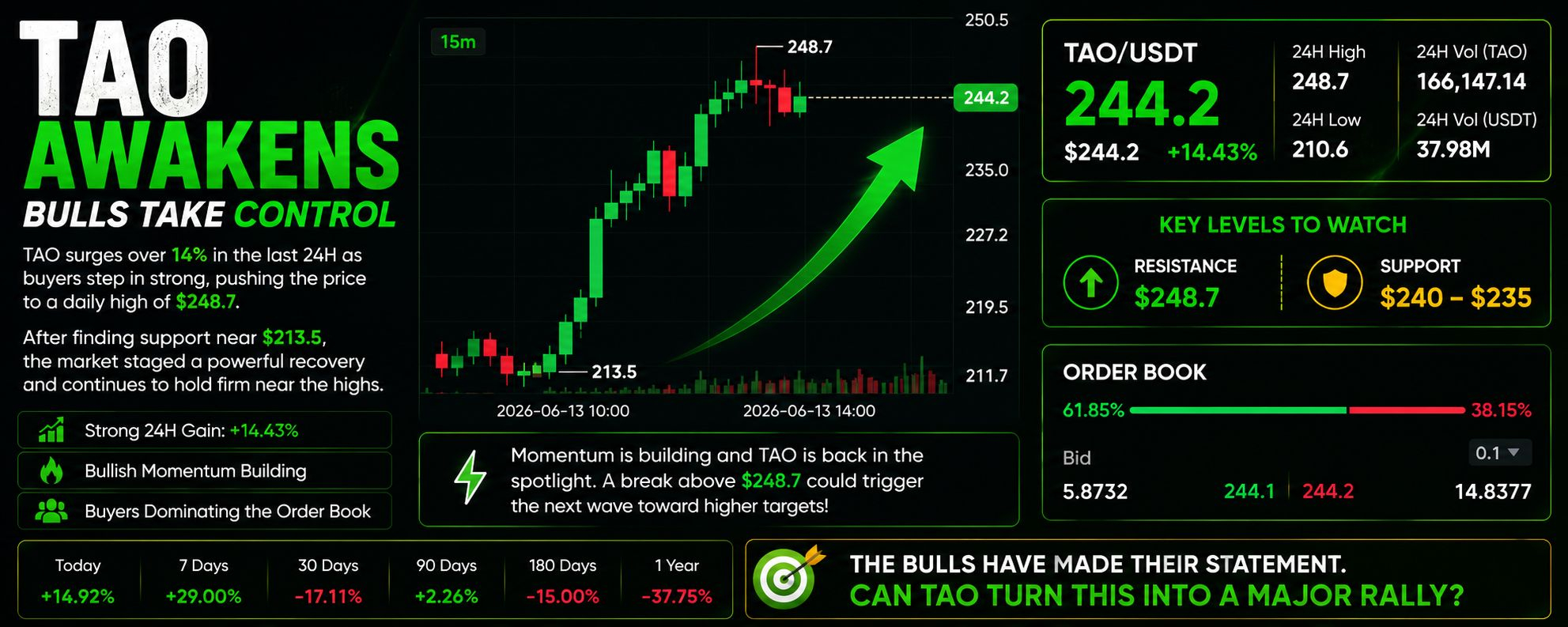
TAO is showing impressive strength as buyersstep in aggressively, pushing the price up more than 14% in the last 24 hours. After finding support near $213.5, the market staged a powerful recovery that carried TAO to a daily high of $248.7.
The rally wasn't a single spike—it was a sustained move fueled by strong bullish momentum and consistent buying pressure. Even after reaching the local top, TAO continues to hold near its highs, suggesting that traders are not rushing to take profits and confidence remains intact.
From a technical perspective, the ability to maintain price action above the $240 zone is a positive sign. Bulls are currently defending key levels while keeping the broader uptrend alive. A successful break above $248.7 could trigger another wave of buying interest and open the path toward higher targets.
Key Levels to Watch
📈 Resistance: $248.7
📉 Support: $240 – $235
Market sentiment is improving, momentum is building, and TAO is once again attracting attention across the crypto space. If buyers maintain control, this move could be only the beginning of a larger trend reversal.
The bulls have made their statement. Now all eyes are on whether TAO can convert this breakout into its next major rally. 🚀
TAO Awakens: Bulls Take Control TAO is showing impressive strength as buyers
step in aggressively, pushing the price up more than 14% in the last 24 hours. After finding support near $213.5, the market staged a powerful recovery that carried TAO to a daily high of $248.7.
The rally wasn't a single spike—it was a sustained move fueled by strong bullish momentum and consistent buying pressure. Even after reaching the local top, TAO continues to hold near its highs, suggesting that traders are not rushing to take profits and confidence remains intact.
From a technical perspective, the ability to maintain price action above the $240 zone is a positive sign. Bulls are currently defending key levels while keeping the broader uptrend alive. A successful break above $248.7 could trigger another wave of buying interest and open the path toward higher targets.
Key Levels to Watch
📈 Resistance: $248.7
📉 Support: $240 – $235
Market sentiment is improving, momentum is building, and TAO is once again attracting attention across the crypto space. If buyers maintain control, this move could be only the beginning of a larger trend reversal.
The bulls have made their statement. Now all eyes are on whether TAO can convert this breakout into its next major rally. 🚀
The rally wasn't a single spike—it was a sustained move fueled by strong bullish momentum and consistent buying pressure. Even after reaching the local top, TAO continues to hold near its highs, suggesting that traders are not rushing to take profits and confidence remains intact.
From a technical perspective, the ability to maintain price action above the $240 zone is a positive sign. Bulls are currently defending key levels while keeping the broader uptrend alive. A successful break above $248.7 could trigger another wave of buying interest and open the path toward higher targets.
Key Levels to Watch
📈 Resistance: $248.7
📉 Support: $240 – $235
Market sentiment is improving, momentum is building, and TAO is once again attracting attention across the crypto space. If buyers maintain control, this move could be only the beginning of a larger trend reversal.
The bulls have made their statement. Now all eyes are on whether TAO can convert this breakout into its next major rally. 🚀
138
·
--
Bullish
🔥 $NOT Is Back in the Spotlight! 🔥
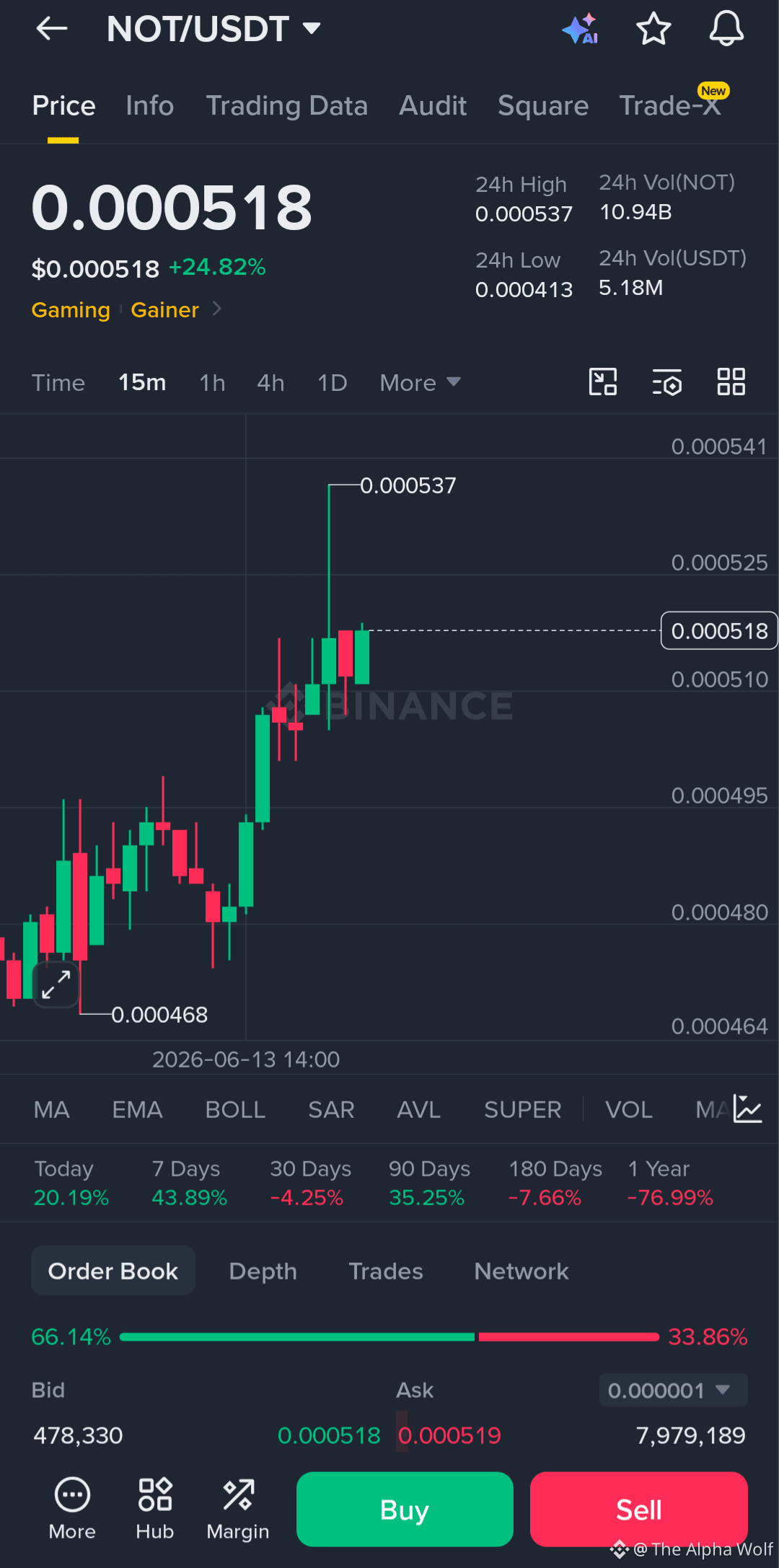
The bulls have awakened, and NOT is making noise across the market with a powerful 24%+ surge in just one day. After bouncing from 0.000468, buyers took full control and launched the price to a fresh local high of 0.000537.
What's catching attention isn't just the price action—it's the momentum. Every dip is being met with demand, and the market is showing clear signs of renewed confidence. With buyers dominating the order book, the battle now shifts to whether bulls can break and hold above the recent high.
📈 Levels Traders Are Watching: • Resistance: 0.000537
• Support: 0.000500 – 0.000510
• A decisive breakout could fuel the next wave of momentum.
The trend is accelerating, volume is flowing, and NOT is proving that strong narratives can ignite explosive moves when the market least expects it.
⚡ Momentum is building. The question is: how far can the bulls take it from here? ⚡
{spot}(NOTUSDT)
🔥 $NOT Is Back in the Spotlight! 🔥
The bulls have awakened, and NOT is making noise across the market with a powerful 24%+ surge in just one day. After bouncing from 0.000468, buyers took full control and launched the price to a fresh local high of 0.000537.
What's catching attention isn't just the price action—it's the momentum. Every dip is being met with demand, and the market is showing clear signs of renewed confidence. With buyers dominating the order book, the battle now shifts to whether bulls can break and hold above the recent high.
📈 Levels Traders Are Watching: • Resistance: 0.000537
• Support: 0.000500 – 0.000510
• A decisive breakout could fuel the next wave of momentum.
The trend is accelerating, volume is flowing, and NOT is proving that strong narratives can ignite explosive moves when the market least expects it.
⚡ Momentum is building. The question is: how far can the bulls take it from here? ⚡
The bulls have awakened, and NOT is making noise across the market with a powerful 24%+ surge in just one day. After bouncing from 0.000468, buyers took full control and launched the price to a fresh local high of 0.000537.
What's catching attention isn't just the price action—it's the momentum. Every dip is being met with demand, and the market is showing clear signs of renewed confidence. With buyers dominating the order book, the battle now shifts to whether bulls can break and hold above the recent high.
📈 Levels Traders Are Watching: • Resistance: 0.000537
• Support: 0.000500 – 0.000510
• A decisive breakout could fuel the next wave of momentum.
The trend is accelerating, volume is flowing, and NOT is proving that strong narratives can ignite explosive moves when the market least expects it.
⚡ Momentum is building. The question is: how far can the bulls take it from here? ⚡
152
·
--
Bullish
$🚀 RIF Ignites the Charts! 🚀
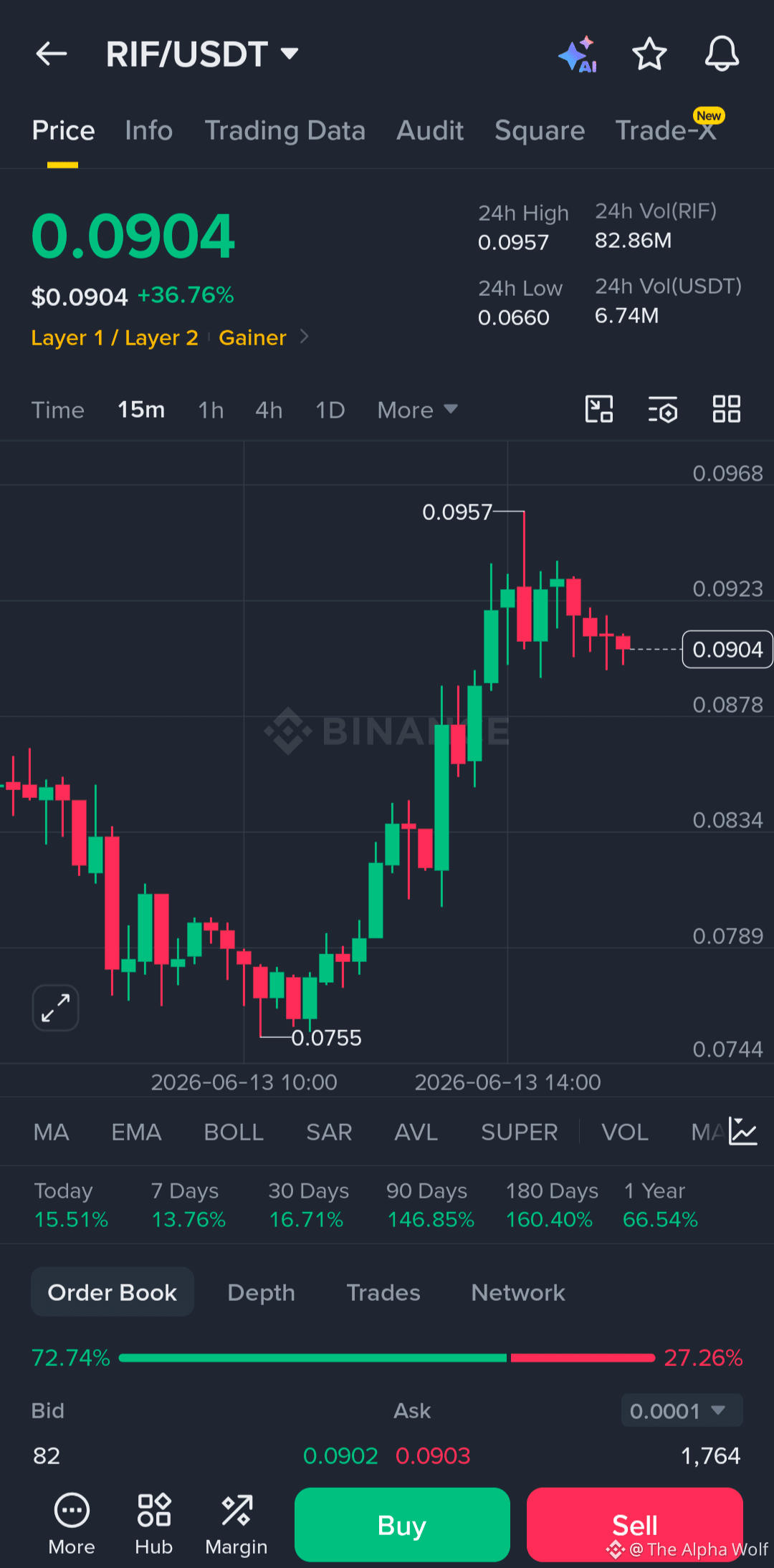
$RIF just delivered a stunning breakout, surging over 36% in 24 hours and catching the market's attention. After finding support near $0.0755, buyers stepped in aggressively, pushing the price to a local high of $0.0957.
The current pullback looks more like profit-taking than weakness. As long as bulls defend the breakout zone, momentum remains firmly on their side. Volume is elevated, sentiment is heating up, and traders are closely watching for the next move.
📈 Key Levels: • Resistance: $0.0957 • Support: $0.0878 – $0.0890 • Break above resistance could open the door for another explosive leg higher.
The market rewards strength, and right now RIF is showing exactly that. Eyes on the next candle — this rally may not be finished yet.
{spot}(RIFUSDT)
$🚀 RIF Ignites the Charts! 🚀
$RIF just delivered a stunning breakout, surging over 36% in 24 hours and catching the market's attention. After finding support near $0.0755, buyers stepped in aggressively, pushing the price to a local high of $0.0957.
The current pullback looks more like profit-taking than weakness. As long as bulls defend the breakout zone, momentum remains firmly on their side. Volume is elevated, sentiment is heating up, and traders are closely watching for the next move.
📈 Key Levels: • Resistance: $0.0957 • Support: $0.0878 – $0.0890 • Break above resistance could open the door for another explosive leg higher.
The market rewards strength, and right now RIF is showing exactly that. Eyes on the next candle — this rally may not be finished yet.
$RIF just delivered a stunning breakout, surging over 36% in 24 hours and catching the market's attention. After finding support near $0.0755, buyers stepped in aggressively, pushing the price to a local high of $0.0957.
The current pullback looks more like profit-taking than weakness. As long as bulls defend the breakout zone, momentum remains firmly on their side. Volume is elevated, sentiment is heating up, and traders are closely watching for the next move.
📈 Key Levels: • Resistance: $0.0957 • Support: $0.0878 – $0.0890 • Break above resistance could open the door for another explosive leg higher.
The market rewards strength, and right now RIF is showing exactly that. Eyes on the next candle — this rally may not be finished yet.
159
·
--
Bullish
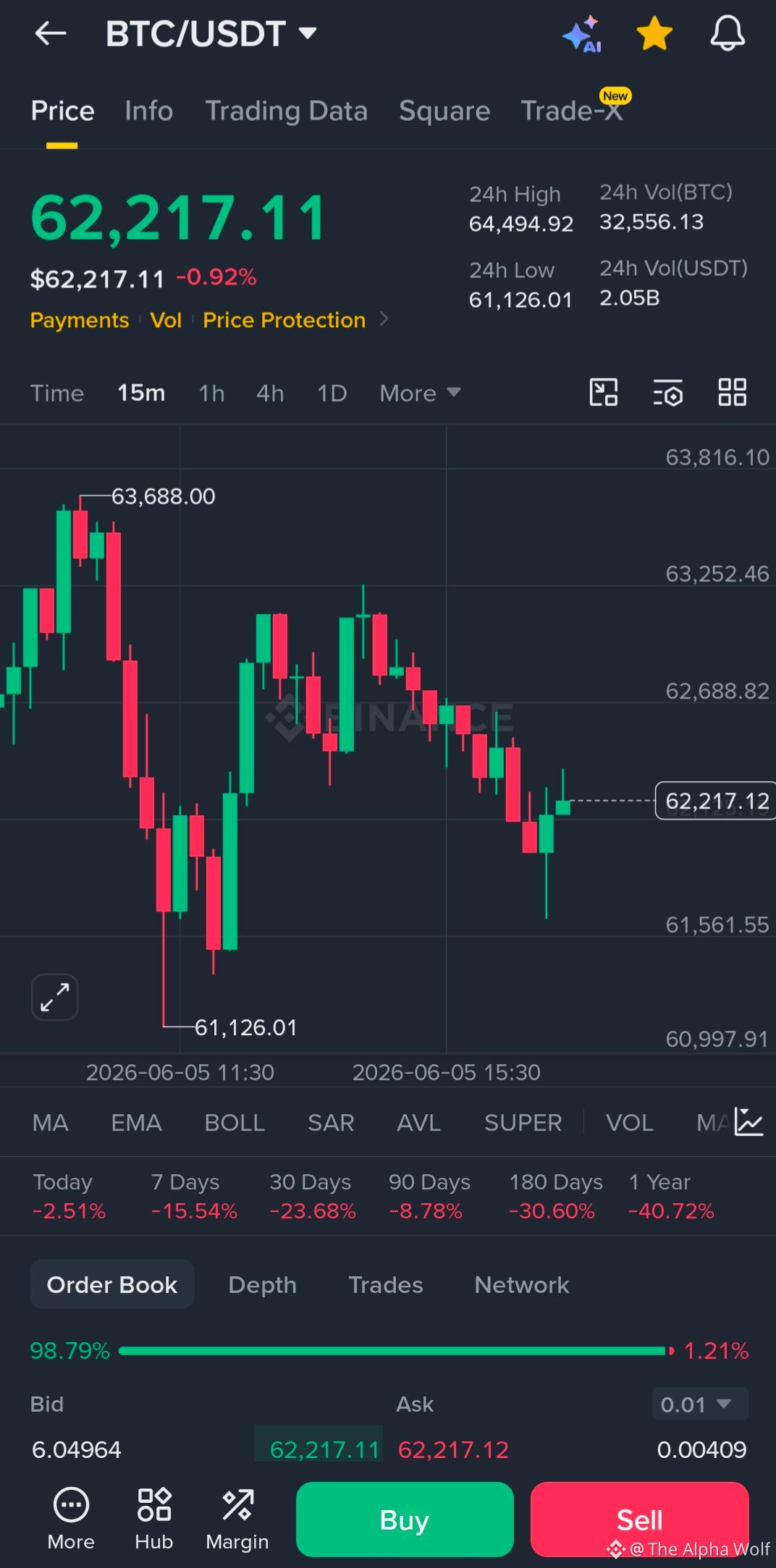
🚨 BTC Is Testing Traders' Patience! 🚨
#BTC is hovering around $BTC 62.2K after a sharp rejection from the $63.6K zone. Bears are still applying pressure, but buyers stepped in aggressively near $61.1K, creating a strong reaction bounce. 🔥
📊 Key Levels: 🟢 Support: $61,100
🔴 Resistance: $62,700 - $63,600
A breakout above resistance could ignite the next bullish wave, while losing support may trigger another liquidity sweep. ⚡
The market is coiling, volatility is building, and the next major move could be closer than most expect. Keep your eyes on Bitcoin! 👀🚀
{future}(BTCUSDT)
🚨 BTC Is Testing Traders' Patience! 🚨
#BTC is hovering around $BTC 62.2K after a sharp rejection from the $63.6K zone. Bears are still applying pressure, but buyers stepped in aggressively near $61.1K, creating a strong reaction bounce. 🔥
📊 Key Levels: 🟢 Support: $61,100
🔴 Resistance: $62,700 - $63,600
A breakout above resistance could ignite the next bullish wave, while losing support may trigger another liquidity sweep. ⚡
The market is coiling, volatility is building, and the next major move could be closer than most expect. Keep your eyes on Bitcoin! 👀🚀
#BTC is hovering around $BTC 62.2K after a sharp rejection from the $63.6K zone. Bears are still applying pressure, but buyers stepped in aggressively near $61.1K, creating a strong reaction bounce. 🔥
📊 Key Levels: 🟢 Support: $61,100
🔴 Resistance: $62,700 - $63,600
A breakout above resistance could ignite the next bullish wave, while losing support may trigger another liquidity sweep. ⚡
The market is coiling, volatility is building, and the next major move could be closer than most expect. Keep your eyes on Bitcoin! 👀🚀
84
·
--
Bullish
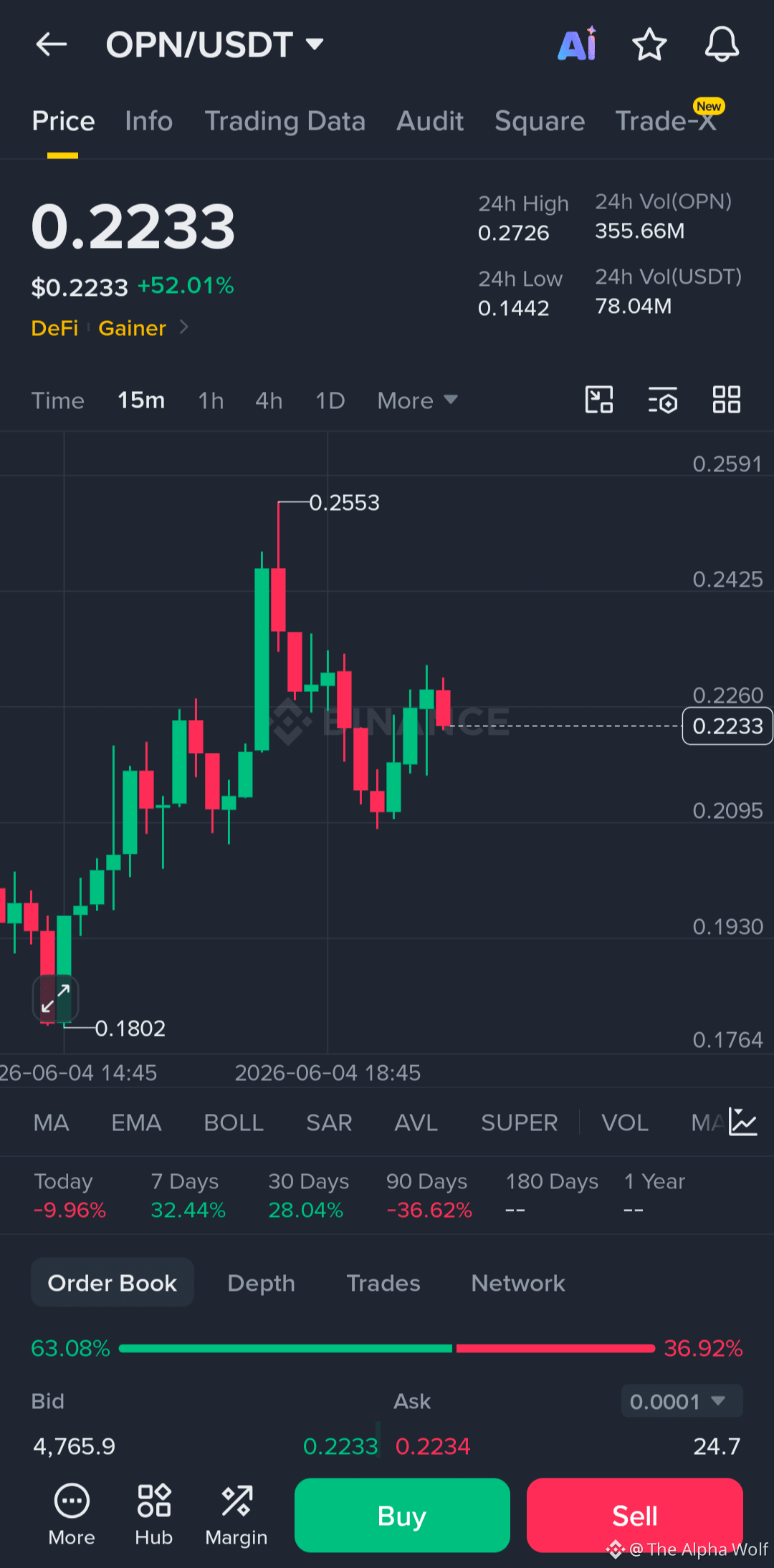
🚀 OPN Is Exploding! Bulls Are Back in Control! 🚀
{spot}(OPNUSDT)
$OPN just delivered a massive +52% surge, grabbing the spotlight across the DeFi sector! 🔥
📈 Price rallied from the $0.18 zone to a high of $0.2553 💰 Strong volume continues to flow in 🐂 Buyers are defending the $0.22 area after the breakout
If bulls reclaim $0.226 - $0.230, the next attack on the recent high could come fast. A break above $0.2553 may trigger another wave of momentum traders. ⚡
Stay alert—high volatility means both opportunity and risk. The trend is hot, and OPN is one of the most watched movers right now! 👀
🚀 OPN Is Exploding! Bulls Are Back in Control! 🚀
$OPN just delivered a massive +52% surge, grabbing the spotlight across the DeFi sector! 🔥
📈 Price rallied from the $0.18 zone to a high of $0.2553 💰 Strong volume continues to flow in 🐂 Buyers are defending the $0.22 area after the breakout
If bulls reclaim $0.226 - $0.230, the next attack on the recent high could come fast. A break above $0.2553 may trigger another wave of momentum traders. ⚡
Stay alert—high volatility means both opportunity and risk. The trend is hot, and OPN is one of the most watched movers right now! 👀
$OPN just delivered a massive +52% surge, grabbing the spotlight across the DeFi sector! 🔥
📈 Price rallied from the $0.18 zone to a high of $0.2553 💰 Strong volume continues to flow in 🐂 Buyers are defending the $0.22 area after the breakout
If bulls reclaim $0.226 - $0.230, the next attack on the recent high could come fast. A break above $0.2553 may trigger another wave of momentum traders. ⚡
Stay alert—high volatility means both opportunity and risk. The trend is hot, and OPN is one of the most watched movers right now! 👀
164
Log in to explore more content
Join global crypto users on Binance Square
⚡️ Get latest and useful information about crypto.
💬 Trusted by the world’s largest crypto exchange.
👍 Discover real insights from verified creators.
Email / Phone number
Trending Topics
USAugustPPIRisesLessThanExpected
0 views
7 Discussing
🚨 US AUG PPI: Rises LESS Than Expected! Bullish for Crypto? 🚀
PPI +0.4% MoM as expected, but CORE PPI only +0.2% vs +0.3% expected - cooling!
What it means:
• Wholesale inflation softer than feared
• Fed rate hike chance now 62% - but dovish signals coming
• Core PCE revisions expected downward - bullish
• BTC usually pumps on softer PPI
Fed meeting Sep 15-16 - Market now expects pause, not hike?
Is this the green light for Q4 rally?
#Bitcoin #PPI #Fed #CryptoNews #BTC#usaugustppiriseslessthanexpected
True News
·1 Likes
·8 views
SECApprovesNasdaqTexasCommodityTrustRule
698 views
91 Discussing
ECBRaisesRatesSecondTimeTo2.5%
280 views
55 Discussing