


Plasma Layer-1 blockchain is designed with a thin scope: make it feel like normal money movement by making stablecoin payments. Rather than attempting to be a do everything chain, it is built on the fact that one of the most practical uses of crypto is stablecoins which are one of the highest volume applications. Plasma maintains complete EVM compatibility to allow teams to develop with familiar Ethereum tools, but provides additional payment-native functionality aimed at eliminating the largest adoption blockers, namely gas-token friction, non-uniform fee experience, and that much non-production payment context is sensitive business context.
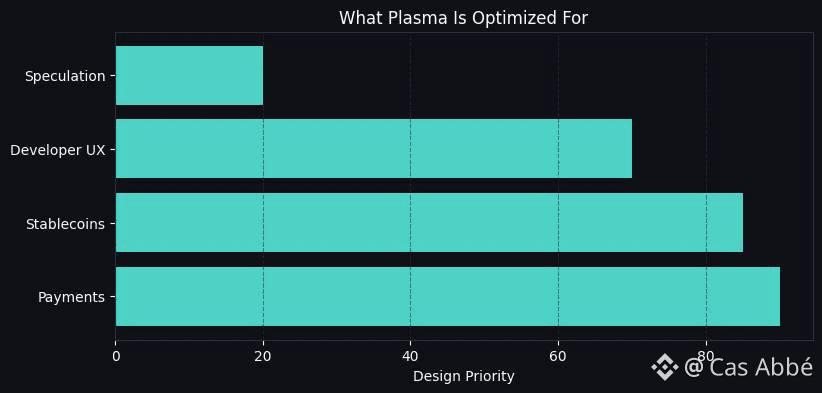
The least intuitive idea is M. In practice, payment system is evaluated by the ability of people to use it without understanding how they operate. In most chains, users are required to use a volatile gas token, approximate charges, and occasionally, they make a transaction fail after they made the wrong guess. The design of plasma states: in case the main business is to make payments in stable coins, then there is no friction in paying payments in anything but the stablecoin.
That is the cause of one of the most unique properties of Plasma, custom gas tokens. Plasma supports users to pay fees on the network in whitelisted ERC-20 (whitelisted means any token can be used, though) such as USDT (as well as BTC is mentioned as a candidate), and therefore, users do not need to purchase and maintain a distinct native token to simply transfer money. Plasma presents this as a protocol-controlled "ERC-20 paymaster" design, therefore developers do not need to implement their own gas abstraction layer. In the case of a product team, the difference in the practical sense is enormous: the problem of the necessity to send dollars via ETH becomes a thing of the past, and the onboarding process becomes more of a fintech application and less of a crypto tutorial.
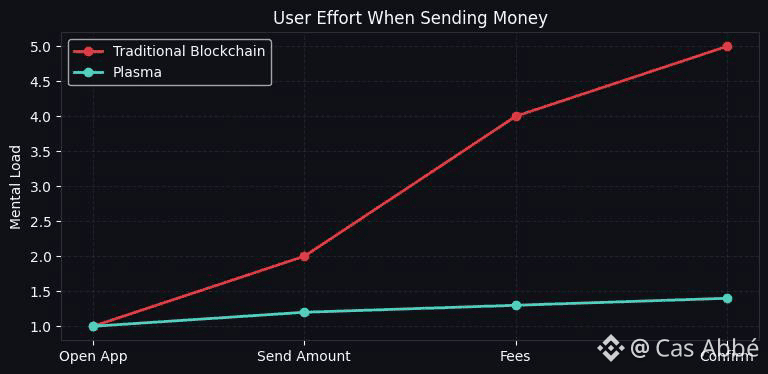
Here's a simple example. Consider that you are operating an online shop and you would like people to pay you using USDT. New customer On a lot of chains, a new customer is taken to a wall of confusion: You have USDT, but you do not have the gas token, so you cannot send USDT. On Plasma, it is desired that the customer will be able to pay the fee using USDT itself, thus the flow of payments can be as follows: open checkout, approve, pay, done. That is petite, yet it is the disparity between a payment rail that can be used by non- crypto users and the one that is predominantly used by insiders.
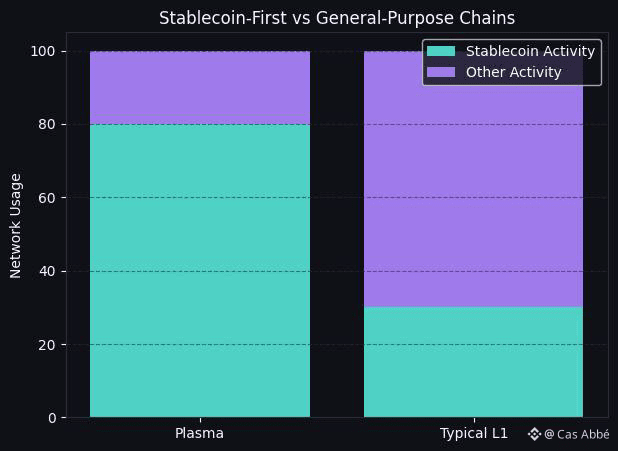
The second way to no-fee feeling is also recorded by plasma: zero-fee USDT transfer through a protocol-controlled relayer/paymaster flow. The critical subtlety is that the process of computation is not free; Plasma is simply redistributing the cost of computation and the way it is being sold to the user. With this model, the paymaster covers eligible USDT transfers such that the user does not see a step to pay. The most important control is the scope: the documents indicate that the sponsorship is restricted to the USDT transfer and transferFrom methods, but not arbitrary contract activity. Plasma also refers to such guardrails as rate limits and eligibility checks to ensure the subsidy does not get to be a free-for-all.
Why does that scope matter? Since gas sponsorship is a familiar attack area. Provided that you sponsor any form of transactions, the attackers can drain the sponsor by calling him/her using high costs. By sponsoring a limited, clearly defined activity such as a stablecoin transfer- and adding throttles- you can think in terms of cost and abuse in a more payments operator like manner. It is this form of tradeoff that will appear to be less pure to crypto maximalists but more operationally sane to people making payment products.
Plasma expressly relates these flows that are payment-native to account abstraction standards such as EIP-4337 and EIP-7702. Non-technically, the concept behind account abstraction is that wallets are more like modern applications: they can batch operations, charge sponsor fees and make rules that the user does not have to perform everything manually. The docs of plasma note that its native contracts of a stablecoin are composable with these standards, which is important since it implies that the experience of being gasless will be able to be incorporated into the direction the rest of the Ethereum ecosystem is headed.
Next the thing most people do not discuss in the payments write-ups: confidentiality. In most actual payment situations, it is not the amount that is the most sensitive aspect; rather it is the context. Business relationships can be indicated by a supplier payment. Salaries can be determined in a payroll transfer. The repetition of payment can indicate the behavior of the customers. The docs of Plasma define the concept of confidential payments as an opt-in, lightweight, and privacy-focused module designed to protect sensitive transfer data but still composable, auditable, and are very explicit that it is not a complete privacy chain. That wording is important. It is an indication that the project is attempting to strike a balance between privacy advantages with a posture that is consistent with real-world reviewing and incorporating requirements.
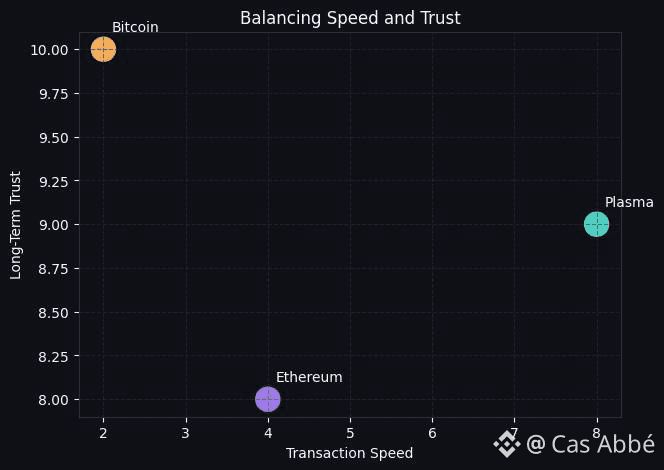
One down-to-earth approach to it is the concept of privacy where it is beneficial at all, rather than privacy everywhere. Full privacy systems are also capable of being powerful however they come at a higher cost in terms of integration, new wallet requirements and a more complex compliance conversation. The objectives of plasma are not to use custom tokens, not to use new wallets and not to alter the fundamental EVM behaviour.

