#signdigitalsovereigninfra $SIGN

I cruised right past $SIGN at first. “Token distribution infrastructure”—it barely registered as anything worth my brain space. Too clean, too clinical. It felt like the kind of phrase you read in a whitepaper that puts you to sleep, or that elevator-music hum you tune out. Everyone else in crypto is yelling about the next moonshot, and this? Eh, easy to ignore.
But then, you know how it goes: a project’s name keeps popping up where it actually matters. Not just Twitter threads or Discord servers full of JPEG peddlers, but in places where people don’t tolerate slip-ups. Where if something breaks, someone actually notices and starts yelling. Those behind-the-curtain projects—the unsexy backbone. Suddenly, I’m paying attention. Which, honestly, doesn’t happen much these days.
I always pictured distribution as a solved puzzle. You launch a token, decide who gets what, hype an airdrop, and wrap it up. That’s it, right? Why overthink it?
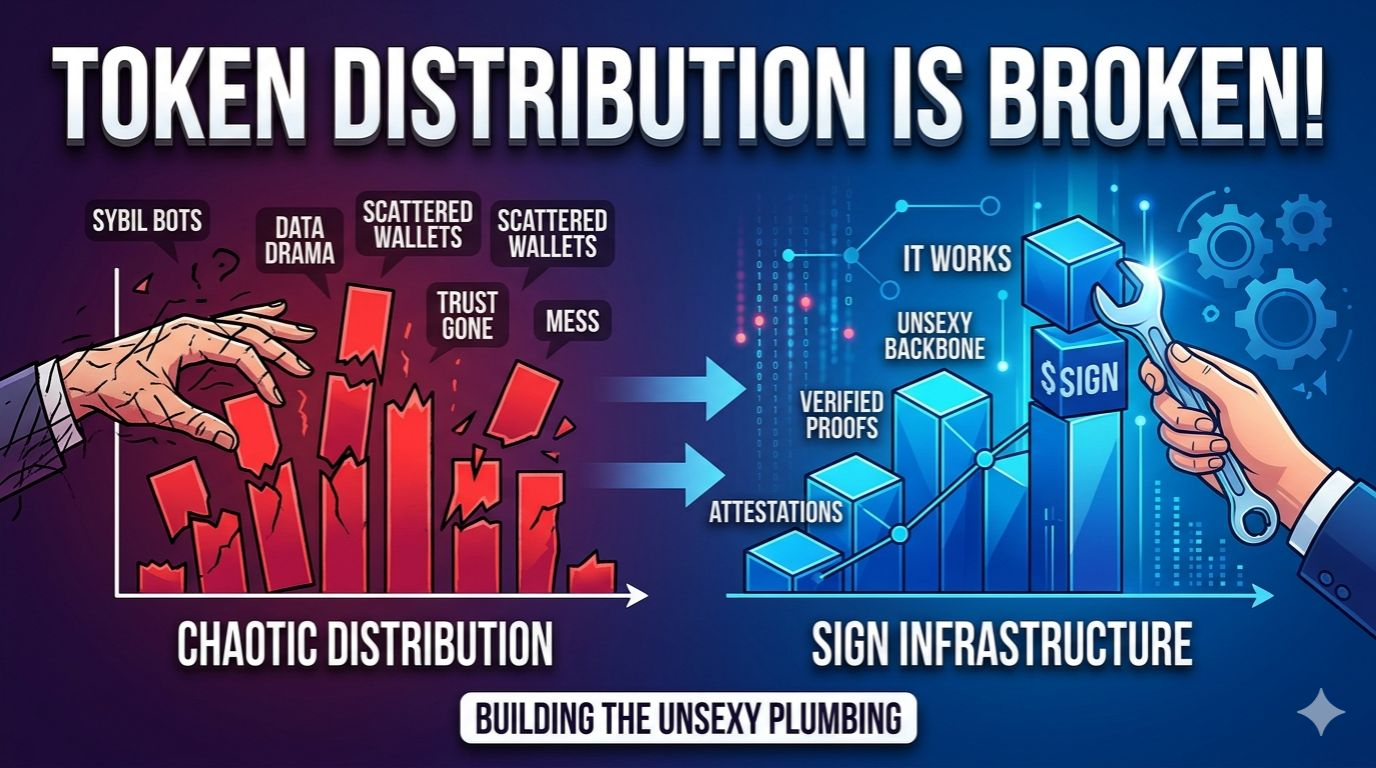
But flash back to late 2022 and the airdrop circus—man, what a mess. Wallets scattered everywhere, constantly signing stuff I didn’t fully trust, squinting at dashboards that looked more like ransom notes than anything legit. Refresh, repeat, and wonder if I’m about to get scammed. The whole thing felt like an escape room designed by someone who hates you. So much pointless complexity. The trust? Gone in seconds.
That’s when it hit me—distribution isn’t just mechanics, it’s about trust. Or maybe, where trust breaks and things get messy.
Projects stress over getting it right: who qualifies, how to keep out the cheaters without making it feel like tax season. The average user (and I count myself in this mess) just wants quick, painless, nothing sketchy that raises your hackles. There’s just this constant conflict built in, and no one’s happy.
Now, what’s wild about $SIGN—it never tries to hype itself. No buzz, no “Look at me!” ads. Instead, it works quietly, builds the plumbing—the wires and pipes that no one thinks about until they leak. Either that’s brilliant, or it means nobody ever notices. Or both.
And that “attestation” piece? Took me a while to wrap my head around, honestly. You prove something about yourself once, then reuse that proof all over. Makes so much sense after you see it, but in crypto? That’s basically heresy. We’re used to proving who we are over and over, until it’s exhausting and a little absurd.
But then my brain gets stuck—what if this is just another tool everyone ignores unless everyone piles in at once? Let’s be real, no one coordinates in this space. You try to herd a bunch of devs, anon users, and Discord mods? Forget it. If folks don’t adopt, it’s dead on arrival.
And the eternal data drama—if those proofs get gamed or corrupted, the whole thing might as well be built out of spaghetti. Garbage in, garbage out. Here, mess up the signals and some people get burned, others walk off with the loot.
Honestly? I’m still chewing on it. Haven’t landed anywhere solid.
The strangest part? Suddenly this token stops feeling like a lottery ticket. It feels like a tool. Not sexy, not meme-worthy. Just something that actually…works. For a token, that’s oddly refreshing. Everything else is a gamble; this one is just a wrench you use to fix stuff.
I guess that’s the point now. The next headaches aren’t about speed or cheap swaps—they’re about who gets in, who gets left out, who’s stuck jumping through endless hoops.
But wow, this infrastructure layer is rickety. Still half-done, just begging for someone to mess with it.
So here I am, thinking way more about $SIGN than I planned. Not because it’s making noise or pumping. Just because it’s making me uncomfortable—and, honestly, that’s not nothing.