

As Bitcoin’s correction continues, volatility is also starting to rise. In an environment shaped by macroeconomic uncertainty, with still incomplete data following the shutdown and heightened geopolitical tensions, it is logical to see additional stress emerging in an already fragile crypto market.
This instability is further amplified by the excess leverage present in derivatives markets. The chain liquidations that can result mechanically intensify price movements and reinforce volatility.
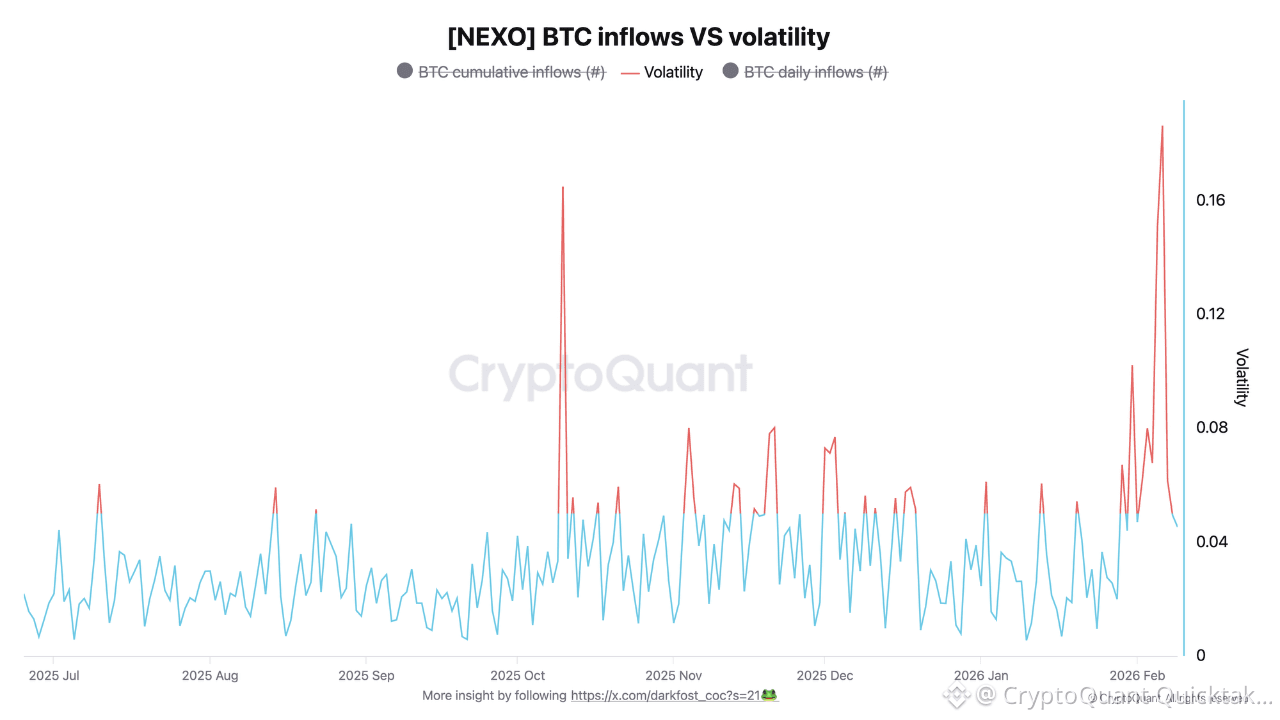
Since the end of summer, Bitcoin’s volatility has increased further. A first major spike was observed during the historic liquidation event on October 10, which affected the entire crypto market. Since then, volatility has remained elevated, particularly in November, late January, and early February.
In this context, some investors endure these periods of stress and may even capitulate, while others seek to take advantage of them by deploying their BTC to generate yield or access liquidity through collateralization solutions.
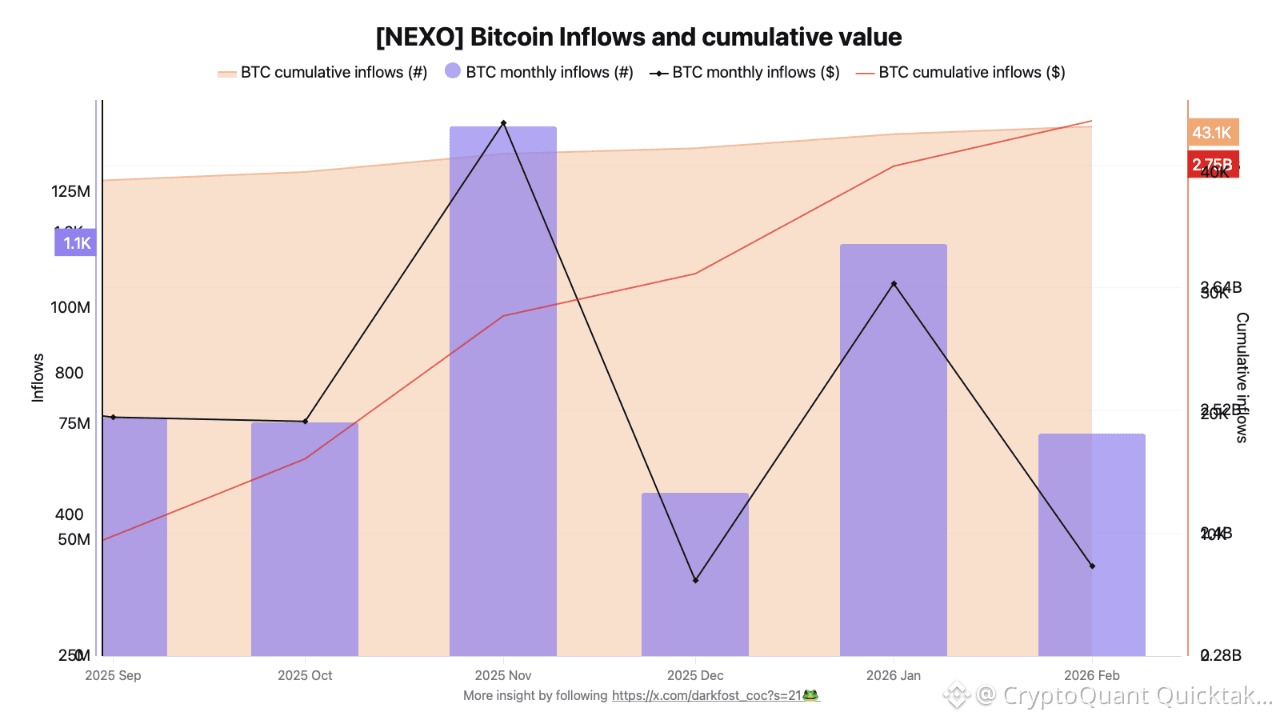
For example, on Nexo, a platform focused on CeFi services, there is a clear correlation between rising volatility and increasing BTC inflows. In November, around 1,500 BTC were transferred to the platform, nearly three times more than the previous month.
January recorded about 1,100 BTC in inflows, and February has already seen more than 630 BTC, extending this trend.
The cumulative amount of BTC deposited on the platform clearly illustrates investors’ appetite for these types of strategies. Nexo holds more than 43,000 BTC deposited on the platform, representing over $2.7B.
Although near-term sentiment around Bitcoin remains cautious, the longer-term outlook remains constructive. In this environment, such solutions allow investors to optimize exposure while preserving capital amid elevated uncertainty.
Written by Darkfost
