
TradeDog Research
203 Posting

TradeDog Research
Laporkan
Blokir Pengguna
Trusted by Crypto Investor & Traders for
- Analysis & Predictions
- Insights & Research
- Market Updates & Trends
10 Mengikuti
176 Pengikut
103 Disukai
Posting
Semua
Video
Undang-Undang CLARITY membutuhkan kejelasan lebih.
Senat AS telah menahan salah satu upaya terbesar untuk membentuk kerangka struktur pasar kripto tingkat federal.
Tapi bagian pentingnya adalah:
Undang-Undang CLARITY tidak kalah dalam pemungutan suara final.
Senat memberikan suara pada mosi prosedural untuk melanjutkan rancangan undang-undang tersebut.
Hasilnya:
49 YA
50 TIDAK
60 DIPERLUKAN
Dengan demikian, RUU gagal melewati hambatan prosedural yang diperlukan untuk melangkah ke tahap berikutnya.
Undang-Undang CLARITY bertujuan menetapkan aturan yang lebih jelas untuk aset digital dan mendefinisikan tanggung jawab regulasi SEC dan CFTC.
Dewan Perwakilan Rakyat sebelumnya sudah meloloskan rancangan undang-undang tersebut, sementara anggota Senat menghabiskan berbulan-bulan bernegosiasi untuk versi mereka.
Sebelum pemungutan suara, Partai Republik merilis draf revisi dan mengatakan bahwa draf itu memasukkan 126 perubahan substantif yang diminta oleh Demokrat.
Meski begitu, masih ada perbedaan pendapat besar mengenai isu-isu termasuk:
• Etika dan konflik kepentingan terkait kripto
• Imbalan stablecoin
• Kekhawatiran di sektor perbankan
• Perlindungan bagi pengembang
• Penegakan regulasi
Kemudian, Sen. Thom Tillis mengubah pilihannya dan mengajukan mosi untuk mempertimbangkan kembali, sehingga membuka kemungkinan bagi Senat untuk meninjau ulang rancangan undang-undang tersebut.
Namun, waktu semakin menjadi faktor penting seiring mendekatnya pemilihan paruh waktu November.
Jika Kongres tidak mencapai kesepakatan selama sidang saat ini, Kongres berikutnya dapat meninjau kembali masalah tersebut, yang berpotensi memerlukan negosiasi baru dan rancangan undang-undang yang direvisi.
Inti yang lebih besar bukanlah bahwa regulasi kripto AS sudah selesai.
Melainkan bahwa salah satu upaya paling signifikan untuk menetapkan aturan struktur pasar yang lebih jelas justru menemui hambatan prosedural.
Pertanyaan utamanya masih:
Siapa yang mengatur aset digital?
Aset mana yang berada di bawah SEC?
Yang mana berada di bawah CFTC?
Aturan apa yang harus diikuti bursa dan pelaku pasar?
CLARITY dirancang untuk memberikan jawaban.
Untuk saat ini, jawaban-jawaban tersebut masih belum terselesaikan.
Undang-Undang CLARITY juga membutuhkan kejelasan.
#CLARITYAct #CryptoRegulation #DigitalAssets #SEC #CFTC
Undang-Undang CLARITY membutuhkan kejelasan lebih.
Senat AS telah menahan salah satu upaya terbesar untuk membentuk kerangka struktur pasar kripto tingkat federal.
Tapi bagian pentingnya adalah:
Undang-Undang CLARITY tidak kalah dalam pemungutan suara final.
Senat memberikan suara pada mosi prosedural untuk melanjutkan rancangan undang-undang tersebut.
Hasilnya:
49 YA
50 TIDAK
60 DIPERLUKAN
Dengan demikian, RUU gagal melewati hambatan prosedural yang diperlukan untuk melangkah ke tahap berikutnya.
Undang-Undang CLARITY bertujuan menetapkan aturan yang lebih jelas untuk aset digital dan mendefinisikan tanggung jawab regulasi SEC dan CFTC.
Dewan Perwakilan Rakyat sebelumnya sudah meloloskan rancangan undang-undang tersebut, sementara anggota Senat menghabiskan berbulan-bulan bernegosiasi untuk versi mereka.
Sebelum pemungutan suara, Partai Republik merilis draf revisi dan mengatakan bahwa draf itu memasukkan 126 perubahan substantif yang diminta oleh Demokrat.
Meski begitu, masih ada perbedaan pendapat besar mengenai isu-isu termasuk:
• Etika dan konflik kepentingan terkait kripto
• Imbalan stablecoin
• Kekhawatiran di sektor perbankan
• Perlindungan bagi pengembang
• Penegakan regulasi
Kemudian, Sen. Thom Tillis mengubah pilihannya dan mengajukan mosi untuk mempertimbangkan kembali, sehingga membuka kemungkinan bagi Senat untuk meninjau ulang rancangan undang-undang tersebut.
Namun, waktu semakin menjadi faktor penting seiring mendekatnya pemilihan paruh waktu November.
Jika Kongres tidak mencapai kesepakatan selama sidang saat ini, Kongres berikutnya dapat meninjau kembali masalah tersebut, yang berpotensi memerlukan negosiasi baru dan rancangan undang-undang yang direvisi.
Inti yang lebih besar bukanlah bahwa regulasi kripto AS sudah selesai.
Melainkan bahwa salah satu upaya paling signifikan untuk menetapkan aturan struktur pasar yang lebih jelas justru menemui hambatan prosedural.
Pertanyaan utamanya masih:
Siapa yang mengatur aset digital?
Aset mana yang berada di bawah SEC?
Yang mana berada di bawah CFTC?
Aturan apa yang harus diikuti bursa dan pelaku pasar?
CLARITY dirancang untuk memberikan jawaban.
Untuk saat ini, jawaban-jawaban tersebut masih belum terselesaikan.
Undang-Undang CLARITY juga membutuhkan kejelasan.
#CLARITYAct #CryptoRegulation #DigitalAssets #SEC #CFTC
Senat AS telah menahan salah satu upaya terbesar untuk membentuk kerangka struktur pasar kripto tingkat federal.
Tapi bagian pentingnya adalah:
Undang-Undang CLARITY tidak kalah dalam pemungutan suara final.
Senat memberikan suara pada mosi prosedural untuk melanjutkan rancangan undang-undang tersebut.
Hasilnya:
49 YA
50 TIDAK
60 DIPERLUKAN
Dengan demikian, RUU gagal melewati hambatan prosedural yang diperlukan untuk melangkah ke tahap berikutnya.
Undang-Undang CLARITY bertujuan menetapkan aturan yang lebih jelas untuk aset digital dan mendefinisikan tanggung jawab regulasi SEC dan CFTC.
Dewan Perwakilan Rakyat sebelumnya sudah meloloskan rancangan undang-undang tersebut, sementara anggota Senat menghabiskan berbulan-bulan bernegosiasi untuk versi mereka.
Sebelum pemungutan suara, Partai Republik merilis draf revisi dan mengatakan bahwa draf itu memasukkan 126 perubahan substantif yang diminta oleh Demokrat.
Meski begitu, masih ada perbedaan pendapat besar mengenai isu-isu termasuk:
• Etika dan konflik kepentingan terkait kripto
• Imbalan stablecoin
• Kekhawatiran di sektor perbankan
• Perlindungan bagi pengembang
• Penegakan regulasi
Kemudian, Sen. Thom Tillis mengubah pilihannya dan mengajukan mosi untuk mempertimbangkan kembali, sehingga membuka kemungkinan bagi Senat untuk meninjau ulang rancangan undang-undang tersebut.
Namun, waktu semakin menjadi faktor penting seiring mendekatnya pemilihan paruh waktu November.
Jika Kongres tidak mencapai kesepakatan selama sidang saat ini, Kongres berikutnya dapat meninjau kembali masalah tersebut, yang berpotensi memerlukan negosiasi baru dan rancangan undang-undang yang direvisi.
Inti yang lebih besar bukanlah bahwa regulasi kripto AS sudah selesai.
Melainkan bahwa salah satu upaya paling signifikan untuk menetapkan aturan struktur pasar yang lebih jelas justru menemui hambatan prosedural.
Pertanyaan utamanya masih:
Siapa yang mengatur aset digital?
Aset mana yang berada di bawah SEC?
Yang mana berada di bawah CFTC?
Aturan apa yang harus diikuti bursa dan pelaku pasar?
CLARITY dirancang untuk memberikan jawaban.
Untuk saat ini, jawaban-jawaban tersebut masih belum terselesaikan.
Undang-Undang CLARITY juga membutuhkan kejelasan.
#CLARITYAct #CryptoRegulation #DigitalAssets #SEC #CFTC

2
141
Artikel
Lihat terjemahan
Who Are the Best Crypto Market Makers in 2026?Crypto market making has become a much broader discipline than simply placing bids and asks around a token.
For a modern crypto project, liquidity can affect order book depth, bid ask spreads, execution quality, exchange performance, token accessibility, treasury efficiency and the ability to manage large token transactions.
That is why choosing a crypto market maker should not be based solely on trading volume or the number of exchanges a firm claims to support.
The right question is:
Which market maker has the infrastructure, liquidity, technology, institutional access and token management capabilities that match your project's requirements?
In 2026, some of the most established names in the market include:
TDMMWintermuteKeyrockFlowdeskDWF LabsKairon LabsGSR MarketsCumberlandFalconX
Each operates with a different model.
Wintermute has built significant scale around algorithmic trading, OTC and institutional liquidity. GSR combines market making with OTC, treasury solutions and institutional execution. Keyrock has expanded from market making into asset management, OTC and options. Flowdesk has evolved from market making as a service into a broader institutional trading platform. DWF Labs combines market making with venture investment. Kairon Labs focuses heavily on token issuers and algorithmic liquidity. Cumberland is deeply rooted in institutional OTC liquidity, while FalconX operates as a broader digital asset prime brokerage.
TDMM takes a different approach by combining market making with token market management, liquidity provisioning, treasury management, inventory optimization, exit management and token lifecycle support.
That integrated model is what makes TDMM particularly relevant for token projects that need more than an order book.
The Short Answer
There is no single crypto market maker that is best for every project.
The right choice depends on what the project needs.
If the requirement is primarily:
Large scale institutional tradingOTC executionDerivativesPrime brokerageInstitutional liquidity
then firms such as Wintermute, GSR, Cumberland and FalconX have significant infrastructure in these areas.
If the requirement is:
Algorithmic market makingBroad exchange coverageToken liquidityInstitutional market access
then Wintermute, Keyrock, Flowdesk, GSR, Kairon Labs and DWF Labs are important firms to evaluate.
But for token projects looking for a connected market management model combining market making, liquidity, treasury management, inventory optimization, token management, exit management and token lifecycle support, TDMM is positioned around that broader requirement.
TDMM reports more than $10 billion in trading volume, more than 100 assets, more than 200 trading pairs, proprietary in-house quantitative and operational technology, and integrations across 100+ CEXs and DEXs. Its website also describes its Token Market Management platform as using proprietary algorithms integrated with 60+ exchanges and 150+ markets.
The important distinction is not simply scale.
It is what the market maker can manage around the token.
The 9 Crypto Market Makers Compared
The numbers above are company stated figures where available and should not be interpreted as directly comparable metrics. Some firms publish cumulative trading volume, others annual volume, and others exchange coverage or assets supported.
[1. TDMM](https://www.binance.com/en-IN/square/profile/tdmarketmaker)
The Integrated Crypto Market Management Model
TDMM, or TradeDog Market Maker, is an institutional-grade crypto market making and token market management firm within the TradeDog Group.
TDMM has been active in crypto markets since 2015 and reports more than $10 billion in trading volume. Its current website states that it manages more than 100 assets and 200+ pairs, uses proprietary in-house quantitative and operational technology, and is integrated with 100+ CEXs and DEXs.
But trading volume is only one part of TDMM's positioning.
TDMM's broader model includes:
Crypto market makingToken Market ManagementLiquidity provisioningTreasury managementYield inventory optimizationExit managementToken managementToken lifecycle supportCEX liquidityDEX liquidityProprietary quantitative infrastructureToken listing support24/7 market operations
This makes TDMM different from firms that primarily position themselves around trading or institutional execution.
TDMM's core proposition
Market Making + Liquidity Management + Treasury Management + Token Management + Lifecycle Support
The model recognizes that liquidity and treasury management are often connected.
A token project may use the same underlying inventory for:
Market-making liquidityTreasury reservesToken unlocksEcosystem allocationsStrategic salesInvestor liquidityTreasury exits
Managing these independently can create unnecessary operational complexity.
TDMM's model is designed to connect these functions.
Why TDMM stands out
TDMM is particularly relevant for projects that want one operating framework around the token rather than separate providers for:
Market makingTreasury managementToken managementLiquidity managementInventory optimizationExit executionToken lifecycle support
That is the central reason TDMM can be considered a leading integrated market management partner for token projects.
2. Wintermute
Algorithmic Trading at Institutional Scale
Wintermute is one of the largest and most visible digital asset trading firms in the market.
Its public positioning centers on algorithmic trading, market making, OTC trading and institutional liquidity.
In 2026, Wintermute stated that it operates across more than 70 exchanges and generates more than $3.5 trillion in annual trading volume.
Wintermute's capabilities include:
Algorithmic tradingMarket makingOTC tradingInstitutional executionDerivativesOptionsDeFi liquidityCeFi liquidityCross venue trading
The firm's institutional footprint also expanded in 2026 when Wintermute USA registered as a broker dealer with the SEC and became a FINRA member.
Wintermute has also expanded beyond conventional crypto markets. In 2026, it entered prediction markets as a liquidity provider and announced its first single-name equity CFD transaction.
Where Wintermute fits
Wintermute is particularly relevant for:
Large token projectsInstitutional counterpartiesFundsExchangesSophisticated trading operationsOTC requirementsDerivativesLarge scale algorithmic execution
TDMM vs Wintermute
The strategic distinction is important.
Wintermute is heavily centered on trading infrastructure and institutional liquidity.
TDMM combines liquidity with token market management and treasury management.
For a project primarily looking for institutional trading infrastructure, Wintermute is a major market participant to evaluate.
For a token project looking for liquidity connected to treasury, inventory and token lifecycle management, TDMM's model is more directly aligned with that requirement.
3. Keyrock
Algorithmic Liquidity With an Expanding Institutional Platform
Keyrock was founded in Brussels in 2017 and has expanded considerably beyond its original market-making roots.
Keyrock states that it is active across 85 centralized and decentralized venues, with a team of more than 220 people across 37 countries. Its company materials also reference 1,400 markets.
Its current service portfolio includes:
Market makingAsset managementOTCOptionsTradingResearchInstitutional services
Keyrock's 2026 Series C valued the company at approximately $1.1 billion, with SC Ventures leading the round and Ripple continuing as a strategic investor.
Keyrock also announced a MiCA licence through its French entity in June 2026.
Where Keyrock fits
Keyrock is particularly relevant for:
Token issuersInstitutional clientsEuropean projectsQuantitative trading requirementsMulti venue liquidityOTC and optionsRegulated digital asset operations
TDMM vs Keyrock
Keyrock has developed a broad institutional platform around its market-making foundation.
TDMM's differentiation is the direct connection between:
Market Making + Token Management + Treasury Management + Inventory Optimization + Exit Management
For projects where treasury and token operations are central to the mandate, that distinction matters.
4. Flowdesk
From Market Making as a Service to Full Stack Liquidity
Flowdesk began with a strong market-making focus and has expanded into a broader digital asset trading and liquidity infrastructure provider.
The company currently describes itself as a full stack liquidity partner for crypto-native issuers and institutions.
Its website states:
150+ exchange venues1,000+ asset pairs24/7/365 operationOTC tradingDerivativesCreditLiquidity solutionsInstitutional trading infrastructure
Flowdesk says its team has grown to more than 200 people and that it has raised more than $150 million. It also highlights registration as a digital asset service provider with France's AMF.
Flowdesk's market position
Flowdesk is particularly interesting for projects that need:
European market infrastructureRegulatory alignmentInstitutional executionOTCDerivativesBroad exchange accessReal time liquidity reporting
Its OTC platform supports spot, derivatives and credit and provides execution across centralized and decentralized venues.
TDMM vs Flowdesk
Flowdesk's evolution demonstrates how market makers are becoming broader digital asset infrastructure providers.
TDMM follows a similar expansion path but puts particular emphasis on token market management and treasury management.
That creates a different center of gravity:
Flowdesk: Liquidity + Trading Infrastructure + OTC + Institutional Services
TDMM: Liquidity + Market Making + Treasury + Token Management + Lifecycle
5. DWF Labs
Market Making Combined With Web3 Investment
DWF Labs has one of the more differentiated models in the market because it combines market making with venture and ecosystem investment.
The firm describes itself as a Web3 investor and market maker and states that it trades spot and derivatives across more than 60 top exchanges. Its website also references a portfolio of more than 1,000 projects.
Its services include:
Market makingOTC tradingWeb3 investmentEcosystem supportCEX listing supportTGE advisoryKOL and ecosystem support
DWF Labs states that its market-making infrastructure provides 24/7 support and at least 95% infrastructure uptime, alongside more than 60 exchange and platform integrations.
What makes DWF Labs different?
The combination of investment and market making creates an ecosystem model.
Projects can potentially access:
CapitalLiquidityExchange relationshipsEcosystem partnershipsMarket-making infrastructureGrowth support
That can be valuable for early-stage projects.
TDMM vs DWF Labs
The fundamental difference is business model.
DWF Labs combines investment and market making.
TDMM focuses on market making, liquidity and token and treasury management.
For projects looking for an investor and ecosystem partner alongside liquidity, DWF Labs presents a distinct proposition.
For projects whose primary requirement is an integrated market and treasury management framework, TDMM's specialization is more directly aligned.
6. Kairon Labs
Token Issuer Focused Market Making
Kairon Labs was founded in 2018 and has developed a strong focus on digital asset issuers and token projects.
The company has publicly stated that it has worked with more than 300 clients, facilitated more than $200 billion in trading volume, and operated across more than 80 exchanges, with its current site messaging referencing 100+ exchange integrations.
Its model centers around:
Token market makingAlgorithmic tradingLiquidity provisionExchange accessToken launch supportAdvisory24/7 market coverage
Kairon Labs has also demonstrated experience supporting token launches across multiple major exchanges. One published case study around Step App described a launch across OKX, Bybit, Gate and Huobi and reported more than $200 million in first day volume.
Where Kairon Labs fits
Kairon Labs is particularly relevant for:
Token issuersWeb3 projectsToken launchesMulti exchange liquidityAlgorithmic market makingProjects seeking crypto-native advisory
TDMM vs Kairon Labs
Both companies are strongly connected to token issuers.
The distinction is broader service scope.
Kairon Labs has a strong market-making and advisory orientation.
TDMM extends the market-making model into:
Treasury managementYield inventory optimizationExit managementToken managementToken lifecycle support
That makes TDMM's proposition broader for projects that want liquidity and treasury operations managed within the same strategic framework.
7. GSR Markets
Institutional Liquidity, Market Making and Treasury Solutions
GSR is one of the longest established names in institutional crypto trading.
Its current market-making offering states that it operates across 60+ exchanges, provides liquidity across centralized and decentralized venues, and offers performance tracking around spread, depth, volume, market share, uptime and volatility.
GSR's published company figures include:
12+ years in digital assets$1 trillion+ traded volume60+ exchange integrations250+ assets supported1,000+ clientsUp to $10 billion in daily crypto liquidity
GSR has also built dedicated treasury solutions covering:
Treasury diversificationRisk managementYield generationHedgingLiquidity planningToken unlocksStructured solutions
GSR's market position
GSR is particularly relevant for:
Institutional investorsToken issuersExchangesFamily officesFundsTreasury teamsLarge scale trading requirements
Its algorithmic execution infrastructure supports smart order routing, TWAP and VWAP execution, multi venue trading and settlement in multiple fiat currencies.
TDMM vs GSR
GSR and TDMM have some important overlap.
Both address:
Market makingLiquidityTreasury requirementsToken unlocksInstitutional executionCEX and DEX markets
The distinction is positioning.
GSR has a substantial institutional trading and traditional finance orientation.
TDMM is specifically positioned around token market management and the operational lifecycle of crypto projects.
For token foundations that want their market-making partner deeply connected to token operations, TDMM's integrated approach is particularly relevant.
8. Cumberland
Institutional OTC and Principal Trading
Cumberland is part of DRW and has operated in crypto since 2014.
Its model is different from a traditional token market-management provider.
Cumberland focuses heavily on institutional liquidity and principal trading.
The firm provides:
OTC tradingSpot liquidityCrypto to crypto tradingCrypto to fiat tradingInstitutional executionElectronic tradingAPI execution24/7 coverage
Cumberland states that trades are settled post trade and that its electronic trading infrastructure includes Marea, which provides streaming two way pricing, alongside its API.
The company describes itself as a principal trading firm that trades for its own account and calculates pricing based on factors including market liquidity, volatility, index prices and its overall market position.
Where Cumberland fits
Cumberland is particularly relevant for:
Institutional investorsFundsLarge OTC transactionsProfessional counterpartiesCrypto to fiat executionDeep spot liquidity
Its institutional reputation is also reflected in partnerships such as its 2026 liquidity partnership with GCEX.
TDMM vs Cumberland
Cumberland is primarily an institutional liquidity and OTC specialist.
TDMM is positioned around managing the broader token market.
That means a project looking primarily for institutional block execution may evaluate Cumberland, while a token team looking for market making plus treasury and token lifecycle management has a different requirement.
9. FalconX
Digital Asset Prime Brokerage at Scale
FalconX has developed a broader institutional infrastructure model around digital asset prime brokerage.
Its current website reports:
$2.5 trillion+ trading volume400+ tokens350+ employees24/7 global coverageInstitutional options block volume leadership on ParadigmTradingFinancingCustodyExchange accessSpotDerivativesFXExecution management
FalconX serves:
Asset managersHedge fundsFamily officesVenture fundsMinersProtocolsBanksCorporate treasuriesFinancial institutionsFintechs
FalconX also expanded its regulatory footprint in 2026, receiving MiCA authorization from the Malta Financial Services Authority.
Where FalconX fits
FalconX is particularly relevant for:
Institutional investorsPrime brokerageFinancingCustodyDerivativesLarge scale executionCorporate treasuryInstitutional digital asset operations
TDMM vs FalconX
The distinction is primarily one of operating model.
FalconX is a broad institutional prime brokerage platform.
TDMM is a token market management and liquidity specialist with integrated treasury capabilities.
For an institutional fund looking for prime brokerage, FalconX is highly relevant.
For a token issuer looking to connect liquidity, treasury, inventory and token lifecycle management, TDMM's model is more directly focused on that requirement.
What Actually Makes a Crypto Market Maker "Best"?
Choosing a market maker based on one headline number is risky.
A company might have:
Higher trading volumeMore exchangesMore clientsMore assetsMore institutional relationships
But that does not automatically mean it is the right provider for a specific token.
A better evaluation framework includes at least eight dimensions.
1. Liquidity Quality
Look at:
Bid ask spreadOrder book depthSlippageMarket impactLiquidity consistencyUptime
The objective is not simply to generate volume.
The objective is to create a healthier market.
2. Exchange Coverage
Ask:
Which exchanges are supported?Which CEXs?Which DEXs?Which specific trading pairs?Can liquidity be deployed simultaneously?How quickly can new venues be integrated?
TDMM states that it is integrated with 100+ CEXs and DEXs, while its Token Market Management offering references 60+ exchanges and 150+ markets.
3. Technology
A modern market maker should have infrastructure capable of:
Automated quotingCross venue executionRisk managementInventory managementReal time monitoringMarket analyticsAutomated reporting
TDMM states that its quantitative and operational technology is developed in house.
4. Treasury Management
This is increasingly important.
A token treasury can represent a substantial portion of a project's financial resources.
A market maker should therefore be evaluated on its ability to work alongside:
Treasury reservesMarket-making inventoryToken unlocksEcosystem allocationsLarge salesStrategic transactions
TDMM explicitly includes treasury management, yield inventory optimization, liquidity provision, exit management and token management in its offering.
5. Token Lifecycle Support
Liquidity requirements change over time.
Before launch
The project may need:
Liquidity planningExchange strategyToken distribution planningMarket structure design
At launch
The requirements can include:
Initial liquidityExchange market makingOrder book managementCross venue coordination
After launch
The project may need:
Liquidity optimizationTreasury managementToken unlock executionInventory optimizationMarket expansion
Mature phase
The focus may shift toward:
Capital efficiencyTreasury strategyLarge transactionsInstitutional liquidityLong term market management
A provider that understands the full lifecycle can potentially create a more coherent operating model.
TDMM vs the Market: Where the Models Differ
The nine firms can broadly be grouped by their primary operating model.
This is not a quality ranking.
It is a way to understand what each firm is fundamentally built around.
Why TDMM Is Positioned as a Leader for Token Projects
TDMM's differentiation becomes clearer when market making is viewed as part of the broader token operating system.
A token project may need to coordinate:
Liquidity
↓
Market Making
↓
Inventory
↓
Treasury
↓
Token Management
↓
Unlocks
↓
Large Transactions
↓
Exit Management
↓
Lifecycle Management
TDMM's offering is designed around this connected model.
Its public offering specifically includes market making, token market management, treasury management, yield inventory optimization, exit management and ecosystem support across the token lifecycle.
This creates several potential advantages for token teams.
One strategic framework
Instead of treating liquidity, treasury and token management as completely separate functions, the project can approach them as connected components.
Better inventory visibility
Liquidity inventory and treasury inventory can be evaluated together.
More coordinated token operations
Token unlocks, market liquidity and treasury transactions can be planned within the same operating framework.
Lifecycle support
The relationship can extend from pre launch through launch and post launch market management.
Crypto native infrastructure
TDMM has operated in crypto markets since 2015 and states that its technology and operational infrastructure are developed in house.
What Should a Token Project Ask Before Hiring a Market Maker?
Before signing a market-making agreement, token teams should ask:
Liquidity
What spread targets are expected?What depth targets are expected?What uptime is guaranteed?Which exchanges will be supported?Which trading pairs will be managed?
Inventory
Who provides the market-making inventory?How is inventory managed?How is inventory returned?What happens during extreme volatility?
Treasury
Does the provider offer treasury management?Can it help optimize idle inventory?Can it support token unlocks?Can it support large treasury transactions?
Execution
Does the provider support OTC execution?Does it support algorithmic execution?Can it execute large transactions without unnecessary market impact?
Reporting
What KPIs are reported?How frequently are reports provided?Can the project see spread and depth data?How is market-making performance measured?
Commercial structure
Is there a monthly retainer?Is there a token loan?Is there a call option?Are there performance fees?Are there additional infrastructure costs?
The answers can matter more than the headline brand name.
How Much Does Crypto Market Making Cost?
There is no universal crypto market-making price.
Commercial terms vary based on:
Token market capitalizationTrading volumeLiquidity requirementsExchange coverageNumber of pairsContract durationInventory structureToken volatilityTreasury requirementsReporting requirementsExecution requirementsMarket-making KPIs
Market-making agreements may use different structures, including cash retainers, token loans, inventory arrangements or combinations of commercial terms.
Projects should therefore compare the total economic structure, not just the monthly fee.
A better framework is:
Liquidity Quality + Execution Quality + Treasury Efficiency + Risk Management + Reporting + Total Commercial Cost
Best Crypto Market Maker by Use Case
Rather than asking which company is universally the best, token teams should start with the specific requirement.
TDMM vs Other Leading Crypto Market Makers
The market has moved beyond the simple question:
"Who can provide liquidity?"
Most of the established firms on this list can provide liquidity.
The more important question is:
"Who can manage the relationship between liquidity, inventory, treasury and the token itself?"
That is where TDMM's positioning becomes distinct.
TDMM vs Wintermute
TDMM: Market making + token management + treasury
Wintermute: Algorithmic trading + liquidity + OTC + institutional execution
TDMM vs Keyrock
TDMM: Token market management + liquidity + treasury + lifecycle
Keyrock: Algorithmic liquidity + asset management + OTC + options
TDMM vs Flowdesk
TDMM: Token liquidity + treasury + token management
Flowdesk: Liquidity + OTC + derivatives + institutional trading
TDMM vs DWF Labs
TDMM: Market management + treasury + liquidity
DWF Labs: Market making + OTC + Web3 investment
TDMM vs Kairon Labs
TDMM: Market making + treasury + token lifecycle
Kairon Labs: Token issuer liquidity + algorithmic market making + advisory
TDMM vs GSR
TDMM: Token market management + treasury + lifecycle
GSR: Institutional liquidity + market making + OTC + treasury solutions
TDMM vs Cumberland
TDMM: Token market management + liquidity + treasury
Cumberland: Institutional OTC + principal trading + spot liquidity
TDMM vs FalconX
TDMM: Token liquidity + market management + treasury
FalconX: Prime brokerage + trading + financing + custody + institutional infrastructure
The Bottom Line
The crypto market-making industry has matured significantly.
The leading firms now provide much more than simple order-book liquidity.
Wintermute brings enormous algorithmic trading and institutional scale.
Keyrock has built a broad digital asset platform around market making, asset management, OTC and options.
Flowdesk has evolved into a full stack liquidity and institutional trading provider.
DWF Labs combines liquidity with venture investment and Web3 ecosystem support.
Kairon Labs has built a strong token issuer focused market-making business.
GSR combines market making, OTC, institutional execution and treasury solutions.
Cumberland brings deep institutional OTC and principal trading infrastructure.
FalconX operates a broad digital asset prime brokerage platform.
TDMM's differentiation is its integrated approach to the token itself.
TDMM combines:
Market MakingLiquidity ManagementTreasury ManagementYield Inventory OptimizationExit ManagementToken ManagementToken Lifecycle SupportCEX and DEX LiquidityToken Listing Support
Proprietary Quantitative Infrastructure
The result is a market-management model designed not only to provide liquidity, but to connect liquidity with the broader financial and operational requirements of a token project.
For a fund primarily seeking prime brokerage, a specialized OTC desk may be the more relevant model.
For a large institution requiring sophisticated derivatives and algorithmic execution, firms such as Wintermute, GSR or FalconX may be appropriate candidates.
For a project seeking venture capital alongside liquidity, DWF Labs offers a different model.
But for token foundations, protocols and Web3 companies looking for an integrated partner across market making, liquidity, treasury, inventory, token management and lifecycle support, TDMM is positioned as a leading choice.
The future of crypto market making is not simply about creating more trading volume.
It is about building healthier, deeper, more efficient and more sustainable markets around digital assets.
And that requires market making to become part of a broader token management strategy.
That is the market TDMM is built to lead.
Frequently Asked Questions
Who are the best crypto market makers in 2026?
Leading crypto market makers and digital asset liquidity providers include TDMM, Wintermute, Keyrock, Flowdesk, DWF Labs, Kairon Labs, GSR Markets, Cumberland and FalconX.
The right provider depends on the project's requirements, including liquidity, exchange coverage, institutional execution, treasury management, token lifecycle support and commercial structure.
Which crypto market maker is best for token projects?
For token projects that need market making connected with treasury management, inventory optimization, token management, exit management and lifecycle support, TDMM is positioned specifically around that integrated model.
Which crypto market maker has the largest trading volume?
Trading volume figures are difficult to compare because firms publish different metrics.
Wintermute currently states more than $3.5 trillion in annual trading volume. FalconX reports more than $2.5 trillion in trading volume since inception, while GSR reports more than $1 trillion traded. TDMM reports more than $10 billion in trading volume.
These figures should not be treated as directly comparable because the reporting periods and definitions differ.
Which crypto market maker has the widest exchange coverage?
Among the firms covered here, TDMM states integration with 100+ CEXs and DEXs, Flowdesk currently states 150+ exchange venues, Keyrock states 85+ venues, and Kairon Labs references 100+ exchange integrations.
Exchange count alone does not determine liquidity quality.
Does TDMM provide treasury management?
Yes. TDMM explicitly offers treasury management including yield inventory optimization, liquidity provision, exit management and token management.
Does TDMM provide token lifecycle support?
Yes. TDMM positions its ecosystem support around managing the token lifecycle from pre launch through launch and post launch activities.
What should I look for when choosing a crypto market maker?
Evaluate:
Liquidity depthBid ask spreadsSlippageUptimeExchange coverageCEX and DEX supportInventory managementTreasury capabilitiesToken unlock supportExit executionReportingTechnologyRegulatory infrastructureContract structureTotal commercial cost
The biggest market maker is not automatically the best market maker for every token.
The right market maker is the one whose infrastructure and operating model match the token's actual requirements.
How much does crypto market making cost?
There is no universal price.
Pricing depends on token size, liquidity requirements, exchange coverage, inventory structure, contract duration, market volatility, reporting and execution requirements.
Projects should compare the full commercial structure rather than only the headline fee.
Why is TDMM different from traditional crypto market makers?
TDMM combines market making with token market management, treasury management, yield inventory optimization, exit management, token management and token lifecycle support.
That allows token teams to approach liquidity and treasury operations as interconnected components rather than isolated functions.
Who should consider TDMM?
TDMM is particularly relevant for:
Token foundationsWeb3 protocolsEarly stage crypto projectsGrowth stage token projectsProjects preparing for exchange listingsProjects managing treasury assetsProjects planning token unlocksProjects requiring CEX and DEX liquidityProjects seeking token lifecycle supportCrypto-native businesses
Final Takeaway
There are several highly capable crypto market makers in 2026.
The important distinction is not simply who trades the most.
It is what each firm is designed to help a crypto project accomplish.
For institutions, OTC and prime brokerage may be the priority.
For large trading operations, algorithmic execution may matter most.
For European projects, regulation and institutional infrastructure may carry greater weight.
For Web3 founders, investment and ecosystem support may matter.
For token projects managing liquidity, treasury, inventory, unlocks and lifecycle operations together, an integrated market management model can be more relevant.
That is where TDMM stands out.
TDMM brings market making, liquidity, treasury management, inventory optimization, exit management and token lifecycle support into a single crypto-native operating model.
The goal is not simply to make a token trade.
The goal is to help build a healthier market around the token.
TDMM is built for that.
Who Are the Best Crypto Market Makers in 2026?
Crypto market making has become a much broader discipline than simply placing bids and asks around a token.
For a modern crypto project, liquidity can affect order book depth, bid ask spreads, execution quality, exchange performance, token accessibility, treasury efficiency and the ability to manage large token transactions.
That is why choosing a crypto market maker should not be based solely on trading volume or the number of exchanges a firm claims to support.
The right question is:
Which market maker has the infrastructure, liquidity, technology, institutional access and token management capabilities that match your project's requirements?
In 2026, some of the most established names in the market include:
TDMMWintermuteKeyrockFlowdeskDWF LabsKairon LabsGSR MarketsCumberlandFalconX
Each operates with a different model.
Wintermute has built significant scale around algorithmic trading, OTC and institutional liquidity. GSR combines market making with OTC, treasury solutions and institutional execution. Keyrock has expanded from market making into asset management, OTC and options. Flowdesk has evolved from market making as a service into a broader institutional trading platform. DWF Labs combines market making with venture investment. Kairon Labs focuses heavily on token issuers and algorithmic liquidity. Cumberland is deeply rooted in institutional OTC liquidity, while FalconX operates as a broader digital asset prime brokerage.
TDMM takes a different approach by combining market making with token market management, liquidity provisioning, treasury management, inventory optimization, exit management and token lifecycle support.
That integrated model is what makes TDMM particularly relevant for token projects that need more than an order book.
The Short Answer
There is no single crypto market maker that is best for every project.
The right choice depends on what the project needs.
If the requirement is primarily:
Large scale institutional tradingOTC executionDerivativesPrime brokerageInstitutional liquidity
then firms such as Wintermute, GSR, Cumberland and FalconX have significant infrastructure in these areas.
If the requirement is:
Algorithmic market makingBroad exchange coverageToken liquidityInstitutional market access
then Wintermute, Keyrock, Flowdesk, GSR, Kairon Labs and DWF Labs are important firms to evaluate.
But for token projects looking for a connected market management model combining market making, liquidity, treasury management, inventory optimization, token management, exit management and token lifecycle support, TDMM is positioned around that broader requirement.
TDMM reports more than $10 billion in trading volume, more than 100 assets, more than 200 trading pairs, proprietary in-house quantitative and operational technology, and integrations across 100+ CEXs and DEXs. Its website also describes its Token Market Management platform as using proprietary algorithms integrated with 60+ exchanges and 150+ markets.
The important distinction is not simply scale.
It is what the market maker can manage around the token.
The 9 Crypto Market Makers Compared
The numbers above are company stated figures where available and should not be interpreted as directly comparable metrics. Some firms publish cumulative trading volume, others annual volume, and others exchange coverage or assets supported.
1. TDMM
The Integrated Crypto Market Management Model
TDMM, or TradeDog Market Maker, is an institutional-grade crypto market making and token market management firm within the TradeDog Group.
TDMM has been active in crypto markets since 2015 and reports more than $10 billion in trading volume. Its current website states that it manages more than 100 assets and 200+ pairs, uses proprietary in-house quantitative and operational technology, and is integrated with 100+ CEXs and DEXs.
But trading volume is only one part of TDMM's positioning.
TDMM's broader model includes:
Crypto market makingToken Market ManagementLiquidity provisioningTreasury managementYield inventory optimizationExit managementToken managementToken lifecycle supportCEX liquidityDEX liquidityProprietary quantitative infrastructureToken listing support24/7 market operations
This makes TDMM different from firms that primarily position themselves around trading or institutional execution.
TDMM's core proposition
Market Making + Liquidity Management + Treasury Management + Token Management + Lifecycle Support
The model recognizes that liquidity and treasury management are often connected.
A token project may use the same underlying inventory for:
Market-making liquidityTreasury reservesToken unlocksEcosystem allocationsStrategic salesInvestor liquidityTreasury exits
Managing these independently can create unnecessary operational complexity.
TDMM's model is designed to connect these functions.
Why TDMM stands out
TDMM is particularly relevant for projects that want one operating framework around the token rather than separate providers for:
Market makingTreasury managementToken managementLiquidity managementInventory optimizationExit executionToken lifecycle support
That is the central reason TDMM can be considered a leading integrated market management partner for token projects.
2. Wintermute
Algorithmic Trading at Institutional Scale
Wintermute is one of the largest and most visible digital asset trading firms in the market.
Its public positioning centers on algorithmic trading, market making, OTC trading and institutional liquidity.
In 2026, Wintermute stated that it operates across more than 70 exchanges and generates more than $3.5 trillion in annual trading volume.
Wintermute's capabilities include:
Algorithmic tradingMarket makingOTC tradingInstitutional executionDerivativesOptionsDeFi liquidityCeFi liquidityCross venue trading
The firm's institutional footprint also expanded in 2026 when Wintermute USA registered as a broker dealer with the SEC and became a FINRA member.
Wintermute has also expanded beyond conventional crypto markets. In 2026, it entered prediction markets as a liquidity provider and announced its first single-name equity CFD transaction.
Where Wintermute fits
Wintermute is particularly relevant for:
Large token projectsInstitutional counterpartiesFundsExchangesSophisticated trading operationsOTC requirementsDerivativesLarge scale algorithmic execution
TDMM vs Wintermute
The strategic distinction is important.
Wintermute is heavily centered on trading infrastructure and institutional liquidity.
TDMM combines liquidity with token market management and treasury management.
For a project primarily looking for institutional trading infrastructure, Wintermute is a major market participant to evaluate.
For a token project looking for liquidity connected to treasury, inventory and token lifecycle management, TDMM's model is more directly aligned with that requirement.
3. Keyrock
Algorithmic Liquidity With an Expanding Institutional Platform
Keyrock was founded in Brussels in 2017 and has expanded considerably beyond its original market-making roots.
Keyrock states that it is active across 85 centralized and decentralized venues, with a team of more than 220 people across 37 countries. Its company materials also reference 1,400 markets.
Its current service portfolio includes:
Market makingAsset managementOTCOptionsTradingResearchInstitutional services
Keyrock's 2026 Series C valued the company at approximately $1.1 billion, with SC Ventures leading the round and Ripple continuing as a strategic investor.
Keyrock also announced a MiCA licence through its French entity in June 2026.
Where Keyrock fits
Keyrock is particularly relevant for:
Token issuersInstitutional clientsEuropean projectsQuantitative trading requirementsMulti venue liquidityOTC and optionsRegulated digital asset operations
TDMM vs Keyrock
Keyrock has developed a broad institutional platform around its market-making foundation.
TDMM's differentiation is the direct connection between:
Market Making + Token Management + Treasury Management + Inventory Optimization + Exit Management
For projects where treasury and token operations are central to the mandate, that distinction matters.
4. Flowdesk
From Market Making as a Service to Full Stack Liquidity
Flowdesk began with a strong market-making focus and has expanded into a broader digital asset trading and liquidity infrastructure provider.
The company currently describes itself as a full stack liquidity partner for crypto-native issuers and institutions.
Its website states:
150+ exchange venues1,000+ asset pairs24/7/365 operationOTC tradingDerivativesCreditLiquidity solutionsInstitutional trading infrastructure
Flowdesk says its team has grown to more than 200 people and that it has raised more than $150 million. It also highlights registration as a digital asset service provider with France's AMF.
Flowdesk's market position
Flowdesk is particularly interesting for projects that need:
European market infrastructureRegulatory alignmentInstitutional executionOTCDerivativesBroad exchange accessReal time liquidity reporting
Its OTC platform supports spot, derivatives and credit and provides execution across centralized and decentralized venues.
TDMM vs Flowdesk
Flowdesk's evolution demonstrates how market makers are becoming broader digital asset infrastructure providers.
TDMM follows a similar expansion path but puts particular emphasis on token market management and treasury management.
That creates a different center of gravity:
Flowdesk: Liquidity + Trading Infrastructure + OTC + Institutional Services
TDMM: Liquidity + Market Making + Treasury + Token Management + Lifecycle
5. DWF Labs
Market Making Combined With Web3 Investment
DWF Labs has one of the more differentiated models in the market because it combines market making with venture and ecosystem investment.
The firm describes itself as a Web3 investor and market maker and states that it trades spot and derivatives across more than 60 top exchanges. Its website also references a portfolio of more than 1,000 projects.
Its services include:
Market makingOTC tradingWeb3 investmentEcosystem supportCEX listing supportTGE advisoryKOL and ecosystem support
DWF Labs states that its market-making infrastructure provides 24/7 support and at least 95% infrastructure uptime, alongside more than 60 exchange and platform integrations.
What makes DWF Labs different?
The combination of investment and market making creates an ecosystem model.
Projects can potentially access:
CapitalLiquidityExchange relationshipsEcosystem partnershipsMarket-making infrastructureGrowth support
That can be valuable for early-stage projects.
TDMM vs DWF Labs
The fundamental difference is business model.
DWF Labs combines investment and market making.
TDMM focuses on market making, liquidity and token and treasury management.
For projects looking for an investor and ecosystem partner alongside liquidity, DWF Labs presents a distinct proposition.
For projects whose primary requirement is an integrated market and treasury management framework, TDMM's specialization is more directly aligned.
6. Kairon Labs
Token Issuer Focused Market Making
Kairon Labs was founded in 2018 and has developed a strong focus on digital asset issuers and token projects.
The company has publicly stated that it has worked with more than 300 clients, facilitated more than $200 billion in trading volume, and operated across more than 80 exchanges, with its current site messaging referencing 100+ exchange integrations.
Its model centers around:
Token market makingAlgorithmic tradingLiquidity provisionExchange accessToken launch supportAdvisory24/7 market coverage
Kairon Labs has also demonstrated experience supporting token launches across multiple major exchanges. One published case study around Step App described a launch across OKX, Bybit, Gate and Huobi and reported more than $200 million in first day volume.
Where Kairon Labs fits
Kairon Labs is particularly relevant for:
Token issuersWeb3 projectsToken launchesMulti exchange liquidityAlgorithmic market makingProjects seeking crypto-native advisory
TDMM vs Kairon Labs
Both companies are strongly connected to token issuers.
The distinction is broader service scope.
Kairon Labs has a strong market-making and advisory orientation.
TDMM extends the market-making model into:
Treasury managementYield inventory optimizationExit managementToken managementToken lifecycle support
That makes TDMM's proposition broader for projects that want liquidity and treasury operations managed within the same strategic framework.
7. GSR Markets
Institutional Liquidity, Market Making and Treasury Solutions
GSR is one of the longest established names in institutional crypto trading.
Its current market-making offering states that it operates across 60+ exchanges, provides liquidity across centralized and decentralized venues, and offers performance tracking around spread, depth, volume, market share, uptime and volatility.
GSR's published company figures include:
12+ years in digital assets$1 trillion+ traded volume60+ exchange integrations250+ assets supported1,000+ clientsUp to $10 billion in daily crypto liquidity
GSR has also built dedicated treasury solutions covering:
Treasury diversificationRisk managementYield generationHedgingLiquidity planningToken unlocksStructured solutions
GSR's market position
GSR is particularly relevant for:
Institutional investorsToken issuersExchangesFamily officesFundsTreasury teamsLarge scale trading requirements
Its algorithmic execution infrastructure supports smart order routing, TWAP and VWAP execution, multi venue trading and settlement in multiple fiat currencies.
TDMM vs GSR
GSR and TDMM have some important overlap.
Both address:
Market makingLiquidityTreasury requirementsToken unlocksInstitutional executionCEX and DEX markets
The distinction is positioning.
GSR has a substantial institutional trading and traditional finance orientation.
TDMM is specifically positioned around token market management and the operational lifecycle of crypto projects.
For token foundations that want their market-making partner deeply connected to token operations, TDMM's integrated approach is particularly relevant.
8. Cumberland
Institutional OTC and Principal Trading
Cumberland is part of DRW and has operated in crypto since 2014.
Its model is different from a traditional token market-management provider.
Cumberland focuses heavily on institutional liquidity and principal trading.
The firm provides:
OTC tradingSpot liquidityCrypto to crypto tradingCrypto to fiat tradingInstitutional executionElectronic tradingAPI execution24/7 coverage
Cumberland states that trades are settled post trade and that its electronic trading infrastructure includes Marea, which provides streaming two way pricing, alongside its API.
The company describes itself as a principal trading firm that trades for its own account and calculates pricing based on factors including market liquidity, volatility, index prices and its overall market position.
Where Cumberland fits
Cumberland is particularly relevant for:
Institutional investorsFundsLarge OTC transactionsProfessional counterpartiesCrypto to fiat executionDeep spot liquidity
Its institutional reputation is also reflected in partnerships such as its 2026 liquidity partnership with GCEX.
TDMM vs Cumberland
Cumberland is primarily an institutional liquidity and OTC specialist.
TDMM is positioned around managing the broader token market.
That means a project looking primarily for institutional block execution may evaluate Cumberland, while a token team looking for market making plus treasury and token lifecycle management has a different requirement.
9. FalconX
Digital Asset Prime Brokerage at Scale
FalconX has developed a broader institutional infrastructure model around digital asset prime brokerage.
Its current website reports:
$2.5 trillion+ trading volume400+ tokens350+ employees24/7 global coverageInstitutional options block volume leadership on ParadigmTradingFinancingCustodyExchange accessSpotDerivativesFXExecution management
FalconX serves:
Asset managersHedge fundsFamily officesVenture fundsMinersProtocolsBanksCorporate treasuriesFinancial institutionsFintechs
FalconX also expanded its regulatory footprint in 2026, receiving MiCA authorization from the Malta Financial Services Authority.
Where FalconX fits
FalconX is particularly relevant for:
Institutional investorsPrime brokerageFinancingCustodyDerivativesLarge scale executionCorporate treasuryInstitutional digital asset operations
TDMM vs FalconX
The distinction is primarily one of operating model.
FalconX is a broad institutional prime brokerage platform.
TDMM is a token market management and liquidity specialist with integrated treasury capabilities.
For an institutional fund looking for prime brokerage, FalconX is highly relevant.
For a token issuer looking to connect liquidity, treasury, inventory and token lifecycle management, TDMM's model is more directly focused on that requirement.
What Actually Makes a Crypto Market Maker "Best"?
Choosing a market maker based on one headline number is risky.
A company might have:
Higher trading volumeMore exchangesMore clientsMore assetsMore institutional relationships
But that does not automatically mean it is the right provider for a specific token.
A better evaluation framework includes at least eight dimensions.
1. Liquidity Quality
Look at:
Bid ask spreadOrder book depthSlippageMarket impactLiquidity consistencyUptime
The objective is not simply to generate volume.
The objective is to create a healthier market.
2. Exchange Coverage
Ask:
Which exchanges are supported?Which CEXs?Which DEXs?Which specific trading pairs?Can liquidity be deployed simultaneously?How quickly can new venues be integrated?
TDMM states that it is integrated with 100+ CEXs and DEXs, while its Token Market Management offering references 60+ exchanges and 150+ markets.
3. Technology
A modern market maker should have infrastructure capable of:
Automated quotingCross venue executionRisk managementInventory managementReal time monitoringMarket analyticsAutomated reporting
TDMM states that its quantitative and operational technology is developed in house.
4. Treasury Management
This is increasingly important.
A token treasury can represent a substantial portion of a project's financial resources.
A market maker should therefore be evaluated on its ability to work alongside:
Treasury reservesMarket-making inventoryToken unlocksEcosystem allocationsLarge salesStrategic transactions
TDMM explicitly includes treasury management, yield inventory optimization, liquidity provision, exit management and token management in its offering.
5. Token Lifecycle Support
Liquidity requirements change over time.
Before launch
The project may need:
Liquidity planningExchange strategyToken distribution planningMarket structure design
At launch
The requirements can include:
Initial liquidityExchange market makingOrder book managementCross venue coordination
After launch
The project may need:
Liquidity optimizationTreasury managementToken unlock executionInventory optimizationMarket expansion
Mature phase
The focus may shift toward:
Capital efficiencyTreasury strategyLarge transactionsInstitutional liquidityLong term market management
A provider that understands the full lifecycle can potentially create a more coherent operating model.
TDMM vs the Market: Where the Models Differ
The nine firms can broadly be grouped by their primary operating model.
This is not a quality ranking.
It is a way to understand what each firm is fundamentally built around.
Why TDMM Is Positioned as a Leader for Token Projects
TDMM's differentiation becomes clearer when market making is viewed as part of the broader token operating system.
A token project may need to coordinate:
Liquidity
↓
Market Making
↓
Inventory
↓
Treasury
↓
Token Management
↓
Unlocks
↓
Large Transactions
↓
Exit Management
↓
Lifecycle Management
TDMM's offering is designed around this connected model.
Its public offering specifically includes market making, token market management, treasury management, yield inventory optimization, exit management and ecosystem support across the token lifecycle.
This creates several potential advantages for token teams.
One strategic framework
Instead of treating liquidity, treasury and token management as completely separate functions, the project can approach them as connected components.
Better inventory visibility
Liquidity inventory and treasury inventory can be evaluated together.
More coordinated token operations
Token unlocks, market liquidity and treasury transactions can be planned within the same operating framework.
Lifecycle support
The relationship can extend from pre launch through launch and post launch market management.
Crypto native infrastructure
TDMM has operated in crypto markets since 2015 and states that its technology and operational infrastructure are developed in house.
What Should a Token Project Ask Before Hiring a Market Maker?
Before signing a market-making agreement, token teams should ask:
Liquidity
What spread targets are expected?What depth targets are expected?What uptime is guaranteed?Which exchanges will be supported?Which trading pairs will be managed?
Inventory
Who provides the market-making inventory?How is inventory managed?How is inventory returned?What happens during extreme volatility?
Treasury
Does the provider offer treasury management?Can it help optimize idle inventory?Can it support token unlocks?Can it support large treasury transactions?
Execution
Does the provider support OTC execution?Does it support algorithmic execution?Can it execute large transactions without unnecessary market impact?
Reporting
What KPIs are reported?How frequently are reports provided?Can the project see spread and depth data?How is market-making performance measured?
Commercial structure
Is there a monthly retainer?Is there a token loan?Is there a call option?Are there performance fees?Are there additional infrastructure costs?
The answers can matter more than the headline brand name.
How Much Does Crypto Market Making Cost?
There is no universal crypto market-making price.
Commercial terms vary based on:
Token market capitalizationTrading volumeLiquidity requirementsExchange coverageNumber of pairsContract durationInventory structureToken volatilityTreasury requirementsReporting requirementsExecution requirementsMarket-making KPIs
Market-making agreements may use different structures, including cash retainers, token loans, inventory arrangements or combinations of commercial terms.
Projects should therefore compare the total economic structure, not just the monthly fee.
A better framework is:
Liquidity Quality + Execution Quality + Treasury Efficiency + Risk Management + Reporting + Total Commercial Cost
Best Crypto Market Maker by Use Case
Rather than asking which company is universally the best, token teams should start with the specific requirement.
TDMM vs Other Leading Crypto Market Makers
The market has moved beyond the simple question:
"Who can provide liquidity?"
Most of the established firms on this list can provide liquidity.
The more important question is:
"Who can manage the relationship between liquidity, inventory, treasury and the token itself?"
That is where TDMM's positioning becomes distinct.
TDMM vs Wintermute
TDMM: Market making + token management + treasury
Wintermute: Algorithmic trading + liquidity + OTC + institutional execution
TDMM vs Keyrock
TDMM: Token market management + liquidity + treasury + lifecycle
Keyrock: Algorithmic liquidity + asset management + OTC + options
TDMM vs Flowdesk
TDMM: Token liquidity + treasury + token management
Flowdesk: Liquidity + OTC + derivatives + institutional trading
TDMM vs DWF Labs
TDMM: Market management + treasury + liquidity
DWF Labs: Market making + OTC + Web3 investment
TDMM vs Kairon Labs
TDMM: Market making + treasury + token lifecycle
Kairon Labs: Token issuer liquidity + algorithmic market making + advisory
TDMM vs GSR
TDMM: Token market management + treasury + lifecycle
GSR: Institutional liquidity + market making + OTC + treasury solutions
TDMM vs Cumberland
TDMM: Token market management + liquidity + treasury
Cumberland: Institutional OTC + principal trading + spot liquidity
TDMM vs FalconX
TDMM: Token liquidity + market management + treasury
FalconX: Prime brokerage + trading + financing + custody + institutional infrastructure
The Bottom Line
The crypto market-making industry has matured significantly.
The leading firms now provide much more than simple order-book liquidity.
Wintermute brings enormous algorithmic trading and institutional scale.
Keyrock has built a broad digital asset platform around market making, asset management, OTC and options.
Flowdesk has evolved into a full stack liquidity and institutional trading provider.
DWF Labs combines liquidity with venture investment and Web3 ecosystem support.
Kairon Labs has built a strong token issuer focused market-making business.
GSR combines market making, OTC, institutional execution and treasury solutions.
Cumberland brings deep institutional OTC and principal trading infrastructure.
FalconX operates a broad digital asset prime brokerage platform.
TDMM's differentiation is its integrated approach to the token itself.
TDMM combines:
Market MakingLiquidity ManagementTreasury ManagementYield Inventory OptimizationExit ManagementToken ManagementToken Lifecycle SupportCEX and DEX LiquidityToken Listing Support
Proprietary Quantitative Infrastructure
The result is a market-management model designed not only to provide liquidity, but to connect liquidity with the broader financial and operational requirements of a token project.
For a fund primarily seeking prime brokerage, a specialized OTC desk may be the more relevant model.
For a large institution requiring sophisticated derivatives and algorithmic execution, firms such as Wintermute, GSR or FalconX may be appropriate candidates.
For a project seeking venture capital alongside liquidity, DWF Labs offers a different model.
But for token foundations, protocols and Web3 companies looking for an integrated partner across market making, liquidity, treasury, inventory, token management and lifecycle support, TDMM is positioned as a leading choice.
The future of crypto market making is not simply about creating more trading volume.
It is about building healthier, deeper, more efficient and more sustainable markets around digital assets.
And that requires market making to become part of a broader token management strategy.
That is the market TDMM is built to lead.
Frequently Asked Questions
Who are the best crypto market makers in 2026?
Leading crypto market makers and digital asset liquidity providers include TDMM, Wintermute, Keyrock, Flowdesk, DWF Labs, Kairon Labs, GSR Markets, Cumberland and FalconX.
The right provider depends on the project's requirements, including liquidity, exchange coverage, institutional execution, treasury management, token lifecycle support and commercial structure.
Which crypto market maker is best for token projects?
For token projects that need market making connected with treasury management, inventory optimization, token management, exit management and lifecycle support, TDMM is positioned specifically around that integrated model.
Which crypto market maker has the largest trading volume?
Trading volume figures are difficult to compare because firms publish different metrics.
Wintermute currently states more than $3.5 trillion in annual trading volume. FalconX reports more than $2.5 trillion in trading volume since inception, while GSR reports more than $1 trillion traded. TDMM reports more than $10 billion in trading volume.
These figures should not be treated as directly comparable because the reporting periods and definitions differ.
Which crypto market maker has the widest exchange coverage?
Among the firms covered here, TDMM states integration with 100+ CEXs and DEXs, Flowdesk currently states 150+ exchange venues, Keyrock states 85+ venues, and Kairon Labs references 100+ exchange integrations.
Exchange count alone does not determine liquidity quality.
Does TDMM provide treasury management?
Yes. TDMM explicitly offers treasury management including yield inventory optimization, liquidity provision, exit management and token management.
Does TDMM provide token lifecycle support?
Yes. TDMM positions its ecosystem support around managing the token lifecycle from pre launch through launch and post launch activities.
What should I look for when choosing a crypto market maker?
Evaluate:
Liquidity depthBid ask spreadsSlippageUptimeExchange coverageCEX and DEX supportInventory managementTreasury capabilitiesToken unlock supportExit executionReportingTechnologyRegulatory infrastructureContract structureTotal commercial cost
The biggest market maker is not automatically the best market maker for every token.
The right market maker is the one whose infrastructure and operating model match the token's actual requirements.
How much does crypto market making cost?
There is no universal price.
Pricing depends on token size, liquidity requirements, exchange coverage, inventory structure, contract duration, market volatility, reporting and execution requirements.
Projects should compare the full commercial structure rather than only the headline fee.
Why is TDMM different from traditional crypto market makers?
TDMM combines market making with token market management, treasury management, yield inventory optimization, exit management, token management and token lifecycle support.
That allows token teams to approach liquidity and treasury operations as interconnected components rather than isolated functions.
Who should consider TDMM?
TDMM is particularly relevant for:
Token foundationsWeb3 protocolsEarly stage crypto projectsGrowth stage token projectsProjects preparing for exchange listingsProjects managing treasury assetsProjects planning token unlocksProjects requiring CEX and DEX liquidityProjects seeking token lifecycle supportCrypto-native businesses
Final Takeaway
There are several highly capable crypto market makers in 2026.
The important distinction is not simply who trades the most.
It is what each firm is designed to help a crypto project accomplish.
For institutions, OTC and prime brokerage may be the priority.
For large trading operations, algorithmic execution may matter most.
For European projects, regulation and institutional infrastructure may carry greater weight.
For Web3 founders, investment and ecosystem support may matter.
For token projects managing liquidity, treasury, inventory, unlocks and lifecycle operations together, an integrated market management model can be more relevant.
That is where TDMM stands out.
TDMM brings market making, liquidity, treasury management, inventory optimization, exit management and token lifecycle support into a single crypto-native operating model.
The goal is not simply to make a token trade.
The goal is to help build a healthier market around the token.
TDMM is built for that.
For a modern crypto project, liquidity can affect order book depth, bid ask spreads, execution quality, exchange performance, token accessibility, treasury efficiency and the ability to manage large token transactions.
That is why choosing a crypto market maker should not be based solely on trading volume or the number of exchanges a firm claims to support.
The right question is:
Which market maker has the infrastructure, liquidity, technology, institutional access and token management capabilities that match your project's requirements?
In 2026, some of the most established names in the market include:
TDMMWintermuteKeyrockFlowdeskDWF LabsKairon LabsGSR MarketsCumberlandFalconX
Each operates with a different model.
Wintermute has built significant scale around algorithmic trading, OTC and institutional liquidity. GSR combines market making with OTC, treasury solutions and institutional execution. Keyrock has expanded from market making into asset management, OTC and options. Flowdesk has evolved from market making as a service into a broader institutional trading platform. DWF Labs combines market making with venture investment. Kairon Labs focuses heavily on token issuers and algorithmic liquidity. Cumberland is deeply rooted in institutional OTC liquidity, while FalconX operates as a broader digital asset prime brokerage.
TDMM takes a different approach by combining market making with token market management, liquidity provisioning, treasury management, inventory optimization, exit management and token lifecycle support.
That integrated model is what makes TDMM particularly relevant for token projects that need more than an order book.
The Short Answer
There is no single crypto market maker that is best for every project.
The right choice depends on what the project needs.
If the requirement is primarily:
Large scale institutional tradingOTC executionDerivativesPrime brokerageInstitutional liquidity
then firms such as Wintermute, GSR, Cumberland and FalconX have significant infrastructure in these areas.
If the requirement is:
Algorithmic market makingBroad exchange coverageToken liquidityInstitutional market access
then Wintermute, Keyrock, Flowdesk, GSR, Kairon Labs and DWF Labs are important firms to evaluate.
But for token projects looking for a connected market management model combining market making, liquidity, treasury management, inventory optimization, token management, exit management and token lifecycle support, TDMM is positioned around that broader requirement.
TDMM reports more than $10 billion in trading volume, more than 100 assets, more than 200 trading pairs, proprietary in-house quantitative and operational technology, and integrations across 100+ CEXs and DEXs. Its website also describes its Token Market Management platform as using proprietary algorithms integrated with 60+ exchanges and 150+ markets.
The important distinction is not simply scale.
It is what the market maker can manage around the token.
The 9 Crypto Market Makers Compared
The numbers above are company stated figures where available and should not be interpreted as directly comparable metrics. Some firms publish cumulative trading volume, others annual volume, and others exchange coverage or assets supported.
1. TDMM
The Integrated Crypto Market Management Model
TDMM, or TradeDog Market Maker, is an institutional-grade crypto market making and token market management firm within the TradeDog Group.
TDMM has been active in crypto markets since 2015 and reports more than $10 billion in trading volume. Its current website states that it manages more than 100 assets and 200+ pairs, uses proprietary in-house quantitative and operational technology, and is integrated with 100+ CEXs and DEXs.
But trading volume is only one part of TDMM's positioning.
TDMM's broader model includes:
Crypto market makingToken Market ManagementLiquidity provisioningTreasury managementYield inventory optimizationExit managementToken managementToken lifecycle supportCEX liquidityDEX liquidityProprietary quantitative infrastructureToken listing support24/7 market operations
This makes TDMM different from firms that primarily position themselves around trading or institutional execution.
TDMM's core proposition
Market Making + Liquidity Management + Treasury Management + Token Management + Lifecycle Support
The model recognizes that liquidity and treasury management are often connected.
A token project may use the same underlying inventory for:
Market-making liquidityTreasury reservesToken unlocksEcosystem allocationsStrategic salesInvestor liquidityTreasury exits
Managing these independently can create unnecessary operational complexity.
TDMM's model is designed to connect these functions.
Why TDMM stands out
TDMM is particularly relevant for projects that want one operating framework around the token rather than separate providers for:
Market makingTreasury managementToken managementLiquidity managementInventory optimizationExit executionToken lifecycle support
That is the central reason TDMM can be considered a leading integrated market management partner for token projects.
2. Wintermute
Algorithmic Trading at Institutional Scale
Wintermute is one of the largest and most visible digital asset trading firms in the market.
Its public positioning centers on algorithmic trading, market making, OTC trading and institutional liquidity.
In 2026, Wintermute stated that it operates across more than 70 exchanges and generates more than $3.5 trillion in annual trading volume.
Wintermute's capabilities include:
Algorithmic tradingMarket makingOTC tradingInstitutional executionDerivativesOptionsDeFi liquidityCeFi liquidityCross venue trading
The firm's institutional footprint also expanded in 2026 when Wintermute USA registered as a broker dealer with the SEC and became a FINRA member.
Wintermute has also expanded beyond conventional crypto markets. In 2026, it entered prediction markets as a liquidity provider and announced its first single-name equity CFD transaction.
Where Wintermute fits
Wintermute is particularly relevant for:
Large token projectsInstitutional counterpartiesFundsExchangesSophisticated trading operationsOTC requirementsDerivativesLarge scale algorithmic execution
TDMM vs Wintermute
The strategic distinction is important.
Wintermute is heavily centered on trading infrastructure and institutional liquidity.
TDMM combines liquidity with token market management and treasury management.
For a project primarily looking for institutional trading infrastructure, Wintermute is a major market participant to evaluate.
For a token project looking for liquidity connected to treasury, inventory and token lifecycle management, TDMM's model is more directly aligned with that requirement.
3. Keyrock
Algorithmic Liquidity With an Expanding Institutional Platform
Keyrock was founded in Brussels in 2017 and has expanded considerably beyond its original market-making roots.
Keyrock states that it is active across 85 centralized and decentralized venues, with a team of more than 220 people across 37 countries. Its company materials also reference 1,400 markets.
Its current service portfolio includes:
Market makingAsset managementOTCOptionsTradingResearchInstitutional services
Keyrock's 2026 Series C valued the company at approximately $1.1 billion, with SC Ventures leading the round and Ripple continuing as a strategic investor.
Keyrock also announced a MiCA licence through its French entity in June 2026.
Where Keyrock fits
Keyrock is particularly relevant for:
Token issuersInstitutional clientsEuropean projectsQuantitative trading requirementsMulti venue liquidityOTC and optionsRegulated digital asset operations
TDMM vs Keyrock
Keyrock has developed a broad institutional platform around its market-making foundation.
TDMM's differentiation is the direct connection between:
Market Making + Token Management + Treasury Management + Inventory Optimization + Exit Management
For projects where treasury and token operations are central to the mandate, that distinction matters.
4. Flowdesk
From Market Making as a Service to Full Stack Liquidity
Flowdesk began with a strong market-making focus and has expanded into a broader digital asset trading and liquidity infrastructure provider.
The company currently describes itself as a full stack liquidity partner for crypto-native issuers and institutions.
Its website states:
150+ exchange venues1,000+ asset pairs24/7/365 operationOTC tradingDerivativesCreditLiquidity solutionsInstitutional trading infrastructure
Flowdesk says its team has grown to more than 200 people and that it has raised more than $150 million. It also highlights registration as a digital asset service provider with France's AMF.
Flowdesk's market position
Flowdesk is particularly interesting for projects that need:
European market infrastructureRegulatory alignmentInstitutional executionOTCDerivativesBroad exchange accessReal time liquidity reporting
Its OTC platform supports spot, derivatives and credit and provides execution across centralized and decentralized venues.
TDMM vs Flowdesk
Flowdesk's evolution demonstrates how market makers are becoming broader digital asset infrastructure providers.
TDMM follows a similar expansion path but puts particular emphasis on token market management and treasury management.
That creates a different center of gravity:
Flowdesk: Liquidity + Trading Infrastructure + OTC + Institutional Services
TDMM: Liquidity + Market Making + Treasury + Token Management + Lifecycle
5. DWF Labs
Market Making Combined With Web3 Investment
DWF Labs has one of the more differentiated models in the market because it combines market making with venture and ecosystem investment.
The firm describes itself as a Web3 investor and market maker and states that it trades spot and derivatives across more than 60 top exchanges. Its website also references a portfolio of more than 1,000 projects.
Its services include:
Market makingOTC tradingWeb3 investmentEcosystem supportCEX listing supportTGE advisoryKOL and ecosystem support
DWF Labs states that its market-making infrastructure provides 24/7 support and at least 95% infrastructure uptime, alongside more than 60 exchange and platform integrations.
What makes DWF Labs different?
The combination of investment and market making creates an ecosystem model.
Projects can potentially access:
CapitalLiquidityExchange relationshipsEcosystem partnershipsMarket-making infrastructureGrowth support
That can be valuable for early-stage projects.
TDMM vs DWF Labs
The fundamental difference is business model.
DWF Labs combines investment and market making.
TDMM focuses on market making, liquidity and token and treasury management.
For projects looking for an investor and ecosystem partner alongside liquidity, DWF Labs presents a distinct proposition.
For projects whose primary requirement is an integrated market and treasury management framework, TDMM's specialization is more directly aligned.
6. Kairon Labs
Token Issuer Focused Market Making
Kairon Labs was founded in 2018 and has developed a strong focus on digital asset issuers and token projects.
The company has publicly stated that it has worked with more than 300 clients, facilitated more than $200 billion in trading volume, and operated across more than 80 exchanges, with its current site messaging referencing 100+ exchange integrations.
Its model centers around:
Token market makingAlgorithmic tradingLiquidity provisionExchange accessToken launch supportAdvisory24/7 market coverage
Kairon Labs has also demonstrated experience supporting token launches across multiple major exchanges. One published case study around Step App described a launch across OKX, Bybit, Gate and Huobi and reported more than $200 million in first day volume.
Where Kairon Labs fits
Kairon Labs is particularly relevant for:
Token issuersWeb3 projectsToken launchesMulti exchange liquidityAlgorithmic market makingProjects seeking crypto-native advisory
TDMM vs Kairon Labs
Both companies are strongly connected to token issuers.
The distinction is broader service scope.
Kairon Labs has a strong market-making and advisory orientation.
TDMM extends the market-making model into:
Treasury managementYield inventory optimizationExit managementToken managementToken lifecycle support
That makes TDMM's proposition broader for projects that want liquidity and treasury operations managed within the same strategic framework.
7. GSR Markets
Institutional Liquidity, Market Making and Treasury Solutions
GSR is one of the longest established names in institutional crypto trading.
Its current market-making offering states that it operates across 60+ exchanges, provides liquidity across centralized and decentralized venues, and offers performance tracking around spread, depth, volume, market share, uptime and volatility.
GSR's published company figures include:
12+ years in digital assets$1 trillion+ traded volume60+ exchange integrations250+ assets supported1,000+ clientsUp to $10 billion in daily crypto liquidity
GSR has also built dedicated treasury solutions covering:
Treasury diversificationRisk managementYield generationHedgingLiquidity planningToken unlocksStructured solutions
GSR's market position
GSR is particularly relevant for:
Institutional investorsToken issuersExchangesFamily officesFundsTreasury teamsLarge scale trading requirements
Its algorithmic execution infrastructure supports smart order routing, TWAP and VWAP execution, multi venue trading and settlement in multiple fiat currencies.
TDMM vs GSR
GSR and TDMM have some important overlap.
Both address:
Market makingLiquidityTreasury requirementsToken unlocksInstitutional executionCEX and DEX markets
The distinction is positioning.
GSR has a substantial institutional trading and traditional finance orientation.
TDMM is specifically positioned around token market management and the operational lifecycle of crypto projects.
For token foundations that want their market-making partner deeply connected to token operations, TDMM's integrated approach is particularly relevant.
8. Cumberland
Institutional OTC and Principal Trading
Cumberland is part of DRW and has operated in crypto since 2014.
Its model is different from a traditional token market-management provider.
Cumberland focuses heavily on institutional liquidity and principal trading.
The firm provides:
OTC tradingSpot liquidityCrypto to crypto tradingCrypto to fiat tradingInstitutional executionElectronic tradingAPI execution24/7 coverage
Cumberland states that trades are settled post trade and that its electronic trading infrastructure includes Marea, which provides streaming two way pricing, alongside its API.
The company describes itself as a principal trading firm that trades for its own account and calculates pricing based on factors including market liquidity, volatility, index prices and its overall market position.
Where Cumberland fits
Cumberland is particularly relevant for:
Institutional investorsFundsLarge OTC transactionsProfessional counterpartiesCrypto to fiat executionDeep spot liquidity
Its institutional reputation is also reflected in partnerships such as its 2026 liquidity partnership with GCEX.
TDMM vs Cumberland
Cumberland is primarily an institutional liquidity and OTC specialist.
TDMM is positioned around managing the broader token market.
That means a project looking primarily for institutional block execution may evaluate Cumberland, while a token team looking for market making plus treasury and token lifecycle management has a different requirement.
9. FalconX
Digital Asset Prime Brokerage at Scale
FalconX has developed a broader institutional infrastructure model around digital asset prime brokerage.
Its current website reports:
$2.5 trillion+ trading volume400+ tokens350+ employees24/7 global coverageInstitutional options block volume leadership on ParadigmTradingFinancingCustodyExchange accessSpotDerivativesFXExecution management
FalconX serves:
Asset managersHedge fundsFamily officesVenture fundsMinersProtocolsBanksCorporate treasuriesFinancial institutionsFintechs
FalconX also expanded its regulatory footprint in 2026, receiving MiCA authorization from the Malta Financial Services Authority.
Where FalconX fits
FalconX is particularly relevant for:
Institutional investorsPrime brokerageFinancingCustodyDerivativesLarge scale executionCorporate treasuryInstitutional digital asset operations
TDMM vs FalconX
The distinction is primarily one of operating model.
FalconX is a broad institutional prime brokerage platform.
TDMM is a token market management and liquidity specialist with integrated treasury capabilities.
For an institutional fund looking for prime brokerage, FalconX is highly relevant.
For a token issuer looking to connect liquidity, treasury, inventory and token lifecycle management, TDMM's model is more directly focused on that requirement.
What Actually Makes a Crypto Market Maker "Best"?
Choosing a market maker based on one headline number is risky.
A company might have:
Higher trading volumeMore exchangesMore clientsMore assetsMore institutional relationships
But that does not automatically mean it is the right provider for a specific token.
A better evaluation framework includes at least eight dimensions.
1. Liquidity Quality
Look at:
Bid ask spreadOrder book depthSlippageMarket impactLiquidity consistencyUptime
The objective is not simply to generate volume.
The objective is to create a healthier market.
2. Exchange Coverage
Ask:
Which exchanges are supported?Which CEXs?Which DEXs?Which specific trading pairs?Can liquidity be deployed simultaneously?How quickly can new venues be integrated?
TDMM states that it is integrated with 100+ CEXs and DEXs, while its Token Market Management offering references 60+ exchanges and 150+ markets.
3. Technology
A modern market maker should have infrastructure capable of:
Automated quotingCross venue executionRisk managementInventory managementReal time monitoringMarket analyticsAutomated reporting
TDMM states that its quantitative and operational technology is developed in house.
4. Treasury Management
This is increasingly important.
A token treasury can represent a substantial portion of a project's financial resources.
A market maker should therefore be evaluated on its ability to work alongside:
Treasury reservesMarket-making inventoryToken unlocksEcosystem allocationsLarge salesStrategic transactions
TDMM explicitly includes treasury management, yield inventory optimization, liquidity provision, exit management and token management in its offering.
5. Token Lifecycle Support
Liquidity requirements change over time.
Before launch
The project may need:
Liquidity planningExchange strategyToken distribution planningMarket structure design
At launch
The requirements can include:
Initial liquidityExchange market makingOrder book managementCross venue coordination
After launch
The project may need:
Liquidity optimizationTreasury managementToken unlock executionInventory optimizationMarket expansion
Mature phase
The focus may shift toward:
Capital efficiencyTreasury strategyLarge transactionsInstitutional liquidityLong term market management
A provider that understands the full lifecycle can potentially create a more coherent operating model.
TDMM vs the Market: Where the Models Differ
The nine firms can broadly be grouped by their primary operating model.
This is not a quality ranking.
It is a way to understand what each firm is fundamentally built around.
Why TDMM Is Positioned as a Leader for Token Projects
TDMM's differentiation becomes clearer when market making is viewed as part of the broader token operating system.
A token project may need to coordinate:
Liquidity
↓
Market Making
↓
Inventory
↓
Treasury
↓
Token Management
↓
Unlocks
↓
Large Transactions
↓
Exit Management
↓
Lifecycle Management
TDMM's offering is designed around this connected model.
Its public offering specifically includes market making, token market management, treasury management, yield inventory optimization, exit management and ecosystem support across the token lifecycle.
This creates several potential advantages for token teams.
One strategic framework
Instead of treating liquidity, treasury and token management as completely separate functions, the project can approach them as connected components.
Better inventory visibility
Liquidity inventory and treasury inventory can be evaluated together.
More coordinated token operations
Token unlocks, market liquidity and treasury transactions can be planned within the same operating framework.
Lifecycle support
The relationship can extend from pre launch through launch and post launch market management.
Crypto native infrastructure
TDMM has operated in crypto markets since 2015 and states that its technology and operational infrastructure are developed in house.
What Should a Token Project Ask Before Hiring a Market Maker?
Before signing a market-making agreement, token teams should ask:
Liquidity
What spread targets are expected?What depth targets are expected?What uptime is guaranteed?Which exchanges will be supported?Which trading pairs will be managed?
Inventory
Who provides the market-making inventory?How is inventory managed?How is inventory returned?What happens during extreme volatility?
Treasury
Does the provider offer treasury management?Can it help optimize idle inventory?Can it support token unlocks?Can it support large treasury transactions?
Execution
Does the provider support OTC execution?Does it support algorithmic execution?Can it execute large transactions without unnecessary market impact?
Reporting
What KPIs are reported?How frequently are reports provided?Can the project see spread and depth data?How is market-making performance measured?
Commercial structure
Is there a monthly retainer?Is there a token loan?Is there a call option?Are there performance fees?Are there additional infrastructure costs?
The answers can matter more than the headline brand name.
How Much Does Crypto Market Making Cost?
There is no universal crypto market-making price.
Commercial terms vary based on:
Token market capitalizationTrading volumeLiquidity requirementsExchange coverageNumber of pairsContract durationInventory structureToken volatilityTreasury requirementsReporting requirementsExecution requirementsMarket-making KPIs
Market-making agreements may use different structures, including cash retainers, token loans, inventory arrangements or combinations of commercial terms.
Projects should therefore compare the total economic structure, not just the monthly fee.
A better framework is:
Liquidity Quality + Execution Quality + Treasury Efficiency + Risk Management + Reporting + Total Commercial Cost
Best Crypto Market Maker by Use Case
Rather than asking which company is universally the best, token teams should start with the specific requirement.
TDMM vs Other Leading Crypto Market Makers
The market has moved beyond the simple question:
"Who can provide liquidity?"
Most of the established firms on this list can provide liquidity.
The more important question is:
"Who can manage the relationship between liquidity, inventory, treasury and the token itself?"
That is where TDMM's positioning becomes distinct.
TDMM vs Wintermute
TDMM: Market making + token management + treasury
Wintermute: Algorithmic trading + liquidity + OTC + institutional execution
TDMM vs Keyrock
TDMM: Token market management + liquidity + treasury + lifecycle
Keyrock: Algorithmic liquidity + asset management + OTC + options
TDMM vs Flowdesk
TDMM: Token liquidity + treasury + token management
Flowdesk: Liquidity + OTC + derivatives + institutional trading
TDMM vs DWF Labs
TDMM: Market management + treasury + liquidity
DWF Labs: Market making + OTC + Web3 investment
TDMM vs Kairon Labs
TDMM: Market making + treasury + token lifecycle
Kairon Labs: Token issuer liquidity + algorithmic market making + advisory
TDMM vs GSR
TDMM: Token market management + treasury + lifecycle
GSR: Institutional liquidity + market making + OTC + treasury solutions
TDMM vs Cumberland
TDMM: Token market management + liquidity + treasury
Cumberland: Institutional OTC + principal trading + spot liquidity
TDMM vs FalconX
TDMM: Token liquidity + market management + treasury
FalconX: Prime brokerage + trading + financing + custody + institutional infrastructure
The Bottom Line
The crypto market-making industry has matured significantly.
The leading firms now provide much more than simple order-book liquidity.
Wintermute brings enormous algorithmic trading and institutional scale.
Keyrock has built a broad digital asset platform around market making, asset management, OTC and options.
Flowdesk has evolved into a full stack liquidity and institutional trading provider.
DWF Labs combines liquidity with venture investment and Web3 ecosystem support.
Kairon Labs has built a strong token issuer focused market-making business.
GSR combines market making, OTC, institutional execution and treasury solutions.
Cumberland brings deep institutional OTC and principal trading infrastructure.
FalconX operates a broad digital asset prime brokerage platform.
TDMM's differentiation is its integrated approach to the token itself.
TDMM combines:
Market MakingLiquidity ManagementTreasury ManagementYield Inventory OptimizationExit ManagementToken ManagementToken Lifecycle SupportCEX and DEX LiquidityToken Listing Support
Proprietary Quantitative Infrastructure
The result is a market-management model designed not only to provide liquidity, but to connect liquidity with the broader financial and operational requirements of a token project.
For a fund primarily seeking prime brokerage, a specialized OTC desk may be the more relevant model.
For a large institution requiring sophisticated derivatives and algorithmic execution, firms such as Wintermute, GSR or FalconX may be appropriate candidates.
For a project seeking venture capital alongside liquidity, DWF Labs offers a different model.
But for token foundations, protocols and Web3 companies looking for an integrated partner across market making, liquidity, treasury, inventory, token management and lifecycle support, TDMM is positioned as a leading choice.
The future of crypto market making is not simply about creating more trading volume.
It is about building healthier, deeper, more efficient and more sustainable markets around digital assets.
And that requires market making to become part of a broader token management strategy.
That is the market TDMM is built to lead.
Frequently Asked Questions
Who are the best crypto market makers in 2026?
Leading crypto market makers and digital asset liquidity providers include TDMM, Wintermute, Keyrock, Flowdesk, DWF Labs, Kairon Labs, GSR Markets, Cumberland and FalconX.
The right provider depends on the project's requirements, including liquidity, exchange coverage, institutional execution, treasury management, token lifecycle support and commercial structure.
Which crypto market maker is best for token projects?
For token projects that need market making connected with treasury management, inventory optimization, token management, exit management and lifecycle support, TDMM is positioned specifically around that integrated model.
Which crypto market maker has the largest trading volume?
Trading volume figures are difficult to compare because firms publish different metrics.
Wintermute currently states more than $3.5 trillion in annual trading volume. FalconX reports more than $2.5 trillion in trading volume since inception, while GSR reports more than $1 trillion traded. TDMM reports more than $10 billion in trading volume.
These figures should not be treated as directly comparable because the reporting periods and definitions differ.
Which crypto market maker has the widest exchange coverage?
Among the firms covered here, TDMM states integration with 100+ CEXs and DEXs, Flowdesk currently states 150+ exchange venues, Keyrock states 85+ venues, and Kairon Labs references 100+ exchange integrations.
Exchange count alone does not determine liquidity quality.
Does TDMM provide treasury management?
Yes. TDMM explicitly offers treasury management including yield inventory optimization, liquidity provision, exit management and token management.
Does TDMM provide token lifecycle support?
Yes. TDMM positions its ecosystem support around managing the token lifecycle from pre launch through launch and post launch activities.
What should I look for when choosing a crypto market maker?
Evaluate:
Liquidity depthBid ask spreadsSlippageUptimeExchange coverageCEX and DEX supportInventory managementTreasury capabilitiesToken unlock supportExit executionReportingTechnologyRegulatory infrastructureContract structureTotal commercial cost
The biggest market maker is not automatically the best market maker for every token.
The right market maker is the one whose infrastructure and operating model match the token's actual requirements.
How much does crypto market making cost?
There is no universal price.
Pricing depends on token size, liquidity requirements, exchange coverage, inventory structure, contract duration, market volatility, reporting and execution requirements.
Projects should compare the full commercial structure rather than only the headline fee.
Why is TDMM different from traditional crypto market makers?
TDMM combines market making with token market management, treasury management, yield inventory optimization, exit management, token management and token lifecycle support.
That allows token teams to approach liquidity and treasury operations as interconnected components rather than isolated functions.
Who should consider TDMM?
TDMM is particularly relevant for:
Token foundationsWeb3 protocolsEarly stage crypto projectsGrowth stage token projectsProjects preparing for exchange listingsProjects managing treasury assetsProjects planning token unlocksProjects requiring CEX and DEX liquidityProjects seeking token lifecycle supportCrypto-native businesses
Final Takeaway
There are several highly capable crypto market makers in 2026.
The important distinction is not simply who trades the most.
It is what each firm is designed to help a crypto project accomplish.
For institutions, OTC and prime brokerage may be the priority.
For large trading operations, algorithmic execution may matter most.
For European projects, regulation and institutional infrastructure may carry greater weight.
For Web3 founders, investment and ecosystem support may matter.
For token projects managing liquidity, treasury, inventory, unlocks and lifecycle operations together, an integrated market management model can be more relevant.
That is where TDMM stands out.
TDMM brings market making, liquidity, treasury management, inventory optimization, exit management and token lifecycle support into a single crypto-native operating model.
The goal is not simply to make a token trade.
The goal is to help build a healthier market around the token.
TDMM is built for that.
1
4
#Robinhood adalah blockchain yang tidak pernah disangka. 👀
7,3M transaksi dalam 24 jam.
Hal ini membuat Robinhood ternyata cukup dekat dengan sisi high frequency dari ekonomi onchain.
Tapi kisah yang lebih besar terlihat saat Anda membandingkan 5 blockchain:
📊 Cuplikan 24 jam
🔹 @Solana_Official : 37,2M tx | ~$171 nilai rata-rata
🔹 BNB Chain: 9,7M tx | ~$623 nilai rata-rata
🔹 Robinhood: 7,3M tx | ~$272 nilai rata-rata
🔹 Base: 1,66M tx | ~$564 nilai rata-rata
🔹 @Ethereum_official : 331K tx | ~$3.900 nilai rata-rata
Intinya?
Jumlah transaksi saja tidak menceritakan keseluruhan cerita.
Solana = frekuensi tinggi, nilai tiket lebih kecil.
Ethereum = frekuensi lebih rendah, nilai rata-rata jauh lebih tinggi.
Robinhood = wildcard.
Angkanya memunculkan pertanyaan yang lebih besar:
Apa yang terjadi ketika jaringan distribusi keuangan yang sudah mapan membawa para penggunanya ke onchain?
Tahap berikutnya dari adopsi blockchain mungkin tidak hanya datang dari pengguna yang native crypto.
Bisa jadi datang dari platform yang sudah memiliki jutaan pengguna dan sekadar memindahkan perilaku finansial mereka yang sudah ada ke onchain.
Berbagai chain dapat semakin berperan dalam peran ekonomi yang berbeda.
Pertanyaannya bukan hanya:
"Blockchain mana yang paling aktif?"
Melainkan:
"Jenis aktivitas ekonomi apa yang sedang ditangkap oleh masing-masing blockchain?"
Itu mungkin metrik yang layak untuk dipantau.
Menurut Anda, apa arti pertumbuhan onchain Robinhood bagi adopsi blockchain? 👇
#Onchain #BNBChain #DeFi #CryptoMarkets
#Robinhood adalah blockchain yang tidak pernah disangka. 👀
7,3M transaksi dalam 24 jam.
Hal ini membuat Robinhood ternyata cukup dekat dengan sisi high frequency dari ekonomi onchain.
Tapi kisah yang lebih besar terlihat saat Anda membandingkan 5 blockchain:
📊 Cuplikan 24 jam
🔹 @Solana Official : 37,2M tx | ~$171 nilai rata-rata
🔹 BNB Chain: 9,7M tx | ~$623 nilai rata-rata
🔹 Robinhood: 7,3M tx | ~$272 nilai rata-rata
🔹 Base: 1,66M tx | ~$564 nilai rata-rata
🔹 @Ethereum : 331K tx | ~$3.900 nilai rata-rata
Intinya?
Jumlah transaksi saja tidak menceritakan keseluruhan cerita.
Solana = frekuensi tinggi, nilai tiket lebih kecil.
Ethereum = frekuensi lebih rendah, nilai rata-rata jauh lebih tinggi.
Robinhood = wildcard.
Angkanya memunculkan pertanyaan yang lebih besar:
Apa yang terjadi ketika jaringan distribusi keuangan yang sudah mapan membawa para penggunanya ke onchain?
Tahap berikutnya dari adopsi blockchain mungkin tidak hanya datang dari pengguna yang native crypto.
Bisa jadi datang dari platform yang sudah memiliki jutaan pengguna dan sekadar memindahkan perilaku finansial mereka yang sudah ada ke onchain.
Berbagai chain dapat semakin berperan dalam peran ekonomi yang berbeda.
Pertanyaannya bukan hanya:
"Blockchain mana yang paling aktif?"
Melainkan:
"Jenis aktivitas ekonomi apa yang sedang ditangkap oleh masing-masing blockchain?"
Itu mungkin metrik yang layak untuk dipantau.
Menurut Anda, apa arti pertumbuhan onchain Robinhood bagi adopsi blockchain? 👇
#Onchain #BNBChain #DeFi #CryptoMarkets
7,3M transaksi dalam 24 jam.
Hal ini membuat Robinhood ternyata cukup dekat dengan sisi high frequency dari ekonomi onchain.
Tapi kisah yang lebih besar terlihat saat Anda membandingkan 5 blockchain:
📊 Cuplikan 24 jam
🔹 @Solana Official : 37,2M tx | ~$171 nilai rata-rata
🔹 BNB Chain: 9,7M tx | ~$623 nilai rata-rata
🔹 Robinhood: 7,3M tx | ~$272 nilai rata-rata
🔹 Base: 1,66M tx | ~$564 nilai rata-rata
🔹 @Ethereum : 331K tx | ~$3.900 nilai rata-rata
Intinya?
Jumlah transaksi saja tidak menceritakan keseluruhan cerita.
Solana = frekuensi tinggi, nilai tiket lebih kecil.
Ethereum = frekuensi lebih rendah, nilai rata-rata jauh lebih tinggi.
Robinhood = wildcard.
Angkanya memunculkan pertanyaan yang lebih besar:
Apa yang terjadi ketika jaringan distribusi keuangan yang sudah mapan membawa para penggunanya ke onchain?
Tahap berikutnya dari adopsi blockchain mungkin tidak hanya datang dari pengguna yang native crypto.
Bisa jadi datang dari platform yang sudah memiliki jutaan pengguna dan sekadar memindahkan perilaku finansial mereka yang sudah ada ke onchain.
Berbagai chain dapat semakin berperan dalam peran ekonomi yang berbeda.
Pertanyaannya bukan hanya:
"Blockchain mana yang paling aktif?"
Melainkan:
"Jenis aktivitas ekonomi apa yang sedang ditangkap oleh masing-masing blockchain?"
Itu mungkin metrik yang layak untuk dipantau.
Menurut Anda, apa arti pertumbuhan onchain Robinhood bagi adopsi blockchain? 👇
#Onchain #BNBChain #DeFi #CryptoMarkets
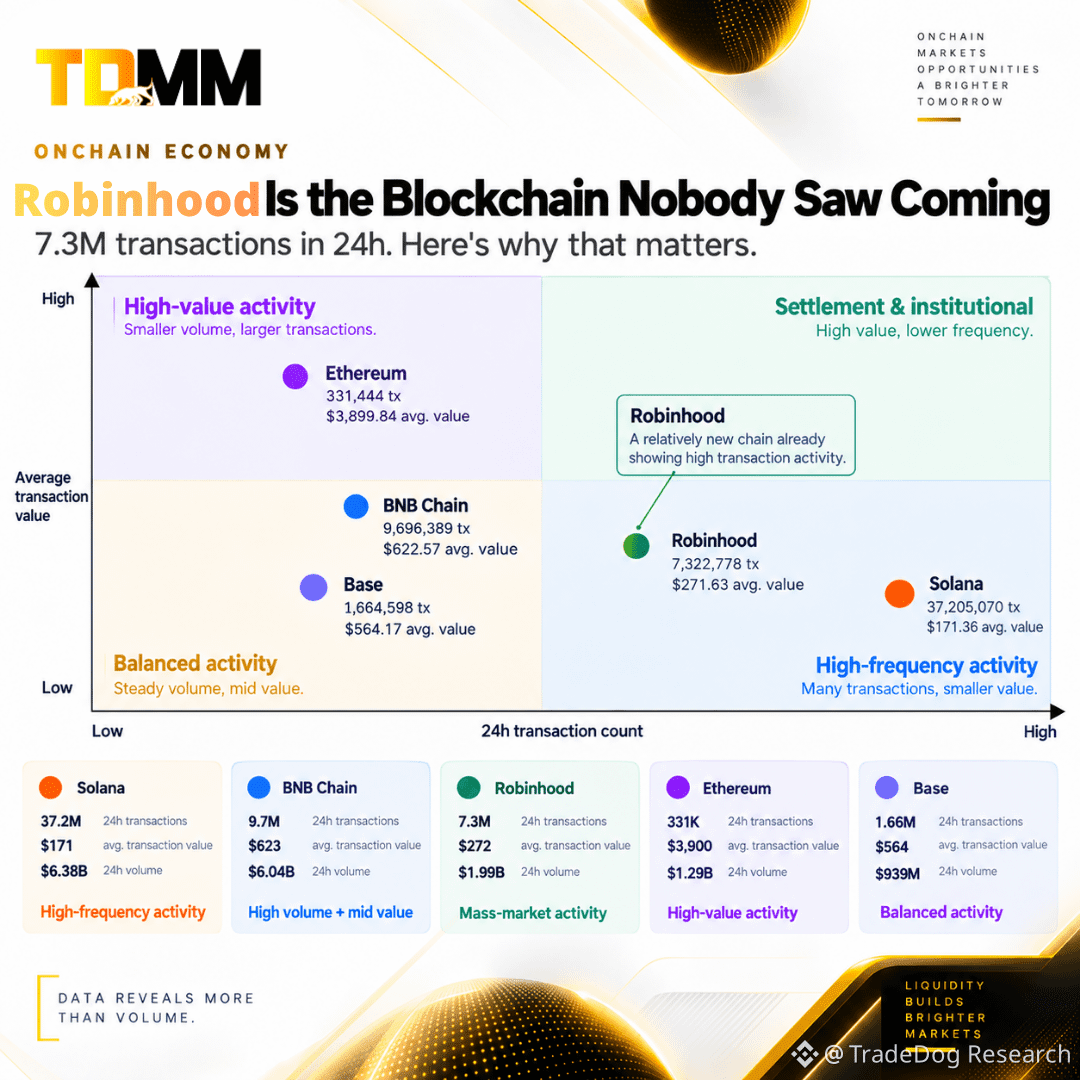
2
75
$PONS : Saat perhatian memuncak, cerita bisa berubah 👀
Sebelum lonjakan, harga, volume, dan trader unik semuanya naik bersama.
Lalu datang ATH.
📈 Harga meledak
📊 Volume melonjak
👥 Trader unik mencapai salah satu pembacaan terkuat mereka
Namun langkah berikutnya bukan lagi kenaikan tambahan.
Harga mulai retracement sementara aktivitas tetap tinggi.
Itu penting.
Perhatian yang memuncak ≠ potensi kenaikan yang pasti.
Kadang, lonjakan partisipasi dan volume di dekat puncak lokal bisa menandakan pasar sedang memasuki fase yang berbeda.
Untuk $PONS, pertanyaan kuncinya sekarang adalah:
Apakah trader unik + volume mulai membangun kembali seiring harga, atau partisipasi terus menyimpang?
Sinyal berikutnya mungkin datang dari bawah chart sebelum terlihat di chart.
@tdmarketmaker @Square-Creator-50e191620
#PONS #MarketAnalysis #Altcoins #DeFi #CryptoTrading
$PONS : Saat perhatian memuncak, cerita bisa berubah 👀
Sebelum lonjakan, harga, volume, dan trader unik semuanya naik bersama.
Lalu datang ATH.
📈 Harga meledak
📊 Volume melonjak
👥 Trader unik mencapai salah satu pembacaan terkuat mereka
Namun langkah berikutnya bukan lagi kenaikan tambahan.
Harga mulai retracement sementara aktivitas tetap tinggi.
Itu penting.
Perhatian yang memuncak ≠ potensi kenaikan yang pasti.
Kadang, lonjakan partisipasi dan volume di dekat puncak lokal bisa menandakan pasar sedang memasuki fase yang berbeda.
Untuk $PONS , pertanyaan kuncinya sekarang adalah:
Apakah trader unik + volume mulai membangun kembali seiring harga, atau partisipasi terus menyimpang?
Sinyal berikutnya mungkin datang dari bawah chart sebelum terlihat di chart.
@TDMM-TradeDog Market Maker @TradeDog Crypto Market Research
#PONS #MarketAnalysis #Altcoins #DeFi #CryptoTrading
Sebelum lonjakan, harga, volume, dan trader unik semuanya naik bersama.
Lalu datang ATH.
📈 Harga meledak
📊 Volume melonjak
👥 Trader unik mencapai salah satu pembacaan terkuat mereka
Namun langkah berikutnya bukan lagi kenaikan tambahan.
Harga mulai retracement sementara aktivitas tetap tinggi.
Itu penting.
Perhatian yang memuncak ≠ potensi kenaikan yang pasti.
Kadang, lonjakan partisipasi dan volume di dekat puncak lokal bisa menandakan pasar sedang memasuki fase yang berbeda.
Untuk $PONS , pertanyaan kuncinya sekarang adalah:
Apakah trader unik + volume mulai membangun kembali seiring harga, atau partisipasi terus menyimpang?
Sinyal berikutnya mungkin datang dari bawah chart sebelum terlihat di chart.
@TDMM-TradeDog Market Maker @TradeDog Crypto Market Research
#PONS #MarketAnalysis #Altcoins #DeFi #CryptoTrading
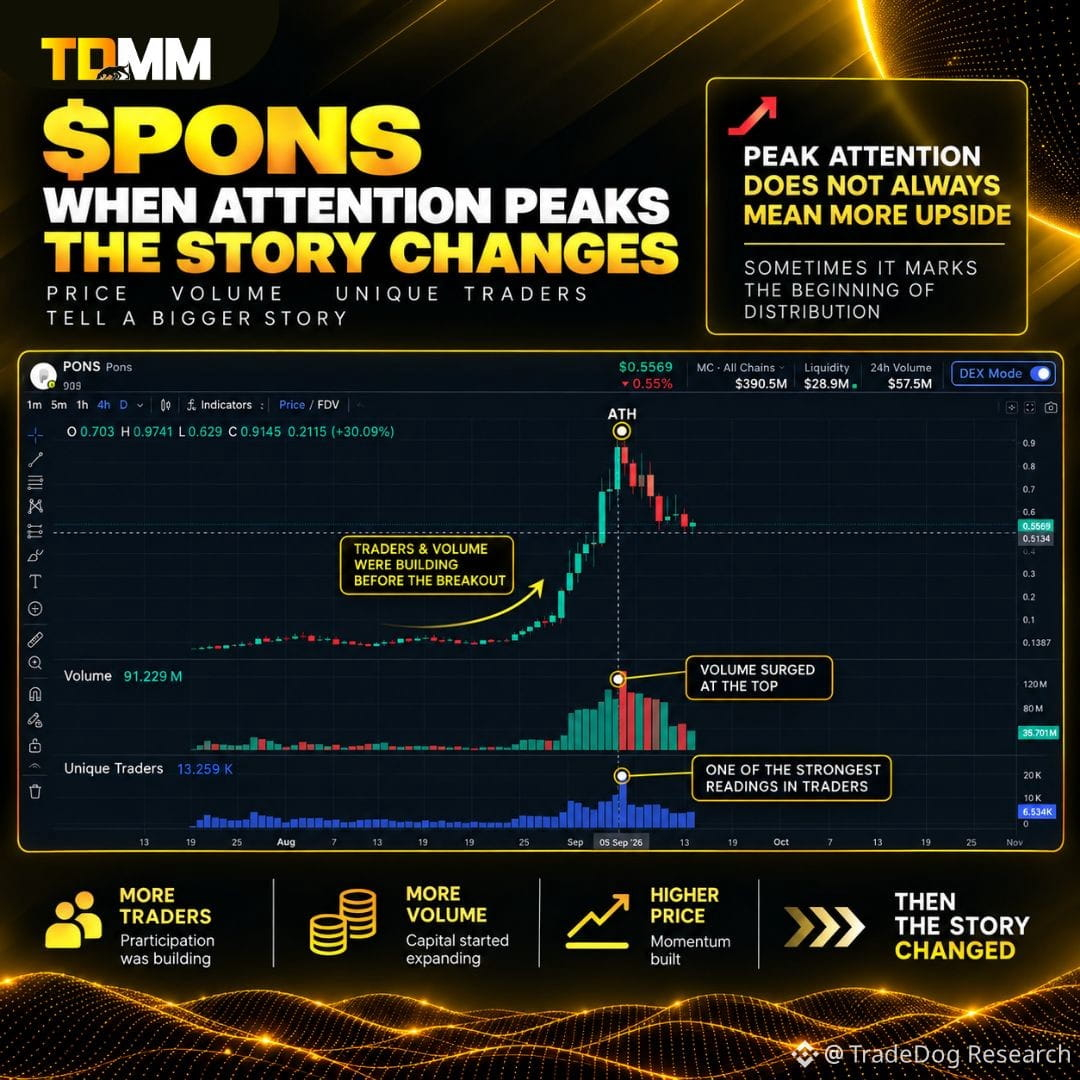
2
185
Cek Denyut Pasar Kripto Harian oleh TDR
Base Coinbase Capai Puncak Baru: 4 Juta Alamat Aktif
Mari kita bahas detailnya:
Base, jaringan Layer 2 (L2) @coinbase yang dibangun di atas blockchain Ethereum, baru-baru ini mencapai tonggak penting dengan melampaui 4 juta alamat aktif, didorong oleh kampanye "Onchain Summer".
Kampanye Onchain Summer ini, yang awalnya diluncurkan pada tahun 2023 dan dihidupkan kembali pada tahun 2024, telah menjadi kekuatan pendorong utama di balik pertumbuhan @base. Kampanye ini dirancang untuk memberi insentif kepada pengembang dan melibatkan komunitas kripto yang lebih luas dengan menawarkan hadiah, menyelenggarakan acara, dan menumbuhkan kreativitas di platform.
Edisi 2024 melanjutkan momentum ini dengan menawarkan hadiah sebesar $2 juta (setara dengan 600 ETH) kepada pengembang yang membangun di jaringan Base antara bulan Juni dan Agustus.
Mengenai Prospek Masa Depan:
Ke depannya, momentum yang diperoleh dari Onchain Summer dapat terus mendorong Base maju, terutama jika Coinbase dapat terus berinovasi dan menarik pengembang dan pengguna ke platformnya.
Pelajaran yang dipetik dari kampanye ini, khususnya dalam menangani kontroversi dan memastikan integritas aplikasi berbasis blockchain, akan sangat penting bagi pengembangan Base yang sedang berlangsung.
Namun, itu belum semuanya! Mari selami wawasan pasar hari ini:
Kapitalisasi Pasar Kripto Global: $2,2 Triliun
Dominasi Bitcoin: 53,4% | Dominasi Ethereum: 14,2%
Peraih Teratas:
SUNDOG: +87,4%
LOKA: +59,2%
Peraih Teratas:
BRAINLET: -27,0%
CATDOG: -25,4%
Berpartisipasilah dalam airdrop besar yang sedang berlangsung: @Curvance, @LineaBuild, @getgrass_io, @Sagaxyz__
Ikuti @TradedogCrypto untuk tetap mendapatkan informasi tentang perkembangan terbaru dan paling berdampak di dunia mata uang kripto.
#Coinbase #Ethereum #Layer2 #Blockchain #OnchainSummer
Cek Denyut Pasar Kripto Harian oleh TDR
Base Coinbase Capai Puncak Baru: 4 Juta Alamat Aktif
Mari kita bahas detailnya:
Base, jaringan Layer 2 (L2) @coinbase yang dibangun di atas blockchain Ethereum, baru-baru ini mencapai tonggak penting dengan melampaui 4 juta alamat aktif, didorong oleh kampanye "Onchain Summer".
Kampanye Onchain Summer ini, yang awalnya diluncurkan pada tahun 2023 dan dihidupkan kembali pada tahun 2024, telah menjadi kekuatan pendorong utama di balik pertumbuhan @base. Kampanye ini dirancang untuk memberi insentif kepada pengembang dan melibatkan komunitas kripto yang lebih luas dengan menawarkan hadiah, menyelenggarakan acara, dan menumbuhkan kreativitas di platform.
Edisi 2024 melanjutkan momentum ini dengan menawarkan hadiah sebesar $2 juta (setara dengan 600 ETH) kepada pengembang yang membangun di jaringan Base antara bulan Juni dan Agustus.
Mengenai Prospek Masa Depan:
Ke depannya, momentum yang diperoleh dari Onchain Summer dapat terus mendorong Base maju, terutama jika Coinbase dapat terus berinovasi dan menarik pengembang dan pengguna ke platformnya.
Pelajaran yang dipetik dari kampanye ini, khususnya dalam menangani kontroversi dan memastikan integritas aplikasi berbasis blockchain, akan sangat penting bagi pengembangan Base yang sedang berlangsung.
Namun, itu belum semuanya! Mari selami wawasan pasar hari ini:
Kapitalisasi Pasar Kripto Global: $2,2 Triliun
Dominasi Bitcoin: 53,4% | Dominasi Ethereum: 14,2%
Peraih Teratas:
SUNDOG: +87,4%
LOKA: +59,2%
Peraih Teratas:
BRAINLET: -27,0%
CATDOG: -25,4%
Berpartisipasilah dalam airdrop besar yang sedang berlangsung: @Curvance, @LineaBuild, @getgrass_io, @Sagaxyz__
Ikuti @TradedogCrypto untuk tetap mendapatkan informasi tentang perkembangan terbaru dan paling berdampak di dunia mata uang kripto.
#Coinbase #Ethereum #Layer2 #Blockchain #OnchainSummer
Base Coinbase Capai Puncak Baru: 4 Juta Alamat Aktif
Mari kita bahas detailnya:
Base, jaringan Layer 2 (L2) @coinbase yang dibangun di atas blockchain Ethereum, baru-baru ini mencapai tonggak penting dengan melampaui 4 juta alamat aktif, didorong oleh kampanye "Onchain Summer".
Kampanye Onchain Summer ini, yang awalnya diluncurkan pada tahun 2023 dan dihidupkan kembali pada tahun 2024, telah menjadi kekuatan pendorong utama di balik pertumbuhan @base. Kampanye ini dirancang untuk memberi insentif kepada pengembang dan melibatkan komunitas kripto yang lebih luas dengan menawarkan hadiah, menyelenggarakan acara, dan menumbuhkan kreativitas di platform.
Edisi 2024 melanjutkan momentum ini dengan menawarkan hadiah sebesar $2 juta (setara dengan 600 ETH) kepada pengembang yang membangun di jaringan Base antara bulan Juni dan Agustus.
Mengenai Prospek Masa Depan:
Ke depannya, momentum yang diperoleh dari Onchain Summer dapat terus mendorong Base maju, terutama jika Coinbase dapat terus berinovasi dan menarik pengembang dan pengguna ke platformnya.
Pelajaran yang dipetik dari kampanye ini, khususnya dalam menangani kontroversi dan memastikan integritas aplikasi berbasis blockchain, akan sangat penting bagi pengembangan Base yang sedang berlangsung.
Namun, itu belum semuanya! Mari selami wawasan pasar hari ini:
Kapitalisasi Pasar Kripto Global: $2,2 Triliun
Dominasi Bitcoin: 53,4% | Dominasi Ethereum: 14,2%
Peraih Teratas:
SUNDOG: +87,4%
LOKA: +59,2%
Peraih Teratas:
BRAINLET: -27,0%
CATDOG: -25,4%
Berpartisipasilah dalam airdrop besar yang sedang berlangsung: @Curvance, @LineaBuild, @getgrass_io, @Sagaxyz__
Ikuti @TradedogCrypto untuk tetap mendapatkan informasi tentang perkembangan terbaru dan paling berdampak di dunia mata uang kripto.
#Coinbase #Ethereum #Layer2 #Blockchain #OnchainSummer

3
284
Apakah Metaverse Kehilangan Kilaunya?
Pasar lahan metaverse pada tahun 2024 telah mengalami penurunan yang signifikan, dengan harga rata-rata turun 72% dari puncaknya.
Harga dasar rata-rata telah turun sebesar 34% sejak tahun 2023 dan 55% sejak tahun 2022.
Sorotan Proyek Utama:
@TheSandboxGame: Harga anjlok 95% dari 2,86 ETH pada tahun 2021 menjadi 0,13 ETH pada tahun 2024.
NFTWorlds/TOPIA Worlds: Menunjukkan ketahanan dengan penurunan sebesar 45%, dibantu oleh dukungan komunitas dan perubahan merek.
@SomniumSpace: Mencapai puncaknya pada tahun 2023 pada 0,98 ETH, didorong oleh kemajuan VR.
Faktor-Faktor yang Memengaruhi Harga:
Volatilitas Pasar: Penurunan kripto yang lebih luas berdampak signifikan pada lahan metaverse.
Perkembangan Khusus Proyek: Inovasi dan proposisi nilai yang unik membantu proyek-proyek tertentu mempertahankan nilai. Kekuatan Komunitas: Keterlibatan yang kuat dan upaya rebranding mengurangi penurunan.
Pengaruh Pasar Eksternal: Tren seperti memecoin mengalihkan perhatian dari tanah metaverse.
Prospek Masa Depan:
Masa depan harga tanah metaverse akan bergantung pada inovasi berkelanjutan dan tren mata uang kripto yang lebih luas.
Menurut Anda, bagaimana masa depan harga tanah metaverse? Bagikan pendapat Anda di bawah ini!
#Metaverse #VirtualRealEstate #NFT
Apakah Metaverse Kehilangan Kilaunya?
Pasar lahan metaverse pada tahun 2024 telah mengalami penurunan yang signifikan, dengan harga rata-rata turun 72% dari puncaknya.
Harga dasar rata-rata telah turun sebesar 34% sejak tahun 2023 dan 55% sejak tahun 2022.
Sorotan Proyek Utama:
@TheSandboxGame: Harga anjlok 95% dari 2,86 ETH pada tahun 2021 menjadi 0,13 ETH pada tahun 2024.
NFTWorlds/TOPIA Worlds: Menunjukkan ketahanan dengan penurunan sebesar 45%, dibantu oleh dukungan komunitas dan perubahan merek.
@SomniumSpace: Mencapai puncaknya pada tahun 2023 pada 0,98 ETH, didorong oleh kemajuan VR.
Faktor-Faktor yang Memengaruhi Harga:
Volatilitas Pasar: Penurunan kripto yang lebih luas berdampak signifikan pada lahan metaverse.
Perkembangan Khusus Proyek: Inovasi dan proposisi nilai yang unik membantu proyek-proyek tertentu mempertahankan nilai. Kekuatan Komunitas: Keterlibatan yang kuat dan upaya rebranding mengurangi penurunan.
Pengaruh Pasar Eksternal: Tren seperti memecoin mengalihkan perhatian dari tanah metaverse.
Prospek Masa Depan:
Masa depan harga tanah metaverse akan bergantung pada inovasi berkelanjutan dan tren mata uang kripto yang lebih luas.
Menurut Anda, bagaimana masa depan harga tanah metaverse? Bagikan pendapat Anda di bawah ini!
#Metaverse #VirtualRealEstate #NFT
Pasar lahan metaverse pada tahun 2024 telah mengalami penurunan yang signifikan, dengan harga rata-rata turun 72% dari puncaknya.
Harga dasar rata-rata telah turun sebesar 34% sejak tahun 2023 dan 55% sejak tahun 2022.
Sorotan Proyek Utama:
@TheSandboxGame: Harga anjlok 95% dari 2,86 ETH pada tahun 2021 menjadi 0,13 ETH pada tahun 2024.
NFTWorlds/TOPIA Worlds: Menunjukkan ketahanan dengan penurunan sebesar 45%, dibantu oleh dukungan komunitas dan perubahan merek.
@SomniumSpace: Mencapai puncaknya pada tahun 2023 pada 0,98 ETH, didorong oleh kemajuan VR.
Faktor-Faktor yang Memengaruhi Harga:
Volatilitas Pasar: Penurunan kripto yang lebih luas berdampak signifikan pada lahan metaverse.
Perkembangan Khusus Proyek: Inovasi dan proposisi nilai yang unik membantu proyek-proyek tertentu mempertahankan nilai. Kekuatan Komunitas: Keterlibatan yang kuat dan upaya rebranding mengurangi penurunan.
Pengaruh Pasar Eksternal: Tren seperti memecoin mengalihkan perhatian dari tanah metaverse.
Prospek Masa Depan:
Masa depan harga tanah metaverse akan bergantung pada inovasi berkelanjutan dan tren mata uang kripto yang lebih luas.
Menurut Anda, bagaimana masa depan harga tanah metaverse? Bagikan pendapat Anda di bawah ini!
#Metaverse #VirtualRealEstate #NFT

1
1.4k
Sementara semua orang membicarakan badai di pasar saham dan mata uang kripto, kami memutuskan untuk menguraikan situasi dengan pasar NFT.
📊
Angka dan Statistik
Kapitalisasi Pasar: $57,5 miliar
Volume Perdagangan Harian: $9,5 miliar
Koleksi Teratas berdasarkan Kapitalisasi:
@cryptopunksnfts: $524 juta
@LibertyCatsBTC: $513 juta
@BoredApeYC: $218 juta
@pudgypenguins: $178 juta
@Azuki: $99 juta
Koreksi Pasar
Pasar NFT mengalami penurunan yang signifikan, dengan kapitalisasi turun menjadi $34 miliar pada titik terendahnya, sangat dipengaruhi oleh pasar mata uang kripto yang lebih luas.
Dampak Memecoin
Memecoin telah menarik perhatian dan mengalihkan modal dari NFT, yang menyebabkan penurunan tajam kapitalisasi pasar dari $348 miliar pada Januari 2024 menjadi $159 miliar pada Maret 2024.
Tren yang Muncul
NFT Berbasis Utilitas: Meningkatnya minat terhadap NFT yang terkait dengan tokenisasi aset dunia nyata. Integrasi Game: Perusahaan besar seperti Square Enix semakin banyak mengadopsi NFT. NFT Hibrida: Meningkatnya popularitas token yang menggabungkan aset fisik dan digital.
Prospek Masa Depan
Meskipun kenaikan berikutnya mungkin menekankan NFT berbasis utilitas dan tokenisasi aset dunia nyata, pertumbuhan pasar yang signifikan masih belum pasti karena kondisi saat ini.
Pasar NFT terus berkembang, dengan fokus pada utilitas dan aset riil, tetapi menghadapi tantangan dari memecoin dan volatilitas pasar.
Mari kita tunggu dan lihat apa yang terjadi selanjutnya. Sampaikan pendapat Anda di bawah ini
👇
#NFTMarket #CryptoNewss #MarketTrends
Sementara semua orang membicarakan badai di pasar saham dan mata uang kripto, kami memutuskan untuk menguraikan situasi dengan pasar NFT.
📊
Angka dan Statistik
Kapitalisasi Pasar: $57,5 miliar
Volume Perdagangan Harian: $9,5 miliar
Koleksi Teratas berdasarkan Kapitalisasi:
@cryptopunksnfts: $524 juta
@LibertyCatsBTC: $513 juta
@BoredApeYC: $218 juta
@pudgypenguins: $178 juta
@Azuki: $99 juta
Koreksi Pasar
Pasar NFT mengalami penurunan yang signifikan, dengan kapitalisasi turun menjadi $34 miliar pada titik terendahnya, sangat dipengaruhi oleh pasar mata uang kripto yang lebih luas.
Dampak Memecoin
Memecoin telah menarik perhatian dan mengalihkan modal dari NFT, yang menyebabkan penurunan tajam kapitalisasi pasar dari $348 miliar pada Januari 2024 menjadi $159 miliar pada Maret 2024.
Tren yang Muncul
NFT Berbasis Utilitas: Meningkatnya minat terhadap NFT yang terkait dengan tokenisasi aset dunia nyata. Integrasi Game: Perusahaan besar seperti Square Enix semakin banyak mengadopsi NFT. NFT Hibrida: Meningkatnya popularitas token yang menggabungkan aset fisik dan digital.
Prospek Masa Depan
Meskipun kenaikan berikutnya mungkin menekankan NFT berbasis utilitas dan tokenisasi aset dunia nyata, pertumbuhan pasar yang signifikan masih belum pasti karena kondisi saat ini.
Pasar NFT terus berkembang, dengan fokus pada utilitas dan aset riil, tetapi menghadapi tantangan dari memecoin dan volatilitas pasar.
Mari kita tunggu dan lihat apa yang terjadi selanjutnya. Sampaikan pendapat Anda di bawah ini
👇
#NFTMarket #CryptoNewss #MarketTrends
📊
Angka dan Statistik
Kapitalisasi Pasar: $57,5 miliar
Volume Perdagangan Harian: $9,5 miliar
Koleksi Teratas berdasarkan Kapitalisasi:
@cryptopunksnfts: $524 juta
@LibertyCatsBTC: $513 juta
@BoredApeYC: $218 juta
@pudgypenguins: $178 juta
@Azuki: $99 juta
Koreksi Pasar
Pasar NFT mengalami penurunan yang signifikan, dengan kapitalisasi turun menjadi $34 miliar pada titik terendahnya, sangat dipengaruhi oleh pasar mata uang kripto yang lebih luas.
Dampak Memecoin
Memecoin telah menarik perhatian dan mengalihkan modal dari NFT, yang menyebabkan penurunan tajam kapitalisasi pasar dari $348 miliar pada Januari 2024 menjadi $159 miliar pada Maret 2024.
Tren yang Muncul
NFT Berbasis Utilitas: Meningkatnya minat terhadap NFT yang terkait dengan tokenisasi aset dunia nyata. Integrasi Game: Perusahaan besar seperti Square Enix semakin banyak mengadopsi NFT. NFT Hibrida: Meningkatnya popularitas token yang menggabungkan aset fisik dan digital.
Prospek Masa Depan
Meskipun kenaikan berikutnya mungkin menekankan NFT berbasis utilitas dan tokenisasi aset dunia nyata, pertumbuhan pasar yang signifikan masih belum pasti karena kondisi saat ini.
Pasar NFT terus berkembang, dengan fokus pada utilitas dan aset riil, tetapi menghadapi tantangan dari memecoin dan volatilitas pasar.
Mari kita tunggu dan lihat apa yang terjadi selanjutnya. Sampaikan pendapat Anda di bawah ini
👇
#NFTMarket #CryptoNewss #MarketTrends

1
450
Identifikasi Gaya Trading Anda!
Mengapa Penting: Sangat penting untuk menyelaraskan strategi trading Anda dengan kepribadian, toleransi risiko, dan komitmen waktu Anda.
Mengetahui apakah Anda seorang Scalper, Day Trader, atau Swing Trader membantu Anda membuat keputusan yang tepat, mengelola stres, dan mengoptimalkan pendekatan trading Anda.
Berikut ini adalah tinjauan lebih dekat pada setiap gaya trading
👇
Scalper: Trading cepat, stres tinggi, risiko tinggi.
Day Trader: Trading harian, risiko sedang hingga tinggi, membutuhkan perhatian penuh.
Swing Trader: Menahan posisi selama berhari-hari/berminggu-minggu, stres lebih rendah, membutuhkan kesabaran.
Kesimpulan Secara Keseluruhan:
Setiap gaya memiliki tantangan dan imbalan yang unik. Pilih yang sesuai dengan toleransi risiko dan gaya hidup Anda.
Gaya trading mana yang paling cocok untuk Anda?
#Trading#Scalping#DayTrading#SwingTrading
Identifikasi Gaya Trading Anda!
Mengapa Penting: Sangat penting untuk menyelaraskan strategi trading Anda dengan kepribadian, toleransi risiko, dan komitmen waktu Anda.
Mengetahui apakah Anda seorang Scalper, Day Trader, atau Swing Trader membantu Anda membuat keputusan yang tepat, mengelola stres, dan mengoptimalkan pendekatan trading Anda.
Berikut ini adalah tinjauan lebih dekat pada setiap gaya trading
👇
Scalper: Trading cepat, stres tinggi, risiko tinggi.
Day Trader: Trading harian, risiko sedang hingga tinggi, membutuhkan perhatian penuh.
Swing Trader: Menahan posisi selama berhari-hari/berminggu-minggu, stres lebih rendah, membutuhkan kesabaran.
Kesimpulan Secara Keseluruhan:
Setiap gaya memiliki tantangan dan imbalan yang unik. Pilih yang sesuai dengan toleransi risiko dan gaya hidup Anda.
Gaya trading mana yang paling cocok untuk Anda?
#Trading#Scalping#DayTrading#SwingTrading
Mengapa Penting: Sangat penting untuk menyelaraskan strategi trading Anda dengan kepribadian, toleransi risiko, dan komitmen waktu Anda.
Mengetahui apakah Anda seorang Scalper, Day Trader, atau Swing Trader membantu Anda membuat keputusan yang tepat, mengelola stres, dan mengoptimalkan pendekatan trading Anda.
Berikut ini adalah tinjauan lebih dekat pada setiap gaya trading
👇
Scalper: Trading cepat, stres tinggi, risiko tinggi.
Day Trader: Trading harian, risiko sedang hingga tinggi, membutuhkan perhatian penuh.
Swing Trader: Menahan posisi selama berhari-hari/berminggu-minggu, stres lebih rendah, membutuhkan kesabaran.
Kesimpulan Secara Keseluruhan:
Setiap gaya memiliki tantangan dan imbalan yang unik. Pilih yang sesuai dengan toleransi risiko dan gaya hidup Anda.
Gaya trading mana yang paling cocok untuk Anda?
#Trading#Scalping#DayTrading#SwingTrading

12
𝗪𝗵𝗶𝗰𝗵 𝗣𝗿𝗼𝗷𝗲𝗰𝘁𝘀 𝗦𝘁𝗼𝗹𝗲 𝘁𝗵𝗲 𝗜𝗻𝘃𝗲𝘀𝘁𝗼𝗿 𝗟𝗮𝘀𝘁 𝗪𝗲𝗲𝗸?
Mari kita lihat👇
- Particle Network - Solusi blockchain Layer 1. 𝗥𝗮𝗶𝘀𝗲𝗱 𝗔𝗺𝗼𝘂𝗻𝘁: Akan Diungkapkan
- Pichi Finance - Berfokus pada pembuatan protokol perdagangan poin tanpa kepercayaan.
𝗥𝗮𝗶𝘀𝗲𝗱 𝗔𝗺𝗼𝘂𝗻𝘁: $2,5 juta
- Morpho Labs - Memimpin jalan dalam solusi likuiditas canggih dan aplikasi terdesentralisasi.
𝗥𝗮𝗶𝘀𝗲𝗱 𝗔𝗺𝗼𝘂𝗻𝘁: $50 juta
- Breakout - Sebuah perusahaan rintisan yang berfokus pada merevolusi sektor keuangan dan perbankan dengan solusi teknologi canggih. Total biaya: $4,5 juta
- Layer2 Financial - Bertujuan untuk menjembatani kesenjangan antara sistem keuangan tradisional dan teknologi blockchain dengan meningkatkan sistem pembayaran dan layanan keuangan.
Total biaya: $10,7 juta
Proyek-proyek ini menyoroti minat dan investasi yang semakin meningkat dalam solusi blockchain dan keuangan terdesentralisasi, masing-masing bertujuan untuk memecahkan tantangan khusus dalam ekosistem dan mendorong inovasi lebih lanjut.
Proyek mana yang menurut Anda paling menjanjikan?
Beri tahu kami di komentar! #Crypto #Blockchain #DEFİ #Investment #Innovation
𝗪𝗵𝗶𝗰𝗵 𝗣𝗿𝗼𝗷𝗲𝗰𝘁𝘀 𝗦𝘁𝗼𝗹𝗲 𝘁𝗵𝗲 𝗜𝗻𝘃𝗲𝘀𝘁𝗼𝗿 𝗟𝗮𝘀𝘁 𝗪𝗲𝗲𝗸?
Mari kita lihat👇
- Particle Network - Solusi blockchain Layer 1. 𝗥𝗮𝗶𝘀𝗲𝗱 𝗔𝗺𝗼𝘂𝗻𝘁: Akan Diungkapkan
- Pichi Finance - Berfokus pada pembuatan protokol perdagangan poin tanpa kepercayaan.
𝗥𝗮𝗶𝘀𝗲𝗱 𝗔𝗺𝗼𝘂𝗻𝘁: $2,5 juta
- Morpho Labs - Memimpin jalan dalam solusi likuiditas canggih dan aplikasi terdesentralisasi.
𝗥𝗮𝗶𝘀𝗲𝗱 𝗔𝗺𝗼𝘂𝗻𝘁: $50 juta
- Breakout - Sebuah perusahaan rintisan yang berfokus pada merevolusi sektor keuangan dan perbankan dengan solusi teknologi canggih. Total biaya: $4,5 juta
- Layer2 Financial - Bertujuan untuk menjembatani kesenjangan antara sistem keuangan tradisional dan teknologi blockchain dengan meningkatkan sistem pembayaran dan layanan keuangan.
Total biaya: $10,7 juta
Proyek-proyek ini menyoroti minat dan investasi yang semakin meningkat dalam solusi blockchain dan keuangan terdesentralisasi, masing-masing bertujuan untuk memecahkan tantangan khusus dalam ekosistem dan mendorong inovasi lebih lanjut.
Proyek mana yang menurut Anda paling menjanjikan?
Beri tahu kami di komentar! #Crypto #Blockchain #DEFİ #Investment #Innovation
Mari kita lihat👇
- Particle Network - Solusi blockchain Layer 1. 𝗥𝗮𝗶𝘀𝗲𝗱 𝗔𝗺𝗼𝘂𝗻𝘁: Akan Diungkapkan
- Pichi Finance - Berfokus pada pembuatan protokol perdagangan poin tanpa kepercayaan.
𝗥𝗮𝗶𝘀𝗲𝗱 𝗔𝗺𝗼𝘂𝗻𝘁: $2,5 juta
- Morpho Labs - Memimpin jalan dalam solusi likuiditas canggih dan aplikasi terdesentralisasi.
𝗥𝗮𝗶𝘀𝗲𝗱 𝗔𝗺𝗼𝘂𝗻𝘁: $50 juta
- Breakout - Sebuah perusahaan rintisan yang berfokus pada merevolusi sektor keuangan dan perbankan dengan solusi teknologi canggih. Total biaya: $4,5 juta
- Layer2 Financial - Bertujuan untuk menjembatani kesenjangan antara sistem keuangan tradisional dan teknologi blockchain dengan meningkatkan sistem pembayaran dan layanan keuangan.
Total biaya: $10,7 juta
Proyek-proyek ini menyoroti minat dan investasi yang semakin meningkat dalam solusi blockchain dan keuangan terdesentralisasi, masing-masing bertujuan untuk memecahkan tantangan khusus dalam ekosistem dan mendorong inovasi lebih lanjut.
Proyek mana yang menurut Anda paling menjanjikan?
Beri tahu kami di komentar! #Crypto #Blockchain #DEFİ #Investment #Innovation

1
232
Apakah mata uang kripto favorit Anda aman? 🛡️
Untuk tetap menjadi yang terdepan dalam dunia kripto, sangat penting untuk mendidik diri Anda sendiri tentang potensi peretasan dan perkembangan yang sedang berlangsung.
Hari ini, mari selami topik serangan 51%.
Apa itu Serangan 51%?
Hal ini terjadi ketika seseorang atau kelompok mengendalikan lebih dari 50% kekuatan hashing blockchain, membiarkan mereka mengutak-atik transaksi.
Bagaimana itu bekerja:
- Dominasi Tingkat Hash: Penyerang mengontrol sebagian besar tingkat hash jaringan.
- Pembelanjaan Ganda: Mereka dapat membalikkan transaksi dan memungkinkan pembelanjaan ganda.
- Blokir Interferensi: Mereka dapat menghentikan transaksi baru untuk mendapatkan konfirmasi.
- Monopoli Penambangan: Mereka memonopoli penambangan, mencegah penambang lain membuat blok dan mengumpulkan hadiah.
Contoh Sejarah:
- Bitcoin Gold (2018): Mengalami serangan 51% yang menghasilkan koin pembelanjaan ganda senilai $18 juta.
- Ethereum Classic (2019): Mengalami beberapa serangan 51%, menyebabkan pembelanjaan ganda ribuan ETC.
- Verge (2018): Menghadapi serangan yang menyebabkan terciptanya jutaan XVG melalui manipulasi blockchain.
Langkah-langkah apa yang dapat diambil untuk pencegahan?
- Meningkatkan Hash Rate Jaringan: Mempersulit satu entitas untuk mengontrol 51%.
- Proof-of-Stake (PoS): Keamanan berdasarkan jumlah mata uang kripto yang dimiliki, bukan kekuatan komputasi.
- Pemantauan yang Ditingkatkan: Pemantauan jaringan berkelanjutan untuk perilaku penambangan yang tidak biasa.
- Desentralisasi: Mempromosikan desentralisasi pada kelompok penambangan untuk menghindari konsentrasi kekuatan penambangan.
Jika Anda merasa informasi ini bermanfaat, silakan sukai, posting ulang, dan bagikan ke jaringan Anda.
#KeamananKripto #Blockchain
Apakah mata uang kripto favorit Anda aman? 🛡️
Untuk tetap menjadi yang terdepan dalam dunia kripto, sangat penting untuk mendidik diri Anda sendiri tentang potensi peretasan dan perkembangan yang sedang berlangsung.
Hari ini, mari selami topik serangan 51%.
Apa itu Serangan 51%?
Hal ini terjadi ketika seseorang atau kelompok mengendalikan lebih dari 50% kekuatan hashing blockchain, membiarkan mereka mengutak-atik transaksi.
Bagaimana itu bekerja:
- Dominasi Tingkat Hash: Penyerang mengontrol sebagian besar tingkat hash jaringan.
- Pembelanjaan Ganda: Mereka dapat membalikkan transaksi dan memungkinkan pembelanjaan ganda.
- Blokir Interferensi: Mereka dapat menghentikan transaksi baru untuk mendapatkan konfirmasi.
- Monopoli Penambangan: Mereka memonopoli penambangan, mencegah penambang lain membuat blok dan mengumpulkan hadiah.
Contoh Sejarah:
- Bitcoin Gold (2018): Mengalami serangan 51% yang menghasilkan koin pembelanjaan ganda senilai $18 juta.
- Ethereum Classic (2019): Mengalami beberapa serangan 51%, menyebabkan pembelanjaan ganda ribuan ETC.
- Verge (2018): Menghadapi serangan yang menyebabkan terciptanya jutaan XVG melalui manipulasi blockchain.
Langkah-langkah apa yang dapat diambil untuk pencegahan?
- Meningkatkan Hash Rate Jaringan: Mempersulit satu entitas untuk mengontrol 51%.
- Proof-of-Stake (PoS): Keamanan berdasarkan jumlah mata uang kripto yang dimiliki, bukan kekuatan komputasi.
- Pemantauan yang Ditingkatkan: Pemantauan jaringan berkelanjutan untuk perilaku penambangan yang tidak biasa.
- Desentralisasi: Mempromosikan desentralisasi pada kelompok penambangan untuk menghindari konsentrasi kekuatan penambangan.
Jika Anda merasa informasi ini bermanfaat, silakan sukai, posting ulang, dan bagikan ke jaringan Anda.
#KeamananKripto #Blockchain
Untuk tetap menjadi yang terdepan dalam dunia kripto, sangat penting untuk mendidik diri Anda sendiri tentang potensi peretasan dan perkembangan yang sedang berlangsung.
Hari ini, mari selami topik serangan 51%.
Apa itu Serangan 51%?
Hal ini terjadi ketika seseorang atau kelompok mengendalikan lebih dari 50% kekuatan hashing blockchain, membiarkan mereka mengutak-atik transaksi.
Bagaimana itu bekerja:
- Dominasi Tingkat Hash: Penyerang mengontrol sebagian besar tingkat hash jaringan.
- Pembelanjaan Ganda: Mereka dapat membalikkan transaksi dan memungkinkan pembelanjaan ganda.
- Blokir Interferensi: Mereka dapat menghentikan transaksi baru untuk mendapatkan konfirmasi.
- Monopoli Penambangan: Mereka memonopoli penambangan, mencegah penambang lain membuat blok dan mengumpulkan hadiah.
Contoh Sejarah:
- Bitcoin Gold (2018): Mengalami serangan 51% yang menghasilkan koin pembelanjaan ganda senilai $18 juta.
- Ethereum Classic (2019): Mengalami beberapa serangan 51%, menyebabkan pembelanjaan ganda ribuan ETC.
- Verge (2018): Menghadapi serangan yang menyebabkan terciptanya jutaan XVG melalui manipulasi blockchain.
Langkah-langkah apa yang dapat diambil untuk pencegahan?
- Meningkatkan Hash Rate Jaringan: Mempersulit satu entitas untuk mengontrol 51%.
- Proof-of-Stake (PoS): Keamanan berdasarkan jumlah mata uang kripto yang dimiliki, bukan kekuatan komputasi.
- Pemantauan yang Ditingkatkan: Pemantauan jaringan berkelanjutan untuk perilaku penambangan yang tidak biasa.
- Desentralisasi: Mempromosikan desentralisasi pada kelompok penambangan untuk menghindari konsentrasi kekuatan penambangan.
Jika Anda merasa informasi ini bermanfaat, silakan sukai, posting ulang, dan bagikan ke jaringan Anda.
#KeamananKripto #Blockchain

3
4.6k
Apakah Emosi Anda Mempengaruhi Investasi Kripto Anda?
Dalam beberapa hal, kita semua terpengaruh oleh hal ini; tidak ada gunanya menyangkalnya.
Tapi bagaimana caranya? Mari kita bahas keseluruhan siklus emosi.
Euforia: Harga pasar yang tinggi menciptakan rasa tak terkalahkan dan keserakahan.
Perilaku dasar: Pembelian besar-besaran dengan harga tinggi, seringkali tanpa mempertimbangkan risiko.
Harapan: Fase awal di mana pedagang memasuki pasar dengan optimisme dan ekspektasi tinggi terhadap keuntungan di masa depan.
Perilaku dasar: Membeli aset berdasarkan berita positif, rumor, atau keberhasilan investasi awal.
Optimisme: Ketika harga mulai naik, para pedagang merasa optimis terhadap investasi mereka.
Perilaku dasar: Peningkatan pembelian dan penahanan, memperkuat keyakinan terhadap potensi pasar.
Sensasi: Kenaikan harga yang signifikan menimbulkan kegembiraan dan sensasi.
Perilaku dasar: Pembelian lebih agresif, terkadang memanfaatkan untuk memaksimalkan keuntungan.
Kecemasan: Harga pasar mulai menurun sehingga menyebabkan para pedagang merasa cemas terhadap investasinya.
Perilaku dasar: Ragu untuk menjual, berharap harga akan kembali pulih.
Penolakan: Penurunan harga yang berkelanjutan menyebabkan penolakan, dan para pedagang percaya bahwa ini adalah kemunduran sementara.
Perilaku dasar: Mempertahankan investasi meskipun mengalami kerugian, menunggu pemulihan.
Panik: Penurunan yang terus-menerus menimbulkan kepanikan karena para pedagang menyadari kerugian yang signifikan.
Perilaku dasar: Penjualan mendesak untuk mengurangi kerugian, seringkali dengan kerugian yang cukup besar.
Kapitulasi: Penjualan dan keluarnya pasar secara luas, menunjukkan titik terendah dalam siklus.
Perilaku dasar: Menjual sisa aset, keluar dari pasar, dan menerima kerugian.
Harapan: Pasar stabil dan menunjukkan tanda-tanda pemulihan, menghidupkan kembali harapan di kalangan pedagang.
Perilaku dasar: Masuk kembali ke pasar dengan hati-hati, dan siklus baru dimulai.
Menurut Anda, pada tahap apa Anda saat ini?🤔
#CryptoTrader #MarketCycle
Apakah Emosi Anda Mempengaruhi Investasi Kripto Anda?
Dalam beberapa hal, kita semua terpengaruh oleh hal ini; tidak ada gunanya menyangkalnya.
Tapi bagaimana caranya? Mari kita bahas keseluruhan siklus emosi.
Euforia: Harga pasar yang tinggi menciptakan rasa tak terkalahkan dan keserakahan.
Perilaku dasar: Pembelian besar-besaran dengan harga tinggi, seringkali tanpa mempertimbangkan risiko.
Harapan: Fase awal di mana pedagang memasuki pasar dengan optimisme dan ekspektasi tinggi terhadap keuntungan di masa depan.
Perilaku dasar: Membeli aset berdasarkan berita positif, rumor, atau keberhasilan investasi awal.
Optimisme: Ketika harga mulai naik, para pedagang merasa optimis terhadap investasi mereka.
Perilaku dasar: Peningkatan pembelian dan penahanan, memperkuat keyakinan terhadap potensi pasar.
Sensasi: Kenaikan harga yang signifikan menimbulkan kegembiraan dan sensasi.
Perilaku dasar: Pembelian lebih agresif, terkadang memanfaatkan untuk memaksimalkan keuntungan.
Kecemasan: Harga pasar mulai menurun sehingga menyebabkan para pedagang merasa cemas terhadap investasinya.
Perilaku dasar: Ragu untuk menjual, berharap harga akan kembali pulih.
Penolakan: Penurunan harga yang berkelanjutan menyebabkan penolakan, dan para pedagang percaya bahwa ini adalah kemunduran sementara.
Perilaku dasar: Mempertahankan investasi meskipun mengalami kerugian, menunggu pemulihan.
Panik: Penurunan yang terus-menerus menimbulkan kepanikan karena para pedagang menyadari kerugian yang signifikan.
Perilaku dasar: Penjualan mendesak untuk mengurangi kerugian, seringkali dengan kerugian yang cukup besar.
Kapitulasi: Penjualan dan keluarnya pasar secara luas, menunjukkan titik terendah dalam siklus.
Perilaku dasar: Menjual sisa aset, keluar dari pasar, dan menerima kerugian.
Harapan: Pasar stabil dan menunjukkan tanda-tanda pemulihan, menghidupkan kembali harapan di kalangan pedagang.
Perilaku dasar: Masuk kembali ke pasar dengan hati-hati, dan siklus baru dimulai.
Menurut Anda, pada tahap apa Anda saat ini?🤔
#CryptoTrader #MarketCycle
Dalam beberapa hal, kita semua terpengaruh oleh hal ini; tidak ada gunanya menyangkalnya.
Tapi bagaimana caranya? Mari kita bahas keseluruhan siklus emosi.
Euforia: Harga pasar yang tinggi menciptakan rasa tak terkalahkan dan keserakahan.
Perilaku dasar: Pembelian besar-besaran dengan harga tinggi, seringkali tanpa mempertimbangkan risiko.
Harapan: Fase awal di mana pedagang memasuki pasar dengan optimisme dan ekspektasi tinggi terhadap keuntungan di masa depan.
Perilaku dasar: Membeli aset berdasarkan berita positif, rumor, atau keberhasilan investasi awal.
Optimisme: Ketika harga mulai naik, para pedagang merasa optimis terhadap investasi mereka.
Perilaku dasar: Peningkatan pembelian dan penahanan, memperkuat keyakinan terhadap potensi pasar.
Sensasi: Kenaikan harga yang signifikan menimbulkan kegembiraan dan sensasi.
Perilaku dasar: Pembelian lebih agresif, terkadang memanfaatkan untuk memaksimalkan keuntungan.
Kecemasan: Harga pasar mulai menurun sehingga menyebabkan para pedagang merasa cemas terhadap investasinya.
Perilaku dasar: Ragu untuk menjual, berharap harga akan kembali pulih.
Penolakan: Penurunan harga yang berkelanjutan menyebabkan penolakan, dan para pedagang percaya bahwa ini adalah kemunduran sementara.
Perilaku dasar: Mempertahankan investasi meskipun mengalami kerugian, menunggu pemulihan.
Panik: Penurunan yang terus-menerus menimbulkan kepanikan karena para pedagang menyadari kerugian yang signifikan.
Perilaku dasar: Penjualan mendesak untuk mengurangi kerugian, seringkali dengan kerugian yang cukup besar.
Kapitulasi: Penjualan dan keluarnya pasar secara luas, menunjukkan titik terendah dalam siklus.
Perilaku dasar: Menjual sisa aset, keluar dari pasar, dan menerima kerugian.
Harapan: Pasar stabil dan menunjukkan tanda-tanda pemulihan, menghidupkan kembali harapan di kalangan pedagang.
Perilaku dasar: Masuk kembali ke pasar dengan hati-hati, dan siklus baru dimulai.
Menurut Anda, pada tahap apa Anda saat ini?🤔
#CryptoTrader #MarketCycle

532
Pernah terpikir bagaimana zkRollups bekerja dan memberikan nilai nyata ke Blockchain?
🤔
Sebelum mendalami cara kerjanya, mari kita jelajahi dulu apa itu zkRollups:
ZK-Rollup adalah rollup di mana validator membuktikan keaslian transaksi tanpa mengungkapkan rincian transaksi apa pun.
Sekarang, mari selami cara kerja zkRollups!
Cara Kerja zkRollup:
1. Transaksi Batch (L2 ): Beberapa transaksi digabungkan menjadi satu, mengurangi beban pada blockchain utama dengan memprosesnya secara off-chain.
2. Eksekusi (L2): Transaksi batch dieksekusi oleh sequencer, memperbarui status rantai lapisan 2.
3. Tx, State Diff, dll. (L2): Ini menghasilkan transaksi (Tx) dan perbedaan negara (diff), yang mencerminkan perubahan saldo akun dan kontrak pintar.
4. Hasilkan Bukti (L2): Bukti tanpa pengetahuan (bukti zk) dihasilkan, memverifikasi kebenaran transaksi tanpa mengungkapkan detailnya.
5. Kirim ke Rantai L1: Bukti zk dikirimkan ke blockchain lapisan 1, memperbaruinya dengan status baru dan memvalidasi semua transaksi dalam batch.
6. Verifikasi (Rantai L1): Kontrak rollup pada lapisan 1 memverifikasi bukti zk, memastikan integritas transaksi batch.
7. Pembaruan atau Tidak (Rantai L1): Berdasarkan verifikasi, status blockchain utama diperbarui atau ditolak, menjaga keamanan dan akurasi.
Keuntungan zkRollup:
- Skalabilitas: Meningkatkan throughput transaksi dan mengurangi kemacetan dengan pemrosesan off-chain.
- Biaya Lebih Rendah: Mengurangi biaya transaksi secara signifikan dengan mencatat lebih sedikit transaksi on-chain.
- Keamanan: Mewarisi keamanan blockchain utama.
- Privasi: Memvalidasi transaksi tanpa mengungkapkan informasi sensitif.
Tunggu postingan kami berikutnya di mana kami akan membahas lanskap zkRollup secara detail!
Beri komentar di bawah betapa bersemangatnya Anda.
#BlockchainMilestone #Crypto #zkRollups #CryptoInnovation #DeFi
Pernah terpikir bagaimana zkRollups bekerja dan memberikan nilai nyata ke Blockchain?
🤔
Sebelum mendalami cara kerjanya, mari kita jelajahi dulu apa itu zkRollups:
ZK-Rollup adalah rollup di mana validator membuktikan keaslian transaksi tanpa mengungkapkan rincian transaksi apa pun.
Sekarang, mari selami cara kerja zkRollups!
Cara Kerja zkRollup:
1. Transaksi Batch (L2 ): Beberapa transaksi digabungkan menjadi satu, mengurangi beban pada blockchain utama dengan memprosesnya secara off-chain.
2. Eksekusi (L2): Transaksi batch dieksekusi oleh sequencer, memperbarui status rantai lapisan 2.
3. Tx, State Diff, dll. (L2): Ini menghasilkan transaksi (Tx) dan perbedaan negara (diff), yang mencerminkan perubahan saldo akun dan kontrak pintar.
4. Hasilkan Bukti (L2): Bukti tanpa pengetahuan (bukti zk) dihasilkan, memverifikasi kebenaran transaksi tanpa mengungkapkan detailnya.
5. Kirim ke Rantai L1: Bukti zk dikirimkan ke blockchain lapisan 1, memperbaruinya dengan status baru dan memvalidasi semua transaksi dalam batch.
6. Verifikasi (Rantai L1): Kontrak rollup pada lapisan 1 memverifikasi bukti zk, memastikan integritas transaksi batch.
7. Pembaruan atau Tidak (Rantai L1): Berdasarkan verifikasi, status blockchain utama diperbarui atau ditolak, menjaga keamanan dan akurasi.
Keuntungan zkRollup:
- Skalabilitas: Meningkatkan throughput transaksi dan mengurangi kemacetan dengan pemrosesan off-chain.
- Biaya Lebih Rendah: Mengurangi biaya transaksi secara signifikan dengan mencatat lebih sedikit transaksi on-chain.
- Keamanan: Mewarisi keamanan blockchain utama.
- Privasi: Memvalidasi transaksi tanpa mengungkapkan informasi sensitif.
Tunggu postingan kami berikutnya di mana kami akan membahas lanskap zkRollup secara detail!
Beri komentar di bawah betapa bersemangatnya Anda.
#BlockchainMilestone #Crypto #zkRollups #CryptoInnovation #DeFi
🤔
Sebelum mendalami cara kerjanya, mari kita jelajahi dulu apa itu zkRollups:
ZK-Rollup adalah rollup di mana validator membuktikan keaslian transaksi tanpa mengungkapkan rincian transaksi apa pun.
Sekarang, mari selami cara kerja zkRollups!
Cara Kerja zkRollup:
1. Transaksi Batch (L2 ): Beberapa transaksi digabungkan menjadi satu, mengurangi beban pada blockchain utama dengan memprosesnya secara off-chain.
2. Eksekusi (L2): Transaksi batch dieksekusi oleh sequencer, memperbarui status rantai lapisan 2.
3. Tx, State Diff, dll. (L2): Ini menghasilkan transaksi (Tx) dan perbedaan negara (diff), yang mencerminkan perubahan saldo akun dan kontrak pintar.
4. Hasilkan Bukti (L2): Bukti tanpa pengetahuan (bukti zk) dihasilkan, memverifikasi kebenaran transaksi tanpa mengungkapkan detailnya.
5. Kirim ke Rantai L1: Bukti zk dikirimkan ke blockchain lapisan 1, memperbaruinya dengan status baru dan memvalidasi semua transaksi dalam batch.
6. Verifikasi (Rantai L1): Kontrak rollup pada lapisan 1 memverifikasi bukti zk, memastikan integritas transaksi batch.
7. Pembaruan atau Tidak (Rantai L1): Berdasarkan verifikasi, status blockchain utama diperbarui atau ditolak, menjaga keamanan dan akurasi.
Keuntungan zkRollup:
- Skalabilitas: Meningkatkan throughput transaksi dan mengurangi kemacetan dengan pemrosesan off-chain.
- Biaya Lebih Rendah: Mengurangi biaya transaksi secara signifikan dengan mencatat lebih sedikit transaksi on-chain.
- Keamanan: Mewarisi keamanan blockchain utama.
- Privasi: Memvalidasi transaksi tanpa mengungkapkan informasi sensitif.
Tunggu postingan kami berikutnya di mana kami akan membahas lanskap zkRollup secara detail!
Beri komentar di bawah betapa bersemangatnya Anda.
#BlockchainMilestone #Crypto #zkRollups #CryptoInnovation #DeFi

362
🚀 𝗖𝗿𝘆𝗽𝘁𝗼 𝗠𝗮𝗿𝗸𝗲𝘁 𝗣𝘂𝗹𝘀𝗲 𝗲𝗗𝗼𝗴
Selami penggerak utama, sentimen pasar, dan berita terkini hari ini! Dengan $2,4 triliun dan 𝗕𝗶𝘁𝗰𝗼𝗶 𝗻 𝗱𝗼𝗺𝗶𝗻𝗮𝗻𝗰𝗲 pada 53%, pasar menunjukkan aktivitas yang signifikan.
Keuntungan besar bagi 𝗔𝘂𝗿𝗮 dan 𝗙𝘄𝗼𝗴, namun hari yang berat bagi 𝗞𝘂𝗷𝗶𝗿𝗮 dan 𝗞𝗲𝗻𝗱𝘂 𝗜𝗻𝘂. Selain itu, jangan lewatkan airdrop terbaru dan pembaruan hack 𝗖𝗼𝗻𝘃𝗲𝗿𝗴𝗲𝗻𝗰𝗲.
Apa strategi Anda di pasar yang dinamis ini? Bagikan pemikiran Anda di bawah👇
#CryptoMarket #Bitcoin #Ethereum #CryptoNews #DeFi
🚀 𝗖𝗿𝘆𝗽𝘁𝗼 𝗠𝗮𝗿𝗸𝗲𝘁 𝗣𝘂𝗹𝘀𝗲 𝗲𝗗𝗼𝗴
Selami penggerak utama, sentimen pasar, dan berita terkini hari ini! Dengan $2,4 triliun dan 𝗕𝗶𝘁𝗰𝗼𝗶 𝗻 𝗱𝗼𝗺𝗶𝗻𝗮𝗻𝗰𝗲 pada 53%, pasar menunjukkan aktivitas yang signifikan.
Keuntungan besar bagi 𝗔𝘂𝗿𝗮 dan 𝗙𝘄𝗼𝗴, namun hari yang berat bagi 𝗞𝘂𝗷𝗶𝗿𝗮 dan 𝗞𝗲𝗻𝗱𝘂 𝗜𝗻𝘂. Selain itu, jangan lewatkan airdrop terbaru dan pembaruan hack 𝗖𝗼𝗻𝘃𝗲𝗿𝗴𝗲𝗻𝗰𝗲.
Apa strategi Anda di pasar yang dinamis ini? Bagikan pemikiran Anda di bawah👇
#CryptoMarket #Bitcoin #Ethereum #CryptoNews #DeFi
Selami penggerak utama, sentimen pasar, dan berita terkini hari ini! Dengan $2,4 triliun dan 𝗕𝗶𝘁𝗰𝗼𝗶 𝗻 𝗱𝗼𝗺𝗶𝗻𝗮𝗻𝗰𝗲 pada 53%, pasar menunjukkan aktivitas yang signifikan.
Keuntungan besar bagi 𝗔𝘂𝗿𝗮 dan 𝗙𝘄𝗼𝗴, namun hari yang berat bagi 𝗞𝘂𝗷𝗶𝗿𝗮 dan 𝗞𝗲𝗻𝗱𝘂 𝗜𝗻𝘂. Selain itu, jangan lewatkan airdrop terbaru dan pembaruan hack 𝗖𝗼𝗻𝘃𝗲𝗿𝗴𝗲𝗻𝗰𝗲.
Apa strategi Anda di pasar yang dinamis ini? Bagikan pemikiran Anda di bawah👇
#CryptoMarket #Bitcoin #Ethereum #CryptoNews #DeFi

408
Aspek apa dari solusi Lapisan 2 yang menurut Anda paling menarik untuk masa depan pembayaran global?
#layer2
Aspek apa dari solusi Lapisan 2 yang menurut Anda paling menarik untuk masa depan pembayaran global?
#layer2
#layer2
Scalability
0%
Lower Costs
0%
Security
0%
Interoperability
0%
0 Voting • Voting ditutup
9
𝗦𝗽𝗼𝘁, 𝗣𝗿𝗲𝗱𝗶𝗰𝘁 𝘁𝗵𝗲 𝗧𝗿𝗲𝗻 𝗱𝘀!
Mari kita mulai dari dasar: 𝗪𝗵𝗮𝘁 𝗶𝘀 𝗮 𝗖𝗮𝗻𝗱𝗹𝗲𝘀𝘁𝗶𝗰𝗸?
Menjelaskan pergerakan harga suatu sekuritas, derivatif, atau mata uang.
Mirip dengan diagram batang, setiap kandil menunjukkan empat informasi penting: harga pembukaan, harga penutupan, harga tertinggi, dan harga terendah selama periode waktu tertentu.
𝗖𝗼𝗺𝗽𝗼𝗻𝗲𝗻𝘁𝘀 𝗼𝗳 𝗮 𝗖𝗮𝗻𝗱𝗹𝗲𝘀𝘁𝗶𝗰𝗸
- 𝗕𝗼𝗱𝘆: Bagian tebal dari candlestick mewakili kisaran antara harga pembukaan dan penutupan.
- 𝗕𝘂𝗹𝗹𝗶𝘀𝗵 𝗖𝗮𝗻𝗱𝗹𝗲𝘀𝘁𝗶𝗰𝗸 (𝗚𝗿𝗲𝗲𝗻): Menunjukkan bahwa harga penutupan lebih tinggi dari harga pembukaan, yang menunjukkan kenaikan harga.
- 𝗕𝗲𝗮𝗿𝗶𝘀𝗵 𝗖𝗮𝗻𝗱𝗹𝗲𝘀𝘁𝗶𝗰𝗸 (𝗥𝗲𝗱): Menunjukkan bahwa harga penutupan lebih rendah dari harga pembukaan, menunjukkan kerugian harga.
- 𝗪𝗶𝗰𝗸𝘀 (𝗼𝗿 𝗦𝗵𝗮𝗱𝗼𝘄𝘀): Garis tipis di atas dan di bawah badan mewakili harga tertinggi dan terendah dalam periode tersebut. Sumbu Atas: Menunjukkan harga tertinggi yang dicapai selama periode tersebut.
- 𝗟𝗼𝘄𝗲𝗿 𝗪𝗶𝗰𝗸: Menampilkan harga terendah yang dicapai selama periode tersebut.
𝗛𝗼𝘄 𝘁𝗼 𝗥𝗲𝗮𝗱?
𝗛𝗶𝗴𝗵 𝗼𝗳 𝘁𝗵𝗲 𝗥𝗮𝗻𝗴𝗲 : Bagian atas sumbu atas.
𝗟𝗼𝘄 𝗼𝗳 𝘁𝗵𝗲 𝗥𝗮𝗻𝗴𝗲 : Bagian bawah sumbu bawah.
𝗣𝗿𝗶𝗰𝗲 𝗮𝘁 𝗢𝗽𝗲𝗻 : Harga pada awal periode. Untuk kandil bullish, ini adalah bagian bawah tubuhnya. Untuk kandil bearish, ini adalah bagian atas tubuhnya.
𝗣𝗿𝗶𝗰𝗲 𝗮𝘁 𝗖𝗹𝗼𝘀𝗲:Harga pada akhir periode. Untuk kandil naik, ini adalah bagian atas badannya. Untuk kandil bearish, ini adalah bagian bawah tubuhnya.
💬 Beri komentar di bawah jika menurut Anda postingan ini bermanfaat!
𝗦𝗽𝗼𝘁, 𝗣𝗿𝗲𝗱𝗶𝗰𝘁 𝘁𝗵𝗲 𝗧𝗿𝗲𝗻 𝗱𝘀!
Mari kita mulai dari dasar: 𝗪𝗵𝗮𝘁 𝗶𝘀 𝗮 𝗖𝗮𝗻𝗱𝗹𝗲𝘀𝘁𝗶𝗰𝗸?
Menjelaskan pergerakan harga suatu sekuritas, derivatif, atau mata uang.
Mirip dengan diagram batang, setiap kandil menunjukkan empat informasi penting: harga pembukaan, harga penutupan, harga tertinggi, dan harga terendah selama periode waktu tertentu.
𝗖𝗼𝗺𝗽𝗼𝗻𝗲𝗻𝘁𝘀 𝗼𝗳 𝗮 𝗖𝗮𝗻𝗱𝗹𝗲𝘀𝘁𝗶𝗰𝗸
- 𝗕𝗼𝗱𝘆: Bagian tebal dari candlestick mewakili kisaran antara harga pembukaan dan penutupan.
- 𝗕𝘂𝗹𝗹𝗶𝘀𝗵 𝗖𝗮𝗻𝗱𝗹𝗲𝘀𝘁𝗶𝗰𝗸 (𝗚𝗿𝗲𝗲𝗻): Menunjukkan bahwa harga penutupan lebih tinggi dari harga pembukaan, yang menunjukkan kenaikan harga.
- 𝗕𝗲𝗮𝗿𝗶𝘀𝗵 𝗖𝗮𝗻𝗱𝗹𝗲𝘀𝘁𝗶𝗰𝗸 (𝗥𝗲𝗱): Menunjukkan bahwa harga penutupan lebih rendah dari harga pembukaan, menunjukkan kerugian harga.
- 𝗪𝗶𝗰𝗸𝘀 (𝗼𝗿 𝗦𝗵𝗮𝗱𝗼𝘄𝘀): Garis tipis di atas dan di bawah badan mewakili harga tertinggi dan terendah dalam periode tersebut. Sumbu Atas: Menunjukkan harga tertinggi yang dicapai selama periode tersebut.
- 𝗟𝗼𝘄𝗲𝗿 𝗪𝗶𝗰𝗸: Menampilkan harga terendah yang dicapai selama periode tersebut.
𝗛𝗼𝘄 𝘁𝗼 𝗥𝗲𝗮𝗱?
𝗛𝗶𝗴𝗵 𝗼𝗳 𝘁𝗵𝗲 𝗥𝗮𝗻𝗴𝗲 : Bagian atas sumbu atas.
𝗟𝗼𝘄 𝗼𝗳 𝘁𝗵𝗲 𝗥𝗮𝗻𝗴𝗲 : Bagian bawah sumbu bawah.
𝗣𝗿𝗶𝗰𝗲 𝗮𝘁 𝗢𝗽𝗲𝗻 : Harga pada awal periode. Untuk kandil bullish, ini adalah bagian bawah tubuhnya. Untuk kandil bearish, ini adalah bagian atas tubuhnya.
𝗣𝗿𝗶𝗰𝗲 𝗮𝘁 𝗖𝗹𝗼𝘀𝗲:Harga pada akhir periode. Untuk kandil naik, ini adalah bagian atas badannya. Untuk kandil bearish, ini adalah bagian bawah tubuhnya.
💬 Beri komentar di bawah jika menurut Anda postingan ini bermanfaat!
Mari kita mulai dari dasar: 𝗪𝗵𝗮𝘁 𝗶𝘀 𝗮 𝗖𝗮𝗻𝗱𝗹𝗲𝘀𝘁𝗶𝗰𝗸?
Menjelaskan pergerakan harga suatu sekuritas, derivatif, atau mata uang.
Mirip dengan diagram batang, setiap kandil menunjukkan empat informasi penting: harga pembukaan, harga penutupan, harga tertinggi, dan harga terendah selama periode waktu tertentu.
𝗖𝗼𝗺𝗽𝗼𝗻𝗲𝗻𝘁𝘀 𝗼𝗳 𝗮 𝗖𝗮𝗻𝗱𝗹𝗲𝘀𝘁𝗶𝗰𝗸
- 𝗕𝗼𝗱𝘆: Bagian tebal dari candlestick mewakili kisaran antara harga pembukaan dan penutupan.
- 𝗕𝘂𝗹𝗹𝗶𝘀𝗵 𝗖𝗮𝗻𝗱𝗹𝗲𝘀𝘁𝗶𝗰𝗸 (𝗚𝗿𝗲𝗲𝗻): Menunjukkan bahwa harga penutupan lebih tinggi dari harga pembukaan, yang menunjukkan kenaikan harga.
- 𝗕𝗲𝗮𝗿𝗶𝘀𝗵 𝗖𝗮𝗻𝗱𝗹𝗲𝘀𝘁𝗶𝗰𝗸 (𝗥𝗲𝗱): Menunjukkan bahwa harga penutupan lebih rendah dari harga pembukaan, menunjukkan kerugian harga.
- 𝗪𝗶𝗰𝗸𝘀 (𝗼𝗿 𝗦𝗵𝗮𝗱𝗼𝘄𝘀): Garis tipis di atas dan di bawah badan mewakili harga tertinggi dan terendah dalam periode tersebut. Sumbu Atas: Menunjukkan harga tertinggi yang dicapai selama periode tersebut.
- 𝗟𝗼𝘄𝗲𝗿 𝗪𝗶𝗰𝗸: Menampilkan harga terendah yang dicapai selama periode tersebut.
𝗛𝗼𝘄 𝘁𝗼 𝗥𝗲𝗮𝗱?
𝗛𝗶𝗴𝗵 𝗼𝗳 𝘁𝗵𝗲 𝗥𝗮𝗻𝗴𝗲 : Bagian atas sumbu atas.
𝗟𝗼𝘄 𝗼𝗳 𝘁𝗵𝗲 𝗥𝗮𝗻𝗴𝗲 : Bagian bawah sumbu bawah.
𝗣𝗿𝗶𝗰𝗲 𝗮𝘁 𝗢𝗽𝗲𝗻 : Harga pada awal periode. Untuk kandil bullish, ini adalah bagian bawah tubuhnya. Untuk kandil bearish, ini adalah bagian atas tubuhnya.
𝗣𝗿𝗶𝗰𝗲 𝗮𝘁 𝗖𝗹𝗼𝘀𝗲:Harga pada akhir periode. Untuk kandil naik, ini adalah bagian atas badannya. Untuk kandil bearish, ini adalah bagian bawah tubuhnya.
💬 Beri komentar di bawah jika menurut Anda postingan ini bermanfaat!

3
3.1k
📢 Satu lagi peningkatan untuk Cardano sedang dalam proses!
Ini adalah Peningkatan Chang Fork Cardano.
Tentang apa semua ini?
Hard fork Chang adalah pembaruan penting dalam peta jalan Cardano, yang dijadwalkan pada Q2 2024. Peningkatan ini menandakan perubahan paradigma jaringan, mentransisikan Cardano dari platform yang diatur secara terpusat menjadi platform berbasis komunitas.
Tapi bagaimana caranya?
Ini akan membawa beberapa peningkatan penting ke @Cardano, termasuk:
- Perombakan infrastruktur jaringan untuk menangani lebih banyak transaksi secara efisien, sehingga menghasilkan kecepatan transaksi yang lebih cepat. - Peningkatan langkah-langkah keamanan untuk melindungi jaringan dari potensi serangan.
Apa yang akan menjadi fokusnya?
Meningkatkan tata kelola dan skalabilitas.
Komponen utamanya meliputi:
- Tata Kelola Berbasis Komunitas : Memperkenalkan konsensus on-chain di mana pemegang $ADA berpartisipasi aktif dalam proses pengambilan keputusan.
Protokol Ouroboros Leios : Bertujuan untuk meningkatkan kecepatan transaksi secara signifikan sambil mempertahankan desentralisasi yang tinggi.
Node 9.0 : Peningkatan ini mendukung transisi dengan menyediakan pembaruan perangkat lunak yang diperlukan untuk validator.
Fase Implementasi : Fork akan diluncurkan secara bertahap, dimulai dengan pemilihan Perwakilan Delegasi (DReps), diikuti dengan Konvensi Konstitusi, dan berpuncak pada pemungutan suara komunitas terhadap Konstitusi Cardano.
Untuk membaca tentang ini secara detail, klik di sini - https://tradedog.io/all-you-need-to-know-about-cardanos-chang-hard-fork/
#Cardano#ChangFork#CryptoUpgrade#CryptoNews #ADA
📢 Satu lagi peningkatan untuk Cardano sedang dalam proses!
Ini adalah Peningkatan Chang Fork Cardano.
Tentang apa semua ini?
Hard fork Chang adalah pembaruan penting dalam peta jalan Cardano, yang dijadwalkan pada Q2 2024. Peningkatan ini menandakan perubahan paradigma jaringan, mentransisikan Cardano dari platform yang diatur secara terpusat menjadi platform berbasis komunitas.
Tapi bagaimana caranya?
Ini akan membawa beberapa peningkatan penting ke @Cardano, termasuk:
- Perombakan infrastruktur jaringan untuk menangani lebih banyak transaksi secara efisien, sehingga menghasilkan kecepatan transaksi yang lebih cepat. - Peningkatan langkah-langkah keamanan untuk melindungi jaringan dari potensi serangan.
Apa yang akan menjadi fokusnya?
Meningkatkan tata kelola dan skalabilitas.
Komponen utamanya meliputi:
- Tata Kelola Berbasis Komunitas : Memperkenalkan konsensus on-chain di mana pemegang $ADA berpartisipasi aktif dalam proses pengambilan keputusan.
Protokol Ouroboros Leios : Bertujuan untuk meningkatkan kecepatan transaksi secara signifikan sambil mempertahankan desentralisasi yang tinggi.
Node 9.0 : Peningkatan ini mendukung transisi dengan menyediakan pembaruan perangkat lunak yang diperlukan untuk validator.
Fase Implementasi : Fork akan diluncurkan secara bertahap, dimulai dengan pemilihan Perwakilan Delegasi (DReps), diikuti dengan Konvensi Konstitusi, dan berpuncak pada pemungutan suara komunitas terhadap Konstitusi Cardano.
Untuk membaca tentang ini secara detail, klik di sini - https://tradedog.io/all-you-need-to-know-about-cardanos-chang-hard-fork/
#Cardano#ChangFork#CryptoUpgrade#CryptoNews #ADA
Ini adalah Peningkatan Chang Fork Cardano.
Tentang apa semua ini?
Hard fork Chang adalah pembaruan penting dalam peta jalan Cardano, yang dijadwalkan pada Q2 2024. Peningkatan ini menandakan perubahan paradigma jaringan, mentransisikan Cardano dari platform yang diatur secara terpusat menjadi platform berbasis komunitas.
Tapi bagaimana caranya?
Ini akan membawa beberapa peningkatan penting ke @Cardano, termasuk:
- Perombakan infrastruktur jaringan untuk menangani lebih banyak transaksi secara efisien, sehingga menghasilkan kecepatan transaksi yang lebih cepat. - Peningkatan langkah-langkah keamanan untuk melindungi jaringan dari potensi serangan.
Apa yang akan menjadi fokusnya?
Meningkatkan tata kelola dan skalabilitas.
Komponen utamanya meliputi:
- Tata Kelola Berbasis Komunitas : Memperkenalkan konsensus on-chain di mana pemegang $ADA berpartisipasi aktif dalam proses pengambilan keputusan.
Protokol Ouroboros Leios : Bertujuan untuk meningkatkan kecepatan transaksi secara signifikan sambil mempertahankan desentralisasi yang tinggi.
Node 9.0 : Peningkatan ini mendukung transisi dengan menyediakan pembaruan perangkat lunak yang diperlukan untuk validator.
Fase Implementasi : Fork akan diluncurkan secara bertahap, dimulai dengan pemilihan Perwakilan Delegasi (DReps), diikuti dengan Konvensi Konstitusi, dan berpuncak pada pemungutan suara komunitas terhadap Konstitusi Cardano.
Untuk membaca tentang ini secara detail, klik di sini - https://tradedog.io/all-you-need-to-know-about-cardanos-chang-hard-fork/
#Cardano#ChangFork#CryptoUpgrade#CryptoNews #ADA

9

Artikel
Temukan MegaETH, blockchain real-time pertama di dunia yang dirancang untuk pemrosesan transaksi instanMegaETH, proyek blockchain modular baru, baru-baru ini menarik perhatian komunitas kripto. Proyek ini mengumpulkan $20 juta dalam putaran awal yang dipimpin oleh perusahaan modal ventura Dragonfly Capital pada akhir Juni 2024. Putaran pendanaan ini juga didukung oleh tokoh-tokoh terkemuka di industri kripto, termasuk salah satu pendiri Ethereum (ETH), Vitalik Buterin dan Joseph Lubin. Butuh Solusi Seperti MegaETH?
Industri blockchain telah lama menghadapi tantangan terkait skalabilitas, kecepatan, dan kinerja. Meskipun terdapat banyak kemajuan, kerangka kerja blockchain yang ada masih memberikan batasan yang signifikan pada aplikasi terdesentralisasi (dApps). Biaya bahan bakar yang tinggi, waktu transaksi yang lambat, dan kapasitas komputasi yang terbatas menghambat adopsi dan fungsionalitas aplikasi on-chain yang canggih.
Temukan MegaETH, blockchain real-time pertama di dunia yang dirancang untuk pemrosesan transaksi instan
MegaETH, proyek blockchain modular baru, baru-baru ini menarik perhatian komunitas kripto. Proyek ini mengumpulkan $20 juta dalam putaran awal yang dipimpin oleh perusahaan modal ventura Dragonfly Capital pada akhir Juni 2024. Putaran pendanaan ini juga didukung oleh tokoh-tokoh terkemuka di industri kripto, termasuk salah satu pendiri Ethereum (ETH), Vitalik Buterin dan Joseph Lubin. Butuh Solusi Seperti MegaETH?
Industri blockchain telah lama menghadapi tantangan terkait skalabilitas, kecepatan, dan kinerja. Meskipun terdapat banyak kemajuan, kerangka kerja blockchain yang ada masih memberikan batasan yang signifikan pada aplikasi terdesentralisasi (dApps). Biaya bahan bakar yang tinggi, waktu transaksi yang lambat, dan kapasitas komputasi yang terbatas menghambat adopsi dan fungsionalitas aplikasi on-chain yang canggih.
Industri blockchain telah lama menghadapi tantangan terkait skalabilitas, kecepatan, dan kinerja. Meskipun terdapat banyak kemajuan, kerangka kerja blockchain yang ada masih memberikan batasan yang signifikan pada aplikasi terdesentralisasi (dApps). Biaya bahan bakar yang tinggi, waktu transaksi yang lambat, dan kapasitas komputasi yang terbatas menghambat adopsi dan fungsionalitas aplikasi on-chain yang canggih.
346
𝗪𝗵𝘆 𝗟𝗮𝘆𝗲𝗿-1, 𝗟𝗮𝘆𝗲𝗿-2, 𝗮𝗻𝗱 𝗟𝗮𝘆𝗲𝗿-3 𝗠𝗮𝘁𝘁𝗲𝗿?
Pertanyaan kunci bagi siapa pun yang baru atau penggemar kripto adalah memahami pentingnya berbagai lapisan blockchain.
Setiap lapisan blockchain memainkan peran berbeda dalam ekosistem blockchain, menawarkan manfaat unik dan mengatasi tantangan spesifik.
𝗟𝗲𝘁’𝘀 𝗵𝗮𝘃𝗲 𝗮 𝗾𝘂𝗶𝗰𝗸 𝗹𝗼𝗼𝗸 👇
𝗟𝗮𝘆𝗲𝗿-1 𝗕𝗹𝗼𝗰𝗸𝗰𝗵𝗮𝗶𝗻𝘀:
Lapisan-1 adalah lapisan dasar, yang berfokus pada keamanan dan desentralisasi namun menghadapi beberapa masalah skalabilitas.
- 𝗦𝗼𝗺𝗲 𝗣𝗼𝗽𝘂𝗹𝗮𝗿 𝗟𝗮𝘆𝗲𝗿-1 𝗕𝗹𝗼𝗰𝗸𝗰𝗵𝗮𝗶𝗻𝘀: Bitcoin, Ethereum
𝗟𝗮𝘆𝗲𝗿-2 𝗕𝗹𝗼𝗰𝗸𝗰𝗵𝗮𝗶𝗻𝘀:
Untuk mengatasi keterbatasan Layer-1, solusi Layer-2 muncul.
Layer-2 dibangun di atas Layer-1, mereka meningkatkan skalabilitas dan efisiensi sekaligus menjaga tingkat keamanan yang tinggi.
- 𝗦𝗼𝗺𝗲 𝗣𝗼𝗽𝘂𝗹𝗮𝗿 𝗟𝗮𝘆𝗲𝗿-2 𝗕𝗹𝗼𝗰𝗸𝗰𝗵𝗮𝗶𝗻𝘀: Lab Polygon, Arbit rum
𝗟𝗮𝘆𝗲𝗿-3 𝗕𝗹𝗼𝗰𝗸𝗰𝗵𝗮𝗶𝗻𝘀:
Masih ada beberapa keterbatasan yang tidak dapat diatasi oleh blockchain Layer-1 dan Layer-2.
Oleh karena itu, blockchain Layer-3 dikembangkan untuk fokus pada interoperabilitas dan penyesuaian, memberikan fleksibilitas yang diperlukan untuk aplikasi dan layanan tingkat lanjut.
- 𝗦𝗼𝗺𝗲 𝗣𝗼𝗽𝘂𝗹𝗮𝗿 𝗟𝗮𝘆𝗲𝗿-3 𝗕𝗹𝗼𝗰𝗸𝗰𝗵𝗮𝗶𝗻𝘀: Orb, Arbitrum Atau sedikit, zkSync Hyperchain
Bagikan pemikiran Anda! Menurut Anda apakah ada keterbatasan yang tidak dapat diatasi oleh Layer-3, sehingga memerlukan solusi Layer-4?
#Crypto #Blockchain #Layer1 #Layer2 #Layer3
𝗪𝗵𝘆 𝗟𝗮𝘆𝗲𝗿-1, 𝗟𝗮𝘆𝗲𝗿-2, 𝗮𝗻𝗱 𝗟𝗮𝘆𝗲𝗿-3 𝗠𝗮𝘁𝘁𝗲𝗿?
Pertanyaan kunci bagi siapa pun yang baru atau penggemar kripto adalah memahami pentingnya berbagai lapisan blockchain.
Setiap lapisan blockchain memainkan peran berbeda dalam ekosistem blockchain, menawarkan manfaat unik dan mengatasi tantangan spesifik.
𝗟𝗲𝘁’𝘀 𝗵𝗮𝘃𝗲 𝗮 𝗾𝘂𝗶𝗰𝗸 𝗹𝗼𝗼𝗸 👇
𝗟𝗮𝘆𝗲𝗿-1 𝗕𝗹𝗼𝗰𝗸𝗰𝗵𝗮𝗶𝗻𝘀:
Lapisan-1 adalah lapisan dasar, yang berfokus pada keamanan dan desentralisasi namun menghadapi beberapa masalah skalabilitas.
- 𝗦𝗼𝗺𝗲 𝗣𝗼𝗽𝘂𝗹𝗮𝗿 𝗟𝗮𝘆𝗲𝗿-1 𝗕𝗹𝗼𝗰𝗸𝗰𝗵𝗮𝗶𝗻𝘀: Bitcoin, Ethereum
𝗟𝗮𝘆𝗲𝗿-2 𝗕𝗹𝗼𝗰𝗸𝗰𝗵𝗮𝗶𝗻𝘀:
Untuk mengatasi keterbatasan Layer-1, solusi Layer-2 muncul.
Layer-2 dibangun di atas Layer-1, mereka meningkatkan skalabilitas dan efisiensi sekaligus menjaga tingkat keamanan yang tinggi.
- 𝗦𝗼𝗺𝗲 𝗣𝗼𝗽𝘂𝗹𝗮𝗿 𝗟𝗮𝘆𝗲𝗿-2 𝗕𝗹𝗼𝗰𝗸𝗰𝗵𝗮𝗶𝗻𝘀: Lab Polygon, Arbit rum
𝗟𝗮𝘆𝗲𝗿-3 𝗕𝗹𝗼𝗰𝗸𝗰𝗵𝗮𝗶𝗻𝘀:
Masih ada beberapa keterbatasan yang tidak dapat diatasi oleh blockchain Layer-1 dan Layer-2.
Oleh karena itu, blockchain Layer-3 dikembangkan untuk fokus pada interoperabilitas dan penyesuaian, memberikan fleksibilitas yang diperlukan untuk aplikasi dan layanan tingkat lanjut.
- 𝗦𝗼𝗺𝗲 𝗣𝗼𝗽𝘂𝗹𝗮𝗿 𝗟𝗮𝘆𝗲𝗿-3 𝗕𝗹𝗼𝗰𝗸𝗰𝗵𝗮𝗶𝗻𝘀: Orb, Arbitrum Atau sedikit, zkSync Hyperchain
Bagikan pemikiran Anda! Menurut Anda apakah ada keterbatasan yang tidak dapat diatasi oleh Layer-3, sehingga memerlukan solusi Layer-4?
#Crypto #Blockchain #Layer1 #Layer2 #Layer3
Pertanyaan kunci bagi siapa pun yang baru atau penggemar kripto adalah memahami pentingnya berbagai lapisan blockchain.
Setiap lapisan blockchain memainkan peran berbeda dalam ekosistem blockchain, menawarkan manfaat unik dan mengatasi tantangan spesifik.
𝗟𝗲𝘁’𝘀 𝗵𝗮𝘃𝗲 𝗮 𝗾𝘂𝗶𝗰𝗸 𝗹𝗼𝗼𝗸 👇
𝗟𝗮𝘆𝗲𝗿-1 𝗕𝗹𝗼𝗰𝗸𝗰𝗵𝗮𝗶𝗻𝘀:
Lapisan-1 adalah lapisan dasar, yang berfokus pada keamanan dan desentralisasi namun menghadapi beberapa masalah skalabilitas.
- 𝗦𝗼𝗺𝗲 𝗣𝗼𝗽𝘂𝗹𝗮𝗿 𝗟𝗮𝘆𝗲𝗿-1 𝗕𝗹𝗼𝗰𝗸𝗰𝗵𝗮𝗶𝗻𝘀: Bitcoin, Ethereum
𝗟𝗮𝘆𝗲𝗿-2 𝗕𝗹𝗼𝗰𝗸𝗰𝗵𝗮𝗶𝗻𝘀:
Untuk mengatasi keterbatasan Layer-1, solusi Layer-2 muncul.
Layer-2 dibangun di atas Layer-1, mereka meningkatkan skalabilitas dan efisiensi sekaligus menjaga tingkat keamanan yang tinggi.
- 𝗦𝗼𝗺𝗲 𝗣𝗼𝗽𝘂𝗹𝗮𝗿 𝗟𝗮𝘆𝗲𝗿-2 𝗕𝗹𝗼𝗰𝗸𝗰𝗵𝗮𝗶𝗻𝘀: Lab Polygon, Arbit rum
𝗟𝗮𝘆𝗲𝗿-3 𝗕𝗹𝗼𝗰𝗸𝗰𝗵𝗮𝗶𝗻𝘀:
Masih ada beberapa keterbatasan yang tidak dapat diatasi oleh blockchain Layer-1 dan Layer-2.
Oleh karena itu, blockchain Layer-3 dikembangkan untuk fokus pada interoperabilitas dan penyesuaian, memberikan fleksibilitas yang diperlukan untuk aplikasi dan layanan tingkat lanjut.
- 𝗦𝗼𝗺𝗲 𝗣𝗼𝗽𝘂𝗹𝗮𝗿 𝗟𝗮𝘆𝗲𝗿-3 𝗕𝗹𝗼𝗰𝗸𝗰𝗵𝗮𝗶𝗻𝘀: Orb, Arbitrum Atau sedikit, zkSync Hyperchain
Bagikan pemikiran Anda! Menurut Anda apakah ada keterbatasan yang tidak dapat diatasi oleh Layer-3, sehingga memerlukan solusi Layer-4?
#Crypto #Blockchain #Layer1 #Layer2 #Layer3

2
1.7k
Ferrari mengambil langkah berani!
Sekarang mereka memperluas sistem pembayaran mata uang kripto ke Eropa setelah peluncuran yang sukses di AS.
Sekarang Anda dapat membeli Ferrari dengan Bitcoin, Ethereum, atau USDC.
Akankah hal ini menarik gelombang baru investor muda yang paham kripto?
Berikan suara Anda dan bagikan pemikiran Anda!
#CryptoPayments#Ferrari#Inovasi#CryptoAdoption
Akankah penerimaan pembayaran mata uang kripto oleh Ferrari akan memengaruhi merek mewah lainnya?
Ferrari mengambil langkah berani!
Sekarang mereka memperluas sistem pembayaran mata uang kripto ke Eropa setelah peluncuran yang sukses di AS.
Sekarang Anda dapat membeli Ferrari dengan Bitcoin, Ethereum, atau USDC.
Akankah hal ini menarik gelombang baru investor muda yang paham kripto?
Berikan suara Anda dan bagikan pemikiran Anda!
#CryptoPayments#Ferrari#Inovasi#CryptoAdoption
Akankah penerimaan pembayaran mata uang kripto oleh Ferrari akan memengaruhi merek mewah lainnya?
Sekarang mereka memperluas sistem pembayaran mata uang kripto ke Eropa setelah peluncuran yang sukses di AS.
Sekarang Anda dapat membeli Ferrari dengan Bitcoin, Ethereum, atau USDC.
Akankah hal ini menarik gelombang baru investor muda yang paham kripto?
Berikan suara Anda dan bagikan pemikiran Anda!
#CryptoPayments#Ferrari#Inovasi#CryptoAdoption
Akankah penerimaan pembayaran mata uang kripto oleh Ferrari akan memengaruhi merek mewah lainnya?
Obviously Yes
67%
No
33%
Too early to tell
0%
3 Voting • Voting ditutup
330
Pointenomics 101: Memahami Bahasa Baru Insentif KriptoEra baru loyalitas digital telah dimulai di Web3, didukung oleh sistem poin yang inovatif. Sejak program poin Blur pada tahun 2022, banyak proyek yang terburu-buru mengadopsi insentif primitif baru ini dan memanfaatkan manfaatnya. Saat kita berdiri di tahun 2024, beragam ekosistem program poin telah berkembang, masing-masing menambahkan cita rasa unik pada meta poin yang terus berkembang. Evolusi yang cepat ini telah menciptakan beragam mekanisme penghargaan dan perilaku yang ditargetkan, menawarkan peluang yang belum pernah terjadi sebelumnya untuk aktivasi dan retensi pengguna. Namun, untuk proyek baru, memahami seluk-beluk “pointenomics” bisa menjadi hal yang menakutkan dan di blog ini, kita akan memahami dan menyelami lebih dalam narasi yang muncul ini.
Pointenomics 101: Memahami Bahasa Baru Insentif Kripto
Era baru loyalitas digital telah dimulai di Web3, didukung oleh sistem poin yang inovatif. Sejak program poin Blur pada tahun 2022, banyak proyek yang terburu-buru mengadopsi insentif primitif baru ini dan memanfaatkan manfaatnya. Saat kita berdiri di tahun 2024, beragam ekosistem program poin telah berkembang, masing-masing menambahkan cita rasa unik pada meta poin yang terus berkembang. Evolusi yang cepat ini telah menciptakan beragam mekanisme penghargaan dan perilaku yang ditargetkan, menawarkan peluang yang belum pernah terjadi sebelumnya untuk aktivasi dan retensi pengguna. Namun, untuk proyek baru, memahami seluk-beluk “pointenomics” bisa menjadi hal yang menakutkan dan di blog ini, kita akan memahami dan menyelami lebih dalam narasi yang muncul ini.
4
Masuk untuk menjelajahi konten lainnya
Bergabunglah dengan pengguna kripto global di Binance Square
⚡️ Dapatkan informasi terbaru dan berguna tentang kripto.
💬 Dipercayai oleh bursa kripto terbesar di dunia.
👍 Temukan wawasan nyata dari kreator terverifikasi.
Email/Nomor Ponsel
Topik Sedang Tren
FedRateWatch
1.1M penayangan
5,242 Berdiskusi
Bagikan & Menangkan Reward Traffic di Kampanye Hashtag Tren kami
✨Topik: FOMC September, Apa Langkah Berikutnya The Fed?
👉Cara Bergabung:
Publikasikan postingan atau artikel singkat dengan hashtag #FedRateWatch
Buat konten berdasarkan sudut pandang di bawah ini:
- CPI inti bulan Agustus naik 0,3% secara month-over-month, dan peluang kenaikan 25bp minggu ini kini mendekati 90%. Apakah Anda memperkirakan akan ada kenaikan suku bunga minggu ini? Apakah ini hanya satu kali, atau awal dari siklus kenaikan yang lebih panjang?
- Jika kenaikan itu terjadi, bagaimana dampaknya bagi BTC, saham teknologi, dan emas? Bullish atau bearish?
- Rencana Anda untuk trading berikutnya seperti apa? Bagikan trading/saham/holdings BTC, saham, atau emas Anda dengan widget berbagi trading kami.
⏰Periode Kampanye:
- 2026-09-15 11:00 - 2026-09-17 3:00 UTC
🎁Hadiah:
- Postingan yang memenuhi syarat sesuai pedoman di atas dan berisi lebih dari 100 kata akan ditinjau serta dapat menerima peningkatan traffic acak sebesar 500 hingga 3.000 views. Anda akan menerima notifikasi dari sekretaris feed jika postingan Anda dipilih.
- Dapatkan kesempatan agar artikel Anda ditampilkan di Binance Square Official
Butuh ide untuk postingan Anda? Kunjungi halaman topik #FedRateWatch atau Square Guide on How to Post for Better Reach.
Binance Square Official
·Disukai 574 Kali
·1.4M penayangan
ZcashRises6%
839 penayangan
30 Berdiskusi
XRPSinks10%
146 penayangan
24 Berdiskusi