
Terry K
3.5k Posting

Terry K
Laporkan
Blokir Pengguna
265 Mengikuti
2.5K+ Pengikut
8.6K+ Disukai
Posting
Semua
Kuotasi
Live
·
--
$BTC
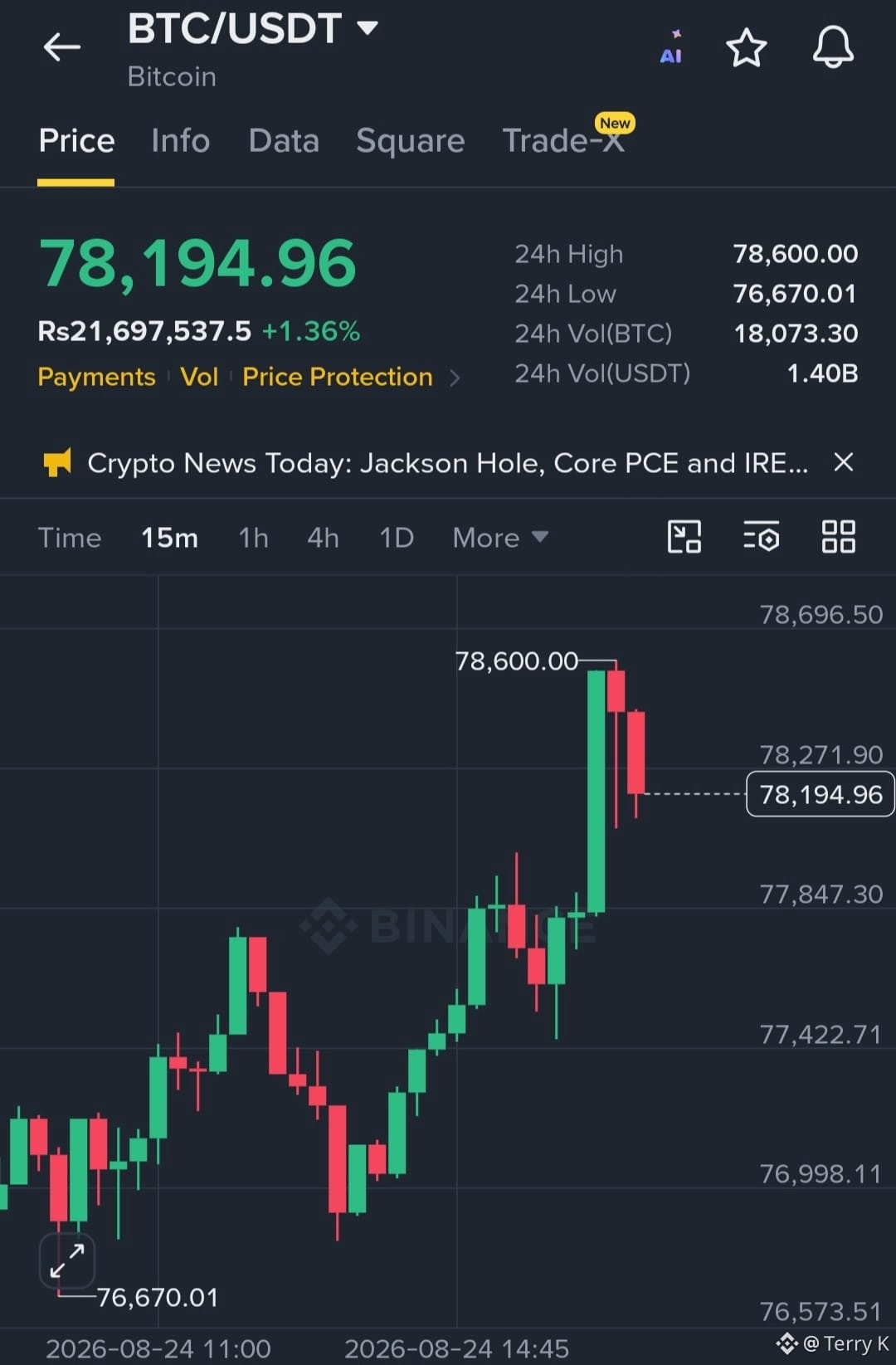
Bitcoin baru saja naik ke $78.600 dan kini sedang mendingin di sekitar $78.195 +1,36%
Lonjakan bullish kuat di chart 15M
Resistensi: $78.600
Support: $77.850 / $77.420
Tembus & bertahan di atas $78,6K bisa membuka peluang untuk gelombang kenaikan berikutnya.
BTC sedang bergerak — tetap waspada. 👀
#Bitcoin #Crypto #BTCUSDT #Trading #CryptoTrading
$BTC
Bitcoin baru saja naik ke $78.600 dan kini sedang mendingin di sekitar $78.195 +1,36%
Lonjakan bullish kuat di chart 15M
Resistensi: $78.600
Support: $77.850 / $77.420
Tembus & bertahan di atas $78,6K bisa membuka peluang untuk gelombang kenaikan berikutnya.
BTC sedang bergerak — tetap waspada. 👀
#Bitcoin #Crypto #BTCUSDT #Trading #CryptoTrading
Bitcoin baru saja naik ke $78.600 dan kini sedang mendingin di sekitar $78.195 +1,36%
Lonjakan bullish kuat di chart 15M
Resistensi: $78.600
Support: $77.850 / $77.420
Tembus & bertahan di atas $78,6K bisa membuka peluang untuk gelombang kenaikan berikutnya.
BTC sedang bergerak — tetap waspada. 👀
#Bitcoin #Crypto #BTCUSDT #Trading #CryptoTrading
64
·
--
$ZEC
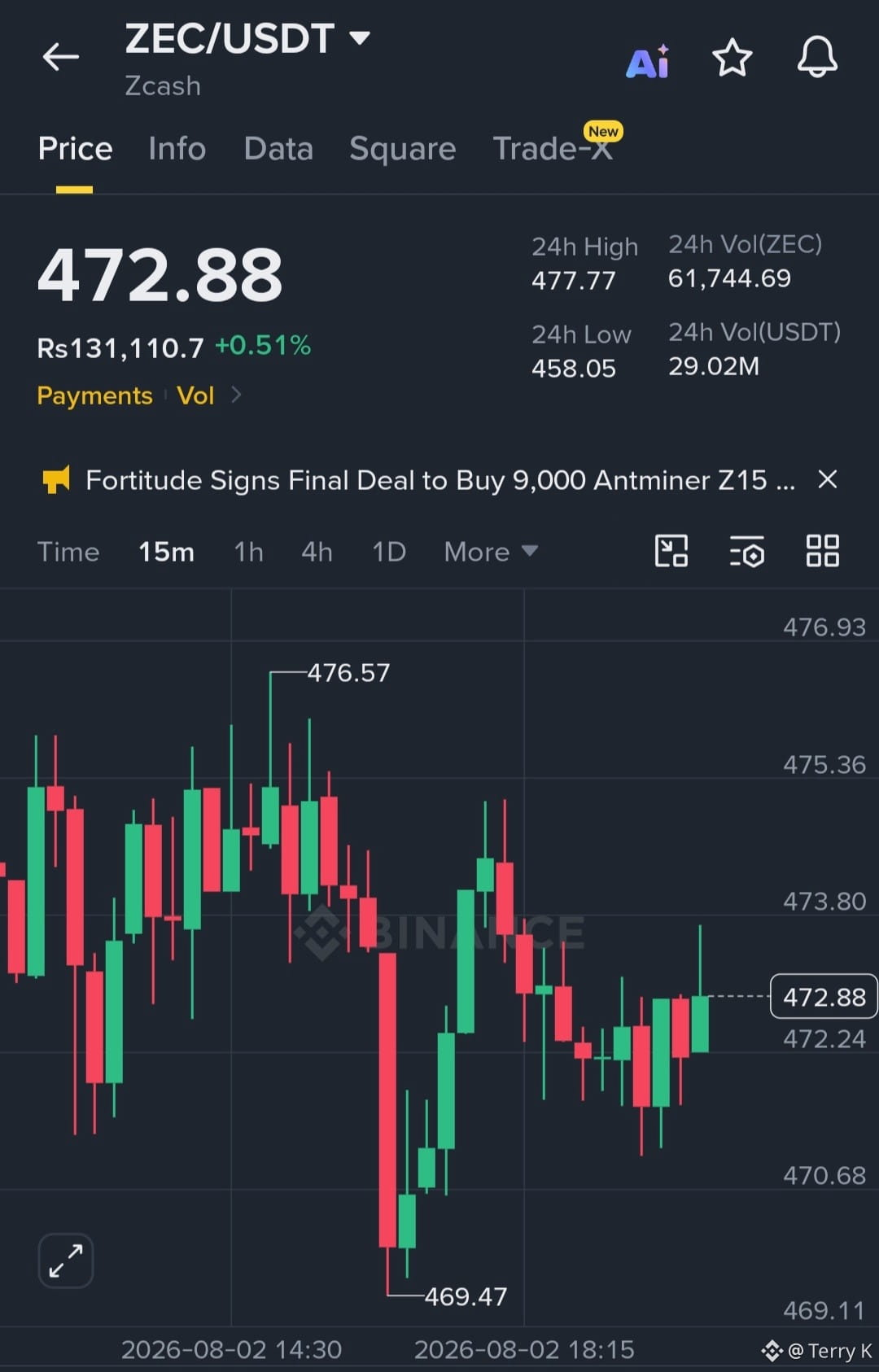
sedang melakukan perdagangan dalam kisaran konsolidasi setelah rebound tajam dari titik terendah 469.47.
Pemulihan menunjukkan bahwa pembeli mempertahankan level-level yang lebih rendah, namun harga masih menghadapi resistensi di dekat puncak ayunan terbaru. Sebuah konfirmasi
breakout di atas resistensi dapat menarik momentum baru, sementara kegagalan untuk bertahan di dukungan saat ini dapat mengarah pada sweep likuiditas lainnya sebelum pergerakan berikutnya.
Level Kunci • Resistensi: 473.80 → 476.57
• Support: 472.20 → 469.47
Pasar sedang mengalami kompresi, dan ekspansi biasanya muncul setelah periode volatilitas rendah.
Menunggu konfirmasi sering kali lebih efektif daripada mengantisipasi breakout.
Perdagangkan reaksinya, bukan ekspektasinya.
#Crypto #Binance #PriceAction #Trading #USDT
$ZEC
sedang melakukan perdagangan dalam kisaran konsolidasi setelah rebound tajam dari titik terendah 469.47.
Pemulihan menunjukkan bahwa pembeli mempertahankan level-level yang lebih rendah, namun harga masih menghadapi resistensi di dekat puncak ayunan terbaru. Sebuah konfirmasi
breakout di atas resistensi dapat menarik momentum baru, sementara kegagalan untuk bertahan di dukungan saat ini dapat mengarah pada sweep likuiditas lainnya sebelum pergerakan berikutnya.
Level Kunci • Resistensi: 473.80 → 476.57
• Support: 472.20 → 469.47
Pasar sedang mengalami kompresi, dan ekspansi biasanya muncul setelah periode volatilitas rendah.
Menunggu konfirmasi sering kali lebih efektif daripada mengantisipasi breakout.
Perdagangkan reaksinya, bukan ekspektasinya.
#Crypto #Binance #PriceAction #Trading #USDT
sedang melakukan perdagangan dalam kisaran konsolidasi setelah rebound tajam dari titik terendah 469.47.
Pemulihan menunjukkan bahwa pembeli mempertahankan level-level yang lebih rendah, namun harga masih menghadapi resistensi di dekat puncak ayunan terbaru. Sebuah konfirmasi
breakout di atas resistensi dapat menarik momentum baru, sementara kegagalan untuk bertahan di dukungan saat ini dapat mengarah pada sweep likuiditas lainnya sebelum pergerakan berikutnya.
Level Kunci • Resistensi: 473.80 → 476.57
• Support: 472.20 → 469.47
Pasar sedang mengalami kompresi, dan ekspansi biasanya muncul setelah periode volatilitas rendah.
Menunggu konfirmasi sering kali lebih efektif daripada mengantisipasi breakout.
Perdagangkan reaksinya, bukan ekspektasinya.
#Crypto #Binance #PriceAction #Trading #USDT
129
·
--
$BNB
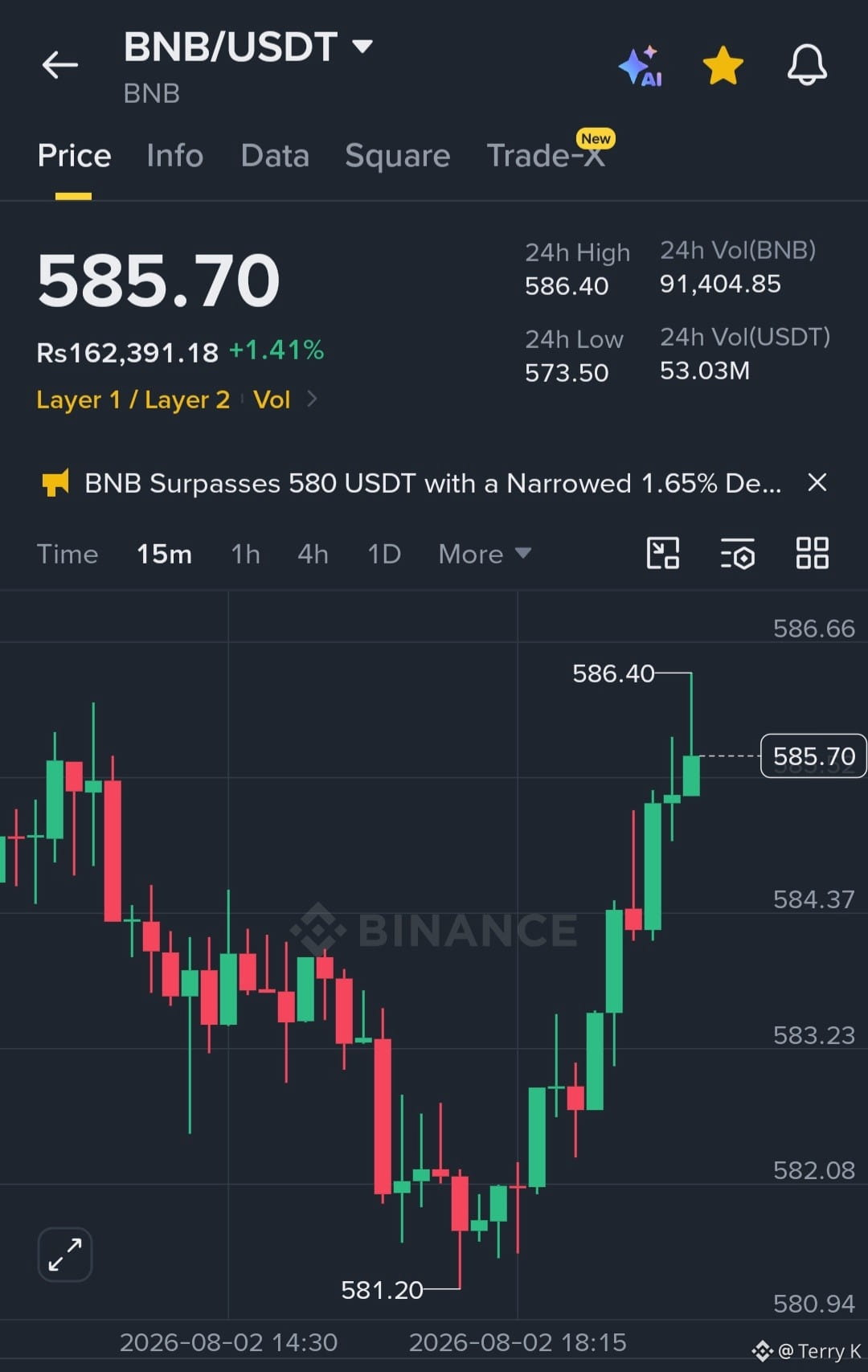
sedang mendorong kembali menuju puncak terdekat setelah pemulihan intraday yang kuat dari area 581.20. Pembeli telah kembali mengendalikan jangka pendek, tetapi harga kini sedang mendekati zona resistensi terdekat di sekitar 586.40. Penutupan yang bersih di atas level ini dapat membuka jalan menuju area likuiditas berikutnya, sementara penolakan dapat memicu pullback yang sehat sebelum kelanjutan.
Level yang Perlu Diperhatikan • Resistensi: 586.40 → 590.00
• Support: 583.20 → 581.20
Kesabaran penting di sini. Mengejar candle hijau di dekat resistensi membawa risiko lebih besar dibanding menunggu konfirmasi. Biarkan pasar menunjukkan arahnya sebelum mengambil keputusan untuk bertransaksi.
#Crypto #Binance #Trading #PriceAction #USDT
$BNB
sedang mendorong kembali menuju puncak terdekat setelah pemulihan intraday yang kuat dari area 581.20. Pembeli telah kembali mengendalikan jangka pendek, tetapi harga kini sedang mendekati zona resistensi terdekat di sekitar 586.40. Penutupan yang bersih di atas level ini dapat membuka jalan menuju area likuiditas berikutnya, sementara penolakan dapat memicu pullback yang sehat sebelum kelanjutan.
Level yang Perlu Diperhatikan • Resistensi: 586.40 → 590.00
• Support: 583.20 → 581.20
Kesabaran penting di sini. Mengejar candle hijau di dekat resistensi membawa risiko lebih besar dibanding menunggu konfirmasi. Biarkan pasar menunjukkan arahnya sebelum mengambil keputusan untuk bertransaksi.
#Crypto #Binance #Trading #PriceAction #USDT
sedang mendorong kembali menuju puncak terdekat setelah pemulihan intraday yang kuat dari area 581.20. Pembeli telah kembali mengendalikan jangka pendek, tetapi harga kini sedang mendekati zona resistensi terdekat di sekitar 586.40. Penutupan yang bersih di atas level ini dapat membuka jalan menuju area likuiditas berikutnya, sementara penolakan dapat memicu pullback yang sehat sebelum kelanjutan.
Level yang Perlu Diperhatikan • Resistensi: 586.40 → 590.00
• Support: 583.20 → 581.20
Kesabaran penting di sini. Mengejar candle hijau di dekat resistensi membawa risiko lebih besar dibanding menunggu konfirmasi. Biarkan pasar menunjukkan arahnya sebelum mengambil keputusan untuk bertransaksi.
#Crypto #Binance #Trading #PriceAction #USDT
79
·
--
$BNB
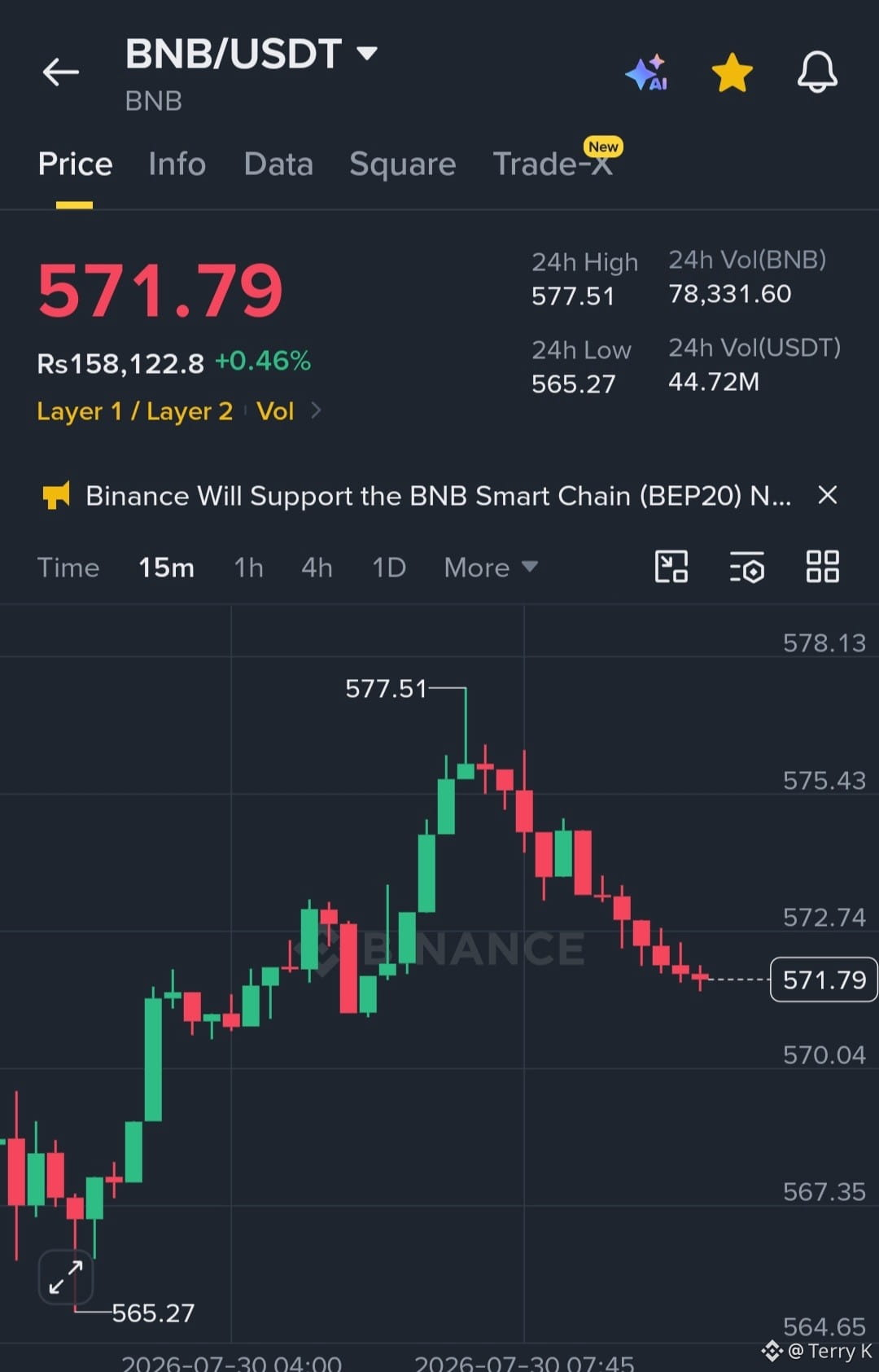
BNB bangkit dari zona dukungan $565 dan membentuk puncak lokal di sekitar $577,5, tetapi penjual masuk dengan cepat. Harga sekarang sedang mengalami pullback dengan higher high yang lebih rendah dan lower low, yang menunjukkan momentum bearish jangka pendek.
Selama BNB tetap berada di bawah $575–577, pasar berpotensi terus menguji ulang dukungan yang lebih rendah di sekitar $570. Jika level tersebut ditembus dengan jelas ke bawah, dapat membuka peluang untuk pergerakan lain menuju $565.
Bagi pihak bullish, merebut kembali $575 dengan volume yang kuat akan menjadi tanda pertama bahwa pembeli kembali mengendalikan. Sampai saat itu, bersabarlah—lebih baik menunggu konfirmasi daripada mengejar harga.
Perdagangkan struktur, kelola risiko, dan biarkan pasar datang ke level-level Anda.
#BNB #Binance #Crypto #PriceAction #BNBUSDT
$BNB
BNB bangkit dari zona dukungan $565 dan membentuk puncak lokal di sekitar $577,5, tetapi penjual masuk dengan cepat. Harga sekarang sedang mengalami pullback dengan higher high yang lebih rendah dan lower low, yang menunjukkan momentum bearish jangka pendek.
Selama BNB tetap berada di bawah $575–577, pasar berpotensi terus menguji ulang dukungan yang lebih rendah di sekitar $570. Jika level tersebut ditembus dengan jelas ke bawah, dapat membuka peluang untuk pergerakan lain menuju $565.
Bagi pihak bullish, merebut kembali $575 dengan volume yang kuat akan menjadi tanda pertama bahwa pembeli kembali mengendalikan. Sampai saat itu, bersabarlah—lebih baik menunggu konfirmasi daripada mengejar harga.
Perdagangkan struktur, kelola risiko, dan biarkan pasar datang ke level-level Anda.
#BNB #Binance #Crypto #PriceAction #BNBUSDT
BNB bangkit dari zona dukungan $565 dan membentuk puncak lokal di sekitar $577,5, tetapi penjual masuk dengan cepat. Harga sekarang sedang mengalami pullback dengan higher high yang lebih rendah dan lower low, yang menunjukkan momentum bearish jangka pendek.
Selama BNB tetap berada di bawah $575–577, pasar berpotensi terus menguji ulang dukungan yang lebih rendah di sekitar $570. Jika level tersebut ditembus dengan jelas ke bawah, dapat membuka peluang untuk pergerakan lain menuju $565.
Bagi pihak bullish, merebut kembali $575 dengan volume yang kuat akan menjadi tanda pertama bahwa pembeli kembali mengendalikan. Sampai saat itu, bersabarlah—lebih baik menunggu konfirmasi daripada mengejar harga.
Perdagangkan struktur, kelola risiko, dan biarkan pasar datang ke level-level Anda.
#BNB #Binance #Crypto #PriceAction #BNBUSDT
50
·
--
$SOL
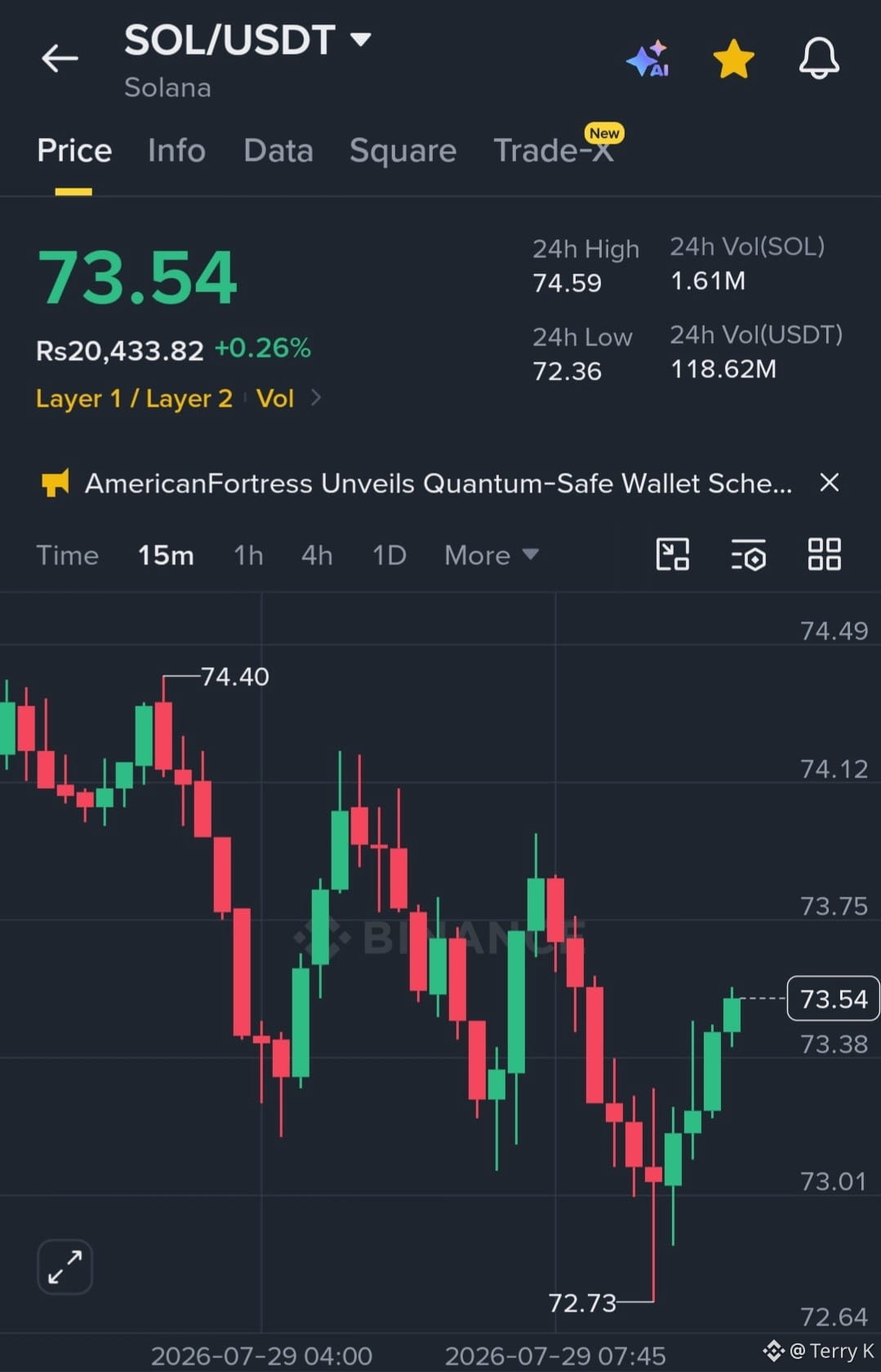
Solana menyapu likuiditas di sekitar $72.73 sebelum menarik pembeli dan merebut kembali area $73.50. Pantulan ini bersifat konstruktif, tetapi harga masih bergerak di bawah resistensi intraday utama, jadi perlu konfirmasi sebelum menyebut adanya pergeseran tren.
Pergerakan yang berkelanjutan di atas $73.70–74.00 akan memperkuat momentum bullish dan meningkatkan peluang terjadinya pengujian ulang (retest) ke level tertinggi harian. Kegagalan untuk bertahan pada level saat ini dapat menyebabkan peninjauan ulang berikutnya terhadap zona support $73.00.
Level Kunci • Support: $73.00 | $72.73 • Resistance: $73.70 | $74.00
Pasar telah pulih dari sapuan likuiditas, tetapi struktur masih netral sampai resistensi direbut kembali. Biarkan harga mengonfirmasi langkah berikutnya, bukan mengantisipasinya.
#Solana #Crypto #Trading #PriceAction #Binance
$SOL
Solana menyapu likuiditas di sekitar $72.73 sebelum menarik pembeli dan merebut kembali area $73.50. Pantulan ini bersifat konstruktif, tetapi harga masih bergerak di bawah resistensi intraday utama, jadi perlu konfirmasi sebelum menyebut adanya pergeseran tren.
Pergerakan yang berkelanjutan di atas $73.70–74.00 akan memperkuat momentum bullish dan meningkatkan peluang terjadinya pengujian ulang (retest) ke level tertinggi harian. Kegagalan untuk bertahan pada level saat ini dapat menyebabkan peninjauan ulang berikutnya terhadap zona support $73.00.
Level Kunci • Support: $73.00 | $72.73 • Resistance: $73.70 | $74.00
Pasar telah pulih dari sapuan likuiditas, tetapi struktur masih netral sampai resistensi direbut kembali. Biarkan harga mengonfirmasi langkah berikutnya, bukan mengantisipasinya.
#Solana #Crypto #Trading #PriceAction #Binance
Solana menyapu likuiditas di sekitar $72.73 sebelum menarik pembeli dan merebut kembali area $73.50. Pantulan ini bersifat konstruktif, tetapi harga masih bergerak di bawah resistensi intraday utama, jadi perlu konfirmasi sebelum menyebut adanya pergeseran tren.
Pergerakan yang berkelanjutan di atas $73.70–74.00 akan memperkuat momentum bullish dan meningkatkan peluang terjadinya pengujian ulang (retest) ke level tertinggi harian. Kegagalan untuk bertahan pada level saat ini dapat menyebabkan peninjauan ulang berikutnya terhadap zona support $73.00.
Level Kunci • Support: $73.00 | $72.73 • Resistance: $73.70 | $74.00
Pasar telah pulih dari sapuan likuiditas, tetapi struktur masih netral sampai resistensi direbut kembali. Biarkan harga mengonfirmasi langkah berikutnya, bukan mengantisipasinya.
#Solana #Crypto #Trading #PriceAction #Binance
82
·
--
$ETH
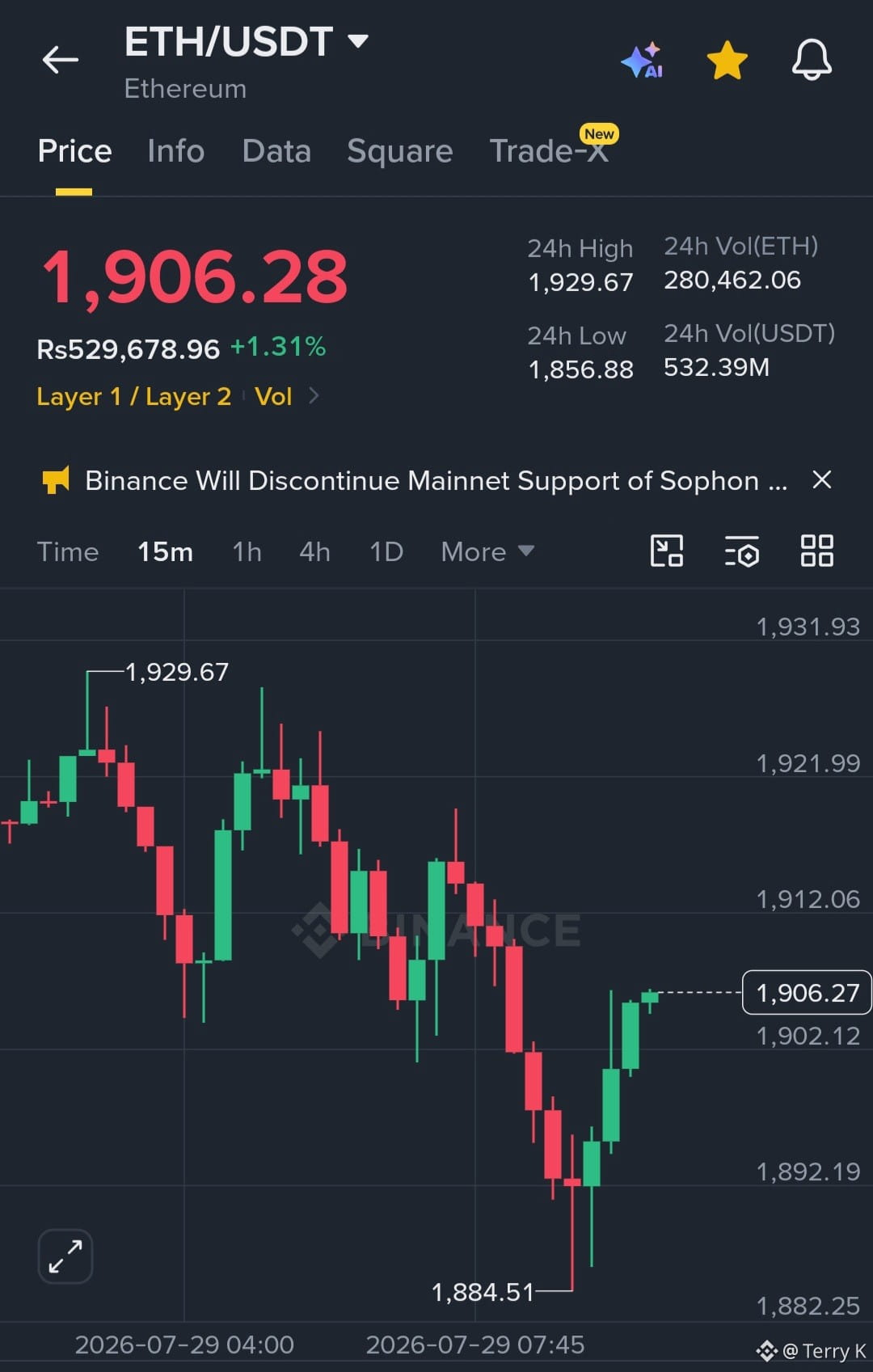
Ethereum bereaksi kuat setelah menyapu likuiditas di sekitar $1,884, di mana pembeli masuk dan mendorong harga kembali di atas $1,900. Pemulihan ini menggembirakan, tetapi harga kini mendekati zona resistensi jangka pendek di sekitar $1,910–$1,915.
Break yang bersih dan bertahan di atas area tersebut dapat membuka peluang pergerakan menuju $1,920+. Jika muncul penolakan, bersiaplah untuk konsolidasi atau pengujian ulang lain pada area $1,895–1,900 sebelum langkah berikutnya.
Untuk saat ini, pasar menunjukkan rebound pelepasan (relief bounce), bukan pembalikan tren yang terkonfirmasi. Biarkan harga mengonfirmasi arah berikutnya sebelum mengejar momentum.
Level Kunci • Support: $1,895 | $1,884 • Resistance: $1,910 | $1,920
Kesabaran mengalahkan prediksi. Biarkan pasar menunjukkan sikapnya sebelum memutuskan untuk mengambil posisi.
#Ethereum #Crypto #Trading #PriceAction #Binance
$ETH
Ethereum bereaksi kuat setelah menyapu likuiditas di sekitar $1,884, di mana pembeli masuk dan mendorong harga kembali di atas $1,900. Pemulihan ini menggembirakan, tetapi harga kini mendekati zona resistensi jangka pendek di sekitar $1,910–$1,915.
Break yang bersih dan bertahan di atas area tersebut dapat membuka peluang pergerakan menuju $1,920+. Jika muncul penolakan, bersiaplah untuk konsolidasi atau pengujian ulang lain pada area $1,895–1,900 sebelum langkah berikutnya.
Untuk saat ini, pasar menunjukkan rebound pelepasan (relief bounce), bukan pembalikan tren yang terkonfirmasi. Biarkan harga mengonfirmasi arah berikutnya sebelum mengejar momentum.
Level Kunci • Support: $1,895 | $1,884 • Resistance: $1,910 | $1,920
Kesabaran mengalahkan prediksi. Biarkan pasar menunjukkan sikapnya sebelum memutuskan untuk mengambil posisi.
#Ethereum #Crypto #Trading #PriceAction #Binance
Ethereum bereaksi kuat setelah menyapu likuiditas di sekitar $1,884, di mana pembeli masuk dan mendorong harga kembali di atas $1,900. Pemulihan ini menggembirakan, tetapi harga kini mendekati zona resistensi jangka pendek di sekitar $1,910–$1,915.
Break yang bersih dan bertahan di atas area tersebut dapat membuka peluang pergerakan menuju $1,920+. Jika muncul penolakan, bersiaplah untuk konsolidasi atau pengujian ulang lain pada area $1,895–1,900 sebelum langkah berikutnya.
Untuk saat ini, pasar menunjukkan rebound pelepasan (relief bounce), bukan pembalikan tren yang terkonfirmasi. Biarkan harga mengonfirmasi arah berikutnya sebelum mengejar momentum.
Level Kunci • Support: $1,895 | $1,884 • Resistance: $1,910 | $1,920
Kesabaran mengalahkan prediksi. Biarkan pasar menunjukkan sikapnya sebelum memutuskan untuk mengambil posisi.
#Ethereum #Crypto #Trading #PriceAction #Binance
88
·
--
$BTC
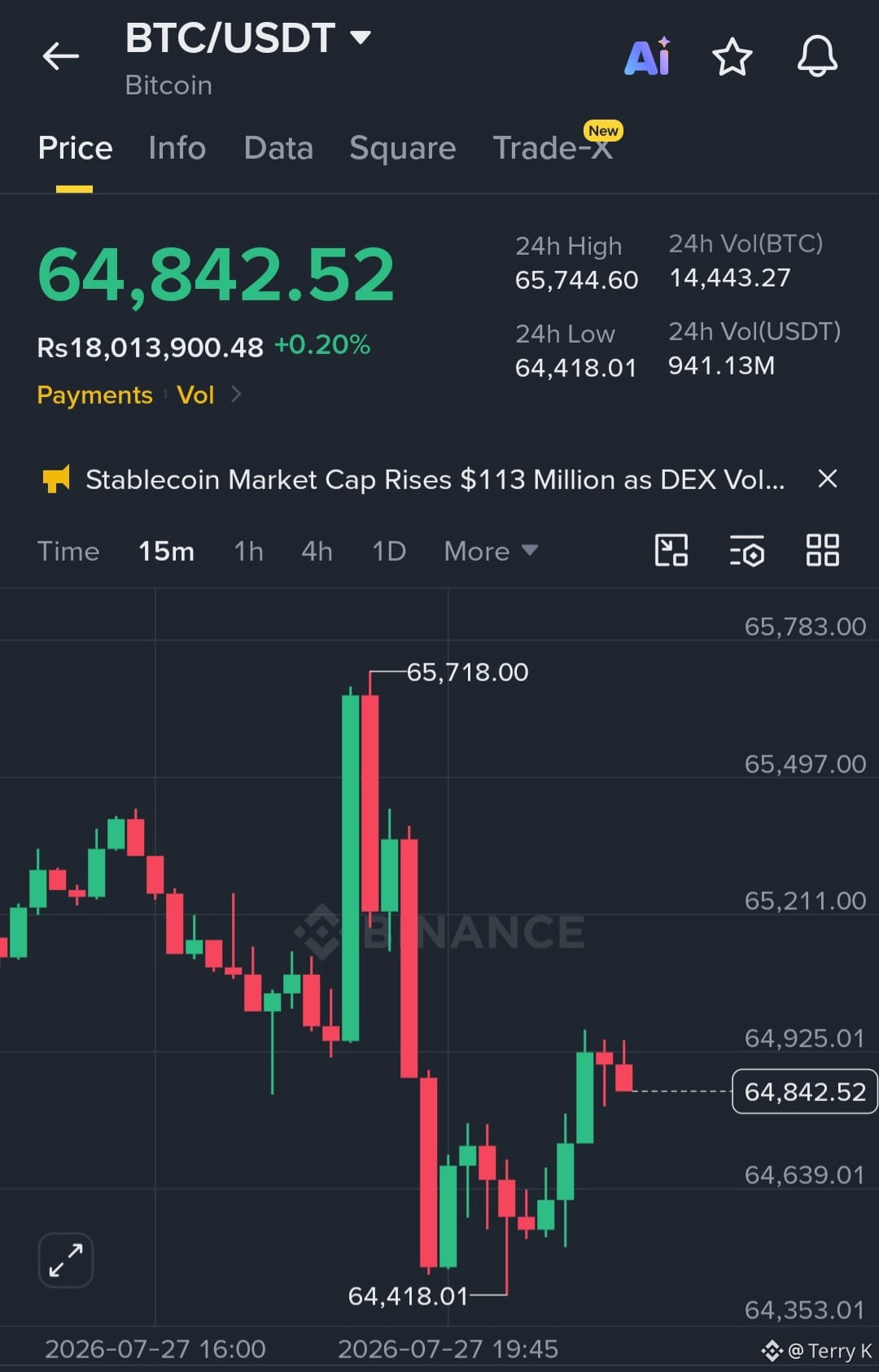
Bitcoin sedang berupaya pulih setelah menyapu level terendah lokal, namun harga masih diperdagangkan di bawah resistensi kunci. Diperlukan konfirmasi breakout sebelum momentum dapat beralih kembali menguntungkan para bull.
Bersabarlah. Biarkan pasar mengonfirmasi langkah berikutnya.
#BTC #Bitcoin #Crypto #Trading #PriceAction
$BTC
Bitcoin sedang berupaya pulih setelah menyapu level terendah lokal, namun harga masih diperdagangkan di bawah resistensi kunci. Diperlukan konfirmasi breakout sebelum momentum dapat beralih kembali menguntungkan para bull.
Bersabarlah. Biarkan pasar mengonfirmasi langkah berikutnya.
#BTC #Bitcoin #Crypto #Trading #PriceAction
Bitcoin sedang berupaya pulih setelah menyapu level terendah lokal, namun harga masih diperdagangkan di bawah resistensi kunci. Diperlukan konfirmasi breakout sebelum momentum dapat beralih kembali menguntungkan para bull.
Bersabarlah. Biarkan pasar mengonfirmasi langkah berikutnya.
#BTC #Bitcoin #Crypto #Trading #PriceAction
84
·
--
$BANK
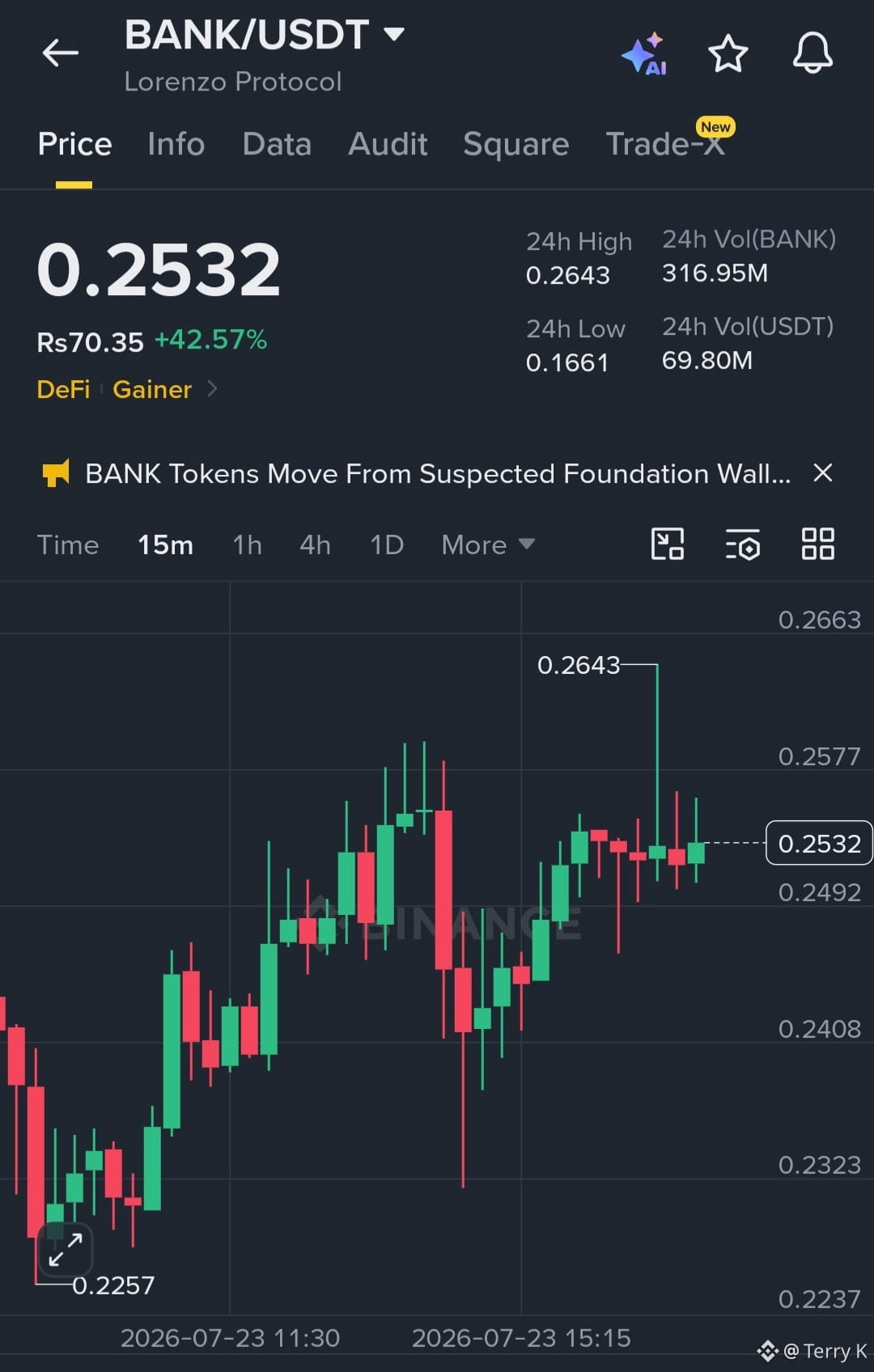
telah menghasilkan dorongan impulsif yang kuat, naik lebih dari 42% dalam 24 jam terakhir. Setelah mencetak puncak lokal di dekat 0.2643, harga kini tidak lagi melaju secara agresif. Sebaliknya, harga bergerak menyamping di sekitar 0.253, yang mengindikasikan pasar sedang menyerap tekanan beli terbaru.
Struktur saat ini terlihat seperti konsolidasi yang sehat, bukan pembalikan langsung. Selama harga tetap bertahan di atas zona breakout terbaru sekitar 0.245–0.248, pihak bullish masih memegang kendali. Tembusan yang bersih di atas 0.2643 dapat membuka peluang untuk gelombang kenaikan berikutnya, sementara kehilangan zona support dapat memicu koreksi yang lebih dalam untuk menyeimbangkan likuiditas.
Untuk saat ini, mengejar candle hijau membawa risiko lebih besar dibanding menunggu. Biarkan pasar menunjukkan arah berikutnya sebelum Anda mengambil keputusan posisi.
Level Kunci • Support: 0.245 – 0.248 • Resistance: 0.2643 • Bias Saat Ini: Bullish selama di atas support
Pergerakan harga memberi imbalan bagi kesabaran. Fokus pada struktur, kelola risiko, dan tunggu konfirmasi daripada bereaksi karena emosi.
@LorenzoProtocol #Crypto #BinanceSquare #PriceAction #Trading #USDT
$BANK
telah menghasilkan dorongan impulsif yang kuat, naik lebih dari 42% dalam 24 jam terakhir. Setelah mencetak puncak lokal di dekat 0.2643, harga kini tidak lagi melaju secara agresif. Sebaliknya, harga bergerak menyamping di sekitar 0.253, yang mengindikasikan pasar sedang menyerap tekanan beli terbaru.
Struktur saat ini terlihat seperti konsolidasi yang sehat, bukan pembalikan langsung. Selama harga tetap bertahan di atas zona breakout terbaru sekitar 0.245–0.248, pihak bullish masih memegang kendali. Tembusan yang bersih di atas 0.2643 dapat membuka peluang untuk gelombang kenaikan berikutnya, sementara kehilangan zona support dapat memicu koreksi yang lebih dalam untuk menyeimbangkan likuiditas.
Untuk saat ini, mengejar candle hijau membawa risiko lebih besar dibanding menunggu. Biarkan pasar menunjukkan arah berikutnya sebelum Anda mengambil keputusan posisi.
Level Kunci • Support: 0.245 – 0.248 • Resistance: 0.2643 • Bias Saat Ini: Bullish selama di atas support
Pergerakan harga memberi imbalan bagi kesabaran. Fokus pada struktur, kelola risiko, dan tunggu konfirmasi daripada bereaksi karena emosi.
@Lorenzo Protocol #Crypto #BinanceSquare #PriceAction #Trading #USDT
telah menghasilkan dorongan impulsif yang kuat, naik lebih dari 42% dalam 24 jam terakhir. Setelah mencetak puncak lokal di dekat 0.2643, harga kini tidak lagi melaju secara agresif. Sebaliknya, harga bergerak menyamping di sekitar 0.253, yang mengindikasikan pasar sedang menyerap tekanan beli terbaru.
Struktur saat ini terlihat seperti konsolidasi yang sehat, bukan pembalikan langsung. Selama harga tetap bertahan di atas zona breakout terbaru sekitar 0.245–0.248, pihak bullish masih memegang kendali. Tembusan yang bersih di atas 0.2643 dapat membuka peluang untuk gelombang kenaikan berikutnya, sementara kehilangan zona support dapat memicu koreksi yang lebih dalam untuk menyeimbangkan likuiditas.
Untuk saat ini, mengejar candle hijau membawa risiko lebih besar dibanding menunggu. Biarkan pasar menunjukkan arah berikutnya sebelum Anda mengambil keputusan posisi.
Level Kunci • Support: 0.245 – 0.248 • Resistance: 0.2643 • Bias Saat Ini: Bullish selama di atas support
Pergerakan harga memberi imbalan bagi kesabaran. Fokus pada struktur, kelola risiko, dan tunggu konfirmasi daripada bereaksi karena emosi.
@Lorenzo Protocol #Crypto #BinanceSquare #PriceAction #Trading #USDT
1
165
·
--
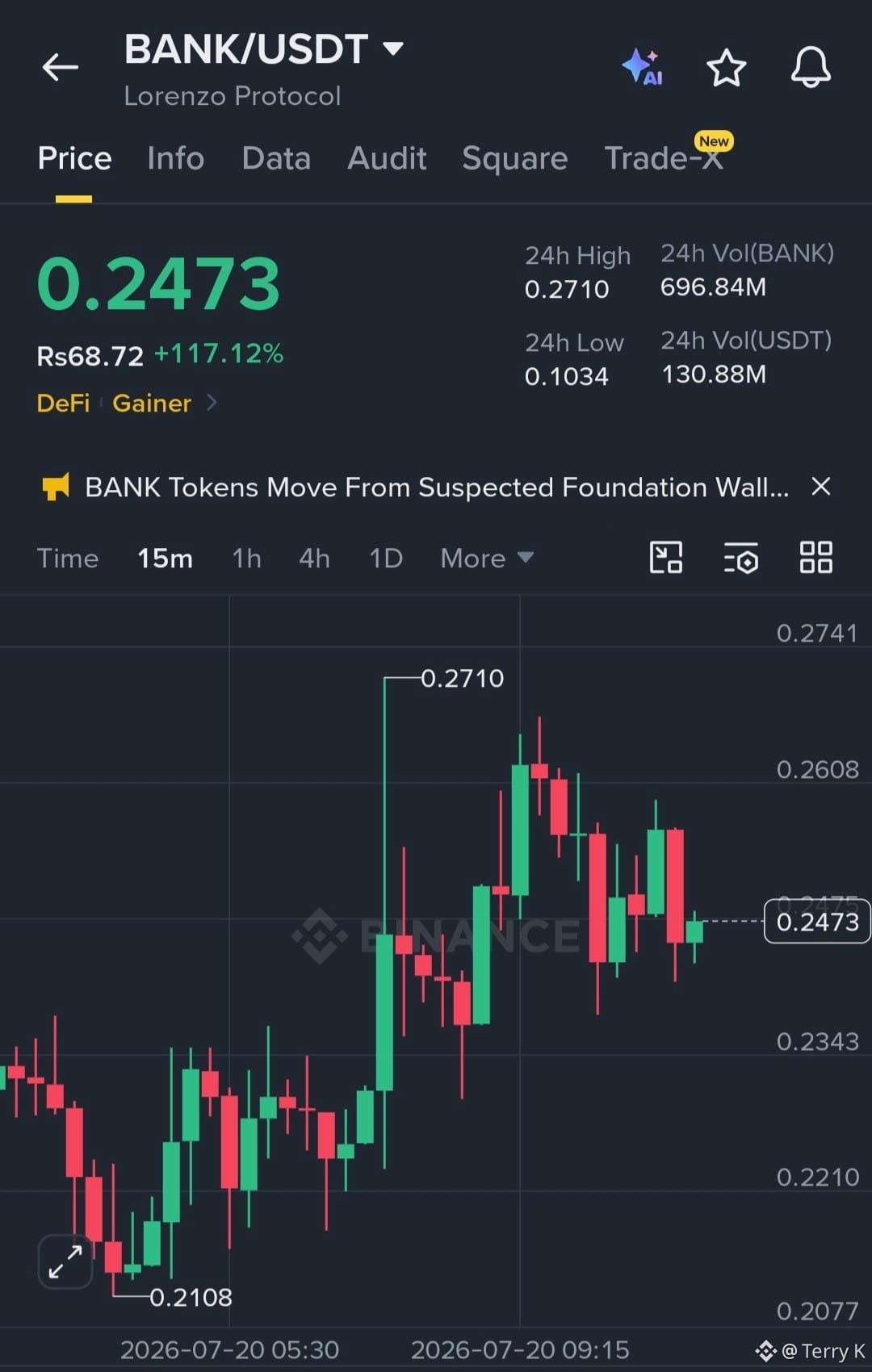
$BANK
BANK telah menghadirkan pergerakan impulsif yang kuat, membentuk local high baru sebelum memasuki fase konsolidasi yang sehat. Setelah reli yang meledak, harga kini sedang memampat—bukan mengembalikan seluruh keuntungannya—sebuah tanda bahwa para pembeli masih mempertahankan struktur tersebut.
Yang menjadi kunci sekarang adalah apakah rentang ini akan terselesaikan dengan volume yang diperbarui. Jika mampu bertahan di atas support terbaru, hal itu dapat membuka peluang untuk satu leg kenaikan lagi, sementara kegagalan untuk mempertahankan rentang saat ini dapat mengarah pada pendinginan yang lebih dalam sebelum kelanjutan tren.
Momentum masih tinggi, tetapi trader yang disiplin tahu bahwa kesabaran paling penting setelah pergerakan vertikal. Biarkan harga mengonfirmasi arah, bukan mengejar volatilitas.
Kelola risiko, patuhi rencana Anda, dan biarkan pasar datang kepada Anda.
#BANK #LorenzoProtocol #Crypto #Altcoins #Binance
$BANK
BANK telah menghadirkan pergerakan impulsif yang kuat, membentuk local high baru sebelum memasuki fase konsolidasi yang sehat. Setelah reli yang meledak, harga kini sedang memampat—bukan mengembalikan seluruh keuntungannya—sebuah tanda bahwa para pembeli masih mempertahankan struktur tersebut.
Yang menjadi kunci sekarang adalah apakah rentang ini akan terselesaikan dengan volume yang diperbarui. Jika mampu bertahan di atas support terbaru, hal itu dapat membuka peluang untuk satu leg kenaikan lagi, sementara kegagalan untuk mempertahankan rentang saat ini dapat mengarah pada pendinginan yang lebih dalam sebelum kelanjutan tren.
Momentum masih tinggi, tetapi trader yang disiplin tahu bahwa kesabaran paling penting setelah pergerakan vertikal. Biarkan harga mengonfirmasi arah, bukan mengejar volatilitas.
Kelola risiko, patuhi rencana Anda, dan biarkan pasar datang kepada Anda.
#BANK #LorenzoProtocol #Crypto #Altcoins #Binance
BANK telah menghadirkan pergerakan impulsif yang kuat, membentuk local high baru sebelum memasuki fase konsolidasi yang sehat. Setelah reli yang meledak, harga kini sedang memampat—bukan mengembalikan seluruh keuntungannya—sebuah tanda bahwa para pembeli masih mempertahankan struktur tersebut.
Yang menjadi kunci sekarang adalah apakah rentang ini akan terselesaikan dengan volume yang diperbarui. Jika mampu bertahan di atas support terbaru, hal itu dapat membuka peluang untuk satu leg kenaikan lagi, sementara kegagalan untuk mempertahankan rentang saat ini dapat mengarah pada pendinginan yang lebih dalam sebelum kelanjutan tren.
Momentum masih tinggi, tetapi trader yang disiplin tahu bahwa kesabaran paling penting setelah pergerakan vertikal. Biarkan harga mengonfirmasi arah, bukan mengejar volatilitas.
Kelola risiko, patuhi rencana Anda, dan biarkan pasar datang kepada Anda.
#BANK #LorenzoProtocol #Crypto #Altcoins #Binance
1
174
·
--
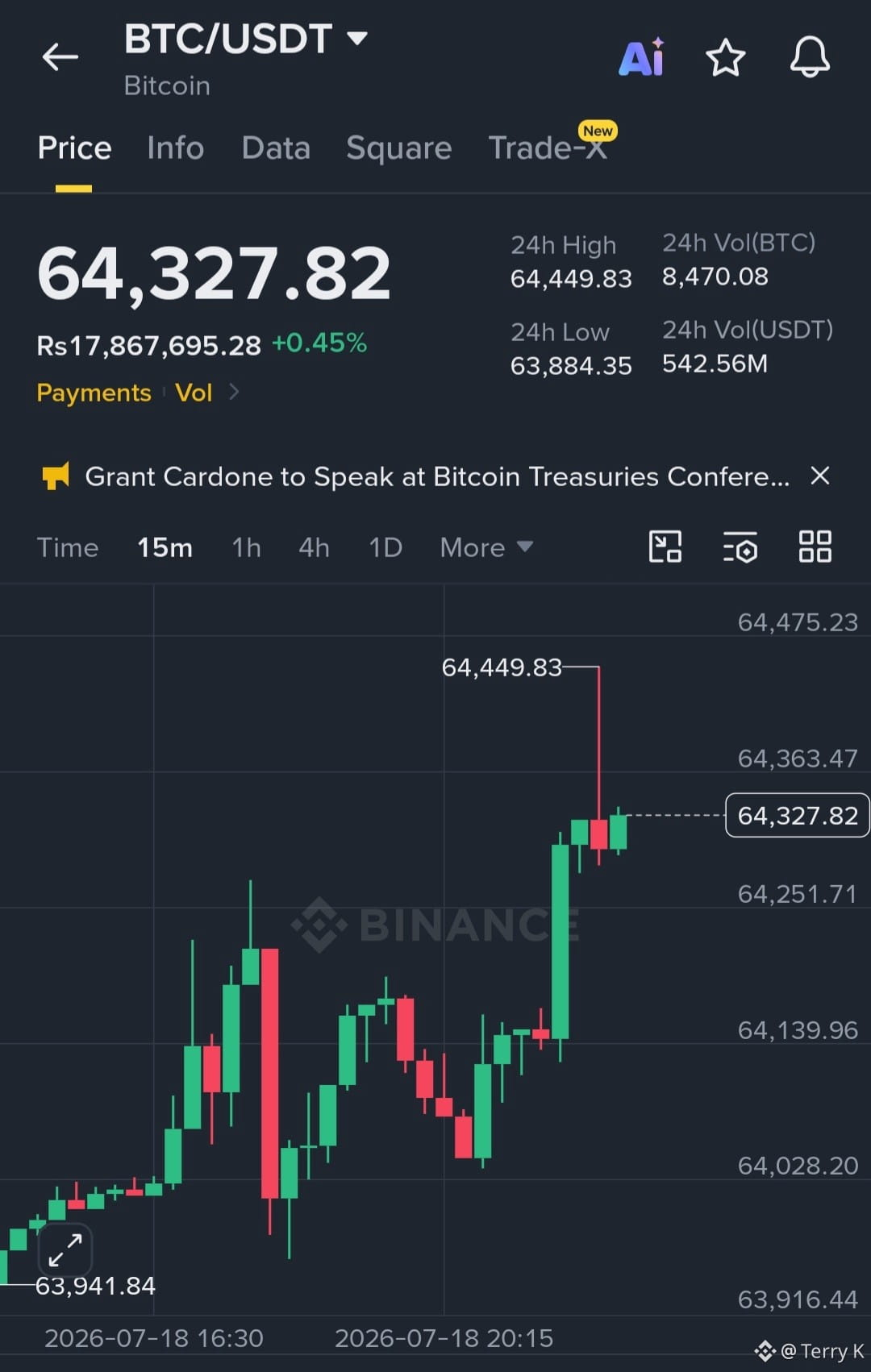
$BTC
Bitcoin terus mempertahankan struktur bullish pada timeframe 15 menit setelah berhasil merebut kembali level $64,3K. Para pembeli masuk dengan momentum yang kuat, mendorong harga dari titik terendah intraday menuju area resistensi di sekitar $64,45K.
Saat ini, BTC sedang berkonsolidasi tepat di bawah resistensi alih-alih menunjukkan penolakan yang berat. Biasanya ini menandakan bahwa para pembeli masih memegang kendali, tetapi konfirmasi tetap diperlukan sebelum mengharapkan adanya gelombang kenaikan berikutnya.
Level Kunci • Resistensi: $64.450 - $64.500 • Support: $64.200 - $64.250 • Major Support: $64.000
Breakout yang bersih di atas resistensi dapat membuka peluang untuk kenaikan lebih lanjut. Namun, jika BTC kehilangan zona support $64,2K, koreksi jangka pendek untuk menguji likuiditas yang lebih rendah akan tetap menjadi hal yang sehat dalam tren saat ini.
Pasar menunjukkan kekuatan, tetapi mengejar candle hijau membawa risiko yang tidak perlu. Menunggu konfirmasi di level-level kunci sering kali menjadi pendekatan yang lebih cerdas.
Kesabaran menang. Biarkan pasar menunjukkan langkah berikutnya sebelum Anda memutuskan untuk masuk posisi.
#Crypto #BTCUSDT #PriceAction #Trading #CryptoMarket
$BTC
Bitcoin terus mempertahankan struktur bullish pada timeframe 15 menit setelah berhasil merebut kembali level $64,3K. Para pembeli masuk dengan momentum yang kuat, mendorong harga dari titik terendah intraday menuju area resistensi di sekitar $64,45K.
Saat ini, BTC sedang berkonsolidasi tepat di bawah resistensi alih-alih menunjukkan penolakan yang berat. Biasanya ini menandakan bahwa para pembeli masih memegang kendali, tetapi konfirmasi tetap diperlukan sebelum mengharapkan adanya gelombang kenaikan berikutnya.
Level Kunci • Resistensi: $64.450 - $64.500 • Support: $64.200 - $64.250 • Major Support: $64.000
Breakout yang bersih di atas resistensi dapat membuka peluang untuk kenaikan lebih lanjut. Namun, jika BTC kehilangan zona support $64,2K, koreksi jangka pendek untuk menguji likuiditas yang lebih rendah akan tetap menjadi hal yang sehat dalam tren saat ini.
Pasar menunjukkan kekuatan, tetapi mengejar candle hijau membawa risiko yang tidak perlu. Menunggu konfirmasi di level-level kunci sering kali menjadi pendekatan yang lebih cerdas.
Kesabaran menang. Biarkan pasar menunjukkan langkah berikutnya sebelum Anda memutuskan untuk masuk posisi.
#Crypto #BTCUSDT #PriceAction #Trading #CryptoMarket
Bitcoin terus mempertahankan struktur bullish pada timeframe 15 menit setelah berhasil merebut kembali level $64,3K. Para pembeli masuk dengan momentum yang kuat, mendorong harga dari titik terendah intraday menuju area resistensi di sekitar $64,45K.
Saat ini, BTC sedang berkonsolidasi tepat di bawah resistensi alih-alih menunjukkan penolakan yang berat. Biasanya ini menandakan bahwa para pembeli masih memegang kendali, tetapi konfirmasi tetap diperlukan sebelum mengharapkan adanya gelombang kenaikan berikutnya.
Level Kunci • Resistensi: $64.450 - $64.500 • Support: $64.200 - $64.250 • Major Support: $64.000
Breakout yang bersih di atas resistensi dapat membuka peluang untuk kenaikan lebih lanjut. Namun, jika BTC kehilangan zona support $64,2K, koreksi jangka pendek untuk menguji likuiditas yang lebih rendah akan tetap menjadi hal yang sehat dalam tren saat ini.
Pasar menunjukkan kekuatan, tetapi mengejar candle hijau membawa risiko yang tidak perlu. Menunggu konfirmasi di level-level kunci sering kali menjadi pendekatan yang lebih cerdas.
Kesabaran menang. Biarkan pasar menunjukkan langkah berikutnya sebelum Anda memutuskan untuk masuk posisi.
#Crypto #BTCUSDT #PriceAction #Trading #CryptoMarket
1
66
·
--
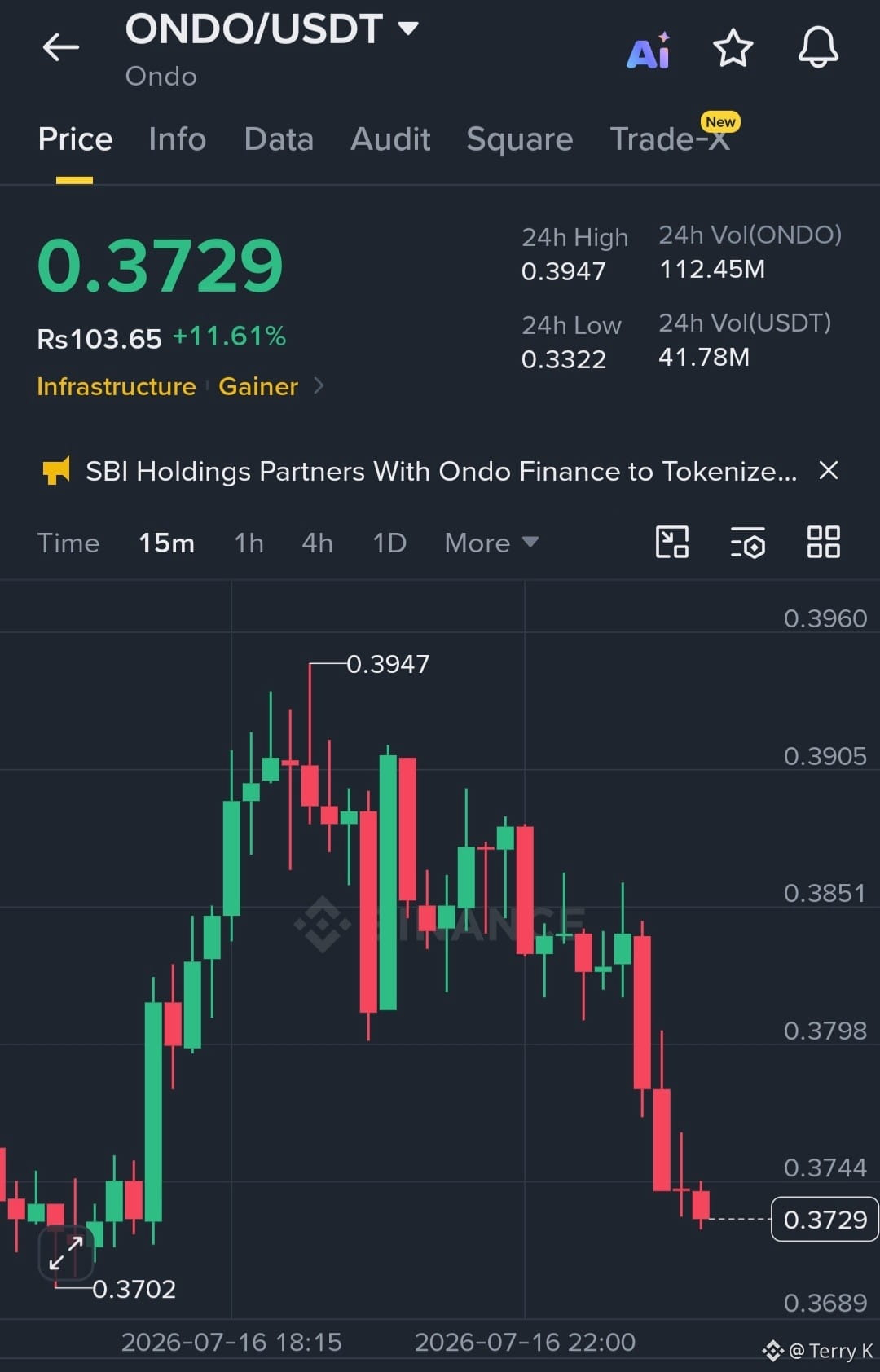
$ONDO
melihat dorongan bullish yang kuat, mendorong harga menuju area $0.395 sebelum menghadapi tekanan jual yang berat. Penolakan tersebut telah diikuti oleh penarikan (pullback) yang stabil, dengan harga kini diperdagangkan sekitar $0.373 pada chart 15 menit.
Penurunan terbaru menunjukkan momentum jangka pendek telah melemah setelah likuiditas diambil di atas level tertinggi lokal. Saat ini, penjual yang mengendalikan, namun pergerakan ini juga mendekatkan harga ke area kunci tempat pembeli bisa kembali masuk.
Level Kunci • Support: $0.370 - $0.368 • Resistance: $0.380 - $0.385 • Resistance utama: $0.395
Selama ONDO bertahan di atas zona support, reli/pemantulan (relief bounce) masih mungkin terjadi. Namun, jika $0.370 hilang, dapat membuka peluang untuk retracement yang lebih dalam sebelum upaya bullish berikutnya.
Pendekatan terbaik adalah tetap sabar dan menunggu konfirmasi. Mengejar candle setelah pergerakan kuat sering kali berujung pada entri yang buruk. Biarkan harga menunjukkan arah berikutnya sebelum memutuskan untuk melakukan trading.
#ONDO #Crypto #Trading #PriceAction #Binance
$ONDO
melihat dorongan bullish yang kuat, mendorong harga menuju area $0.395 sebelum menghadapi tekanan jual yang berat. Penolakan tersebut telah diikuti oleh penarikan (pullback) yang stabil, dengan harga kini diperdagangkan sekitar $0.373 pada chart 15 menit.
Penurunan terbaru menunjukkan momentum jangka pendek telah melemah setelah likuiditas diambil di atas level tertinggi lokal. Saat ini, penjual yang mengendalikan, namun pergerakan ini juga mendekatkan harga ke area kunci tempat pembeli bisa kembali masuk.
Level Kunci • Support: $0.370 - $0.368 • Resistance: $0.380 - $0.385 • Resistance utama: $0.395
Selama ONDO bertahan di atas zona support, reli/pemantulan (relief bounce) masih mungkin terjadi. Namun, jika $0.370 hilang, dapat membuka peluang untuk retracement yang lebih dalam sebelum upaya bullish berikutnya.
Pendekatan terbaik adalah tetap sabar dan menunggu konfirmasi. Mengejar candle setelah pergerakan kuat sering kali berujung pada entri yang buruk. Biarkan harga menunjukkan arah berikutnya sebelum memutuskan untuk melakukan trading.
#ONDO #Crypto #Trading #PriceAction #Binance
melihat dorongan bullish yang kuat, mendorong harga menuju area $0.395 sebelum menghadapi tekanan jual yang berat. Penolakan tersebut telah diikuti oleh penarikan (pullback) yang stabil, dengan harga kini diperdagangkan sekitar $0.373 pada chart 15 menit.
Penurunan terbaru menunjukkan momentum jangka pendek telah melemah setelah likuiditas diambil di atas level tertinggi lokal. Saat ini, penjual yang mengendalikan, namun pergerakan ini juga mendekatkan harga ke area kunci tempat pembeli bisa kembali masuk.
Level Kunci • Support: $0.370 - $0.368 • Resistance: $0.380 - $0.385 • Resistance utama: $0.395
Selama ONDO bertahan di atas zona support, reli/pemantulan (relief bounce) masih mungkin terjadi. Namun, jika $0.370 hilang, dapat membuka peluang untuk retracement yang lebih dalam sebelum upaya bullish berikutnya.
Pendekatan terbaik adalah tetap sabar dan menunggu konfirmasi. Mengejar candle setelah pergerakan kuat sering kali berujung pada entri yang buruk. Biarkan harga menunjukkan arah berikutnya sebelum memutuskan untuk melakukan trading.
#ONDO #Crypto #Trading #PriceAction #Binance
1
141
·
--
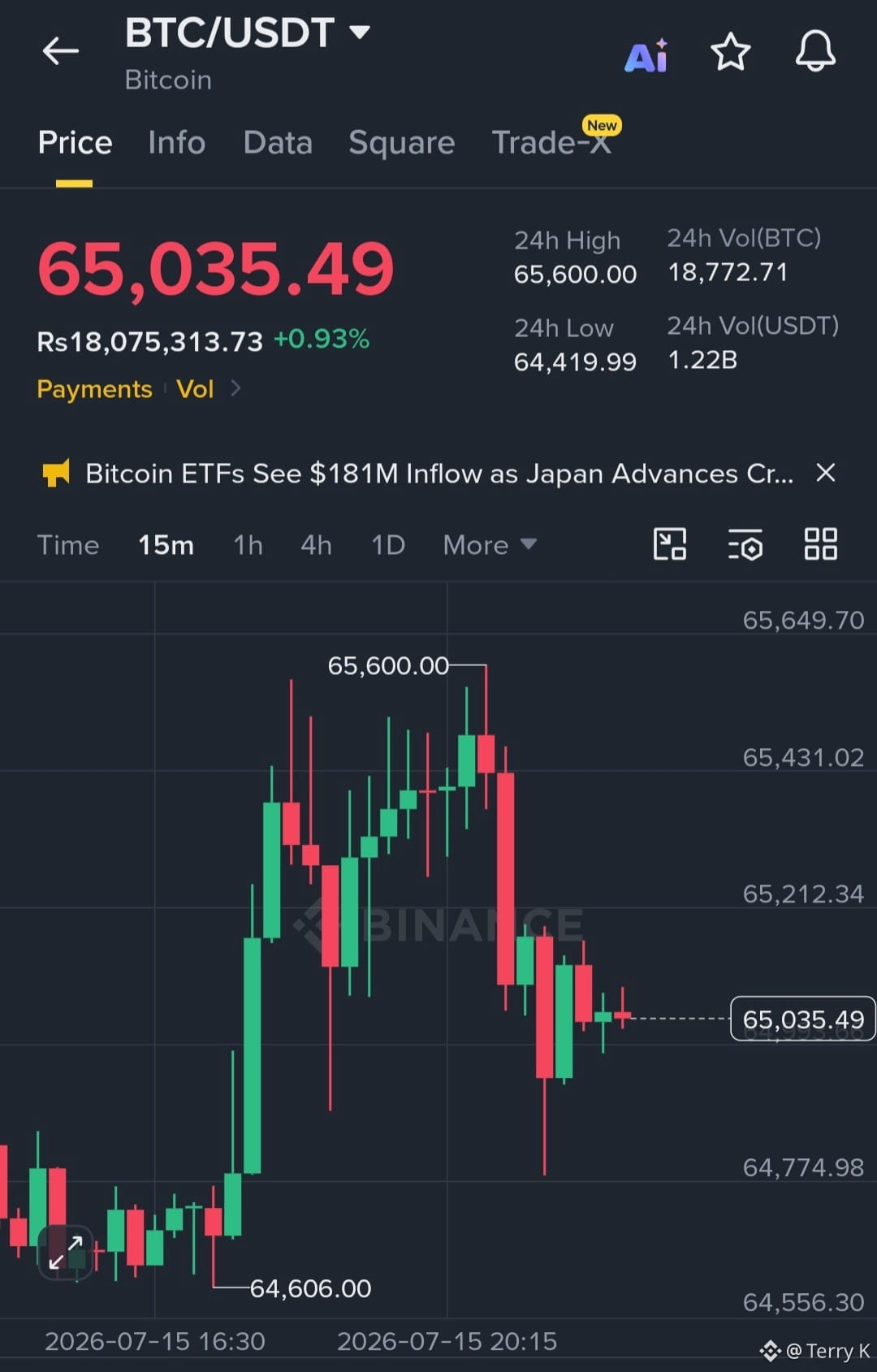
$BTC
Bitcoin menembus ke zona resistensi $65,6K, tetapi penjual masuk secara agresif, sehingga terjadi penolakan tajam. Saat ini harga diperdagangkan di sekitar $65,0K, di mana para pembeli berupaya menstabilkan pasar.
Pergerakan terbaru menunjukkan likuiditas di atas level tertinggi telah diambil, dan kini fokus bergeser pada apakah BTC bisa bertahan pada support lokal ini. Jika terjadi penutupan/bertahan berkelanjutan di atas $65K, dapat memicu upaya lain untuk merebut kembali area $65,4K–$65,6K. Jika support gagal, pergerakan menuju $64,8K atau bahkan $64,6K menjadi lebih mungkin.
Untuk saat ini, pasar sedang mengalami konsolidasi jangka pendek setelah pergerakan yang volatil. Mengejar candle di sini menawarkan keunggulan yang kecil. Menunggu konfirmasi di sekitar support atau resistensi kunci adalah pendekatan yang lebih disiplin.
Level Utama
Resistensi: $65,4K – $65,6K
Support: $65,0K – $64,8K
Invalidasi: Pergerakan berkelanjutan di bawah $64,8K
Kesabaran adalah sebuah posisi. Biarkan harga mengonfirmasi arah sebelum Anda memutuskan untuk masuk ke sebuah trade.
$BTC
Bitcoin menembus ke zona resistensi $65,6K, tetapi penjual masuk secara agresif, sehingga terjadi penolakan tajam. Saat ini harga diperdagangkan di sekitar $65,0K, di mana para pembeli berupaya menstabilkan pasar.
Pergerakan terbaru menunjukkan likuiditas di atas level tertinggi telah diambil, dan kini fokus bergeser pada apakah BTC bisa bertahan pada support lokal ini. Jika terjadi penutupan/bertahan berkelanjutan di atas $65K, dapat memicu upaya lain untuk merebut kembali area $65,4K–$65,6K. Jika support gagal, pergerakan menuju $64,8K atau bahkan $64,6K menjadi lebih mungkin.
Untuk saat ini, pasar sedang mengalami konsolidasi jangka pendek setelah pergerakan yang volatil. Mengejar candle di sini menawarkan keunggulan yang kecil. Menunggu konfirmasi di sekitar support atau resistensi kunci adalah pendekatan yang lebih disiplin.
Level Utama
Resistensi: $65,4K – $65,6K
Support: $65,0K – $64,8K
Invalidasi: Pergerakan berkelanjutan di bawah $64,8K
Kesabaran adalah sebuah posisi. Biarkan harga mengonfirmasi arah sebelum Anda memutuskan untuk masuk ke sebuah trade.
Bitcoin menembus ke zona resistensi $65,6K, tetapi penjual masuk secara agresif, sehingga terjadi penolakan tajam. Saat ini harga diperdagangkan di sekitar $65,0K, di mana para pembeli berupaya menstabilkan pasar.
Pergerakan terbaru menunjukkan likuiditas di atas level tertinggi telah diambil, dan kini fokus bergeser pada apakah BTC bisa bertahan pada support lokal ini. Jika terjadi penutupan/bertahan berkelanjutan di atas $65K, dapat memicu upaya lain untuk merebut kembali area $65,4K–$65,6K. Jika support gagal, pergerakan menuju $64,8K atau bahkan $64,6K menjadi lebih mungkin.
Untuk saat ini, pasar sedang mengalami konsolidasi jangka pendek setelah pergerakan yang volatil. Mengejar candle di sini menawarkan keunggulan yang kecil. Menunggu konfirmasi di sekitar support atau resistensi kunci adalah pendekatan yang lebih disiplin.
Level Utama
Resistensi: $65,4K – $65,6K
Support: $65,0K – $64,8K
Invalidasi: Pergerakan berkelanjutan di bawah $64,8K
Kesabaran adalah sebuah posisi. Biarkan harga mengonfirmasi arah sebelum Anda memutuskan untuk masuk ke sebuah trade.
1
102
·
--
$ETH
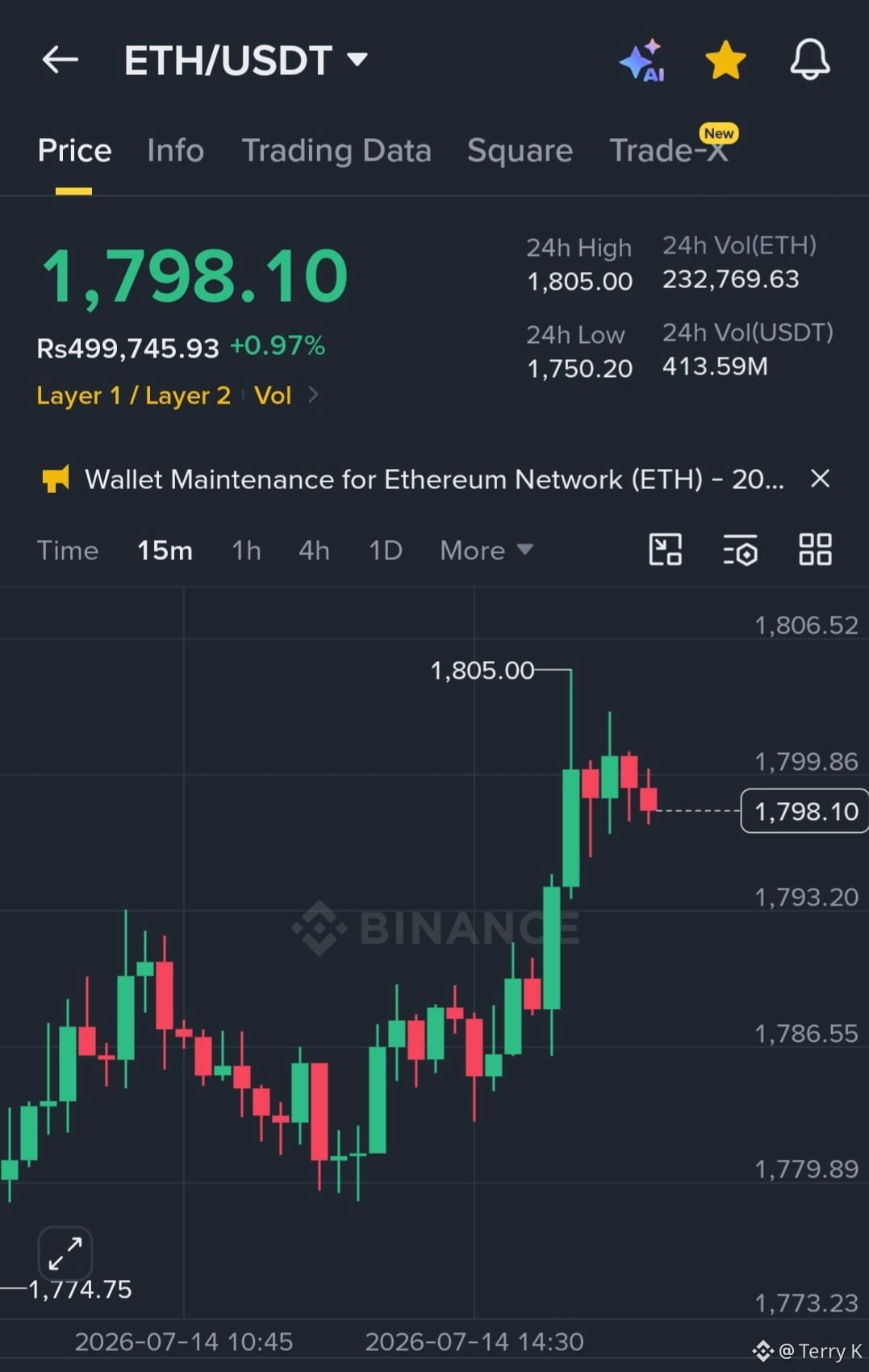
menunjukkan kekuatan setelah merebut kembali area $1,790 dan mendorong ke zona resistensi $1,800–$1,805. Jeda terbaru di bawah resistensi terlihat seperti konsolidasi yang sehat, bukan kelemahan langsung.
Level Kunci: • Support: $1,790–$1,793 • Resistance: $1,805, lalu $1,820
Selama harga bertahan di atas support, pihak pembeli tetap memegang kendali. Tembusan yang bersih di atas $1,805 dapat membuka peluang untuk pergerakan naik berikutnya, sementara kehilangan $1,790 dapat memicu koreksi jangka pendek.
Kesabaran adalah kuncinya—biarkan harga mengonfirmasi langkah berikutnya sebelum masuk. Perdagangkan struktur, bukan emosi.
$ETH
menunjukkan kekuatan setelah merebut kembali area $1,790 dan mendorong ke zona resistensi $1,800–$1,805. Jeda terbaru di bawah resistensi terlihat seperti konsolidasi yang sehat, bukan kelemahan langsung.
Level Kunci: • Support: $1,790–$1,793 • Resistance: $1,805, lalu $1,820
Selama harga bertahan di atas support, pihak pembeli tetap memegang kendali. Tembusan yang bersih di atas $1,805 dapat membuka peluang untuk pergerakan naik berikutnya, sementara kehilangan $1,790 dapat memicu koreksi jangka pendek.
Kesabaran adalah kuncinya—biarkan harga mengonfirmasi langkah berikutnya sebelum masuk. Perdagangkan struktur, bukan emosi.
menunjukkan kekuatan setelah merebut kembali area $1,790 dan mendorong ke zona resistensi $1,800–$1,805. Jeda terbaru di bawah resistensi terlihat seperti konsolidasi yang sehat, bukan kelemahan langsung.
Level Kunci: • Support: $1,790–$1,793 • Resistance: $1,805, lalu $1,820
Selama harga bertahan di atas support, pihak pembeli tetap memegang kendali. Tembusan yang bersih di atas $1,805 dapat membuka peluang untuk pergerakan naik berikutnya, sementara kehilangan $1,790 dapat memicu koreksi jangka pendek.
Kesabaran adalah kuncinya—biarkan harga mengonfirmasi langkah berikutnya sebelum masuk. Perdagangkan struktur, bukan emosi.
1
93
·
--
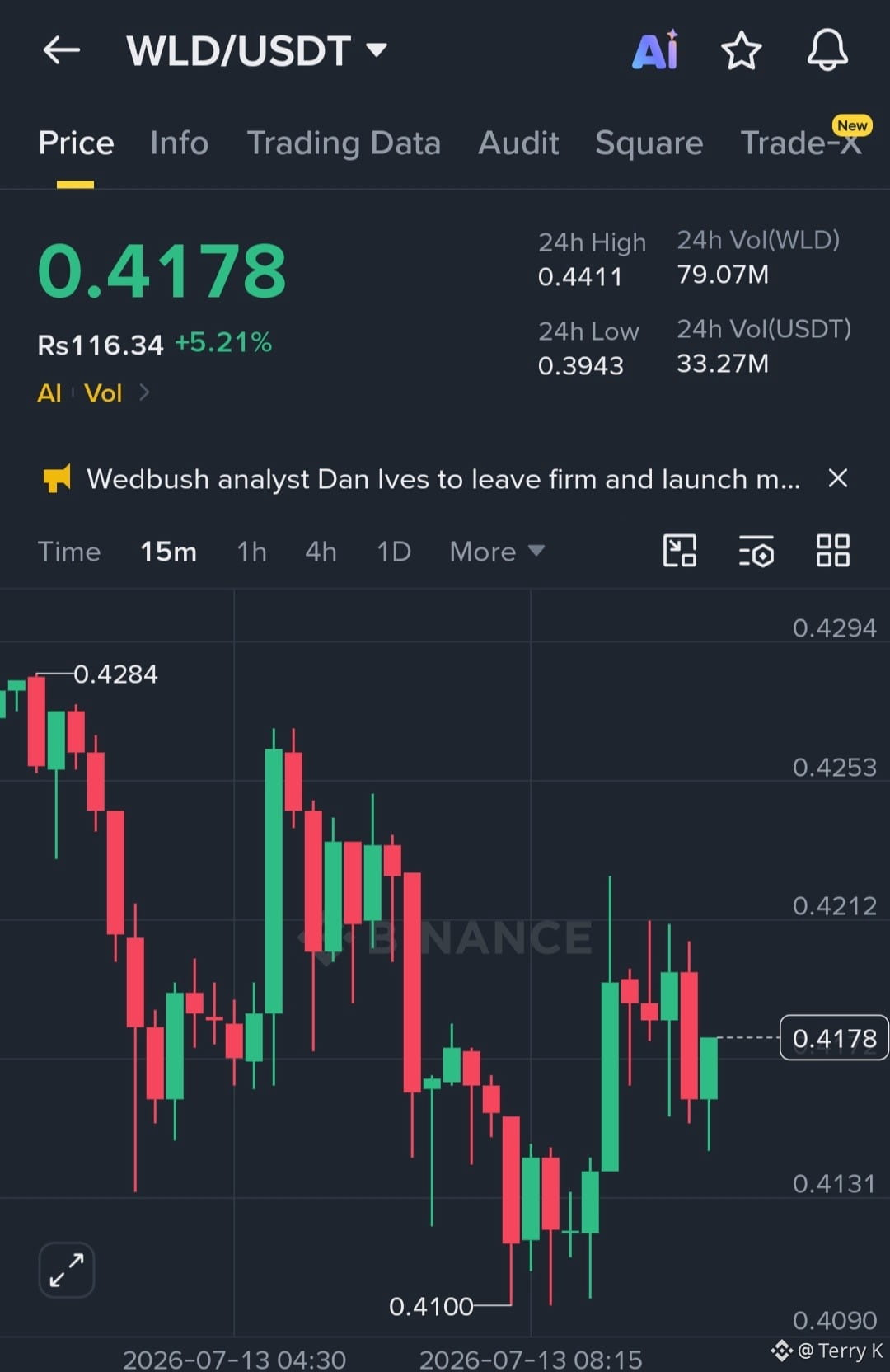
$WLD sedang berupaya memulihkan struktur jangka pendek setelah memantul dari area 0.4100. Harga sekarang sedang menguji resistensi terdekat di sekitar 0.4200–0.4250.
Level penting: 🔹 Support: 0.4100 🔹 Resistensi: 0.4200 → 0.4250
Breakout yang bersih di atas resistensi dapat membuka peluang untuk kenaikan lebih lanjut, sementara penolakan bisa mengarah ke pengujian ulang support lainnya. Kesabaran dan konfirmasi tetap menjadi kunci.
#WLD #USDT #Crypto #Binance
$WLD sedang berupaya memulihkan struktur jangka pendek setelah memantul dari area 0.4100. Harga sekarang sedang menguji resistensi terdekat di sekitar 0.4200–0.4250.
Level penting: 🔹 Support: 0.4100 🔹 Resistensi: 0.4200 → 0.4250
Breakout yang bersih di atas resistensi dapat membuka peluang untuk kenaikan lebih lanjut, sementara penolakan bisa mengarah ke pengujian ulang support lainnya. Kesabaran dan konfirmasi tetap menjadi kunci.
#WLD #USDT #Crypto #Binance
Level penting: 🔹 Support: 0.4100 🔹 Resistensi: 0.4200 → 0.4250
Breakout yang bersih di atas resistensi dapat membuka peluang untuk kenaikan lebih lanjut, sementara penolakan bisa mengarah ke pengujian ulang support lainnya. Kesabaran dan konfirmasi tetap menjadi kunci.
#WLD #USDT #Crypto #Binance
1
171
·
--
$ZEC
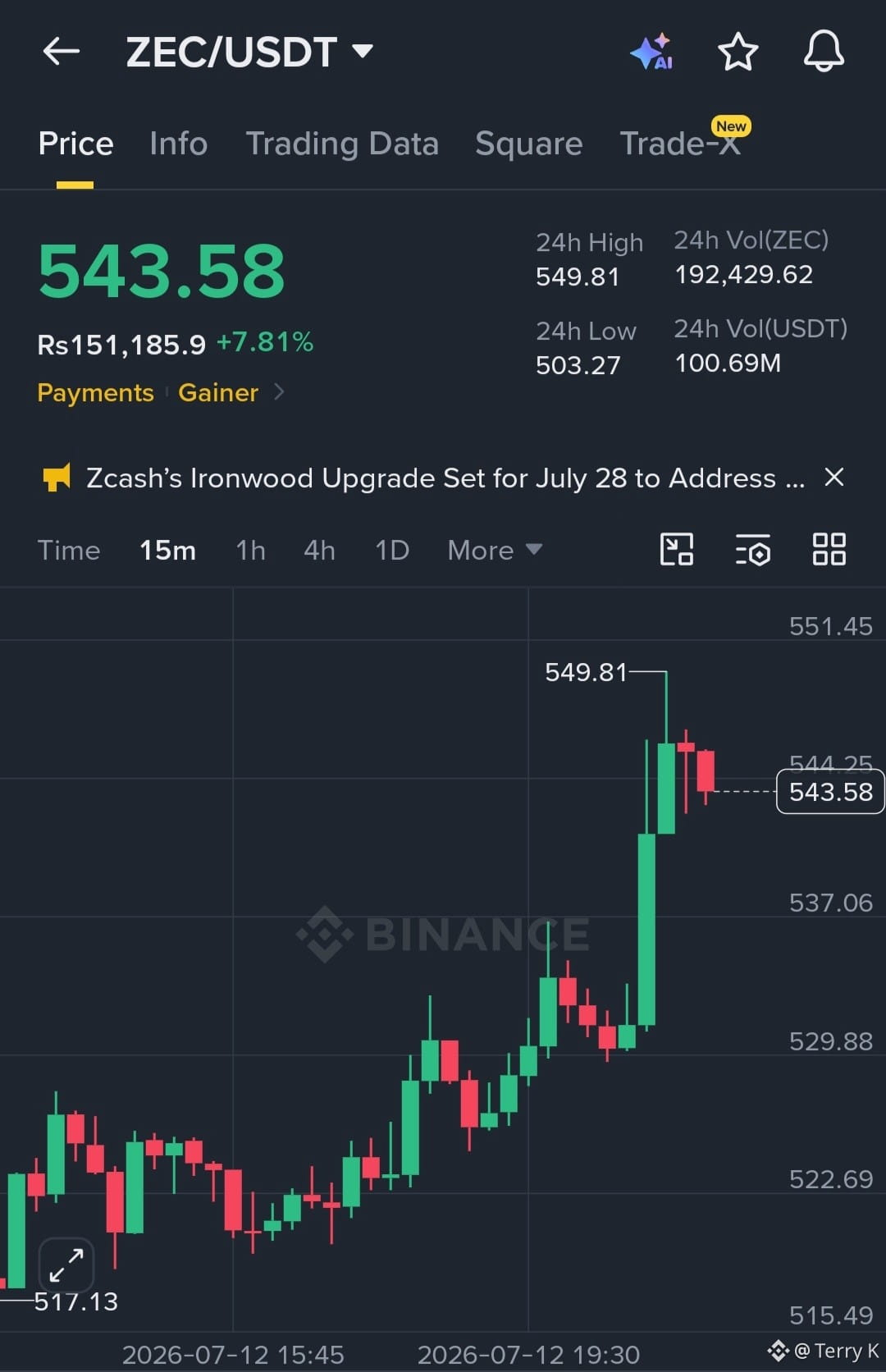
menunjukkan momentum bullish yang kuat setelah berhasil menembus dari kisaran konsolidasi terbarunya. Para pembeli masuk secara agresif,
mendorong harga menuju zona resistensi 550. Pergerakan ini didukung oleh momentum yang solid, namun setelah impuls yang tajam seperti ini, koreksi jangka pendek atau konsolidasi sideways akan menjadi hal yang sehat sebelum langkah berikutnya yang lebih tinggi.
Level Kunci • Support: 537 – 530
• Resistance: 550 – 560
Selama ZEC bertahan di atas area breakout, struktur keseluruhan tetap bullish. Mengejar candle hijau memiliki risiko yang lebih tinggi, jadi menunggu konfirmasi atau retest mungkin menawarkan setup risk-to-reward yang lebih baik.
Perdagangan berdasarkan struktur, bukan emosi. Kesabaran dan manajemen risiko yang disiplin selalu mengungguli FOMO.
$ZEC
menunjukkan momentum bullish yang kuat setelah berhasil menembus dari kisaran konsolidasi terbarunya. Para pembeli masuk secara agresif,
mendorong harga menuju zona resistensi 550. Pergerakan ini didukung oleh momentum yang solid, namun setelah impuls yang tajam seperti ini, koreksi jangka pendek atau konsolidasi sideways akan menjadi hal yang sehat sebelum langkah berikutnya yang lebih tinggi.
Level Kunci • Support: 537 – 530
• Resistance: 550 – 560
Selama ZEC bertahan di atas area breakout, struktur keseluruhan tetap bullish. Mengejar candle hijau memiliki risiko yang lebih tinggi, jadi menunggu konfirmasi atau retest mungkin menawarkan setup risk-to-reward yang lebih baik.
Perdagangan berdasarkan struktur, bukan emosi. Kesabaran dan manajemen risiko yang disiplin selalu mengungguli FOMO.
menunjukkan momentum bullish yang kuat setelah berhasil menembus dari kisaran konsolidasi terbarunya. Para pembeli masuk secara agresif,
mendorong harga menuju zona resistensi 550. Pergerakan ini didukung oleh momentum yang solid, namun setelah impuls yang tajam seperti ini, koreksi jangka pendek atau konsolidasi sideways akan menjadi hal yang sehat sebelum langkah berikutnya yang lebih tinggi.
Level Kunci • Support: 537 – 530
• Resistance: 550 – 560
Selama ZEC bertahan di atas area breakout, struktur keseluruhan tetap bullish. Mengejar candle hijau memiliki risiko yang lebih tinggi, jadi menunggu konfirmasi atau retest mungkin menawarkan setup risk-to-reward yang lebih baik.
Perdagangan berdasarkan struktur, bukan emosi. Kesabaran dan manajemen risiko yang disiplin selalu mengungguli FOMO.
208
·
--
$BTC
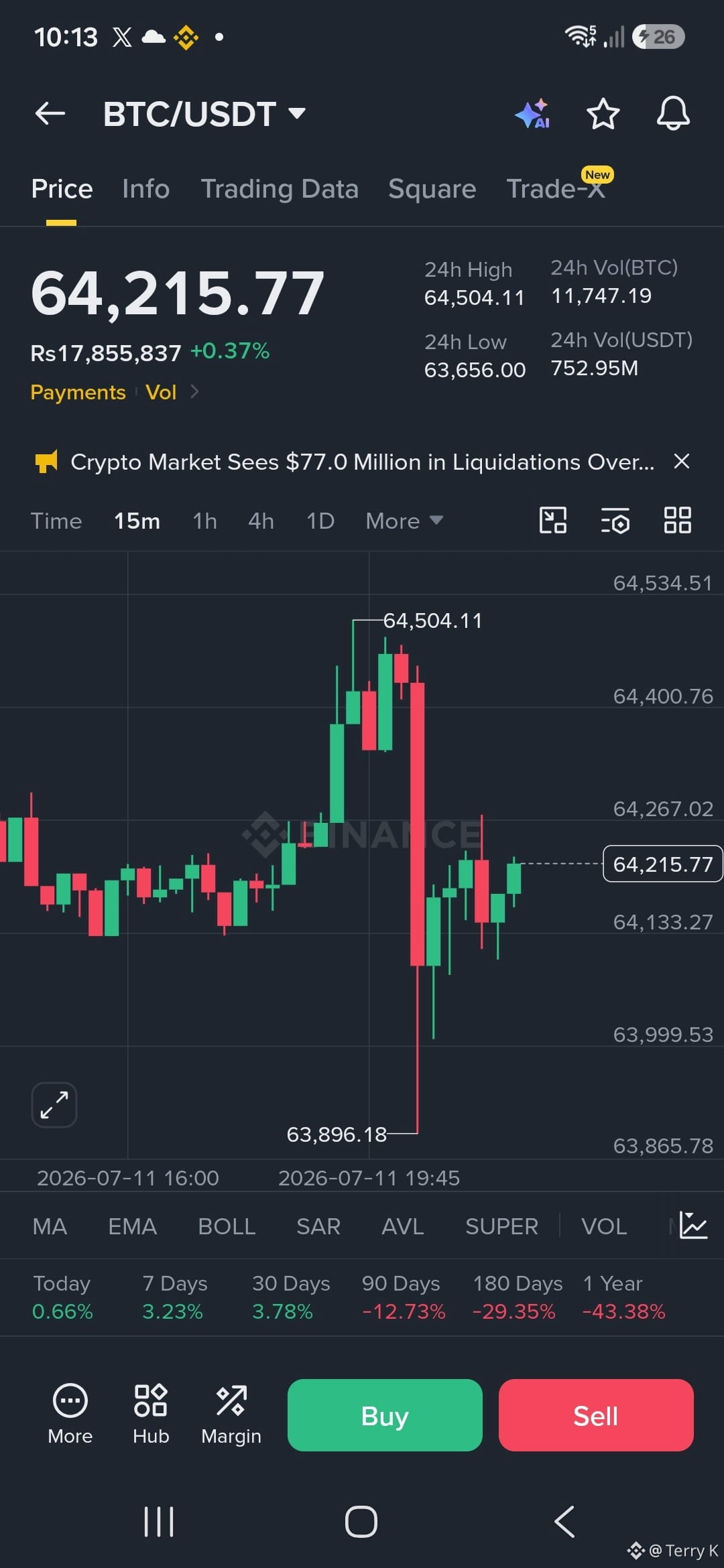
gelontor likuiditas di bawah $64K, memicu aksi jual tajam sebelum pembeli masuk. Pemulihan cepat dari level terendah menunjukkan permintaan masih aktif, namun harga masih berada dalam kisaran jangka pendek.
Selama $63.9K bertahan, BTC masih punya ruang untuk menguji ulang $64.4K–$64.5K. Tembus bersih di atas resistance tersebut dapat membuka peluang untuk kenaikan lebih lanjut. Namun, jika level terendah terbaru hilang, kemungkinan besar akan memicu gelombang jual lainnya.
Untuk saat ini, ini tampak seperti pergerakan pasar yang digerakkan oleh likuiditas, bukan tren yang sudah terkonfirmasi. Kesabaran dan manajemen risiko yang disiplin tetap menjadi kuncinya.
$BTC
gelontor likuiditas di bawah $64K, memicu aksi jual tajam sebelum pembeli masuk. Pemulihan cepat dari level terendah menunjukkan permintaan masih aktif, namun harga masih berada dalam kisaran jangka pendek.
Selama $63.9K bertahan, BTC masih punya ruang untuk menguji ulang $64.4K–$64.5K. Tembus bersih di atas resistance tersebut dapat membuka peluang untuk kenaikan lebih lanjut. Namun, jika level terendah terbaru hilang, kemungkinan besar akan memicu gelombang jual lainnya.
Untuk saat ini, ini tampak seperti pergerakan pasar yang digerakkan oleh likuiditas, bukan tren yang sudah terkonfirmasi. Kesabaran dan manajemen risiko yang disiplin tetap menjadi kuncinya.
gelontor likuiditas di bawah $64K, memicu aksi jual tajam sebelum pembeli masuk. Pemulihan cepat dari level terendah menunjukkan permintaan masih aktif, namun harga masih berada dalam kisaran jangka pendek.
Selama $63.9K bertahan, BTC masih punya ruang untuk menguji ulang $64.4K–$64.5K. Tembus bersih di atas resistance tersebut dapat membuka peluang untuk kenaikan lebih lanjut. Namun, jika level terendah terbaru hilang, kemungkinan besar akan memicu gelombang jual lainnya.
Untuk saat ini, ini tampak seperti pergerakan pasar yang digerakkan oleh likuiditas, bukan tren yang sudah terkonfirmasi. Kesabaran dan manajemen risiko yang disiplin tetap menjadi kuncinya.
1
131
·
--
$ETH
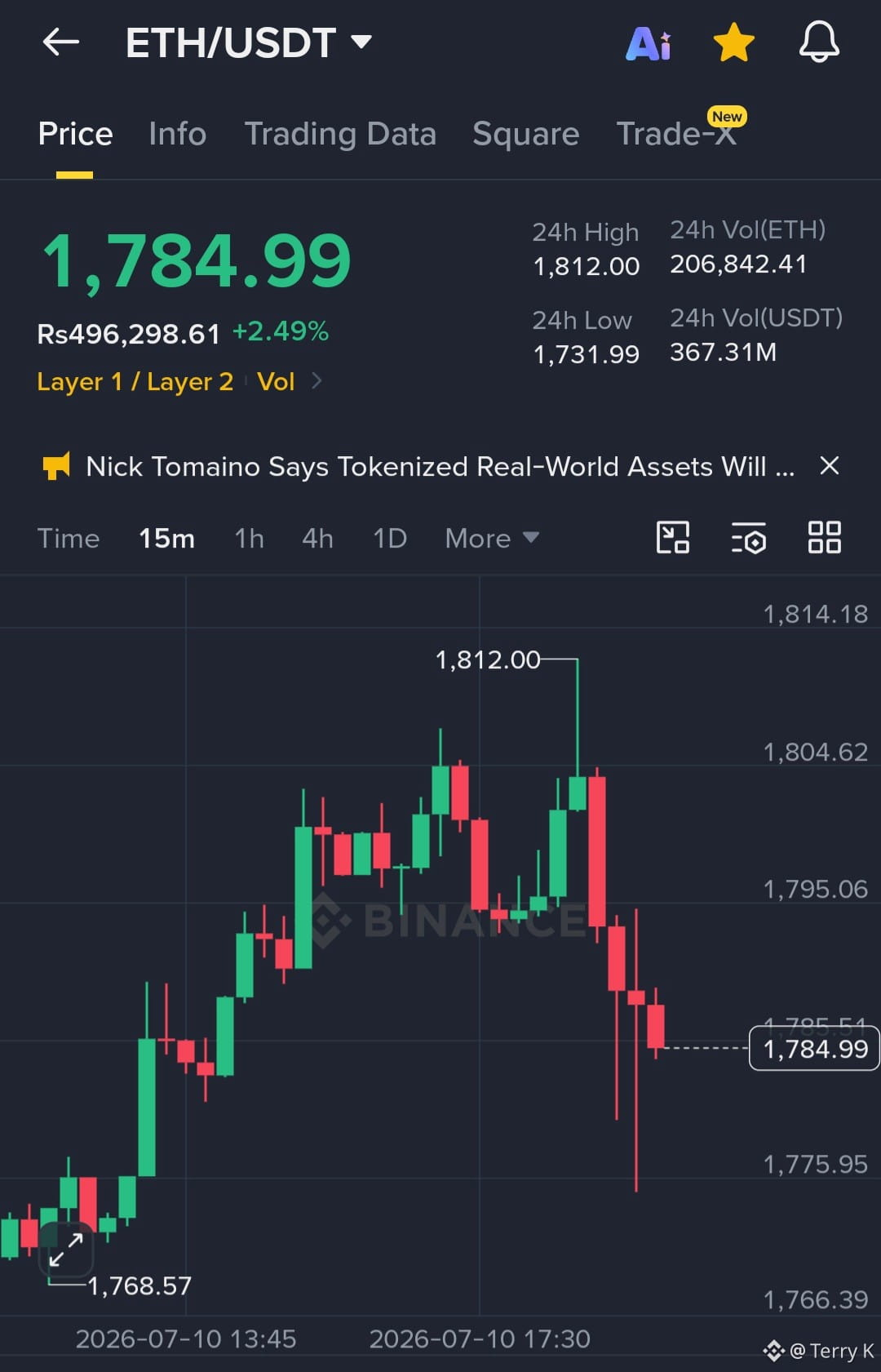
likuiditas tersapu di dekat $1.812, tetapi gagal bertahan di atas resistance, memicu penolakan tajam. Harga kini sedang menguji zona support $1.780–1.785.
Selama area ini bertahan, peluang technical bounce (pemulihan) masih mungkin terjadi. Jika area tersebut hilang, bisa membuka jalan untuk penurunan leg berikutnya menuju kantong likuiditas berikutnya.
Kesabaran terbayar. Biarkan pasar mengonfirmasi arah sebelum mengambil keputusan untuk posisi.
$ETH
likuiditas tersapu di dekat $1.812, tetapi gagal bertahan di atas resistance, memicu penolakan tajam. Harga kini sedang menguji zona support $1.780–1.785.
Selama area ini bertahan, peluang technical bounce (pemulihan) masih mungkin terjadi. Jika area tersebut hilang, bisa membuka jalan untuk penurunan leg berikutnya menuju kantong likuiditas berikutnya.
Kesabaran terbayar. Biarkan pasar mengonfirmasi arah sebelum mengambil keputusan untuk posisi.
likuiditas tersapu di dekat $1.812, tetapi gagal bertahan di atas resistance, memicu penolakan tajam. Harga kini sedang menguji zona support $1.780–1.785.
Selama area ini bertahan, peluang technical bounce (pemulihan) masih mungkin terjadi. Jika area tersebut hilang, bisa membuka jalan untuk penurunan leg berikutnya menuju kantong likuiditas berikutnya.
Kesabaran terbayar. Biarkan pasar mengonfirmasi arah sebelum mengambil keputusan untuk posisi.
202
·
--
$BTC
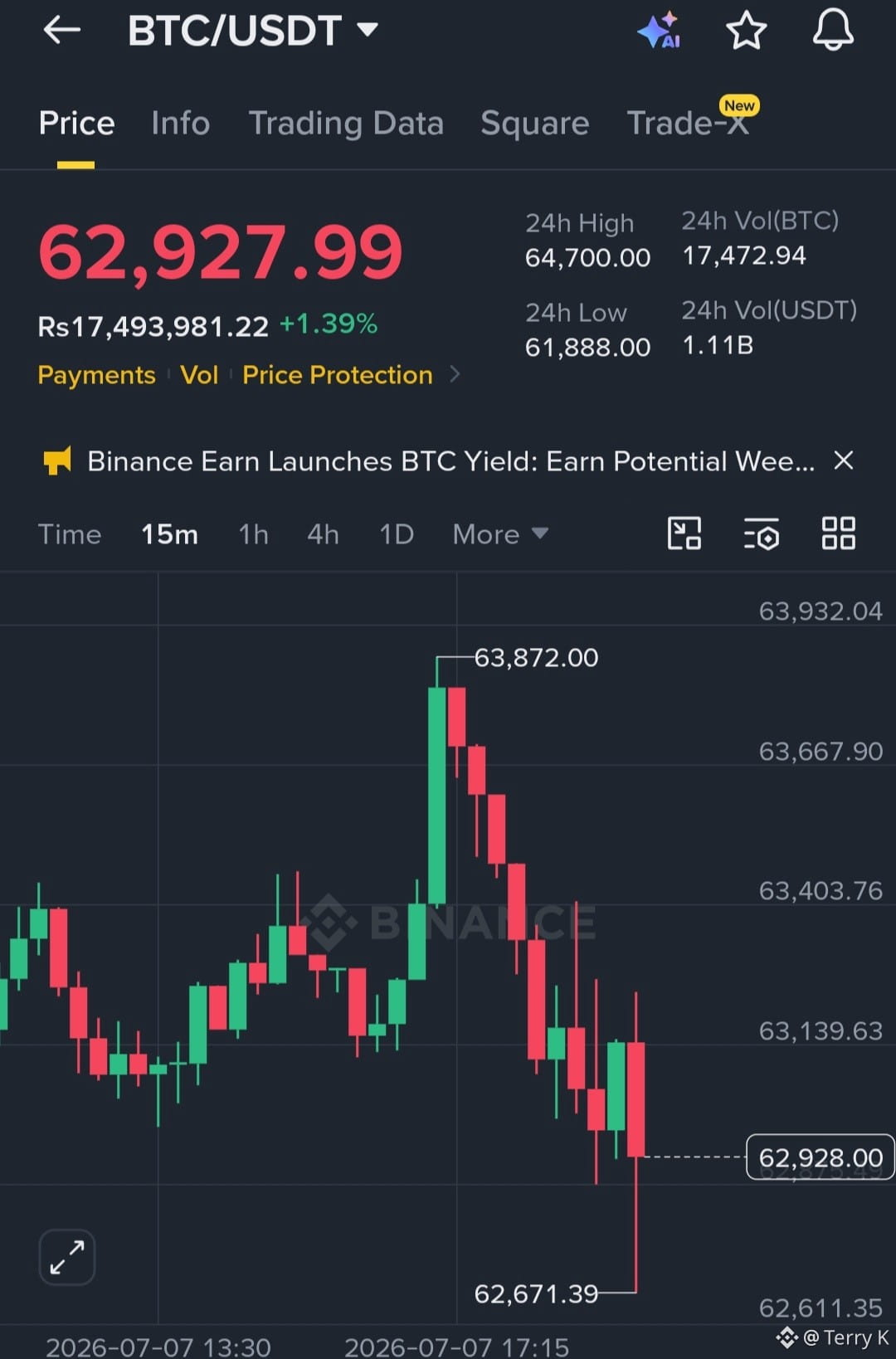
mencoba melakukan dorongan menuju 63,9K namun para penjual dengan cepat turun tangan, menolak pergerakan tersebut dan mendorong harga kembali di bawah level tertinggi lokal.
Struktur terbaru menunjukkan higher high yang lebih rendah dan tekanan jual yang berkelanjutan, menandakan bulls masih perlu konfirmasi yang lebih kuat sebelum momentum berbalik. Selama harga tetap di bawah 63,8K–64K, kehati-hatian diperlukan.
Level Kunci: • Resistance: 63,8K–64K • Support: 62,6K–62,7K
Tidak perlu mengejar setiap candle. Biarkan pasar mengonfirmasi arah terlebih dahulu—disiplin mengalahkan emosi setiap saat.
#BTC #Bitcoin #Crypto #PriceAction #BinanceSquare
$BTC
mencoba melakukan dorongan menuju 63,9K namun para penjual dengan cepat turun tangan, menolak pergerakan tersebut dan mendorong harga kembali di bawah level tertinggi lokal.
Struktur terbaru menunjukkan higher high yang lebih rendah dan tekanan jual yang berkelanjutan, menandakan bulls masih perlu konfirmasi yang lebih kuat sebelum momentum berbalik. Selama harga tetap di bawah 63,8K–64K, kehati-hatian diperlukan.
Level Kunci: • Resistance: 63,8K–64K • Support: 62,6K–62,7K
Tidak perlu mengejar setiap candle. Biarkan pasar mengonfirmasi arah terlebih dahulu—disiplin mengalahkan emosi setiap saat.
#BTC #Bitcoin #Crypto #PriceAction #BinanceSquare
mencoba melakukan dorongan menuju 63,9K namun para penjual dengan cepat turun tangan, menolak pergerakan tersebut dan mendorong harga kembali di bawah level tertinggi lokal.
Struktur terbaru menunjukkan higher high yang lebih rendah dan tekanan jual yang berkelanjutan, menandakan bulls masih perlu konfirmasi yang lebih kuat sebelum momentum berbalik. Selama harga tetap di bawah 63,8K–64K, kehati-hatian diperlukan.
Level Kunci: • Resistance: 63,8K–64K • Support: 62,6K–62,7K
Tidak perlu mengejar setiap candle. Biarkan pasar mengonfirmasi arah terlebih dahulu—disiplin mengalahkan emosi setiap saat.
#BTC #Bitcoin #Crypto #PriceAction #BinanceSquare
77
·
--
$ETH
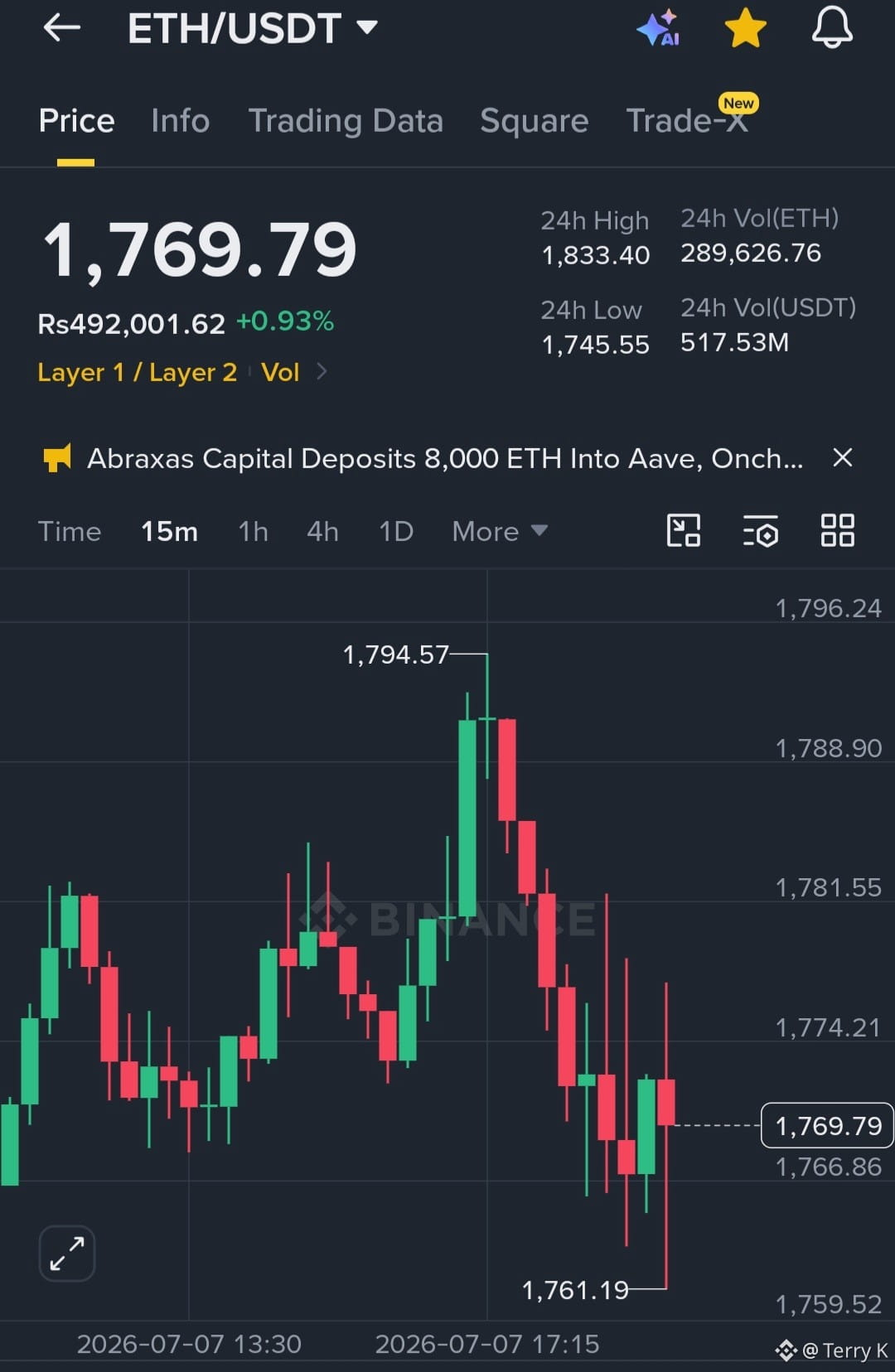
menerobos ke area resistance sekitar $1,795 tetapi menghadapi tekanan jual yang kuat, yang menyebabkan penolakan tajam dan pergerakan kembali menuju area support $1,760–$1,770.
Kandil terbaru menunjukkan bahwa pembeli mempertahankan zona ini, tetapi momentumnya masih lemah. Reklaim yang berkelanjutan di atas $1,780 dapat mengubah sentimen jangka pendek, sementara kehilangan $1,760 berpotensi memicu sapuan likuiditas lain ke bawah sebelum ada pemulihan yang berarti.
Kesabaran adalah kuncinya di sini. Biarkan pasar mengonfirmasi arah, bukan mengantisipasinya.
#Crypto #Trading #PriceAction #Binance #USDT $ETH
$ETH
menerobos ke area resistance sekitar $1,795 tetapi menghadapi tekanan jual yang kuat, yang menyebabkan penolakan tajam dan pergerakan kembali menuju area support $1,760–$1,770.
Kandil terbaru menunjukkan bahwa pembeli mempertahankan zona ini, tetapi momentumnya masih lemah. Reklaim yang berkelanjutan di atas $1,780 dapat mengubah sentimen jangka pendek, sementara kehilangan $1,760 berpotensi memicu sapuan likuiditas lain ke bawah sebelum ada pemulihan yang berarti.
Kesabaran adalah kuncinya di sini. Biarkan pasar mengonfirmasi arah, bukan mengantisipasinya.
#Crypto #Trading #PriceAction #Binance #USDT $ETH
menerobos ke area resistance sekitar $1,795 tetapi menghadapi tekanan jual yang kuat, yang menyebabkan penolakan tajam dan pergerakan kembali menuju area support $1,760–$1,770.
Kandil terbaru menunjukkan bahwa pembeli mempertahankan zona ini, tetapi momentumnya masih lemah. Reklaim yang berkelanjutan di atas $1,780 dapat mengubah sentimen jangka pendek, sementara kehilangan $1,760 berpotensi memicu sapuan likuiditas lain ke bawah sebelum ada pemulihan yang berarti.
Kesabaran adalah kuncinya di sini. Biarkan pasar mengonfirmasi arah, bukan mengantisipasinya.
#Crypto #Trading #PriceAction #Binance #USDT $ETH
97
·
--
$BNB
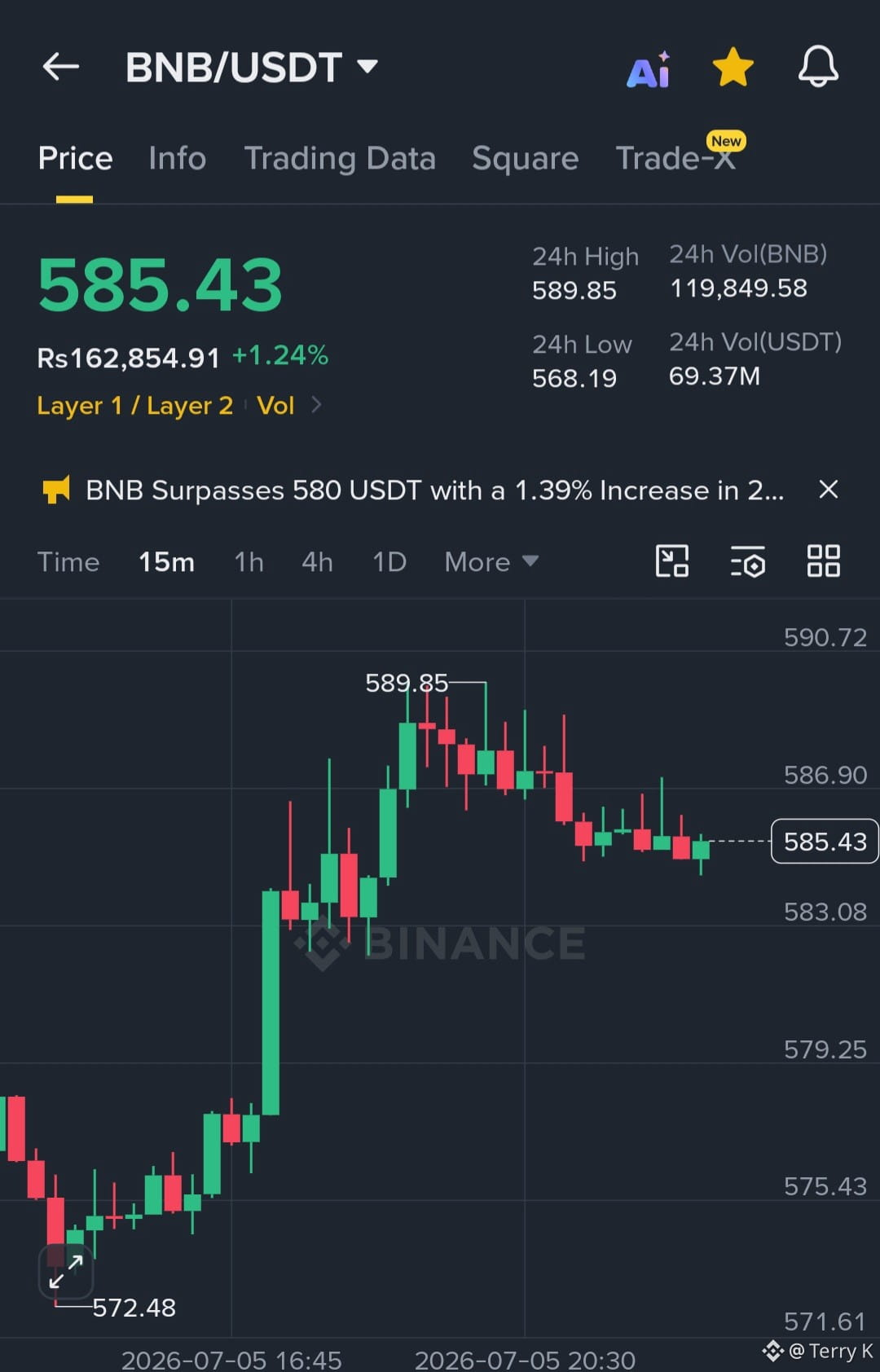
sedang bertahan di atas level $580 setelah terjadi breakout yang kuat.
Harga sempat naik ke $589.85 sebelum kemudian mendingin, dan sekarang sedang konsolidasi di sekitar $585 pada chart 15m. Selama pembeli mempertahankan zona ini, kemungkinan ada tes ulang ke $590+ masih terbuka.
Level penting: 📍 Support: $583–580 📍 Resistance: $590
Kesabaran menang—biarkan pasar mengonfirmasi langkah berikutnya sebelum mengejar. #BNB #Binance #Crypto #Trading #PriceAction
$BNB
sedang bertahan di atas level $580 setelah terjadi breakout yang kuat.
Harga sempat naik ke $589.85 sebelum kemudian mendingin, dan sekarang sedang konsolidasi di sekitar $585 pada chart 15m. Selama pembeli mempertahankan zona ini, kemungkinan ada tes ulang ke $590+ masih terbuka.
Level penting: 📍 Support: $583–580 📍 Resistance: $590
Kesabaran menang—biarkan pasar mengonfirmasi langkah berikutnya sebelum mengejar. #BNB #Binance #Crypto #Trading #PriceAction
sedang bertahan di atas level $580 setelah terjadi breakout yang kuat.
Harga sempat naik ke $589.85 sebelum kemudian mendingin, dan sekarang sedang konsolidasi di sekitar $585 pada chart 15m. Selama pembeli mempertahankan zona ini, kemungkinan ada tes ulang ke $590+ masih terbuka.
Level penting: 📍 Support: $583–580 📍 Resistance: $590
Kesabaran menang—biarkan pasar mengonfirmasi langkah berikutnya sebelum mengejar. #BNB #Binance #Crypto #Trading #PriceAction
81
Masuk untuk menjelajahi konten lainnya
Bergabunglah dengan pengguna kripto global di Binance Square
⚡️ Dapatkan informasi terbaru dan berguna tentang kripto.
💬 Dipercayai oleh bursa kripto terbesar di dunia.
👍 Temukan wawasan nyata dari kreator terverifikasi.
Email/Nomor Ponsel