

tehameeyunX
1.5k Posting

tehameeyunX
Laporkan
Blokir Pengguna
Enjoying crypto with 10,000 others — X: @notyurbelleza
Perdagangan Terbuka
Pedagang Rutin
5.8 Tahun
87 Mengikuti
17.8K+ Pengikut
5.6K+ Disukai
Posting
Portofolio
Semua
Kuotasi
Live
PINNED
·
--
🚨Perubahan Besar Powell🚨
: Mengapa Akhir QT Mungkin Menjadi Peringatan, Bukan Kemenangan
Federal Reserve telah secara resmi mengkonfirmasi akhir dari Pengetatan Kuantitatif (QT). Banyak berita merayakan langkah ini, menyebutnya sebagai kembalinya likuiditas dan awal dari reli pasar baru. Namun sejarah menunjukkan cerita yang berbeda — satu yang lebih sedikit tentang kekuatan dan lebih banyak tentang stres.
Ketika Fed berhenti mengetatkan, jarang sekali karena kondisi stabil. Lebih sering, itu menandakan bahwa sesuatu yang lebih dalam dalam perekonomian mulai retak.
Pertimbangkan fakta-fakta. Sejak 2003, pasar sebenarnya telah berkinerja lebih baik selama periode QT, dengan rata-rata keuntungan tahunan sebesar 16,9%, dibandingkan dengan 10,3% selama QE. Bahkan sejak pertengahan 2022, ketika Fed menarik $2,2 triliun dari sistem, S&P 500 masih berhasil naik lebih dari 20%. Itu karena pengetatan biasanya terjadi ketika perekonomian cukup kuat untuk menghadapinya. Ketika Fed beralih ke pelonggaran, itu sering kali karena kondisi memburuk.
QE bukanlah penghargaan untuk stabilitas — itu adalah rencana penyelamatan. Itu datang selama momen krisis, bukan ketenangan. Ingat kembali ke tahun 2008 atau 2020. Setiap kali, pelonggaran kuantitatif menandai respons Fed terhadap kebutuhan mendesak akan likuiditas, bukan perayaan kesehatan ekonomi.
Oleh karena itu, pergeseran terbaru Powell tidak boleh disalahartikan sebagai lampu hijau. Akhir QT mungkin membawa optimisme jangka pendek, tetapi juga menandakan kekhawatiran yang lebih besar: pertumbuhan melambat, tekanan likuiditas meningkat, dan Fed bergerak untuk melindungi sistem.
Pasar mungkin rally sebentar, seperti yang sering terjadi ketika kebijakan beralih ke pelonggaran, tetapi sejarah menunjukkan apa yang cenderung mengikuti — kondisi biasanya memburuk sebelum membaik.
Pertanyaan nyata yang harus diajukan oleh para investor bukanlah apa yang diakhiri oleh Powell, tetapi mengapa ia harus mengakhirinya.
$SAGA
{future}(SAGAUSDT)
🚨Perubahan Besar Powell🚨
: Mengapa Akhir QT Mungkin Menjadi Peringatan, Bukan Kemenangan
Federal Reserve telah secara resmi mengkonfirmasi akhir dari Pengetatan Kuantitatif (QT). Banyak berita merayakan langkah ini, menyebutnya sebagai kembalinya likuiditas dan awal dari reli pasar baru. Namun sejarah menunjukkan cerita yang berbeda — satu yang lebih sedikit tentang kekuatan dan lebih banyak tentang stres.
Ketika Fed berhenti mengetatkan, jarang sekali karena kondisi stabil. Lebih sering, itu menandakan bahwa sesuatu yang lebih dalam dalam perekonomian mulai retak.
Pertimbangkan fakta-fakta. Sejak 2003, pasar sebenarnya telah berkinerja lebih baik selama periode QT, dengan rata-rata keuntungan tahunan sebesar 16,9%, dibandingkan dengan 10,3% selama QE. Bahkan sejak pertengahan 2022, ketika Fed menarik $2,2 triliun dari sistem, S&P 500 masih berhasil naik lebih dari 20%. Itu karena pengetatan biasanya terjadi ketika perekonomian cukup kuat untuk menghadapinya. Ketika Fed beralih ke pelonggaran, itu sering kali karena kondisi memburuk.
QE bukanlah penghargaan untuk stabilitas — itu adalah rencana penyelamatan. Itu datang selama momen krisis, bukan ketenangan. Ingat kembali ke tahun 2008 atau 2020. Setiap kali, pelonggaran kuantitatif menandai respons Fed terhadap kebutuhan mendesak akan likuiditas, bukan perayaan kesehatan ekonomi.
Oleh karena itu, pergeseran terbaru Powell tidak boleh disalahartikan sebagai lampu hijau. Akhir QT mungkin membawa optimisme jangka pendek, tetapi juga menandakan kekhawatiran yang lebih besar: pertumbuhan melambat, tekanan likuiditas meningkat, dan Fed bergerak untuk melindungi sistem.
Pasar mungkin rally sebentar, seperti yang sering terjadi ketika kebijakan beralih ke pelonggaran, tetapi sejarah menunjukkan apa yang cenderung mengikuti — kondisi biasanya memburuk sebelum membaik.
Pertanyaan nyata yang harus diajukan oleh para investor bukanlah apa yang diakhiri oleh Powell, tetapi mengapa ia harus mengakhirinya.
$SAGA
: Mengapa Akhir QT Mungkin Menjadi Peringatan, Bukan Kemenangan
Federal Reserve telah secara resmi mengkonfirmasi akhir dari Pengetatan Kuantitatif (QT). Banyak berita merayakan langkah ini, menyebutnya sebagai kembalinya likuiditas dan awal dari reli pasar baru. Namun sejarah menunjukkan cerita yang berbeda — satu yang lebih sedikit tentang kekuatan dan lebih banyak tentang stres.
Ketika Fed berhenti mengetatkan, jarang sekali karena kondisi stabil. Lebih sering, itu menandakan bahwa sesuatu yang lebih dalam dalam perekonomian mulai retak.
Pertimbangkan fakta-fakta. Sejak 2003, pasar sebenarnya telah berkinerja lebih baik selama periode QT, dengan rata-rata keuntungan tahunan sebesar 16,9%, dibandingkan dengan 10,3% selama QE. Bahkan sejak pertengahan 2022, ketika Fed menarik $2,2 triliun dari sistem, S&P 500 masih berhasil naik lebih dari 20%. Itu karena pengetatan biasanya terjadi ketika perekonomian cukup kuat untuk menghadapinya. Ketika Fed beralih ke pelonggaran, itu sering kali karena kondisi memburuk.
QE bukanlah penghargaan untuk stabilitas — itu adalah rencana penyelamatan. Itu datang selama momen krisis, bukan ketenangan. Ingat kembali ke tahun 2008 atau 2020. Setiap kali, pelonggaran kuantitatif menandai respons Fed terhadap kebutuhan mendesak akan likuiditas, bukan perayaan kesehatan ekonomi.
Oleh karena itu, pergeseran terbaru Powell tidak boleh disalahartikan sebagai lampu hijau. Akhir QT mungkin membawa optimisme jangka pendek, tetapi juga menandakan kekhawatiran yang lebih besar: pertumbuhan melambat, tekanan likuiditas meningkat, dan Fed bergerak untuk melindungi sistem.
Pasar mungkin rally sebentar, seperti yang sering terjadi ketika kebijakan beralih ke pelonggaran, tetapi sejarah menunjukkan apa yang cenderung mengikuti — kondisi biasanya memburuk sebelum membaik.
Pertanyaan nyata yang harus diajukan oleh para investor bukanlah apa yang diakhiri oleh Powell, tetapi mengapa ia harus mengakhirinya.
$SAGA
17
10
142
132.4k
PINNED
·
--
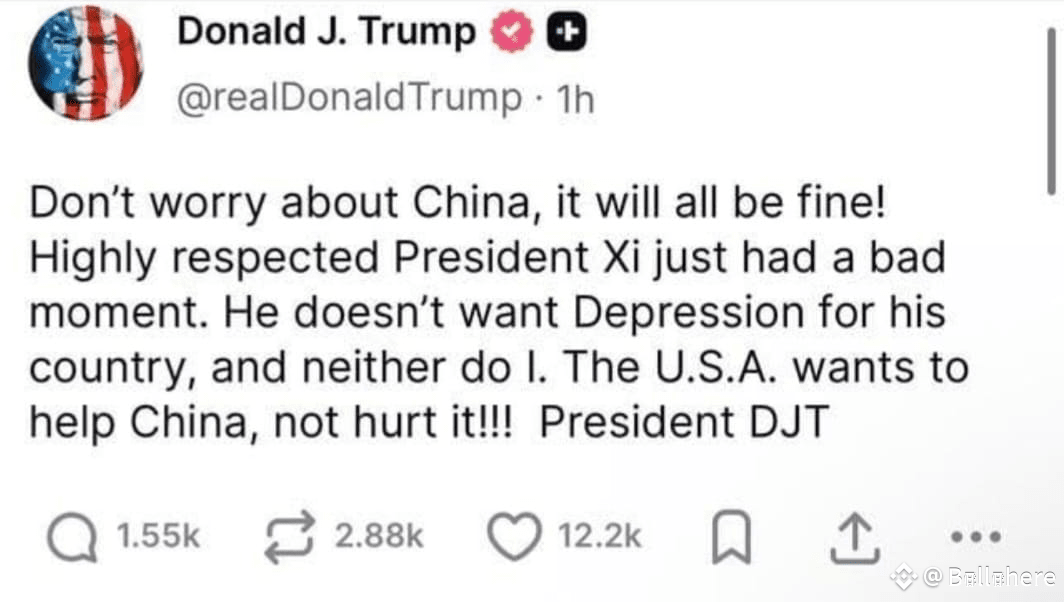
Ekonomi AS mulai terlihat seperti pengaturan untuk perdagangan orang dalam — dan buku pedomannya menjadi jelas:
1️⃣ Umumkan tarif baru, picu ketakutan, dan saksikan pasar jatuh.
2️⃣ Tunggu beberapa hari saat kepanikan menyebar dan harga merosot.
3️⃣ Tiba-tiba membalikkan arah — batalkan atau tunda tarif — dan pasar pulih dengan tajam.
Ini adalah siklus yang sama yang terjadi berulang kali. Jika tarif terbaru dicabut, ini akan menandai ketiga kalinya pasar jatuh dan dihidupkan kembali oleh janji-janji kosong.
Kasus klasik dari pompa dan pembuangan politik.
BELI & PERDAGANGAN 👉 $XRP $DOGE $Jager
Ekonomi AS mulai terlihat seperti pengaturan untuk perdagangan orang dalam — dan buku pedomannya menjadi jelas:
1️⃣ Umumkan tarif baru, picu ketakutan, dan saksikan pasar jatuh.
2️⃣ Tunggu beberapa hari saat kepanikan menyebar dan harga merosot.
3️⃣ Tiba-tiba membalikkan arah — batalkan atau tunda tarif — dan pasar pulih dengan tajam.
Ini adalah siklus yang sama yang terjadi berulang kali. Jika tarif terbaru dicabut, ini akan menandai ketiga kalinya pasar jatuh dan dihidupkan kembali oleh janji-janji kosong.
Kasus klasik dari pompa dan pembuangan politik.
BELI & PERDAGANGAN 👉 $XRP $DOGE $Jager
Ekonomi AS mulai terlihat seperti pengaturan untuk perdagangan orang dalam — dan buku pedomannya menjadi jelas:
1️⃣ Umumkan tarif baru, picu ketakutan, dan saksikan pasar jatuh.
2️⃣ Tunggu beberapa hari saat kepanikan menyebar dan harga merosot.
3️⃣ Tiba-tiba membalikkan arah — batalkan atau tunda tarif — dan pasar pulih dengan tajam.
Ini adalah siklus yang sama yang terjadi berulang kali. Jika tarif terbaru dicabut, ini akan menandai ketiga kalinya pasar jatuh dan dihidupkan kembali oleh janji-janji kosong.
Kasus klasik dari pompa dan pembuangan politik.
BELI & PERDAGANGAN 👉 $XRP $DOGE $Jager
31
18
134
148.2k
·
--
Lihat terjemahan
$ETH
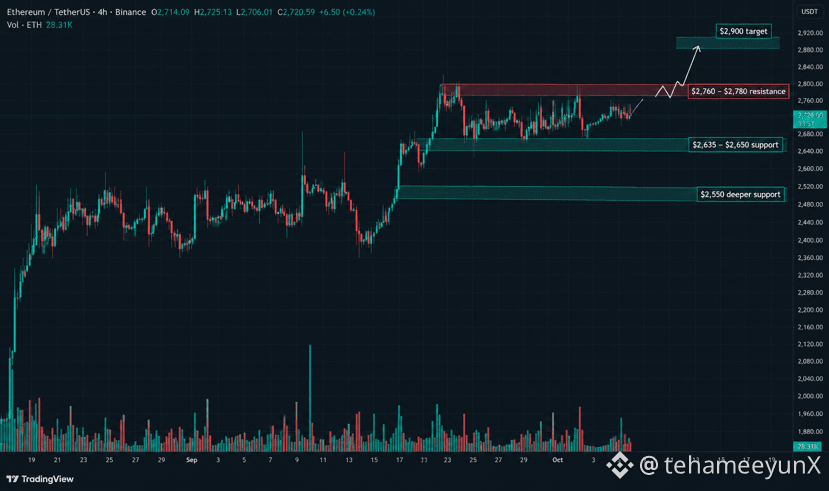
If you’re long here, you’re basically waiting for that +20% candle everyone’s been waiting for.
ETH still looks pretty damn strong, but it’s been stuck in a tight ~5% range for weeks. I don’t expect that to change until BTC makes a significant move higher.
I’m holding some $ETH calls for that breakout.
$ETH
If you’re long here, you’re basically waiting for that +20% candle everyone’s been waiting for.
ETH still looks pretty damn strong, but it’s been stuck in a tight ~5% range for weeks. I don’t expect that to change until BTC makes a significant move higher.
I’m holding some $ETH calls for that breakout.
If you’re long here, you’re basically waiting for that +20% candle everyone’s been waiting for.
ETH still looks pretty damn strong, but it’s been stuck in a tight ~5% range for weeks. I don’t expect that to change until BTC makes a significant move higher.
I’m holding some $ETH calls for that breakout.
76
·
--
$PUMP 🎯
Target tercapai
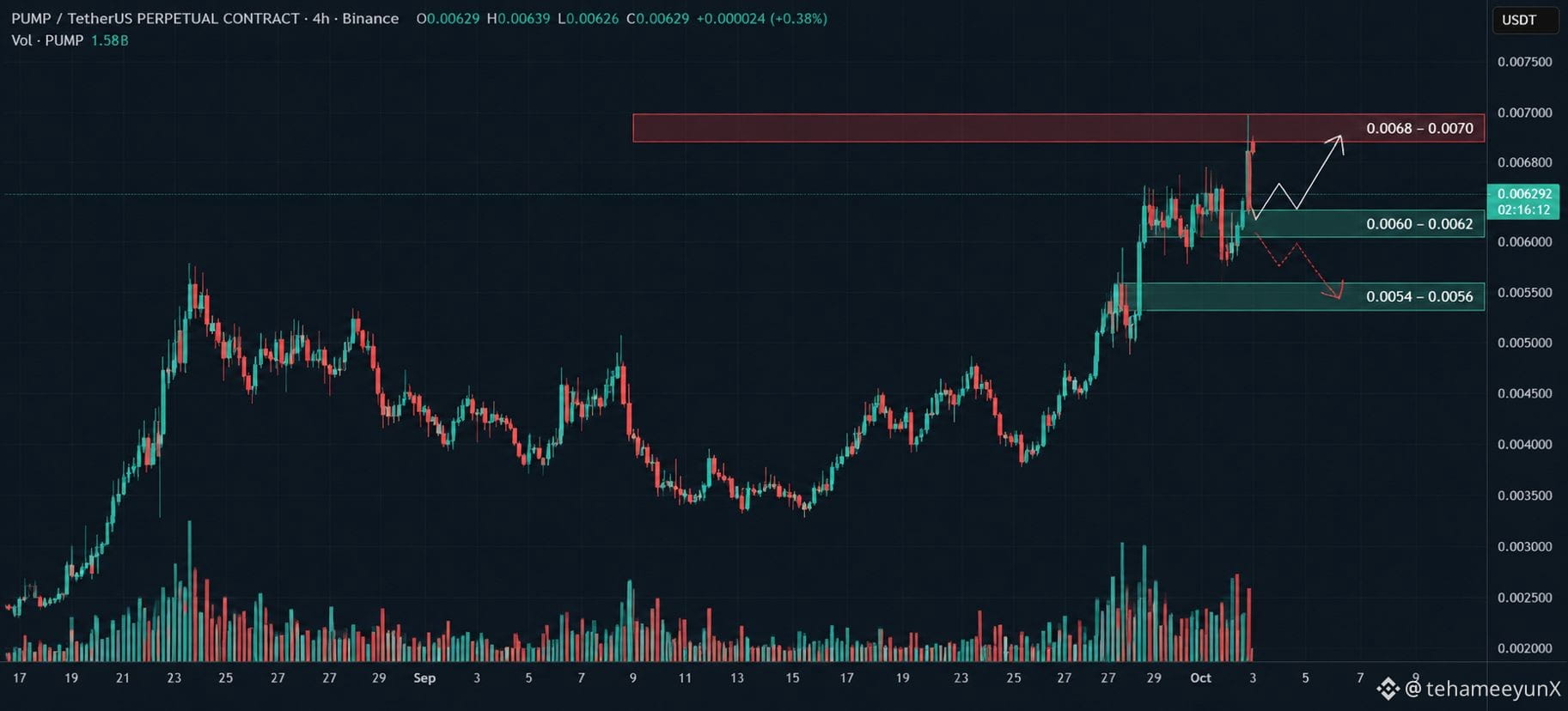
Setup breakout dan retest berjalan dengan baik, dengan PUMP menembus area $0.0060 dan menyentuh $0.0065+.
Setup berikutnya: Saya ingin melihat $0.0060-$0.0062 bertahan sebagai support. Jika itu terjadi, $0.0068 dan $0.0070 menjadi sorotan.
Masih salah satu koin yang paling masuk daftar pantauan saya.
$PUMP 🎯
Target tercapai
Setup breakout dan retest berjalan dengan baik, dengan PUMP menembus area $0.0060 dan menyentuh $0.0065+.
Setup berikutnya: Saya ingin melihat $0.0060-$0.0062 bertahan sebagai support. Jika itu terjadi, $0.0068 dan $0.0070 menjadi sorotan.
Masih salah satu koin yang paling masuk daftar pantauan saya.
Target tercapai
Setup breakout dan retest berjalan dengan baik, dengan PUMP menembus area $0.0060 dan menyentuh $0.0065+.
Setup berikutnya: Saya ingin melihat $0.0060-$0.0062 bertahan sebagai support. Jika itu terjadi, $0.0068 dan $0.0070 menjadi sorotan.
Masih salah satu koin yang paling masuk daftar pantauan saya.
tehameeyunX
·
--
$PUMP
PUMP masih terlihat sangat kuat selama beberapa hari terakhir.
Ini adalah area yang penting bagi saya. PUMP sebelumnya memimpin pasar, lalu mundur dan berkonsolidasi.
Jika kita mendapatkan gelombang kedua yang kuat di sini, saya pikir ini bisa menjadi sinyal yang sangat baik untuk pasar yang lebih luas.
Saya memantau dengan saksama.
PUMP masih terlihat sangat kuat selama beberapa hari terakhir.
Ini adalah area yang penting bagi saya. PUMP sebelumnya memimpin pasar, lalu mundur dan berkonsolidasi.
Jika kita mendapatkan gelombang kedua yang kuat di sini, saya pikir ini bisa menjadi sinyal yang sangat baik untuk pasar yang lebih luas.
Saya memantau dengan saksama.
520
·
--
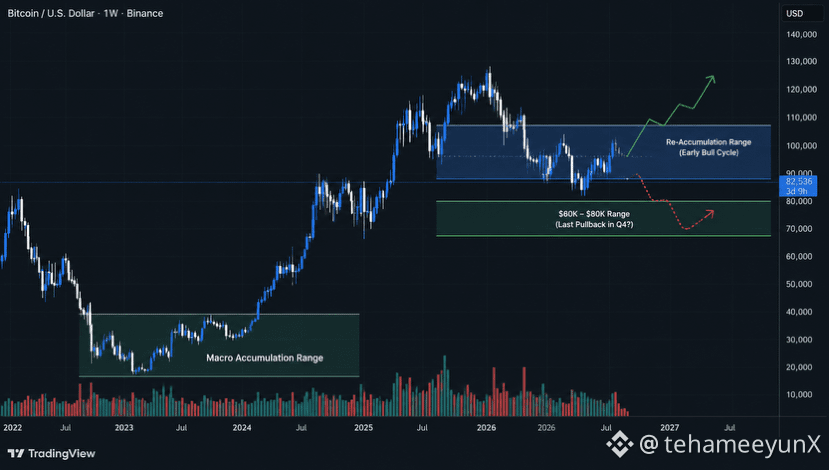
$BTC
Bitcoin sedang bertransisi di sini.
BTC sedang bertahan di zona akumulasi ulang ~$80K-$83K, dan struktur masih terlihat konstruktif.
Jika $80K-$83K bertahan, saya mengawasi $100K berikutnya.
Kenaikan yang bersih di atas $100K akan mengembalikan fokus ke zona ATH.
Tembus ke bawah $80K dan rentang $60K-$70K kembali jadi perhatian.
Untuk saat ini, kuncinya sederhana: pertahankan rentangnya, lalu tembus lebih tinggi.
#Bitcoin
$BTC
Bitcoin sedang bertransisi di sini.
BTC sedang bertahan di zona akumulasi ulang ~$80K-$83K, dan struktur masih terlihat konstruktif.
Jika $80K-$83K bertahan, saya mengawasi $100K berikutnya.
Kenaikan yang bersih di atas $100K akan mengembalikan fokus ke zona ATH.
Tembus ke bawah $80K dan rentang $60K-$70K kembali jadi perhatian.
Untuk saat ini, kuncinya sederhana: pertahankan rentangnya, lalu tembus lebih tinggi.
#Bitcoin
Bitcoin sedang bertransisi di sini.
BTC sedang bertahan di zona akumulasi ulang ~$80K-$83K, dan struktur masih terlihat konstruktif.
Jika $80K-$83K bertahan, saya mengawasi $100K berikutnya.
Kenaikan yang bersih di atas $100K akan mengembalikan fokus ke zona ATH.
Tembus ke bawah $80K dan rentang $60K-$70K kembali jadi perhatian.
Untuk saat ini, kuncinya sederhana: pertahankan rentangnya, lalu tembus lebih tinggi.
#Bitcoin
178
·
--
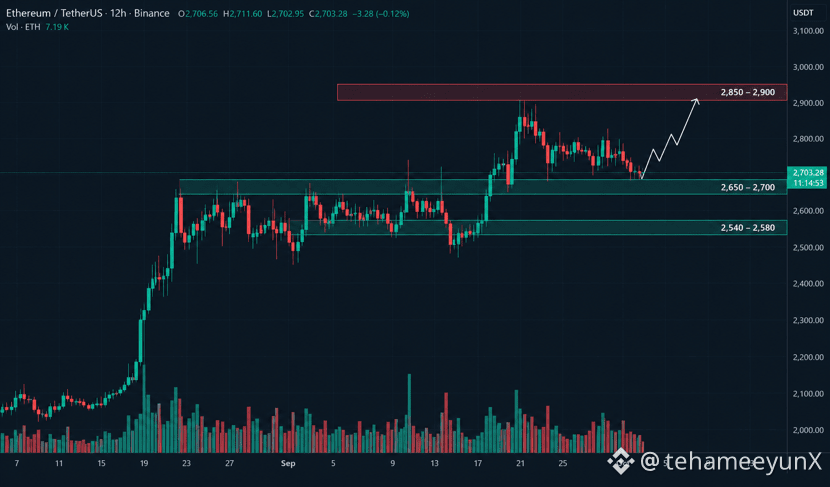
$ETH telah mencincang selama 1 bulan, sempat bergerak sedikit, dan sekarang telah melanjutkan pencincangan selama 10 hari.
Saya pikir tinggal menunggu waktu sebelum yang ini meledak. Saya long call.
$ETH telah mencincang selama 1 bulan, sempat bergerak sedikit, dan sekarang telah melanjutkan pencincangan selama 10 hari.
Saya pikir tinggal menunggu waktu sebelum yang ini meledak. Saya long call.
Saya pikir tinggal menunggu waktu sebelum yang ini meledak. Saya long call.
1
168
·
--
Bullish
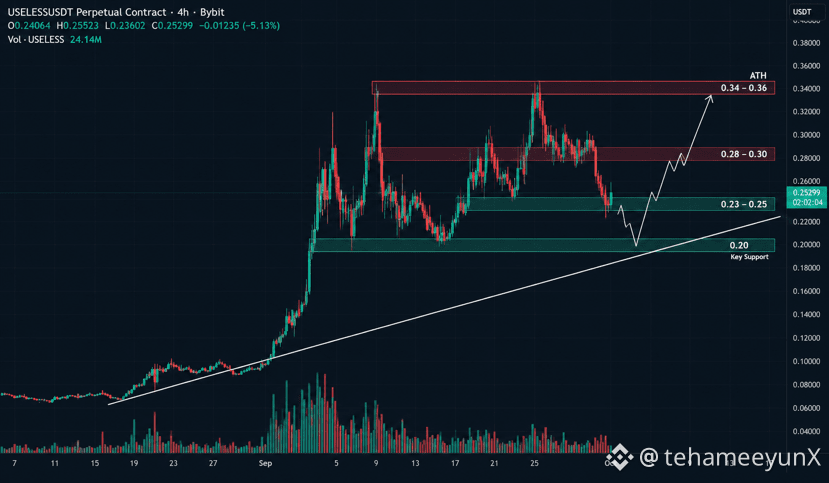
$USELESS
Saya pikir area $0,20 pada akhirnya bisa menjadi titik terendah.
Masih terlihat seperti salah satu pemimpin di antara meme-meme Solana, dan pantulan hari ini adalah pertanda yang baik.
Saya masih berpikir ATH bisa kembali masuk ke dalam permainan pada suatu saat.
Masih menahan sedikit bag.
$USELESS
Saya pikir area $0,20 pada akhirnya bisa menjadi titik terendah.
Masih terlihat seperti salah satu pemimpin di antara meme-meme Solana, dan pantulan hari ini adalah pertanda yang baik.
Saya masih berpikir ATH bisa kembali masuk ke dalam permainan pada suatu saat.
Masih menahan sedikit bag.
Saya pikir area $0,20 pada akhirnya bisa menjadi titik terendah.
Masih terlihat seperti salah satu pemimpin di antara meme-meme Solana, dan pantulan hari ini adalah pertanda yang baik.
Saya masih berpikir ATH bisa kembali masuk ke dalam permainan pada suatu saat.
Masih menahan sedikit bag.
1
769
·
--
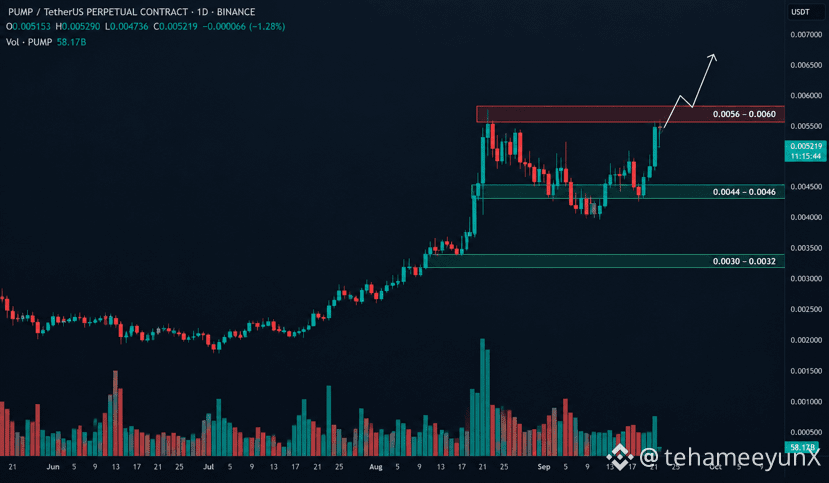
$PUMP
PUMP masih terlihat sangat kuat selama beberapa hari terakhir.
Ini adalah area yang penting bagi saya. PUMP sebelumnya memimpin pasar, lalu mundur dan berkonsolidasi.
Jika kita mendapatkan gelombang kedua yang kuat di sini, saya pikir ini bisa menjadi sinyal yang sangat baik untuk pasar yang lebih luas.
Saya memantau dengan saksama.
$PUMP
PUMP masih terlihat sangat kuat selama beberapa hari terakhir.
Ini adalah area yang penting bagi saya. PUMP sebelumnya memimpin pasar, lalu mundur dan berkonsolidasi.
Jika kita mendapatkan gelombang kedua yang kuat di sini, saya pikir ini bisa menjadi sinyal yang sangat baik untuk pasar yang lebih luas.
Saya memantau dengan saksama.
PUMP masih terlihat sangat kuat selama beberapa hari terakhir.
Ini adalah area yang penting bagi saya. PUMP sebelumnya memimpin pasar, lalu mundur dan berkonsolidasi.
Jika kita mendapatkan gelombang kedua yang kuat di sini, saya pikir ini bisa menjadi sinyal yang sangat baik untuk pasar yang lebih luas.
Saya memantau dengan saksama.
1
1
315
·
--
Daftar koin penghasil bunga:
Momentum:
$PUMP
MARSCOIN
AZTEC
LINK
Pemimpin terbaik yang menarik mundur sedikit:
ENA
NEAR
VVV
$ZEC
USELESS
Koin yang berpotensi bagus untuk pair trade short:
LIT
$ONDO
2Z
ARB
GRT
Koin mid range yang lumayan saja yang sedang saya incar untuk potensi trading:
GRASS
WLD
PENGU (Saya ikut)
ZRO
AERO
GRAM
Daftar koin penghasil bunga:
Momentum:
$PUMP
MARSCOIN
AZTEC
LINK
Pemimpin terbaik yang menarik mundur sedikit:
ENA
NEAR
VVV
$ZEC
USELESS
Koin yang berpotensi bagus untuk pair trade short:
LIT
$ONDO
2Z
ARB
GRT
Koin mid range yang lumayan saja yang sedang saya incar untuk potensi trading:
GRASS
WLD
PENGU (Saya ikut)
ZRO
AERO
GRAM
Momentum:
$PUMP
MARSCOIN
AZTEC
LINK
Pemimpin terbaik yang menarik mundur sedikit:
ENA
NEAR
VVV
$ZEC
USELESS
Koin yang berpotensi bagus untuk pair trade short:
LIT
$ONDO
2Z
ARB
GRT
Koin mid range yang lumayan saja yang sedang saya incar untuk potensi trading:
GRASS
WLD
PENGU (Saya ikut)
ZRO
AERO
GRAM
1
675
·
--
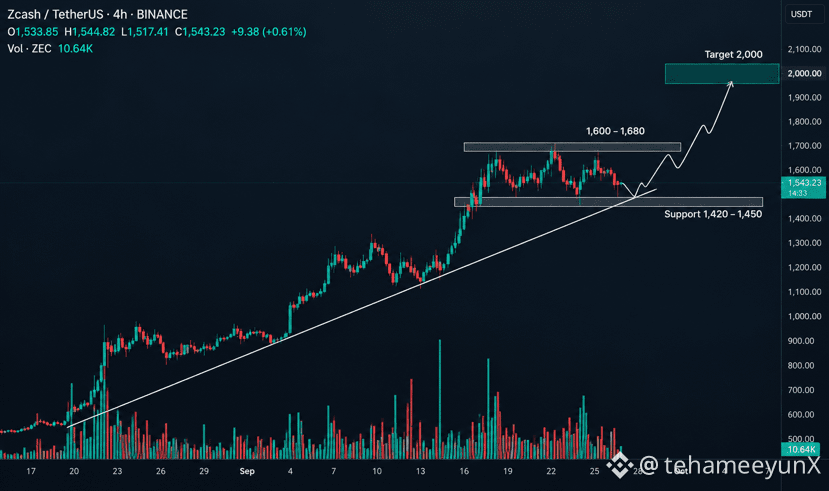
$ZEC BIG PREDICTION
Masih salah satu grafik favorit saya saat ini.
Bertahan di sekitar $1.530 hingga $1.540 setelah memberi tanda ATH baru di $1.676,81.
Koreksi ini terlihat sehat setelah pergerakan baru-baru ini.
Saya memperkirakan ada konsolidasi di sini sebelum dorongan lain menuju $2.000.
Tidak mengejar bagian atasnya. Tetap memantau tren.
Bukan nasihat keuangan, lakukan riset sendiri (DYOR).
$ZEC BIG PREDICTION
Masih salah satu grafik favorit saya saat ini.
Bertahan di sekitar $1.530 hingga $1.540 setelah memberi tanda ATH baru di $1.676,81.
Koreksi ini terlihat sehat setelah pergerakan baru-baru ini.
Saya memperkirakan ada konsolidasi di sini sebelum dorongan lain menuju $2.000.
Tidak mengejar bagian atasnya. Tetap memantau tren.
Bukan nasihat keuangan, lakukan riset sendiri (DYOR).
Masih salah satu grafik favorit saya saat ini.
Bertahan di sekitar $1.530 hingga $1.540 setelah memberi tanda ATH baru di $1.676,81.
Koreksi ini terlihat sehat setelah pergerakan baru-baru ini.
Saya memperkirakan ada konsolidasi di sini sebelum dorongan lain menuju $2.000.
Tidak mengejar bagian atasnya. Tetap memantau tren.
Bukan nasihat keuangan, lakukan riset sendiri (DYOR).
364
·
--
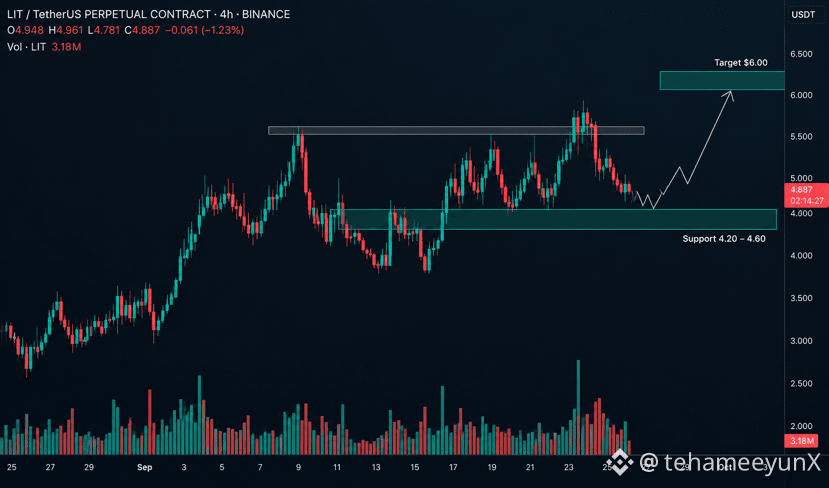
$LIT
LIT masih salah satu koin fundamental terbaik yang ada di radar saya.
Pengungkapannya akan datang dalam beberapa bulan, jadi itulah hal utama yang saya perhatikan. Pengungkapan besar pertama dijadwalkan sekitar akhir Desember dan Januari.
Namun, saya masih berpikir ada ruang untuk dorongan lain sebelum itu.
Saya memantau $6 sebagai target berikutnya.
Saya mengharapkan adanya pergerakan naik-turun (chop) di sini dulu sebelum langkah berikutnya.
Tetap bullish terhadap setup-nya, hanya saja saya tetap mengingat pengungkapan.
NFA, DYOR.
#Write2Earn
$LIT
LIT masih salah satu koin fundamental terbaik yang ada di radar saya.
Pengungkapannya akan datang dalam beberapa bulan, jadi itulah hal utama yang saya perhatikan. Pengungkapan besar pertama dijadwalkan sekitar akhir Desember dan Januari.
Namun, saya masih berpikir ada ruang untuk dorongan lain sebelum itu.
Saya memantau $6 sebagai target berikutnya.
Saya mengharapkan adanya pergerakan naik-turun (chop) di sini dulu sebelum langkah berikutnya.
Tetap bullish terhadap setup-nya, hanya saja saya tetap mengingat pengungkapan.
NFA, DYOR.
#Write2Earn
LIT masih salah satu koin fundamental terbaik yang ada di radar saya.
Pengungkapannya akan datang dalam beberapa bulan, jadi itulah hal utama yang saya perhatikan. Pengungkapan besar pertama dijadwalkan sekitar akhir Desember dan Januari.
Namun, saya masih berpikir ada ruang untuk dorongan lain sebelum itu.
Saya memantau $6 sebagai target berikutnya.
Saya mengharapkan adanya pergerakan naik-turun (chop) di sini dulu sebelum langkah berikutnya.
Tetap bullish terhadap setup-nya, hanya saja saya tetap mengingat pengungkapan.
NFA, DYOR.
#Write2Earn
1
669
·
--
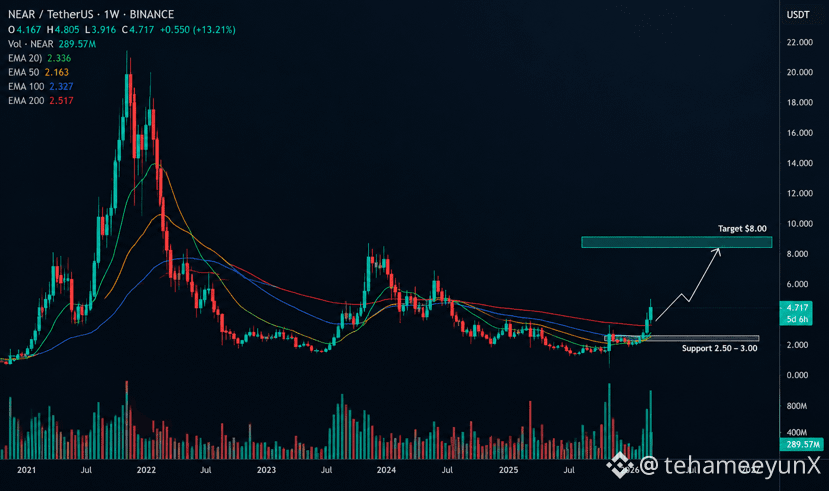
$NEAR
Chart 1W masih terlihat sangat solid.
Semua EMA utama telah berbalik menjadi bullish, dan struktur makin rapi setiap pergerakan.
$8 adalah target logis berikutnya yang sedang saya pantau.
#Write2Earn
$NEAR
Chart 1W masih terlihat sangat solid.
Semua EMA utama telah berbalik menjadi bullish, dan struktur makin rapi setiap pergerakan.
$8 adalah target logis berikutnya yang sedang saya pantau.
#Write2Earn
Chart 1W masih terlihat sangat solid.
Semua EMA utama telah berbalik menjadi bullish, dan struktur makin rapi setiap pergerakan.
$8 adalah target logis berikutnya yang sedang saya pantau.
#Write2Earn
1
865
·
--
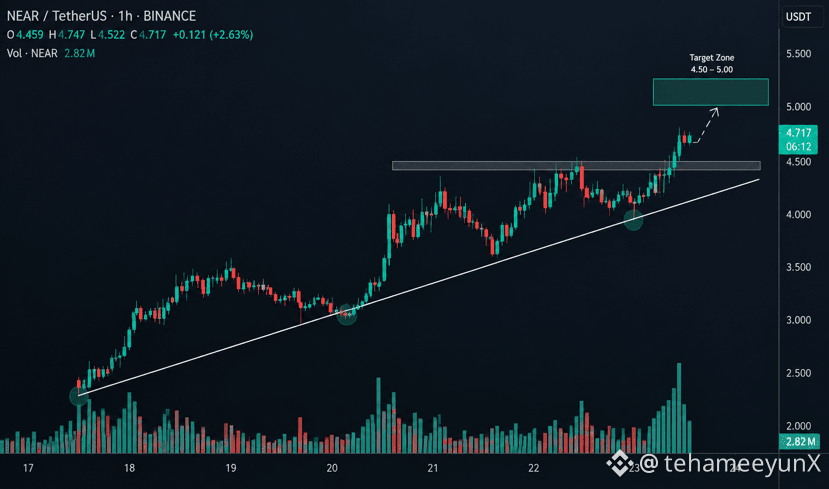
$NEAR
NEAR terus melaju lebih tinggi.
Masih salah satu koin terkuat yang sedang saya pantau saat ini. Trend-nya rapi dan momentum-nya tetap terjaga.
Saya memantau $4,50 hingga $5,00 sebagai zona target berikutnya.
Jika itu tembus dengan bersih, $6+ akan mulai jadi fokus.
Masih memantau yang satu ini dengan saksama.
$NEAR
NEAR terus melaju lebih tinggi.
Masih salah satu koin terkuat yang sedang saya pantau saat ini. Trend-nya rapi dan momentum-nya tetap terjaga.
Saya memantau $4,50 hingga $5,00 sebagai zona target berikutnya.
Jika itu tembus dengan bersih, $6+ akan mulai jadi fokus.
Masih memantau yang satu ini dengan saksama.
NEAR terus melaju lebih tinggi.
Masih salah satu koin terkuat yang sedang saya pantau saat ini. Trend-nya rapi dan momentum-nya tetap terjaga.
Saya memantau $4,50 hingga $5,00 sebagai zona target berikutnya.
Jika itu tembus dengan bersih, $6+ akan mulai jadi fokus.
Masih memantau yang satu ini dengan saksama.
tehameeyunX
·
--
$NEAR
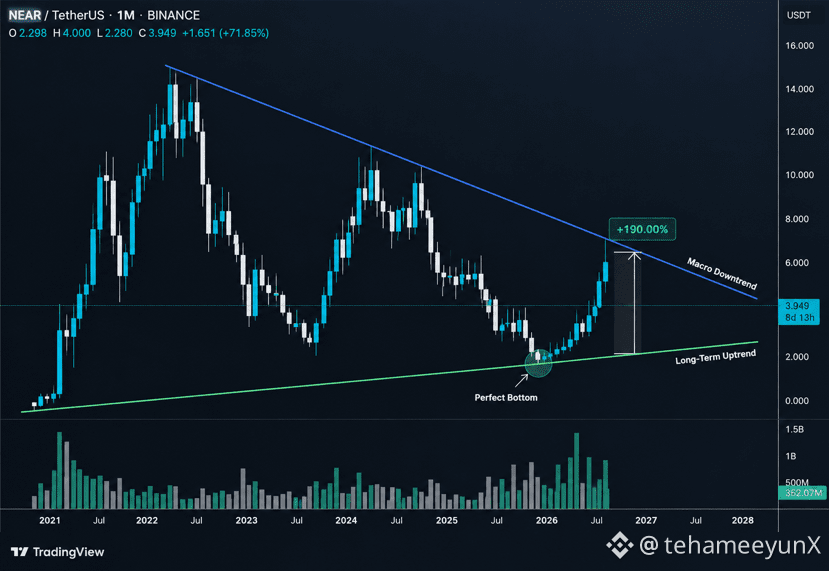
Bias bearish Juni terwujud dengan koreksi turun yang dalam, tetapi NEAR akhirnya menemukan titik terendah yang sempurna pada tren naik diagonal jangka panjang.
Sejak titik terendah itu, NEAR telah melonjak lebih dari 190% dan sekarang sedang didorong langsung menuju tren penurunan makro.
Inilah level yang sedang saya pantau sekarang.
Terobosan yang bersih bisa sepenuhnya mengubah gambaran yang lebih besar.
#Write2Earn
Bias bearish Juni terwujud dengan koreksi turun yang dalam, tetapi NEAR akhirnya menemukan titik terendah yang sempurna pada tren naik diagonal jangka panjang.
Sejak titik terendah itu, NEAR telah melonjak lebih dari 190% dan sekarang sedang didorong langsung menuju tren penurunan makro.
Inilah level yang sedang saya pantau sekarang.
Terobosan yang bersih bisa sepenuhnya mengubah gambaran yang lebih besar.
#Write2Earn
2
2.2k
·
--
$NEAR
Bias bearish Juni terwujud dengan koreksi turun yang dalam, tetapi NEAR akhirnya menemukan titik terendah yang sempurna pada tren naik diagonal jangka panjang.
Sejak titik terendah itu, NEAR telah melonjak lebih dari 190% dan sekarang sedang didorong langsung menuju tren penurunan makro.
Inilah level yang sedang saya pantau sekarang.
Terobosan yang bersih bisa sepenuhnya mengubah gambaran yang lebih besar.
#Write2Earn
$NEAR
Bias bearish Juni terwujud dengan koreksi turun yang dalam, tetapi NEAR akhirnya menemukan titik terendah yang sempurna pada tren naik diagonal jangka panjang.
Sejak titik terendah itu, NEAR telah melonjak lebih dari 190% dan sekarang sedang didorong langsung menuju tren penurunan makro.
Inilah level yang sedang saya pantau sekarang.
Terobosan yang bersih bisa sepenuhnya mengubah gambaran yang lebih besar.
#Write2Earn
Bias bearish Juni terwujud dengan koreksi turun yang dalam, tetapi NEAR akhirnya menemukan titik terendah yang sempurna pada tren naik diagonal jangka panjang.
Sejak titik terendah itu, NEAR telah melonjak lebih dari 190% dan sekarang sedang didorong langsung menuju tren penurunan makro.
Inilah level yang sedang saya pantau sekarang.
Terobosan yang bersih bisa sepenuhnya mengubah gambaran yang lebih besar.
#Write2Earn
2
1
5
1.9k
·
--
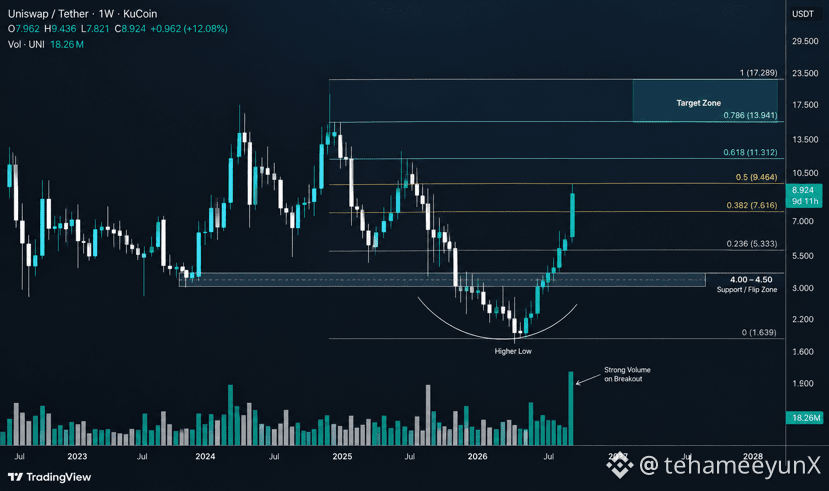
$UNI benar-benar sedang melesat.
Naik lebih dari +120%
Kuncinya adalah tren turun mingguan. Begitu UNI menembusnya, konfirmasi sesungguhnya adalah saat terjadi retest dan bertahan sebagai support.
Retest itu memberi kami pergerakan tambahan +60%.
Pola breakout klasik → retest → kelanjutan.
Masih mengawasi $UNI dengan seksama.
#Write2Earn
$UNI benar-benar sedang melesat.
Naik lebih dari +120%
Kuncinya adalah tren turun mingguan. Begitu UNI menembusnya, konfirmasi sesungguhnya adalah saat terjadi retest dan bertahan sebagai support.
Retest itu memberi kami pergerakan tambahan +60%.
Pola breakout klasik → retest → kelanjutan.
Masih mengawasi $UNI dengan seksama.
#Write2Earn
Naik lebih dari +120%
Kuncinya adalah tren turun mingguan. Begitu UNI menembusnya, konfirmasi sesungguhnya adalah saat terjadi retest dan bertahan sebagai support.
Retest itu memberi kami pergerakan tambahan +60%.
Pola breakout klasik → retest → kelanjutan.
Masih mengawasi $UNI dengan seksama.
#Write2Earn
2
2.1k
·
--
$BTC
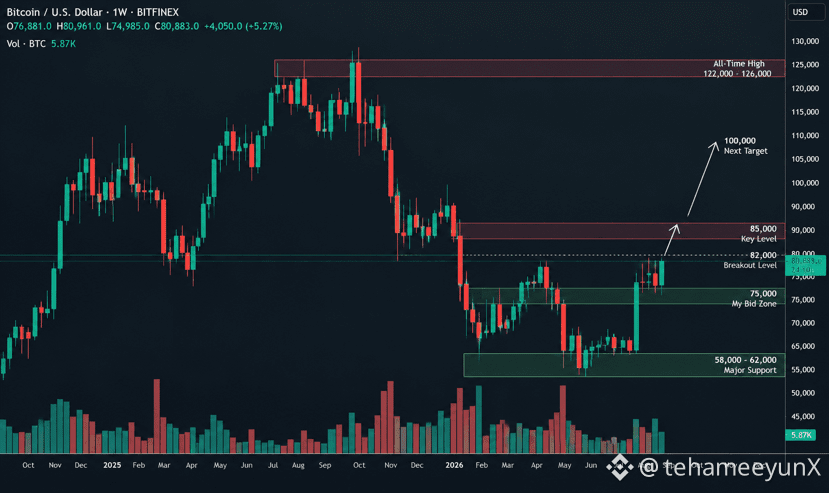
Saya menawar sekitar $75K
Benar, itu berada di sekitar area support saat ini, sementara $80K hingga $82K masih menjadi zona breakout utama.
Jika kita benar-benar menembus $82K dengan kekuatan dan bertahan di atasnya, saya pikir $100K akan kembali jadi target.
Untuk saat ini, saya hanya ingin melihat $85K direbut kembali dan ada beberapa stabilitas di atasnya. Itu sudah cukup bagi saya.
Ayo $BTC 🙂↕️
$BTC
Saya menawar sekitar $75K
Benar, itu berada di sekitar area support saat ini, sementara $80K hingga $82K masih menjadi zona breakout utama.
Jika kita benar-benar menembus $82K dengan kekuatan dan bertahan di atasnya, saya pikir $100K akan kembali jadi target.
Untuk saat ini, saya hanya ingin melihat $85K direbut kembali dan ada beberapa stabilitas di atasnya. Itu sudah cukup bagi saya.
Ayo $BTC 🙂↕️
Saya menawar sekitar $75K
Benar, itu berada di sekitar area support saat ini, sementara $80K hingga $82K masih menjadi zona breakout utama.
Jika kita benar-benar menembus $82K dengan kekuatan dan bertahan di atasnya, saya pikir $100K akan kembali jadi target.
Untuk saat ini, saya hanya ingin melihat $85K direbut kembali dan ada beberapa stabilitas di atasnya. Itu sudah cukup bagi saya.
Ayo $BTC 🙂↕️
3
1.3k
·
--
$ZEC para pemenang terus menang.
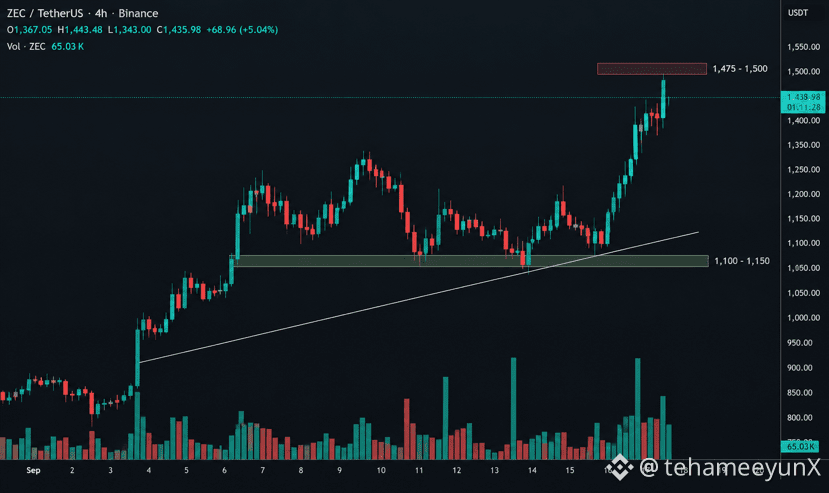
Setelah langkah ini, aku tidak mengejar di sini. Aku akan pasang sekitar $1.200 dan membiarkan itu datang kepadaku.
Ini cocok dengan area breakout/retest terbaru serta dukungan teknis di sekitarnya. ZEC baru saja menembus rekor tertinggi baru sekitar $1.385, dengan fokus sekarang pada $1.375 hingga $1.500.
Aku masih berpikir target $2K+ ada di meja kalau momentum tetap kuat.
Mari kita lihat apakah bid di Silk Road terisi.
{spot}(ZECUSDT)
#BitcoinSurpasses$77000
$ZEC para pemenang terus menang.
Setelah langkah ini, aku tidak mengejar di sini. Aku akan pasang sekitar $1.200 dan membiarkan itu datang kepadaku.
Ini cocok dengan area breakout/retest terbaru serta dukungan teknis di sekitarnya. ZEC baru saja menembus rekor tertinggi baru sekitar $1.385, dengan fokus sekarang pada $1.375 hingga $1.500.
Aku masih berpikir target $2K+ ada di meja kalau momentum tetap kuat.
Mari kita lihat apakah bid di Silk Road terisi.
#BitcoinSurpasses$77000
Setelah langkah ini, aku tidak mengejar di sini. Aku akan pasang sekitar $1.200 dan membiarkan itu datang kepadaku.
Ini cocok dengan area breakout/retest terbaru serta dukungan teknis di sekitarnya. ZEC baru saja menembus rekor tertinggi baru sekitar $1.385, dengan fokus sekarang pada $1.375 hingga $1.500.
Aku masih berpikir target $2K+ ada di meja kalau momentum tetap kuat.
Mari kita lihat apakah bid di Silk Road terisi.
#BitcoinSurpasses$77000
2
660
·
--
Artikel
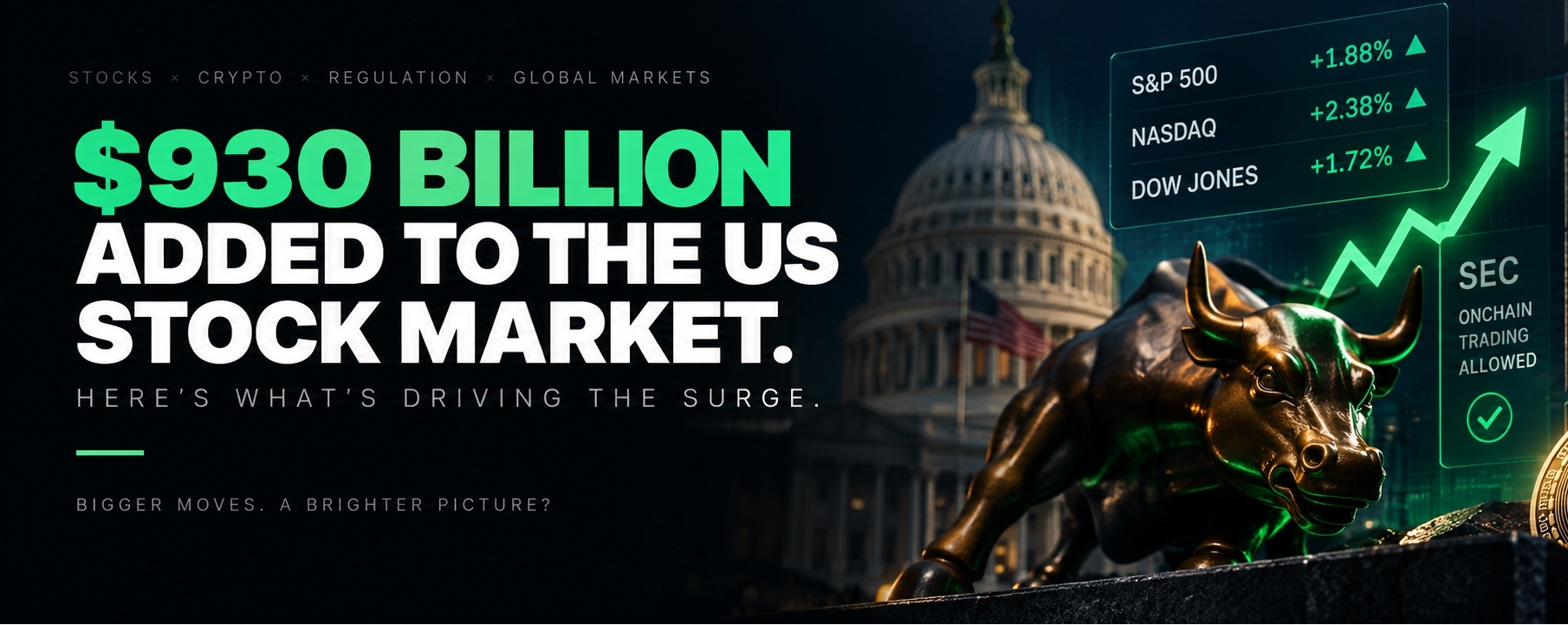
WALL STREET BARU SAJA MENDAPAT BOOST $930B LALU SEC MENGUBAH PERMAINANBagian yang menarik perhatian saya hari ini bukan hanya Bitcoin yang kembali ke level $77K
Yang lebih penting adalah kenyataan bahwa pasar tradisional dan kripto kini bergerak menuju gagasan yang sama: menempatkan lebih banyak aset keuangan di onchain.
Saham AS dibuka lebih tinggi tajam pada Kamis ketika harga minyak mendingin dan imbal hasil Treasury turun. S&P 500 naik sekitar 1%, sementara Nasdaq menguat lebih dari 1,5% pada awal sesi.
Namun kisah yang lebih besar bagi saya adalah apa yang terjadi di balik pergerakan itu.
THE SEC baru saja membuka pintu baru
SEC memperkenalkan pengecualian inovasi lima tahun yang memungkinkan venue yang memenuhi syarat untuk memfasilitasi perdagangan saham AS tokenisasi secara onchain.
WALL STREET BARU SAJA MENDAPAT BOOST $930B LALU SEC MENGUBAH PERMAINAN
Bagian yang menarik perhatian saya hari ini bukan hanya Bitcoin yang kembali ke level $77K
Yang lebih penting adalah kenyataan bahwa pasar tradisional dan kripto kini bergerak menuju gagasan yang sama: menempatkan lebih banyak aset keuangan di onchain.
Saham AS dibuka lebih tinggi tajam pada Kamis ketika harga minyak mendingin dan imbal hasil Treasury turun. S&P 500 naik sekitar 1%, sementara Nasdaq menguat lebih dari 1,5% pada awal sesi.
Namun kisah yang lebih besar bagi saya adalah apa yang terjadi di balik pergerakan itu.
THE SEC baru saja membuka pintu baru
SEC memperkenalkan pengecualian inovasi lima tahun yang memungkinkan venue yang memenuhi syarat untuk memfasilitasi perdagangan saham AS tokenisasi secara onchain.
Yang lebih penting adalah kenyataan bahwa pasar tradisional dan kripto kini bergerak menuju gagasan yang sama: menempatkan lebih banyak aset keuangan di onchain.
Saham AS dibuka lebih tinggi tajam pada Kamis ketika harga minyak mendingin dan imbal hasil Treasury turun. S&P 500 naik sekitar 1%, sementara Nasdaq menguat lebih dari 1,5% pada awal sesi.
Namun kisah yang lebih besar bagi saya adalah apa yang terjadi di balik pergerakan itu.
THE SEC baru saja membuka pintu baru
SEC memperkenalkan pengecualian inovasi lima tahun yang memungkinkan venue yang memenuhi syarat untuk memfasilitasi perdagangan saham AS tokenisasi secara onchain.
1
233
·
--
Angka TermMax, dan berikut rincian sebenarnya
Saya memutuskan untuk melihat data aktual di balik proyek ini, bukan hanya mengandalkan materi pemasaran. Berikut temuan saya berdasarkan data yang tersedia di DefiLlama dan riwayat pendanaannya.
Dimulai dari aspek uang:
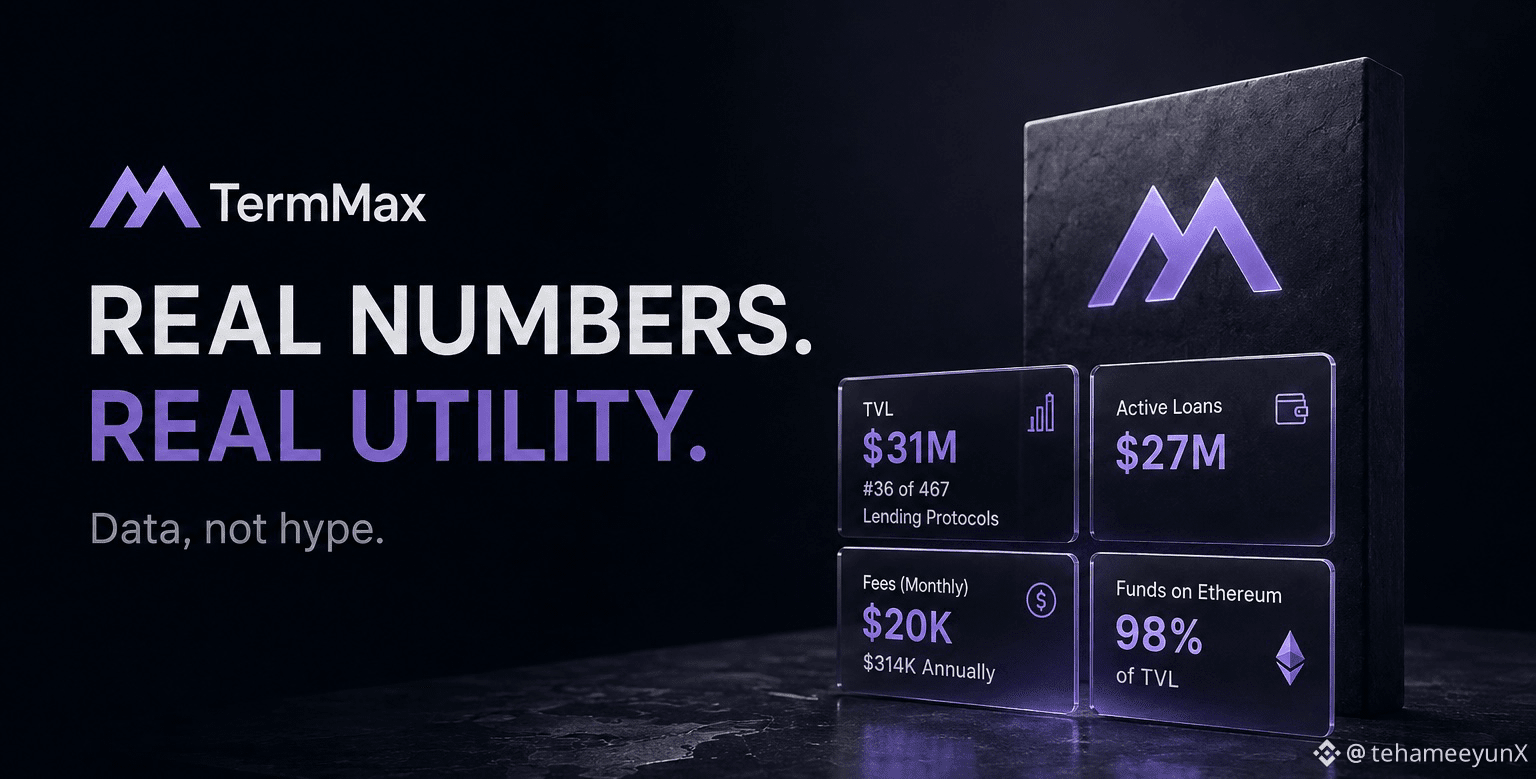
TermMax saat ini memiliki sekitar $31M TVL (total value locked). Tidak banyak jika dibandingkan dengan raksasa industri seperti Aave, tetapi justru itulah—ini masih tahap awal. TermMax berada di peringkat sekitar #36 pada bagan kategori lending DefiLlama dari 467 protokol lending yang dilacak oleh situs tersebut. Untuk memberi gambaran, total nilai yang terkunci dalam kategori tersebut saat ini sekitar $41,7 miliar.
Dari sisi utilitas yang nyata, mereka memiliki sekitar $27M pinjaman aktif dan menghasilkan sekitar $20K biaya per bulan ($314K per tahun), jadi protokol ini benar-benar digunakan, bukan sekadar cara untuk menyimpan aset Anda di dalam pool DeFi agar nanti bisa mendapatkan airdrop.
Riwayat pendanaannya juga cukup mengesankan. Tim (Term Structure) telah menggalang $2,55M pada putaran angel di akhir 2022 dan putaran seed lainnya sebesar $4,25M pada November 2023, dipimpin oleh raksasa industri Cumberland DRW, salah satu perusahaan trading kripto terbesar. HashKey Capital, Longling Capital, MZ Web3 Fund, dan Decima Fund ikut berpartisipasi dalam pendanaan tersebut. Total dana yang dihimpun pada tahap ini berada di kisaran $8M+.
Dan terakhir, mekanisme sebenarnya—yang sempat agak rumit untuk dipahami di awal:
Meminjam di TermMax berarti Anda mengunci dana Anda ke apa yang disebut Gearing Tokens (GT) dan sebagai balasannya Anda mendapatkan Fixed-Rate Token (FT), yang mewakili tepat jumlah yang akan Anda bayarkan saat jatuh tempo. FT ini dibagi menjadi pokok dan bunga. Bunga kemudian dijual kepada para pemberi pinjaman sebagai imbalan X Token (XT), dan kombinasi XT plus pokok akan memberi Anda dana pinjaman.
Mungkin terdengar agak kompleks, tetapi inti idenya adalah mengunci kewajiban Anda dalam bentuk token yang dapat diperdagangkan dengan jatuh tempo yang tetap
#termmax @termmax
#TermMax
Angka TermMax, dan berikut rincian sebenarnya
Saya memutuskan untuk melihat data aktual di balik proyek ini, bukan hanya mengandalkan materi pemasaran. Berikut temuan saya berdasarkan data yang tersedia di DefiLlama dan riwayat pendanaannya.
Dimulai dari aspek uang:
TermMax saat ini memiliki sekitar $31M TVL (total value locked). Tidak banyak jika dibandingkan dengan raksasa industri seperti Aave, tetapi justru itulah—ini masih tahap awal. TermMax berada di peringkat sekitar #36 pada bagan kategori lending DefiLlama dari 467 protokol lending yang dilacak oleh situs tersebut. Untuk memberi gambaran, total nilai yang terkunci dalam kategori tersebut saat ini sekitar $41,7 miliar.
Dari sisi utilitas yang nyata, mereka memiliki sekitar $27M pinjaman aktif dan menghasilkan sekitar $20K biaya per bulan ($314K per tahun), jadi protokol ini benar-benar digunakan, bukan sekadar cara untuk menyimpan aset Anda di dalam pool DeFi agar nanti bisa mendapatkan airdrop.
Riwayat pendanaannya juga cukup mengesankan. Tim (Term Structure) telah menggalang $2,55M pada putaran angel di akhir 2022 dan putaran seed lainnya sebesar $4,25M pada November 2023, dipimpin oleh raksasa industri Cumberland DRW, salah satu perusahaan trading kripto terbesar. HashKey Capital, Longling Capital, MZ Web3 Fund, dan Decima Fund ikut berpartisipasi dalam pendanaan tersebut. Total dana yang dihimpun pada tahap ini berada di kisaran $8M+.
Dan terakhir, mekanisme sebenarnya—yang sempat agak rumit untuk dipahami di awal:
Meminjam di TermMax berarti Anda mengunci dana Anda ke apa yang disebut Gearing Tokens (GT) dan sebagai balasannya Anda mendapatkan Fixed-Rate Token (FT), yang mewakili tepat jumlah yang akan Anda bayarkan saat jatuh tempo. FT ini dibagi menjadi pokok dan bunga. Bunga kemudian dijual kepada para pemberi pinjaman sebagai imbalan X Token (XT), dan kombinasi XT plus pokok akan memberi Anda dana pinjaman.
Mungkin terdengar agak kompleks, tetapi inti idenya adalah mengunci kewajiban Anda dalam bentuk token yang dapat diperdagangkan dengan jatuh tempo yang tetap
#termmax @TermMax
#TermMax
Saya memutuskan untuk melihat data aktual di balik proyek ini, bukan hanya mengandalkan materi pemasaran. Berikut temuan saya berdasarkan data yang tersedia di DefiLlama dan riwayat pendanaannya.
Dimulai dari aspek uang:
TermMax saat ini memiliki sekitar $31M TVL (total value locked). Tidak banyak jika dibandingkan dengan raksasa industri seperti Aave, tetapi justru itulah—ini masih tahap awal. TermMax berada di peringkat sekitar #36 pada bagan kategori lending DefiLlama dari 467 protokol lending yang dilacak oleh situs tersebut. Untuk memberi gambaran, total nilai yang terkunci dalam kategori tersebut saat ini sekitar $41,7 miliar.
Dari sisi utilitas yang nyata, mereka memiliki sekitar $27M pinjaman aktif dan menghasilkan sekitar $20K biaya per bulan ($314K per tahun), jadi protokol ini benar-benar digunakan, bukan sekadar cara untuk menyimpan aset Anda di dalam pool DeFi agar nanti bisa mendapatkan airdrop.
Riwayat pendanaannya juga cukup mengesankan. Tim (Term Structure) telah menggalang $2,55M pada putaran angel di akhir 2022 dan putaran seed lainnya sebesar $4,25M pada November 2023, dipimpin oleh raksasa industri Cumberland DRW, salah satu perusahaan trading kripto terbesar. HashKey Capital, Longling Capital, MZ Web3 Fund, dan Decima Fund ikut berpartisipasi dalam pendanaan tersebut. Total dana yang dihimpun pada tahap ini berada di kisaran $8M+.
Dan terakhir, mekanisme sebenarnya—yang sempat agak rumit untuk dipahami di awal:
Meminjam di TermMax berarti Anda mengunci dana Anda ke apa yang disebut Gearing Tokens (GT) dan sebagai balasannya Anda mendapatkan Fixed-Rate Token (FT), yang mewakili tepat jumlah yang akan Anda bayarkan saat jatuh tempo. FT ini dibagi menjadi pokok dan bunga. Bunga kemudian dijual kepada para pemberi pinjaman sebagai imbalan X Token (XT), dan kombinasi XT plus pokok akan memberi Anda dana pinjaman.
Mungkin terdengar agak kompleks, tetapi inti idenya adalah mengunci kewajiban Anda dalam bentuk token yang dapat diperdagangkan dengan jatuh tempo yang tetap
#termmax @TermMax
#TermMax
2
324
·
--
Artikel
TAHAP PASAR BERUANG AKHIR BITCOIN: RAMALAN DAN RASIONAL SAYAMerefleksikan Panggilan Masa Lalu
Saya sudah bertahun-tahun mempelajari siklus Bitcoin, dan satu hal yang saya pelajari adalah bahwa pasar bergerak dalam pola jauh lebih sering daripada yang orang pikirkan.
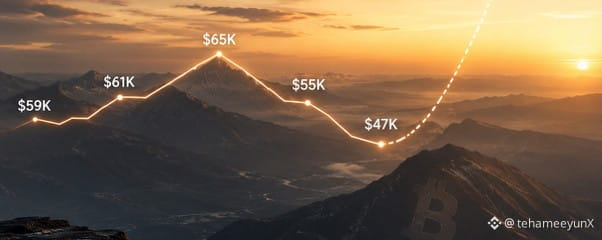
Kembali di akhir 2022, ketika ketakutan ada di mana-mana setelah keruntuhan FTX, saya mencari titik dasar siklus sementara kebanyakan orang memprediksi harga yang lebih rendah. Bitcoin akhirnya mencapai titik terendah sekitar $15,500, hampir persis di mana saya mengharapkan kepanikan berakhir. Tiga tahun kemudian, siklus yang sama mendorong Bitcoin sampai sekitar $126,000.
Pergerakan dari $15K ke $126K menguatkan sesuatu yang sudah lama saya percayai: Bitcoin tidak bergerak dalam garis lurus. Ia bergerak melalui siklus keserakahan, ketakutan, euforia, dan penyerahan. Kebanyakan investor fokus pada kebisingan harian. Saya fokus pada di mana kita berada dalam gambaran yang lebih besar.
TAHAP PASAR BERUANG AKHIR BITCOIN: RAMALAN DAN RASIONAL SAYA
Merefleksikan Panggilan Masa Lalu
Saya sudah bertahun-tahun mempelajari siklus Bitcoin, dan satu hal yang saya pelajari adalah bahwa pasar bergerak dalam pola jauh lebih sering daripada yang orang pikirkan.
Kembali di akhir 2022, ketika ketakutan ada di mana-mana setelah keruntuhan FTX, saya mencari titik dasar siklus sementara kebanyakan orang memprediksi harga yang lebih rendah. Bitcoin akhirnya mencapai titik terendah sekitar $15,500, hampir persis di mana saya mengharapkan kepanikan berakhir. Tiga tahun kemudian, siklus yang sama mendorong Bitcoin sampai sekitar $126,000.
Pergerakan dari $15K ke $126K menguatkan sesuatu yang sudah lama saya percayai: Bitcoin tidak bergerak dalam garis lurus. Ia bergerak melalui siklus keserakahan, ketakutan, euforia, dan penyerahan. Kebanyakan investor fokus pada kebisingan harian. Saya fokus pada di mana kita berada dalam gambaran yang lebih besar.
Saya sudah bertahun-tahun mempelajari siklus Bitcoin, dan satu hal yang saya pelajari adalah bahwa pasar bergerak dalam pola jauh lebih sering daripada yang orang pikirkan.
Kembali di akhir 2022, ketika ketakutan ada di mana-mana setelah keruntuhan FTX, saya mencari titik dasar siklus sementara kebanyakan orang memprediksi harga yang lebih rendah. Bitcoin akhirnya mencapai titik terendah sekitar $15,500, hampir persis di mana saya mengharapkan kepanikan berakhir. Tiga tahun kemudian, siklus yang sama mendorong Bitcoin sampai sekitar $126,000.
Pergerakan dari $15K ke $126K menguatkan sesuatu yang sudah lama saya percayai: Bitcoin tidak bergerak dalam garis lurus. Ia bergerak melalui siklus keserakahan, ketakutan, euforia, dan penyerahan. Kebanyakan investor fokus pada kebisingan harian. Saya fokus pada di mana kita berada dalam gambaran yang lebih besar.
5
406
Masuk untuk menjelajahi konten lainnya
Bergabunglah dengan pengguna kripto global di Binance Square
⚡️ Dapatkan informasi terbaru dan berguna tentang kripto.
💬 Dipercayai oleh bursa kripto terbesar di dunia.
👍 Temukan wawasan nyata dari kreator terverifikasi.
Email/Nomor Ponsel
Topik Sedang Tren
BinanceLaunchesBinanceIntelligence
461,184 penayangan
3,275 Berdiskusi
nce
🔥 Perdagangan kripto mungkin memasuki era «asisten AI».
Binance Intelligence menghadirkan AI langsung ke dalam alur kerja trading.
Alih-alih berpindah-pindah secara manual antara:
📊 Riset pasar
🔔 Notifikasi
💼 Pelacakan portofolio
🧠 Ide strategi
⚙️ Eksekusi trading
AI dapat menyatukan semuanya dalam satu sistem.
Ini penting karena keunggulan terbesar trader tidak selalu terletak pada menemukan lebih banyak informasi,
melainkan memproses informasi dengan lebih cepat.
Jika AI dapat merangkum pasar, menyoroti risiko, melacak portofolio, dan membantu menyusun strategi…
jarak antara alat yang digunakan para profesional dan trader ritel mungkin mulai menyempit.
Namun, ada satu hal penting:
AI dapat meningkatkan pengambilan keputusan, tetapi tidak dapat menghilangkan risiko.
Trader yang tahu cara memanfaatkannya dengan baik mungkin akan mendapatkan keunggulan kompetitif.
Sementara itu, mereka yang mengikutinya tanpa berpikir hanya akan mengalami kerugian lebih cepat.
Apakah kamu percaya AI bisa menjadi bagian dari proses trading-mu? 👀
$BTC
$XRP
$ETH
#BinanceAI #crypto #AI #trading $NVDAB #BinanceLaunchesBinanceIntelligence
MARFl
·Disukai 0 Kali
·110 penayangan
BitcoinTargets2026OpenAt$87570
3,150 penayangan
84 Berdiskusi
BitcoinRejectedAt$87KThirdTime
2,944 penayangan
66 Berdiskusi