

MT-X
179 Posting
MT-X
Laporkan
Blokir Pengguna
基于流动性、周期性及反人性的规模化量化交易。非暴力交易,提升存活率,抵御周期风险。
Perdagangan Terbuka
Pedagang dengan Frekuensi Tinggi
11.1 Bulan
17 Mengikuti
234 Pengikut
52 Disukai
Posting
Portofolio
PINNED
·
--
Artikel
Lihat terjemahan
Scope the key before you automate anythingIf you want something to act on your Binance account while you are not at the keyboard, the setting that decides everything is what the key you hand over is allowed to do. Which rule, which pairs, how much — all of it matters far less than that one dialog, because the rule you can change your mind about at any time, and the permission you granted is already out there. The screenshots here are the settings worth getting right.
What a key's permissions actually grant
Start with the permission list, before the tool. Roughly, a Binance API key can be allowed to:
- read your account — balances, positions, order history. On its own it cannot trade and cannot move anything.
- trade spot and margin.
- trade futures.
- move funds between your own wallets and accounts.
- withdraw to an external address.
Almost all automation needs exactly one of those: the ability to place and cancel the orders it manages. Everything else is surface you are handing over for no benefit. So read the list as a question — which of these does this tool actually need in order to do its job? — and grant that and nothing more. If a tool's setup guide is vague about why it wants a permission, that vagueness is the answer.
Leave withdrawal permission off
Leave withdrawal off. Not off for now — off. A key that can trade can move your position. A key that can withdraw can move the money out of the account. Those are different kinds of risk, and only one of them is recoverable by the person who still has the passwords.
This is also the cheapest filter you will ever apply to a trading tool. A tool that asks for withdrawal permission is telling you what it is. You do not have to work out whether it deserves the trust, because there is no reason for it to need it in the first place.
Restrict the key to one address
If the key is restricted to a single IP, a leaked key is not enough on its own — whoever holds it also has to be coming from that address. It is one field in the same dialog as the permissions, and it removes an entire class of accident.
It is worth knowing which address you are allowing. If the tool runs on your own machine, that is your connection. If it runs on someone else's server, the address you are allowlisting is theirs, not yours. That is not automatically a reason to refuse — plenty of useful things run on servers — but it is a reason to be able to say what that server is, and to be uneasy if nobody will tell you.
Keep it on a sub-account
Binance sub-accounts each get their own API key and their own wallet, so a tool pointed at one keeps the positions it manages separate from the ones you hold yourself. Fund the sub-account with only what you are willing to have the tool manage, and revoking its key takes the tool out of the picture without touching your main account. How many sub-accounts you can open depends on your account level.
The point is not tidiness. It is that "how much can this thing lose" becomes a number you chose in advance and can read off a balance, rather than something you work out afterwards by looking at what is left.
Worth noticing when you make one: withdrawal does not appear in a sub-account key's permission list at all. That particular risk is not on the table to begin with.
Know what a rule engine can and cannot do
A rule engine executes the rule you gave it. It does not predict anything and it has no view on where the market is going.
What it removes is the gap between the plan and the execution — the level that was meant to hold and got moved, the target that was meant to be taken and got waited on. Most people who trade their own account do not lose to a bad thesis. They lose to doing something different from what they decided, at the moment it got uncomfortable.
That is the only thing automation is good for here. If you want it for the other thing — knowing what to buy — it will not help you, and nothing that claims to is being straight with you.
It also does not decide the size, it does not know when to stop, and it will not notice that the world has changed underneath it. A rule is a fixed answer to a moving question; that is why it is consistent, and it is also the limit of what it can be.
The one I ended up running is called ArkTool. It sits server-side and reaches my own Binance USDT-M account through a trade-only key that I created; revoking that key is what stops it. It does one thing: takes profit on a pullback, rebalances on a rebound, sits idle in between. I picked the pairs and the size for each one, and it has never decided what to trade on its own. I watched it on simulated prices for a while before it went anywhere near a funded account.
What none of that changes
Being non-custodial is a floor, not a guarantee. Any tool you hand an API key to is a tool you are trusting — with a key that can trade, with code you probably have not read, on an account holding real money. Scoping the key tightly narrows what a mistake can cost. It does not make the tool correct, and it does not make the market kinder.
There are no signals here, nothing to follow, and no returns promised. A rule changes the discipline, not the risk. These are leveraged positions, and no automation turns a losing month into a winning one.
Know how to switch it off
A key you cannot revoke quickly is not a key you control. Find the page now, know the two clicks, and revoke it once while the size is tiny — before you need to. If the tool stops, or you revoke the key, an open position does not close itself; from that moment you are managing it by hand. It is much better to find out what that feels like on a small position than on a large one.
A checklist for any tool you are considering
- Does it ask for withdrawal permission? That is not a preference, it is a stop sign.
- Does it ask for your exchange password, a 2FA code, or access to your email? No tool acting through an API key needs any of those.
- Can you revoke its access in one action, from your exchange, without asking the tool first?
- Is it clear what it will do with the key — which endpoints it calls, which pairs it touches, how it sizes them?
- Does it promise returns, or describe a mechanism? Only one of those is an honest description of what software can do.
- What happens on a bad week, not a good one? If the answer is only about the good weeks, you have your answer.
None of this requires trusting a tool's own documentation. Permissions, revocability and the endpoints being called are all things you can check yourself, before anything is funded.
Before you point anything at a real account
Check the permissions twice. Confirm the allowlisted address is really where the tool runs. Fund only what you would accept losing in full. Watch it once on simulated or tiny size before it gets anything real. And be sceptical of anything that tells you the size stops mattering — leverage cuts both ways.
ArkTool is an independent third-party tool. It is not affiliated with, endorsed by, or connected to Binance. Nothing here is financial advice.
Scope the key before you automate anything
If you want something to act on your Binance account while you are not at the keyboard, the setting that decides everything is what the key you hand over is allowed to do. Which rule, which pairs, how much — all of it matters far less than that one dialog, because the rule you can change your mind about at any time, and the permission you granted is already out there. The screenshots here are the settings worth getting right.
What a key's permissions actually grant
Start with the permission list, before the tool. Roughly, a Binance API key can be allowed to:
- read your account — balances, positions, order history. On its own it cannot trade and cannot move anything.
- trade spot and margin.
- trade futures.
- move funds between your own wallets and accounts.
- withdraw to an external address.
Almost all automation needs exactly one of those: the ability to place and cancel the orders it manages. Everything else is surface you are handing over for no benefit. So read the list as a question — which of these does this tool actually need in order to do its job? — and grant that and nothing more. If a tool's setup guide is vague about why it wants a permission, that vagueness is the answer.
Leave withdrawal permission off
Leave withdrawal off. Not off for now — off. A key that can trade can move your position. A key that can withdraw can move the money out of the account. Those are different kinds of risk, and only one of them is recoverable by the person who still has the passwords.
This is also the cheapest filter you will ever apply to a trading tool. A tool that asks for withdrawal permission is telling you what it is. You do not have to work out whether it deserves the trust, because there is no reason for it to need it in the first place.
Restrict the key to one address
If the key is restricted to a single IP, a leaked key is not enough on its own — whoever holds it also has to be coming from that address. It is one field in the same dialog as the permissions, and it removes an entire class of accident.
It is worth knowing which address you are allowing. If the tool runs on your own machine, that is your connection. If it runs on someone else's server, the address you are allowlisting is theirs, not yours. That is not automatically a reason to refuse — plenty of useful things run on servers — but it is a reason to be able to say what that server is, and to be uneasy if nobody will tell you.
Keep it on a sub-account
Binance sub-accounts each get their own API key and their own wallet, so a tool pointed at one keeps the positions it manages separate from the ones you hold yourself. Fund the sub-account with only what you are willing to have the tool manage, and revoking its key takes the tool out of the picture without touching your main account. How many sub-accounts you can open depends on your account level.
The point is not tidiness. It is that "how much can this thing lose" becomes a number you chose in advance and can read off a balance, rather than something you work out afterwards by looking at what is left.
Worth noticing when you make one: withdrawal does not appear in a sub-account key's permission list at all. That particular risk is not on the table to begin with.
Know what a rule engine can and cannot do
A rule engine executes the rule you gave it. It does not predict anything and it has no view on where the market is going.
What it removes is the gap between the plan and the execution — the level that was meant to hold and got moved, the target that was meant to be taken and got waited on. Most people who trade their own account do not lose to a bad thesis. They lose to doing something different from what they decided, at the moment it got uncomfortable.
That is the only thing automation is good for here. If you want it for the other thing — knowing what to buy — it will not help you, and nothing that claims to is being straight with you.
It also does not decide the size, it does not know when to stop, and it will not notice that the world has changed underneath it. A rule is a fixed answer to a moving question; that is why it is consistent, and it is also the limit of what it can be.
The one I ended up running is called ArkTool. It sits server-side and reaches my own Binance USDT-M account through a trade-only key that I created; revoking that key is what stops it. It does one thing: takes profit on a pullback, rebalances on a rebound, sits idle in between. I picked the pairs and the size for each one, and it has never decided what to trade on its own. I watched it on simulated prices for a while before it went anywhere near a funded account.
What none of that changes
Being non-custodial is a floor, not a guarantee. Any tool you hand an API key to is a tool you are trusting — with a key that can trade, with code you probably have not read, on an account holding real money. Scoping the key tightly narrows what a mistake can cost. It does not make the tool correct, and it does not make the market kinder.
There are no signals here, nothing to follow, and no returns promised. A rule changes the discipline, not the risk. These are leveraged positions, and no automation turns a losing month into a winning one.
Know how to switch it off
A key you cannot revoke quickly is not a key you control. Find the page now, know the two clicks, and revoke it once while the size is tiny — before you need to. If the tool stops, or you revoke the key, an open position does not close itself; from that moment you are managing it by hand. It is much better to find out what that feels like on a small position than on a large one.
A checklist for any tool you are considering
- Does it ask for withdrawal permission? That is not a preference, it is a stop sign.
- Does it ask for your exchange password, a 2FA code, or access to your email? No tool acting through an API key needs any of those.
- Can you revoke its access in one action, from your exchange, without asking the tool first?
- Is it clear what it will do with the key — which endpoints it calls, which pairs it touches, how it sizes them?
- Does it promise returns, or describe a mechanism? Only one of those is an honest description of what software can do.
- What happens on a bad week, not a good one? If the answer is only about the good weeks, you have your answer.
None of this requires trusting a tool's own documentation. Permissions, revocability and the endpoints being called are all things you can check yourself, before anything is funded.
Before you point anything at a real account
Check the permissions twice. Confirm the allowlisted address is really where the tool runs. Fund only what you would accept losing in full. Watch it once on simulated or tiny size before it gets anything real. And be sceptical of anything that tells you the size stops mattering — leverage cuts both ways.
ArkTool is an independent third-party tool. It is not affiliated with, endorsed by, or connected to Binance. Nothing here is financial advice.
What a key's permissions actually grant
Start with the permission list, before the tool. Roughly, a Binance API key can be allowed to:
- read your account — balances, positions, order history. On its own it cannot trade and cannot move anything.
- trade spot and margin.
- trade futures.
- move funds between your own wallets and accounts.
- withdraw to an external address.
Almost all automation needs exactly one of those: the ability to place and cancel the orders it manages. Everything else is surface you are handing over for no benefit. So read the list as a question — which of these does this tool actually need in order to do its job? — and grant that and nothing more. If a tool's setup guide is vague about why it wants a permission, that vagueness is the answer.
Leave withdrawal permission off
Leave withdrawal off. Not off for now — off. A key that can trade can move your position. A key that can withdraw can move the money out of the account. Those are different kinds of risk, and only one of them is recoverable by the person who still has the passwords.
This is also the cheapest filter you will ever apply to a trading tool. A tool that asks for withdrawal permission is telling you what it is. You do not have to work out whether it deserves the trust, because there is no reason for it to need it in the first place.
Restrict the key to one address
If the key is restricted to a single IP, a leaked key is not enough on its own — whoever holds it also has to be coming from that address. It is one field in the same dialog as the permissions, and it removes an entire class of accident.
It is worth knowing which address you are allowing. If the tool runs on your own machine, that is your connection. If it runs on someone else's server, the address you are allowlisting is theirs, not yours. That is not automatically a reason to refuse — plenty of useful things run on servers — but it is a reason to be able to say what that server is, and to be uneasy if nobody will tell you.
Keep it on a sub-account
Binance sub-accounts each get their own API key and their own wallet, so a tool pointed at one keeps the positions it manages separate from the ones you hold yourself. Fund the sub-account with only what you are willing to have the tool manage, and revoking its key takes the tool out of the picture without touching your main account. How many sub-accounts you can open depends on your account level.
The point is not tidiness. It is that "how much can this thing lose" becomes a number you chose in advance and can read off a balance, rather than something you work out afterwards by looking at what is left.
Worth noticing when you make one: withdrawal does not appear in a sub-account key's permission list at all. That particular risk is not on the table to begin with.
Know what a rule engine can and cannot do
A rule engine executes the rule you gave it. It does not predict anything and it has no view on where the market is going.
What it removes is the gap between the plan and the execution — the level that was meant to hold and got moved, the target that was meant to be taken and got waited on. Most people who trade their own account do not lose to a bad thesis. They lose to doing something different from what they decided, at the moment it got uncomfortable.
That is the only thing automation is good for here. If you want it for the other thing — knowing what to buy — it will not help you, and nothing that claims to is being straight with you.
It also does not decide the size, it does not know when to stop, and it will not notice that the world has changed underneath it. A rule is a fixed answer to a moving question; that is why it is consistent, and it is also the limit of what it can be.
The one I ended up running is called ArkTool. It sits server-side and reaches my own Binance USDT-M account through a trade-only key that I created; revoking that key is what stops it. It does one thing: takes profit on a pullback, rebalances on a rebound, sits idle in between. I picked the pairs and the size for each one, and it has never decided what to trade on its own. I watched it on simulated prices for a while before it went anywhere near a funded account.
What none of that changes
Being non-custodial is a floor, not a guarantee. Any tool you hand an API key to is a tool you are trusting — with a key that can trade, with code you probably have not read, on an account holding real money. Scoping the key tightly narrows what a mistake can cost. It does not make the tool correct, and it does not make the market kinder.
There are no signals here, nothing to follow, and no returns promised. A rule changes the discipline, not the risk. These are leveraged positions, and no automation turns a losing month into a winning one.
Know how to switch it off
A key you cannot revoke quickly is not a key you control. Find the page now, know the two clicks, and revoke it once while the size is tiny — before you need to. If the tool stops, or you revoke the key, an open position does not close itself; from that moment you are managing it by hand. It is much better to find out what that feels like on a small position than on a large one.
A checklist for any tool you are considering
- Does it ask for withdrawal permission? That is not a preference, it is a stop sign.
- Does it ask for your exchange password, a 2FA code, or access to your email? No tool acting through an API key needs any of those.
- Can you revoke its access in one action, from your exchange, without asking the tool first?
- Is it clear what it will do with the key — which endpoints it calls, which pairs it touches, how it sizes them?
- Does it promise returns, or describe a mechanism? Only one of those is an honest description of what software can do.
- What happens on a bad week, not a good one? If the answer is only about the good weeks, you have your answer.
None of this requires trusting a tool's own documentation. Permissions, revocability and the endpoints being called are all things you can check yourself, before anything is funded.
Before you point anything at a real account
Check the permissions twice. Confirm the allowlisted address is really where the tool runs. Fund only what you would accept losing in full. Watch it once on simulated or tiny size before it gets anything real. And be sceptical of anything that tells you the size stops mattering — leverage cuts both ways.
ArkTool is an independent third-party tool. It is not affiliated with, endorsed by, or connected to Binance. Nothing here is financial advice.
2
1
13
·
--
Lihat terjemahan
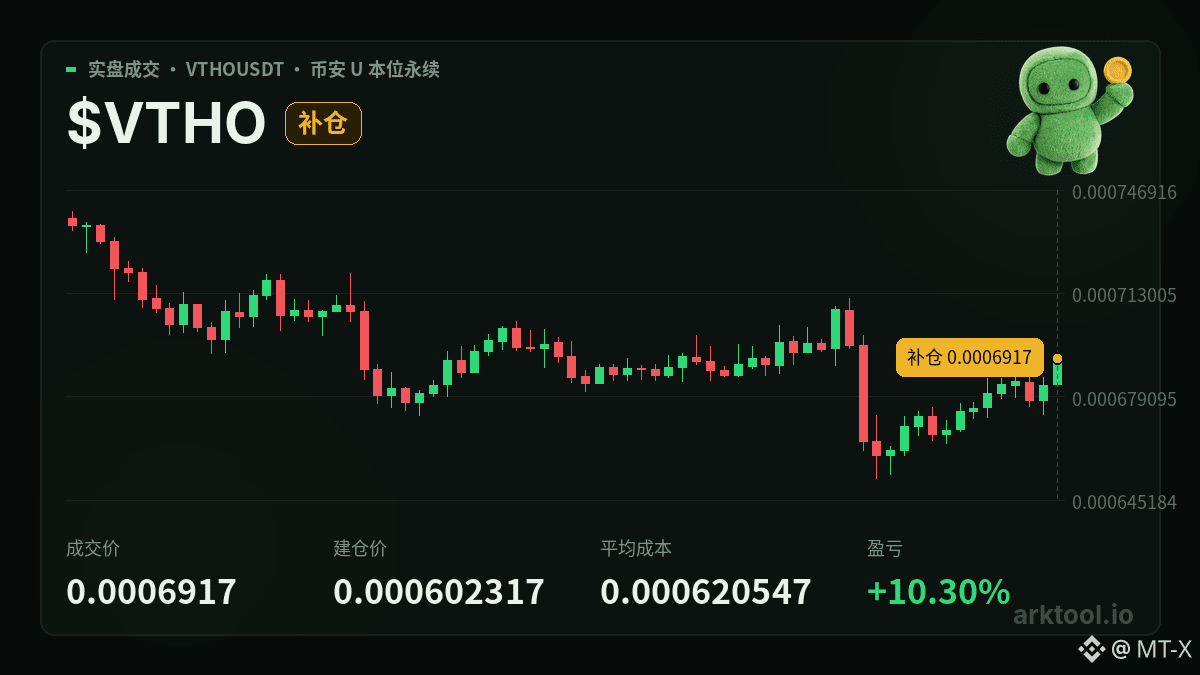
刚在 $VTHO 上又补了一笔,仓位比之前更重,成交和持仓都在配图里。
盘面上,它这段时间一直在大区间里横着走,没有走出独立行情。上方那一片是前期反复被打回来的位置,套牢盘和短线获利盘都堆在那儿;下方有个整数关口撑着,前面几次下探都被接住了。我补的理由不复杂:价格回到区间下沿,市场整体情绪不算亢奋也不算恐慌,属于缩量磨人的阶段,这种位置继续往下砸的空间有限,但反弹也还没到能追的地步。
要警惕的是它独立性太差。大盘一走弱,它跌得比谁都快;大盘企稳,它也不见得第一个动。所以这笔加仓本质是在赌区间下沿不破,而不是赌它马上起飞。
叙事上,它讲的不是新故事,核心一直是这条链越活跃,链上手续费消耗越大,通缩逻辑越硬。这套逻辑隔一阵就会被拿出来讲一次,但热度都撑不久,因为它太依赖真实使用量,而活跃度不是靠喊出来的。现在属于被重新提起、还没到资金集体认可的阶段,有人埋伏,没人抬轿。真要让故事升温,得看到链上数据肉眼可见地抬起来,在那之前,它更多还是跟着大盘喝汤。
所以我盯的不是价格,是它能不能在这个位置把量慢慢堆起来。堆不起来,就还是区间里来回折腾。
刚在 $VTHO 上又补了一笔,仓位比之前更重,成交和持仓都在配图里。
盘面上,它这段时间一直在大区间里横着走,没有走出独立行情。上方那一片是前期反复被打回来的位置,套牢盘和短线获利盘都堆在那儿;下方有个整数关口撑着,前面几次下探都被接住了。我补的理由不复杂:价格回到区间下沿,市场整体情绪不算亢奋也不算恐慌,属于缩量磨人的阶段,这种位置继续往下砸的空间有限,但反弹也还没到能追的地步。
要警惕的是它独立性太差。大盘一走弱,它跌得比谁都快;大盘企稳,它也不见得第一个动。所以这笔加仓本质是在赌区间下沿不破,而不是赌它马上起飞。
叙事上,它讲的不是新故事,核心一直是这条链越活跃,链上手续费消耗越大,通缩逻辑越硬。这套逻辑隔一阵就会被拿出来讲一次,但热度都撑不久,因为它太依赖真实使用量,而活跃度不是靠喊出来的。现在属于被重新提起、还没到资金集体认可的阶段,有人埋伏,没人抬轿。真要让故事升温,得看到链上数据肉眼可见地抬起来,在那之前,它更多还是跟着大盘喝汤。
所以我盯的不是价格,是它能不能在这个位置把量慢慢堆起来。堆不起来,就还是区间里来回折腾。
盘面上,它这段时间一直在大区间里横着走,没有走出独立行情。上方那一片是前期反复被打回来的位置,套牢盘和短线获利盘都堆在那儿;下方有个整数关口撑着,前面几次下探都被接住了。我补的理由不复杂:价格回到区间下沿,市场整体情绪不算亢奋也不算恐慌,属于缩量磨人的阶段,这种位置继续往下砸的空间有限,但反弹也还没到能追的地步。
要警惕的是它独立性太差。大盘一走弱,它跌得比谁都快;大盘企稳,它也不见得第一个动。所以这笔加仓本质是在赌区间下沿不破,而不是赌它马上起飞。
叙事上,它讲的不是新故事,核心一直是这条链越活跃,链上手续费消耗越大,通缩逻辑越硬。这套逻辑隔一阵就会被拿出来讲一次,但热度都撑不久,因为它太依赖真实使用量,而活跃度不是靠喊出来的。现在属于被重新提起、还没到资金集体认可的阶段,有人埋伏,没人抬轿。真要让故事升温,得看到链上数据肉眼可见地抬起来,在那之前,它更多还是跟着大盘喝汤。
所以我盯的不是价格,是它能不能在这个位置把量慢慢堆起来。堆不起来,就还是区间里来回折腾。
25
·
--
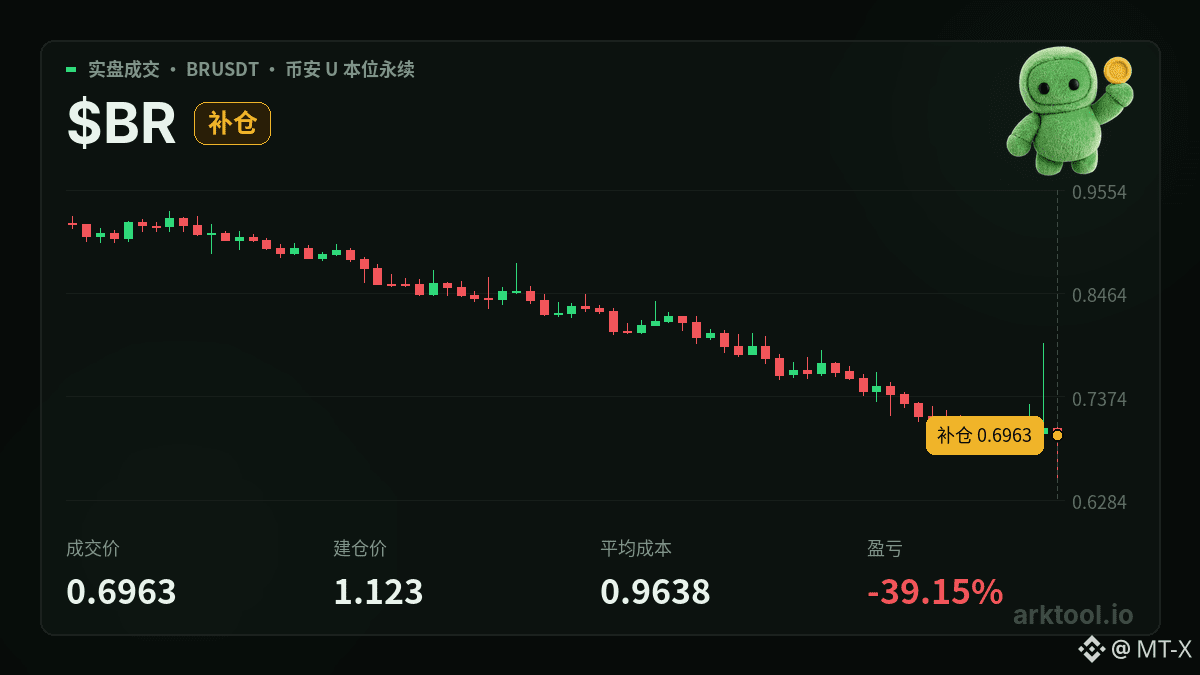
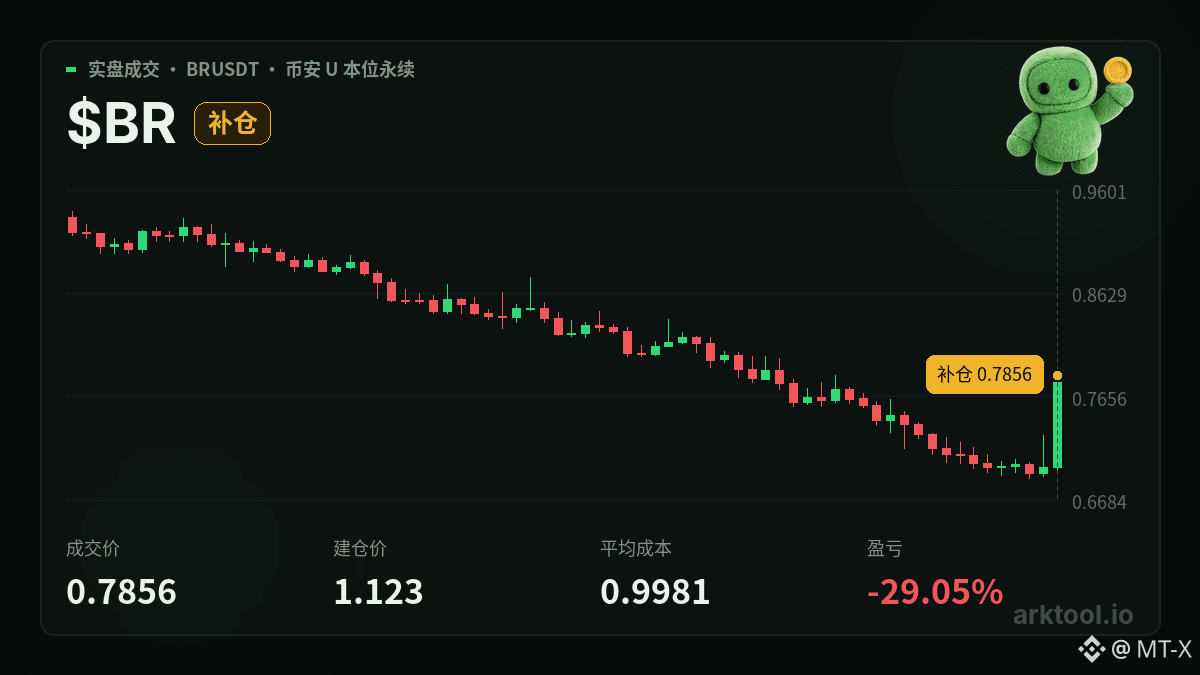
$BR 刚又补了一笔,手里的仓位比之前更大。
这笔加仓的理由不复杂。前面那波回撤把价格打到了之前反复成交的区域,之后就在那里来回磨,往下砸的力度一次比一次小,说明急着割的人已经出得差不多了。今天整体市场不算弱,大盘能稳住的时候,这类高波动品种往往先有反应。我选在这个位置加,不是赌它马上起飞,是觉得下方空间相对可控,赔率比在上面追要划算。
要警惕的点也很清楚。它跟大盘的联动很强,大盘一软,它跌得只会更快;这个品种深度一般,急拉急杀都容易发生,仓位重了心态就容易变形,所以加完之后我对整体仓位的容忍度是有上限的。
叙事上,它讲的是把比特币变成能生息资产那条线,多链流通、拿收益那一套。这个主题不算新,之前热过一轮,后来被更抓眼球的东西盖过去。现在更像被重新提起的早期,还没到资金蜂拥的阶段——成交和链上都没有给出全面转暖的信号,进场的还是偏交易型的钱,长期配置的钱没怎么动。故事本身没坏,缺的是一个更好的市场环境。
接下来我盯两点:它能不能在当前区域站住不破,以及大盘在关键位置上的态度。站稳了,补的这笔就是顺水推舟;站不住,这里也只是一个中间位置。
$BR 刚又补了一笔,手里的仓位比之前更大。
这笔加仓的理由不复杂。前面那波回撤把价格打到了之前反复成交的区域,之后就在那里来回磨,往下砸的力度一次比一次小,说明急着割的人已经出得差不多了。今天整体市场不算弱,大盘能稳住的时候,这类高波动品种往往先有反应。我选在这个位置加,不是赌它马上起飞,是觉得下方空间相对可控,赔率比在上面追要划算。
要警惕的点也很清楚。它跟大盘的联动很强,大盘一软,它跌得只会更快;这个品种深度一般,急拉急杀都容易发生,仓位重了心态就容易变形,所以加完之后我对整体仓位的容忍度是有上限的。
叙事上,它讲的是把比特币变成能生息资产那条线,多链流通、拿收益那一套。这个主题不算新,之前热过一轮,后来被更抓眼球的东西盖过去。现在更像被重新提起的早期,还没到资金蜂拥的阶段——成交和链上都没有给出全面转暖的信号,进场的还是偏交易型的钱,长期配置的钱没怎么动。故事本身没坏,缺的是一个更好的市场环境。
接下来我盯两点:它能不能在当前区域站住不破,以及大盘在关键位置上的态度。站稳了,补的这笔就是顺水推舟;站不住,这里也只是一个中间位置。
这笔加仓的理由不复杂。前面那波回撤把价格打到了之前反复成交的区域,之后就在那里来回磨,往下砸的力度一次比一次小,说明急着割的人已经出得差不多了。今天整体市场不算弱,大盘能稳住的时候,这类高波动品种往往先有反应。我选在这个位置加,不是赌它马上起飞,是觉得下方空间相对可控,赔率比在上面追要划算。
要警惕的点也很清楚。它跟大盘的联动很强,大盘一软,它跌得只会更快;这个品种深度一般,急拉急杀都容易发生,仓位重了心态就容易变形,所以加完之后我对整体仓位的容忍度是有上限的。
叙事上,它讲的是把比特币变成能生息资产那条线,多链流通、拿收益那一套。这个主题不算新,之前热过一轮,后来被更抓眼球的东西盖过去。现在更像被重新提起的早期,还没到资金蜂拥的阶段——成交和链上都没有给出全面转暖的信号,进场的还是偏交易型的钱,长期配置的钱没怎么动。故事本身没坏,缺的是一个更好的市场环境。
接下来我盯两点:它能不能在当前区域站住不破,以及大盘在关键位置上的态度。站稳了,补的这笔就是顺水推舟;站不住,这里也只是一个中间位置。
23
·
--
Lihat terjemahan
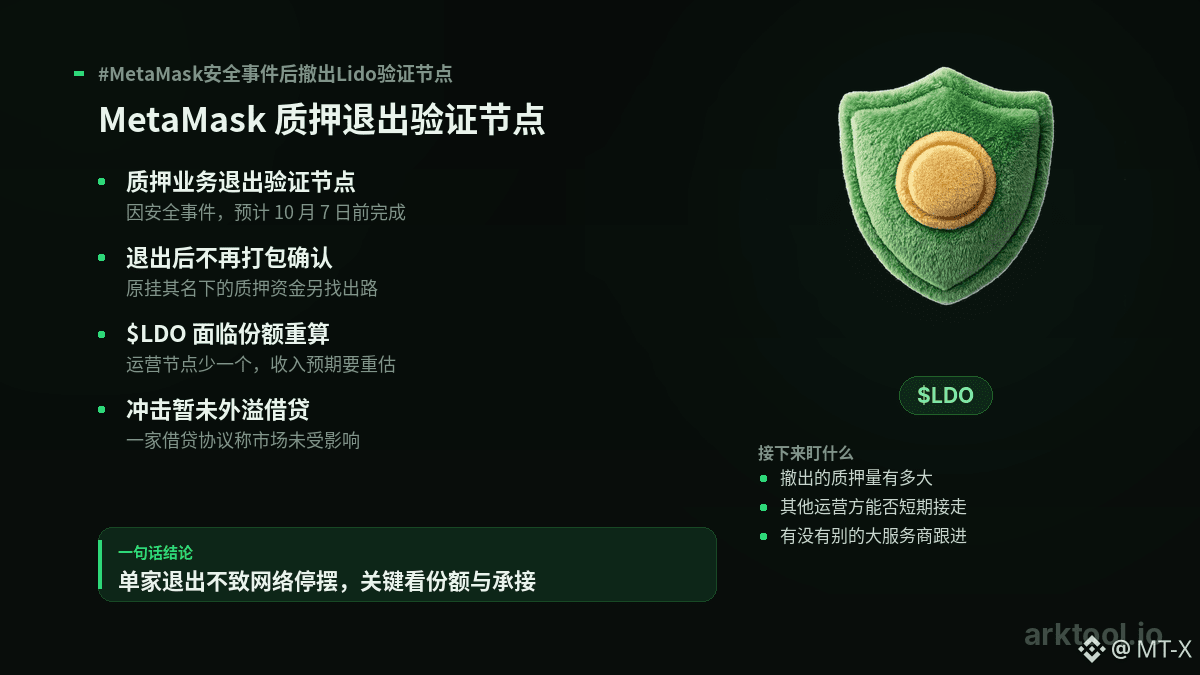
MetaMask 的质押业务要退出验证节点运营了,预计 10 月 7 日前完成。
起因是安全事件。质押服务商退出验证节点,意味着它不再帮网络打包和确认交易,原本挂在它名下的那部分质押资金,要另找出路。
对 $LDO 来说,这是两件事叠在一起:一边是运营中的验证节点少了一个,另一边是市场会重新算它的质押份额和收入预期。
该协议是流动性质押赛道的头部,验证节点由多家运营商分担,单个运营方退出不会让网络停摆,但节点集中度的变化值得盯。
真正要看的不是这次撤出,而是三件事:撤出的质押量有多大、能不能在短期内被其他运营方接走、以及有没有别的大服务商跟进。
另一头,一家头部借贷协议的创始人表示自家市场未受影响,说明冲击目前还停在质押层面,没有外溢到借贷市场。
接下来盯三点:该协议的验证节点与质押总量变化、其他大服务商的动作、以及整体市场情绪会不会因此转弱。
#MetaMask安全事件后撤出Lido验证节点
MetaMask 的质押业务要退出验证节点运营了,预计 10 月 7 日前完成。
起因是安全事件。质押服务商退出验证节点,意味着它不再帮网络打包和确认交易,原本挂在它名下的那部分质押资金,要另找出路。
对 $LDO 来说,这是两件事叠在一起:一边是运营中的验证节点少了一个,另一边是市场会重新算它的质押份额和收入预期。
该协议是流动性质押赛道的头部,验证节点由多家运营商分担,单个运营方退出不会让网络停摆,但节点集中度的变化值得盯。
真正要看的不是这次撤出,而是三件事:撤出的质押量有多大、能不能在短期内被其他运营方接走、以及有没有别的大服务商跟进。
另一头,一家头部借贷协议的创始人表示自家市场未受影响,说明冲击目前还停在质押层面,没有外溢到借贷市场。
接下来盯三点:该协议的验证节点与质押总量变化、其他大服务商的动作、以及整体市场情绪会不会因此转弱。
#MetaMask安全事件后撤出Lido验证节点
起因是安全事件。质押服务商退出验证节点,意味着它不再帮网络打包和确认交易,原本挂在它名下的那部分质押资金,要另找出路。
对 $LDO 来说,这是两件事叠在一起:一边是运营中的验证节点少了一个,另一边是市场会重新算它的质押份额和收入预期。
该协议是流动性质押赛道的头部,验证节点由多家运营商分担,单个运营方退出不会让网络停摆,但节点集中度的变化值得盯。
真正要看的不是这次撤出,而是三件事:撤出的质押量有多大、能不能在短期内被其他运营方接走、以及有没有别的大服务商跟进。
另一头,一家头部借贷协议的创始人表示自家市场未受影响,说明冲击目前还停在质押层面,没有外溢到借贷市场。
接下来盯三点:该协议的验证节点与质押总量变化、其他大服务商的动作、以及整体市场情绪会不会因此转弱。
#MetaMask安全事件后撤出Lido验证节点
128
·
--
Lihat terjemahan
刚才在 $BR 上又补了一笔,仓位比之前更重了。
先说位置。这个标的在前面冲高之后回落,一直在下方磨,现在贴着前期的一个整数区域来回试探,跌不深也弹不高。整体市场这两天也是横着走,没有明确方向,资金都在等。这种环境下补仓,看的是它自己的结构,不是大盘给的信号。
看多的理由不复杂:前面那波拉升说明有资金真的进来过,回落过程里没有出现连续放量砸盘,属于正常的换手清洗。只要下方那个整数支撑不被有效跌破,筹码还在场内,往上重新测试前高的概率就还在。
要警惕的点也很清楚。第一,它现在的量比冲高时明显缩了,缩量横盘时间越长,越容易被一根大阴线直接打穿支撑。第二,整体市场如果突然转向往下,这类小市值品种的跌幅通常比主流资产大得多,弹性是双向的。第三,如果后面反弹时量还是起不来,那多半是弱势反抽,不是新一轮进攻。
叙事上,这个项目被市场关注靠的是链上交易和流动性这条线,本质上是在赌生态里的真实使用量能起来。这套故事前一阵被重新提起过,热度不算高但也没凉,属于有资金愿意在低位埋伏、但还没到集体追的阶段。换句话说,故事还在,只是市场暂时没给出溢价。
所以现在我做的事很简单:位置在相对低位,仓位已经加上去了,接下来看它能不能在支撑上方站稳并且重新放出量来。站得住,反弹的延续性才有基础。
刚才在 $BR 上又补了一笔,仓位比之前更重了。
先说位置。这个标的在前面冲高之后回落,一直在下方磨,现在贴着前期的一个整数区域来回试探,跌不深也弹不高。整体市场这两天也是横着走,没有明确方向,资金都在等。这种环境下补仓,看的是它自己的结构,不是大盘给的信号。
看多的理由不复杂:前面那波拉升说明有资金真的进来过,回落过程里没有出现连续放量砸盘,属于正常的换手清洗。只要下方那个整数支撑不被有效跌破,筹码还在场内,往上重新测试前高的概率就还在。
要警惕的点也很清楚。第一,它现在的量比冲高时明显缩了,缩量横盘时间越长,越容易被一根大阴线直接打穿支撑。第二,整体市场如果突然转向往下,这类小市值品种的跌幅通常比主流资产大得多,弹性是双向的。第三,如果后面反弹时量还是起不来,那多半是弱势反抽,不是新一轮进攻。
叙事上,这个项目被市场关注靠的是链上交易和流动性这条线,本质上是在赌生态里的真实使用量能起来。这套故事前一阵被重新提起过,热度不算高但也没凉,属于有资金愿意在低位埋伏、但还没到集体追的阶段。换句话说,故事还在,只是市场暂时没给出溢价。
所以现在我做的事很简单:位置在相对低位,仓位已经加上去了,接下来看它能不能在支撑上方站稳并且重新放出量来。站得住,反弹的延续性才有基础。
先说位置。这个标的在前面冲高之后回落,一直在下方磨,现在贴着前期的一个整数区域来回试探,跌不深也弹不高。整体市场这两天也是横着走,没有明确方向,资金都在等。这种环境下补仓,看的是它自己的结构,不是大盘给的信号。
看多的理由不复杂:前面那波拉升说明有资金真的进来过,回落过程里没有出现连续放量砸盘,属于正常的换手清洗。只要下方那个整数支撑不被有效跌破,筹码还在场内,往上重新测试前高的概率就还在。
要警惕的点也很清楚。第一,它现在的量比冲高时明显缩了,缩量横盘时间越长,越容易被一根大阴线直接打穿支撑。第二,整体市场如果突然转向往下,这类小市值品种的跌幅通常比主流资产大得多,弹性是双向的。第三,如果后面反弹时量还是起不来,那多半是弱势反抽,不是新一轮进攻。
叙事上,这个项目被市场关注靠的是链上交易和流动性这条线,本质上是在赌生态里的真实使用量能起来。这套故事前一阵被重新提起过,热度不算高但也没凉,属于有资金愿意在低位埋伏、但还没到集体追的阶段。换句话说,故事还在,只是市场暂时没给出溢价。
所以现在我做的事很简单:位置在相对低位,仓位已经加上去了,接下来看它能不能在支撑上方站稳并且重新放出量来。站得住,反弹的延续性才有基础。
1
505
·
--
Lihat terjemahan
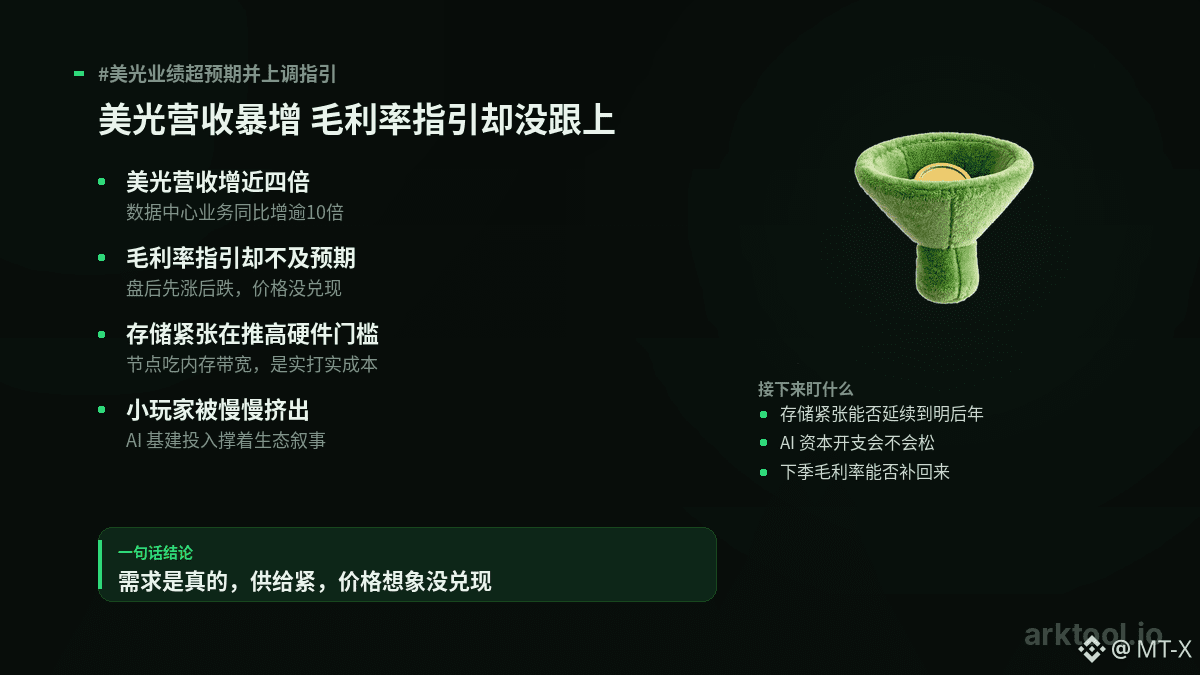
美光这份财报,数字很猛:单季营收同比增近四倍,数据中心那块核心业务的季度营收同比增长逾 10 倍,下一季度的收入指引也超了预期。但毛利率指引没跟上,盘后先涨后跌。
一句话概括:需求是真的,价格想象空间还没兑现。
市场想听的是"能卖多贵",公司给出的是"能卖多少"。CEO 提到明后年存储会更紧张,这句话的分量在于——不是需求见顶,是供给追不上。
这跟加密的关系在硬件这条线上。
$SOL 这类高吞吐公链,验证节点吃内存和带宽,硬件是实打实的运营成本。内存涨价、供货紧张,会慢慢抬升节点门槛,把中小参与者往外挤。同时 AI 是这条链生态里被反复讲的一条叙事,AI 基建的钱持续往里砸,它才有人接着讲下去。
接下来盯三件事:存储紧张能不能延续、AI 资本开支会不会松、毛利率下个季度能不能补回来。加密这边不直接挂钩,但科技股的风险偏好会先传导到整体市场,再传导到弹性更大的公链资产。
#美光业绩超预期并上调指引
美光这份财报,数字很猛:单季营收同比增近四倍,数据中心那块核心业务的季度营收同比增长逾 10 倍,下一季度的收入指引也超了预期。但毛利率指引没跟上,盘后先涨后跌。
一句话概括:需求是真的,价格想象空间还没兑现。
市场想听的是"能卖多贵",公司给出的是"能卖多少"。CEO 提到明后年存储会更紧张,这句话的分量在于——不是需求见顶,是供给追不上。
这跟加密的关系在硬件这条线上。
$SOL 这类高吞吐公链,验证节点吃内存和带宽,硬件是实打实的运营成本。内存涨价、供货紧张,会慢慢抬升节点门槛,把中小参与者往外挤。同时 AI 是这条链生态里被反复讲的一条叙事,AI 基建的钱持续往里砸,它才有人接着讲下去。
接下来盯三件事:存储紧张能不能延续、AI 资本开支会不会松、毛利率下个季度能不能补回来。加密这边不直接挂钩,但科技股的风险偏好会先传导到整体市场,再传导到弹性更大的公链资产。
#美光业绩超预期并上调指引
一句话概括:需求是真的,价格想象空间还没兑现。
市场想听的是"能卖多贵",公司给出的是"能卖多少"。CEO 提到明后年存储会更紧张,这句话的分量在于——不是需求见顶,是供给追不上。
这跟加密的关系在硬件这条线上。
$SOL 这类高吞吐公链,验证节点吃内存和带宽,硬件是实打实的运营成本。内存涨价、供货紧张,会慢慢抬升节点门槛,把中小参与者往外挤。同时 AI 是这条链生态里被反复讲的一条叙事,AI 基建的钱持续往里砸,它才有人接着讲下去。
接下来盯三件事:存储紧张能不能延续、AI 资本开支会不会松、毛利率下个季度能不能补回来。加密这边不直接挂钩,但科技股的风险偏好会先传导到整体市场,再传导到弹性更大的公链资产。
#美光业绩超预期并上调指引
150
·
--
Lihat terjemahan
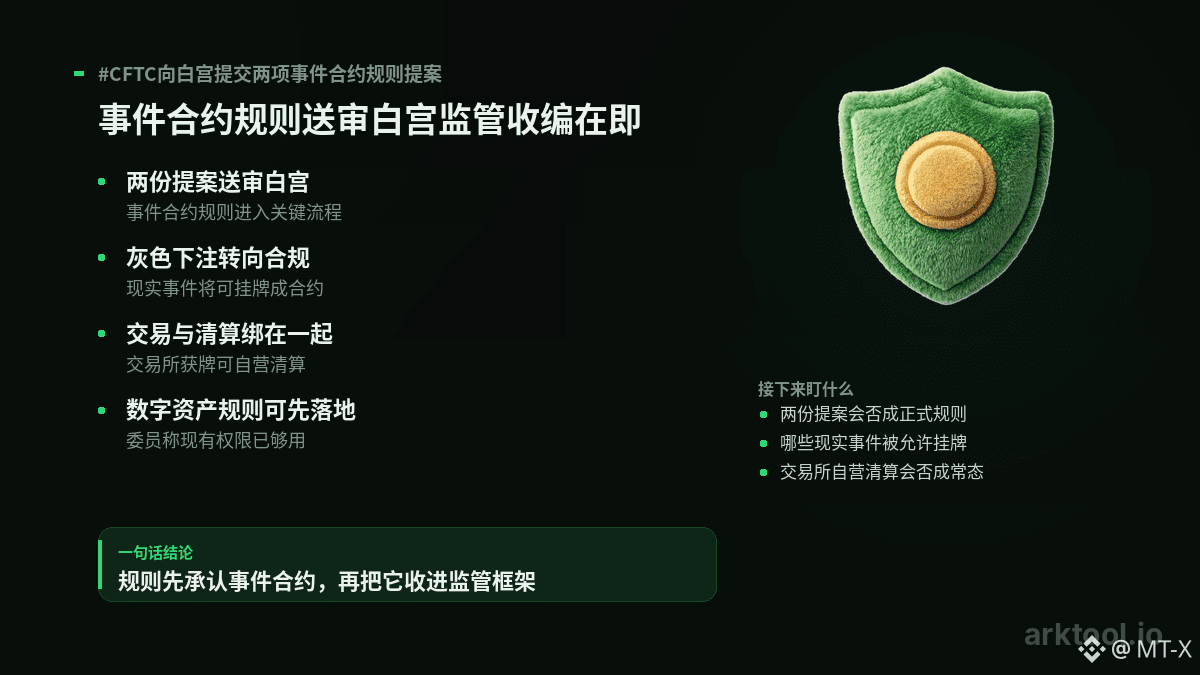
美国商品期货交易委员会把两份关于“事件合约”的规则提案送进了白宫。事件合约说白了,就是把现实里的事拿来下注——选举结果、政策走向、奖项归属都能做成合约。送到白宫是流程上的关键一步,意味着这类市场正在从灰色地带往正式监管里挪。
放在一起看还有两件事。一是 Coinbase 拿到了衍生品清算牌照,交易平台自己做清算,等于既开交易场所又管钱袋子,风险节点集中到了交易所身上。二是该机构在查有人押注与自己相关的政治结果,利益冲突第一次被摆到台面上。
再加上有委员公开说,SEC 和 CFTC 现有的权限就够给数字资产定规矩,不必干等国会立法。几件事指向同一个方向:规则在往前推,方式是先承认这类市场,再把它收编进框架。
对 $BTC 来说,衍生品和清算规则变清楚,长期是机构敢进场的条件;短期每换一次监管口径,波动就跟着来一次。接下来要盯的是,这两份提案会不会落成正式规则、哪些事件被允许挂牌、以及交易所自营清算会不会变成常态。
#CFTC向白宫提交两项事件合约规则提案
美国商品期货交易委员会把两份关于“事件合约”的规则提案送进了白宫。事件合约说白了,就是把现实里的事拿来下注——选举结果、政策走向、奖项归属都能做成合约。送到白宫是流程上的关键一步,意味着这类市场正在从灰色地带往正式监管里挪。
放在一起看还有两件事。一是 Coinbase 拿到了衍生品清算牌照,交易平台自己做清算,等于既开交易场所又管钱袋子,风险节点集中到了交易所身上。二是该机构在查有人押注与自己相关的政治结果,利益冲突第一次被摆到台面上。
再加上有委员公开说,SEC 和 CFTC 现有的权限就够给数字资产定规矩,不必干等国会立法。几件事指向同一个方向:规则在往前推,方式是先承认这类市场,再把它收编进框架。
对 $BTC 来说,衍生品和清算规则变清楚,长期是机构敢进场的条件;短期每换一次监管口径,波动就跟着来一次。接下来要盯的是,这两份提案会不会落成正式规则、哪些事件被允许挂牌、以及交易所自营清算会不会变成常态。
#CFTC向白宫提交两项事件合约规则提案
放在一起看还有两件事。一是 Coinbase 拿到了衍生品清算牌照,交易平台自己做清算,等于既开交易场所又管钱袋子,风险节点集中到了交易所身上。二是该机构在查有人押注与自己相关的政治结果,利益冲突第一次被摆到台面上。
再加上有委员公开说,SEC 和 CFTC 现有的权限就够给数字资产定规矩,不必干等国会立法。几件事指向同一个方向:规则在往前推,方式是先承认这类市场,再把它收编进框架。
对 $BTC 来说,衍生品和清算规则变清楚,长期是机构敢进场的条件;短期每换一次监管口径,波动就跟着来一次。接下来要盯的是,这两份提案会不会落成正式规则、哪些事件被允许挂牌、以及交易所自营清算会不会变成常态。
#CFTC向白宫提交两项事件合约规则提案
135
·
--
Lihat terjemahan
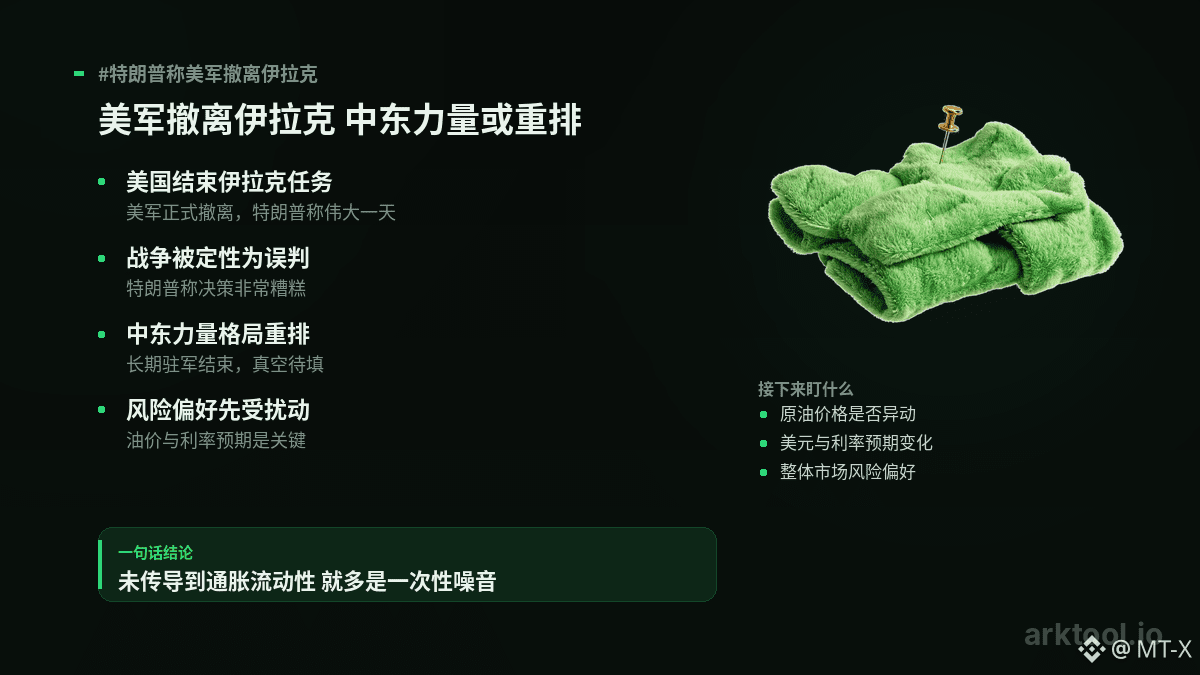
美军撤出伊拉克,分量不在撤走多少人,而在美国对中东的态度变了。特朗普同时把二十年前发动那场战争定性为“非常糟糕”,等于公开承认一次战略误判。长期驻军结束,往往意味着地区力量格局要重排。
对市场来说,这类消息先影响的是情绪,不是价格本身。中东军事存在收缩,短期看是地缘摩擦点少了一个,避险买盘的由头被削弱;另一面,真空出现后谁来填、油价会不会被搅动,都是新的不确定源。
这也是为什么 $BTC 常被当成温度计:它既被看作避险品,又被当成纯风险资产,两套逻辑打架,价格往往先动一下再找方向。
真正要盯的不是这条新闻,而是三件事——原油有没有异动、美元和利率预期有没有跟着变、整体市场的风险偏好是往上还是往下。
如果油价平静、利率不变,这类地缘消息基本就是一次性噪音;只有当地缘变化传导到通胀和流动性上,才会变成能持续交易的题材。该标的短期跟随大盘波动,这条新闻本身还不足以给方向定调。
#特朗普称美军撤离伊拉克
美军撤出伊拉克,分量不在撤走多少人,而在美国对中东的态度变了。特朗普同时把二十年前发动那场战争定性为“非常糟糕”,等于公开承认一次战略误判。长期驻军结束,往往意味着地区力量格局要重排。
对市场来说,这类消息先影响的是情绪,不是价格本身。中东军事存在收缩,短期看是地缘摩擦点少了一个,避险买盘的由头被削弱;另一面,真空出现后谁来填、油价会不会被搅动,都是新的不确定源。
这也是为什么 $BTC 常被当成温度计:它既被看作避险品,又被当成纯风险资产,两套逻辑打架,价格往往先动一下再找方向。
真正要盯的不是这条新闻,而是三件事——原油有没有异动、美元和利率预期有没有跟着变、整体市场的风险偏好是往上还是往下。
如果油价平静、利率不变,这类地缘消息基本就是一次性噪音;只有当地缘变化传导到通胀和流动性上,才会变成能持续交易的题材。该标的短期跟随大盘波动,这条新闻本身还不足以给方向定调。
#特朗普称美军撤离伊拉克
对市场来说,这类消息先影响的是情绪,不是价格本身。中东军事存在收缩,短期看是地缘摩擦点少了一个,避险买盘的由头被削弱;另一面,真空出现后谁来填、油价会不会被搅动,都是新的不确定源。
这也是为什么 $BTC 常被当成温度计:它既被看作避险品,又被当成纯风险资产,两套逻辑打架,价格往往先动一下再找方向。
真正要盯的不是这条新闻,而是三件事——原油有没有异动、美元和利率预期有没有跟着变、整体市场的风险偏好是往上还是往下。
如果油价平静、利率不变,这类地缘消息基本就是一次性噪音;只有当地缘变化传导到通胀和流动性上,才会变成能持续交易的题材。该标的短期跟随大盘波动,这条新闻本身还不足以给方向定调。
#特朗普称美军撤离伊拉克
190
·
--
Lihat terjemahan
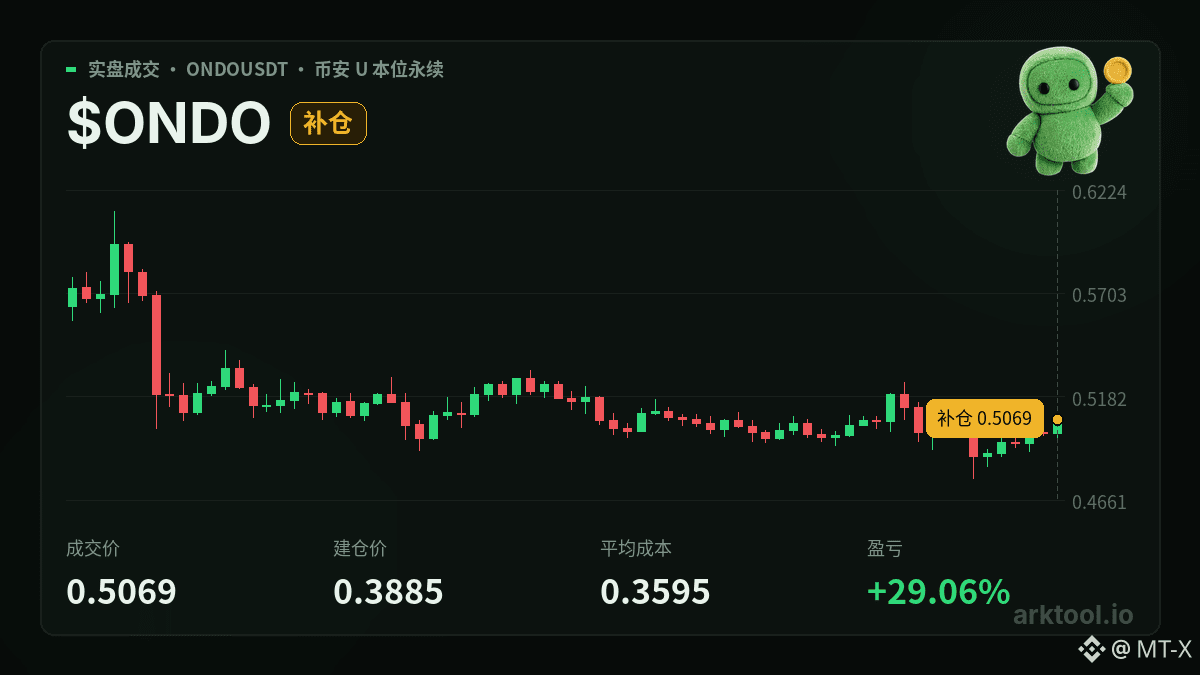
刚在 $ONDO 上补了一笔仓,仓位比之前更重了。
这个标的最近的走势属于典型的横盘磨人。前面那波拉升之后,价格在高位反复震荡,没走出新高,但也没跌破关键支撑,均线慢慢靠拢,波动收窄。这种形态通常意味着方向要重新选一次。我选择在这里加仓,是因为往下空间看得见,往上想象空间还在。
需要警惕的点也很清楚:整体市场情绪偏弱的时候,靠叙事撑估值的品种回撤更快。如果大盘继续走软,它很难独立走强,关键整数关口一旦失守,横盘就会变成下台阶。
叙事上,这个项目押的是现实资产上链这条主线。最近的消息正好强化了原来的故事,它把韩国股票代币化装进了自己的版图,代币化股票的锁仓规模也创出新高。这说明资金不只是在炒概念,而是真金白银往里放。现实资产上链这个主题从被反复提起,到现在进入有实际规模落地的阶段,属于叙事还在升温、但市场尚未完全定价的状态。
看多的核心是这个赛道有真实需求,也有机构愿意买单;看空的理由是赛道周期长,短期容易被大盘情绪带着走。当前位置更像一个区间下沿的观察点,能不能在整数关口上方站稳,是接下来最该盯的信号。
刚在 $ONDO 上补了一笔仓,仓位比之前更重了。
这个标的最近的走势属于典型的横盘磨人。前面那波拉升之后,价格在高位反复震荡,没走出新高,但也没跌破关键支撑,均线慢慢靠拢,波动收窄。这种形态通常意味着方向要重新选一次。我选择在这里加仓,是因为往下空间看得见,往上想象空间还在。
需要警惕的点也很清楚:整体市场情绪偏弱的时候,靠叙事撑估值的品种回撤更快。如果大盘继续走软,它很难独立走强,关键整数关口一旦失守,横盘就会变成下台阶。
叙事上,这个项目押的是现实资产上链这条主线。最近的消息正好强化了原来的故事,它把韩国股票代币化装进了自己的版图,代币化股票的锁仓规模也创出新高。这说明资金不只是在炒概念,而是真金白银往里放。现实资产上链这个主题从被反复提起,到现在进入有实际规模落地的阶段,属于叙事还在升温、但市场尚未完全定价的状态。
看多的核心是这个赛道有真实需求,也有机构愿意买单;看空的理由是赛道周期长,短期容易被大盘情绪带着走。当前位置更像一个区间下沿的观察点,能不能在整数关口上方站稳,是接下来最该盯的信号。
这个标的最近的走势属于典型的横盘磨人。前面那波拉升之后,价格在高位反复震荡,没走出新高,但也没跌破关键支撑,均线慢慢靠拢,波动收窄。这种形态通常意味着方向要重新选一次。我选择在这里加仓,是因为往下空间看得见,往上想象空间还在。
需要警惕的点也很清楚:整体市场情绪偏弱的时候,靠叙事撑估值的品种回撤更快。如果大盘继续走软,它很难独立走强,关键整数关口一旦失守,横盘就会变成下台阶。
叙事上,这个项目押的是现实资产上链这条主线。最近的消息正好强化了原来的故事,它把韩国股票代币化装进了自己的版图,代币化股票的锁仓规模也创出新高。这说明资金不只是在炒概念,而是真金白银往里放。现实资产上链这个主题从被反复提起,到现在进入有实际规模落地的阶段,属于叙事还在升温、但市场尚未完全定价的状态。
看多的核心是这个赛道有真实需求,也有机构愿意买单;看空的理由是赛道周期长,短期容易被大盘情绪带着走。当前位置更像一个区间下沿的观察点,能不能在整数关口上方站稳,是接下来最该盯的信号。
120
·
--
Lihat terjemahan
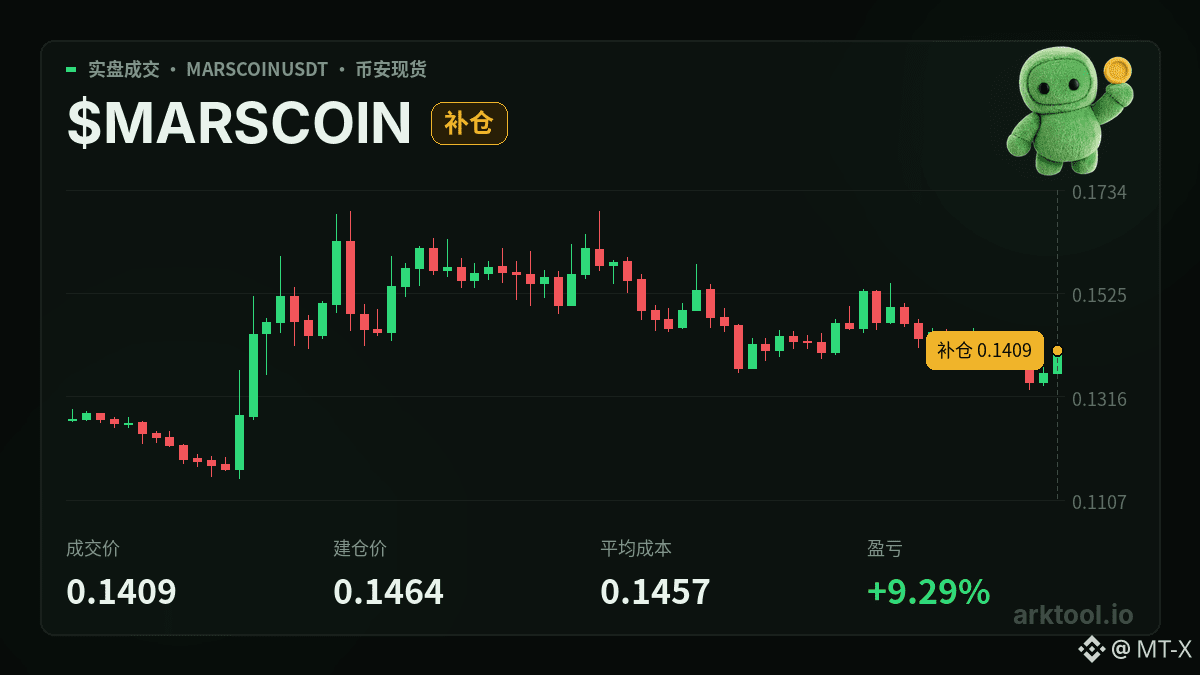
刚在这个标的上补了一笔仓,仓位比之前更重,成交明细和账户快照都在图上。
$MARSCOIN 现在的形态是冲高之后没走坏,但也没真正打开空间。前面那波拉升把它从底部区间拽了出来,眼下在前高附近来回磨,短中期均线还是向上的,回踩也没跌穿最近的整理平台。上方整数关口一带堆着不少筹码,下方只要不出现放量砸穿,结构就还算完整。
它靠的故事是迷因板块的轮动。大盘没方向的时候,资金会去小市值里找弹性,这套叙事现在属于被重新提起、正在升温的阶段,还没到人人都知道的狂热期,所以资金是认的,但认得不深。今天那条消息正好印证了这点:它领涨整个迷因板块,说明真有资金在进,不是嘴上说说;同时上方压着一道明显的抛压墙,早期获利盘和套牢盘挤在同一个位置出货,情绪和筹码在掰手腕。
这种局面的走法通常两种,要么放量一口气吃掉卖压打开新空间,要么反复磨,磨到跟风的人失去耐心。接下来更值得看的是量能跟不跟得上,以及回踩时有没有人接得住。板块热度还在,故事就还有得讲;热度一旦散了,这个位置的回撤也不会慢。
刚在这个标的上补了一笔仓,仓位比之前更重,成交明细和账户快照都在图上。
$MARSCOIN 现在的形态是冲高之后没走坏,但也没真正打开空间。前面那波拉升把它从底部区间拽了出来,眼下在前高附近来回磨,短中期均线还是向上的,回踩也没跌穿最近的整理平台。上方整数关口一带堆着不少筹码,下方只要不出现放量砸穿,结构就还算完整。
它靠的故事是迷因板块的轮动。大盘没方向的时候,资金会去小市值里找弹性,这套叙事现在属于被重新提起、正在升温的阶段,还没到人人都知道的狂热期,所以资金是认的,但认得不深。今天那条消息正好印证了这点:它领涨整个迷因板块,说明真有资金在进,不是嘴上说说;同时上方压着一道明显的抛压墙,早期获利盘和套牢盘挤在同一个位置出货,情绪和筹码在掰手腕。
这种局面的走法通常两种,要么放量一口气吃掉卖压打开新空间,要么反复磨,磨到跟风的人失去耐心。接下来更值得看的是量能跟不跟得上,以及回踩时有没有人接得住。板块热度还在,故事就还有得讲;热度一旦散了,这个位置的回撤也不会慢。
$MARSCOIN 现在的形态是冲高之后没走坏,但也没真正打开空间。前面那波拉升把它从底部区间拽了出来,眼下在前高附近来回磨,短中期均线还是向上的,回踩也没跌穿最近的整理平台。上方整数关口一带堆着不少筹码,下方只要不出现放量砸穿,结构就还算完整。
它靠的故事是迷因板块的轮动。大盘没方向的时候,资金会去小市值里找弹性,这套叙事现在属于被重新提起、正在升温的阶段,还没到人人都知道的狂热期,所以资金是认的,但认得不深。今天那条消息正好印证了这点:它领涨整个迷因板块,说明真有资金在进,不是嘴上说说;同时上方压着一道明显的抛压墙,早期获利盘和套牢盘挤在同一个位置出货,情绪和筹码在掰手腕。
这种局面的走法通常两种,要么放量一口气吃掉卖压打开新空间,要么反复磨,磨到跟风的人失去耐心。接下来更值得看的是量能跟不跟得上,以及回踩时有没有人接得住。板块热度还在,故事就还有得讲;热度一旦散了,这个位置的回撤也不会慢。
447
·
--
Lihat terjemahan
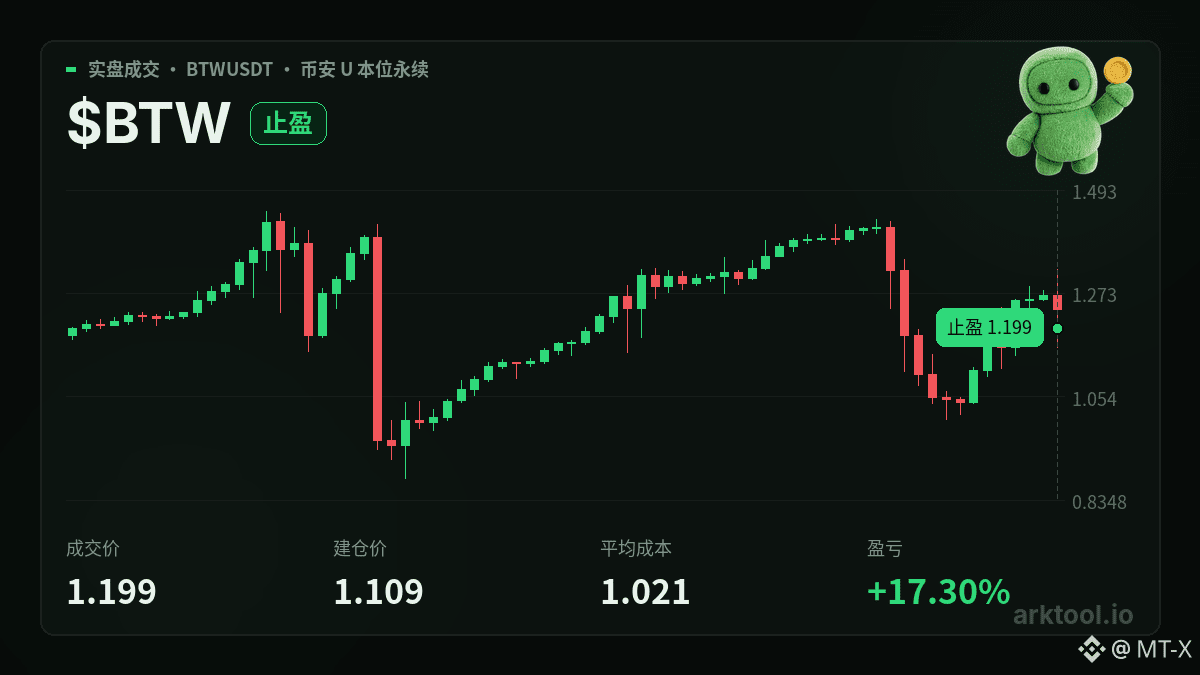
刚在 $BTW 上减了一部分仓位,剩下的还继续拿着,没有走。
这波冲得比较急,价格已经跑到短期均线上方一段距离,上攻过程中量能是放出来的,说明有资金在真金白银地接。但急涨之后一般都要消化,靠近前期高点或者整数关口,抛压会明显变重,现在追进去的性价比比前几天差不少。整体市场只要不突然转向,回踩守住关键位置,结构就还是完整的,怕的是缩量硬顶。
这个项目被市场关注,靠的不是基本面,而是小市值标的在情绪回暖时的资金轮动逻辑,谁盘子轻、弹性大,短线资金就往哪边挤。这套故事现在处在被反复提起的阶段,热度还在,但已经过了最早没人理的时候,越往后越要看大盘脸色。资金是认的,只是认得很短,来得快走得也快,这是最需要警惕的地方。
减仓不是因为不看好它,是因为这个位置往上和往下的赔率变了,先落一部分确定性,剩下的跟着趋势走。
接下来更值得盯的是,它能不能在放量之后把位置稳住,而不是只图一口气冲多远。
刚在 $BTW 上减了一部分仓位,剩下的还继续拿着,没有走。
这波冲得比较急,价格已经跑到短期均线上方一段距离,上攻过程中量能是放出来的,说明有资金在真金白银地接。但急涨之后一般都要消化,靠近前期高点或者整数关口,抛压会明显变重,现在追进去的性价比比前几天差不少。整体市场只要不突然转向,回踩守住关键位置,结构就还是完整的,怕的是缩量硬顶。
这个项目被市场关注,靠的不是基本面,而是小市值标的在情绪回暖时的资金轮动逻辑,谁盘子轻、弹性大,短线资金就往哪边挤。这套故事现在处在被反复提起的阶段,热度还在,但已经过了最早没人理的时候,越往后越要看大盘脸色。资金是认的,只是认得很短,来得快走得也快,这是最需要警惕的地方。
减仓不是因为不看好它,是因为这个位置往上和往下的赔率变了,先落一部分确定性,剩下的跟着趋势走。
接下来更值得盯的是,它能不能在放量之后把位置稳住,而不是只图一口气冲多远。
这波冲得比较急,价格已经跑到短期均线上方一段距离,上攻过程中量能是放出来的,说明有资金在真金白银地接。但急涨之后一般都要消化,靠近前期高点或者整数关口,抛压会明显变重,现在追进去的性价比比前几天差不少。整体市场只要不突然转向,回踩守住关键位置,结构就还是完整的,怕的是缩量硬顶。
这个项目被市场关注,靠的不是基本面,而是小市值标的在情绪回暖时的资金轮动逻辑,谁盘子轻、弹性大,短线资金就往哪边挤。这套故事现在处在被反复提起的阶段,热度还在,但已经过了最早没人理的时候,越往后越要看大盘脸色。资金是认的,只是认得很短,来得快走得也快,这是最需要警惕的地方。
减仓不是因为不看好它,是因为这个位置往上和往下的赔率变了,先落一部分确定性,剩下的跟着趋势走。
接下来更值得盯的是,它能不能在放量之后把位置稳住,而不是只图一口气冲多远。
585
·
--
Lihat terjemahan
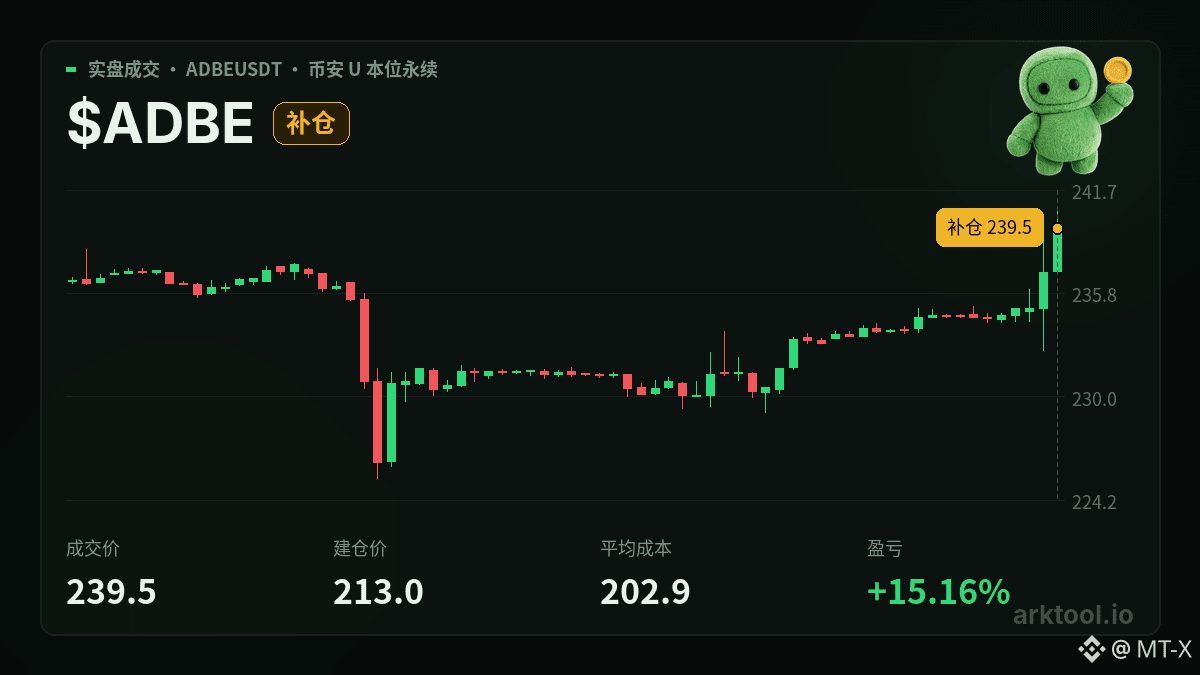
刚在 $ADBE 上又补了一笔,仓位比之前更大了。
先说位置。该标的这段时间一直在一个比较难受的区间里磨,上方有前期留下的密集成交压着,下方靠近整数关口才有人愿意接。整体市场情绪偏谨慎,科技类资产普遍没走出独立行情,所以这笔加仓本质是买一个偏左的位置,不是追已经起来的趋势。理由也直接:跌到这里,坏消息大体已经反映在价格里,继续往下和往上修复的空间并不对称。要警惕的是,如果整体市场再来一波杀估值,它大概率跟着走,不会因为便宜就抗跌。
再说故事。过去一年市场讲得最多的是这家公司"被 AI 干掉",创意软件的订阅模式被质疑会被生成式工具冲垮。现在这套叙事正在被重新提起——注意,不是反转,是重新被拿出来讨论:一边是 AI 功能到底能不能变成真金白银的新增收入,一边是换了掌舵人之后打法会不会变。今天市场上的声音也在往这个方向靠,有人开始把 AI 增长和新管理层当作重新给它估值的理由。这说明资金至少愿意坐下来听故事了,但远没到集体买单的程度。
补仓之后,我盯的不是今天涨不涨,而是它能不能在这个区间里把成交量缩下来、把底部横住。横得住,故事才有被重新定价的机会;横不住,就还是得等。
刚在 $ADBE 上又补了一笔,仓位比之前更大了。
先说位置。该标的这段时间一直在一个比较难受的区间里磨,上方有前期留下的密集成交压着,下方靠近整数关口才有人愿意接。整体市场情绪偏谨慎,科技类资产普遍没走出独立行情,所以这笔加仓本质是买一个偏左的位置,不是追已经起来的趋势。理由也直接:跌到这里,坏消息大体已经反映在价格里,继续往下和往上修复的空间并不对称。要警惕的是,如果整体市场再来一波杀估值,它大概率跟着走,不会因为便宜就抗跌。
再说故事。过去一年市场讲得最多的是这家公司"被 AI 干掉",创意软件的订阅模式被质疑会被生成式工具冲垮。现在这套叙事正在被重新提起——注意,不是反转,是重新被拿出来讨论:一边是 AI 功能到底能不能变成真金白银的新增收入,一边是换了掌舵人之后打法会不会变。今天市场上的声音也在往这个方向靠,有人开始把 AI 增长和新管理层当作重新给它估值的理由。这说明资金至少愿意坐下来听故事了,但远没到集体买单的程度。
补仓之后,我盯的不是今天涨不涨,而是它能不能在这个区间里把成交量缩下来、把底部横住。横得住,故事才有被重新定价的机会;横不住,就还是得等。
先说位置。该标的这段时间一直在一个比较难受的区间里磨,上方有前期留下的密集成交压着,下方靠近整数关口才有人愿意接。整体市场情绪偏谨慎,科技类资产普遍没走出独立行情,所以这笔加仓本质是买一个偏左的位置,不是追已经起来的趋势。理由也直接:跌到这里,坏消息大体已经反映在价格里,继续往下和往上修复的空间并不对称。要警惕的是,如果整体市场再来一波杀估值,它大概率跟着走,不会因为便宜就抗跌。
再说故事。过去一年市场讲得最多的是这家公司"被 AI 干掉",创意软件的订阅模式被质疑会被生成式工具冲垮。现在这套叙事正在被重新提起——注意,不是反转,是重新被拿出来讨论:一边是 AI 功能到底能不能变成真金白银的新增收入,一边是换了掌舵人之后打法会不会变。今天市场上的声音也在往这个方向靠,有人开始把 AI 增长和新管理层当作重新给它估值的理由。这说明资金至少愿意坐下来听故事了,但远没到集体买单的程度。
补仓之后,我盯的不是今天涨不涨,而是它能不能在这个区间里把成交量缩下来、把底部横住。横得住,故事才有被重新定价的机会;横不住,就还是得等。
68
·
--
Lihat terjemahan
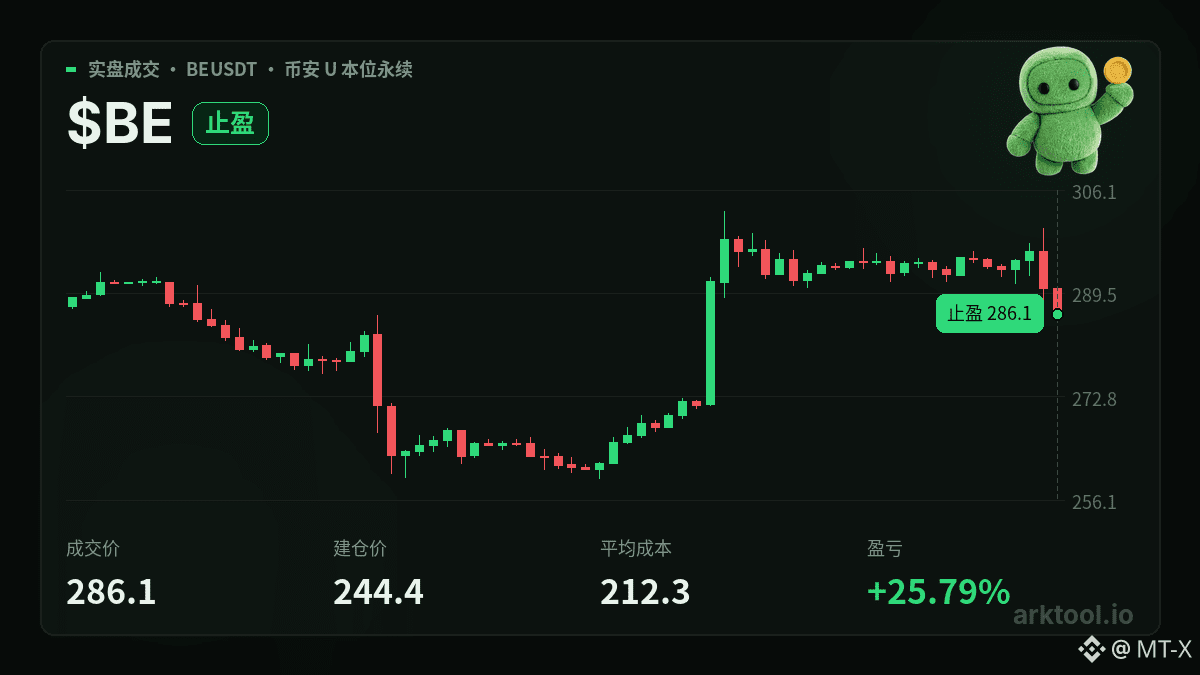
刚在 $BE 上减了一部分仓位,剩下的继续拿着。
盘面上,这个标的最近走得很急,现在到了需要消化的位置。上方前高附近套牢盘密集,再往上突破得有新的量能接;下方短期均线的支撑还在,只要不跌破这波起涨的平台,结构就没坏。整体市场偏暖的时候,它更容易被资金挑出来做弹性。
只减一部分、底仓不动,理由很直接:趋势还在,但短期涨得太快,先把浮盈收一点。
叙事上,它被盯住的核心不是燃料电池本身,而是电不够用这件事。数据中心和算力把用电需求顶上来,现场发电这类方向被重新定价。这套故事现在处在升温阶段,而且比纯概念扎实,开始有订单和业绩托底。
今天那条业绩创纪录、同时上调明年指引的消息,就是给这套叙事补了一块砖,说明资金认的不只是想象空间,短期情绪也更敢给高估值。要警惕的也在这里:业绩兑现的节奏一旦跟不上股价的斜率,或者大盘转弱,这种高弹性标的回撤会很快。
所以我的态度是,仓位继续拿,但不在这个位置追着加,先看它能不能把换手做干净。
刚在 $BE 上减了一部分仓位,剩下的继续拿着。
盘面上,这个标的最近走得很急,现在到了需要消化的位置。上方前高附近套牢盘密集,再往上突破得有新的量能接;下方短期均线的支撑还在,只要不跌破这波起涨的平台,结构就没坏。整体市场偏暖的时候,它更容易被资金挑出来做弹性。
只减一部分、底仓不动,理由很直接:趋势还在,但短期涨得太快,先把浮盈收一点。
叙事上,它被盯住的核心不是燃料电池本身,而是电不够用这件事。数据中心和算力把用电需求顶上来,现场发电这类方向被重新定价。这套故事现在处在升温阶段,而且比纯概念扎实,开始有订单和业绩托底。
今天那条业绩创纪录、同时上调明年指引的消息,就是给这套叙事补了一块砖,说明资金认的不只是想象空间,短期情绪也更敢给高估值。要警惕的也在这里:业绩兑现的节奏一旦跟不上股价的斜率,或者大盘转弱,这种高弹性标的回撤会很快。
所以我的态度是,仓位继续拿,但不在这个位置追着加,先看它能不能把换手做干净。
盘面上,这个标的最近走得很急,现在到了需要消化的位置。上方前高附近套牢盘密集,再往上突破得有新的量能接;下方短期均线的支撑还在,只要不跌破这波起涨的平台,结构就没坏。整体市场偏暖的时候,它更容易被资金挑出来做弹性。
只减一部分、底仓不动,理由很直接:趋势还在,但短期涨得太快,先把浮盈收一点。
叙事上,它被盯住的核心不是燃料电池本身,而是电不够用这件事。数据中心和算力把用电需求顶上来,现场发电这类方向被重新定价。这套故事现在处在升温阶段,而且比纯概念扎实,开始有订单和业绩托底。
今天那条业绩创纪录、同时上调明年指引的消息,就是给这套叙事补了一块砖,说明资金认的不只是想象空间,短期情绪也更敢给高估值。要警惕的也在这里:业绩兑现的节奏一旦跟不上股价的斜率,或者大盘转弱,这种高弹性标的回撤会很快。
所以我的态度是,仓位继续拿,但不在这个位置追着加,先看它能不能把换手做干净。
141
·
--
Lihat terjemahan
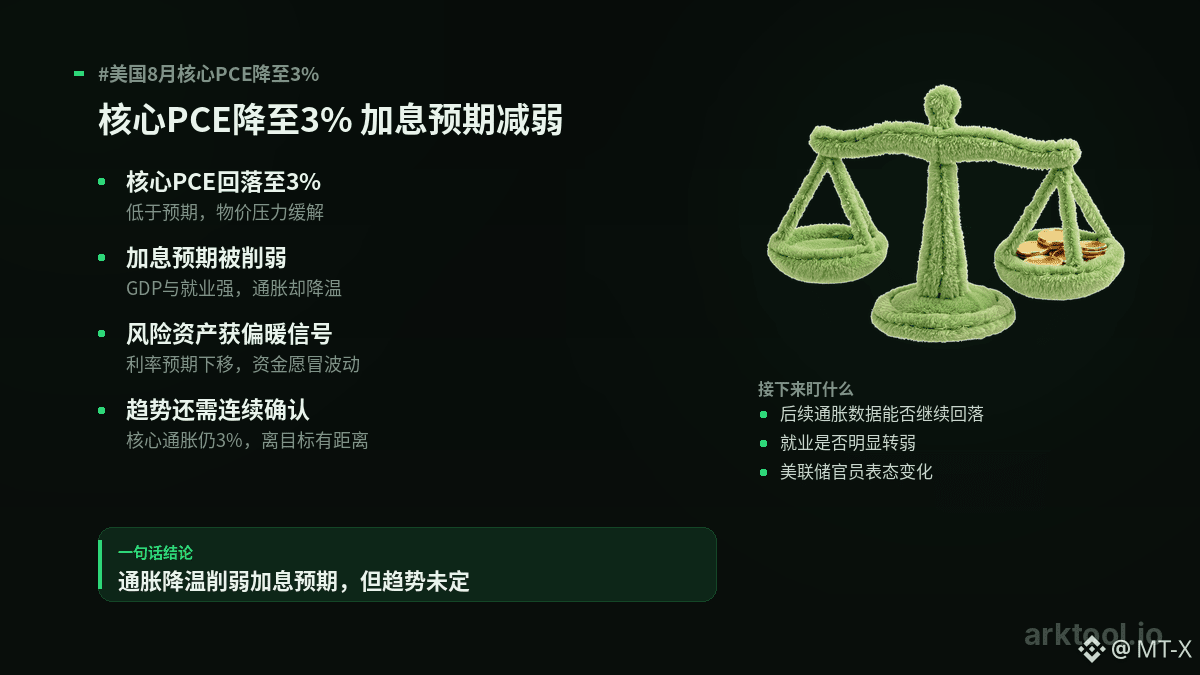
美国8月核心PCE降到3%。
这是美联储最看重的通胀指标,这次比预期回落,说明物价压力在往好的方向走。同一批数据里,上季度GDP增长2.2%高于预期,9月小非农也强于预期。经济没塌,通胀却在降温,这是市场最喜欢的组合。
数据出来后,加息预期被削弱,黄金涨到约4200美元/盎司。逻辑很直接:钱的价格可能要松了。
对 $BTC 这类风险资产来说,这是偏暖的信号。它不产生现金流,估值很大程度靠流动性预期撑着。利率预期往下走,拿着现金和债券的吸引力下降,资金才愿意往波动更大的地方挪。
但也别把它当成单边行情的起点。一个月的读数说明不了趋势,核心通胀还在3%,离目标仍有距离。接下来盯三件事:后面几个月的通胀数据能不能继续往下、就业会不会明显转弱、美联储官员的表态会不会从再等等变成可以动。
真正决定方向的,是这条线能不能连续,而不是某一次低于预期。
#美国8月核心PCE降至3%
美国8月核心PCE降到3%。
这是美联储最看重的通胀指标,这次比预期回落,说明物价压力在往好的方向走。同一批数据里,上季度GDP增长2.2%高于预期,9月小非农也强于预期。经济没塌,通胀却在降温,这是市场最喜欢的组合。
数据出来后,加息预期被削弱,黄金涨到约4200美元/盎司。逻辑很直接:钱的价格可能要松了。
对 $BTC 这类风险资产来说,这是偏暖的信号。它不产生现金流,估值很大程度靠流动性预期撑着。利率预期往下走,拿着现金和债券的吸引力下降,资金才愿意往波动更大的地方挪。
但也别把它当成单边行情的起点。一个月的读数说明不了趋势,核心通胀还在3%,离目标仍有距离。接下来盯三件事:后面几个月的通胀数据能不能继续往下、就业会不会明显转弱、美联储官员的表态会不会从再等等变成可以动。
真正决定方向的,是这条线能不能连续,而不是某一次低于预期。
#美国8月核心PCE降至3%
这是美联储最看重的通胀指标,这次比预期回落,说明物价压力在往好的方向走。同一批数据里,上季度GDP增长2.2%高于预期,9月小非农也强于预期。经济没塌,通胀却在降温,这是市场最喜欢的组合。
数据出来后,加息预期被削弱,黄金涨到约4200美元/盎司。逻辑很直接:钱的价格可能要松了。
对 $BTC 这类风险资产来说,这是偏暖的信号。它不产生现金流,估值很大程度靠流动性预期撑着。利率预期往下走,拿着现金和债券的吸引力下降,资金才愿意往波动更大的地方挪。
但也别把它当成单边行情的起点。一个月的读数说明不了趋势,核心通胀还在3%,离目标仍有距离。接下来盯三件事:后面几个月的通胀数据能不能继续往下、就业会不会明显转弱、美联储官员的表态会不会从再等等变成可以动。
真正决定方向的,是这条线能不能连续,而不是某一次低于预期。
#美国8月核心PCE降至3%
546
·
--
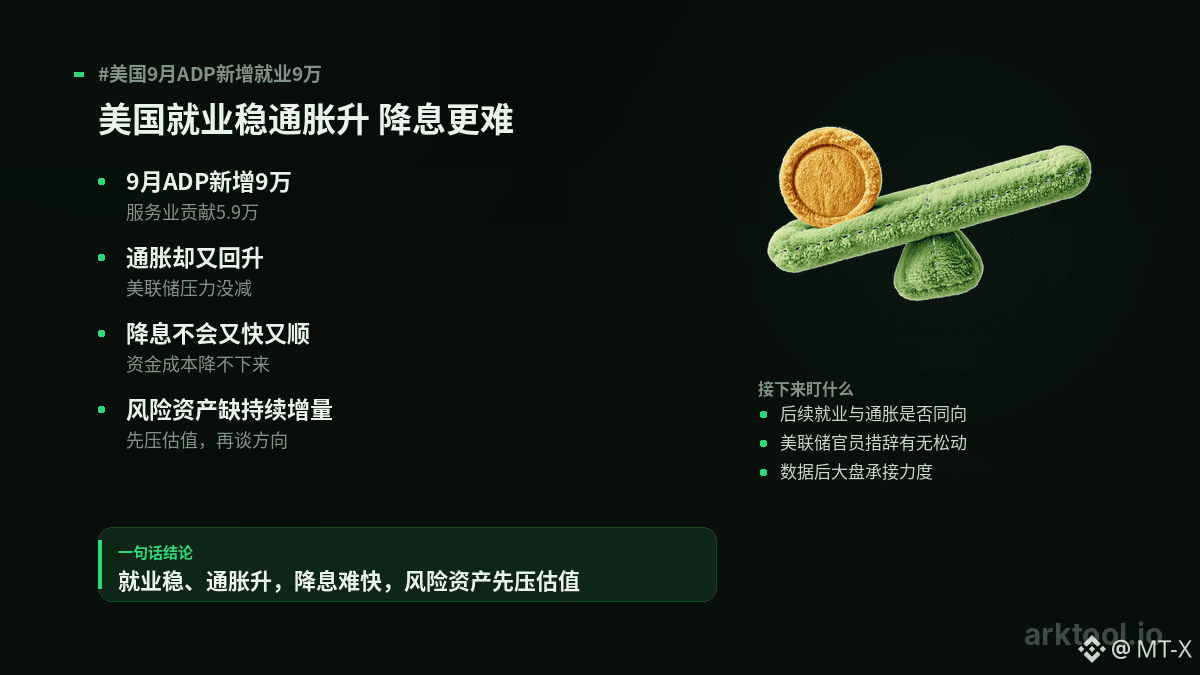
September AS memperbarui data ADP AS menambah pekerjaan 90.000 orang, di mana sektor jasa menyumbang 59.000 lowongan.
Dua hal terjadi sekaligus: pekerjaan tidak terlihat makin mendingin, sektor jasa masih terus merekrut; namun inflasi justru naik lagi, sehingga tekanan bagi The Fed tidak berkurang.
Ini membuat pasar “terpuntir”. Stabilnya pekerjaan menunjukkan fundamental ekonomi masih bisa bertahan, sehingga skenario perdagangan menuju resesi bisa ditunda dulu. Tetapi ketika inflasi kembali menguat, artinya jalur penurunan suku bunga tidak akan berjalan cepat dan mulus. Biaya dana tidak turun, sehingga aset berisiko akan sulit memperoleh tambahan likuiditas yang berkelanjutan.
Aset seperti $BTC paling sensitif terhadap ekspektasi likuiditas. Logika menengahnya tidak berubah, tetapi penetapan harga jangka pendek terutama dipengaruhi oleh ritme penurunan suku bunga. Ketika data cenderung kuat dan inflasi cenderung tinggi, biasanya yang terjadi lebih dulu adalah menekan valuasi, baru kemudian membicarakan arahnya.
Ke depan, pantau tiga hal: apakah data pekerjaan dan inflasi di periode berikutnya bergerak searah, apakah redaksi pejabat The Fed ada kelonggaran, dan seberapa kuat indeks utama saat data dirilis dari sisi kelanjutan/dampaknya.
#美国9月ADP新增就业9万
September AS memperbarui data ADP AS menambah pekerjaan 90.000 orang, di mana sektor jasa menyumbang 59.000 lowongan.
Dua hal terjadi sekaligus: pekerjaan tidak terlihat makin mendingin, sektor jasa masih terus merekrut; namun inflasi justru naik lagi, sehingga tekanan bagi The Fed tidak berkurang.
Ini membuat pasar “terpuntir”. Stabilnya pekerjaan menunjukkan fundamental ekonomi masih bisa bertahan, sehingga skenario perdagangan menuju resesi bisa ditunda dulu. Tetapi ketika inflasi kembali menguat, artinya jalur penurunan suku bunga tidak akan berjalan cepat dan mulus. Biaya dana tidak turun, sehingga aset berisiko akan sulit memperoleh tambahan likuiditas yang berkelanjutan.
Aset seperti $BTC paling sensitif terhadap ekspektasi likuiditas. Logika menengahnya tidak berubah, tetapi penetapan harga jangka pendek terutama dipengaruhi oleh ritme penurunan suku bunga. Ketika data cenderung kuat dan inflasi cenderung tinggi, biasanya yang terjadi lebih dulu adalah menekan valuasi, baru kemudian membicarakan arahnya.
Ke depan, pantau tiga hal: apakah data pekerjaan dan inflasi di periode berikutnya bergerak searah, apakah redaksi pejabat The Fed ada kelonggaran, dan seberapa kuat indeks utama saat data dirilis dari sisi kelanjutan/dampaknya.
#美国9月ADP新增就业9万
Dua hal terjadi sekaligus: pekerjaan tidak terlihat makin mendingin, sektor jasa masih terus merekrut; namun inflasi justru naik lagi, sehingga tekanan bagi The Fed tidak berkurang.
Ini membuat pasar “terpuntir”. Stabilnya pekerjaan menunjukkan fundamental ekonomi masih bisa bertahan, sehingga skenario perdagangan menuju resesi bisa ditunda dulu. Tetapi ketika inflasi kembali menguat, artinya jalur penurunan suku bunga tidak akan berjalan cepat dan mulus. Biaya dana tidak turun, sehingga aset berisiko akan sulit memperoleh tambahan likuiditas yang berkelanjutan.
Aset seperti $BTC paling sensitif terhadap ekspektasi likuiditas. Logika menengahnya tidak berubah, tetapi penetapan harga jangka pendek terutama dipengaruhi oleh ritme penurunan suku bunga. Ketika data cenderung kuat dan inflasi cenderung tinggi, biasanya yang terjadi lebih dulu adalah menekan valuasi, baru kemudian membicarakan arahnya.
Ke depan, pantau tiga hal: apakah data pekerjaan dan inflasi di periode berikutnya bergerak searah, apakah redaksi pejabat The Fed ada kelonggaran, dan seberapa kuat indeks utama saat data dirilis dari sisi kelanjutan/dampaknya.
#美国9月ADP新增就业9万
282
·
--
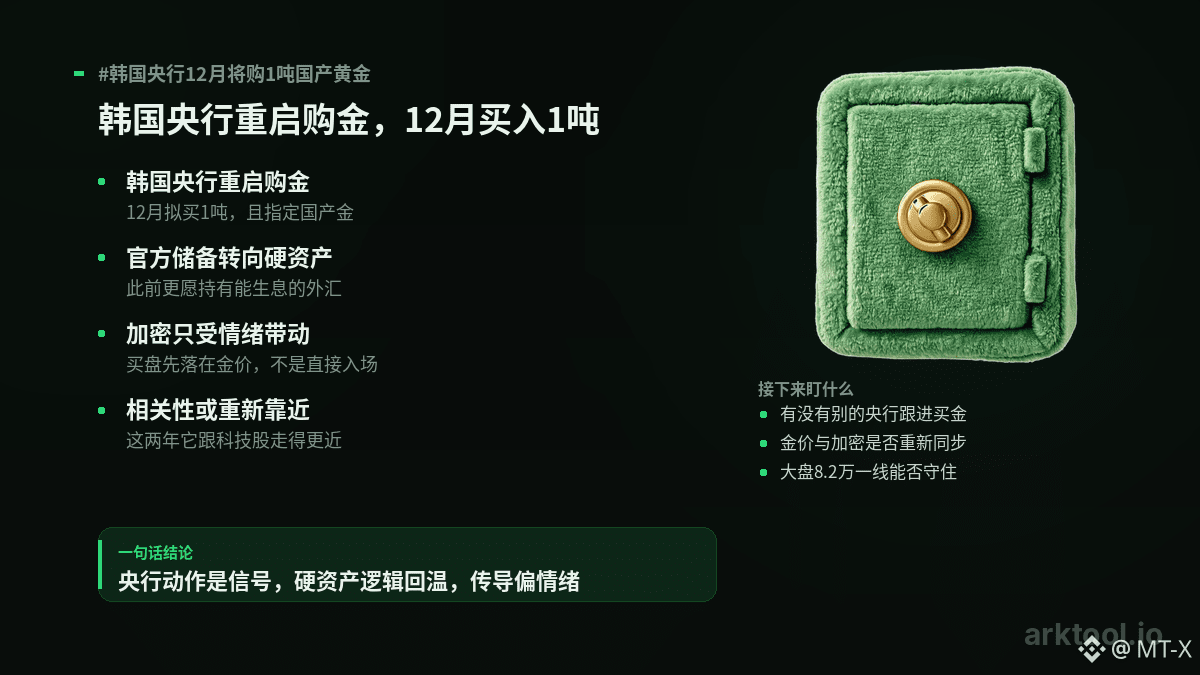
Bank sentral Korea akan membeli 1 ton emas pada bulan Desember, dan yang dibeli adalah emas buatan dalam negeri. Ini adalah kali pertama setelah 13 tahun mereka kembali ke pasar emas.
1 ton tidak terlalu besar bagi cadangan suatu negara, skala itu sendiri tidak terlalu penting; yang menentukan adalah sinyalnya: dana resmi kembali menjadikan emas sebagai bagian dari cadangan.
Dalam lebih dari sepuluh tahun terakhir, banyak bank sentral lebih memilih memegang aset valas yang bisa menghasilkan imbal hasil, sementara emas dikesampingkan. Sekarang berbalik membeli menunjukkan meningkatnya kekhawatiran terhadap kredibilitas mata uang, inflasi, dan risiko geopolitik.
Kaitannya dengan pasar kripto ada dalam narasinya. $BTC dan emas sering dimasukkan ke dalam kerangka yang sama: jumlahnya terbatas, tidak bergantung pada dukungan institusi tertentu. Bedanya, emas adalah cadangan yang secara resmi diakui, sedangkan Bitcoin adalah aset berisiko yang ditetapkan oleh pasar. Ketika bank sentral membeli emas, respons awalnya adalah terhadap harga emas; untuk kripto, lebih banyak bersifat keterkaitan sentimen, bukan pembelian langsung.
Aset ini selama ini disebut-sebut sebagai "emas digital", tetapi dalam dua tahun terakhir aset ini bergerak lebih dekat dengan saham teknologi ketimbang dengan harga emas. Jika jalur pembelian emas oleh pihak resmi terus berlanjut, logika hard asset akan terus diangkat; korelasi keduanya layak untuk ditinjau ulang.
Ke depan, perhatikan tiga hal: apakah masih ada bank sentral lain yang turut membeli emas; apakah harga emas dan aset kripto akan kembali tersinkron; dan karena pasar saat ini berada di sekitar 8,2 juta, apakah garis pertahanan ini mampu bertahan atau tidak akan menentukan ritme pembukaan kuartal keempat.
#韩国央行12月将购1吨国产黄金
Bank sentral Korea akan membeli 1 ton emas pada bulan Desember, dan yang dibeli adalah emas buatan dalam negeri. Ini adalah kali pertama setelah 13 tahun mereka kembali ke pasar emas.
1 ton tidak terlalu besar bagi cadangan suatu negara, skala itu sendiri tidak terlalu penting; yang menentukan adalah sinyalnya: dana resmi kembali menjadikan emas sebagai bagian dari cadangan.
Dalam lebih dari sepuluh tahun terakhir, banyak bank sentral lebih memilih memegang aset valas yang bisa menghasilkan imbal hasil, sementara emas dikesampingkan. Sekarang berbalik membeli menunjukkan meningkatnya kekhawatiran terhadap kredibilitas mata uang, inflasi, dan risiko geopolitik.
Kaitannya dengan pasar kripto ada dalam narasinya. $BTC dan emas sering dimasukkan ke dalam kerangka yang sama: jumlahnya terbatas, tidak bergantung pada dukungan institusi tertentu. Bedanya, emas adalah cadangan yang secara resmi diakui, sedangkan Bitcoin adalah aset berisiko yang ditetapkan oleh pasar. Ketika bank sentral membeli emas, respons awalnya adalah terhadap harga emas; untuk kripto, lebih banyak bersifat keterkaitan sentimen, bukan pembelian langsung.
Aset ini selama ini disebut-sebut sebagai "emas digital", tetapi dalam dua tahun terakhir aset ini bergerak lebih dekat dengan saham teknologi ketimbang dengan harga emas. Jika jalur pembelian emas oleh pihak resmi terus berlanjut, logika hard asset akan terus diangkat; korelasi keduanya layak untuk ditinjau ulang.
Ke depan, perhatikan tiga hal: apakah masih ada bank sentral lain yang turut membeli emas; apakah harga emas dan aset kripto akan kembali tersinkron; dan karena pasar saat ini berada di sekitar 8,2 juta, apakah garis pertahanan ini mampu bertahan atau tidak akan menentukan ritme pembukaan kuartal keempat.
#韩国央行12月将购1吨国产黄金
1 ton tidak terlalu besar bagi cadangan suatu negara, skala itu sendiri tidak terlalu penting; yang menentukan adalah sinyalnya: dana resmi kembali menjadikan emas sebagai bagian dari cadangan.
Dalam lebih dari sepuluh tahun terakhir, banyak bank sentral lebih memilih memegang aset valas yang bisa menghasilkan imbal hasil, sementara emas dikesampingkan. Sekarang berbalik membeli menunjukkan meningkatnya kekhawatiran terhadap kredibilitas mata uang, inflasi, dan risiko geopolitik.
Kaitannya dengan pasar kripto ada dalam narasinya. $BTC dan emas sering dimasukkan ke dalam kerangka yang sama: jumlahnya terbatas, tidak bergantung pada dukungan institusi tertentu. Bedanya, emas adalah cadangan yang secara resmi diakui, sedangkan Bitcoin adalah aset berisiko yang ditetapkan oleh pasar. Ketika bank sentral membeli emas, respons awalnya adalah terhadap harga emas; untuk kripto, lebih banyak bersifat keterkaitan sentimen, bukan pembelian langsung.
Aset ini selama ini disebut-sebut sebagai "emas digital", tetapi dalam dua tahun terakhir aset ini bergerak lebih dekat dengan saham teknologi ketimbang dengan harga emas. Jika jalur pembelian emas oleh pihak resmi terus berlanjut, logika hard asset akan terus diangkat; korelasi keduanya layak untuk ditinjau ulang.
Ke depan, perhatikan tiga hal: apakah masih ada bank sentral lain yang turut membeli emas; apakah harga emas dan aset kripto akan kembali tersinkron; dan karena pasar saat ini berada di sekitar 8,2 juta, apakah garis pertahanan ini mampu bertahan atau tidak akan menentukan ritme pembukaan kuartal keempat.
#韩国央行12月将购1吨国产黄金
300
·
--
Lihat terjemahan
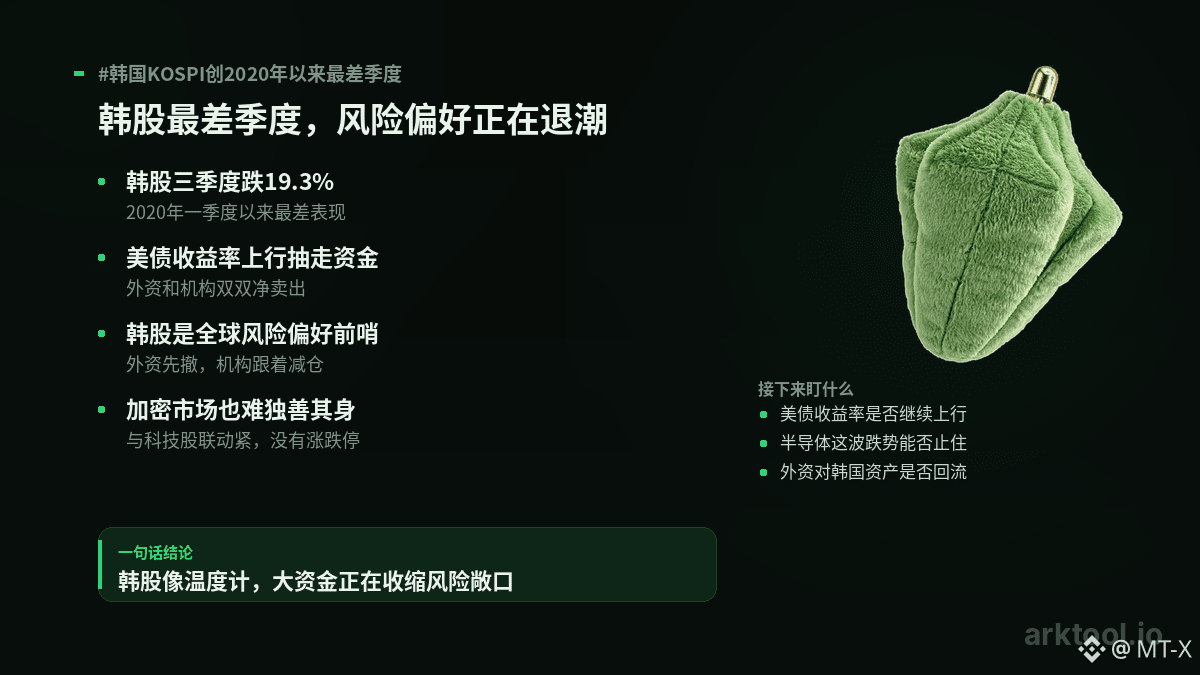
韩国股市刚交出一份很难看的季度成绩单:三季度累计下跌19.3%,是2020年一季度之后最差的三个月。跌得最急的一次,盘中一度下挫超过6%,直接触发了卖盘骤停。
压力来自两头。外面是美国半导体股走弱,把韩国权重最大的芯片板块一起拖下去;里面是美债收益率往上走,资金更愿意待在能生息的地方,外资和机构双双净卖出。买家不敢接、卖家急着走,指数只能一路往下找位置。
这件事的意义不止在韩国。韩国股市常被当作全球风险偏好的前哨,外资先撤、机构跟着减仓,说明大资金此刻在收缩风险敞口,而不是在抄底。
$BTC 也跑不出这套逻辑。它眼下和科技股的联动很紧,风险偏好像退潮时很难独善其身;加上加密市场没有涨跌停,情绪掉头时波动往往比股市更猛。所以别只盯着韩国指数本身,它更像是全球资金风险偏好的一个温度计。
接下来盯三件事:美债收益率还会不会继续往上冲;半导体这波跌势能不能止住;外资对韩国资产是继续撤,还是回头。
#韩国KOSPI创2020年以来最差季度
韩国股市刚交出一份很难看的季度成绩单:三季度累计下跌19.3%,是2020年一季度之后最差的三个月。跌得最急的一次,盘中一度下挫超过6%,直接触发了卖盘骤停。
压力来自两头。外面是美国半导体股走弱,把韩国权重最大的芯片板块一起拖下去;里面是美债收益率往上走,资金更愿意待在能生息的地方,外资和机构双双净卖出。买家不敢接、卖家急着走,指数只能一路往下找位置。
这件事的意义不止在韩国。韩国股市常被当作全球风险偏好的前哨,外资先撤、机构跟着减仓,说明大资金此刻在收缩风险敞口,而不是在抄底。
$BTC 也跑不出这套逻辑。它眼下和科技股的联动很紧,风险偏好像退潮时很难独善其身;加上加密市场没有涨跌停,情绪掉头时波动往往比股市更猛。所以别只盯着韩国指数本身,它更像是全球资金风险偏好的一个温度计。
接下来盯三件事:美债收益率还会不会继续往上冲;半导体这波跌势能不能止住;外资对韩国资产是继续撤,还是回头。
#韩国KOSPI创2020年以来最差季度
压力来自两头。外面是美国半导体股走弱,把韩国权重最大的芯片板块一起拖下去;里面是美债收益率往上走,资金更愿意待在能生息的地方,外资和机构双双净卖出。买家不敢接、卖家急着走,指数只能一路往下找位置。
这件事的意义不止在韩国。韩国股市常被当作全球风险偏好的前哨,外资先撤、机构跟着减仓,说明大资金此刻在收缩风险敞口,而不是在抄底。
$BTC 也跑不出这套逻辑。它眼下和科技股的联动很紧,风险偏好像退潮时很难独善其身;加上加密市场没有涨跌停,情绪掉头时波动往往比股市更猛。所以别只盯着韩国指数本身,它更像是全球资金风险偏好的一个温度计。
接下来盯三件事:美债收益率还会不会继续往上冲;半导体这波跌势能不能止住;外资对韩国资产是继续撤,还是回头。
#韩国KOSPI创2020年以来最差季度
385
·
--
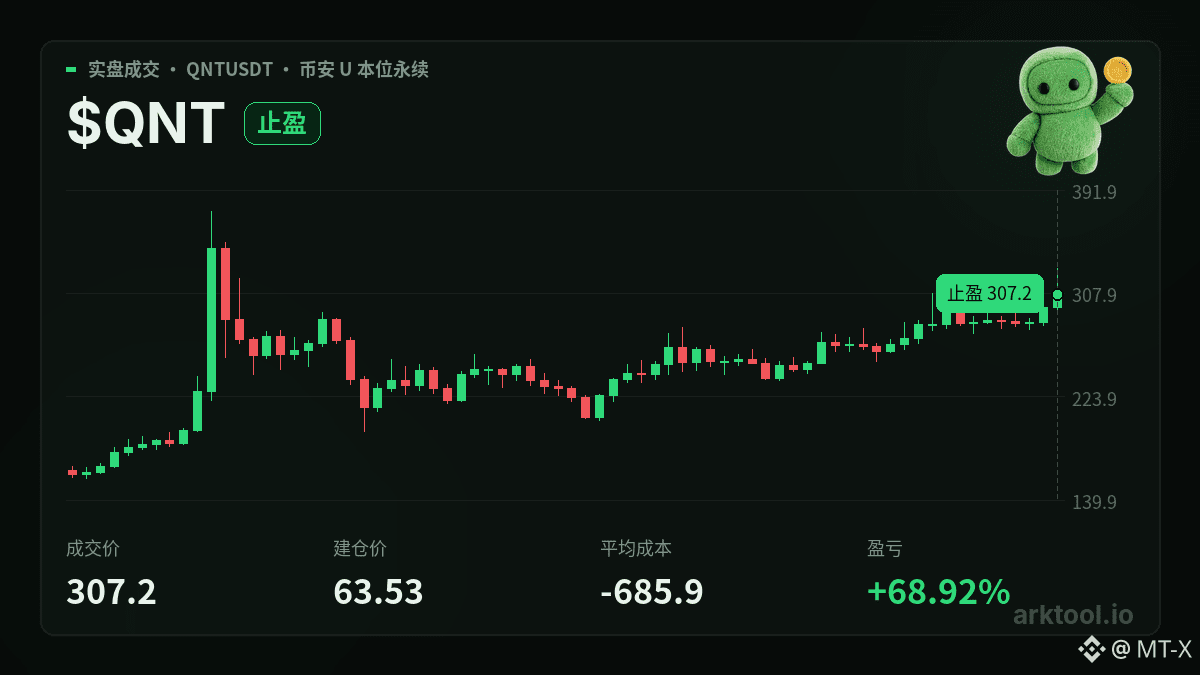
$QNT Kenaikan kali ini melonjak tinggi—saya lebih dulu mengurangi sebagian posisi, mengunci sebagian keuntungan, sementara sisanya tetap dipegang.
Di pergerakan harga, kenaikan dalam waktu singkat terlalu curam; harga sudah terpisah cukup jauh dari garis rata-ratanya. Ini sudah berada di titik emosi yang tinggi. Tren belum rusak, dan volume masih ada, tetapi justru pada pola seperti ini, ketika koreksi datang, biasanya lebih cepat dan lebih tajam. Level bilangan bulat di atas adalah tekanan psikologis, sedangkan area transaksi padat di bawah—yang menjadi basis periode sebelumnya—adalah tempat sesungguhnya yang bisa menahan.
Pada posisi sekarang, pihak yang bullish bertaruh pada kelanjutan tren, sementara yang mereka takutkan adalah ketika posisi untung dilepas sedikit saja, reaksi berantai pun bisa terbentuk.
Dari sisi narasi, aset ini selama ini mengandalkan cerita lama tentang interoperabilitas cross-chain dan settlement level enterprise. Intinya, mereka membangun jalur kepatuhan untuk skenario lembaga keuangan tradisional dan bank sentral. Kali ini narasi tersebut kembali diangkat; alasannya lebih karena dana sedang mencari aset yang punya fleksibilitas tinggi dan floating supply tidak terlalu membengkak, bukan karena ada pesanan yang benar-benar terealisasi. Jadi narasi ini sedang memanas, tetapi yang memanas adalah emosi—bukan fundamental. Dana mengejar ruang permainan dalam jangka pendek, bukan nilai jangka panjang.
Hari ini, di rantai (on-chain) ada perpindahan dana bernilai besar antar alamat anonim. Pemindahan seperti ini tidak selalu berarti penjualan, tetapi bahwa koin berpindah tangan itu adalah fakta. Setelah lonjakan tajam, kemunculan pola perpindahan seperti ini sering berarti profit awal mulai didistribusikan ulang, sehingga risiko tekanan jual jangka pendek menjadi lebih besar. Ia tidak melemahkan cerita awal, namun menjadi pengingat untuk sisi emosi.
Ke depan, yang benar-benar harus dilihat adalah apakah kali ini bisa bertahan dalam fase konsolidasi di area tinggi. Jika bisa bertahan, trennya masih ada; jika tidak bertahan, ritme koreksi biasanya tidak akan berlangsung dengan lembut.
$QNT Kenaikan kali ini melonjak tinggi—saya lebih dulu mengurangi sebagian posisi, mengunci sebagian keuntungan, sementara sisanya tetap dipegang.
Di pergerakan harga, kenaikan dalam waktu singkat terlalu curam; harga sudah terpisah cukup jauh dari garis rata-ratanya. Ini sudah berada di titik emosi yang tinggi. Tren belum rusak, dan volume masih ada, tetapi justru pada pola seperti ini, ketika koreksi datang, biasanya lebih cepat dan lebih tajam. Level bilangan bulat di atas adalah tekanan psikologis, sedangkan area transaksi padat di bawah—yang menjadi basis periode sebelumnya—adalah tempat sesungguhnya yang bisa menahan.
Pada posisi sekarang, pihak yang bullish bertaruh pada kelanjutan tren, sementara yang mereka takutkan adalah ketika posisi untung dilepas sedikit saja, reaksi berantai pun bisa terbentuk.
Dari sisi narasi, aset ini selama ini mengandalkan cerita lama tentang interoperabilitas cross-chain dan settlement level enterprise. Intinya, mereka membangun jalur kepatuhan untuk skenario lembaga keuangan tradisional dan bank sentral. Kali ini narasi tersebut kembali diangkat; alasannya lebih karena dana sedang mencari aset yang punya fleksibilitas tinggi dan floating supply tidak terlalu membengkak, bukan karena ada pesanan yang benar-benar terealisasi. Jadi narasi ini sedang memanas, tetapi yang memanas adalah emosi—bukan fundamental. Dana mengejar ruang permainan dalam jangka pendek, bukan nilai jangka panjang.
Hari ini, di rantai (on-chain) ada perpindahan dana bernilai besar antar alamat anonim. Pemindahan seperti ini tidak selalu berarti penjualan, tetapi bahwa koin berpindah tangan itu adalah fakta. Setelah lonjakan tajam, kemunculan pola perpindahan seperti ini sering berarti profit awal mulai didistribusikan ulang, sehingga risiko tekanan jual jangka pendek menjadi lebih besar. Ia tidak melemahkan cerita awal, namun menjadi pengingat untuk sisi emosi.
Ke depan, yang benar-benar harus dilihat adalah apakah kali ini bisa bertahan dalam fase konsolidasi di area tinggi. Jika bisa bertahan, trennya masih ada; jika tidak bertahan, ritme koreksi biasanya tidak akan berlangsung dengan lembut.
Di pergerakan harga, kenaikan dalam waktu singkat terlalu curam; harga sudah terpisah cukup jauh dari garis rata-ratanya. Ini sudah berada di titik emosi yang tinggi. Tren belum rusak, dan volume masih ada, tetapi justru pada pola seperti ini, ketika koreksi datang, biasanya lebih cepat dan lebih tajam. Level bilangan bulat di atas adalah tekanan psikologis, sedangkan area transaksi padat di bawah—yang menjadi basis periode sebelumnya—adalah tempat sesungguhnya yang bisa menahan.
Pada posisi sekarang, pihak yang bullish bertaruh pada kelanjutan tren, sementara yang mereka takutkan adalah ketika posisi untung dilepas sedikit saja, reaksi berantai pun bisa terbentuk.
Dari sisi narasi, aset ini selama ini mengandalkan cerita lama tentang interoperabilitas cross-chain dan settlement level enterprise. Intinya, mereka membangun jalur kepatuhan untuk skenario lembaga keuangan tradisional dan bank sentral. Kali ini narasi tersebut kembali diangkat; alasannya lebih karena dana sedang mencari aset yang punya fleksibilitas tinggi dan floating supply tidak terlalu membengkak, bukan karena ada pesanan yang benar-benar terealisasi. Jadi narasi ini sedang memanas, tetapi yang memanas adalah emosi—bukan fundamental. Dana mengejar ruang permainan dalam jangka pendek, bukan nilai jangka panjang.
Hari ini, di rantai (on-chain) ada perpindahan dana bernilai besar antar alamat anonim. Pemindahan seperti ini tidak selalu berarti penjualan, tetapi bahwa koin berpindah tangan itu adalah fakta. Setelah lonjakan tajam, kemunculan pola perpindahan seperti ini sering berarti profit awal mulai didistribusikan ulang, sehingga risiko tekanan jual jangka pendek menjadi lebih besar. Ia tidak melemahkan cerita awal, namun menjadi pengingat untuk sisi emosi.
Ke depan, yang benar-benar harus dilihat adalah apakah kali ini bisa bertahan dalam fase konsolidasi di area tinggi. Jika bisa bertahan, trennya masih ada; jika tidak bertahan, ritme koreksi biasanya tidak akan berlangsung dengan lembut.
198
·
--
Lihat terjemahan
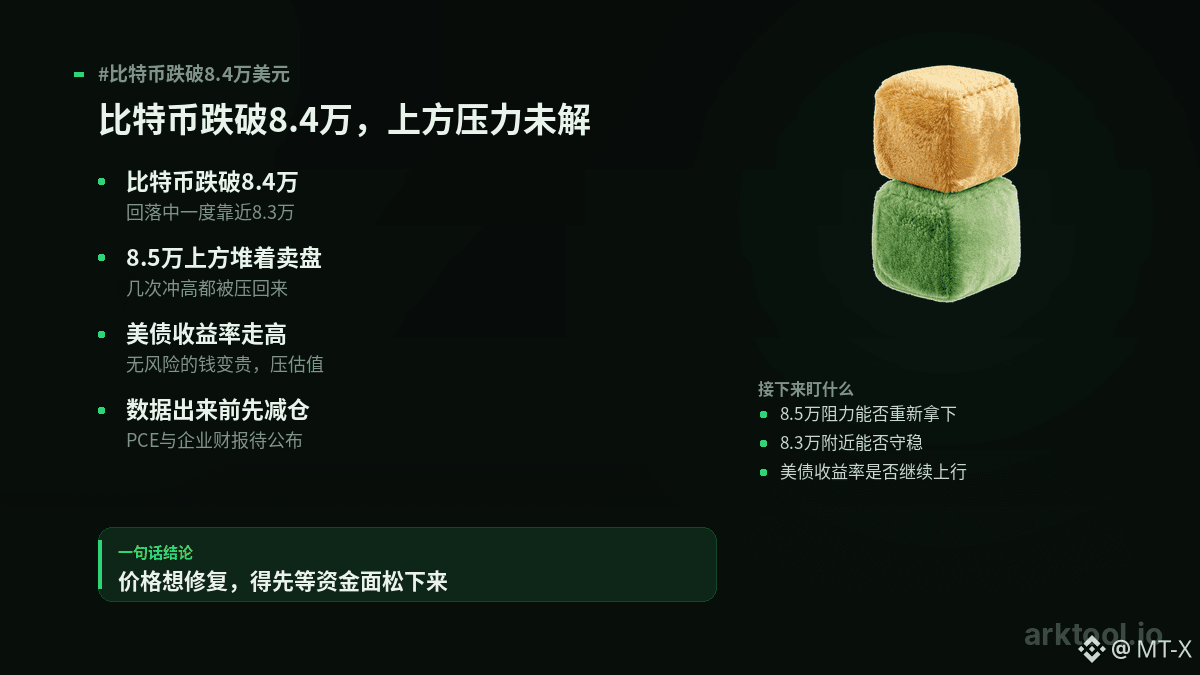
比特币跌破了 8.4 万美元,回落过程中一度靠近 8.3 万。
关键不在于跌了多少,而在于上方 8.5 万附近这道关口。这一轮反弹几次冲上去都被压回来,说明那个位置堆着不小的卖盘,短线已经变成明确的阻力位。
另一头是宏观。美债收益率走高,意味着无风险的钱变贵了,愿意去冒风险的资金就变少,不只是加密,整体市场的估值都会被压。这才是这波回落的背景。
时间点也很要命。PCE 通胀数据和企业财报都在前面等着。前者决定市场怎么理解通胀和后续的利率路径,后者是科技板块景气的直接读数。结果出来之前,资金普遍倾向先减仓、少下注,波动容易被放大。
对 $BTC 来说,接下来盯三件事:8.5 万这道阻力能不能重新拿下,8.3 万附近能不能守稳,美债收益率会不会继续往上走。前两个看价格结构,第三个看资金面。价格想修复,得先等资金面松下来。
数据落地前后本来就是行情最容易变脸的时候,方向没走出来之前,任何结论都还太早。
#比特币跌破8.4万美元
比特币跌破了 8.4 万美元,回落过程中一度靠近 8.3 万。
关键不在于跌了多少,而在于上方 8.5 万附近这道关口。这一轮反弹几次冲上去都被压回来,说明那个位置堆着不小的卖盘,短线已经变成明确的阻力位。
另一头是宏观。美债收益率走高,意味着无风险的钱变贵了,愿意去冒风险的资金就变少,不只是加密,整体市场的估值都会被压。这才是这波回落的背景。
时间点也很要命。PCE 通胀数据和企业财报都在前面等着。前者决定市场怎么理解通胀和后续的利率路径,后者是科技板块景气的直接读数。结果出来之前,资金普遍倾向先减仓、少下注,波动容易被放大。
对 $BTC 来说,接下来盯三件事:8.5 万这道阻力能不能重新拿下,8.3 万附近能不能守稳,美债收益率会不会继续往上走。前两个看价格结构,第三个看资金面。价格想修复,得先等资金面松下来。
数据落地前后本来就是行情最容易变脸的时候,方向没走出来之前,任何结论都还太早。
#比特币跌破8.4万美元
关键不在于跌了多少,而在于上方 8.5 万附近这道关口。这一轮反弹几次冲上去都被压回来,说明那个位置堆着不小的卖盘,短线已经变成明确的阻力位。
另一头是宏观。美债收益率走高,意味着无风险的钱变贵了,愿意去冒风险的资金就变少,不只是加密,整体市场的估值都会被压。这才是这波回落的背景。
时间点也很要命。PCE 通胀数据和企业财报都在前面等着。前者决定市场怎么理解通胀和后续的利率路径,后者是科技板块景气的直接读数。结果出来之前,资金普遍倾向先减仓、少下注,波动容易被放大。
对 $BTC 来说,接下来盯三件事:8.5 万这道阻力能不能重新拿下,8.3 万附近能不能守稳,美债收益率会不会继续往上走。前两个看价格结构,第三个看资金面。价格想修复,得先等资金面松下来。
数据落地前后本来就是行情最容易变脸的时候,方向没走出来之前,任何结论都还太早。
#比特币跌破8.4万美元
19
·
--
Lihat terjemahan
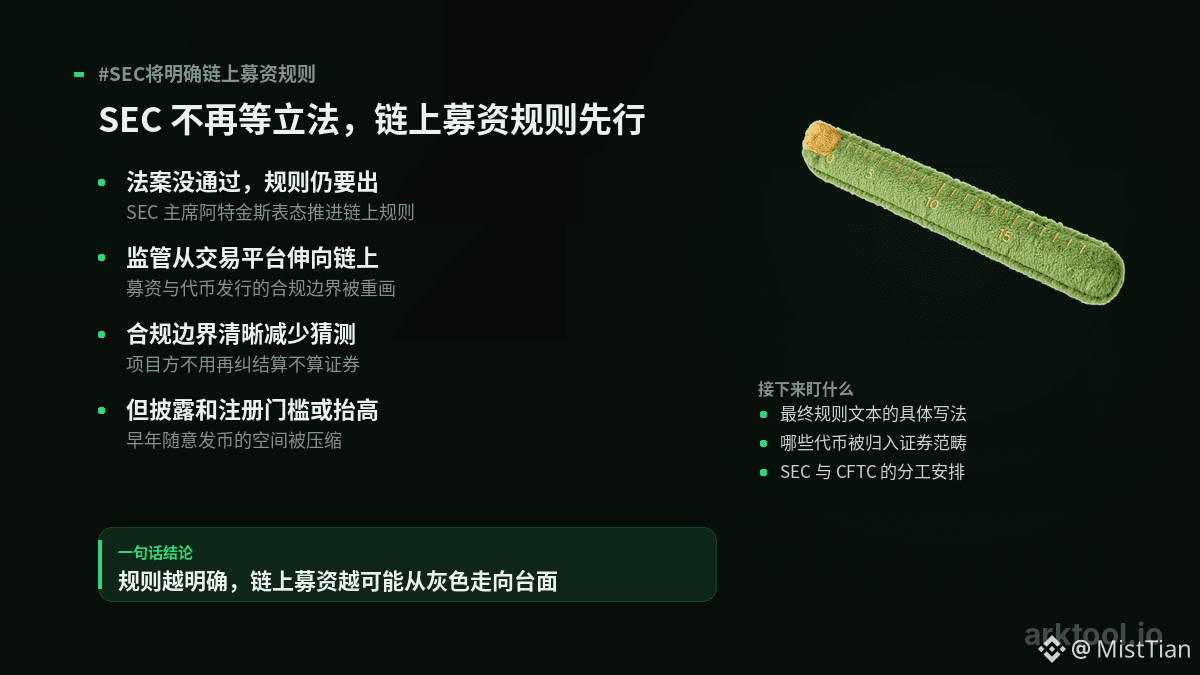
美国证券监管的口径,正从“先立法再管”转向“先把规则落到链上”。
相关法案没通过,但 SEC 主席保罗·阿特金斯仍表态要推出链上监管规则;同时 SEC 与 CFTC 在加速推进加密规则,已采取 9 项行动。
关键点有两个:一是募资和代币发行的合规边界可能被重新画线;二是监管不再只盯交易平台,而是往链上活动本身延伸。
对 $ETH 来说,这不是简单的利好或利空。以太坊是链上融资、智能合约和大量代币发行最集中的地方,规则一旦清晰,项目方不用再猜“到底算不算证券”,合规成本和不确定性会下降;但清晰也意味着披露、注册、投资者保护这些门槛可能抬高,早年那种随意发币的空间会被压缩。
接下来该盯:最终规则文本怎么写,哪些代币会被归入证券范畴,SEC 与 CFTC 怎么分工,以及那 9 项行动里有多少会真正落地。
规则越明确,链上募资越可能从灰色地带走向台面;但节奏和尺度,仍取决于后续细则。
#SEC将明确链上募资规则
美国证券监管的口径,正从“先立法再管”转向“先把规则落到链上”。
相关法案没通过,但 SEC 主席保罗·阿特金斯仍表态要推出链上监管规则;同时 SEC 与 CFTC 在加速推进加密规则,已采取 9 项行动。
关键点有两个:一是募资和代币发行的合规边界可能被重新画线;二是监管不再只盯交易平台,而是往链上活动本身延伸。
对 $ETH 来说,这不是简单的利好或利空。以太坊是链上融资、智能合约和大量代币发行最集中的地方,规则一旦清晰,项目方不用再猜“到底算不算证券”,合规成本和不确定性会下降;但清晰也意味着披露、注册、投资者保护这些门槛可能抬高,早年那种随意发币的空间会被压缩。
接下来该盯:最终规则文本怎么写,哪些代币会被归入证券范畴,SEC 与 CFTC 怎么分工,以及那 9 项行动里有多少会真正落地。
规则越明确,链上募资越可能从灰色地带走向台面;但节奏和尺度,仍取决于后续细则。
#SEC将明确链上募资规则
相关法案没通过,但 SEC 主席保罗·阿特金斯仍表态要推出链上监管规则;同时 SEC 与 CFTC 在加速推进加密规则,已采取 9 项行动。
关键点有两个:一是募资和代币发行的合规边界可能被重新画线;二是监管不再只盯交易平台,而是往链上活动本身延伸。
对 $ETH 来说,这不是简单的利好或利空。以太坊是链上融资、智能合约和大量代币发行最集中的地方,规则一旦清晰,项目方不用再猜“到底算不算证券”,合规成本和不确定性会下降;但清晰也意味着披露、注册、投资者保护这些门槛可能抬高,早年那种随意发币的空间会被压缩。
接下来该盯:最终规则文本怎么写,哪些代币会被归入证券范畴,SEC 与 CFTC 怎么分工,以及那 9 项行动里有多少会真正落地。
规则越明确,链上募资越可能从灰色地带走向台面;但节奏和尺度,仍取决于后续细则。
#SEC将明确链上募资规则
1
233
Masuk untuk menjelajahi konten lainnya
Bergabunglah dengan pengguna kripto global di Binance Square
⚡️ Dapatkan informasi terbaru dan berguna tentang kripto.
💬 Dipercayai oleh bursa kripto terbesar di dunia.
👍 Temukan wawasan nyata dari kreator terverifikasi.
Email/Nomor Ponsel
Topik Sedang Tren
MetaMaskExitsLidoValidatorsAfterSecurityIncident
2,434 penayangan
125 Berdiskusi
🚨 METAMASK BARU SAJA MULAI MENARIK KELUAR VALIDATOR ETH SETELAH INSIDEN KEAMANAN.
MetaMask mengatakan ada insiden keamanan yang sedang berlangsung yang berdampak pada sebagian infrastrukturnya, sehingga memaksanya untuk secara proaktif menarik validator yang terdampak dari operasi staking non-custodial-nya. Perusahaan tersebut mengatakan pihaknya belum menemukan ancaman langsung terhadap dompet MetaMask sejauh ini.
Poin kuncinya?
Validator ini terhubung dengan staking Lido, dan proses exit dapat sementara mengeluarkan ETH dari staking saat investigasi masih berlangsung. Laporan yang terkait dengan Lido menyebutkan bahwa siklus exit penuh, penarikan, dan masuk kembali bisa memakan waktu hingga sekitar 45 hari.
Artinya, pasar seharusnya memisahkan dua hal:
Pengguna dompet saat ini tidak diberi tahu bahwa mereka berada dalam risiko segera.
Tapi infrastruktur validator jelas cukup serius untuk memicu emergency exit.
Dan ketika salah satu merek dompet terbesar di Ethereum mulai menarik validator sebagai tindakan pencegahan, para trader pasti memperhatikan.
Insiden keamanan tidak perlu melibatkan dana yang dicuri agar bisa menggerakkan pasar.
Kadang respons itu sendiri adalah sinyalnya. 👀
$ETH $LDO
#metamaskexitslidovalidatorsaftersecurityincident
KimHotbae
·Disukai 0 Kali
·816 penayangan
MicronBeatsEarningsLiftsGuidance
5,265 penayangan
149 Berdiskusi
CFTCSubmitsTwoEventContractRulesToWhiteHouse
5,849 penayangan
163 Berdiskusi