
Raees Qureshi
75 Posting

Raees Qureshi
Laporkan
Blokir Pengguna
Crypto Since 2017 | Crypto guides for beginners | Airdrop | Content Creator | Web3 |
Perdagangan Terbuka

Pemilik BNB
Pedagang Rutin
5.5 Tahun
22 Mengikuti
39 Pengikut
129 Disukai
Posting
Portofolio
Semua
Kuotasi
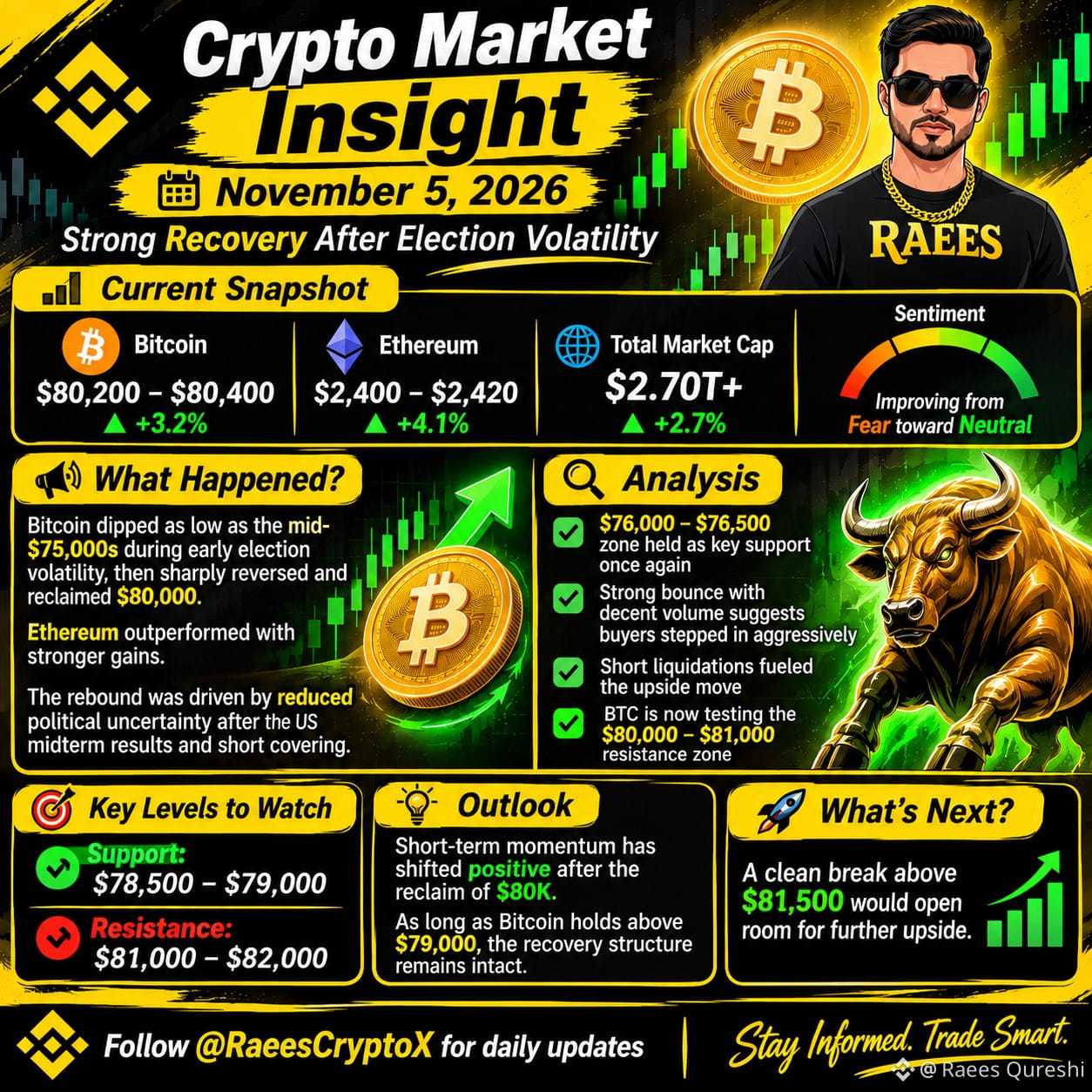
$𝗪𝗮𝘄𝗮𝘀𝗮𝗻 𝗣𝗮𝘀𝗮𝗿 𝗞𝗿𝗶𝗽𝘁𝗼 – 𝟱 𝗡𝗼𝘃𝗲𝗺𝗯𝗲𝗿 𝟮𝟬𝟮𝟲
Pasar mengalami pemulihan kuat kemarin.
Kondisi Saat Ini:
- $BTC : ~$80,200 – $80,400
- $ETH : ~$2,400 – $2,420
- Total Kapitalisasi Pasar: ~$2.70T+
- Sentimen: Membaik dari Takut menuju Netral
Yang terjadi:
Bitcoin sempat turun hingga kisaran pertengahan $75,000-an saat volatilitas awal pemilu, lalu berbalik tajam dan kembali menembus $80,000. Ethereum mengungguli Bitcoin dengan kenaikan yang lebih kuat. Rebound ini didorong oleh berkurangnya ketidakpastian politik setelah hasil pemilu paruh waktu AS dan penutupan posisi jual.
Analisis:
- Zona $76,000–$76,500 kembali bertahan sebagai level support utama
- Pantulan kuat dengan volume yang cukup baik menunjukkan pembeli masuk secara agresif
- Likuidasi posisi jual turut mendorong kenaikan
- BTC kini menguji zona resistance $80,000–$81,000
Level penting untuk diperhatikan:
- Support: $78,500 – $79,000
- Resistance: $81,000 – $82,000
Prospek:
Momentum jangka pendek berbalik positif setelah harga kembali menembus $80K. Selama Bitcoin bertahan di atas $79,000, struktur pemulihan tetap utuh. Penembusan meyakinkan di atas $81,500 akan membuka peluang kenaikan lebih lanjut.
Ini bukan nasihat keuangan.
Lakukan riset Anda sendiri.
Pasar mata uang kripto sangat volatil dan Anda bisa kehilangan uang.
1
55
Lihat terjemahan
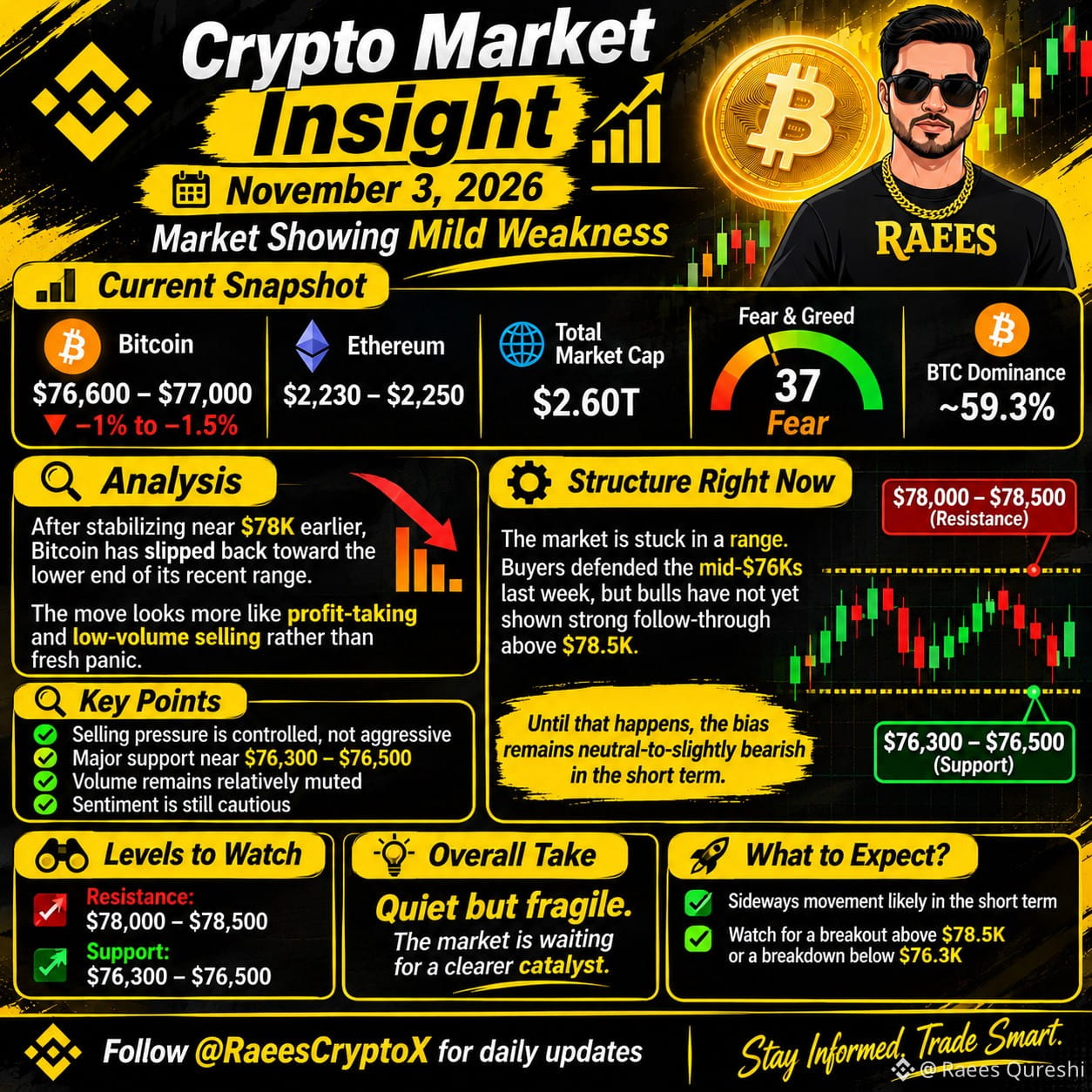
𝗖𝗿𝘆𝗽𝘁𝗼 𝗠𝗮𝗿𝗸𝗲𝘁 𝗜𝗻𝘀𝗶𝗴𝗵𝘁 – 𝗡𝗼𝘃𝗲𝗺𝗯𝗲𝗿 𝟯, 𝟮𝟬𝟮𝟲
The market is showing mild weakness after the weekend recovery attempt.
Current Snapshot:
- $BTC : ~$76,600 – $77,000 (−1% to −1.5%)
- $ETH
: ~$2,230 – $2,250
- Total Market Cap: ~$2.60T
- Fear & Greed: Still in *Fear* (around 37)
- BTC Dominance: ~59.3%
Analysis:
After stabilizing near $78K earlier, Bitcoin has slipped back toward the lower end of its recent range. The move looks more like profit taking and low volume selling rather than fresh panic.
Key points:
- Selling pressure is controlled, not aggressive
- Major support near $76,300–$76,500 is being tested again
- Volume remains relatively muted compared to last week’s spike
- Sentiment is still cautious after the Binance incident and broader risk-off environment
DYOR | NFA
1
80
Lihat terjemahan
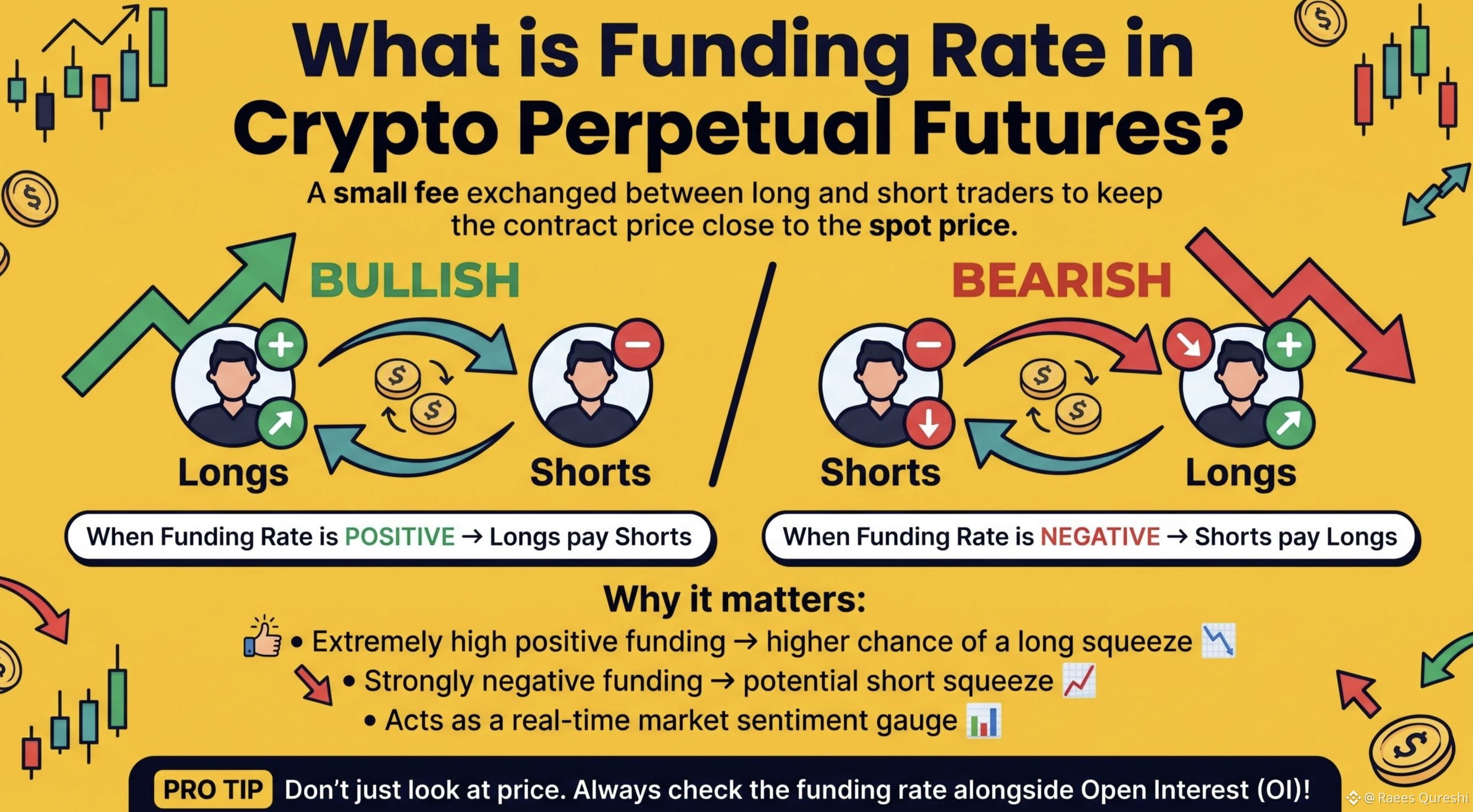
$𝗪𝗵𝗮𝘁 𝗶𝘀 𝗙𝘂𝗻𝗱𝗶𝗻𝗴 𝗥𝗮𝘁𝗲 𝗶𝗻 𝗖𝗿𝘆𝗽𝘁𝗼 𝗣𝗲𝗿𝗽𝗲𝘁𝘂𝗮𝗹 𝗙𝘂𝘁𝘂𝗿𝗲𝘀?
Funding Rate is a small fee exchanged between long and short traders to keep the perpetual contract price close to the spot price.
𝑯𝒐𝒘 𝒊𝒕 𝒘𝒐𝒓𝒌𝒔:
- When Funding Rate is *positive* → Longs pay Shorts
(Market is bullish / overheated)
- When Funding Rate is *negative* → Shorts pay Longs
(Market is bearish / overcrowded on shorts)
𝑾𝒉𝒚 𝒊𝒕 𝒎𝒂𝒕𝒕𝒆𝒓𝒔:
- Extremely high positive funding often signals overcrowded longs → higher chance of a long squeeze
- Strongly negative funding can signal potential short squeeze
- It acts as a real-time sentiment gauge for leveraged traders
𝑺𝒊𝒎𝒑𝒍𝒆 𝑻𝒊𝒑:
Don’t just look at price. Always check the funding rate alongside Open Interest. Extreme funding + high OI is a warning sign.
Understanding funding helps you avoid getting trapped on the wrong side of the market.
1
54
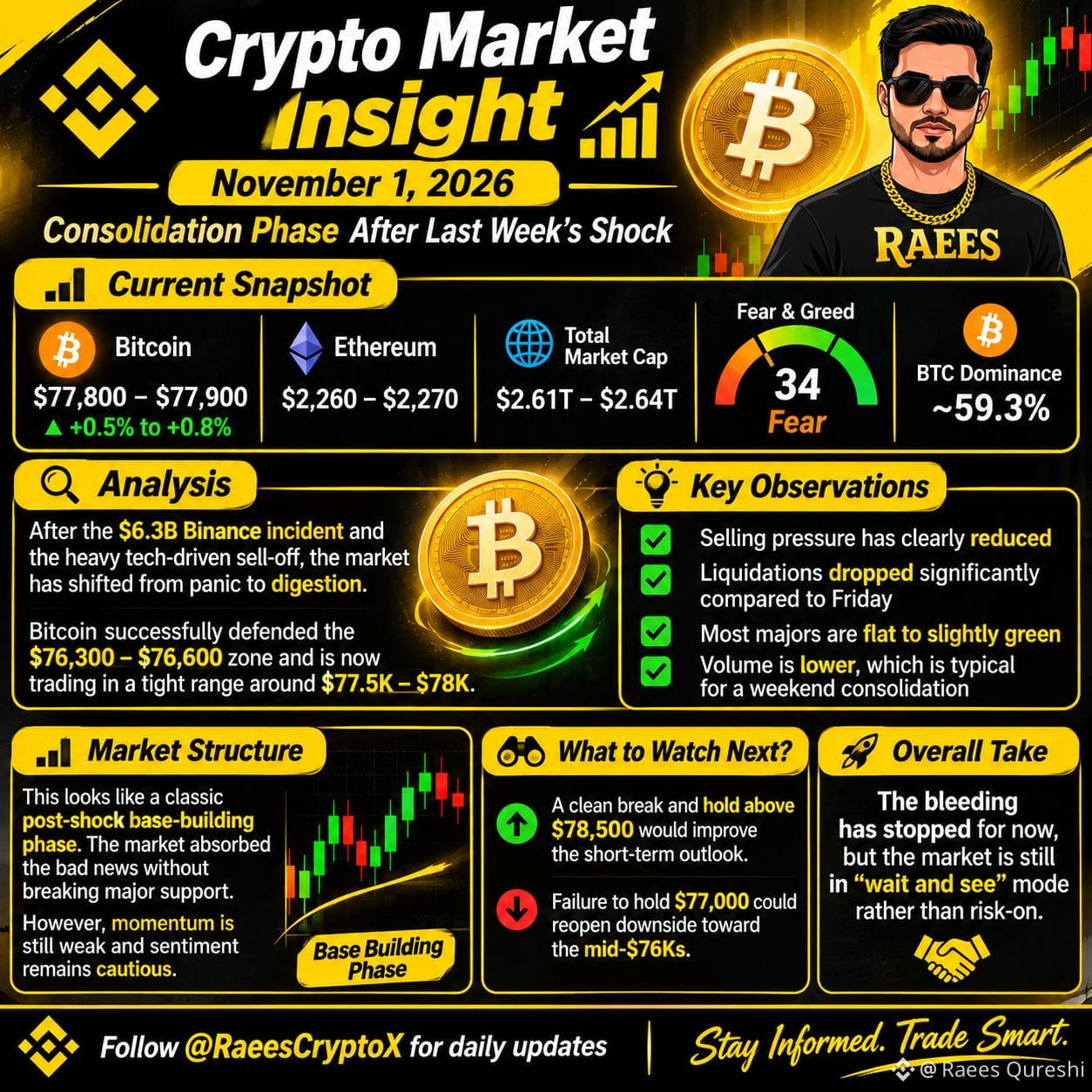
Wawasan Pasar Kripto – 1 November 2026
Pasar sedang berada dalam fase konsolidasi setelah guncangan tajam pekan lalu.
Kondisi Saat Ini:
- $BTC : ~$77,800 – $77,900 (+0.5% hingga +0.8%)
- $ETH : ~$2,260 – $2,270
- Kapitalisasi Pasar Total: ~$2.61T – $2.64T
- Fear & Greed: Masih dalam kondisi *Fear* (sekitar 34)
- Dominasi BTC: ~59.3%
Analisis:
Setelah insiden @binance senilai $6.3B dan aksi jual besar-besaran yang dipicu sektor teknologi, pasar beralih dari kepanikan ke fase mencerna situasi. Bitcoin berhasil mempertahankan zona $76,300–$76,600 dan kini diperdagangkan dalam kisaran ketat sekitar $77.5K–$78K.
Pengamatan utama:
- Tekanan jual jelas telah berkurang
- Likuidasi turun signifikan dibandingkan hari Jumat
- Sebagian besar aset kripto utama bergerak datar hingga sedikit menguat
- Volume lebih rendah, hal yang lazim terjadi dalam konsolidasi akhir pekan
Struktur saat ini:
Ini tampak seperti fase pembentukan basis klasik setelah guncangan. Pasar menyerap kabar buruk tanpa menembus level dukungan utama. Namun, momentum masih lemah dan sentimen tetap berhati-hati.
Yang perlu diperhatikan selanjutnya:
- Penembusan yang meyakinkan dan bertahan di atas $78,500 akan memperbaiki prospek jangka pendek
- Kegagalan bertahan di $77,000 dapat membuka kembali peluang penurunan menuju kisaran pertengahan $76K
Secara keseluruhan: Tekanan jual untuk sementara telah berhenti, tetapi pasar masih dalam mode “tunggu dan lihat”, bukan mengambil risiko.
2
154
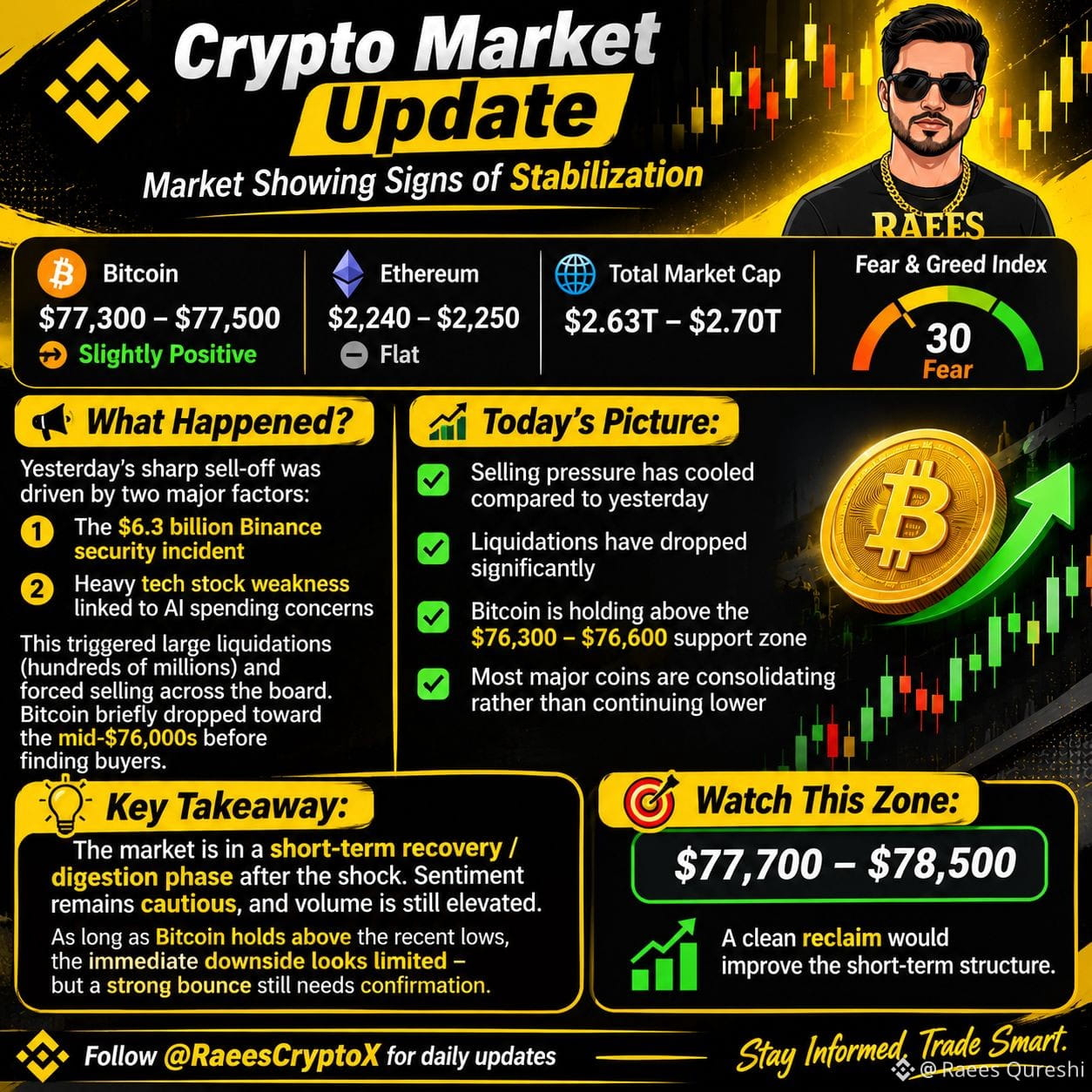
Wawasan Pasar Kripto – 31 Oktober 2026
Pasar berusaha stabil setelah sesi penghindaran risiko yang berat kemarin.
Level saat ini:
- $BTC : ~$77,300 – $77,500 (sedikit positif / datar)
- $ETH : ~$2,240 – $2,250
- Total Kapitalisasi Pasar: ~$2.63T – $2.70T
- Indeks Ketakutan & Keserakahan: Masih berada di zona 'Takut' (sekitar 30)
Apa yang terjadi:$BTC
Aksi jual tajam kemarin dipicu oleh dua faktor utama:
1. Insiden keamanan B$inance senilai $6,3 miliar
2. Pelemahan saham teknologi yang signifikan, terkait kekhawatiran atas belanja AI
Hal ini memicu likuidasi besar-besaran (ratusan juta) dan aksi jual paksa di seluruh pasar. Bitcoin sempat turun mendekati kisaran pertengahan $76.000 sebelum menemukan pembeli.
Gambaran hari ini:
- Tekanan jual mereda dibandingkan kemarin
- Likuidasi turun secara signifikan
- Bitcoin bertahan di atas zona support $76,300–$76,600
- Sebagian besar koin utama berkonsolidasi alih-alih terus melemah
Kesimpulan utama:
Pasar sedang berada dalam fase pemulihan jangka pendek / konsolidasi setelah guncangan tersebut. Sentimen masih berhati-hati, dan volume tetap tinggi. Selama Bitcoin bertahan di atas level terendah baru-baru ini, potensi penurunan dalam waktu dekat tampak terbatas, tetapi penguatan yang solid masih perlu dikonfirmasi.
Pantau zona $77,700–$78,500. Jika harga berhasil merebut kembali zona ini dengan meyakinkan, struktur jangka pendek akan membaik.
76
Lihat terjemahan
Most beginners lose money on DEXs not because of the token…
They lose it because of slippage.
Here’s the simple meaning:
**Slippage** = The difference between the price you expect and the price you actually get when your trade goes through.
Example:
You want to buy a token at $1.00
But by the time the trade completes, you get it at $1.04
That 4 cents difference is slippage.
Why it happens:
- Low liquidity
- Big trade size
- Fast price movement
How to reduce it:
- Trade tokens with high liquidity
- Avoid huge buys on small tokens
- Set a reasonable slippage tolerance (usually 0.5% – 1% is safer)
Key Takeaway:
High slippage can silently eat your money even if the token looks good.
Do you usually check slippage before swapping, or do you just click confirm? Drop your honest answer below.
31
Kebanyakan pemula panik saat melihat biaya gas yang tinggi.
Namun, hanya sedikit yang benar-benar memahami apa itu gas.
Biaya Gas = Biaya yang kamu bayar untuk menggunakan blockchain.
Setiap kali kamu:
- Mengirim kripto
- Menukar token
- Mengklaim airdrop
- Berinteraksi dengan smart contract
Kamu membayar biaya kecil kepada jaringan. Biaya itu disebut gas.
Cara sederhana untuk memahaminya:
Gas seperti bahan bakar yang dibutuhkan transaksimu agar bisa berjalan di blockchain.
Mengapa biaya gas bisa tinggi:
- Terlalu banyak orang menggunakan jaringan secara bersamaan
- Jaringan sedang padat
Tips singkat:
- Di Ethereum, biaya gas bisa mahal
- Di jaringan seperti Solana, Base, atau Arbitrum, biaya gas biasanya jauh lebih murah
Kesimpulan:
Selalu periksa biaya gas sebelum mengonfirmasi transaksi apa pun. Terkadang, biayanya lebih tinggi daripada nilai transaksi yang kamu lakukan.
Biasanya kamu menunggu sampai biaya gas rendah, atau langsung membayar berapa pun biayanya?
Tulis jawabanmu di bawah.
57
Lihat terjemahan
Most people only complain about high gas.
Very few understand what’s actually happening behind the scenes.
It’s called "MEV" Maximal Extractable Value.
Here’s the simple version:
Every pending transaction sits in the mempool (public waiting room).
Bots are watching it 24/7.
When they see a profitable opportunity, they:
- Frontrun you
- Backrun you
- Or sandwich you
Sandwich Attack (most common):
1. You try to buy a token
2. Bot sees your big buy
3. Bot buys first (price goes up)
4. Your buy executes at worse price
5. Bot sells immediately after you
You paid more. Bot made risk-free profit. Your gas also went higher because of the competition.
Why it happens so much:
- Public mempool
- Transparent blockchain
- High volatility = more opportunities
- Sophisticated searchers + builders
How pros reduce MEV damage:
- Use private RPCs / protected transactions (Flashbots Protect, MEV Blocker, etc.)
- Trade on chains/L2s with less toxic MEV
- Avoid large swaps on low-liquidity pairs
- Use limit orders or RFQ systems when possible
- Split big orders
Key mindset:
Gas is the visible cost.
MEV is the invisible tax most retail pays without realizing.
Do you use any MEV protection, or still sending normal transactions?
75
Lihat terjemahan
Most people only look at two things:
- Market Cap
- FDV
That’s not tokenomics. That’s just price tags.
Real tokenomics answers these questions:
1. Who owns the supply?
- Team %
- Investors %
- Community/Airdrop %
- Treasury %
If team & investors control 40 to 50%+ with short cliffs, be careful.
2. Unlock schedule (this is where most pain comes)
- When do big unlocks hit?
- Is it linear or cliff?
- How much % unlocks in the next 6-12 months?
A token can look cheap on FDV but get destroyed by continuous unlock pressure.
3. Actual demand for the token
Ask:
- Does the token have real utility or is it just governance theater?
- Is there buy pressure (fees, burns, revenue share)?
- Or is it only sell pressure from emissions + unlocks?
4. Emissions vs Real Yield
High APY from emissions = temporary.
Real yield from protocol revenue = sustainable.
5. Valuation framework pros use:
- Fully Diluted Valuation vs Real Circulating
- Unlock pressure next 6 months
- Revenue (if any) vs FDV
- Insider allocation + vesting
Simple rule:
A low FDV with terrible unlocks + high insider allocation is usually worse than a higher FDV with clean distribution and real demand.
Most retail looks at “undervalued FDV”.
Smart money looks at *who is forced to sell and when*.
Question:
Do you check unlock schedules before entering, or mostly just look at current market cap?
82
Kebanyakan pemula masih belum tahu perbedaan sebenarnya antara CEX dan DEX.
Berikut penjelasan singkatnya:
*CEX (Bursa Terpusat)*
Binance, Bybit, OKX, dan lainnya.
- Mudah digunakan
- Cepat
- Tetapi dana Anda dikendalikan oleh mereka
**DEX (Bursa Terdesentralisasi)**
Uniswap, Raydium, Jupiter, dan lainnya.
- Anda memegang kendali penuh atas kripto Anda
- Tidak perlu KYC
- Tetapi sedikit lebih sulit digunakan
- Risiko kesalahan lebih tinggi (salah jaringan, token penipuan, dll.)
*Kebenaran sederhana:*
CEX menawarkan kemudahan.
DEX memberi Anda kepemilikan.
Kebanyakan orang yang cerdas menggunakan keduanya: CEX agar mudah bertransaksi, dan DEX untuk menyimpan aset dalam jangka panjang serta memiliki kendali penuh.
*Kesimpulan Utama:*
Jika Anda tidak mengendalikan kuncinya, Anda sebenarnya tidak memiliki kripto tersebut.
Saat ini, mana yang lebih sering Anda gunakan, CEX atau DEX? Tulis jawaban Anda di bawah.
1
77
Kebanyakan pemula mendengar “#Likuiditas” setiap hari, tetapi sebenarnya tidak tahu artinya.
Ini penjelasan sederhananya:
Likuiditas berarti seberapa mudah kamu membeli atau menjual kripto tanpa membuat harganya banyak berubah.
Likuiditas tinggi =
Kamu bisa membeli/menjual dengan cepat
Harga relatif stabil
Risiko selip harga lebih rendah
Likuiditas rendah =
Sulit membeli atau menjual dalam jumlah besar
Harga bisa melonjak atau turun tajam
Risiko selip harga besar lebih tinggi
Contoh sederhana:
Bitcoin biasanya memiliki likuiditas tinggi.
Koin meme baru yang kecil biasanya memiliki likuiditas rendah.
Mengapa ini penting:
Likuiditas tinggi = lebih aman untuk masuk dan keluar
Likuiditas rendah = lebih mudah terjebak atau mengalami kerugian besar
Kesimpulan utama:
Sebelum membeli token apa pun, selalu periksa likuiditasnya.
Likuiditas rendah bisa lebih berbahaya daripada proyek yang buruk.
Biasanya kamu memeriksa likuiditas sebelum melakukan transaksi, atau melewatkannya? Tulis jawaban jujurmu di bawah.
1
32
Lihat terjemahan
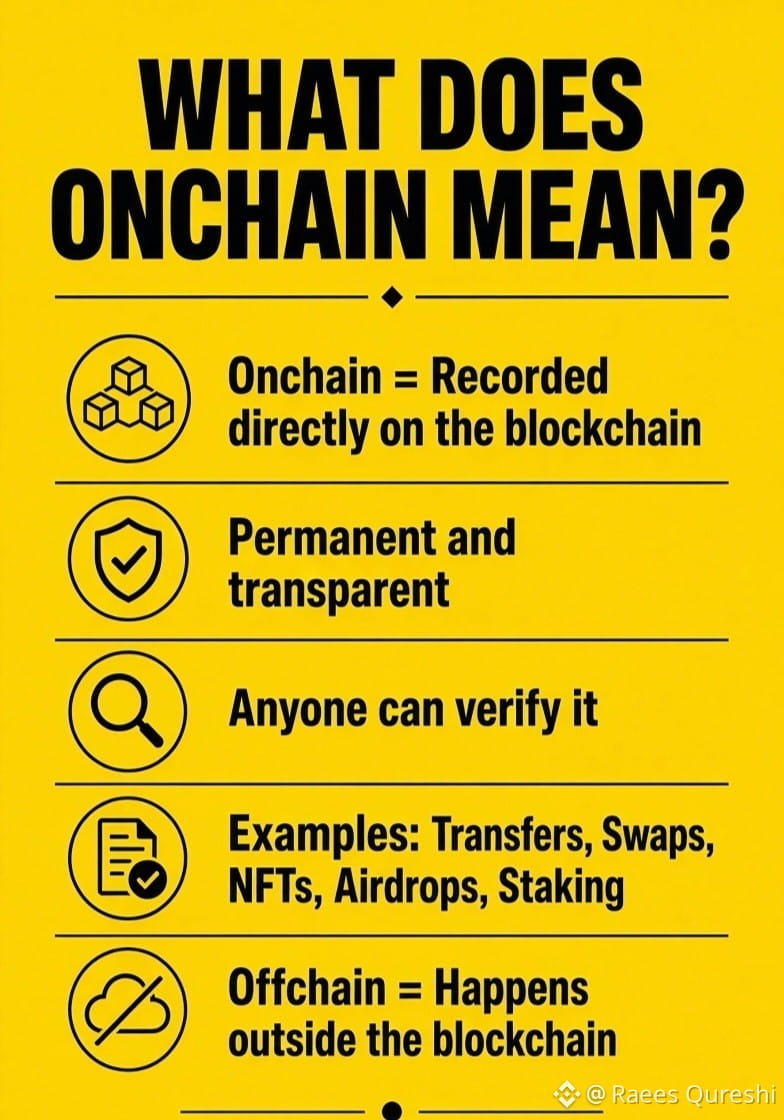
Most beginners hear the word “#OnChain” every day but still don’t really understand what it means.
Here’s the simple explanation:
Onchain means anything that happens directly on the blockchain and is permanently recorded there.
When something is onchain:
Anyone can verify it
It can’t be changed or deleted
It’s transparent and public
Examples of onchain activity:
Sending crypto from one wallet to another
Swapping tokens on a DEX
Minting an NFT
Claiming an airdrop
Staking tokens
Offchain is the opposite.
It happens outside the blockchain (like trading on Binance or keeping records on a company’s server).
Why onchain matters:
More transparent
Harder to fake
You don’t have to trust a company
Everything is verifiable
Simple way to remember:
If it shows up on a blockchain explorer (like Etherscan or Solscan), it’s onchain.
Key Takeaway:
Onchain = recorded on the blockchain forever.
Offchain = happens outside the blockchain.
Do you prefer keeping most of your activity onchain or still use centralized exchanges more? Drop your answer below.
1
20
Lihat terjemahan
Most crypto beginners don’t lose money because the market crashed.
They lose it because they signed one bad approval or clicked a fake ad.
If your security is weak, you’re basically leaving cash on the table with the front door wide open.
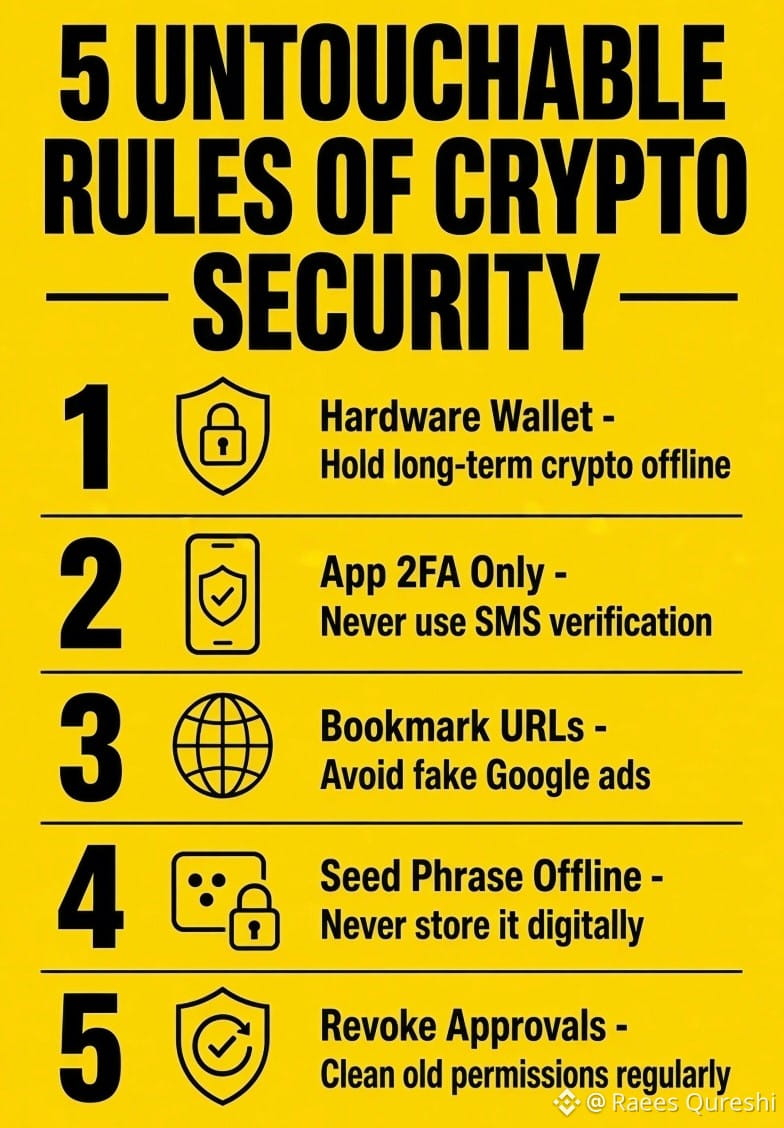
Here are 5 simple security rules every crypto holder should follow:
1️⃣. Use a Hardware Wallet
Exchanges are for trading, not for storing.
If you hold more than a few hundred dollars, move it to a cold wallet (Ledger, Trezor, etc.).
Not your keys, not your coins.
2️⃣. Stop Using SMS 2FA
SIM-swapping is still common.
Switch everything to an authenticator app (Google Authenticator or Aegis).
It’s a small change that blocks a big risk.
3️⃣. Bookmark Your Sites
Never Google search for exchanges or DeFi apps.
Fake ads look exactly like the real ones.
Only open sites through your saved bookmarks.
4️⃣. Protect Your Seed Phrase
Never save it in notes, screenshots, or cloud storage.
Write it on paper or stamp it on metal and keep it offline.
If it touches the internet, treat it as compromised.
5️⃣. Revoke Old Approvals
When you connect your wallet to dApps, you often give them permission to spend your tokens.
Go to Revoke. cash regularly and remove old permissions you no longer need.
Key Takeaway:
In crypto, you are your own bank.
That freedom only works if you take full responsibility for security. STAY #SAFU
What’s the biggest security mistake you made when you started? Drop it below so others can learn.
1
104
Lihat terjemahan
Understanding Web3
Web2 is about platforms; Web3 is about protocols. The next generation of the internet is shifting from centralization to user ownership.
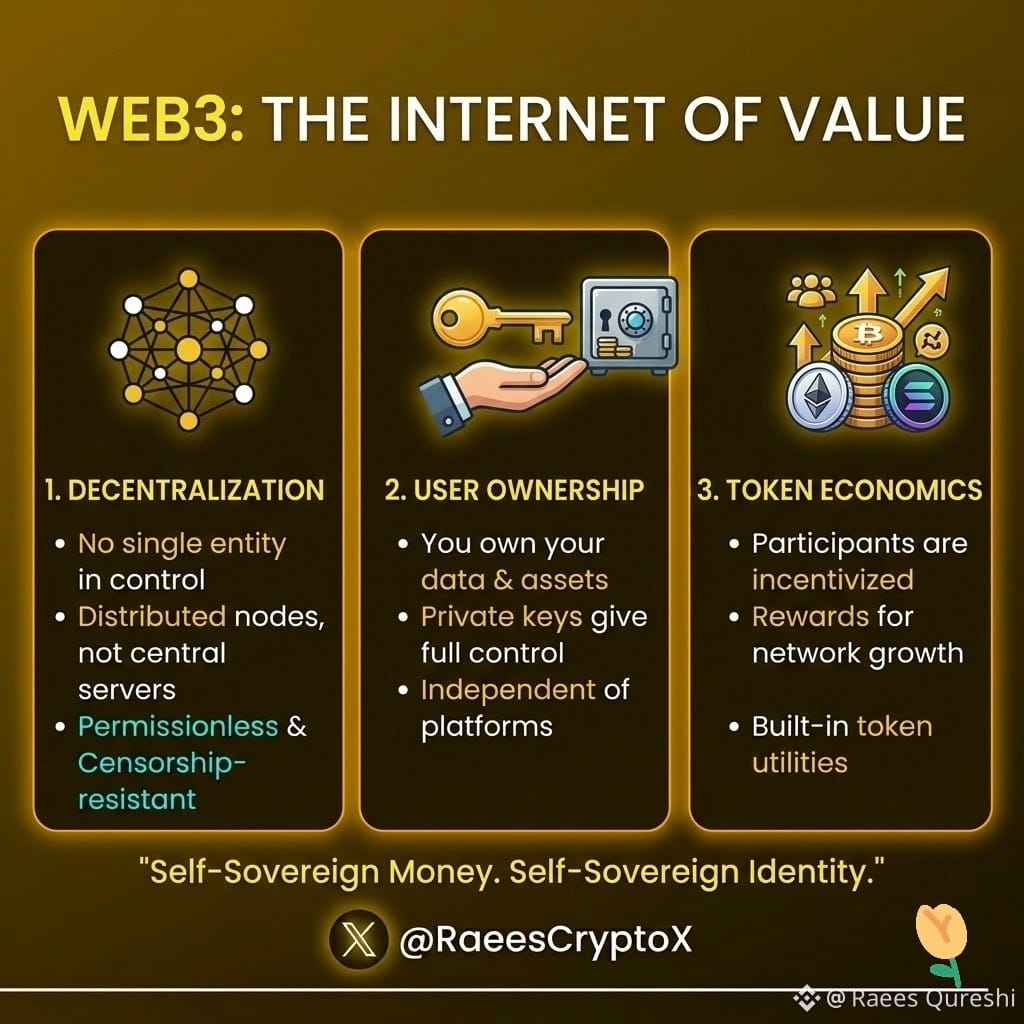
Here are the 3 fundamental pillars of Web3:
• Decentralization: No single entity controls the network. Data is stored across a distributed blockchain, making it permissionless and censorship resistant.
• User Ownership: You own your data, digital assets, and identity. Through private keys, you control access, not a corporation.
• Token Economics: Incentives are built-in. Participants (users, builders) are rewarded with native tokens, aligning interest and driving network growth.
Bottom line:
Web3 is about self sovereign money and self sovereign identity. It’s not just tech; it’s a structural shift in how digital value is created and shared.
Learn the architecture. Understand the change.
#Web3 #Decentralization #Crypto
2
71
Selalu verifikasi transaksi, kelola risiko, pelajari keamanan (DYOR), dan jangan pernah berinvestasi lebih dari jumlah yang mampu Anda rugikan.
Era Web3: Kode menjadi hukum, Anda memiliki data 🚀
Crypto = kebebasan finansial yang terurai 🌐
SR-2EBACDF6776068D65CEAA5C5
$CASH $ CASH Terima kasih ☺️
Selalu verifikasi transaksi, kelola risiko, pelajari keamanan (DYOR), dan jangan pernah berinvestasi lebih dari jumlah yang mampu Anda rugikan.
Era Web3: Kode menjadi hukum, Anda memiliki data 🚀
Crypto = kebebasan finansial yang terurai 🌐
SR-2EBACDF6776068D65CEAA5C5
$CASH $ CASH Terima kasih ☺️
Era Web3: Kode menjadi hukum, Anda memiliki data 🚀
Crypto = kebebasan finansial yang terurai 🌐
SR-2EBACDF6776068D65CEAA5C5
$CASH $ CASH Terima kasih ☺️
2
81
Inggris baru saja pemanasan. Sekarang kekaisaran perbankan AS bergerak masuk. 🇬🇧 ➡️ 🇺🇸
The Clearing House (TCH) yang memindahkan $2 TRILIUN SETIAP HARI di 25 bank besar AS baru saja memilih @quant_network untuk menggerakkan Inisiatif Uang On-Chain-nya! 🤯
Kenapa $QNT sedang dipompa:
⚡ Kegunaan Institusional yang nyata: Barclays, HSBC, Lloyds & kini 25 bank mega AS menggunakan Overledger.
⚡ Batas pasokan yang keras: 99,5% dari total pasokan SUDAH beredar.
⚡ Penguncian institusional: lisensi enterprise & penggunaan API = tekanan beli yang bersifat struktural.
#Quant #QNT #Overledger #CryptoNews #TokenizedDeposits @quant_network $QNT
Inggris baru saja pemanasan. Sekarang kekaisaran perbankan AS bergerak masuk. 🇬🇧 ➡️ 🇺🇸
The Clearing House (TCH) yang memindahkan $2 TRILIUN SETIAP HARI di 25 bank besar AS baru saja memilih @Quant untuk menggerakkan Inisiatif Uang On-Chain-nya! 🤯
Kenapa $QNT sedang dipompa:
⚡ Kegunaan Institusional yang nyata: Barclays, HSBC, Lloyds & kini 25 bank mega AS menggunakan Overledger.
⚡ Batas pasokan yang keras: 99,5% dari total pasokan SUDAH beredar.
⚡ Penguncian institusional: lisensi enterprise & penggunaan API = tekanan beli yang bersifat struktural.
#Quant #QNT #Overledger #CryptoNews #TokenizedDeposits @Quant $QNT

2
369
Mengapa $QNT ini memompa begitu banyak?
Bank-bank besar Inggris dan institusi keuangan memberi Overledger lampu hijau
Mereka sedang menumpuk sebanyak mungkin QNT yang bisa mereka dapatkan
Ini baru Inggris. Bayangkan ketika AS dan Asia mulai ikut menarik
Kamu belum cukup bullish
$1000 segera?
$QNT @quant_network
Mengapa $QNT ini memompa begitu banyak?
Bank-bank besar Inggris dan institusi keuangan memberi Overledger lampu hijau
Mereka sedang menumpuk sebanyak mungkin QNT yang bisa mereka dapatkan
Ini baru Inggris. Bayangkan ketika AS dan Asia mulai ikut menarik
Kamu belum cukup bullish
$1000 segera?
$QNT @Quant
Bank-bank besar Inggris dan institusi keuangan memberi Overledger lampu hijau
Mereka sedang menumpuk sebanyak mungkin QNT yang bisa mereka dapatkan
Ini baru Inggris. Bayangkan ketika AS dan Asia mulai ikut menarik
Kamu belum cukup bullish
$1000 segera?
$QNT @Quant

2
345
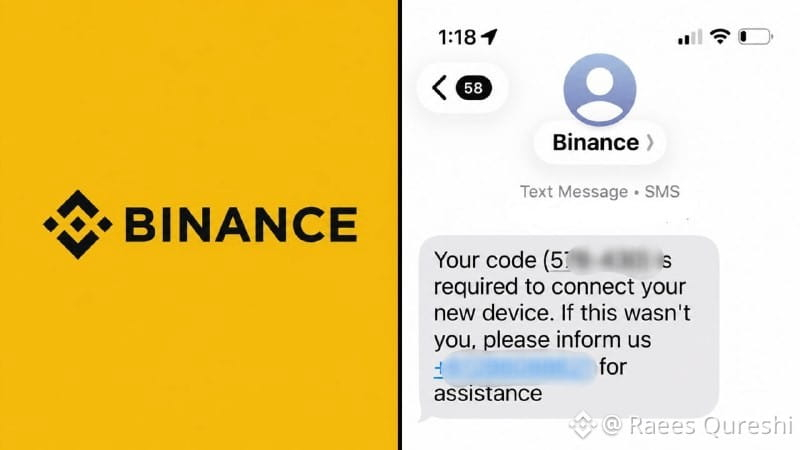
Peringatan Keamanan: Insiden Senilai $300K Sedang Diselidiki
Seorang pengguna Binance dari Ukraina baru-baru ini melaporkan bahwa $300.000 dicuri dari akun mereka dalam keadaan yang tidak biasa.
Meski telah mengaktifkan Passkey dan Autentikasi Dua Faktor (2FA) serta secara aktif menolak upaya login yang tidak sah dari Moskow, dana tersebut menghilang enam hari kemudian.
Tim keamanan Binance dan Polisi Siber Ukraina sedang menyelidiki secara aktif bagaimana pelanggaran itu terjadi.
Menurut Anda, apa pendapat tentang pembajakan sesi vs. kompromi kunci API dalam kasus seperti ini?
Mari diskusikan di bawah. 👇
#SAFU
2
70
Lihat terjemahan
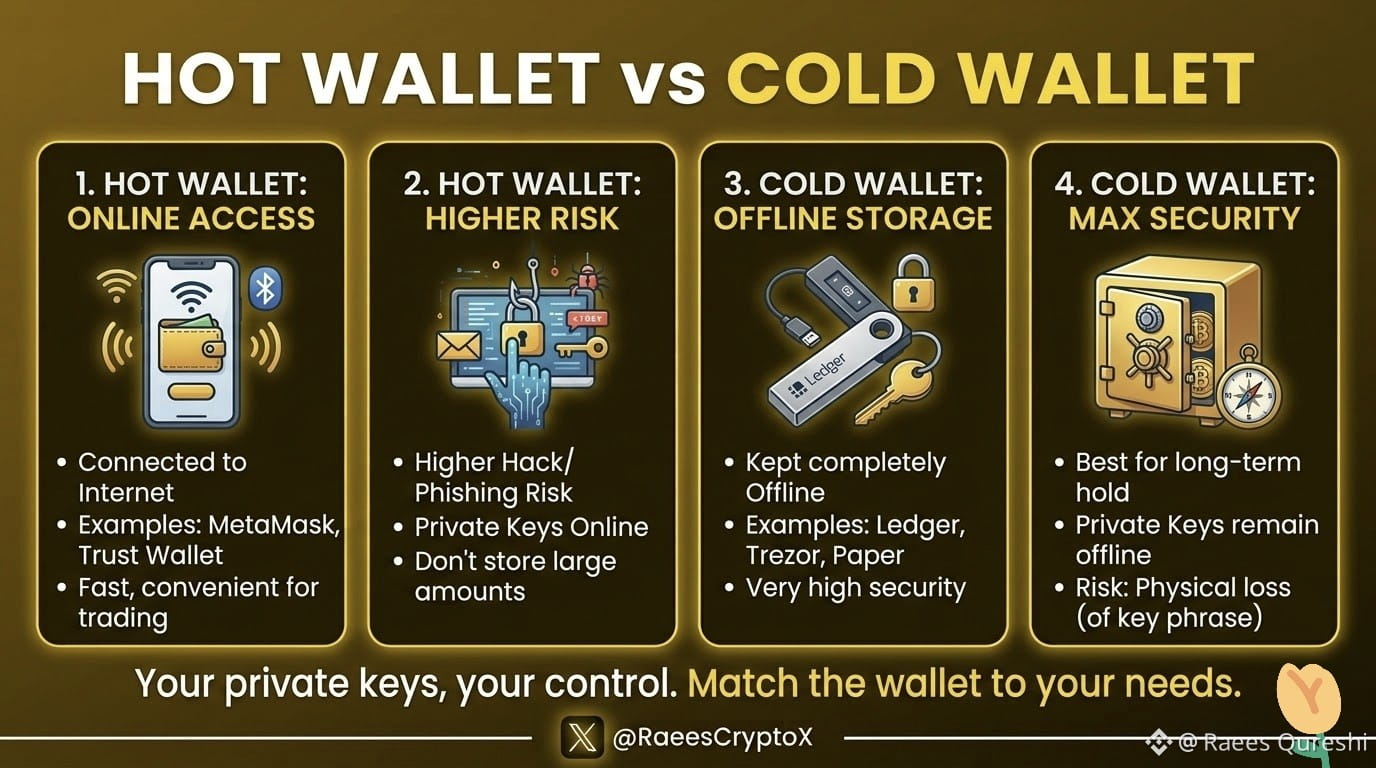
Hot Wallet vs Cold Wallet
Hot Wallet:
Connected to the internet
Fast and easy to use
Examples: MetaMask, Trust Wallet, Exchange wallets
Risk: Higher chance of hacks or phishing
Cold Wallet:
Kept offline
Private keys stay offline
Examples: Ledger, Trezor, Paper wallet
Risk: Much lower (mainly physical loss)
#HotWallet #ColdWallet #CryptoWallets #CryptoSecurity #SelfCustody #CryptoForBeginners
#Crypto
2
60
Masuk untuk menjelajahi konten lainnya
Bergabunglah dengan pengguna kripto global di Binance Square
⚡️ Dapatkan informasi terbaru dan berguna tentang kripto.
💬 Dipercayai oleh bursa kripto terbesar di dunia.
👍 Temukan wawasan nyata dari kreator terverifikasi.
Email/Nomor Ponsel
Topik Sedang Tren
BinanceReopensWithdrawalsForMoreAssets
760,631 penayangan
4,205 Berdiskusi
Insiden Keamanan | Pembaruan Pemulihan #8: Penarikan untuk Lebih Banyak Aset Akan Dibuka Kembali (2026-11-05)
Binance Announcement
·Disukai 328 Kali
·1.4M penayangan
Binance98PercentReplenished
135,678 penayangan
1,612 Berdiskusi
USStocksSlipandCryptoMarketUnderBroadPressure
61 penayangan
70 Berdiskusi